Women’s Autonomy, Employment and Education in
India and their Influence on Facility Delivery
By
Smrithi Dinesh Divakaran
A paper presented to the faculty of The University of North Carolina at Chapel Hill in partial fulfillment of the requirements for the
degree of Master of Science in Public Health in the Department of Maternal and Child Health.
Chapel Hill, N.C.
07/16/2013
Approved By:
ABSTRACT:
Objective: This study aims to analyze the influence of women’s autonomy, education and employment status on the use of facilities for delivery.
Method: Data was derived from nationally representative survey conducted by National Family Health Survey in India From 2005-2006. Bivariate logistic regression analyses were done to calculate the unadjusted odds ratio (OR) and multivariate logistic regression analysis was conducted to control for the socioeconomic variables.
Results: Women’s higher education level showed a strong positive association
(OR=16.35) with facility delivery after controlling for socioeconomic variables. Higher autonomy measures also had a positive association with the outcome. However employed women were found be less likely to use facilities for delivery (OR=0.91).
TABLE OF CONTENTS:
ABSTRACT ……….2 INTRODUCTION………4 - Maternal Mortality: A Global Issue
- Maternal Mortality in India
LITERATURE REVIEW……….6 - Women’s Autonomy and Utilization of Healthcare Services
- Education, Employment and Utilization of Healthcare Services
HYPOTHESES……….8 - Figure 1: Conceptual Model
METHODS………9 - Data Sampling and Collection
- Measures
- Statistical Analyses
RESULTS……….13
- Descriptive Analyses
Table 1 : Sample Characteristics
Figure 2: Distribution of Autonomy Measures Figure 3: Facility Delivery
- Bivariate Analyses
Table 2 : Distribution of facility delivery by variables of primary interest Table 3 : Bivariate Analysis: Facility Delivery and Primary Interest Variables - Multivariate Analyses
Table 4 : Findings of Multivariate Analysis
INTRODUCTION
Maternal Mortality: A Global Issue:
Approximately one third of a million women die from pregnancy-related causes annually and almost all (99%) of these maternal deaths occur in developing nations1, 2. Maternal mortality rate (MMR) in developing countries is found to be on average fifteen times higher than in developed nations3. The risk of a woman dying as a result of
pregnancy or childbirth during her lifetime is about one in six in the poorest parts of the world compared with about one in 30 000 in Northern Europe4
. These stark figures reflect the global disparities in maternal health.
Maternal mortality – the death of women during pregnancy, childbirth, or in the 42 days after delivery – has gained growing international attention in the last few decades and remains as a major challenge to health systems worldwide5. Global initiatives to address maternal mortality began as early as 1987 with the Safe Motherhood Initiative6. The International Conference on Population and Development in 1994 further
strengthened the commitment of the international community towards reproductive health7. Recent attention has been drawn to this situation during the Millennium Summit in 2000 where the United Nations Millennium Declaration identified improving maternal health as one of the eight Millennium Development Goals (MDGs)1. MDG 5 calls for a three quarter reduction in maternal mortality ratio and achievement of universal access to reproductive health2.
competent obstetric care4. These findings provide strong support for prioritization of strategies that focus on increasing the use of skilled obstetric care routinely by pregnant women4.
Maternal Mortality in India:
India accounts for more than 20% of the maternal deaths worldwide and the largest number of maternal deaths for any country8. In 2005-2006, the MMR of India was estimated to be between 301 to 450 maternal deaths for every 100,000 live births8. While the MMR has since decreased and continues to do so, maternal mortality still remains as a serious threat to many women. Most of these deaths are caused by four major causes; hemorrhage (29%), anemia (19%), sepsis (16%), and obstructed labor (10%)10.
Maternal mortality affects not only women, but also their families and communities by extension. This issue is particularly troubling as approximately 80 percent of maternal deaths could be prevented with access to skilled delivery at a facility and therefore it is essential to determine the factors influencing the use of healthcare facilities 9, 11.
women14. Understanding women’s autonomy, an important factor to improve maternal mortality, is very important in India.
LITERATURE REVIEW
Women’s Autonomy and Utilization of Healthcare Facilities:
Women’s autonomy has gained significant recognition as one of the cornerstones to effective maternal health programs15.Women’s autonomy is
multidimensional and there is no single accepted definition that represents or captures the various dimensions of women’s autonomy13
. Several studies have made efforts to develop a general definition of women’s autonomy. Some of the authors have defined autonomy as the capacity to manipulate one’s personal environment through control over resources and information in order to make decisions about one’s own concerns or about close family members13, 14, 16. This involves an individual’s capacity and freedom to act independently of the authority of others, for instance, the ability to go to places alone, such as visiting health facilities without asking anyone’s permission, making decisions regarding their own healthcare and having access to financial resources17, 18. The lack of female autonomy is a major contributing factor in the high prevalence of preventable deaths and disabilities resulting from childbirth.
important to healthcare utilization than others16. Female household decision-making power does not appear to be as important for accessing safe delivery care whereas financial autonomy and permission to go out were significantly associated with
institutional deliveries22, 24, 25. The literature suggests that women’s autonomy has to be studied from a multidimensional perspective and that analyzing each dimension
separately can provide robust evidence for the impact of each individual dimension25. This paper will focus on the areas of female autonomy that have been shown to positively impact the decision to deliver in a health facility.
Education, Employment and Utilization of Healthcare Services:
Education and employment have been used as proxy or indirect measures of women’s autonomy in several past studies. However it has been argued that use of such proxy measures can obscure the findings and can have grave policy implications as there is a lack of ample evidence for how well these proxies capture the construct of autonomy and the ways autonomy influences healthcare utilization18, 26. Education is considered to be fundamental to the empowerment of women, and also plays a role in equipping them with the skills needed to make important decisions about their health such as knowing where the facilities are located19. Several researchers have also established an inverse association of maternal education with fertility 27-29 and that maternal education is an important determinant of health care utilization30, 31. Education can also increase
reduce their utilization of health care and have a detrimental effect on their health35. There are strong arguments supporting that dimensions of autonomy and the proxy measures (education, employment) have to be studied simultaneously in order to get an accurate understanding of the determinants of the health seeking behavior22p4. It is also important to note that these factors, because they influences women’s autonomy
themselves—must be controlled for in any study of women’s autonomy to disentangle the effects. This paper aims to study women’s autonomy, education and employment as direct predictors of utilization of facilities for delivery in India.
HYPOTHESES:
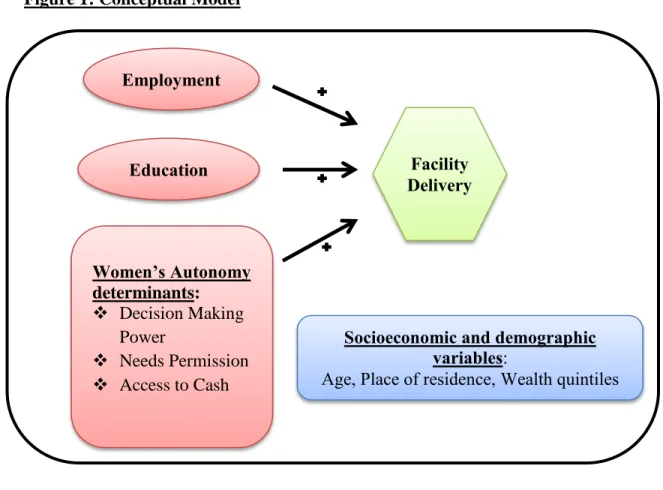
The conceptual model used in this study hypothesizes that employment, higher education and women’s empowerment is associated with increased use of facilities for delivery. As shown in Figure 1, the conceptual model quantifies female autonomy using three gender measures: Decision making power, Freedom of movement and Access to cash. The framework hypothesizes that higher female autonomy relative to the three gender measures is predictive of the use of facilities for delivery. The framework also hypothesizes that employment and higher education can also be predictors of increased utilization of healthcare facilities. The study also controls for the influence of
Figure 1: Conceptual Model
METHODS
Data Sampling and Collection:
The data come from the 2005-06 National Family Health Survey-3 (NFHS-3) conducted in India. NFHS-3 survey was conducted under the stewardship of the Ministry of Health and Family Welfare (MOHFW), Government of India. International Institute for Population Sciences (IIPS), Mumbai, was appointed as the nodal agency for
conducting the surveys by MOHFW. Funding for NFHS-3 was provided by the United States Agency for International Development (USAID), the United Kingdom Department for International Development (DFID), the Bill and Melinda Gates Foundation, UNICEF,
Employment
Education
Women’s Autonomy determinants:
Decision Making Power
Needs Permission
Access to Cash
Facility Delivery
Socioeconomic and demographic variables:
UNFPA, and the Government of India. Technical assistance for NFHS-3 was provided by Macro International, Maryland, USA36.
NFHS-3 interviewed 124,385 women age 15 – 49 and 74,369 men age 15 -54 to obtain information on population, health and nutrition in India and each of its 29 states. The survey is a representative household sample at the state and national levels. The NFHS-3 survey used standardized questionnaires, sample designs, and field procedures to collect data37.
NFHS-3 used three types of questionnaires: the Household Questionnaire, the Women’s Questionnaire, and the Men’s Questionnaire. This study used data from the Women’s Questionnaire, which was employed to interview all women (ever-married and never-married) age 15-49 who were permanent residents of the sample household or visitors who stayed in the sample household the night before the survey37.
A total of 109,041 households were interviewed. The household response rate, i.e., the number of households interviewed per 100 occupied households, was 98 percent for India as a whole, 97 percent in urban areas, and 99 percent in rural areas37. The individual response rate, i.e., the number of completed interviews per 100 eligible women identified in the households, was 95 percent for the country as a whole, 93 percent in urban areas and 96 percent in rural areas37.
Measures:
Autonomy Measures:
NFHS-3 collected data on a large number of indicators on women’s empowerment. Assessment of decision making autonomy was done by collecting information from currently married women on their participation in different types of decisions. The healthcare decision making measure for this study used the data collected from the response to the specific question - who has the final say on decisions about your own health care: You, your husband/partner, you and your husband/partner jointly, or someone else? Women who made all decisions either alone or jointly were categorized as having high healthcare decision-making power and the others where categorized as low healthcare decision making power.
Women’s access to financial resources was assessed by asking them whether they have any money of their own, that they alone can decide how to use. The responses were categorized as ‘Yes’ (coded 1) or ‘No’ (coded 0).
The permission measure was assessed by the responses given to the question on whether she has any problem in getting permission from her husband or others to seek healthcare. The responses were recoded to create a dichotomous variable of ‘No
Problem’ (coded 0) and ‘Big problem’ (coded 1, includes responses ‘some problem’ and ‘big problem’).
Employment measure:
to illness, leave, or any other such reason. The variable was categorized with a response of No (coded as 0) or Yes (coded as 1).
Education measure:
The education variable was constructed as a country specific standardized variable providing level of education in the following categories: No education, Primary, Secondary, and Higher.
Outcome measure:
The outcome measure of facility delivery was constructed from the responses of women who had their last birth in the last five years, to the question: Where did they give birth. The responses falling under private, public and NGO sectors were categorized as Facility delivery (coded as 1) and the other’s such as home ( parent’s home, other’s home) were categorized as Non Facility (coded as 0).
Socioeconomic and demographic measures:
Socioeconomic variables considered in this study include women’s age (in five year groups), place of residence (rural/urban) and wealth quintiles (poor, middle and rich).
Statistical Analyses:
regression analyses were done to assess the influence of certain variables on the
probability of occurrence of the outcome variable. Logistic regression models were first fitted to study the influence of the variables of primary interest (Model 1). Subsequently the logistic regression model (Model 2) was filled with the socioeconomic and
demographic variables (to control for these) to study the influence of the variables of primary interest on outcome variable.
RESULTS
Descriptive Analyses:
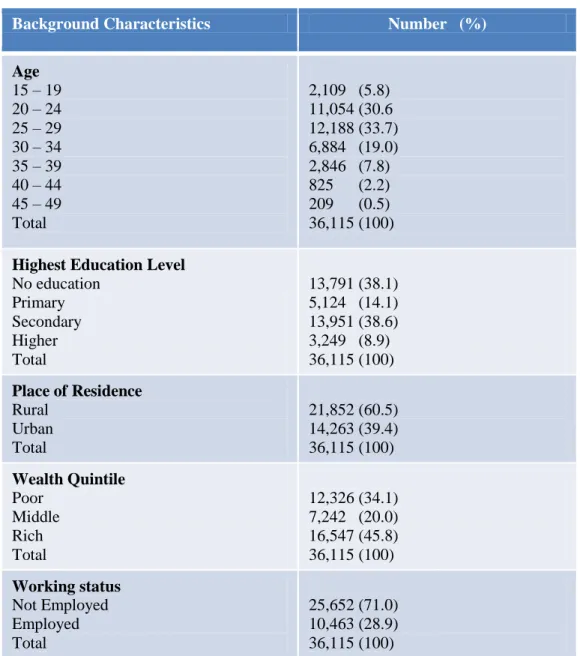
Table 1 gives the descriptive statistics of the sample. Approximately 70% of the study sample was between 15 – 29 years of age with around 60% of the sample living in rural areas. More than half of the sample (~52%) had no/primary education, while
Table 1: Sample characteristics
Background Characteristics Number (%)
Age 15 – 19 20 – 24 25 – 29 30 – 34 35 – 39 40 – 44 45 – 49 Total
2,109 (5.8) 11,054 (30.6 12,188 (33.7) 6,884 (19.0) 2,846 (7.8) 825 (2.2) 209 (0.5) 36,115 (100)
Highest Education Level No education Primary Secondary Higher Total 13,791 (38.1) 5,124 (14.1) 13,951 (38.6) 3,249 (8.9) 36,115 (100)
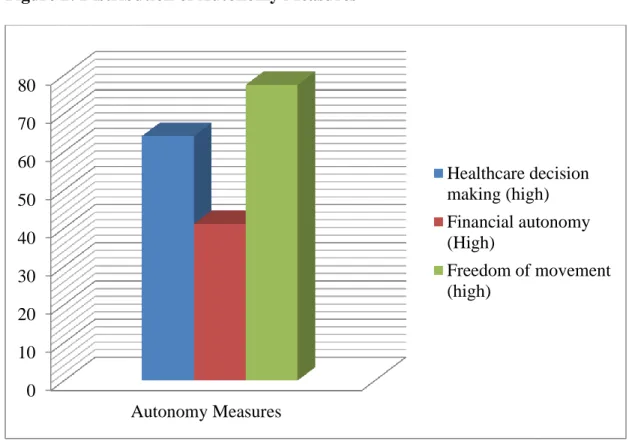
Figure 2: Distribution of Autonomy Measures
Figure 2 gives the distribution of the autonomy measures in the sample population. Around 64% of the women in the study sample have a high decision making power about their healthcare and about 77% of the women had no problem in getting permission to get medical help. Only 41% of the women had access to cash for their own use showing a low financial autonomy among the sample population.
Bivariate analyses:
Overall 48.3% of the sample population went to a facility for their most recent delivery (Figure 3). Table 2 shows the percentage of women who went to a facility for delivery by the variables of primary interest variables. There are differences in the use of facilities across the subgroups of women. Education was highly correlated with the use of facilities with about 93% of the women with higher education having a facility delivery compared to only 22% of the women with no education. The percentage of women who used
0 10 20 30 40 50 60 70 80
Autonomy Measures
Healthcare decision making (high) Financial autonomy (High)
facilities was higher among the women with higher autonomy than among those with lower autonomy. However only 38% of the employed women had a facility delivery
compared to 52% who were not employed.
Figure 3: Distribution of Facility Delivery Table 2: Distribution of facility delivery by variables of primary interest
Variables of Primary Interest Non Facility Delivery N(%) Facility Delivery N(%) Education No education Primary Secondary Higher Total
10,752 (77.9) 3,070 (59.9) 4,637 (33.2) 203 ( 6.2 ) 18,662 (51. 7)
3,040 (22.0) 2.054 (40.0) 9,314 (66.7) 3,045 (93.7) 17,453(48.3)
Employment Status No
Yes Total
12,209 (47.5) 6,453 (61.6) 18,662 (51.7)
13,443 (52.4) 4,010 (38.3) 17,453 (48.3)
Healthcare Decision Power Low
High Total
7,095 (54.6) 11,567 (49.9) 18,662 (51.7)
5,881 (45.3) 11,572 (50.0) 17,453 (48.3)
Access to cash No
Yes Total
11,726 (55.1) 6.928 (46.7) 18,662 (51.7)
9,533 (44.8) 7,908 (53.3) 17,453 (48.3)
Needs permission to get medical help No problem
Big Problem Total
13,431 (48.0) 5,231 (64.1) 18,662 (51.7)
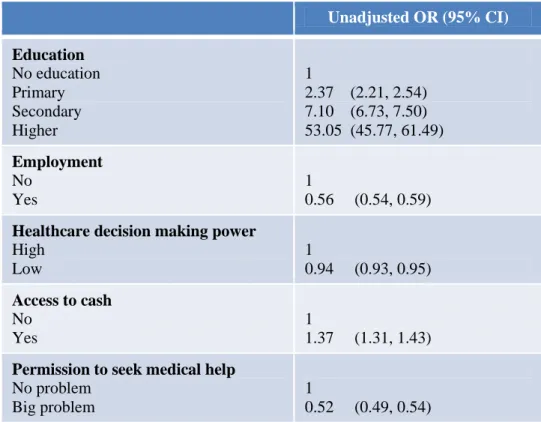
All the variables of primary interest were significantly associated with the outcome variable of facility delivery. Women’s education showed a significant positive
relationship with facility delivery with the odds ratio increasing as the education level got higher. Women with higher education have higher odds of facility delivery compared to those with no education (OR 53.05). Among the autonomy measures access to cash was significantly associated with increased use of facilities for delivery with an odds ratio of 1.37 compared to those who did not have any access to cash for their use. Women who have lower decision making power and, those who require permission to seek medical help showed lower odds of having a facility delivery. Similarly the odds of employed women having a facility delivery were lower than those who were not employed (OR 0.56). The findings of the bivariate analyses are shown in Table 3.
Table 3: Bivariate Analysis: Facility Delivery and Primary Interest Variables
Unadjusted OR (95% CI)
Education No education Primary Secondary Higher 1
2.37 (2.21, 2.54) 7.10 (6.73, 7.50) 53.05 (45.77, 61.49)
Employment No
Yes
1
0.56 (0.54, 0.59)
Healthcare decision making power High
Low
1
0.94 (0.93, 0.95)
Access to cash No
Yes
1
1.37 (1.31, 1.43)
Permission to seek medical help No problem
Big problem
1
Multivariate Analyses:
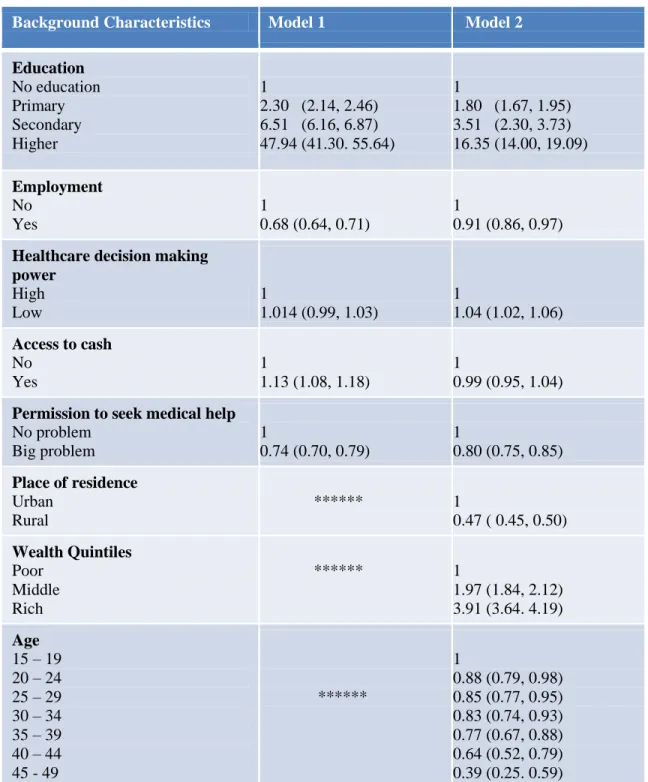
From the findings of the logistic regression models as shown in Table 4, it is evident that education has a strong positive association with facility delivery in both the models. However the explanatory power of education was reduced after introducing the
socioeconomic and demographic variables in the model. Employment measure still shows a negative association with facility delivery in both the models. Among the autonomy measures access to cash variable was positively associated with facility delivery in Model 1, however the odds ratio was reduced after controlling for the
Table 4: Multivariate analyses finding
Background Characteristics Model 1 Model 2
Education No education Primary Secondary Higher 1
2.30 (2.14, 2.46) 6.51 (6.16, 6.87) 47.94 (41.30. 55.64)
1
1.80 (1.67, 1.95) 3.51 (2.30, 3.73) 16.35 (14.00, 19.09)
Employment No
Yes
1
0.68 (0.64, 0.71)
1
0.91 (0.86, 0.97)
Healthcare decision making power
High Low
1
1.014 (0.99, 1.03)
1
1.04 (1.02, 1.06)
Access to cash No
Yes
1
1.13 (1.08, 1.18)
1
0.99 (0.95, 1.04)
Permission to seek medical help No problem
Big problem
1
0.74 (0.70, 0.79)
1
0.80 (0.75, 0.85)
Place of residence Urban
Rural
****** 1
0.47 ( 0.45, 0.50)
Wealth Quintiles Poor
Middle Rich
****** 1
1.97 (1.84, 2.12) 3.91 (3.64. 4.19)
Age 15 – 19 20 – 24 25 – 29 30 – 34 35 – 39 40 – 44 45 - 49
******
1
DISCUSSION
Research over the last decade has established the significant role played by women’s autonomy as an important predictor of utilization of maternal healthcare services16-22. Many of the studies have failed to look at the multidimensionality of women’s autonomy or have used proxy measures such as education and employment to measure autonomy 38, 39, 40
. This paper aimed to study the associations between specific dimensions of women’s autonomy and utilization of services and also to study education and
employment as direct determinants rather than as proxies for autonomy. Education was found to highly associate with facility delivery; the likelihood of facility delivery
increased as the education level became higher. Employment was found to be negatively associated with facility delivery which was opposite to the hypothesized positive relation of employment predicting increased use of facility for delivery. Among the three
variables that measured autonomy not requiring permission to seek health care was significantly associated with facility delivery suggesting that even in traditional societies were women have limited autonomy, certain dimensions can have an important bearing to health seeking behaviour16. Women who had access to cash did have higher odds of facility delivery in Model 1, however the odds was reduced after controlling for the socioeconomic variables. Women’s healthcare decision making power was not significantly associated with facility delivery which could be due the fact that this
The study shows except for the permission variable all the other autonomy variables were not significantly associated with facility delivery after controlling for the socio-economic variables in the model. The results of this study are consistent with other studies
suggesting that not all the dimensions of women’s autonomy are predictors of healthcare utilization12, 16, 18. The findings also suggest that other factors such as education and socioeconomic and demographic characteristics are highly significant determinants of utilization of facilities for delivery. Women residing in urban area increased the likelihood of facility delivery. However the lower utilization of services in rural areas could be due to lack of availability and accessibility of facilities12. Similarly women belonging to higher wealth quintiles were 3-4 times more likely to utilize facilities. The positive effect of education could be explained by different routes of causation such as fostering values and attitudes to seek modern healthcare and also by imparting a sense of self-worth and confidence41, 42. However employment was found to be a negative
predictor of outcome measure which was in agreement with some of the previous literature35. More than half of the employed women in the sample were paid in kind or not paid at all which might account for the negative association. Another factor which also needs to be considered is the extent of women’s controls over the earnings among those who were paid in cash.
maternal mortality will need an integrated/holistic approach. Recommendation from this study are consistent with other studies in that the maternal health policies and programs should continue to focus on promoting education, improving women’s economic status and consider the autonomy indices.
REFERENCES:
1. Trends in Maternal Mortality: 1990 to 2008. Estimates developed by WHO, UNICEF, UNFPA and the World Bank [Internet]. Geneva: WHO; 2010 [cited on 06/19/13]. Available from http://whqlibdoc.who.int/publications/2010/9789241500265_eng.pdf. 2. Karlsen S, Say L, Souza JP, Hogue CJ et al. The Relationship between Maternal Education and Mortality among Women Giving Birth in Health Care Institutions: Analysis of the cross sectional WHO Global Survey on Maternal and Perinatal Health. BMC Public Health. 2011 Jul 29; 11: 606.
3. The Millennium Development Goals Report 2012 [Internet]. New York: United
Nations; 2012 [cited on 06/19/13]. Available from:
http://mdgs.un.org/unsd/mdg/Resources/Static/Products/Progress2012/English2012.pdf#p
age=28
4. Ronsmans C, Graham WJ et al. Maternal Mortality: Who, When, Where, and Why. Lancet. 2006 Sep 30; 368(9542):1189-200.
5. Hogan MC, Foreman KJ, Naghavi M et al. Maternal Mortality for 181 countries, 1980–2008: A Systematic Analysis of Progress Towards Millennium Development Goal 5. Lancet. 2010 May 8; 375(9726):1609-23.
6. Starrs AM. Safe Motherhood Initiative: 20 years and Counting. Lancet. 2006 Sep 30; 368(9542):1130-2.
8 Mavalankar D, Vora K, Prakasamma M. Achieving Millennium Development Goal 5: is India serious? Bull World Health Organ. 2008 Apr; 86(4):243-243A.
9. Singh S, Remez L, Ram U, Moore AM, Audam S. Barriers to safe motherhood in India [Internet]. New York: Guttmacher Institute; 2009 [cited on 06/19/13]. Available from: http://dspace.cigilibrary.org/jspui/bitstream/123456789/24031/1/Barriers%20to%20safe
%20motherhood%20in%20India.pdf?1.
10. Ministry of Health and Family Welfare: Annual Report 2004 [Internet]. New Delhi: Government of India; 2004 [cited on 06/19/13]. Available from
http://mohfw.nic.in/index1.php?lang=1&level=1&sublinkid=22&lid=44.
11. Making Pregnancy Safer [Internet]. Geneva: World Health Organization; 2005 [cited on 06/19/13]. Available from
http://www.who.int/maternal_child_adolescent/documents/newsletter/mps_newsletter_iss
ue1.pdf.
12. Mahapatro S R, Utilization of maternal and child health care services in India: Does women’s autonomy matter? J Fam Welf. 2012 Jun; 58(1):22-33.
13. Basu A M. Culture, the status of women and demographic behavior: Illustrated with the case of India. Oxford: Clarendon Press; 1992. 245.
14. Dyson T, Moore T. On kinship structure, female autonomy, and demographic behavior in India. Popul Dev Rev. 1983; 9(1): 35–54.
16. Bloom SS, Wypij D, Das Gupta M. Dimensions of Women's Autonomy and the Influence on Maternal Health Care Utilization in a North Indian city. Demography. 2001 Feb; 38(1):67-78.
17. Woldemicael G, Tenkorang EY. Women's Autonomy and Maternal Health-seeking Behavior in Ethiopia. Matern Child Health J. 2010 Nov; 14(6):988-98.
18. Woldemicael G. Do women with higher autonomy seek more maternal health care? Evidence from Eritrea and Ethiopia. Health Care Women Int. 2010 Jul; 31(7):599-620. 19. Hakim A, Salwy S, Mumtaz Z. Women’s autonomy and uptake of
contraception in Pakistan. Asia Pac Popul J. 2003; 18(1): 64–82.
20. Kamiya Y. Women's Autonomy and Reproductive Health Care Utilisation: Empirical evidence from Tajikistan. Health Policy. 2011 Oct; 102(2-3):304-13.
21. Saleem S, Bobak M. Women's Autonomy, Education and Contraception use in Pakistan: A National Study. Reprod Health. 2005 Oct 21; 2:8.
22. Mistry R, Galal O, Lu M. Women's Autonomy and Pregnancy Care in Rural India: A Contextual Analysis. Soc Sci Med. 2009 Sep; 69(6):926-933.
23. The Millennium Development Goals Report 2006 [Internet]. New York: United Nation; 2006 [Cited on 06/19/13]. Available from
http://mdgs.un.org/unsd/mdg/Resources/Static/Products/Progress2006/MDGReport2006. pdf.
24. Simkhada B, Teijlingen ER, Porter M, Simkhada P. Factors affecting
25. Fotso JC, Ezeh AC, Essendi H. Maternal health in resource-poor urban settings: how does women’s autonomy influence the utilization of obstetric care services? Reprod Health. 2009 Jun 16; 6:9.
26. Presser H, Sen G. Women’s empowerment and demographic processes: Moving beyond Cairo. Oxford University Press: USA; 9 Nov 2000. 440.
27. Dreze J, Murthi M. Fertility, Education, and Development: Evidence from India. Popul Dev Rev. 27 March 2001; 27(1):33–64.
28. Kravdal O. The High Fertility of College Educated Women in Norway: An Artifact of the Separate Modeling of each Parity Transition. Demogr Res. 11 Dec 2001; 5(6):
187-216.
29. Handa, S. Mortality, Fertility, and Recent Fertility in Jamaica.World Dev. 2000; 28(1):173–186.
30. Elo IT. Utilization of Maternal Health-care Services in Peru: The Role of Women's Education. Health Transit Rev. 1992 Apr; 2(1):49-69.
31. Raghupathy S. Education and the use of maternal health care in Thailand. Soc Sci Med. 1996; 43 (4):459-71.
32. Heaton T B, Huntsman T J, Flake D F. The effects of status on women’s autonomy in Bolivia, Peru,and Nicaragua. Population Research and Policy Review. June 2005; 24(3): pp 283-300.
33. Acharya DR, Bell JS, Simkhada P et al. Women's Autonomy in Household Decision-Making: A Demographic Study in Nepal. Reprod Health. 2010; 7:15–27.
35. Furuta M, Salway S. Women's Position Within the Household as a Determinant of Maternal Health Care Use in Nepal Int Fam Plan Perspect. 2006 Mar; 32(1):17-27. 36. National Family Health Survey (NFHS-3), 2005-06, India: Key Findings [Internet]. Mumbai: International Institute for Population Sciences (IIPS) and Macro International; 2007 [Cited on 06/19/13]. Available from
http://www.measuredhs.com/publications/publication-SR128-Summary-Reports-Key-Findings.cfm.
37. National Family Health Survey (NFHS-3), 2005–06: India: Volume I [Internet]. Mumbai: International Institute for Population Sciences (IIPS) and Macro International; 2007 [Cited on 06/19/13]. Available from
http://www.measuredhs.com/publications/publication-FRIND3-DHS-Final-Reports.cfm
38. Shaikh BT, Haran D, Hatcher J. Women’s social position and health seeking behaviors: Is the healthcare system accessible and responsive in Pakistan? Health Care Women Int. 2008 Sep; 29(8):945-59
39. Matthews Z, Ramasubban R, Rishyasringa B, Stones W. Autonomy and maternal health-seeking among slum populations of Mumbai. Social Statistics research center (SSRC) applications and policy working paper A03/06. SSRC, University
of Southampton. 2006.
40. Al Riyami A, Afifi M, Mabry RM. Women's autonomy, education and employment in Oman and their influence on contraceptive use. Reprod Health Matters. 2004
May;12(23):144-54.