Abstract
Background: Preemptive genotyping is a strategy that tests for multiple pharmacogenomic variants before a drug is prescribed. Pharmacogenomic information currently appears in 165 FDA-approved drug labels, and many medications have FDA boxed warnings and/or available Clinical Pharmacogenetics Implementation Consortium (CPIC) guidelines that recommend action, such as selecting a different drug or dose, in patients with certain genotypes if the genetic test result was available. However, the
implementation of established pharmacogenomic guidance is hardly done in clinical practice due to the lack of a clear population to genotype. Cardiac catheterization laboratory patients serve as a reasonable population due to their multiple comorbidities and increased likelihood of being on genetically
actionable drugs. The objective of this study was to retrospectively assess the projected number of actionable pharmacogenetic-guided interventions that could have resulted with preemptive genotyping within a six-month time period for cardiac catheterization laboratory patients.
Methods: This single-center, retrospective study of an established cohort included 183 patients referred for coronary angiography between September 2012 and February 2014 at UNC Hospitals. A list of 20 drugs with genetically actionable FDA boxed warnings and/or CPIC guidelines was established a priori to guide medication collection. For these drugs, the relevant genes are HLA-B, CYP2C19, CYP2D6, CYP2C9, SLCO1B1, VKORC1/CYP2C9, and DYPD. Medication information was collected at discharge and at first follow-up. The primary endpoint was the projected number of genotype-guided interventions at discharge or first follow-up that could have occurred using published allele frequencies to estimate the projected presence of at-risk genotypes. Secondary endpoints included the distribution of total
interventions by gene in the study population, and the projected annual number of genotype-guided interventions at discharge or first follow-up in the UNC catheterization laboratory patient population.
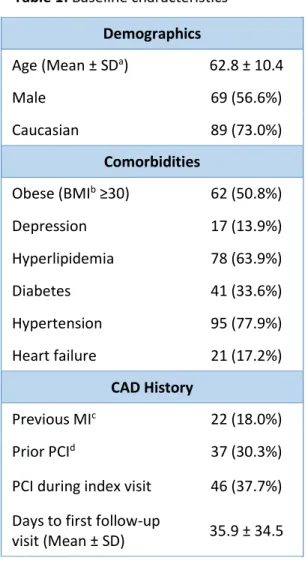
Results: The study population included 122 patients who had a first follow-up visit within 180 days of the catheterization. Patients were on average 63 years old, 57% male, and 73% Caucasian. Comorbidities included depression (13.9%), hyperlipidemia (63.9%), and heart failure (17.2%). Approximately 38% of patients underwent a percutaneous coronary intervention during the catheterization procedure. The most prevalent genetically actionable drugs at discharge or first follow-up were clopidogrel (48.4%), antidepressants (20.5%), simvastatin (13.9%), and warfarin (9.0%). Corresponding at risk genotypes of interest and projected frequencies were CYP2C19 intermediate or poor metabolizers (28.9%) for clopidogrel, CYP2C19 ultra-rapid or poor metabolizers (32.5%) for antidepressants, SLCO1B1 C allele carriers (23.6%) for simvastatin, and VKORC1/CYP2C9 sensitive or highly sensitive responders (38.3%) for warfarin. The total projected number of genotype-guided interventions at discharge or first follow-up in the study population was 32. Distribution of total interventions by gene was as follows: 71.9% CYP2C19, 12.5% SLCO1B1, 12.5% VKORC1/CYP2C9, and 3.1% CYP2C9. Assuming each intervention is unique to one patient, a genotype-guided medication intervention could have been made in 26.2% (32 of 122) of the study population within 6 months of their presentation to the cardiac catheterization laboratory. When carried out to the annual UNC Catheterization Laboratory population, the total projected number of genotype-guided interventions at discharge or first follow-up increased to 565.
Introduction
Genetically guided personalized medicine has become more clinically significant in recent years, and the US Food and Drug Administration (FDA) is reflecting these new findings in its drug evaluation and approval process. In 2005, the FDA issued a comprehensive pharmacogenomics guidance document
addressing how and when drug development entities should submit genomic data to the FDA.1 Since
then, pharmacogenomic information has appeared in 165 FDA-approved drug labels.2 Without taking
into account oncology drugs, which are oftentimes exceedingly complex to dose and administer, there are currently 7 medications with genomic-associated black box warnings, 41 with either published Clinical Pharmacogenetics Implementation Consortium (CPIC) guidelines or FDA label recommendations
influencing drug dosing and selection, and numerous more categorized as genetically “actionable” with
implications on adverse drug outcomes such as toxicities, side effects, and therapy failures. Over 30 of
these medications are listed in the Top 200 Drugs of 2012 article published by Pharmacy Times.3 Despite
this, genetic information is not routinely obtained and the implementation of genotype-guided drug regimens into the standard of care remains a subject of ongoing investigation and debate. Due to the substantial impact pharmacogenomics could have on health outcomes, there is an increasing need to open new avenues for translating and applying it into clinical practice.
Traditionally, pharmacogenetic testing is done for genetic variations the affect drug response when therapy is initiated for patients. This approach is reactive in that the decision to order the test is made alongside or after the decision to initiate therapy. Often, genotyping patients retrospectively only provides pharmacogenetic information pertinent to the specific drug in question and cannot be applied to future therapeutic decisions involving agents affected by different genes. Furthermore, significant barriers currently exist, limiting consistent and widespread adoption in everyday clinical practice. These barriers include cost, and lack of capability or long turnaround times at most institutions. However, advances in genetic testing methodologies have allowed a single genetic test to interrogate multiple genes simultaneously. This advancement in technology, coupled with its competitive pricing, has the potential to shift genotyping decision making from a traditional, reactive strategy to one that is
proactive. Preemptive genotyping is a strategy that tests for multiple pharmacogenomic variants before a drug is prescribed, allowing patient genetic information to be stored for later use. The information obtained from this genotyping approach can be particularly beneficial to practitioners when prescribing a wide range of current and future medications, especially if these therapies come with boxed warnings warranting genetic testing or CPIC and other genome-based dosing guidelines. Importantly, preemptive genotyping eliminates barriers associated with turnaround time and allows the clinician to focus on how to best implement this data into patient care instead of deciding whether the test should be ordered or not. Moreover, the unfamiliarity of this material can create more opportunities for pharmacists in contributing to both the therapeutic decision-making and educational process by interpreting and relaying pharmacogenomic information to providers and patients. Lastly, preemptive genotyping, unlike reactive genotyping, allows for genetic information to be readily available in situations where a clinical decision or treatment cannot be deferred. Overall, preemptive genotyping could be an effective method of implementing pharmacogenomic data in practice and potentially prevent adverse drug-gene
interactions and subsequent hospital admissions, which can be costly to patients and providers alike.
its projected impact on drug selection and dosing. Cardiac catheterization laboratory patients may be ideal candidates as these individuals often have multiple comorbidities, increasing their likelihood of being on or being initiated on multiple pharmacologic therapies in which genetic testing is
recommended.4 For instance, approximately one-third of these patients will have a stent placement, a
procedure in which testing for the CYP2C19 genotype is recommended prior to starting the patients on the anti-platelet agent, clopidogrel. This is due to the diminished effectiveness of the drug in patients with certain loss-of-function polymorphisms of the gene, which can lead to failure of therapy and potentially fatal cardiovascular events. Other drugs with pharmacogenomic information their labels commonly seen with cardiac catheterization laboratory patients include platelet and
anti-thrombotic agents, beta blockers, anti-depressants, statins, and pain relievers.4 To our knowledge, there
are no studies currently published evaluating the use of preemptive genotyping in this patient population.
Additionally, it is crucial to determine which parameters would be clinically significant in the
implementation of an established pharmacogenetic guidance. We defined medications as “genetically
actionable” if they have an FDA boxed warning and/or available Clinical Pharmacogenetics
Implementation Consortium (CPIC) guideline that recommend action, such as selecting a different drug or dose, in patients with certain genotypes if the genetic test result was available.
The purpose of this study was to retrospectively assess the projected number of actionable
pharmacogenetic-guided interventions that could have resulted with preemptive genotyping within a 6 month time period for cardiac catheterization laboratory patients
Methods
Patient population
This was a single-center, retrospective cohort study of 183 UNC Cardiac Catheterization Laboratory
patients recruited between September 2012 and February 2014.5 An institutional review board
approved this study. Patients aged 18-80 years who were referred for coronary angiography and consented to participation in a DNA biorepository were included. Patients with one or more of the following conditions were excluded: severe concurrent illness, systemic inflammatory disease, malignancy actively being treated, ST-elevation myocardial infarction (STEMI), end-stage liver disease (ESRD) with or without dialysis, systemic immunosuppressive medication use, hematological disorder affecting platelet function, prior heart transplantation, hematocrit <30%, and pregnancy.
Medication selection
A literature and database review of the Food and Drug Administration’s Table of Pharmacogenomic Biomarkers in Drug Labeling and PharmGKB was conducted. Drugs with pharmacogenomic information in their FDA labeling were documented (see Table 7). Oncology, immunomodulary, and specialty drugs such as ivacaftor were not evaluated due to the biorepository exclusion criteria. The list was
subsequently narrowed down to only include drugs with actionable pharmacogenomic
Data collection
Patient demographics, clinical information, and medication use were abstracted from EPIC, the
electronic medical record. Medication information was collected at discharge and at the first follow-up clinic visit or hospitalization after the catheterization procedure and subsequently documented as nominal (yes/no) variables at each time point.
Outcome measures
The primary endpoint was the projected number of genotype-guided interventions in the study
population at discharge or first follow-up that could have occurred if genotype information was available at the time of patient encounter. Secondary endpoints included the distribution of total interventions by gene in the study population, and the projected annual number of genotype-guided interventions at discharge or first follow-up in the UNC catheterization laboratory patient population.
Calculations and analysis
Drug prevalence at discharge or first follow-up was calculated using descriptive statistics. Projected genotype frequencies for 7 genes at risk for actionable pharmacogenetic recommendations (HLA-B, CYP2C19, CYP2D6, CYP2C9, SLCO1B1, VKORC1/CYP2C9, and DYPD) were estimated based on published
literature for Caucasian-dominated populations from CPIC supplements5,7-13 and, in the case of
VKORC1/CYP2C9, the ENGAGE AF-TIMI 48 study.12 When only a genotype frequency range was provided
for CYP2D6 genetic variants and DYPD partial DPD deficiency, the upper and lower bounds of the
genotype frequency were averaged.10,13 The Hardy-Weinberg equation was used to calculate at risk
genotype frequencies when only allele frequencies were available, such as in the case of SLCO1B1 C and
HLA-B*1502 allele carriers.8,11 The projected number of interventions for each drug was calculated by
multiplying the observed drug frequency, projected at risk genotype frequency, and number of patients in the study population. The overall number of interventions was summed (see Table 4).
Results
A population of 183 patients from the UNC Cardiac Catheterization Laboratory who had donated blood samples to the biorepository were screened for inclusion. Forty-seven patients either had no follow-up in the UNC system or did not have medication records listed in their patient charts and were excluded from the analysis. An additional fourteen patients did not meet eligibility due to their first follow-up visit being greater than 180 days (see Figure 1).
Patient demographics
Prevalence of genetically actionable drugs
The most prevalent genetically actionable drug at discharge or at first follow-up was clopidogrel (59 patients; 48.4%), followed by antidepressants (25 patients; 20.5%), simvastatin (17 patients; 13.9%), and warfarin (11 patients; 9.0%). Genetically actionable drugs with lower prevalence included allopurinol (3 patients; 2.5%), phenytoin (2 patients; 1.6%), and codeine (2 patients; 1.6%). No patients were on carbamazepine and fluorouracil either at discharge or at first follow-up (see Table 2).
At risk genotype frequencies
Corresponding at-risk genotypes of interest and projected Caucasian frequencies for the most prevalent genetically actionable drug at discharge or at first follow-up were CYP2C19 intermediate or poor
metabolizers (28.9%) for clopidogrel, CYP2C19 ultra-rapid or poor metabolizers (32.5%) for
antidepressants, SLCO1B1 C allele carriers (23.6%) for simvastatin, and VKORC1/CYP2C9 sensitive or highly sensitive responders (38.3%) for warfarin. The projected Caucasian at-risk genotype frequencies for CYP2D6 ultra-rapid, intermediate, or poor metabolizers was 15.5%. The projected Caucasian at-risk genotype frequencies for individuals with partial or full DPD deficiency was 4.2%. B*5801 and HLA-B*1502 allele carriers had projected Caucasian at-risk genotype frequencies of 0.8% and 0.01%
respectively (see Table 3).
Projected genotype-guided interventions in study population
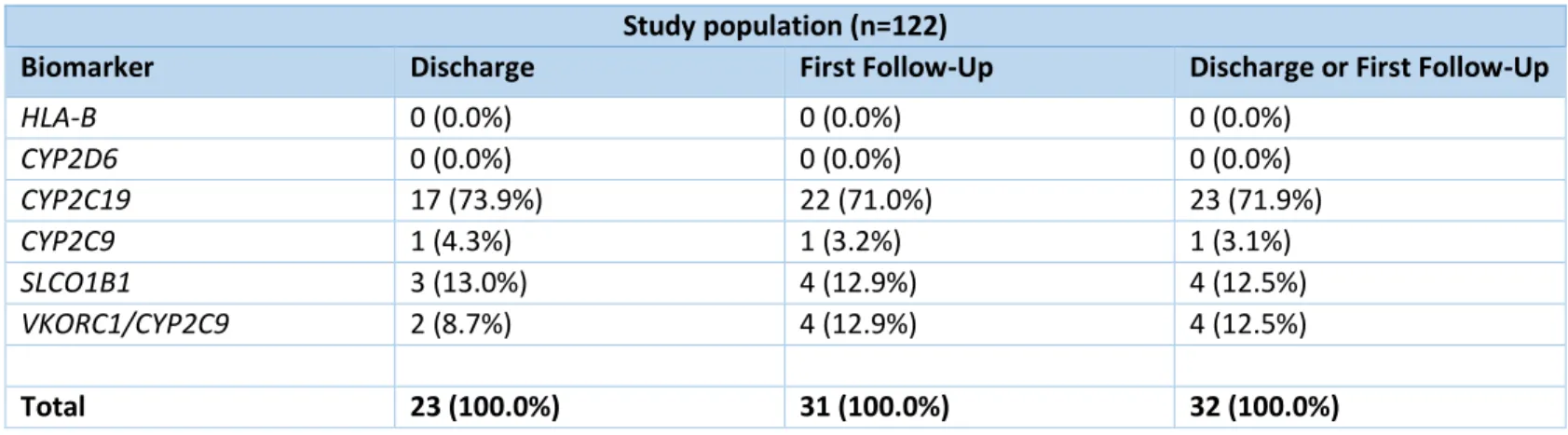
The total projected number of genotype-guided interventions at discharge or first follow-up in the study population was 32. The distribution of total genotype-guided interventions in the study population by gene was 71.9% for CYP2C19, 12.5% for SLCO1B1, 12.5% for VKORC1/CYP2C9, and 3.1% for CYP2C9. There were no projected interventions involving drugs actionable for CYP2D6, HLA-B, and DYPD. Assuming each intervention is unique to one patient, a genotype-guided medication intervention could have been made in 26.2% (32 of 122) of the study population within 6 months of their presentation to the cardiac catheterization laboratory (see Table 5 and Figure 2).
Projected annual genotype-guided interventions
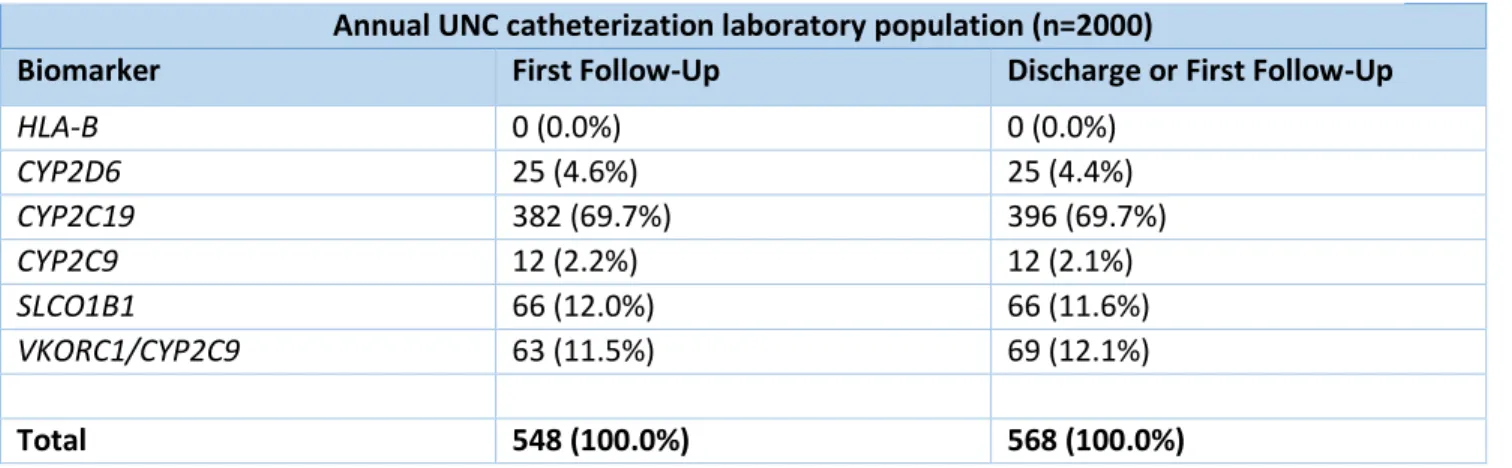
When carried out to the annual UNC Catheterization Laboratory population of 2000 patients, the total projected number of genotype-guided interventions at discharge or first follow-up increased to 565. A total of 396 interventions involved CYP2C19 drugs, 11 involved CYP2C9, 66 involved SLCO1B1, 69 involved VKORC1/CYP2C9 and 23 involved CYP2D6 drugs. The discretion between the number of
projected CYP2D6 genotype-guided interventions in the study population and the annual catheterization laboratory patients can be attributed to the how the interventions were calculated. Before the total number of interventions was summed, the calculated interventions were rounded as such: calculated intervention of greater than or equal to 0.5 was rounded up to 1 and calculated intervention less than 0.5 was rounded down to 0. With a higher patient population, the calculated CYP2D6 related
interventions that was originally rounded down are now showing up (see Table 6).
Discussion
accordance with FDA boxed warnings and CPIC guideline recommendations. We arbitrarily chose the 6 month time window for our analysis as a means of estimating the immediate number of genotype-guided interventions that could be made. The high prevalence of genetically actionable drugs during this short period of time serves as compelling evidence to implement pharmacogenomic testing in this population. Additionally, as almost 30% of interventions involved non-CYP2C19 drugs, the potential benefit of a multi-gene panel that extends far beyond just CYP2C19 testing.
One of the study’s limitations was it’s a small sample size, which puts the generalizability of the results into question. However, the characteristics of cohort of patients are comparable to that of the general catheterization laboratory population, according to patient data for 2014 that was reported in four
National Cardiovascular Data Registries.15 Actionable oncology and immunomodulatory drugs were not
assessed in this study per the patient exclusion criteria, due to the complexity of treatment regimens in patients with active cancers or inflammatory conditions. Thus, the results of this study should not be applied to this patient subset. Additionally, this study assumed that medication changes will occur given the presence of an at-risk genotype regardless of other clinical factors, which oftentimes does not happen in clinical practice as treatment is dependent on a multimodal approach that is specific to the patient.
Another limitation of the study was that the projected number of genotype-guided interventions was calculated based on publicly available Caucasian at-risk genotype frequencies which does not take into account genetic variances between ethnic groups. For example, African Americans have a higher probability of carrying a CYP2C19 loss-of-function variant allele than Caucasians, and African Americans
made up approximately 21.3% of our study population.9 The failure to account for a multiethnic
population was due to the difficulty of accurately estimating at-risk genotype frequencies from publicly available data. However, this study only serves as phase one of a two-phase study. Patients were required to donate blood samples to the biorepository to be considered for inclusion. In the subsequent phase, their genetic samples will be preemptively genotyped using a multi-gene panel developed by Tim
Wiltshire’s laboratory at the UNC Eshelman School of Pharmacy. This will allow us to determine the actual number of immediate genotype-guided interventions that could be made in this catheterization laboratory study population.
We took a very conservative approach in this study to project the genetically-guided interventions in this patient population. We defined a drug as genetically actionable if they had FDA boxed warnings and/or CPIC guidelines that recommended a specific action. However, there are numerous more medications that have pharmacogenomic information in their FDA labelling that are common to the cardiac catheterization laboratory population, such as anti-diabetic agents, proton pump inhibitors, and heart
failure drugs.2, 15 Current genomic information on these agents is limited, with data only providing
The determination of the clinical benefits from preemptive genotyping in patients earlier on may lead to a considerable decrease in risk of adverse events, hospital admissions, and cost of medical care for the patient and institution. Several studies have been published supporting the use of a preemptive genotyping strategy in patients. Van Driest S, et al. looked at 9,589 individuals who had undergone preemptive pharmacogenomic testing through the Vanderbilt Pharmacogenomic Resource for Enhanced Decisions in Care and Treatment (PREDICT) program. The panel-based test identified one or more actionable variants in 91% of the genotyped patients. Using medication exposure data from electronic medical records, the study theorized that reactive genotyping would have generated 14,656 genetic
tests.16 Schildcrout J, et al. examined the prescription frequency of 56 medications with known
outcomes influenced by variant alleles in a cohort of 52,942 medical home patients at Vanderbilt University Medical Center (VUMC). The study found that within 5 years, 64.8% of individuals were exposed to at least one medication with an established pharmacogenetic association. Additionally, the study estimated that 383 events, attributed to six medications with severe, well-characterized,
genetically linked adverse events, could have been prevented with an effective preemptive genotyping program.17
To our knowledge, our study is the first-of-its-kind in evaluating the use of a preemptive genotyping strategy in cardiac catheterization laboratory patients. A significant barrier to the widespread implementation of pharmacogenomic-guided medication therapy is the absence of a clearly defined target population. The results of this study provide evidence that cardiac catheterization patients are a promising target population that may benefit from a preemptive, panel-based genotyping strategy. Although additional analyses are required to determine whether preemptive genotyping should be implemented in cardiac catheterization patients, this study serves as a guide for future research that assess the impact of preemptive genotyping on outcomes and cost, and ultimately, establishing
Acknowledgements
This project would not have been possible without the guidance and support of my primary research advisor Dr. Craig Lee, PharmD, PhD, as well as our project collaborators Olivia Dong, MPH, Akinyemi Oni-Orisan, PharmD, PhD, Tim Wiltshire, PhD, and George Stouffer, MD.
References
1. Food and Drug Administration. Guidance for Industry Pharmacogenomic Data Submissions;
2005. http://www.fda.gov/downloads/RegulatoryInformation/Guidances/UCM126957.pdf. Accessed August 20, 2015.
2. Food and Drug Administration. Table of Pharmacogenomic Biomarkers in Drug Labeling; 2015.
http://www.fda.gov/drugs/scienceresearch/researchareas/pharmacogenetics/ucm083378.htm. Accessed September 25, 2016.
3. Pharmacy Times. Top 200 Drugs of 2012; 2013.
http://www.pharmacytimes.com/publications/issue/2013/july2013/top-200-drugs-of-2012. Accessed August 20, 2015.
4. Johnson JA, Cavallari LH. Pharmacogenetics and cardiovascular disease--implications for
personalized medicine. Pharmacol Rev. 2013;65(3):987-1009.
5. Oni-Orisan A, Edin ML, Lee JA, Wells MA, Christensen ES, Vendrov KC, Lih FB, Tomer KB,
Bai X, Taylor, JM, Stouffer GA, Zeldin DC, Lee CR. Cytochrome P450-derived
epoxyeicosatrienoic acids and coronary artery disease in humans: a targeted metabolomics study. J Lipid Res. 2016; 57(1):109-19.
6. PharmGKB. Dosing Guidelines - CPIC.
https://www.pharmgkb.org/view/dosing-guidelines.do?source=CPIC. Accessed September 25, 2016.
7. Clinical Pharmacogenetics Implementation Consortium (CPIC) guidelines for human leukocyte
antigen B (HLA-B) genotype and allopurinol dosing: 2015 update. Clinical pharmacology and therapeutics. 2015. Saito Y, Stamp L K, Caudle K E, Hershfield M S, McDonagh E M, Callaghan J T, Tassaneeyakul W, Mushiroda T, Kamatani N, Goldspiel B R, Phillips E J, Klein T E, Lee Mtm
8. Clinical Pharmacogenetics Implementation Consortium (CPIC) Guidelines for CYP2C9 and HLA-B
Genotype and Phenytoin Dosing. Clinical pharmacology and therapeutics. 2014. Caudle Kelly E, Rettie Allan E, Whirl-Carrillo Michelle, Smith Lisa H, Mintzer Scott E, Lee Ming Ta Michael, Klein Teri E, Callaghan J Thomas.
9. Clinical Pharmacogenetics Implementation Consortium (CPIC) guidelines for cytochrome
P450-2C19 (CYPP450-2C19) genotype and clopidogrel therapy: 2013 Update. Clinical pharmacology and therapeutics. 2013. Scott Stuart A, Sangkuhl Katrin, Stein C Michael, Hulot Jean-Sébastien, Mega Jessica L, Roden Dan M, Klein Teri E, Sabatine Marc S, Johnson Julie A, Shuldiner Alan R
10. Clinical Pharmacogenetics Implementation Consortium (CPIC) guidelines for cytochrome P450
2D6 (CYP2D6) genotype and codeine therapy: 2014 Update. Clinical pharmacology and
therapeutics. 2014. Crews Kristine R, Gaedigk Andrea, Dunnenberger Henry M, Leeder J Steve, Klein Teri E, Caudle Kelly E, Haidar Cyrine E, Shen Danny D, Callaghan John T, Sadhasivam Senthilkumar, Prows Cynthia A, Kharasch Evan D, Skaar Todd C.
11. The Clinical Pharmacogenetics Implementation Consortium (CPIC) guideline for SLCO1B1 and
A, Maxwell Whitney D, McLeod Howard L, Krauss Ronald M, Roden Dan M, Feng Qiping, Cooper-DeHoff Rhonda M, Gong Li, Klein Teri E, Wadelius Mia, Niemi Mikko.
12. Mega JL, Walker JR, Ruff CT, et al. Genetics and the clinical response to warfarin and edoxaban:
findings from the randomised, double-blind ENGAGE AF-TIMI 48 trial. Lancet. 2015;385(9984):2280-7.
13. Clinical Pharmacogenetics Implementation Consortium Guidelines for Dihydropyrimidine
Dehydrogenase Genotype and Fluoropyrimidine Dosing. Clinical pharmacology and therapeutics. 2013. Caudle Kelly E, Thorn Caroline F, Klein Teri E, Swen Jesse J, McLeod Howard L, Diasio Robert B, Schwab Matthias.
14. Masoudi FA, Ponirakis A, De lemos JA, et al. Trends in U.S. Cardiovascular Care: 2016 Report
From 4 ACC National Cardiovascular Data Registries. J Am Coll Cardiol. 2017;69(11):1427-1450.
15. Van driest SL, Shi Y, Bowton EA, et al. Clinically actionable genotypes among 10,000 patients
with preemptive pharmacogenomic testing. Clin Pharmacol Ther. 2014;95(4):423-31.
16. Schildcrout JS, Denny JC, Bowton E, et al. Optimizing drug outcomes through pharmacogenetics:
Appendix
183 patients referred for coronary angiography and
donated blood samples
122 patients analyzed 61 patients excluded
14 had >180 day follow-up 47 had no follow-up or a documented medication list
Figure 1: Flow diagram of eligibility
47 had no follow-up or no documented medication list
Demographics
Age (Mean ± SDa) 62.8 ± 10.4
Male 69 (56.6%)
Caucasian 89 (73.0%)
Comorbidities
Obese (BMIb≥30) 62 (50.8%)
Depression 17 (13.9%)
Hyperlipidemia 78 (63.9%)
Diabetes 41 (33.6%)
Hypertension 95 (77.9%)
Heart failure 21 (17.2%)
CAD History
Previous MIc 22 (18.0%)
Prior PCId 37 (30.3%)
PCI during index visit 46 (37.7%)
Days to first follow-up
visit (Mean ± SD) 35.9 ± 34.5
Footnote:
a. Standard deviation b. Body mass index c. Myocardial infarction
d. Percutaneous coronary intervention
Drug Prevalence (n)
Amitriptyline 3.3% (4)
Citalopram 6.6% (8)
Clomipramine 0% (0)
Desipramine 0.8% (1)
Doxepin 0% (0)
Escitalopram 1.6% (2)
Fluvoxamine 0% (0)
Imipramine 0.8% (1)
Nortriptyline 0% (0)
Paroxetine 2.5% (3)
Sertraline 4.9% (6)
Trimipramine 0% (0)
Total Antidepressants 20.5% (25)
Carbamazepine 0% (0)
Phenytoin 1.6% (2)
Total Anticonvulsants 1.6% (2)
Allopurinol 2.5% (3)
Clopidogrel 48.4% (59)
Codeine 1.6% (2)
Simvastatin 13.9% (17)
Warfarin 9.0% (11)
Fluorouracil 0% (0)
Biomarker Referenced Subgroup
Genotype Frequency
Actionable Drugs
HLA-B7,8
HLA-B*5801
allele carriers 0.8% Allopurinol
HLA-B*1502
allele carriers 0.01%
Carbamazepine, phenytoin
CYP2D610
Ultrarapid
metabolizer 1.5%
Antidepressants, codeine
Intermediate
metabolizer 6.5%
Antidepressants, codeine
Poor
metabolizer 7.5%
Antidepressants, codeine
CYP2C195,9
Ultrarapid
metabolizer 30.0% Antidepressants
Intermediate
metabolizer 26.4% Clopidogrel
Poor
metabolizer 2.5%
Clopidogrel, antidepressants
CYP2C98
Intermediate
metabolizer 29.3% Phenytoin
Poor
metabolizer 3.7% Phenytoin
SLCO1B111 T/C genotype 21.6% Simvastatin
C/C genotype 2.0% Simvastatin
VKORC1
/CYP2C912
Highly sensitive
responders 2.9% Warfarin
Sensitive
responders 35.4% Warfarin
DYPD13
Partial DPD
deficiency 4.0% Fluorouracil
DPD deficiency 0.2% Fluorouracil
Drug Biomarker Referenced subgroup(s)
Drug prevalence at discharge of first follow-up
At risk genotype frequency
Projected number of interventions
Clopidogrel CYP2C19 CYP2C19
intermediate and poor metabolizers
48.4% 28.9% 17e
Warfarin CYP2C9/VKORC1 Sensitive/highly
sensitive responders
9.0% 38.3% 4
Simvastatin SLCO1B1 C allele carriers 13.9% 23.6% 4
Study population (n=122)
Biomarker Discharge First Follow-Up Discharge or First Follow-Up
HLA-B 0 (0.0%) 0 (0.0%) 0 (0.0%)
CYP2D6 0 (0.0%) 0 (0.0%) 0 (0.0%)
CYP2C19 17 (73.9%) 22 (71.0%) 23 (71.9%)
CYP2C9 1 (4.3%) 1 (3.2%) 1 (3.1%)
SLCO1B1 3 (13.0%) 4 (12.9%) 4 (12.5%)
VKORC1/CYP2C9 2 (8.7%) 4 (12.9%) 4 (12.5%)
Total 23 (100.0%) 31 (100.0%) 32 (100.0%)
Figure 2: Distribution of total interventions by gene in study population
Footnote:
e. Calculation: 0.484*0.289*122 = 17
Table 5: Projected number of interventions at discharge or first follow-up in study population
Annual UNC catheterization laboratory population (n=2000)
Biomarker First Follow-Up Discharge or First Follow-Up
HLA-B 0 (0.0%) 0 (0.0%)
CYP2D6 25 (4.6%) 25 (4.4%)
CYP2C19 382 (69.7%) 396 (69.7%)
CYP2C9 12 (2.2%) 12 (2.1%)
SLCO1B1 66 (12.0%) 66 (11.6%)
VKORC1/CYP2C9 63 (11.5%) 69 (12.1%)
Total 548 (100.0%) 568 (100.0%)
Drug Biomarker(s) Referenced Subgroup(s) FDA Labeling Change FDA Blackbox Warning(s) CPIC Guidelines
Top 200 Prescribed in 2012 (Y/N); Rank(s)
Top 200 Sold ($) in 2012 (Y/N); Rank(s)
Abacavir HLA-B HLA-B*5701 allele carriers
Contraindications, Warnings and Precautions
Hypersensitivity reactions: Increased risk for serious to fatal hypersensitivity reactions in HLA-B*5701 allele carriers. Screening for allele prior to therapy initiation is
recommended. Yes (2012 and 2014) No No
Allopurinol HLA-B HLA-B*5801 allele carriers No No Yes (2013 and 2015) Yes; 123, 194 No
Amitriptyline CYP2D6 CYP2D6 poor metabolizers Precautions No Yes (2013) Yes; 134 No
CYP2C19 CYP2C19 poor metabolizers No No Yes (2013)
Arformoterol UGT1A1 UGT1A1 poor metabolizers Clinical Pharmacology No No No No
CYP2D6
CYP2D6 intermediate or poor
metabolizers Clinical Pharmacology No No
Aripiprazole CYP2D6 CYP2D6 poor metabolizers
Dosage and Administration, Clinical
Pharmacology No No Yes; 92 Yes; 2
Atomoxetine CYP2D6 CYP2D6 poor metabolizers
Dosage and Administration, Warnings and Precautions, Drug Interactions,
Clinical Pharmacology No No No Yes; 118
Azathioprine TPMT
TPMT intermediate or poor metabolizers
Clinical
Pharmacology, Warnings, Precautions, Drug Interactions, Adverse Reactions,
Dosage and Administration No Yes (2011 and 2013) No No
Boceprevir IFNL3
IL28B rs12979860 T allele
carriers (C/T and T/T genotype) Clinical Pharmacology No Yes (2013) No No
Carbamazepine HLA-B HLA-B*1502 allele carriers Boxed Warning, Warnings, Precautions
Dermatological reactions: Increased risk for serious to fatal dermatological reactions, including toxic epidermal necrolysis and Stevens-Johnson syndrome, in HLA-B*1502 allele carriers. This allele is almost found exclusively in patients with Asian ancestry. Screen genetically at-risk populations prior to therapy initiation and do not treat allele-positive patients unless benefit
clearly outweighs risk. Yes (2013) No No
HLA-A HLA-A*3101 allele carriers Warnings No No
Carglumic acid NAGS
N-acetylglutamate synthase deficient
Indications and Usage, Warnings and Precautions, Use in Specific Populations,
Clinical Pharmacology, Clinical Studies No No No No
Carisoprodol CYP2C19 CYP2C19 poor metabolizers
Use in Specific Populations, Clinical
Pharmacology No No No No
Carvedilol CYP2D6 CYP2D6 poor metabolizers Drug Interactions, Clinical Pharmacology No No Yes; 86, 142 No
Celecoxib CYP2C9 CYP2C9 poor metabolizers
Dosage and Administration, Use in Specific Populations, Clinical
Pharmacology No No Yes; 76 Yes; 26
Cevimeline CYP2D6 CYP2D6 poor metabolizers Precautions No No No No
Chloroquine G6PD G6PD deficient Precautions No No No No
Chlorpropamide G6PD G6PD deficient Precautions No No No No
Citalopram CYP2C19 CYP2C19 poor metabolizers
Clinical Pharmacology, Warnings, Dosage
and Administration Yes (2015) Yes; 64, 81 No
Clobazam CYP2C19 CYP2C19 poor metabolizers
Dosage and Administration, Use in Specific Populations, Clinical
Pharmacology No No No No
Clomipramine CYP2D6 CYP2D6 poor metabolizers Precautions No Yes (2013) No No
CYP2C19 CYP2C19 poor metabolizers No No Yes (2013)
Clopidogrel CYP2C19
CYP2C19 intermediate or poor metabolizers
Boxed Warning, Dosage and Administration, Warnings and Precautions, Clinical Pharmacology
Diminished effectiveness: Diminished effect of clopidogrel on platelet function in CYP2C19 poor metabolizers and exhibition of higher cardiovascular event rates in poor metabolizers who also have acute coronary syndrome or who are undergoing percutaneous coronary intervention as compared to normal metabolizers. Consider alternative treatment or
treatment strategies in poor metabolizers. Yes (2011 and 2013) Yes; 55 Yes; 13
Clozapine CYP2D6 CYP2D6 poor metabolizers
Dosage and Administration, Use in Specific Populations, Clinical
Pharmacology No No No No
Codeine CYP2D6 CYP2D6 ultra-rapid metabolizers
Boxed Warnings, Warnings and Precautions, Use in Specific Populations, Patient Counseling Information
Ultra-rapid metabolism of codeine to morphine: Occurrence of respiratory depression and death in children receiving codeine after tonsillectomy and/or adenoidectomy with evidence of being a CYP2D6
ultra-rapid metabolizer. Yes (2012 and 2014) No No
Dapsone G6PD G6PD deficient
Warnings and Precautions, Use in Specific Populations, Patient Counseling Information, Adverse Reactions,
Overdosage No No No No
Darifenacin CYP2D6 CYP2D6 poor metabolizers Drug Interactions, Clinical Pharmacology No No No No
Desipramine CYP2D6 CYP2D6 poor metabolizers Precautions No Yes (2013) No No
CYP2C19 CYP2C19 poor metabolizers No No Yes (2013)
Dexlansoprazole CYP2C19 CYP2C19 poor metabolizers Drug Interactions, Clinical Pharmacology No No Yes; 182 Yes; 80
Dextromethorphan
quinidine CYP2D6 CYP2D6 poor metabolizers
Warnings and Precautions,
Clinical Pharmacology No No No No
Diazepam CYP2C19 CYP2C19 poor metabolizers Clinical Pharmacology No No Yes; 122, 196 No
Divalproex POLG POLG mutation positive
Boxed Warning, Contraindications, Warnings and Precautions
Acute liver failure: Increased risk of valproate-induced hepatic failure and deaths in patients with hereditary neurometabolic syndromes caused by DNA mutations of the mitochondrial DNA polymerase gamma (POLG) gene (eg, Alpers-Huttenlocher syndrome). Use is contraindicated in patients with mitochondrial disorders caused by POLG mutations and children <2 years with suspected POLG-related disorder. In patients ≥2 years with suspected POLG-related disorder, only use after failure of other anticonvulsants with close monitoring for acute liver injury. Conduct POLG mutation screening in accordance with current clinical practice.
No No No
Doxepin CYP2D6 CYP2D6 poor metabolizers Clinical Pharmacology Yes (2013) No No
CYP2C19 CYP2C19 poor metabolizers Clinical Pharmacology Yes (2013) No No
Drospirenone/
Ethinyl Estradiol CYP2C19
CYP2C19 intermediate
metabolizers Clinical Pharmacology No No No
Eliglustat CYP2D6
CYP2D6 ultrarapid, intermediate or poor metabolizers
Indications and Usage, Dosage and Administration, Contraindications, Warnings and Precautions, Drug Interactions, Use in Specific Populations, Drug Interactions, Use in Specific Populations, Clinical
Pharmacology, Clinical Studies No No No No
Eltrombopag F5 Factor V Leiden carriers Warnings and Precautions No No No
SERPINC1 Antithrombin III deficient Warnings and Precautions No No No
Erythromycin/Sulfis
Escitalopram CYP2C19 CYP2C19 poor metabolizers No No Yes (2015) Yes; 72, 128, 153 Yes; 81, 113, 136
Fesoterodine CYP2D6 CYP2D6 poor metabolizers Drug Interactions, Clinical Pharmacology No No No No
Fluorouracil DPYD DPD deficient
Contraindications, Warnings, Patient
Information No Yes (2014, 2013) No No
Fluoxetine CYP2D6 CYP2D6 poor metabolizers
Clinical Pharmacology,
Warnings, Precautions No No Yes; 57 No
Flurbiprofen CYP2C9 CYP2C9 poor metabolizers Clinical Pharmacology No No No No
Fluvoxamine CYP2D6 CYP2D6 poor metabolizers Drug Interactions No Yes (2015) No No
Galantamine CYP2D6 CYP2D6 poor metabolizers Clinical Pharmacology No No No No
Glimepiride G6PD G6PD deficient
Warning and Precautions, Adverse
Reactions No No No No
Glipizide G6PD G6PD deficient Precautions No No No No
Glyburide G6PD G6PD deficient Precautions No No No No
Iloperidone CYP2D6 CYP2D6 poor metabolizers
Dosage and Administration, Warnings and Precautions,Drug Interactions,
Clinical Pharmacology No No No No
Imipramine CYP2D6 CYP2D6 poor metabolizers Precautions No Yes (2013) No No
CYP2C19 CYP2C19 poor metabolizers No No Yes (2013) No No
Indacaterol UGT1A1 UGT1A1-*28 allele homozygotes Clinical Pharmacology No No No No
Isosorbide dinitrate
and Hydralazine NAT1-2 Slow acetylators Clinical Pharmacology No No No No
Ivacaftor CFTR
CFTR G551D, G1244E, G1349D, G178R, G551S, S1251N, S1255P, S549N, or S549R mutation carriers, F508del mutation homozygotes
Indications and Usage Adverse Reactions Use in Specific Populations Clinical Pharmacology
Clinical Studies No Yes (2014) No No
Lansoprazole CYP2C19
CYP2C19 intermediate or poor
metabolizers Drug Interactions No No No** No**
Lenalidomide del (5q)
Chromosome 5q deletion positive
Boxed Warning, Indications and Usage, Adverse Reactions, Use in Specific Populations,
Clinical Studies
Hematologic toxicity (grade 3/4): Lenalidomide can cause neutropenia and thrombocytopenia in 80% of patients with del 5q myelodysplastic syndrome. May require dose reductions and/or delays. Monitor CBC weekly for first 8 weeks and at least monthly thereafter in patients being treated for del 5q myelodysplastic syndromes. Use of blood product support and/or
growth factors may be needed. No No Yes; 120
Lomitapide LDLR
LDLR mutation homozygotes (homozygous familial hypercholesterolemia)
Indication and Usage, Warnings and Precautions, Adverse Reactions, Clinical
Studies No No No No
Mafenide G6PD G6PD deficient
Warnings
Adverse Reactions No No No No
Methylene blue G6PD G6PD deficient Precautions No No No No
Metoclopramide CYB5R1-4
NADH cytochrome b5
reductase deficient Precautions No No No No
Metoprolol CYP2D6
CYP2D6 poor
metabolizers Clinical Pharmacology No No Yes; 16, 32, 69 106, 183, 186 Yes; 145
Transaminase elevation: In clinical trials in patients with homozygous familial hypercholesterolemia, 12% of patients treated with mipomersen had at least 1 elevation in ALT at least 3 times the upper limit of normal (ULN); Increase in hepatic fat with or without concomitant transaminase elevations: In trials in patients with heterozygous familial
Modafinil CYP2D6
CYP2D6 poor
metabolizers Clinical Pharmacology, Precautions No No No Yes; 137
Mycophenolic Acid HPRT1 HGPRT deficient Warnings and Precautions No No No No
Nalidixic Acid G6PD G6PD deficient Precautions, Adverse Reactions No No No No
Nefazodone CYP2D6
CYP2D6 poor
metabolizers Precautions No No No No
Nitrofurantoin G6PD G6PD deficient
Warnings,
Adverse Reactions No No No No
Norfloxacin G6PD G6PD deficient Precautions, Adverse Reactions No No No No
Nortriptyline CYP2D6
CYP2D6 poor
metabolizers Precautions No Yes (2013) No No
Omeprazole CYP2C19
CYP2C19 poor
metabolizers Drug Interactions No No Yes; 28, 29, 45, 46, 131** No**
Pantoprazole CYP2C19
CYP2C19 poor
metabolizers Clinical Pharmacology No No Yes; 121** No**
Paroxetine CYP2D6
CYP2D6 extensive
metabolizers Drug Interactions No Yes (2015) Yes; 143 No
PEG-3350, Sodium Sulfate, Sodium Chloride, Potassium Chloride, Sodium Ascorbate, and Ascorbic Acid
(Vitamin C) G6PD G6PD deficient Warnings and Precautions No No No** No**
Peginterferon
alfa-2a IFNL3
IL28B rs12979860 T allele
carriers (C/T and T/T genotype) Clinical Pharmacology, Efficacy No Yes (2013) No No
Peginterferon
alfa-2b IFNL3
IL28B rs12979860 T allele
carriers (C/T and T/T genotype) Clinical Pharmacology, Efficacy No Yes (2013) No No
Pegloticase G6PD G6PD deficient
Contraindications
Patient Counseling Information No No No No
Perphenazine CYP2D6
CYP2D6 poor metabolizers
Clinical Pharmacology,
Precautions No No No No
Phenytoin HLA-B
HLA-B*1502
allele carriers Warnings No Yes (2014) No No
CYP2C9 CYP2C9 poor metabolizers No No Yes (2014)
Pimozide CYP2D6
CYP2D6 poor metabolizers
Precautions,
Dosage and Administration No No No No
Prasugrel CYP2C19
CYP2C19 poor metabolizers
CYP2C19 poor
metabolizers No No No Yes; 184
CYP2C9 CYP2C9 variant carriers
Use in Specific Populations Clinical Pharmacology
Clinical Studies No No
CYP3A5 CYP3A5 variant carriers
Use in Specific Populations Clinical Pharmacology
Clinical Studies No No
CYP2B6 CYP2B6 variant carriers
Use in Specific Populations Clinical Pharmacology
Pravastatin LDLR
LDLR mutation heterozygotes and homozygotes (heterozygous and homozygous familial hypercholesterolemia)
Indications and Usage, Use in Specific Populations, Clinical Studies
No No Yes; 25, 136 No
Primaquine G6PD G6PD deficient
Warnings, Precautions,
Adverse Reactions No No No No
Probenecid G6PD G6PD deficient Adverse Reactions No No No No
Propafenone CYP2D6
CYP2D6 poor metabolizers
Dosage and Administration, Warnings and Precautions,
Clinical Pharmacology No No No No
Propranolol CYP2D6
CYP2D6 poor
metabolizers Clinical Pharmacology No No No No
Protriptyline CYP2D6
CYP2D6 poor
metabolizers Precautions No No No No
Quinidine CYP2D6
CYP2D6 poor
metabolizers Precautions No No No No
Quinine Sulfate G6PD G6PD deficient Contraindications No No No No
CYP2D6 CYP2D6 poor metabolizers Drug Interactions No No
Rabeprazole CYP2C19
CYP2C19 poor metabolizers
Drug Interactions,
Clinical Pharmacology No No No Yes; 69
Rifampin, Isoniazid,
and Pyrazinamide NAT1-2 Slow acetylators (inactivators)
Clinical Pharmacology,
Adverse Reactions No No No No
Risperidone CYP2D6
CYP2D6 poor
metabolizers Clinical Pharmacology No No Yes; 138 Yes; 141
Ribaviran IFNL3
IL28B rs12979860 T allele
carriers (C/T and T/T genotype) No No Yes (2013) No No
Sertraline CYP2C19 CYP2C19 poor metabolizers No No Yes (2015) Yes; 36, 54, 79 No
Simeprevir IFNL3
IL28B rs12979860 T allele
carriers Clinical Pharmacology, Clinical Studies No No No No
Simvastatin SLCO1B1
rs4149056 C allele carriers (T/C
and C/C genotype) No No Yes (2012 and 2014)
Yes; 6, 42, 58, 63, 85, 140,
141 No
Sodium Nitrite G6PD G6PD deficient Warnings and Precautions No No No No
Sodium phenylacetate and Sodium Benzoate
NAGS, CPS1, ASS1, OTC,
ASL, ABL2 Urea cycle enzyme deficient
Indications and Usage, Dosage and Administration, Warnings and Precautions, Adverse Reactions, Drug Interactions, Use in Specific Populations, Overdosage, Clinical Pharmacology,
Clinical Studies No No No No
Sofosbuvir IFNL3
IL28B rs12979860 T allele
carriers (non-C/C genotype)IL28B Clinical Studies No No No No
Succimer G6PD G6PD deficient Clinical Pharmacology No No No No
Succinylcholine BCHE Atypical homozygous carriers
Adverse Reactions, Warnings and
Precautions No No No No
Sulfadiazine G6PD G6PD deficient Warnings No No No No
Sulfamethoxazole/T
Sulfasalazine G6PD G6PD deficient Precautions No No No No
Tacrolimus CYP3A5
CYP3A5 intermediate or
extensive metabolizers No No Yes (2015) No Yes; 165
Telaprevir IFNL3
IL28B rs12979860 T allele
carriers (C/T and T/T genotype) Clinical Pharmacology, Clinical Studies No Yes (2013) No Yes; 39
Terbinafine CYP2D6
CYP2D6 poor
metabolizers Drug Interactions No No No No
Tetrabenazine CYP2D6
CYP2D6 poor metabolizers
Dosage and Administration, Warnings and Precautions, Use in Specific
Populations, Clinical Pharmacology No No No No
Thioridazine CYP2D6
CYP2D6 poor
metabolizers Contraindications, Warnings, Precautions No No No No
Ticagrelor CYP2C19
CYP2C19 poor
metabolizers Clinical Studies No No No No
Tolterodine CYP2D6 CYP2D6 poor metabolizers
Warnings and Precautions, Drug Interactions, Use in Specific Populations,
Clinical Pharmacology No No No Yes; 108
Tramadol CYP2D6
CYP2D6 poor
metabolizers Clinical Pharmacology No No Yes; 52, 83, 88 No
Trimipramine CYP2D6
CYP2D6 poor
metabolizers Precautions No Yes (2013) No No
CYP2C19
CYP2C19 ultrarapid and poor
metabolizers No No Yes (2013)
Valproic Acid POLG
POLG mutation positive
Boxed Warning, Contraindications, Warnings and Precautions
Acute liver failure: Increased risk of valproate-induced hepatic failure and deaths in patients with hereditary neurometabolic syndromes caused by DNA mutations of the mitochondrial DNA polymerase gamma (POLG) gene (eg, Alpers-Huttenlocher syndrome). Use is contraindicated in patients with mitochondrial disorders caused by POLG mutations and children <2 years with suspected POLG-related disorder. In patients ≥2 years with suspected POLG-related disorder, only use after failure of other anticonvulsants with close monitoring for acute liver injury. Conduct POLG mutation screening in accordance with current clinical practice.
No No No
NAGS, CPS1, ASS1, OTC, ASL, ABL2 Urea cycle enzyme deficient Contraindications,
Warnings and Precautions No No
Venlafaxine CYP2D6
CYP2D6 poor
metabolizers Precautions No No Yes; 90 No
Voriconazole CYP2C19
CYP2C19 intermediate or
poor metabolizers Clinical Pharmacology No No No No
Vortioxetine CYP2D6 CYP2D6 poor metabolizers
Dosage and Administration,
Clinical Pharmacology No No No No
Warfarin CYP2C9
CYP2C9 intermediate or poor metabolizers
Dosage and Administration
Drug Interactions
Clinical Pharmacology No Yes (2011 and 2013) Yes; 18, 89 No
VKORC1 VKORC1 A allele carriers
Dosage and Administration
Clinical Pharmacology No Yes (2011 and 2013)
PROS Protein S deficient Warnings and Precautions No No