THE CASE FOR LAND ACQUISITION FUNDS FOR TRANSIT-ORIENTED
DEVELOPMENT: AN EXAMINATION OF THEIR BENEFITS,
BEST PRACTICES AND APPLICATION IN BOSTON, MASSACHUSETTS
by
Christopher R. Wells
A Masters Project submitted to the faculty of the University of North Carolina at Chapel Hill
in partial fulfillment of the requirements
for the degree of Master of City and Regional Planning In the Department of City and Regional Planning
Chapel Hill
2012
Approved by:
_____________________________________________________________________________
Acknowledgements
TABLE OF CONTENTS
INTRODUCTION ... 1
OVERVIEW OF TOD ... 3
What is TOD? ...3
Benefits ...3
Challenges ...3
COMMON GAPS IN TOD FINANCING SOURCES ... 7
Acquisition ...7
Pre-Development ...8
Permanent Sources ...9
Shrinking Financial Resources Overall ...9
STRUCTURED TOD LAND ACQUISITION FUNDS ... 10
Overview ...10
Addressing the Financial Challenges ...11
CASESTUDIES:TODLANDACQUISITIONFUNDBESTPRACTICESFROMAROUND THECOUNTRY ...12
Types of Projects Targeted ...12
The Ability to Swap Federal Funds with Local Funds ...14
Securing the Top Loss Portion ...14
Fostering Buy-in and Confidence with a Clear Vision and Mission ...15
CREATINGATODFUNDINBOSTON ...17
Site Acquisition Financing Sources in Boston ...18
Organizing the Boston Fund ...19
Impact on TOD in Boston ...21
Remaining Decisions and Next Steps ...22
Conclusion ...23
APPENDICIES ... 24
Appendix 1: Background – How TOD is Normally Financed ...24
Appendix 2: TOD Implementation Steps: The Real Estate Development Process...25
Appendix 3: Case Study: The San Francisco Transit-Oriented Affordable Housing (TOAH) Fund ...26
Appendix 4: Case Study: The Denver TOD Fund ...31
Appendix 5: Case Study: The Minneapolis Hiawatha Land Acquisition LRT Fund ...36
Appendix 6: Case Study: Minneapolis’ Three Other TOD Funds ...37
Appendix 7: Minneapolis, Minnesota’s Four Land Acquisition Funds ...40
Appendix 8: Great Streets Gap Financing Loan Terms By Project* ...41
Appendix 9: TOD & Affordable Housing Policy, Financing & Funding Tools, Fairmount Indigo Line, Boston, MA. ...42
Appendix 10: Various Lenders in Boston for the Various Stages of Project Development .47 Appendix 11: Various Acquisition and Pre-Development Lenders in Boston (2010) ...48
Appendix 12: Financing Tools Available for the Acquisition, Hold, and Preparation of Land for TOD in Boston ...49
Appendix 13: Projected Boston TOD Fund PRI and CDFI-Originating Lenders ...51
Appendix 14: Acquisition and Pre-Development Sources for Projects along the Fairmount Corridor ...52
1
INTRODUCTION
With the recent high gasoline prices, an increasing number of motorists are looking more favorably towards public transit as a cheaper and viable mode of transportation. Numerous municipalities across the U.S. have taken the long-term perspective in regards to creating viable alternative forms of transportation that would strategically support future regional growth in a sustainable way. All facing population growth projections, cities such as
Charlotte, Denver, and Houston have recently commenced large light rail expansion projects. Meanwhile, other cities with existing large rail networks such as San Francisco and Boston continue to invest and expand their public transportation backbones.
There are a myriad of factors that will influence how well the transit systems perform (from both the user and operator’s perspective) and how much they will actually aid in the
sustainable growth of their cities and regions. Strategic zoning and land use plans will need to be conscientiously designed and considered on a variety of scales in order to direct the growth in appropriate areas. A strong component of this planning effort will be the allowed densities and amenities required in the surrounding areas of the various transit stops. Termed Transit-Oriented Development or TOD, the crux of the idea is that by encouraging an
appropriate mixture of housing, retail and office space in the vicinity of the transit stops, vibrant and diverse communities will emerge. The result will be a reduction of living expenses by the decreasing the need for the automobile, expanding access to jobs, and reducing the tendency of communities to sprawl out (assuming a regional growth plan is in place), all in addition to increasing ridership and therefore supporting the public investment of transit.
Yet there are considerable challenges to creating vibrant TOD - from the acquisition of promising sites, to the common public aversion to increased density, to the ever-present issue of obtaining adequate financing. Because TOD projects can often take several years longer to complete than traditional developments, the risks and challenges are often heightened. However, with the growing recognition that our current transportation systems and spatial growth arrangements are not sustainable (or at least not desired by all), public transportation and its accompanying TOD, are being seen more and more as essential tools towards a better future. Many municipalities around the US have created specific corridor or neighborhood plans that concentrate development around stations; others have created specific funding sources to help catalyze their creation. As the acquisition, hold and preparation of land is often the biggest hurdle towards creating more TOD, several municipalities have created specific financing tools or funds to help with this process. Such TOD Land Acquisition Funds may not be the panacea to all financing problems, but they will certainly help address the critical pre-development and land acquisition funding gaps. With many federal and state funding sources shrinking in recent years due to budget cuts, these gaps will only widen which means the need for targeted TOD financing sources will only increase.
2 acquisition funds -- San Francisco, Denver and Minneapolis – with the intent of better
3
OVERVIEW OF TOD
W
HAT ISTOD?
Transit-Oriented Development (TOD) generally refers to higher density, mixed-use development within ½ mile radius (i.e. walking distance) of transit stations. TOD focuses on the existing transit stations and infrastructure with a major goal of increasing the ridership, reducing automobile dependency and promoting vibrant, walkable communities with housing, jobs and shops all nearby.
B
ENEFITSThe benefits of TOD are numerous. First, by focusing the development around transit stops, TOD:
Capitalizes on existing transit and infrastructure.
Reduces sprawl and preserves open space (assuming there is a regional growth plan in place).
Promotes more healthy lifestyles by increasing walking and biking, which may address the growing obesity epidemic facing America.
Reduces our overall cost of living by reducing Vehicle Miles Traveled (VMT), which would in turn reduce the combined costs of housing and transportation.
A reduction in VMT would also improve environmental air quality by reducing the greenhouse gas emissions and
Eases traffic congestion.
C
HALLENGESWith the benefits of growing more sustainably by locating more densely around existing transit stops, there also come many challenges, such as expensive and fragmented land, extending the length of development, high upfront costs, and standard underwriting criteria not being suitable for TOD. This next section provides more detail about these challenges.
Expensive and Fragmented Land
Re-developable land near transit stations is usually limited and expensive. For example, a 2008 study by the Center for Transit-Oriented Development showed that of the 1.1 million urbanized acres of land in the San Francisco Bay Area, less than half of a percent of the land within ½ mile of a transit stop was both considered vacant or underutilized.1 In addition, the sites that are available are often small and/or in unorthodox parcel shapes. The city of Boston, which is quite built out, has had to frequently deal with this problem. While neighboring vacant parcels may be available, the presence of multiple land
ownership can make the process of assembling enough land together to make the project viable, both financially and politically. For example, while the city of Minneapolis
1
4 acquired several sites years ago specifically for future TOD, in today’s political and
financial climate, they do not want to be perceived to be “in the land acquisition business”. This is due in large part to the checkered past of urban renewal efforts where many cities used eminent domain and residential displacement to “revitalize” neighborhoods in order to attract wealthier residents and promote economic development and greatly resulted in displacing lower-income residents. While the public sector is often apprehensive to get too involved with the outright acquisition of land, the private sector - especially thru land speculation – is often very active soon after the station locations are announced. They will purchase the sites (often primarily with private equity), drive up the prices and then sell for short-term gains. The result is a land market where developers without significant equity sources (and especially affordable housing developers) are priced out. Private banks are unfortunately not much help since this phase in the development process is perceived as extremely risky.
A Long Time-Frame
Transit stations can often take 15-20+ years from conception through
construction. Mixed-use TOD projects can often take 7-10 years to reach build-out as compared with 3-5 years for traditional single-use urban development. This is often much longer than most lenders (particularly equity investors) are willing or able to wait for their return – especially in comparison to traditional construction types on a greenfield site.2
The longer time frame also increases the carrying costs involved (i.e. loan interest, maintenance costs, real estate taxes, insurance, and electricity/heating/cooling costs, etc.). As a result of the long time
frame and the high up-front costs associated with TOD, it means that the majority of the returns will not be seen until the mid- to long-term. Because traditional investment criteria such as internal rate of return and discounted cash flow value early projects returns more than long-term returns (meaning that 1st year’s Net Operating Income (NOI) has a greater impact on the Internal Rate of Return than the 10th year’s NOI), this could adversely affect the ability of TOD developers to secure equity funding. In the end, the longer time frame increases the risk and IRR requirements from both the lenders and investors. For the larger projects, which include several buildings, while project phasing is often used to mitigate the risks, the need for more patient capital (i.e. equity or debt financing with low interest rates and long terms) remains.
2
CDFIs and Transit-Oriented Development. Center for Transit-Oriented Development. 2010. Pg. 19.
Figure 1: Hypothetical Impact of Transit Infrastructure Investments on Land Prices - from Transit Announcement to Start of Operations
5
High Up-Front Construction Costs
There are a many up-front costs associated with TOD. As discussed earlier, the land near transit is expensive. In order to make up for the high land costs through increased rental revenue, TOD tends to be high-density development. This often means significant
infrastructure costs. For example, upgrading the capacity of the sewer system can be very costly. These costs are often onerous for most market-rate developers and too much for affordable housing developers.3 In addition, because the zoning does not frequently account for the proximity to the transit stop by lowering the required parking spots per unit or per building square footage, the provision of sufficient on-site parking can become a serious issue. In order to adeptly fit the parking and the development into the urban context, structured parking (at a cost of around $25,000 or more per space) instead of surface parking is often the only viable solution. The resulting cost of parking can often doom an otherwise feasible project.
As a result of the higher land prices, on smaller sites and those close to transit stations, TOD tends to take the form of vertical mixed-use development. The common mixed-use configuration for TOD is residential units over office and ground-floor retail. There are however many additional design and construction challenges that come with vertical mixed-use development as compared to traditional single-use or even horizontal mixed-use. The main problem concerns how the various uses will be “stacked” on top of one another and, if and how the mechanical and structural systems will align. Having
to use “transfers” to connect the systems between the various uses can be very expensive. In addition, while residential units have small spaces (which often allow one to hide the columns in the walls), retail and office often desire larger, open spaces. Given the fact that these structural members need to support the weights of the floors above, open floor plans will often require more expensive spanning members in the floors. Also, depending on the needs for the various uses to have separate entries from the sidewalk, this can increase construction costs while simultaneously decreasing the percentage of leasable space.4
Due to the increased up-front costs often required of TOD, lenders often impose stringent underwriting criteria such as high loan-to-value (LTV) terms which can cause great difficulties for the non-profit TOD developers, in particular. It is the equity and subsidy sources that are needed to bring down the LTV and these are hard to come by. Hoping to make up the high initial costs through higher rents can be difficult in this economy to realize, especially for retail.
3
The Case for Mixed-Income Transit-Oriented Development in the Denver Region. Center for Transit-Oriented Development. 2007. Pg. 26.
4
Venner, M. & Ecola, L. Financing Transit-Oriented Development – Understanding and Overcoming Obstacles.
Transportation Research Board: Journal of the Transportation Research Board. No. 1996. Pg. 18.
Source: Daniel Miguez, 2011
6
Standard Underwriting Criteria Not Suitable for TOD
Lenders want to make sure the project they finance fits into their loan portfolio and where it can be resold on the secondary market (which thus requires standard underwriting criteria). The secondary market is composed of permanent mortgage categories and loans are underwritten for these 19 standard product types to make it easier to sell to investors. The FDIC and Federal Reserve Board – both of who are involved in the oversight of the market - have pushed strongly for conforming in this respect. Otherwise, they require the lender to jump thru hoops by means of additional project tracking, oversight, and reporting to investors.5 The Federal National Mortgage Association (Fannie Mae) and the Federal Home Loan Mortgage Corporation (Freddie Mac) have also had a large impact on the conformism. Studies have shown that interest rates for conventional mortgages are 15-30 basis points lower than nonconforming mortgages, due to the finances provided by Fannie Mae and Freddie Mac.6 As a result, investors need to have a compelling reason (be it a choice property, a unique opportunity, perfect timing in the market, etc.) to underwrite mixed-use projects. Much of these requirements are due – not to the lack of familiarity of the product – but rather to the fact that there have been numerous examples poor
performance of these types of projects, which may be due to the location, planning or execution. This has caused lenders to be wary moving forward.
In Summary
Given all of these financial challenges facing TOD developers, the question remains: despite the potential for high returns, why would a developer (and their investors) want to go through the impending bureaucratic red tape, a potentially strong community backlash, the uphill battle to get the necessary approvals, the mountains of paperwork, the increased expenses and the very long timeline? Put another way, why
wouldn’t a developer take the safer and more hassle-free route of developing on the urban fridge (i.e. suburbia) where the risks of bureaucratic delay, loan
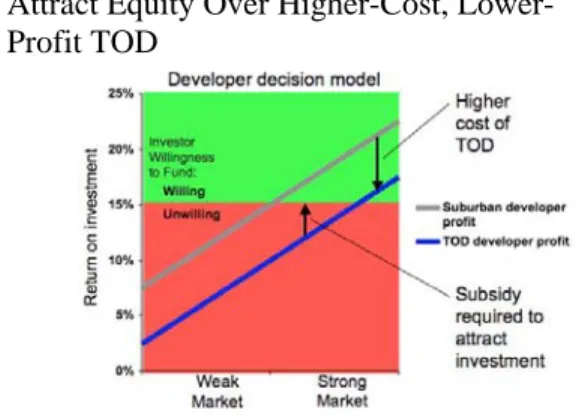
defaults, site contamination, and cash flow problems, etc. are far less likely? Figure 3 above graphically shows the increased challenge that TOD projects have. Given the higher costs and the lower returns, they are immediately at a disadvantage given a comparable suburban development. While it is true that the returns can be greater for urban infill, it must be understood that potential TOD projects require even greater study and careful deliberation to be certain that all of the assumptions are indeed viable.
5
Department of the Treasury, et al. Concentrations in Commercial Real Estate Lending, Sound Risk Management
Practices (proposed guidance with request for comment). Federal Register 71, No. 9, Jan. 13, 2006, Pg. 2302– 2307.
6
Venner, M. & Ecola, L. Financing Transit-Oriented Development – Understanding and Overcoming Obstacles.
Transportation Research Board: Journal of the Transportation Research Board. No. 1996. Pg. 20
Figure 3: Suburban Development’s Ability to Attract Equity Over Higher-Cost, Lower- Profit TOD
7
COMMON GAPS IN TOD FINANCING SOURCES
In reviewing the literature and various consultant reports as well as through interviews with various staff involved in the creation of TOD Fund across the country, certain financing gaps frequently came up. Many of these gaps are not unique to TOD but may be felt more acutely given the aforementioned challenges faced by TOD developers.
A
CQUISITIONA report7 prepared for the Family Housing Fund in Minneapolis describes three different types of acquisition, with each requiring different types of financing. The best fit will depend on the projected interim hold (before commencing with construction), the current and interim use, the type of entity acquiring the property and finally, the ultimate plan for redevelopment.
Type 1: Land Acquisition with Long-Term Hold
This generally pertains to vacant parcels which are acquired with the intent of waiting until, for example, the nearby station or some other neighborhood lynchpin is designed and constructed before commencing with the development of the parcel. Private entities - unless stocked with ample sources of equity or patient debt - are usually unsuited for this type of acquisition. Unless the real estate market is particularly robust, even with adequate low-cost capital sources with which to acquire the land, the expenses required to cover the holding costs (i.e. loan interest, maintenance costs, real estate taxes, insurance, and
electricity/heating/cooling costs) over the 5+ years very often makes this type of strategy very difficult, if not infeasible. As this type of acquisition is often quite difficult for private entities, it relies heavily on assistance from the public sector (since they do not pay
property taxes and thus automatically have lower holding costs). However, while possible, there is generally a lot of political risk involved, particularly in today’s economic climate and for the historical reasons mentioned earlier. For example, while the city of
Minneapolis acquired several parcels 20+ years ago (and has developed them since), there is no longer the political interest to continue this practice. This has led developers and neighborhood organizations to search for other funding sources or structures (i.e. public-private partnerships, joint developments, etc.).
Type 2: Land Acquisition and Operation in the Interim
When the property has a way of generating income in the interim before being redeveloped (i.e. thru rents, leases, and parking fees), the picture completely changes. This type of acquisition typically involves developers who have large sources of equity (generally 40-50 percent of the total development costs). No longer concerned with the financing of an empty parcel, here developers are focused more on increasing returns by better managing the asset (i.e. via increased cash flow) than through the sale of the asset (i.e. the
disposition).
7
Schmidt, Deidre. For the Family Housing Fund (Minneapolis). Strategic Acquisition Fund for TOD –
8
Type 3: Quick Land Acquisition for Redevelopment
This type of acquisition requires pro-active and flexible funding sources which allow the developer to move quickly, assemble the financing sources, and close on a property (often before a permanent financing source has been secured). Unfortunately however, most financing sources have bureaucratic strings attached, or simply have an allocation process that is rigid and therefore unable to respond to the need for a quick turnaround (this point is further explored a little later in this section). These problems have become heightened due to recent tightening of lending by banks which has left many developers without sufficient working capital.
While the concept of the quick acquisition (possibly before permanent funding is in place) is frequently mentioned as a concern to TOD, there was some disagreement as the true viability of its occurrence. In the current economic climate, even market-rate developers are having trouble accessing capital, which has opened the door for affordable housing developers if they are able to access enough grant and debt sources. Given their small profit margins due to the rent caps that are imposed by such financing sources as the Low-Income Housing Tax Credits (LIHTC), they need to be able to take advantage of any opportunity to purchase land at a lower rate. The challenge is even greater due to the fact that they need to be able to borrow the necessary funds to acquire the land and begin the pre-development process while still looking for a construction loan.8 Unfortunately,
federal as well as philanthropic funding sources have allocation schedules that are often too cumbersome and rigid to respond quickly.
One lender interviewed however, felt strongly that there really wasn't any reason for a developer to acquire the land before starting the feasibility and zoning work. He went on to mention that there were other ways to gain site control for planning and fundraising
purposes which offered the developer more time to complete the preliminary steps – such as land options and rights of first refusal. Just because an attractive opportunity presented itself, didn’t remove the developer from the responsibility making sure all of the details and paperwork were in place before moving forward.
Another point of disagreement was the realistic upper limit of a long-term hold. Several lenders felt that without public involvement or substantial sources of equity, a hold longer than 7-8 years is generally infeasible. However one lender in Boston mentioned that the tightening of lending sources has not only increased the competitiveness over funding sources, but also resulted in lengthened holding periods necessary to endure the more protracted allocation process.
P
RE-D
EVELOPMENTThis is commonly viewed as the most risky phase of the development process which typically results in the fewest lending sources. It is the Loan-to-Value requirements of lenders that often present great problems to TOD developers of securing pre-development funds. The initial upfront costs that are often required by TOD projects (for infrastructure improvements, site preparation and higher holding costs) are often difficult to justify given existing property values. While it is assumed that the land values will adequately
8
9 appreciate to pay for these initial expenses, it does not always play out as recent activity has shown great fluctuation of property values along rail lines.9
P
ERMANENTS
OURCESPermanent bank loans readily available in today’s market, public and private subsidy sources (i.e. grants) of permanent financing are quite rare. Many developers and lenders involved with TOD point to this as a key issue. Without these subsidy sources, many of the most risky or less alluring TOD projects are not feasible. It is therefore of little surprise that there is great competition for these sources. Furthermore, this points to the importance of instituting allocation policies that prioritize TOD projects. This could be similar to expediting the permitting process or offering density bonuses for large civic investments or certain important projects. With all of the challenges that accompany TOD and vertical mixed-use construction, streamlining the process would at least improve what is already a rather protracted development process.
S
HRINKINGF
INANCIALR
ESOURCESO
VERALLWhile there are many parties involved in the creation of TOD in the various sectors - public, private and non-profit (see Appendix 1) and numerous sources available for the different phases of development (for sources in Boston, see Appendix 10), due to Federal and State budget cuts, many of these grant and subsidy sources are shrinking. For example, HUD has made cuts to its affordable housing HOME program and there have been changes in tax-credit pricing. One interviewee in Boston mentioned the despite the fact that fact that the City and State have dwindling funds, there are probably 3 years’ worth of projects in the pipeline currently applying for resources. In this most recent funding cycle, the City received 46 applications and was only able to fund 10. In addition, another deleterious effect of the tightening of lending and the increased competitiveness over surviving funding sources has been the lengthened holding periods necessary to endure the more protracted allocation process. Without sufficient reserves or capital sources to just ‘tread water’, more and more projects must be either mothballed or scrapped completely.
9
Schmidt, Deidre. For the Family Housing Fund (Minneapolis). Strategic Acquisition Fund for TOD –
10
STRUCTURED TOD LAND ACQUISITION FUNDS
As discussed above, TOD requires a longer time frame and higher inherent risk level than traditional development. However these factors are often at odds with bank loans, which are typically short-term, variable rates that require a predetermined exit-strategy and repayment plan. While these cautious lending terms are often unviable for affordable housing developers, the requirement of a predetermined take-out lender further hinders any opportunity of a quick land acquisition.10 Clearly there is a need for a flexible, patient and long-term capital source that would help cover the longer holding costs, allocated through a streamlined process. This is where a TOD Land Acquisition Fund would be critical
O
VERVIEWStructured funds are a pool of capital from several different funders (but technically kept off any of funder’s balance sheets).11 Through the formation of a capital stack, the
different return requirements and risk thresholds of the lenders are accommodated by their different lien positions within the stack and the timing of their repayments. The intended result is a blended interest rate that is below-market. This is crucial. The below-market interest rates are typically achieved through the involvement of philanthropic foundations and their program-related investments (PRIs) (which usually seek a 1-2 percent return) as well as Federal, State and Local grants. In terms of organization, structured funds can take the form of a revolving loan fund or a one-time fund. This depends on the investment needs and long-term vision of the fund but will normally be decided from the beginning since it will heavily influence the terms and management.
The key component to a structured fund is the “top-loss” portion. In the event of a loan default, this money will be used to cover the repayments. Because it therefore holds the riskiest position in the capital stack, it is typically grant money from public agencies. Once the top-loss portion of the stack has been filled, other lenders, who are more risk-averse, are generally much more comfortable about getting involved with their funds now in a subordinate position. These other players often include community foundations project-related investments (as mentioned above), community development finance institutions (CDFIs) (also looking for below-market returns), and major banks typically looking to fulfill CRA requirements.12
Structured funds often have an expressed purpose of facilitating acquisition and development of real estate – usually with a focused application (affordable housing generation/preservation, TOD sites, etc.). Deidre Schmidt, in her 2011 report,13 investigated the viability of TOD Funds in the Twin Cities and pointed out the type of acquisition and length of the projected hold will affect how it is financed. Her investigation of national precedents found that:
10
The Case for Mixed-Income Transit-Oriented Development in the Denver Region. Center for Transit-Oriented Development. 2007. Pg. 27.
11
Schmidt, Deidre. For the Family Housing Fund (Minneapolis). Strategic Acquisition Fund for TOD –
Understanding the National Experience, Exploring the Needs and Opportunities in the Twin Cities Region. 2011.
12
CDFIs and Transit-Oriented Development. Center for Transit-Oriented Development. 2010. Pg. 23.
13
Schmidt, Deidre. For the Family Housing Fund (Minneapolis). Strategic Acquisition Fund for TOD –
11
o Short-term acquisition financing (1-5 years before potential construction) may not
require a structured fund. It may instead be an issue of lender liquidity or the availability of existing tools;
o Financing acquisition 5-20 years before development is anticipated is often viewed as
difficult without some type of income-generating sources due to the holding-costs (taxes, debt payments, maintenance costs, etc.) and the strength of the real estate market and;
o Holds of ~10 years for non-income generating properties are not possible with
structured funds given the “terms of debt that generally would likely constitute the
bulk of a fund.” (This will be discussed further below). Instead national examples
[from San Francisco and Denver] have shown that having public sources equity (i.e. grants), make a longer-term buy-and-hold a more viable option.
The fund could be used to facilitate the acquisition of key parcels on which to develop one of several needed building types along transit corridors: affordable housing, mixed-use housing & neighborhood retail/commercial or community facilities. The fund might also provide pre-development capital to continue to help advance these the critical projects. Another key is to make sure these critical projects align well with State and Local funding allocation priorities to help ensure success.
A
DDRESSING THEF
INANCIALC
HALLENGESTOD Funds provide access to lower cost capital thru an efficient process in order to help close the Loan-to-Value gap. The fund would streamline the process for the developer by pre-packaging the various sources of debt and equity into one “bundle”. Furthermore this bundle would leverage the capital, underwriting expertise, and technical assistance of the existing network of funders. By leveraging the public investment and private capital, it would also respond to the equity gap and capacity challenges faced by non-profit developers.
It would also manage risk in several ways. It would encourage alternative site control arrangements rather than immediate acquisition. By utilizing recoverable grant sources (via a revolving fund format), it would help cover the riskiest components of the funded projects, like option payments and other alternative site control arrangements. As
12 CASE STUDIES: TOD LAND ACQUISITION FUND BEST PRACTICES FROM AROUND THE COUNTRY
According to the Center for Transit-Oriented Development (CTOD), as of 2010, there were 15 direct acquisition or affordable housing loan funds and one TOD property fund, either in operation or under development, in the US.14 Six of these funds are focused in part, or entirely, on transit locations. While their structures vary from revolving loan to direct acquisition to grant funds, when examining the TOD Funds in San Francisco, Denver and Minneapolis, certain common themes became apparent. While Appendices 3-8 contain a great deal more information on the Funds in these three cities, we will now explore a few of the common themes related to the development of a TOD fund: the type of projects that are targeted, the ability to swap federal funds with local funds, securing the top loss reserve portion, and the importance of getting everyone on-board early through a clear vision and mission.
T
YPES OFP
ROJECTST
ARGETEDWhile the distance of the geographic coverage around the individual stations of ½-¼ mile for fixed-rail and ¼ mile for bus stops was generally the same across all case studies studied, the types of projects targeted by the TOD funds primarily varied between two types: affordable housing and commercial development.
Affordable Housing
Minneapolis’s Land Acquisition for Affordable New Development (LAAND) (see Appendix 6) stipulates that its funds are eligible for acquiring sites specifically for
affordable housing with a composition of at least 20 percent of affordable units in the final development. They define affordability as households earning 60 percent or less of the area medium income (AMI) in the Minneapolis Metro area and 80 percent in the Greater Minneapolis region. The LAAND Fund also notes greater prioritization to developers applying who would require the longest term of affordability of the units (with a minimum of at least seven years for ownership units and fifteen years for rental units).15
Instead of defining the AMI requirements at the metro versus regional level as seen above with the LAAND Fund, the Denver TOD Fund (see Appendix 4) instead set the AMI requirements for their affordable housing in terms of the type of unit. Solely focused on housing, Denver’s Fund set itself the goal of creating or preserving more than 1,000 affordable units by 2020, with a maximum of 60 percent AMI for the rental units and 95 percent AMI for the ownership units. Recognizing the acute problem that exists for the lowest income bracket, the fund also set the goal of at least 15 percent of the units being set aside for households making less than 30 percent of the area median income.
San Francisco’s Transit-Oriented Affordable Housing (TOAH) Fund (see Appendix 3) took yet another approach by mandating that 85 percent of Fund capital be used to create and preserve affordable housing (the other 15 percent is to be used on community facilities,
14
CDFIs and Transit-Oriented Development. Center for Transit-Oriented Development. 2010. Pg. 24.
15
Minnesota Housing Finance Agency. Land Acquisition for Affordable New Development (LLAND) - Initiative
13 child care centers, health clinics, fresh food markets and other neighborhood retail).16 In the loan documentation for each of the five loan products offered, they set the requirement that at least 20 percent of the housing rental units must be occupied by residents with household income less than or equal to 50 percent of AMI or at least 40 percent of the rental units occupied by residents with household income less than 60 percent of AMI. In terms of ownership units, they just mentioned targeting ‘low to moderate income families’.
Having perhaps the widest range of targeted property types, Minneapolis’s Capital
Acquisition Revolving Fund (CARF) (see Appendix 6) focuses on mixed-income rental &
ownership housing, mixed residential/commercial buildings, and new commercial projects (discussed below). For projects containing with residential units, they require at least 20 percent of those units to be affordable (defined as less than 50 percent Minneapolis Median Income (MMI), which is a city affordable housing policy).
Commercial Development
As noted above, while Minneapolis’s Capital Acquisition Revolving Fund (CARF) does include fund capital for the acquisition of land to be used for affordable housing, it also focuses on sites for new commercial buildings as well as mixed residential/commercial buildings. This makes a good deal of sense since the CARF Fund focuses on properties located on commercial or transit corridors or at major commercial nodes designated by The
Minneapolis Plan, the city’s comprehensive plan and is irrespective of housing type (i.e.
housing or commercial). Another land acquisition fund guided by the Minneapolis Plan is
the Great Streets Real Estate Gap Financing Program (see Appendix 7). The Gap
Program provides loans for catalytic commercial projects with the intent of spurring additional development. Projects must be located in areas designated as Great Streets eligible areas: commercial corridors, commercial nodes, activity centers and LRT station areas designated in The Minneapolis Plan for Sustainable Growth. To date the program has mainly supported neighborhood business districts.
Other
The only fund to break from the affordable housing/commercial development angle is Minneapolis’ Hiawatha Land Acquisition LRT Fund (see Appendix 5). Solely focused on properties within 1,500 feet of a transit stop along the Hiawatha Corridor, the Fund’s Grant Application Guide makes no mention of any specific type of development but rather just the goal of “leveraging local and private commitments to transit-oriented, pedestrian friendly development to reinforce the Metropolitan Council’s investment in Light Rail Transit.”17 Furthermore, the Fund is not open to private developers or neighborhood development organizations but would require them to partner with the funds only eligible recipients: the cities of Bloomington and Minneapolis Hennepin County (which includes their housing, redevelopment and economic development agencies).
16
Brian Prater. Metro Boston TOD Finance Working Session PowerPoint. Low-Income Investment Fund. 2012.
17
14
T
HEA
BILITY TOS
WAPF
EDERALF
UNDS WITHL
OCALF
UNDSBecause federal grant funds come with many restrictions and reporting requirements, they can often hinder the process as much as they help. To overcome this, several funds have found a workaround by “swapping” federal funds with local funds. Doing so is possible when the eligible uses of the federal funds overlap those of the local funds. For example, San Francisco found great success and was able to quickly raise fund capital by swapping their allocated federal funds with parking meter revenue. The federal funds were then used on street improvement projects that were federally eligible.
While this type of circumnavigation would be top strategy of all federal grant recipients, only projects that have the close involvement of governmental agencies are able to take advantage of the opportunity – as it is only these agencies that are authorized to perform the exchange. In San Francisco, it was done by the Metropolitan Transportation
Commission (MTC), the transportation planning, coordinating and financing agency for the nine-county San Francisco Bay Area and for federal purposes and, of note for this
discussion, also the region’s metropolitan planning organization (MPO). In Minneapolis, the governmental agency was the Metropolitan Council (also the metropolitan area’s regional planning agency and MPO). When the Metropolitan Council ran into a federal conflict related to the disposition (i.e. eventual sale) of developer-led projects directly funded with federal funds (in this case these were Federal Congestion Mitigation and Air Quality (CMAQ) Funds), the Council was able to simply swap the CMAQ funds with local Hennepin Country funds that would have been used for transit operations. The result was an additional $3.8 million in funds that the Hiawatha Fund could use for land acquisition.
S
ECURING THET
OPL
OSSP
ORTIONAs mentioned above, one of the key components to a structured fund is the portion of the capital stack referred to as the “top loss” portion. Because these funds are the first to be spent to make up any shortcomings caused by a loan default, they are therefore the riskiest and therefore often the hardest to secure. Frequently they are typically grant money from public agencies, often the state or local government.
San Francisco’s TOAH fund undoubtedly had the easiest time securing their top loss portion due to the fact that the initial spark for the fund’s existence came from the
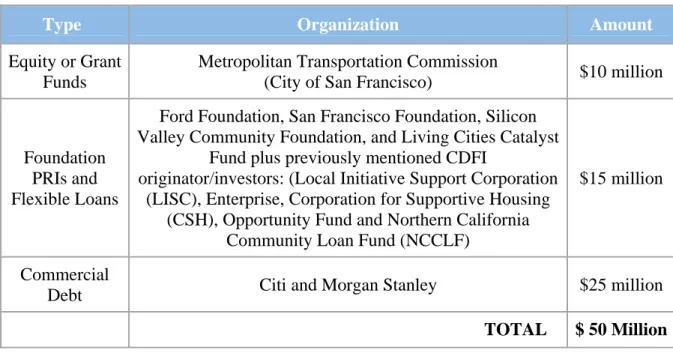
Metropolitan Planning Commission and their willingness to put up the initial $10 Million and assume the risky, top loss position. As a follow up from the previous section, it is safe to assume that a large portion, if not all of this $10 million came from federal funds that had been swapped. The same can be said for the Hiawatha’s top loss portion coming from swapped CMAQ funds.
15 contribute to the risky top loss pool.18 The process has been made even more difficult due to the fact that the TOD Fund is not considered an eligible use of federal transportation dollars, thus requiring all allocated federal funds be swapped with local funds if they are to be used.
While Minneapolis’ Great Streets Real Estate Gap Financing Program’s Community Development Block Grant (CDBG) funds are not top loss per say (due to a different structure), the federal funds have allowed the Great Streets Program to close funding gaps and fund 10 projects with a total of $1.5 million. In a conversation with a staff member working with the program, it was noted the CDBG funds “…are certainly not the easiest money in the world to use, but it can certainly close a gap in a project." While the CDBG funds have increased the paperwork and reporting requirements, they have also allowed the Great Street Program to extend its capacity and make riskier loans which is the same effect of the top loss portion.
F
OSTERINGB
UY-
IN ANDC
ONFIDENCE WITH AC
LEARV
ISION ANDM
ISSIONWith the myriad of actors involved throughout the process of TOD – each with their individual goals and interests (see Appendix 1) and the various scales at which TOD exists (regional, corridor, station area and site), it is vital for fund organizers to develop a clear vision for the fund early on. The planning process can be lengthy – as proven by the Denver TOD Fund and San Francisco TOAH Fund both requiring two to three years to go from initial conception to operation and loan deployment. Over that period of time, there are thousands of decisions that need to be made, priorities that need to be set, participants that need to be coordinated, etc. Therefore the importance of fostering a collective vision, although it may certainly evolve and change as the process moves along cannot be
understated.
Given the network-like quality of transit systems and the intent of improving efficiency and the cost-effectiveness of transportation investments, successful TOD planning takes place at the regional level (often in concert with strategic or comprehensive plan).19 While some funds such as Minneapolis’ Hiawatha Fund are solely focused on a single transit corridor, others such as the San Francisco’s TOAH fund, need to coordinate and make loans over the entire 9-county Bay Area. While the Bay Area’s has a long history of advocacy around transit equity and affordable housing which has undoubtedly helped facilitate the public buy-in process by fostering a general level of education around the issues, building collaborating and consensus is a primary issue. It is therefore of little coincidence that an entity like the Great Communities Collaborative which is a collaboration of 24 advocacy organizations, transit advocacy and research non-profits and community foundations throughout the Bay Area was chosen to lead the organization of the Fund.
In Minneapolis, the Metropolitan Council, with its coverage of the Twin Cities 7-county metropolitan area in addition to its involvement in several of Minneapolis’ TOD funds, stressed a similar priority in collective planning. In Denver, while the geographic range of the TOD Fund is currently limited to City boundaries, once the Fund expands into the
18
Schmidt, Deidre. For the Family Housing Fund (Minneapolis). Strategic Acquisition Fund for TOD –
Understanding the National Experience, Exploring the Needs and Opportunities in the Twin Cities Region. 2011.
19
16 neighboring municipalities, the challenge of developing a collective vision and
17 CREATING A TOD FUND IN BOSTON
Over the past years, there has been growing interest and attention in Boston around the effort to increase the ability of TOD developers (particularly those building affordable housing) to access necessary capital sources - predevelopment, acquisition, construction and permanent financing. There was a strong desire expressed by the development
community for: (1) low interest, patient and flexible capital, (2) Higher loan to value limits; and (3) Help with carrying costs. In order to galvanize interest and organize the effort regionally, the Metro Boston Consortium for Sustainable Communities (headed by The Metropolitan Area Planning Commission - the region’s MPO), assembled an advisory committee to design the new TOD funding program. The Committee was composed of the Massachusetts Department of Housing and Community Development (DHCD), quasi-public finance entities, Boston LISC, neighborhood CDCs, philanthropies, the City of Boston, and local municipalities among others.20 Their goal was to decide if a completely new structured funding source (i.e. a TOD Fund) was needed or instead if efforts to better supplement, support and coordinate the various existing TOD financing sources was a best strategy moving forward.
In order to help define the scope of the fund early on, five corridors were selected to be eligible to use TOD Funds (see list below). They were selected due to the fact that they contained over 1,600 units of affordable & mixed-income housing and over 300,000 square feet of commercial space (either currently in the development pipeline or already planned).
The Fairmount Corridor– This would include the entire 8-mile commuter rail line in
south Boston which currently has four new stations under construction and will soon switch to light rail.
The Orange Line – This would focus on the southern portion of the Orange Line -
particularly the Jackson Square and Forest Hills stations.
Green Line Extension into Somerville/Medford – This would include the 3¼-mile rail
extension to the existing Green Line (from the existing terminus of Lechmere station in East Cambridge northward to a new terminus on College Avenue in Medford, MA).
Chelsea/Revere Transit Corridor – This would include the transit (the Blue Line) and
the key bus routes (potentially the 111, 116 and 117 routes).
The Dudley Square Area – This would mainly focus on the area immediately near the
intersection of Washington St., Dudley St., and Malcolm X Blvd. in south Boston (exact limit of coverage area not yet determined)
Through discussions amongst the various stakeholders, including lenders, developers, city staff, and local CDC staff over the past year, it has become evident that a structured fund (like the San Francisco, Denver and Minneapolis models, with numerous sources of capital and complicated risk waterfall structures) was probably not the best and most favored option for Boston. This was due in part to the perception that these types of funds are very complicated to operate in addition to the fact that some of the lenders may have been resistant to the idea of having to accept different underwriting criteria or give up control of their own capital once it was included in the Fund’s pool.
20
18 Another factor was the different set of assets and shortcomings in Boston. Whereas the Twin Cities TOD Fund report recommended a structured fund to help address liquidity problems of some of the CDFI lenders, this is not the main issue in Boston due to the strong network of pre-development and acquisition lenders (see Appendix 11). Instead, Boston’s main lending shortcoming falls in the loan-to-value (LTV) gaps. Due to the increased up-front costs often required of TOD, the high LTV imposed by lenders has caused great difficulties for the non-profit TOD developers, in particular. It is the equity and subsidy sources that are needed to bring down the LTV and these are hard to come by.
To address the issue of the LTV gap, LISC has proposed a version of a Credit
Enhancement Fund that would provide participation loans which would come in behind the lead lender’s mortgage in order to make up the difference between what is needed and what developers can currently borrow from the array of lenders in Massachusetts. The idea is that if a developer could get an 80-90 percent LTV acquisition loan from the lender, the Fund would come in with a loan that would both close the gap (by covering the residual up to 100 percent LTV) and also provide additional funds (up to 110-120 percent LTV) with the purpose of covering some of the carrying and pre-development costs (in addition to the built-in interest reserve).
The “participation” aspect comes from the fact that one of the lenders in the Fund network would buy a portion of the lead lender’s (i.e. the first lender) loan - in this case of Boston, usually 30-40 percent of the LTV. These types of sales are typical in the industry as it is a way for lenders to deploy their capital by making such investments. The process is
documented via a "participation agreement" with the lead lender outlining the terms of the participation, participation rate, reporting requirements and default provisions. The advantage to this setup is that it allows the borrower to shop around for the best lending rate in addition to the fact that that it should result in some level of lending competition which will help keep lending rates low. It also allows the purchasing lender to deploy capital while at the same time freeing up capital for the lead lender to use elsewhere. While the fund is working behind the scenes to help fill the gap, it will be ‘invisible’ to the borrower as he or she will only interact with the lead lender and not through the Fund’s structure. In exchange for this increased work and responsibility, the lead lender has the right to approve the purchaser of the share of the loan. In conversations with LISC Boston, it became clear that while they proposed a participation structure, it was just one of several ways to bring some credit enhancement to this specific group of loans. The loans could also be made as second mortgages instead but this would result in largely the same thing (since the participation agreement would put it in the top loss position anyway).
S
ITEA
CQUISITIONF
INANCINGS
OURCES INB
OSTONWhile there is an abundance of financing sources commonly used by developers – both market-rate and especially affordable housing, that list dwindles considerably when only counting the number that may be used to acquire, hold, and prepare land near transit stations for TOD. Further, many traditional funding sources— including Community Development Block Grants (CDBG), and HOME Investment Partnerships Program, cannot be used to purchase and hold land. The list below is an abbreviated sample of funding sources that are available in the City of Boston. See Appendix 12 for more information.
19
Neighborhood Stabilization Funds- A component of the HUD’s Community
Development Block Grant Program, the Neighborhood Stabilization Program (NSP) is focused on the stabilization of communities that have suffered from foreclosures and abandonment. NSP Funds can be used to establish a land bank for foreclosed homes and properties.
Priority Development Fund – Funds from this City program can be used to assist
communities identify and implement strategies to increase the production of affordable housing, both rental and homeownership. Eligible uses include gaining site control, site analysis, and other activities associated with the production of affordable housing in municipally owned/controlled sites.
Leading the Way III Program – This City program is a partnership of the Boston
Redevelopment Authority and the Department of Neighborhood Development. As part of the Leading the Way III program,the City will be making multi-property purchases of Real Estate Owned (REO) (i.e. bank owned) properties directly from the lenders. The properties will then be made available to homebuyers, contractors, developers, and non-profits for renovation and re-occupancy. While this is more directed at stabilization and quick turnaround, there may be opportunity for a joint development or public private partnership.
General Fund Revenues or General Activity Bonds– Traditionally the most common
source of funding for infrastructure and other large price tag aspects associated with TOD (i.e., parking decks, public amenities, etc.).
Developer Working Capital– This is the developer’s own equity reserves. Generally,
the larger and better established developers usually have the advantage of possessing larger equity reserves from which to draw from in times of need.
The Various CDFIs and Quasi-Public Agencies listed in Appendix 13– These groups
provide a great deal of the financing – mostly pre-development and acquisition financing for TODs (which is often deemed too risky for traditional lenders – i.e. banks).
Dudley Street Neighborhood Initiative’s Community Land Trust – The Dudley
Neighbors Inc. has the power to use eminent domain to acquire privately-owned vacant parcels within the “Dudley Triangle” of South Boston. The Trust is focused on preserving affordable housing.
O
RGANIZING THEB
OSTONF
UNDOn March 14th, 2012, a TOD Finance Working Session was convened by the MAPC on behalf of the Metro Boston Consortium for Sustainable Communities. Several staff from TOD Fund programs across the country presented on their experiences and best practices. At the meeting, Boston LISC proposed a plan of how the TOD fund would look like credit enhancement aspects21; that plan is outlined below:
21
Low Income Support Corporation. Equitable Transit Oriented Development in Greater Boston - Proposal for a
20
Proposed Terms
o Rate: CDFI lenders: 6 to 7 percent, LISC: 4.5 to 6 percent, PRI lenders: 2 percent.
The goal is a weighted net average of around 5 percent.
LISC mentioned that it was still too early to know if the 5 percent interest rate was possible. In addition to several lending requirements still needing to be nailed down, the cost of funds and administrative fees still needed to be included in the interest rate calculation.
Due to the fact that the foundation PRI low-interest money will enable much of the fund, the final structure and arrangement will greatly depend on their risk tolerances and underwriting preferences.
o Term: 3-5 years
LISC mentioned that project holds near or around 10 years simply wouldn’t work);
o Loan to Value: Up to 110-120 percent on secured loans;
o Unsecured predevelopment loans may be available for public land;
o Loans would be made for the Acquisition of strategic properties, Predevelopment and
Holding Costs;
o Eligible Uses: Affordable housing, mixed use housing and neighborhood retail,
commercial or community space (non-housing investments to be limited to a small percentage of fund);
o Repayment will be due at project construction closing.
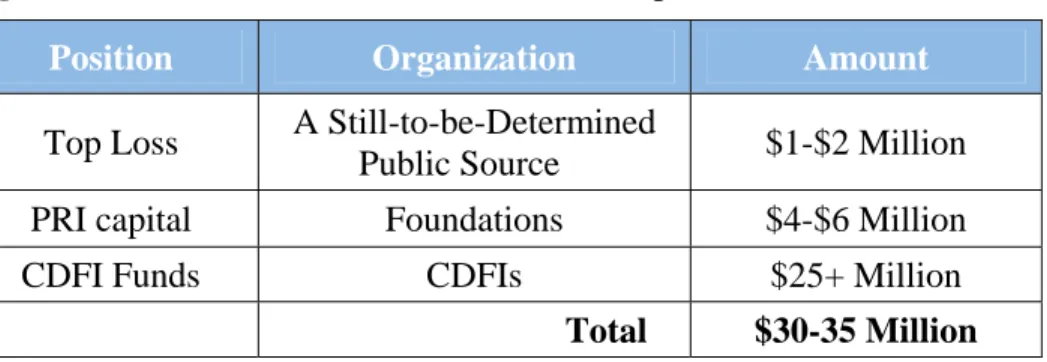
Figure 4: A Basic Breakdown of the Fund’s Capital Stack
Position Organization Amount
Top Loss A Still-to-be-Determined
Public Source $1-$2 Million
PRI capital Foundations $4-$6 Million
CDFI Funds CDFIs $25+ Million
Total $30-35 Million
21 Fund are nailed down, everything is really up in the air and, therefore, a hypothetical
exercise. The foundations with their vital PRI funds have made it clear that they will not commit funds until the public sector commitment to this top loss piece.
Philanthropic Project Related Investments (PRIs), seeking a 1-2 percent return, would make up about total of about $4-6 million. It is this below-market portion, in additional to public grants, as previously mentioned, that allow the overall blended rate of a Fund’s entire capital stack to fall below-market. Finally, the remaining $25 million would come from CDFIs and private banks. (See Appendix 13 for a list of both the potential
Philanthropic as well as CDFI lenders).
While San Francisco had great success by “swapping” restricted federal funds with more flexible locally generated funds, LISC mentioned an aversion to working with Federal funds due to the accompanying restrictions and reporting requirements. Either way, the option to do so does not exist in Boston due to the fact that unlike the MTC, LISC is neither an MPO nor a governmental agency which means that they are not an eligible conduit for this type of action. While the TOD Fund could partner with the Massachusetts Bay Transportation Authority (MBTA) to swap funds, the MBTA is unfortunately in extreme financial difficulty which nullifies any possibilities there. Instead, LISC has expressed a desire to have the TOD Fund work alongside various existing sources (like the Community Challenge Grant money).
Oversight (Fund Management)
As currently proposed, LISC will manage the investment pool of PRI and top loss funds, participate with originating lenders, and manage the complementary recoverable grant program. Their administrative fees will be covered by the grants or public equity sources as well as loan fees. As mentioned earlier, the underwriting process will be coordinated directly with CDFI first lender for the sake of efficiency.
I
MPACT ONTOD
INB
OSTONThe fund is expected to have an immediate impact due to the fact that it was explicitly sized to close the pre-development or acquisition gaps that existed for any TOD project along the specified corridors. Appendix 14 shows the pre-development and acquisition gaps for 11 projects along the Fairmount Corridor.22 On the acquisition side, the chart shows a total budget for the 11 projects of $6,177,300 with $6,037,929 (i.e. 98 percent) committed. On the predevelopment side, a total of $6,849,701 is budgeted with only $4,340,405 (i.e. 63 percent) committed. However, when the total potential combined acquisition and pre-development costs are calculated (and the Total Project Acquisition
Budget is factored in, a total potential need of these 11 projects of $13,884,155 is the result.
This $13.8 million is commensurate given the fact that LISC anticipates the total fund budget to fall somewhere between $25 and $35 million for all five corridors.
It was pointed out during interviews that this TOD fund is really for the smaller developers who do not have a strong balance sheet and therefore do not have access to other sources of capital (like for example banks) to cover all of their pre-development and acquisition
22
22 needs. While the financially stronger, more stable and generally larger developers & CDCs will probably be able to get by without the Fund.
One illustrative example of where the Fund would play a vital role pertains to an ongoing project of a CDC in Boston which currently has $50,000 of outstanding expenses that (for reasons unknown) the lender will not fund. Unless the CDC can find a way of securing the $50,000 which is owed to current participants (attorney, architect, engineer, transportation and traffic planner) those parties will not continue to work and probably pursue legal avenues. Being a smaller CDC who does not have the ability to start a line of credit from MassHousing Partnership or one of the banks that has been traditionally loans to the CDC, means they have a serious issue moving forward. Beyond the anticipated issues and challenges that accompany TOD and are planned for well in advance, such a TOD Fund can be a valuable resource when surprises pop up as well.
Beyond the provision of new housing units, the Fund would also help preserve affordable units along the five corridors. As is too often the case, in order to cover the high costs associated with TOD, the rents in the new developments are often too high for existing residents to pay. Even if one’s apartment or home is not bought up and redeveloped, the increased property taxes in the neighborhood that often result from the new development can also have the deleterious effect of effectively pricing out the established residents. Unless protected by inclusionary zoning policies or incentive programs to promote the construction of new affordable units, it can lead to displacement. The sad thing is that it is often these low-income residents who rely the most on the transit as their sole mode of transportation. Therefore, one of the goals of Boston’s TOD Fund is to help protect the affordable units along the five corridors and protect the residents from displacement once the housing market improves and the development pressures return.
R
EMAININGD
ECISIONS ANDN
EXTS
TEPSo Filling the Remaining Financing Gaps - In conversations with LISC, it was
mentioned that foundation PRI, top loss and recoverable grant funding still needs to be secured. In addition, it will need to be determined if HUD Community Challenge Planning Grant money could be used to help fill the top loss portion. Both the City of Boston and the City of Somerville were recently awarded Community Challenge Grant money from HUD. While it is quite possible that these funds could be used to help fill the Top Loss portion, there is some degree of uncertainty as to whether the TOD Fund would be considered an eligible use. While currently under investigation, one interviewee mentioned a potential work-around whereby the funds might be able to be “housed” at LISC instead of in the TOD Fund. This is due to HUD’s aversion to having its funds intermingled with other funds.
o Aligning State and Local TOD Policies with the Fund - Continue the work currently
23 that the QAP’s 182 points are awarded (in order to rank projects for funding).
Several people mentioned that the way the points are allocated, made it difficult for TOD projects to claim their legitimate share while others mentioned the lack of transparency in the allocation process. While discussions are currently underway in addition to the fact that there are several high-level staff members at the State level sympathetic to TOD, it is not certain if things will change anytime soon. However, if TOD did become a priority for state funding, it would potentially both lower the holding costs and shorten the holding period for the projects that were able to receive funding. Interestingly TOD becoming a State priority would also potentially reduce the need for a TOD Fund as the State funding would overlap that of the TOD Fund. This would of course be a good problem for the Fund to have.
o A Business Plan needs to be created for the fund. A business plan specifically
identifies the development opportunities around the various transit stations. Progressing from earlier preliminary meetings, the creation of the Plan is generally seen as an important step whereby many of the initial ideas are analyzed and explored in context. It will undertake a regional analysis of the station areas in terms of
housing stock, land supply, income, relevant public policies, etc.23 These results will further inform the goals of the Fund. Finally, the Business Plan can help define the operations of the fund as well as next steps moving forward.
o Launch the Fund - LISC has indicated that the Fund is anticipated to launch in later
2012 or early 2013.
C
ONCLUSIONSpeaking with several people involved with the creation of the Boston TOD Fund, one gets the impression that while there are several pieces of the Fund still to be decided, that a Fund will eventually be created. Learning from their national peers, understanding the realistic limits of their own capabilities as well as the unique strengths and weaknesses of the lending environment in Boston, LISC’s proposed structure has taken the Fund in a different direction that most others, yet one that better utilizes Boston’s current funding assets. Already several years of study and analysis into the process, some of the
participants are growing frustrated with both the pace and the distant projected completion date. Yet the vast majority also understands the potential for immediate impact with 1,600 units of affordable & mixed-income housing and over 300,000 square feet of commercial space either currently in the development pipeline or already through the planning process along the five corridors. According to the Boston Foundation’s 2002 Boston Indicators Report, Boston is the fourth most expensive housing market in the US, 181 percent above the national average.24 The report also notes that a minimum-wage worker would need to work 153 hours each week to afford an average, market rate two-bedroom in Boston. This sheds more light on the vital importance for the TOD Fund to succeed. Once the economy recovers and the TOD Fund is in place and fully operational, exciting change will occur around the city. Come 15 years’ time, things should look quite different in Boston.
23
Mixed-Income TOD Acquisition Fund – Business Plan Framework. Center for Transit-Oriented Development. 2008.
24
24
APPENDICIES
A
PPENDIX1:
B
ACKGROUND–
H
OWTOD
ISN
ORMALLYF
INANCEDOn the surface, the financing of TOD is no different than any other real estate project. Land needs to be acquired and the construction and permanent loan secured. Debt and Equity sources must be sourced as needed. One area where the financing does differ however is when the TOD involves affordable housing. These projects are eligible for an additional range of financing that market rate developers are not. Many of the finance sources and tools that will be discussed later on will deal with the unique challenges to an affordable housing developer as they complete for funding with everyone else.
P
UBLICS
ECTOR Public Agencies
Transit Agencies – through Joint developments of publicly-held land, will leverage the direct investment in TOD for increases in
ridership or revenue
Metropolitan Planning Organizations (MPOs) – often invest in development projects that shape land use and transportation patterns
Housing Authorities
Urban Redevelopment/Renewal Authorities
Local Governments - through TIFs or other public
investments
P
RIVATES
ECTOR Market-Rate Developers
Affordable Housing Developers
Philanthropic Foundations – through such investment
vehicles as Project Related Investments (PRIs).
Lenders (i.e. Banks, CDFI’s, etc.)
N
ON-P
ROFITS
ECTOR Non-Profit Agencies
Non-Profit Community Investment or Revitalization
Funds
Source: Reconnecting America’s Center for Transit-Oriented Development.
Tools for MPO’s. Oakland, CA. January 2011.
25
A
PPENDIX2:
TOD
I
MPLEMENTATIONS
TEPS:
T
HER
EALE
STATED
EVELOPMENTP
ROCESSImplantation
Step Actions
Components Financed Primary Financing Step Secondary Financing Step Key Finance Criteria Criteria Influence Impacts on TOD Land Assemblage
Master Plan with land use phasing
Private land acquisition “Joint Development”
agreements Housing or
redevelopment agency land acquisition Land procurement Development project planning & zoning
Banks Private
equity Feasibility of real estate development Land purchased where government is willing to rezone for density Some stations have little or no development Infrastructure Development Municipal improvements (utilities, arterials, etc.)
Other improvements funded thru privately funded Special Districts
Roadways Sidewalks Bike lanes Bus stops Parking Open space,
Trails, Parks Public Infrastructure Bonds Region, Local, Developer, Transit Level of earmarked revenue from general fund of property assessment districts Quality of infrastructure determined by real estate tax potential of new development
Development must have high-end component because commercial property values are determined by profitability Vertical Development
Environmental Impact Report
Detailed market analysis Parking phasing Community benefits Detailed design Project construction
Design Entitlements Sustainability infrastructure Affordable housing Local & Social
equity goals Construction
Banks Private
equity, Foundation grants, State & Local programs, LIHTC, NMTC Net Operating Income (NOI) Development occurs in profitable locations (high revenue, low cost) Development may or may not occur because station area may not be as profitable as other sites