MAKING THE FRONTIER:
CONTESTED DEVELOPMENT ON THE COAST OF PATAGONIA
Eric H. Thomas
A dissertation submitted to the faculty at the University of North Carolina, Chapel Hill in partial fulfillment of the requirements for the degree of Doctor of Philosophy in the Department of
Anthropology.
Chapel Hill 2020
Approved by
Rudolf Colloredo-Mansfeld Florence E. Babb
Christopher T. Nelson Colin T. West
ABSTRACT
Eric H. Thomas: Making the Frontier: Contested Development on the Coast of Patagonia (Under the direction of Rudolf Colloredo-Mansfeld)
This project uses critical development theory to examine relationships between rural residents pursuing multiple livelihoods in remote spaces, globalized industries that dominate these sparsely-populated edges of the global economy, and state agents tasked with serving both groups in Chile’s Aysén Region.
Since the 1980s, southern Chile has emerged as an aquaculture frontier. But state officials, aquaculture operators, and rural residents enact the frontier differently based on their distinct social projects. Following Chile’s return to democracy in 1990, state officials introduced new social programs and conservation initiatives. They provided services, subsidies, and public employment which rural residents incorporated into their longstanding pursuit of multiple livelihoods. This allowed for the maintenance of a delicate status quo. Residents benefitted from these programs while continuing semi-subsistence activities and aquaculture grew exponentially, diversifying Chile’s export sector and fueling the national economy without employing rural residents.
residents of Aysén now regularly protest state inaction in the face of threats to their livelihoods and the degradation of their once pristine coastline.
Los que descienden al mar en naves y hacen negocio sobre las grandes aguas
han visto las obras del Señor y Sus maravillas en lo profundo.
ACKNOWLEDGEMENTS
E.B. White, who lived and died in a farmhouse on the coast of Maine, said that a writer has “the duty to be good, not lousy; true, not false; lively, not dull; accurate, not full of error. He should tend to lift people up, not lower them down.” I have endeavored to follow this advice here, but my efforts would have been for nothing without the help of my many teachers.
I am particularly indebted to my advisor, Rudi Colloredo-Mansfeld who helped me write, rewrite, and revise innumerable proposals to funding agencies in order to travel to Aysén and conduct fieldwork as well as many drafts of the chapters contained in this dissertation. That he did all this while first acting as our department chair and later as a dean in the College of Arts and Sciences makes his support and patience all the more remarkable. In addition to reading early drafts of several dissertation chapters, Florence Babb taught me much of what I know about doing fieldwork and writing ethnography in her seminar on Feminist Ethnography. While she and I do not agree on which notebooks serve the ethnographer best, we agree on just about everything else, including the importance of lively meals with colleagues at conferences.
The research behind this dissertation was generously funded by a number of agencies. I especially wish to thank Beatriz Riefkohl Muñiz at the Institute for the Study of the Americas for her friendship and support. Funding was also provided by the American Council for Learned Societies, the National Geographic Society, the American Philosophical Society, the Tinker Foundation, the Mellon Foundation, the Graduate School, and the Center for Global Initiatives at the University of North Carolina, Chapel Hill.
I am also indebted to faculty in the Department of Anthropology who helped me
immeasurably despite not serving on my committee. Arturo Escobar, Margaret Wiener, Charles Price, Peter Redfield, Mark Sorenson, Caela O’Connell, Towns Middleton, and Paul Leslie all provided feedback, advice, encouragement, and valuable critiques of my work at critical junctures. Beyond Chapel Hill, I would like to thank Marcos Mendoza, Maron Greenleaf, Robert Fletcher, Anton Daughters, Sarah Ebel, Richard Vercoe, Sally Babidge, Carlota McAllister, Michaeline Crichlow, Mattias Borg Rasmussen, Jason Antrosio, and Chris
Vasantkumar, all of whom shared their work and wisdom and gave me opportunities to share my own. I also wish to thank my fellow graduate students, many of whom have either already secured faculty jobs or will soon, I have no doubt: Andrew Ofstehage, Claire Novotny, Orisanmi Burton, Sara Juengst, Kailey Rocker, Molly Green, Dayuma Albán, Dawn Rivers, Angus Lyall, Aaron Delgaty, Alfredo Rojas, Julio Villa-Palomino, Paolo Bocci, and Samantha King.
Suazo—having effectively taught me Spanish back in 2013—supported my comings and goings and kept me grounded in Chilean life, no matter how long I was away. In Aysén, Hugo Araya Leiva, his partner, Maryorie Araya Rojas, and Veronica Leal, Andres Soto, and Jorge Padilla Trujillo all became like family. Jorge, it is worth mentioning here, picked me up, soaked, from the plaza de armas in Puerto Aysén and invited me to stay with him for the duration of the fieldwork season when I first arrived in 2015. We had never met. Sebastian Steinmeyer and his wife, Tania Morgado Jofré, opened their home to me on multiple occasions to discuss the region and its future. In Puerto Aguirre I was helped immensely by Claudia San Martín, Sofía Elgueta Ramos, and Angelica Mansilla Aguila of Conaf. Angelica, in particular, shared survey data with me and tirelessly accompanied me to collect career histories from local workers. I owe her my thanks and an apology for at least one occasion when I was rather grumpy about the “maritime temporalities” that continue to structure island life.
I also want to express my boundless gratitude to my parents, Bill and Sandy Thomas. They were unwavering in their support of and pride in what I was doing in North Carolina and Chile, and this made it far easier for me to get to where I am today. They have, it is not an exaggeration to say, given me everything they possibly could to help me succeed as an academic and they have done so virtually my entire life.
Above all, I want to thank my partner, Achsah Dorsey. She was a constant source of support and inspiration throughout our time at the University of North Carolina, Chapel Hill. Thanks to her close reading of proposals, articles, and chapter drafts—many more than once—I am
TABLE OF CONTENTS
INTRODUCTION... 1
The Procession of San Pedro ... 1
Patagonia, Inc. ... 7
Frontiers, Development, and the National Imaginary ... 12
Resource Frontiers and Global Markets ... 18
The Coast of Patagonia in Global Context ... 20
Longue Durée Ethnography ... 25
Data Collection ... 28
Telling the Story ... 30
Some Notes on Terminology ... 32
CHAPTER 1. COLONISTS AND CAPITALISTS: THE LAYERED FRONTIER IN CHILEAN PATAGONIA ... 35
The “Problem” of Rotation ... 35
Settler Colonialism on the Coast of Patagonia ... 41
Chilote Livelihoods ... 44
A Second Wave of Settlement ... 49
Maritime Temporalities ... 52
The Emergent Properties of Frontiers ... 56
CHAPTER 2. AUTHORITARIAN BUREAUCRACY, CARING BUREAUCRATS: NEGOTIATING FRONTIER DEVELOPMENT IN POST-DICTATORSHIP CHILE .... 59
The General Visits Chaitén ... 59
On Bureaucracy ... 68
“I don’t think he ever held a pen” ... 71
The Landscape of Dictatorship ... 75
Bureaucratic Pilgrimages ... 78
Giving an Explanation Instead of a Fine ... 85
Connecting the Political and Moral Economies ... 90
CHAPTER 3. ROUTINE LOSSES, CONTINUOUS IMPROVEMENT, AND WARMING OCEANS: MANAGING RISK ON CHILE’S AQUACULTURE FRONTIER ... 94
Risk and Uncertainty on Chile’s Aquaculture Frontier ... 94
Understanding Risk and Uncertainty ... 96
Managing Ecological Risk: New Spatial Technologies ... 98
Managing Economic Risk: Surveillance, Exclusion, and Imported Labor ... 102
Chasing the Norwegians ... 108
Managing Political Risk: Maintaining Uncertainty ... 112
Conclusions... 120
CHAPTER 4. TOXIC VITALITY, MASS MORTALITY, AND LOST LIVELIHOODS: THE EVENTFULNESS OF RED TIDES ... 123
Harmful Algal Blooms and Red Tides... 123
Harmful Algal Blooms and Red Tides: Assemblages and Disasters ... 125
Scientists: Measuring the Bloom ... 130
State Officials and Aquaculture Managers: Calculating and Mitigating Losses ... 133
Fishing Families: Incalculable Danger ... 140
Environmentalists: Defending “Pure” Nature ... 145
Conclusions... 148
The Battle of Puerto Aguirre ... 152
Who counts as a fisher? ... 156
Public Programs within Multi-Occupational Careers ... 162
Commodities, Quotas, and Cash: The Making of a Fungible Asset ... 165
Negotiating the Margin: Redistribution in Moments of Ecological Crisis ... 168
Distribution as a Basis for Community Leadership... 172
State, Citizenship, and Corporate Solidarities ... 176
Conclusions... 179
CONCLUSION ... 182
Un Lugar Clave ... 182
Putting Nature to Work ... 188
The Significance of Settlement... 191
Citizenship and the State in Post-Dictatorship Chile... 193
From the Metropole to the Frontier ... 194
From the Frontier to the Metropole ... 196
Another Procession ... 198
LIST OF FIGURES
Figure 1: The Islas Huichas Archipelago and the Aysén Fjord ... 1
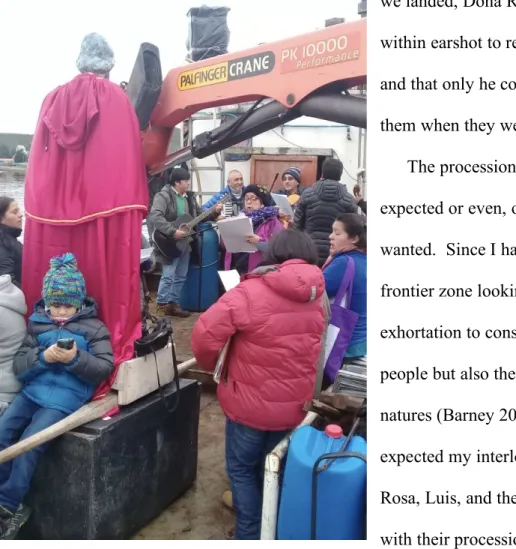
Figure 2: Loading San Pedro after the service in Caleta Andrade ... 3
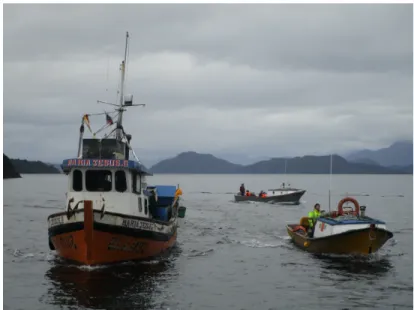
Figure 3: A wooden embarcación and two pangas during the procession ... 4
Figure 4: Doña Rosa with Luis and the other musicians ... 6
Figure 5: The Coast of the Aysén and Los Lagos Regions ... 8
Figure 7: A greenhouse in Puerto Aguirre ... 43
Figure 6: A wooden embarcación under construction in Caleta Andrade ... 43
Figure 8: Recently cut firewood and pangas in Puerto Aguirre... 46
Figure 9: Oscar and Milton's camp ... 47
Figure 10: Monument in Coyhaique depicting the Dictadura as a rupture in Chilean life ... 64
Figure 11: Timeline of political events affecting development in the Aysén Region ... 67
Figure 12: The SERNAPESCA office in Puerto Aysén ... 72
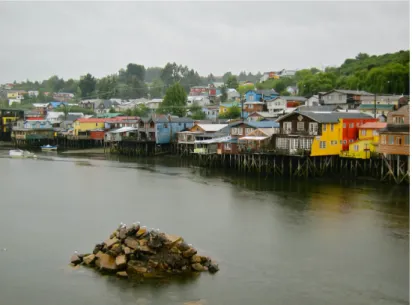
Figure 13: Palafitos in Castro, Chiloé ... 76
Figure 14: The industrial port at Chacabuco with a docked aquaculture pontón and a visiting cruise ship ... 86
Figure 15: Export volume of farmed salmonoids by the three largest producer nations, January-September 2018 (FAO 2019) ... 99
Figure 16: Map of the aquaculture frontier in southern Chile showing barrios and macrozones. (SERNAPESCA 2010) ... 100
Figure 17: Aquaculture workers from the firm Blumar waiting to go to the airport following a 14-day shift ... 102
Figure 18: Workers line up outside the FrioSur plant in Puerto Chacabuco ... 105
Figure 19: A scene from the 2018 Fiesta del Pesca'o Frito ... 117
Figure 21: A sign in Puerto Aguirre warns residents that unlike El Caleuche,
red tide is not a myth ... 129
Figure 22: José describes getting sick from contaminated mariscos ... 141
Figure 24: Fishers surround the Jord, March 3, 2018 ... 152
Figure 23: Chart from the Jord showing the Aysén Fjord and salmon farms ... 152
Figure 25: Pancho on the phone during the standoff, March 7, 2018 ... 153
Figure 26: Boats docked at Aguas Muertas, Puerto Aysén ... 156
Figure 27: Fishers block access to the municipal pier in Puerto Aguirre, March 3, 2018 ... 160
Figure 28: Certificate of registration with SERNAPESCA ... 166
Figure 29: Fishers meet with the governor in Puerto Aysén, February 13, 2018 ... 169
Figure 30: Marcela reads the list of fishers whose claims for compensation will be recognized by SERNAPESCA, March 6, 2018 ... 173
Figure 31: Women distribute coffee and sopaipillas as part of the olla común ... 175
Figure 32: Women working at the Conaf nursery in Puerto Aysén ... 186
INTRODUCTION
The Procession of San Pedro
On June 29, 2018, I rode from Puerto Aguirre to Caleta Andrade with my friend Luis1 and
several others in a beat up Toyota pickup. Puerto Aguirre, with its nine-hundred souls, is the largest community in the Islas Huichas archipelago, three hours off the coast of Chilean Patagonia. Its small, shingled houses perch on a steep hillside covered with damp vegetation. Caleta Andrade, with five hundred souls, is the second largest community in these islands. It sits on a plain about three kilometers away from Puerto Aguirre on the same island, its houses more spread out due to the more accommodating topography.
Figure 1: The Islas Huichas Archipelago and the Aysén Fjord
I was in the pickup with Luis because his group was performing at the liturgy of San Pedro in the Catholic Church in Caleta Andrade and then accompanying San Pedro himself on his
procession. There weren’t many people in the church when we arrived, and the band, with Luis on accordion and his friend Carlos on guitar, discussed the order of songs with the two
diminutive women coordinating the day’s events before tuning their instruments and practicing for a several minutes. Once they lit the candles on the alter, the women conversed briefly and then Doña Rosa, in oversized purple jacket and spectacles, exited the church and began to ring the bell on the steps outside.
Within a few minutes, another twenty-five people had arrived—mostly older women— bringing the total attendance in the church to nearly forty. Doña Rosa’s companion, Doña Angela stepped to the lectern and read a prayer to the assembled congregants. She read out the names of other community members for whom the congregants should pray, either because they were ill or because they, like her husband, had recently gone to the Lord. This list of names contained its share of Chavez-es and Vargas-es, but was overwhelmingly filled with Chilote— and therefore indigenous Huilliche—last names: Nahuelquín, Chihuay, Nancúl…
Doña Angela finally invoked the origins of the feast day—and the origins of San Pedro himself—connecting the day’s events to island livelihoods and members of the community.
“San Pedro has been a little forgotten and we have many people who have worked many years in the sea… who worked the loco (abalone), the merluza (hake) and who have done well,” she said, referencing the “abalone fever” of the early 1980s and the “hake boom” of the late 1990s and early 2000s. “And for this we have to give thanks to San Pedro. We do not, after all, thank the merluza, for delivering our success and earning the money we have made.”
playing their Chilote folk songs. Then she blessed the wreath of artificial flowers that would be released into the sea to honor the fishers whose bodies were lost there.
The men at the back of the church—more numerous than usual since the ongoing ban on harvesting and selling mollusks kept them ashore—picked up San Pedro from beside the alter. The saint was momentarily caught on a piece of crepe paper decoration before the men lowered him carefully to clear the decorations and doorway, but soon enough San Pedro was outside and fully upright. The musicians followed, playing their instruments and taking their places behind another pickup truck into which San Pedro was loaded.
The entire crowd then walked behind the truck as it made its way past the plaza and to the pier, where several motor launches with the names and logos of aquaculture companies were waiting to transport workers to nearby salmon cultivation centers. Our group passed these without a glance as we walked to the end of the pier where several large steel-hulled boats were rafted together. The men loaded San Pedro onto the closest of these, secured him behind the boat’s hydraulic crane—a fixture on diving boats used for contract work at cultivation centers—and rigged a PA system for the musicians. I hopped aboard, avoiding the gaze of several sailors from the Chilean Navy who were there to ensure safety and security. I did not want to slow things down by having to explain that, while I was foreign, I was competent on boats and that I had to stay close to Luis in order to observe the
procession. My worries were unfounded. The sailors looked on dispassionately, doing the minimum required of them. Besides, to be in the Islas Huichas is to know the sea.
The two other boats rafted to ours shoved off, and soon we too were pulling away from the pier. The procession constituted a veritable flotilla whose varied vessels testified to the layered nature of this frontier. Our steel-hulled diving boat, with its hydraulic crane and air compressor, was normally under contract with area salmon farms. Alongside, however, were eight pangas— traditional four-meter wooden boats used by Chilotés for over a century to fish and harvest firewood in Chile’s southern archipelagoes. Though their traditional sails gave way to small, inboard motors starting in the 1960s—and many of these have now been replaced with new, state subsidized outboard motors—they connect communities like Puerto Aguirre to the Chiloé
archipelago and its unique history. Two traditional wooden embarcaciones followed the pangas. These larger fishing boats with enclosed cockpits, cabins, and cargo holds are used for longer fishing expeditions in deeper water, but their traditional construction has much in
common with the smaller pangas.
The final boats in our procession were two fiberglass launches from the Chilean aquaculture firm Invermar and an inflatable dingy with an outboard motor piloted by two sailors who by this time were mostly making fun of their two compatriots on our boat and taking photos with their
phones. The sailors lived at the tiny naval base in Puerto Aguirre, established during the dictatorship of Augusto Pinochet (1973-1990). Constructing the base in its current location required destroying several palafitos—stilt houses whose presence, like that of the pangas in our flotilla, signaled the community’s historical connection to Chiloé—effectively remaking the waterfront in Puerto Aguirre.
The flotilla headed first to the far side of Caleta Andrade before doubling back and coming to a stop just off the tiny island where the community cemetery is located—all with music playing and the Doña Rosa singing loudly into the PA system and directing prayers and shouts of “viva San Pedro” and “long live the pescadores (fishermen) of the Islas Huichas!”
Here several of the other boats in the flotilla haphazardly rafted up with ours, and the women aboard passed brown paper bags of sopaipillas (deep fried dough rounds) over the rail to the other boats, as well as plastic cups of navegado (mulled wine). These were shared among everyone aboard our boat, children included. Two of the pangas moved off swiftly before stopping close to the island of the dead, where one of the crews cast a net over the side of the boat. On the opposite side, they used long sticks to beat the shallows into which they drifted, beam-to, ostensibly to scare any fish into the net. Upon their return, Doña Rosa implored them to show us what they caught but those in the panga had to shrug. Their nets were empty.
doubling back to land at the fishing pier. As we turned back towards the pier to make our landing and unload San Pedro, the men broke into a new song, different from the others they played as we left the church in Caleta Andrade. Luis’s voice rang out as he leaned forward to sing into the microphone in front of his accordion. This song named ports known to all those present. “Puerto Aguirre, beautiful even in the fog,” Luis sang, making a joke about his own community. This was a fisherman’s song on the fisherman’s day, and its performance was jocular and tied to places where Luis and others present had experienced booms and busts. As
we landed, Doña Rosa reminded those within earshot to remember San Pedro and that only he could save them and help them when they were at sea.
The procession was not what I expected or even, on some level, what I wanted. Since I had come to this remote frontier zone looking to make good on the exhortation to consider not only local people but also the agency of local natures (Barney 2009:147) I
half-expected my interlocutors—Hector, Doña Rosa, Luis, and the others—to somehow, with their procession, challenge the Modern division between nature and culture that has so vexed contemporary social theorists and
to interact with their island in such a way as to signal that they recognized it as an actor with its own agency.
But though it is part of an enchanted landscape, its inhabitants see nothing sacred in
circumnavigating it. There are no people living on the windward side, where weather and waves make landing difficult and there is no natural harbor. Their claim on this rugged coastline comes from ontologically separating themselves from nature as they exploit and reshape it—making communities and the nation in the process. The procession therefore asserts their status as colonists—Catholic mestizos who created Puerto Aguirre and, later, even more remote places like Puerto Gala and Puerto Gaviota along the coast of Patagonia. It is an homage to a Galilean saint who died in Rome, two millennia and half a world away. Yet it is also an homage to those who first settled this coastal frontier—colonists who have pulled catches out of the dangerous fjords and channels of this far flung region and heated their homes with firewood from its forbidding native forests for generations.
Patagonia, Inc.
Puerto Aguirre and nearby Caleta Andrade are three hours offshore in good weather. They sit amidst a watery landscape of clouds, tides, and currents, which render huge portions of the coast inaccessible by land and hardly accessible by sea. Though cruise ships periodically stop in the nearby industrial port at Puerto Chacabuco, at the head of the Aysén Fjord, to refuel and let passengers stretch their legs, for the most part there is no land-based tourism here, and even at sea, these massive vessels stick to the main thoroughfare, passing through Canal Darwin and Canal Moraleda on their way north to Puerto Montt.
This is not because the coast of Patagonia doesn’t offer breathtaking vistas or rich
the region and running all the way to the bottom of the continent, the Central Valley between the western, coastal cordillera of the Andes and the main range that forms the border with Argentina runs underwater. Whereas in the north this valley provides a fertile landscape that sustains virtually all Chilean agriculture and viniculture, here it sustains seafood production that supplies tables worldwide.
The Aysén Region sits near the bottom of the world, parallel, in terms of latitude, to the southernmost tip of New Zealand and little else—besides vast expanses of water. The weather and storms kicked up in the Southern Ocean and driven east, across an area referred to by sailors as the “roaring forties,” encounter virtually no resistance until they meet the remote coast of Patagonia. The coastal cordillera—here steep and verdant islands that jut up from the depths— therefore scrapes massive quantities of moisture from the clouds, soaking tiny island
communities like Puerto Aguirre, and Caleta Andrade. The rain then continues inland, rendering Puerto Chacabuco and Puerto Aysén equally damp.2 But as the clouds, fog, and rain from the
Pacific push farther ashore, up the valley where the fast flowing Rio Simpson cuts its way to the fjord, they lose speed and moisture.
Coyhaique, the capital of the Aysén Region, is situated on a plateau high above the river. Coastal precipitation seldom reaches this far inland and the city is therefore dry and frequently sunny, though it is considerably colder than the coast in winter. This is the Patagonia that appears in the marketing materials of Patagonia Inc. Indeed, the American apparel company, founded in 1973 by amateur mountaineer Yvon Chouinard, recently opened a boutique facing Coyhaique’s pentagonal plaza de armas. 3 But though the international image of Patagonia has
been shaped by Patagonia Inc., burnishing this image is also a Chilean state strategy—most visible in the national and regional offices of Sernatur (the National Tourism Service)—for making the extreme south a source of both financial and cultural capital for the nation. This process began, presumably to the delight of the neoliberal economists who have directed Chilean
2Puerto Aysén’s driest month is February, when it only rains fifteen days, on average.
3Patagonia, Inc. has positioned itself as a leader in “corporate responsibility” (Patagonia 2018) has—somewhat
development since the 1970s, with private foreign investment. The founder of The North Face, Inc. Douglas Tompkins, for instance, bought up vast tracts at the northern and southern edges of the Aysén region in the name of conservation beginning in the early 1990s. Upon his death in December 2015,4 his widow, Kristine McDivitt Tompkins (herself former CEO of Patagonia,
Inc.) began the process of transferring ownership of Parque Pumalin in the north, and Parque Patagonia in the south to the Chilean government. The Bachelet administration was delighted to receive such a generous donation and made Parque Patagonia the centerpiece of its network of national parks—positioning her administration, and by extension, the nation, as caretakers of a pristine landscape that belongs to the world.
The New York Times ran a front page story complete with photographs of the park’s
sweeping vistas and ubiquitous guanacos5 (“With 10 Million Acres in Patagonia, a National Park
System is Born,” The New York Times, February 19, 2018). The creation of the park system was only the latest victory for international environmentalists in Patagonia. In 2012, with the
financial backing of Tompkins and others, Chilean and international conservationists came together to challenge and ultimately defeat the HidroAysén project, which would have built five dams across the Pasqua and Baker Rivers on the southern border of the Aysén region (Patagonia Sin Represas 2008; HidroAysén 2010; Vince 2010). While there is still opposition to
environmentalists, both on the grounds that Tompkins’ land deals threatened national sovereignty and important industries like mining, a majority of Chilean politicians have embraced Patagonia’s emergence as a global ecotourism destination. Indeed, the biodiversity conservation underway in the Patagonian interior represents the kind of “green capitalism” in
4 He died of complications from hypothermia after a kayaking accident on Lago Carrera, just north of his privately
vogue with individual and corporate donors alike, as it allows for the setting aside of vast tracts of land while also allowing for the production of value from nature through the consumption of resources in situ (Mendoza et al. 2017), no extraction necessary.
It makes sense then, that on any given day between the end of December and the beginning of March—the austral summer—one can walk down the street in Aysén’s regional capital, Coyhaique, and hear French, English, German, and Dutch spoken almost as often as Spanish. Besides the new Patagonia Inc. boutique, the city’s plaza boasts North Face and Doite6 stores as
well as an open air market where vendors sell artisanal goods and souvenirs to tourists. Services in town cater to both foreigners and upper-middle class Chileans who have come from Santiago to travel the Carretera Austral (southern highway), and offer trips to nearby destinations like the Campo de Hielo Norte ice field, Capillas de Marmól rock formation, and the Queulat Glacier near Puyhuapi.
It is here, away from the wet, watery world of the Patagonian coast, where eco-barons and tourism operators set themselves up in the sun, and where visitors from as far away as Berlin and San Francisco explore the “pristine” wilderness they have seen in nature specials and in
advertisements for outdoor apparel. While they will surely see photographs and hear stories about the gauchos who settled the interior with their livestock, these visitors will never encounter the Chiloté fishers who settled the coast around the same time. In Coyhaique, Patagonia is a brand, and its nature can be consumed in situ and exported in photographs. On the coast, however, Patagonia is an active frontier producing “pink gold”—farmed salmon—destined for
6 A Chilean brand selling outdoor sports equipment and apparel, Doite has successfully ridden the wave of emerging
tables around the world. Every day, ten or eleven well-boats, floating aquariums full of live fish, cross the Gulf of Corcovado with cargo destined for processing in the factories in Quellón.
Frontiers, Development, and the National Imaginary
What are frontiers? How do they create the conditions for rural people’s continued dependence on the natural landscape and create distinct conditions for environmental harm? What political and economic strategies do rural people use to put the state, industry, and nature to work sustaining their communities? And how do these strategies—and the responses to them by state officials—shift during moments of environmental crisis? These are the central questions that motivated my ethnographic research and that guide this dissertation.
multinational, the military regime established the technical and social viability of large-scale production as well as a system that created low cost concessions, granted for an indefinite period of time to aquaculture firms, which provided exclusive rights to the entire water column (Soluri 2011:61). The regime also established laws during this period provided tax incentives and wage subsidies for investors—foreign and domestic—in the aquaculture industry (Latta and Cid Aguayo 2012:172). Pinochet and his advisors also reshaped the physical landscape, blasting tunnels and building bridges to create the Carretera Austral and connect Aysén’s far flung inland settlements as well as to facilitate the rapid deployment of troops in the event of trouble with Argentina—or opposition at home. They also established military bases and radio towers along the coast. When Chile transitioned to democracy following the 1988 plebiscite, its Christian Democrats and Socialist leaders largely continued Pinochet’s infrastructure projects and
maintained his economic policies (Alexander 2009:1; Winn 2004:4) and the industry continued its rapid growth throughout the 1990s. Today, Chile is second only to Norway in terms of total farmed salmon production—and in 2018 boasted a higher rate of growth than their Scandinavian counterparts (FAO 2019)—and the Aysén region produces 49% of the country’s farmed salmon (SERNAPESCA 2016).
It was not always this way. The Los Lagos Region is where the Chilean aquaculture industry began, and Puerto Montt remains a hub where many Chilean firms still maintain corporate offices. However, as the industry became an increasingly important part of Chile’s export platform, the country’s lack of environmental regulations encouraged firms to prioritize growth over sustainability and to externalize operating costs into vulnerable ecological systems
sanitary guidelines to prevent the spread of diseases and mobilized an army of veterinarians (Barrett et al. 2002) to oversee the treatment of farmed fish with antibiotics and antifungal agents (Buschmann 2001). New regulations also required more distance between cultivation centers (Iizuka 2016) but the problem of eutrophication—the result of an overabundance of organic material in the water column—remained, and harmful algal blooms (HABs) became a regular occurrence in the coastal waters around Chiloé, peaking in 2016 when an unprecedented bloom closed fisheries around Chiloé for months and sparked protests across the island and up and down the country (Daughters 2016b; Thomas 2018).
It was against this backdrop that the industry pushed south into spaces that could still be called—and crucially, could be marketed as—pristine. The fjords of Aysén, with their ample supply of freshwater from the coastal cordillera and sparse population, represented the perfect environment for industry expansion. Its narrow fjords and channels sheltered cultivation centers from the howling winds of the Southern Ocean and its sea floor had not yet been inundated with the organic material—primarily fish feces and surplus fishmeal—that is a byproduct of salmon farming and that turned vast stretches of the formerly abundant bottom into desert farther north. Industrial salmon aquaculture, despite being promoted as sustainable by operators and state officials alike, has been highly extractive in practice, providing little direct benefit to local communities and contaminating the landscape upon which they depend. As we shall see, the spread of the industry has meant the spread of the harmful algal blooms that now plague much of southern Chile, setting the stage for a new series of conflicts in Aysén.
from the Chiloé archipelago but also penquistas from Concepción, talcahueños from
Talcahuano, and valdivianos from Valdivia all arrived to exploit the region’s abundant resources over the course of the twentieth century. They became adept at foraging, fishing, and
maintaining small greenhouses in which they grew cabbage, onions, garlic and carrots. Outside they planted potatoes, native to the Chiloé archipelago7 and even apple trees from which they
fermented cider for mingas where the community came together to pool their labor—clearing land and then feasting when the work was done. At the turn of the 20th Century, these colonos
arrived hunting sea lions and cutting cipres de las guitecas, a species of cedar prized for its durability and resistance to rot. In the 1980s and 1990s another wave of settlers arrived during the “boom de merluza” and “fiebre del loco”—the events Doña Angela referenced in her
sermon—selling catches to middlemen who would ship them as far away as Spain. This too was a result of Pinochet’s economic policies which, in the words of Chilean scholars, created a “frontier style ‘open season’ on Chile’s natural wealth” (Latta and Cid Aguayo 2012:165), in the name of diversifying exports and growing the economy. Today, many of the same families that moved south pursuing the merluza austral (Merluccius australis, southern hake) harvest erizo (Loxechinus albus, sea urchins) and centolla (Lithodes santolla, snow crab) destined for Japan and the United States, respectively, as well as choros (Mytilus platensis, blue mussels) and several kinds of almejas (Veneridae, clams) for their own family tables and firewood to cook and to heat their homes.
This kind of staggered settlement—individuals and families arriving in boats and pursuing a diverse array of activities inextricable from the watery environment itself—has, for generations,
7 While the potato is widely associated with the Peruvian Andes, most of the potatoes consumed around the world
the kind of distributive labor (Ferguson 2015) that has always been necessary in communities like Puerto Aguirre, but that today requires accessing public funds.
These individuals keep the communities in the Islas Huichas alive. They are colonos,
colonists with a paradoxical rather than pre-historic attachment to place. Theirs is an attachment born not of longstanding ties and staying, but to networked ties and moving along a frontier that until the 1980s was entirely fluid and that until the mid-2000s remained stubbornly so. These are settlers who are capable of challenging and reorienting state initiatives designed to develop Chile’s remote south and to open up the territory for the needs of capital. They are the ones who would be displaced by an aquaculture industry that, as it has formalized and established new standards for sanitation, efficiency, and safety for the sake of the global marketplace (Latta and Aguayo 2012), no longer has a place for rural people with little formal education or experience. Though this industry created an estimated 45,000 positions prior to the ISA crisis (2007-2010), dominating the economy in the Los Lagos region and reshaping the social landscape, it employs relatively few ayseninos (people from Aysén). Moreover, most of them continue to get by pursuing a range of diverse activities tied to the local landscape that have enabled them to avoid low wage jobs in the aquaculture sector. The Patagonian coast—imagined as pristine by state planners and international environmentalists alike—is therefore a variably occupied landscape of multi-generational communities making a living by continuing semi-subsistence practices
Resource Frontiers and Global Markets
Frontiers like Aysén are dynamic, relational spaces. As previously noted, these are spaces that wax and wane according to state and market forces (Eilenberg 2014; Geiger 2008). They are inherently unstable spaces (Tsing 2003) where processes tied to the landscape unfold at dramatically different scales. Ecologies collide along frontiers, as competing systems for
exploiting natural resources interact and the industrial production and extraction of commodities degrades the landscape and limits the viability of older systems that produce resources for local communities (Kirsch 2014).
But they are also imagined spaces with profound implications for both the individuals living along these remote edges of the global economy and the nations to which they belong. Frontier imaginaries are invoked by politicians who seek to frame them as territories of “opportunity” with limitless, as-yet unexploited resources (Tsing 2005) or, increasingly, as “pristine” spaces where nature can be commodified in-situ through market oriented conservation programs and ecotourism (Fletcher and Büscher 2017; Fletcher 2014; Mendoza et. al. 2017:97). Crucially, frontiers are layered, patchworked landscapes (Barney 2009:152); often, as in the case of Aysén, early waves of settlers and smallholders find themselves displaced when a new, more valuable resource is discovered or new technologies enable a long-standing resource to be exploited at previously inconceivable rates. The discovery of oil off the coast of the Falkland Islands8 has
raised tensions yet again between Argentina and Britain, as both nations consider the profitability of leasing concessions to multinational petroleum companies off the coast of islands where
8 These islands are known in Latin America as the Islas Malvinas, and most South Americans I have met support
settlers originally produced little more than wool. New technologies that have enabled the removal of entire mountaintops in the coal producing areas of West Virginia and Kentucky have meant there is less work for miners as well as many more toxic contaminants in the groundwater upon which they rely.
As I have tried to convey in the opening pages of this dissertation, in Aysén, all of these processes are unfolding across a dynamic landscape which continues to change through the interplay of human and non-human actors (Tsing 2005, 2003) and to frequently defy the best laid plans of politicians and experts in Santiago. This frontier emerges from the state-backed
movement of the aquaculture industry into a new landscape conceived of as “virgin” territory where a spatial fix (Harvey 2001:24-25, 1975) averts, however temporarily, the dual capitalist crises of our time: overproduction and contamination. But it also emerges, in a more traditional vein, from the lives and livelihoods of its inhabitants. Ayseninos have exploited their
multifunctional landscape for several generations—with considerably less impact than the aquaculture sector has wrought in just one—and they have strategically shifted between subsistence and market-oriented activities. Finally, the remoteness of Patagonia, long an
obstacle to the kind of development envisioned in Santiago, has allowed the region to emerge as the kind of “wilderness” appreciated and defended by international environmentalists (Cronon 1996:21). This was made possible, ironically, by policies designed to promote foreign
investment and diversify the Chilean economy established under a regime that violated the human rights of many of its own citizens.9 These forces interact, push against one another, and
produce unexpected outcomes, demonstrating that neither rugged individuals nor state and market forces alone make frontiers—or even determine their boundaries. As local people contest
9 Though it was also helped by the glamorous writing of a varied cast of travelers, from Guevara (2003) to Chatwin
the development initiatives favored by both international environmentalists and neoliberal capitalists, they deploy novel strategies of resistance, even as state power expands and bureaucrats seek to make more elements of social and economic life “legible” (Scott 1998).
The Coast of Patagonia in Global Context
Any ethnographer who sets out to examine some aspect of human behavior invariably stands on the shoulders of giants. Explaining Chile’s development trajectory and local responses to state interventions—and really development along any contemporary resource frontier where state and capitalist forces are reshaping the social and physical landscape in the name of “progress”—requires an understanding of a diverse range of literature. I began my academic career drawn to the kind of sweeping narratives that consider centuries of history to explain how and why the world we inhabit developed as it did and to define the economic and political parameters within which communities act today. Karl Polanyi, Ferdinand Braudel, Immanuel Wallerstein, Andre Grunder Frank, Eric Wolf, Sidney Mintz, and more recently, David Harvey, Doreen Massey, Saskia Sassen, and Jason W. Moore have provided these kinds of narratives— tracing capital flows and the political forces which sustain them. This kind work goes in and out of fashion within anthropology, but it endures all the same. Until recently, however, most of these authors were not particularly concerned with the agency of rural people and natures within a context of landscape formation (Barney 2009:147). For most of the World Systems Theorists writing in the 20th Century, parts of the global south, and particularly Latin America, were little
obstacle to be overcome for the sake of this extraction. Eventually, the logic went, through their exposure to the twin forces of colonialism and capitalism, people along commodity frontiers engaged in similar activities and “were driven to take part in the construction of a common world” (Wolf:1997:385). Yet, as has already been well-established, the geographic fringes of the global economy are dynamic spaces and their development does not follow a single model from wilderness to frontier to just another part of the nation state. What to make of frontiers that defy consolidation?
In response to this kind of sweeping narrative, the relational approach that foregrounds the agency of human and non-human actors within the context of frontiers and the “capitalist ruins” (Tsing 2015) of the early 21st Century has come primarily from the emergent and
interdisciplinary field of critical political ecology, particularly works grounded in assemblage theory (Bennett 2010; Deleuze and Guatarri 1987), “rhizomatic” thinking (Ogden 2011), and Actor Network Theory (Latour 2005; Lien 2015). Much of this literature productively probes the “unruly edges” of the global economy, where it is evident that the nature/culture binary is nothing more than a Modern, European construct and where a host of actors survive and thrive in “the limit spaces of capitalism, neither properly inside nor outside, where the inability of
capitalist forms of discipline to fully capture the world is especially obvious” (Tsing 2015:278). Yet as we approach the end of the beginning of the 21st Century, what can truly be said to be
carried smartphones and bought groceries on credit provided by the Chilean state bank—a bank largely funded by copper mined in the Atacama and destined for China.
The work of Karen Hébert was particularly instructive as I tackled these apparent
contradictions. She argues that her interlocutors—salmon fishers in Bristol Bay, Alaska—retain an “intimacy with ecological cycles” (Hébert 2015:33) which allows them to endure even within the booms and busts of contemporary global capitalism, and this endurance in turn allows capitalism itself to endure in far flung places where it is otherwise not sustainable. She also argues persuasively, drawing on the work of Elizabeth Povinelli among others, that in contemporary capitalist production, “crisis” becomes a chronic condition rather than a punctuated event—something increasingly evident in Aysén, where red tides are becoming cyclical phenomena that appear every summer. Taking a relational approach to frontiers now means considering the toxins and plastics that wash ashore—byproducts of industrial capitalist production to be sure—and their impacts. It means understanding environmental crises as “ordinary, chronic, and cruddy rather than catastrophic, crisis-laden, and sublime” (Povinelli 2011:13). Aysén’s coastline is littered with plastic and the sea itself is toxic for months at a time. Coyhaique, the regional capital, is slowly choking to death (WHO 2016).
Martínez Valle 2009; Martínez 2010), and to rely on a multifunctional landscape capable of providing a range of resources throughout the year. Furthermore, many of the same natural conditions that make the archipelagos of Aysén ideal for salmon farming—narrow leeward passages through steep mountains that afford protection from the high winds and currents that pummel less protected areas—also make them vulnerable to contamination as aquaculture firms externalize their costs by dumping organic material that ends up on the sea floor.
and practices will establish the “sustainability” of the sector, allow it to be more “flexible,” and prevent future crises (Barton and Fløysand 2010:751; Iizuka 2016; Tecklin 2016). This has, needless to say, not been the case. Challenging this scholarship, journalists and
environmentalists both in Chile and beyond have published a series of polemics—largely in the popular press and on social media—decrying the devastation salmon farming wreaks on local ecologies due to the dumping of toxic materials, the use of antibiotics, and the fish’s tendency to eradicate other, native species in the wake of frequent mass escapes from cultivation centers (Barrionuevo 2008; Fernando Gonzales 2016; Hartmann 2018). This is the final category of literature on aquaculture and though there are exceptions, as we shall see this body of literature has profoundly impacted the language and media strategies used by the industry and its
proponents, but accomplished little else, thanks to the financial might of the industry and its importance to the Chilean state.
This has meant a failure to consider aquaculture—particularly salmon farming—within other frameworks, particularly scholarly examinations of extractivism in Latin America and elsewhere. The reality on the ground in Aysén is that aquaculture resembles “traditional” extractive
industries, and considering it in this light enables a productive engagement with a host of literature on toxicity (Fortun 2014), contamination (Nixon 2011; Tsing et al. 2017), and,
the Anthropocene—not only the result of industrial agricultural and aquacultural operations that deposit tons of organic material into rivers and oceans but rising water temperatures (Anderson et al. 2002; Glibert 2018). They now appear at higher latitudes, last longer, and devastate larger areas than ever before (Hallengraeff 2010). In Aysén, harmful algal blooms are undermining coastal residents’ longstanding exploitation of the multifunctional landscape, and consequently, undermining aquaculture managers’ ability to expand their operations without incorporating these “unreliable” people, destabilizing the region.
Longue Durée Ethnography
Most of the ethnographic material in this dissertation was gathered during the 2017-2018 red tide that caused a “mass mortality event” for the salmon farms operating in Aysén and forced the Ministry of Health to ban shellfish harvesting across the entire Aysén region. The harmful algal bloom that caused this red tide was the most severe in recorded history, as dinoflagellates proliferated at previously unseen levels and filtered through the water column, making their way up the food chain, poisoning fish, marine mammals, and eventually humans. This story also documents the contradictions that emerged during this crisis. Rural people, long the subject of development initiatives dreamed up by state planners in Santiago and frustrated by the failure of state bureaucrats and corporations to deliver on promises of better services and more lucrative employment, have begun to act like bureaucrats themselves to apply pressure at critical
Both this crisis and the responses to it reveal the lingering effects of the Pinochet
dictatorship, and the ongoing contestation over collective memory of that period. The military regime helped the aquaculture industry become profitable and competitive by ensuring it was unfettered by labor and environmental regulations and aided by foreign partnerships and investment. Pinochet and his advisors also altered the physical landscape along the coast of Aysén through massive infrastructure projects designed to modernize the region and facilitate the flow of its valuable commodities to faraway markets, tunneling through mountains and building military bases, roads, bridges, and piers. During this time, state-driven development was indeed an “anti-politics machine,” not only “expanding the exercise of a particular sort of state power while simultaneously exerting a powerful depoliticizing effect” (Ferguson 1994:21), but also in the most literal sense eliminating political opposition and making further opposition—at least from within Chile—all but impossible. The nation was, in this sense, a laboratory for neoliberal development. The state under Pinochet supported industrialization, weakened labor regulations, dismissed environmental protections, and encouraged foreign investment—organizing actions (Foucault 2003) undertaken to ensure the economic growth and the “modernization” championed by Chilean elites across the political spectrum.
by state officials and informal networks of distribution in which the recipients of public funds redistribute these to their own “sub-dependents” (Ferguson 2015:104). Thus, while the state continues to underwrite industrial development and privilege economic growth above all else, it also acts as the guarantor of support—a material benefactor—for “vulnerable” rural people working and living within an ever narrowing capitalist reality. Yet as the recent, massive protests in Santiago have made clear, these programs are inadequate for those left out of Chile’s economic dynamism, and there is widespread dissatisfaction with political elites on both the right and the left sides of the political spectrum. President Sebastian Piñera’s initial response to these protests—declaring martial law in Santiago and announcing that the country was “at war with a powerful enemy”—evoked the abuses of the Dictatorship years and further inflamed tensions. His eventual agreement to a referendum on adopting a new constitution has been viewed by most Chileans as a victory—one that not only acknowledges the need to replace laws established during the Dictatorship but that will also finally make good on the empty promises of subsequent democratic regimes that maintained neoliberal economic policies detrimental to the middle and working classes.
development initiatives they endured at the point of a gun facilitate a kind of distributive labor that, as we shall see, sustains communities like Puerto Aguirre when productive labor becomes impossible. The need to access such programs during such moments—particularly when individuals who feel they deserve compensation are ignored by state officials—leads to novel political arrangements and strategies among rural people even as they claim they “aren’t political” or malign those who participate in party politics.
Data Collection
The data presented in this dissertation were collected using four distinct methodologies: creating career history calendars, generating participatory maps, conducting semi-structured interviews, and performing participant observation at worksites.
I created career history calendars to document “rotation” (the extent to which workers shifted between multiple livelihoods) for thirty-five individuals. While I originally planned to create eighty of these calendars, it soon became clear that nearly all those who agreed to work with me were participating in a diverse array of activities and also receiving public funds, either in the form or short-term public employment, cash transfers in times of crisis, or subsidies. I generated participatory maps by working with seven local fishers in Puerto Aguirre and Caleta Andrade, noting at their direction where various marine resources could be found.
I conducted semi-structured interviews with sixty-six people during the course of my
National Service for Fishing and Aquaculture), Subpesca (the Sub-secretary for Fishing), Seremi de la Economía (the Regional Secretary of the Ministry of the Economy), Seremi de Salud (the Regional Secretary of the Ministry of Health), Banco Estado (the public-private bank that
handles the distribution of public funds), the Carabineros de Chile (Chile’s national police force), Conaf (the National Forest Corporation), and the Municipality of Aysén.
The other thirty-nine semi-structured interviews were conducted with individuals working in the private sector. Of these, slightly more than half (n=22) were involved in what I define as “traditional” sectors of the coastal economy—primarily artisanal fishing, firewood harvesting, maritime trade, and boatbuilding. The others worked in aquaculture. While a number of aquaculture firms were reluctant to participate in my study—many executives with whom I spoke or corresponded believed I was either a radical environmentalist or looking to steal industrial secrets—I was able to speak to managers and workers from five different aquaculture companies (four Chilean and one Norwegian) as well as workers from both seafood processing plants operating in Puerto Chacabuco.
but cannot leave the coast due to inclement weather or other logistical difficulties. Thus, I found myself with daily access to individuals in the aquaculture sector who were more than happy to discuss their work, their concerns about the industry, and the sacrifices they made to earn wages so far from home.
Telling the Story
In the opening chapters of this dissertation I introduce the human actors who have, to varying degrees and for varying lengths of time, been able to shape Chile’s southern frontier and its development. Chapter One tells the story of the families of colonos, most of whom came from Chiloé by sea in order to extract the region’s abundant natural resources—both for their own subsistence and to sell for cash. This chapter explores how the subsistence strategies and community building undertaken across generations and in accordance with the region’s
unpredictable weather and unique ecology continue to shape life in remote coastal communities today, even as new industries encroach on the landscape and new state policies and programs seek to organize and incorporate these rugged people into wider networks.
Chapter Three outlines the emergence of aquaculture in Aysén, situates this industry within the wider global economy, describes its impact on the landscape, and explores the lives,
livelihoods, and perspectives of those who work in this rapidly growing sector, most of whom are, as we say in Maine, people “from away.” These men—and they are nearly all men—are primarily doing work under short term contracts in turnos (multi-day shifts) supplying salmon farms with fish meal, antibiotics, and other industrial necessities, cleaning and mending the cages and scaffolding that hold these enormous structures together, or monitoring the feeding, growth, and eventual harvest of fish from on-site living quarters that are equipped with satellite TV, the internet, and cameras that can provide up-to-the-minute information about the goings on offshore.
Chapter Four explores the toxic vitality of harmful algal blooms as well as their social, economic, and environmental impacts. This chapter chronicles the spread, diagnosis, and responses to Aysén’s devastating red tide among scientists, bureaucrats, aquaculture operators, environmentalists and residents of the region’s island communities. In this chapter, I argue that while HABs can be considered natural phenomena, red tides are socionatural disasters—events that inspire those affected to articulate biological citizenship claims and therefore necessitate a state response. Red tides like the ones that closed fisheries along Chile’s southern coast in 2016 and 2017-2018 are becoming the “new normal” in the 21st Century, and I consider how the
disparate actors impacted by the outbreak enacted this complex phenomenon in accordance with their own distinct social projects.
officials and politicians and to win compensation for their communities. I foreground how the introduction of new policies and programs—in particular transferable fishing quotas and community-based public employment for citizens deemed “vulnerable”—influence local perceptions of the rights and responsibilities of citizens and the state among residents of remote coastal communities and shape their strategies in moments of crisis.
I conclude the dissertation by placing the ethnographic material I have collected into a wider context and arguing that the hard-won agency of local people in places like Aysén actually plays an outsize role in the development of resource frontiers even as these far-flung places are
incorporated into the global economy due to the demands of faraway markets. Furthermore, I argue that the clear environmental degradation wrought by supposedly “sustainable” industries on these supposedly pristine spaces allows rural people to hold state officials to account and make environmental crises far costlier—challenging the corporate externalization of costs by dumping and otherwise exploiting cheap nature (Moore 2015)—even when a “politics of scale” that helps forge alliances between international activists and marginalized people (Escobar 2008) remains largely absent.
Some Notes on Terminology
Aysén. I (somewhat self-consciously) defended my choice by pointing out that virtually all of those who I had met up to that point who engaged in fishing were men, and that the Spanish term pescador is gendered and most often translated as “fisherman.” I thought of Linda Greenlaw, a swordboat captain who, like me, grew up on the coast of Maine, and of her desire to be called a fisherman rather than a fisherwoman (Greenlaw 1999).
However, the conversation stayed with me, and the more fishing families I got to know and the more I learned about the history of fishing in Aysén—particularly the “boom de merluza” and “fiebre del loco”—the more I realized that it was the advent of aquaculture and the
formalization of the fishing sector (and the formalization of civil society organizations within the sector) that erased women from the story or pushed them into factories (Schurman 2004).
Furthermore, just as the practices of maintaining a greenhouse or cutting your own firewood have proven more durable in Aysén’s remote island communities than they have on the mainland, so too has the traditional division of labor in which entire families fish together. Historically, women have often been responsible for holding the boat in place during rough seas (no small task) and running the compressors that provide oxygen to their husbands or partners as they dive for erizo and other species, sometimes simultaneously supervising children who have come on the voyage. Moreover, I met several women—Isabel included—who went to sea when they were young and unmarried because there was money to be made there and who did quite well for themselves. Thus, I have come to disagree with Orlove and Greenlaw—despite my respect for their work—and to employ the gender-neutral term “fisher” to describe those who make their living off the catches available in Aysén.
have made in order to highlight the ongoing colonization processes taking place in this remote region (recent, white-collar transplants drawn to the region and who intend to stay repeatedly called themselves colonos, colonists, during interviews), ayseninos’ continued preoccupation with the problem of centralismo (centralism, or too much power concentrated in the capital), and the fact that most formal decisions about the trajectory of development in Aysén during my fieldwork were either made in Santiago or Valparaíso10 -- or by appointed representatives of the
current government sent to Aysén with this mandate. Just as frontiers wax and wane according to the designs of state planners and the demands of global markets (Eilenberg 2014), so too does the process of colonization accelerate and decelerate in such places. Thus, colonization is ongoing and the term “metropole” continues to have a great deal of utility for those of us who study contemporary frontiers.
10 The national, coordinating office of SERNAPESCA is located not in the landlocked capital, but in the port of
CHAPTER 1. COLONISTS AND CAPITALISTS: THE LAYERED FRONTIER IN CHILEAN PATAGONIA
The “Problem” of Rotation
It was late afternoon, and I was in the regional office of a Norwegian aquaculture firm in Puerto Chacabuco. The occasion was a meeting with the company’s regional chief of operations and its director of human resources. I was trying to explain why I needed access to workers at their plant and various offshore cultivation centers, and they were trying to figure out what I could offer them in return. I explained again that my project was to investigate the nature of work in traditional and new industries along the coastline as well as the work of state agents charged with developing and regulating these industries. The most I could really offer, I said, was insight into how workers make decisions as to when and where they work.
“This will be very beneficial to us, I think,” the HR director interrupted, speaking more to her colleague than to me, “because there is a lot of rotation…”
“We have 350 workers here in the plant,” the chief of operations explained, “and at the centros (cultivation centers) there are fewer obviously, but in the plant especially we have lots of problems with absenteeism. We train people and we bring in new people but then nearly half of them… they don’t come back or they work a short time and then they decide not to continue.”
create conditions that will make the people want to stay or is this something where, in the end, there is nothing we can do?”
As I described in previous chapters, Aysén constitutes a contemporary aquaculture frontier. The expansion of aquaculture operations from Los Lagos into Aysén, primarily in the late 1990s and early 2000s, dramatically altered the ecology of Aysén’s fjords and estuaries. The opening of the region’s waterways for salmon farming, the construction of processing plants in Puerto Chacabuco, and the expansion of export infrastructure to move processed fish constituted an extended “frontier moment” in which the power of state and capitalist forces to remake the landscape was on full display.
But while state planners and capitalists may have imagined this landscape as one of unlimited virgin wilderness and “pristine” waters freely available for exploitation (Eilenberg 2014; Tsing 2005, 2003), this particular frontier moment was just the latest in a series of such moments. Furthermore, as my conversation with the HR director in Puerto Chacabuco made clear, the social projects (Povinelli 2011) of those already living in this watery landscape are not so easily remade. Moreover, because previous frontier moments in Aysén required foraging and salvaging, longstanding practices tied to multifunctional landscapes, residents in these communities
What is a frontier?
Anthropologists and geographers have demonstrated how frontiers are dynamic spaces which expand and contract according to the designs of state planners and faraway market fluctuations (Cons and Eilenberg 2019; Eilenberg 2014; Fold and Hirsch 2009; Geiger 2008). But these “spaces of desire” (Tsing 2003) are also relational spaces, where the “the everyday practices of local people and the ‘agency’ of local natures are typically unacknowledged, but crucial, actors” (Barney 2009:147; Walker 2006; Tsing 2005). Before they become subject to the designs of capitalists and state planners, these “local natures” represent multi-functional landscapes to local people who pursue multi-occupational careers defined by seasonal variability (Dressler et al. 2016; Levi-Strauss 1962).
Contemporary frontier dynamics dissolve the social orders and property systems established by these local people, however, ultimately reordering space (Nixon 2011:17; Rasmussen and Lund 2018) to facilitate the extraction of new (or newly valued) resources. This is a process in which the expansion of state power—often to facilitate capitalist extraction—not only forges new relations of production but also creates new territories from which indigenous people and early settlers alike are often excluded (Vandergeest and Peluso 1995; Sack 1986). The opening of new frontiers and consequent displacement have been variously described by historical
materialists as “primitive accumulation” (Marx 1975:423-433), “accumulation by dispossession” (Harvey 2003) or “expulsion” (Sassen 2014, 2010).
Critical political ecologists have sought to reorient discussions of frontiers to focus on nature and the ways in which it comes to be discursively framed as a resource—or collection of
crisis and they argue that the production of new frontiers is born from capital’s need for “cheap nature” from which commodities can be extracted and into which costs can be externalized (Moore 2016, 2015). Many, though not all, of these political ecologists see the ontological division between nature and culture as facilitating—or at least accelerating—the destruction of local ecologies. Their descriptions, like those of political economists, see frontier-making as a violent act inextricably linked to the capitalist imperative of constant growth. They differ, however, in that they foreground the displacement of non-human as well as human actors— genocide and extinction are two sides of the same coin.
Frontier making is not exclusively a destructive process, however. The capital-driven frontier dynamics of resource exploration, extraction, and commodification that produce new territories (Rasmussen and Lund 2018:388) also produce new opportunities and identities. Moreover, as Jason Cons and Michael Eilenberg note, “capitalism is only one, if a central force producing resource frontiers” (2019:4). Though we live in an era in which multinational
corporations exercise power not seen since the seventeenth century, the state still retains ultimate authority over the ordering of space, even if it exercises this authority for the sake of economic growth, and by extension, capital. Indeed, though Weber’s famous assertion about the state and its maintenance of legitimacy is often truncated, it is worth quoting in full: “a state is a human community that (successfully) claims the monopoly of the legitimate use of physical force within a given territory” (Weber 1978:54, emphasis added). In other words, while capitalist demands create the necessity of new frontiers, it is state power that opens these spaces. Scholars
assemblage of actors and authorities, they argue, actually constitutes multiple, overlapping governmentalities that “jostle to define the policy agenda in different locations” (Fletcher
2017:311; Foucault 2008). New forms of politics therefore emerge from the contestation of state policies and development objectives in moments and locations where various governance
strategies and programs have not yet been made coherent.
But new forms of politics also emerge from the natural conditions that define the lives of those doing the contesting. When nation states open or expand frontiers, they require settlers to make them operational.11 Moreover, creating the “durable associations” that underwrite state
power takes time. What happens between the opening—and settling—of frontiers and the establishment of property systems, political jurisdictions, and other institutions? How do the overlooked “everyday practices of local people and the ‘agency’ of local natures” (Barney 2009:147) impact the trajectory of frontier development? How do social projects “dependent on a host of interlocking concepts, materials, and forces that include human and non-human
agencies and organisms” (Povinelli 2011:7) in frontier zones determine what is possible both within these zones and in the nation writ large?
The inclusion of non-human agencies and organisms is important, but it signals a trend among academics and activists to challenge the Modern distinction between nature and culture (Castree 2014; Klein 2014; Latour 2005; McKibben 1990). The reasons for this are laudable. Humans wield enormous power when it comes to shaping their environment and altering the climate and anthropogenic climate change represents an existential threat to our species. Arguing that the distinction between nature and culture is a false binary born of Cartesian
11 The quintessential example of this imperative comes from the 1862 Homestead Act, signed by President Abraham