THE EFFECT OF ADVERSE LIFE EVENTS ON HIV SERVICES AMONG FEMALE SEX WORKERS AND OTHER HIGH RISK WOMEN IN MALAWI
Nicole Y. Frascino
A dissertation submitted to the faculty at the University of North Carolina at Chapel Hill in partial fulfillment of the requirements for the degree of Doctor of Philosophy in the
Department of Epidemiology in the Gillings School of Global Public Health.
Chapel Hill 2020
ABSTRACT
Nicole Y. Frascino: The Effect of Adverse Life Events on HIV Services Among Female Sex Workers and Other High Risk Women in Malawi
(Under the direction of Brian W. Pence)
In the high HIV-burden country of Malawi, female sex workers (FSW) are one of the populations most affected. HIV services in venue-based outreach settings target FSW, but miss women who engage in similar high-risk behaviors. Furthermore, exposure to adverse life events (ALEs) can affect how and if women utilize these
services. This study aimed to compare the access and utilization of HIV services among FSW, women who engage in sex work, but don’t self-identify as FSW (OFSW), and other high risk women (OHRW) and determine if there was an association between ALEs and these outcomes.
1,004 FSW, 213 OFSW, and 130 OHRW were recruited from venues in 15 districts in Malawi using the Priorities for Local AIDS Control Efforts (PLACE)
methodology. All participants completed a behavioral interview. Analyses compared the self-reported prevalence of behaviors, access to services, and risk factors between the three groups and associations between exposure to ALEs and the same outcomes using survey-weighted Poisson regression models.
male condom and HIV testing in the last 6 months was greatest among FSW, followed by OFSW and OHRW. Nearly all women knew where to get tested for HIV, but very few used FSW drop-in centers. HIV prevalence was high in all three groups (35% FSW, 20% OFSW, 20% OHRW). Prevalence of any ALE and mean number of ALEs among FSW and OFSW were more than double that of OHRW. Among all women, increasing number of ALEs was associated with increased risk of condomless sex, greater access to HIV prevention services, and, among HIV-positive women, worse self-reported adherence to ART.
ACKNOWLEDGEMENTS
As many know, these last four years have been a tumultuous time for me and I could not have done it without the help of those around me. I would like to thank specific people that played a pivotal role in this journey, but there are so many that have played a part. From chats in the Epi student room to working on group projects to making dinner together, everyone I have met since moving to NC has helped me and for that I thank you all.
I would like to thank my chair and advisor, Brian Pence. He graciously brought me on during my second year and has been nothing but kind and understanding all the way through. I have learned so much from him both as a researcher and a person. The rest of my committee, Jess Edwards, Michael Herce, Asia Maselko, and Audrey Pettifor, have been thoughtful and flexible, while providing support so that I could finish this journey. Sharon Weir, PI of the Malawi PLACE study, helped me begin my journey at UNC and enter the world of international HIV research. I could not have done this study without her or the amazing team of data collectors, managers, and more in Malawi. Valerie Hudock, the Epidemiology Academic Coordinator, has been an amazing support both academically and as a dear friend.
I wish we lived closer together, but modern technology has helped bridge that gap. Having friends who truly understood what I was going through as a PhD student was invaluable. To the many friends I have made here in NC – thank you for making this experience so amazing that I want to stay forever.
To my mom: Your love and support of my dreams from when I was a young girl to now has meant the world to me. Even though we haven’t live in the same state in over ten years, I know I can always depend on you, whether it’s a two-hour phone call (of which we have many) or travelling here to take care of me after surgery. Thank you to the rest of my family including my sister, Olivia, who always believed in me, even when I did not; Terry, who truly has been a second parent to me; my new family – Bruce, Linda, and David – you welcomed me with open arms and have been supportive all the way through; Ken – while we don’t always agree on things, you have encouraged me to continue to learn and supported all of my endeavors and for that I am grateful; Tillie and Gizmo – woof woof woof woof woof (they’ll know what that means).
TABLE OF CONTENTS
LIST OF TABLES ...xi
LIST OF FIGURES ... xii
LIST OF ABBREVIATIONS ... xiii
CHAPTER 1 : SPECIFIC AIMS ... 1
CHAPTER 2 : BACKGROUND ... 5
Significance ... 9
Innovation ... 9
CHAPTER 3 : METHODS ... 13
Overview ... 13
Parent Study Design ... 13
Study Population ... 15
Preliminary Data ... 17
Measures ... 19
Adverse Life Events (Aim 2) ... 19
ALE Composite Variable: ... 21
Engagement in risky sexual behaviors and HIV prevention, testing, and care (Aims 1 and 2) ... 21
Sex Worker Status (Aims 2b). ... 23
HIV Status (Aims 1 and 2). ... 23
Socio-demographic variables (Aims 1 and 2). ... 23
Specific Aim 1 ... 24
Analysis ... 25
Specific Aim 2 ... 25
Analysis ... 25
Specific Aim 2b ... 26
Analysis ... 26
CHAPTER 4 : DIFFERENCES IN ACCESS TO HIV SERVICES AND RISKY SEXUAL BEHAVIORS AMONG MALAWIAN WOMEN AT SOCIAL VENUES WHO DO AND DO NOT ENGAGE IN SEX WORK ... 28
Introduction ... 28
Methods ... 30
Study design and population ... 30
Data Collection ... 32
Key variables ... 33
Statistical Analyses ... 35
Ethical Approval ... 36
Results ... 36
Discussion ... 42
Limitations ... 46
Conclusion ... 46
CHAPTER 5 : RESILIENCE IN THE FACE OF TRAUMA: THE ASSOCIATION OF ADVERSE LIFE EVENTS WITH HIV PREVENTION, TREATMENT, AND CARE AMONG HIGH-RISK WOMEN IN RURAL MALAWI ... 48
Introduction ... 48
Methods ... 50
Data Collection ... 51
Key variables ... 51
Adverse Life Events ... 51
Adverse Life Events Score ... 52
Sex Worker Status ... 52
HIV Status ... 53
Outcome Variables ... 53
Demographic Variables ... 54
Statistical Analyses ... 54
Ethical Approval ... 55
Results ... 56
Discussion ... 62
Strengths and Limitations ... 65
Conclusion ... 67
CHAPTER 6 : CONCLUSIONS ... 68
Summary of Findings ... 69
Strengths and Limitations ... 70
Temporality ... 70
Missingness and Sparse Data ... 70
Measurement ... 71
Selection ... 73
Generalizability ... 74
LIST OF TABLES
Table 3.1 Target Number of Interviews by District ... 15 Table 3.2. PLACE Malawi Pilot Data from Zomba District. ... 18 Table 3.3 Exposure, Outcome, and Covariate Assessments ... 19 Table 4.1 Demographic characteristics of female participants by sex
worker status, Malawi PLACE 2018. ... 37 Table 5.1. Demographic characteristics of female participants by sex
worker status, Malawi PLACE 2018. ... 56 Table 5.2. Prevalence of adverse life events by sex worker status,
Malawi PLACE 2018. ... 57 Table S1. Districts Sampled for Malawi PLACE 2018. ... 92 Table S2. Prevalence estimates of access to HIV prevention services
by FSW, OFSW, and OHRW, Malawi PLACE 2018. ... 92 Table S3. Prevalence estimates of sexual behaviors by FSW, OFSW,
and OHRW, Malawi PLACE 2018. ... 92 Table S4. Prevalence estimates of HIV/STI testing by FSW, OFSW,
and OHRW, Malawi PLACE 2018. ... 93 Table S5. HIV Treatment Cascade by FSW, OFSW, and OHRW,
LIST OF FIGURES
Figure 2.1 HIV Treatment Cascade in Malawi ... 5 Figure 3.1 Map of Malawi Districts. ... 16 Figure 4.1 Phases of the Place Method ... 31 Figure 4.2 Prevalence estimates of access to HIV prevention by FSW,
OFSW, and OHRW ... 38 Figure 4.3 Prevalence estimates of sexual behaviors by FSW, OFSW, and OHRW .... 39 Figure 4.4 Prevalence estimates of HIV/STI testing by FSW, OFSW, and OHRW ... 40 Figure 4.5 Number of male sexual partners at 4 weeks and 12 months
by FSW, OFSW, and OHRW. ... 41 Figure 4.6. Treatment cascade among high risk women in the Malawi PLACE study ... 41 Figure 5.1. PRs of access to HIV prevention services by number of
ALEs compared to zero ALEs among all women on a log scale ... 58 Figure 5.2. PRs of sexual behaviors by number of ALEs compared to
zero ALEs, among all women on a log scale ... 60 Figure 5.3. PRs of HIV testing by number of ALEs compared to zero
ALEs, among all women on a log scale... 61 Figure 5.4. PRs of ART use and adherence by number of ALE compared
to zero ALE, among all HIV-positive women on a log scale ... 62 Figure S1. Access to HIV prevention services by number of ALEs
among all women, FSW, OFSW, and OHRW on a log scale ... 94 Figure S2. Sexual behaviors by number of ALEs among all women,
FSW, OFSW, and OHRW on a log scale. ... 95 Figure S3. HIV and other STI testing by ALEs among all women, FSW,
OFSW, and OHRW ... 96 Figure S4. Current ART treatment and adherence to ART regimen by
LIST OF ABBREVIATIONS AGYW Adolescent Girls and Young Women AIDS Acquired Immunodeficiency Syndrome ALE Adverse Life Event(s)
aOR Adjusted Odds Ratio aPR Adjusted Prevalence Ratio ART Antiretroviral Therapy
BBSS Biological and Behavioural Surveillance Survey BBS Bio-Behavioral Survey
CBT Cognitive Behavioral Therapy
CEDEP Center for the Development of People – Malawi
CM Contingency Management
CI Confidence interval
EMM Effect Measure Modification
FPAM Family Planning Association of Malawi FSW Female Sex Worker(s)
HIV Human immunodeficiency virus
KP Key Population(s)
LMIC Low and Middle Income Countries MI Motivational Interviewing
NHSRC National Health Sciences Research Committee OFSW Other Female Sex Worker(s)
OHRW Other High Risk Woman(en)
PLACE Priorities for Local AIDS Control Efforts PPA Priority Prevention Area
PR Prevalence Ratio
PrEP Pre-Exposure Prophylaxis PST Problem-Solving Therapy PTSD Post-Traumatic Stress Disorder PWID People Who Inject Drugs
RDS Respondent Driven Sampling
SGBV Sexual and Gender-Based Violence SSA Sub-Saharan Africa
CHAPTER 1: SPECIFIC AIMS
Malawi is one of the most affected countries in the HIV/AIDS epidemic with an estimated HIV prevalence of 9.2% among adults aged 15-49.1 In general, the major drivers of the HIV epidemic in Malawi have been attributed to four key and priority populations (KP): Men who have sex with men (MSM), female sex workers (FSW), adolescent girls and young women (AGYW) aged 10-24, and sero-discordant couples.2 Of these groups, FSW have the highest prevalence of HIV, estimated to be nearly 63% in the 2013 Biological and Behavioural Surveillance Survey (BBSS).3 Malawi estimates there are over 20,000 FSW nationwide, with the largest populations in the cities of
Blantyre, Lilongwe, and Mzuzu.4 While the HIV epidemic among FSW in these cities has been previously researched, several other districts have recently begun to have a
marked increase in sex work including Mangochi, Salima, Nkhata bay and Mwanza due to tourism and transit routes.2 To the best of our knowledge, no studies have looked at individual and structural risk factors associated with risky sexual behaviors and access to HIV prevention, testing, and care among FSW in these districts.
FSW, 72% had a history of abuse from clients, intimate partners, and the police.9 A recent study found one of the main drivers of women into sex work in Malawi was poverty, often as the result of orphanhood or loss of marriage.4
Focusing prevention efforts on high risk places rather than high risk populations may help control the HIV epidemic in Malawi.10 At the same venues where FSW can be found are two other high risk groups of women: those who do not self-identify as FSW, but have recently exchanged sex for money (OFSW) and women who do not engage in sex work (OHRW). Numerous studies have shown women that frequent alcohol serving venues have an increased prevalence of psychosocial factors that can exacerbate the risk for HIV infection.11–18 Several studies from South Africa have shown that
participants surveyed from alcohol-serving venues had high rates of traumatic experiences, depression, alcohol consumption, and HIV risk behaviors, as well as alcohol use being a mediating factor between a history of abuse and partaking in sexually risky behaviors.17,18 Studies from Zimbabwe, Uganda, and Zambia of places where people meet potential sexual partners have found that many of these bars, discos, and guest houses do not have condoms available even when sex is occurring on site.19–23
(RDS) methods and facilitates oversampling of specific KPs. The Malawi PLACE Study was the first national study to utilize a venue-based sampling method in Malawi as well as the first to study HIV among FSW and other high-risk women (OHRW) on a national scale. This study was conducted in 15 rural districts in Malawi (including Mangochi, Salima, Nkhata bay and Mwanza) for a total national sample of 1,353 women, of whom 1,135 were FSW and 218 were OHRW.
The objective of this study is to determine which individual-level and structural risk factors are associated with risky sexual behaviors and access to HIV prevention, testing, and care among FSW and OHRW in Malawi. The central hypotheses are that (1) condom utilization and access to HIV prevention, testing, and care are greater among FSW than OHRW because several NGOs focus on providing HIV education and services to FSW and may miss the OHRW; (2) history of adverse life events are
associated with a decrease in condom utilization and access to HIV prevention, testing, and care among all women in the study; and (3) the strength of this association is likely strongest among FSW and OFSW and weakest among OHRW.
To achieve this objective, the specific aims of this study are to:
Aim 1: Compare prevalence of sexual risk taking behaviors and access to HIV prevention, testing, and care among FSW, OFSW, and OHRW in Malawi.
Aim 2a: Determine if the above association (Aim 2) is modified by self-identified sex worker status and self-reported HIV status.
CHAPTER 2: BACKGROUND
Malawi is one of the most affected countries in the HIV/AIDS epidemic with an estimated HIV prevalence of 9.2% among adults aged 15-49.1 Women share a disproportionate burden of the disease with 1.5 times the HIV prevalence of men over the age of 15.1 Of the million people living with HIV in Malawi in September 2018, 6% were unaware of their status; and of those living with HIV, 25% were not on ART and 33% did not have a suppressed viral load.25 HIV prevalence is highest in the Southern region (14.5%), where it was nearly double that of the Northern (6.6%) and Central (7.6%) regions.26 The Malawi HIV prevention strategy identified four key and priority populations as major drivers of the HIV epidemic: MSM, FSW, AGYW aged 10-24 years, and couples.2
Nearly 20,000 women are part of the commercial sex industry in Malawi.2 While sex work in Malawi is not illegal, it is highly stigmatized and many other laws (loitering, public disorder, etc.) are utilized to prosecute FSW.27 As a result, many of these women are hesitant to access HIV prevention and mental health services.
100%
70%
66%
59%
0% 10% 20% 30% 40% 50% 60% 70% 80% 90% 100%
HIV Infected Diagnosed Receiving ART Virally Suppressed
HIV Treatment Cascade in Malawi
Many women end up in sex work due to poverty and the inability to find better paying jobs, and lack the skills for other types of employment.5 Events that caused rapid social and economic changes, such as the 2001-03 famine in Malawi, resulted in an increase in transactional sex work which led to an increase in HIV.28
HIV prevalence among female sex workers (FSW) is one of the primary drivers of the HIV epidemic in Malawi. Previous studies of FSW have found a prevalence of 63% in Malawi, one of the highest in the world.3,29,30 In the only study of the care
cascade of FSW in Lilongwe, 69% of HIV-positive FSW had a history of HIV care, 52% were currently receiving ART, and 45% were virally suppressed.30 Looking deeper at the underlying structural risk factors of HIV infection and access to HIV services will be key to developing interventions aimed at reducing the burden of HIV among FSW.
While FSW have a high burden of HIV, other women who frequent alcohol serving venues and venues in search of sexual partners may have a similar burden of HIV. Numerous studies have shown that women who frequent alcohol serving venues have an increased prevalence of psychosocial factors that can
exacerbate the risk for HIV infection.11–18 One study in South Africa found women who attended alcohol-serving venues daily had more partners and more unprotected sex than women who did not attend daily.32 A study in Zimbabwe found that women at venues affiliated with alcohol described more risky behaviors than those at venues without alcohol.33 Several studies have shown that condoms are not available in many of the locations where people meet potential sexual partners putting them at higher risk for STIs. One study in Uganda found that in 26-43% of bars, restaurants and shebeens (informal bars without a license) where sexual partners meet had no condoms available and not having a condom available was one of the most common reasons for having condomless sex.21 In a study of beer halls in Zimbabwe, only 2.2% of men and 1.4% of women reported obtaining condoms from a bar, beer hall, or hotel.21 In a study of places where people meet new sexual partners in Zambia, nearly all of the venues were bars, restaurants, and hotels, and yet only 51% of these venues always had condoms
available on-site.34
fewer sexual partners, primarily meet partners in alcohol serving venues and sometimes exchange sex for goods and services rather than money.35–37 These women are
especially challenging to access as they may not utilize HIV services targeted at sex workers. Previously, there have been no studies to estimate the HIV prevalence and prevention practices among OFSW in Malawi.
History of adverse life events including history of violence, sexual abuse, substance abuse and jailing may be associated with a decrease in accessing HIV services among FSW. In a study of FSW in Nepal factors associated with
non-utilization of HIV testing and counselling services included depression (aPR=1.4), injection drug abuse (aPR=1.4), and experience of forced sex in the previous year (aPR=1.1).38 Substance abuse, particularly alcohol use and abuse, has been well documented among FSW, including one study conducted in Malawi where an
association was found between hazardous, harmful or dependent alcohol use and lack of HIV infection awareness.39 Violence, the threat of violence, and lack of police
protection after violence have been associated with avoidance of seeking health services (aOR 2.3; 95% CI: 1.5 to 3.8) among FSW in Côte d'Ivoire.40
history of sexual assault were significantly more likely to have unprotected vaginal intercourse, unprotected anal intercourse, have multiple male sexual partners, more sexual contact involving blood, and more STIs and genital ulcers.44 Several studies have demonstrated that OFSW also have an increased risk of ALEs like abuse,
violence, and alcohol use, as well as an increase in risky sexual behaviors like not using condoms and multiple sexual partners.45–48 This is especially concerning in light of a recent study finding that women who have ever engaged in transactional sex are 50% more likely to become infected with HIV than those who do not.49,50
Significance
The public health impact of understanding how adverse life events affect FSW, OFSW, and OHRW’s ability to access HIV/STI prevention and testing, sexual behaviors, and use and adherence to ART is incredibly important. Through our newfound
understanding of this relationship, we can implement intervention programs targeted to the most vulnerable women in Malawi. Additionally, by identifying the successes and gaps of existing outreach programs local NGOs can expand their current programs, a simple, cost-effective solution to reduce the burden of HIV. Many studies have
demonstrated the impact that categorizing the HIV care cascade can have on improving access to testing, care, and treatment and improving ART adherence. Given the high transmission potential of sex workers to the general population, focusing on controlling the epidemic among sex workers can have widespread benefits.
Innovation
among FSW in Malawi and literature from sub-Saharan Africa is virtually
nonexistent. There have been some similar studies in other low and middle income countries (LMIC). One study from The Gambia of FSW found that women who reported forced sex by a client were more likely to report symptoms of depression (aOR 2.15, CI: 1.10-4.16), have difficulty accessing condoms (aOR: 3.31, CI: 1.76-6.26), and less likely to be tested for STIs in the past 12 months (aOR: 0.49, CI: 0.26-.91).51 Another study of adolescent FSW in China demonstrated a high prevalence of sexual and gender-based violence (SGBV) (38%) and it was associated with
inconsistent condom use, low usage of health services for STI treatment, and lack of HIV testing compared with FSW who did not experience SGBV.52 In the neighboring country of Zambia, one qualitative study found stigma and discrimination among FSW was a barrier to HIV testing.53 Two studies in Mozambique found 13.5% of FSW had experienced sexual violence, many had difficulty receiving health care, and reported condom use with clients was 62.8-85.8%.54,55 Due to Malawi’s high prevalence of HIV, pervasiveness of sex work, and high prevalence of HIV among sex workers, it is important to understand the factors barring these women from accessing the
appropriate HIV services. Interventions targeted at improving access to HIV services can help prevent new infections and treat existing infections to reduce the likelihood of transmission to clients.
2. Utilization of community informed venue-based sampling methodology. Existing studies of FSW in sub-Saharan Africa rely predominantly on snowball or respondent driven sampling (RDS). This non-probability sampling method utilizes study
recruit from their own social networks.56 While this has been useful in elucidating hidden populations, it also relies heavily on social networks interacting with one another. The Priorities for Local AIDS Control Efforts (PLACE) method instead uses community informants to identify locations where FSW meet new sexual partners and are interviewed on-site. This methodology is preferred over RDS sampling in this context because it ensures safety of FSW and is able to sample FSW from many different social and sexual networks. Furthermore, the PLACE method has been successfully used to identify key populations in twelve countries and is recommended by the Joint United Nations Programme on HIV/AIDS and the Global Fund to Fight AIDS, Tuberculosis, and Malaria.57 This will be the first use of the PLACE method in rural Malawi.
3. One of the first studies to look at HIV among FSW in the more rural districts of Malawi. Presently there are a limited number of publications looking at HIV among FSW in Malawi. Of these publications, many are larger studies that include one or two sites within Malawi, but are more generalized to all of sub-Saharan Africa.
Malawi-specific literature is predominantly focused on Lilongwe and Blantyre, the two largest cities. Even among the handful of studies in rural districts, none utilizes a nationally representative sample of districts. By understanding risk factors for FSW engaging in risky sexual behaviors and accessing HIV prevention, testing, and care throughout the country, the government of Malawi and national NGOs can improve programs country-wide.
populations, such as FSW. By targeting their services towards these populations, they unknowingly alienate the OFSW and OHRW who may have as high, or even greater, risk of becoming infected with HIV or infecting others if already HIV-positive. Many of the OFSW and OHRW attend the very same venues that the FSW attend, but are unable, or believe they are unable, to utilize the HIV services offered to FSW.58 Very few studies have looked at informal sex workers (OFSW) and non-sex workers (OHRW), who frequent the same venues as FSW. By refocusing HIV service organizations to offer their services to all women at high-risk venues instead of
CHAPTER 3: METHODS
Overview
The HIV epidemic in Malawi has been driven by several key and priority populations, including FSW and AGYW. Many studies have demonstrated a high
prevalence of violence, sexual abuse and other adverse life events (ALEs), as well as a low prevalence of accessing HIV prevention, testing, and care services in these
populations. We used data from the Malawi PLACE study to look at the association between ALEs and engagement in risky sexual behaviors and access to HIV
prevention, testing, and care among women who visit or work at venues. The study population was primarily FSW along with other women who were patrons at the same venues. In addition to the overall association, we explored if the association was modified by whether a woman had self-identified as a FSW or not.
Parent Study Design
The Malawi PLACE study utilized the priorities for local AIDS control efforts (PLACE) method, a cross-sectional survey with a multi-level, venue-based sampling approach. This study design has been successfully used in twelve different countries to access members of key populations (men who have sex with men (MSM), FSW,
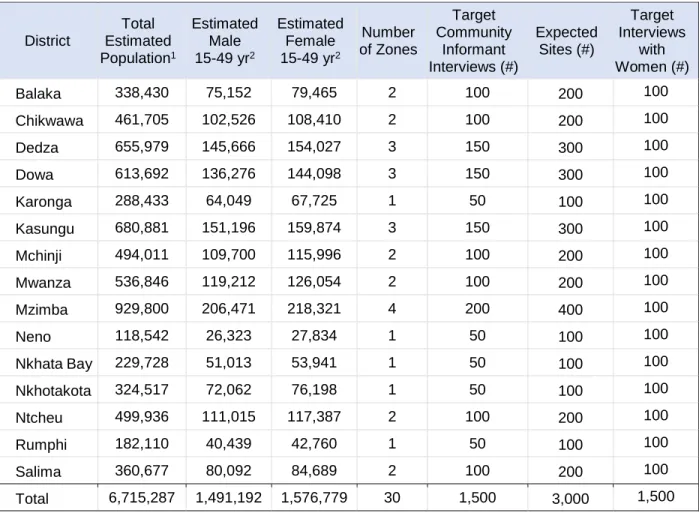
contained 50,000 adults ages 15-49 (Table 3.1). Each zone is reflective of an
administrative area or health catchment area that makes sense to key populations and service delivery providers. At the zone level there was a three-step approach to
sampling:
1) Form A: data collectors conducted interviews with community informants to create a master list of venues where individuals (with a special focus on FSW) meet new sexual partners including public buildings (bars, brothels, restaurants, train stations), public outdoor locations (parks, streets, bus stops), public events (markets, street dances), and public websites (Facebook).
2) Form B: All venues on the master list were visited by data collectors to collect information about the venue including the precise location, numbers and types of patrons, busy days and times, etc.
3) Form C: The master list was stratified based on expected size of the FSW population into high, medium and low priority venues. Random interval sampling was utilized to select venues from each of the strata in order to reach the desired sample size of FSW. Questionnaires were conducted with everyone (male and female) who was present, eligible, and consented at the venue if there were less than 20 patrons and workers. If the venue had over 20 patrons and workers the venue was visually divided into four quadrants and a sample of patrons and workers were selected from each quadrant until the target number of questionnaires had been completed.
drivers of transmission.24 Both the Joint United Nations Programme on HIV/AIDS and the Global Fund to Fight AIDS, Tuberculosis, and Malaria recommend the PLACE method in these settings.57
Table 3.1 Target Number of Interviews by District
Study Population
In order to be eligible for the individual interview (Form C) the respondent needed to be at least 18 years of age and have engaged in at least one of the following
behaviors in the past three months: 1) had five or more sexual partners, 2) had anal sex, 3) had sex with someone you met online or on a phone app, or 4) missed taking prescribed medicine for a sexually transmitted infection such as HIV. We partnered with
District Total Estimated Population1 Estimated Male 15-49 yr2
Estimated Female 15-49 yr2
Number of Zones Target Community Informant Interviews (#) Expected Sites (#) Target Interviews with Women (#)
Balaka 338,430 75,152 79,465 2 100 200 100
Chikwawa 461,705 102,526 108,410 2 100 200 100
Dedza 655,979 145,666 154,027 3 150 300 100
Dowa 613,692 136,276 144,098 3 150 300 100
Karonga 288,433 64,049 67,725 1 50 100 100
Kasungu 680,881 151,196 159,874 3 150 300 100
Mchinji 494,011 109,700 115,996 2 100 200 100
Mwanza 536,846 119,212 126,054 2 100 200 100
Mzimba 929,800 206,471 218,321 4 200 400 100
Neno 118,542 26,323 27,834 1 50 100 100
Nkhata Bay 229,728 51,013 53,941 1 50 100 100
Nkhotakota 324,517 72,062 76,198 1 50 100 100
Ntcheu 499,936 111,015 117,387 2 100 200 100
Rumphi 182,110 40,439 42,760 1 50 100 100
Salima 360,677 80,092 84,689 2 100 200 100
and to determine if individuals are utilizing services with these organizations. Our partners include the Family Planning Association of Malawi (FPAM), Pakachere, the Center for the Development of People – Malawi (CEDEP), and Médecins Sans Frontières (MSF) International. We aimed to interview 1,500 women of whom a large percentage were FSW (based on the targeting of venues where FSW seek sexual
partners). Because our study was mostly
representative of smaller and more rural districts in Malawi (see Figure 3.1 for specific districts sampled in this study), these results are not generalizable to the context of the larger districts. Those districts have already been studied in the pilot program and have separate data available. These results could,
however, be generalized to similar contexts outside of Malawi including rural areas of neighboring countries, Tanzania, Zambia, and Mozambique, and other locations with high rates of sexual tourism, fishing villages, and trucking routes.
The Malawi PLACE study produced clusters, strata, and weights based on the complex survey sampling. The clusters were based on the venue where the individual was interviewed and the strata based on the district the venue was located in. The individual’s sampling weight was calculated as the inverse of the product of the probability that the venue was selected for a Form B venue visit times the probability that the venue was selected for a Form C interview times the probability that the person
was sampled from those at the venue at the time. This individual sampling weight is meant to represent the number of women in the district who visited that venue on a busy night. Weights were originally produced to estimate the size of the FSW population in each district in Malawi.
Preliminary Data
Table 3.2. PLACE Malawi Pilot Data from Zomba District. All Women Non-FSW Women FSW
Number of Respondents (N) 152 52 123
Adverse Life Events
Victim of violence, past 12 months 50 33% 15 29% 47 38%
Hurt physically by police, past 12 months 12 8% 4 8% 11 9%
Forced to have sex, past 12 months 38 25% 10 19% 35 28%
Spent one or more nights in jail or prison, past 12 months 26 17% 9 17% 24 20%
Drink alcohol daily or almost daily 38 25% 7 13% 34 28%
Injected non-prescription drugs, past 12 months 2 1% 0 0% 2 2%
Risky Sexual Behaviors
Used condom last sex with man 90 59% 28 54% 80 65%
Anal sex without a condom, past 3 months 28 18% 9 17% 26 21%
Accessed HIV Prevention
Can get condom quickly 36 24% 12 23% 29 24%
Can get lubricant quickly 89 59% 33 63% 74 60%
Obtained free condoms in the past 6 months 110 72% 33 63% 98 80%
Bought condoms in the past 6 months 122 80% 39 75% 106 86%
Obtained free lubricant in the past 6 months 42 28% 8 15% 42 34%
HIV Testing
Knows where to get tested for HIV in Zomba District 138 91% 44 85% 113 92%
Before today, ever tested for HIV and received test results
130 86% 42 81% 105 85%
In the past 6 months, tested for HIV and received test results
105 69% 36 69% 90 73%
HIV positive in the past year or before, self-identified 46 30% 16 31% 42 34%
HIV Treatment
Taken medicine for an HIV infection 39 26% 14 27% 36 29%
Currently taking antiretroviral (ART) drugs to treat an infection
39 26% 14 27% 36 29%
Taking your antiretroviral drugs less than 12 months 26 17% 8 15% 25 20%
In the past 7 days, missed taking ART 3 days or more 14 9% 4 8% 14 11%
Virally suppressed 30 20% 9 17% 27 22%
While these preliminary results demonstrate the type of data collected through the PLACE study, the full questionnaire with behavioral data (Form C) was only
interest. Additionally, conducting this study in only one district limited the generalizability of the study even within Malawi and would have benefitted from being conducted in multiple districts.
Measures
All questionnaires were developed in conjunction with key stakeholders including
local HIV service organizations, local and national government entities, and members of key populations in Malawi in order to best estimate key program indicators and to
estimate risk behaviors related to HIV. The PLACE questionnaire was validated through use in twelve countries and was adapted specifically to the Malawi setting.
Table 3.3 Exposure, Outcome, and Covariate Assessments
Exposure/Outcome AIM Measures
Exposure: Adverse Life Events
2 - History of Violence - Sexual Abuse - Substance Abuse - Jailing
Outcome: Access to and Uptake of HIV prevention and care services
1 and 2
- Access to HIV prevention services - Sexual Behaviors
- Sexual Partners
- Access to HIV/STI Testing
- Use and adherence to ART (Among HIV-positive women) Modifier: Sex worker
status
2b - Engaged in female sex work or not (self-reported) - HIV Status (self-reported)
Demographic Variables
1 and 2
- Age - Education - Work on site
- Frequency attended the venue
- Where they slept last night
- Employment
Adverse Life Events (Aim 2)
substance abuse, and jailing. A participant was considered to have a history of that ALE if they had a positive response to any of the questions. The questions included:
History of Violence
o In the past 12 months have you been the victim of violence?
o Have you ever received legal help for an issue dealing with violence or stigma?
o In the past 12 months have you been hurt physically by the police?
Sexual Abuse
o In the past 12 months, have you been forced to have sex against your will?
Substance Abuse
o Do you drink alcohol daily or almost every day?
o Did you inject a non-prescription drug in the past 12 months?
Jailing
ALE Composite Variable:
A single continuous exposure composite variable was created from the responses to each of the summary exposure variables outlined above. In this composite variable, each covariate received equal weighting. The value of this variable is the sum of the values of each of the exposure variables and ranges from 0 (negative response to all exposure variables) to 4 (positive response to all
exposure variables). Missing responses were fairly rare in this study (N=5), therefore if at least one of the four ALE variables was missing the ALE variable was coded as missing.
Engagement in risky sexual behaviors and HIV prevention, testing, and care (Aims 1 and 2)
Access to HIV/STI prevention and testing, sexual behaviors, sexual partners, and use and adherence to ART were measured by the parent study using several different variables. The specific questions are highlighted below.
Access to HIV prevention:
o If you wanted a condom, would it be difficult to get one quickly?
o If you wanted some personal lubricant, would it be difficult for you to get some quickly?
o Have you received information from an outreach worker at this venue in the past 12 months?
o Have you accessed condoms for free in the past 6 months?
o Has an outreach worker given you a condom in the past 6 months?
o Have you bought condoms in the past 6 months?
o Have you visited a drop-in center created for FSW in the past 6 months?
Sexual Behaviors:
o Have you ever used a male condom?
o Did you use a condom the last you had sex?
o Do you have a condom with you now?
o Have you had penile-vaginal sex without a condom in the past 3 months?
o Have you had anal sex without a condom in the past 3 months?
Sexual Partners
o In total, how many men did you have sex with in the last 4 weeks?
o Of these men, how many were new partners?
o In total, how many men have you had sex with in the past 12 months?
Access to HIV/STI Testing
o Do you know where to go get tested for HIV in this District?
o Did a medical provider test or examine you to see if you had a STI other than HIV in the past 12 months?
o Before today, have you ever been tested for HIV and received your test results?
o In the past 6 months, have you been tested for HIV and received your test results?
Use and adherence to ART:
o If you are currently taking ART drugs: In the past 7 days, did you miss taking anti-retroviral medicine 3 days or more?
HIV Status
o Did you have an HIV test indicating that you were infected with HIV?
o In the past year, have you had a positive HIV test indicating an HIV infection?
Sex Worker Status (Aims 2b).
Women were placed into one of three sex worker statuses: FSW, OFSW, and OHRW. FSW had a positive answer to the following question: “Some people get paid money for sex and see themselves as sex workers. Do you get paid money for sex and do you see yourself as a sex worker?” OFSW had a negative answer to the previous question, but answered positively to “In the past 3 months, has someone paid you money for having sex?” OHRW answered both questions negatively.
HIV Status (Aims 1 and 2).
HIV status was based on self-report from the questionnaire. Individuals were considered HIV positive if they answered positively to either or both of the following two questions: “Some people were infected with HIV over a year ago. Did you have an HIV test over a year ago indicating that you were infected with HIV?” and “In the past year, have you had a positive HIV test indicating an HIV infection (not including today)?”
Socio-demographic variables (Aims 1 and 2).
the participant slept last night, if they worked at the venue, and if they were employed. Education was made into a dichotomous variable indicating if the individual had
completed secondary school or not. Frequency attending the venue was collapsed into a four-level categorical variable: lives at the venue, visits venue daily, visits 1-6 times per week, and visits no more than once per week. Type of place slept last night was collapsed into a six-level categorical variable: this spot, family residence, friend’s residence, dormitory, hotel or commercial lodging, or somewhere else.
Data Analyses
All analyses were driven by cross-sectional nature of the PLACE questionnaire while also incorporating the survey sampling and weighting to improve the
generalizability of the findings. All estimates were produced using Stata (Version 16.0, StataCorp, College Station, TX, USA) survey procedures that incorporated survey sampling weights, strata, and clustering. Sampling weights were calculated as the inverse of the probability that the venue was selected in phase II multiplied by the
probability the venue was selected in phase III multiplied by the probability the individual was sampled from the venue at that time. Strata were based on the district the venue was located in and each venue was a cluster. Figures were produced in SAS version 9.4 (Cary, NC) and GraphPad Prism version 8.4.1. (San Diego, CA).
Specific Aim 1
Analysis
For each outcome variable, the prevalence and confidence interval of that variable was calculated among FSW, OFSW and OHRW. A prevalence ratio and 95% confidence interval were calculated by fitting a log binomial model to compare the prevalence of each categorical outcome variable among FSW and OFSW with the prevalence among OHRW (reference group). Prevalence estimates were compared using the following criteria: if the 95% CIs of two estimates did not overlap they were considered different (and described in the results as “higher,” “lower,” “better,” etc.), however, if the 95% CIs of the two estimates overlapped they were considered to be comparable.
Specific Aim 2
Among all women in the Malawi PLACE study, estimate the association of individual and cumulative adverse life events, specifically history of violence, sexual abuse, substance abuse, and jailing, on the prevalence of sexual risk taking behaviors, access to HIV prevention and testing, and use and adherence to ART.
Analysis
PRs produced by this model are the increase in prevalence for each additional ALE exposure, i.e. comparing 4 ALEs to 3 ALEs, 3 ALEs to 2 ALEs, etc.
Specific Aim 2b
Determine if the above associations, from specific aim 2, are modified by self-identified sex worker status (FSW vs. non-FSW) or by self-reported HIV status (positive or
negative). Analysis
Two variables were evaluated for potential effect measure modification (EMM); a) sex worker status was categorized as either self-reported FSW or not self-reported FSW (non-FSW; the not self-reported FSW group included all women from the OFSW and OHRW groups); b) HIV status was categorized as either positive or negative by self-reported HIV infection status as in above analyses. Assessment for effect measure modification (EMM) was conducted in stages. First, each model was fit with an
interaction term between the independent variable (one of the ALEs or the ALE score variable) and the potential modifier (either sex worker vs. non-sex worker or
HIV-positive vs. HIV-negative) to determine if there was evidence of heterogeneity. Evidence of heterogeneity was defined as the interaction term having a p-value less than or equal to 0.05. If there was evidence of heterogeneity, we calculated PRs stratified by the potential modifier. The stratified PRs were then compared to determine if they were statistically different, defined as no overlap between the 95% CIs. Finally, a Wald Test was conducted on each of these stratified models to test the hypothesis that the
CHAPTER 4: DIFFERENCES IN ACCESS TO HIV SERVICES AND RISKY SEXUAL BEHAVIORS AMONG MALAWIAN WOMEN AT SOCIAL VENUES WHO DO AND DO
NOT ENGAGE IN SEX WORK
Introduction
Malawi is a high HIV burden country in sub-Saharan Africa with an HIV prevalence of 9.2% among the adult population aged 15-49.61 Women face a
disproportionate HIV burden with 1.5 times the HIV prevalence of men over the age of 15.61 The Malawi HIV prevention strategy identifies female sex workers (FSW) as one of the key populations (KP) most likely to be affected by and transmit HIV nationally.2 An estimated 36,700 women are part of the commercial sex industry in Malawi.62 Previous studies of Malawian FSW have found an HIV prevalence of 55-63%, one of the highest in the world.3,29,30,62 While sex work is legal, it is a highly stigmatized practice where police use laws against loitering and public disorder to prosecute FSWs, and healthcare workers deny care on the basis of profession thereby preventing access to HIV
prevention and treatment.27,63–65
general population of Malawians living with HIV, 75% were on ART and 67% were virally suppressed.25 These gaps are not just limited to treatment, but also to knowledge and use of prevention methods. Among sex workers surveyed in the Malawi Biological and Behavioural Surveillance Study, 93% reported using a condom the last time they had sex with a client, however, only 60% reported consistent condom usage with clients over the previous 12 months.3 FSW also reported being able to receive more money from clients for condomless sex.3 Condom use is low in the general Malawi population, with only 30% reporting condom use at last sex, further compounding the issue.66 In addition to increasing condom use, the Malawi National Condom Strategy indicates the importance of increasing lubricant use to reduce condom failure.66 In a recent study of FSW in Zomba, Malawi, only 23% reported ever using a lubricant during sex and less than 4% of social venues were reported to have lubricants available.62 Identifying barriers to accessing HIV care and prevention services is paramount to reducing the HIV burden among FSW in Malawi.
In addition to the more formal commercial sex workers, there is a sizeable group of women who engage in sex work but do not identify as sex workers, “other female sex workers” (OFSW). In many countries in sub-Saharan Africa (SSA), women who work in bars or other alcohol-serving establishments as barmaids also engage in sex work. Several studies have shown that these women have similar rates of poverty, sexual violence, depression, and HIV prevalence as FSW, however, they often have fewer sexual partners, primarily meet partners in alcohol-serving venues and sometimes exchange sex for goods and services rather than money.35–37 These OFSW are
sex workers. To date, there have been no studies to estimate the prevention practices and use of HIV treatment among OFSW in Malawi.
This study compares access to HIV prevention and care services and risky sexual behaviors between female sex workers, women who engage in sex work but do not consider themselves sex workers (i.e., OFSW), and other women who frequent venues where people look for sexual partners in Malawi.
Methods
Study design and population
The Malawi Priorities for Local AIDS Control Efforts (PLACE) Study utilized the PLACE methodology, which was designed to improve understanding of local drivers of the HIV epidemic by involving local stakeholders in the data collection process. The objective of PLACE methodology is to, “provide actionable evidence of gaps in HIV prevention and treatment programs among key populations (defined as populations most likely to acquire and transmit HIV) at the local level and evidence-based strategies to address gaps in service coverage.”62
Figure 4.1 Phases of the Place Method
High priority venues were all venues where community informants reported that men who have sex with men (MSM) congregate, sex is offered on-site, or sex workers live on site, as well as all street sex worker sites. Low priority venues were all other venues that were still feasible to visit (i.e. not an internet site, not an event). Venues were sampled from the master list to select approximately 130 venues per district to visit for phase II. In addition, there were 2-3 MSM-specific (to increase the number of
surveys among MSM) and “district choice” venues selected by district officials and the civil society organization, Centre for the Development of People (CEDEP). Finally, all MSM venues, street sex worker venues, and any venue that was named by more than 20 community informants, but had not already been selected was included.
At each selected venue in phase II, a general spot informant was briefly
interviewed to understand the types of KP that frequented that venue, to estimate the number of KP at the venue during busy times, to answer limited HIV prevention questions and provide other information about the venue. Due to funding limitations, from the approximately 130 venues selected for phase II in each district, in phase III a random sample of 13 venues and 2 pre-selected venues (i.e., 15 total) were chosen to
have the bio-behavioral survey administered to their patrons and workers in phase IV. In each district, across the 15 sampled venues, a total of 100 women were interviewed as part of the survey in phase IV. The target number of surveys at each venue was
dependent on the size of the venue ranging from 5 women at a small (<30 people socializing at the time of the survey) venue to 25 women at a large venue (>200 people).
Study eligibility was defined in a way to reduce stigma of participation by not requiring the participant to report sex work. Participants were eligible for the survey if they were at least 18 years of age and had done any of the following in the past 3 months: had more than 5 sexual partners, had anal sex with anyone, had sex with someone they met online or on a phone app, or missed taking prescribed medicine for a sexually transmitted infection (STI) such as HIV. If the individual was eligible, they were asked questions about demographic characteristics, venue-visiting behavior, sexual behavior, sexual health, access to services, social vulnerabilities and adverse life events (ALEs).
For these analyses, we included all female participants who met eligibility requirements and had a completed questionnaire. The target population for this study included all women who frequent social venues in the rural districts of Malawi (see Table S1 for the full list of districts).
Data Collection
the interview. Questionnaires were translated into five local languages and a native speaker conducted the survey.
Key variables
Participant demographics measured in the survey included age, education, how frequently the participant attends the venue, where the participant slept last night, and if the participant worked at the venue. Age was self-reported by participants in years. Education was coded as a binary variable of secondary school completion due to nearly all participants at least starting secondary school. Frequency of venue attendance was categorized into lives at the venue, visits venue daily, visits venue 1-6 times per week, and visits venue no more than once per week. Where the participant slept last night was categorized into this venue, family residence, friend's residence, dormitory, hotel or commercial lodging, and somewhere else. Participants were asked if they worked at the venue with a possible yes or no answer.
The outcomes of interest were related to accessing HIV prevention, sexual
tested for HIV and received test results; having been tested for HIV in the last six
months and received test results; having been tested or examined for an STI other than HIV in the past 12 months; and knowing where to get tested for HIV in the district. Number of male sexual partners in the last 4 weeks, number of new male sexual partners in the last 4 weeks, and number of male sexual partners in the last 12 months were categorized into one or fewer partners, between one and five partners, between six and twenty partners, and more than twenty partners. HIV positive participants were asked if they were currently taking antiretroviral medications (ART) and, of those on ART, if they had taken their ART at least 4 of the past 7 days.
HIV testing was only conducted in select urban and peri-urban districts,
therefore, the measure of HIV status in this analysis from rural districts was based on self-report from the questionnaire for all participants. For these analyses, an individual was considered HIV-positive if they positively answered either or both of the following questions, “Some people were infected with HIV over a year ago. Did you have an HIV test over a year ago indicating that you were infected with HIV?” and “In the past year, have you had a positive HIV test indicating an HIV infection (not including today)?”
Statistical Analyses
In this study, we estimated the proportion of women who reported successfully accessing HIV prevention services, risky sexual behaviors, HIV/STI testing, and use and adherence to ART among women who participated in the Malawi PLACE study. These estimated proportions were further compared between FSW, OFSW, and OHRW. We fit a log binomial regression model for the proportion with each outcome conditional on category. Using these models, we estimated prevalence ratios comparing the proportion reporting each outcome between FSW, OFSW, and OHRW, where
OHRW were the reference group. Prevalence estimates were compared using the following criteria: if the 95% CIs of two estimates did not overlap they were considered different (and described in the results as “higher,” “lower,” “better,” etc.), however, if the 95% CIs of the two estimates overlapped they were considered to be comparable. Proportions of additional descriptive covariates were provided to demonstrate differences between the three groups.
probability that the venue was selected in phase II times the probability the venue was selected in phase III times the probability the individual was sampled from the venue in phase IV. Standard errors were corrected for the stratified sampling and clustering of venues within districts. Figures were produced in SAS version 9.4 (Cary, NC) and GraphPad version 8.4.1 (San Diego, CA).
Ethical Approval
The Malawi PLACE Study protocol, survey, and consent forms were reviewed and approved in Malawi by the National Health Sciences Research Committee (NHSRC, #15/7/1448). All participants provided written informed consent. Analyses were approved by the University of North Carolina at Chapel Hill Institutional Review Board (#19-0909).
Results
A total of 2,343 individuals were interviewed as part of the 2018 Malawi PLACE study in 15 rural districts. Of the 1,347 female study participants, 1004 self-identified as sex workers (FSW), 213 did not identify as sex workers, but had sold sex for money in the previous 3 months (OFSW), and 130 did not engage in sex work (OHRW).
Table 4.1 Demographic characteristics of female participants by sex worker status, Malawi PLACE 2018.
FSW OFSW OHRW
N=1004 N=213 N=130
Mean Mean Mean
Age 26 27 28
Percentage Percentage Percentage Did you complete secondary
school 6% 28% 16%
Employed 13% 9% 14%
Frequency attend the venue
Lives at the venue 78% 44% 22%
Visits Venue Daily 11% 29% 39%
Visits 1-6 times per week 6% 19% 20%
Visits no more than once per week 6% 8% 20%
Type of Place slept last night
This Spot 76% 45% 12%
Family Residence 12% 43% 78%
Friend's Residence 1% 8% 0%
Dormitory 3% 2% 5%
Hotel or Commercial Lodging 5% 2% 3%
Somewhere Else 4% 0% 2%
Work at this venue 79% 36% 34%
FSW, self-identifies as a female sex worker; OFSW, Other Female Sex Workers (engages in sex work, but does not self-identify as a sex worker); OHRW, Other High Risk Women; PLACE, Priorities for Local AIDS Control Efforts; SW, sex work.
The OFSW were demographically different from both the OHRW and FSW populations. Compared to FSW, OSFW tended to be older, more likely to have
completed secondary school, less likely to live and sleep at the venue, and less likely to work at the venue (Table 4.1). OFSW were more likely to live and sleep at the venue than OHRW. Interestingly, few participants across all three groups reported current employment, despite many self-reporting current sex work, indicating some women do not view sex work as a type of employment (Table 4.1).
and adherence to ART. In general, FSW and OFSW reported better access to and receipt of condoms and lubricant in the past 6 months compared to OHRW (Table S2, Figure 4.2). Receipt of information from an outreach worker at that venue in the last 12 months suggested a similar pattern although the CIs for the OHRW (35%; 95% CI: 26-45%) and OFSW (61%; 95% CI: 44-77%) groups are overlapping. Ease of accessing condoms and lubricants quickly at the venue was also more frequently reported by FSW and OFSW compared to OHRW, however, the difference between groups was not as stark as access in the past 6 months (Table S2). Use of drop-in centers for FSW was fairly low across all groups with FSW and OHRW equally reporting 30% usage
compared to 15% of OFSW (Table S2).
Figure 4.2 Prevalence estimates of access to HIV prevention by FSW, OFSW, and OHRW
condom (99%; 95% CI: 97-100%) compared with 87% (95%CI: 67-95%) of OFSW and 58% (95% CI: 41-74%) of OHRW (Figure 4.3, Table S3). Condom use at last sex was also highest among FSW (87%; 95%CI: 83-90%), followed by OFSW (66%; 95%CI: 45-82%) and OHRW (38%; 95%CI: 29-48%) (Figure 4.3, Table S3). Prevalence of
individuals having a condom on them during the survey was lower overall, but still greatest among FSW (65%; 95%CI: 57-71%) followed by OFSW (35%; 95%CI: 21-53%) and OHRW (7%; 95%CI: 3-18%) (Figure 4.3, Table S3). Penile-vaginal or anal sex without a condom differed from other sexual behaviors. Penile-vaginal sex without a condom in the last 3 months was common and fairly similar across all three groups with 60-70% reporting it (Table S3). Anal sex without a condom was uncommon in all three groups, but greatest among FSW (9%) compared to OFSW (2%) and OHRW (4%) (Table S3).
Figure 4.3 Prevalence estimates of sexual behaviors by FSW, OFSW, and OHRW
for HIV was very high with over 80% of each group ever testing and receiving HIV test results (Figure 4.4, Table S4). Testing for HIV in the last 6 months was a bit lower, but prevalence still ranged from 60-80% (Figure 4.4, Table S4). Testing for other STIs was much less frequent than HIV testing across all three groups with prevalence estimates less than 50% (Figure 4.4, Table S4).
Figure 4.4 Prevalence estimates of HIV/STI testing by FSW, OFSW, and OHRW
The number of male sexual partners over the last 4 weeks and 12 months and new male sexual partners over the last 4 weeks differed greatly between groups. Among FSW, 52% reported more than 20 male partners in the last 4 weeks compared with 25% among OFSW and 5% among OHRW (Figure 4.5a). Conversely, OHRW had the
Figure 4.5 Number of male sexual partners at 4 weeks and 12 months by FSW, OFSW, and OHRW.
1 P artn er 2-5 Par tner s 6-20 Par tner s >20 Par tner s 0% 20% 40% 60% 80% 100%
a) Total male sexual partners in the last 4 weeks
1 P artn er 2-5 Par tner s 6-20 Par tner s >20 Par tner s 0% 20% 40% 60% 80% 100%
b) New male sexual partners in the last 4 weeks
1 P artn er 2-5 Par tner s 6-20 Par tner s >20 Par tner s 0% 20% 40% 60% 80% 100%
c) Total male sexual partners in the last 12 months
FSW
OFSW
OHRW
weeks compared to OFSW (21%) and FSW (6%) (Figure 4.5). This pattern continued when looking at the number of new male sexual partners over the last 4 weeks and number of male sexual partners in the last 12 months, with more FSW reporting more than 20 new partners than the other two groups and more OHRW reporting 1 or fewer partners than the other 2 groups (Figure 4.5).
Figure 4.6. Treatment cascade among high risk women in the Malawi PLACE study
Examination of indicators of access to and utilization of HIV care services was limited to HIV-positive individuals. Self-reported HIV prevalence was 35% among FSW,
94% 35% 90% 66% 78% 20% 76% 41% 83% 20% 81% 77%
E V E R T E S T E D H I V P R E V A L E N C E C U R R E N T L Y T A K I N G A R T D R U G S T O T R E A T
A N I N F E C T I O N
O F T H O S E C U R R E N T L Y O N A R T : I N T H E P A S T 7 D A Y S , T O O K A R T O N A T
L E A S T 4 D A Y S
20% among OFSW, and 20% among OHRW, all of which are notably higher than the HIV prevalence among the general population in Malawi (9%).61 Prevalence of ART use was similar across all three groups; 90% of FSW, 76% of OFSW, and 81% of OHRW reported current use of ART (Table S5, Figure 4.6). Most women in all three groups obtained their ART from a government clinic. Missing ART on at least 3 of the last 7 days was considered non-adherent to their ART regimen. FSW (66%) and OHRW (77%) were more likely to be adherent to their ART regimen compared to OFSW (41%) (Table S5, Figure 4.6).
Discussion
This study is one of the first to describe the differences among women in rural Malawi who either self-identify as a female sex worker; engage in sex work, but do not self-identify as a sex worker; or do not engage in sex work, but frequent venues that sex workers frequent. We provide one of the first estimates of self-reported HIV prevalence among these three groups in Malawi, specifically in rural settings. Self-reported HIV prevalence was greatest among FSW (35%), but the prevalence among OFSW (20%) and OHRW (20%) were still double that of the general female population of Malawi (11.1%).61
(PrEP), protection from partner abuse, and supporting ART adherence among those who are HIV positive; among OFSW, increasing access to and consistent use of condoms, increasing regular testing for HIV and other STIs, and supporting ART
adherence among those who are HIV positive; and among OHRW, improving outreach from HIV and women’s health focused organizations, increasing condom use and awareness, and increasing regular testing for HIV and other STIs. Tailoring HIV
prevention, treatment, and care programming to better address the differential service needs in these populations can help reduce HIV transmission and improve sexual health.
Each group exhibited prevention behaviors to varying degrees, and, therefore, increasing these behaviors across groups will require a more individualized and
collaborative approach.67,68 HIV testing is fairly common among FSW, but women in the OHRW group may not need to be tested as often if they don’t have multiple sexual partners. Fortunately, 90% of women in all three groups knew where to get tested for HIV in their district. Similarly, condom use is lowest among OHRW, however, they are most likely to have a single sexual partner, reducing their risk of HIV acquisition. Questions on condom use focused on ever using a male condom, rather than
participants’ regular condom use, which is more indicative of transmission potential.69 FSW were the most likely to live and work at the venue, indicating that outreach programs at these venues may be most likely to reach this group of women.
Previous research from Malawi and the region point to several potential reasons why these gaps between the three groups exist and where interventions may be
frequent alcohol serving venues, like OFSW and OHRW, have an increased prevalence of psychosocial factors that can exacerbate HIV infection risk.11–13,15–18,44 One study in South Africa found women who attended alcohol-serving venues daily had more partners and more unprotected sex than women who did not attend daily.32 A study in Zimbabwe found that women at venues offering alcohol described more risky behaviors than those at venues without alcohol.33 Several studies have shown that condoms are not available in many of the locations where people meet potential sexual partners, putting all patrons at higher risk for STIs. One study in Uganda found that 26-43% of bars, restaurants, and shebeens (informal bars without a license) where sexual partners meet had no condoms available, and not having a condom available was one of the most common reasons for having condomless sex.22 In a study of beer halls in
Zimbabwe, only 2.2% of men and 1.4% of women reported obtaining condoms from a bar, beer hall, or hotel.21 In a study of places where people meet new sexual partners in Zambia, nearly all of the venues were bars, restaurants, and hotels, and yet only 51% of these venues always had condoms available on-site.34 This research points towards a model of providing prevention and care at social venues where many of these risky behaviors take place.
A recent systematic review suggests that transactional sex, or informal sex work, can be distinct from formal sex work, particularly in sub-Saharan Africa.36 While the body of literature differentiating between the two is increasing, very few studies have examined the risk behaviors and programming needs of these distinct groups in depth, and no studies of HIV among women in Malawi have done so.39,70 Our study
venues where people meet sexual partners: women who engage in sex work and identify themselves as such; women who engage in sex work, but do not identify themselves as such; and women who do not engage in sex work, but still frequent the same venues as the other two groups. Women in the OFSW group were hypothesized to be more similar to the FSW group than the OHRW group, but when we compare the groups side-by-side it is evident the OFSW group is unique. Women who engage in informal sex work or transactional sex are at an increased risk of becoming infected with HIV compared to women who do not engage in transactional sex, and may have distinct barriers to care and prevention services when compared to formal sex workers and women who do not engage in sex work.49
One type of service offered in some districts is drop-in centers for sex workers. These drop-in centers typically provide information and counseling on HIV and other STIs, on-site testing, free condoms and lubricant, HIV treatment and follow-up, and psychosocial services.71 An interesting finding from our study is that OHRW (28%) had been to a drop-in center as often as the FSW (29%), both of whom were twice as likely to have gone to one as OFSW (15%) (Figure 3). Services provided outside venues, including within drop-in centers, need to be inclusive of all women to provide the most service delivery coverage and accessibility. Due to the low reported use of these drop-in centers, increasing their reach and engagement with all three groups should be
emphasized.
was much higher in the present study where, of those who were HIV positive, 90%, 76%, and 81% of FSW, OFSW, and OHRW, respectively, reported being on ART. While viral suppression was not assessed, self-reported ART adherence is an established proxy for viral suppression, although it has known limitations.72 In this study, 66%, 41%, and 77% of FSW, OFSW, and OHRW, reported being adherent to their ART. Self- reported ART adherence was especially low among OFSW, but adherence to ART in this study was generally higher than that reported previously among FSW in Lilongwe.30 Limitations
One limitation of our study was the small sample size of women, particularly in the OFSW and OHRW groups. Consequently, the confidence intervals were wider for some estimates. Stratifying the data likely helped improve precision. Additionally, all of our data are self-reported and could be susceptible to under reporting and
misclassification, particularly HIV status and sex worker status. Many of the survey questions asked about sensitive topics that some participants may have been hesitant to respond to truthfully. All precautions for confidentiality and privacy were taken, but many of the venues were small and crowded with limited secluded space for interviews. Lastly, all participants from this study were sampled from venues on their busy nights. Women who do not frequent venues or do not frequent them during those hours would not have been represented in this sample. Therefore, these results are only
generalizable to other women in venues where people find sexual partners. Conclusion
Interventions to improve access and utilization of HIV care and prevention