LONG-TERM ADJUSTMENT AND REIMPLANTATION SURGERY IN PATIENTS WITH IMPLANTABLE CARDIOVERTER DEFIBRILLATORS
Karen E. Jakub
A dissertation submitted to the faculty of the University of North Carolina at Chapel Hill in partial fulfillment of the requirements for the degree of Doctor of Philosophy in the School of Nursing
Chapel Hill 2012
Approved by:
Deborah Mayer PhD, RN AOCN, FAAN
John Paul Mounsey BSc BMCh, PhD, MRCP, FACC
Linda Beeber PhD, RN, CS
ABSTRACT
KAREN JAKUB: Long-Term Adjustment and Reimplantation Surgery in Patients with Implantable Cardioverter Defibrillators
(Under the direction of Dr. Margarete Sandelowski)
Implantable cardioverter defibrillators (ICD) are the standard of care for individuals with life-threatening cardiac arrhythmias. These devices treat arrhythmias by rapidly pacing or shocking the heart into a normal rhythm. Within the first year of implantation patients make physical, psychological, and social adjustments to living with a device. Yet, although patients are living with these devices for many years, the long-term consequences of
implantation are only beginning to be explored. One aspect of living for many years with an ICD is the experience of defibrillator replacement. Patients are required to have a new device implanted every 4-7 years due to battery depletion. In addition, as ICD components age, surgery may be needed to repair or replace worn parts. Accordingly, the purpose of this study was to examine the long-term physical, psychological, and social consequences of living with an ICD and the experience of recurrent surgery for patients with ICDs. The focus of the study was to identify distinctive differences in this experience among various ages, and between men and women.
ACKNOWLEDGMENTS
First, I would like to thank my family for their support and sacrifice during this endeavor. My gratitude is especially heartfelt toward my husband, my mentor and friend, who has always been patient and supportive as I pursued my dream. Also to my father, whose endearing words spoken during the last days of his life gave me inspiration and strength to finish this journey.
I extended my gratitude to the faculty at the University of North Carolina at Chapel Hill, who gave me an amazing education and a desire to continue the advancement of the science of nursing. I would like to recognize and thank the members of my dissertation committee for their contributions to this research study and dissertation process. I am especially grateful and honored to have worked with Dr. Margarete Sandelowski though these many years. Her inspiration and mentorship, encouragement, and understanding kept me motivated and on track.
I would like to thank the physicians, nurses, and support staff of the
Electrophysiology Department at the North Carolina Memorial Hospital of the University of North Carolina Healthcare System for their contribution to this study. My special thanks and gratitude goes to the nurses in the device clinic, Marybeth Beyer and Audrey Chacon, who were welcoming and worked collaboratively through the recruitment process. Their
I would also like to thank the ICD recipients who chose to share their stories with me. Their candor and generosity was sincerely appreciated. My hope is that I was able to capture their experiences in a way that may benefit their care and the care of other ICD recipients in the future.
TABLE OF CONTENTS
LIST OF TABLES………...……….…....ix
LIST OF FIGURES………...x
Chapter I. INTRODUCTION………1
II. BACKGROUND AND SIGNIFICANCE………....5
III. METHODS AND THEORY………...23
IV. FINDINGS: Gender, Age, and the Experience of Technology………...37
Men………..………38
Men, Age, and Development………...41
Women……….43
Women, Age, and Development………..46
Men and Women………..47
ICD Perceptions………...47
Social Support………..49
Financial Concerns………...51
Decisions about Reimplantation………..52
V. DISCUSSION………..54
Research Indications………61
Conclusions………..63
TABLES………..66
FIGURES………...76
APPENDIX………..80
Appendix A: Institutional Review Board Approval………..………..80
LIST OF TABLES Table
1. Sample Characteristics
2. Reimplantation Observation Guide 3. Device Check Observation Guide 4. Interview Guide
LIST OF FIGURES Figure
1. Implantable Cardioverter Defibrillator with Lead Placement 2. Antitachycardia Pacing for Arrhythmia Termination
Chapter I.
Introduction to the Study
Implantable cardioverter defibrillators (ICDs) are the standard of care for individuals surviving sudden cardiac death and life-threatening ventricular arrhythmias (Antiarrhythmics versus Implantable Defibrillators [AVID] Investigators, 1997). The ICD delivers a shock to the heart, thereby interrupting the ventricular arrhythmia and allowing a normal heart rhythm to resume. With more than 230,000 implanted annually in the United States (Wilkoff et al., 2008), ICDs are credited with decreasing the risk of mortality 30-54% in patients with high-risk cardiac conditions.
ICD implantation began in the late 1980s with restricted indications for implantation and limited technological capabilities. These devices were used only for secondary
prevention, that is, only patients who had survived a previous cardiac arrest or had witnessed ventricular arrhythmias were candidates for implantation. More recently, the results of clinical trials have led to the expanded use of ICDs for primary prevention, that is, to prevent cardiac arrest in patients at risk of an arrhythmic event (Moss et al., 1996; Moss et al., 2002). These expanded indications for implantation have increased the number of patients with ICDs.
are only beginning to focus on the long-term consequences of implantation (Carroll & Hamilton, 2008; Flemme et al., 2005). One aspect of ICD technology still to be explored is the patient’s experience of defibrillator replacement. Patients with ICDs are required to have a new device every 4-7 years due to battery depletion. In addition, as ICD components age, additional surgery may be needed to repair or replace damaged or worn parts. Little is known about the experience of frequent recurrent surgery for ICD replacement.
Accordingly, the purposes of the study reported here were to examine the (a) long-term (i.e. > 4 years post-initial implant) physical, psychological, and social consequences of living with an ICD and the (b) experience of recurrent surgery for patients with ICDs. Ethnographic methods (Spradley, 1979, 1980) including participant observation, interviews, and review of medical records, were used to answer the following research questions:
1. How does the experience of ICD replacement compare to initial placement? 2. What alterations, if any, in their lives do patients with ICDs attribute to the
device?
3. Are there any distinctive differences in experience between female and male ICD patients, among young (18-40), middle (40-65), and older (>65) adult patients, and between patients receiving ICDs for primary versus secondary prevention?
4. What happens during the reimplantation procedure that may have an influence on patients’ experiences?
Patients have to make several psychological and social adjustments following their initial implantation. Those at higher risk of poor psychosocial outcomes tend to be younger, have less social support, and are women (Dunbar, 2005). Also at high risk are patients who have experienced a high number of ICD shocks and other comorbid health conditions. The long-term psychosocial adjustment to living with an ICD has only begun to be studied. Because reimplantation surgery and ICD interrogations reoccur throughout a patient’s life, these procedures may result in varied and unpredictable changes in psychological and social adjustments.
The number of people with ICDs has increased over the past 25 years due, in part, to expanded indications for implantation. Yet, experiential differences between those receiving an ICD for prophylaxis and those who have had previous arrhythmic events have not been examined. Patients receiving ICDs for primary prevention tend to be younger and at risk from structural heart disease, or congenital or genetic defects (Sherrid & Daubert, 2008). The possibility exists that patients could have a device that never delivers therapy, yet they will still have to endure multiple reimplantation procedures, years of monitoring, and remain at risk for complications as a result of the technology.
types of implantable devices that must also be replaced (e.g., pacemakers, heart valves, prosthetic joints, cochlear implants). The intent of surgically implanted technologies is to ameliorate health or prolong life, yet the technology itself can present unique challenges. As in the case of ICD reimplantation, surgical procedures are necessary because of technological limitations of the device, as opposed to illness or disease. The frequency of ICD replacement is typically greater than with most other technologies at 4-7 years, presenting a unique opportunity to examine the recurring replacement experience.
Ultimately, the importance of the knowledge gained about long-term ICD patients will be key to improving the nursing care of these patients. Nurses in hospitals may
Chapter II.
Background and Significance
Understanding patients’ experiences of ICDs requires an understanding of the technology itself: how it functions, and the procedures surrounding maintenance and
monitoring of the device. Early devices were large requiring an abdominal insertion site with mesh epicardial defibrillation pads sutured on the outside of the heart. This required major open-chest surgery (thoracotomy) and an extensive recovery period for individuals who were already at high risk because of cardiac disease. This original insertion site and older lead systems may still be in use today. Later ICD models became smaller and lead systems changed, resulting in an implantation procedure that placed the patient at lower risk (Wild et al., 2004).
An ICD system may be a single-chamber device, with one lead in the right ventricle, or a dual-chamber device, with an additional lead placed in the right atrium. The leads are typically inserted into the cephalic or subclavian vein advanced through the superior vena cava and secured in the heart. A similar device, a cardiac resynchronization therapy device (CRT-D), adds an additional lead to treat patients with cardiomyopathy and heart failure. The CRT-D is a programmable defibrillator that shares similar therapy features, programmability, battery life, leads, and surgical implantation techniques with the ICD. In addition to
known to benefit from this biventricular pacing by improving cardiac hemodynamics and, thereby, decreasing mortality (Bristow et al., 2004).
Surgery for ICD or CRT-D implantation is performed in cardiac catheterization labs, electrophysiology labs, or operating rooms. The defibrillator’s smaller size (approximately 30 cm, 60 g) now allows for implantation in the right or left infraclavicular region of the chest wall, usually in a subfascial pocket (Stevenson et al., 2004, see Figure 2.1). The procedure results in a visual 3-4 inch scar and some bulging at the implantation site because of the size of the ICD. Nurses with specialized training administer medications to maintain sedation throughout the procedure with relatively low complication rates (Pachulski, Adkins, & Mirza, 2001).
ICDs Deliver Shocks and Pacing Therapies to Treat Ventricular Arrhythmias ICD functions include rhythm detection and discrimination, as well as treatment modes for bradycardia and ventricular tachycardia. Erratic life-threatening heart rhythms, such as ventricular tachycardia, often occur without warning or prodromal symptoms. In some instances, patients experience mild dizziness or palpitations, but the speed of rhythm detection and ICD activation reduces the occurrence of these symptoms. The ICD is able to detect the abnormal rhythm within seconds (< 10) and begin a sequence of programmed directives to terminate the rhythm.
thought,” and believe the shock is something they must endure if they want to live
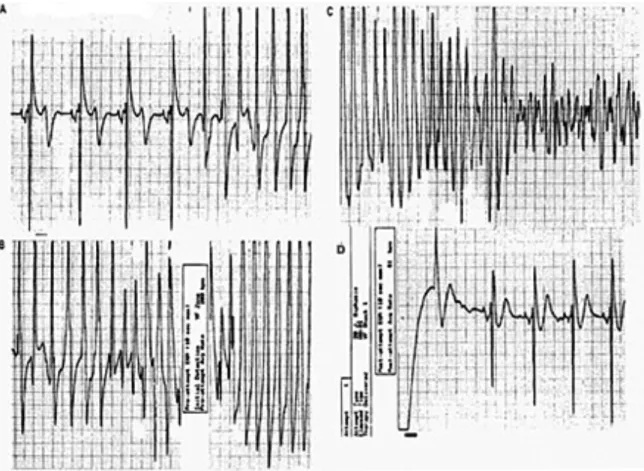
(Dickerson, 2002, p. 366). Because of the discomfort associated with high-energy shocks, other treatment modes may be programmed before a high-energy shock is delivered. Known as tiered therapies, ICDs can be programmed to deliver antitachycardia pacing and/or low energy shocks (cardioversion) to stop the ventricular tachycardia (Cannom & Prystowsky, 2004; Gehi, Mehta, & Gomes, 2006). Antitachycardia pacing is a series of short bursts of paced beats programmed to be faster than the ventricular arrhythmia intended to disrupt and terminate the ventricular tachycardia (see Figure 2.2). This therapy is painless and typically undetectable by patients. Cardioversion is delivery of low-energy shocks to the heart and is thought to be less painful than high-energy shocks. Physicians often choose to program combinations of tiered therapy, in which ventricular tachycardia is terminated by a succession of antitachycardia pacing, and low- and high-energy shocks.
ICD Management Includes Device Interrogation and Monitoring
ICD management includes routine follow-up and maintenance with healthcare providers to access cardiac diagnostic information, assess battery life, and evaluate proper technological function. Some of the newest devices now allow patients to have their ICDs interrogated and monitored by remote access through the telephone, however, this
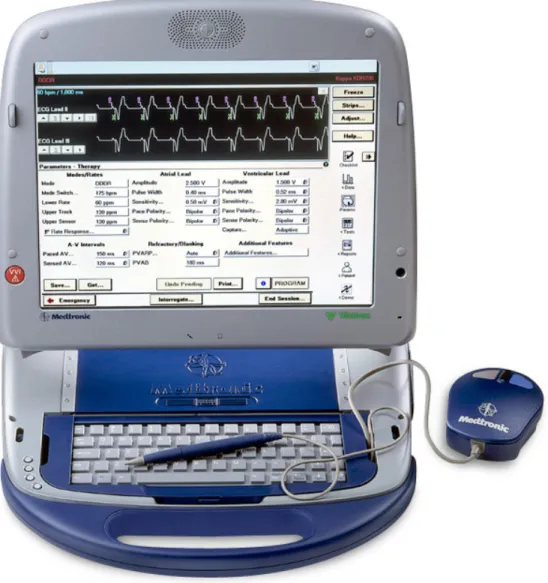
connection is made to a manufacturer-specific ICD computer programmer (see Figure 2.3). During this device interrogation, specific measurements are obtained that provide estimates of the remaining battery-life. As the battery begins to show wear, patients unable to have their devices evaluated by phone are required to increase their visits to the device clinic every 3 months.
Also during the device interrogation procedure, past arrhythmic events and ICD therapies are recalled from the memory of the device. The recorded events provide information to healthcare providers of the exact dates, times, type of rhythm, and
antitachycardia therapy that had been delivered. Stored, retrievable cardiac electrograms provide a visual display to aid diagnostic determination of the cardiac rhythm and the appropriateness of the delivered therapy (see Figure 2.4). Physicians use this information to evaluate the effectiveness of the prescribed therapies, change pharmacological treatment, and/or make necessary programming changes.
Because some ICD therapies are considered painless (antitachycardia pacing), patients may be unaware of past events and try to determine what, if anything, they did to cause the arrhythmia (Dunbar et al., 1993). In some instances, patients may believe they have experienced a shock, but none is confirmed upon ICD interrogation. This phenomenon is known as phantom shock. Phantom shocks may occur in patients at any time throughout the post-implantation years and is thought to be associated with increased levels of anxiety and depression (Prudente, Reigle, Bourguignon, Haines, & DiMarco, 2006).
check these functions requires the technician or nurse use an ICD computer programmer to make changes in the patient’s heart rate.
In order to check a lead’s ability to sense properly, the operator drops the programmed pacing rate of the ICD below a person’s normal heart rate. The ICD
programmer then automatically and incrementally changes the sensing parameters until the device no longer detects the person’s own intrinsic rate. Patients may not sense changes in their heart rate, but, if their intrinsic rate is very low (i.e., 30-40), it may cause some lightheadedness, dizziness, or unusual sensations. If a patient has no intrinsic rhythm, lead sensing cannot be determined. All leads are checked individually in this manner.
In addition to sensing, all leads are checked for pacing capabilities. To perform this test, the operator increases the pacing rate to be significantly higher than the intrinsic rhythm (i.e., causes the heart to race). The ICD programmer automatically and incrementally drops the strength of the electrical impulse delivered to the pacing electrode of the lead until there is no longer capture of the myocardial tissue. Myocardial capture is a term analogous to a cardiac contraction. During this process, particularly if a person has no intrinsic rhythm, one or several heartbeats may be lost. This often produces an uncomfortable and unusual
Long-Term Management of ICDs Includes Recurrent Surgery for Battery Replacements
An ICD is expected to reach the end of its battery life or elective replacement indicators in 4.4 ±1.5 years with even fewer years expected for ICDs with rate responsive modes and biventricular pacing capabilities (Hauser et al., 2006). The exact number of years a device will last is variable among manufacturers’ brands and from patient to patient. Battery life is dependent on many factors, such as how much it is used (for pacing or
defibrillation), programmed voltage pacing parameters, and the size and specifications of the battery (Ellinor, Guy, Ruskin, & McGovern, 2003).
The battery is sealed within the ICD, thus requiring an entirely new device to be implanted. The procedure is typically done as an outpatient/same-day surgery in an
electrophysiology laboratory. The surgery consists of removal of the old device and testing the lead(s) for sensing and pacing capabilities. A new ICD is connected to the leads and a test is conducted to assess the ability of the system to defibrillate the heart.
fearful of device malfunction or possible impending shock. Yet, experiential data are not available concerning this aspect of ICD implantation.
Defibrillation Threshold Testing is Done During Surgery
Testing the ICDs ability to stop a ventricular arrhythmia is known as defibrillation threshold testing, in which ventricular fibrillation is induced and terminated with a low energy shock. This is done, in part, to determine the lowest amount of energy necessary to stop a patient’s ventricular fibrillation and provide information to assist the physician in programming the ICDs shock parameters effectively. This procedure also tests the integrity of the defibrillation lead. If problems are detected (e.g., failure to defibrillate the
myocardium, insulation defect/fracture, or pacing/sensing improperly), insertion of new leads may be required. In some instances the original ICD site may have to be abandoned and an entirely new site selected.
This procedure is considered generally “safe and rarely associated with serious complications such as myocardial stunning, cerebral hypoperfusion, intractable VF
(ventricular fibrillation), pulseless electrical activity, and death” (Kowalski, Huizar, Kaszala, & Wood, 2008, p. 442). Yet, based on my own clinical experience, many patients struggle with the thought of having their “heart stopped” to test the device. They are fearful that problems will occur and their heart will not return to a normal rhythm. This fear may increase as the patient ages, with each successive implant, and as health begins to decline. Researchers have yet to explore this experience.
Surgery is Related to Device or Lead Malfunction or Infection
with increasing regularity over the past several years. Recalls are issued due to possible electrical malfunction, battery or capacitor malfunction, or other defective physical
components of the device. The possibility of a device not functioning properly may add to the anxiety experienced by some patients with ICDs (van den Broek, Denollet, Nyklíček, & van der Voort, 2006). For patients who undergo ICD surgery for recalls, lower quality of life has been associated with the potential for a life-threatening malfunction of the device
(Undavia et al., 2008). According to Sears and Conti (2006), there is a “fundamental principal that patients with ICDs must have faith in their devices, or their psychological acceptance of the devices is altered” (p. 565). The security of life-saving therapy and enhanced heart function (in the case of CRTs) are hallmark qualities of the ICD that contribute to patients’ acceptance and adjustment to living with the device. High anxiety levels are reported in individuals receiving these recalls as they face added follow-up care or reimplantation of defective devices (van den Broek et al., 2006).
malfunctions in original leads had “an eight-fold increased risk for recurrent ICD lead problems” in the future (Eckstein et al., 2008, p. 2732).
ICD pocket infection is a serious complication that can lead to sepsis or even death. Secondary implantation or previous surgical revision of an existing ICD increases the risk of infection significantly (Gepner et al., 2007). Device infection carries a mortality rate of 31%- 66% if the system is left in place, and an 18% mortality rate if it is removed and combined with antibiotic therapy (Kowalski et al., 2008). There are no data concerning the experiences of patients having the complications of infection and subsequent removal of their life-saving device.
Decisions are Made Regarding ICD Non-Replacement
Decisions regarding non-replacement of an ICD are made based on health status or end-of-life choices. When describing the experience of patients with implantable
defibrillators, Dickerson (2002) suggested that individuals reliant on technology are vigilant about the function of their ICDs, particularly when their battery begins to deplete. The need for a replacement becomes a moral dilemma; that is, a decision to replace an ICD means the patient has to choose between life and death. Patients believe they have little choice in the decision to reimplant their ICD because of healthcare professionals’ strong advocacy for technology to save lives whereby “death becomes a symptom to be treated” rather than the end of life (Dickerson, 2002, p. 365).
the life of the old ICD (Schoenfeld, 2000). Continued surgical re-implantation of an ICD may be questionable when patients are suffering from an irreversible chronic condition. For example, recipients suffering from severe comorbid conditions, such as cancer or severe dementia, may choose to have their ICD deactivated or not have it replaced. In rare circumstances, patients may request removal or refuse replacement of the device due to severe debilitating stress related to multiple shocks or infection, even if it is discouraged by their healthcare providers (Li et al., 1998).
Negative Psychological Symptoms Result from ICD Shocks
ICD shocks contribute to patients’ negative psychological symptoms regardless of the number of years since the initial implantation.
Anxiety and fear. ICD shocks have been associated with negative psychological symptoms, the most frequent of which are anxiety and fear. Sears, Tordaro, Lewis, Sotile and Conti (1999) reported ICD-related fear and anxiety in 24-88% of patients with ICDs. Patients experience the anxieties and fears of receiving a shock and the possibility of shock failure that could result in sudden death (Burke, 1996; Dickerson, 2005; Dougherty, Benoliel, & Bellin, 2000). Dougherty (1995) compared patients with and without shocks over a 1-year period following implantation. Those without shocks showed a steady decline in anxiety levels while patients who experienced shocks did not demonstrate a reduction in anxiety over that year. Schron et al. (2002) found even one ICD firing in the first year following
implantation decreased physical functioning and mental wellbeing.
continued to have increased levels of anxiety over time. Because the study was conducted with patients who had an ICD for several years past their initial implantation, these
researchers concluded that remission of negative psychological states was rare, and chronic emotional disturbances were present in patients with ICDs.
In a similar study, Crössmann, Pauli, Dengler, Kühlkamp, and Wiedemann (2007) used repeated measures over a 2.5-year period. Subjects were 3 months to 7 years past their initial implantation, with 63% having incurred at least one shock at some time during that period. These researchers found that anxiety levels were significantly higher in ICD patients than in healthy subjects at a comparable age, with the anxiety levels remaining stable at both measurement points. Yet, they did not find that actual shocks or knowledge of
antitachycardia pacing caused an increase in anxiety. This finding is consistent with that of Pauli, Wiedemann, Dengler, Blaumann-Benninghoff, and Kühlkamp (1999) who found that patients did not exhibit increased levels of anxiety from a shock, but that anxiety was attributed to the anticipation of a shock event rather than the shock itself. Carroll and Hamilton (2005) also reported specific anticipatory fears and that ICD patients who had experienced shocks had anxieties related to the fear of pain, loss of control, and feelings of panic should the device shock them again.
Depression. In a comprehensive review of the literature, Sears et al.(1999) found that 24-33 % of all ICD recipients experienced depressive symptoms. Symptoms included fatigue, malaise, loss of appetite, insomnia and loss of interest in activities of daily life.
The onset of depression has been associated with actual and perceived shocks (Goodman & Hess, 1999), poor social support, reduced physical functioning, loss of
Joseph, 2006). Heller, Ormont, Lidagoster, Sciacca and Steinberg (1998) correlated frequent ICD shocks with depression. Patients reported increased sadness and tiredness following these episodes. Along with depression, patients in this group also reported anxiety. These authors acknowledged that anxiety is often a comorbid condition with depression that may have an effect on cardiac arrhythmias. Hegel et al. (1997) also correlated depression with anxieties of ICD shocks. In this 2-year study, patients exhibited more depressive symptoms during the second year even though they experienced fewer shocks. This relationship between anxiety and depression was explained as an interactive cycle, in which anxieties related to ICD shocks may lead to depression, just as those who are depressed remain anxious about ICD firings.
Psychological Outcomes Affect Interpersonal Relationships and Social Situations Psychological consequences of living with an ICD affect interpersonal relationships and social situations following ICD implantation. Patients who experience anxiety resulting from defibrillator-related events sometimes avoid physical activity, crowded public places, or social situations (Carroll & Hamilton, 2005).Worrying about shock activity in a public place results in decreased socialization associated with a loss of control and feelings of panic that a person cannot escape surroundings without embarrassment. Physical activity is often
Individuals with implanted defibrillators frequently modify social activities and relationships following implantation. Marital relationships are affected as partners of ICD patients become over protective and discourage activities that will cause a shock or sudden death (Sowell, Sears, Walker, Kuhl, & Conti, 2007). Intimacy and sexual behaviors between partners change, based on these same fears, but may adjust with time through experience and communication. Over time, positive feelings of safety, peace of mind, and trust contribute to acceptance of the device. A sense of social support from family and friends was reported to be the greatest source of comfort and strength to individuals with ICDs (Dougherty,
Thompson, & Lewis, 2005; Steinke, Gill-Hopple, Valdez, & Wooster, 2005). Gender-Related Factors Influence Adjustment
Gender-related factors may play a role in adjustment to ICDs.Women may be affected by ICD implantation differently from men. Physiologic differences have been reported following the initial implantation. Women have reported a higher incidence of sleep disturbance and postoperative pain when compared to men (Smith, Dunbar, Valderrama, & Viswanathan, 2006). These sleep difficulties were influenced by a prior incidence of life-threatening ventricular arrhythmias and were significant regardless of age, cardiac disease, or marital status.
Women have also been found to have poorer psychological adjustment. Sowell, Sears, Walker, Kuhl, and Conti (2007) found that women experienced higher levels of shock and death anxiety, as well as a greater number of shocks. Similarly, in a study of the
Sowell, Kuhl, Sears, Klodell and Conti (2006) reported increased tenderness at the ICD site because of sensitive breast tissue. Movement and weight of the breast tissue also caused added discomfort as scar tissue would pull or possibly tear. Body image concerns include scarring, clothing fit over the device, socializing problems, and worries about sexual activity. Dubin, Batsford, Lewis, and Rosenfeld (1996) also reported greater body image anxieties in women (89%) than men (43%) particularly when wearing revealing clothing such as a bathing suit. Issues related to body image have not been studied empirically in men with implanted devices.
Age-Related Factors Influence Adjustment
Age-related factors may play a role in adjustment to ICDs. Age differences in patients often reflect differences in disease-related conditions (Hamilton & Carroll, 2003). That is, older patients may receive a device for conditions related to coronary artery disease and heart failure, whereas younger recipients may be treated for genetic disorders such as long QT (wave sequence on an EKG) syndrome or hypertrophic cardiomyopathy. Consequently, these younger patients often receive an ICD for primary prevention of an arrhythmia. When
Quality of Life for Long-Term Patients Varies
Long-term ICD patients adjust to living with their device, but their quality of life can vary based on uncertainty, physical health, and social support. Recently, investigators have begun to examine the long-term effects of living with an ICD. Wallace and colleagues (2002) found that long-term patients can experience declining quality of life that is influenced by ICD shocks, anxiety, low social support, and the number of years since implantation. Participants in this study received an ICD for secondary prevention for ventricular
arrhythmias and had an ICD from 1-4 years. These researchers found that as the number of years passed since the initial time of implantation, physical quality of life decreased. These researchers attributed this finding to worsening medical condition rather than age. In addition, low social support, anxiety, and a greater number of shocks were associated with negative mental quality of life. Overall, patients in this study continued to live with moderate levels of depression and some anxiety. This finding is consistent with that of Luyster et al. (2006) who found that higher levels of anxiety and depression were associated with longevity post-implantation. These researchers attributed this, in part, to the loss of social, personal, and material resources that can occur over time for patients with ICDs.
life. In addition, family-related quality of life was found to decrease over time, but this could not be attributed solely to the ICD and may have been reflective of normal uncertainties associated with family life. These researchers acknowledged that their assessment of uncertainty and quality of life was not done in association with ICD shocks. In fact, approximately one-third of their sample had never received a shock since the time of implantation, and 15 of the 35 participants had never received a shock since the first year following implantation. Because shocks are known to affect psychological wellbeing, the lack of ICD shocks may have contributed to the finding of decreasing uncertainty over time.
Carroll and Hamilton (2008) examined the long-term ICD effects on health status, quality of life, and psychological states from implantation to 4 years post-implantation. They found improvement in negative psychological mood states, such as anxiety, anger,
depression, and fatigue, at 6 months that remained stable over the 4-year period. Yet, because there was no control group comparison, it is unclear whether these negative mood states were similar to those in the general population. Recipients did report a perceived decline in
physical health and function during that time affecting their quality of life. Summary
done within 2 years following implantation, it is unclear how this affects patients over many years. In the few studies of long-term ICD patients, they are portrayed as establishing a satisfactory quality of life, but are still subject to higher levels of anxiety and depression. Patient shock experiences and the influence these have on a patient’s life over time have not been addressed. For example, physical and psychological responses to a shock may differ with each event, may influence social or interpersonal relationships differently, or remain unchanged. In addition, the sequencing of ICD therapy over time may also have some influence on a patient’s wellbeing. Recipients who have endured years of ICD therapy may be influenced differently from those who received a minimal number of shocks. In addition, patients who have been implanted for primary prevention of ventricular tachycardia may never experience a shock but live with the anticipation of one.
A few studies have been conducted to examine the experience of patients with
different demographic characteristics. Young recipients may experience greater difficulties in adjusting to an ICD. Yet, it is largely unknown what influences an ICD may have on a
recipient as they age. Life situations, emotions, maturity, and physical durability, to name a few, may contribute to a patient’s psychological and social wellbeing through time.
comparing the long-term experience of men and women may uncover other events that occur when living with an ICD for an extended period of time.
Chapter III. Methods
Ethnographic methods (Spradley, 1979, 1980) were used to examine the: (a) long-term (≥4 years) physical, psychological, and social consequences of living with an ICD; (b) experience of ICD follow-up device interrogations and lead testing; and, the (c) the
experience of recurrent surgery for patients with ICDs. Methods included participant observation of ICD patients during pre-operative, operative, and post-operative ICD replacement procedures, and of ICD follow-up and device interrogation procedures; interviews with ICD patients; and medical record review.
Ethnographic studies are conducted to explore practices, behavior, and customs (Spradley, 1980). Such studies vary in size, ranging from very large cultural examination to a more specific focus. Micro-ethnographiesnarrow a study to a single social situation or problem of interest. Ethnographers seek understanding by directly observing the actions, behaviors, and interactions participants have with others in a natural setting in order to learn about their world.
Setting
ischemic heart disease, cardiomyopathy, congestive heart failure, cardiac arrest, and ventricular tachycardia. The majority of replacements were due to battery depletion. Other reasons for reimplantation were ICD upgrades to different ICD models or biventricular devices (CRT-D). Several areas within the EP Department were used for this study, including the pre-procedure holding area, EP labs, and the device clinic both at North Carolina
Memorial Hospital and their satellite office at UNC Hospitals Heart & Vascular Center at Meadowmont. The device clinic provides services for approximately 500 device patients (including pacemakers and ICDs).
Sample
A stratified purposeful sampling strategy was used whereby cases are selected that vary on pre-selected parameters (Sandelowski, 1995b). Directed toward including cases representing every combination of these pre-selected parameters, this strategy is useful in capturing the common and unique elements across cases. Pre-selection of patients whose initial implants were for either primary or secondary prevention of ventricular tachycardia proved difficult because of limited documentation of patients’ pre-existing conditions. Therefore, this variation could not be part of the selection process. A total of 23 participants were selected who varied on age, sex, and number of reimplantations. The sample consisted of patients undergoing ICD interrogation and lead testing or reimplantation surgery.
hospital prior to having their initial ICD implanted. Details of participant characteristics are displayed in Table 3.1.
Data Collection
The primary modes of data collection were participant observation, ethnographic interviews, and medical record review. Data were collected over a 12-month period. Eighteen participants were observed and interviewed following their ICD clinic appointment. Five women were observed the day of surgery, of whom four were observed and interviewed at their post-operative follow-up visit to the device clinic.
Observation. Participant observation techniques can range from fully engaged participation to passive observer. Researchers position themselves in a natural setting with the purpose of observing activities, people, and physical aspects of a situation (Spradley, 1980). For this study, I positioned myself in selected vantage points outside the patient’s cubicle in the holding bay or in the rear corner of the EP lab during the implant procedure, resulting in minimal influence and intrusion upon the scene. The foci of my observations were adapted from Spradley’s (1980) dimensions of social situations. They included: (a) space, the physical surroundings of the device clinic, holding bay, the EP lab; (b) actors, with the patient at the center of the scene as well as the family, nurse, physician, and ICD
company representative; (c) activity, a set of related acts people do (e.g., interrogating the ICD with the programmer, preparing the patient, conducting the surgery); (d) object, the physical things that are present (e.g., medical equipment, monitors, or the implantable
interrogate and program the ICD, when defibrillator threshold testing is done); (g) interactions (e.g., what, with whom, and how people are relating to each other); and, (h) feelings, or the emotions felt or expressed by the patient, family, or personnel.
Informal questions were posed to the actors (hospital personnel) in the scene to understand what they were doing (e.g., goals they were attempting to accomplish) or to clarify observed behaviors. In order to minimize my influence in the setting, these questions were asked when the procedure was over.
The ICD patient was at the center of my observations. Five patients were observed the day of their reimplantation surgery. Patients were admitted into the EP holding bay where pre-operative preparation is done. They were moved to the EP lab for their procedure and returned to the holding bay for recovery. Observations took place throughout the day in each of these areas over the entire course of the reimplantation procedure. Two different EP labs were used, each with different characteristics that influenced the flow of the procedures. Observations were aided by the use of an observation guide (see Table 3.2).
Field notes were handwritten throughout the observation period. Descriptive fieldnotes are written to create a portrait of the environment to describe and produce a “sensory image” to be able to understand the social interactions and activities observed (Emerson, Fretz, & Shaw, 1995, p.69). Integrated into these descriptive field notes were notations on the conversational exchanges among patient, family members, and healthcare providers. Direct quotes were written whenever possible but often paraphrasing was
checked for healing and possible suture or staple removal. An ICD interrogation and lead testing procedure may or may not have been done by the nurse in the clinic at that time. Field notes were reviewed and amended at the completion of each day in the field to ensure
completeness and accuracy, and to optimize descriptive validity (Maxwell, 2002). Handwritten notes were typed into a word document for analysis.
Sixteen participants were observed as they underwent device interrogation during routinely scheduled follow-up appointments. The procedure lasted approximately 10-15 minutes, unless there were problems pertaining to medications or errant heart rhythms. I positioned myself in an unobtrusive area of the room with minimal participation in the scene. The foci of observations were the same as for patients undergoing reimplantation surgery, but specific to the device clinic. Observations concentrated on the objects (e.g., the ICD
computer programmer, monitors) in the setting, and the activities and interactions between the patient with those objects and with the nurse who conducted the device interrogation and lead-testing procedure (see table 3.3). Attention was focused on the patient’s non-verbal and verbal communication as they were positioned in the chair, connected to the ICD
programmer and monitoring equipment, and as the tests were conducted. Observations in the clinic yielded information on the influence these procedures might have had on patients’ ICD experience.
Interviews began with a grand tour question: “Tell me the story of how you came to have an ICD.” Grand-tour questions are designed to allow the participant to speak at length about a topic without interruption. When participants finished their responses, questions were asked to clarify, expand, or focus on specific aspects of what they had already talked about, in addition to aspects of the target experience not already addressed. For example, when a participant replied, “…I know I have to get the surgery done, so I just go do it,” a descriptive question I asked was: “Could you walk me through your day of surgery, starting when you arrived at the hospital?” A variety of question formats were used, including structural and contrast questions. An example of a structural question was, “ What do the nurses do in the device clinic to check your ICD?” An example of a contrast question was: “How did this experience differ from your previous experiences of implantation?” An interview guide was used, with questions designed to reflect topics related to the study’s research questions (see Table 3.4).
Of 17 participants observed in the device clinic, 16 were interviewed in a private conference room located in the vicinity of the clinic following their appointment. One participant was interviewed at a local restaurant near the satellite clinic. One participant was interviewed without being observed. The clinic nurses initiated his recruitment during a concurrent interview with another participant. Participants were asked about their
experiences of living with an ICD, their thoughts concerning activities and procedures in the device clinic, and their experiences of reimplantation surgery.
questions about their most recent surgical experience (e.g., pain after surgery or return to normal activities). Participants were asked also to clarify or verify any data or interpretive impressions generated from observations during their reimplantation.
I audio recorded and transcribed the interviews. If the participants began talking about their experiences before or after the recording started, notes were written immediately following the interview session. These data was included with the transcribed audio data.
Medical record review.The limited hospital medical record (only information printed for access at the bedside) and device clinic record were reviewed for patients undergoing reimplantation surgery. A guide was used to extract information regarding demographics, diagnosis, time since implantation, the reason for the initial implantation, the number and reason for ICD replacements, frequency of ATP or shocks, and medical history (Table 3.5). If the participant was observed and interviewed at the device clinic, the device clinic record was reviewed. This record contained information about the ICD from the device interrogation printouts and documentation regarding the lead testing performed while in the clinic. Demographic information, medical history, diagnosis, and medication records were also accessed in this document if available.
Data Analysis
Analysis was done simultaneously with data collection and data preparation. All data were entered into a Microsoft® Word computer file and organized by case number. A case was composed of all observations, interviews, and medical record information obtained from and about an index patient. Each case was linked to the data generation method (e.g.,
corrected. The transcripts were read and proofed against audio files for accuracy. Analysis followed the within- and cross-case methods Miles and Huberman (1994) described.
Each case was read in its entirety several times to get a sense of the whole (Sandelowski, 1995a). This stimulated ideas, thoughts, and impressions before moving forward in the analysis process. A contact summary form (Table 3.6) was completed that abstracted main ideas and themes, included salient points relevant to the research questions, and tracked unanswered questions and areas for further inquiry for upcoming data collection.
Codes were then assigned to words or segments of data that were descriptive or inferential in nature. Coding helped to identify key variables and themes that were later examined across cases. While coding was in progress, memos were written in which I developed ideas and thoughts about the data and began to compare elements of the data. I asked questions such as: what are they saying, what are they not saying, and in what context? Ultimately, memos helped me to explore ideas and relationships, and to identify gaps in the data.
I created data matrices to organize data, which allowed for comparisons to be made within and across cases. These matrices displayed patient characteristics, reimplantation and ICD events, psychological and social responses, and gender differences. For example, one matrix display focused on physical and psychosocial aspects of living with an ICD. Another example was a time-ordered display matrix, which contained specific elements from
Aiding my analysis were concepts drawn from theories of gender and health defining masculine and feminine health behaviors within a social context, theories of adaptation to chronic illness including the body, identity, and the self, and life course theory.
Gender. Gender is socially constructed as an understanding of “power and social inequality” and is “something that one does recurrently in interaction with others”
(Courtenay, 2000). Courtney argued that health beliefs and behaviors can be expressions and representations of gender. These cultural beliefs are formed through interactions and
experiences as they are encountered within social structures, such as family, work, and healthcare environments.
Men’s health-related beliefs are influenced by societal pressures to be strong, robust, self-reliant, in control, and independent (Connell, 2005). As he suggested, hegemonic masculinity is a hierarchical structure that places a person within a dominant position in relation to others. Moreover, masculinities are developed through actions to create
“configurations of gender practices” when situations change or shift (Connell, 2005, p. 77). A change in health status such as a life-threatening illness or event can restructure social relationships that threaten hegemonic masculinity. Men’s social dynamics can change when they are recognized as patients, not only in the hospital setting but also during recovery through chronicity. Men must “reformulate the definition of masculinity” because of new or lasting disabilities (Connell, 2005, p. 55).
with chronic illness (Charmaz, 1995, p. 267). Men may have difficulty accepting that they are no longer “risk-takers and winners” (Charmaz, 1995, p. 274). Power structures may change, thereby diminishing masculine status or authority. For example, a man may return home to be cared for by his wife. She may insist he avoid strenuous activities, remain calm, and abstain from sexual activities. Although the initial outpouring of attention may be appealing, men may try to re-establish hegemonic masculine behaviors as a way to maintain power and control (Robertson, 2007). Over time, however, men may view their illness or life-threatening event as a “turning point” bringing about reflection and reappraisal of their lives (Charmaz, 1995, p. 273).
Health-seeking behavior and caring for one’s health is believed to be socially constructed forms of femininity (Courtenay, 2000). Gender norms for women may be
demonstrated by exhibiting behaviors as selfless caregivers who are expected not only to care for others, but also to sacrifice their own care for the needs of others (Sulik, 2007). When women are faced with a life-threatening chronic illness, Sulik (2007) suggested women engaged in a delicate balancing act between caring for themselves and normative gender expectations of caring for others. For women undergoing ICD reimplantation, caring for self may require uncharacteristic behaviors in which selflessness is no longer possible and they must balance caregiving behaviors within the family structure.
dynamics on ICD reimplantation, analysis was done within each case and within each age-group (22-39, 40-64, and ≥65) using principles from the life course perspective (Elder, 1994). The life course paradigm entails the concepts of historical influences and social transitions to explain adult development and social outcomes of individuals (Elder & Johnson, 2003). There are five principles in the life course paradigm that guide adult development and aging.
1. Principle of life-span development.Life-span development is a lifelong process. that occurs throughout a human’s life. A person’s mental and physical development does not end at a certain age but continues until death.
2. Principle of agency. Individuals are able to make choices throughout their lives within the opportunities and constraints in which they live. They are able to view their options and plan activities and actions that may influence the trajectory of their lives. For individuals with ICDs, these could be choices related to employment or ICD follow-up visits. For the very elderly patient, decisions to continue ICD reimplantation as they age may be needed.
3. Principle of time and place.Individuals are shaped and influenced by the historical times in which they live, as well as their location. Individuals are located within generational cohorts that experience the world in a particular context due to their place and time in history. For example, a 25-year old ICD patient who grew up with technology may feel differently about having an ICD, as opposed to an 85-year old unfamiliar with
healthcare systems on ICD implantation or the value placed on life. An individual’s place may also include racial or socio-economic position within a community.
4. Principle of timing. The time in a person’s life in which transitions, events, or turning points occur are influential in the life course. For example, age-related expectations that are considered social norms such as marriage or childbearing may have a different meaning if they occur later in life rather than when an individual is in their twenties.
Similarly, if a health-related life-threatening event occurs at a young age the personal impact and meaning may vary from an individual experiencing the same event later in life.
5. Principle of linked lives. Individual’s lives are interwoven with others in social relationships throughout the life span. When transitional events occur in a person’s life, they touch others’ lives that may in turn have an effect through generations. For example, if an elderly man must have an ICD reimplanted every 5 years, his children may become active participants in his decision-making and care. They in turn may become more attuned to signs and symptoms of heart disease and begin to care for their own heart health in a more positive way. Family, friends, and co-workers are primary groups in which social bonds are formed and have influence over the trajectory of an individual’s life course.
Human Subjects
was the focus of the observation and others in the scene were at minimal risk of harm, only an oral consent was obtained from hospital staff, visitors, physicians, and nurses. A fact sheet was given to each individual that explained the purpose, participation requirements, risks, and benefits of the study. Questions were answered prior to obtaining oral consent. Validity
The study was designed to optimize the descriptive, interpretive, and theoretical validity of the findings (Maxwell, 2002). According to Maxwell (2002), descriptive validity is concerned with the factual accuracy of the data. In this study, methods to optimize
descriptive validity included: (a) using audio taping during the interviews; (b) comparing transcripts with tapes for accuracy; (c) using participants’ precise words in field notes; and, upon leaving the scene, (d) transcribing audio notes and creating a detailed record of events in the field notes.
Interpretive validity is directed toward accurately obtaining the actor’s point of view. To optimize interpretive validity, I asked participants to elaborate on or clarify things they had said in the interviews and on observed activities. Because I have been an
completed. I also maintained a reflexive journal (Rogers & Cowles, 1993) to track the analytic moves I had made throughout the course of the study.
Descriptive and interpretive validity form the basis for theoretical validity.
Theoretical validity addresses the credibility of researchers’ interpretations. Two aspects of theoretical validity are “the validity of concepts themselves as they are applied to the
Chapter IV.
Findings: Gender, Age, and the Experience of ICD Technology
Similarities and differences between men and women with ICDs were contingent upon their social situations, their illness perceptions, and their perceptions of self. Social situations that influenced adjustment were job satisfaction, and relationships with partners, other family members, and children. These varied depending on age at initial implantation and where individuals were in the life course. For example, one woman (C.10) was
implanted in her mid-30s and was now approaching 50. When she was initially implanted she was responsible for her young daughter’s care despite her illness. After 11 years, however, her daughter was attending college and now provided support to her mother whenever she had surgery.
Because illness perceptions varied between individuals, their attitudes and responses differed as well. Heart rhythm abnormalities without underlying heart disease were often symptomless, which in many instances led recipients to question the need for an ICD. For those with underlying heart disease, whether they experienced symptoms influenced their adjustment. ICD recipient’s initial experiences of having been diagnosed with a cardiac problem and having had a medical device implanted were significant events in their lives that influenced how they viewed themselves and interacted with others in their world.
adjustment to having an ICD was integrated into their self-perception and was not a dominant defining factor in their identity.
Men
Men reported varying degrees of bravado as they adjusted to living with an ICD. Maintaining their masculine persona or image was important, even though their disability was hidden or invisible to others. Men reported being unhappy when they were given unwanted attention for an extended period of time. They resented being told to restrict their activities for fear of a reoccurring event that would lead to a shock. They would challenge themselves to demonstrate to others that they were not disabled or encumbered by their condition. For example, one young man (C.9) engaged in many risky behaviors to prove he was no different with a defibrillator. He explained: “I guess I may have to prove something. I definitely have the attitude I’m not going to let it slow me down. I always had the attitude to begin with, but I think even more so now than I did back then.” He took pride in doing the opposite of what his healthcare providers recommended. He boasted of his defiance and physical prowess, such as that he scuba dived below the suggested limits, water-skied, and lifted heavy objects immediately following surgery. By pushing the limits he was proving to himself he did not have a heart condition and was essentially daring the ICD to fire. When it did not fire, it confirmed normalcy, negated his cardiac diagnosis, and reaffirmed that he was no different from other men in his age group. He admitted privately to being embarrassed and insecure about having a heart problem. He could not understand the cause for his cardiac arrest and worried about how an ICD was going to limit him. He married 10 days after his initial implantation but attributed many problems in the marriage to his wife’s
but with time and maturity he came to understand her concerns and reflected upon his own reckless behavior.
Men continued to reflect over time on their physical abilities, their self-image, and how they were perceived by others. One 41-year-old man (C.16) who had an ICD for 11 years continued to ponder whether he could push his physical activities to ascertain at what point the ICD would fire. He explained:
One part of me says “you need to see what your limit is, so why don’t you just run as fast as you can and see what happens,” and the other part says “well you’re going to be on the ground and that thing is going to be shocking the daylights out of you!” His initial ICD was implanted at the age of 30 and negatively affected many aspects of his life. His employer laid him off, not wanting him to work around heavy machinery. His marriage dissolved and his relationship with his children became strained. He stated he felt ashamed that he was “not manly enough and weak and fragile, and I mean, my health, it ruined my relationship [with my wife].” He worried about having another relationship with a woman because “most women want a strong man and when I mention I got a defibrillator, they start treating me like I’m fragile and I can’t depend on you and it’s just a lot of
complications.” After many years of unemployment, he returned to school to be able to enter a new career field and has been striving to improve his relationship with his son. He no longer believed he was weak and fragile, but when he engaged in physical activities, he believed friends and family members at times still regarded him in that manner.
In another example, one 67-year-old man (C.4) remained active, taking care of
when he was putting out a fire, thus initiating a shock. He continued with his activity as if nothing occurred. In another incident he was cleaning a deer and his defibrillator fired. He sat down, rested, and continued his activity; it was only after he experienced a second shock that he decided to seek medical attention and, even then, he denied being concerned about his heart rhythm, attributing the phenomenon to his activity.
Not all men were concerned with physical daring and masculine behavior. One 26-year-old man (C.12) who had a genetic heart condition that caused cardiac arrhythmias did not try to push his physical limits as a means to prove anything to himself or others. When he was initially implanted, he did not “take it seriously,” but when the ICD delivered a shock a few weeks after it was implanted his outlook changed. For many months he became anxious, had sleeping difficulties, and bouts of severe depression. With time and help from his family and friends, however, he was able to adjust to living with an ICD. Now, 9 years after his initial implant he had graduated from college and had a full-time job that occasionally included some heavy lifting. He did not shy away from physical exertion and expected no special treatment from his family or co-workers. He did not hesitate to tell others about his problem. He believed it was important for his friends, boss, and co-workers to be aware that he might receive a shock in order to remove the element of surprise. He found that he was able to cope much better if he was able talk about his ICD. As he stated:
I found that the more you vocalize about it, what’s going on, the less stressful and anxiety-producing it becomes, which is why having so many people I can freely talk about it with is probably what has helped me the most.
Theoretically, I should never need new leads. I should be able to keep the same leads for my entire life, because they’re universal for the boxes. But occasionally, like all technology they eventually, like all technology, they can fail. So the possibility of having to change out leads is always there. We just hope they stay working.
Some men attempted to resume a sense of normalcy by resuming their lifestyle and prior activities. They attempted to put their diagnosis and possibility of an ICD shock into perspective. As recounted by one 62 year old man (C.15) diagnosed with cardiomyopathy: “The way I looked at it was, you’ve got this heart problem, but with this, if something happens, then I should be ok.” Another 78-year-old man (C. 3) minimized the ICDs
significance: “I think it bothered me a little, some, but not that much. There doesn’t seem to be anything to get used to.”
Men, age, and development
near-death experience. As one recipient (C.17) explained: “Every time I have to fill out a form and if it asks if I have a heart condition, I always have to think about it…I have a defibrillator but I don’t have a heart condition.”
Because these young men had no recollection of the event, they were unsure of how they should act and feel. As one recipient (C.17) explained: “From what everyone was telling me, from the state of my parents and family, I was relieved to have what they thought I needed to keep me alive.” Family members and loved ones hovered and became over-protective. During the immediate post-implantation period men accepted this behavior, but with time it became unwanted.
Young men (C.9, C.17) with ICDs who became parents thought differently about having a device after their children were born. Instead of the ICD being something that might hold them back, it provided them with possibilities. They appreciated the opportunity to watch their children grow and be a part of their lives. They talked about playing and
roughhousing together, but added that it was necessary to limit that play to avoid contact with the ICD. One father (C.17) remarked that he had a difficult time knowing how much to explain and what was age-appropriate when answering his daughter’s questions. He would typically rely on his wife for assistance to give his daughter a simple explanation to satisfy any curiosities. Most often the children were told it was something that was “taking care of Daddy’s heart.” The fathers anticipated having to explain more fully as their children grew but were uncertain of when or how they would accomplish this.
cope with their newly diagnosed condition. Only years after their initial event did they choose to obtain additional training or to attend college. These young men received support from their parents and their friends. Two recipients (C.12, C.17) continued to live with their parents for an extended period of time following their first implantation. Relationships with their closest friends remained, but changed after their diagnosis and implantation. One young man (C.12) talked about “hanging out” with his friends. Instead of “rough-housing” they would engage in more sedentary activities such as watching movies or playing video games.
Men who received their initial ICD during their middle years (age 40-65) often had other co-morbid conditions such as coronary artery disease or cardiomyopathy along with their heart rhythm problems. This group still viewed themselves as young and vibrant,
despite their heart disease. They remained active both in their professional and personal lives. Several men had partners at this time in their lives. They talked about how their partners tried to limit their activities and shelter them after their implantation. Yet, after many years with an ICD, their partners had not continued with their regulatory behaviors. They were more relaxed and less vigilant, but they maintained a presence in their partner’s healthcare decisions and experiences.
Women
were pleased and satisfied with the change. Another woman (S.4) had to change her job because she drove a long distance on a highway to get to her place of employment. She explained how difficult this was: “I had to change my job because I couldn’t drive. And it took a lot of courage to get over that. I’m proud because it took a lot to get over that.”
While women were caring for themselves they continued to care for others. Women (S.2, C.7) with young children resumed their parenting roles. Depending on the age of the children, they explained what the ICD was and how it functioned. Women voiced concern for their children and the effect their condition would have on them. One woman (S.4) with teenage children was grateful to know she would be able to see them go to the prom, go to college, and perhaps one day marry. Young women with children who did not have a spouse had to arrange childcare before going to the hospital for reimplantation surgery. They would rely on relatives or friends in some instances for several days following the surgery.
gathering, sharing, and celebrating life. They reminisced about her experiences as a youth and provided support before and after her surgery.
Women exhibited caring behaviors toward others that were not just limited to family members. One African American woman (C.13) turned having a defibrillator into a crusade to help other women. She spoke at different church groups in the African American
community. She believed it was important for women to be educated about their hearts so they would know the symptoms of heart disease and when to seek medical attention. As she further explained: “I feel like this is something that God gave me to tell others about, that maybe have to come in and have something like this done.” Four of the 11 women (S1, S2, C7, C13) reported drawing strength from their spirituality. They gave thanks to their God for life, for their ICD, and for providing healthcare providers with the knowledge to care for them. Although several men expressed gratitude for knowledgeable healthcare providers, they did not convey a spiritual connection to their health or wellness.
Because of a woman’s anatomy, clothing choices were important especially around the time of reimplantation. One woman (S.3) prepared the clothing she would wear to and from the hospital so she would not have to raise her arm or pull something over her head. She noted that women had the added concern of undergarments, specifically bras that were very difficult to remove following surgery. As she recalled:
Another woman (C.10) complained that the weight and movement of her breasts caused pain and discomfort following reimplantation surgery. In addition, she found it necessary to adjust her sleeping position in order become comfortable. Even years after the incision had healed, women (S.4, C.6, C.11) described the movement of their breasts causing some discomfort. They also found it necessary to sleep on their backs to accommodate the pressure, pinching, and discomfort from the ICD.
Women disclosed feelings of uncertainty and fear about receiving a shock. One woman (C.7) described the experience: “I was scared. It was like a big boom. Then afterward you have an electronic taste in your mouth.” Their fear diminished over time, especially if they had not experienced a shock over a period of years. As another woman (S.2) explained:
I always wondered what it would feel like until it went off and I was very scared. I was scared…So I mean you get nervous and you go about your daily activities but still in the back of your mind, you know when you feel your heart acting funny or something, it’s like you’re wondering what’s going to happen.
Women, age, and development
Men and Women ICD perceptions
Men and women who had never received a shock perceived their ICD as an insurance policy; the ICD was there if it was needed. Initially, the diagnosis and implantation led to anxiety and in some cases depression. Yet, with time their anxiety diminished as they resumed their lives. As one 66-year-old man (C.8) stated:
So it’s a bit of a nuisance in a way. But I haven’t been nervous anticipating a shock or anything like that. The fact that it’s never gone off probably contributes to that. It’s been what, 8 years or something like that, I haven’t…the thing’s never gone off. Men and women focused on other aspects of their lives; their heart disease and ICD moved to the background. They took pride in their accomplishments without allowing their heart condition to restrict their active lifestyles. They accepted the physical changes imposed by their ICD, but were not always happy with the physical sensation, scarring, and protrusion of the device. In some cases with each reimplantation, these characteristics could change, resulting in a period of adjustment. ICD recipients compared each implant to the other
according to size and physical sensations. One 63-year-old woman (C.13) carefully chose her clothing, always cognizant and self-conscious of her scars. She always kept her shoulders wrapped in a shawl or sweater to hide the scars. Most men and women, however, gave their scars little thought, although they wished the scars would not be so noticeable. Several men expressed more concern about overall physique than over physical traits like scars.