Address for correspondence Dr. Ago Harlim
Department of Dermatology and Venereology, Christian University of Indonesia.
Jakarta, Indonesia.
Email: [email protected]
Original Article
Silicon level in skin tissues of normal female
individuals
Introduction
Silicon is a chemical element, which has a symbol of Si and an atomic weight value of 28. It is not a metal element and it actually has semimetallic characteristics, which means that silicon does not stand as a single atom, but rather as a chemical compound of silicon dioxide or a complex compound or silicon silicate.1 In addition, silicone is a cross-linked polymer with methyl siloxane as the basic element. Polydimethylsiloxane (PDMS) is the most common silicone, which has been used in many kind of preparations such as liquid, gel and solid.1,2 Polymerization and the length of siloxane chain may affect its viscosity, which is measured in units of centistokes (cS). Silicone has some degree of resistance to react with
oxidizing agents, such as nitric acid, sulfuric acid, chlorine and other fluids, which are more hydrophobic than fluids with similar viscosity to silicone.2,3
In daily life, many people have been exposed to silicones in the form of simethicone (antifoams used in antacids), silicone oil as a lubricant for syringes and cerebrospinal shunt tubes. Silicones are also found in cosmetic products such as hair conditioner and shampoo to give hair a silky and dazzling shine. Moreover, metalloid silicone crystals have been used widely for various needs such as transistors, electronic microchips, computers and household utilities.4
The use of silicone injection for reconstruction of face and other body parts was started in 1963 with a total of 200 patients in Las Vegas. Severe inflammatory effect was noted and therefore, the application was stopped. At that time, the type of injected-silicon was industrial grade with low purity and high viscosity; therefore, serious side Ago Harlim, Siti Aisah, Riwandi Sihombing
Department of Dermatology and Venereology, Christian University of Indonesia, Jakarta, Indonesia
Abstract
Objective To evaluate silicon level in normal skin tissue.Methods The silicon levels in skin samples were measured using an atomic absorbance spectrophotometer in 37 healthy normal females who had never received silicone injection and compared with those who had developed granuloma after silicone injection..
Results Low silicon level (44.07±75.86 µg/g) was found in skin tissues of normal individuals as compared to those who developed post-silicone granuloma (1709.21±1851.72 µg/g).
Conclusion Silicon may be found in normal skin tissue due to daily use of cosmetic products; however the level is significantly low.
Key words
effects such as severe inflammation were certainly found. Later, the Dow Corning Corporation produced sterile and injectable silicone with high purity and low viscosity (350cS) characteristics.2 Afterwards, in 1977, Wilke obtained data of 92 individuals who had received the injectable-grade silicone injections and noticed that there were inflammatory reactions with granuloma formation in 8 individuals, which developed within a year after the injection. Ten years later, granuloma formation was also found in the other 13 individuals. On the contrary, Arohnsohn injected subcutaneous silicone in 1984 using pure and sterilized-silicon to 4,863 individuals aged over 22 years. As a result, no side effect was found.2
Since evidence-based data have been inconsistent, particularly regarding the indication and adverse effects of silicone use, FDA has decided to ban the use of silicone as filler material. However, there are still a lot of ways of silicon entering our body parts other than injection such as through oral pathway into digestive system by intake of some foods containing high levels of silicon or topical pathway by the use of face cream. Our study evaluated the silicon levels found in normal skin tissue and discussed the possible mechanisms of how the molecule can enter and migrate along our body systems. There was no prior study has reported the levels of silicon in normal skin tissues.
Methods
Subjects
37 healthy normal women participated in our study. We had requested their approval to examine their skin sample obtained from face-lift procedure. The subjects had never received silicone injection and their silicon (Si) levels were compared to other subjects who had
received liquid silicone injection with a development of granuloma formation. The skin sample of subjects with granuloma were isolated from the granuloma tissue located in submental area. The skin samples were isolated from of facial area of both subject groups.
Measuring silicon (Si) levels using Atomic Absorbance Spectrophotometer
The skin samples were analyzed and the silicon levels were measured using an atomic absorbance spectrophotometer (AAS) at an analytical chemical laboratory in Faculty of Mathematic and Natural Sciences, University of Indonesia. The levels were measured as microgram of silicon per gram of skin tissue.
Results
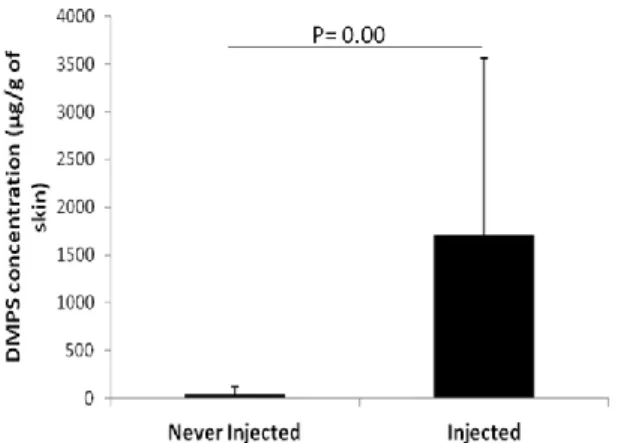
Figure 1 shows data about the levels of silicone
in both subject groups. The mean silicon level in the skin samples of normal subjects was 44.07±75.86 µg/g and a 38-fold higher level of silicon was found in the skin sample of subjects with granuloma (1709.21±1851.72 µg/g). There was a significantly higher level of silicon in subjects with granuloma as compared to the normal subjects. However, there was still a low level of silicon detected in the normal subjects.
In the normal subject group, there were 15 subjects who had silicone in their skin samples; while in the other 22 subjects, no silicon level was detected.
Discussion
Silicon has been claimed as a stable and inert element.5,6 With such unique properties, manufacturing companies have been producing injectable-grade silicone for medical use. For example, transconjunctival injection of silicone oil has been used to treat complicated retinal detachment and heavy silicone oil tamponade has been promising good prognosis for retinal reattachment, as well as, improving visual acuity and providing successful results on other anatomical parameters. Nevertheless, some complications such as mild inflammation, increased ocular pressure, cataract and heavy silicon oil emulsification may arise.7-9
Silicone oil injection has also been applied to reduce the risk of developing diabetic foot ulcer. Some other studies have reported that silicone oil has pressure-reducing properties and it may have a role in increasing plantar tissue thickness.10,13 In spite of the advantages, some complications may still arise. Another study report showed that silicone injection in lower extremity could develop palpable nodule around injection area, as well as, electrical sensation, muscle fatigue, joint pain and electrical neuropathy.14 In addition to those local complications, systemic complications have also been reported including lymphadenopathy, renal disease and hepatic disease. It indicates that injected silicone can migrate from injection site to other body parts. In experimental mice model, the injected silicone could be engulfed by macrophages in skin tissue, recirculated via lymphatic vessels and accumulated in adrenal glands, lymph nodes, liver, spleen and kidney.15 In diabetic ulcer patients, migration of silicone
that has been implanted into their foot may be correlated with biomechanic activity of foot itself.
Granuloma formation due to silicone injection is dose-dependent. Figure 1 shows that only a large amount of silicon caused granuloma formation as there was a low level of silicon in the skin tissue of normal subjects, but no granuloma formation was documented.
In addition to its medical application, silicone has also been used in food, cosmetics and pharmaceutical industries. Previous data demonstrated that the silicon (Si) levels in digestive drugs such as antacids, mineral water and soft drink was 44.1, 25.6, and 2.91 µg/g silicone, respectively. Therefore, we can say that there are a lot of routes of silicone entering into our body.
The average daily dietary intake of silicon is 20-50 mg for European and North American populations. Daily intake of silicon is higher in China and India (140-200 mg/day) where grains, fruits and vegetables form a larger part of the diet.1
Recently, a research institution of healthy aging and nutrition in UK has reported a strong correlation between silicon diet and the health of bone and connective tissue. It is assumed that the correlation is associated with collagen synthesis and/or stabilization, as well as, mineralization of the matrix, in which silicone intake has some effects on bone density.16
resistance against enzyme digestion, as well as, acidic gastric condition. Therefore, it is unlikely for silicone to accumulate in gastrointestinal system.
Beauty products for face, hair and cosmetics may contain a higher level of silicone, which is more likely to be accumulated in skin tissue. When topical silicone products are applied to the skin, silicone elastomeric particles can absorb various liquids including emollient and sebum. Therefore, it can be used for skin care as delivery vehicles for some active ingredients to the skin or to control sebum deposition in the skin.17
The capability of silicone elastomeric particles to expand in certain solvents has prompted their utility as therapeutic delivery agent for skin care. This unique capability and in addition to the surface area of silicone elastomeric particles can absorb various kind of oils and make the skin stay dry when it is touched. Therefore, the silicone elastomeric particles can be used as an agent to carry certain oil or ingredients or as emollient for the skin and act as mineral oil, glycerides, fat esters and sunscreen.18
Silicone elastomeric particles, which are covered by nanoparticles such as Al2O3 or TiO2, have shown soft-focus effect. In a simple description, it can be said that the soft-focus effect becomes obvious when there is minimum reflection (<20% of total illumination), maximum total transmission (>75% of total illumination); while the disperse illumination reflection is maximum (80%) and the disperse illumination has maximum transmission (>50%).17
When these criteria are fulfilled, the total transmission illumination reflects natural skin tone similar to the back light effect and provides natural light; while the disperse transmission will even create better skin glow and hides
imperfection.18 Silicone elastomeric particles, which have been enhanced with SiO2 particles
have been proven to minimize wrinkles.17
Silicon accumulation in the skin is probably caused by topical use of applying cosmetic products, which contain silicone. The penetration of chemicals that are contained in cosmetic products is influenced by molecular size, lipophilicity, pH, penetrant concentration, chemical enhancers, skin hydration, skin enzymes, and temperature. Manipulating these parameters could be drive the dermatokinetic of chemical compounds that are contained in cosmetic products.18
In skin cream, silicon could form water-repellent layer to protect skin. Nonetheless, silicon has a large molecular size and it is impossible for silicon to penetrate skin layer without any enhancer. Another ingredient contained in the skin cream can enhance silicon penetration into deeper layer of the skin. Low level of silicon found in the skin tissue of normal subjects in our study might be caused by daily use of skin cream. Thus, it is unlikely that normal subjects have no silicon level in their skin. Therefore, greater consideration must be taken in new technology on absorption mechanism when applying topical cream on the skin including nanotechnology, which can penetrate into the skin and in the long-term it may develop into granuloma.
Conclusion
studies should be done on how silicon can penetrate into skin tissue.
References
1. Price CT, Koval KJ, Langford JR. Silicon: A review of its potential role in the prevention and treatment of postmenopausal osteoporosis. Int J Endocrinol. 2013; Article ID 316783:1-7.
2. Chasan PE. The history of injectable silicon fluids for soft-tissue augmentation. Plast Reconstr Surg. 2007;120:2034-40.
3. Eighteenth Report of the Joint FAO/WHO Expert Committee on Food Additives, Wld Hlth Org. techn. Rep. Ser., 1974, No. 557. FAO Nutrition Meetings Report Series,1974,No.54.http://www.inchem.org/d ocuments/jecfa/jecmono/v06je42.htm 4. Teuber S, Yoshida S, Gershwin E.
Immunopathologic effects of silicone breast implants. West J Med. 1995;162:418-25. 5. Narins RS, Beer K. Liquid injectable silicon:
A review of its history, immunology, technical, consideration, complication, and potential. Plast Reconstr Surg. 2006;118:Suppl.77S.
6. Elson ML. Injectable silicon for soft tissue augmentation. Cosmet Dermatol. 2005;18: 773-4.
7. Siqueira RC, Gil AD, Jorge R. Retinal detachment surgery silicon oil injection in transconjunctival sutureless 23-gauge vitrectomy. Arg Bras Oftalmol. 2007;70(6):905-9.
8. Prazeres J, Magalhaes Jr O, Lucatto LFA, Navarro RM, Moraes NS et al. Heavy silicon oil as a long-term endotamponade agent for complicated retinal detachments.
BioMed Res Int. 2014;
http://dx.doi.org/10.1155/2014/136031 9. Duan A, She H, Qi Y. Complications after
heavy silicon oil tamponade in complicated retinal detachment. Retina. 2011;31:547-52.
10. Van Schie CH, Whalley A, Armstrong DG, Vileikyte L, Boulton AJ. Efficacy of injected liquid silicon in the diabetic foot to reduce risk factors for ulceration: A randomized double-blind placebo-controlled trial. Diabetes Care. 2000;23:634-8.
11. Van Schie CH, Whalley A, Armstrong DG, Vileikyte L, Boulton AJ. The effect of silicon injections in the diabetic foot on peak plantar pressure and plantar tissue thickness: A 2-year follow-up. Arch Phys Med Rehabil. 2002;83:919-23.
12. Wallace WD, Balkin SW, Kaplan L, Nelson S. The histological host response to liquid silicon injections for prevention of pressure-related ulcers of the foot: A 38-year study. J Am Podiatric Med Assoc. 2004;94:550-7. 13. Gaber Y. Secondary lympoedema of the
lower leg as an unusual side-effect of a liquid silicon injection in the hips and buttocks. Dermatology. 2004;208:342-4. 14. Merrill TJ, Mustafa ZC, Beverly M,
Hernandez J. Silicon injection complications in the lower extremity: Migration, local reaction, and autoimmune response. http://www.podiatryinstitute.com/pdfs/Upda te_2010/2010_39.pdf
15. Ben-Hur N, Ballantyne DL Jr, Rees TD, Seidman I. Local and systemic effects of dimethylpolysiloxane fluid in mice. Plast Reconstr Surg. 1967;39:423-6.
16. Jugdaohsingh R. Silicon and bone health. J Nutr Health Aging. 2007;11:99-110.
17. Liles DT, Lin F. Silicon Elastomeric Particles in Skin Care Applications. Science & Technology Department. 2010. Vol 1053. Chapter 11. P. 207-19.