An Econometric Model for
Determining Sustainability of Basic
Education Development
1Ferdinand T. Abocejo and 2Roberto N. Padua
1Cebu Normal University 2Liceo de Cagayan Date Submitted: July 5, 2010
Date Revised: November 12, 2010
ABSTRACT
The paper attempted to define an analytical framework for discussing the issue of economic sustainability for basic education in the Philippines. The said framework was summarized in terms of two indices: one which looks at the degree of insufficiency of basic education funding and another which considers time intervals in which sufficiency or insufficiency is noted. A logistic model was fitted to the gathered data sets where raw observations were standardized prior to performing regression analysis on identified variables. The findings revealed that a unit increase in per capita budget increases enrolment by 624 students in basic education. Relatedly, 97% of the variance in actual basic education enrolment is attributed to the per capita budget allocation on basic education by the national government. The study found that population growth rate and economics (GDP per capita) are the two main driving forces in basic education development. School-age population is growing by about 6% annually whereas the country’s GDP average yearly growth just reaches about 4%. Ultimately, the fast expanding population has to be curbed if the country is to achieve the Millennium Development Goals (MDGs) of Education For All (EFA).
Keywords: basic education, per capita budget education, participation rate, school-age population.
INTRODUCTION
In a policy paper by Manasan (2006) of the Philippine Institute for Development Studies (PIDS), it is contended that the most strategic way to address the problem is to determine “how money should be spent rather than on how much money there is”. For instance, one of the policy recommendations in that paper was to shift financing away from secondary and tertiary education towards elementary education because of greater positive externalities associated with the latter. In short, the policy paper sidesteps the main issue of financial shortage to support basic education by arguing that the main problem stems from poor fiscal management and governance in basic education. While evidences of gross inefficiencies and inequitable allocation of resources to basic education do exist (and are succinctly summarized in that paper), it is believed that any solution along this line of approach will be short term, whereas the problem of financing basic education amidst a geometrically growing population will remain a long term concern.
The rapid expansion of basic education, as well as the achievement of Education for All (EFA) goals, requires more financial resources for education systems worldwide. In developing and underdeveloped countries, public funding for basic education development is severely insufficient, as these compete with even more basic social services. As such, government resources are often complemented by development partner funding, household and community contributions, and public–private partnerships. Including private entities in efforts to support education development is not a new idea. But where should this private support come from? Parents’ contributions, traditionally viewed as a useful complement to public funding, are now considered more as a barrier to reaching the poorest segments of society. Furthermore, marshalling private sector efforts on broader policy frameworks and strategies is becoming a challenge for many governments (UNESCO, 2010).
Much progress has been made since global leaders agreed in the year 2000 to provide basic education for every child in the world. Globally, primary enrolment has risen by over 40 million children. However, despite these impressive results, external financing for basic education has not grown fast enough to put most countries on track towards reaching the EFA goals and the MDGs. There are several developments that may offer opportunities from 2010 to mobilize substantial new resources, but unless the core problem of poverty is addressed, the basic education development problem will persist.
LITERATURE REVIEW
In the final report of the Basic Education Working Group, MDG for the Philippine Education Forum, the efforts of the Department of Education (DepEd) towards achieving the MDGs of EFA had been highlighted. In the past decade alone, the DepED has introduced policy actions to respond to input shortages in textbooks and school buildings, enhanced the basic education curriculum, instituted new instructional policies and responded to the concern for achieving a more equitable teacher deployment (Basic Education Working Group [BEWG)], 2006).
Despite all these, however, these policy actions have not all produced good outcomes: real per capita government spending on basic education continues to lose ground to population growth and inflation; DepED has made only incremental gains in achieving a more equitable deployment of the large teaching force; and the bureaucracy has been slow to implement decentralization in line with the Governance of Basic Education Act of 2001. Efforts to make the system efficient and equitable which are necessary (but not sufficient) to ensure sustainable basic education development have yet to reach acceptable marks.
The country’s economic woes led to substantial underinvestment in basic education. The impact of the continuing underinvestment in basic education coupled with rapid increase in student population and widespread poverty has resulted in the dismal educational performance of children. In recent years, there has been no significant improvement in drop-out rates; participation rates are still declining; cohort survival rates remain below 70 percent in elementary schools and may be going downhill; retention rates in secondary schools are low; the country is always at the bottom end of international testing and benchmarking exercises; and significant and extensive aspects of educational disadvantage remain.
The urban - rural divide in basic education has branched out into other types of inequalities and divides like a bifurcating dynamical system. Growing inequality is characterizing the education system. Levels of resourcing, quality of instruction, and student achievement vary greatly across different regions of the country, between rural and urban areas, among different ethnic groups, and among different types of schools. These, unfortunately, are tell – tale signs of a going into an “out – of - control” mode.
outcomes across different provinces/cities of the country, between rural and urban areas, among different ethnic groups. Unless budgets become more sensitive to the differentiated characteristics of schools in the field, such inequalities will continue to persist.
The underinvestment in Basic Education also prevents the school system from implementing tested innovations that will improve the inclusiveness of education services for disadvantaged children and those at risk. The declining levels of participation rate and cohort survival rates in recent years have led to a growing number of children who are unable to participate in the school system. As of SY 2003 there were already an estimated 4.4 million children aged 6-15 who were out-of-school (DepEd, 2010) and, perversely, despite all efforts, the numbers keep growing.
Issues on weak governance have been magnified by a significant fiscal challenge in the education sector. Although being about 18 percent of the GOP budget, with an average annual nominal increase of 4.5 percent in the DepED budget between 2000 and 2004, inflation puts the real spending per student at an average of -3 percent per annum over that period (DepEd, 2010). The 2004 – 2010 figures are not significantly different. The total funding levels provided each year are not sufficient to meet even the basic input needs for good quality education. According to DepEd’s ten-year spending plan, completed in 2005, the existing fiscal pressures will worsen over time and will imperil the country’s ability to progressively achieve its 2015 Education for All targets. While overall secondary enrollments grew, migration of students from the private sector to public schools following the 1997 Asian financial crisis has placed additional strain on public resources. If at all, the situation had been aggravated by the global financial crisis of 2007.
Progress has been further frustrated by continued rapid growth in the population (around 2 percent per year) and by the high proportion of the budget given to personnel costs (e.g. 89 percent in 2005). By all accounts, the Philippines basic education development path is set on a trajectory characterized by a series of bifurcations, the hallmark of “chaos”. The main challenge is to locate the “control points” in such a system to prevent a further downward spiral in quality and further system bifurcations.
FRAMEWORK, DESIGN AND METHODS OF THE STUDY
insufficient
Sufficient
PR(t)
PC(t)
The framework begins with the assertion that direct government investment in basic education is a direct function of the country’s economic performance (as measured by its Gross National Product (GNP). If I(t) is the government’s basic education budget at time t and G(t) is the country’s gross national product at the same time t, then:
I(t) = k G(t) GNP → logistic (1)
where k is a constant that varies from country to country. If S(t) denotes the basic education school-age population at time t, then the country’s per capita investment in basic education is:
PC(t) = S(t)→logistic (2)
It was noted at once that in order for the PC(t) to increase, it is necessary that the country’s GNP be increased at a rate that exceeds the population growth rate. Meanwhile, the basic education participation rate PR(t) at time t, is defined as the number of pupils enrolled E(t) divided by S(t) or:
PR(t)= (3)
Next, the movements of PC(t) or the per capita investment in basic education and PR(t) or the participation rate (representing “access” to basic education) over a time period was examined as illustrated in Figure 1.
On a certain time interval, say [T1,T2], it was found that the PC(t) curve or per capita investment curve exceeds or is higher than the PR(t) curve. This means that there is sufficient investment for basic education. On the other hand, the researchers also noted that after T2, the PC(t) curve is lower than the PR(t) curve, in which case it can be said that there is under-investment in education or there is an insufficient basic education investment.
1(t) s(t)
There are two quantities of interest that relate to sustainability of basic education development relative to this formulation. The first quantity is the extent of insufficiency or sufficiency of basic education investment which is represented above by the area between the two curves. Mathematically, this is represented by the integral:
= S (4)
The integral equation (4) evaluates the integral (or the area between PC(t) and PR(t)) from the last observed time tn to infinity. If this is non-negative, then the basic education development for that country is sustainable; otherwise it is not:
S ≥ 0, basic education financing is sustainable, (5) S < 0, basic education financing is not sustainable.
The second quantity relates to the lengths of time over which sufficiency or insufficiencies are noted. Suppose that LS denotes the maximum length of time over which a sufficiency is noted, and LI is the maximum length of time over which an insufficiency is noted. The ratio α:
α= (6)
can also be taken as an indicator of sustainability. If α ≥ 1, then the basic education financing is sustainable; but if α < 1, then the basic education financing is not sustainable.
Data Requirements
The following data were obtained from available secondary sources over the last 40 years (1970 to 2010):
1. GNP G(t)
2. School-age basic education pupils S(t) 3. Participation rate PR(t)
4. Basic Education Budget I(t) for the Philippines.
Data Analysis Tools
To estimate the PC(t) and PR(t) curves, the study assumed a logistic model of the form:
(7)
L5 L1
This was fitted to the data sets. Prior to fitting the model, the raw observations were standardized in order to put the PC and PR values on equal footing. The integral in equation (4) was evaluated from t = 41 to t = 50 or a period of 10 years.
Based on the logistic curves for both PC (t) and PR(t), the points of intersection t1,t2,…,tkwere determined and the intervals (t1,t2), (t3,t4), …, (tk-1,tk)
were analyzed, whether PC (t) ≥ PR (t) or PC (t) < PR (t). The researchers separated the intervals for which PC (t) ≥ PR (t) from the intervals for which PC (t) < PR (t). Let:
Let and . Then was computed.
RESULTS AND DISCUSSION
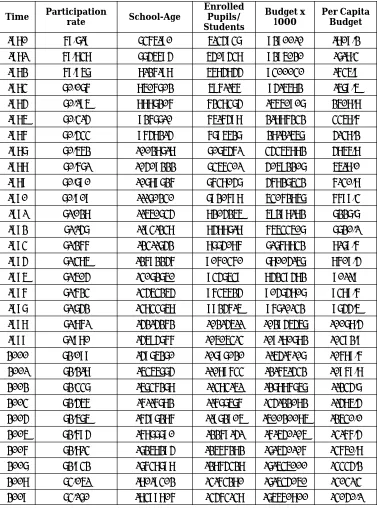
Table 1 shows the data on the basic parameters required for the Philippines from 1980 to 2009.
S1= {li|liis an interval for which PC (t) ≥ PR (t)}
S1= {li|liis an interval for which PC (t) < PR (t)}
Ls = maxliεS1{li} L1 = maxliεS2 L 1
Table 1. Participation Rate, School Age Population (elementary and high school), Per Capita Budget, Philippines: 1980–2009.
Time Participation rate School-Age Enrolled Pupils/
Students
Budget x
1000 Per Capita Budget
Per Capita Budget figures show signs of “peaking” starting from 2003 to 2009, whereas enrollment appears to continue rising with increasing population. Both figures appear to steadily increase with time, following an S-shaped curve with very small increments from 2003 onwards. These features, of course, point to a logistic pattern. It is also worth mentioning that the small participation rate figures are attributed to the large number of school age students at the secondary level who are not in school. The elementary level participation rates are much higher in the 90’s level but the secondary level participation rates are in the low 70’s and steadily decreasing with time.
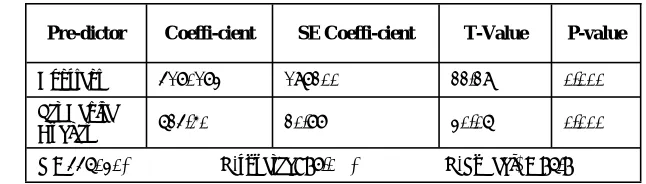
Can participation rates in basic education be enhanced using the budget as an instrument? A regression analysis performed on participation rate (as a response variable) and per capita budget (as a predictor) revealed the results summarized in Table 2:
Per Capita Budget figures show signs of “peaking” starting from 2003 to 2009 whereas enrollment appears to continue rising with increasing population. Both figures appear to steadily increase with time, following an S-shaped curve with very small increments from 2003 onwards. These features, of course, point to a logistic pattern. It is also worth mentioning that the small participation rate figures are attributed to the large number of school age students at the secondary level who are not in school. The elementary level participation rates are much higher in the 90’s level, but the secondary level participation rates are in the low 70’s and steadily decreasing with time.
Can participation rates in basic education be enhanced using the budget as an instrument? A regression analysis performed on participation rate (as a response variable) and per capita budget (as a predictor) revealed the results summarized in Table 2.
Table 2. Influence of Per Capita Budget on the Number of Students Enrolled in Basic Education
Enrolled = 4170173 + 624* per capita budget
A unit increase in per capita budget increases enrolment in basic education by 624 students. Analysis also showed that 97% of the variance in actual enrolment in basic education can be attributed to the per capita budget allotted by the government for basic education.
Pre-dictor Coeffi-cient SE Coeffi-cient T-Value P-value
Constant 4170173 187200 22.28 0.000
Per Capita
Budget 624.50 20.77 30.06 0.000
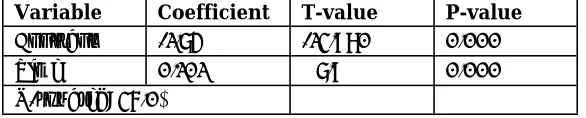
The research proceeded to determine the Participation Rate and Per Capita Budget curves by logistic regression. Results are summarized in Table 3:
Table 3. Logistic Regression for Participation Rates and Per Capita Budgets Over Time
(Dependent Variable: Standardized Participation Rate)
(Dependent Variable: Per Capita Budget)
From the tabular values, it follows that the models are:
(1) Participation Rate = exp(-1.74 + 0.101t)/(1 + exp(-1.74 + 0.101t))
(2) Per Capita Budget = exp (-1.82 + 0.105t)/(1 + exp (-1.82 + 0.105t))
Meanwhile, the per capita budget figures have peaked at t = 30 at PhP13,650 per student at which point, the budget figures have not significantly incremented. On the other hand, the number of students enrolled continues to increase. Then the situation for ten years later was examined, i.e. 2020, if the situation persists.
Variable Coefficient T-value P-value
Constant -1.74 -13.980 0.000
Time 0.101 7.9 0.000
R-squared: 36.0%
Variable Coefficient T-value P-value
Constant -1.82 -15.090 0.000
Time 0.105 8.002 0.000
participation rates over the period 1980-2009:
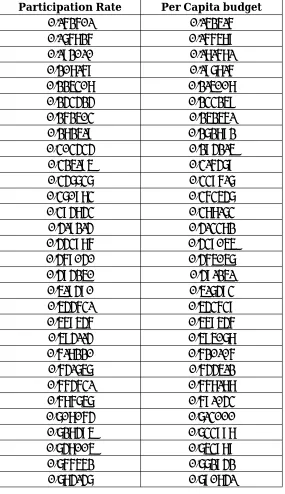
Table 4. Logistic Model Comparison of the Standardized Participation Rates and Per Capita Budgets
Participation Rate Per Capita budget
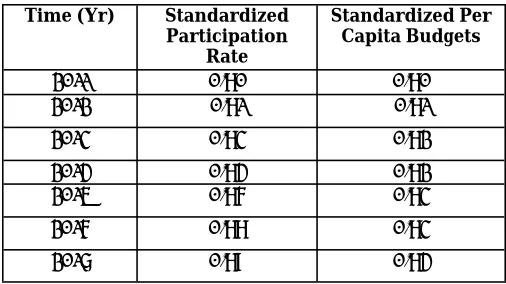
Note that while the standardized per capita budget monotonically majorizes the participation rates, the two figures are quite close to each other. Moreover, if the per capita budget stays at the same levels as the 2009 budget (roughly 0.80 plus or minus 1 percentage point), the seven-year projections for the two figures are provided below:
Table 5. Seven-Year Scenario Up to 2017
The scenario seven years hence is not ideal. In fact, starting from 2013, the enrollment in basic education will overtake the per capita budget by as much as 5-percentage points. Translated to more practical language, there will be a real drop in per capita expenditure for basic education by 2017 (the end of the current administration). The implications are clear: from the current per capita budget of P13,400 per student, there will be a 5% increase by 2017 or P14,070 per student, which, by the regression model should earlier, will attract 420,000 more students to basic education. By that time, however, there will be 22,000,000 school-age children and only 14,163,000 of them will be participating in schools or more succinctly, there will be 7,837,000 out of school youth, from the current 4 million out-of-school youth! Clearly, the current financing scheme for basic education by the government will be infeasible.
There are two main driving forces in basic education development: population growth and economics (per capita GDP). School-age population grows at an amazing rate of 6% per annum, but the country’s GDP (at its best) grows by a little over 4% per annum. Unless something is done to curb the run-away population growth rate, then very little can be done to achieve the millennium development goal of Education for All.
Time (Yr) Standardized
Participation Rate
Standardized Per Capita Budgets
2011 0.80 0.80
2012 0.81 0.81
2013 0.83 0.82
2014 0.84 0.82
2015 0.86 0.83
2016 0.88 0.83
CONCLUSION
The sustainability of basic education development lies in the equitable allocation of resources and sound fiscal management amidst perennial resource limitation. The amount of government per capita budget allocation has direct bearing on the level of basic education students’ enrolment. In effect, substantial investments in basic education should be put in place. At the same time, there is a need to devise policy frameworks for curbing the population growth (subsequently school age population) and widespread poverty which hamper the educational performance of elementary school pupils and high school students.
LITERATURE CITED
Basic Education Working Group [BEWG)]. (2006). Philippine Development Forum Working Group on Millennium Development Goals (MDGs) and Social Progress. Retrieved from http: //pdf.ph/downloads/Annex_1_ FINAL_PDF_ Education_v%5B1%5D.24Mar06.pdf.
Bautista, MCB. (2005). Ideologically Motivated Conflicts in the Philippines: Exploring the Possibility of an Early Warning System. Background Paper for the 2005 Philippine Human Development Report.
Cooperation Internationale Pour le Developement et la Solidarite [CIDSE]. (2006). The New World Bank/ IMF Debt Sustainability Framework: A Human Development Assessment.
Daguino, DS. (2004). Secular and Islamic Education in the ARMM. ARMM Roundtable Series No. 9.
Del Mundo, F. (2006). State of RP Education: Learning Test Scores Below World Average. Department of Education (DepEd) Budget Proposal for FY2006.
Department of Education [DepEd]. (2010). School Statistics Data - Quick Counts Data. Research and Statistics Division, Office of the Planning Service. Manila, Philippines. Retrieved from http://www.deped.gov.ph/ quicklinks/quicklinks2.asp?id=12.
Fayolle, A. (2006). Debt Swaps in the Paris Club. Powerpoint Presentation at the Debt Swaps Conference-Madrid. Japan International Cooperation Agency (2002), Country profile on environment: Philippines. Retrieved from www.jica.go.jp/ english/global/env/profiles/pdf/03.pdf.
Manasan, R. (2006). Financing the Millennium Development Goals: The Philippines, Report Submitted to the National Economic and Development Authority (NEDA).
Moye, M. (2000). Overview of Debt Conversion. Debt Relief International. National Antipoverty Commission, 2005. Implementing guidelines on the president’s priority program on water. Retrieved from http:// www.napc.gov.ph/ 10pt_agenda.htm.
National Economic Development Authority [NEDA]. (2004). Manual for Project Monitoring. Manila.
NEDA. (2006). The Evian approach. Paris Club. http:/ www.clubdeparis.org 148
Philippine Education for the 21st Century [1998 Philippine Education Sector Study]. (1999). Poverty in the Philippines: Income, Assets and Access.
Asian Development Bank.