MOLECULAR BIOLOGY AND PHYSIOLOGY
Temperature Induction Response as a Screening Technique for Selecting High
Temperature-Tolerant Cotton Lines
Ehab Abou Kheir, M.S. Sheshshayee, T. G. Prasad, and M. Udayakumar*
E.A. Kheir, M.S. Sheshshayee, T.G. Prasad, and M.
Udayakumar*, Department of Crop Physiology, University of Agricultural Sciences, GKVK Campus, Bangalore-560 065,
Karnataka, India.
* Corresponding author: [email protected] ABSTRACT
Cotton is cultivated in a wide range of envi-ronments from tropical to subtropical regions. In India, approximately 70%of the total land area covered by cotton is grown under rain-fed conditions where cotton frequently experiences drought stress along with other stresses, e.g.,high temperature and high salinity. There is a need to develop a technique to screen a large number of genotypes for high temperature tolerance. In this study, a screening protocol was developed based on the principle of “acquired tolerance” in which exposure of seedlings to a sublethal level of specific stress is used to induce tolerance to a subsequent lethal level of stress. After adapt-ing this temperature induction response (TIR) technique to cotton, several species and varieties were screened for thermotolerance. Among the tested entries, Old World cotton species showed better thermotolerance than New World cotton species. Among 36 diverse Gossypium hirsutum germplasm lines, significant variation in acquired thermotolerance was seen. Thermotolerant geno-type G. hirsutum (H-28), identified by the TIR technique, demonstrated increased cell viability and protein synthesis capacity during alleviation from high temperature stress. Results suggested that TIR is a robust and powerful technique and can be used to screen breeding lines or germ-plasms to identify thermotolerant lines.
G
lobal surface temperature has increased by approximately 0.6°C since the late 19th century and is projected to increase anywhere from 1.4 to 5.8°C by the end of the current century (Houghton et al.,2001) with a decrease in the diurnal temperature range (Dai et el.,2001). Temperature affects a broadspectrum of cellular components and metabolism, and temperature extremes impose stresses of variable severity that depend on the rate of temperature change, intensity, and duration. Plants overcome high temperature stress by adopting several physiological and biochemical mechanisms such as excess heat dissipation through evaporative cooling, maintenance of membrane integrity, and synthesis
of heat-shock proteins (HSPs). The first mechanism
is an avoidance mechanism, whereas the other two are tolerance mechanisms.
Plants adapt to high temperature stress by inherent basal level tolerance as well as acquired tolerance to severe temperature stress. Acquired thermotolerance is quite rapid and has been shown to be induced during cell acclimation to moderately high temperature periods (Hikosaka et al., 2006; Larkindale et al., 2005; Massie et al., 2003). The ability to withstand and to acclimate to supraoptimal temperatures results from both prevention of heat damage and repair of heat-sensitive components (SenthilKumar et al., 2006). Seedlings exposed to a sublethal temperature prior to challenge with severe temperature have better growth recovery than those seedlings challenged directly to severe temperature stress, and also demonstrate the ability to accumulate higher levels of low- and high-molecular-weight HSPs such as HSP18.1, HSP90, and HSP104 (Ku-mar et al., 1999; Srikanthbabu et al., 2002). Previ-ous studies have shown that many of these HSPs function as molecular chaperones in maintaining homeostasis of protein folding and are thought to be responsible for the acquisition of thermotoler-ance (Parsell and Lindquist, 1993; Sung et al., 2003; Vierling, 1991). The number of small HSPs (sHSPs) in heat-tolerant wheat cultivars was higher than in heat-susceptible wheat cultivars. In addition, some of
the sHSPs were specific to individual cultivars and
of HSP101 led to the development of plants that were found to be defective in basal and acquired thermotolerance (Nieto-Sotelo et al., 2002).
Many earlier studies have demonstrated that genetic variability for high temperature tolerance is noticed only upon induction treatment prior to severe stress (Burke, 2001; Krishnanet al., 1989; Kumar et al., 1999; Srikanthbabu et al., 2002). It is opined that the stress-signaling pathway is triggered during induction stress and induces the expression of an array of stress-responsive genes. The resulting gene products alter several physiological and biochemical processes leading to stress tolerance. (Jayaprakash et al., 1998; Kumar et al., 1999; Uma et al., 1995).
Acquired tolerance for a specific abiotic stress
has been shown to give cross protection for other stresses such as salinity, chilling temperatures, and
drought. Studies in finger millet and sunflower have
shown that the genetic variability to withstand severe stress can be seen only in seedlings pre-exposed to subsevere concentrations of NaCl and/or polyethyl-ene glycol prior to severe stress challenge (Uma et al., 1995 and Al- Ouda, 1999, respectively).
Cotton plants suffering from high temperature stress exhibit reductions in plant growth and develop-ment (Reddy et al., 1991, 1993, 1995) as well as re-ductions in pollen germination and pollen tube growth (Barrow, 1983; Kakani et al., 2005; Suy, 1979). In addition to the other approaches to avoid temperature stress, e.g., earlier planting dates, there is a vital need to develop a reliable and high-throughput screening technique to assess the genetic variability for tempera-ture tolerance and to identify highly tolerant donor genotypes for use in plant breeding programs.
MATERIAL AND METHODS
Standardization of Optimum Induction Temperature and Challenging High Temperature
for Cotton Seedlings. Induction temperature is the
temperature pretreatment for a specific time dura -tion (in hours) that is required to improve growth
recovery of seedlings significantly in cultivated
Gossypium hirsutum L. subsequently exposed to a challenging temperature. Challenging temperature
is the temperature treatment for a specific time
duration (in hours) required to cause more than a 90% reduction in seedling survival in noninduced seedlings of G. hirsutum.
Uniform seedlings of cotton (G. hirsutum) va-riety Sahana with 1 to 1.5-cm radicle length were
subjected to different challenging temperatures for
specific time durations (46°C for 3h, 47°C for 3h,
48°C for 3h, 48°C for 4h) without prior induction or with gradual temperature induction where the temperature was raised from 28 to 40°C over 4 h (at 0.05°C/min) before challenging them with high temperatures. These seedlings were immediately allowed to recover in an incubator at 30°C and 60% relative humidity (RH) for 48 h (Fig. 1).At the end of the recovery period, the number of seedlings that survived was recorded and percent mortality was calculated. Further, total length of surviving seedlings was recorded and percent reduction of recovery growth compared to absolute control was computed. For all experiments, three replications were maintained per treatment and each replication had 20 seedlings.
Figure1.The general protocol to study high temperature stress through the temperature induction response tech-nique.
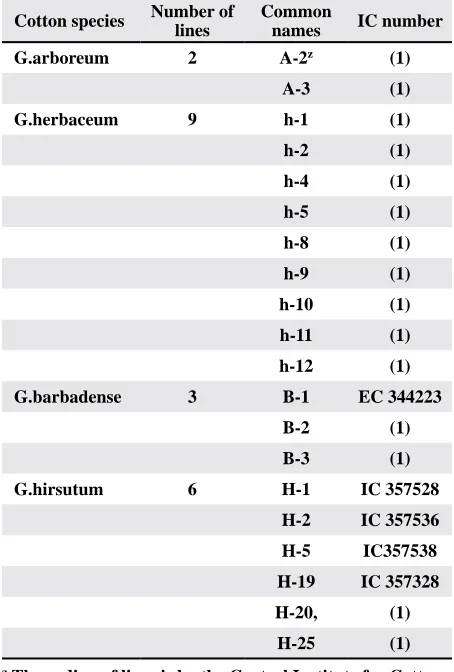
Temperature Stress Response in Cotton Spe-cies. Uniform seedlings from 20 genotypes belong-ing to four cotton species (Table 1) were adopted to a standardized induction protocol (temperature induction response, TIR) where temperature was raised from 28 to 40ºC for 4 h gradually, and then challenged by a lethal temperature of 47ºC for 3 h, then allowed to recover for 48 h at 30ºC with 60% RH. At the end of the recovery period, percent mortality and percent reduction in recovery growth was recorded.
Genetic Variability in G. hirsutum for Ther-motolerance. Adopting the standardized induc-tion protocol, seedlings of 36 genotypes (Table 2) belonging to G. hirsutum were challenged with
the defined lethal temperature (47°C for 3h) and
allowed to recover for 48 h at 30ºC and 60% RH. The recovery growth was measured 48 h later. By using normal Z distribution, the genotypes were
classified into susceptible, moderately tolerant, and
Cell Viability of the Seedlings During Re-covery From High Temperature Stress. As an additional measure to quantify genotypic vari-ability, in the context of survival after exposure to challenging temperature, the level of cell vi-ability in the seedling tissue was assessed using the method developed by Gaff and Okong’o-Ogola (1971).Seedlings of a Gossypium species classified
as tolerant (G.hirsutum, H-28) and as susceptible (G. barbadense L., B-4) were subjected to high temperature stress as explained above in the TIR protocol. Subsequently, seedlings were allowed to recover at 30°C with 60% RH. After 3 h of recovery, 20 seedlings were incubated in Evan’s blue solution (0.1 %) for 2 h and then washed in distilled water (DW) to remove the excess dye. The dye from the seedlings was extracted in absolute alcohol maintained at 50°C for 15 min and the absorbance was measured at 600nm using a UV-visible spectrophotometer (UV-2450, Shimadzu
Table 2. Cotton lines belonging to G.hirsutum species used in this study.
Serial # Common name IC number
1 H-1z IC 357528
2 H-2 IC 357536
3 H-3 IC 357524
4 H-4 IC 357529
5 H-5 IC 357538
6 H-6 IC 357510
7 H-7 (1)
8 H-8 (1)
9 H-9 (1)
10 H-10 (1)
11 H-11 IC 358915
12 H-14 (1)
13 H-15 (1)
14 H-17 (1)
15 H-18 (1)
16 H-19 IC 357328
17 H-20 (1)
18 H-21 (1)
19 H-24 (1)
20 H-25 (1)
21 H-28 (1)
22 H-29 (1)
23 H- 30 (1)
24 H-31 (1)
25 H- 32 (1)
26 H-33 (1)
27 H-35 (1)
28 H-37 (1)
29 H-38 (1)
30 H-39 (1)
31 H-40 (1)
32 CNH-21-I (2)
33 CNH-32 (2)
34 DTS-22 (2)
35 DTS-380 (2)
36 LRA-5166 (2)
z The coding of lines is by the Central Institute for Cotton
Research (CICR), Nagpur, India.
(1) Selected stabilized lines maintained At CICR, Nagpur, India
(2) Developed lines at CICR, Nagpur. Table 1. Cotton lines used in this study.
Cotton species Number of lines
Common
names IC number
G.arboreum 2 A-2z (1)
A-3 (1)
G.herbaceum 9 h-1 (1)
h-2 (1)
h-4 (1)
h-5 (1)
h-8 (1)
h-9 (1)
h-10 (1)
h-11 (1)
h-12 (1)
G.barbadense 3 B-1 EC 344223
B-2 (1)
B-3 (1)
G.hirsutum 6 H-1 IC 357528
H-2 IC 357536
H-5 IC357538
H-19 IC 357328
H-20, (1)
H-25 (1)
z The coding of lines is by the Central Institute for Cotton
Research (CICR), Nagpur, India.
RESULTS
Standardization of Optimum TIRProto-col in Cotton-Challenging Temperature. In
G.hirsutum var. Sahana, as the challenging tem-perature increased, seedling survival and recovery growth decreased in both induced and noninduced seedlings. Noninduced seedlings exposed to the challenging temperature showed high percent mortality as well as marked reduction in recovery growth compared to seedlings exposed to gradu-ally increasing temperature (induction treatment) prior to challenging with high temperatures (Fig. 2).This is clear evidence of an induction response in cotton. Noninduced seedlings challenged at 47oC for 3 h showed a high percent reduction in recovery growth (99.6%), whereas the reduction in recovery growth in induced seedlings challenged at 47oC for 3 h was approximately 50%. Conse-quently, a treatment consisting of 47oC for 3 h was selected as the challenging temperature stress, and a standard protocol for TIR was established. This involved subjecting seedlings to a gradual tempera-ture increase from 28 to 40oC over 4 h (induction treatment), immediately followed by challenging at 47oC for 3 h. Subsequently, seedlings are al-lowed to recover at room temperature (30ºC and 60% RH) for 48 h.
Temperature Stress Response in Cotton Species. Adopting the standardized protocol devel-oped, genotypes of four cultivated cotton species were examined for high temperature tolerance.
At the end of recovery, species differed signifi -cantly (P<0.01) in seedling mortality and recovery growth. Similarly, for interactions between species and treatment in percent mortality and percent
re-duction in recovery growth a significant (P< 0.01) difference was observed. The results revealed that
prior induction temperature treatments identified significant variability among entries belonging
to four cotton species in both seedling mortality and recovery growth after challenging with high temperature ranging from 18.3 to 60% (Table
3). On the other hand, no significant genotypic
differences exist in seedling mortality amongst the cotton entries. However, a large variation in seedling survival among species was noticed only in induced treatment. A similar trend in species variation in recovery growth of seedlings was no-ticed in induced seedlings compared to noninduced seedlings (Table 3).
Corp., Kyoto, Japan). Percent cell survival was computed (Gaff and Okong’o-Ogola, 1971; Taylor and West, 1980) as
( )T
C×100
where, T: absorbance at 600 nm of dye extracted from induced or noninduced seedlings, C: absorbance at 600 nm of dye extracted from absolute control seedlings.
Protein Synthetic Capacity of the Seedlings After Exposure to High Temperature Stress. Cot-ton seedlings of high-temperature-tolerant (H-28) and susceptible (B-4) genotypes were subjected to high temperature stress as explained in the TIR protocol. At the end of the challenging temperature treatment, 20 seedlings were incubated in a solution containing 2 ml Tris-HCl (50mM, pH7) buffer with
10 μl of radioactive 35S methionine (specific activity 5000 mCi/ml) for 4 h. Thereafter, seedlings were washed three times in DW followed by phosphate-buffered saline (PBS). The total soluble protein in seedlings was extracted in 10 mM PBS (pH 7.5 NaCl 0.13 M, KCl, KH2PO4 1.5 mM, Na2HPO4 7.8 mM, Tween-20 0.1%). The homogenate was centrifuged at 10,000 rpm for 10 min at 4oC and the volume of supernatant was recorded (volume of extract). Debris
was washed two times and used for quantification
of the total 35S methionine uptake. The protein in supernatant was precipitated with 1/10 volume of 10% of trichloroacetic acid (TCA). The supernatant
was kept aside for radiolabel quantification. The
pellet was washed three times with 80% acetone to remove the traces of TCA. The total soluble protein was estimated by Bradford (1976). The radiolabel
was quantified in debris, supernatant, and protein
by using Liquid Scintillation CounterWallac–1049 (Perkin Elmer Wallac, Inc., Waltham, MA) as:
S incorporation into protein (%)35 =
Radioactivity (CPM) in pprotein fraction
Radioactivity (CPM) taken up by seedling×1100
where, CPM: count per min.
Screening of G.hirsutum Genotypes for Ther-motolerance Using TIR Technique. Acquired thermo-tolerance among 36 diverse genotypes of G. hirsutum
was assessed. Significant genotypic variation in seed -ling survival and recovery growth were expressed after induction treatment (Table 4, Fig. 3). Genetic variation in seedling mortality during recovery from challenging
temperature ranged significantly (P< 0.01) from 50 to 100% in noninduced seedlings and 10 to 93.3% in in-duced seedlings (Table 4). Genetic variation in seedling growth during recovery from challenging temperature showed a similar trend, in which seedling growth was distinctly higher in induced seedlings. There was no correlation in recovery growth between induced and noninduced seedlings (Fig. 4), suggesting that levels of basal tolerance and acquired tolerance to high tem-perature varies between genotypes.
Figure 2. Induction response of cotton seedlings (G.
hirsutum var. Sahana) to high temperature stress.
Seedlings (36 h old) of cotton were induced with a gradual temperature increase (temperature increased from 28 to 40°C over 4 h) and challenged with high temperature (diagonal-lined columns). A subset of seedlings were directly challenged with severe temperatures (46oC for3 h, 47oC for 3 h, 48oC for 3h, and 48oC for 4 h) (gray columns), and allowed to recover at 30oC and 60% RH for 48 h. At the end of recovery period percent mortality (A) and percent reduction in recovery growth of the seedlings (B) was computed. Data shown are an average of three replicates, each replicate had 20 seedlings and error bars represent SD. I: induced, NI: noninduced.
Table 3. Variation in thermotolerance of different cotton species in terms of percent mortality and percent reduction in growthz.
n Seedling Mortality (%) Reduction in recovery growth (%)
Induced Noninduced Induced Noninduced
G. arboreum 2 18.30±6.7 93.35±6.7 68.27±4.2 99.14±0.9
G.herbaceum 9 27.78±6.6 84.07±4.8 53.28±6.9 95.17±2.2
G.barbadense 3 60.00±10.3 81.11±10.6 90.30±7.1 98.44±1.56
G. hirsutum 6 48.88±3.6 88.32±4.3 82.89±3.0 97.17±1.4
LSD @ 5 % 13.62 11.02
z Germinated seedlings from four cultivated species (G.arboreum, G.herbaceum, G. hirsutum and G.barbadense) were
exposed to challenging temperature of 47ºC for 3 h with or without prior induction treatment. Subsequently, seedlings were allowed to recover for 48 h at 30ºC and 60% RH. At the end of recovery period the mortality and recovery growth of seedling was recorded. A set of seedlings maintained at 30ºC as absolute control. Data shown was average of three
replicates, each replicate had 20 seedlings. LSD is less significant difference at 5% between species. n: number of
genotypes per species. Means are followed by standard errors of the means.
Assessment of Physiological Response Under High Temperature Stress in Selected Cotton Genotypes. The screened genotypes were
clas-sified (based on absolute growth after recovery
period and percent reduction in recovery growth) into three different categories: tolerant, moderately tolerant, and susceptible (Fig.5). One genotype showing tolerance, G. hirsutum (H-28), and one susceptible genotype, G. barbadense (B-4),were selected to assess the stress response based on cell viability and protein synthesis after exposure to challenging temperature stress. Both H-28 and B-4 had similar basal thermotolerance, however they differed in acquired thermotolerance (Fig. 6A). Percent cell viability as estimated by Evan’s blue method was low (34.41%) in B-4, whereas it was
significantly higher (87.01%) in H-28. However, no significant difference between these genotypes was
observed under the noninduced treatment Fig. 6B). In addition, whether differences between tolerant and susceptible genotypes were due to differences in protection of protein synthesis machinery under stress was evaluated through the incorporation of 35S methionine into protein. 35S methionine incor-poration to protein fraction was less in both induced and noninduced seedlings of susceptible genotype (B-4). In contrast, the tolerant genotype (H-28) maintained higher 35S methionine incorporation into the protein fraction both under noninduced and induced treatments. In addition, 35S methionine incorporation into the protein fraction showed a
significant increase in induced seedlings exposed
to the challenging temperature (Fig. 6C).
Table 4. Genetic variability in thermotolerance among36 G. hirsutum genotypesz.
Seedling Mortality (%) Reduction in recovery growth (%)
Induced Noninduced Induced Noninduced
Mean 49.77±4.2 88.61±2.2 80.54±2.4 96.94±0.6
Min 10.00 50.00 43.59 87.22
Max 93.30 100.00 96.56 100.00
LSD @ 5 % 24.63 16.20
z The induction response of seedlings was assessed among 36 genotypes of G. hirsutum as described in Table 1. Data shown
is average of three replicates, each replicate had20 seedlings. LSD is less significant difference at 5% between genotypes.
Means are followed by standard errors of the means.
Figure 4. Relationship between basal and acquired thermotolerance across G. hirsutum genotypes. Seedling recovery growth was assessed for a set of seedlings directly exposed to 47oC for 3 h (basal level thermotolerance, noninduced) and with prior exposure to induction temperature stress (acquired thermotolerance).
DISCUSSION
Plants overcome stress by adopting several physiological and biochemical mechanisms in-cluding morphological or short-term avoidance or acclimation mechanisms. Under natural conditions plants experience a gradual increase in stress over a period of time. This gradual progression results in the exposure of plants to milder stress before plants experience severe stress. Increased tolerance to otherwise lethal stress in plants exposed to induction stress is referred to as acquired tolerance. Acquired tolerance is ubiquitous and has been demonstrated in several species (Burke et al., 2000; Flahaut et al., 1996; Hong and Vierling, 2000; Larkindale et al., 2005; Massie et al., 2003; SenthilKumar et al., 2006; Vierling, 1991). Upon exposure to acclimation temperature stress, many of HSPs and other stress-response genes are up-regulated (Kumar et al., 1999; SenthilKumar et al., 2003; Srikanthbabu et al., 2002; Uma et al., 1995; Visioli et al., 1997; Woolf and Lay-Yee, 1997).The observed higher recovery growth of induced seedlings is mainly because of altered metabolism in response to acclimation as seen in
sunflower (Kumar et al., 1999; SenthilKumar et al.,
2006), sorghum, pearl millet (Howarth et al., 1997), beans (Keeler et al., 2000), wheat (Burke, 1994, 1998), and groundnut (Srikanthbabu et al., 2002).
Several stress-adaptive mechanisms are triggered signifying that coordinated expression of several temperature stress-responsive genes occurs upon induction. Several physiological and biochemical processes (Chen et al., 1990) including maintenance of membrane stability (Berry and Bojorkman, 1980; Grover et al., 2000; Kader et al., 1991) and protection to macromolecules (Sanchez and Lindquist, 1990; Vierling and Nguyen, 1992) were shown to occur in
response to induction stress treatment.
Further, the threshold temperature for tolerance differs among species. For instance, 49oC for 2 h is a
severe temperature stress for sunflower (SenthilKu -mar et al., 2006), whereas it is much higher (52oC) in groundnut (Lokesh et al., 2004; Srikanthbabu et al., 2002). Similarly, the induction stress required for optimum expression of stress-response genes also varies among species. Therefore, to study tempera-ture response across the genotypes of a species, op-timum induction and challenging temperatures have to be standardized. In this study we developed a TIR
protocol for cotton. In this protocol, seedlings were initially exposed to a gradual temperature increase from 28 to 40oC over 4 h (induction temperature treatment) followed by a challenging temperature treatment of47oC for 3 h. Subsequently, the recovery growth at the end of 48 hat 30ºC temperature was assessed (Fig. 2).
As expected, differences in stress response were noticed among cotton entries belonging to different species. Induced seedlings of both G. arboretum L. and G. herbaceum L. species showed a low percent mortality and high recovery growth after high tem-perature stress (challenging stress) compared with G. hirsutum and G. barbadense seedlings. On the other hand, variability in basal thermotolerance was nar-row (Table 3). This may explain why diploid cotton is generally cultivated in marginal drought-prone environments in Asia due to their inherent ability to withstand abiotic stress (Kulkarni et al., 2009).Many other studies have shown that genetic variability is only seen upon stress acclimation treatment prior to severe stress (Burke, 2001; Jayprakash et al., 1998; Krishnan et al., 1989; Kumar et al., 1999; Srikanth-babu et al., 2002; Uma et al., 1995)
The usefulness of TIR to identify genotypic variation in high temperature tolerance was shown in 36 cotton (G. hirsutum) lines. Significant genetic
variability was seen in acquired thermotolerance (Table 2). A number of earlier studies showed that thermotolerant genotypes selected based on TIR technique have better leaf area and membrane integ-rity, and thus better recovery growth after exposure to heat stress at the whole-plant level. This indicates that the thermotolerant genotypes selected based on TIR technique at the seedling level are intrinsically tolerant at the plant level (Al-Ouda, 1999; Kumar et al., 1999; Senthilkumar et al., 2003; Srikanthbabu et al., 2002).Quantitative indicators of the potential capacity of a genotype to tolerate high temperature stress are its ability to maintain cellular membrane integrityand protein synthetic capacity immediately after exposure to challenging temperature stress. In this study, induced seedlings of the thermotolerant G. hirsutum genotype H-28 showed signifcantly higher recovery growth, cellular membrane integrity, and protein synthesis than the susceptible G. barbadense
genotype B-4. However, differences between these genotypes under noninduced conditions were not marked. In similar studies, Howarth et al. (1997) and Kumar et al. (1999) demonstrated higher protein syn-thesis during recovery from severe stress only upon
early induction stress. These results suggest that the TIR technique is a robust and powerful technique to identify genetic variability in high temperature tolerance in cotton within a short time period and is suitable for screening a large number of genotypes. In summary, breeding for heat tolerance is often
complicated by the lack of an efficient and easily
implemented screening technique and inadequate information on the availability of genetic variability. Here we demonstrate that the TIR technique is a ro-bust method for screening cotton seedlings for heat tolerance. Using this technique it was demonstrated
that there is sufficient genetic variability present
among cotton lines for high temperature tolerance. Lines selected as tolerant to high temperature should be useful in breeding programs seeking to overcome this yield limitation.
ACKNOWLEDGMENT
The authors wish to thank the Center Institute for Cotton Research (CICR) Nagpur, Maharashtra, for providing seed materials for this study.
REFERENCES
Al-Ouda, A.S. 1999. Genetic variability in temperature and moisture stress tolerance in sunflower (Helianthus an-nuus L.) hybrids: an assessment based on physiological and biochemical parameters. Ph.D. diss., Univ.Agricul-tural Sciences, Bangalore, India.
Anonymous. 1998. Compendium of environment statistics: Central statistical organization. Dept. of Statistics, Mi-nistry of Planning and Programme Implementation, GOI, New Delhi.
Barrow, J.R. 1983. Comparisons among pollen viability mea-surement methods in cotton. Crop Sci. 23:734–736. Berry, J., and O. Bjorkman. 1980. Photosynthetic response
and adaptation to temperature in higher plants. Annu. Rev. Plant Physiol. Plant Mol. Biol. 31:491–543. Bradford, M.M. 1976. A rapid and sensitive method for the
quantification of microgram quantities of protein utili -zing the principle of protein-dye binding. Anal. Biochem. 72:248–254.
Burke, J.J., 1998. Characterization of acquired thermotoler-ance in soybean seedlings. Plant Physiol. Biochem. 36:601–607.
Burke, J.J., 2001. Identification of genetic diversity and muta -tions in higher plant acquired thermotolerance. Physiol. Plant. 112:167–170.
Burke, J.J., and P.J.O’Mahony. 2001. Protective role in acquired thermotolerance of developmentally regu-lated heat shock proteins in cotton seeds. J. Cotton Sci. 5:174–183.
Burke, J.J., P.J. O’Mahony, and M.J. Oliver. 2000. Isolation of Arabidopsis mutants lacking components of acquired thermotolerance. Plant Physiol. 123:575–587.
Chen, Q., J.T. Cheng, L.H. Tsai, N. Schneider, G. Buchanan, A. Carroll, W. Crist, B. Ozanne, M.J. Siciliano, and
R. Baer. 1990. The tal gene undergoes chromosome translocation in T cell leukemia and potentially encodes a helix-loop-helix protein. EMBO J. 9:415–424. Dai, A., T.M.L. Wigley, B.A. Boville, J.T. Kiehl, and L.E.
Buja. 2001. Climates of the 20th and 21st centuries
simu-lated by the NCAR climate system model. J. Climate 14:485–519.
Flahaut, S., A. Benachour, J.C. Giard, P. Boutibonnes, and Y. Auffray. 1996. Defense against lethal treatments and de
novo protein synthesis induced by NaCl in Enterococcus faecalis ATCC 19433. Arch. Microbiol. 165:317–324 Gaff, D.F. and O. Okong’o-Ogola. 1971. The use of
non-per-meating pigments for testing the survival of cells. J. Exp. Bot. 22(72):756–758.
Grover, A., M. Agarwal, S.K. Agarwal, C. Sahi, and S. Agarwal. 2000. Production of high temperature tolerant
transgenic plants through manipulation of membrane lipids. Curr. Sci. 79:557–9.
Hikosaka, K., K. Ishikawa, A. Borjigidai, O. Muller, and Y. Onoda. 2006. Temperature acclimation of photosynthe-sis: mechanisms involved in the changes in temperature dependence of photosynthetic rate. J. Exp. Bot. 57:291– 302.
Hong, S.W., and E.Vierling. 2000. Mutants of Arabidopsis thalianadefective in the acquisition of tolerance to high temperature stress. Proc. Natl. Acad. Sci. U.S.A. 97:4392–4397.
Houghton, J.T., Y. Ding, D.J. Griggs, M. Noguer, P.J. Vander Linden, X. Dai, K. Maskell, and C.A. Johnson. 2001. Climate change: the scientific basis. Contribution of Working Group I of the Third Assessment Report of the Intergovernmental Panel on Climate Change. Cambridge University Press,New York, NY.
Howarth, C.J., C.J. Pollock, and J.M. Peacock. 1997. De-velopment of laboratory-based methods for assessing seedling thermotolerance in pearl millet. New Phytol. 137:129–139.
Jayaprakash, T.L., G. Ramamohan, B.T. Krishna Prasad, G. Kumar, T.G. Prasad, M.K. Mathew, and M. Udayakumar. 1998. Genotypic variability in differential expression of Lea2 and Lea3 genes and proteins in response to salinity stress in finger millet (Eleusine coracana Gaertn) and rice (Oryza sativa L.) seedlings. Ann. Bot. 82:513–522. Kader, J.C., J. Ostergaard, C. Vergnolle, and M. Renard. 1991.
Bifunctional lipid transfer fatty acid-binding protein in plants. p. 212–4. In P.J.Quinn and J.L.Harwood(eds.) Plant Lipid Biochemistry: Structure and Utilization. Portland Press,London, UK.
Kakani, V.G., K.R. Reddy, S. Koti, T.P. Wallace, P.V.V. Prasad, V.R. Reddy, and D. Zhao. 2005. Differences in in vitro pollen germination and pollen tube growth of cotton cultivars in response to high temperature. Ann. Bot. 96:59–67.
Keeler, S.J., C.M. Boettger, J.G. Haynes, K.A. Kuches, M.M. Johnson, and D.L. Thureen. 2000. Acquired thermotole-rance and expression of the HSP100/ClpB genes of lima bean. Plant Physiol. 123:1121–1132.
Krishnan, M., H.T. Nguyen, and J.J. Burke. 1989. Heat-shock protein synthesis and thermal tolerance in wheat. Plant Physiol. 90:140–145.
Kulkarni V.N., B.M. Khadi, M.S. Maralappanavar, L.A. Deshapande, and S.S. Narayanan. 2009. The worldwide gene pools of Gossypium arboreum L. and G. herbace-um L., and their improvement p.69–97.In A.H. Paterson (ed.) Genetics and Genomics of Cotton, Plant Genetics and Genomics: Crops and Models 3, Springer Science-Business Media, LLC. Berlin.
Kumar, G., B.T. Krishnaprasad, M. Savitha, R. Gopalakrishna, K. Mukhopadhyay, G. Ramamohan, and M. Udayaku-mar. 1999. Enhanced expression of heat-shock proteins in thermo-tolerant lines of sunflower and their progenies selected on the basis of temperature-induction response. Theor. Appl. Genet. 99:359–367.
Larkindale, J., J.D. Hall, M.R. Knight, and E. Vierling. 2005. Heat stress phenotypes of Arabidopsis mutants implicate multiple signaling pathways in the acquisition of thermo-tolerance. Plant Physiol. 138:882–897.
Massie, M.R., E.M. Lapoczka, K.D. Boggs, K.E. Stine, and G.E. White. 2003. Exposure to the metabolic inhibitor sodium azide induces stress protein expression and ther-motolerance in the nematode Caenorhabditis elegans. Cell Stress Chaperones 8:1–7.
Nieto-Sotelo, J., L.M. Martinez, G. Ponce, G.I. Cassab, A. Alagon, R.B. Meeley, J.M Ribaut, and R. Yang. 2002. Maize HSP101 plays important roles in both induced and basal thermotolerance and primary root growth. Plant Cell. 14:1621–1633.
Parsell, D.A., and S. Lindquist. 1993. The function of heat-shock proteins in stress tolerance: degradation and reactivation of damaged proteins. Annu. Rev. Genet. 27:437–496
Reddy, K.R., H.F. Hodges, and J.M. McKinion. 1993. A tem-perature model for cotton phenology. Biotronics Environ. Control .Environ. Biol. 22:47–59.
Reddy, K.R., H.F. Hodges, and J.M. McKinion. 1995. Carbon dioxide and temperature effects on pima cotton growth. Agric. Ecosyst. Environ.54:17–29.
Reddy, V.R., K.R. Reddy, and H.F. Hodges. 1991. Tempera-ture effects on growth and development of cotton during the fruiting period. Agron.J. 83:211–217.
Sanchez, Y., and S. L. Lindquist. 1990. HSP104 required for induced thermotolerance. Science 248:1112–1115. SenthilKumar, M., G. Kumar, V. Srikanthbabu, and M.
Uday-akumar. 2006. Assessment of variability in acquired thermotolerance: Potential option to study genotypic re-sponse and the relevance of stress genes. J. Plant Physiol. 164:111–125
SenthilKumar, M., V. Srikanthbabu, B. Mohanraju, G. Kumar, N. Shivaprakash, and M. Udayakumar. 2003. Screening of inbred lines to develop a thermotolerant sunflower hybrid using the temperature induction response (TIR) technique: a novel approach by exploiting residual vari-ability. J. Exp. Bot. 54:2569–2578.
Srikanthbabu, V., G. Kumar, B.T. Krishnaprasad, R. Gopal-akrishna, M. Savitha, and M. Udayakumar. 2002. Identi-fication of pea genotypes with enhanced thermotolerance using temperature induction response (TIR) technique. J. Plant Physiol. 159:535–545.
Sung, D.Y., F. Kaplan, K.J. Lee, and C.L. Guy. 2003. Ac-quired tolerance to temperature extremes. Trends Plant Sci. 8:179–187.
Suy TB. 1979. Contribution of l’etude de la croissance des tubes polliniqueschez Gossypium hirsutum L. en func-tion des condifunc-tions du milieu. Coton et Fibres Tropicales 34: 295–300.
Taylor, J.A., and D.W. West. 1980. The use of Evan’s Blue stain to test the survival of plant cells after exposure to high salt and high osmotic pressure. J.Exp.Bot. 31:571– 576.
Uma, S., T.G. Prasad, and M. Udayakumar. 1995. Genetic variability in recovery growth and synthesis of stress proteins in response to polyethylene glycol and salt stress in Finger millet. Ann. Bot. (London) 76:43–49. Vierling E. 1991. The roles of heat shock proteins in plants.
Annu. Rev. Plant Physiol. Plant Mol. Biol. 42:579–620. Vierling, R.A., and H.T. Nguyen. 1992. Use of RAPD
mar-kers to determine the genetic diversity of diploid wheat genotypes. Theor. Appl. Genet.84:835–838.
Visioli G., E. Maestri,and N. Marmiroli. 1997. Differential display mediated isolate on a genomic sequence for a putative mitochondrial LMW HSP specifically expressed in condition of induced thermotolerance in Arabidopsis thaliana. Plant Mol. Biol.34:515–527.
Woolf, A.B., and M. Lay-Yee. 1997. Pretreatments at 38°C of ‘Hass’ avocado confer thermotolerance to 50°C hot-water
treatments. Hort. Sci. 32:705–708.