ISSN: 2231-3354 Received on: 09-11-2011 Revised on: 15:11:2011 Accepted on: 20-11-2011
Faten R. Abdel Ghaffar and Ibrahim A. El-Elaimy Department of Zoology, Faculty of Science,Menoufiya University, Shebin El-Kom, Egypt.
For Correspondence
Faten R. Abdel Ghaffar Department of Zoology, Faculty of Science,Menoufiya University, Shebin El-kom, Egypt.
In vitro, antioxidant and scavenging activities of
Hibiscus rosa sinensis crude extract
Faten R. Abdel Ghaffar and Ibrahim A. El-Elaimy
ABSTRACT
The objective of this study is to ascertain the potency of , Hibiscus rosa sinensis
leaves extract,with 70% ethanol/ water, as potential natural antioxidant.The phytochemical screening identified the bioactive compounds of the dry extract; carbohydrates and/or glycosides, steroids and/or triterpenes, flavonoids and tannins.The total phenolic and the total flavonoids contents reached 48.4 mg catechol equivalent and 24.26 mg quercetin equivalent /g dry weight, respectively.We assayed in vitro total antioxidant capacity and reducing power of
H. rosa extract (HRE), using butylated hydroxytoluene (BHT) and ascorbic acid (ASA) as references, respectively.HRE recorded two-fold stronger antioxidant capacity than that of BHT while its reducing power was less than that of ASA, with reaction time and extract concentration dependent manner. In addition we evaluated the scavenging activities of HRE for O2•−, H2O2 and NO compared to that of butylated hydroxyanisole (BHA). BHA recorded up to
(61.6%), (65.8%), and (37.3%), respectively, at 500 µg/ml. Scavenging ability of HRE was very closed to that of BHA, in case of O2•− ( 60.4%) and NO ( 36.3%) while it was lower in
case of H2O2 (48.5%). Finally, we investigate the protection effect of HRE against lipid
peroxidation (LPO) and protein oxidation(PO) using Fe+3/ ascorbate oxidizing system. LPO shwed 2.5-fold increase while PO reduced 56% of –SH groups. The co-incubation of Fe+3/ascorbate with Hibiscus extract inhibited lipid and protein oxidative damage nearly with 31%, at 500 µg/ml. So, we can conclude that the in vitro study emphasized HRE effective antioxidant and scavenging activities which may be due to its phenolics and flavonoids contents.
Keywords: Hibiscus rosa sinensis; Antioxidant capacity; Scavenging activity; Lipid peroxidation ; Protein oxidation.
INTRODUCTION
Hibiscus rosa sinensis (Malvaceae) is widely cultivated in the tropics as an ornamental plant. Chinese hibiscus is the english name of Hibiscus rosa sinensis. It is an evergreen woody glabrous showy shrub of 1.5-2.4m in height. Flowers are axillary, solitary, campanulate, red, blue, yellow or white, 10.2-15.2 cm diameter. Capsules are rotund; many seeded (Upadhyay et al., 2011). The previous studies showed that its extract affects the male fertility
(Singh and Udupa, 1882), the treatment of inflammatory disease
and spermatogensis (Reddy et al., 1997). The anti-diabetic activity of H. rosa sinensis in rural populations and in hyperglycemic rats were reported (Sachdewa et al., 2001; Sachdewa and Khemani, 2003). The authors reported that the hypoglycemic activity of this extract is not mediated through insulin release and this increase the potential use of this species for human health purposes.
Moreover, There is very important evidence of the anticancer action of H. rosa sinensis extract against the tumor promotion stage of cancer development, in mouse skin with ultraviolet radiation.(Sharma et al., 2004).The crude extract of aerial parts of H. rosa sinensis, and its subsequent fractions, clearly showed the presence of two components that have cholinomimetic and calcium antagonist activities. So, the possible pharmacological rationale use of the plant for constipation and diarrhea was suggested. (Gilani et al., 2005). On the other hand, the ancient Indian medicinal literature reported that the flowers of H. rosa-sinensis have beneficial effects in heart diseases, mainly in
myocardial ischemic disease, due to its enhancement of the myocardial endogenous antioxidants by an adaptative response and without producing any cytotoxic effects (Gauthaman et al., 2006). Recently, Nade et al. (2011) suggested that Hibiscus rosa had a protective role against age and scopolamine- induced amnesia, indicating its utility in management of cognitive disorders.
Oxygen consumption inherent in cell growth leads to the generation of a series of reactive oxygen species (ROS) and reactive nitrogen species (RNS) that are generated in biological systems either as byproducts of oxygen reduction or by xenobiotics catabolism (AK and Gülçin , 2008). ROS include free radicals such as superoxide anion radical (O2
•−
), hydroxyl radical (OH.) and non-free radicals such as hydrogen peroxide(H2O2) while RNS include
non free radical nitric oxide (NO). The imbalance between the generation of ROS and the endogenous antioxidant defenses mechanisms leads to oxidative modification in cellular membrane or intracellular molecules leading to disease conditions
(Gülçin,2006), and exert various deleterious effects in cells and tissues that basically depend on the subcellular structure where they are generated (Sies, 1985). When these species are generated within the hydrophobic domains of cell membranes, the free radical chain reaction of lipid peroxidation predominates (Ames, 1989) and being of particular importance in a large number of disorders such as cancer (Emerit and Cerutti, 1981) and degenerative diseases including Alzheimer’s disease ,Parkinson’s disease and Hodgkin’s disease (Jenner,1991).
The antioxidants have been widely used as food additives to provide protection against oxidative degradation of food. The most commonly used antioxidants are butylated hydroxyanisole
(BHA), butylated hydroxytoluene (BHT) and ascorbic acid (ASA). However, (BHA) and (BHT) have been suspected of being responsible for liver damage and carcinogenesis (AK and Gülçin, 2008).
Therefore, a need for identifying alternative natural and safe sources of food additive antioxidants, especially of plant origin, has notably increased in recent years.
Our present study is designed to evaluate the antioxidant and scavenging potential of Hibiscus rosa sinensis extract. For this reason, the major active compounds of its extract, which may be responsible for antioxidant activity, were determined through preliminary phytochemical screening. Total phenolic contents, total flavonoid contents and antioxidant properties were also assayed. Scavenging activity of free and non-free reactive oxygen species (ROS), including (O2
•−
) and (H2O2) and reactive nitrogen
species(RNO), including (NO) were assayed. Furthermore, H. rosa
extract effect against lipid peroxidation and protein oxidation were also evaluated. To our knowledge, this is the first report, in vitro, on antioxidative and scavenging activities of Hibiscus rosa sinensis
extract.
MATERIALS AND METHODS
Reagents and chemicals
Folin-Ciocalteu reagents, Sodium nitrite, anhydrous aluminum chloride, ammonium molybdate, potassium ferricyanide, ferric chloride, ascorbic acid, ammonium acetate, riboflavin,
methionine, nitroblue tetrazolium (NBT), butylated hydroxytoluene (BHT), sodium nitroprusside ,sulfanilamide, naphylethylenediamide dihydrochloride, trichloroacetic acid, Bovine serum albumin, agarose gel, ethidium bromide, and Ellman’s reagent (5,5′-dithio-bis-2-nitrobenzoic acid), were obtained from Sigma-Aldrich (St. Louis, MO, USA). Thiobarbituric acid was obtained from Fluka (Berlin, Germany). All other used chemicals and solvents were of the high analytical grade.
Plant material
The aerial parts of Hibiscus rosa sinensis were collected in the month of April 2011 from the faculty of agriculture - Ain Shams university, Egypt. The plant was identified with the help of available literature and authenticated by the taxonomist at Department of Botany, Faculty of Science, Menufiya University, Egypt. The leaves of the plant were washed with tap water followed by distilled water, dried in shade for 10 days prior to study and then stored in airtight glass jars, until in use.
Preparation of H. rosa extract (HRE)
The air-dried powdered leaves of the plant were repeatedly extracted in the room temperature with 70% ethanol/ water until exhaustion.
Post-mitochondrial supernatant preparation
homogenized (1:10, w/v) in chilled phosphate buffer (0.1 M, pH 7.4) containing KCI (1.17%). The homogenate was filtered, centrifuged at 3000 rpm for 10 min to separate the nuclear debris. The aliquot so obtained was centrifuged at 12000 rpm for 20 min at 4 oC to obtain post-mitochondrial supernatant (PMS).
Preliminary phytochemical screening
A small portion of the dry extract was used for the phytochemical tests for; carbohydrates (Conalez et al.,1962),tannins(Wall et al., 1954),alkaloids (Fulton, 1932), flavonoids (Geissmann, 1962), steroids (Wall, et al., 1954), saponins (Conalez, et al., 1962 and Harbone, 1973) and coumarins. (Farnsworth, 1966).
Determination of total phenolics and total flavonoids content
The total phenolics content was determined according to the Folin-Ciocalteu method (Bao et al., 2005) and the final results were expressed as mg catechol equivalent /g of dry weight of extract. While the total flavonoids content of the extract were measured by the method of (Sultana et al., 2007) and the final results expressed as mg quercetin equivalent /g dry weight. All tests were performed in triplicate and mean was centered.
Evaluation of total antioxidant and reducing power capacities
The total antioxidant activity of the extract was measured using a modified version of the method described by (Prieto et al., 1999).In which the antioxidant activity is expressed as the absorbance of samples measured at 695 nm. While its reducing power,as a reduction of Fe3+ to Fe2+, was measured by method of
(Oyaizu, 1986) that modified by (Gülçin, et al., 2010). In which, the presence of reductants such as antioxidant substances in the samples causes the reduction of Fe3+ / ferricyanide complex to Fe2+ form . therefore, Fe2+ can be monitored by measuring the absorbance of Perl”s Prussian blue complex at 700 nm. A higher absorbance indicated higher capacities of both antioxidant activity and the reducing power of the extract. All tests were performed in triplicate and mean was centered.
Free radical scavenging activity
Scavenging ability of the extract for free superoxide radical (O2•−) was determined according to the method of
Beauchamp and Fridorich (1971) described by Zhishen et al. (1999), while hydrogen peroxideand (H2O2) and nitric oxide
(NO) by the methods of (Ruch et al. 1989) and (Govindarajan et al.,2003) respectively. Generally, decreased absorbance of the reaction mixture indicates increased scavenging activity.
Lipid peroxidation (LPO) and protein oxidation (PO)
In vitro, LPO was performed in hepatic Post-mitochondrial supernatant by the method of (Wright et al. 1981), the intensity of colored complex, thiobarbituric acid reactive substances (TBARS) that is formed as a byproduct of lipid peroxidation, was measured at 532 nm against a reagent blank. While (PO) was assayed by the method of (Kauret al., 2006) and
the produced total sulphydryl groups (TSH) were performed according to the method of (Sedlak and Lindsay, 1968) with Ellman’s reagent.
Statistical analysis
All data are the average of triplicate analyses. Results are expressed as mean ± standard errors. Data were analyzed by one-way analysis of variance (ANOVA) followed by Student's t-test. P values less than 0.05 were considered statically significant.
RESULTS AND DISCUSSION
Preliminary phytochemical screening
In recent years, attention has been focused on the antioxidant properties of plant- derived dietary constituents of food (Gülçin, 2006). Our preliminary phytochemical screening for
H.rosa leaves (table 1) revealed the presence of carbohydrates and/or glycosides, steroids and/or triterpenes, flavonoids, and tannins while alkaloids and/or nitrogenous bases, saponins, and coumarins were absent. On the same line, it was reported that the flowers of H. sabdariffa and the leaves of H.cannabinus
contain gossypetin, glycoside, hibiscin, anthocyanin, flavonoid and polyphenol (Amin and Hamza, 2005; Lin et al., 2007; Wu et al., 2007).
Looking for the previous studies, the presence of these phytochemical compounds is known to support the bioactivities of medicinal plants ( Jayaprakasha et al., 2001 ; Ak and Gülçin , 2008 ; Pan et al., 2010 ) and thus may be responsible to evaluate antioxidant activities for HRE in our study.
Total phenolics, and flavonoids content
Plant phenolics and flavonoids are a major group of compounds which have the following effects; choleretic and diuretic functions , decreasing blood pressure, reducing the viscosity of the blood and stimulating intestinal peristalsis (Lin et al.,2007) , as well as primary antioxidation or free radicals scavenging activities (Shahidi and Wanasundara, 1992 ; Rathee, et al., 2007; Pan et al., 2010).
In the present study the phenolics content of H. rosa
extract was found to be 48.40 mg catechol equivalent /g of dry sample while the flavonoid contents was 24.26 mg quercetin equivalent/g of dry sample (table 2).
The most important phytochemicals in plant foods are phenolics whereas there are more than 8000 phenolic
Table 1. Phytochemical screening of H. rosa sinensis.
Chemical constituents H. rosa sinensis leaves
Carbohydrates and/or glycosides + Ve Steroids and/or triterpenes + Ve
Flavonoids + Ve
Tannins + Ve
Alkaloids and/or nitrogenous bases - Ve
Saponins - Ve
phytochemicals (Kuti,2004). These phenolic compounds interrupt chain oxidation reactions by donation of a hydrogen atom or chelating metals. Moreover, their bioactivities may be related to their ability to inhibit lipoxygenase and scavenge free radicals
(Decker 1997; Kessler et al., 2003).
Probably the most important natural phenolics are flavonoids, which contain hydroxyl functional groups, because of their broad spectrum of chemical and biological activities, responsible for antioxidant effect of the plants (Vundac et al.,2007). So, the true antioxidant potential is often more accurately revealed by expressing antioxidant activity in terms of phenolics and flavonoids content (Pan et al., 2010).
Therefor, in this study, the obtained level of phenolics and flavonoid in H. rosa extract may be a sign to suggest that the extract may possess antioxidant activity. Our suggestion is in close agreement with previous reports that there is a strong correlation between the total phenolic and flavonoids content and antioxidant activity of extract from plant (Cai et al., 2004; Pan et al., 2007).
Total antioxidant and reducing power capacities
In the recent years, attention has been focused on the antioxidant properties, of plant-derived dietary constituents of food that has an important role in the prevention of disease. So, the antioxidant capacity is widely used as a parameter for medicinal bioactive components (Cai et al., 2004; Pan et al., 2004; Pan et al., 2009).
From our results, Fig. (1), the total antioxidant capacity, of H. rosa extract (500 µg/ml), was of high level and has reaction time dependent manner. It recorded nearly twofold higher than that of butylated hydroxytoluene (BHT) that used as a standard with the same concentration.
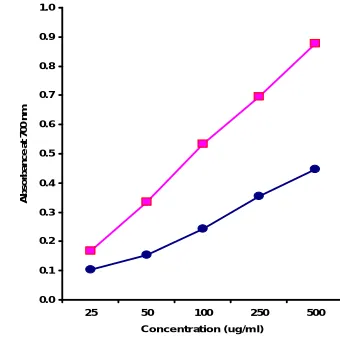
On the other hand reducing power capacity of the extract serves as a significant indicator of its potential antioxidant activity. Fig. (2) showed that the reducing power of H.rosa extract (HRE) increased gradually in concentration dependent manner. Although the power
was, nearly, one fold lesser than that of ascorbic acid (ASA) standard, at the all concentrations, HRE recorded its considered absorbance at 500µg /ml concentration.
In general, the reducing power of plant extract was reported to be directly correlated with its antioxidant activity and is based on the presence of reluctant, which exert antioxidant activity by breaking the free radical chain and donating a hydrogen atom.
(Gordon, 1990; Duh et al., 1999). It is well documented that the antioxidant activity of putative antioxidants have been attributed to various mechanisms among which are : prevention of chain initiation, binding of transition metal ion catalysts, decomposition of peroxides, prevention of continued hydrogen abstraction, and radical scavenging power (Gülçin, et al., 2003a).
Ak and Gülçin (2008) reported that phenolic antioxidants usually scavenge free radicals by an electron-transfer mechanism. The authors added that the electron donating capacity reflecting the reducing power of bioactive compounds, phenolics and flavonoides, which serve as a significant indicator of its potential antioxidant activity (Vundac et al., 2007; Pan et al., 2010) Herein, in the reducing power assay, we can suggest that the
Table 2. Total phenolics, and flavonoid contents in H. rosa sinensis.
Total phenolic contents (mg catechol equivalent /g)
Total flavonoid, contents (mg quercetin equivalent /g)
48.4± 1.03 24.26 ± 1.1
Table 3. Scavenging of superoxide , hydrogen peroxide, and nitric oxide by H. rosa sinensis extract.
Group Superoxide radical Hydrogen peroxide
Nitric oxide
Control 100 ± 2.09 100 ± 1.01 100 ± 0.2
H. rosa sinensis
25 g/ml 15.2 ± 3.37 7.8 ± 2.02 5.2 ± 1.93 50 g/ml 32.7 ± 2.1*
17.2 ± 2.02 10.7 ± 1.87 100 g/ml 40 ± 1.05*
30.3 ± 3.03*
17.4 ± 4.29 250 g/ml 51.5 ± 3.69**
33.3 ± 1.75*
24.9 ± 4.26* 500 g/ml 60.4 ± 2.19**
48.52 ± 3.03**
36.3 ± 2.47*
BHA
200 g/ml 61.6 ± 3.15** 65.8 ± 2.21** 37.3 ± 3.6* (*) 0.05 > P < 0.01 (**)
0.00 0.05 0.10 0.15 0.20 0.25 0.30 0.35 0.40 0.45 0.50
30 60 90 120 150
Time (min)
A
b
s
o
rb
a
n
c
e
a
t
6
9
5
n
m
Fig. 1: Total antioxidant capacities of H. rosa sinensiscompared to BHT. 500 ug/ml HRE (♦), 500 ug/ml BHT (■), Control (▲). Results are mean of three parallel measurements.
0.0 0.1 0.2 0.3 0.4 0.5 0.6 0.7 0.8 0.9 1.0
25 50 100 250 500
Conce ntr ation (ug/m l)
A
b
s
o
rb
a
n
c
e
a
t
7
0
0
n
m
presence of antioxidants in the extract would result in the reduction of F3+ to F2+ by donating an electron.So, our results support the notion that the H. rosa extract performed its antioxidant activity and reducing power due to its functional components, phenolics and flavonoides that act as reluctant.
ROS and RNS scavenging activity
It is known that free radical cause auto-oxidation of unsaturated lipids in food (Haslam. 1996; Kaur et al., 2006; AK and Gülçin, 2008). On the other hand, antioxidants are believed to intercept the free radical chain of oxidation and donate hydrogen from the phenolic hydroxyl groups, thereby forming a stable end product, which does not initiate or propagate further oxidation of lipid (Jain, et. al., 2008). As shown in table (3), free radical scavenging ability of the H. rosa extract was found to decrease in the order : superoxide > hydrogen peroxide > nitric oxide, at various concentrations of the extract (25-500 µg/ml). Moreover the scavenging ability of the H.rosa extract, of 500 µg/ml concentration , for superoxide (60.4 ± 2.19%) and nitric oxide (36.3± 2.47%) nearly reached that of BHT standard (61.6 %± 3.15) , (37.3 ± 3.6:%), respectively, at the concentration (200µg/ml). While the extract scavenging power was lower in case of hydrogen peroxide (48.52 ± 3.03%) than BHA (65.8 ± 2.21%) at the same concentrations. All values were statistically significant (P < 0.05). Superoxide anion radical is not only one of the strongest reactive oxygen species among the generated free radicals but also a precursor to other active free radicals such as hydrogen peroxide, hydroxyl radical, and singlet oxygen, which play an important role in the oxidative damage in lipids, proteins, and DNA and thereby inducing tissue damage (Pietta, 2000 ; Gülçin,2006). It has been reported that antioxidant properties of some flavonoids are effective mainly via scavenging of superoxide anion radical in vitro (AK andGülçin, 2008). Also, in vivo, the up to date study suggested that the flavonoids may involve the dismutation of superoxide anion radical (Demir et al., 2011).
Our results showed that H. rosa extract inhibited gradually, in a concentration dependent manner, the superoxide radicals in the reaction mixture. It scavenged up to 60.4% superoxide radicals at a concentration of 500 µg/ml. This scavenging activity of the extract was equal to that of standard antioxidant BHA suggesting that H. rosa is a potent scavenger of superoxide.We thought that this consumption of superoxide anion radical, in our study, was due to the antioxidative power of H. rosa
extract that gained from its flavonoids content.
For some extent, hydrogen peroxide itself is not very reactive but has the ability to penetrate biological membranes and it may be toxic to cell because it may give rise to hydroxyl radical which mediates oxidative DNA damage (Gülçin et. al., 2003). H. rosa extract was capable of scavenging hydrogen peroxide in a concentration dependent manner. The extract significantly scavenged up to 48.5% hydrogen peroxide radicals at a concentration of 500µg/ml which is lesser than that of BHA (65.8%) at a concentration of 200 µg/ml. Scavenging of H2O2 by
the plant extracts may be attributed to their phenolics, which
donate electron to H2O2, thus reducing it to water (Akinpelu et. al.,
2010). It is reported that the antioxidative action of flavonoids consisted of an initial significant decomposition effect on H2O2
followed by a subsequent phase of very slow decomposition
(Sadowska-Woda et al., 2010).
On the other hand, nitric oxide (NO) is a reactive free radical produced by phagocytes and endothelial cells, to yield more reactive species such as peroxynitrite which can be decomposed to form OH radical (Lee et al., 2007). It is well documented that NO plays a crucial role in the pathogenesis of inflammation where it is secreted as inflammatory mediator, this may explain the use of H. rosa and H. cannabinus extracts for the treatment of inflammatory disease (Moncada et. al., 1991; Lee et al., 2007).The authors reported that H. cannabinus has some various active compounds including tannins, polyphenolics, alkaloids, essential oils and steroids which inhibited NO production by radical scavenging activity (Lee et al., 2007). Herein, the data recorded that the level of nitric oxide was significantly reduced by H. rosa extract whereas it scavenged up to 36.3% nitric oxide radicals at a concentration of 500 µg/ml. Consequently, we can link the recent findings of anti- inflammatory properties of H. rosa and the herein results of its NO reduction, as a results of radical scavenging activity due to its preliminary phytochemical screening contents; steroids, tannins, and flavonoids.
Effects on lipid peroxidation(LPO), and protein oxidation (PO)
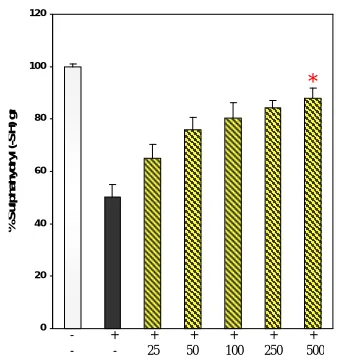
In this study H. rosa sinensis is suggested to possess a significant radical quenching activity. To confirm this postulation, we investigated whether the extract prevented ROS mediated damage to lipids and protein in vitro. Incubation of post mitochondrial supernatant (PMS) with Fe3+/ascorbate oxidizing-system for 60min led to about 2.5-fold increase in lipid peroxidation, as evidenced by enhanced level of thiobarbituric acid reactive substances (TBARS), compared to the control. While with bovine serum albumin the same system oxidized about 56% of -SH groups of protein. Co-incupation with H. rosa extract inhibited significantly, dose dependently, the oxidative damage of lipid and
protein nearly with 31% at extract concentration 500 µg/ml. Lipid peroxidation is thought to proceed by radical
mediated abstraction of the hydrogen atom from a methylene carbon on a polyunsaturated fatty acid side chain (Oboh and Shodehinde, 2009). In general, our results recorded high potent O2
•−
scavenging (60.4%) and lipid peroxidation inhibition (31%) with H. rosa extract whereas the former being probably responsible for the latter. This is in agreement with (Kaur et al., 2006 ; Demir et al., 2011) who found in vivo that the scavenging of O2•−may
However, we can emphasize that H. rosa extract scavenging of O2
•−
and inhibition of lipid peroxidation are attributed to its phenolics and flavonoids contents because of their best-described property is the inhibition of lipoprotein oxidation
(Jiang et al., 2007).
CONCLUSION
Determination of the natural antioxidant compounds of plant extracts will help to develop new drug candidates for antioxidant therapy. In this study the crude water-ethanolic extract of Hibiscus rosa sinensis leaves were investigated with various antioxidant systems. The results indicated that H. rosa sinensis
possessed abundant phenolic and flavonoids contents and exhibited
excellent antioxidant activities comparing to synthetic antioxidants (BHT, BHA). The results of the present study would help to ascertain the potency of the crude extract from H. rosa sinensis as potential source of natural antioxidants. It can be used for minimizing or preventing lipid oxidation in pharmaceutical products, retarding the formation of toxic oxidation products, maintaining nutritional quality and prolonging the shelf life of food and pharmaceuticals. Therefore, the extract from H. rosa sinensis
is worthy of further studies on definitive mechanisms of its chemotherapeutic activities and potential effects in vivo are needed.
ACKNOWLEDGEMENT
The authors would like to express their appreciation to Mr. Nwer, KH.M. and Mr.Nassar, H.I. for their excellent technical assistance.
REFERENCES
Ak T. and Gülçin I. Antioxidant and radical scavenging properties of curcumin. Chem. Biol. Interact. 2008; 174: 27-37.
Akinpelu D.A., Aiyegoro O.A. and Okoh A.I. The in vitro antioxidant property of methanolic extract of Afzelia africana (Smith.) Medicinal Plants Res. 2010; 4(19): 2021-2027.
Ames B. Endogenous oxidative DNA damage, as related to aging and cancer. Mutation Res. /Fundament and Molecular Mechanisms of Mutagenesis. (1989); 214: 41-46.
Amin A. and Hamza A.A. Hepatoprotective effects of Hibiscus, Rosmarinus and Salvia on azathioprine-induced toxicity in rat. Life Sci. 2005; 77(3): 266–278.
Baker J.T., Borris R.P., Carte B., Cordell G.A., Soejarto D.D., Cragg G.M., Gupta M.P., Madulid D.A. and Tyler V.E.J. Natural product drug discovery and development: New perspective on international collaboration. Nat. Prod. 1995; 58: 1325-1357.
Bao J.S., Cai Y.Z., Sun M.G., Wang and Corke H. Anthocyanins, flavonols, and free radical scavenging activity of chinese bayberry (Myrica rubra) extracts and their color properties and stability. Agricult. and Food Chem. 2005; 53: 2327-2332
Beauchamp C. and Fridorich I. Superoxide dismutase: improved assays and an assay applicable to Acrylamid gels. Anal. Biochem. 1971; 44; 276–277.
Cai Y.Z., Luo Q., Sun M. and Corke H. Antioxidant activity and phenolic compounds of 112 traditional Chinese medicinal plants associated with anticancer. Life Sci. 2004; 74: 2157–2184.
Conalez E.E., and Delgano J.N. Pharmaceut. Sci. 1962; 51- 76. Decker E.A. Phenolics: prooxidants or antioxidants? Nutr. Rev. 1997; 55: 396–407.
Demir F., Uzun F.G., Durak, D. and Kalender Y. Subacute chlorpyrifos- induced oxidative stress in rat erythrocytes and the protective effects of catechin and quercetin.Pesticide. Biochem. and Physiol.2011; 99: 77- 81.
Duh P.D., Du P.C. and Yen G.C. Action of methanolic extract of mung hulls as inhibitors of lipid peroxidation and non-lipid oxidative damage. Food and Chemic.Toxicol. 1999 ; 37:1055–1061.
Emerit Y. and Cerutti P. Clastogenic activity from Bloom syndrome fibroblast cultures. Proceeding of the National Acad. of Sci. 1981; 78: 1868-1872.
Farnsworth N.R. Biology and Phytochemical screening of plants. Pharm. Sci. 1966; 55: 225-276.
Farombi E.O. African indigenous plants with chemotherapeutic potentials and biotechnological approach to the production of bioactive prophylactic agents. Afr. Biotech. 2003; 2: 662-671.
Fulton C.C. Americ. Pharmacy. 1932; 112: 1-35 .
Gauthaman K.K., Saleem M.T., Thanislas P.T., Prabhu V.V., Krishnamoorthy K.K., Devaraj N.S. and Somasundaram J.S. Cardioprotective effect of the Hibiscus rosa-sinensis flowers in an
0 20 40 60 80 100 120
T
B
A
R
S
(
%
o
f
F
e
3
+
/a
s
c
o
rb
a
te
t
re
a
te
d
g
r)
0 20 40 60 80 100 120
%
S
u
lp
h
a
h
y
d
ry
l
(-S
H
)
g
r
Fig. 4: Inhibitory effect of H. rosa sinensis on protein (BSA) oxidation induced by Fe3+/ascorbate system. Results are expressed as % of non treated group. Each value is mean ± S.E. (n = 3). (*)P<0.05.
Fig. 3: Inhibitory effect of H. rosa sinensis on lipid peroxidation in PMS induced by Fe3+/ascorbate system. Results are expressed as % of Fe3+/ascorbate treated group. Each value is mean ± S.E. (n = 3). (*)P<0.05.
Fe3+/ascorbate - + + + + + + Extract (μg/ml) - - 25 50 100 250 500
- + + + + + + - - 25 50 100 250 500
*
oxidative stress model of myocardial ischemic reperfusion injury in rat. BMC Complementary and Alternative Medicine. 2006; 6: 32.
Geissmann T.A. The Chemistry of Flavonoid Compounds. Pergamon Press. London. 1962; 126.
Gilani A.H., Bashir S., Janbaz K.H. and Shah A.J. Presence of cholinergic and calcium channel blocking activities explains the traditional use of Hibiscus rosa sinensis in constipation and diarrhoea. Ethnopharmacol. 2005; 102: 94–289.
Gordon M.H. (1990).The mechanism of antioxidant action in vitro.In : BJF Hudson (Ed.), Food antioxidants (pp.1–18).London: Elsevier Applied Science.
Govindarajan R., Rastogi S., awat.A K.S., Vijayakumar M., Shirwaikar A., Mehrotra S. and Palpu P. Studies on the Antioxidant Activities of Desmodium gangeticum. Biolog. Pharmaceut. Bulletin. 2003; 26: 1424-1427.
Gülçin I. Antioxidant and antiradical activities of L-carnitine. Life Sci., 2006; 78: 803-811.
Gülçin I., Bursal E., Şehitoğlu H.M., Bilsel M. and Gören A.C.
Polyphenol contents and antioxidant activity of lyophilized aqueous extract of propolis from Erzurum. Turkey Food and Chemic. Toxicol. 2010; 48(8–9): 2227−2238.
Gülçin I., Büyükokuroğlu M.E., Oktay M., and Küfrevioğlu Ö.İ.
Antioxidant and analgesic activities of turpentine of Pinus nigra Arn. Subsp. pallsiana (Lamb.) Holmboe. Ethnopharmacol. 2003a; 86: 51-58.
Gülçin I., Oktay M., Kırecci E. and Kufrevioglu O.I.
Screening of antioxidant and antimicrobial activities of anise (Pimpinella anisum L.) seed extracts. Food Chem. 2003b; 83: 371–382.
Harbone J.B. Phytochemical Methods.2nd ed. Chapman and Hall
Ltd. London(1973) 49-188.
Haslam E. Natural polyphenols (vegetable tannins) as drugs: Possible modes of action. J.Nat. Products. 1996; 59: 205-215.
Jain A., Soni M., Deb A., Jain S.P., Rout. and Gupta V.B. Antioxidant and hepatoprotective activity of ethanolic and aqueous extracts of Momordica dioica roxb. leaves. J. Ethnopharmacol, 2008;115: 61–66.
Jayaprakash G.K., Singh R.P. and Sakariah K.K. Antioxidant activity of grape seed extracts on peroxidation models in vitro. Agric. Food Chem. 2001; 55: 1018-1022.
Jenner P. Oxidative stress as a cause of Parkinson’s disease. Acta Neurol. Scandinavica, 1991; 84: 6-15.
Jiang P., Burczynski F., Campbell C., Pierce G., Austria J.A. and Briggs C.J. Rutin and flavonoid contents in three buckwheat species
Fagopyrum esculentum, F. tataricum, and F. homotropicum and their protective effects against lipid peroxidation. Food Res. Int. 2007; 40: 356– 364.
Kaur G., Tirkey N., Bharrhan S., Chanana V., Rishi P. and Chopra K. Inhibition of oxidative stress and cytokine activity by curcumin in amelioration of endotoxin-induced experimental hepatotoxicity in rodents. Clin. Exp. Immunol.2006; 145: 313–321.
Kessler M., Ubeaud G. and Jung L. Anti- and pro-oxidant activity of rutin and quercetin derivatives. Pharm. Pharmacol. 2003; 55: 131-142.
Kuti J.O. Antioxidant compounds from four Opuntia cactus pear fruit varieties. Food Chem. 2004; 85: 527–533.
Lee K.P., Kim C., Landgraf F. and Apel K. Executer1- and executer2-dependent transfer of stress-related signals from the plastid to the nucleus of Arabidopsis thaliana. Proc. Natl. Acad. Sci. 2007; 104: 10270–10275
Lin Y.G., Kunnumakkara A.B., Nair A., Merritt W.M., Han L.Y., rmaizPena G.N., Kamat A.A., Spannuth W.A., Gershenson D.M., Lutgendorf S.K., Aggarwal B.B. and Sood A.K. Curcumin inhibits tumor growth and angiogenesis in ovarian carcinoma by targeting the nuclear factor-KB pathway. Clin. Cancer Res. 2007; 13: 3423-3430.
Maganha E.G., Da costa H.R., Rosa R.M., Pegas H.O.A., Lia de paula R.A.L. and Saffi J. Pharmacological evidences for the extracts and secondary metabolites from plants of the genus Hibiscus. Food Chem. 2009; 118: 1-10
Moncada A., Palmer R.M.J. and Higgs E.A. Nitric oxide: Physiology, pathophysiology and pharmacology. Pharm. Rev. 1991; 43: 109-142.
Nade V.S., Kanhere S.V., Kawale L. A. and Yadav A.V. Cognitive enhancing and antioxidant activity of ethyl acetate soluble fraction of the methanol extract of Hibiscus rosa sinensis in scopolamine-induced amnesia. Indian Pharmacol. 2011; 43(2): 137–142.
Oboh G. and Shodehinde S.A. Distribution of nutrients, polyphenols and antioxidant activities in the pilei and stipes of some commonly consumed edible mushrooms in Nigeria. Bull. Chem. Soc. Ethiop. 2009; 23(3): 391-398.
Oyaizu M. Studies on product of browning reaction prepared from glucose amine. Japanese Nutrition 1986; 44:307– 315.
Pan L.Q., Ren J.Y. and Wu Z.W. Effects of heavy metal ions on SOD, CAT activities of hepatopancreas and gill of the crab Eriocheir sinensis. Ocean. Univ. Chin. 2004 ; 34: 189–194.
Pan Y.M., Zhang X.P., Wang H.S., Liang Y., Zhu J.C., Li.H Y., Zhang Z. and Wu Q.M. Antioxidant potential of ethanolic extract of Polygonum cuspidatum and application in peanut oil. Food Chem. 2007a ; 105:1518–1524.
Pan Y.M., Zhu Z.R., Huang Z.L., Wang H.S., Liang Y., Wang K., Lei Q. and Liang M. Characterization and free radical scavenging activities of novel red pigment from Osmanthus fragrans’ seeds. Food Chem. 2009 ; 112: 909–913.
Pan Y., He c., Wang H., Ji X., Wang K. and Lui P. Antioxidant activity of microwave- assisted extract of Buddleia officinalis and its major active component. Food chem. 2010 ; 121: 497- 502.
Pietta P.G. Flavonoids as antioxidants. Nat. Prod. 2000 ; 63: 1035–1042.
Prieto P., Pineda M. and Aguilar M. Spectrophotometric quantitation of antioxidant capacity through the formation of a phosphomolybdenum complex: specific application to the determination of
vitamin E. Analyt. Bio Chem.1999; 269: 337–341.
Rathee J.S., Hassarajani S.A. and Chattopadhyay S. Antioxidant activity of Nyctanthes arbor-tristisleaf.extract. Food Chem. 2007 ; 103: 1350-1357.
Reddy C.M., Murthy D.R.K. and Patil S.B. Antispermatogenic and androgenic activities of various extracts of Hibiscus rosa sinensis in albino mice. Indian Experimental Biol. 1997 ; 35: 1170–1174.
Ruch R.J., Cheng S.J. and Klaunig J.E. Prevention of cytotoxicity and inhibition of intracellular communication by antioxidant catechins isolated from Chinese green tea. Carcinogenesis. 1989; 10: 1003– 1008.
Sachdewa A. and Khemani L.D. Effect of Hibiscus rosa-sinensis ethanol flower extract on blood glucose and lipid profile in streptozotocin
induced diabetes in rats. Ethnopharmaco. 2003; 89: 61–66.
Sachdewa A., Raina D., Srivastava A.K., and Khemani L.D. Effect of Aegle marmelos and Hibiscus rosa sinensis leaf extract on glucose tolerance in glucose induced hyperglycemic rats. Environment. Biol. 2001 ; 22: 7–53.
Sadowska-Woda I., Popowicz D. and Karowicz-Bilinska A. Bifenthrin- induced oxidative stress in human erythrocytes in vitro and protective effect of selected flavonols. Toxicol. in Vitro. 2010; 24: 879-884.
Sedlak J. and Lindsay R.H. Estimation of total, protein bound and non protein sulphydryl groups in tissues with Ellman’s reagent. Analyt. Biochem., 1968; 25: 192–205.
Shahidi F. and Wanasundara P.K.J. Phenolic antioxidants. Crit.Rev. Food Sci. Nutr. 1992 ; 32: 67-103.
Sharma S., Khan N. and Sultana S. Effect of Onosma echioides on DMBA/croton oil mediated carcinogenic response, hyperproliferation and oxidativedamage in murine skin. Europ. Cancer Prevention. 2004b ; 13: 40–53.
Sies H. (1985 ). Oxidative stress: Introductory remarks. In H. Sies (Ed.), Oxidative Stress. Orlando: Academic Press.
Singh M.P., Singh R.H. and Udupa K. N. (): Anti-fertility activity of a benzene extract of Hibiscus rosa-sinensis flowers on female
albino rats. Planta Medica. 1882; 44:171–174.
Singh R.P., Murthy K.N.C. and Jayaprakasha G.K. Studies on the antioxidant activity of pomegranate (Punica granatum) peel and seed extracts using in vitro models. Agricul. and Food Chem. 2002 ; 50: 81-86.
arjuna, Acacia nilotica, and Eugenia jambolana Lam Trees. Food Chem. 2007; 104: 1106–1114.
Upadhyay S.M., Upadhyay P., Ghosh A.K., Singh V. and Dixit V.K. Effect of ethanolic extract of Hibiscus rosa sinensis L., flowers on hair growth in female wistar rats. Dermatol. Pharmacia Lettre. 2011; 3 (4): 258-263
Vundać V.B., Brantner H.A. and Plazibat M. Content of
polyphenolic constituents and antioxidant activity of some Stachys taxa. Food Chem. 2007; 104:1277–1288.
Wall M.E., Kreider M.M., Krewson C.F., Eddy C.R., Williams
J.J., Corell D.S. and Gentry H.S. Survey of plants for steroidal
.
sapogenins and other constitutents. J.A.P.A., Scientific Edition. 1954 ; 43: 1-7.
Wright J.R., Colby H.D. and Miles P.R. Cytosolic factors which affect microsomal lipid peroxidation in lung and liver. Arch. Biochem. Biophys. 1981; 206: 296–304.
Wu J.B., Lin C.C., Hsieh H.Y., Ho H.S. and Lin W.C. The hepatoprotective activity of kinsenoside from Anoectochilu sformosanus. Phytother. Res. 2007; 21: 58-61.