_____________________________________________________________________________________________________
*Corresponding author: E-mail: [email protected];
19(4): 1-13, 2019; Article no.JAMB.54415
ISSN:2456-7116
Isolation, Identification and Evaluation of Egyptian
Bacillus
sp. Isolates for Producing
Poly-γ-glutamic Acid
Rania F. Ahmed
1and Hala Badr Khalil
2*1
Department of Agricultural Microbiology, Faculty of Agriculture, Ain Shams University, Cairo, Egypt.
2
Department of Genetics, Faculty of Agriculture, Ain Shams University, Cairo, Egypt.
Authors’ contributions
This work was carried out in collaboration between both authors. Author RFA designed the study, performed the experiments, wrote the protocol and shared in writing the first draft of the manuscript. Author HBK managed the analyses of the study, shared in writing the first draft of the manuscript, edited and finalized the manuscript. Both authors read and approved the final manuscript.
Article Information
DOI: 10.9734/JAMB/2019/v19i430203 Editor(s): (1) Dr. Simone Aquino, Instituto de Pesquisas Energéticas e Nucleares (IPEN), Brazil. Reviewers: (1) Márió Gajdács, University of Szeged, Hungary. (2) Muhammad Irfan,University of Sargodha, Pakistan. Complete Peer review History:http://www.sdiarticle4.com/review-history/54415
Received 20 November 2019 Accepted 24 January 2020 Published 27 January 2020
ABSTRACT
Poly-γ-glutamic acid (γ-PGA) is a non-toxic, biodegradable, and water-soluble polymer secreted from different microbes. We isolated forty-nine Bacillus spp. isolates generating PGA from the soil of different Egyptian regions. A total of 18% of these isolates were found to highly produce PGA in the
range of 5- 8 gl-l. Two of them, B44 and B42, were identified by the16SrRNA DNA sequence, and
they shared 81% of similarity. The most similar DNA sequences to B44-16SrRNA were Bacillus sp.
(FJ607057.1) and Bacillus sonorensis (KP236346.1) matching 99% and 94% of similarity,
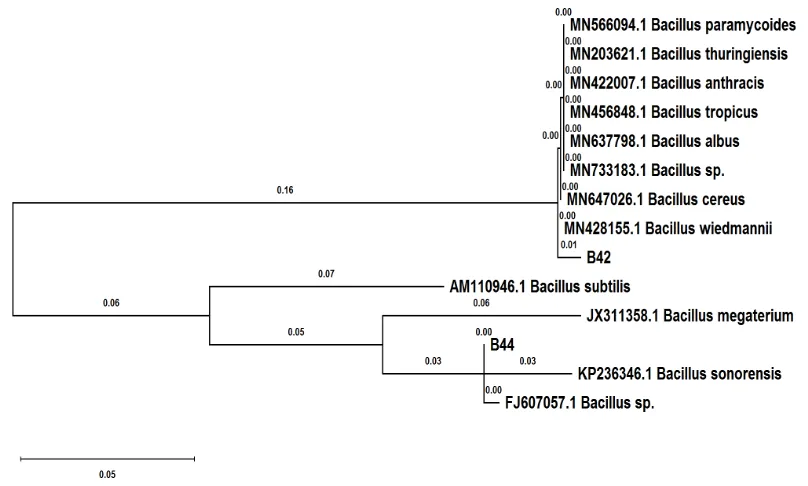
respectively. However, B42-16SrRNA was similar 99% to several Bacillus species. The tree-building
algorithm MEGA-X constructed the phylogenetic tree of 16SrRNA DNA sequences for Bacillus 44 and Bacillus 42 strains along with other similar Bacillus species revealing the distance between
them. We also boosted the PGA production of both strains. Bacillus 44 strain revealed the highest
accumulation level of PGA at 35°C and 72 h of incubation using medium M with inoculum size and agitation speed 3% and 250 rpm, respectively. Both strains secreted the PGA biopolymer with a
molecular mass of 55 kDa. This investigation is an attempt of boosting promising Egyptian Bacillus
Ahmed and Khalil; JAMB, 19(4): 1-13, 2019; Article no.JAMB.54415
Keywords: Bacillus; Egypt; Poly-γ-glutamic acid; 16SrRNA; fermentation time; agitation speed.
1. INTRODUCTION
Recently, the interest in the biopolymer, poly-γ-glutamate acid (γ-PGA), has a significant increasing trend. With many applications in the food industry, bioplastic, cosmetic, wastewater treatment, and medicine, this biopolymer is ascendingly desired [1]. PGA polymer is mainly generated by Gram-positive bacteria like the
genus Bacillus, but other genera like
Staphylococcus, Natrialba, Lysinibacillus, and Fusobacterium are also found to produce the same biopolymer [2,3,4,5,6]. According to the presence of D-glutamic acid in the production media, the microorganisms secreting PGA were classified into two major groups. Microbes generate glutamic acid-dependent (c-PGA), which usually need glutamic acid in the media for inducing c-PGA synthetase [7,8] and others glutamic acid-independent that produce PGA without D-glutamic acid [9,4]. The glutamic acid-independent bacteria have a lower PGA
productivity compared to glutamic
acid-dependent bacteria [10]. Therefore, the
accumulation of PGA biopolymer in the media usually increases when L-glutamic acid used as a nutrient, so this modification is expensive [11,12].
Unlike most proteins, γ-PGA is synthesized in a ribosome-independent process. The precursor for γ-GPA in several bacteria is a pyruvate molecule that is associated with cell growth. Therefore, medium components supporting cell growth will make enough precursor, pyruvate, for γ-PGA biosynthesis [13]. The biosynthesis of PGA has mainly four stages: (i) racemization for
converting glutamate isomerases; (ii)
polymerization for polymerizing the γ-PGA at the active site of the synthase complex; (iii) regulation for controlling the production of the polymers; (iv) degradation for cleaving γ-PGA into various fragments [11]. The molecular mass of the native PGA is relatively high ranged from 10 to 2000 KDa [14,15,16,17]. This depends on the type of PGA secreting microbes. Recently, medium composition, hydrolysis, degradation, and degrading enzymes have all been utilized to control the size of PGA [14].
Several Bacillus species have been known as
γ-PGA producers. The γ-PGA biopolymer was firstly discovered in Bacillus anthracis capsules, then found in other Bacillus species such as B. cereus, B. subtilis and B. natto, B. licheniformis,
B. thuringensis, B. pumilus, B. amyloliquefaciens, B. mojavensis, B. atrophaeus and B. megaterium
[18,19,20,21,22]. Till now, new native species of the genus Bacillus are discovered to generate a high amount of this biopolymer.
In this study, we screened and identified Bacillus
spp. isolates from different Egyptian regions for investigating their capabilities of secreting
poly-γ-glutamate acid. We also optimized the
conditions for the best yielding of generated PGA. Also, we identified the molecular size of this bioproduct.
2. MATERIALS AND METHODS
2.1 Sampling
A total of thirty-five soil samples were collected from different Egyptian governorates including Banysoif, Menoufia, Al-Wady Al-Gadid and Cairo. The samples were picked in pre- sterilized plastic bags, then sorted for further analyses.
2.2 Isolation and Characterization of
Bacillus sp. Isolates
For isolation, an amount of ten grams of each sample was transferred into shaking conical flasks containing 90 ml of PPs solution (0.1% Peptone, and 0.85% NaCl) on a speed of 100 rpm for 15min. Then, the suspensions were heated at 80°C for 15 min to eliminate vegetative cells. Serial dilutions of the suspensions were prepared (up to 10-5) and 100 µl of each diluted sample was spread on TSB medium plate (3%
Trypticase soy broth, 0.3% K2NO3 and 1%
Glucose). The plates were then incubated for 48 h at 30°C till smooth-mucoid colonies appeared. Each colony was picked and purified using the streak plate method. Purified isolates were
microscopically examined using Gram-and
Schaeffer–Fulton stains to identify Bacillus spp. isolates.
2.3 Screening Bacillus sp. Isolates for PGA Production
Ahmed and Khalil; JAMB, 19(4): 1-13, 2019; Article no.JAMB.54415
(10 ml) from each culture was utilized to measure cell growth and PGA dry weights (gl-1).
2.4 Bacterial Genomic DNA Isolation and Quantification
The total genomic DNA of selected isolates that revealed high production of PGA was extracted according to GeneJET genomic DNA purification Kit protocol (Thermo Scientific, Cat No. K0721). Then, the DNA samples were quantified, then stored at 4°C.
2.5 Bacterial 16SrRNA PCR Amplification, Purification and Sequencing
A pair of primers (For.5̓
AGAGTTTGATCCTGGCTCAG 3̓; Rev. 5̓
GGTTACCTTGTTACGACTT 3̓) of 16S ribosomal RNA, 16SrRNA, was selected for amplifying an approximate of a 1500 bp of DNA fragment reported in [23]. The PCR reaction was performed according to Maxima Hot Start PCR Master Mix (Thermo Scientific, Cat No. K1051). A volume of 50 μL PCR reaction containing 20 μM of each primer and a 50 ng of genomic DNA sample, 25 μl of 2X Maxima® Hot Start PCR Master Mix and 18 μl of nuclease-free H2O was prepared. The PCR amplification was performed on a thermal cycler with a cycling profile: denaturation for 10 min at 95°C; 35 cycles of 95°C for 30 sec, 65°C for 60 sec, and 72°C for 90 sec; final extension at 72°C for 10 min. The PCR product was purified using GeneJET™ PCR Purification Kit (Thermo Scientific, Cat No. K0701), then sequenced according to ABI 3730xl DNA manufacturer instructions.
2.6 Bioinformatics Resources
Basic Local Alignment Search Tool (BLAST) services provided by the National Center for
Biotechnology Information (NCBI,
http://www.ncbi.nlm.nih.gov/) were used in this study for comparison of nucleic acid sequences.
European Bioinformatics Institute (EBI,
http://www.ebi.ac.uk/) ClustalW2 was used for multiple sequences alignment and analysis of sequence structure.
2.7 Phylogenetic Analysis
For phylogenetic analysis, the tree-building algorithm for maximum likelihood [24] provided by MEGA-X [25] was applied. Initial tree(s) for the heuristic search were obtained automatically
by applying Neighbor-Join and BioNJ algorithms to a matrix of pairwise distances estimated using the maximum composite likelihood (MCL) approach. The tree was drawn to scale, with branch lengths measured in the number of substitutions per site (above the branches). The bootstrap consensus tree inferred from 1000
replicates was taken to represent the
evolutionary history of the taxa analyzed [26].
2.8 Fermentation Time
Elementary flasks (250 ml)provided by100 ml of
TSB medium were used for Bacillus 44 and
Bacillus 42 isolate propagation. Samples (10 ml) of each isolate culture were taken periodically every 12 h under aseptic conditions during 110 h of the incubation period. All collected samples were used to evaluate cell growth and PGA dry weight, as well as sugar consumption.
2.9 Media Composition
The cell growth of Bacillus sp. isolates and their PGA production were assessed using four different media: TSB (a control medium); Basal m. (2% Glucose, 0.4% Casine hydrolysate, 1.4% K2HPO4, 0.6% KH2PO4, 0.02% MgSO4 and 1 ml of 1 mM trace solution [FeSO4, CaCl2, MnSO4, and ZnCl2]); medium M (1.8% NH4Cl2, 7.5%
glucose, 0.15% K2HPO4, 0.035% MgSO4,
0.005% MnSO4); medium E (1.2% citric acid, 8%
glycerol, 0.7% NH4Cl, 0.005% K2HPO4, 0.05% MgSO4, 0.004% FeCl3, 0.015% CaCl2, 0.0104% MnSO4).
2.10 Optimizing the Environmental Conditions for the Best Yielding of PGA
2.10.1 Incubation temperature
Five incubation temperatures (25, 30, 35, 40 and 45°C) were used to find the best temperature for PGA accumulation.
2.10.2 Agitation speed
Seven agitation speeds ranged from 100 to 400 rpm were assessed using a rotary shaker at 35°C.
2.10.3 Inoculum size
Ahmed and Khalil; JAMB, 19(4): 1-13, 2019; Article no.JAMB.54415
amount of tested bacterial isolates for
inoculation.
2.10.4 Inoculum physical state
Three different physical states of Bacillus sp.
isolates were assessed including spores,
outgrowth vegetative cells and a mixture of outgrowth vegetative cells and spores.
2.10.5 Standard seed
A loop-full of each Bacillus isolate was inoculated in a conical flask containing 100 ml of nutrient broth, then incubated for 24 h at 30°C and 150 rpm. One ml of the culture of each isolate contained about 0.1 gl-1 was used in this investigation as a standard seed.
2.11 Glucose Determination
Residual sugar in the culture supernatant was determined using potassium free cyanide as
described by Park and Johnson[27].
2.12 PGA Recovery
According to a method described by Ashiuchi et al. [28], the PGA from screened bacterial isolates was participated, then collected by a re-centrifugation at a speed of 7000 rpm for 10 min at 4°C. Finally, pellets were dried at 80°C.
2.13 Calculations
2.13.1 Specific growth rate (μ) and doubling time (td)
The specific growth rate (μ) and doubling time (td) were calculated from the exponential phase according to Painter and Marr [29] using the following equations:
µ= (ln A- ln Aο) t -1 td= ln 2. µ
-1
µ= Specific growth rate (h-1); A= Amount of growth after t time; Aο= Amount of growth at the beginning of logarithmic Phase; t= Time of the logarithmic phase; td= Doubling time
2.13.2 Number of generations (N)
The number of generations was calculated according to Stanier et al. [30] using the following equation:
N= t/td
N= Number of generations; t= the period of exponential (h); td= doubling time (h)
2.13.3 Multiplication Rate (MR)
The multiplication rate was calculated according toStanier et al. [30] using the following equation:
MR= Nt -1
MR= Multiplication rate; N= Number of
generations; t= Time of the logarithmic phase
2.14 PGA Parameters
We used the following equations for measuring the accumulation rate of PGA.
2.14.1 PGA conversion coefficient
PGA conversion coefficient (%) = gm PGA X 100/gram utilized sugar, according to Ramadan et al. [31].
2.14.2 PGA yield to biomass
PGA yield to biomass (Y/c/x) = gm PGA/ gm biomass dry weight gg-1, according to Grothe et al. [32].
2.14.3 PGA productivity
PGA productivity = gm PGA / fermentation time (h) gl-1h-1, according to Lee [33].
2.15 PGA Purification and Determination by SDS-PAGE
PGA was purified according to a protocol
described by Ito et al. [33]. SDS-PAGE of
proteins was performed using a 10%
polyacrylamide gel [34]. The protein was stained by Coomassie brilliant blue, then destained. The standard proteins, bovine serum albumin, was used to determine the molecular size of PGA.
3. RESULTS AND DISCUSSION
Soil microbes able to secret polymers such as poly-γ-glutamic acid. This biopolymer commonly produced by the genus Bacillus. Of screened bacterial isolates collected from different regions
in Egypt, forty-nine were morphemically
Ahmed and Khalil; JAMB, 19(4): 1-13, 2019; Article no.JAMB.54415
microscopic level, the isolates were gram-positive, rod-shaped and forming endospores. Several studies reported the importance of
Bacillus found in the soil, rhizosphere
and fermented food that generate
exopolysaccharides such as levan, gellan, and curdlan, and Poly-ɣ-glutamic acid [20,35,36,37, 38]. Here, we attempted to isolate and purify
Bacillus sp. isolates that were assigned by numbers ranged from B1 to B49.
3.1 Screening of Bacillus spp. Isolates for PGA Production
Based on the dry weight of PGA collected at the end of the incubation period of each grown
Bacillus sp. isolates (assigned: B1 to B49), nine isolates (18%) revealed a high production of PGA ranged from 5 to 8 gl-l. Contrary, thirty isolates (61%) found to have a low production of PGA. The residual isolates (21%) with a range of 3-5 gl-1 have a medium production of PGA. Of the highly PGA productive isolates, we selected the best two (B44 and B42) to identify them on the molecular level, to optimize the conditions for yielding PGA, and to identify the molecular mass of generated PGA.
3.2 Identification of Highly PGA Productive Bacillus spp. Isolates Based on the DNA Sequence of 16SrRNA
From the bacterial genomic DNA of B44 and B42 isolates, a PCR reaction for amplifying the DNA sequence of 16SrRNA was performed. Then, the PCR product was purified and sequenced (methods). The DNA sequence of B44-16SrRNA isolate was identified by BLASTN searching in the GenBank NR database. The most similar
DNA sequences to B44-16SrRNA were
unidentified species of Bacillus (FJ607057.1), and Bacillus sonorensis (KP236346.1) matching 99% and 94% DNA sequence similarity,
respectively. On the other hand, several Bacillus
species were found to be similar to B42 isolate, i.e., B. paramycoides, B. cereus, B. wiedmannii, B. thuringiensis, B. albus, B. tropicus, B. anthracis and others unidentified at species level
(MN566094.1, MN733183.1, MN647026.1,
MN428155.1, MN203621.1, MN637798.1,
MN456848.1, and MN422007.1) with 99% DNA sequence similarity. The multiple DNA sequence alignment was performed on16SrRNA of similar species by ClustalW2. The 16SrRNA sequence
analysis of both studied strains, Bacillus 44 and
Bacillus 42, was also performed revealing the genetic distance between them as they were only sharing 81% DNA sequence similarity.
The evolutionary phylogenetic tree was
generated using the maximum likelihood method (Fig. 1). For this, the analysis performed on the DNA sequence of Bacillus 44- and Bacillus 42-16SrRNA and their most similar DNA sequences in the GenBank NR database (KP236346.1,
FJ607057.1, JX311358.1, AM110946.1,
MN566094.1, MN733183.1, MN647026.1,
MN428155.1, MN203621.1, MN637798.1,
MN456848.1, and MN422007.1). The
constructed tree resulted in two major clusters of
Bacillus species that mainly belonged to the
Bacillus 44 strain (Cluster II), and Bacillus 42 strain (Cluster 1). This genetic distance indicated that those Bacillus sp. strains were from two different species of Bacillus. Further genomic studies are essential to be performed to identify
these Bacillus species strains that may be
unprecedentedly designated for PGA production.
3.3 Assignment of the Fermentation Time
To further investigate cell growth, PGA
production, and sugar consumption of the
selected Bacillus sp. strains, time-course
experiments were performed during batch fermentation using TSB medium. We collected samples every 12 h under aseptic conditions from grown culture through the period of incubation (110 h). Then, the cell growth and PGA dry weights (gl-l), as well as the sugar consumption (gl-l) of each sample for each strain were recorded (Fig. 2). The strains (Bacillus 44 and Bacillus 42) exhibited by three curves that revealed the rates of cell growth (0.77, 0.69),
PGA production (0.86, 0.66) and sugar
consumption (0.84, 0.73), respectively. The maximum production of PGA dry weight for both strains was during the stationary phase at 72 h yielding 8.03 and 7.72 gl-1 for Bacillus 44 and
Bacillus 42 strains, respectively (Fig. 2). A similar observation was reported by Thanh et al. [39] who optimized the fermentation time of
Ahmed and Khalil; JAMB, 19(4): 1-13, 2019; Article no.JAMB.54415
The PGA productivity, yield and conversion coefficient were also calculated (methods) at that time resulted in 0.1115 gl-1h-1, 3.2 gg-1 and 590% for B44 strain and 0.107 gl-1h-1, 3.64 gg-1, and 507% for Bacillus 42 strain. Also, the comparison between the two strains at the growth parameter level (µ, td, MR, and N) was higher in the Bacillus 44 strain (0.149h-1, 4.65h, 0.215, and 5.2), than the B42 strain (0.115h-1, 6.02h, 0.166 and 4).
3.4 Determination of the Best PGA Productive Medium
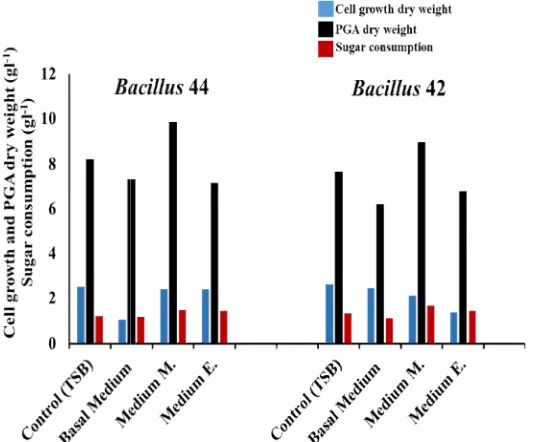
We screened four media, TSB (as a control), Basal m., medium E, and medium M, for yielding the best production of PGA. At the end of fermentation time (at 72 h), the cell growth and PGA dry weights of Bacillus 44 and Bacillus 42 strains were recorded. The best medium for yielding PGA was medium M that scored 9.85 and 8.98 gl-1 for Bacillus 44 and Bacillus 42 strains, respectively (Fig. 3). In parallel, Bacillus
44 and Bacillus 42 strains grown in the same medium revealed the highest sugar utilization (1.47 and 1.65 gl-1, respectively). This high production of PGA may be related to the
consumption of glucose and NH4Cl2 as carbon and nitrogen sources in this media that classified as one of the most efficient C and N2 sources [41].
3.5 Optimization of the Environmental Conditions for the Best Yielding of PGA
3.5.1 Incubation temperature
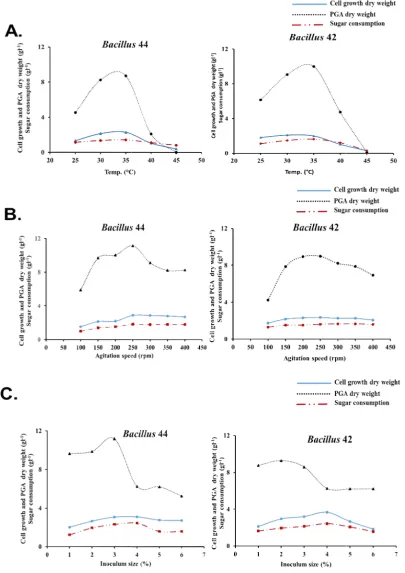
Of five incubation temperatures (25, 30, 35, 40 and 45°C) selected for highly PGA accumulation rate, we found that 35°C was the optimum temperature for both Bacillus 44 and Bacillus 42 strains (Fig. 4A). At the 72 h of the incubation, the cell growth and PGA dry weights were 2.01 and 9.96 gl-1 for B44, and 2.3 and 8.69 for
Bacillus 42 gl-1, respectively. The production of PGA was declined after that temperature and completely disappeared at 45°C. These strains could be defined as mesophilic bacteria that have the highest growth rate on the range of 30 to 37°C, and this could have a direct impact on PGA biosynthesis [42,43].
Fig. 2. Time-course of PGA production by
Fig. 3. Evaluating four media types for the best yielding of PGA using
Ahmed and Khalil; JAMB, 19(4): 1-13, 2019; Article no.
course of PGA production by Bacillus 44 and Bacillus 42 strains during 110 h of incubation period
Fig. 3. Evaluating four media types for the best yielding of PGA using Bacillus 44 and 42 strains
; Article no.JAMB.54415
42 strains during 110 h of
Fig. 4. Optimizing fermentation temperature, agitation speed, and inoculum size for the best yielding of PGA using
Ahmed and Khalil; JAMB, 19(4): 1-13, 2019; Article no.
Fig. 4. Optimizing fermentation temperature, agitation speed, and inoculum size for the best yielding of PGA using Bacillus 44 and Bacillus 42 strains
; Article no.JAMB.54415
3.5.2 Agitation speed
In previous reports, researchers noticed that the genus Bacillus is an obligate aerobic, and the levels of O2 have an important impact on the physiological activity [42]. With these facts,
optimizing agitation speed for the best
accumulation of PGA was essential. The cell growth and PGA dry weight were incremented with agitation, and the most efficient agitation speed for both strains was at 250 rpm yielding cell growth dry weight (2.88 and 2.35 gl
dry weight (11.12 and 8.96 gl-1), and PGA productivity (0.154 and 0.124 gl-1h
-44 and Bacillus 42 strains, respectively (Fig. 4B). The importance of aerobic conditions for cell growth and polymer production was related to the oxygen supply for activating the TCA cycle [43]. The reduction of agitation speed could decrease the dissolved O2 in the medium that resulted in decreasing of the PGA dry wei our study to record 46.67 and 52.56% for
Bacillus 44 and Bacillus 42, respectively.
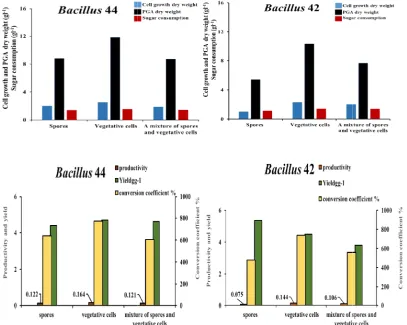
Fig. 5. Three inoculum physical states including spores, outgrowth vegetative cells and a mixture of spores and vegetative cells, for the best yielding of PGA using
Ahmed and Khalil; JAMB, 19(4): 1-13, 2019; Article no.
In previous reports, researchers noticed that the is an obligate aerobic, and the have an important impact on the physiological activity [42]. With these facts,
optimizing agitation speed for the best
accumulation of PGA was essential. The cell growth and PGA dry weight were incremented with agitation, and the most efficient agitation speed for both strains was at 250 rpm yielding cell growth dry weight (2.88 and 2.35 gl-1), PGA ), and PGA -1
) for Bacillus
42 strains, respectively (Fig. 4B). e of aerobic conditions for cell growth and polymer production was related to the oxygen supply for activating the TCA cycle [43]. The reduction of agitation speed could in the medium that resulted in decreasing of the PGA dry weight in our study to record 46.67 and 52.56% for
42, respectively.
3.5.3 Inoculum size
We evaluated six inoculum sizes ranged from 1 to 6%. For Bacillus 44 strain, the volume of 3% was the best inoculum for yielding PGA (Fig. 4C). This volume size resulted in 11.18 gl
weight. The PGA productivity, yield, and conversion coefficient of the same strain were 0.155 gl-1h-1, 3.62 gg-1, and 486%, respectively. On the other hand, the strain
represented the highest production of PGA with the inoculum size 2% (Fig. 4C). Increasing the inoculum over 3% had a negative impact on PGA production. Our results were in the same line with Baxi, [37] investigation who assessed inoculums from 4 to 20% (v/v).
3.5.4 Physical state of inoculum
The assessment of the three physical states (spores, outgrowth vegetative cells, and a mixture of spores and vegetative cells) of
Bacillus sp. strains revealed the importance of
inoculum physical states including spores, outgrowth vegetative cells and a mixture of spores and vegetative cells, for the best yielding of PGA using Bacillus
Bacillus 42 strains
; Article no.JAMB.54415
We evaluated six inoculum sizes ranged from 1 44 strain, the volume of 3% for yielding PGA (Fig. 4C). This volume size resulted in 11.18 gl-1 PGA dry weight. The PGA productivity, yield, and conversion coefficient of the same strain were , and 486%, respectively.
On the other hand, the strain Bacillus 42
represented the highest production of PGA with the inoculum size 2% (Fig. 4C). Increasing the inoculum over 3% had a negative impact on PGA production. Our results were in the same line with Baxi, [37] investigation who assessed
The assessment of the three physical states (spores, outgrowth vegetative cells, and a mixture of spores and vegetative cells) of sp. strains revealed the importance of
inoculum physical states including spores, outgrowth vegetative cells and a
Fig. 6. The molecular weight of PGA generated from Bacillus 44 and
strains
young outgrowth vegetative cells in PGA accumulation. This physical state yielded cells with the best growth dry weight (2.52 and 2.3 gl 1), PGA dry weight (11.82 and 10.34 gl
as sugar consumption (1.53 and 1.4 gl Bacillus 44 and Bacillus 42 strains, respectively (Fig. 5A). Similar results were also reported by [44,45,37] who found that the production of PGA dry weight incremented 2-fold when the media inoculated by young outgrowth vegetative cells at the age of 24 h when compared to another inoculum contained a mixture of outgrowth vegetative cells and spores. In addition, PGA productivity, yield, and conversion coefficient were the most efficient at the same inoculum state (outgrowth vegetative cells) revealing (0.16 gl-1h-1, 4.69 gg-1, 772.5%) for Bacillus
and (0.14 gl-1h-1, 4.5 gg-1, 738.6%) for
strain, respectively (Fig. 5B).On the contrary, the inoculation with Bacillus spores led to the reduction of cell growth and PGA dry weights (1.01 and 5.42 gl-1, respectively) i
strain (Fig. 5A). While this did not impact on the PGA production when Bacillus 44 spores were used for inoculation.
3.6 Determination of the Molecular Size of Produced PGA by SDS-PAGE
We analyzed the PGA secreted by both 44 and Bacillus 42 strains using SDS
PGA biopolymer was participated, then analyzed on 10% SDS-PAGE. The molecular size of
generated PGA from Bacillus 44 and
Ahmed and Khalil; JAMB, 19(4): 1-13, 2019; Article no.
The molecular weight of PGA 44 and Bacillus 42
outgrowth vegetative cells in PGA accumulation. This physical state yielded cells with the best growth dry weight (2.52 and 2.3 gl-1), PGA dry weight (11.82 and 10.34 gl-1) as well as sugar consumption (1.53 and 1.4 gl-1) for trains, respectively (Fig. 5A). Similar results were also reported by [44,45,37] who found that the production of PGA fold when the media inoculated by young outgrowth vegetative cells at the age of 24 h when compared to another oculum contained a mixture of outgrowth vegetative cells and spores. In addition, PGA productivity, yield, and conversion coefficient were the most efficient at the same inoculum state (outgrowth vegetative cells) revealing (0.16
Bacillus 44 strain, , 738.6%) for Bacillus 42 strain, respectively (Fig. 5B).On the contrary, the spores led to the reduction of cell growth and PGA dry weights , respectively) in Bacillus 42 strain (Fig. 5A). While this did not impact on the 44 spores were
Determination of the Molecular Size of PAGE
We analyzed the PGA secreted by both Bacillus
42 strains using SDS-PAGE. The PGA biopolymer was participated, then analyzed PAGE. The molecular size of 44 and Bacillus 42
strains about 55 KDa, (Fig. 6). In general, the molecular mass of PGA was varied ba
several environmental factors. The PGA polymer generated by B. licheniformis was in the range of 80 to 180 KDa [46]. Many studies reported different molecular weights of ranged from 10 to 2000 KDa that may be impacted by the type of microbes or degradation enzymes [
4. CONCLUSIONS
Great insights have been gained for manipulating the production of PGA. Because of its biodegradability and non-toxicity, PGA is used commonly in the food, medicine, and wastewater industries. Of Egyptian soil samples, we isolated and identified highly productive PGA
species isolates. On the molecular level, we identified two of them at the genus level. Both were identified and shared 81% of the DNA sequence of 16SrRNA. With other
species comparisons, both species found to
belong to separated species of Bacillus
boosted Bacillus 44 and Bacillus
production. The Bacillus species
strain revealed the highest accumulation level at 35°C and 72 h of incubation using medium M with inoculum size and agitation speed
250 rpm, respectively. This strain secreted PGA biopolymer with a molecular mass of 55 KDa. The other strain, Bacillus 42, was also optimized for the high secretion of a similar size of PGA. New approaches like molecular biology and genetic engineering can be applied to boost the
PGA production for several industrial
applications.
COMPETING INTERESTS
Authors have declared that no competing interests exist.
REFERENCES
1. Adetoro O, Aditya B, Irore
Williams V, Iza R. Poly-γ
production, properties and applications. Microbiology. 2015;161:1-7.
2. Hezayen FF, Rehm BH, Tindall BJ,
Steinbuchel A. Transfer of
asiatica B1T to Natrialba taiwanensis
nov. and description of
aegyptiaca sp. nov., a novel extrem
halophilic, aerobic, non
member of the Archaea from Egypt that produces extracellular poly (
; Article no.JAMB.54415
strains about 55 KDa, (Fig. 6). In general, the molecular mass of PGA was varied based on several environmental factors. The PGA polymer was in the range of 80 to 180 KDa [46]. Many studies reported different molecular weights of ranged from 10 to KDa that may be impacted by the type of adation enzymes [14,15,16,17].
Great insights have been gained for manipulating the production of PGA. Because of its toxicity, PGA is used commonly in the food, medicine, and wastewater industries. Of Egyptian soil samples, we isolated
ductive PGA Bacillus
species isolates. On the molecular level, we identified two of them at the genus level. Both and shared 81% of the DNA
sequence of 16SrRNA. With other Bacillus
species comparisons, both species found to
Bacillus. We also 42 strain PGA species Bacillus 44 strain revealed the highest accumulation level at 35°C and 72 h of incubation using medium M um size and agitation speed 3% and 250 rpm, respectively. This strain secreted PGA biopolymer with a molecular mass of 55 KDa. 42, was also optimized for the high secretion of a similar size of PGA. New approaches like molecular biology and
ering can be applied to boost the
PGA production for several industrial
Authors have declared that no competing
Adetoro O, Aditya B, Irorere V, Hill D, γ-glutamic acid production, properties and applications.
Hezayen FF, Rehm BH, Tindall BJ,
Steinbuchel A. Transfer of Natrialba
taiwanensis sp.
nov. and description of Natrialba
sp. nov., a novel extremely
halophilic, aerobic, non-pigmented
Ahmed and Khalil; JAMB, 19(4): 1-13, 2019; Article no.JAMB.54415
acid). International Journal Systematic Evolutionary Microbiology. 2001;51:1133– 1142.
3. Candela T, Moya M, Haustant M, Fouet
A. Fusobacterium nucleatum, the first Gram-negative bacterium demonstrated to produce polyglutamate. Canadian Journal Microbiology. 2009;55:627–632.
4. Cao M, Geng W, Song C, Xie H, Guo W,
Jin Y, Wang S. Glutamic acid independent production of poly-c-glutamic acid by
Bacillus amyloliquefaciens LL3 and cloning
of pgsBCA genes. Bioresource
Technology. 2011;102:4251–4257.
5. Gajdács M. The Continuing Threat of
Methicillin-Resistant Staphylococcus aureus. Antibiotics. 2019;8(2):52-60.
6. Gajdács M, Urbán E. Epidemiology and
resistance trends of Staphylococcus
aureus isolated from vaginal samples: A 10-year retrospective study in Hungary. Acta Dermatovenerologica. 2019;28:143-147.
7. Kunioka M, Goto. A Biosynthesis of poly
(c-glutamic acid) from L-glutamic acid, citric acid, and ammonium sulfate in
Bacillus subtilis IFO3335. Applied Microbiology Biotechnology. 1994;40:867– 872.
8. Ogawa Y, Yamaguchi F, Yuasa K, Tahara
Y. Efficient production c-polyglutamic acid by Bacillus subtilis in jar fermenters. Biosciences Biotechnology Biochemistry. 1997;61:1684–1687.
9. Ito Y, Tanaka T, Ohmachi T Asada Y.
Glutamic acid independent production of poly (c-glutamic acid) by Bacillus subtilis
TAM-4. Biosciences Biotechnology
Biochemistry. 1996;60:1239–1242.
10. Sirisansaneeyakul S, Cao MF, Kongklom
N, Chuensangjun C, Shi ZP, Chisti Y.
Microbial production of
poly-gamma-glutamic acid. World Journal Microbiology Biotechnology. 2017;33:1-8.
11. Shih IL, Van YT, Yeh LC, Lin HG, Chang YN. Production of a biopolymer flocculant
from Bacillus licheniformis and its
flocculation properties. Bioresource
Technology. 2001;78:267–272.
12. Bajaj I, Singhal R. Poly (Glutamic acid) an
emerging biopolymer of commercial
interest. Bioresource Technology. 2011; 102:5551–5561.
13. Luo Z, Guo Y, Liu J, Qiu H, Zhao M, Zou W, Li S. Microbial synthesis of
poly-γ-glutamic acid: Current progress,
challenges and future perspectives.
Biotechnology Biofuels. 2016;9:134-146.
14. Bajaj IB, Singhal RS. Enhanced production
of poly (γ-glutamic acid) from Bacillus
licheniformis NCIM 2324 by
using metabolic precursors. Applied
Biochemistry Biotechnology. 2009;159: 133–141.
15. Park C, Choi JC, Choi YH, Nakamura H,
Shimanouchi K, Horiuchi T, Misono H, Sewaki T, Soda K, Ashiuchi M, Sung MH. Synthesis of super-high-molecular-weight poly-γ-glutamic acid by Bacillus subtilis
sub sp. chungkookjang. Journal Molecular Catalysis Enzymatic. 2005;35:128–133.
16. Richard A, Margaritis A. Rheology, oxygen
transfer and molecular weight
characteristics of poly glutamic acid
fermentation by Bacillus subtilis.
Biotechnology Bioengineering. 2003;82: 299–305.
17. Ashiuchi M, Misono H. Biochemistry and
molecular genetics of
poly-gamma-glutamate synthesis. Applied Microbiology and Biotechnology. 2002;59:9–14.
18. Birr GA, Cromwick AM, Gross RA. γ-poly
(Glutamic acid) formation by Bacillus
licheniformis 9945a: Physiological and biochemical studies. International Journal Biological Macromolecules. 1994;16:265– 275.
19. Kambourova M, Tangney M, Priest FG.
Regulation of polyglutamic acid synthesis by glutamate in Bacillus licheniformis and
Bacillus subtilis. Applied Environmental
Microbiology. 2001;67:1004–1007.
20. Shi F, Xu ZN, Cen PL. Optimization of γ-polyglutamic acid production by Bacillus subtilis ZJU-7 using a surface-response
methodology. Biotechnology and
Bioprocess Engineering. 2006;11:251–
257.
21. Cachat E, Barker M, Read TD, Priest FG. A Bacillus thuringiensis strain producing a polyglutamate capsule resembling that of Bacillus anthracis. FEMS Microbiology Letter. 2008;285:220–226.
22. Meerak J, Yukphan P, Miyashita M, Sato
H, Nakagawa Y, Tahara Y. Phylogeny of
(-polyglutamic acid-producing Bacillus
Ahmed and Khalil; JAMB, 19(4): 1-13, 2019; Article no.JAMB.54415
23. Srivastava S, Singh V, Kumar V, Verma
PC, Srivastava R, Basu V, Gupta V, Rawat AK. Identification of regulatory elements in 16S rRNA gene of Acinetobacter species
isolated from water sample.
Bioinformation. 2008;3:173-176.
24. Tamura K, Nei M. Estimation of the
number of nucleotide substitutions in the control region of mitochondrial DNA in
humans and chimpanzees. Molecular
Biology and Evolution. 1993;10:512-526.
25. Kumar S, Stecher G, Li M, Knyaz C.
Tamura K. MEGA X: Molecular
evolutionary genetics analysis across computing platforms. Molecular Biology and Evolution. 2018;35:1547-1549.
26. Felsenstein J. Confidence limits on
phylogenies: An approach using the bootstrap. Evolution. 1985;39:783-791.
27. Park JT, Johnson MJ. A
Submicro-determination of glucose. Journal Biology Chemistry. 1949;181:149-151.
28. Ashiuchi M, Soda K, Misono H. A
poly-δ-glutamate synthetic system of IFO
3336: gene cloning and biochemical analysis of poly-δ-glutamate produced by
Escherichia coli clone cells. Biochemical Biophysical Research Community. 1999; 263:6–12.
29. Painter PR, Marr AG. Mathematics of
microbial populations. Annual Review Microbiology. 1963;22:219-221.
30. Stanier Y, Doudoroff M, Adelberg EA.
"General microbiology". London, Macmillan & Co, Ltd, 3th ed. 1958;302-306.
31. Ramadan E, El Sawy M, Gamal RF, Abd
El Hady HM. Growth parameters of yeast grown on agricultural residues using shake flasks as a batch culture. Annals of Agricultural Science. 1985;30: 25-45.
32. Grothe E, Moo-Young M, Chisti Y.
Fermentation optimization for the
production of poly(β-hydroxybutyric acid) microbial thermoplastic. Enzyme and
Microbial Technology. 1999;25:132-141.
33. Lee SY. Plastic bacteria? Progress and
prospects for polyhydroxyalkanoate
production in bacteria. Trends
Biotechnology. 1996;14:431-438.
34. Ito Y, Tanaka T, Ohmachi T, Asada Y.
Glutamic acid independent production of poly-glutamic acid by Bacillus
subtilis TAM-4. Bioscience Biotechnology Biochemistry. 1996;60:1239–1242.
35. Laemmli UK. Cleavage of structural
proteins during the assembly of the head of bacteriophage T4. Nature. 1970;227: 680-685.
36. Liu J, Ma X, Wang Y, Liu F, Qiao J, Li XZ, Gao X, Zhou T. Depressed biofilm
production in Bacillus amyloliquefaciens
C06 causes -polyglutamic acid ( - PGA)
overproduction. Current Microbiology.
2011;62:235–241.
37. Baxi NN. Use of nonspecific, glutamic
acid-free, media and high glycerol or high amylase as inducing parameters for screening Bacillus isolates having high yield of polyglutamic acid. International Scholarly Research Notices. 2014;1:1-8.
38. Chunhachart O, Kotabin N, Yadee N,
Taharac Y, Issakul K. Effect of lead and γ-polyglutamic acid produced from Bacillus subtilis on growth of Brassica chinensis.
APCBEE Procedia. 2014;10:269–274.
39. Thanh NSL, Kimura K, Tuyen DT.
Isolation, characterization of Bacillus sp producing heavy metal absorption γ-PGA. Journal of Vietnamese Environment. 2018; 9:49-54.
40. Candela T, Fouet A. Bacillus anthracis-
CapD, belonging to the γ-glutamyl
transpeptidase family, is required for the
covalent anchoring of capsule to
peptidoglycan. Molecular Microbiology.
2006;57:717-726.
41. Ju W, Song Y, Jung W. Park R. Enhanced
production of poly-c-glutamic acid by a
newly isolated Bacillus subtilis.
Bio-technology Letters. 2014;36:2319–2324.
42. Cheng C, Asada Y, Aaida T. Production of
γ-polyglutamic acid by Bacillussubtilis A35 under denitrifying conditions. Agricultural and Biological Chemistry. 1989;53:2369– 2375.
43. Song D, Reddy LV, Charalampopoulos D,
Wee Y. Poly-(γ-glutamic acid) production
and optimization from agro-industrial
bioresources as renewable substrates by
Bacillus sp FBL-2 through response surface methodology. Biomolecules. 2019; 9:754-764.
44. de Cesaro A, da Silva SB, Ayub MAZ.
Effects of metabolic pathway precursors and polydimethylsiloxane (PDMS) on poly- (gamma)-glutamic acid production by Bacillus subtilis BL53. Journal of Industrial
Microbiology Biotechnology. 2014;41:
Ahmed and Khalil; JAMB, 19(4): 1-13, 2019; Article no.JAMB.54415
45. Chen J, Shi F, Zhang B, Zhu F, Cao W, Xu Z, Xu G, Cen P. Effects of cultivation conditions on
the production of γ-PGA with
Bacillus subtilis ZJU-7. Applied Biochemistry Biotechnology. 2010;160: 370–377.
46. Berekaa MM, Abdel-Fattah YR, El-Sayed
SM, El-Borai AM, El Aassar SA.
Optimization of culture conditions for
production of polyamide biopolymer
(Polyglutamate) by Bacillus sp. Strain-R. Journal Biological Sciences. 2006;6: 687-694.
_________________________________________________________________________________
© 2019 Ahmed and Khalil; This is an Open Access article distributed under the terms of the Creative Commons Attribution License (http://creativecommons.org/licenses/by/4.0), which permits unrestricted use, distribution, and reproduction in any medium, provided the original work is properly cited.
Peer-review history: