M Vishnu Kumar
et al
, International Journal of Computer Science and Mobile Applications,
Vol.2 Issue. 11, November- 2014, pg. 72-77
ISSN: 2321-8363
©2014, IJCSMA All Rights Reserved, www.ijcsma.com 72
A REVIEW ON DIMINISH THE
UTILIZATION COST IN DISTRIBUTED DCs
M Vishnu Kumar
1*, E Vanitha
21
PG Student, Department of Computer Science and Engineering, PTR College of Engineering and Technology, TamilNadu, India Email: [email protected]
2
Assistant Professor, Department of Computer Science and Engineering, PTR College of Engineering and Technology, TamilNadu, India Email: [email protected]
Abstract
Over the last few years, the demand for computing has grown significantly. This insists is being satisfied by very large scale, geographically distributed DCs, each containing a huge number of servers. And their corresponding power costs are on the order of millions of dollars per year. Given this the reduction by even a few percent in power cost can result in savings of millions of dollars. This paper considering the Extensive review has been carried out to reduce power cost in data centers as in both hardware and software manner. This fabricates the significant potential for exploring power cost reductions.
Keywords: Datacenter (DC), Cooling System, Digital Scroll, Power-aware manner, SLAs
1. Introduction
In a world of ever-improving technology, environmental concerns are starting to gain the recognition they should. And as society embraces most large-scale systems are designed with the network as a central component, the interconnection network’s energy consumption has received little attention. However, several software and hardware approaches can increase the interconnection network’s power efficiency by using the network more efficiently or using throttling bandwidths to reduce the power consumption of unneeded resources, which in turn may use less energy means using less electricity.
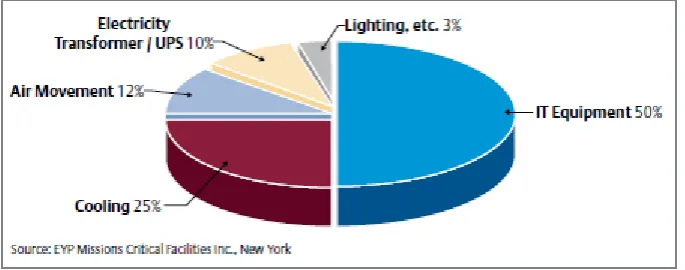
Figure 1: Sources of Datacenter Energy Consumption
2. Strategies for Reducing Power Cost
M Vishnu Kumar
et al
, International Journal of Computer Science and Mobile Applications,
Vol.2 Issue. 11, November- 2014, pg. 72-77
ISSN: 2321-8363
©2014, IJCSMA All Rights Reserved, www.ijcsma.com 73
2.1 Hardware Oriented Methods:
This category attempts to save power cost through power efficient hardware design and engineering, which includes designing energy efficient chips, DC power supplies, and cooling systems.
a) Energy Efficient Chips:
Power converters for data centers and consumer electronics (such as laptops, smart phones, and tablets) account for nearly 4% of U.S. electricity use today and the demand for these facilities and products continue to rise. The small converter on the cord of your laptop computer, for example, converts the AC power from your wall outlet into the DC power used by your laptop. Similarly, data centers need to convert power to meet the needs of the diverse components of modern data center systems. WBG (Wide bandgap semiconductors) chips will eliminate up to 90% of the energy losses in today's rectifiers that perform these conversions. WBG-based power electronics in consumer electronics and data centers can save enough electricity annually to power over 1.3 million homes. Now a day’s several energy efficient chips are available to reducing energy consuming of the systems.
b) Cooling Systems:
As electricity prices and IT power consumption continue to rise, IT-related energy costs are getting increased scrutiny. Cooling accounts for approximately 37 percent of electricity usage within a well-designed data center and, in many cases, represents a significant opportunity to reduce IT energy costs.
Approaches for boosting data center cooling competence:
(i) Optimizing air flow
Rack arrangement & its cable management and computer room air conditioner placement all impacts the amount of energy applied to move air within the vital facility.
(ii) Precise sealing of the data center surroundings
A vapour seal plays a critical role in controlling relative humidity, reducing unnecessary humidification and dehumidification.
(iii) Using economizers where suitable
Economizers allow outside air to be used to support data center cooling during colder months, creating opportunities for energy-free cooling.
(iv) Boosting the system’s cooling competence
New technologies, such as variable capacity systems and improved controls, are driving increased efficiency of room air conditioning systems.
(v) Carrying cooling closer to the source of heat
Supplemental cooling systems bring cooling closer to the source of heat, reducing the amount of energy required for air movement.
M Vishnu Kumar
et al
, International Journal of Computer Science and Mobile Applications,
Vol.2 Issue. 11, November- 2014, pg. 72-77
ISSN: 2321-8363
©2014, IJCSMA All Rights Reserved, www.ijcsma.com 74
The cooling system represents a significant opportunity for improving efficiency. In many cases, relatively simple and inexpensive changes, such as improving room sealing, moving cables or other objects that obstruct airflow or installing blanking panels, can pay immediate dividends. In addition, new technologies, such as variable capacity room air conditioners and sophisticated control systems, should be considered for their impact on efficiency. Finally, supplemental cooling systems provide a response to increased equipment densities that can increase the scalability and efficiency of existing cooling systems.
Digital scroll compressors allow the capacity of room air conditioners to be matched exactly to room conditions without turning compressors on and off. Typically, CRAC fans run at a constant speed and deliver a constant volume of air flow. Converting these fans to variable frequency drive fans allows fan speed and power draw to be reduced as load decreases. Fan power is directly proportional to the cube of fan rpm and a 20 percent reduction in fan speed provides almost 50 percent savings in fan power consumption. These drives are available in retrofit kits that make it easy to upgrade existing CRACs with a payback of less than one year.
c) Efficient DC Power Supply in Datacenter
Data centers consume about 100 times more power than an office building of the same size. Valuable electrical energy is lost in the individual components when alternating current is converted into direct current and vice-versa. In a project for the ITC service provider Green, ABB shows how a DC power supply can help a data center cut energy consumption by 10 to 20 percent.
Data centers consume vast amounts of energy every year. Size for size they consume around 100 times the power used to run the average office building. In total that is a staggering 80 million megawatt hours of electricity a year, representing nearly 2 % of the global CO2emissions. Rows of servers storing trillions of megabytes of information operate around the clock to enable organizations to run applications, process information and automate their operations. At home they allow you to upload a video, play a game, share a photo, e-mail a friend, tweet your location or check your bank balance.
With the addition of more than 5.75 million new servers every year, worldwide carbon emissions from data centers will quadruple by 2020. On average, one data center uses the equivalent power of 25’000 homes in the western world and together they produce CO2 emissions that are fast approaching the levels generated by countries such as Argentina or the Netherlands.
Significant amounts of energy can be saved through improvements to data center equipment, facility design and management, and ABB provides a wealth of expertise, engineering, products and support to not only help today’s data centers operate more efficiently but also to operate safely and more reliably. With reported data center outages costing 1 million USD or more per hour, uptime is critical, particularly for banking and financial institutions. Therefore unplanned outages have to be reduced, service quality improved and energy saved.
Reduced Energy Consumption: Thanks to DC Power Supply
Computer systems and associated components such as telecommunications and storage systems operate on direct current (DC), yet the grid-supplied power coming into data centers is alternative current (AC).That is why each device needs its own power supply unit to be connected to the AC power grid. This arrangement results in cumulative conversion losses and waste heat, which must be offset with cooling. An obvious alternative for a data center operating a multitude of servers would be to have a separate DC feed to power this equipment directly.
M Vishnu Kumar
et al
, International Journal of Computer Science and Mobile Applications,
Vol.2 Issue. 11, November- 2014, pg. 72-77
ISSN: 2321-8363
©2014, IJCSMA All Rights Reserved, www.ijcsma.com 75
AC power systems because it reduces energy conversion losses by at least 10 percent. Less cooling is also required in the IT room, which further cuts energy needs.
The costs of power engineering equipment, installation, operation and maintenance are likewise reduced. Moreover, DC power systems are less complex and need less space and equipment, thus cutting real-estate and other investments substantially. The total facility costs can be decreased by up to 30 percent as a result.
The advantages of DC power systems in data centers at a glance:
10 percent better energy efficiency (not counting the reduced need for cooling in the IT room) 15 percent lower investment costs
25 percent less space required 20 percent lower installation costs Improved reliability
Reduced operating and maintenance expenses
2.2 Software Oriented Methods:
Approaches in the second category exploit different levels of power cost reduction in data centers as follows.
a) Server Level
Firstly, at the server level, power cost reduction can be achieved via power speed scaling where the idea is to save power usage by adjusting the CPU speed of a single server. I.e., when provisioning processing speed in a power-aware manner, there are three natural thresholds in the capability of the server.
(i) Static provisioning: The server uses a constant static speed, which is determined based on workload characteristics so as to balance energy use and response time.
(ii) Gated static provisioning: The server “gates” its clock (setting s = 0) if no jobs are present, and if jobs are present it works at a constant rate chosen to balance energy use and response time.
(iii) Dynamic speed scaling: The server adapts its speed to the current number of requests present in the system.
It determines how to choose optimal speeds in each of these scenarios and to contrast the relative merits of each scheme. Clearly the expected cost is reduced each time the server is allowed to adjust its speed more dynamically. This must be traded against the costs of switching, such as a delay of up to tens of microseconds to change speeds.
b) Datacenter Level
Secondly, at the data center level, power cost reduction can be achieved through data center right sizing where the idea is to dynamically control the number of activated servers in a data center to save power. i.e., here the assumptions used in the model are minimal and capture many properties of current data centers and traces we have obtained. Although they focus on single application environment, the model may be used to allocate resources to applications in a data center which hosts multiple applications using virtual machines.
c) Inter Datacenter Level
M Vishnu Kumar
et al
, International Journal of Computer Science and Mobile Applications,
Vol.2 Issue. 11, November- 2014, pg. 72-77
ISSN: 2321-8363
©2014, IJCSMA All Rights Reserved, www.ijcsma.com 76
whose timeslot matches the timescale at which routing decisions and capacity provisioning decisions can be updated. There is a (possibly long) interval of interest t ∈ {1. . . T}. There are |J| geographically concentrated sources of requests, i.e., “cities”, and the mean arrival rate from source j at time t is Lj (t). Job interarrival times are assumed to be much shorter than a timeslot, so that provisioning can be based on the average arrival rate during a slot. In practice, T could be a month and a slot length could be 1 hour. Our analytic results make no assumptions on Lj (t).
d) Dynamic Energy Management
Server consolidation is based on the observation that many enterprise servers do not maximally utilize the available server resources all of the time. Co-locating applications as is showed in, perhaps each service in individual virtual machines, allows for a reduction in the total number of physical servers as well as the increasing of energy efficiency. In general, to allow hosting multiple independent applications, these platforms rely on virtualization techniques to enable the usage of different virtual machines (i.e., operating system plus software applications) on a single physical server. Virtualization provides a means for server consolidation and allows for on demand migration and allocation of these virtual machines, which run the applications, to physical servers. Applications run in virtualized environments allowing the dynamic consolidation of workloads. Under these circumstances there will be a designated nucleus of highly utilized servers actually running the workloads, very efficiently due to the high loading. The other servers are basically idle and can be put into a low energy, sleeping state until needed.
Intelligently turning of spare servers that are not being used is an obvious way to reduce both power and cooling costs while maintaining good performance levels. This approach solves some interesting challenges; less hardware is required, less electrical consumption is needed for server power and cooling and less physical space is required. In conclusion, an energetic gain will be obtained because of the possibility to turn on and off the virtual machines.
In recent literature three types of consolidation can be found: Static
Semi-static
Dynamic consolidation
In static consolidation, applications (or virtual machines) are placed on physical servers for a long time period (e.g. months, years), and not migrated continuously in reaction to load changes.
Semi-static refers to the mode of consolidating these applications on a daily or weekly basis. On the other hand, dynamic consolidation requires a runtime placement (a couple of hours) manager to migrate virtual machines automatically in response to workload variations. One of the purposes of virtualization and consolidation is to reduce the power consumption of a data center while respecting the different SLA-s.
M Vishnu Kumar
et al
, International Journal of Computer Science and Mobile Applications,
Vol.2 Issue. 11, November- 2014, pg. 72-77
ISSN: 2321-8363
©2014, IJCSMA All Rights Reserved, www.ijcsma.com 77
3. Conclusion
As the demands on IT multiply even while budgets stay flat or decline, the power issue is likely to increase in importance. To keep up, companies must be able to manage and measure power consumption just as they do most every other aspect of IT. This review is used to realize significant power provisioning cost savings in virtualized data centers. It can help companies, and organizations make better tactical and strategic decisions about data center resources. It also helps decrease the mean-time to -repair servers and other resources, leading to improved overall IT uptime.
References
[1] V.K.Adhikari, S. Jain, and Z.-L.Zhang. 2010, YouTube traffic dynamics and its interplay with a tier-1 ISP: An ISP perspective. In ACM IMC, pp. 431–443.
[2] http://www.datacenterknowledge.com/archives/2008/10/14/google-raise-your-data-center-temperature
[3] J. Hamilton, Nov. 2009 “Cost of power in large-scale data centers,” http://perspectives.mvdirona.com
[4] www.google.com/corporate/green
[5] J. M. George and J. M. Harrison, 2001, “Dynamic control of a queue with adjustable service rate,” Oper. Res., vol. 49, no. 5, pp. 720–731.
[6] O. S. Unsal and I. Koren, 2003 “System-level power-aware deisgn techniques in real-time systems,” Proc. IEEE, vol. 91, no. 7, pp. 1055–1069.
[7] http://energy.gov/eere/amo/next-generation-power-electronics-national-manufacturing-innovation-institute
[8] Akshat Verma, Gargi Dasgupta, Tapan Kumar Nayak, Pradipta De, Ravi Kothari, 2009, “Server Workload Analysis for Power Minimization using Consolidation”, USENIX’09 Proceedings of the Conference.
[9] Josep Ll. Berral, Inigo Goiri, Ramon Nou, Ferran Juli, Jordi Guitart, Ricard Gavald and Jordi Torres 2010, “Towards energy-aware scheduling in data centers using machine learning”, Energy efficient data center technology, e-Energy '10 Proceedings of the 1st International Conference on Energy-Efficient Computing and Networking
Authors Bibliography
M Vishnu Kumar is a Master of Computer Science and Engineering student at the PTR College of Engineering and Technology, Madurai. He received his B.E in Computer Science and Engineering from NPR College of Engineering and Technology, Dindigul in 2012 and Diploma in IT from GMS MAVMM Polytechnic College in 2009. He published a research paper and survey paper in reputed International Journals. His research interests are in the area of Green Computing and Data Mining.