IJBCP
International Journal of Basic & Clinical Pharmacology
Original Research Article
To compare the efficacy and safety of silodosin and dutasteride
combination with alfuzosin and dutasteride combination in patients of
benign prostatic hyperplasia: a randomized, open label study
Iram Kahkashan
1*, Shabnam Chawdhary
2, Vishal R. Tandon
2, Rahul Gupta
3INTRODUCTION
The prevalence of BPH increases markedly with age ranging from >50% at 60 years to approximately 80% in those aged over 80 years.1,2 BPH is a major cause of
bothersome lower urinary tract symptoms (LUTS) and affects quality of life (QoL) which deteriorate if not taken
care with the passage of time.3 The symptoms of BPH
appear to be a result of mainly two different components namely static and dynamic. The medical treatment of BPH is directed at both dynamic and static components of BPH. A wide array of medicines is now available for the treatment of BPH which include alpha adrenergic blockers, 5 alpha reductase inhibitors, combination of these two drugs, muscarinic receptor antagonists and
ABSTRACT
Background: BPH is a major cause of bothersome lower urinary tract symptoms (LUTS) and affects quality of life (QoL) which deteriorates if not taken care with the passage of time. The aim and objective of the study was to compare the efficacy and safety of combination of silodosin and dutasteride with the combination of alfuzosin and dutasteride in patients of BPH.
Methods: A randomized, open label, intention to treat study was carried out on newly diagnosed patients of BPH. Patients were randomly divided into two groups and followed up to 12 weeks. Group 1 of patients received a combination of silodosin 8 mg and dutasteride 0.5 mg (SD) (n=20) while the patients of group 2 received combination of alfuzosin 10 mg and dutasteride 0.5 mg (AD) (n=20). Primary endpoint was measured by changes in the mean baseline International prostate symptom score (I-PSS) and uroflowmetry and secondary outcome with changes observed on ultrasonography.
Results: IPSS and IPSS-QOL significantly improved in both the treatment groups (p <0.001) along with mean maximum flow rate (Qmax) and mean average
flow rate (Qavg). Prostate volume and residual urine volume showed a significant
improvement in both the treatment groups at 12 weeks. However, the intergroup differences in IPSS, uroflowmetry and USG parameters were not significant. Both treatments were well tolerated.
Conclusions: The current study established that both the drug combinations i.e. silodosin and dutasteride (SD) and alfuzosin and dutasteride (AD) largely have a comparable effect on both the dynamic and static components of BPH. Further, both drug combinations appear to have a comparable safety profile.
Keywords: Alfuzosin, BPH, Dutasteride, Silodosin DOI: http://dx.doi.org/10.18203/2319-2003.ijbcp20191095
1Department of Pharmacology,
SKIMS Medical College and Hospital, Bemina, Srinagar, Jammu and Kashmir, India
2Department of Pharmacology,
GMC Jammu, Jammu and Kashmir, India
3Department of Urology, Govt.
Superspeciality Hospital, Jammu, Jammu and Kashmir, India
Received: 06 February 2019
Accepted: 11 March 2019
*Correspondence to:
Dr. Iram Kahkashan, Email:
phosphodiesterase 5 inhibitors. Herbal drugs like cernilton are also used but seldom recommended.2
Alpha adrenergic blockers and 5 alpha reductase inhibitors form the mainstay of medical management of BPH. The European Association of Urology (EAU), 2011 guidelines recommend α blockers as first line drugs for men with moderate or severe LUTS/BPH.4
The main side effects of α1 blockers are orthostatic hypotension, dizziness, headache, asthenia, rhinitis and ejaculatory disorders. These side effects are predominant with older non selective α blockers like terazosin, doxazosin.5 Due to many side effects of non-selective α
blockers, novel medications with uro-selectivity have been developed with potentially improved side effect profiles and efficacy. These drugs include alfuzosin, tamsulosin, silodosin and nafdopidil. Silodosin is a highly uroselective α1A antagonist and its affinity to α1A adrenergic receptor subtype is 583-fold that to the α1B adrenergic receptor and 56-fold that to the α1D adrenergic receptor.6 Alfuzosin is
a selective α1 blocker which has been shown to provide a significant relief of LUTS with minimal side effects.7
Most of the studies have compared monotherapy with combination therapies, therefore it was thought of interest to undertake this study in this setup to evaluate efficacy and safety of combination of silodosin and dutasteride with combination of alfuzosin and dutasteride.8,9
METHODS
The present prospective, randomized, open-label, intention to treat, comparative study was conducted over a period of one year. The study protocol was approved by the Institutional Ethics Committee vide No. IEC/Thesis/Research/T18B/2015/232, dated 4th
November 2015. Written informed consent was obtained from each participant after screening the participants for inclusion and exclusion criteria.
Inclusion criteria
• Patient’s ≥50 years of age with a diagnosis of BPH,
• I-PSS ≥8,
• Prostate volume ≥30 ml,
• Voided volume >120 ml,
• Residual urine volume ≥50 ml,
• PSA <4ng/ml.
Exclusion criteria
• Patients with carcinoma of prostate or prostatic abscess,
• Any complicated co morbidity,
• PSA >4 ng/ml,
• Current active UTI,
• Any cardiovascular event in past 6 months,
• Any renal or hepatic impairment,
• History of pelvic irradiation or urethral stricture,
• Surgery for BPH or bladder neck obstruction,
• Any other surgery on lower urinary tract during past one year,
• Patients considering any ophthalmic surgery during the study period,
• History of significant postural hypotension,
• BP <90/70 mmHg,
• History of retention or catheterization,
• Patients using alpha adrenergic agonist or antagonist, Cholinergic agonist or antagonist, β-adrenergic antagonist or any other anti-hypertensive drug within two weeks, estrogen, androgen or androgen inhibitors within preceding 3 months.
• β-adrenergic antagonist or any other anti-hypertensive drug within two weeks, estrogen, androgen or androgen inhibitors within preceding 3 months.
Participants were subjected to detailed history with general and physical systemic examination and Haematological tests such as Hb, TLC, DLC, ESR, Biochemical tests such as LFT, RFT, Urine for routine examination, ECG were conducted.
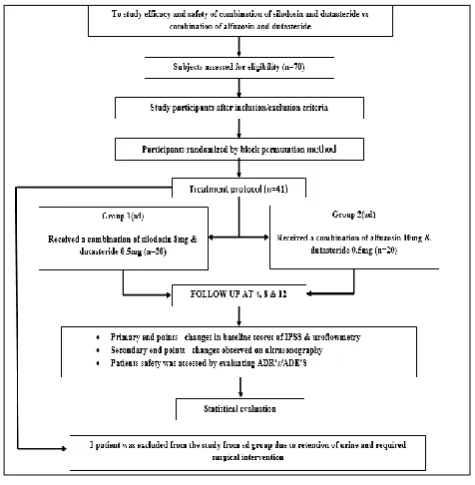
[image:2.595.311.549.435.678.2]Patients who fulfilled the above criterion and had normal biochemical and haematological tests were included in the study. The selected patients were assessed for baseline parameters and randomized by block permutation method and assigned to two groups.
Figure 1: Study flow algorithm.
Treatment protocol
I-PSS and uroflowmetric parameters were recorded at day 0, 4, 8 and 12 weeks whereas ultrasound was reassessed only at 12 weeks. Vital signs (pulse and B.P) and adverse drug events were recorded at all the visits.
Primary and secondary end points
The primary end points included mean change in baseline scores of I-PSS, Uroflowmetry and the secondary end points were changes observed on ultrasonography.
Statistical analysis
The study followed “intention to treat” statistical protocol. The data collected was tabulated as mean±SEM or (%). The student t-test (paired) was applied for intragroup changes from baseline and student t-test (unpaired) was applied for intergroup comparisons. p <0.05 was considered statistically significant.
RESULTS
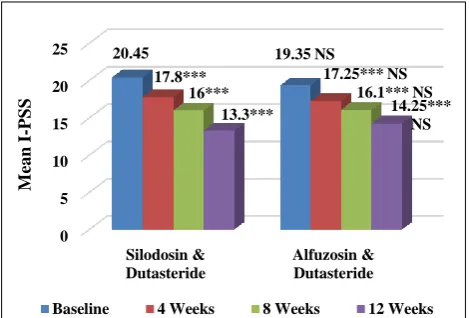
Total 41 patients were enrolled. However, 1 patient was excluded from SD group as a result of retention of urine and required surgical intervention. Data of 40 patients was analyzed, 20 in each group. Baseline characteristics of each group have been shown in Table 1. Figure 2 depicts the serial change in IPSS in the two groups. The scores declined significantly from baseline in both groups but
remained comparable between groups throughout the 12-week study period. Mean percentage reduction at 4, 8 and 12 weeks for SD group was 12.95%, 21.76% and 34.9% which was numerically more than that of AD group where the decline was 10.85%, 16.79% and 26.35% at 4, 8 and 12 weeks respectively.
[image:3.595.311.546.152.311.2]Paired 't' test in comparison to respective baselines * p<0.05, ** p<0.01, ***p<0.001, NS=Non-Significant. Comparison between the two groups at Baseline, 4, 8 and 12 weeks with Unpaired Student ‘t' test was statistically not significant.
Figure 2: Effect of silodosin and dutasteride
[image:3.595.51.544.454.621.2]combination vs alfuzosin and dutasteride on mean I-PSS.
Table 1: Baseline characteristics of the patients.
Characteristics Mean±SEM (n=20) p value
Silodosin and Dutasteride Alfuzosin and Dutasteride
Age (years) 63.8±1.97 59.25±1.57 0.07
I-PSS 20.45±0.48 19.35±0.51 0.12
QoL due to urinary symptoms 4.65±0.15 4.30±0.19 0.15 Voided volume (ml) 157.30±4.40 165.30±4.15 0.19 Maximum flow rate (ml/sec) 12.00±0.94 12.35±0.72 0.76 Average flow rate (ml/sec) 6.75±0.49 6.25±0.37 0.42
Voiding time (sec) 24.40±1.45 27.20±1.34 0.11
Flow time (sec) 23.85±1.39 26.10±1.14 0.21
Time to maximum flow (sec) 5.85±0.56 5.70±0.55 0.84 Prostate volume (ml) 37.30±0.93 35.55±0.91 0.18 Post void residual urine volume (ml) 67.65±3.05 70.35±3.59 0.56
Figure 3 depicts the serial change in QoL in the two groups. The scores declined significantly from baseline in both groups but remained comparable between groups throughout the 12-week study period. Mean percentage reduction in QoL was numerically more by 21.5%, 34.4% and 51.6% at 4, 8 and 12 weeks respectively in SD group whereas in AD group it was 16.27%, 29.06% and 45.3% at 4, 8 and 12 weeks respectively.
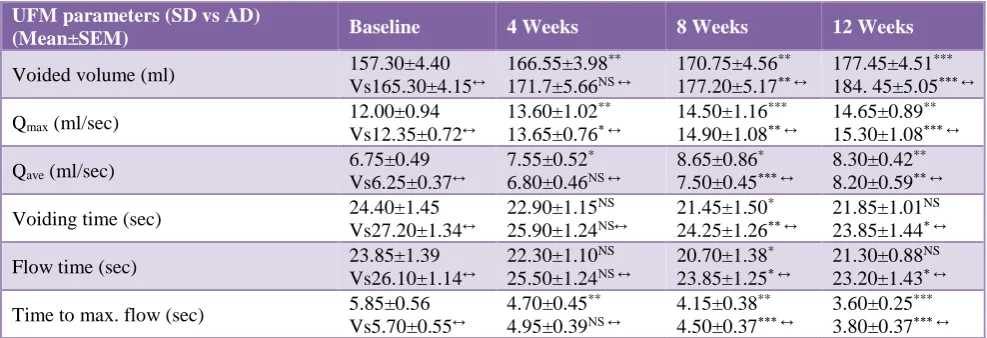
Table 2 shows the comparative effects of silodosin and dutasteride (SD) vs alfuzosin and dutasteride (AD) on uroflowmetric parameters. The voided volume increased progressively and significantly at 4, 8 and 12 weeks respectively in SD group. The voided volume in AD group increased statistically significantly 8 weeks onwards and continued till 12 weeks. The increase in Qmax in SD and AD
group was statistically significant at all follow ups i.e. at 4, 8 weeks and at 12 weeks. However, it was observed that
0 5 10 15 20 25
Silodosin & Dutasteride
Alfuzosin & Dutasteride
20.45 19.35 NS
17.8*** 17.25*** NS
16*** 16.1*** NS
13.3*** 14.25***
NS
Baseline 4 Weeks 8 Weeks 12 Weeks
M
ea
n
I
-PS
SD group had a better effect on Qmax at 4 weeks. Mean
percentage for Qmax increased to 13.33%, 20.8% and
22.08% at 4, 8 and 12 weeks respectively in SD group whereas in AD group it increased to 10.52%, 20.6% and 23.88% at 4, 8 and 12 weeks respectively. AD group seem to be numerically better at 12 weeks. An increase was observed in the Qave values in both treatment arms. The
average flow rate in SD group increased statistically significantly at 4,8 and 12 weeks respectively. However, in AD group a statistically significant increase started at 8 weeks and continued till 12 weeks respectively. On comparison between the two groups, the mean voiding time and flow time was less from baseline values, though statistically significant only at 8 weeks in SD group and statistically significant at 8 and 12 weeks in AD group. The time to maximum flow in SD group decreased statistically significantly at 4, 8 and 12 weeks respectively. However, in AD group the mean time to maximum flow decreased statistically significantly at 8 and 12 weeks only. On comparison between the two study groups, no statistically significant difference was observed on any uroflowmetric parameter during the entire study period (p >0.05).
[image:4.595.312.546.72.205.2]Paired 't' test in comparison to respective baselines * p<0.05, ** p<0.01, ***p<0.001, NS=Non-Significant. Comparison between the two groups at Baseline, 4, 8 and 12 weeks with Unpaired Student 't' test was statistically not significant.
Figure 3: Effect of silodosin and dutasteride combination vs alfuzosin and dutasteride on mean
QoL due to urinary symptoms.
Table 2: Comparative effects of silodosin and dutasteride (SD) vs alfuzosin and dutasteride (AD) on uroflowmetric parameters.
UFM parameters (SD vs AD)
(Mean±SEM) Baseline 4 Weeks 8 Weeks 12 Weeks
Voided volume (ml) 157.30±4.40 Vs165.30±4.15↔
166.55±3.98**
171.7±5.66NS ↔
170.75±4.56**
177.20±5.17** ↔
177.45±4.51***
184. 45±5.05*** ↔ Qmax (ml/sec) 12.00±0.94
Vs12.35±0.72↔
13.60±1.02**
13.65±0.76* ↔
14.50±1.16***
14.90±1.08** ↔
14.65±0.89**
15.30±1.08*** ↔ Qave (ml/sec) 6.75±0.49
Vs6.25±0.37↔
7.55±0.52*
6.80±0.46NS ↔
8.65±0.86*
7.50±0.45*** ↔
8.30±0.42**
8.20±0.59** ↔ Voiding time (sec) 24.40±1.45
Vs27.20±1.34↔
22.90±1.15NS
25.90±1.24NS↔
21.45±1.50*
24.25±1.26** ↔
21.85±1.01NS
23.85±1.44* ↔ Flow time (sec) 23.85±1.39
Vs26.10±1.14↔
22.30±1.10NS
25.50±1.24NS ↔
20.70±1.38*
23.85±1.25* ↔
21.30±0.88NS
23.20±1.43* ↔ Time to max. flow (sec) 5.85±0.56
Vs5.70±0.55↔
4.70±0.45**
4.95±0.39NS ↔
4.15±0.38**
4.50±0.37*** ↔
3.60±0.25***
3.80±0.37*** ↔
*p<0.05, **p<0.01, ***p<0.001, NS=Non-Significant (Intra Group), ¥p<0.05, ¥¥p<0.01, ¥¥¥p<0.001, ↔=Non significant (Inter group).
Comparative effects of silodosin and dutasteride (SD) vs alfuzosin and dutasteride (AD) on ultrasonography are depicted in Table 3. Mean baseline volume of prostate and residual volume in both SD and AD groups decreased statistically significantly at the end of study period. However, when both the groups were compared no statistically significant difference was observed (p >0.05) on any ultrasonographic parameter.
No statistically significant change was observed during the study period in the mean pulse rate, mean systolic B.P, mean diastolic B.P in both the treatment arms. Both treatment regimens were well tolerated. Five patients reported adverse effects out of which three (15%) patients
in SD group reported dizziness, whereas only one (5%) patient in the AD group reported the same adverse event. Loss of appetite was reported by one (5%) patient in AD group. None of these effects were serious enough to warrant discontinuation of the therapy and were considered to have low relationship with the investigational product.
DISCUSSION
Present study showed a significant and gradual improvement in the mean I-PSS (p <0.001) in both the treatment groups from the baseline while both the groups were comparable throughout the study period like many other studies.10,11 Men with BPH are more likely to develop
0 1 2 3 4 5
Silodosin & Dutasteride
Alfuzosin & Dutasteride
4.65 4.3NS
3.65*** 3.6*** NS
3.05*** 3.05*** NS
2.25*** 2.35*** NS
Baseline 4 Weeks 8 Weeks 12 Weeks
M
ea
n
Q
o
[image:4.595.51.545.393.562.2]LUTS which can have a considerable impact on patients QoL. In the current study, QoL improved in both the treatment arms similar to other studies.9,11
Table 3: Comparative effects of silodosin and dutasteride (SD) vs alfuzosin and dutasteride (AD) on
USG parameters.
USG para-meters SD vs AD
(Mean±SEM)
Baseline 12 Weeks
Prostatic volume (ml)
37.30±0.93 vs 35.55±0.91↔
36.60±1.06*
34.38±0.93*** ↔ Residual volume
(ml)
67.65±3.05 vs 70.35±3.59↔
34.10±5.06***
32.90±4.30*** ↔
*p <0.05, **p<0.01, ***p<0.001, NS=Non-Significant (Intra Group), ¥p<0.05, ¥¥p<0.01, ¥¥¥p<0.001, ↔=Non significant (Inter group).
Significant improvement in Qmax and voided volume (p
<0.001) was also observed in the present study with SD combination akin to the study of Hagiwara K et al.11
However, scan of literature failed to reveal any study in AD combination that has commented on voided volume.9
The present study demonstrated an increase in the average flow rate (Qave) of 1.55 for SD group whereas an increase
of 1.95 was seen for AD group. Similarly, time to maximum flow also showed a significant change in both the treatment groups. However, after detailed scan of literature author could not cite any study commenting upon these variables.
In the present study, voiding time and flow time had an erratic response in SD combination with significant improvement at 8 weeks only. In AD combination, the said variables improved from 8 weeks onwards. However, author failed to cite any study in the literature regarding the test drugs used in current study, which have commented upon voiding time and flow time.
Amongst the USG parameters, prostate volume showed a significant improvement in both the treatment groups at 12 weeks. The change in prostatic volume in SD combination group was (-0.7 ml) while as in AD combination a decrease of (-1.17) ml was observed at 12 weeks. Similar observation has been made by some studies.9,11
Present study also showed a significant decrease in residual urine volume in both the treatment groups similar to the work of Hagiwara K et al.11
The present study elucidated that both the combination treatments (α blocker and 5 ARI i.e. SD combination and AD combination) are effective in the treatment of BPH patients. This is in conformity with various previous studies.12,13
The result of the present study although differ from the study of Debruyne FM et al, who compared alfuzosin and
finasteride alone with combination of both the drugs. The mean change in AUA symptom score was more with alfuzosin than with the combination.14 The disparity could
be explained on the basis of different drugs evaluated, a larger sample size, racial difference of study groups and different baseline characteristics.
The results of the present study are attributed to the effect of both classes of drugs. As the 5 ARI (dutasteride) used is common in both the treatment arms, variations in both the groups can be attributed to the different alpha blockers used.
The present study demonstrated a significant decrease in I-PSS in both the treatment groups. Decline in I-I-PSS with silodosin has been reported by various studies.2,15-17
In the present study, for SD combination mean change in I-PSS from baseline was (-7.15) at 12 weeks. A similar decrease (-8.3) and (-6.4) in mean I-PSS from baseline with silodosin was reported by many 12-week studies.15,16
Mean change from baseline in alfuzosin and dutasteride group in the present study was (-5.1) which was statistically very significant (p <0.001). Decrease in I-PSS with alfuzosin has been reported by various studies.2,18,19
Yuan JQ et al, also reported a decline of (-5.46) for I-PSS from baseline in their meta-analysis for alfuzosin while as the decline was (-5.21) for dutasteride. In the present study a significant improvement in I-PSS was seen as early as 4 weeks for both the treatment groups.2
Early onset of improvement in I-PSS has been reported for silodosin treated patients within 3-4 days, 14 days and 4 weeks respectively by many studies.16,17,20
Similarly, an early and significant onset of improvement in I-PSS in alfuzosin treated patients has been observed Saad F et al.19
In the present study significant and comparable improvement was observed on the QoL due to urinary symptoms in both the treatment groups (p <0.001).
Significant improvement in QoL with silodosin and alfuzosin has been reported by various studies.17,19,20
Results of the present study reveal that both SD combination as well as AD combination caused a significant improvement in Qmax. Improvement in Qmax has
been seen with the use of silodosin in various studies.15,16,20
The improvement in Qmax with SD group was 2.65 ml/sec
from baseline at 12 weeks (p <0.01) in the present study. Similar improvement in Qmax of 2.6 ml/sec was reported by
In the present study, the improvement in Qmax was
significant at 4 weeks for both the treatment groups suggesting a rapid action.
Marks LS et al, also reported a significant increase in Qmax
at 2-6 hours after first dose of silodosin.16 This effect of
silodosin can be attributed to its strong affinity for α1 adrenoceptor whose blockade not only alleviates the symptoms but also has an effect on obstruction.21 The
treatment protocol restricted us to comment on so early effect of test drugs as the first post drug evaluation was at 4 weeks. However, it would be interesting to establish the findings of Marks LS et al, in future.16
Improvement in Qmax with alfuzosin also have been
highlighted by many studies.2,17,22 The present study
reports an improvement of (+2.95 ml/sec) in Qmax with
alfuzosin and dutasteride treated patients which is comparable to that reported by van Kerrebroeck P et al.22
In the current study, there was significant increase in voided volume at the end of 12 weeks in both the study groups (p <0.001). Chapple CR et al, reported an increase in the voided volume using tamsulosin 0.4 mg at the end of 12 weeks.23 However, Matsukawa et al, in their study
observed no significant increase in voided volume at 4 weeks in silodosin treated patients.24 This difference can be
attributed to the difference in bladder fullness and intra-abdominal pressure generated during voiding.
The present study demonstrated an increase in the average flow rate (Qave) of 1.55 for SD group whereas an increase
of 1.95 was seen for AD group. Increase in Qave has been
reported with monotherapy with α blockers in various studies.23,25
Present study also showed a significant decrease in residual urine volume in both the treatment groups. This is substantiated by many studies which showed significant decrease in residual volume of urine with α blockers.7,26
However, Present study is in the contrast with the study of Moon KH et al, also observed no significant change in PVR with silodosin treatment.20 This difference may be due to
sample size variation and varied study designs.
In the present study, on comparison between the two groups, it was observed that both the treatment regimens were well tolerated. Dizziness was reported by three (15%) patients in SD group and by one (5%) patient in AD group. Loss of appetite was reported by one (5%) patient in AD group. The results of the present study are in concurrence with Roehrborn CG et al, which recorded dizziness with the combination therapy of tamsulosin and dutasteride.13
Many studies have reported dizziness with the use of silodosin and alfuzosin.18,20
The present study found that there was statistically no significant change in pulse, systolic and diastolic B.P in both the treatment groups. However, author failed to cite
any study in the combination group that has commented upon these parameters.
Various studies have recorded no relevant effects on above mentioned parameters with the use of alpha blockers only.27 No change in BP can be related to the fact that the
bodies activate various compensatory mechanisms like increase in cardiac output and/or enhanced renin angiotensin system to maintain B.P.28
Thus, the above-mentioned facts imply that both the drug combinations i.e. silodosin and dutasteride (SD) and alfuzosin and dutasteride (AD) largely have a comparable effect on both the dynamic components and static component in patients of BPH. Further, both drug combinations appear to have a comparable safety profile.
Funding: No funding sources Conflict of interest: None declared
Ethical approval: The study was approved by the Institutional Ethics Committee (No. IEC/Thesis/Research/ T18B/2015/232)
REFERENCES
1. Yoshida M, Kudoh J, Homma Y, Kawabe K. Safety and efficacy of silodosin for the treatment of benign prostatic hyperplasia. Clin Interventions Aging. 2011;6:161.
2. Yuan JQ, Mao C, Wong SY, Yang ZY, Fu XH, Dai XY, et al. Comparative effectiveness and safety of monodrug therapies for lower urinary tract symptoms associated with benign prostatic hyperplasia: a network meta-analysis. Med. 2015;94(27).
3. Park SG, Chung BH, Lee SW, Park JK, Park K, Cheon J, et al. Alpha-blocker treatment response in men with lower urinary tract symptoms based on sympathetic activity: prospective, multicenter, open-labeled, observational study. Inter Neurourol J. 2015;19(2):107.
4. Ding H, Du W, Hou ZZ, Wang HZ, Wang ZP. Silodosin is effective for treatment of LUTS in men with BPH: a systematic review. Asian J Androl. 2013;15(1):121.
5. Spatafora S, Casarico A, Fandella A, Galetti C, Hurle R, Mazzini E, et al. It BPH Guidelines Committee. Evidence-based guidelines for the treatment of lower urinary tract symptoms related to uncomplicated benign prostatic hyperplasia in Italy: updated summary from AURO. it. Therapeutic Adv Urol. 2012;4(6):279-301.
6. Yoo TK, Cho HJ. Benign prostatic hyperplasia: from bench to clinic. Korean J Urol. 2012;53(3):139-48. 7. Gokkaya CS, Aktas BK, Ozden C, Bulut S, Karabakan
M, Erkmen AE, et al. Flurbiprofen alone and in combination with alfuzosin for the management of lower urinary tract symptoms. Central Euro J Urol. 2015;68(1):51.
and combination therapy on lower urinary tract symptoms in men with benign prostatic hyperplasia and prostatic enlargement: 2-year results from the CombAT study. J Urol. 2008;179(2):616-21.
9. Ventimiglia B, Consoli S, Serrao M, Serrao A, Tsirgiotis A. Efficacy of dutasteride, alfuzosin or both on Quality of Life in patients with prostatic hyperplasia and BOO. A two-year spontaneous, observational, self-controlled study. Urol J. 2008;75(2):97-101.
10. Mehndiratta C, Gupta NP, Gopalakrishnan G, Cibber P, Sood R, Sarkar K. Effect of silodosin and dutasteride combination treatment in Indian patients of benign prostate hyperplasia with an enlarged prostate and co-morbid condition. Med Surg Urol. 2015;4(3):71.
11. Hagiwara K, Koie T, Iwamura H, Imai A, Hatakeyama S, Yoneyama T, et al. Efficacy and safety of silodosin and dutasteride combination therapy in acute urinary retention due to benign prostatic hyperplasia: a single-arm prospective study. BioMed Res Inter. 2016. 12. Arora S, Khajuria V, Gupta S, Tandon VR, Kohli K.
Efficacy and tolerability of tamsulosin alone and in combination with dutasteride in patients of benign prostatic hyperplasia. JK Sci. 2012;14(3):134. 13. Roehrborn CG, Oyarzabal Perez I, Roos EP,
Calomfirescu N, Brotherton B, Wang F, et al. Efficacy and safety of a fixed‐dose combination of dutasteride and tamsulosin treatment (D uodart®) compared with watchful waiting with initiation of tamsulosin therapy if symptoms do not improve, both provided with lifestyle advice, in the management of treatment‐naïve men with moderately symptomatic benign prostatic hyperplasia: 2‐year CONDUCT study results. BJU Inter. 2015;116(3):450-9.
14. Debruyne FM, Jardin A, Colloi D, Resel L, Witjes WP, Delauche-Cavallier MC, et al. Sustained-release alfuzosin, finasteride and the combination of both in the treatment of benign prostatic hyperplasia. Euro Urol. 1998;34(3):169-75.
15. Kawabe K. Silodosin Clinical Study Group. Silodosin, a new alpha1A-adrenoceptor-selective antagonist for treating benign prostatic hyperplasia: results of a phase III randomized, placebo-controlled, double-blind study in Japanese men. BJU Int. 2006;98:1019-24. 16. Marks LS, Gittelman MC, Hill LA, Volinn W, Hoel
G. Rapid efficacy of the highly selective α1A-adrenoceptor antagonist silodosin in men with signs and symptoms of benign prostatic hyperplasia: pooled results of 2 phase 3 studies. J Urol. 2009;181(6):2634-40.
17. Manjunatha R, Pundarikaksha HP, Madhusudhana HR, Amarkumar J, Hanumantharaju BK. A randomized, comparative, open-label study of efficacy and tolerability of alfuzosin, tamsulosin and silodosin in benign prostatic hyperplasia. Ind J Pharmacol. 2016;48(2):134.
18. Nordling J. Efficacy and safety of two doses (10 and 15 mg) of alfuzosin or tamsulosin (0.4 mg) once daily
for treating symptomatic benign prostatic hyperplasia. BJU Inter. 2005;95(7):1006-12.
19. Saad F, Nickel JC, Valiquette L, Casey R, Kuzmarov I, Elhilali M. Early symptom improvement of benign prostatic hyperplasia (BPH) treated with once daily alfuzosin. Can J Urol. 2005;12(4):2745-54.
20. Moon KH, Song PH, Yang DY, Park NC, Kim SW, Lee SW, et al. Efficacy and safety of the selective α1A-adrenoceptor blocker Silodosin for severe lower urinary tract symptoms associated with benign prostatic hyperplasia: a prospective, single-open-label, multicenter study in Korea. Korean J Urol. 2014;55(5):335-40.
21. Rossi M, Roumeguere T. Silodosin in the treatment of benign prostatic hyperplasia. Drug Des Dev Therapy. 2010;4:291.
22. van Kerrebroeck P, Jardin A, Van Cangh P, Laval KU, ALFORTI Study Group. Long-term safety and efficacy of a once-daily formulation of alfuzosin 10 mg in patients with symptomatic benign prostatic hyperplasia: open-label extension study. Euro Urol. 2002;41(1):54-61.
23. Chapple CR, Wyndaele JJ, Nordling J, Boeminghaus F, Ypma AF. European Tamsulosin Study Group, et al. Tamsulosin, the first prostate-selective alpha 1A-adrenoceptor antagonist. A meta-analysis of two randomized, placebo-controlled, multicentre studies in patients with benign prostatic obstruction (symptomatic BPH). Eur Urol. 1996; 29(2):155-67. 24. Matsukawa Y, Gotoh M, Komatsu T, Funahashi Y,
Sassa N, Hattori R. Efficacy of silodosin for relieving benign prostatic obstruction: prospective pressure flow study. J Urol. 2009;182(6):2831-5.
25. Yanardag H, Goktas S, Kibar Y, Kilic S, Erduran D. Intermittent tamsulosin therapy in men with lower urinary tract symptoms. J Urol. 2005;173(1):155-7. 26. Salinas J. Clinical and urodynamic results of
alpha-blocker drug treatment in patients with lower urinary tract symptoms and benign prostatic hyperplasia. Arch Esp Urol. 2015;68(2):161-71.
27. Zhang LT, Lee SW, Park K, Chung WS, Kim SW, Hyun JS, et al. Multicenter, prospective, comparative cohort study evaluating the efficacy and safety of alfuzosin 10 mg with regard to blood pressure in men with lower urinary tract symptoms suggestive of benign prostatic hyperplasia with or without antihypertensive medications. Clin Inter Aging. 2015;10:277.
28. Barendrecht MM, Koopmans RP, La Rosette JJ, Michel MC. Treatment of lower urinary tract symptoms suggestive of benign prostatic hyperplasia: the cardiovascular system. BJU Inter. 2005;95:19-28.