Volume 15, Issue 3, Summer 2016
Editorial in Charge
Hossein Pakdaman, M.D.
Professor of Neurology, Shahid Beheshti
University of Medical Sciences,
Tehran, Iran
Editor-in-Chief
Shahriar Nafissi, M.D.
Associate Professor of Neurology,
Neurology Department, Tehran University of
Medical Sciences, Tehran, Iran
Deputy Editor
Farzad Fatehi, M.D.
Assistant Professor of Neurology, Neurology Department, Tehran University of
Medical Sciences, Tehran, Iran
Section Editors
Headache: Mansooreh Togha
, M.D.
,
Tehran
University of Medical Sciences
, Tehran, Iran
Multiple Sclerosis: Mohammad Ali Sahraian
,
M.D., Neurology Department,
Tehran University of
Medical Sciences
, Tehran, Iran
Stroke: Afshin Borhanin Haghighi
, M.D., Shiraz
University of Medical Sciences, Shiraz, Iran
Movement Disorders: Mohammad Rohani
, M.D.,
Iran University of Medical Sciences, Tehran, Iran
Associate Editors
Shahin Akhondzadeh,
Pharm.D., Ph.D, Tehran
University of Medical Sciences, Tehran, Iran
Majid Ghafarpour,
M.D., Tehran University of
Medical Sciences, Tehran, Iran
Massoud Nabavi,
M.D., Shahed University of
Medical Sciences, Tehran, Iran
Scientific Assistant Editor
Ali Amini-Harandi
, M.D., Shahid Beheshti University of Medical Sciences, Tehran, Iran
Editorial Board
Shahram Attarian
, M.D., Centre de Référence des
Maladies Neuromusculaires et de la SLA, France
Mahmoud R. Azarpazhooh
, M.D., Mashhad
University of Medical Sciences, Mashhad, Iran
Keivan Basiri
, M.D., Isfahan University of Medical
Sciences, Isfahan, Iran
Ahmad R. Dehpour
, Pharm.D., Ph.D., Tehran
University of Medical Sciences, Tehran, Iran
Masoud Etemadifar
, M.D., Isfahan University of
Medical Sciences, Isfahan, Iran
Kavian Ghandehari
, M.D., Mashhad University of
Medical Sciences, Mashhad, Iran
Kurosh
Gharagozli
,
M.D.,
Shahid
Beheshti
University of Medical Sciences, Tehran, Iran
Mohammad H. Harirchian
, M.D., Tehran University
of Medical Sciences, Tehran, Iran
Payam Kabiri
, M.D., Ph.D., Tehran University of
Medical Sciences, Tehran, Iran
Hossein Kalani
, M.D., Shahid Beheshti University of
Medical Sciences, Tehran, Iran
Jamshid Lotfi
, M.D., Tehran University of Medical
Sciences, Tehran, Iran
Alireza Minagar
, M.D., Louisiana State University
Health Sciences Center, USA
Ali Moghtaderi
, M.D., Zahedan University of
Medical Sciences, Zahedan, Iran
Mahmood Motamedi
, M.D., Tehran University of
Medical Sciences, Tehran, Iran
Alireza Nikseresht
, M.D., Shiraz University of
Medical Sciences, Shiraz, Iran
Abdolmohamad M. Rostami
, M.D., Thomas
Jefferson University Hospitals, USA
Mohammad Saadatnia
, M.D., Isfahan University of
Medical Sciences, Isfahan, Iran
Mohammad K. Salajegheh
, M.D., Brigham and
Women's Hospital and Harvard Medical School, USA
Gholam A. Shahidi
, M.D., Tehran University of
Medical Sciences, Tehran, Iran
Vahid Shaygannejad
, M.D., Isfahan University of
Medical Sciences, Isfahan, Iran
Akbar Soltanzadeh
, M.D., Tehran University of
Medical Sciences, Tehran, Iran
Amir A. Zamani
, M.D., Brigham and Women's
Hospital and Harvard Medical School, USA
Babak Zamani
, M.D., Tehran University of Medical
Sciences, Tehran, Iran
Secretary:
Samaneh Bahraminejad, BSc
Email: [email protected]
http://ijnl.tums.ac.ir
Copy edit, Layout edit, Proof Reading, Design, Print and Online Support: Farzanegan Radandish Publications http://www.farapub.com Email: [email protected]
Indexed in
• PubMed, • PubMed Central, • Academic Keys,• Cite Factor (Directory Indexing of International Research Journals),
• Directory of Open Access Journals (DOAJ), • Directory of Research Journal Indexing (DRJI),
• InfoBase Index,
• Islamic World Science Citation Center (ISC), • LocatorPlus,
• Scientific Information Database (SID), • Ulrichsweb Global Serials Directory, • Universal Impact Factor,
• WorldCat
Iranian Journal of Neurology © 2016
Aim and Scope
Iranian Journal of Neurology
INFORMATION FOR AUTHORS
The submission file is in Microsoft Word document
file format.
The Iranian Journal of Neurology is dedicated to the
Iranian Neurological Association. The journal is a peer-
reviewed journal published quarterly and publishes
neurological experiences in basic or clinical fields in
English Language. The Iranian Journal of Neurology aims
to publish manuscripts of a high scientific quality
representing original clinical, diagnostic or experimental
works or observations in neurological sciences. Papers in
English are welcomed, particularly those which bring
novel information and researches in clinical or basic fields
from the neurological disorders. All received manuscripts
coving the scope of the journal will be evaluated by
properly competent referees.
Submission
Cover Letter:
Submissions should be accompanied by a cover letter
including a declaration by the first author on behalf of the
others to the effect that
(1) The paper has not been published to date (except
for abstracts of conference materials).
(2) The paper has not been accepted for publication
elsewhere.
(3) All persons listed as the authors have read it and
approved it for publication. The cover letters should be
submitted in section "Comments for the Editor".
Articles must be written in accurate scientific English
appropriate for publication. The articles are subject to
review and editing; however, the authors are responsible
for the correctness the manuscript's English language.
The articles must be submitted only online:
ijnl.tums.ac.ir
Policies
The Editorial Board reserves the right to reject a paper
without seeking reviewers’ opinion provide the content or
the form of the paper does not meet minimum acceptance
criteria or if the subject of the paper is beyond the aims
and scope of the journal.
Everyone listed as the author of a paper is responsible
for the reliability and completeness of data presented in
the paper.
Do not submit papers that copy fully or partially
previously published papers.
Indicate that this submission is ready to be considered
by this journal by checking off the following:
The submission has not been previously published,
nor is it before another journal for consideration (or an
explanation has been provided in Comments to the Editor).
Where available, URLs for the references have been
provided.
The text is double-spaced; uses an Arial 12-point
font; and all illustrations, figures, and tables are placed
within the text at the appropriate points, rather than at the
end.
The text adheres to the stylistic and bibliographic
requirements outlined in the Author Guidelines, which is
found in About the Journal.
If the Editorial Board is not notified in advance and the
paper is found to have been copied during editorial work,
the paper shall be rejected.
We expect that all studies reported in the journal
conform to the requirements of the Declaration of Helsinki
(1989). Information on the consent of a relevant ethics
committee to perform the trial and the informed consent of
the patients to participate in the trial should be given in the
Material and methods section of each paper in which
diagnostic or therapeutic intervention does not follow from
the standard procedure. Authors of case reports must not
disclose personal data of patients described.
Manuscripts
The journal publishes:
Original Article
Review Article
Case Report
Short Communication
Clinical Notes
Editorial
Letters to Editor
Neurological Images
Neurological Videos
Iranian Neurological Events
Clinical Quiz
Details
Original and review papers: The maximum length of
original and review papers (including tables and figures
materials) is 3000 words.
Case reports: Case reports will be accepted only as Letter
to the Editor.
Short communications: The maximum word number of
short communications should be below 1200 words with
maximum one table or figure and 10 references. The
manuscript should be structured including introduction,
materials and methods, results, discussion, and conclusion
with a structured abstracts as original articles.
Iranian Journal of Neurology © 2016
neurological images or videos are welcome. They should
be maximally 400 words with legends without abstract and
unstructured. The videos should be uploaded as
supplementary files.
Letter to the Editor: May concern short scientific reports
and comments. The maximum number of words should be
below 800 words with maximum 5 references, no abstract,
no table or figure, and unstructured.
Clinical notes: Refer to important interesting observations
which are imperative for reminders in clinical practice.
The maximum number is 1000 words with maximum 5
references, 1 table and 1 figure with no abstract.
Iranian neurological events: Include the brief description
of major regional events (congresses or seminar)
implemented in Iran.
Structure of Articles
Manuscripts should be submitted in 12 points, Arial
font, with double line spacing and sufficient margins of
2.5 cm.
The text should not be formatted.
Each section of the paper should begin on a new page
The manuscript must include:
Page 1: Title Page
Page 2: Abstract and Key Words
Page 3 and subsequent pages: manuscript body
including Introduction, Materials and Methods, Results,
Discussion, Conclusion, References, Tables, Figures
1. Title page:
Title page should contain paper title, full names of authors,
authors’ place of work, full name and address of the
corresponding author (including e-mail address and
telephone number), given in that order.
2. Abstract page:
The length of the abstract should be at least 200
and not more than 250 words for original papers and not
more than 150 words for review papers and case reports.
Abstracts of original papers should be structured to include
the background, methods, results and conclusion.
Below the abstract authors should provide between
three and six keywords conforming to Medical Subject
Headings (Index Medicus).
3. Page three and subsequent pages of the original paper
and short communication should include the text arranged
in the following order (for other manuscript type, see
above):
1. Introduction: The introduction should be as concise
as possible and introduce the context of the paper to the
reader; the paper should clearly state the research
hypothesis and the objective of the study.
2. Materials and Methods: Description of the studied
population or material should be detailed and include all
information necessary to assess the reliability of results
obtained in the study and/or allow the experiment to be
repeated by other researchers; the section related to
statistical analysis should have information on
applied statistical tests and programs.
3. Results: Present results directly related to the topic
of the paper only; tables and/or figures are recommended.
4. Discussion
5. Conclusions: These should be brief, follow directly
from results presented above and correspond to the aim of
the paper outlined in the introduction.
6. Acknowledgements: Should comprise information
on sources of funding (grant numbers); acknowledgements
should concern those who made a significant contribution
to the paper, but who did not meet the criteria to be listed
as authors.
7. References: References should be listed in the order
quoted in the paper. Please cite source and major papers
that offer interested readers an opportunity to obtain more
detailed information. Avoid citing review papers and
conference reports, if they are not the only materials on a
given topic.
References
In the paper references should be given in superscripts
with no space between the comma and the consecutive
number.
Authors are advised to carefully verify citation details.
Give names of first six authors; if there are more
authors, add “et al.“. Use Index Medicus abbreviations for
journal titles. Then mention the volume and the issue of
the journal.
The recommended style for journal references is as
follows:
[Reference number][Authors]. [Article title]. [Journal
Name] [Year of publication]; [volume](issue): [Pages
range].
For Journal Example:
1. Janghorbani M, Amini M, Willett WC, Mehdi Gouya
M, Delavari A, Alikhani S, et al. First nationwide survey
of prevalence of overweight, underweight, and abdominal
obesity in Iranian adults. Obesity (Silver Spring) 2007;
15(11): 2797-808.
For Books Example:
2. Ropper AH, Brown RJ. Adams and Victors principles
of neurology. 8
thed. New York, NY: McGraw Hill
Professional; 2005. p. 271.
Tables: Each table should be placed on a separate page.
Tables should be numbered with Arabic numerals in the
order in which they appear in the text. Authors should
indicate the position of tables in the paper. Titles and
headings of tables should be given in English. Information
given in tables should not be repeated in the body of the
text. Explanations concerning tables, e.g. full names of
abbreviations should be given in footers below tables and
should be consecutively marked: “*”,“**”,“***” etc.
Figures: Figures and photographs should be numbered
with Arabic numerals and attached as separate printouts
(in the electronic version, as separate files). Figures should
be saved in one of the following formats: .jpg.
Iranian Journal of Neurology © 2016
of 300 dpi and in the .tif or .jpg format. Figures and
photographs are placed in the paper in the form delivered,
so they must be prepared carefully. Please indicate where
they should be placed in the text.
Abbreviations should be always clarified when used for
the first time in the text (including the abstract).
Abbreviations should not be used in paper titles, unless in
exceptional circumstances.
Review process: All papers submitted for publication in
the journal are assessed by two independent reviewers
with the mutual anonymity rule as to the names of
reviewers and authors observed.
Plagiarism policy: According to the plagiarism policy
of Iranian Journal of Neurology, plagiarism is defined
as a paper which replicates another publication with as a
minimum 25% resemblance and devoid of citation.
In any time the evidence of plagiarism is detected, the
manuscript will be withdrawn and the author will be
sanctioned from publishing papers permanently.
Iranian Journal of Neurology © 2016
Table of Contents
Original Article(s)
A combined exercise model for improving muscle strength, balance, walking distance,
and motor agility in multiple sclerosis patients: A randomized clinical trial
Bahram Sangelaji, Mohammadreza Kordi, Farzaneh Banihashemi, Seyed Massood Nabavi,
Sara Khodadadeh, Maryam Dastoorpoor ... 111-120
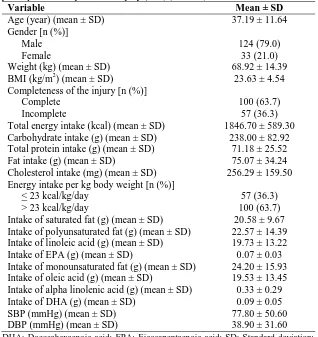
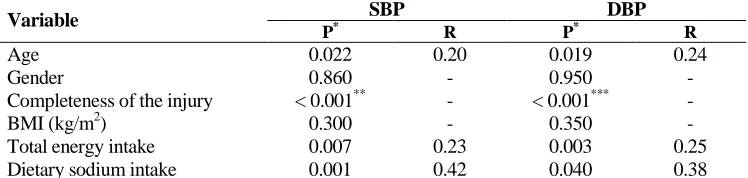
The correlation between dietary fat intake and blood pressure among people with spinal
cord injury
Hadis Sabour, Abbas Norouzi-Javidan, Zahra Soltani, Seyede Azemat Mousavifar, Sahar Latifi,
Seyed Hassan Emami-Razavi, Seyed Mohammad Ghodsi ... 121-127
Validation of the Persian version of the dysphagia handicap index in patients with
neurological disorders
Ebrahim Barzegar-Bafrooei, Jalal Bakhtiary, Ahmad Reza Khatoonabadi, Farzad Fatehi,
Saman Maroufizadeh, Mojtaba Fathali ... 128-132
Prevalence of intracranial artery stenosis in Iranian patients with acute ischemic stroke
using transcranial Doppler ultrasonography
Abdolhamid Shariat, Leila Niknam, Sadegh Izadi, Alireza Salehi ... 133-139
A single-subject study to evaluate the inhibitory repetitive transcranial magnetic
stimulation combined with traditional dysphagia therapy in patients with post-stroke
dysphagia
Leila Ghelichi, Mohammad Taghi Joghataei, Shohreh Jalaei, Noureddin Nakhostin-Ansari,
Bijan Forogh, Masoud Mehrpour ... 140-145
Study of atherogenic lipid profile, high sensitive C-reactive protein neurological deficit
and short-term outcome in stroke subtypes
Aparna Pandey, Amit Shrivastava, Ashok Solanki ... 146-152
Review Article(s)
Temporal plus epilepsy: Anatomo-electroclinical subtypes
René Andrade-Machado, Vanessa Benjumea-Cuartas ... 153-163
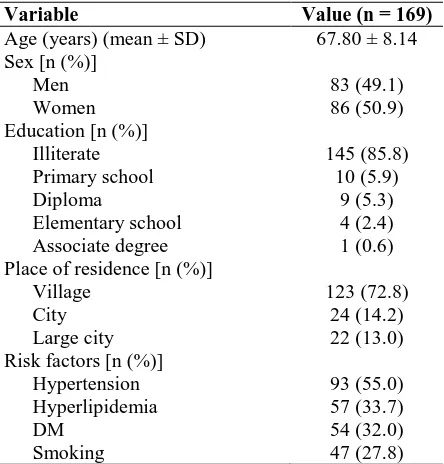
Population attributable fraction of modifiable risk factors for Alzheimer disease: A
systematic review of systematic reviews
Narjes Hazar, Leila Seddigh, Zahra Rampisheh, Marzieh Nojomi ... 164-172
Letter to editor(s)
Carpal compression, Phalen’s and Tinel’s test: Which one is more suitable for carpal
tunnel syndrome?
Mostafa Almasi-Doghaee, Reza Boostani, Morteza Saeedi, Saeed Ebrahimzadeh,
Amir Moghadam-Ahmadi, Mohammad Javad Saeedi-Borujeni
………...173-174
Bacterial meningitis in a patient with multiple sclerosis receiving Tysabri
Iranian Journal of Neurology © 2016
Clinical Note(s)
Multiple cerebral infarctions in a patient with idiopathic thrombocytopenic purpura
Masatoshi Yunoki, Kenta Suzuki, Atsuhito Uneda, Shuichi Okubo, Koji Hirashita,
Kimihiro Yoshino ……….……...177-179
Follow-up of hypertension in patients with multiple sclerosis
Seyed Mohammad Baghbanian …..………180-181
Neurological Image/Video
Bodybuilding championships and myotonia congenita
Original Paper
Iran J Neurol 2016; 15(3): 111-120
A combined exercise model for
improving muscle strength, balance,
walking distance, and motor agility
in multiple sclerosis patients: A
randomized clinical trial
Bahram Sangelaji
1, Mohammadreza Kordi
2, Farzaneh Banihashemi
3, Seyed Massood Nabavi
4,
Sara Khodadadeh
2, Maryam Dastoorpoor
51 Department of Physiotherapy, School of Physiotherapy, Otago University, Dunedin, New Zealand AND Iranian Multiple Sclerosis Society Rehabilitation Centre, Tehran, Iran
2 Department of Exercise Physiology, School of Physical Education and Sport Sciences, University of Tehran, Tehran, Iran
3Mother and Child Welfare Research Center, Hormozgan University of Medical Sciences, Bandar Abbas, Iran
4Department of Neurology, School of Medicine, Mostafa Khomeini Hospital, Shahed University of Medical Sciences, Tehran, Iran 5 Modeling in Health Research Center, Institute for Futures Studies in Health, Kerman University of Medical Sciences, Kerman, Iran
Keywords
Multiple Sclerosis; Exercise Therapy; Aerobic Exercise;
Resistance Training
Abstract
Background:
Multiple sclerosis (MS) is a neurological
disease with a variety of signs and symptoms.
Exercise therapy has been shown to improve physical
functions in MS. However, questions about an
optimal exercise therapy remain. In this regard, we
suggest a combined exercise therapy including
aerobic and resistance exercises for MS patients. The
study is designed to observe, test and compare the
effects of proposed combined exercises on strength,
balance, agility, fatigue, speed, and walking distance
in people with mild to moderate MS [0 < expanded
disability status scale (EDSS) < 5].
Methods:
A total of 40 people with relapse-remitting
MS (16 male, 0 < EDSS < 5) were randomized into one
of the four groups (3 intervention and one control).
The intervention consisted of various combinations
of aerobic and resistance exercises with different
repetition rates. Pre- and post-intervention scores of
fatigue severity scale (FSS), timed up and go (TUG)
test, 6-minute walk test (6MWT), 10- and 20-MWT,
Berg balance scale (BBS), and one repetition
maximum (1RM) test were recorded and analyzed.
Results:
For most tests, post-intervention values of
the group 1, with 3-aerobic and 1-resistance
exercises, were significantly higher compared to
control group (P < 0.050). However, no significant
progression was observed in the other two
intervention groups
.
Conclusion:
A combination of three aerobic exercises
with one resistance exercise may result in improved
balance, locomotion, and endurance in MS patients
.
Iranian Journal
of Neurology
Introduction
Multiple sclerosis (MS) is an inflammatory
demyelinating disorder of the central nervous
system
with
both
inflammation
and
neurodegeneration
outcomes
such
as
inflammatory attacks.
1Adults between 18 and 40
are commonly affected by MS with a
relapsing-remitting and sometimes a steady progression
course.
2,3The most common symptoms of MS
include weakness, fatigue, and imbalance.
2,3Balance impairment, which can lead to falls and
injuries, is reported in 78% of people with MS.
4There is no uniform and/or well-established
pharmacologic method to resolve imbalance,
fatigue and
weakness in MS. However,
rehabilitation methods may be helpful.
5,6A
number of studies have reported the benefits of
exercise and physical activity.
7On one hand,
power exercises can ameliorate muscle weakness
and improve coordination which, in turn, can
improve balance, agility and decrease muscle
spasticity.
7-10Further, studies have reported
increased
muscle
strength
and
functional
capacity, using different power exercises in
people with MS.
11-13On the other hand, aerobic
exercise has been shown to significantly decrease
fatigue
14and increase walking distance
15or
speed.
16Although several studies have approved the
efficacy of exercise to improve balance in people
with MS, each has followed a different exercise
protocol and yielded different results. A gradual
progression from simple exercises such as
stationary biking or weight lifting, to a
combination of exercises has been reported to be
beneficial.
6For instance, combined exercises
improved patients’ balance
17-19as well as
endurance.
20-22Although combined exercises have proved
effective,
19,23their complexity may force patients
and professionals to do them in well-equipped
centers. Besides, these types of interventions were
conducted on patients with mild
relapsing-remitting MS, with an expanded disability status
scale (EDSS) of < 3.5. To best of our knowledge,
there are no studies on the effects of exercise in
MS patients with moderate to severe disability
and in progressive type.
5,8Hence, the objective of
this study is to observe, test and compare the
effects of proposed combined exercises on
strength, walking speed, walking distance,
balance, agility and fatigue, in mild to moderate
people with MS (0 < EDSS < 5).
Materials and Methods
This is a case-control randomized clinical trial.
Due to obvious limitations, only those assessing
the outcomes were blinded to group assignment.
Members of Iranian MS Society (IMSS) were
referred to IMSS physiotherapy center in Tehran,
Iran, by their neurologists for rehabilitation
program from September until November 2012.
Demographic information of all patients was
recorded in the center database, and those met the
inclusion/exclusion criteria were advised to
participant in the study. Finally, 40 people with
MS were recruited and randomly assigned to four
groups: three experimental and one control
group. To avoid confounding effects, the four
groups were matched on group characteristics
[namely age, gender, body mass index (BMI), and
social status].
Inclusion/exclusion criteria
The inclusion criteria include:
1.
Definite relapse-remaining MS (RRMS)
2.
Adults between 18 and 50 years of age
3.
An EDSS level of 0-5
4.
Right-handed
5.
No history of systemic disease, concomitant
neurological disorders, epilepsy, heart diseases,
anemia, or severe depression.
The exclusion criteria include:
1.
Under treatment with corticosteroid (in
relapse time), or a history of recent attack (< 3
months)
2.
Participants who completed < 30 sessions
of exercise for any reason.
Participants were randomly assigned to four
groups:
1.
Group 1, which performed 1 aerobic
exercise training and 3 resistance exercise training
sessions per week
2.
Group 2, which performed 2 aerobic
exercise training and 2 resistance exercise training
sessions per week
3.
Group 3, Group 1, which performed 3
aerobic exercise training and 1 resistance exercise
training session per week
4.
Control group: All participants voluntarily
filled the informed consent. Baseline scores were
recorded within 5 days before the intervention
and post-test scores were recorded exactly 72
hours after the end of the protocol for each group.
Outcome measures evaluated in this study are
defined and measured as below:
measure strength (heaviest weight a person can
lift using quadriceps and hamstring muscles at
first attempt)
24,252.
Berg balance scale (BBS): To measure
balance
263.
Timed up and go (TUG) test: To measure
agility
27,284.
10-minute walk test (10MWT) and 20MWT:
To measure speed of movement
295.
6MWT: To measure the endurance and
functional capacity
30,316.
Fatigue severity scale (FSS): To measure
fatigue
30,317.
BMI: Weight in kilograms divided by the
square of height in centimeters.
32A JEXERS
®exercise machine with a tolerance
of 1 kg was used to measure the quadriceps and
hamstring strength based on 1RM. Furthermore, a
metal meter was used to measure the height of
subjects in centimeters and a G200 BEURER
®(China) digital scale with 100 g tolerance to
measure the weight of cases.
In addition, BBS test was based on the Farsi
version, which is a standard device in the IMSS
rehabilitation center.
26To test for the walking
speed, a running track in the gymnasium of
rehabilitation center was measured and marked
exactly at 10 and 20 m.
33For the TUG test, as
mentioned in the manual, a chair, and a digital
chronometer were used. The 6MWT was
performed in a big gymnasium out of
rehabilitation center.
Participants in the intervention groups
performed exercises in groups. However, due to
space and time limitations, it was not possible for
all
the
groups
to
do
the
exercises
simultaneously.
34Each group had four exercise
sessions per week for 8 weeks (32 sessions). The
interventions consisted of three stages per session:
Stage 1: Warm up, Stage 2: main intervention and
Stage 3: cool down.
•
Stage 1: in this stage, one of the trainers
demonstrated simple stretches for the neck,
upper/lower extremities, and the trunk. Subjects
were asked to follow.
•
Stage 2: during the main interventional
stage, each group followed their own program.
For example, group 1 patients practiced
individually tailored resistance exercises one
session each week. For the next three sessions of
the week, participants did two aerobic exercises:
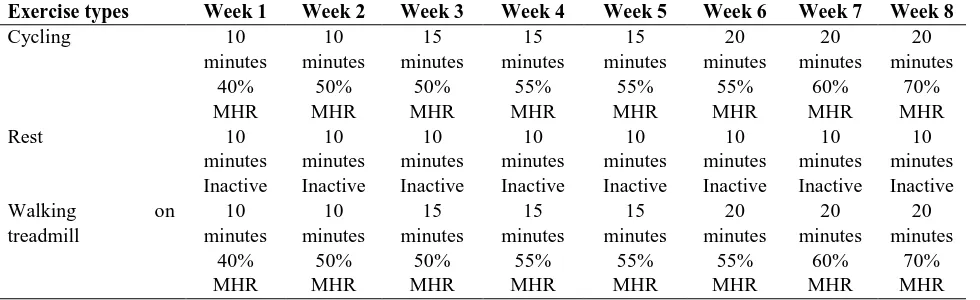
stationary bike and treadmill. Table 1 illustrates
the workout routine for both resistance and
aerobic exercises. For groups 2 and 3, the
exercise sessions changed to 2 resistance/2
aerobic and 3 resistance/1 aerobic sessions per
week, respectively. Maximum heart rate (MHR)
of each person was tracked to prevent
exhaustion while biking or using treadmill.
During the 1
stweek, the aerobic exercise begun
with about 40% of MHR and 10 minutes per each
device, then it gradually increased up to 70% of
MHR and 20 minutes for each aerobic exercise.
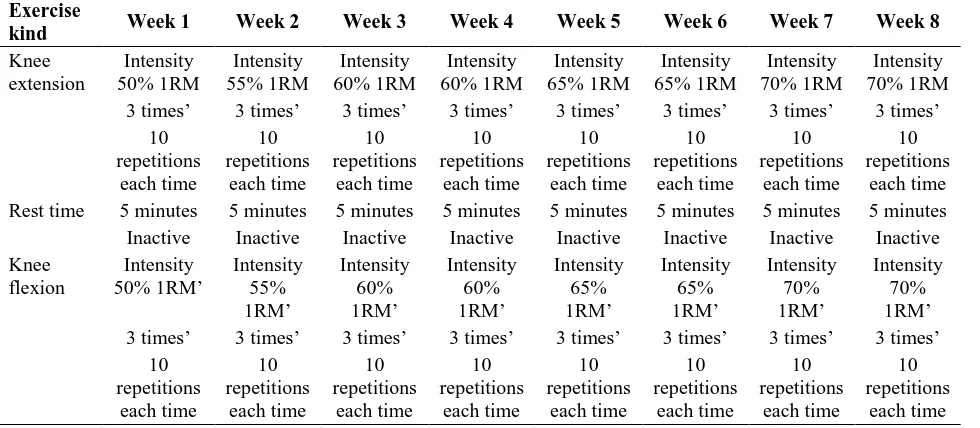
In addition, strength exercises started with 50%
of 1RM with 10 repetitions of 3 sets and
increased up to 70% of 1RM with 10 repetitions
and three sets of exercise for each flexor or
extensor of both knees.
24,25•
Between two aerobic activities, bike and
treadmill, and resistance sessions, extensors and
flexors of the both knees, patients had a 10-minute
and 5-minute inactive rest, respectively. If a
patients’ heart rate reached above the limit, the
exercise was stopped and the participant had to
rest
until
the
heart
rate
decreased
(Tables 1 and 2).
Table 1. Endurance exercises mode
Exercise types
Week 1
Week 2
Week 3
Week 4
Week 5
Week 6
Week 7
Week 8
Cycling
10
minutes
10
minutes
15
minutes
15
minutes
15
minutes
20
minutes
20
minutes
20
minutes
40%
50%
50%
55%
55%
55%
60%
70%
MHR
MHR
MHR
MHR
MHR
MHR
MHR
MHR
Rest
10
minutes
10
minutes
10
minutes
10
minutes
10
minutes
10
minutes
10
minutes
10
minutes
Inactive
Inactive
Inactive
Inactive
Inactive
Inactive
Inactive
Inactive
Walking
on
treadmill
10
minutes
10
minutes
15
minutes
15
minutes
15
minutes
20
minutes
20
minutes
20
minutes
40%
50%
50%
55%
55%
55%
60%
70%
MHR
MHR
MHR
MHR
MHR
MHR
MHR
MHR
Table 2. Strength exercises model
Exercise
kind
Week 1
Week 2
Week 3
Week 4
Week 5
Week 6
Week 7
Week 8
Knee
extension
Intensity
50% 1RM
Intensity
55% 1RM
Intensity
60% 1RM
Intensity
60% 1RM
Intensity
65% 1RM
Intensity
65% 1RM
Intensity
70% 1RM
Intensity
70% 1RM
3 times’
3 times’
3 times’
3 times’
3 times’
3 times’
3 times’
3 times’
10
repetitions
each time
10
repetitions
each time
10
repetitions
each time
10
repetitions
each time
10
repetitions
each time
10
repetitions
each time
10
repetitions
each time
10
repetitions
each time
Rest time
5 minutes
5 minutes
5 minutes
5 minutes
5 minutes
5 minutes
5 minutes
5 minutes
Inactive
Inactive
Inactive
Inactive
Inactive
Inactive
Inactive
Inactive
Knee
flexion
Intensity
50% 1RM’
Intensity
55%
1RM’
Intensity
60%
1RM’
Intensity
60%
1RM’
Intensity
65%
1RM’
Intensity
65%
1RM’
Intensity
70%
1RM’
Intensity
70%
1RM’
3 times’
3 times’
3 times’
3 times’
3 times’
3 times’
3 times’
3 times’
10
repetitions
each time
10
repetitions
each time
10
repetitions
each time
10
repetitions
each time
10
repetitions
each time
10
repetitions
each time
10
repetitions
each time
10
repetitions
each time
1RM: One repetition maximum•
Stage 3: one of the trainers demonstrated
some simple stretching movements to ensure that
all participants cooled down at the end of exercise
sessions. Participants were further encouraged to
take some fruit juice, date, biscuits, and milk.
35Ethical issues (including plagiarism, informed
consent, research misconduct, data fabrication
and/or falsification, double publication and/or
submission,
redundancy,
etc.)
have
been
completely observed by the authors. The Ethics
Committee of Sport Science Research Institute of
Iran approved the study protocol with Code No:
S/93/398. For ethical reasons, at the end of the
study
the
control
group
also
received
combinational exercises. All participants gave
informed consent (both oral and written) in
accordance with the declaration of Helsinki.
The normality of data was tested and confirmed
by Kolmogorov-Smirnov test. Homogeneity of the
four groups at baseline was confirmed using
one-way ANOVA. Values from pre- (5 days before the
intervention) and post-test (3 days after the
intervention) were compared based on paired t-test.
All data were analyzed using SPSS software
(version 22, SPSS Inc., Chicago, IL, USA). An α-level
of < 0.05 was considered significant.
Results
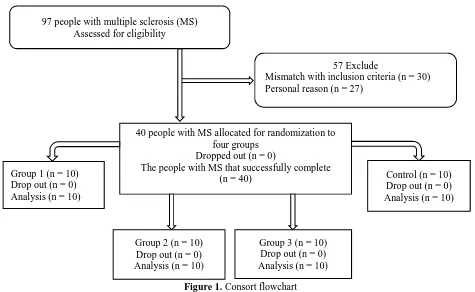
IMSS referred 97 RRMS patients to our
rehabilitation
center.
According
to
the
inclusion/exclusion criteria, 40 patients (24 female
and 16 male) participated in the study; with mean
disease duration of 2 years and BMI range of
18.5-25 kg/m
2. All the patients successfully
completed the procedure (Figure 1). There were 4
men and 6 women in each group. Table 3 gives
descriptive statistics for age, height, weight, BMI
and EDSS variables, separately for each group.
Test results
6MWT
: 6MWT score of the control group and the
intervention group 1 did not change significantly
comparing pre- and post-intervention values,
whereas both intervention group 2 and 3 showed
significant changes (P < 0.050) (Table 4). A
comparison of post-test scores changes between
groups declared a significantly higher score for
groups 1 and 2 compared to the control group
(P < 0.050).
10MWT:
For
10MWT,
all
the
three
experimental groups showed a significant
decrease in time taken to walk after the
intervention (P < 0.050) (Table 4). The decreases in
groups 1 to 3 were 2.4, 1.5 and 1.9 seconds,
respectively. An average change in time taken to
walk for group 1 was significantly different from
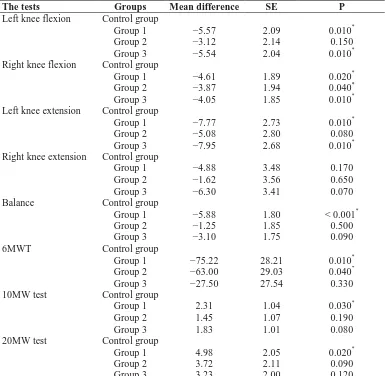
control group (P = 0.030) (Table 5).
Figure 1. Consort flowchart
Table 3. Mean of age, height, weight, body mass index (BMI), and expanded disability status scale (EDSS) for all groups
Groups
Age (years)
Length (cm)
Weight (kg)
BMI (kg/m
2
) EDSS (score)
Mean ± SD Mean ± SD Mean ± SD Mean ± SD Mean ± SD
Experimental 1 (n = 10)
35.80 ± 8.42
166.48 ± 6.99
68.13 ± 9.48
24.92 ± 2.76
1.33 ± 0.66
Experimental 2 (n = 10)
31.33 ± 8.21
164.97 ± 7.90
63.55 ± 13.65
23.99 ± 5.78
2.06 ± 0.86
Experimental 3 (n = 10)
33.91 ± 7.94
165.06 ± 8.56
66.92 ± 12.35
24.01 ± 3.35
1.95 ± 1.12
Control (n = 10)
33.63 ± 6.92
165.12 ± 7.59
63.00 ± 11.25
24.44 ± 4.78
1.81 ± 0.53
SD: Standard deviation; BMI: Body mass index; EDSS: Expanded disability status scaleBBS: BBS score significantly raised (about 6
points) after the intervention only for group 1
(P = 0.010) (Table 4). Group 1 score change was
also significantly higher compared to the control
group (P < 0.001) (Table 5).
Right knee extension and flexion strength
(dominant leg): Right knee extension strength
significantly increased in experimental groups 1 and
3 (P < 0.050). However, only group 3 showed a
significant improvement of flexion strength
(P = 0.012) (Table 4). A comparison of mean score
change (post- and pre-score) indicated that flexion
strength changes for intervention groups were
significantly different from control group (P = 0.020,
P = 0.040 and P = 0.010, respectively) (Table 5).
Left knee extension and flexion strength
(non-dominant
leg):
Extension
strength
score
significantly changed in all the intervention
groups (P < 0.050). Average scores increased 8.4,
5.7 and 8.6 kg in groups 1 to 3, respectively.
Moreover, flexion strength significantly changed
in groups 1 and 3 (P = 0.015 and P = 0.001,
respectively) (Table 4). A comparison of mean
change in flexion and extension strength between
groups showed that in groups 1 and 3, changes
were significantly different from that of the
control group (P = 0.010) (Table 5).
TUG test and FSS: A statistical analysis of both
TUG test and FSS values did not indicate any
significant change within groups.
In addition, based on post-hoc analysis of
mean score change, none of the pair-wise
comparisons
of
intervention
groups
were
significantly different
in 6MWT, 10MWT,
20MWT, right and left knee extension/flexion
(P > 0.050).
57 Exclude
Mismatch with inclusion criteria (n = 30)
Personal reason (n = 27)
40 people with MS allocated for randomization to
four groups
Dropped out (n = 0)
The people with MS that successfully complete
(n = 40)
Control (n = 10)
Drop out (n = 0)
Analysis (n = 10)
Group 2 (n = 10)
Drop out (n = 0)
Analysis (n = 10)
Group 3 (n = 10)
Drop out (n = 0)
Analysis (n = 10)
97 people with multiple sclerosis (MS)
Assessed for eligibility
Table 4. Descriptive statistics for four studied groups’ variables before and after test
Variable
Group
n
Average
before test
SD
Average
after test
SD
Difference between
average after test and
average before test
Difference
percentage
P
10MW speed (s)
Control
10
15.217
18.94777
15.122
19.02946
−0.095
−0.624281255
0.758
Group 1
10
9.828
4.89645
7.422
2.42591
−2.4056
−24.47750259
0.040
*Group 2
10
8.109
2.08783
6.567
1.29852
−1.5413
−19.00774467
0.037
*Group 3
10
9.874
5.56309
7.949
5.55153
−1.925
−19.49564513
0.014
*20MW speed (s)
Control
10
29.085
32.02146
28.985
32.13234
−0.1
−0.343819838
0.908
Group 1
10
19.953
10.04469
14.876
5.00254
−5.0777
−25.4479209
0.045
*Group 2
10
17.124
4.31811
13.306
2.03388
−3.8175
−22.29353298
0.012
*Group 3
10
17.248
5.31164
13.919
3.99213
−3.329
−19.3007885
0.014
*Balance (score)
Control
10
45.000
10.04277
45.000
9.74500
0
0
0.214
Group 1
10
43.111
4.96096
49.000
2.34521
5.8889
13.65982311
0.010
*Group 2
10
49.375
3.06769
50.625
1.84681
1.25
2.53164557
0.080
Group 3
10
45.400
8.93433
48.500
4.99444
3.1
6.828193833
0.060
Left knee extension
strength (kg)
Control
10
10.667
5.04645
11.333
6.43946
0.6666
6.249355471
0.146
Group 1
10
12.000
5.3619
20.444
6.12599
8.4444
70.37
0.004
*Group 2
10
19.000
10.01428
24.750
10.93814
5.75
30.26315789
0.029
*Group 3
10
14.580
7.16377
23.200
8.70249
8.62
59.12208505
0.001
*Right knee extension
strength (kg)
Control
10
14.667
3.26599
16.667
7.44759
2
13.63633264
0.458
Group 1
10
12.111
5.1099
19.000
6.61438
6.8889
56.88087787
0.002
*Group 2
10
21.375
9.31876
25.000
10.91526
3.625
16.95906433
0.340
Group 3
10
16.000
6.8313
24.300
8.53815
8.3
51.875
0.001
*Left knee flexion strength
(kg)
Control
10
5.346
2.761
4.917
2.61566
−0.42897
−8.024625538
0.2390
Group 1
10
7.422
3.50955
13.000
4.03113
5.5778
75.150225
0.015
*Group 2
10
12.375
4.89716
15.500
5.47723
3.125
25.25252525
0.151
Group 3
10
7.060
2.49275
12.600
2.79682
5.54
78.47025496
0.001
*Right knee flexion strength
(kg)
Control
10
8.205
3.55624
7.750
2.80624
−0.4555
−5.551154713
0.100
Group 1
10
7.722
3.64958
12.333
4.74342
4.6111
59.71225816
0.080
Group 2
10
13.375
5.15302
17.250
5.94619
3.875
28.97196262
0.098
Group 3
10
8.850
2.80921
12.900
3.38132
4.05
45.76271186
0.012
*6MWT
Control
10
361.500
238.86757
367.500
258.75692
6.0000
1.659751037
0.249
Group 1
10
380.222
136.77790
461.444
139.61206
81.2222
21.36177674
0.057
Group 2
10
422.500
106.39012
491.500
108.79338
69.0000
16.33136095
0.034
*Group 3
10
363.000
159.48319
396.500
154.32739
33.5000
9.228650138
0.043
**
Significant at α level less than 0.05
Table 5. The groups compare to control group
The tests
Groups
Mean difference
SE
P
Left knee flexion
Control group
Group 1
−5.57
2.09
0.010
*Group 2
−3.12
2.14
0.150
Group 3
−5.54
2.04
0.010
*Right knee flexion
Control group
Group 1
−4.61
1.89
0.020
*Group 2
−3.87
1.94
0.040
*Group 3
−4.05
1.85
0.010
*Left knee extension
Control group
Group 1
−7.77
2.73
0.010
*Group 2
−5.08
2.80
0.080
Group 3
−7.95
2.68
0.010
*Right knee extension
Control group
Group 1
−4.88
3.48
0.170
Group 2
−1.62
3.56
0.650
Group 3
−6.30
3.41
0.070
Balance
Control group
Group 1
−5.88
1.80
< 0.001
*Group 2
−1.25
1.85
0.500
Group 3
−3.10
1.75
0.090
6MWT
Control group
Group 1
−75.22
28.21
0.010
*Group 2
−63.00
29.03
0.040
*Group 3
−27.50
27.54
0.330
10MW test
Control group
Group 1
2.31
1.04
0.030
*Group 2
1.45
1.07
0.190
Group 3
1.83
1.01
0.080
20MW test
Control group
Group 1
4.98
2.05
0.020
*Group 2
3.72
2.11
0.090
Group 3
3.23
2.00
0.120
Significant at α level less than 0.05 , SE: Standard error; 6MWT: 6 minute walking test; 10MW: 10 m walk
Discussion
Our study was a randomized clinical trial to
evaluate the effects of proposed combined
exercises to improve muscle strength, balance,
walking distance, and motor agility in patients
with MS. We can divide the result into four
sub-categories to discuss; the first part relates to tests
that evaluated the strength of flexor and extensor
muscles of the knees. The second part includes the
tests that evaluated features of walking. The third
and fourth parts are balance and fatigue scales.
Our
findings
showed
a
significant
improvement of measures in intervention group
1, for which the dominant activity was aerobic
exercise. Furthermore, they were in accordance
with the studies of Dalgas et al.,
5Le Page et al.,
8Kjolhede et al.,
9Motl et al.,
36and Sangelaji et al.,
19However, Hansen et al.
37reported ineffectiveness
of combined exercises, which may be due to
application of different methods and measures as
he used heart rate and blood examination.
Significant strength improvements were observed
in almost all knee flexor and extensor muscles in
groups 1 and 3, but not group 2. These findings
are in concordance with those of DeBolt and
McCubbin,
38Kjolhede et al.,
9Le Page et al.
8and
Medina-Perez et al.
39Although one would expect
increase in muscle strength through resistance
exercises, it was remarkable to note the increase in
muscle strength with endurance exercises for
group 1. A reason could be the fact that exercises
such as stationary bike and treadmill walking may
strengthen people with MS who lack regular
exercise. This may also be a reason why significant
improvement was detected for the non-dominant
leg (left) and not the dominant leg (right).
6MWT. The results showed a pattern of
effectiveness for aerobic exercises. For all three
tests, group 1 showed a greater improvement
compared to control group. In addition, a
significant change was observed for group 2 in
6MWT. These results are in agreement with those
of other studies including Cakt et al.,
40Rampello
et al.,
16Geddes et al.,
41Motl et al.,
36Sangelaji et
al.,
19and van den Berg et al.,
42which showed an
improvement in walking endurance and speed
after combined exercises. In addition, a systematic
review by Citaker et al.
43showed a small
significant change in mobility after exercise
therapy. Hansen et al.,
37however, showed that
combined exercises have no effects on endurance.
The discrepancy between results could be
explained by the differences in employed
exercises and mobility measures. It seems that
aerobic exercises such as treadmill can improve
the gait style of the people with MS as well as
their endurance and strength. With respect to our
study design, no specific balance exercise was
performed by the patients but the results showed
a significantly greater post-intervention balance
score for group 1 compared to both baseline and
control group. The difference in the scores of two
groups which reached nearly 6 points (P = 0.001)
is noteworthy. This is in line with a study by
Donoghue and Stokes
44that investigated the
changes in Berg test corresponding to real
changes in patients.
In addition, our results matches, other studies
like Paltamaa et al.,
21Kjolhede et al.,
9Sangelaji et
al.,
19and Tarakci et al.
23In a study by Tarakci et
al., the main reason for a significant difference
between intervention and control groups was the
odd point decrease of BBS in the control group in
just 12 weeks and no increase in intervention
group. It seems that treadmill as an aerobic
exercise has some collateral effect such as balance
improvement. Due to the nature of this kind of
physical activity, some muscles that are effective in
balance such as erector spinal muscles,
23may have
strengthen and this phenomena may lead to
improve balance in group 1 only and no the other
groups. Studies by DeBolt and McCubbin
38and
Rietberg et al.
7were in line with this concept. Some
recent studies have focused on more specific
muscles, such as Cakt et al.,
40Cattaneo et al.
20and
Citaker et al.
43they all confirmed the effectiveness of
resistance exercise on balance. Our results did not
show any significant effect on fatigue.
Fatigue is one of the most complicated
symptoms in MS and the results of various
studies on fatigue are contradicting. For instance,
Sangelaji et al.,
19Cakt et al.,
40Schmidt and
Wonneberger
45and Tarakci et al.
23reported a
mild to moderate effect of aerobic, resistance and
combined exercises on fatigue; however, van den
Berg et al.,
42Rietberg et al.,
7Hansen et al.,
37and
Geddes et al.
41did not find any significant effect
of various type of exercise on fatigue. In addition,
Surakka et al.
46reported a significant effect of
aerobic activities on fatigue just in females. This
discrepancy may be a result of varying
interventions, insufficient intervention periods
and examined population. Although TUG test
score changes in groups 1 and 3 were significantly
before and after the intervention, no significant
change was detected in comparison with control
group. Motl et al.,
36and Golzari et al.,
17however,
showed that combined exercises have a significant
effect on TUG test. This paradox could be due to
the small sample size of intervention groups.
Main highlights of the present study are the
choice of accessible exercises, use of a randomized
controlled trial (RCT) study design and
collaboration of various professionals (e.g.,
neurologist, physiotherapist, physical educator
and epidemiologist).
Two major limitations were inability to control
for diet attitude or sleep-wakefulness schedule of
the participants. Furthermore, mood state of the
participants was not controlled during the study
course. In addition, because of space and time
limitations, groups did their exercises in different
sessions, so we could not match the groups based
on the exact time of physical activity.
Conclusion
large
sample
size
and
various
exercise
combinations are recommended to select the best
rehabilitation regimen for people with MS.
Conflict of Interests
The authors declare no conflict of interest in this
study.
Acknowledgments
The authors would like to thank all patients for
their participation, as well as Ms. Zahra Gholami
and her Colleagues at Iran MS Society and Ms.
Maghsodi for their kind assistance. Finally yet
importantly, we are grateful for the help of Dr.
Catherine Smith and Mr. Kesava Kovanur
Sampath in translation and methodological
advice. The study is funded by Sport Science
Research Institute of Iran.
How to cite this article:
Sangelaji B, Kordi M,
Banihashemi
F,
Nabavi
SM,
Khodadadeh
S,
Dastoorpoor M. A combined exercise model for
improving muscle strength, balance, walking
distance, and motor agility in multiple sclerosis
patients: A randomized clinical trial. Iran J Neurol
2016; 15(3): 111-20.
References
1. Dua T. Atlas: Multiple sclerosis resources in the world, 2008. Geneva, Switzerland: World Health Organization; 2008. 2. Hauser S, Josephson S. Harrison's
neurology in clinical medicine. 3rd ed.
New York, NY: McGraw Hill Professional; 2013.
3. Umphred DA, Roller M. Neurological rehabilitation: Neurological rehabilitation. 6th ed. Philadelphia, PA:
Elsevier Health Sciences; 2013. 4. Nilsagard YE, von Koch LK, Nilsson M,
Forsberg AS. Balance exercise program reduced falls in people with multiple sclerosis: a single-group, pretest-posttest trial. Arch Phys Med Rehabil 2014; 95(12): 2428-34.
5. Dalgas U, Stenager E, Ingemann-Hansen T. Multiple sclerosis and physical exercise: recommendations for the application of resistance-, endurance- and combined training. Mult Scler 2008; 14(1): 35-53.
6. Sa MJ. Exercise therapy and multiple sclerosis: A systematic review. J Neurol 2014; 261(9): 1651-61.
7. Rietberg MB, Brooks D, Uitdehaag BM, Kwakkel G. Exercise therapy for multiple sclerosis. Cochrane Database Syst Rev 2005; (1): CD003980.
8. Le Page C, Ferry A, Rieu M. Effect of muscular exercise on chronic relapsing
experimental autoimmune
encephalomyelitis. J Appl Physiol (1985) 1994; 77(5): 2341-7.
9. Kjolhede T, Vissing K, Dalgas U. Multiple sclerosis and progressive resistance training: a systematic review. Mult Scler 2012; 18(9): 1215-28. 10. Sosnoff J, Motl RW, Snook EM, Wynn
D. Effect of a 4-week period of unloaded leg cycling exercise on spasticity in multiple sclerosis. NeuroRehabilitation 2009; 24(4): 327-31.
11. Dalgas U, Stenager E, Jakobsen J, Petersen T, Hansen HJ, Knudsen C, et al. Resistance training improves muscle strength and functional capacity in multiple sclerosis. Neurology 2009;
73(18): 1478-84.
12. White LJ, McCoy SC, Castellano V, Gutierrez G, Stevens JE, Walter GA, et al. Resistance training improves strength and functional capacity in persons with multiple sclerosis. Mult Scler 2004; 10(6): 668-74.
13. Taylor NF, Dodd KJ, Prasad D, Denisenko S. Progressive resistance exercise for people with multiple sclerosis. Disabil Rehabil 2006; 28(18): 1119-26.
14. Petajan JH, Gappmaier E, White AT, Spencer MK, Mino L, Hicks RW. Impact of aerobic training on fitness and quality of life in multiple sclerosis. Ann Neurol 1996; 39(4): 432-41.
15. Rodgers MM, Mulcare JA, King DL, Mathews T, Gupta SC, Glaser RM. Gait characteristics of individuals with multiple sclerosis before and after a 6-month aerobic training program. J Rehabil Res Dev 1999; 36(3): 183-8. 16. Rampello A, Franceschini M, Piepoli M,
Antenucci R, Lenti G, Olivieri D, et al. Effect of aerobic training on walking capacity and maximal exercise tolerance in patients with multiple sclerosis: a randomized crossover controlled study. Phys Ther 2007; 87(5): 545-55.
17. Golzari Z, Shabkhiz F, Soudi S, Kordi MR, Hashemi SM. Combined exercise training reduces IFN-gamma and IL-17 levels in the plasma and the supernatant of peripheral blood mononuclear cells in women with multiple sclerosis. Int Immunopharmacol 2010; 10(11): 1415-9. 18. Latimer-Cheung AE, Pilutti LA, Hicks
AL, Martin Ginis KA, Fenuta AM, MacKibbon KA, et al. Effects of exercise training on fitness, mobility, fatigue, and health-related quality of life among adults with multiple sclerosis: a systematic review to inform guideline development. Arch Phys Med Rehabil 2013; 94(9): 1800-28.
19. Sangelaji B, Nabavi SM, Estebsari F, Banshi MR, Rashidian H, Jamshidi E, et al. Effect of combination exercise therapy
on walking distance, postural balance, fatigue and quality of life in multiple sclerosis patients: a clinical trial study. Iran Red Crescent Med J 2014; 16(6): e17173.
20. Cattaneo D, Jonsdottir J, Zocchi M, Regola A. Effects of balance exercises on people with multiple sclerosis: a pilot study. Clin Rehabil 2007; 21(9): 771-81. 21. Paltamaa J, Sjogren T, Peurala SH,
Heinonen A. Effects of physiotherapy interventions on balance in multiple sclerosis: a systematic review and meta-analysis of randomized controlled trials. J Rehabil Med 2012; 44(10): 811-23. 22. Giesser B, Beres-Jones J, Budovitch A,
Herlihy E, Harkema S. Locomotor training using body weight support on a treadmill improves mobility in persons with multiple sclerosis: a pilot study. Mult Scler 2007; 13(2): 224-31. 23. Tarakci E, Yeldan I, Huseyinsinoglu BE,
Zenginler Y, Eraksoy M. Group exercise training for balance, functional status, spasticity, fatigue and quality of life in multiple sclerosis: a randomized controlled trial. Clin Rehabil 2013; 27(9): 813-22.
24. Kisner C, Colby LA. Therapeutic Exercise: Foundations and Techniques. Philadelphia, PA: F.A. Davis; 2012. 25. Cormie P, McCaulley GO, Triplett NT,
McBride JM. Optimal loading for maximal power output during lower-body resistance exercises. Med Sci Sports Exerc 2007; 39(2): 340-9.
26. Azad A, Taghizadeh G, Khaneghini A. Assessments of the reliability of the Iranian version of the Berg Balance Scale in patients with multiple sclerosis. Acta Neurol Taiwan 2011; 20(1): 22-8. 27. Cattaneo D, Regola A, Meotti M.
Validity of six balance disorders scales in persons with multiple sclerosis. Disabil Rehabil 2006; 28(12): 789-95.