Iranian Journal of Neurology © 2016 Corresponding Author: Mansoureh Togha
Original Paper
Iran J Neurol 2016; 15(1): 1-8
Headache in relapse and remission
phases of multiple sclerosis:
A case-control study
Mansoureh Togha1, Nahid Abbasi Khoshsirat2, Abdorreza Naser Moghadasi1, Faezeh Mousavinia3, Mohammad Mozafari1,
Mohamadreza Neishaboury1, Seyed Mahmood Mousavi1
1 Headache Research Center, Iranian Center of Neurological Research, Neuroscience Institute AND Department of Neurology, Sina Hospital, Tehran
University of Medical Sciences, Tehran, Iran
2 Headache Research Center, Iranian Center of Neurological Research, Neuroscience Institute, Tehran University of Medical Sciences, Tehran, Iran
3Department of Neurology, Sina Hospital, Tehran University of Medical Sciences, Tehran, Iran
Keywords
Multiple Sclerosis; Headache; Relapse; Remission;
Case-Control Studies
Abstract
Background: Headaches are one of the most frequent reasons for pain in multiple sclerosis (MS) individuals. Characterization of headaches and delineating possible relationships with MS-related determinants can ultimately circumvent headaches.
Methods: In a prospective case-control study, 65 Iranian relapsing-remitting MS (RRMS) patients and 65 healthy controls were recruited during patients’ admission for attack-period treatment and asked about characteristics and co-symptoms of headaches they experienced in the preceding week and usage of disease modifying drugs (DMDs) and types of MS attacks were also inquired. The same questions were asked from the same patients 3 months later in a follow-up visit.
Results: A total of 57 patients and 57 controls were included in the final analyses. In total, 26 (45.6%) patients in relapse, 18 (27.7%) controls, and 22 (38.6%) patients in remission reported headaches and only significant difference existed between relapse patients and controls (P = 0.036). In headache prevalence was higher in patients in relapse phase having MS < 3 years compared to relapse patients with more than 3 years of MS (68 vs. 28.1%;
P = 0.004). Other variables of interest did not differ among the three groups.
Conclusion: The RRMS patients in relapse phase suffer from headaches more than healthy people do.
Introduction
Amid the plethora of multiple sclerosis (MS) symptoms,1,2 pain is vividly recalled by patients and
apparently accompanies them throughout the entire
disease period.3,4 The latest systematic review
considering prevalence of pain in adult MS subjects declared an overall prevalence of 63.0%; the most common instigator of pain in this meta-analysis was
headache, with a prevalence of about 43.0%.3 The very
first documentation of headache occurrence in MS patients was revealed over 60 years ago.5 Following
this pioneer initiative, the association of MS and primary headaches has been commonly reviewed, and headache prevalence rates ranging from 4.0 to 76.3%
have been acknowledged in MS patients.2,6-19 Migraine
without aura and tension-type headache (TTH) are the top two prevalent primary headaches seen in MS populations.10,20 In addition, stabbing headaches are
more commonly seen in relapses of relapsing-remitting MS (RRMS) subjects and migraine and TTH comprise most of the headaches experienced by RRMS
individuals during remissions.1,21 Of note, other types
and manifestations of primary headaches such as
Received: 27 Aug 2015 Accepted: 09 Nov 2015
Iranian Journal
cluster headache, migraine-like headache, cluster-like headache, and status migrainosus and also secondary
headaches have been observed in MS patients.6,7,10,22-25
The sprouting of headaches during interferon-beta (INF-β) therapy has been cited by MS subjects as a major rationale for terminating INF-β use26 and as
RRMS patients are frequently given INF-β for their
neurologic symptoms,11 delineating the relationship
between headache deterioration or establishment in
RRMS and INF-β is important.
The emotional burden of headaches in MS patients is significant and those suffering from headaches throughout their disease period are likely entitled to a plunge in quality of life.11,27,28 In particular, MS
patients simultaneously affected by migraine will experience more symptoms of MS and eventually have poorer quality of life.29,30 Furthermore, primary
stabbing headache (PSH) has been proposed as a premonitory sign of acute demyelinating fallout in
RRMS.1,21,27 Consequently, rapid recognition and
management of headaches in MS patients can potentially be of utmost importance. Studies evaluating headaches happening during relapses and remissions of RRMS and depicting the characteristics of these headaches and their possible relationship with different MS attack variants and factors such as depression and disease modifying drugs (DMDs) at the same time are scarce. Thus, in this current effort, we attempted to assess the prevalence of headaches during relapses and remissions of RRMS patients and define the attributes of these headaches and denote the possible interrelations between headaches and therapeutic determinants, co-symptoms such as depression and types of MS exacerbations.
Materials and Methods
A prospective study was initiated to assess characteristics of headaches in patients with RRMS visited in Sina Hospital (affiliated to Tehran University of Medical Sciences) in Tehran, Iran, between 2013 and 2015. Eligible patients for enrollment as case group included those with pre-existing MS experiencing an acute relapse of disease. The cases chosen were not randomly selected and were, in fact, available cases consecutively picked from the RRMS patients checking in for acute relapse treatment during the study period. Diagnosis of MS has been made according to the latest version of
McDonald criteria.31 Furthermore, diagnosis of types
of headaches seen in MS patients and controls was in accordance with third edition (beta version) of the
International Classification of Headache Disorders.32
The control group was comprised of healthy individuals that were chosen consecutively and not randomly from people accompanying RRMS patients
in the Neurology Clinic of Sina Hospital. These controls had no previous history of neurologic disorders such as MS, seizure and severe head trauma and were not affected by other chronic diseases such as hypertension, renal failure, etc. Individuals with these attributes were then asked if they suffer from headaches and if the answer was “yes,” characteristics of their headaches would be entered in assessment forms and recorded. If the answer was “no,” then only demographic data pertinent to them would be documented. Frequency matching was performed to have a control group similar to case group with respect to gender distribution and age (± 5 years). The study protocol was approved by the Ethics Committee at Tehran University of Medical Sciences and written informed consent was obtained from all study participants prior to enrollment.
Demographic information, current treatment protocol and DMDs used during the past 6 months were recorded. If patients were experiencing headache(s) during the past week, a predesigned structured questionnaire was used to record the features of the headache(s). The types of headaches documented were migraine, TTH or secondary headache. The severity of headache was assessed by a 10-point visual analogue scale (VAS), in which 1 indicates the lowest severity and 10 is considered as very severe headache. The VAS score was further categorized as follows: scores of 1, 2 and 3 were considered as mild, 4-7 as moderate and severe headache as VAS score of 8, 9 or 10. The quality of pain was recorded as compressing, pulsatile and stabbing. Patients were asked about the location of headache that could be orbital, frontal, occipital, vertex and a combination of mentioned sites. In addition, the presence of concomitant symptoms such as photophobia, phonophobia and nausea and vomiting were checked. Of note, the type of MS attack in relapse phase including blurred vision (optic
neuritis), myelitis (spinal lesions),
hemiparesis/hemihypoesthesia (hemispheric lesions) and symptoms such as ataxia, gaze palsy, crossed cranial nerve palsy and motor or sensory symptoms (brainstem and cerebellar lesions) was obtained from patients’ files and recorded. Participants in the control group were also asked about any episodes of headache during the past 7 days and its features.
characteristics and any drugs consumed for headache prophylaxis or acute attacks. RRMS patients were also inquired about other non-DMD medications they took during remission period.
SPSS software for Windows (version 20, SPSS Inc., Chicago, IL, USA) was employed to perform the
statistical analyses. Continuous variables are
presented as mean and standard deviation and categorical variables are shown as percentage. The frequency of headaches was compared between case and control groups using chi-square and Fisher’s exact tests both in baseline and follow-up visits. Within group comparison using McNemar’s test was performed to evaluate any changes in the prevalence and characteristics of headaches in patients with MS during acute relapse and remission of the disease. P < 0.050 was considered as statistically significant in all tests.
Results
A total of 130 patients were enrolled (65 patients in each group). During the follow-up period, 8 patients in case group experienced another relapse attack and were excluded from the study and a total of 57 patients from case group were included in the final analyses. The median duration of disease was 4 years (interquartile range: 1.5-8.0). Baseline characteristics of study population are presented in table 1.
Among the patients in case group, 26 (45.6%) patients reported having headaches during the 7 days preceding admission for treatment of MS flare-up, of which 25 (96.1%) were females and 1 (3.9%) was a male. This number decreased to 22 (38.6%) patients in follow-up visit (remission). The corresponding figure in control group was 18 (27.7%) and out of the 18 control patients suffering from headaches, 4 (22.2%) were males and 14 (77.8%) were females. The frequency of
headaches was significantly higher in patients with RRMS during relapse phase compared with control group (P = 0.036). Considering remission period, there were no differences comparing the mentioned figures between the study groups (P = 0.247). Taking headache-gender relation into account, no significant
association was witnessed either in control
(P = 0.277), relapse (P = 0.132) or remission group (P = 0.0.87).
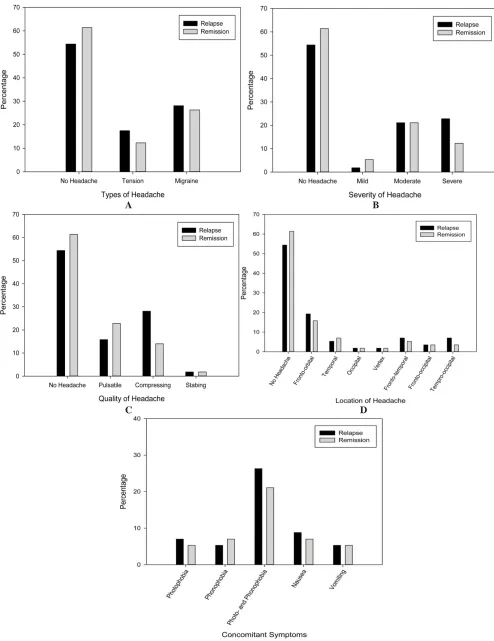
Among patients with RRMS who experienced headaches during their relapses, the most common type of headache was migraine (n = 16, 28.1%) followed by TTH (n = 10, 14%). Most patients reported the severity and quality of their headaches as severe (22.8%) and compressing (28.1%), respectively. Fronto-orbital was the most common location of headache, as reported by 10 (17.5%) patients. Finally, 15 (26.3%) patients reported that they were experiencing photophobia and phonophobia concomitantly and 8 (14.1%) patients complained of nausea and/or emesis. In the control group, 12 (18.4%) of the headache sufferers were diagnosed with migraine and 6 (9.2%) of them had TTH. Furthermore, the majority of controls declared their headaches to be moderate and pulsatile (13.8 and 18.4%, respectively). In addition, most headache subjects in control group (n = 5, 7.7%) experienced frontal headaches. At last, 6 (9.2%) of the controls noted accompanying phonophobia and photophobia and 8 (12.3%) controls had nausea and/or vomiting as co-symptoms during their headaches. Comparing the participants in control group with headaches and RRMS patients in relapse phase with headaches, none of the aforementioned headache characteristics differed between the two groups significantly and this finding also held true for type of
headaches and headache co-symptoms (all
corresponding P values> 0.050).
Table 1. Baseline characteristics of study population
Characteristics Case (n = 57) Control (n = 65)
Age (mean ± SD) 31.84 ± 9.32 36.37 ± 11.34
Gender [n (%)]
Male 8 (14.0) 10 (15.4)
Female 49 (86.0) 55 (84.6)
Educational level [n (%)]
College graduate 13 (22.8) 12 (18.4)
High school diploma 22 (38.6) 30 (46.2)
Less than high school 9 (15.8) 17 (26.2)
Missing 13 (22.8) 6 (9.2)
Marital status [n (%)]
Married 30 (52.6) 41 (63.1)
Single 15 (26.3) 16 (24.6)
Missing 12 (21.1) 8 (12.3)
About 3 months after the flare-up of the disease and during the remission period, the most frequent type of headache was still migraine type (26.3%), but the severity of the headaches decreased and 12 (21.1%) patients reported they were experiencing moderate headaches during the remission follow-up period. No major change was observed in the common location and quality of headaches during these 3 months. Detailed information regarding the features of headache attacks during relapse and remission phases in case group are presented in figure 1 (A-E).
Comparing features of headaches between the two phases via McNemar’s test, no significant differences regarding type (P = 0.379), severity (P = 0.528), quality (P = 0.092), or location of headaches (P = 0.506) and
presence of concomitant symptoms including
photophobia and phonophobia (P = 0.669) or nausea and/or vomiting (P = 0.905) were detected. To be noted, none of the controls or RRMS patients who had headaches used preventive medication for headaches, but two controls (3.1%) and three MS patients (5.7%) encountered medication overuse headache (MOH). Moreover, five headache-positive RRMS patients (8.7%) and two headache-negative MS cases (3.5%) used anti-epileptics and anti-depressants (tricyclic anti-depressants) for pain and psychiatric purposes during remission phase, respectively.
Patients were divided into two groups based on the duration of disease; 32 (56.1%) patients were diagnosed with MS more than 3 years ago and 25 (43.9%) subjects were diagnosed during the past 3 years. Seventeen patients (68.0%) in the latter group reported headaches during flare-up of disease, which was significantly higher than the frequency of headaches among patients with disease-duration of more than 3 years (n = 9, 28.1%) (P = 0.004). Such association was not observed for the prevalence of headaches during remission phase (52.0 vs. 28.1%, P = 0.066).
Of the 26 RRMS patients who suffered from headaches during their relapses, 8 (14.1%) of them went through an optic neuritis flare-up, 10 (17.5%) subjects experienced hemiparesis/hemihypoesthesia, 4 (7.1%) individuals faced brainstem or cerebellar symptoms during their flare-up and 4 (7.1%) patients suffered a myelitis attack. For their no-headache MS counterparts, the following numbers were seen: nine patients (15.8%) with blurred vision at attack, 14 (24.6%) individuals with hemispheric lesions at relapse, 7 (12.3%) subjects with cerebellar and brainstem lesions at flare-up and 9 (15.8%) patients with myelitis at exacerbation of MS. Ultimately, there was no significant correlation between a specific type of MS attack and headache prevalence (P = 0.273).
From the DMD perspective, four RRMS patients
stated that their headaches got worse after INF-β
treatment [1 used Ziferon (INF-β 1b), 2 treated with
ReciGen (INF-β 1a) and 1 consumed CinnoVex (INF-β
1a)] (Iranian version of Betaferon, Rebif and Avonex). On the other hand, none of the MS patients using fingolimod or glatiramer acetate (GA) noticed headache exacerbation after DMD therapy.
Another finding that should be mentioned is that in one of the RRMS patients, exacerbation of a pre-existing migraine headache was the possible first presentation of MS, as it forced the patient to seek medical care and led to the diagnosis of MS in that patient.
Discussion
Nowadays, the notion that headaches of different types are associated with MS has gained acceptance
and this specifically goes for migraine.21 Nevertheless,
the properties of this association still remain vague.
Scientists have delved into the enigmatic
pathophysiological and epidemiological relationship between headaches and MS and most of these efforts have been made in the area of migraine and MS. About half a century ago, Watkins et al. carried out a case-control study in which they demonstrated that MS subjects are 2 times more likely to have positive family
history of migraine compared to healthy controls.16
Zorzon et al.33 confirmed this finding as they too
declared that people with migraine running in their family have a higher chance of developing MS.
In the early 90s, when three MS individuals experienced migraine during MS flare-up, serotonin was incriminated for bridging the gap between MS and migraine; serotonin was implicated earlier before in migraine pathology and as MS patients were already “out of” serotonin, serotonin perturbations could have possibly played a role in MS attacks.34
Simple co-morbidity of headaches like migraine and MS is another elucidation in the headache-MS
path.19,30,33 Another piece of evidence for common
ground between MS and headaches is the drop in
circulating T8 lymphocytes in both settings.35,36
Pregnancy is another part of the thread between MS and migraine, as both pregnant migraineurs and pregnant MS patients enjoy a less debilitating course
of disease during pregnancy.37 In the mid-2000s,
neurologists laid out an explanation for migraine-MS interrelationship; they suggested that migraine, especially migraine with aura, switches on particular matrix metalloproteinases that in turn destruct the blood-brain barrier and render myelin autoantigens vulnerable to autoreactive T-cells present in the bloodstream and this process can ultimately culminate
in MS.38,39 Furthermore, migraine episodes and MS
attacks apparently share common cytokine
profiles.19,40 Common genetic and environmental
determinants present in MS, migraine and TTH are
A B
C D
E
Figure 1. Features of headache attacks during relapse and remission phases among patients with relapsing-remitting multiple
The prevalence rate of headaches in relapse and remission subsets of our study was 45.6% and 38.6%, respectively, which is in accord with the last systematic review on headaches in MS patients, that announced a crude headache prevalence rate of 42.5% in MS patients.3 However, two distinct studies in the
past 7 years have manifested high headache prevalence numbers in RRMS populations, i.e., 74.7% (83 RRMS subjects) and 76.3% (118 RRMS patients), in order.14,15 In this current study, we showed that our
RRMS patients confronted headaches in their relapse phases significantly more frequent than the controls did. On the contrary, RRMS patients failed to retain this significance in remission period, although they did encounter headaches more often than controls. Furthermore, headache prevalence rates in relapse and remission time periods were comparable in our effort. Ergun et al.1 conducted a study in which they
assessed headaches in two separate sets of relapse phase and remission phase-RRMS patients and they declared that a significantly higher proportion of RRMS patients in remission period complained of headaches compared to their relapse phase-RRMS counterparts (73.5 vs. 38.9%, respectively).
The difference witnessed between the prevalence rates of their study and ours can be explained by the fact that the number of subjects in relapse and remission in their study were approximately a half and a third of ours, respectively, and this subsequently lowers the power of their study. Furthermore, their relapse and remission patients were two distinct groups of people, but our relapse phase-RRMS patients were the same ones assessed in remission period. Therefore, intervening factors related to different sets of patients could have skewed the results of Ergun et al.’s study.1 In addition, no
healthy controls took part in their study.
Taking types of headaches into account, no significant difference was observed comparing those in remission and relapse and controls; more than 60.0% (28.1% of all RRMS patients in relapse) of headaches in our relapse period were of migraine type and the rest were TTHs and the percentage of migraineurs in remission and control subsets was 68.0 and 66.6%, respectively. Conversely, PSHs (27.8%) constituted most headaches seen in relapse patients of
Ergun et al.’s study,1 with migraine and MOH counting
for 11.1 and 5.9% of patients in relapse, in order. However, the distribution of types of headaches in remission was similar to ours (i.e., migraine 41.2% and TTH 20.6% of patients). Two distinct RRMS cohorts reported prevalence of migraine to be 49.8 and 34.1%, in order, and 27.17% of subjects in the latter group
were diagnosed with TTH.41,42 In a
questionnaire-based study carried out in 2013, 46% of 673 MS
patients announced that they were battling with migraine and migraine headaches significantly
accompanied RRMS patients.4 Villani et al.14 and
D’Amico et al.6 have also demonstrated a significant
association between RRMS and migraine headache. In a meta-analysis performed by Pakpoor et al.,28
MS patients displayed an over two-fold increment in likelihood of acquiring migraine headaches compared to controls. In addition, a cross-sectional study showed that the chance MS patients have for confronting co-morbid migraine is trice than
controls.30 Contradictory to these studies, two
different case-control studies13,19 carried out stated in
2007 and 2009 non-significant difference between MS cases and controls regarding headache type distribution. Katsiari et al.43 also noticed no significant
correlation between exacerbations of MS and other autoimmune diseases and different categories of headaches.
Considering severity and quality of headaches, most of our RRMS patients in relapse had severe and compressing headaches, which were alleviated by remission and turned into moderate headaches in that period. Nevertheless, no significant difference with regard to these factors existed when controls and patients in remission and relapse were compared and this insignificance was replicated when assessing photophobia/phonophobia, nausea and/or vomiting and location of headaches in the groups. With the aid
of a questionnaire, Tabby et al.27 indicated that
headache-related pain in their 72 MS patients was throbbing, stabbing or sharp most of the times and bilateral headaches were more common than unilateral ones. In Moisset et al.'s survey4 most MS
patients notified the researchers that their headaches were moderately painful.
In the study of Moisset et al.4 patients who were
diagnosed with MS < 15 years before the time of study had a higher probability of having migraine. In our current effort, we also showed that RRMS patients in relapse phase with shorter disease-duration (< 3 years) were more prone to headaches than those coping with RRMS for more than 3 years. Of note, we did not detect this significant relationship in subjects in remission. One explanation for this finding could be that MS patients are less neurologically-disabled in their first years and therefore, pay more attention to headaches compared to those suffering from more neurological-related disabilities that prevent them from correctly detecting the presence of headaches. From another point of view, the neuro-inflammation played out in the first couple of years of RRMS could possibly explain the association between RRMS and headache occurrence in these years.
patients, with or without headaches, experienced optic neuritis attacks in relapse. However, no significant association between type of attack (and subsequently site of involvement by MS lesions) and headache prevalence was found. In a cohort of 127 Japanese MS patients, no significant correlation
between brainstem-spinal, optico-spinal, and
conventional MS clinical variants and headache
prevalence was detected.7 In the aforementioned
Ergun et al. study,1 total headache occurrence was
significantly linked to periventricular lesions, TTHs happening in remission were more frequently associated with lesions involving the spinal cord and
overall headache incidence in relapse was
significantly intertwined with brainstem lesions. In a retrospective research, Gee et al.44 declared that MS
patients with lesions found in the periaqueductal grey (PAG)/midbrain area are more likely to suffer from migraine-like headaches and TTHs. Several case-reports have revealed a possible association between brainstem and PAG MS plaques and migraine incidence45,46 and several other have demonstrated a
link between cluster headache occurrence and MS lesions infiltrating trigeminal nerve entry zone in the brainstem.22,47
More than a decade ago, speculations were made regarding the role of DMDs in exacerbating headaches
in MS patients12 and current scientific evidence points
out a significant positive correlation between emergence of new headaches or worsening of old headaches in MS patients and INF-β treatment.42,48-50
In a recent report, novel fingolimod usage in MS patients has been linked to the happening of new
headaches.51 Natalizumab was another DMD
investigated in this regard and Villani et al.48
announced that it does not make comorbid migraines worse in those suffering from MS. In addition, researchers have claimed that GA does not significantly increase the frequency or severity of
headaches in MS subjects who already have
headaches.12,52 An important limitation that we faced,
in our study, was that patient information regarding use of DMDs was incomplete and many of them did not use these medications on a regular basis and
although four patients using INF-β mentioned
exacerbation of headaches after this kind of therapy and not a single patient experienced aggravation of their headache post-GA and fingolimod consumption, proper statistical evaluation was not possible.
Headache can be the presenting symptom of MS, as we have also showed in this study. Therefore, prompt intervention at headache onset in MS patients with contrast-enhanced magnetic resonance imaging could reveal novel plaques and if so subsequent pulse of methylprednisolone can prevent an ensuing MS relapse.
Conclusion
We suggest that RRMS patients in relapse phase suffer from headaches more than the general population does and those who complain of headaches in relapse phase have probably been diagnosed with RRMS in the preceding 3 years.
Conflict of Interests
The authors declare no conflict of interest in this study.
Acknowledgments
This research received no specific grant from any funding agency in the public, commercial, or not-for-profit sectors.
How to cite this article: Togha M, Abbasi-Khoshsirat N, Naser-Moghadasi A, Mousavinia F, Mozafari M, Neishaboury M, et al. Headache in relapse and remission phases of multiple sclerosis: A case-control study. Iran J Neurol 2016; 15(1): 1-8.
References
1. Ergun U, Ozer G, Sekercan S, Artan E, Kudiaki C, Ucler S, et al. Headaches in the different phases of relapsing-remitting multiple sclerosis: a tendency for stabbing headaches during relapses. Neurologist 2009; 15(4): 212-6.
2. Nicoletti A, Patti F, Lo Fermo S, Liberto A, Castiglione A, Laisa P, et al. Headache and multiple sclerosis: a population-based case-control study in Catania, Sicily. Cephalalgia 2008; 28(11): 1163-9.
3. Foley PL, Vesterinen HM, Laird BJ, Sena ES, Colvin LA, Chandran S, et al. Prevalence and natural history of pain in adults with multiple sclerosis: systematic review and meta-analysis. Pain 2013; 154(5): 632-42.
4. Moisset X, Ouchchane L, Guy N, Bayle DJ,
Dallel R, Clavelou P. Migraine headaches and pain with neuropathic characteristics: comorbid conditions in patients with multiple sclerosis. Pain 2013; 154(12): 2691-9.
5. Mcalpine D, Compston N. Some aspects of the natural history of disseminated sclerosis. Q J Med 1952; 21(82): 135-67.
6. D'Amico D, La ML, Rigamonti A, Usai S, Mascoli N, Milanese C, et al. Prevalence of primary headaches in people with multiple sclerosis. Cephalalgia 2004; 24(11): 980-4. 7. Doi H, Matsushita T, Isobe N, Ishizu T,
Ohyagi Y, Kira J. Frequency of chronic headaches in Japanese patients with multiple sclerosis: with special reference to opticospinal and common forms of multiple sclerosis. Headache 2009; 49(10): 1513-20.
8. Kister I, Caminero AB, Herbert J, Lipton RB. Tension-type headache and migraine in multiple sclerosis. Curr Pain Headache Rep 2010; 14(6): 441-8.
9. Martinelli BF, Colombo B, Annovazzi P, Martinelli V, Bernasconi L, Solaro C, et al. Lifetime and actual prevalence of pain and headache in multiple sclerosis. Mult Scler 2008; 14(4): 514-21.
10. Mijajlovic MD, Aleksic V, Covickovic Šternic NM. Cluster headache as a first manifestation of multiple sclerosis: case report and literature review. Neuropsychiatr Dis Treat 2014; 10: 2269-74.
12. Pollmann W, Erasmus LP, Feneberg W, Then BF, Straube A. Interferon beta but not glatiramer acetate therapy aggravates headaches in MS. Neurology 2002; 59(4): 636-9.
13. Putzki N, Pfriem A, Limmroth V, Yaldizli O, Tettenborn B, Diener HC, et al. Prevalence of migraine, tension-type headache and trigeminal neuralgia in multiple sclerosis. Eur J Neurol 2009; 16(2): 262-7.
14. Villani V, Prosperini L, Ciuffoli A, Pizzolato R, Salvetti M, Pozzilli C, et al. Primary headache and multiple sclerosis: preliminary results of a prospective study. Neurological Sciences 2008; 29(Suppl 1): S146-8.
15. Villani V, Prosperini L, Pozzilli C, Salvetti M, Ciuffoli A. The use of ID migraine™ questionnaire in patients with multiple sclerosis. Neurological Sciences 2011; 32(2): 269-73.
16. Watkins SM, Espir M. Migraine and multiple sclerosis. J Neurol Neurosurg Psychiatry 1969; 32(1): 35-7.
17. Yetimalar Y, Secil Y, Inceoglu AK, Eren S, Basoglu M. Unusual primary manifestations of multiple sclerosis. N Z Med J 2008; 121(1277): 47-59.
18. Freedman MS, Gray TA. Vascular headache: a presenting symptom of multiple sclerosis. Can J Neurol Sci 1989; 16(1): 63-6. 19. Vacca G, Marano E, Brescia Morra V,
Lanzillo R, Vito M, Parente E, et al. Multiple sclerosis and headache co-morbidity. A case-control study. Neurological Sciences 2007; 28(3): 133-5. 20. La ML, Prone V. Headache in multiple
sclerosis and autoimmune disorders. Neurol Sci 2015; 36(Suppl 1): 75-8.
21. Klein M, Woehrl B, Zeller G, Straube A. Stabbing headache as a sign of relapses in multiple sclerosis. Headache 2013; 53(7): 1159-61.
22. Leandri M, Cruccu G, Gottlieb A. Cluster headache-like pain in multiple sclerosis. Cephalalgia 1999; 19(8): 732-4.
23. Alroughani R, Ahmed SF, Khan R, Al-Hashel J. Status migrainosus as an initial presentation of multiple sclerosis. Springerplus 2015; 4: 28.
24. Rampello L, Malaguarnera M, Rampello L, Nicoletti G, Battaglia G. Stabbing headache in patients with autoimmune disorders. Clin Neurol Neurosurg 2012; 114(6): 751-3. 25. Mariotti P, Nociti V, Cianfoni A, Stefanini
C, de Rose P, Martinelli D, et al. Migraine-like headache and status migrainosus as attacks of multiple sclerosis in a child. Pediatrics 2010; 126(2): e459-e464. 26. Tremlett HL, Oger J. Interrupted therapy:
stopping and switching of the
beta-interferons prescribed for MS. Neurology 2003; 61(4): 551-4.
27. Tabby D, Majeed MH, Youngman B, Wilcox J. Headache in multiple sclerosis: features and implications for disease management. Int J MS Care 2013; 15(2): 73-80.
28. Pakpoor J, Handel AE, Giovannoni G, Dobson R, Ramagopalan SV. Meta-analysis of the relationship between multiple sclerosis and migraine. PLoS One 2012; 7(9): e45295.
29. Villani V, Prosperini L, Pozzilli C, Salvetti M, Sette G. Quality of life of multiple sclerosis patients with comorbid migraine. Neurological Sciences 2011; 32(Suppl 1): S149-51.
30. Kister I, Caminero AB, Monteith TS, Soliman A, Bacon TE, Bacon JH, et al. Migraine is comorbid with multiple sclerosis and associated with a more symptomatic MS course. J Headache Pain 2010; 11(5): 417-25.
31. Polman CH, Reingold SC, Banwell B, Clanet M, Cohen JA, Filippi M, et al. Diagnostic criteria for multiple sclerosis: 2010 revisions to the McDonald criteria. Ann Neurol 2011; 69(2): 292-302. 32. Headache Classification Committee of the
International Headache Society (IHS). The International Classification of Headache Disorders, 3rd edition (beta version). Cephalalgia 2013; 33(9): 629-808. 33. Zorzon M, Zivadinov R, Nasuelli D, Dolfini
P, Bosco A, Bratina A, et al. Risk factors of multiple sclerosis: a case-control study. Neurological Sciences 2003; 24(4): 242-7. 34. Sandyk R, Awerbuch GI. The co-occurrence
of multiple sclerosis and migraine headache: the serotoninergic link. Int J Neurosci 1994; 76(3-4): 249-57.
35. Leone M, Biffi M, Leoni F, Bussone G. Leukocyte subsets and cortisol serum levels in patients with migraine without aura and chronic tension-type headache. Cephalalgia 1994; 14(2): 139-42.
36. Reder AT, Antel JP, Oger JJ, McFarland TA, Rosenkoetter M, Arnason BG. Low T8 antigen density on lymphocytes in active multiple sclerosis. Ann Neurol 1984; 16(2): 242-9.
37. Pearce CF, Hansen WF. Headache and neurological disease in pregnancy. Clin Obstet Gynecol 2012; 55(3): 810-28. 38. Kister I, Munger KL, Herbert J, Ascherio A.
Increased risk of multiple sclerosis among women with migraine in the Nurses' Health Study II. Mult Scler 2012; 18(1): 90-7. 39. Gursoy-Ozdemir Y, Qiu J, Matsuoka N,
Bolay H, Bermpohl D, Jin H, et al. Cortical spreading depression activates and upregulates MMP-9. J Clin Invest 2004;
113(10): 1447-55.
40. Perini F, D'Andrea G, Galloni E, Pignatelli F, Billo G, Alba S, et al. Plasma cytokine levels in migraineurs and controls. Headache 2005; 45(7): 926-31.
41. Villani V, de Giglio L, Sette G, Pozzilli C, Salvetti M, Prosperini L. Determinants of the severity of comorbid migraine in multiple sclerosis. Neurol Sci 2012; 33(6): 1345-53.
42. Patti F, Nicoletti A, Pappalardo A, Castiglione A, Lo FS, Messina S, et al. Frequency and severity of headache is worsened by Interferon-beta therapy in patients with multiple sclerosis. Acta Neurol Scand 2012; 125(2): 91-5.
43. Katsiari CG, Vikelis M, Paraskevopoulou ES, Sfikakis PP, Mitsikostas DD. Headache in systemic lupus erythematosus vs multiple sclerosis: a prospective comparative study. Headache 2011; 51(9): 1398-407.
44. Gee JR, Chang J, Dublin AB, Vijayan N. The association of brainstem lesions with migraine-like headache: an imaging study of multiple sclerosis. Headache 2005; 45(6): 670-7.
45. Fragoso YD, Brooks JB. Two cases of lesions in brainstem in multiple sclerosis and refractory migraine. Headache 2007; 47(6): 852-4.
46. Haas DC, Kent PF, Friedman DI. Headache caused by a single lesion of multiple sclerosis in the periaqueductal gray area. Headache 1993; 33(8): 452-5.
47. Gentile S, Ferrero M, Vaula G, Rainero I, Pinessi L. Cluster headache attacks and multiple sclerosis. J Headache Pain 2007; 8(4): 245-7.
48. Villani V, Prosperini L, de Giglio L, Pozzilli C, Salvetti M, Sette G. The impact of interferon beta and natalizumab on comorbid migraine in multiple sclerosis. Headache 2012; 52(7): 1130-5.
49. La ML, D'Amico D, Rigamonti A, Mascoli N, Bussone G, Milanese C. Interferon treatment may trigger primary headaches in multiple sclerosis patients. Mult Scler 2006; 12(4): 476-80.
50. Khromov A, Segal M, Nissinoff J, Fast A. Migraines linked to interferon-beta treatment of multiple sclerosis. Am J Phys Med Rehabil 2005; 84(8): 644-7.
51. Fragoso YD, Adoni T, Gomes S, Goncalves MV, Matta AP, Mendes MF, et al. Persistent headache in patients with multiple sclerosis starting treatment with fingolimod. Headache 2015; 55(4): 578-9.