Dr. S. Ramachandran
Professor & Head, Department of Pharmacology, GIET School of Pharmacy, Rajahmundry, [A.P.] India E-mail: [email protected]
Address for correspondence
Access this article online www.japer.in
Effect of Soya milk on Dyslipidaemic rats and its
Pharmacodynamic Potential with Statins
INTRODUCTION
Hyper lipidemia has been ranked as one of the greatest risk contributing to the prevalence and severity of coronary heart diseases. [1] Coronary heart disease, stroke atherosclerosis and hyperlipidemia are the primary cause of death. [2] Hyperlipidaemia is characterized by elevated serum total cholesterol, low density, and very low-density lipo proteins and decreased high-density lipo proteins levels. Hyper lipidemia associated lipid disorders are considered to cause atherosclerotic cardio vascular disease. [3] Among these hypercholesterolemia and hyper triglyceridemia are closely related to ischemic heart disease. [4] The main aim of treatment in patients with hyperlipidaemia is to reduce the risk of developing ischemic heart disease or the occurrence of further cardiovascular diseases. [5]Currently available hypolipidemic drugs have been associated
with a number of side effects. [6]Statins are effective therapeutic tools for dyslipidaemia and reduce risk of cardiovascular morbidity and mortality in patients with or at risk for coronary heart diseases. [7] Atorvastatin reduces the levels of total cholesterol, low density lipoprotein LDL-C, triglycerides, and very low density lipoprotein VLDL-C and increases high density lipoproteins in patients with a wide variety of dyslipidemiait is projected as a promising drug for monotherapy of varying degree of hyper cholestremia and hyper tri glyceridemia. [8] However prolonged usage of statins causes increased of muscle toxicity. [9, 10] The usage of herbal therapy along with prescription and Over -The- Counter (OTC) medications is increasing day by day. [11] Numerous investigators have shown that foods containing phyto chemicals with anti-oxidant potential have strong protective effect against the risk of cancer and cardio vascular disease. [12]Increasing evidence from nutritional intervention studies in animals and humans indicates that a dietary soya protein hasbeneficial effect on obesity. [13]Soya milk has been targeted for its hypocholesterolemic activity Research
Research Research
Research ArticleArticleArticleArticle
The present study was aimed to explore the pharmacodynamic interaction of soya milk with atorvastatin. It is food – drug interaction .Wister albino rats of either sex (150-200g) were induced hyperlipidemia by administering triton at dose of 100 mg/kg orallyand they were divided into six groups, each consisting of six each. Normal control group (1) is treated with 1%w/v of carboxy methyl cellulose suspension. Group 2 served as disease control. Group 3 was maintained as standard and was administered with atorvastatin (10mg/kg) orally.To the dyslipidemic 4th, 5th, groupwere administered with soya milk and atorvastatin orally at different doses for 5 weeks respectively. Group 6 receives only soya milk. On the last day blood samples were collected, from all the groups andserum was isolated and subjected to tri glycerides, total cholesterol, and low density lipoproteins and high density lipo protein estimation. Body weight was also calculated. Atorvastatin reduced the serum cholesterol levels in dyslipidemic rats. Whereas combination of atorvastatin with soya milk significantly reduced a lipid level when compared to atorvastatin alone. The combination of atorvastatin with soya milk enhanced the hypolipidaemic activity and is reported as beneficial drug interaction.
Keyword: Pharmacodynamicinteraction, soya milk, hyperlipidaemia, atorvastatin.
ABSTRACT ABSTRACT ABSTRACT ABSTRACT S. Ramachandran1*, Rajani1, A. S.
Sanjay1, M. D. Dhanaraju2
1Department of Pharmacology, GIET School of Pharmacy, Rajahmundry, Andhra Pradesh- 533296, India.
2Research, Lab-GIET School of Pharmacy, Rajahmundry, Andhra Pradesh-533296, India.
.Dietarysoya proteins lowers blood lipid concentration and reduces the incidence of cardiovascular disease in animals and humans. Thesoya protein preparations employed in previous studies usually contained considerable amount of isoflavones, saponins, fibres, andphytic acid. These extra compounds may be responsible for lipid lowering effect. [14] Studies revealed that soya isoflavones have the physiological effect of lowering blood lipids levels.
Genistein and daidzen are isoflavones abundant in soya milk, and their aglycones, genistein and daidzein, are released by action of intestinal glucosidase and absorbed from the gastro intestinal tract. Studies revealed that isoflavones affected the activity of enzymes involved in lipid metabolism and mRNA levels of proteins related to β- oxidation and energy metabolism inliver. [15, 16] Many studies suggests that dietary isoflavones play a crucial role in regulating lipid metabolism. Generally, herbal products are considered to be safe, but they interact with allopathic drugs and results in altered activity. The present study aimed on pharmaco dynamic interaction of statins with soya milk in albino rats, we induced hyperlipidaemiain rats successfully using TritonWR1399.
MATERIAL AND METHODS
Chemicals:
Triton WR-1335 (a non- ionic detergent, isooctylpolyoxy ethylene phenol, formaldehyde polymer) was obtained Ottulabs, Hyderabad, India. Atorvastatin pure drug was obtained as a kind gift from Hetero Labs Ltd, Himachal Pradesh. Total cholesterol estimation was done by using the Siemen Cholesterol Diagnostic Kit. Serum triglycerides were estimated by Siemen Triglycerides Diagnostic kit. HDL-C kit was procured from Siemen Diagnostics, Hyderabad, India.Soya milk wasobtained from matured soya beans (Glycine max) milk was prepared
Experimental Design:
Animals:
Wistar rats were purchased from National Institute of Nutrition, Hyderabad. Animals were housed under standard condition of temperature (240±10c), relative humidity (65±10%), light & dark cycle (12:12h) and fed with standard pellet food and water ad libitum.
The experimental design & research plan along with animals handling and disposal procedure were placed before the institutional ethics committee. The committee granted approval after carefully evaluating research project during their meeting held in January 2012. Animal house registration no 1069/PO/ac/07/CPCSEA and project approval number-GSP/IAEC/2013/04/04. Wister albino rats of uniform weight and age were selected and allowed to acclimatize to the environment for three weeks and supplied with a standard pellet diet and water and libitum. Triton was used to induce hyperlipidaemia and hyperlipidaemia was induced within 72 hours. At the end of third day blood was withdrawn from retro- orbital to analyse for lipid profiles (Total cholesterol (TC), Triglycerides (TG), Low density lipo proteins (LDL-C), and high density lipoproteins (HDL-C) levels) to confirm the induction of hyper lipidemia. Now the hyper lipideamic rats were divided into six groups of six each and treated with daily dose of soya milk and atorvastatin for four weeks. Short- term intake of soya milk might not be significantly affect plasma lipid profiles, but the hypo lipidaemic effect was observed after a 4-wk intake of soyamilk. So that Atorvastatin and soya milk was given orally for 5 weeks
Group 1: Atorvastatin(10 mg/kg b.wt orally) standard Group 2: Atorvastatin (10 mg/kg b.wt. orally) + soya milk 2ml/ kg orally
Group 3: Atorvastatin (5mg/kg b.wt. orally) + soyamilk 5ml/kg orally.
Group 4: Onlysoya milk 5ml/kg orally.
Group 6: control group without hyper lipidemia receive a dose of 1.5% carboxy methyl cellulose. Collection of Blood Samples:
After four weeks, blood samples were withdrawn from the retro – orbital sinuspuncture under mild ether anaesthesiainto heparinised eppendroff tubes. The collected samples were centrifuged for 15 minutes at 6000rpm serum samples were collected and used for variousbiochemical experiments. Body weight was also calculated. The animals were then sacrificed and liver is collected and weighed.
Biochemical analysis:
The serum samples was assayed for total cholesterol, triglycerides, phospholipids, high-density lipoprotein (HDL), density lipoprotein (LDL), very low-density lipoprotein (VLDL) using standardprotocol methods. LDL-C was calculated as per Friedewald estimation.
LDL-C= TC-(TG/5+HDL-C). Statistical analysis:
The results were expressed as a mean ± S.D. Statistical analysis was carried out by one way ANOVA followed byTukey’smultiple comparison tests using Graph pad PRISM soft ware version 6 (2013) P values˂ 0.05 were considered as statistical significant.
RESULTS AND DISCUSSION
The present study is to investigate antihyperlipidemic activity of soya milk and its pharmacodynamics interaction with statins.Soya foods are rich source of phytoestrogens and isoflavones likes genistein and
dadizen .The antioxidant property of the soya isoflavones, namely, genistein and daidzein is well established in different experimental models and also in clinical studies [14]. The compounds have been found effective in the management of diabetes by acting on peroxisome proliferator-activated receptors. It reduces the risk of coronary heart disease by reducing the level of low-density lipoprotein and triglycerides. Soya isoflavones have the potential in the treatment of osteoporosis to act on osteoclasts further to inhibit tyrosine kinase. [16] Among the soya isoflavones, genistein is the potential compound found effective in the treatment of cancer by acting on androgen receptor further to inhibit tyrosine kinases. As soya milk is inexpensive and serves as a high quality protein source. Soya milk is available at affordable cost. The greater acceptance of soya foods by the general population is due to increased recognition of health benefits of soya foods, especially by those want to reduce their consumption of animal products.
Triton WR – 1339 has been widely used to block clearance of triglycerides- rich lipo protein to induce acutehyperlipidaemia in several animals. This model is widely used for a number of different aims particularly, in rats it has been used for screening natural or chemical hypo lipidemic drugs. Interestingly, the results of the present study show that synergistic reduction in cholesterol levels and also it reversed Triton induced hyperlipidaemia in rats. [17]
Table 1: The effect of Triton on plasma lipid levels
Day TC (mg/dl) TG(mg/dl) LDL-C(mg/dl) HDL-C(mg/dl) VLDL-C(mg/dl)
0 day 90.12±8.32 129.86±9.21 23.19±8.12 24.22±4.12 25.972±4.35
3rd day(72 hours) 232.32±8.89 233.12±8.42 92.38±6.10 17.72±5.71 46.624±4.21
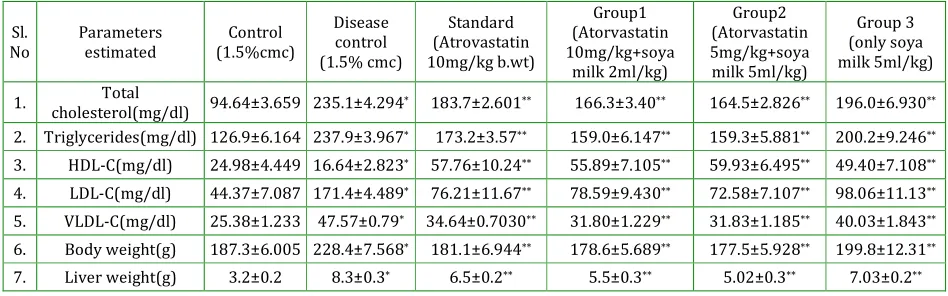
Table 2: Pharmacodynamic parameters of treated groups and control groups on 31 st day (n=6).
Sl. No
Parameters estimated
Control (1.5%cmc)
Disease control (1.5% cmc)
Standard (Atrovastatin 10mg/kg b.wt)
Group1 (Atorvastatin 10mg/kg+soya
milk 2ml/kg)
Group2 (Atorvastatin 5mg/kg+soya milk 5ml/kg)
Group 3 (only soya milk 5ml/kg)
1. Total
cholesterol(mg/dl) 94.64±3.659 235.1±4.294* 183.7±2.601** 166.3±3.40** 164.5±2.826** 196.0±6.930**
2. Triglycerides(mg/dl) 126.9±6.164 237.9±3.967* 173.2±3.57** 159.0±6.147** 159.3±5.881** 200.2±9.246**
3. HDL-C(mg/dl) 24.98±4.449 16.64±2.823* 57.76±10.24** 55.89±7.105** 59.93±6.495** 49.40±7.108**
4. LDL-C(mg/dl) 44.37±7.087 171.4±4.489* 76.21±11.67** 78.59±9.430** 72.58±7.107** 98.06±11.13**
5. VLDL-C(mg/dl) 25.38±1.233 47.57±0.79* 34.64±0.7030** 31.80±1.229** 31.83±1.185** 40.03±1.843**
6. Body weight(g) 187.3±6.005 228.4±7.568* 181.1±6.944** 178.6±5.689** 177.5±5.928** 199.8±12.31**
7. Liver weight(g) 3.2±0.2 8.3±0.3* 6.5±0.2** 5.5±0.3** 5.02±0.3** 7.03±0.2**
Values are in mean± SD; (n=6).
*P˂ 0.05 significant when compared with Vehicle control group.
** P ˂ 0.05 significant when compared with positive control group,(One-way ANOVA followed by Tukey’s test for multiple comparisons).
The serum TC, TG and LDL-C levels were significantly decreased P˂ 0.05 and HDL-C levels were increased in group 2. The decrease in plasma TC, TG, and LDL-C levels was more in group 2. There is moderate decrease in plasma TC, TG and LDL-C levels in group 3. Soya products reduce the risk of heart disease by lowering levels of oxidised cholesterol, which is taken up more rapidly by coronary artery walls to form dangerous plaque. [18] Many researches has shown that soya products consumption reduces cholesterol in general while also decreases the amount of bad cholesterol in body and maintain the amount of good Cholesterol. [19]
CONCLUSION
In conclusion, we have studied that there is synergistic decrement of lipid profiles with soya milk in rats. As soya milk is available at affordable cost these studies reported as beneficial drug interaction. Statins alone are not always adequate therapy to achieve lipo protein goals .Many options are available either alone or in combination with statins that makes it possible to reach recommended goals in a safe and tolerable
REFERENCES
1. Grundy S.M. Cholesterol and coronary heart disease:
a new era. J. Am.Med Assoc. 1986; 56: 2849-2858.
2. Davey Smith G. Cholesterol lowering andmortality:
the importance of considering initial level ofrisk. Int
.Med. J. 1993; 30:1367-1373.
3. Saravanan R., RajendraPrasad N., Pugalandi K.V.
Effect of Piperbetle leaf extract on alcoholic toxicity
inthe rat brain. J. Med. Food. 2003; 6: 261-265.
4. Kaesancini A., Krauss R.M. Cardiovascular disease
and hyperlipidaemia. Cur. Opinion inlipidology.1994;
5: 249- 251.
5. Davey Smith G., Pekkanen J. Should there be
amoratorium on the use of cholesterol lowering
drugs? Br.Med J. 1992; 304: 431- 440.
6. Brown S.L. Lowered serum cholesterol and low
mood.Br. Med. J. 1996; 313: 637-638.
7. Mahley RW., Bersot TP. Drug therapy for
hypercholesterolemia and Dyslipidaemia. In: Burton
LL, Lazo JS, Parker KL, editors. Goodman and
Gilman’s The Pharmacological Basis of Therapeutics.
11thed. New York, USA: McGraw Hill; 2006; 933-60.
8. MalhotraHS., Goa KL. Atorvastatin: An updated
review of its pharmacological properties and use in
dyslipidaemia. Drug evaluation. Drugs 2001; 61:
proteins particles in patients with elevated serum
cholesterol and triglycerides levels. Atherosclerosis
1997; 133:123-33.
10. Neuvonen PJ et al. Drug interactions with lipid-
lowering drugs: mechanism and clinical relevance.
Clin Pharmacol Ther 2006; 80; 565-81.
11. Dilipreddy G., Gopalreddy A. Pharmacokinetic
interaction of garlic and atorvastatin in
dyslipidaemicrats. Indian J. Pharmacology. 2012;
44:246-252.
12. Bolego C et al. Safety consideration for statins. Curr
Opin Lipidol. 2002; 13:637-44.
13. Poysa V., Woodrow L. “Stability of soyabean seed
composition and its effect on soya milk and tofu yield
and quality,” Food Research International.2002;
35(4):337–345.
14. ObohG. “Coagulants modulate the
hypocholesterolemic effect of tofu (coagulated soya
milk),” African Journal of Biotechnology, 2006;
5:290-294.
15. Sacks F.M., Lichtenstein. A., Van Horn L., Harris W,
Kris-Etherton P., and Winston M. “Soya protein,
isoflavones, and cardiovascular health: an American
Heart Association Science Advisory for professionals
from the Nutrition Committee,”2006;
113(7):1034-1044.
16. Yoko Takahash I., Tseye- odiovodbay .A Comparative
Analysis of Genistein and Daidzein in affecting lipid
metabolism in rat liver. J Clin Biochem Nutr. 2009;
44(3):223-230.
17. Kellner A., CorrellJ.W. Ladd A.T. Sustained hyper
lipidemia induced in rabbits by means of intra
venously injected surface active agents. J. of Exp.
Medicine. 1951; 93:373-384.
18. Parma J., Shama H.R., Verma R. “Effect of source and
coagulants on the Physicochemical and Organoleptic
evaluation of soya tofu,” Journal of Dairying Foods &
Home Sciences, 2007; 26(2): 69–74.
19. Murphy P.A., Wilson L.A. “Soya bean protein
composition and tofu quality” Food Technology,
1997; 57(3): 86–88.
How to cite this article: S. Ramachandran1*, Rajani1, A. S.
Sanjay1, M. D. Dhanaraju2; Effect of Soya milk on
Dyslipidaemic rats and its Pharmacodynamic Potential with Statins; J. Adv. Pharm. Edu. & Res. 2013: 3(3): 289-293.