Bulletin of Mathematical Analysis and Applications ISSN: 1821-1291, URL: http://www.bmathaa.org Volume 9 Issue 2(2017), Pages 10-23.
NEW FIXED-CIRCLE RESULTS ON S-METRIC SPACES
NIHAL YILMAZ ¨OZG ¨UR, NIHAL TAS¸, UFUK C¸ ELIK
Abstract. In this paper our aim is to study some fixed-circle theorems on S-metric spaces. For this purpose we give new examples ofS-metric spaces and investigate some relationships between circles on metric andS-metric spaces. Then we investigate some existence and uniqueness conditions for fixed circles of self-mappings onS-metric spaces.
1. Introduction
Recently Sedghi, Shobe and Aliouche introduced the concept of an S-metric space as a generalization of a metric space as follows:
Definition 1.1. [8] Let X be a nonempty set and S : X×X×X → [0,∞)be a function satisfying the following conditions for allx, y, z, a∈X :
(1) S(x, y, z) = 0 if and only ifx=y=z, (2) S(x, y, z)≤S(x, x, a) +S(y, y, a) +S(z, z, a).
Then S is called an S-metric on X and the pair (X, S) is called an S-metric space.
For example, letRbe the real line. If we consider the following function S(x, y, z) =|x−z|+|y−z|
for allx, y, z∈R, then this function defines anS-metric onRand it is called the usualS-metric [9].
Sedghi, Shobe and Aliouche investigated some fixed-point results on anS-metric space in [8]. Then ¨Ozg¨ur and Ta¸s studied some generalizations of the Banach’s contraction principle onS-metric spaces in [7]. Also they introduced new fixed-point theorems for the Rhoades’ contractive condition on S-metric spaces in [3]. After, it was generalized these fixed-point theorems for generalized Rhoades’ contractive conditions in [4].
More recently, the notion of a fixed circle have been defined on metric and S-metric spaces in [5] and [6], respectively. It is important to investigate some fixed-circle theorems on various metric spaces to obtain new generalizations of known fixed-point results. Some interesting fixed-circle theorems were studied on metric spaces and S-metric spaces by ¨Ozg¨ur and Ta¸s (see [5] and [6] for more details).
2000Mathematics Subject Classification. 47H10, 54H25, 55M20, 37E10.
Key words and phrases. Fixed circle, fixed-circle theorem, existence, uniqueness,S-metric. c
2017 Universiteti i Prishtin¨es, Prishtin¨e, Kosov¨e. Submitted March 7, 2017. Published April 18, 2017. Communicated by Uday Chand De.
They studied some existence and uniqueness conditions for the fixed circles of self-mappings.
Our aim in this paper is to obtain new fixed-circle theorems for self-mappings on S-metric spaces. In Section 2 we recall some basic facts and give new examples of S-metric spaces. We draw some circles on these newS-metric spaces [10]. Also we investigate some relationships between circles on various metric spaces. In Section 3 we study some existence and uniqueness theorems for fixed circles. Some illustrative examples of self-mappings with a fixed circle are also given.
2. Comparisons of Circles on Metric and S-Metric Spaces
In this section we give new examples of S-metric spaces to determine some comparisons of circles on metric andS-metric spaces.
We recall the notion of a circle on anS-metric space.
Definition 2.1. [6]Let (X, S) be an S-metric space and x0∈X,r∈(0,∞). We
define the circle centered atx0 with radiusr as
CxS0,r ={x∈X:S(x, x, x0) =r}.
Now we recall the following basic lemmas.
Lemma 2.2. [8]Let (X, S)be an S-metric space. Then we get S(x, x, y) =S(y, y, x).
Lemma 2.2 can be considered as the symmetry condition on anS-metric space. In the following lemma, we see the relationships between a metric and anS-metric.
Lemma 2.3. [2] Let (X, d) be a metric space. Then the following properties are satisfied:
(1) Sd(x, y, z) =d(x, z) +d(y, z)for all x, y, z∈X is anS-metric onX.
(2) xn →xin(X, d)if and only if xn →xin(X, Sd).
(3) {xn} is Cauchy in (X, d)if and only if{xn}is Cauchy in (X, Sd).
(4) (X, d)is complete if and only if(X, Sd) is complete.
The metricSd was called as theS-metric generated by d[4].
Now we give new examples ofS-metric spaces and draw some circles.
Example 2.4. Let X=R+ and the functionS
1:X×X×X→[0,∞)be defined
by
S1(x, y, z) =
x2−y2
+
x2+y2−2z2 ,
for all x, y, z∈R+. Then S
1 is an S-metric onR+ which is not generated by any
metric and the pair (R+, S
1)is anS-metric space.
Conversely, assume that there exists a metricdsuch that
S1(x, y, z) =d(x, z) +d(y, z),
for allx, y, z∈R+. Then we obtain
S1(x, x, z) = 2d(x, z)and sod(x, z) =
x2−z2
and
S1(y, y, z) = 2d(y, z)and sod(y, z) =
y2−z2
,
for allx, y, z∈R+. So we get
x2−y2
+
x2+y2−2z2
=
x2−z2
+
y2−z2
which is a contradiction. HenceS1 is not generated by any metric.
In the following example we extend theS-metricS1 defined in Example 2.4 to
the three dimensional case.
Figure 1. The circleCS∗1
0,12on (X∗, S∗1).
Example 2.5. Let us consider the set X∗ = R+× R+ ×R+ and the function
S∗
1 :X∗×X∗×X∗→[0,∞)be defined as
S∗
1(x, y, z) = 3
X
i=1
x2i −yi2
+
x2i +yi2−2zi2
,
for all x= (x1, x2, x3), y = (y1, y2, y3) andz = (z1, z2, z3) onX∗. Then S1∗ is an
S-metric on X∗ and the pair(X∗, S∗
1)is an S-metric space.
If we choosex0= 0 = (0,0,0)andr= 12, then we get
CS1∗
0,12 = {x∈X∗:S1∗(x, x,0) = 12}
= {x∈X∗:x2
1+x22+x23= 6},
as shown in Figure 1.
If we choosex0= (2,1,1)andr= 12, then we get
CS∗1
x0,12 = {x∈X
∗:S∗
1(x, x, x0) = 12}
= {x∈X∗: x21−4
+
x22−1
+
x23−1
= 6},
as shown in Figure 2. Notice that the shape of the circles can be changed according to the center.
Example 2.6. Let X=R+ and the functionS
2:X×X×X→[0,∞)be defined
by
S2(x, y, z) =
lnx y
+ ln
xy z2
Figure 2. The circleCS∗1
x0,12on (X
∗, S∗
1).
for all x, y, z∈R+. Then S
2 is an S-metric onR+ which is not generated by any
metric and the pair (R+, S
2)is anS-metric space.
Conversely, suppose that there exists a metricdsuch that
S2(x, y, z) =d(x, z) +d(y, z),
for allx, y, z∈R+. Then we obtain
S2(x, x, z) = 2d(x, z) and sod(x, z) =
ln x z and
S2(y, y, z) = 2d(y, z)and sod(y, z) =
ln y z
for allx, y, z∈R+. So we get
lnx y + ln xy z2 = ln x z + ln y z ,
which is a contradiction. HenceS2 is not generated by any metric.
Now we considerX∗=R+×R+×R+ and the function S∗
2 :X∗×X∗×X∗→
[0,∞)be defined by
S∗
2(x, y, z) = 3 X i=1
lnxi yi +
lnxiyi z2 i ,
for all x= (x1, x2, x3), y = (y1, y2, y3)and z= (z1, z2, z3) in X∗. Then S2∗ is an
S-metric on X∗ and the pair(X∗, S∗
2)is an S-metric space.
If we choosex0= (1,1,1)andr= 1, then we get
CS∗2
x0,1 = {x∈X
∗:S∗
2(x, x, x0) = 1}
= {x∈X∗: lnx21
+
lnx22
+
lnx23
= 1},
Figure 3. The circleCS2∗
x0,1on (X
∗, S∗
2).
Using Lemma 2.3, we obtain the following proposition for the comparison of the circles on a metric space and the corresponding S-metric space generated by the metric.
Proposition 2.7. Let (X, S)be an S-metric space such that S is generated by a metric d. Then any circle CS
x0,r on the S-metric space is the circle Cx0,r2 on the metric space(X, d).
Proof. By Definition 2.1 and Lemma 2.2 we have
S(x, x, x0) =d(x, x0) +d(x, x0) = 2d(x, x0) = 2r.
Then the proof follows easily.
Corollary 2.8. The circle Cx0,r on a metric space (X, d) is the circle C
S x0,2r on the S-metric space which is generated byd.
We give an example to show that a circle Cx0,r in a metric space can be a circle with the same center and same radius in anS-metric space which can not be generated byd.
Example 2.9. Let X = R, (X, S) be the usual S-metric space and the function d:X×X →[0,∞)be defined by
d(x, y) = 2|x−y|,
for all x, y ∈ X. Then (X, d) is a metric space and the usual S-metric is not generated by d. Conversely, assume thatS is generated bydsuch that
S(x, y, z) =d(x, z) +d(y, z),
for allx, y, z∈X. Then we obtain
which is a contradiction. Therefore the usualS-metric is not generated by d. If we consider the unit circles on the metric space (X, d)and the usual S-metric space, respectively, then we get
C0,1={x∈X:d(x,0) = 1}=
−12,1 2
and
C0S,1={x∈X :S(x, x,0) = 1}=
−12,1 2
.
Consequently, we have C0,1=C0S,1.
Let (X, S) be anyS-metric space. In [1], it was shown that everyS-metric on X defines a metricdS onX as follows:
dS(x, y) =S(x, x, y) +S(y, y, x), (2.1)
for allx, y∈X. However ¨Ozg¨ur and Ta¸s showed that the functiondS(x, y) defined
in (2.1) does not always define a metric because of the reason that the triangle inequality does not satisfied for all elements ofX everywhen [4].
If theS-metric is generated by a metricd onX then it can be easily seen that the functiondS is explicitly a metric onX, especially we have
dS(x, y) = 4d(x, y).
But, if we consider anS-metric which is not generated by any metric then dS can
be or can not be a metric onX. This metricdS is called as the metric generated
byS in the casedS is a metric.
Example 2.10. Let X ={a, b, c} and the function S : X ×X ×X → [0,∞) be defined as:
S(x, y, z) =
7 ; x=y=a, z=b orx=y=b, z=a
3 ; x=y=a, z=c orx=y=c, z=a or x=y=b, z=c orx=y=c, z=b 0 ; x=y=z
1 ; otherwise
,
for all x, y, z∈ X. Then the function S is anS-metric which is not generated by any metric and the pair (X, S)is an S-metric space. But the function dS defined
in(2.1)is not a metric onX. Indeed, for x=a,y=b,z=cwe get
dS(a, b) = 14dS(a, c) +dS(c, b) = 12.
We give the following proposition for a circle.
Proposition 2.11. Let (X, dS)be a metric space such that dS is generated by an
S-metric S. Then any circle Cx0,r on the metric space (X, dS) is the circle C
S x0,
r
2 on theS-metric space (X, S).
Proof. By the Definition 2.1, the equality (2.1) and Lemma 2.2 we have
dS(x, x0) =S(x, x, x0) +S(x0, x0, x) = 2S(x, x, x0)
and
S(x, x, x0) =
r 2.
Corollary 2.12. The circleCS
x0,r on an S-metric space(X, S)is the circleCx0,2r on the metric space(X, dS)wheredS is generated byS.
3. Some Existence and Uniqueness Conditions for Fixed Circles on
S-Metric Spaces
In this section we recall the notion of a fixed circle on an S-metric space and present some fixed-circle theorems.
Definition 3.1. [6] Let (X, S) be an S-metric space, CS
x0,r be a circle on X and T :X →X be a self-mapping. IfT x=xfor all x∈CS
x0,r then we call the circle CS
x0,r as the fixed circle of T.
We give the following existence theorem for fixed circles on anS-metric space.
Theorem 3.2. Let(X, S)be anS-metric space and CxS0,r be any circle on X. Let us define the mapping
ϕ:X →[0,∞),ϕ(x) =S(x, x, x0), (3.1)
for allx∈X. If there exists a self-mapping T :X →X satisfying (SC1) S(x, x, T x)≤ϕ(x)−ϕ(T x)
and
(SC2) S(T x, T x, x0)≥r,
for allx∈CxS0,r, thenC
S
x0,r is a fixed circle of T.
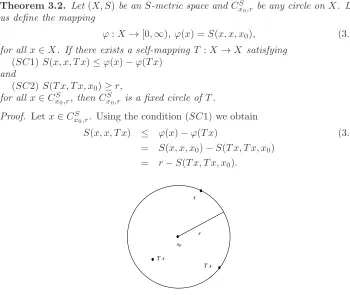
Proof. Letx∈CxS0,r. Using the condition (SC1) we obtain
S(x, x, T x) ≤ ϕ(x)−ϕ(T x) (3.2)
= S(x, x, x0)−S(T x, T x, x0)
= r−S(T x, T x, x0).
x
T x
T x r
x0
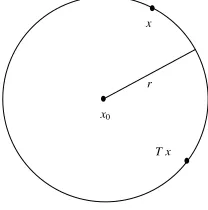
Figure 4. The geometric description of the condition (SC1).
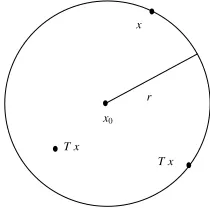
Because of the condition (SC2), the point T x should be lie on or exterior of the circle CS
x0,r. If S(T x, T x, x0) > r then using the inequality (3.2) we have a contradiction. Therefore it should be S(T x, T x, x0) = r. In this case, using the
inequality (3.2) we get
S(x, x, T x)≤r−S(T x, T x, x0) =r−r= 0
and soT x=x.
Hence we obtain T x= xfor all x ∈CxS0,r. Consequently, the self-mapping T fixes the circleCS
x
r
T x
T x
x0
Figure 5. The geometric description of the condition (SC2).
x
r
T x x0
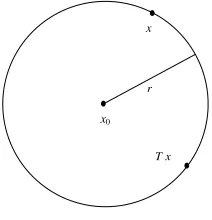
Figure 6. The geometric description of the condition (SC1)∩(SC2).
Remark. Notice that the condition(SC1)guarantees thatT xis not in the exterior of the circle CS
x0,r for each x∈ C
S
x0,r. Similarly, the condition (SC2) guarantees that T xis not in the interior of the circleCS
x0,r for each x∈C
S
x0,r. Consequently, T x∈CxS0,r for each x∈C
S
x0,r and so we have T(C
S
x0,r)⊂C
S
x0,r (see Figures 4, 5 and 6).
Now we give an example of a self-mapping which has a fixed circle on anS-metric space.
Example 3.3. Let (X, S)be anS-metric space, CS
x0,r be a circle onX andαbe a constant such that
S(α, α, x0)6=r.
If we define the self-mappingT :X→X as
T x=
x ; x∈CS x0,r α ; otherwise ,
for all x∈ X, then it can be easily checked that the conditions (SC1) and(SC2) are satisfied. Consequently, CS
x0,r is the fixed circle of T.
We give another example of a self-mapping which has a fixed circle as follows:
for all x, y, z∈R andα, β >0 with α≤β. Then S is an S-metric on Rwhich is not generated by any metric and the pair(R, S)is anS-metric space.
Let us consider the circle CS
10,α+β and define the self-mapping T :R→Ras
T x=
x ; x∈CS 10,α+β
12 ; otherwise ,
for all x∈R. Then the self-mapping T satisfies the conditions (SC1) and (SC2). Hence C10S,α+β is a fixed circle of T.
Example 3.5. Let (X, d) be a metric space and(X, S)be an S-metric space. Let us consider a circleCS
x0,r satisfying
d(x, x0)6=S(x, x, x0)
and define the self-mappingT :X→X as
T x=x−S(x, x, x0) +r,
for allx∈X. Then the self-mappingT satisfies the conditions(SC1)and (SC2). ThereforeCS
x0,ris a fixed circle ofT. ButT does not fix a circleCx0,r on the metric space(X, d).
Now, in the following example, we give an example of a self-mapping which satisfies the condition (SC1) and does not satisfy the condition (SC2).
Example 3.6. LetX=R+and the functionS:X×X×X →[0,∞)be defined in
Example 2.6. Let us consider a circleCxS0,r and define the self-mappingT :X→X as
T x=
x0 ; x∈CxS0,r β ; otherwise ,
for allx∈X whereS(β, β, x0)< r. Then the self-mappingT satisfies the condition
(SC1) but does not satisfy the condition (SC2). Clearly T does not fix the circle CxS0,r.
In the following examples, we give some examples of self-mappings which satisfy the condition (SC2) and do not satisfy the condition (SC1).
Example 3.7. Let(X, S)be anyS-metric space andCS
x0,r be any circle onX. Let kbe chosen such thatS(k, k, x0) =m > rand consider the self-mappingT :X→X
defined by
T x=k,
for allx∈X. Then the self-mapping T satisfies the condition(SC2) but does not satisfy the condition (SC1). ClearlyT does not fix the circle CxS0,r.
Example 3.8. Let X =Rand the functionS:X×X×X→[0,∞)be defined by S(x, y, z) =α|x−z|+β|x+z−2y|,
for allx, y, z∈Rand someα, β∈Rwithα+β >0. Then S is anS-metric on R which is not generated by any metric and the pair (R, S)is anS-metric space.
Let us consider a circleCS
x0,r and define the self-mappingT :R→Ras
T x=
for allx∈R, whereS(k1, k1, x0) = 2randk2is a constant such thatk26=k1. Then
the self-mapping T satisfies the condition (SC2) but does not satisfy the condition (SC1). ClearlyT does not fix the circle CS
x0,r.
Remark. Let (X, S) be an S-metric space and CS x0,r, C
S
x1,ρ be two circles on X. There exists at least one self-mapping T : X → X which fixes both of the circles CS
x0,r andC
S
x1,ρ. Indeed, let us define the mappingsϕ1, ϕ2:X →[0,∞)as ϕ1(x) =S(x, x, x0)
and
ϕ2(x) =S(x, x, x1),
for allx∈X. Let us consider the self-mappingT :X→X defined as
T x=
x ; x∈CS x0,r∪C
S x1,ρ k ; otherwise ,
for all x∈X, wherek is a constant satisfying S(k, k, x0)6=r andS(k, k, x1)6=ρ.
It can be easily verified that the self-mapping T satisfies the conditions (SC1) and (SC2) in Theorem 3.2 for the circles CS
x0,r and C
S
x1,ρ with the mappings ϕ1 and ϕ2, respectively. Clearly T fixes both of the circles CxS0,r andC
S
x1,ρ. The number of fixed circles can be extended to any positive integernusing the same arguments.
In the following theorem, we give a uniqueness condition for the fixed circles in Theorem 3.2 using Rhoades’ contractive condition on anS-metric space.
We recall the definition of Rhoades’ contractive condition.
Definition 3.9. [3] Let (X, S) be an S-metric space and T be a self-mapping of X. Then
(S25) S(T x, T x, T y) < max{S(x, x, y), S(T x, T x, x), S(T y, T y, y), S(T y, T y, x), S(T x, T x, y)},
for eachx, y ∈X,x6=y.
Theorem 3.10. Let (X, S) be an S-metric space and CS
x0,r be any circle on X. LetT :X →X be a self-mapping satisfying the conditions (SC1) and(SC2)given in Theorem 3.2. If the contractive condition (S25) is satisfied for all x ∈ CS
x0,r, y∈X\CxS0,r byT, thenC
S
x0,r is the unique fixed circle of T. Proof. Suppose that there exist two fixed circlesCxS0,randC
S
x1,ρof the self-mapping T, that is, T satisfies the conditions (SC1) and (SC2) for each circles CS
x0,r and CS
x1,ρ. Let x ∈ C
S
x0,r and y ∈ C
S
x1,ρ be arbitrary points with x 6= y. Using the contractive condition (S25) we find
S(x, x, y) = S(T x, T x, T y)<max{S(x, x, y), S(T x, T x, x), S(T y, T y, y), S(T y, T y, x), S(T x, T x, y)}
= S(x, x, y),
which is a contradiction. Therefore it should bex=y. Consequently,CS
x0,r is the
Notice that the contractive condition in Theorem 3.10 is not to be unique. For example, if we consider the Banach’s contractive condition given in [8]
S(T x, T x, T y)≤αS(x, x, y),
for some 0≤α <1 and allx, y∈X in Theorem 3.10 then the fixed circleCxS0,r is unique.
Now we give another existence theorem.
Theorem 3.11. Let (X, S) be an S-metric space and CS
x0,r be any circle on X. Let the mapping ϕ be defined as (3.1). If there exists a self-mapping T :X →X satisfying
(SC1)∗ S(x, x, T x)≤ϕ(x) +ϕ(T x)−2r
and
(SC2)∗ S(T x, T x, x
0)≤r,
for eachx∈CS
x0,r, thenC
S
x0,r is a fixed circle of T.
Proof. Letx∈CxS0,rbe any arbitrary point. Using the condition (SC1)
∗we obtain
S(x, x, T x) ≤ ϕ(x) +ϕ(T x)−2r (3.3)
≤ S(x, x, x0) +S(T x, T x, x0)−2r
= S(T x, T x, x0)−r.
x
r
T x
T x
x0
Figure 7. The geometric description of the condition (SC1)∗.
Because of the condition (SC2)∗ the pointT xshould be lie on or interior of the
circleCxS0,r. IfS(T x, T x, x0)< rthen we have a contradiction using the inequality (3.3).
x
T x
T x r
x0
Therefore it should be S(T x, T x, x0) = r. If S(T x, T x, x0) = r then using the
inequality (3.3) we get
S(x, x, T x)≤S(T x, T x, x0)−r=r−r= 0
and so we findT x=xConsequently,CxS0,r is a fixed circle ofT.
x
r
T x x0
Figure 9. The geometric description of the condition (SC1)∗∩(SC2)∗.
Remark. Notice that the condition(SC1)∗guarantees thatT xis not in the interior
of the circle CS
x0,r for each x∈C
S
x0,r. Similarly the condition (SC2)
∗ guarantees
that T xis not in the exterior of the circle CS
x0,r for eachx∈C
S
x0,r. Consequently, T x∈CS
x0,r for each x∈C
S
x0,r and so we have T(C
S
x0,r)⊂C
S
x0,r (see Figures 7, 8 and 9).
Now we give the following example.
Example 3.12. Let X =R and the mappingS :X×X×X →[0,∞)be defined as
S(x, y, z) = x3−z3
+
y3−z3
,
for all x, y, z ∈ X. Then (X, S) is an S-metric space. Let us consider the circle CS
0,16 and define the self-mapping T :R→R
T x= 3x+ 4
√
2
√
2x+ 3 ,
for allx∈R. Then it can be easily checked that the conditions(SC1)∗ and(SC2)∗
are satisfied. Therefore the circle CS
0,16 is a fixed circle of T.
In the following example, we give an example of a self-mapping which satisfies the condition (SC1)∗ and does not satisfy the condition (SC2)∗.
Example 3.13. Let X =Rand (X, S) be theS-metric space defined in Example 3.12. Let us consider the circle CS
−1,18 and define the self-mapping T :R→Ras
T x=
−3 ; x=−2 3 ; x= 2 10 ; otherwise
,
for all x∈R. Then the self-mappingT satisfies the condition(SC1)∗ but does not
In the following example, we give an example of a self-mapping which satisfies the condition (SC2)∗ and does not satisfy the condition (SC1)∗.
Example 3.14. Let X =C and the mappingS :X×X×X →[0,∞)be defined as
S(z1, z2, z3) =|z1−z3|+|z1+z3−2z2|,
for all z1, z2, z3 ∈ C [4]. Then (C, S) is an S-metric space. Let us consider the
circle CS
0,1 and define the self-mapping T1:C→C
T1z=
1
4z ; z6= 0
0 ; z= 0 ,
for allz∈C, where z is the complex conjugate of z. Then it can be easily checked that the conditions (SC1)∗ and(SC2)∗ are satisfied. Therefore the circleCS
0,1 is a
fixed circle of T1. But if we define the self-mapping T2:C→C
T2z=
1
4z ; z6= 0
0 ; z= 0 ,
for allz∈C. Then the self-mappingT2satisfies the condition(SC2)∗ but does not
satisfy the condition(SC1)∗. ClearlyT
2 does not fix the circleC0S,1. Especially, T2
maps the circle CS
0,1 onto itself while fixes the points z1=21 andz2=−12 only.
Now we determine a uniqueness condition for the fixed circles in Theorem 3.11. We recall the following definition.
Definition 3.15. [7] Let (X, S) be a complete S-metric space and T be a self-mapping ofX. There exist real numbersa, bsatisfyinga+ 3b <1 witha, b≥0such that
S(T x, T x, T y)≤aS(x, x, y) +bmax{S(T x, T x, x), S(T x, T x, y),
S(T y, T y, y), S(T y, T y, x)}, (3.4)
for allx, y∈X.
We give the following theorem.
Theorem 3.16. Let(X, S)be anS-metric space andCS
x0,r be any circle onX. Let T :X →X be a self-mapping satisfying the conditions (SC1)∗ and (SC2)∗ given
in Theorem 3.11. If the contractive condition (3.4) is satisfied for all x∈ CS x0,r, y∈X\CS
x0,r byT thenC
S
x0,r is the unique fixed circle ofT. Proof. Assume that there exist two fixed circlesCS
x0,randC
S
x1,ρof the self-mapping T, that is, T satisfies the conditions (SC1)∗ and (SC2)∗ for each circlesCS
x0,r and CxS1,ρ. Let x ∈ C
S
x0,r and y ∈ C
S
x1,ρ be arbitrary points with x 6= y. Using the contractive condition (3.4) we obtain
S(x, x, y) = S(T x, T x, T y)≤aS(x, x, y) +bmax{S(T x, T x, x), S(T x, T x, y), S(T y, T y, y), S(T y, T y, x)},
= (a+b)S(x, x, y),
which is a contradiction sincea+b <1. Hence it should be x=y. Consequently, CS
Notice that the contractive condition in Theorem 3.16 is not to be unique. For example, in Theorem 3.16, if we consider the contractive condition given in [7]
S(T x, T x, T y)≤aS(x, x, y) +bS(T x, T x, x) +cS(T y, T y, y) +dmax{S(T x, T x, y), S(T y, T y, x)},
where the real numbers a, b, c, d satisfying max{a+b+c+ 3d,2b+d} <1 with a, b, c, d≥0, for all x, y∈X then the fixed circleCxS0,r is unique.
Finally we note that the identity mappingIX defined asIX(x) =xfor allx∈X
satisfies the conditions (SC1) and (SC2) (resp. (SC1)∗ and (SC2)∗) in Theorem
3.2 (resp. Theorem 3.11). If a self-mapping T, which has a fixed circle, satisfies the conditions (SC1) and (SC2) (resp. (SC1)∗and (SC2)∗) in Theorem 3.2 (resp.
Theorem 3.11) but does not satisfy the condition (IS) in the following theorem
given in [6] then the self-mappingT can not be identity map.
Theorem 3.17. [6]Let (X, S)be anS-metric space andCxS0,r be any circle on X. Let the mapping ϕ be defined as (3.1). If there exists a self-mapping T :X →X satisfying the condition
(IS) S(x, x, T x)≤
ϕ(x)−ϕ(T x)
h ,
for allx∈X and someh >2, thenCxS0,r is a fixed circle of T andT =IX.
References
[1] A. Gupta, Cyclic Contraction on S-Metric Space, International Journal of Analysis and Applications32 (2013), 119–130.
[2] N. T. Hieu, N. T. Ly, N. V. Dung,A Generalization of Ciric Quasi-Contractions for Maps onS-Metric Spaces, Thai Journal of Mathematics132 (2015), 369–380.
[3] N. Y. ¨Ozg¨ur, N. Ta¸s,Some fixed point theorems onS-metric spaces, Mat. Vesnik691 (2017),
39–52.
[4] N. Y. ¨Ozg¨ur, N. Ta¸s,Some new contractive mappings onS-metric spaces and their relation-ships with the mapping(S25), Math. Sci.117 (2017). doi:10.1007/s40096-016-0199-4
[5] N. Y. ¨Ozg¨ur, N. Ta¸s, Some fixed circle theorems on metric spaces, arXiv:1703.00771 [math.MG].
[6] N. Y. ¨Ozg¨ur, N. Ta¸s,Some fixed circle theorems onS-metric spaces with a geometric view-point, arXiv:1704.08838 [math.MG].
[7] N. Y. ¨Ozg¨ur, N. Ta¸s, Some Generalizations of Fixed Point Theorems onS-Metric Spaces, Essays in Mathematics and Its Applications in Honor of Vladimir Arnold, New York, Springer, (2016).
[8] S. Sedghi, N. Shobe, A. Aliouche, A Generalization of Fixed Point Theorems inS-Metric Spaces, Mat. Vesnik643 (2012), 258–266.
[9] S. Sedghi, N. V. Dung,Fixed Point Theorems onS-Metric Spaces, Mat. Vesnik661 (2014),
113–124.
[10] Wolfram Research, Inc., Mathematica, Trial Version, Champaign, IL (2017).
Nihal Yılmaz ¨Ozg¨ur, Balıkesir University, Department of Mathematics, 10145 Balıkesir, TURKEY
E-mail address: [email protected]
Nihal Tas¸, Balıkesir University, Department of Mathematics, 10145 Balıkesir, TURKEY
E-mail address: [email protected]
Ufuk C¸ elik, Balıkesir University, Department of Mathematics, 10145 Balıkesir, TURKEY