23
©IJRASET: All Rights are Reserved
Newfangled Immaculate Trash Can Tracking
System
Mrs. S. Indumathi1, Dr. M. Varatharaj2, B. Aparna3, R. Ranjith4, S. Bagyalakshmi5, B. Ananthavalli6
1, 2
Assistant Professor, Department of Electronics and Communication Engineering, Kathir college of Engineering, Tamilnadu, India.
3, 4, 5 , 6
Bachelor of Engineering Students,Department of Electronics and Communication Engineering, Kathir college of Engineering, Tamilnadu, India.
Abstract: The idea of trash can monitoring systems is for the Smart buildings, Colleges, Hospitals and Bus stands. In our day to day life, we see our cities facing many problems with garbage overloading, which leads to producing green-house gases and it leads to polluting our environment and also it is harmful to humans. The main natural process is the greenhouse effect that warms the earth's surface.
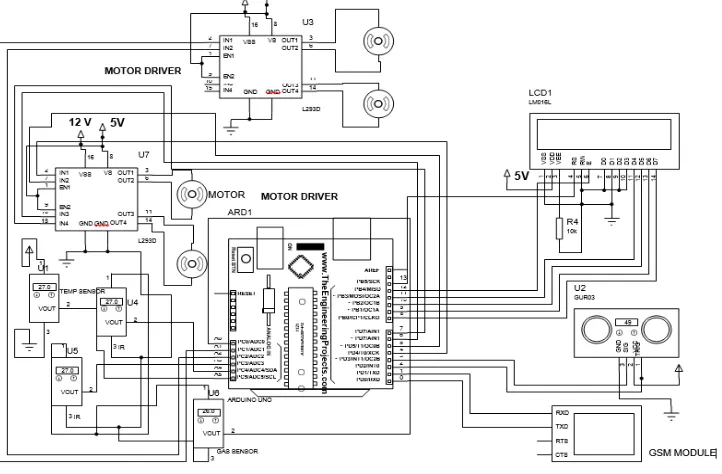
The emission of greenhouse gases can also affect the ozone layer. The most important need for having a smart way of life is being clean smart garbage system. Trash can monitoring system is a new idea of implementation which makes a normal dustbin as smart using Arduino Uno and GSM modules are used to send the SMS. The proteus software tool is used to create the schematic diagram of our project.
The trash can will constantly measure the level of garbage in the bin and automatically detect if any toxic gases present in the bin and also detect any burning occurs in the garbage and it Sense and sends a message to the higher authority. If that cleaning team will not initiate cleaning, then the dustbin will automatically move by using the line follower sensors to dispose of the waste at the desired location.
Keywords: Arduino, GSM, ultrasonic sensor, gas sensor, temperature sensor, Proteus tool, and line follower robot.
I. INTRODUCTION
All cities in the world are facing great challenges due to increasing urbanization and one of the major challenges is reducing the amount of dumping waste. In many public places, we see that garbage bins are kept but they have not been cleaned. Overflow of waste causes air pollution, land pollution, and respiratory problems. Some gaseous compounds are extracted from the wastes in the bin, it can cause health effects by causing shortness of breath, headaches, eye irritation. Some of the industries produce toxic products that are thrown away into normal dustbin against the rule.
Though the dustbin is filled there is a formation of gases such as ammonia, carbon dioxide, and methane and some of the contents in the garbage that react with each other and release Sulphur & Nitrogen. Burning of garbage releases very poisonous carbon monoxide gas in the air. This may cause fire and pollute the atmosphere severely. Fire can also occur due to people’s careless and they are unaware of the burnings & combusting material. This fire may also spread to homes, working area & causes a threat to the surroundings.
To reduce these problems we can use the existing technology to sense these unusual conditions. Using the level monitor like an ultrasonic sensor we can sense the level of waste in the dustbin [1]. Using the gas sensor we can sense the formation of hazardous gases like CO2, SO2, NO2, methane, and ammonia. Fire sensor is used to sense the temperature level in the garbage if any burning occurs it senses it. GSM & Arduino module is used to transfer data and messages.
If any unusual condition occurs in the waste like overflow, toxic gas or any burning of waste then it senses and sends the message or voice call to higher authority and scavengers for cleaning [3]. After sending these messages, if the scavengers are not coming to clean the waste.
24
©IJRASET: All Rights are Reserved
II. LITERATUREREVIEW
This waste bin monitoring system consisting of several components like IR, gas sensors, ultrasonic sensors, GSM module, servomotor, and 12V battery supply. This project is explained about the dustbin that will be automatically open and close using the ultrasonic sensors and servo motors. If the person presence in front of the dustbin then the sensors detect the person and opens the bin. When bins are filled with waste at that point of time the ultrasonic sensor is used to detect the level and send the information to the cleaning team through the GSM model. Internet of Things (IoT) is used in this project.
The detection of the garbage level is through ultrasonic sensors (HC-SR04). Garbage level in the bin even if the waste is not removed from the bin, then GSM sends the specific bin information to higher officials.
For effective and efficient garbage collection an integrated Wi-Fi router, IoT, GSM, Ultrasonic Sensor system is implemented in this project. It can track the garbage level automatically and send the information to the truck driver.
This proposed plan provides an assisting hand for those who can not support themselves at home. With Bluetooth technology in the mobile application, automated smart dustbin, people can have control over it through the wireless media. Whenever the dustbin reaches the threshold level, the message will automatically be sent via a mobile app.
In this system, PIR Sensor is used for the automatic opening and closing of the bin. It sensed the user's presence within a radius of 1 meter to avoid garbage spill, and open at the voice command (Bin Open). The bin closes when the user is moving away from the operating range or the close command (Bin close).
The model suggested plans for solid waste disposal. In some situations, if it creates any bad smell the dustbin needs to be cleaned and it is detected using a gas sensor and it will send a message to the registered mobile number that these interfaces are linked to the ARDUINO.
III. PROPOSED YSTEM
Fig: 1 Block Diagram For Newfangled Immaculat Trash Can Tracking System
25
©IJRASET: All Rights are Reserved
[image:3.612.127.488.109.346.2]Here battery is used to produce the electricity for charging the components. Upload the code to Arduino after setting up the smart trash can and by providing a 5V power supply to the Arduino board to circuits for further working.
Fig 2: Schematic Diagram Using Proteus Tool
IV. HARDWARE DESCRIPTION
The hardware requirements for the system are as follows.
A. Arduino Uno
Arduino is a programming device that can feel and manipulate more of the physical world than your desktop computer. In our project, Arduino Uno is powered by an external battery. A 5V power supply is required for Arduino. This major advantage is to control the multiple applications in a single board.
B. GSM
GSM Modem can accept any SIM card from a GSM network operator and function as a mobile phone with a unique phone number of its own. The main advantage of this modem is the RS232 port by which we can communicate and construct embedded applications. In this project, GSM is used to transfer the data through SMS. This modem can be connected to the Arduino microcontroller and send the information about the trash can through the SMS.
C. Human-machine Interface (LCD)
The Human-machine interface which is commonly known as the LCD display. This device consisting of any amount of monochrome pixels that are projected in front of a light source or reflector. It is often used in electronics devices powered by batteries, as it requires very small amounts of electricity. In our project, the instruction or information about the bin is displayed on this LCD.
D. Ultrasonic Sensors
Ultrasonic sensors will be used in many applications like medical purpose and level monitoring. In our project, this sensor is used in the level monitoring purpose. The ultrasonic sensors will be placed at the top of the trash can where the wastes are dumped, when it gets filled then it will be displayed in LCD and the message will send to the higher authority by using GSM.
Distance = (Time x Speed of Sound)/2
26
©IJRASET: All Rights are Reserved E. Gas Sensor
In this Trashcan monitoring system, we use the gas sensors for finding the harmful gases. Dustbins have different types of waste. These wastes may be combined and produce harmful gases like greenhouse gases, etc. These gases are very dangerous to humans and animals. So the harmful gases will be noted through this gas sensor and send the message to the higher authority and scavengers for cleaning.
F. Temperature Sensor
The temperature sensor is an important sensing element that is used to detect high temperatures and burning things (fire). The temperature sensor detects the temperature and when it exceeds the threshold values it sends the warning message to the corresponding higher authority.
G. Line Follower Robot
Two Infrared sensors are used in this line follower concept. Infrared sensors are the electronic sensors that are used to detect other elements in the environment. The object’s motion can also be observed. This IR sensor is made up of photodiode and IR LED. IR LED used as transmitter and photodiode will be used as a receiver. These two parts have a different diameter. (IR->5mm, photo->3mm). In our project IR sensor is used for line following concept. When the trashcan is filled then the message will be sent to the higher authority. After some particular time, if the bins are not cleaned, the trashcan automatically moves along the black line or in pre desired path. When it reaches the destination it automatically disposes the waste at the desired location. The IR sensor is placed at both ends at the front portion of the dustbin.
H. Motor
Servo motor is a line actuator which is to control the angular and linear position. The motor drive will be used for moving purposes. In our project, it is used to move the dustbin in the desired path. When it reaches that destination it automatically disposes of the waste.
V. RESULT AND FINDING
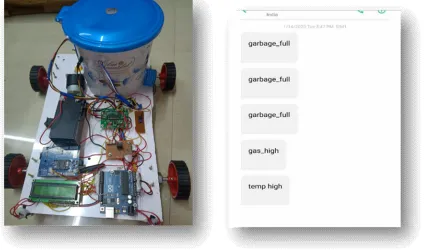
[image:4.612.96.520.455.705.2]This trash can monitoring system is a new idea of implementing normal dustbin into a smart dustbin by using sensors, and by adding the new features such as line follower robot it moves and disposes of the waste accordingly.
27
©IJRASET: All Rights are Reserved
VI. CONCLUSION
Trash Can monitoring systems used for developing the city as smart. It helps us to reduce the environmental pollution, whenever the garbage is overflow, at that period many animals and bird’s habitat will be disturbed.
To overcome these situations, the implementation of newfangled immaculate trash can idea which makes a normal dustbin into a smart dustbin using sensors for sending messages to the user, for updating the status of the bin, also it automatically moves and disposes the wastes to the desired location.
This system can prove solutions for the whole waste management system for future smart cities development.
VII. FUTURE SCOPE
The formed plastic waste aggregate is combined with hot bitumen and the resulting mixture is used for road construction. As well as using plastic waste for road construction to reduce the plastics.
In the future, we also used a solar panel to produce electricity for charging the components and also it is used to glow the nearby street lights.
Wet waste can be decomposed and used for biogas. Therefore, future works can be made in the study of models that offer the best result in terms of the decision – making. There is a great scope for this project to modifying our city as smart in the future.
REFERENCES
[1] Prakash E.P, Sara Ruth John,Anu Krishna K.B, Pavithra P, “AUTOMATED SELF NAVIGATED DUSTBIN DISPENSARY SYSTEM IN SMART CITIES” International Journal of Computer Science and Information Technology Research ISSN 2348-120X (online) Vol. 7, Issue 1, pp: (36-40), Month: January - March 2019.
[2] P.Ramchandra rao, S.Sanjay kumar, CH. Rajendra Prasad, “Garbage Monitoring System using Arduino” International of Trend in Scientific Reasearch and Development international Open Access Journal ISSN No:2456-6470 volume-1, issue-6, septemper-October 2017.
[3] Prof. Dr. Sandeep M. Chaware ,Shriram Dighe , Akshay Joshi , Namrata Bajare, Rohini Korke, “Smart Garbage Monitoring System using Internet of Things (IOT)” International Journal of Innovative Research In Electrical, Electronic, Instrumentation and Control Engineering ISO 3297:2007 certified vol.5, issue1, January 2017.
[4] Anilkumar C.S., Suhas G, Sushma S, “A Smart Dustbin using Mobile Application”, International Journal of Innovative Technology and Exploring Engineering (IJITEE) ISSN: 2278-3075, Volume-8 Issue-11, September 2019.
[5] Michalel E, Otaru C, Liman A. D, Bomoi M.I, Awotony, “Design and Development of a Smart Waste Bin” International Journal of Scientific & Technology Research, volume-6, issue 10, October 2017.
[6] B.Rajapandian, K.Madhanamohan, T.Tamilselvi, R.Prithiga, “Smart Dustbin”, International Journal of Engineering and Advanced Technolgy, ISSN:2249-8958, volume -8, issue-6, Augest 2019.
ABOUT THE AUTHORS
Mrs S INDUMATHI:
Presently working as an Assistant Professor in the Department of Electronics and Communication Engineering from Kathir College of Engineering, Coimbatore, Tamilnadu, INDIA. She Graduated from Sengunthar Engineering College in the Department of Electronics and Communication Engineering in 2016. She completed a master's degree in VLSI Design in the year of 2018 from the same institution. Have presented and published papers in various national and international conference and journals.
Email id*: [email protected]
Dr.M.VARATHARAJ:
Presently working as an Associate Professor in the department of Electronics and Communication Engineering from Kathir College of Engineering, Coimbatore Tamilnadu, INDIA. He Graduated from Coimbatore Institute of Technology in the year of 2005 and had completed his Master’s Degree in Applied Electronics from Bannari Amman Institute of Technology in the year of 2007 and completed his Doctor of Philosophy in Information and Communication Engineering in the year of 2018 from Anna University. Have presented and published papers in various national and international conferences and journals.
28
©IJRASET: All Rights are Reserved B APARNA:
Pursuing Bachelor of Engineering in the department of Electronics and Communication Engineering in the academic year 2016-2020 from Kathir College of Engineering, Coimbatore Tamilnadu, INDIA.
Email id*: [email protected]
R RANJITH:
Pursuing Bachelor of Engineering in the department of Electronics and Communication Engineering in the academic year 2016-2020 from Kathir College of Engineering, Coimbatore Tamilnadu, INDIA.
Email id: [email protected]
S BAGYALAKSHMI:
Pursuing Bachelor of Engineering in the department of Electronics and Communication Engineering in the academic year 2016-2020 from Kathir College of Engineering, Coimbatore Tamilnadu, INDIA.
Email id: [email protected]
B ANANTHAVALLI:
Pursuing Bachelor of Engineering in the department of Electronics and Communication Engineering in the academic year 2016-2020 from Kathir College of Engineering, Coimbatore Tamilnadu, INDIA.