A Thesis Submitted for the Degree of PhD at the University of Warwick
http://go.warwick.ac.uk/wrap/35211
This thesis is made available online and is protected by original copyright. Please scroll down to view the document itself.
Application of optically pure chiral anionic complexes
in the construction of molecular conductors
by
Nikola Paul Chmel
A thesis submitted in partial fulfilment of the requirements of the degree of
Doctor of Philosophy in Chemistry
Department of Chemistry, University of Warwick
University of Warwick | Page ii
INTRODUCTION ... 1
CHIRAL TTF BASED CONDUCTING PHASES ... 1
Conductive materials based on chiral donor molecules ... 2
Conductive materials based on achiral donor molecule and chiral anions ... 7
Supramolecular chirality ... 11
Summary... 12
OPTICALLY PURE ANIONS ... 13
Organic carboxylates and sulfonates ... 14
Borates ... 14
Phosphates ... 15
Hexacoordinated phosphorus and arsenic anions ... 16
Intrinsically chiral metal complexes ... 17
Other anionic compounds ... 18
CONCLUSIONS ... 19
REFERENCES ... 20
SYNTHESES OF ORGANIC DONOR MOLECULES AND SOME CHIRAL DERIVATIVES ... 24
INTRODUCTION ... 24
RESULTS AND DISCUSSION ... 26
Tetrathiafulvalene ... 26
Tetraselenafulvalene ... 28
Bis(ethylenedithio)tetraselenafulvalene... 30
Chiral TTF derivatives ... 31
6,6'-Dimethyl-N2,N2'-bis(tetrathiafulvalen-2-ylmethylene)biphenyl-2,2'-diamine... 34
[Cu2(biphTTF)2](BF4)2 ... 37
CONCLUSIONS ... 42
REFERENCES ... 44
TETRATHIAFULVALENIUM SALTS OF OPTICALLY PURE PYRIDINE AMIDATES (TTF)[COIII(LN)2] ... 46
INTRODUCTION ... 46
RESULTS AND DISCUSSION ... 48
Ligands and complex anions synthesis ... 48
Crystal structures of [CoIII(Ln)2]- anionic complexes ... 50
Synthesis of the charge transfer materials ... 55
Oxidation state of the donor molecule ... 63
Conductivity measurements ... 63
UV-Vis and CD spectrometry ... 65
Cyclic voltammetry ... 68
CONCLUSIONS ... 70
REFERENCES ... 72
ORGANIC SOLUBLE EDDS COMPLEXES; PPH4[MIII(S,S-EDDS)]·2H2O ... 74
INTRODUCTION ... 74
RESULTS AND DISCUSSION ... 76
Synthesis of [CoIII(S,S-EDDS)]- salts ... 76
Synthesis of [FeIII(S,S-EDDS)]- salts ... 78
University of Warwick | Page iii
Magnetic data ... 85
UV-Vis and Circular Dichroism Spectroscopy ... 87
CONCLUSIONS ... 94
APPLICATION OF EDDS COMPLEXES IN OPTICAL RESOLUTION AND 1H NMR SPECTROMETRY ... 98
INTRODUCTION ... 98
RESULTS AND DISCUSSION ... 99
Resolution of (±)-[RuII(bpy)3]Cl2... 99
PPh4[CoIII(S,S-EDDS)]·2H2O as a 1H NMR chiral shift agent ... 103
CONCLUSIONS ... 110
REFERENCES ... 112
SYNTHESIS OF CONDUCTIVE SALTS OF [MIII(S,S-EDDS)]- COMPLEX ANIONS ... 113
INTRODUCTION ... 113
RESULTS AND DISCUSSION ... 114
Synthesis of charge transfer salts ... 114
Single crystal X-ray structures ... 116
Conductivity measurements ... 123
DFT calculations ... 128
CONCLUSIONS ... 131
REFERENCES ... 134
EXPERIMENTAL DETAILS ... 135
GENERAL CONSIDERATIONS ... 135
EXPERIMENTAL DETAILS FOR CHAPTER 2 ... 139
Dimethyl 1,3-dithiole-2-thione-4,5-dicarboxylate (1)5 ... 139
1,3-Dithiole-2-thione-4,5-dicarboxylic acid (2)5 ... 139
1,3-Dithiole-2-thione (3)5 ... 140
1,3-Dithiolium hydrogen sulphate (4)5 ... 141
1,3-Dithiolium hexafluorophosphate (5)5 ... 141
Tetrathiafulvalene (6)5 ... 142
2-Methylene-1,3-diselenole (7)6 ... 143
Tetraselenafulvalene (8)6 ... 144
2,3-Dihydro-1,4-dithiin (9)7 ... 145
Bis(η5-cyclopentadienyl)(5,6-dihydro-1,4-dithiine-2,3-diselenolato-κ2Se,Se')titanium(IV) (10)7,8 ... 146
4,5-Ethylenedithio-1,3-diselenol-2-on (11)7,8 ... 147
Bis(etylenedithio)tetraselenafulvalene (BETS) (12)10 ... 148
4-Formyltetrathiafulvalene (13)11 ... 148
4-(Hydroxymethyl)tetrathiafulvalene (14)11 ... 150
(R)-2-Amino-2-phenylethan-1-ol, (R)-2-phenylglycinol12 ... 151
(R)-2-(Tert-butoxycarbonylamino)-2-phenylethyl methanesulfonate (16)14 ... 152
(R)-2-Amino-2-phenylethyl methanesulfonate (15)15 ... 153
(R)-2-(2-Hydroxy-1-phenylethyl)isoindoline-1,3-dione16 ... 154
(R)-2-(1,3-Dioxoisoindolin-2-yl)-2-phenylethyl methanesulfonate (17)... 155
(R)-Tert-butyl 2-hydroxy-1-phenylethylcarbamate17 ... 156
(R)-Tert-butyl 2-iodo-1-phenylethylcarbamate (18)18,19 ... 157
(R)-2-(2-Iodo-1-phenylethyl)isoindoline-1,3-dione (19)18 ... 158
University of Warwick | Page iv
(S)-2-Aminopropyl methanesulfonate hydrochloride (20) ... 162
(R)-N-(Tetrathiafulvalene-4-ylmethylene)-1-phenylethylamine ... 163
(R)-2-(Tetrathiafulvalen-2-ylmethyleneamino)-2-phenylethanol ... 164
(±)-6,6'-Dimethyl-N2,N2'-bis(tetrathiafulvalen-2-ylmethylene)biphenyl-2,2'-diamine ((±)-biphTTF) ... 164
(R)-6,6'-Dimethyl-N2,N2'-bis(tetrathiafulvalen-2-ylmethylene)biphenyl-2,2'-diamine ((R)-biphTTF) ... 166
[CuI2((±)-biphTTF)2](BF4)2∙0.5H2O·1.5CH2Cl2 ... 166
EXPERIMENTAL DETAILS FOR CHAPTER 3 ... 168
Pyridine-2,6-dicarbonyl dichloride23 ... 168
(R)-2-Methoxy-1-phenylethan-1-amine [(R)-2-phenylglycinol methyl ether]24... 169
(S)-1-Methoxypropan-2-amine (L-alaninol methyl ether)24 ... 170
N2,N6-Bis((R)- -methylbenzyl)pyridine-2,6-dicarboxamide (H2L3) ... 171
N2,N6-Bis((S)-1-methoxypropan-2-yl)pyridine-2,6-dicarboxyamide (H2L4) ... 172
N2,N6-Bis((R)-carboxy(phenyl)methyl)pyridine-2,6-dicarboxamide (H2L5)25 ... 173
N2,N6-Bis((S)-carboxy(isopropyl)methyl)pyridine-2,6-dicarboxamide (H2L6) ... 174
N2,N6-Bis((R)-(2-methoxy-2-oxoethyl)(phenyl)methyl)pyridine-2,6-dicarboxamide (H2L7) . 175 N2,N6-Bis((R)-2-hydroxy-1-phenylethyl) pyridine-2,6-dicarboxamide (H2L8) ... 176
N2,N6-Bis((R)-2-methoxy-1-phenylethyl)pyridine-2,6-dicarboxamide (H 2L9) ... 177
(18-Crown-6)K[CoIII(L3)2] (24) ... 178
(18-Crown-6)K[FeIII(L3)2]·2H2O (25) ... 179
K[CoIII(L4)]∙3H2O (26) ... 180
(TTF)[CoIII(L3)2] (27) ... 181
(TTF)[FeIII(L3)2]... 182
TTF3(BF4)226 ... 182
(TTF)[CoIII(L4)2]·EtOAc... 183
EXPERIMENTAL DETAILS FOR CHAPTER 4 ... 184
Na[CoIII(S,S-EDDS)]·2H 2O (29)27 ... 184
NBu4[CoIII(S,S-EDDS)]·xH2O (31) ... 185
PPh4[CoIII(S,S-EDDS)]·2H2O (38) ... 186
NH4[FeIII(S,S-EDDS)] (34)28 ... 187
PPh4[FeIII(S,S-EDDS)]·2H2O (39) ... 188
Ag[CrIII(S,S-EDDS)]·1.5 H2O (36) ... 189
PPh4[CrIII(S,S-EDDS)]·2H2O (37) ... 190
EXPERIMENTAL DETAILS FOR CHAPTER 5 ... 192
Synthesis of [RuII(bpy)3]Cl2·6H2O29 ... 192
Resolution of [RuIII(bpy) 3]Cl2·6H2O30 ... 193
Resolution of [RuII(bpy)3]Cl2·6H2O with PPh4[FeIII(S,S-EDDS)]·2H2O ... 193
General procedure for preparation of 1H NMR samples of metal complexes for ee determination ... 194
General procedure for preparation of 1H NMR samples of organic compounds for ee determination ... 195
EXPERIMENTAL DETAILS FOR CHAPTER 6 ... 196
Electrocrystallisation – general procedure ... 196
(TTF)3[CoIII(S,S-EDDS)]2·6H2O ... 196
(TTF)3[FeIII(S,S-EDDS)]2·5H2O ... 197
(TTF)x[CrIII(S,S-EDDS)]2·4.5H2O ... 197
(TSF)3[CoIII(S,S-EDDS)]2·6H2O ... 198
University of Warwick | Page v
(ET)x[Cr (S,S-EDDS)]2·6H2O ... 200
(BETS)x[CoIII(S,S-EDDS)]y·zH2O ... 200
(BETS)x[CrIII(S,S-EDDS)]y·zH2O ... 201
REFERENCES ... 202
DETAILS OF THE CRYSTAL SOLUTIONS AND REFINEMENT ... 204
SELECTED BOND LENGTHS AND ANGLES ... 210
University of Warwick | Page vi
Figure 1.1. Examples of common donor molecules: tetrathiafulvalene (TTF), tetraselenafulvalne (TSF), tetramethyltetraselenafulvalene (TM-TTF) and bis(ethylenedithio)tetrathiafulvalene
(BEDT-TTF, ET). ... 1
Figure1.2. Structure of (S,S,S,S)-Me4ET donor and a view of molecular stack in the crystal structure of [(S,S,S,S)-Me4ET]2PF6.5 ... 3
Figure 1.3. Structure of (S,S)-Me2ET donor and a view of κ-phase packing in the crystal structure of [(S,S)-Me2ET]2ClO4.16 ... 5
Figure 1.4. Structure of pyrazino-(S,S)-dimethyl(ethylenedithio)tetrathiafulvalene P-(S,S )-DMEDT-TTF donor and a view packing in the crystal structure of [P-(S,S )-DMEDT-TTF]2[AuBr2]1[AuBr2]~0.75.21... 6
Figure 1.5. Structure of (ethylenedithio)tetrathiafulvalene-methyloxazoline (R)-EDT-TTF-Meox donor and a view packing in the crystal structure of [(R)-EDT-TTF-ox]2AsF6.23 ... 7
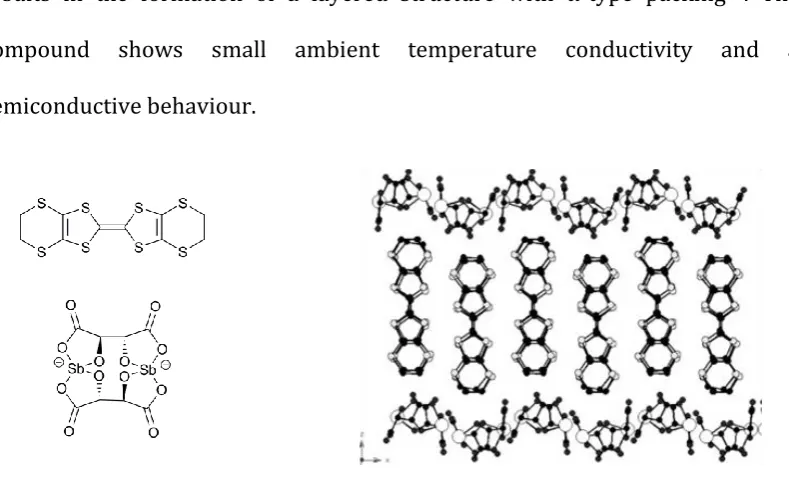
Figure 1.6. Structures of ET and antimony L-tartrate anion and a view of solid state packing in the crystal structure of (ET)3[Sb2(L-tart)2]·CH3CN.26 ... 8
Figure 1.7. Chiral anions used in their racemic form in the synthesis of conductive salts with ET. ... 9
Figure 1.8. Structures of ET, (S)-1-phenylethanol and tris(oxalato)ferrate (left) and the solid state packing of (ET)4(NH4)[Fe(ox)3]·solv.8 ... 10
Figure 1.9. Structure of ET and sodium (Δ)-tris(oxalato)chromate (left) and the solid state packing of (ET)3Na[Cr(ox)3]·CH3NO2.33 ... 10
Figure 1.10. Structure of EDT-TTF-I2 and D-camphorsulfonate (left) and the solid state packing of (EDT-TTF-I2)2(D-camphorophosphonate)·H2O.34 ... 11
Figure 1.11. Structure of TTF and mellitate (left) and the solid state packing of (TTF)2[C6(COO)6H4].35 ... 12
Figure 1.12. Examples of common chiral carboxylates and sulfonates: (from the left) 10-camphorosulfonate, N-phenylalaninate, mandelate, quinate, antimononyl tartrate.50,52 ... 14
Figure 1.13. Examples of chiral borate anions.50,57,58,60 ... 15
Figure 1.14. Examples of chiral phosphate anions. 63,68 ... 16
Figure 1.15. Examples of chiral hexacoordinate phosphate and arsenate anions.71-73 ... 17
Figure 1.16. Examples of chiral-at-metal anionic complexes. ... 17
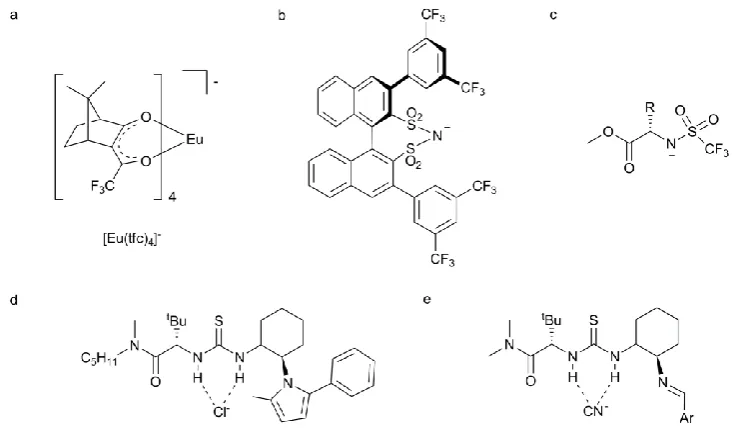
Figure 1.17. Examples of chiral anionic species.92-95,98 ... 19
Figure 2.1. Examples of chiral TTFs in the literature: (a) Wallis et al.,13 (b) Gomar-Nadal et al.,8 (c) Ozturk et al.,10 (d) Ozturk et al.,14 (e) Yang et al.,15 (f) Chas et al.,16 (g) Réthoré et al.17 and (h) Yang et al.18 ... 25
University of Warwick | Page vii
Figure 2.5. Absorption spectra of different oxidation states of 22. ... 36
Figure 2.6. CD spectrum of 22 in acetonitrile (0.1 mM solution, 1 cm pathlength). ... 37
Figure 2.7. Asymmetric unit of [Cu2(biphTTF)2](BF4)2·CH2Cl2·H2O with the thermal ellipsoids at 50% probability. Hydrogen atoms were omitted for clarity. ... 38
Figure 2.8. Packing diagram of 23 showing the intermolecular (red) and intramolecular (green) TTF stacking, hydrogen atoms, counterions and solvent molecules were removed for clarity. .. 38
Figure 2.9. Dihedral angle (red) between the TTF molecules in the stack, atoms 1, 2, 3 and 4 are chosen this way so the distance between 2 and 3 is the shortest. ... 39
Figure 2.10. UV-Vis spectrum of 23 in methanol. ... 40
Figure 2.11 EPR spectrum of a solid sample of 23... 41
Figure 2.12. Magnetic data and Curie-Weiss law fit for 23. ... 41
Figure 3.1. Structure of salycilaldimine derivative of (R)-2-phenylglycine and a model of its complex. ... 46
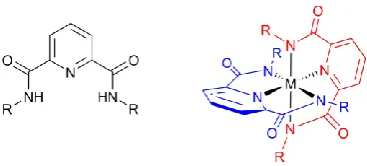
Figure 3.2. Structure of the pyridinecarboxyamide ligand (left) and its metal complex. ... 47
Figure 3.3. Solid state structure of K[CoIII(L3)2] with thermal ellipsoids at 35% probability. Hydrogen atoms were removed on the major complex for clarity. ... 51
Figure 3.4. (a) Polyhedral model of the molecule, indicating tetrahedral orientation of the carbonyl groups. (b)The layered structure of K[CoIII(L3)2] viewed from [100] direction with hydrogen atoms omitted for clarity, and (c) a simplified polyhedral model. ... 52
Figure 3.5. (a) Hexagonal sheet of K[CoIII(L3)2] viewed from [001] direction with hydrogen atoms omitted for clarity and (b) a simplified polyhedral model. ... 52
Figure 3.6. Solid state structure of (18-crown-6)K[CoIII(L3)2]·H2O·MeCN with thermal ellipsoids at 50% probability. Hydrogen atoms have been omitted from the metal complex and the crown for clarity. ... 53
Figure 3.7. (a) Polyhedral model of (18-crown-6)K[CoIII(L3)2]·H2O·MeCN, indicating tetrahedral orientation of the carbonyl groups. (b) helical chains viewed along the [100] direction with hydrogen atoms omitted for clarity, and (c) a simplified polyhedral model. ... 53
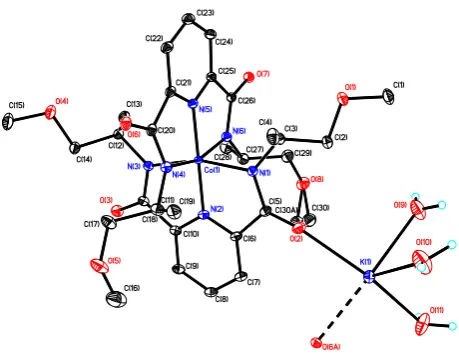
Figure 3.8. Solid state structure of K[CoIII(L4)2]·3H2O with atomic numbering showing the potassium and coordinated waters and symmetry related carbonyl O6A ... 54
Figure 3.9. Extended 1D zig-zag chain structure of K[CoIII(L4)2]·3H2O. (a) view from [001] direction (hydrogen atoms were removed for clarity), (b) polyhedral model of the molecule, indicating the tetrahedral orientation of the carbonyl groups, (c) simplified view from the [001] and (c) [100] direction. ... 55
Figure 3.10. Electrocrystallisation cell schematic and a picture of an actual cell. ... 57
Figure 3.11. Molecular structure of (TTF)[CoIII(R,R-L3)2]. Hydrogen atoms were removed to aid clarity... 58
Figure 3.12. Comparision of the orientation of the phenyl groups of the ligand in (b) the parent compound 24 and (c) its TTF salt 27. (a) View along the main axis of the molecule. ... 58
University of Warwick | Page viii
Figure 3.15. Comparision of the orientation of the phenyl groups of (b) the ligand in the parent compound 26 and (c) its TTF salt 28. (a) View along the main axis of the molecule. ... 61 Figure 3.16. Extended structure of 28, hydrogen atoms were removed for clarity... 62 Figure 3.17. Analysis of the average C-S bond distance in the TTF molecule and its average charge for (TTF)[CoIII(L3)2] (27) and (TTF)[CoIII(L4)2·EtOAc (28). ... 63 Figure 3.18. Scheme of the conductivity measurement and pictures of the actual setup. ... 64
Figure 3.19. UV-Vis spectra of the H2L3 proligand and its complex (18-crown-6)K[CoIII(L3)2]. ... 65
Figure 3.20. UV-Vis spectra of the H2L4 proligand, its complex K[CoIII(L4)2], the charge transfer salt (TTF)[CoIII(L4)2]·EtOAc and (TTF)+ (inset). ... 66
Figure 3.21. CD spectra of the protonated ligand H2L3 and its complex (18-crown-6)K[CoIII(L3)2] (0.1 mM solutions in MeCN). ... 67
Figure 3.22. CD spectra of the H2L4 proligand, its complex K[CoIII(L4)2]·3H2O and the charge transfer salt (TTF)[CoIII(L4)2]·EtOAc (0.1 mM solutions in MeCN). ... 68
Figure 3.23. Cyclic voltammograms of (18-crown-6)K[CoIII(L3)2] (24) and K[CoIII(L4)2]·EtOAc (26) in acetonitrile (0.1 mM solutions). ... 69 Figure 3.24. Cyclic voltammogram of (TTF)[CoIII(L4)2]·EtOAc (28) in acetonitrile (0.1 mM solution) and TTF (inset) (0.1 mM NaPF6 solution in acetonitrile)... 70
Figure 4.1. The structure of (S,S)-H4EDDS and a model of EDDS complex. ... 75
Figure 4.2. TGA of a sample of Na[CoIII(S,S-EDDS)]·2H2O (29). ... 76 Figure 4.3. (a) A simplified polyhedral model of the [CoIII(S,S-EDDS)]- ion and (b) the extended coordination structure of Ag[CoIII(S,S-EDDS)]·2H2O·2AgNO3. ... 81
Figure 4.4. Molecular structure of 33. Hydrogen atoms have been removed for clarity. ... 81 Figure 4.5. Extended structure of 33, counterions were omitted for clarity. (a) Polyhedral model of [MIII(S,S-EDDS)]- anion indicating tetrahedral arrangement of carbonyl groups, (b) view from [010] direction and (c) [001] direction. ... 83
Figure 4.6. 1H NMR of 33 in D2O. ... 83 Figure 4.7. Comparison of the (a) measured and (b) calculated powder diffraction patterns of
35. ... 84 Figure 4.8. Comparison of the (a) measured and (b) calculated powder diffraction patterns of
37. ... 85 Figure 4.9. Curves of T vs T and 1/ vs T (inset) for 35. is the molar magnetic susceptibility and T is the temperature. ... 85
Figure 4.10. Plots of T vs T and 1/ vs T (inset) for 37. is the molar magnetic susceptibility and T is the temperature. ... 86
Figure 4.11. UV-Vis and CD spectra of 29 and 33 (0.1 mM solutions in water, 1 cm pathlenths). ... 87
University of Warwick | Page ix
Figure 4.14. Correlation of the absorption maxima (λmax) of one of the LMCT bands of 33 to the
proton affinity of the solvent used. ... 89
Figure 4.15. Correlation of the intensity of the CD peak at 260 nm of 33 (θ260), to the acceptor number of the solvent (AN). ... 90
Figure 4.16. UV-Vis and CD spectra of 34 and 35 (0.1 mM solutions in water). ... 91 Figure 4.17. Comparison of the UV-Vis and CD spectra of 35 in water and acetonitrile (0.1 mM solutions). ... 92
Figure 4.18. UV-Vis and CD spectra of 37 and Ag[CrIII(S,S-EDDS)] (0.1 mM solutions). ... 93 Figure 4.19. UV-Vis and CD spectra of 37 recorded in water, acetonitrile, ethanol and dimethyl sulfoxide (0.1 mM solutions). ... 93
Figure 5.1. CD spectra of unresolved [RuII(bpy)3]Cl2 (pink), PPh4{Λ-[FeIII(S,S-EDDS)]} (35) (green) and their adducts: precipitate (blue) and filtrate (red) (approx. 0.05 mM MeOH
solutions). ... 100
Figure 5.2. CD spectrum of resolved [RuII(bpy)3]Cl2 (approx. 0.5 mM solutions). ... 100
Figure 5.3. Crystal structure of {Λ-[RuII(bpy)3]}{Λ-[FeII(S,S-EDDS)]}Cl·H2O adduct, hydrogen atoms on both complex ions have been removed for clarity ... 101
Figure 5.4. The ‘spacefill’ view of the {Λ-[RuII(bpy)3]}{Λ-[FeII(S,S-EDDS)]}Cl adduct, hydrogen atoms have been removed for clarity ... 102
Figure 5.5. 1H NMR spectra of [RuII(bpy)3]Cl2 with different stoichiometric amounts of 33. ... 104 Figure 5.6. 1H NMR spectra of (±)-, Λ- and Δ-[RuII(bpy)3]2+ in the presence of 33 (1:4 mol ratio). ... 105
Figure 5.7. Comparison of the 1H NMR spectra of (±)-, Λ- and Δ-[CoIII(en)3]I3 in the presence of
33 and HCl (1:4:1 mol ratio) with the spectrum of (±)-[CoIII(en)3]I3 in the presence of 33 (1:4 mol ratio) and [CoIII(en)3]I3. All spectra recorded in d6-DMSO. ... 106
Figure 5.8. The 1H NMR spectra of (R)-, (S)-, (70%R, 30%S)- and (±)-phenylglycinol in the presence of 33 recorded in d4-methanol after 48 h. ... 108 Figure 5.9. The 1H NMR spectra of (R)-, (S)-, (70%R, 30%S)- and (±)-phenylglycinol
hydrochloride recorded in saturated solution of 33 in d4-methanol. ... 109 Figure 5.10. Comparison of 1H NMR spectrum of phenylyglycinol in d4-methanol (top) with spectra of phenylglycinol, phenylglycinol and HCl (1:1) and phenylglycinol hydrochloride in saturated solution of PPh4[CoIII(S,S-EDDS)] (33) in d4-methanol. ... 110 Figure 6.1. Solid state structure of (TTF)3[CoIII(S,S-EDDS)]2·6H2O (38) with thermal parameters drawn at 50% probability. Water molecules and hydrogen atoms removed for clarity. ... 116
Figure 6.2. Distances between the TTF molecules in the stacks and the average charges. ... 117
Figure 6.3. Solid state packing of (TTF)3[CoIII(S,S-EDDS)]2·6H2O (38), (a) view from [010] and (b) [100] direction. ... 117
Figure 6.4. Solid state structure of (TTF)3[FeIII(S,S-EDDS)]2·5H2O (39) with thermal parameters drawn at 50% probability. Water molecules and hydrogen atoms were removed for clarity.... 118
Figure 6.5 Solid state structure of the anionic sub-lattice of (TTF)x[CrIII(S,S-EDDS)]2·4.5H2O (40),
University of Warwick | Page x
Figure 6.7. Solid state packing of (TSF)3[CoIII(S,S-EDDS)]2·6H2O (41), (a) view from [100] and (b) [001] direction. ... 121
Figure 6.8. Solid state structure of the anionic sub-lattice of (ET)x[CoIII(S,S-EDDS)]2·5H2O (44),
hydrogen atoms on the complex anions were removed for clarity. ... 122
Figure 6.9. Solid state structure of the anionic sub-lattice of (ET)x[CrIII(S,S-EDDS)]2·5H2O (46),
hydrogen atoms were removed for clarity. ... 122
Figure 6.10. Temperature dependence of the conductivity of (TTF)3[CoIII(S,S-EDDS)]2·6H2O (38) ... 124
Figure 6.11. Dependence of natural logarithm of conductivity of 38 on reciprocal of temperature and the linear fit of the data. ... 125
Figure 6.12. Temperature dependence of the conductivity of a single crystal of (ET)x[CrIII(S,S -EDDS)]y·zH2O. ... 128
Figure 6.13. Inequivalent couplings in the (TTF)3[CoIII(S,S-EDDS)]2·6H2O (38) structure. Charges calculated from the crystal structure. ... 129
Figure 6.14. Band diagrams for (left) the 'AAB' unit and (right) the 'AAA' unit. The bands shown are valence-2 to conduction+2. The valence band (3rd band from the bottom) is 2/3 filled (due to the charge stoichiometry of the crystal). Computed at B3LYP/6-31G* level of theory. ... 130
Figure C.1. Temperature dependence of the conductivity of (TTF)3[FeIII(S,S-EDDS)]2·5H2O (39) ... 224
Figure C.2. Dependence of natural logarithm of conductivity of 39 on reciprocal of temperature and the linear fit of the data. ... 224
Figure C.3. Temperature dependence of the conductivity of (TTF)3[CrIII(S,S-EDDS)]2·4.5H2O (40) ... 225
Figure C.4. Dependence of natural logarithm of conductivity of 39 on reciprocal of temperature and the linear fit of the data. ... 225
Figure C.5. Temperature dependence of the conductivity of (TSF)3[CoIII(S,S-EDDS)]2·6H2O (41) ... 226
Figure C.6. Dependence of natural logarithm of conductivity of 41 on reciprocal of temperature and linear fits of the data. ... 226
Figure C.7. Temperature dependence of the conductivity of (TSF)3[FeIII(S,S-EDDS)]2·6H2O (42) ... 227
Figure C.8. Dependence of natural logarithm of conductivity of 42 on reciprocal of temperature and the linear fit of the data. ... 227
Figure C.9. Temperature dependence of the conductivity of (TSF)3[CrIII(S,S-EDDS)]2·6H2O (43) ... 228
University of Warwick | Page xi
Scheme 2.1. Synthesis of tetrathiafulvalene. ... 26
Scheme 2.2. The published synthetic routes towards tetraselenafulvalene. (1) Engeler et al.,23 (2) Jackson et al.,24 (3) Takimiya et al.25 ... 28
Scheme 2.3. Synthesis of bis(ethylenedithio)tetraselenafulvalene (BETS). ... 30
Scheme 2.4. Synthesis of 4-formyltetrathiafulvalene and 4-(hydroxymethyl)tetrathiafulvalene. ... 31
Scheme 2.5. Synthesis of aliphatic TTF imines. ... 34
Scheme 2.6. Synthesis of biphTTF (22). ... 34
Scheme 2.7. Synthesis of 23. ... 37
Scheme 3.1. Reaction scheme of synthesis of pyridinecarboxyamide ligands. ... 49
Scheme 3.2. Reaction scheme for the synthesis of the pyramid complexes. ... 50
Scheme 4.1. General synthesis of cobalt(III) EDDS complexes... 77
Scheme 4.2. Synthesis of PPh4[CoIII(S,S-EDDS)]. ... 78
Scheme 4.3. Synthesis of NH4[FeIII(S,S-EDDS)]. ... 78
Scheme 4.4. Synthesis of PPh4[FeIII(S,S-EDDS)]·2H2O. ... 79
University of Warwick | Page xii
Table 4.1. Selected angles and bond lengths in the solid state structures of PPh4[MIII(S,S
-EDDS)]·2H2O. ... 82
Table 6.3. The calculated activation energies of (TSF)3[MIII(S,S-EDDS)]2·6H2O (M = Co, Fe, Cr). ... 127
Table 6.4. Absolute coupling values in cm-1. See Fig. 6.13 for the coupling directions. ... 129
Table A.1. Details of the crystal solution and refinement of structures included in Chapter 2. . 204
Table A.2. Details of the crystal solution and refinement of structures included in Chapter 3. . 205
Table A.3. Details of the crystal solution and refinement of structures included in Chapter 4. . 206
Table A.4. Details of the crystal solution and refinement of structures included in Chapter 5. . 207
Table A.5. Details of the crystal solution and refinement of structures included in Chapter 6. . 208
Table B.1. Selected bond lengths and angles in the solid state structure of
[CuI2(biphTTF)2]·CH2Cl2·H2O (23) ... 210 Table B.2. Selected bond lengths and angles in the solid state structure of K[CoIII(L3)2]·CH3OH ... 211
Table B.3. Selected bond lengths and angles in the solid state structure of
(18-crown-6)K[CoIII(L3)2]·H2O·CH3CN (24) ... 211 Table B.4. Selected bond lengths and angles in the solid state structure of K[CoIII(L4)2]·3H2O (26) ... 212
Table B.5. Selected bond lengths and angles in the solid state structure of (TTF)[CoIII(L3)2] (27) ... 212
Table B.6. Selected bond lengths and angles in the solid state structure of
(TTF)[CoIII(L4)2]·EtOAc (27) ... 213 Table B.7. Selected bond lengths and angles in the solid state structure of {Λ-[RuII (bpy)3]}{Λ-[FeIII(S,S-EDDS)]}Cl·H2O ... 214
Table B.8. Selected bond lengths and angles in the solid state structure of (TTF)3[CoIII (S,S-EDDS)]2·6H2O (38) ... 215 Table B.9. Selected bond lengths and angles in the solid state structure of (TTF)3[FeIII (S,S-EDDS)]2·5H2O (39). ... 216 Table B.10. Selected bond lengths and angles in the solid state structure of (TTF)x[CrIII
University of Warwick | Page xiv First, I would like to thank my supervisors Prof. Peter Scott and Dr. Scott Turner
for allowing me to work on this project as well for all the guidance, knowledge
and heroic patience during these last few years.
I would like to also thank the other members of the Department and the
University for without their help this project would be impossible to complete:
Dr. Guy Clarkson for all the crystallography; Dr. Adam Clarke and Dr. Ivan
Prokes for help with NMR spectrometry; Dr. Lijang Song for the mass
spectrometry and ICP; Prof. Alison Rodger and her group for allowing me to use
their facilities and all the help with CD spectrometry; Prof. Pat Unwin and his
group for allowing me to use their equipment and all the help with
electrochemistry; Prof. Richard Walton for allowing me use his powder
diffractometers and being a “good cop” on my advisory panel; Dr. Martin Lees
from Physics, for allowing me to use the SQuID facilities and other equipment,
and all the help with the interpretation of magnetic data, Jack Sleigh and Prof.
Alessandro Troisi for the DFT calculations and Dr. Andrew Edmonds from
Diamond group for help with EPR spectroscopy. Finally I would like to give
thanks to Prof. Mike Shipman for being on my advisory panel and asking the
difficult questions.
I would also like to thank Dr. Martin Grossel from the University of
Southampton and his group, and the National Crystallographic Service for their
University of Warwick | Page xv in particular to Giles, Suzanne and Laura, for all of their help and involvement in
my project.
Finally, I would like to thank the members of the Weight Training Club
for helping to keep me sane during these trying times, and Lucy and Nic for the
genuine British Christmas experience each year and trying to get me drunk
University of Warwick | Page xvi The following publications have arisen from the work described in this thesis:
Chapter 3
TTF salts of optically pure cobalt pyridine amidates; detection of soluble
assemblies with stoichiometry corresponding to the solid state, Nikola Paul
Chmel, Laura E. N. Allan, Jan M. Becker, Guy J. Clarkson, Scott S. Turner and
Peter Scott, Dalton Trans., 2010, doi: 10.1039/C103DT01184C.
Chapter 4
Organic-soluble optically pure anionic metal complexes; PPh4[M(S,S
-EDDS)]·2H2O (M = Fe, Co, Cr), Nikola Paul Chmel, Suzanne E. Howson, Laura E.
N. Allan, James Barker, Guy J. Clarkson, Scott S. Turner and Peter Scott, Dalton
Trans., 2010, (39), 2919 – 2927.
Chapter 5
Helical Semiconductor Phases; the optically pure D3[MIII(S,S-EDDS)]2 (D = TTF,
TSF) family, Nikola Paul Chmel, Guy J. Clarskon, Alessandro Troisi, Scott S.
Turner and Peter Scott, Inorg. Chem., 2010, submitted.
Other
Self-Assembling Optically Pure Fe(A-B)3 Chelates, Suzanne E. Howson, Laura E.
N. Allan, Nikola P. Chmel, Guy J. Clarkson, Remy van Gorkum and Peter Scott,
University of Warwick | Page xvii The work performed in this thesis was carried out in the Department of
Chemistry, University of Warwick between July 2007 and October 2010. Unless
otherwise stated, it is the work of the author and has not been submitted in
University of Warwick | Page xviii
Chapter 1 introduces the phenomenon of Magnetic Chiral Anisotropy in chiral conductors and reviews the current literature on chiral charge transfer
molecular conductors and synthetic routes towards them. The second part of
the chapter focuses on examples of chiral anionic species reported in the
literature.
Chapter 2 describes the synthesis and improvements to the literature
procedures for organic donor molecules: tetrathiafulvalene,
tetraselenafulvalene and bis(ethylenedithio)tetraselenafulvalene. The synthesis
and characterisation of new chiral TTF imine systems are also reported. A
stable TTF imine derivative of chiral biphenyl amine was used in the synthesis
of a homochiral bimetallic helicate with copper(I). Unusual structural and
magnetic properties of this compound are reported.
Chapter 3 focuses on the synthesis and properties of optically pure anionic complexes, [MIII(Ln)2]-(M = Co, Fe), of chiral pyridinecarboxamide ligands (Ln).
The complexes show interesting extended structures ranging from 0D discrete
units through 1D zigzag chains to 2D honeycomb layers. The complex anions
were used in the synthesis of radical cation salts with tetrathiafulvalene (TTF).
The salts (TTF)[CoIII(R,R-L1)2] and (TTF)[CoIII(S,S-L2)2]·EtOAc were
characterised by single crystal X-ray diffraction and conductivity
measurements. Solution spectroscopic and cyclic voltammetric evidence points
to the formation of soluble assemblies between TTF+ and the counterion which
correspond to the stoichiometry observed by crystallography and other
methods in the solid state.
Chapter 4 describes the synthesis of the first diastereomerically pure, organic-soluble salts of cobalt, iron and chromium complexes of optically pure chelate:
University of Warwick | Page xix methanol, acetonitrile and even THF and isolation of highly crystalline solids is
possible upon addition of water. The structures of the three compounds are
isomorphous and comprise of H2O-bridged extended hydrogen bonded
structures with large channels occupied by the counterion molecules. The
magnetic properties and circular dichroism spectra are reported. The
diastereomeric purity in the paramagnetic systems is assessed through powder
XRD.
Chapter 5 focuses on the use of organic-soluble EDDS complexes in the resolution of optically active cations and as a chiral NMR shift agent. The initial
results of the resolution of (±)-[RuII(bpy)3]2+ are reported along with the crystal
structure of the {Λ-[RuII(bpy)3]}{Λ-[FeIII(S,S-EDDS)]}Cl·H2O adduct. The result of
testing of the diamagnetic PPh4[CoIII(S,S-EDDS)] salt as·a 1H NMR shift agent for
chiral complex cations: [ML3]2+, (M = Co, Ru, Fe; L = bpy, phen, en) and small
organic molecules are also reported.
Chapter 6 describes the electrochemical synthesis of a new family of conductive optically pure tetrathiafulvalenium and tetraselenafulvalenium salts
D3[MIII(S,S-EDDS)]2·nH2O (where D = TTF, TSF; M = Co, Fe, Cr). The compounds
are characterised by single crystal X-ray diffraction, conductivity measurements
and elemental microanalysis and exhibit well-behaved semiconductor
behaviour with conductivities up to 2.8·10-4 S·cm-1 (Ea ca 0.1 eV).
Computational work indicates that it is feasible to generate metallic conductors
with similar structures. Initial results for an ET analogue showing metallic
conductivity are also reported.
University of Warwick | Page xx Most of the abbreviations and symbols used in this thesis are in common use
within the scientific community. Non-standard abbreviations and symbols used
in this work are given below:
BEDT-TTF Bis(ethylenedithio)tetrathiafulvalene
BETS Bis(ethylenedithio)tetraselenafulvalene
CD Circular Dichroism
ET BEDT-TTF
H4EDDS Ethylenediaminedisuccinic acid
LC Liquid Chromatography
LDA Lithium diisopropylamide
MCA Magnetic Chiral Anisotropy
SCE Saturated Calomel Electrode
TIP Temperature Independent Paramagnetism
TSF Tetraselenafulvalene
Chapter 1
University of Warwick | Page 1
Introduction
Chiral TTF based conducting phases
The history of organic charge transfer compounds starts in the 1950s with the
discovery of the perylene bromine complex, (per)Brn (n ≈ 3-4), the first organic
compound showing high conductivity.1 The discovery of tetrathiafulvalene
(TTF) in 1970 by Wudl et al.2 initiated more intensive research into the field.
Today, the family of molecular conductors based on TTF and its derivatives
consists of thousands of known compounds.3
Figure 1.1. Examples of common donor molecules: tetrathiafulvalene (TTF), tetraselenafulvalne
(TSF), tetramethyltetraselenafulvalene (TM-TTF) and bis(ethylenedithio)tetrathiafulvalene
(BEDT-TTF, ET).
Organic charge transfer molecular conductors usually consist of two
components: a planar, electron rich donor molecule, and a counterion. Most of
the known assemblies comprise of a donor molecule structurally related to TTF
(Fig. 1.1) and one of a variety of counterions, from simple inorganic or organic
University of Warwick | Page 2
in order to introduce an additional functionality to the assembly, e.g. magnetic
or optical properties.4
While the first chiral conductive material was reported in 19865 the
interest in these types of materials and their properties has been marginal until
recently. In 2001, Rikken predicted that “electrical resistance of any chiral
conductor should depend linearly both on the external magnetic field and the
current through the conductor and on its handedness”.6 As a result, electrical
resistance in a chiral medium depends on both the direction of the spin
polarisation as well as on its magnitude. This new unique property called
Magnetic Chiral Anisotropy (MCA) was indeed observed in metallic bismuth
helices and chiral carbon nanotubes.7 Since these properties would allow chiral
conductive materials to be used as molecular switches and in the field of
spintronics,7 the interest in these types of species has risen significantly.
In the reported conductive assemblies the chirality element is
introduced either through the use of chiral building blocks (chiral counterion or
donor molecule) or the induction of a chiral space group (guest molecules,
chiral symmetry breaking).4,8,9 A more general approach to the synthesis of
chiral molecular conductors however, has not yet been developed.
Conductive materials based on chiral donor molecules
Syntheses of several different chiral donor molecules have been reported in the
literature,10,11 Chapter 2 will focus further on this topic. Only two of these
species: tetramethyl(ethyleneditio)tetrathiafulvalene (Me4ET, ET,
TM-BEDT-TTF) and dimethyl(ethylenedithio)tetrathiafulvalene (Me2ET), however,
University of Warwick | Page 3
The synthesis of optically pure (S,S,S,S
)-tetramethylbis(ethyleneditio)tetrathiafulvalene and its semiconducting salt,
[(S,S,S,S)-Me4ET]2PF6 was first reported by Wallis et al. in 1986.5
Figure1.2. Structure of (S,S,S,S)-Me4ET donor and a view of molecular stack in the crystal
structure of [(S,S,S,S)-Me4ET]2PF6.5
Further research by Wallis et al. focused on extending this family through the
synthesis of salts with different octahedral (PF6-, AsF6-, SbF6-) and tetrahedral
(BF4-, ClO4-, ReO4-) anions.12 Two general structural types have been identified:
2:1 stoichiometric salts with octahedral anions and semiconductive properties,
and 3:2 stoichoiometric salts with tetrahedral anions. Both types have similar
cell parameters and structures within each group. All of the structures comprise
of stacks of donor molecules with anions bound by methyl groups within the
channels between the stacks. For smaller, tetrahedral ions the width of the
channels allows for alternative locations and occupations of the anions, and
solvent molecules. The conductivity of the salts of tetrahedral ions is strongly
dependant on the solvent used and changes from semiconductive
(trichlorobenzene/nitrobenzene) to metallic
University of Warwick | Page 4 these of octahedral anions, with a stoichiometry, however, close to 3:2 and a
weakly metallic conductivity resembling salts with the tetrahedral anions.
Recently a synthesis of [(S,S,S,S)-Me4ET]x[MnCr(ox)3]·CH2Cl2, the first
molecular material with coexistence of ferromagnetism, metallic conductivity
and chirality has been reported by Galán-Mascarós et al.13 The compound
shows β-type packing14 with stacks of donor molecules along [100] direction.
The structure of the ferromagnetic anionic part cannot be determined, its
presence however is demonstrated by magnetic measurements. The compound
shows temperature independent paramagnetism (TIP) down to 150 K, where
ferromagnetic interactions become apparent. Curie temperature of 5.5 K typical
of honeycomb [MnCr(ox)3]- networks was determined from AC measurements.
The compound shows metallic conductivity down to 190 K where charge
localisation occurs. On continued cooling the compound re-enters the metallic
regime below 10 K. Near 5 K resistivity increases rapidly coinciding with the
ferromagnetic ordering of the anionic layer. Magnetoresistance measurements
show weak Shubnikov-de Haas oscillations.15 No evidence of magnetic chiral
anisotropy was observed.
Another thoroughly investigated family of chiral conductors are species
based on (S,S)-trans-dimethylbis(ethylenedithio)tetrathiafulvalene. Synthesis of
the donor and its salt [(S,S)-Me2ET]2ClO4 was first reported by Zambounis et al.
in 1992.16 The salt grown electrochemically forms a κ-phase,14 which on cooling
University of Warwick | Page 5
Figure 1.3. Structure of (S,S)-Me2ET donor and a view of κ-phase packing in the crystal structure
of [(S,S)-Me2ET]2ClO4.16
Further research by Matsumiya et al.17 focused on salts of both chiral
(R,R)- and racemic (±)-Me2TTF with PF6-, ClO4-and ReO4-, (Me2ET)2X salts were
prepared electrochemically and their crystal structures and conductive
properties were investigated. Structurally, the compounds show similar
features: the donor molecules are stacked head-to-tail in columns with an
additional twist (ca 30°) in order to reduce steric repulsion caused by the
methyl groups. Crystal packing of the racemic salt differs from the optically
pure ones in the symmetry relation between the neighbouring stacks (inversion
instead of 2-fold symmetry). Disorder in counterions position is also observed.
Despite differences in the counterion size, all of the structures show an
analogous arrangement of the donor molecules, which suggests that packing is
largely determined by the steric properties of the donor. All of the salts show
similar semiconductive properties with room temperature conductivity of ~0.2
S·cm-1.
Other semiconductive and metallic salts with this donor molecule and
University of Warwick | Page 6
A family of corresponding pyrazine fused donor with linear [AuI2]-,
[AuBr2]- and [Ag(CN)2]- has been reported by Papavassiliou et al.19,20 The salts
form metallic τ-phases of stoichiometry 2:1.7 containing alternating layers of
donor molecules and anions (in 2:1 ratio), and additional disordered anions.
The properties of these compounds were studied and phenomena like large
negative magnetoresistance and giant Shubnikov-de Haas oscillations have
been reported.11
Figure 1.4. Structure of pyrazino-(S,S)-dimethyl(ethylenedithio)tetrathiafulvalene P-(S,S
)-DMEDT-TTF donor and a view packing in the crystal structure of [P-(S,S
)-DMEDT-TTF]2[AuBr2]1[AuBr2]~0.75.21
Another family of chiral donor molecules based on racemic and optically
pure TTF oxazolines have been introduced by Rethore et al.22,23 A series of
conductive salts with the methyl substituted oxazoline (Fig 1.5) have been
reported. Electrocrystallisation of (R)-, (S)- and (±)-EDT-TTF-Meox in the
presence of AsF6- counterion yields mixed valence salts of 2:1 stoichiometry. All
University of Warwick | Page 7
Figure 1.5. Structure of (ethylenedithio)tetrathiafulvalene-methyloxazoline (R)-EDT-TTF-Meox
donor and a view packing in the crystal structure of [(R)-EDT-TTF-ox]2AsF6.23
The asymmetric parts of the unit cells of the optically pure salts contain two
independent molecules, representing two lowest energy conformations of the
donor molecule. In case of the racemic compound both conformations are
located at the same crystallographic site introducing a structural disorder. All of
the salts show metallic conductivity down to 230 K followed by a localised
regime with the room temperature conductivity. The conductivity of optically
pure salts is one order of magnitude higher than that of the racemic one, which
is contributed to the structural disorder in the latter.
Conductive materials based on achiral donor molecule and chiral
anions
Another approach towards the synthesis of chiral conductive materials is the
use of achiral donor molecules, e.g. TTF, ET with chiral counterions. The first
reported successful use of this strategy is one by Olejniczak et al.24,25 Salts of
bis(ethylenedithio)tetrathiafulvalene (ET) with racemic perfluorinated sulfonic
acids, (ET)2SF5CHFSO3 and (ET)2SF5CHFCF2SO3, have been prepared
electrochemically and their properties were compared to those of achiral
(ET)2SF5CH2CF2SO3. All of the compounds crystallise in β-phase14 and form a
University of Warwick | Page 8 respectively. The effects of a disorder resulting from the introduction of chiral
groups on the conductive properties of the assembly have also been discussed.
Another example of a material prepared using this methodology is
(ET)3[Sb2(L-tart)2]·CH3CN, synthesised by Coronado et al.26 An
electrocrystallisation of ET in the presence of optically pure antimony L-tartrate
results in the formation of a layered structure with α-type packing14. The
compound shows small ambient temperature conductivity and a
[image:29.595.123.518.234.475.2]semiconductive behaviour.
Figure 1.6. Structures of ET and antimony L-tartrate anion and a view of solid state packing in
the crystal structure of (ET)3[Sb2(L-tart)2]·CH3CN.26
Recent work by Coronado et al. resulted in a synthesis of chiral phases
based on a chiral polyoxometalate [H4Co2Mo10O98]6- with either ET or
polypyrrole.27 Crystals of (ET)9[(±)-H4Co2Mo10O98]·H2O, obtained
electrochemically, form a layered structure with alternating stacks of donor
molecules along the crystallographic b axis and counterions. The compound is a
semiconductor with ambient temperature conductivity of 9 S·cm-1.
Several conductive ET salts were prepared with racemic tris ligand
University of Warwick | Page 9
[Fe(croconate)3]3-,30 [Cr(2,2’-bpy)(ox)2]- 31 or TRISPHAT.32 All of these are
prepared from racemic mixtures and no effects of chirality on the compound
properties were observed. The compounds are generally semiconducting with
[image:30.595.163.468.192.466.2]some metals and superconductors in the oxalato systems.
Figure 1.7. Chiral anions used in their racemic form in the synthesis of conductive salts with ET.
Further work on oxalato systems resulted in a synthesis of two new
phases, (ET)4(NH4)[Fe(ox)3]·solv. (where solv. = (±)-, (S)-sec-phenylethanol).8
Both structures contain racemic [Fe(ox)3]3- anions and were crystallised from
either racemic or optically pure solvent. The structure of the optically pure
compound is closely similar to that of racemic one. Both compounds are
semiconductors, with only small differences in metal-insulating properties due
University of Warwick | Page 10
Figure 1.8. Structures of ET, (S)-1-phenylethanol and tris(oxalato)ferrate (left) and the solid
state packing of (ET)4(NH4)[Fe(ox)3]·solv.8
Crystallisation of ET in the presence of Na[Cr(ox)3] and (R)-carvone as a
chiral auxiliary resulted in a formation of two polymorphs of
(ET)3Na[Cr(ox)3]·CH3NO2.33 Both phases are composed of alternating layers of
donor molecules and layers of [Cr(ox)3]3-, Na+ and nitromethane. The
polymorphs show similar solid state structures, their enantiomeric composition
is, however, different. One of the polymorphs is a racemic twin, with the other
showing preference towards Δ configuration (64:36). Both assemblies exhibit
semiconductive properties.
Figure 1.9. Structure of ET and sodium (Δ)-tris(oxalato)chromate (left) and the solid state
University of Warwick | Page 11
A very recent publication by Brezgunova et al. reported the synthesis of
a chiral optically pure salt of an unsymmetrical donor
diiodo(ethylenedithio)tetrathiafulvalene (EDT-TTF-I2) with D
-camphoro-sulfonate.34 The compound, (EDT-TTF-I2)2(D-camphorophosphonate)·H2O
crystallises in a triclinic system and exhibits layered structure, with strong
halogen bonding interactions between the layers. The compound displays an
elevated room temperature conductivity (3-5 S·cm-1) and metallic behaviour
above 200 K.
Figure 1.10. Structure of EDT-TTF-I2 and D-camphorsulfonate (left) and the solid state packing
of (EDT-TTF-I2)2(D-camphorophosphonate)·H2O.34
Supramolecular chirality
A unique approach to the introduction of chirality into the conductive assembly
was used by Kobayashi and Inabe.35,36 Electrochemical oxidation of TTF in the
presence of mellitic acid resulted in the formation of an exceptional helical
hydrogen bonded structure. In the solid state mellitate anions form a hydrogen
bonded double helix, which through further hydrogen bonding affects the TTF
stack in its centre. Thus formed TTF columns adapt helical arrangement, with a
University of Warwick | Page 12 were reported, magnetic measurements and structural analysis however show
that the TTF molecules in the stack are dimerised, with only 1-2% of the radical
[image:33.595.217.497.163.414.2]cation remaining unpaired.
Figure 1.11. Structure of TTF and mellitate (left) and the solid state packing of
(TTF)2[C6(COO)6H4].35
Other reported assemblies employing supramolecular approaches to
introduce chirality include the use of an electroactive helical polymer with built
in TTF units and chiral conductive nanocoils built from chiral derivatives of
hexabenzocoronene.37,38
Summary
It is apparent that the synthesis of chiral organic charge transfer conductive
species is a challenging field, in which much is yet to be achieved. Several
groups working in this field over period of 20 years have produced only a
University of Warwick | Page 13 Only in one case was the magneto-transport phenomena researched and this
produced a negative result.13
Significant efforts have been put into the synthesis of chiral donor
molecules. From a variety of reported species only two however have been
found to form conductive assemblies. It is therefore evident that an approach
towards the synthesis of these materials through the use of achiral donor
molecules and chiral counterions may be potentially more productive.
Optically pure anions
Coordination chemistry and inorganic chemistry in general is a chemistry of
cations. Despite their ubiquity, anions are often overlooked, treated only as
gegenions, with no significant involvement in the concerned processes. Few
families of complex organic or inorganic anions are known. The situation is
even more apparent in the case of chiral anions, and while optically pure cations
play an important role in catalysis, biochemistry, material sciences etc., anionic
species are largely unknown. Recently however, with the development of ionic
liquids39-42 and recognition of the importance of ion pairing in inorganic and
organometallic chemistry,43,44 the interest in chiral anionic species has risen.
Many new species have been developed recently, as well as several known
compounds which have been adapted for new applications. A number of
comprehensive review articles have been published on the anion mediated
chemistry45-47 and on chiral anionic species.48-51 Hence, this chapter will only
shortly summarise the main families of chiral anionic species reported in the
University of Warwick | Page 14
Following a recent review by Lacour et al., at least four well established
families of chiral anionic species can be distinguished.51 These are: organic
carboxylates and sulfonates, borates, phosphates, and hexacoordinate
phosphorus compounds. Other chiral anionic species include chiral-at-metal bis
and tris ligand complexes, complexes with chiral ligands, supramolecular
anions, etc. Another well recognized family of anions, not mentioned in the
review, are octahedral complexes of hexadentate chelates e.g. EDTA.
Organic carboxylates and sulfonates
Conjugated bases of chiral carboxylic and sulfonic acids are possibly the most
ubiquitous type of chiral anions.52 These compounds are generally hydrophilic
and are usually widely available in large quantities and in their optically pure
forms. Derivatisation often grants an easy access to other anionic species e.g.
cyclic polyacids.53 Coordination to metal ions provides more rigid anionic
complexes e.g. antimonyl tartrate. These compounds have been used in a
number of different applications and especially in optical resolution. 54-56
Figure 1.12. Examples of common chiral carboxylates and sulfonates: (from the left)
10-camphorosulfonate, N-phenylalaninate, mandelate, quinate, antimononyl tartrate.50,52
Borates
Boron gives access to readily available trivalent tetrahedral compounds.
University of Warwick | Page 15
centre. This was frst recognised in 1925 (Fig. 1.13a).57 Initially however, lability
of the boron centre and resulting racemisation was a significant problem. Since
then several configurationally stable assemblies of this type were synthesised.
Two general approaches are used in the synthesis of chiral borates: the use of
achiral ligands followed by resolution using traditional methods (Fig.
1.13b),58,59 or the coordination of a boron centre by chiral ligands, usually
derived from binaphthol (Fig. 1.13c).60,61
Figure 1.13. Examples of chiral borate anions.50,57,58,60
Excellent solubility in low-polarity solvents, large ionic radius and low
nucleophilicity make these anions a valuable tool in ion mediated asymmetric
chemistry.62
Phosphates
Similar to the case of conjugated bases of carboxylic and sulfonic acids,
phosphonic acids are also a useful source of chiral anions. For many years, the
only compound of this type was binaphthyl-2,2’-diyl phosphate (Fig. 1.14).63
Recently however, more species based on different binaphthol derivatives have
emerged.64-68 These type of species find wide use in asymmetric chemistry e.g.
University of Warwick | Page 16
Figure 1.14. Examples of chiral phosphate anions. 63,68
Hexacoordinated phosphorus and arsenic anions
Octahedral tris ligand compounds of pentavalent phosphorus and arsenic are
intrinsically chiral due to the formation of a new chiral centre at the central
atom. This was recognised by Hellwinkel in 1965 (Fig. 1.15a).71 Synthetically
easily accessible tris(benzenediolato)arsenate(V)72 and phosphate(V)73
followed soon after (Fig. 1.15b). The latter unfortunately is configurationally
labile in the solution and the former is derived from highly toxic arsenic acid,
which limits their practical applications. Introduction of electron withdrawing
chlorine substituents into the ligands allowed for the synthesis of a stable
non-racemising derivative, tris(tetrachlorobenzenediolato)phosphate(V)74
(TRISPHAT, Fig. 1.15c), which since found wide use in e.g. optical resolution and
as an NMR shift agent (see chapter 5).49,75,76 In order to improve the
enantioselectivity of TRISPHAT synthesis and remove the necessity of optical
resolution, several C2 symmetric derivatives with chiral ligands were
University of Warwick | Page 17
Figure 1.15. Examples of chiral hexacoordinate phosphate and arsenate anions.71-73
Intrinsically chiral metal complexes
This group of compounds includes several families of different metal complexes,
with the simplest example being tris bidentate ligand complexes. Tris(oxalato)
chromium(III) and cobalt(III) complexes are prime example of this category.
They can be easily prepared in their racemic form and their optical resolution
has been reported.79,80 Several magnetic81 and conductive (vide supra) phases
with racemic and partially resolved [M(ox)3]- complexes have been reported.
Figure 1.16. Examples of chiral-at-metal anionic complexes.
Another family of compounds are bis complexes of unsymmetrical
salicylaldimine tridentate ligands, [M(salaa)2]-. This family, developed primarily
University of Warwick | Page 18 have been synthesised and resolved as well as applied in asymmetric catalysis
(also see chapter 3).82-84
Common examples of chiral species are octahedral complexes of
hexadentate ligands e.g. EDTA. Complexes of this type have been known since
the 1930s,85,86 their intrinsic chiral properties are however, often overlooked.
Due to lability at the metal centre, optical resolution of this type of complex is
challenging; chemically inert cobalt(III)87-89 and rhodium(III)90 complexes have
been successfully resolved, however racemisation in solution can be observed
at elevated temperatures.91 In order to alleviate this problem several optically
active analogues of EDTA have been obtained (see Chapter 4).
Other anionic compounds
Other chiral anionic compounds include complexes of chiral ligands e.g.
lanthanide complexes with camphor derivatives, [Eu(tfc)4]-, (tfc =
3-(trifluoro-methylhydroxymethylene)camphorate), commonly used as NMR shift agents
(Fig. 1.17a).92 Another are conjugated bases of sulphonamide derivatives (Fig.
1.17b,c).93,94 Interesting chiral supramolecular anionic species have been
recently reported by Jacobsen,95-97 and Pan and List.98 These species consist of
hydrogen bonded complexes of a chiral thiourea derivative with chloride or
University of Warwick | Page 19
Figure 1.17. Examples of chiral anionic species.92-95,98
Conclusions
It is apparent that despite the ubiquity of anionic species, only a limited number
of chiral optically pure systems are available. Several of the reported species are
synthetically challenging and often require complex resolution procedures. To
avoid these issues the main focus of this thesis is on diastereoselective
synthesis of hexacoordinate octahedral anionic metal complexes using well
defined chiral tridentate and hexadentate ligands (Chapters 3 and 4) and the
utilisation of these in the construction of conductive materials (Chapters 3 and
University of Warwick | Page 20
References
1. H. Akamatu, H. Inokuchi and Y. Matsunaga, Nature, 1954, 173, 168-169.
2. F. Wudl, G. M. Smith and E. J. Hufnagel, J. Chem. Soc. D Chem. Comm., 1970,
1453-1454.
3. G. Saito and Y. Yoshida, Bull. Chem. Soc. Jpn., 2007, 80, 1-137.
4. E. Coronado and J. R. Galan-Mascaros, J. Mater. Chem., 2005, 15, 66-74.
5. J. D. Wallis, A. Karrer and J. D. Dunitz, Helv. Chim. Acta, 1986, 69, 69-70.
6. G. L. J. A. Rikken, J. Folling and P. Wyder, Phys. Rev. Lett., 2001, 87,
236602.
7. V. Krstic and G. L. J. A. Rikken, Chem. Phys. Lett., 2002, 364, 51-56.
8. L. Martin, P. Day, H. Akutsu, J.-i. Yamada, S. i. Nakatsuji, W. Clegg, R. W.
Harrington, P. N. Horton, M. B. Hursthouse, P. McMillan and S. Firth,
CrystEngComm, 2007, 9, 865-867.
9. X. Ribas, M. Mas-Torrent, A. Perez-Benitez, J. C. Dias, H. Alves, E. B. Lopes,
R. T. Henriques, E. Molins, I. C. Santos, K. Wurst, P. Foury-Leylekian, M.
Almeida, J. Veciana and C. Rovira, Adv. Funct. Mater., 2005, 15,
1023-1035.
10. J. P. Griffiths, H. Nie, R. J. Brown, P. Day and J. D. Wallis, Org. Biomol.
Chem., 2005, 3, 2155-2166.
11. N. Avarvari and J. D. Wallis, J. Mater. Chem., 2009, 19, 4061-4076.
12. A. Karrer, J. D. Wallis, J. D. Dunitz, B. Hilti, C. W. Mayer, M. Bürkle and J.
Pfeiffer, Helv. Chim. Acta, 1987, 70, 942-953.
13. J. R. Gala n-Mascaro s, E. Coronado, P. A. Goddard, J. Singleton, A. I. Coldea,
J. D. Wallis, S. J. Coles and A. Alberola, J. Am. Chem. Soc., 2010, 132,
9271-9273.
14. N. Toyota, M. Lang and J. Müller, Low-dimensional molecular metals,
Springer, Berlin ; [London], 2007.
15. B. M. Askerov, Electron transport phenomena in semiconductors, World
Scientific, Singapore, 1994.
16. J. S. Zambounis, C. W. Mayer, K. Hauenstein, B. Hilti, W. Hofherr, J.
Pfeiffer, M. Bürkle and G. Rihs, Adv. Mater., 1992, 4, 33-35.
17. S. Matsumiya, A. Izuoka, T. Sugawara, T. Taruishi, Y. Kawada and M.
Tokumoto, Bull. Chem. Soc. Jpn., 1993, 66, 1949-1954.
18. J. S. Zambounis, C. W. Mayer, K. Hauenstein, B. Hilti, W. Hofherr, J.
Pfeiffer, M. Buerkle and G. Rihs, Mater. Res. Soc. Symp. Proc., 1992, 247,
509-513.
19. I. Olejniczak, W. Pukacki and G. C. Papavassiliou, Adv. Mater. Opt.
Electron., 1996, 6, 288-292.
20. G. C. Papavassiliou, D. J. Lagouvardos, A. Terzis, C. P. Raptopoulou, P.
Delhaes, K. Murata, N. A. Fortune, N. Shirakawa, B. Hilti, W. Hofherr, J. S.
Zambounis, G. Rihs and J. Pfeiffer, Synth. Met., 1995, 70, 787-788.
21. J. S. Zambounis, J. Pfeiffer, G. C. Papavassiliou, D. J. Lagouvardos, A. Terzis,
C. P. Raptopoulou, P. Delhaès, L. Ducasse, N. A. Fortune and K. Murata,



![Figure 3.3. Solid state structure of K[CoIII(L3)2] with thermal ellipsoids at 35% probability](https://thumb-us.123doks.com/thumbv2/123dok_us/9707228.471858/72.595.206.437.166.385/figure-solid-state-structure-coiii-thermal-ellipsoids-probability.webp)
![Figure 3.6. Solid state structure of (18-crown-6)K[CoIII(L3)2]·H2O·MeCN with thermal ellipsoids](https://thumb-us.123doks.com/thumbv2/123dok_us/9707228.471858/74.595.119.525.559.659/figure-solid-state-structure-crown-coiii-thermal-ellipsoids.webp)