A COMPARATIVE STUDY OF GRID
Vidya
ARTICLE INFO ABSTRACT
The Cloud computing is the development of parallel Computing, Distributed Computing
Computing. The Cloud Computing is not a very new concept because it is connected to Grid Computing Paradigm, whose concept came into thirteen years ago. Cloud comp
related to grid computing but also related to utility
computing platform for sharing resources which include software’s, business process, infrastructure and applications. It is also relies on tec
grid and
highlight the future of computing as cloud computing. Also to find the actuality of the fi computing in the form of Cloud Computing.
Copyright © 2018, Sanghesh B. Bele. This is an open access distribution, and reproduction in any medium, provided
INTRODUCTION
In olden days, there was time shared computing system (Robert, 2009). Grid computing is a processor architecture that associates computer resources from various areas to reach an objective. In grid computing, an individual, computer can connect with network of computer that can perform the task together, thus working as a Super Processor (
Dhivya, 2015). The idea of cloud computing is to come to existence to reduce the cost of computing, to increase reliability and increase flexibility by transforming computers
2018). Technically speaking, grid computing enables the virtualization of the distributed computing and
i.e. processing, network bandwidth and storage cap create a single system image, granting users
access to vast information technology(IT) capabilities ( Kumar, 2013).
Grid Computing: It is a combination of computer resources which is from multiple administrative domains app common task. It is a type of parallel and distributed systems
that enable the sharing, selection, aggregation of
geographically distributed autonomous resources at runtime which is depending on their availability, capability, performance, cost and user-quality-of-service requirements (Future generation Computer Systems, 2009).
*Corresponding author: Sanghesh B. Bele
Vidya Bharati Mahavidyalaya, Amravati
DOI:https://doi.org/10.24941/ijcr.31461.07.2018
ISSN: 0975-833X
Article History:
Received 26th April, 2018 Received in revised form 14th May, 2018
Accepted 19th June, 2018
Published online 30th July, 2018
Citation: Sanghesh B. Bele. 2018. “A comparative study of grid & cloud computing
Key words:
Grid Computing, Cloud Computing, Architecture, SLA.
RESEARCH ARTICLE
A COMPARATIVE STUDY OF GRID AND CLOUD COMPUTING
*Sanghesh B. Bele
Vidya Bharati Mahavidyalaya, Amravati
ABSTRACT
The Cloud computing is the development of parallel Computing, Distributed Computing
Computing. The Cloud Computing is not a very new concept because it is connected to Grid Computing Paradigm, whose concept came into thirteen years ago. Cloud comp
related to grid computing but also related to utility and cluster computing.
computing platform for sharing resources which include software’s, business process, infrastructure applications. It is also relies on technology of virtualization.
and cloud computing and how cloud computing is different from other. In this paper, we will also highlight the future of computing as cloud computing. Also to find the actuality of the fi
computing in the form of Cloud Computing.
access article distributed under the Creative Commons Attribution the original work is properly cited.
In olden days, there was time shared computing system . Grid computing is a processor architecture that associates computer resources from various areas to reach an computing, an individual, computer can connect with network of computer that can perform the task s working as a Super Processor (Devika Rani The idea of cloud computing is to come to o increase reliability increase flexibility by transforming computers (Ian Foster, . Technically speaking, grid computing enables the and data resources storage capacity to create a single system image, granting users and applications ion technology(IT) capabilities (Rahul
It is a combination of computer resources which is from multiple administrative domains applied to distributed systems
that enable the sharing, selection, aggregation of
geographically distributed autonomous resources at runtime which is depending on their availability, capability, service requirements , 2009).
.07.2018
It is shared collection of reliable
a collection of servers that are clustered together. Grid computing is all about sharing, aggregating, hosting offering service across the world
[image:1.595.310.557.517.681.2]concept of Grid Computing will get cleared from Fig
Fig. 1. Grid Computing
Grid Computing Architecture
existing resources with their hardware, operating system, local resource management and security infrastructure. Grids define and provide a set of std. protocols, mid
services built on top of these protocols. Grid provides protocols and services at five different layers as identified in Grid protocols architecture (Devika Rani Dhivya
International Journal of Current Research Vol. 10, Issue, 07, pp.71098-71102, July, 2018
A comparative study of grid & cloud computing”, International Journal of Current Research
Available online at http://www.journalcra.com
z
CLOUD COMPUTING
The Cloud computing is the development of parallel Computing, Distributed Computing and Grid Computing. The Cloud Computing is not a very new concept because it is connected to Grid Computing Paradigm, whose concept came into thirteen years ago. Cloud computing is not only cluster computing. Cloud computing is computing platform for sharing resources which include software’s, business process, infrastructure In this paper, we will discuss about how cloud computing is different from other. In this paper, we will also highlight the future of computing as cloud computing. Also to find the actuality of the fifth generation
License, which permits unrestricted use,
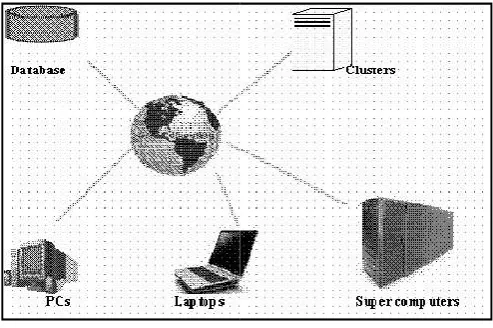
It is shared collection of reliable and unreliable resources. It is a collection of servers that are clustered together. Grid computing is all about sharing, aggregating, hosting and offering service across the world (Indu Gandotra, 2011). The concept of Grid Computing will get cleared from Fig. 1.
Grid Computing
Grid Computing Architecture: Grid targeted on integrating existing resources with their hardware, operating system, local security infrastructure. Grids define provide a set of std. protocols, middleware toolkits and services built on top of these protocols. Grid provides protocols services at five different layers as identified in Grid
Devika Rani Dhivya, 2015).
INTERNATIONAL JOURNAL OF CURRENT RESEARCH
Fig. 2. Architecture of Grid Computing
Fig. 3. Grid computing concept
The above fig. shows the general concept of grid computing which shows that various resources are segregated from across the globe or geographically dispersed locations towards a central location i.e. Grid system.
Types of Grid Computing
Different types of Grids in Grid Computing
Data Grid
Computational Grid
Data grid is a grid computing system that deals with the controlled sharing and management of distributed data
Storage Resource Broker (SRB)
Computational Grid is a Grid computing system that is
concerned with the computation
Applications
A. Advantages of Grid Computing (Grid Computing
Access to Additional Resources: In addition to CPU and other storage resources, a grid can also provide other resources as well.
Resource Balancing: A grid incorporates large number
of systems into a single system image. For applications that are grid enabled, grid performs the resource
71099 Sanghesh B. Bele
Architecture of Grid Computing
computing concept
The above fig. shows the general concept of grid computing which shows that various resources are segregated from across the globe or geographically dispersed locations towards a
Data grid is a grid computing system that deals with the controlled sharing and management of distributed data
computing system that is
Grid Computing)
In addition to CPU and other storage resources, a grid can also provide
A grid incorporates large number of systems into a single system image. For applications that are grid enabled, grid performs the resource
balancing by scheduling grid jobs on machines that are showing low utilization.
Reliability: The systems in grid are cheap and
geographically dispersed. If, for example, there is power or cooling failure at one site, then that will not affect the other site, thus high reliability will be there specially in case of real time systems.
B. Disadvantages of Grid Computing
Not Stable: Grid software and standards are not stable in comparison to other computing. Its standards are still evolving.
High Internet Connection Required
assembling various resources from geographically dispersed sites require high internet connection which results in high monetary cost.
Different Administrator Domains:
political issues arise when sharing resources among different domains. Some additional tools are required for having proper syncing and managing among different environment.
Cloud Computing
The main idea behind cloud computing is to make applications available on flexible execution environments located in Internet (Indu Gandotra, 2011).
technology. It is the development of parallel computing, distributed computing, and
combination and evolution of virtualization, utility computing, Software – as –a-Service(SaaS), Infracture
Platform-as-a-Service(PaaS)
(Santosh Kumar, 2012). “Cloud is a Parallel computing system of a collec
virtualized computer based on service level agreements (SLA).
[image:2.595.306.557.481.719.2]
Fig. 4. Cloud Computing
Forrester defines cloud computing as
“A pool of abstracted, highly scalable, and managed compute infrastructure capable of hosting end
and billed by consumption.”
Sanghesh B. Bele.A comparative study of grid and cloud computing
balancing by scheduling grid jobs on machines that are showing low utilization.
systems in grid are cheap and geographically dispersed. If, for example, there is power or cooling failure at one site, then that will not affect the other site, thus high reliability will be there specially in case of real time systems.
of Grid Computing (Grid Computing)
Grid software and standards are not stable in comparison to other computing. Its standards are still
High Internet Connection Required: Gathering and assembling various resources from geographically dispersed sites require high internet connection which results in high monetary cost.
Different Administrator Domains: Sometimes
political issues arise when sharing resources among omains. Some additional tools are required for having proper syncing and managing among
The main idea behind cloud computing is to make applications available on flexible execution environments located in , 2011). It is a complete new technology. It is the development of parallel computing, grid computing. It is the evolution of virtualization, utility computing, Service(SaaS), Infracture-as-a-Service(IaaS),
Service(PaaS) and Data-as-a-Service(DaaS)
“Cloud is a Parallel and Distributed computing system of a collection of inter-connected and virtualized computer based on service level agreements (SLA).
Cloud Computing
Forrester defines cloud computing as
Fig. 5. Five features of Cloud Computing
[image:3.595.306.553.75.273.2]Cloud Computing architecture
Fig. 6. The Cloud reference architecture
The Fig. 6 shows a cloud reference architecture
Kumar, 2012), that makes the most important security cloud components explicit and provides an abstract overview of cloud computing for security issue analysis.
The services (http//www.Dolcera.com/wiki/ondex.php?
title=cloud_computing#cloud_computing_comparison_of_dif erent_vendors) provided by cloud provides are
SaaS – Software as a Service Network
application. (By Google Apps, Salesforce.com)
DaaS – Data as a Service Customer queries against provider’s database. (By Google Big
simple DB)
PaaS– Platform as a Service Network
software development platform. (By Windows Azure, Google App Engine)
IaaS – Infrastructure as a Service Provider hosts customer VMs or provides network storage. (By Amazon web service EC2, Gogrid, Rackspace)
IPMaaS – Identity and Policy Management as a
Service Provider manages identity and/or access control policy for customer ( By Rightscale, Appistry)
NaaS – Network as a Service Provider offers
virtualized networks (e.g.VPNs)
71100 International Journal of Current Research,
Five features of Cloud Computing
Cloud reference architecture
The Fig. 6 shows a cloud reference architecture (Santosh that makes the most important security cloud provides an abstract overview of
Dolcera.com/wiki/ondex.php? title=cloud_computing#cloud_computing_comparison_of_diff
provided by cloud provides are –
Software as a Service Network-hosted (By Google Apps, Salesforce.com)
Data as a Service Customer queries against (By Google Big Table, Amazon
Platform as a Service Network – hosted (By Windows Azure,
Infrastructure as a Service Provider hosts customer VMs or provides network storage. (By Amazon web service EC2, Gogrid, Rackspace)
Identity and Policy Management as a Service Provider manages identity and/or access control policy for customer ( By Rightscale, Appistry)
Network as a Service Provider offers
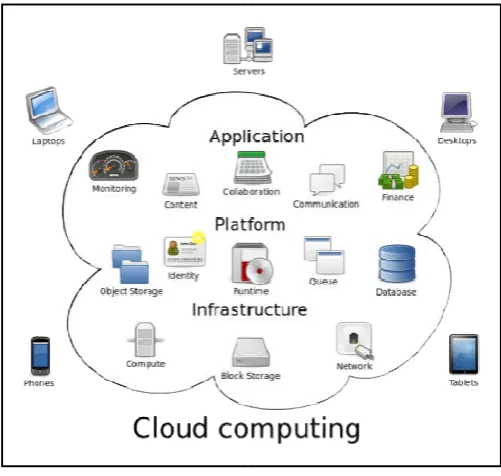
[image:3.595.36.282.285.462.2]The concept of Cloud Computing will get cleared from Gig. 7.
Fig. 7. Cloud Computing
Cloud Computing Types
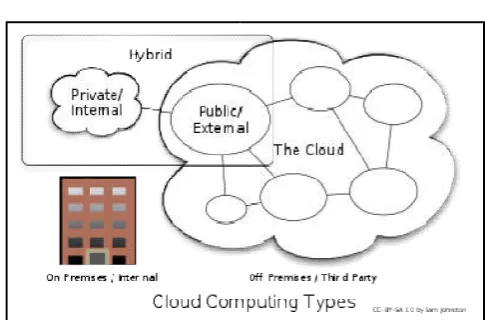
Public, Private and Hybrid Cloud
Fig. 8. Cloud computing Types
Public Cloud
Public clouds are owned and operated by third parties; they deliver better economies of scale to customers, as the infrastructure costs are spread among a mix of users, giving each individual client an attractive low
model. One of the advantages of a Public cloud is that they may be larger than an enterprises cloud, thus providing the ability to scale seamlessly, on demand.
Private Cloud
Private clouds are built exclusively for a single enterprise. They aim of Private Cloud is to address concerns on data security.
There are two variations to a private cloud:
On-premise Private Cloud:
clouds are hosted within one o
Externally hosted Private Cloud:
cloud is hosted externally with a cloud provider.
International Journal of Current Research, Vol. 10, Issue, 07, pp.71098-71102, July, 2018
Computing will get cleared from Gig. 7.
Cloud Computing
Hybrid Cloud
computing Types
Public clouds are owned and operated by third parties; they deliver better economies of scale to customers, as the infrastructure costs are spread among a mix of users, giving each individual client an attractive low-cost, “Pay-as-you-go” advantages of a Public cloud is that they may be larger than an enterprises cloud, thus providing the ability to scale seamlessly, on demand.
Private clouds are built exclusively for a single enterprise. They aim of Private Cloud is to address concerns on data
variations to a private cloud:
premise Private Cloud: also known as internal clouds are hosted within one own data center.
Externally hosted Private Cloud: This type of private cloud is hosted externally with a cloud provider.
[image:3.595.310.553.343.503.2]Hybrid Cloud
Hybrid Clouds combine both public and private cloud models. The Hybrid cloud environment is capable of providing on-demand, externally provisioned scale.
Advantages of Cloud Computing
Shared Resources: It shares resources to provide the services to multiple users.
Pay-As-You-Go: Users only need to pay those resources
which are used by them. They can demand for more resources if they required.
Better Hardware Management: It is easy for cloud
service provider (CSP) (provider.techtarget.com/
definition/cloud-provider.) to manage the hardware easily because all computers run the same hardware.
Applications of Cloud Computing
Following are some applications of cloud computing (Zhang, 2010)
Cloud computing provides dependable and secure
data storage center.
Cloud computing can realize data sharing between
different equipments.
The cloud provides nearly infinite possibility for users to use the internet.
Cloud computing does not need high quality
equipment for the user and it is easy to use.
Benefits of Cloud Computing
The cloud computing is the next big future in computing. It has many benefits like better hardware management.
It also provides better and easier management of data, because all data is located on central server so that administrator can control who have access to files (Indu Gandotra, 2011). It also reduces runtime and response time, minimizing the purchasing and deployment of physical infrastructure.
Conclusion
Cloud computing is a new technology of computer network, providing the web services at lower comparing to normal techniques. It contribute to improve the service in other related technologies like
Grid Computing, Cluster Computing Utility Computing / Automatic Computing Distributed Computing
Cloud computing is growing part of IT. It has the potential to become a favorite in promoting a secure, virtual and economically viable IT solution in the future. EUCALYPTUS is an open source software framework for cloud computing. In this way we can say, that fifth generation of the Computing in the form of Cloud Computing has been already started.
REFERENCES
“Article on Grid computing Architecture and Benefits”, Ms. K. Devika Rani Dhivya, Mrs. C. Sunitha, International Research Journal of Engineering and Technology, Vol 2, Issue 9, Dec. 2015. ISSN 2395-0056,
Ian Foster, C. Yong Zhao, Ioan Raicu, Shiyong Lu. Loud 2008. “Computing and Grid Computing 360 Degrees Compared” Rahul Kumar, I.A. Khan and V.D. Gupta, “ Literature review
on Grid Computing”, Vol. 6(7), pp. 144-148, July 2013.
Comparism between Grid and Cloud Computing:
Grid Computing Cloud Computing
Cha. Of Grid Computing
Loosely coupled (Decentralization)
Diversity and Dynamism
Distributed Job Management and
scheduling(http;//www.jatit.org/research/introduction_grid_computing.html )
Cha. Of Cloud Computing
Dynamic computing infrastructure
It service-centric approach
Self-service based usage model
Minimally or self-manged platform
Consumption-based billing
In grid computing, the computers do not have to be in the same physical location 7 can be operated in dependently. As far as other computers are concerned each computer on the grid is a distinct computer.
In cloud computing, the computers need not to be in the same physical location.
The computers that are part of a grid can run different operating systems and have different hardware.
The memory, storage device 7 network communications are manged by the operating system of the basic physical cloud units. Open source software like LINUX can support the basic physical unit management and virtualization computing.
Grid is inherently distributed by its nature over a LAN, WAN. Clouds are mainly distributed over MAN.
Areas of Grid Computing(http;//
www.jatit.org/research/introduction_grid_computing.html)
Predictive Modeling and Simulations
Engineering Design and Automation.
Energy Resources Exploration
Medical, Militry and Basic Research
Visualization
Areas of Cloud Computing
Banking
Insurance
Weather Forecasting
Space Exploration
Software as a service
Platform as a service
Infrastructure as a service
Data as a service
Any Std. OS(dominated by Unix) A hypervisor(VM) on which multiple Oss run
Benefits of Grid Computing (Shruti, 2013)
Exploiting underutilized resources
Parallel CPU capacity
Virtual organization for collaboration and virtual resources
Access to additional resources
Reliability
Management
Benefits of Cloud Computing (Usha Albuquerque, 2017)
Flexibility
Disaster recovery
Automatic Software updates
Free capital-expenditure
Work from anywhere
Document control
Security
DOI: 10.5897/ AJMCSR 11.154. ISSN: 2006-9731© 2013 Academic Journals.
Future generation Computer Systems 25(2009)599-616. The university of MelBourne, Austrila.
Indu Gandotra, Pawanesh Abrol, Pooja Gupta, Rohit Uppal and Sandeep Singh “ Cloud Computing over Cluster, Grid Computing: a Comparative Analysis” , Journal of Grid and Distributed Computing Vol. 1, issue 1, 2011. Pp-01-04. Shruti N. Pardeshi, Chitra Patil, Snehal Dhumale, “ Grid
computing architecture and Benefits”, International Journal of Scientific and Research Publications, Vol. 3, issue 8, August 2013, ISSN 2250-3153.
By Sunil Shankar “Grid Computing” http”//en.wikipedia org/wiki/grid_computing
“Brief history of Grid computing”, www.dcc.fc.up.py/ ines/aulas.1112/CG/intro2-history
Santosh Kumar and R.H. Goudar, “Cloud Computing-Research
Issues, Challenges, Architectures, Platforms and
Applications: A Survey, International Journal of future computer and communication, vol. 1, no. 4 Dec. 2012. Grobauer, B. T. Walloschek and E. Stocker, “understanding
cloud computing Vulnerabilities, “2011 IEEE Security and privacy. Pp 50-57, DOI= March/April 2011.
http//www. Dolcera.com/wiki/ondex.php?title=cloud_
computing#cloud_computing_comparison_of_different_ve ndors.
Usha Albuquerque and Nidhi Prasad,”Career in Cloud Computing”, Employment News. Vol XLI, No. 46 pp1, New Delhi, DOI: 11 to 17-Feb-2017.
http;//www.jatit.org/research/introduction_grid_computing.htm l.
http://cloudcomputingapps.org/what-is-the-difference-between-grid and cloud computing.html.
Wenke J: Jiangbon Ma, Nanging, P.R.C., Xiaoyong Ji A Reference Model of Cloud Operating and Open Source Software Implementation Mapping by 2009.
Zhang, S. S.F. Zhang, X.B. Chem, and X.Z. Huo,” Cloud Computing Research and Development Trend”, In Proceedings of the 2010 second International Conference on Future Networks(ICFN’ 10). IEEE Computer Society Washington, DC, USA. Pp 93-97. DOI: 10.1109/ICFN. 2010.58.
Daniel Nrmi, Rich Wolski, Chris Grzegor czyk, Graziano
obertelli, Sunil Soman, Lamia Youself, Dmitrii
Zagorodnov,” the Eucalyptus open-source
Cloud-computing system’, 9th IEEE/ACM International
symposium on cluster computing and the Grid, 2009. Junjie Peng, Xuejun Zhang Lei Bofenglhang, wu zgang, Qing
Li “Comparison of several cloud computing platforms”, 2009 IEEE. 66
Clp:cloud provider.techtarget.com/definition/cloud-provider. Robert W. Lucky May 2009, Reflections Cloud Computing,
May 2009. IEEE Spectrum