University of Warwick institutional repository: http://go.warwick.ac.uk/wrap
A Thesis Submitted for the Degree of PhD at the University of Warwick
http://go.warwick.ac.uk/wrap/77850
This thesis is made available online and is protected by original copyright.
Please scroll down to view the document itself.
Student Engagement in Modern Foreign
Languages: A Pedagogical Model
Nicolás Pino James
A thesis submitted in partial fulfilment of the requirements
for the degree of Doctor of Philosophy in Applied
Linguistics
University of Warwick, Centre for Applied Linguistics
Table of Contents
Chapter One: Introduction ... 12
1.1 Research Focus and Aims ... 12
1.2 Motivation for the Study ... 15
1.3 Thesis Structure ... 18
Chapter Two: Background of the Study ... 20
2.1 Introduction ... 20
2.2 A Shortage of Positive Attitudes towards MFL ... 20
2.3 Engaging Students in MFL ... 28
Chapter Three: Literature Review ... 35
3.1 Introduction ... 35
3.2 Operationalising Engagement ... 35
3.2.1 Establishing the Interaction between Motivation and Engagement ... 37
3.2.2 Focusing on a Domain of Student Engagement ... 39
3.2.3 Engagement as a Multidimensional Construct ... 43
3.3 An Approach to Foster Student ASEC Engagement ... 55
3.3.1 Schools Can Shape Engagement ... 56
3.3.2 Learning Activities as the Key Facilitator of Engagement within the School ... 58
3.3.3 Making Learning Activities Engaging ... 60
3.4 The ProE Model for ASEC Engagement in Learning Activities ... 69
3.4.1 Project-Based Learning ... 73
Chapter Four: Methodology ... 76
4.1 Introduction ... 76
4.2 Participants ... 76
4.2.1 Students ... 77
4.4 Data Collection Instruments ... 89
4.4.1 Interviews ... 90
4.4.1.1 Pre-Model Implementation Pair Interviews with Students ... 91
4.4.1.2 After-Project Group Interviews with Students ... 92
4.4.1.3 Interviews with Pamela ... 95
4.4.1.4 Interview Design and Implementation ... 96
4.4.2 Research Journal ... 102
4.4.3 Open-Response Questionnaires (or Reflection Sheets) ... 105
4.4.4 After-Project Questionnaires ... 110
4.5 Thematic Analysis ... 115
4.6 Research Ethics ... 123
4.6.1 Procedural Ethics ... 124
4.6.2 Ethics in Practice ... 131
Chapter Five: Action Research Cycle Zero ... 133
5.1 Introduction ... 133
5.2 Preliminary Work ... 135
Chapter Six: Action Research Cycle One (C1) ... 138
6.1 Introduction ... 138
6.2 Action Research C1: Planning ... 138
6.3 Action Research C1: Acting ... 139
6.4 Action Research C1: Observing ... 140
6.5 Action Research C1 Reflecting (I): Practitioner Account ... 141
6.6 Action Research C1 Reflecting (II): Researcher Account ... 147
6.6.1 C1 ASEC Engagement ... 148
6.6.1.1 C1 Global Analysis of ASEC Engagement ... 149
6.6.1.2 C1 Temporal Analysis of ASEC Engagement ... 157
6.6.2 C1 Facilitators of Engagement ... 172
6.6.3 C1 Inhibitors of Engagement ... 192
6.7 Action Research C1 Reflecting (III): Discussion ... 207
7.1 Introduction ... 216
7.2 Action Research C2: Planning ... 216
7.3 Action Research C2: Acting ... 217
7.4 Action Research C2: Observing ... 219
7.5 Action Research C2 Reflecting (I): Practitioner Account ... 219
7.6 Action Research C2 Reflecting (II): Researcher Account ... 221
7.6.1 C2 Global Analysis of ASEC Engagement ... 222
7.6.2 C2 Temporal Analysis of ASEC Engagement ... 233
7.6.3 C2 Facilitators of Engagement ... 239
7.6.4 C2 Inhibitors of Engagement ... 260
7.7 Action Research C2 Reflecting (III): Discussion ... 270
Chapter Eight: Conclusion ... 282
8.1 Conclusion of the Study ... 282
8.2 Contributions to Knowledge ... 284
8.2.1 Contributions to MFL Research ... 285
8.2.2 Contributions to Applied Linguistics in Language Education Research ... 286
8.2.3 Contributions to General Education Research ... 288
8.3.4 Contributions to PBL research ... 289
8.2.5 Contributions to Engagement Research ... 290
8.3 Limitations and Directions for Further Research ... 295
8.4 Concluding Remarks ... 298
References ... 301
Appendix A: Teachers’ Questionnaire on Student Engagement ... 327
Appendix B: Sample Interview Transcript ... 333
Appendix C: Sample of Research Journal Entry ... 334
Appendix D: Sample Open-Response Questionnaire (C1) ... 336
Appendix E: Sample Open-Response Questionnaire (C2) ... 338
List of Figures
Figure 2.1: MFL Entrants for A level (DfE 2014:14) 21
Figure 2.2: Classroom initiative to increase student uptake of MFL 28
Figure 3.1: Levels of engagement according to Skinner and Pitzer (2012: 23) 40
Figure 3.2: The ProE model for student ASEC engagement in learning activities 70
Figure 4.1: Kemmis and McTaggart (1988) model of action research 82
Figure 6.1: Elements of the ProE model not supported in Cycle One (greyed out) 191
Figure 7.1: Elements of the ProE model not supported in Cycle Two (greyed out) 259
List of Tables
Table 2.1: Headline findings in question one of the consultation 25
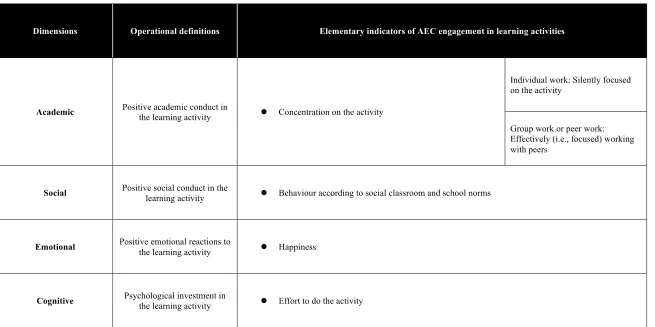
Table 3.1: Dimensions and elementary indicators of ASEC engagement in learning activities
54
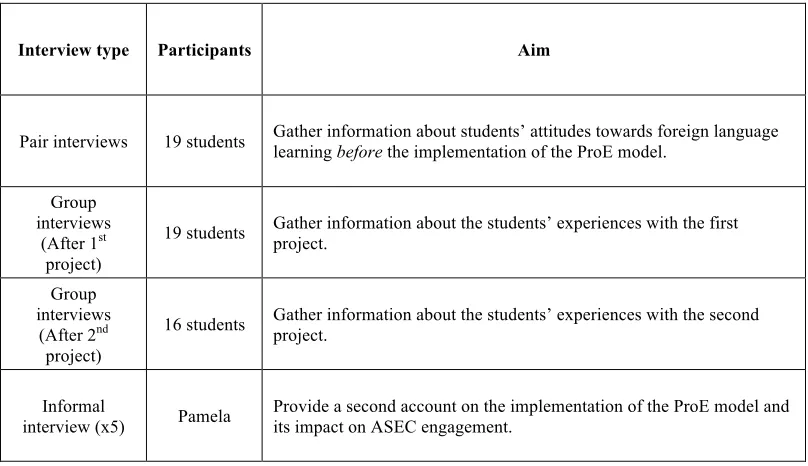
Table 4.1: Types and aims of interviews conducted during this research 96
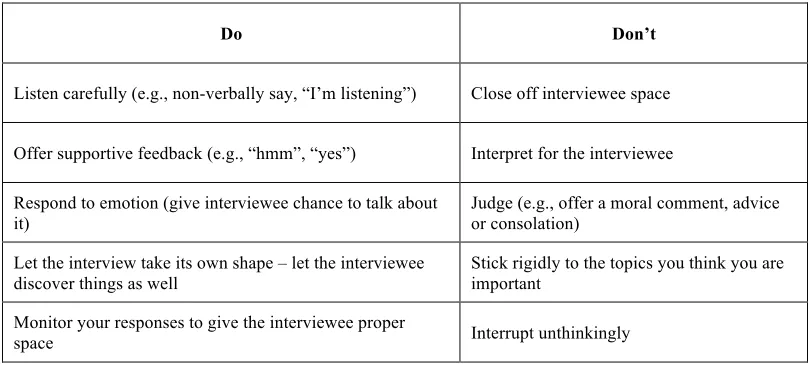
Table 4.2: Responding in an interview (Richards 2003: 54) 101
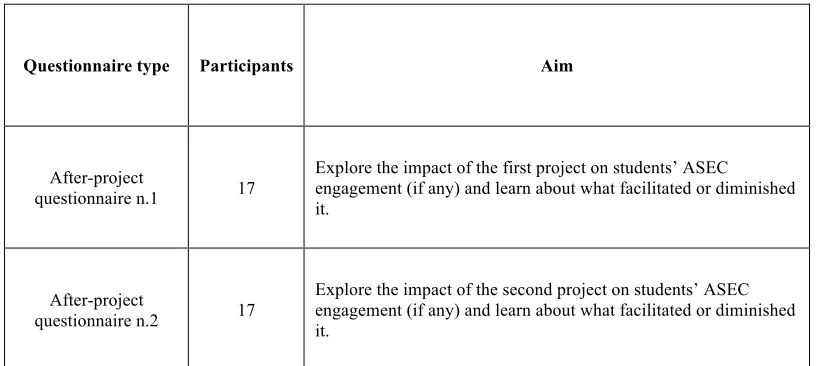
Table 4.3: Questionnaire types and characteristics 111
Table 4.4: Braun and Clarke’s (2006) steps of thematic analysis 119
Table 4.5: Guidelines for a reasonably informed consent (adapted from Dörnyei 2007: 69)
125
Table 4.6: Negotiation access checklist (Cohen et al., 2005: 57) 127
Table 5.1: Details of the preliminary work phase 137
Table 6.1: Description of data collection in Cycle One 141
Table 6.2: Questionnaire results regarding academic engagement (i.e., concentration)
Table 6.3: Questionnaire results regarding social engagement (i.e., prosocial behaviour)
152
Table 6.4: Questionnaire results regarding emotional engagement I (i.e., happiness)
153
Table 6.5: Questionnaire results regarding emotional engagement II (i.e., happiness)
154
Table 6.6: Questionnaire results regarding cognitive engagement (i.e., mental effort)
155
Table 6.7: Description of the Episodes of the language-learning project C1 159
Table 6.8: Results of the C1 temporal analysis of ASEC engagement 161
Table 6.9: Reflection results regarding emotional engagement (i.e., happiness) 165
Table 6.10: Results of the C1 temporal analysis of ASEC engagement (with emotional engagement inferred)
169
Table 6.11: Questionnaire results regarding meaningfulness of the project 175
Table 6.12: Questionnaire results regarding perceived autonomy in the project 178
Table 6.13: Questionnaire results regarding perceived belongingness (to peers) in the project
181
Table 6.14: Questionnaire results regarding liking of group composition 183
Table 6.15: Questionnaire results regarding teacher-student relationships 185
Table 6.16: Questionnaire results regarding perceived competence in the project 188
Table 6.17: Questionnaire results regarding learning in the project 196
Table 6.18: Questionnaire results regarding use of materials for learning 200
Table 7.1: Description of data collection in Cycle Two 219
Table 7.2: Questionnaire results regarding academic engagement (i.e.,
concentration)
222
behaviour)
Table 7.4: Questionnaire results regarding emotional engagement I (i.e., happiness)
226
Table 7.5: Questionnaire results regarding emotional engagement II (i.e., happiness)
227
Table 7.6: Questionnaire results regarding cognitive engagement (i.e., mental effort)
230
Table 7.7: Description of the Episodes of the language-learning project C2 233
Table 7.8: Results of the C2 temporal analysis of ASEC engagement 235
Table 7.9: Questionnaire results regarding meaningfulness of the project 241
Table 7.10: Questionnaire results regarding perceived autonomy in the project 247
Table 7.11: Questionnaire results regarding perceived belongingness (to peers) in the project
249
Table 7.12: Questionnaire results regarding teacher-student relationships 251
Table 7.13: Questionnaire results regarding perceived competence in the project 254
Table 7.14: Questionnaire results regarding learning in the project 256
List of Illustrations
Illustration 4.1: Example of coding using NVivo 121
Acknowledgements
Declaration
I declare that the present thesis represents my own work, except where due
acknowledgement is made, and that it has not been previously included in a thesis, dissertation, assignment, or report submitted to this University or to any other institution for a degree, diploma, or any other qualifications.
Abstract
This study proposes a practitioner-oriented model for fostering student academic, social, emotional, and cognitive (ASEC) engagement in learning activities, and it assesses its potential to achieve such aims. The rationale underpinning this research is that the UK currently faces a social problem of negative attitudes towards foreign language learning. This is manifested by the steep decline in the number of schoolchildren that take up Modern Foreign Languages (MFL) in upper secondary education. In light of this, research has consistently demonstrated that attitudes towards learning languages can be transformed if we regularly provide students with engaging experiences in the
classroom. Unfortunately, pedagogical solutions that guide secondary schoolteachers on how to engineer engaging classrooms on a daily basis are scarce in educational research.
Abbreviations
API Extract from after-project interview with students
AR Action Research
ASEC Academic, Social, Emotional, and Cognitive
GCSE General Certificate of Secondary Education
KS3 Key Stage 3
KS4 Key Stage 4
MFL Modern Foreign Languages
PI Extract from interview with Pamela
ProE Pro/Promote Engagement
RJ Extract from research journal
RS Extract from reflection sheets
Chapter One: Introduction
1.1 Research Focus and Aims
This research study evaluates a newly designed pedagogical model to foster student engagement in learning activities amongst secondary students of Modern Foreign Languages (MFL). The construct of student engagement in learning activities is understood in light of four dimensions: academic engagement, social engagement, emotional engagement, and cognitive engagement (ASEC engagement). Academic engagement refers to positive academic conduct in the learning activity (e.g., on-task behaviour); social engagement refers to positive social conduct in the learning activity (e.g., behaviour according to classroom and school norms), emotional engagement refers to positive emotional reactions to the learning activity (e.g., happiness); and finally, cognitive engagement refers to psychological investment in the learning activity (e.g., effort to develop the activity). These four dimensions, united, form the single concept of student engagement at the activity level.
The rationale underpinning this research is that the UK currently faces a social problem of negative attitudes towards foreign language learning (Bartram 2010). This is
In this respect, research has demonstrated that attitudes towards learning languages can be significantly transformed if we regularly provide students with engaging experiences in the classroom (e.g., Dörnyei 1998, 2003; Masgoret & Gardner, 2003; McPake et al., 1999; Nikolov 1998). This seems to be because cumulative experiences of engagement (or disengagement) in the classroom seem to largely determine student perception of a particular school subject (Herrenkohl & Guerra, 1998; Skinner & Pitzer, 2012).
Therefore, in a country in which students do not seem to be enjoying language learning (Gruneberg & Sykes, 1994), regularly facilitating engagement experiences in the MFL classroom becomes key to increasing student uptake of the subject.
Moreover, pedagogical solutions that guide secondary schoolteachers on how to engineer engaging (MFL) classrooms on a daily basis are scarce in engagement research. This seems to be due to a series of factors such as the fact that engagement research has primarily focused on combating high, school dropout rates (see Eccles & Wang, 2012, for a discussion); hence the interest in school engagement rather than in classroom engagement. Furthermore, engagement research has mostly concentrated on developing its theoretical side (see Christenson et al., 2012, for an illustration of this).
Given the preceding, in this present study I propose the ProE model (where Pro- stands for ‘promote’ and ‘E’ for engagement) for fostering student academic, social, emotional, and cognitive engagement in learning activities, and I assess its potential to achieve such aims. This is a practitioner-oriented model composed of four facilitators of engagement that, when deployed jointly in an activity, can contribute to fostering engagement in four dimensions. These facilitators are meaningfulness, autonomy, belongingness and
peers and teacher; and finally, competence is connected to the student’s ability to complete the activity successfully or efficiently.
In addition, this study uses an action research approach, which seems to be key to obtaining a rich understanding of the potential of the ProE model to stimulate student ASEC engagement in MFL contexts. Some of the aspects of action research that contribute to obtaining the aforementioned objective are: (a) action research is
participative (Kemmis & McTaggart, 1988), which allows for assessing the functioning of the ProE model from ‘within’ (i.e., as a teacher) in addition to from ‘outside’ (i.e., as a researcher); (b) action research has a cyclical nature (Denscombe, 2010), which allows for assessing the ProE model several times consecutively to ensure its validity to foster student ASEC engagement in a particular research context; and (c) action research is majorly qualitative (Schwalbach 2003; Zeni 1998) , which allows for deeper delving into the studied phenomenon.
However, this study differs slightly from the action research credo (hence, the action research approach) since, firstly, it seeks to make its findings transferable to other MFL classrooms across Britain and, secondly, the intervention is carried out by a researcher in the role of a teacher (rather than the reverse) in a teaching context that is not his own.
It is therefore hoped that from this research, a successful practitioner-oriented model for fostering student engagement can emerge, potentially inspiring schoolteachers to tackle
(e.g., emphasising other subject areas to satisfy society’s demands) therefore making it less susceptible to change.
A better solution to the problem of student uptake though, would be combining student engagement with the promotion of the value of foreign language learning to
employability. This is because prior research has demonstrated that employability is a powerful sociocultural influence towards transforming student attitudes towards MFL (e.g., Bartram 2010; Evans & Fisher, 2009; Fisher 2001; McCrone et al., 2005; Young 1994b), in addition to student engagement, of course. Additionally, it is my view that student engagement alone, despite being necessary for the positive development of attitudes, would not be sufficient to increase student uptake of MFL. I feel that although enjoying the MFL subject can have a positive impact on student attitudes, it may not necessarily make MFL a priority subject area (such as English, Math or Science) because of its current lowly status in the British society (see Bartram 2010, for a discussion). Having said that, unfortunately, an intervention combining student engagement in MFL and employability would go beyond the narrow focus of a PhD study, which is why this present investigation looks solely at fostering student
engagement. The research question this study thus addresses is:
• To what extent does the implementation of the ProE model foster student academic, social, emotional, and cognitive engagement in learning activities in MFL settings?
1.2 Motivation for the Study
not speak foreign languages while the majority of the other Erasmus students (e.g., French, Italian, Spanish, etc.) spoke, at least, another foreign language, in addition to English. What perhaps was more striking for me was not that the British students generally did not speak foreign languages, but that they did not appear to want to study languages. And this was despite being in a multilingual environment in which, on a daily basis, people spoke multiple languages, not just in our classroom or at the
university, but also in the streets. Whenever I discussed this with my British classmates they were indeed regretful about not speaking foreign languages, but would go no further, making no plans to learn a foreign language. I knew that with English being the international language there was less need for them to make the huge effort that learning a foreign language required, but this was certainly not enough for me. I simply could not understand the low levels of interest that I was witnessing.
At the beginning, I thought that perhaps this was due to the university I attended: it was not a top UK university, and, perhaps the students were simply not as hard-working and/or success-driven as in other universities — and thus, less inclined to make the effort required to learn a foreign language. I even thought at the time that the area, the
Midlands, could have been a contributing factor since it was less international than other parts of the UK such as, London for example. This could have potentially explained why
students would not have appreciated the importance of speaking foreign languages.
may potentially have originated in the school years. However, this occurred while I was pursuing a Master’s degree in English language teaching with a specialism in
educational technology. Somewhat predictably then, this became the initial topic of my PhD research (i.e., the motivational use of technology in the language classroom) rather than attitudes towards MFL. Perhaps a subconscious deterrent was the fact that I knew very little about school education in the UK, thus, pursuing the technology route felt like the safer choice, given my competence and degree of comfort with it at the time.
Then, upon starting the PhD, the hunt for a research context began and that is when I found myself in a small café in England, having a chat with my friend Pamela
(pseudonym), an MFL teacher at a Catholic school in the Midlands. Although the nature of our meeting was initially personal, I ended up sharing my research ideas with her. That was when she told me that her school would be interested in an intervention designed to increase the motivation and engagement of its MFL students, as it seemed to be generally low. This comment inevitably reignited my interest in the topic of student attitudes towards MFL, which I had set aside in order to focus on a more technology-related study. The question of whether I should pursue this research path now appeared. I decided to give it some thought.
keep up with the trends, which is seemingly the case of technology in language learning. Hence, the research study that you have before you today.
1.3 Thesis Structure
This thesis comprises eight chapters in total: introduction, background of the study, literature review, research methodology, action research cycle zero, action research cycle one, action research cycle two, and conclusion. In the present chapter, Chapter One, I introduce the research focus and aims of my study, followed by my underlying personal motivations. In Chapter Two (Background), I move on to discuss the
(Chapters Six and Seven). Finally, in Chapter Eight, I conclude by providing a summary of the findings of this study followed by implications for research and practice,
Chapter Two: Background of the Study
2.1 Introduction
As stated earlier in Chapter One, this chapter concentrates on presenting the foundations upon which this research study on promoting student engagement is built. Therefore, the sections that follow are concerned with providing a discussion on the problem of low student uptake of MFL in British secondary education, and proposing a practical solution to potentially tackle this problem. In 2.2 I describe the current status of MFL uptake in the UK. Then, in 2.3 I propose fostering student engagement in the MFL classroom as part of a solution to counteract the current low uptake of MFL in KS4 and more advanced school stages.
2.2 A Shortage of Positive Attitudes towards MFL
The majority of schoolchildren are reluctant to learn modern foreign languages in the UK, so echo the multiple governmental and international reports, research studies, and the national press. Seemingly, the number of students entering GCSE in MFL has dropped from 76% to 48% between 2002 and 2013. And this drop is especially evident in French and German (see Holmes 2014, for a discussion).
2000, the National Languages Strategy in 2002, and later on, the English Baccalaureate (EBacc) in 2010. Regarding the latter, results from recent reports present cautious room for optimism. According to the report, from 2012 to 2013, there has been an increase in the number of students entering GCSE in MFL (from 41% to 48%) and this seems to be partly related to the introduction of the EBacc1 (British Council & CfBT, 2014).
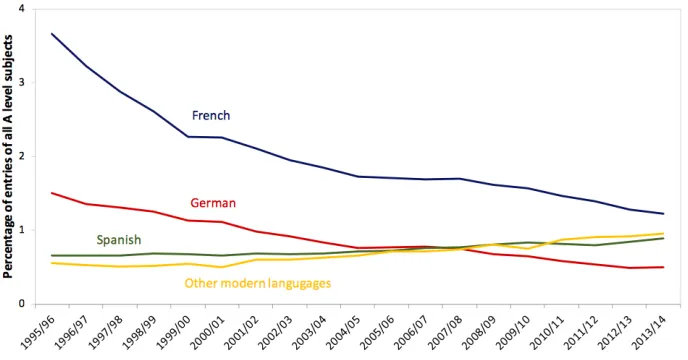
[image:22.595.153.497.333.513.2]However, in spite of this increase, the overall situation remains concerning since the overall number of A-level MFL entrants has been shrinking since 1996, especially in the case of French and German (Figure 1). This has occurred in a time frame in which the total number of A-level entries has risen by 31% (Malpass 2014).
Figure 2.1: MFL Entrants for A-level (DfE 2014: 14)
In fact, at the time of writing this paper, the three MFL (French, German and Spanish), out of all the EBacc subjects, have the lowest GCSE to A-level progression rates. Moreover, the number of students obtaining grade A* in A-level MFL has been on the
decline since the implementation of the EBacc in 2010 (Malpass 2014). Regarding student language ability, in the first European Survey on Language Competencies
conducted in 2012 among fourteen participating countries (European Commission
2012b), the UK comes last in the number of students achieving an intermediate level in foreign language (level B1 of The Common European Framework of Reference for Languages). Even more concerning, 30% of students did not achieve a beginner level (level A1 of the CEFR).
In view of the preceding, it can be argued that the UK is not only a country where languages are not studied at GCSE and beyond but also a place where language users have a limited command of foreign languages. This seems to be a rather disappointing outcome for a country that spends 18% more on education per child (between the ages of 6 and 15) than the OECD average (OECD 2014).
The reasons behind the decreasing number of language students nationwide seem to be several. To date, the source of the issue remains uncertain making it challenging for educational authorities to intervene to fully resolve the problem. While it is true that students’ low motivation is the new catchphrase resonating across the educational landscape (see Coleman et al., 2007, for a discussion), it seems that the root of the problem is located at a higher level. Scholars seem to attribute the issue of students’ poor motivation to a nationally hostile climate for language learning (e.g., Coleman et al., 2007; Johnstone 2007; Leighton 1991; McPake et al., 1999; Mitchell 2003; Pachler et al., 2007; Saunders 1998; Watts 2003). This statement seems to suggest that the UK is arguably a place were speaking a foreign language is generally perceived as of limited relevance (Malpass, 2014).
Furthermore, in the literature it is regularly argued that the problem of insular attitudes could be sensibly connected to one or many of the following individual, educational and sociocultural variables (see Bartram 2010, for a discussion):
Individual variables
• Perceptions of difficulty (Coleman et al., 2007; Graham 2002; Gruneberg & Sykes, 1994; McPake et al., 1999; Saunders 1998)
• Lack of perceived progress (Graham 2004; Malpass 2014)
• Achieving low scores (Aplin 1991; Chambers 1999; Fisher 2001; Wringe 1989)
Educational Influences
• Poor teacher-student relationships (Aplin 1991; Chambers 1999; Clark & Trafford, 1995; Fisher 2001; Nikolov 1998; Philips & Filmer-Sankey, 1993; Stables & Wikeley, 1999; Wright 1999)
• Overuse of the target language (Kent 1996; Lee et al., 1998; Philips & Filmer-Sankey, 1993; Stables & Wikeley, 1999)
• Meaningless learning activities (Aplin 1991; Clark & Trafford, 1995; Kent 1996; Lee et al., 1998; Stables & Wikeley, 1999; Vasseur & Grandcolas, 1997) • Little use of technology in the classroom (Austin & Mendlick, 1993; Kenny
2002; Leahy 2000; Wringe 1989)
• Dissatisfaction with the textbooks (Chambers 1994; Clark & Trafford, 1995; Fisher 2001; Kent 1996; Wright 1999)
• Poor status of MFL within the school (Dobson 1998; McPake et al., 1999; Ward 2002; Young 1994b)
Sociocultural influences
• Negative parental support (Barton 1997; Chambers 1998; Gardner 1991; Philips & Filmer-Sankey, 1993)
• The negative attitudes of friends and peers (Barton 1997; Bartram 2006; O'Reilly-Cavani & Birks, 1997)
• Negative experiences and perceptions of the target language community (Chambers 1999; Dornyei 2001; Gardner & Lambert, 1972; Philips & Filmer-Sankey, 1993)
• The role of English in the world (Philips & Filmer-Sankey, 1993; Watts 2003; Williams, Burden, & Lanvers, 2002)
• Undermining of foreign language learning by the media (McPake et al., 1999; Oskamp & Schultz, 2005; Watts 2003)
• Low perception of utility of languages (Clark & Trafford, 1995; Kent 1996; Lamb & Fisher, 1999; McPake et al., 1999; O'Reilly-Cavani & Birks, 1997)
Thus, from the preceding, it would be reasonable to conclude that the principal reason why tens of thousands of schoolchildren in the UK choose not to take up languages in later school life is because ‘they do not see the point’. If we think carefully about this whole situation, the fact that students do not perceive the notion of language learning as anything other than a skill to be performed could be justified under the parameters of a cyclical, culturally produced process. This cycle would start in the school and would
come to occupy positions of power that would allow them to make decisions that affect the education of the country.
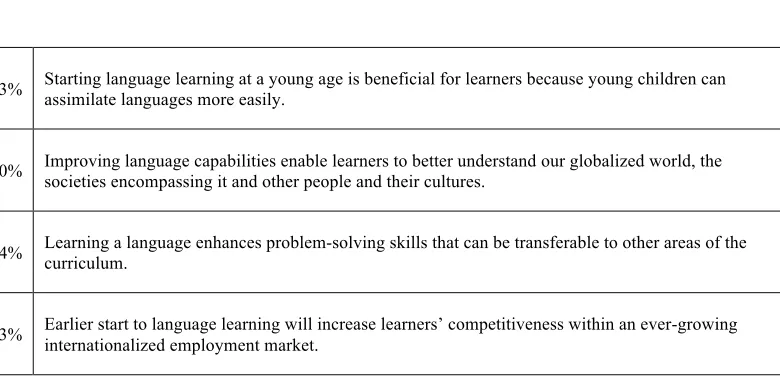
[image:26.595.119.509.344.534.2]To illustrate this state of affairs, I would like to refer to the last Government’s consultation report for making foreign languages compulsory at Key Stage 2 (KS2) (DfE 2012). This government initiative involved 318 participants, amongst whom were students, parents, educators, and stakeholders. Table 2.1 below shows the proportions of respondents who agreed with the statements of question one of the consultation. This question tried to gather substantial explanations to justify the integration of foreign language learning across KS2:
Table 2.1: Headline findings in question one of the consultation
53% Starting language learning at a young age is beneficial for learners because young children can assimilate languages more easily.
50% Improving language capabilities enable learners to better understand our globalized world, the societies encompassing it and other people and their cultures.
34% Learning a language enhances problem-solving skills that can be transferable to other areas of the curriculum.
23% Earlier start to language learning will increase learners’ competitiveness within an ever-growing internationalized employment market.
The preceding might suggest then that the majority of the respondents (spanning students and national bodies) show an unawareness of the key benefits that learning a language today might bring to learners. This is shown, by the relatively few respondents that foregrounded cultural, multi-literacy or economic values over the practical and pragmatic value of mastering a foreign language. In regard to the former, I would like to add that, expanding language learning to KS2 would not necessarily bring about
Employability, Mobility, and Growth (European Commission 2012) shows similar figures in learners who move past GCSEs with an intermediate level (B1/B2) in both the UK (9%) and France (14%), despite the fact that, in the latter, foreign language
acquisition has been present in primary education for a few years now.
Returning to the report, it seems that one out of two respondents does not identify the acquisition of a global mindset as a reason to study foreign languages. The global awareness value of language learning, often referred to as intercultural communicative competence (Byram 1997), can foster ‘knowledge of self and other, attitudes of openness and curiosity, skills of interpreting and relating, skills of discovery and interaction, and critical cultural awareness’ (Schenker 2012: 50). To show its importance, developing global mindsets is a core element of the European Common Framework for Languages (as well as the ACTFL Guidelines in the United States) and a regular recipient of European funding. Proof of this is the European schemes, including Comenius, Euroscola or eTwinning. The underlying principle underpinning these initiatives is to provide learners with real-life communicative experiences with students in other countries (Drabble 2013).
In addition, approximately two out of three respondents do not attribute any importance to the fact that learning a foreign language is associated with acquiring useful
of these transferable skills is regarded as key to thriving in the workplace. As Warschauer (2011: 18) puts it:
In an information-based economy, even entry-level office jobs require many things labelled as 21st century skills, such as being able to make use of a new technology to communicate and collaborate […] the greatest power, pay, and influence are reserved for those who have more than these basic skills, specifically those who also can carry out expert thinking and complex
communication in particular domains.
Finally, the last datum indicates that learning a foreign language has yet another fundamental value, which maps back to the philosophy of 21st century education, and that seems to go widely undetected by approximately two out of three respondents, namely that of strengthening schoolchildren’s competiveness in the global market. Competitiveness of the UK economy and successful global trade has been the focus of political attention over the last few years (ALL 2011). In recent research conducted by Foreman-Peck (2009) for the Department of Business, Innovation, and Skills, it was revealed that overreliance on English-speaking markets costs the UK economy around 48 billion pounds annually, which corresponds with 3.5% of the GDP (BIS 2014).
Similarly, in a British Chambers of Commerce survey administered in 2011 among 8,000 businesses, it was revealed that 61% of UK non-exporters consider language difficulties a barrier to trading internationally (Monagham 2012). Along the same lines, the annual CBI and Pearson Education and Skills Survey has, over the past five years, consistently reported (2010-2014) that employers are dissatisfied with the foreign language skills of the British workforce (CBI & Pearson, 2014). It is important to mention that the shortage of language skills seems to affect all sorts of occupational categories. This is confirmed by data from the latest UK Commission for Employment and Skills survey in which 91,279 establishments across the UK participated (UKCES 2014).
agreeing with the views of the scholars cited above, we might well say that this thought seems rather engrained within the UK society. For this reason, I strongly believe that this specific scenario should become a matter of intervention on a national scale in order to achieve a change in attitudes across Britain that can lead to increased uptake of MFL in KS4 and beyond. To this end, in the following section I propose a possible course of action to reverse this vicious cycle that affects the current educational landscape of the UK, especially concerning foreign language acquisition.
2.3 Engaging Students in MFL
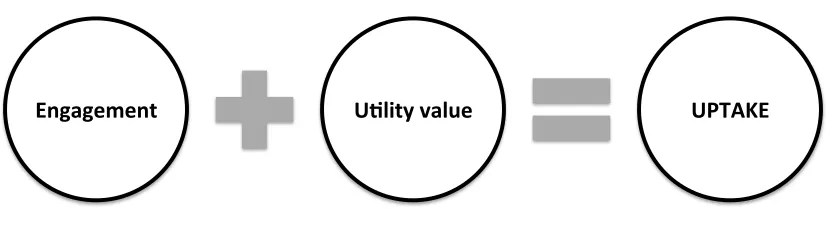
[image:29.595.115.528.498.624.2]After ascribing the problem of low uptake of MFL in KS4 and beyond to the British society’s low opinion of foreign languages, here I propose an action plan that may assist in increasing the status of foreign language learning among secondary schoolchildren. Thus, below I present my rationale for a classroom-based initiative that can contribute to raising student uptake of MFL in the UK at GCSE and A-levels. My plan consists of two combined courses of action, as shown in Figure 2.2.
Figure 2.2: Classroom initiative to increase student uptake of MFL
The initiative is engineered for the classroom level for various reasons. First, it almost goes without saying that modifications are comparably easier to carry out at the classroom level than at the school-wide level (e.g., changing the institutional view on
MFL’s value) where educational authorities or politics come into play (Pachler et al., 2007; Pachler et al., 2014). Secondly, and more importantly, there is evidence to support the view that any changes made to the nature of attitudes towards language learning are to a great extent mediated from the classroom (e.g., Chambers 1999; Clark & Trafford, 1995; Evans & Fisher, 2009; Fisher 2001; McPake et al., 1999; Nikolov 1998; Philips & Filmer-Sankey, 1993; Taylor & Marsden, 2012; Wright 1999). This apparently can be attributed to the fact that students’ attitudes are largely shaped by their daily experiences in the classroom, as I will explain in later sections. Certainly, I do not wish to imply that classroom-based initiatives are always enough to transform students’ attitudes — in fact, other factors such as the perception of languages within the school can have a significant impact on the success of such interventions (Evans & Fisher, 2009). Rather, my point is that classroom interventions are powerful enough to positively shape students’ attitudes even when the odds (i.e., school support) are stacked against them.
Thus, regarding the first course of action in Figure 2.2, educational research evidences that student experiences of engagement or disengagement in a particular subject may play a significant role in how students perceive that subject. Notably, a factor common to most of the classroom interventions that have successfully improved student attitudes towards a certain subject is that they fostered student engagement with learning material as part of their equations. For example, Sesen and Tarhan (2013) found evidence in an urban public high school in Turkey (N=62) that the introduction of inquiry-based activities had positive effects on engagement, and in turn, on students’ attitudes towards chemistry. These results were also found in a similar intervention conducted in Taiwan involving 68 high school students (Lin et al., 2014). In this study, the implementation of an instructional model based on inquiry had a dual positive effect on both engagement and the participants’ attitudes to science. Furthermore, the results of an American intervention conducted by Houseal et al. (2014) showed that student engagement
science (N=193). This pattern is also visible in university contexts. Hodges and Kim (2013), for instance, found that enhancing engagement by means of a motivational model known as the ARCS model (Keller 1987) improved students’ perceptions towards learning mathematics (N=42).
The message that these studies convey is also supported in foreign language learning research (e.g., Dörnyei 1998, 2003; Masgoret & Gardner, 2003; McPake et al., 1999; Nikolov 1998) where it is commonly reported that student engagement, generally referred to as motivated behaviour, has the power to ultimately shape student attitudes towards the languages they learn in positive ways. This can be rationalised on the basis that attitudes towards a specific school subject are largely the result of cumulative experiences of engagement (or disengagement) with academic work (Skinner & Pitzer, 2012). It can therefore be argued that engagement influences attitudes more than
attitudes influence engagement. As Herrenkohl and Guerra (1998: 433) point out, “being engaged creates a sense of purpose and accomplishment among students and promotes the development of important ‘dispositions’ towards learning”. Taking this into consideration, it is thus not surprising that student engagement has been recognised by several scholars as a crucial factor in defining whether students continue to study languages in KS4 (e.g., Evans & Fisher, 2009; Fisher 2001; McCrone et al., 2005). A case in point lies in the study conducted by Taylor and Marsden (2012) involving 498 Year 9 students from three maintained secondary schools in England. The results showed that students who felt engaged in their lessons were more likely to continue learning languages in KS4.
1989), which seems to be today’s reality in British schools (cf. 2.2). In this respect, the research of Gruneberg and Sykes (1994), in which 273 undergraduate students from non-language degrees participated, revealed that 55% of students did not enjoy MFL at school. Although this research is more than 20 years old, the current situation, which seems worse rather than better, implies that the picture found by Gruneberg and Sykes still persists, and that students are not sufficiently engaged in today’s MFL classrooms.
From this perspective then, a possible conclusion might be that student engagement has a self-amplifying nature that eventually affects attitudes (Jang et al., 2012; Skinner & Pitzer, 2012) . Here is an illustrative example of the amplification effect in the sense that I describe it:
The important point is that a person’s appraisal of one level can easily be transferred to a broader or narrower level; for example, negative attitudes evoked by failure in doing a particular task can easily be generalised to the whole language course or to the whole of language learning (“I’m just not good at languages . . .”), and, conversely, established attitudes about the whole school can profoundly affect one’s specific L2 learning disposition (“I dislike everything that’s going on in this building”). (Dörnyei & Ottó, 1998: 44)
That being said, it seems clear that a key course of action that should be taken in order to increase MFL uptake is to achieve a high degree of student engagement in the
classroom. And this would be on the basis that (a) promoting student engagement is within the teachers’ control and (b) it has consistently proved to be a powerful element to transform student attitudes.
However, as implied by Figure 2.2, I believe that student engagement, despite being necessary for the positive development of attitudes, would not sufficiently impact on the academic value students attach to MFL. That is, regularly providing students with engagement experiences could positively affect their attitudes to the end that they
perceive MFL as enjoyable and exciting. Nevertheless, I contend that in the context of British statutory education, this would not be enough to instil a strong desire in students
themselves back’ when it comes to pursuing MFL in KS4 because other superordinate interests take precedence, such as pursuing subjects that are more highly valued in society.
In view of this, prior research on MFL in British schools has suggested that the perceived usefulness of speaking a foreign language in future careers is another key driver that moves students to take up languages in KS4 (e.g., Evans & Fisher, 2009; Fisher 2001; McCrone et al., 2005). To illustrate, the study of Stables and Wikeley (1999) exploring student perceptions of the importance of MFL and their reasons for liking and disliking the subject (N=144) found that French and German were the most disliked subjects largely due to the fact that they were perceived unhelpful for improving employment prospects. These findings are echoed in the study of Young (1994a) where the author found a firm connection between student attitudes towards French and the low perception of its career value. As one of the participants puts it (Young 1994a:113):
I don’t like it… it’s all right for the people that are going to take up a career like couriering or something like that and be a courier or an airline pilot, but not for the people who don’t really want it … It’s a waste of a lesson.
A survey carried out by Bartram (2010) a decade after Stables and Wikeley and Young’s research presents the same views. Thus in a comparative study that looked at the
precursors of student attitudes towards foreign language learning in public schools in England, Germany, and the Netherlands (N=408), the author found that the utility value of speaking foreign languages was the most important influencer of student attitudes. As he concludes in his study (Bartram 2010: 180):
Looking at attitudes in general, the findings from these learners suggest that beliefs relating to language utility may be the most important factor directing their attitudes. Where these convictions are strong, learning attitudes seems to remain positive, even in the face of more negative competing influences such as the level of difficulty experienced, negative affective attitudes, negative micro-attitudes towards aspects of the learning experience, or indeed negative social perceptions.
promotion of the employability value (i.e., utility value) of learning a foreign language. This can be understood as raising student awareness of the importance of MFL for their individual careers rather than just emphasising the general usefulness of speaking foreign languages in today’s job market, which seems to be less powerful in terms of its potential impact on individual attitudes. Recent research from Pearson and Teach First involving over 8,000 adolescents in the UK has shown that young people are truly interested in learning about getting a job (Pearson & Teach First, 2013). Therefore, in this regard, placing the focus on personal employability seems to me an argument likely to gain traction amongst students and persuade them to continue their study of MFL post-14 and post-16. With this, of course, I do not mean that the utilitarian value of foreign language learning would need to be promoted at the expense of its humanistic advantages such as the development of personal, social and cultural skills, but rather that strong emphasis is placed on the employability value.
In this respect, I argue that in the specific context of mandatory schooling in Britain, teachers like me will face a dual challenge if we wish to have a robust impact on student attitudes towards language learning. The first challenge would be that of engaging students in the classroom, while the second one would consist of explicitly (and implicitly) promoting the occupational value of MFL. This action plan should meet the requirements to begin to push MFL higher up on the learning agenda of KS3 students.
PhD study. That is, in the absence of a satisfactory way to foster student engagement in classroom school contexts in engagement research, emphasis should first be placed on addressing this issue.
On the other hand, achieving my original plans would have entailed, first, designing a pedagogical model to promote student engagement in the classroom, and then assessing it in order to ascertain its potential. Second, in the case that the model worked as desired, I would then have to study the long-term impact of the implementation of such a model on student attitudes and further KS4/A-level uptake. I would, simultaneously, have to develop an instructional approach to make students see the utility value of foreign language learning. Once set in place, I would then have to infuse such an approach jointly with the model for engagement in order to investigate the effects of the dual intervention on student uptake of MFL in KS4/A-level. Undoubtedly, each one of these phases could be easily framed as an individual research study. Therefore, aiming to achieve all these targets in one PhD study would have been counterproductive from a quality, time, and space perspective.
Chapter Three: Literature Review
3.1 Introduction
Having recognised the facilitation of student engagement as one of the two classroom-based courses of action needed to begin to positively transform student attitudes towards MFL and, therefore, increase its uptake in future school stages, the following sections consider a possible solution to fostering student engagement.
I start in 3.2 by providing a definition of engagement for this study that harmonises with
current research demands. For this, I first discuss the role of student engagement in current educational research, followed by an examination of a number of theoretical issues surrounding the study of the construct of engagement in modern times. In 3.3 I then focus on developing an approach to stimulate engagement in MFL contexts (i.e., learning activities). I conclude in 3.4 by presenting the ProE model for promoting student academic, social, emotional and cognitive engagement (ASEC engagement) with learning activities, and rationalising the project as the vehicle to embody the ProE model in this study.
3.2 Operationalising Engagement
Even though I approach engagement from the viewpoint of attitude development, I
attrition (O’Farrell & Morrison, 2003), and ultimately, problematic conduct associated with early adolescence, such as substance abuse, unsafe sexual activity, or delinquency (Henry et al., 2012; Morrison et al., 2002; Neild et al., 2007). Furthermore, and
especially regarding the objectives of this study, it has been shown that engagement can be facilitated through effective classroom practices (e.g., Malloy et al., 2013; Turner et al., 2014). As Fredricks (2014: 39) states, it is possible to increase engagement when appropriate changes are made “to the instructional and social environments of the classrooms”. As will be discussed later, this seems to be possible regardless of students’ individual differences, ethnicity, gender, and socioeconomic status.
Unsurprisingly, the abovementioned situation has generated much interest among educational researchers, as the engagement construct seems to provide a possible antidote, not only to addressing problems of low levels of learning, achievement, and motivation, but also to improving the everyday and future lives of schoolchildren (see Fredricks 2014, for a discussion). Consequently, a large number of studies have been conducted seeking to understand this phenomenon as well as the factors that cause or diminish it. This situation, although beneficial at first sight, has unfortunately brought
with it conceptual haziness within the field, as illustrated by the considerable number of conceptual issues that appear in the engagement literature (see Eccles & Wang, 2012;
Martin 2012, for a discussion). Notable among these issues are:
a) The use of the terms motivation and engagement interchangeably b) A broad use of the term engagement to indistinctly refer to any kind of
engagement occurring at a school (e.g., engagement with learning activities, engagement with school activities)
c) A lack of clarity regarding what constitutes engagement
overcome the shortcomings that the construct faces today (e.g., Eccles & Wang, 2012; Fredricks & McColskey, 2012; Reschly & Christenson, 2012). According to the authors, specific definitions of engagement, as opposed to inclusive definitions, would enable researchers to measure this construct with more precision. This in turn would lead to a better understanding of student engagement within school contexts and to better-designed interventions that would advance theoretical understanding. These arguments make a strong case for providing more specific understandings of engagement in research studies like the one at hand. It is for this reason that, in what follows, I address each one of the abovementioned conceptual issues with the aim of providing a
demarcation of engagement for this research study that conforms to the definitional demands in current theory.
3.2.1 Establishing the Interaction between Motivation and Engagement
Arguably, current theory posits two main perspectives to understanding and investigating student engagement. The first perspective is inclusive: embracing the notion of motivation as a part of engagement (see Fredricks et al., 2004, for a discussion). Hence, researchers working under this paradigm often use the terms motivation and engagement interchangeably (e.g., Martin 2007; Youth & Studer, 2004). In contrast, the second perspective distances motivation from engagement (see Russell et al., 2005, for a discussion). Supporters of this thus see motivation as intent, while likening engagement to action. Put another way, they conceive motivation as the
antecedent of engagement (e.g., Eccles & Wang, 2012; Newmann et al. 1992; Skinner & Pitzer, 2012). To illustrate:
This does not mean, however, that the relationship between motivation and engagement is unidirectional — in fact, recent studies on engagement reveal reciprocal relationships (e.g., Jang et al., 2012; Reeve & Lee, 2014) — but rather that motivational resources mediate the materialisation of engagement.
Having said that, many authors agree that the second perspective allows for a much richer characterisation of the concept of engagement (see Christenson et al., 2012, for a discussion). In one way or another they concur, I believe correctly, that this view is better suited to the exploration of the construct of engagement, essentially because it keeps motivation and engagement as distinct, albeit related constructs, which allows for a deeper exploration of student engagement. The first viewpoint, in my opinion (and that of others), although potentially useful at the general level of engagement analysis, seems to be problematic for a number of reasons. For instance, an all-encompassing
conceptualisation of engagement from a research perspective does not seem suitable, as it would mix psychological or internal processes with active involvement in learning (Fredricks 2014). As Eccles and Wang (2012: 138) point out:
If ‘engagement’ encompasses everything from feeling like one belongs in the school to doing one’s homework, or to participation in the school band, then almost anything we do in schools can be seen as an intervention to increase engagement.
Taking this into consideration, I argue that studying engagement from the first perspective (i.e., no distinction between motivation and engagement) might further exacerbate the conceptual haziness associated with today’s construct of engagement. It is for this reason that pursuant to mainstream engagement research (i.e., the second perspective), I conceptualise engagement in this research as a separate, although related construct, from motivation. Thus, motivation is conceived as the basis for subsequent engagement with schoolwork while engagement is understood as the outward
manifestation of motivation (Skinner & Pitzer, 2012).
3.2.2 Focusing on a Domain of Student Engagement
As previously mentioned, one of the issues revolving around the conceptualisation of engagement is that engagement studies, at times, do not clearly demarcate the level of engagement at which they are working, or even if specified, this might be conceived in a rather open-ended way (Eccles & Wang, 2012; Harris 2011; Lawson & Lawson, 2013). The result of this may be, for example, that researchers investigating school engagement draw on studies conducted at the level of task engagement to explain their findings at the school level (e.g., Li & Lerner, 2012). In this line, Wang and her colleagues (Wang et al., 2014: 518) note:
An important consideration in the measurement of engagement is the level at which the construct is measured. A seemingly identical construct can bear different meanings at different levels of generality. Engagement at the school level, for instance, is typically measured as bonding to school, participation in extracurricular activities, attendance, and number of referrals and suspensions. However, school engagement does not directly reflect classroom engagement. The same student may be highly engaged in one class, but not in others, and classrooms vary in average student engagement (Darr, 2012). Yet, many measures conflate classroom-level and school-level engagement.
Figure 3.1: Levels of engagement according to Skinner and Pitzer (2012: 23)
At the top level, the authors identify engagement with the school as a prosocial institution. This type of engagement can be understood as the involvement of schoolchildren in the school’s mission to foster positive behaviour. According to the authors, this level of engagement promotes positive youth development and also protects schoolchildren against risky behaviour and delinquency (see also Morrison et al., 2002). At the next level, there is engagement with the school, which refers to the involvement of students with the school as an institution. This level of engagement refers to active participation, not only in academic work, but also in other types of extracurricular activities such as sports, band, or student government. The authors assert that engagement with the school as an institution contributes to students completing their studies, making it a powerful protector against student attrition. It is worth stressing that this is a widely (if not the most) researched level of engagement (see Fredricks et al., 2004; Jimerson et al., 2003). At the next level, there is engagement with the classroom, which represents student involvement with the classroom; this is understood in terms of the teacher, peers, and the curriculum driving the classroom. This kind of engagement is thought to promote student achievement and protect against student failure at the classroom level. Finally, within this level of engagement, we find engagement with
Prosocial institutions
School
Classroom
positive, and cognitively focused participation with learning activities in school’ (Skinner & Pitzer, 2012: 22).
Interestingly, it is the last level of engagement mentioned (from the classroom to learning activities) that the authors find most powerful in terms of its impact on engagement. One of the explanations they provide for this is that engagement with learning activities plays a crucial role in shaping daily school experiences, which when taken together can result in long-term outcomes, such as, for example, a shift in student attitudes. As the authors argue: “from episodes of effective coping may come the development of durable long-term motivational mindsets” (Skinner & Pitzer, 2012: 24).
In harmony with this, I focus specifically on this strand of engagement in my research. As stated earlier, conforming to the motivation research (e.g., Dörnyei 2003; Masgoret & Gardner, 2003), if my purpose ultimately is to positively transform the attitudes of KS3 schoolchildren towards MFL, my assertion is that I should do so daily, and in a gradual manner. In other words, this should be done ‘bottom-up’ (i.e., from the
still find it useful to concentrate on engagement at the activity level in this particular study for two main reasons.
First, I believe that even though a supportive, engaging classroom environment may take precedence over the engaging activity, I feel that it would be still useful to explore the factors that make learning activities engaging. This is mainly because there is a shortage of empirical studies that look at engagement with learning activities (see Greene 2015; Harris 2011, for discussions). As mentioned earlier, it seems that engagement research has largely focused on school engagement. To illustrate, from the 11 self-report survey measures that Fredricks and McColskey (2012) analyse in a recent review of
quantitative instruments previously used to measure student engagement, none of them focuses on the activity level. This can be partly explained by the fact that one of the (two) lines of research in which engagement research has originated is interested in the prevention of attrition and at-risk populations (see Finn & Zimmer, 2012, for review of this tradition). Hence, the focus on how students experience school as an institution. In view of this, I believe that focusing this study on engagement in learning activities would make an important contribution towards a better understanding of student
engagement at the activity level.
contribution the field of engagement research. I turn now to describe the dimensions that make up engagement in this study.
3.2.3 Engagement as a Multidimensional Construct
After establishing the level of engagement upon which this research study operates and demarcating its relationship with motivation, I will now direct my attention to another theoretical issue associated with the conceptualisation of engagement. There is a movement within current theory to avoid conceptualisations of engagement that study the construct at a general level (e.g., X increases engagement) (Christenson et al., 2012; Eccles & Wang, 2012). Accordingly, such conceptualisations are not very helpful if researchers hope to gain an insightful and detailed perspective on student engagement. In response to this theoretical demand, I conceptualise engagement in this study as a multidimensional construct encapsulating behaviour, emotion, and cognition. This coincides with the work of Fredricks and her colleagues (Fredricks et al., 2004) as well as Jimerson and his colleagues (Jimerson et al., 2003) who, after exploring definitions and measures related to school engagement in previous literature, conclude that student engagement is a multidimensional construct that encompasses affective, behavioural, and cognitive subtypes.
Having said that, while a great deal of scholarship endorses the former three-way characterisation of engagement, disagreement arises regarding what constitutes it (see Eccles & Wang, 2012; Finn & Zimmer, 2012). This holds true in works at any level of engagement, i.e., from school to activity level (Fredricks & McColskey, 2012). To illustrate this diversity, according to Fredricks (2014: 15), each dimension of engagement is defined and researched in terms of the following angles:
Behavioural engagement: (a) prosocial behaviour (e.g., Finn 1993; Finn & Voelkl, 1993; Finn, Pannozzo, & Voelkl, 1995; Ryan & Patrick, 2001), (b) involvement in classroom learning (e.g., Battistich et al., 1997; Birch & Ladd, 1997; Connell et al., 1994; Skinner & Belmont, 1993), and (c) participation in school-based extracurricular activities (e.g., Finn & Rock, 1997)
Emotional engagement: (a) emotional reactions to the school (e.g., Connell et al., 1994; Skinner & Belmont, 1993) and the classroom (e.g., Reeve 2013; Skinner et al., 2009), (b) school belonging (e.g., Finn 1989; Finn & Voelkl, 1993; Voelkl 1997), and (c) the value of activities (e.g., Linnenbrink & Pintrich, 2003) or school (e.g., Finn 1993; Voelkl 1997).
Cognitive engagement: (a) psychological investment in learning (e.g., Newmann et al., 1992; Wehlage et al., 1989) and (b) cognitive strategy use (e.g., Meece et al., 1988; Reeve 2013; Walker et al., 2006; Wolters 2004).
behavioural engagement. Furthermore, Linnenbrink and Pintrich (2003) consider value as a part of emotional engagement, whereas Skinner and Pitzer (2012), and Reeve and Lee (2013), do not include these components in either of the dimensions.
In this vein, deciding on the definitions and indicators for each dimension of
engagement at the level of learning activities is a challenging task, especially when such diversity in conceptualisations abounds. For the purpose of this study then, I propose drawing upon principles of logic, clarity, and simplicity in order to embrace adequate definitions and indicators of behavioural, emotional, and cognitive level engagement at the activity level. In terms of the dimensions of engagement, my proposition would firstly adopt an appropriate line of inquiry for each dimension of engagement in the context of learning activities. For example, ‘participation in school-based extracurricular activities’ would not be a suitable match for behavioural engagement at the level of activities for obvious reasons. Secondly, I argue for choosing a line of inquiry that is easily recognisable in the classroom by teachers; those that are easier to understand, identify, and/or measure. This idea stems from the claim that motivation is a private, unobservable, psychological, neural, and biological process while engagement is publically observable behaviour (Reeve 2012: 151). In this respect, the strand ‘cognitive strategy use’ of cognitive engagement may be a challenging one to identify in contexts where the teacher is also a researcher. As Shamsini (2012: 54) concludes in her action research study:
As a mental activity, cognitive engagement is very difficult to investigate, especially when the researcher is also the teacher. Asking learners about their cognitive strategies while and after doing activities was neither possible for me as a teacher, nor desirable. It would have negatively affected learners’ cognitive engagement in future activities.
such indicators of behavioural, emotional and cognitive engagement should be the minimum number necessary to determine whether a particular dimension of engagement has been realised in a learning endeavour. In order to clarify this, the vast majority of engagement studies are quantitative in nature, both at the school and classroom levels (see Fredricks & McColskey, 2012, and Greene 2015, for a discussion). Consequently, they feature various indicators per dimension of engagement, which are then
investigated by a set of questionnaire items. An example of this is found in Skinner et al. (2008: 769) where indicators of behavioural engagement alone include ‘effort, attention, and persistence while initiating and participating in learning activities’. These indicators are then examined through the following questionnaire items:
a) I try hard to do well in school b) In class, I work as hard as I can
c) When I am in class, I participate in class discussions d) I pay attention in class
e) When I’m in class, I listen very carefully
From an analytical perspective, I believe that having a significant amount of indicators for a specific dimension can be problematic, especially in primarily qualitative, teacher-led studies — like the present (cf. 4.2). This is mainly because focusing on and
researching numerous indicators of engagement would require extensive attention and dedication from the teacher. This is, ill advised. Thus, I opine that having a small
number of easily identifiable indicators, rather than an ambitious list, would work best in the interests of the teacher. That is why I argue for the idea of choosing ‘elementary’ indicators for behavioural, emotional and cognitive engagement that are sufficient to ascertain whether a certain dimension of engagement is achieved.
social background. That is, they should, as far as possible, apply to the majority of students. I feel that this is a necessary aspect to consider, given that widely used indicators of student engagement include participation (behaviour), anxiety (emotion), or relating new material to previous knowledge (cognition), which, are highly dependent on aspects like cultural background (i.e., participation), personality (i.e., anxiety), and mental ability or skill (i.e., relating new material to previous knowledge).
In light of the above, my aim in presenting a pragmatic conceptualisation of engagement in learning activities is not to simply add another set of definitions to the existing voluminous list, rather to draw on multiple sources in order to propose a unifying view based on principles of logic, clarity, and simplicity. My hope is that this will be the first step towards regularising the conceptual understanding of engagement with learning activities, at least in teacher-led studies in school settings.
come from theoretical postulations that are consistent across the literature (e.g.,
Fredricks et al., 2004) rather than from extensive observation of the most frequent ways in which students engage with learning material. A notable exemption to this is the work by Reeve and his colleagues (Reeve 2013; Reeve & Tseng, 2011) who used a large amount of field notes from trained teachers in order to define agentic engagement and determine its indicators. However, it is not clear if they did the same to establish the indicators of the other dimensions of engagement. From a practical and closely related viewpoint, I propose that schoolteachers are in the best position to describe what student engagement in learning activities looks like in the classroom (Reeve & Lee, 2014). Hence, the following are my definitions of behavioural, emotional, and cognitive engagement:
Behavioural engagement
Drawing on the work of Finn and his colleagues concerning school engagement, I conceptualise behavioural engagement as observable behaviour both in relation to positive academic and social conduct (Finn 1989, 1993; Finn & Rock, 1997; Finn & Voelkl, 1993; Finn & Zimmer, 2012; Finn et al., 1995). Such conduct is referred to in this study as academic engagement and social engagement in line with Appleton and colleagues’ characterisation of engagement subtypes (Appleton et al., 2006; Christenson et al., 2008). The reason for dividing behavioural engagement into two comes from the results obtained from the teachers’ questionnaire. These results show that teachers understand behavioural engagement in terms of two major variables: good behaviour and on-task behaviour (see Appendix A).
the teacher in the classroom. As mentioned earlier, the ‘participation in school-based extracurricular activities’ strand holds little relation to the activities domain.
Furthermore, based on my analysis of the engagement literature, and above all, the teachers’ responses to the open-ended questionnaire, I consider direct evidence of positive academic behaviour to be focused on the activity in the sense of doing what one is supposed to (i.e., academic engagement). In the case of individual work, focus on the activity means that the student is silently working, whereas in the case of group or peer work, students effectively work (i.e., focus) with their peers (e.g., having on-topic rather than off-topic conversations, all students participating, etc.). On the other hand, I understand that behaving in line with classroom and school social norms and protocols (e.g., compliance with teacher’s requests, respect for teachers and other students, or appropriate body language) is evidence of positive social conduct (i.e., social
engagement). To the best of my knowledge, the indicators of behavioural engagement presented above meet the criteria that were specified earlier. That is, they are a legitimate representation of the dimension, observable in nature, applicable to most secondary school students.
Emotional engagement
Alternatively, the elementary indicator I propose for emotional engagement in learning activities is happiness, which I understand as ‘feeling pleasure or contentment’ (OED 2002). This conclusion stems from the teachers’ responses to the open-ended
questionnaire, as well as research on emotions, particularly the work of Paul Ekman (Ekman 1971; Ekman & Friesen, 2003). Based on his groundbreaking research on facial expressions, the psychologist concludes that every individual experiences six basic universal emotions. These are: anger, disgust, fear, happiness, sadness, and surprise. Recent scientific developments (i.e., Jack et al., 2014) have further narrowed these emotions to four: happiness, sadness, fear/surprise, and disgust/anger. From the four basic emotions, I believe that happiness would be the best candidate for emotional engagement in learning activities due to it being the most positive emotion of the four, and also the one that most teachers endorsed in their questionnaire responses (see Appendix A). I believe that the happiness indicator fulfils the criteria specified above of the best representation of the dimension, visible to the teacher (although less than others due to its internal nature, one may argue), and applicable to most students.
Cognitive engagement