Enhancing Self-Determination in Children with Autism via Behavioural
Interventions
Devon M. Ramey
A thesis submitted to Trinity College Dublin, the University of Dublin, in partial
fulfilment of the requirements for the Degree of Doctor of Philosophy (PhD) in
Psychology
2019
Declaration
I declare that this thesis has not been submitted as an exercise for a degree at
this or any other university and it is entirely my own work.
I agree to deposit this thesis in the University’s open access institutional
repository or allow the Library to do so on my behalf, subject to Irish Copyright
Legislation and Trinity College Library conditions of use and acknowledgement.
I have read and I understand the plagiarism provisions in the General
Regulations of the University Calendar for the current year, found at:
http://www.tcd.ie/calendar.
I have also completed the Online Tutorial on avoiding plagiarism ‘Ready,
Steady, Write’, located at
http://tcd-ie.libguides.com/plagiarism/ready-steady-write.
_______________________________
Table of Contents
Summary………....……...i
Acknowledgements………...………...iii
Dedication………...v
Publications and Conference Presentations Resulting from this Thesis………...vi
List of Tables……….vii
List of Figures………...ix
1. Introduction………..…..1
1.1 Autism Spectrum Disorder (ASD)……….2
1.2 Quality of Life………...3
1.2.1 Quality of Life and ASD………...4
1.3 Self-Determination………...6
1.3.1 Outcomes of Self-Determination.………...8
1.3.2 Self-Determination and ASD………...10
1.3.2a Teaching Self-Determination to Individuals with ASD………..11
1.4 Choice and Self-Determination………...12
1.4.1 Choice and ASD………...14
1.5 Measuring Quality of Life………...15
1.5.1 Measuring Happiness as a Quality of Life Outcome………17
1.5.2 Applied Behaviour Analysis and Measuring Happiness………..20
1.6 Research Aims………...22
1.6.1 Use of Single-Subject Experimental Designs………...24
2.1 Introduction………...27
2.2 Method………...30
2.2.1 Search Procedures………...30
2.2.1a Inclusion and Exclusion Criteria………..………...31
2.2.2 Data Extraction………...35
2.2.2a Percentage of Non-Overlapping Data (PND)...………...35
2.2.2b Scientific Merit Rating Scale (SMRS)…....………....36
2.2.3 Reliability of Screening and Data Extraction Procedures……….36
2.3 Results………..37
2.3.1 Participant(s) and Setting………..………52
2.3.1a Participant Characteristics...………..52
2.3.1b Setting Characteristics………....52
2.3.2 Experimental Design……….53
2.3.3 Mood Assessment………...54
2.3.3a Operational Definitions………...………...54
2.3.3b Measurement Procedures...………..55
2.3.3c Interobserver Agreement (IOA)...……….…..56
2.3.4 Intervention Procedures………....57
2.3.4a Behavioural Interventions………...57
2.3.4b Comparing Two Interventions/Conditions……….59
2.3.4c Generalisation and Maintenance……….61
2.3.5 Intervention Effects on Mood………...61
2.3.5b Comparing Two Interventions/Conditions………...64
2.3.5c PND……….65
2.3.5d Generalisation and Maintenance……….66
2.3.6 SMRS Scores………...………....67
2.4 Discussion………67
2.4.1 Limitations………....68
2.4.2 Notable Findings………...………70
2.4.3 Suggestions for Future Research………..72
3. Defining and Measuring Indices of Happiness and Unhappiness in Children with ASD…...73
3.1 Introduction………..74
3.2 Pilot Study: Method………...77
3.2.1 Participants………….……….………...77
3.2.1a Social Communication Questionnaire (SCQ)………...78
3.2.2 Setting………..………...78
3.2.3 Dependent Variables………...78
3.2.3a Indices of Happiness and Unhappiness Questionnaire………...79
3.2.4 Measurement……….81
3.2.5 Procedure………...81
3.2.5a Happy and Unhappy Conditions………...82
3.2.5b Mood Scale………...83
3.2.6 Experimental Design………...84
3.2.7 Data Analysis………....84
3.2.7b Percentage of Non-Overlapping Data (PND)………...85
3.3 Pilot Study: Results………...86
3.3.1 Amy………...86
3.3.2 Richard………...88
3.4 Pilot Study: Discussion………...90
3.5 Main Study: Method………....91
3.5.1 Participants………...91
3.5.2 Setting………...92
3.5.3 Dependent Variables………...93
3.5.4 Measurement………...96
3.5.4a Data Collection………...96
3.5.4b Interobserver Agreement (IOA)………...97
3.5.4c Cohen’s Kappa………...98
3.5.5 Procedure………...98
3.5.6 Experimental Design………...100
3.5.7 Data Analysis………...100
3.5.7a Scientific Merit Rating Scale (SMRS)………..100
3.6 Main Study: Results...101
3.6.1 Jesse………...101
3.6.2 Daniel………...…103
3.6.3 Ryan………...105
3.6.4 Jacob………...107
3.6.6 Louis………...110
3.6.7 Seth………...113
3.6.8 Jack………...114
3.6.9 Trevor………...117
3.7 Main Study: Discussion……….118
3.7.1 Limitations………...121
3.7.2 Future Direction………...123
3.7.3 Conclusion………...125
4. The Differential Effects of Choice Versus Preference on the Indices of Happiness and Unhappiness in Children with ASD………...126
4.1 Introduction………...127
4.2 Pilot Study: Method………...129
4.2.1 Participants………...129
4.2.2 Setting………...130
4.2.3 Dependent Variables………...130
4.2.4 Measurement………...131
4.2.5 Procedure………...131
4.2.5a Paired-Choice Preference Assessment………...132
4.2.5b Preference Condition………...133
4.2.5c Choice Condition………...134
4.2.6 Experimental Design………...135
4.2.7 Data Analysis………...135
4.3 Pilot Study: Results………...135
4.3.2 Richard………...138
4.4 Pilot Study: Discussion………...140
4.5 Main Study: Method………...142
4.5.1 Participants………...142
4.5.2 Setting………...143
4.5.3 Dependent Variables………...143
4.5.4 Measurement………...145
4.5.4a Data Collection………...145
4.5.4b General Child Affect Rating Scale (GCARS)…………...145
4.5.4c Interobserver Agreement (IOA)………....145
4.5.4d Cohen’s Kappa………...146
4.5.5 Procedure………...147
4.5.5a Paired-Choice Preference Assessment………...147
4.5.5b Preference Condition………...148
4.5.5c Choice Condition………...149
4.5.6 Experimental Design………...150
4.5.7 Data Analysis………...150
4.6 Main Study: Results………...150
4.6.1 Daniel………...151
4.6.2 Ryan………...153
4.6.3 Jacob………...156
4.6.4 Joel………...159
4.6.6 Seth………...164
4.6.7 Jack………...167
4.6.8 Trevor………...170
4.7 Main Study: Discussion………...173
4.7.1 Limitations...176
4.7.2 Future Direction………...177
4.7.3 Conclusion………...179
5. The Impact of Combined Within- and Across-Activity Choices on the Indices of Happiness and Unhappiness of Children with ASD………...180
5.1 Introduction………...181
5.2 Method………...184
5.2.1 Participants………...184
5.2.2 Setting………...185
5.2.3 Dependent Variables………...185
5.2.4 Measurement………...186
5.2.4a Data Collection………...186
5.2.4b Interobserver Agreement (IOA)………....186
5.2.4c Cohen’s Kappa………..187
5.2.5 Procedure………...187
5.2.5a Multiple Stimulus Without Replacement (MSWO) Preference Assessment………...187
5.2.5b Baseline………...189
5.2.5c Intervention………...190
5.2.6 Experimental Design………...192
5.2.7 Data Analysis………...193
5.2.7a Tau-U………...193
5.3 Results………...195
5.3.1 Joel………...195
5.3.2 Jack………...196
5.3.3 Louis………...197
5.3.4 Treatment Acceptability Questionnaire………...201
5.4 Discussion………...203
5.4.1 Limitations………...205
5.4.2 Future Research………...208
5.4.3 Conclusion………...209
6. Evaluating the Differential Effects of a Choice Intervention Package Using a Component Analysis………..211
6.1 Introduction………...212
6.2 Method………...215
6.2.1 Participants………...215
6.2.2 Setting………...216
6.2.3 Dependent Variables………...216
6.2.4 Measurement………...216
6.2.4a Data Collection………...216
6.2.4b Interobserver Agreement (IOA)………....217
6.2.4c Cohen’s Kappa………..217
6.2.5a Multiple Stimulus Without Replacement (MSWO) Preference
Assessment………...218
6.2.5b Baseline………...219
6.2.5c Choice of Reinforcer (CR)………....219
6.2.5d Choice of Activity (CA)………....220
6.2.5e Choice of Materials (CM)………...220
6.2.5f Open-Ended Social Validity Questionnaire………...221
6.2.6 Experimental Design………...221
6.2.7 Data Analysis………...222
6.3 Results………...222
6.3.1 Joel………...223
6.3.1a CA………...223
6.3.1b CA + CR………...224
6.3.1c CM………...225
6.3.1d CM + CR………...226
6.3.1e CR………...226
6.3.1f CA + CM………...227
6.3.1g CA + CM + CR (Choice Intervention Package)…………...228
6.3.2 Jack………...232
6.3.2a CR………...232
6.3.2b CM………...232
6.3.2c CM + CR………...233
6.3.2d CA………...234
6.3.2f CA + CM………...236
6.3.2g CA + CM + CR (Choice Intervention Package)………...237
6.3.3 Open-Ended Social Validity Questionnaire………...242
6.4 Discussion………...243
6.4.1 Limitations………...248
6.4.2 Future Research………...249
6.4.3 Conclusion………...250
7. Improving the Self-Determination of Students with Disabilities through Choice: A Teaching Protocol………...251
7.1 Background………....252
7.2 Steps to Implementation………...252
7.2.1 Step One: Teach Choice-Making Skills………...253
7.2.2 Step Two: Identify Mood Indicators………...254
7.2.3 Step Three: Complete the Model of Choice Diversity Table……...257
7.2.4 Step Four: Implement the Choice Intervention………...259
8. General Discussion………...262
8.1 Overview of Research Aims………...263
8.2 Summary of Findings………...266
8.3 Theoretical Implications………...270
8.3.1 Use of Mood as an Intervention Outcome………..270
8.3.2 Applying Choice-Based Interventions in the Classroom………272
8.3.3 Improving the Self-Determination and QoL of Young Children with ASD………...274
8.4.1 Number of Participants………...276
8.4.2 Applied Setting………...276
8.4.3 Skill Level of the Tutors…………...277
8.4.4 Length of Intervention………...278
8.4.5 Risk of bias...279
8.4.6 Results for On-Task Behaviour………...279
8.4.7 Lack of Additional Assessment...281
8.5 Future Research………...282
8.5.1 Treatment Fidelity and Maintenance Measures………..282
8.5.2 Differences in DTT Procedures...283
8.5.3 Social-Emotional Curriculum……….283
8.5.4 Self-Determination-Based Curriculum and Self-Determination Measures.…………...………...285
8.5.5 Physiological Measures………..286
8.6 Conclusion………...287
References...289
Appendices...322
Appendix A...322
Appendix B...324
Appendix C...325
Appendix D...326
Appendix E...327
Appendix F...328
Appendix H...336
Appendix I...337
Appendix J...338
Appendix K...339
Appendix L...340
Appendix M...341
i
Summary
Improving the quality of life (QoL) of individuals with autism spectrum disorder (ASD) is often the rationale given for the provision of behaviour analytic services. There is a consensus among practitioners that one of the most important components of QoL is
individual happiness. Happiness is considered a private event that cannot be directly observed, so individuals must rely on the verbal self-reports of others to determine their degree of
happiness. However, individuals diagnosed with ASD are characterised by social and communication deficits, and this can make it difficult for them to express their emotions in conventional ways. As a result, practitioners must observe the overt behaviours that are theorised to be associated with their mood instead. These behaviours are frequently called indices of happiness or unhappiness, and research has demonstrated that they can be operationally defined and reliably measured in individuals with disabilities.
ii
Chapter 2 includes a systematic review that summarises the current state of literature involving mood as a dependent variable in interventions designed for individuals with ASD. Chapter 3 examines whether individualised indices of happiness and unhappiness can be operationally defined and reliably measured in young children with ASD. Chapter 4 evaluates the differential effects of preference versus choice on the indices of happiness, indices of unhappiness, and on-task behaviour of young children with ASD. Chapter 5 investigates the effects of a choice intervention package on the same three dependent variables. Chapter 6 examines the choice-intervention package further by employing a component analysis. Finally, Chapter 7 provides a teaching protocol that outlines the provision of choice within the special education classroom. The findings from this thesis are summarised below.
First, the systematic literature review found that objective indicators of mood can be reliably measured in individuals with ASD and that behavioural interventions can be
iii
Acknowledgements
This achievement would not have been possible without the endless support of my parents. They have been my biggest cheerleaders and have always believed in me, even when I didn’t believe in myself. Moving to Ireland to complete my studies was not easy for them, but I am forever grateful for their patience and love during this time. Mom and Dad - words cannot express how grateful I am for everything you have done for me. Thank you for giving me this opportunity and for never giving up on me. I love you!
I would like to thank my supervisor, Olive, for her guidance during the past 3.5 years. I feel privileged to have worked with someone as respected in the field as you. You have been a wonderful mentor and I have really enjoyed learning from you. Your faith in me has given me the confidence to achieve this goal, which was something I never thought possible five years ago. Thank you for your contributions to this thesis and the time you have dedicated to me. You are an inspiration!
I must acknowledge Dr. Russell Lang, who inspired me to become a better behaviour analyst and researcher. Without your mentorship, I would not be here. I would also like to extend my gratitude to both of my appraisers – Dr. Ladislav Timulak and Dr. Charlotte Wilson – thank you for your constructive feedback and guidance during our meetings. Finally, I couldn’t have completed this thesis without the assistance of Emma McEnaney, Laura Gormley, and Nathan Pullen. I know it was a lot of work at times and I can’t thank you enough for your help!
iv
kindness you have shown me, and I will carry our memories with me forever. I hope to never be too far from any of you, so we can continue to make memories in the future.
v
Dedication
This thesis is dedicated to my grandmother, GiGi, who helped shape me into the woman I am today. This is also for my dog, Melody, who sadly passed away during the time I was away. I
vi
Publications and Conference Presentations Resulting from this Thesis
Publications:
1. Ramey, D., Healy, O., Lang, R., Gormley, L., & Pullen, N. (in press). Measuring mood as a dependent variable in behavioural interventions for individuals with ASD: A systematic review. Review Journal of Autism and Developmental Disorders.
Publications in Preparation:
1. Ramey, D., Healy, O., & McEnaney, E. (2018). Defining and measuring indices of happiness and unhappiness in children with autism. Manuscript in preparation. (Chapter 3)
2. Ramey, D., Healy, O., McEnaney, E. (2018). The impact of combined within- and across-activity choices on the indices of happiness and unhappiness of children with autism. Manuscript in preparation. (Chapter 5)
Presentations:
1.
Ramey, D. (2016, June). Measuring mood as a dependent variable in behavioural interventions for individuals with ASD: A systematic review. In H. Lydon (Chair),Behavioural Interventions and ASD. Symposium conducted at the 10th Annual Division of Behaviour Analysis Conference, Maynooth, Ireland.
vii
List of Tables Chapter 2
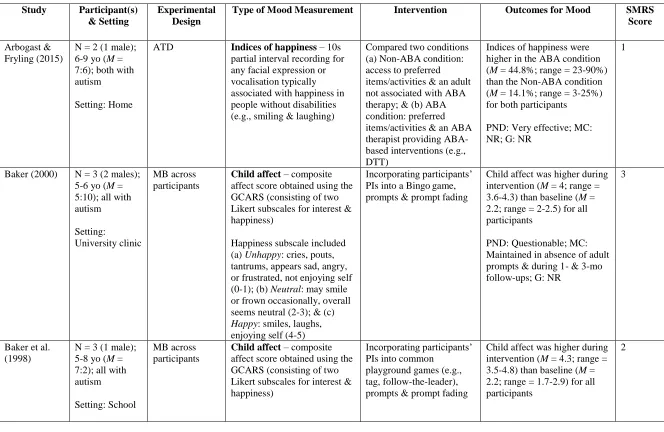
Table 2.1: Summary of the studies included in the review………...38
Chapter 3
Table 3.1: Indices of happiness and unhappiness for the pilot study participants………80 Table 3.2: Happy and unhappy conditions identified for the pilot study participants………..83 Table 3.3: Participant characteristics of the main study participants………....92 Table 3.4: Indices of happiness and unhappiness for the main study participants…………...94 Table 3.5: Mean IOA for indices of happiness and unhappiness………...97 Table 3.6: Happy and unhappy conditions identified for the main study participants……...99
Chapter 4
Table 4.1: Stereotypy and challenging behaviour for the main study participants………….144 Table 4.2: Mean IOA for indices of happiness, indices of unhappiness, and on-task
behaviour...146
Chapter 5
Table 5.1: Mean IOA for indices of happiness, indices of unhappiness, and on-task
behaviour...186 Table 5.2: Academic tasks and within-activity choice options for Joel, Jack, and Louis…...191 Table 5.3: Individual Tau-U scores and overall omnibus effect sizes for the choice
viii
Chapter 6
Table 6.1: Mean IOA for indices of happiness, indices of unhappiness, and on-task
ix
List of Figures Chapter 2
Figure 2.1: Flow diagram showing the four-step search procedure………..33 Figure 2.2: Flow diagram showing exclusion process for the initial studies...34
Chapter 3
x
Figure 3.18: Seth’s indices of unhappiness………...114 Figure 3.19: Jack’s indices of happiness………...115 Figure 3.20: Jack’s indices of unhappiness………....116 Figure 3.21: Trevor’s indices of happiness………...117 Figure 3.22: Trevor’s indices of unhappiness………...118
Chapter 4
xi
Figure 4.17: Joel’s indices of unhappiness………...161 Figure 4.18: Joel’s on-task behaviour………...…162 Figure 4.19: Louis’ indices of happiness………...……….163 Figure 4.20: Louis’ indices of unhappiness………...……..163 Figure 4.21: Louis’ on-task behaviour………...………164 Figure 4.22: Seth’s indices of happiness………...……..165 Figure 4.23: Seth’s indices of unhappiness………166 Figure 4.24: Seth’s on-task behaviour………167 Figure 4.25: Jack’s indices of happiness………..……..168 Figure 4.26: Jack’s indices of unhappiness………169 Figure 4.27: Jack’s on-task behaviour………...….170 Figure 4.28: Trevor’s indices of happiness………...…..171 Figure 4.29: Trevor’s indices of unhappiness……….……172 Figure 4.30: Trevor’s on-task behaviour………173
Chapter 5
Figure 5.1: Indices of happiness and unhappiness for Joel, Jack, and Louis……….….199 Figure 5.2: On-task behaviour for Joel, Jack, and Louis.………...200
Chapter 6
xii
Figure 6.3: Jack’s indices of happiness and unhappiness during the complete component analysis ………...238 Figure 6.4: Jack’s on-task behaviour during the complete component analysis………239
Chapter 7
Introduction
1
Chapter 1:
Introduction
2 1.1 Autism Spectrum Disorder (ASD)
According to the Diagnostic and Statistical Manual of Mental Disorders (5th ed.; DSM-V; American Psychiatric Association [APA], 2013), autism spectrum disorder (ASD) is a neurodevelopmental disorder that is characterised by two separate symptom domains: (a) deficits in social communication and social interaction, and (b) restricted, repetitive
behaviours. The DSM-V adopts a monothetic approach that requires an individual to demonstrate deficits in each of the following social-communicative criteria to qualify for a diagnosis: social-emotional reciprocity; nonverbal communication, and social relationships (APA, 2013). On the other hand, the DSM-V uses a polythetic approach for restricted and repetitive behaviours, in which the individual must demonstrate at least two of the following four symptoms: (a) stereotyped or repetitive motor movements or use of speech; (b)
inflexibility in routines or ritualised behaviour; (c) highly restricted, fixated interests that are abnormal in intensity, and (d) hyper- or hypo-reactivity to sensory input and/or having unusual sensory interests (APA, 2013). The individual must demonstrate these symptoms in the early developmental period and they must have clinically significant impairments in functioning for a diagnosis to be made (APA, 2013). Males are four times more likely to be diagnosed with ASD than females (Baio et al., 2018).
Individuals with ASD can demonstrate other non-diagnostic symptoms such as gastrointestinal dysfunction (Gorrindo et al., 2012), sleep disturbances (Delians, Leproult Schmitz, Destrebecqz, & Peigneux, 2015), toileting problems (Leader, Francis, Mannion, & Chen, 2018), and/or motor difficulties (Matson, Matson, & Beighley, 2011). Furthermore, it is estimated that 93% of children with ASD will demonstrate some form of challenging
Introduction
3
language disorder, attention deficit hyperactivity disorder (ADHD), intellectual disability (ID), sensory integration disorder, oppositional defiant disorder, mood disorders, anxiety or phobic disorders, epilepsy, encephalopathy, Down syndrome, and/or Fragile X syndrome (Levy et al., 2010).
The prevalence of ASD is rising globally. The Global Burden of Disease (GBD) has estimated that ASD affects around 62.2 million people worldwide. This is a 12.3% change in the number of incidences from 2005 to 2015 (GBD 2015 Disease and Injury Incidence and Prevalence Collaborators, 2016). Similarly, the Centers for Disease Control and Prevention (CDC) has estimated that ASD currently affects 1 in 59 children living in the United States, which is an increase from the 2012 estimate of 1 in 68 children (Baio et al., 2018). There is no known cure for ASD and it is considered a lifelong condition. Research has shown that there is a small percentage of individuals who have “recovered” from ASD (i.e., lost a diagnosis) later in life, but this outcome may be attributable to specific individual characteristics such as higher intelligence, communication and language abilities, and motor development (Helt et al., 2008).
1.2 Quality of Life
In the late 20th century, the concept of quality of life (QoL) developed as a formal construct within disability services (Brown, 2017). During this time, practitioners moved away from segregation and institutionalisation, which had previously dominated the field of
Introduction
4
progress towards understanding QoL, and the construct became a key focus within special education as it guided programme development and outcome-based evaluation (Schalock, 2000; Wehmeyer & Schalock, 2001).
As QoL emerged as a treatment objective, multiple operational definitions have been developed. The World Health Organization (WHO) has defined QoL as an “individual’s perception of their position in life in the context of the culture and value systems in which they live and in relation to their goals, expectations, standards, and concerns” (The WHOQOL Group, 1995, p. 1405). Differences in cultural and personal values among various populations have resulted in countless definitions of QoL. Liu (1976) has suggested that there are “as many QoL definitions as people” (as cited in Felce & Perry, 1995, p. 52) and Cummins (1997) has estimated that over 100 definitions and models of QoL exist. Despite the variability among the operational definitions of QoL, there has been considerable overlap among practitioners regarding which domains are important for measurement (Felce & Perry, 1995). Researchers have generally agreed that QoL is a multidimensional construct that includes eight core domains: emotional well-being, physical well-being, material well-being, social inclusion, interpersonal relationships, self-determination, rights, and personal development (Schalock & Verdugo, 2002). This is a definition that is widely accepted in the field of disability services (Arias et al., 2018).
1.2.1 Quality of Life and ASD
Kamp-Introduction
5
Becker, Schrӧder, Remschmidt, & Bachmann, 2010; Tavernor, Barron, Rodgers, &
McConachie, 2013) that have synthesised the existing literature on QoL in individuals with ASD. Between these six reviews, only 30 studies have been identified.
Based on the results of these reviews, a few conclusions can be made. First, individuals with ASD are thought to experience a much lower QoL than individuals without this diagnosis across the lifespan (van Heijst & Geurts, 2015). Notwithstanding, individuals with ASD are believed to have a better health-related QoL than other psychiatric disorders such as
schizophrenia (Kamp-Becker et al., 2011; Kamp-Becker et al., 2010). There are several factors found to be associated with poor QoL in children with ASD, such as older age, behaviour problems, social impairment, maladaptive behaviour, continued special education, and comorbid conditions (Chiang & Wineman, 2014). For adults with ASD, behaviour problems and a lack of leisure activities have been associated with poor QoL (Chiang & Wineman, 2014).
Introduction
6
directly related to poor interpersonal relationships, social inclusion, and physical well-being, while the severity of ID and the level of support needs have a significant impact on children with comorbid ASD and ID (Arias et al., 2018).
Previous research has highlighted the need for a disorder-specific QoL instrument that can account for the unique characteristics of ASD symptomatology (Ikeda et al., 2014;
Tavernor et al., 2013), but it is only in recent months that a QoL measure has been developed for this population as an add-on “module” to another QoL instrument (ASQoL; McConachie et al., 2018). Prior to the development of this assessment, the QoL of individuals with ASD had been determined through generic QoL instruments. However, the use of generic QoL instruments with this population has resulted in threats to validity because of differences in how these individuals interpret the items within these assessments. Individuals with ASD are thought to experience the following six complications when completing a generic QoL instrument: misinterpretation of the items; difficulty in using Likert scales; inability to generalise; high levels of anxiety; difficulty in social functioning, and difficulty with emotional vocabulary (Tavernor et al., 2013). Furthermore, researchers have proposed the need for an appropriate self-reported QoL measure that can address all levels of functioning (Ikeda et al., 2014). Previous studies have found large discrepancies between self-reports and proxy-reports, as children and youth with ASD often score themselves as having a higher QoL than what their parents score them (Egilson et al., 2017; Tavernor et al., 2013).
1.3 Self-Determination
Introduction
7
right, and it can be defined as “acting as the primary causal agent in one’s life and making choices and decisions regarding one’s quality of life free from undue external influence or interference” (Wehmeyer, 1996, p. 24). During the 1990s, self-determination was established as an important construct within disability services (Wehmeyer & Schalock, 2001). This was the result of other related social movements, such as the disability rights, self-advocacy, and normalisation movements (Ward & Meyer, 1999), as well as a federally funded initiative by the United States Department of Education (Wehmeyer & Schalock, 2001).
In 1988, the United States Office of Special Education and Rehabilitative Services (OSERS) introduced a self-determination-based initiative that allowed people with disabilities to have more control in the decisions that affected their lives (Ward & Kohler, 1996). This initiative resulted in 26 model demonstration projects that taught students with disabilities the following seven skills: (a) how to evaluate their skills; (b) how to recognise their limits; (c) how to set goals; (d) how to identify options; (e) how to accept responsibility; (f) how to communicate preferences and needs, and (g) how to self-monitor and evaluate their own progress (Ward, 1996). This initiative paved the way for other legislative acts such as the Americans with Disabilities Act (ADA) of 1990 (P.L. 101-336), the Individuals with
Disabilities Education Act (IDEA) Amendments of 1997 (P.L. 105-117), and the Workforce Investment Act (WIA) of 1998 (P.L. 105-220; Ward & Meyer, 1999). Together, these
legislative acts brought awareness to the importance of self-determination for individuals with disabilities.
Introduction
8
acts independently, according to his or her own preferences, interests, and/or abilities, without undue influence from others (Wehmeyer, 1996). A person has self-regulation if s/he is able to examine their environments and responses for coping with those environments, make
decisions on how to act, subsequently act, then evaluate the outcomes of those actions and revise their plans as necessary (Whiteman, 1990). A person acts in a psychologically
empowered manner when s/he has control over the circumstances that are important to them; they possess the necessary skills to achieve a desired outcome and choose to apply those skills to reach this outcome (Wehmeyer, 1996). Finally, a person is self-realising if s/he has accurate knowledge of themselves, including their strengths and limitations, and acts in such a way as to capitalise on this knowledge (Wehmeyer, 1996).
These four essential characteristics develop over time as individuals acquire a set of interrelated component elements. Each of the following component elements are needed for self-determination to emerge: (a) choice making; (b) decision making; (c) problem solving; (d) goal setting and attainment; (e) self-observation, evaluation, and reinforcement; (f) internal locus of control; (g) positive attributions of efficacy and outcome expectancy; (h) self-awareness, and (i) self-knowledge (Wehmeyer, 1996). These component elements are
typically present by adolescence and individuals demonstrate fully-developed self-determined behaviour by the secondary level of education (Doll, Sands, Wehmeyer, & Palmer, 1996). When an individual does not meet specific developmental milestones related to these
component elements, interventions can be introduced to teach these skills (Doll et al., 1996).
1.3.1 Outcomes of Self-Determination
Introduction
9
these individuals (Shogren, 2013). Self-determination improves the QoL of individuals with disabilities and contributes to a number of other desirable outcomes. For example, self-determination-based learning strategies have assisted students with disabilities to achieve various academic and transition goals (Shogren, Palmer, Wehmeyer, Williams-Diehm, & Little, 2012). Furthermore, these strategies have helped students with disabilities to access the general education curriculum (Agran, Cavin, Wehmeyer, & Palmer, 2010; Lee, Wehmeyer, Palmer, Soukup, & Little, 2008; Shogren et al., 2012; Wehmeyer, Field, Doren, Jones, & Mason, 2004). By promoting self-determination as a curriculum augmentation, teachers are more capable of meeting the IDEA Amendments of 1997 (P.L. 105-117), which require all students, regardless of disability, to have access to the general education curriculum (Lee et al., 2008).
Previous research has found a positive correlation between self-determination and the academic skills (e.g., productivity, organisation) of students with disabilities (Fowler, Konrad, Walker, Test, & Wood, 2007). In addition, self-determination has been linked to the academic performance (Chao & Chou, 2017) and academic achievement of these students (Gaumer Erickson, Noonan, Zheng, & Brussow, 2015). A review of the literature conducted by Ju, Zeng, and Landmark (2017) found that self-determination was necessary for the academic success of students with disabilities, particularly during postsecondary education. More specifically, Petcu, Van Horn, and Shogren (2017) concluded that three of the four essential characteristics of self-determination were required for this success. Individuals with
Introduction
10
In a study by Wehmeyer and Schwartz (1997), self-determined youth with ID were found to have more positive adult outcomes than their peers with lower self-determination one year out of high school. These outcomes included living outside the family home, having a bank account, and having employment with a better hourly wage. This study was extended by Wehmeyer and Palmer (2003), and they discovered that these outcomes persisted three years after graduation. In addition, the researchers found that the self-determined young adults with disabilities were more likely to obtain job benefits within these three years after graduation (Wehmeyer & Palmer, 2003). Similar outcomes were found by Shogren and colleagues (2015), in that the self-determination status of students with disabilities strongly predicted their employment outcomes and access to the community one and two years after high school. Together, these findings suggest that self-determination is important for both the academic success and adult outcomes of students with disabilities.
1.3.2 Self-Determination and ASD
Introduction
11
disability (LD), and significantly lower levels of psychological empowerment than the students with LD. However, these findings should be considered with caution, as this a
relatively under-researched area and more research on self-determination and ASD is needed. 1.3.2a. Teaching self-determination to individuals with ASD. Differences within the self-determination domains, and the social and communication deficits intrinsic to ASD, suggest that these individuals may benefit from a self-determination-based curriculum that has been developed specifically for their instructional needs (Chou et al., 2017a; Wehmeyer et al., 2010). In 2000, Wehmeyer and colleagues developed the Self-Determined Learning Model of Instruction (SDLMI), an empirically validated model of teaching to promote
self-determination among students with disabilities. However, this teaching model has only been validated with children and adolescents diagnosed with ID and LD. Wehmeyer and Shogren (2008) and Wehmeyer et al. (2010) proposed a social-ecological model of intervention to teach self-determination skills to individuals with ASD. Within this hypothetical model, research-based strategies that are commonly employed with this population (e.g., task analysis, discrete trial training [DTT], self-monitoring) would be applied to teach the component elements of self-determination (Wehmeyer et al., 2010). To the author’s
knowledge, this self-determination-based curriculum has not yet been developed for the ASD population.
Introduction
12
enough opportunities to engage in self-determined behaviour (Wehmeyer et al., 2010). They are told “what they can do, with whom they can do it, and when, where, and how they can do it” (Carr et al., 2002, p. 6). It is important that practitioners are facilitating age-appropriate opportunities for individuals with ASD to practice and refine their self-determination skills, beginning in early education (Abery & Zajac, 1996).
Neurotypical infants demonstrate early self-determination skills as young as 10-12 months old, and they continue to develop these skills throughout childhood (Doll et al., 1996). Since self-determination begins to develop at an early age, these skills should be targeted within the early education curriculum (Heller et al., 2011; Malian & Nevin, 2002). Teachers acknowledge the importance of self-determination, but this perception does not always translate into instructional activities that promote the self-determination of students with disabilities (Wehmeyer, Agran, & Hughes, 2000). This is particularly true in the case of young children with disabilities. Algozzine and colleagues (2001) identified a single study focused on teaching self-determination skills to children with disabilities under the age of five years. It is apparent that more research in the area of self-determination and ASD is needed.
1.4 Choice and Self-Determination
Introduction
13
making a choice response (Brotherson, Cook, Cunconan-Lahr, & Wehmeyer, 1995; Stancliffe & Wehmeyer, 1995). The lack of real choice opportunities provided to individuals with disabilities has been associated with overdependence (Palmer et al., 2012) and learned helplessness (Guess, Benson, & Siegel-Causey, 2008). Learned helplessness has been linked to further negative outcomes, such as lack of motivation, frustration, low self-esteem, low grades, and dysphoria (McKean, 1994). By providing even basic choice opportunities to individuals with disabilities, practitioners are preventing learned helplessness and
implementing interventions that are more “person-centred, less instructor dominated, and more respectful of quality of life issues” (Dibley & Lim, 1999, p. 130).
Earlier studies have shown that choice can be easily embedded into the curriculum of individuals with disabilities without compromising any required activities or the fidelity of those procedures (Dibley & Lim, 1999; Elliott & Dillenburger, 2016). Furthermore, these studies have demonstrated that the provision of choice is not burdensome with regard to time or resources (Tiger, Toussaint, & Roath, 2010). There are numerous ways to include choice within the learning environment. For choice to be meaningful to individuals with disabilities, a range of choices should be provided throughout the day and across all activities within the learning environment (Brown, Belz, Corsi, & Wenig, 1993). Brown and colleagues (1993) first described the Model of Choice Diversity, which outlined seven different types of choice that could be provided to individuals with disabilities within the classroom. These categories of choice are identified as: within-activity, between-activity, refusal, who, where, when, and terminate (Brown et al., 1993). These choice opportunities are described in the following paragraph utilising a hypothetical painting activity.
Introduction
14
choice allows the individual to select among different activities (e.g., the student chooses between his painting or reading during free time). A refusal is when the individual decides to not participate in an activity (e.g., the student chooses to not paint). A choice of “who” allows the individual to select the person(s) to be included during an activity (e.g., the student
chooses to paint with Tutor A rather than Tutor B). During a “where” choice, the individual selects the location s/he would like to complete an activity (e.g., the student chooses to paint at his desk rather than the group table). A “when” choice allows the individual to decide what time s/he will initiate an activity (e.g., the student chooses to start his painting now vs. 10 minutes from now). Finally, a choice to terminate allows an individual to end an activity once it has started (e.g., the student chooses to end the painting activity once he has painted a tree). 1.4.1 Choice and ASD
Providing choice-making opportunities to individuals with ASD is an effective
intervention for this population. Previous studies have shown that choice-making opportunities improve the intervention outcomes of individuals with ASD, regardless of the type of choice offered (Reutebuch, El Zein, & Roberts, 2015). Choice has been used both as an antecedent-based intervention and as a consequence-antecedent-based intervention within behaviour analytic studies designed to modify the behaviours of individuals with ASD. As the former, a choice
Introduction
15
As a consequence-based intervention, a choice opportunity is typically provided after a behaviour has been completed, as reinforcement for that behaviour. For example, once a student with ASD has completed a task, s/he is given a choice of an item as the reinforcer. In this example, choice acts as a conditioned reinforcer because it is associated with increased access to preferred stimuli over time (Fisher, Thompson, Piazza, Crosland, & Gotjen, 1997). Choice as a reinforcer improves the efficacy of reinforcement-based interventions because students are able to express temporary changes in preference; therefore, reinforcer satiation is prevented (Fisher et al., 1997; Tiger et al., 2010).
In previous research on individuals with ASD, choice has successfully been used to increase desired behaviours such as correct responding (Koegel, Singh, & Koegel, 2010; Moes, 1998; Tiger et al., 2010), task engagement/on-task behaviour (Mechling, Gast, & Cronin, 2006; Smeltzer, Graff, Ahearn, & Libby, 2009; Ulke-Kurkcuoglu & Kircaali-Iftar, 2010), initiating and maintaining play (Carter, 2001), homework completion (Moes, 1998), and interest/affect (Koegel et al., 2010; Moes, 1998). Choice has also been utilised to
effectively decrease a number of undesired behaviours such as disruptive/competing behaviour (Carter, 2001; Koegel et al., 2010; Moes, 1998; Newman, Needelman, Reinecke, & Robek, 2002; Peterson, Caniglia, & Royster, 2001; Rispoli et al., 2013), off-task behaviour (Rispoli et al., 2013), disrobing and urinary incontinence (Carlson, Luiselli, Slyman, & Markowski, 2008), delayed echolalia (Rispoli et al., 2013), and inappropriate vocalisations (Smeltzer et al., 2009). Furthermore, choice has been used to decrease more serious problem behaviours such as aggression, elopement, property destruction, tantrums, and/or self-injury (Carr & Carlson, 1993; Dyer, Dunlap, & Winterling, 1990; Foxx & Meindl, 2007; Koegel et al., 2010; Rispoli et al., 2013; Smeltzer et al., 2009).
Introduction
16
As QoL became the focus of disability services, the need for a valid assessment became more apparent (Verdugo, Schalock, Keith, & Stancliffe, 2005). There have been countless theoretical frameworks and definitions of QoL that have been proposed;
consequently, many different instruments have been developed to measure this construct. For example, in a review of the literature, Chiang and Wineman (2014) found 11 different
instruments that have been utilised to measure the QoL of individuals with ASD. Most QoL instruments do share commonalities, however, such as what they measure and how these measures are obtained. A majority of QoL instruments include both subjective measures (i.e., level of satisfaction experienced by the person) and objective measures (i.e., objective
indicators of environmental conditions; Verdugo et al., 2005). Furthermore, most QoL
instruments collect data through Likert-type scales and/or questionnaires, either by self-report or proxy report (Verdugo et al., 2005; Vries & Geurts, 2015).
As discussed in Section 1.2.1, only one condition-specific QoL assessment has been developed for individuals with ASD (ASQoL; McConachie et al., 2018). Although this QoL measure is a significant development for the field, it is intended for adults with ASD and not children. To date, a condition-specific QoL instrument has not yet been developed for children with ASD, and generic QoL assessments are often used as an alternative. The following three generic QoL instruments have frequently been employed with these children: the Child Health Questionnaire (CHQ), the Pediatric Quality of Life Inventory (PedsQL), and the KIDSCREEN (Waters et al., 2009). Despite the popularity of these instruments, Waters and colleagues (2009) highlighted a number of limitations found within generic QoL assessments.
First, many of the QoL instruments identified by the researchers focused on functioning (i.e., what the child can do) rather than well-being (Waters et al., 2009).
Introduction
17
they were developed. Professionals within the field (e.g., researchers, clinicians) determined which domains were important to these QoL instruments, without involving the direct
consumers (Waters et al., 2009). The researchers also found that some of the QoL instruments included negatively-worded items that had the potential to affect the self-esteem of children with disabilities (Waters et al., 2009). Finally, the researchers noted a lack of self-report measures and an overreliance on proxy reports within many of the QoL instruments (Waters et al., 2009). QoL is defined as the “individual’s perception of their position in life…” (The WHOQOL Group, 1995, p. 1405), so it is recommended that a child’s QoL is assessed using an appropriate self-report measure whenever possible (Ikeda et al., 2014).
Although generic QoL assessments are often used with children with ASD, there are several characteristics inherent to the condition that can create issues for these children when completing these assessments. First, children with ASD have a limited capacity for self-reflection because they are typically unable to identify their own emotions (Tavernor et al., 2013). Second, children with ASD have interests that usually differ from neurotypical children, and this may affect how they view certain key domains (e.g., interpersonal
relationships) within generic QoL instruments (Tavernor et al., 2013). Finally, children with ASD likely have differences in how they approach certain items within generic QoL
instruments due to their social-communicative impairments (Tavernor et al., 2013). These limitations are discussed further in Section 1.2.1.
1.5.1 Measuring Happiness as a Quality of Life Outcome
Introduction
18
1995). Within the field of disability services, there is a consensus among practitioners that individual happiness is one of the most important aspects of QoL (Carr, 2007; Parsons, Reid, Bentley, Inman, & Lattimore, 2012; Stasolla & Caffò, 2013). There has been a growing societal trend in acknowledging the importance of the individual and the individual’s personal evaluation of his/her life conditions. This has resulted in more research being dedicated to the conceptualisation and evaluation of subjective well-being, and various corresponding
measures have been developed (Wallander & Koot, 2016).
Like QoL, the emotional well-being of an individual is typically measured through self-report (Felce & Perry, 1995). Despite the extensive amount of literature on the subjective well-being and happiness of the general population, there is a limited amount of research focused on the emotional well-being of individuals with disabilities (Uppal, 2006). To the author’s knowledge, an emotional well-being scale has not yet been developed specifically for the ASD population. Generic QoL instruments such as the PedsQL and KIDSCREEN have previously been utilised to assess the subjective well-being of children with ASD (Payakachat, Tilford, Kovacs, & Kuhlthau, 2012). However, these instruments rely on proxy reports, in that the emotional well-being of the child is rated through the parent’s perspective (Vries &
Geurts, 2015; Ikeda et al., 2014).
Introduction
19
underestimate the QoL of children and adolescents with ASD. Parents have a propensity to report lower QoL scores than what the children report themselves, including within the emotional well-being domain (Egilson et al., 2017). The use of proxy reports is also
considered more subjective and less meaningful than the use of objective measures (Brown, 2017).
With the growing emphasis on QoL and emotional well-being in the field of disability services, it would seem necessary to target and measure happiness directly as an outcome to intervention (Parsons et al., 2012). The need for an objective measure of emotional well-being is even more apparent when evaluating the QoL of individuals with limited communication, such as children with ASD (Dillon & Carr, 2007). The communication and social deficits associated with ASD make it difficult for these children to acknowledge and express their own emotions in conventional ways (Parsons et al., 2012). Although there is a need for an objective measure of happiness among individuals with ASD, there remains a dearth of research in this area.
Introduction
20
Singh, O’Reilly, Oliva, & Basila, 2005, for reviews of this literature). Consequently, more research with the ASD population is warranted.
1.5.2 Applied Behaviour Analysis and Measuring Happiness
Applied behaviour analysis (ABA) is a scientific discipline that systematically applies the principles of behaviour to improve the socially significant behaviours of individuals (Cooper, Heron, & Heward, 2007). ABA is an empirically validated science with a large body of research supporting its efficacy with individuals with ASD. There have been 27 evidence-based practices identified for individuals with ASD, and almost all of them are evidence-based on the principles of ABA (Wong et al., 2015). Despite the popularity of ABA with this population, it is a misconception to believe that ABA can only be implemented with individuals with ASD. The principles of ABA can be applied to all individuals, with or without disabilities, to help improve a wide variety of behaviours.
There are seven dimensions of ABA: applied, behavioural, analytic, technological, conceptually systematic, effective, and generality (Baer, Wolf, & Risley, 1968). Baer, Wolf, and Risley (1968) argued that for a behavioural intervention to be applied, it must change meaningful behaviours that improve the overall QoL and well-being of an individual. Likewise, Van Houten and colleagues (1988) proposed six consumer rights, one of which is the right to services whose overriding goal is personal welfare. Based on these perspectives from international proponents of ABA, it could be argued that QoL has been an overriding theme within the field since the early days. Although behaviour analysts agree that improving QoL is the objective of ABA, there is an issue with how to measure the emotional well-being of individuals with ASD, as happiness is considered a private event (Pietro, Silvia, &
Introduction
21
Behaviour analysts concentrate on measurable and observable behaviours, which may explain the paucity of research that has targeted happiness as a dependent variable. In
behavioural terms, a person’s happiness or mood is considered a private event that cannot be directly observed (Green & Reid, 1996). With that said, mood is still a type of behaviour, albeit a covert behaviour, based on Skinner’s theory of radical behaviourism (Johnston, 2013; Skinner, 1957). While direct measures of mood are not readily available, there are overt behaviours theorised to be associated with mood that can be observed instead. These public indicators of mood are sometimes called indices of happiness or unhappiness, and previous research has demonstrated that they can be operationally defined and reliably measured in individuals with disabilities (Dillon & Carr, 2007; Green & Reid, 1996). Based on this research, mood is considered a behaviour that can be systematically manipulated through environmental events (Parsons et al., 2012).
Individuals with ASD are thought to engage in similar mood indicators (e.g., laughing, crying) as those without disabilities (Reid & Green, 2006). Nevertheless, behaviour analysts spend a considerable amount of time measuring challenging behaviour as an indicator of happiness rather than these indices. Practitioners assume that challenging behaviour is negatively correlated with happiness, but it is possible for an individual with ASD to feel unhappy and not engage in any mood indicators. Likewise, an intervention that reduces the challenging behaviour of a student with ASD might not be enjoyable for the student
Introduction
22
definitions of happiness and unhappiness for each client (Dillon & Carr, 2007). By measuring the indices of happiness and unhappiness theorised to be associated with an individual’s mood, researchers have a more objective approach to assessing this behaviour.
Theoretically, these mood indicators could be evaluated as an outcome to an agency’s services (Parsons et al., 2012). By employing a more objective assessment of mood, a
practitioner can quickly determine the efficacy of an intervention designed to improve the emotional well-being and QoL of an individual with ASD. Any intervention that results in an increase in indices of unhappiness could potentially be modified or eliminated from
programming (Lattimore et al., 2009; Parsons et al., 2012; Stasolla et al., 2014b). In addition, the social validity of an intervention could be supported by measured increases in indices of happiness; an intervention that improves the mood of the individual with ASD could be considered a more socially acceptable treatment (Schwartz & Baer, 1991; Toole, Bowman, Thomason, Hagopian, & Rush, 2003).
1.6 Research Aims
Introduction
23
research when determining the efficacy of interventions designed to improve the QoL of individuals with ASD.
The aim of this research is to objectively measure indices of happiness and
unhappiness as an outcome during a self-determination-based intervention. More specifically, this research will investigate how choice-making opportunities will affect the mood and task engagement of young children with ASD when they are embedded within an established evidence-based intervention such as DTT. It is hypothesised that these additional choice-making opportunities will improve the self-determination and happiness of young children with ASD, which in turn, will enhance their overall QoL.
Chapter 2 will provide an up-to-date systematic review of the current state of literature involving mood as a dependent variable within behavioural interventions designed for
individuals with ASD. To the author’s knowledge, this is the first review to date that will evaluate mood as a dependent variable during interventions with this population. Chapter 3 will investigate whether individualised indices of happiness and unhappiness can be
operationally defined and reliably measured in young children with ASD. A prerequisite to measuring happiness is to have a valid way of identifying and operationally defining
happiness (Parsons et al., 2012). Consequently, the purpose of this study will be to validate a method of identifying individualised indicators of mood among young children with ASD. Additionally, this study will determine whether these mood indicators can be systematically manipulated through environmental events.
Introduction
24
opportunity itself, or the influence of preference, that affects intervention outcomes (Dunlap et al., 1994). Previous findings related to choice and preference have been mixed; therefore, this study will add to the existing literature by further investigating these two separate variables.
Chapter 5 will measure the effects of a choice-based intervention package on the mood and on-task behaviour of young children with ASD. This intervention package will include both within- and across-activity choices, as well as a choice of reinforcer. Chapter 6 will further investigate the separate components of this choice-intervention package to determine which type of choice or choice combination is the most effective for improving the mood and on-task behaviour of the children with ASD. During the component analysis, the children will be exposed to each type of choice (e.g., reinforcer, within-activity, across-activity) alone, and in different combinations, to establish which choice-making opportunity is the most powerful. Finally, Chapter 7 will provide practitioners with a teaching protocol that will outline the steps of applying choice within the special education classroom.
1.6.1 Use of Single-Subject Experimental Designs
All studies within the current research base will utilise single-subject research
methodology. Single-subject research methodology is a quantitative experimental approach, in which the participants serve as their own control (Gast & Ledford, 2014). That is, each
participant is exposed to both a control condition (i.e., baseline) and an experimental
condition. “Single-subject” does not mean there is only one participant in a study; rather, this term refers to a study in which each participant serves as his/her own control and the
Introduction
25
research because they provide a practical methodology for testing educational or behavioural interventions within the educational setting (Horner et al., 2005). Group designs will not be employed within the current research for the following two reasons. First, group designs can mask variability within the data and they do not represent the performance of individual participants. Second, group designs do not allow for intrasubject replication, which provides a more convincing demonstration of a functional relation (Cooper et al., 2007).
Within single-subject research methodology, the dependent variable is repeatedly measured within the context of different SSEDs. These designs differ, in that the baseline and experimental conditions are systematically introduced (or withdrawn) with each participant at different times (Gast & Ledford, 2014). Experimental control is established when a SSED clearly demonstrates an experimental effect at three different points in time, either with a single participant (i.e., within-subject replication) or across multiple participants (i.e., inter-subject replication; Horner et al., 2005). Data from individual participants are presented on a line graph, and visual analysis is applied to evaluate the success of an intervention. Single-subject research methodology traditionally relies on the visual analysis of graphic data, rather than statistical analysis, to interpret the effects of an independent variable. Parametric
statistical analysis is of less value when applied to the individual, as it only provides
Systematic Literature Review
26
Chapter 2:
Systematic Literature Review
27 2.1 Introduction
Applied behaviour analysis (ABA) is a science in which the principles of behaviour are systematically applied to improve socially significant behaviours of individuals (Cooper, Heron, & Heward, 2007). In 1968, Baer, Wolf, and Risley wrote their seminal article outlining the seven dimensions of ABA, which are: applied, behavioural, analytic, technological,
conceptually systematic, effective, and generality. By applied, they argued that ABA interventions are focused on changing meaningful behaviours that will improve the overall quality of life (QoL) and well-being of individuals (Baer et al., 1968). Montrose M. Wolf (1978) later discussed the purpose of the Journal of Applied Behavior Analysis, in which he defended the idea of changing behaviours of social importance. Although the subjective concept of “social importance” presented challenges, Wolf called for the assessment of social acceptability when evaluating interventions and their outcomes (i.e., social validity measures). He believed these measures could provide information regarding the appropriateness of procedures in relation to how they improve the life quality of individuals (Wolf, 1978). Similarly, Van Houten and colleagues’ (1988) paper identified six client rights that were intended to “direct both the ethical and appropriate application of behavioural treatment” (p. 381). Among these client rights was the right to behavioural services whose overriding goal is personal welfare. Considering this, it could be argued that improving the QoL of recipients of behavioural services has been a consistent and central theme of ABA since the early days of the field.
Systematic Literature Review
28
intervention programmes (McDougall, Evans, & Baldwin, 2010). In fact, it was not until the late 1980s and 1990s that QoL began to develop as a formal construct within the field of intellectual and developmental disabilities (Brown, 2017). Researchers have proposed different theories over what variables and characteristics best constitute the concept of QoL, and there have been numerous definitions developed over the years (Felce & Perry, 1995). One definition of QoL widely accepted in the field of disability services was developed by Schalock and Verdugo (Arias et al., 2018). Within this definition, QoL is described as having eight different domains – emotional well-being, physical well-being, material well-being, social inclusion, interpersonal relationships, self-determination, rights, and personal development (Schalock & Verdugo, 2002). Regardless of the definition used, there is a
consensus among practitioners that individual happiness is one of the key components of QoL (Carr, 2007; Parsons, Reid, Bentley, Inman, & Lattimore, 2012). The notion that happiness is related to QoL has clear surface validity. Simply, if an individual is happy, their QoL is likely better than if they were unhappy.
Individuals without disabilities can typically identify and describe their personal well-being, and their QoL is often measured through self-reports (Felce & Perry, 1995). However, the communication and social deficits associated with autism spectrum disorder (ASD) may make expressing private events, and emotional states in particular, difficult for these
individuals (American Psychiatric Association [APA], 2013; Parsons et al., 2012). Further, the sole reliance on self-report measures can be problematic with any population sample.
Systematic Literature Review
29
In behavioural terms, a person’s happiness or mood is considered a private event which cannot be observed directly (Green & Reid, 1996). Although mood is not directly observable, it could be argued that it is still a type of behaviour, albeit a covert behaviour (Johnston, 2013; Skinner, 1957). Although an individual’s mood cannot be directly observed, the overt (i.e., public) behaviours theorised to be associated with the individual’s feelings can be.
Behavioural indicators of mood are sometimes called indices of happiness (or unhappiness), and they can be operationally defined, measured, and evaluated for likely correspondence with mood (Green & Reid, 1996). Like other behaviours, indices of happiness and unhappiness are influenced by environmental events and it has been suggested that practitioners should take this into consideration when applying behavioural interventions (Parsons et al., 2012).
Systematic Literature Review
30
valid interventions are more likely to be implemented with fidelity over time, which may contribute to overall intervention success (Kennedy, 2002).
Despite arguments for including a mood measurement to evaluate interventions provided to individuals with disabilities, mood is not a common dependent variable found within behaviour analytic literature (Green & Reid, 1996). Behaviour analysts rely on measurable and observable (i.e., overt) behaviours, which may explain the paucity of studies that have incorporated a measure of covert behaviour such as mood. Of the published studies that have focused on indicators of mood in individuals with disabilities, a majority have targeted individuals with severe/profound intellectual disability (ID) or profound multiple disabilities (PMD) (see Dillon & Carr, 2007; Lancioni, Singh, O’Reilly, Oliva, & Basila, 2005, for reviews of this literature). Therefore, the current review provided an examination of the extant literature involving mood as either a primary or secondary dependent variable in behavioural interventions designed for individuals with ASD. To the author’s knowledge, this is the first review to date that has evaluated mood as a dependent variable in interventions with this population.
2.2 Method
The methods for this systematic literature review followed the guidelines outlined by the PRISMA statement (Moher, Liberati, Tetzlaff, & Altman, 2009).
2.2.1 Search Procedures
Systematic Literature Review
31
“unhappiness”, “mood”, “emotion”, and “affect”. Each of these terms were combined with the term “autis*” or “Asperger” (i.e., happiness AND (autis* OR Asperger)). This online search was limited to English-written, peer-reviewed studies, but there was no restriction on year of publication. Next, the title of each study identified through the database search was screened; any study that did not meet inclusion criteria was eliminated from the third step of the
screening process. For example, if the title outlined a pharmacological treatment, the study was automatically eliminated because this did not meet inclusion criteria. This title screening resulted in 607 initial studies. These initial studies were further screened to determine which ones met the inclusion criteria outlined below. In a final step of the search process, the
reference lists of all studies meeting inclusion criteria were reviewed to identify any additional studies for possible inclusion. This four-step search procedure occurred from March 2018 to April 2018, and a total of 672 studies were screened for inclusion (see Figure 2.1).
Systematic Literature Review
32
Systematic Literature Review
33
Figure 2.1. Flow diagram showing the four-step search procedure.
Id en tif icat ion S cr ee n in g E li gib il ity In clu d ed
Articles identified through database search
(n = 12,536)
Additional studies identified through references
(n = 65)
Articles after duplicates removed (n = 12,601)
Articles screened (n = 12,601)
Articles excluded based on review of title
(n = 11,929)
Articles excluded based on review of abstract
(n = 495) Full-text articles
assessed for eligibility (n = 177)
Articles excluded based on study characteristics
(n = 148)
Studies included in qualitative synthesis
(n = 29)
[image:59.612.100.557.111.685.2]Systematic Literature Review
[image:60.612.124.356.98.700.2]34
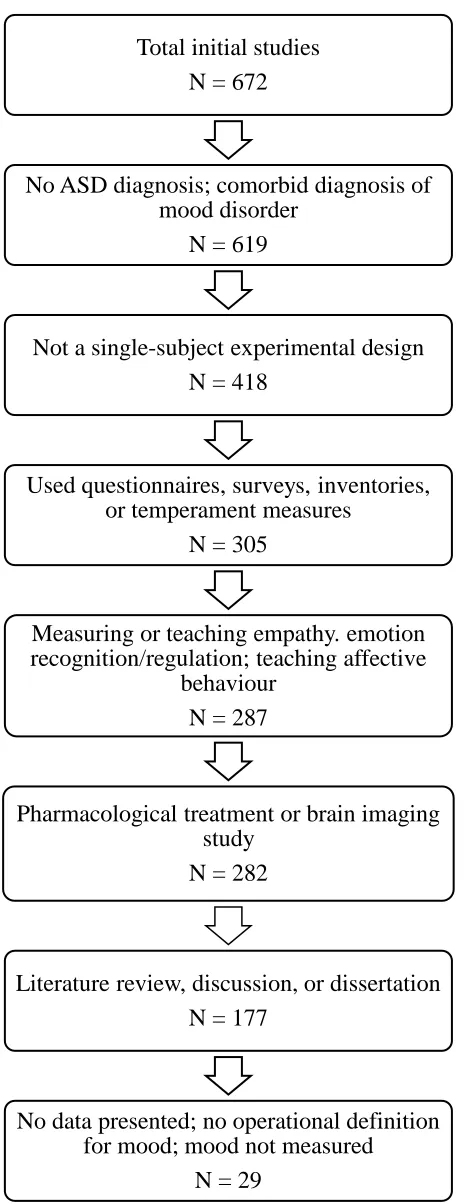
Figure 2.2. Flow diagram showing exclusion process for the initial studies.
Total initial studies N = 672
No ASD diagnosis; comorbid diagnosis of mood disorder
N = 619
Not a single-subject experimental design N = 418
Used questionnaires, surveys, inventories, or temperament measures
N = 305
Measuring or teaching empathy. emotion recognition/regulation; teaching affective
behaviour N = 287
Pharmacological treatment or brain imaging study
N = 282
Literature review, discussion, or dissertation N = 177
No data presented; no operational definition for mood; mood not measured