Chit Chat
Implementation Guide
An Early Intervention Speech and Language Therapy Model
2016
Smith, G. (2016). Chit Chat Implementation Guide: Early Intervention Speech and Language Therapy: Implementation Guide. Dublin: Childhood Development Initiative.
Copyright © Childhood Development Initiative, 2016
Tallaght West Childhood Development Initiative Ltd. St. Mark’s Family and Youth Centre
Cookstown Lane Fettercairn Tallaght Dublin 24
Tel: +353 (0)1 494 0030 Fax: +353 (0)1 462 7329 E-mail: [email protected] Web: www.twcdi.ie
Published by Childhood Development Initiative, Dublin
ISBN 978-0-9928763-6-4
Disclaimer
While every care is taken to ensure that this Guide is as up-to-date and accurate as possible, no responsibility can be taken by the Childhood Development Initiative for any errors or omissions contained herein. Furthermore, responsibility for any loss, damage or distress resulting from adherence to any advice, suggestions or recommendations made available through this Guide, howsoever caused, is equally disclaimed by the Childhood Development Initiative.
All text, images, graphics, and other materials in this Guide are subject to the copyright and other intellectual property rights of the Childhood Development Initiative, unless otherwise stated.
You are free to share, copy, distribute and transmit the content of this work under the following conditions:
• Attribution: you must attribute to the work by citing the author and publisher, but not in a manner that suggests that they endorse you or your use of the work;
• Non-commercial: you may not use this work for commercial purposes; and • No derivative works: you may not alter, transform or build upon this work.
Glossary v
Acronyms v
Acknowledgments vi
Introduction 1
The Childhood Development Initiative 1 Background and Underpinning Principles 2 Introduction to Implementation 3 How to use this Implementation Guide 4
Phase 1:
EXPLORING AND PREPARING 6
1.1 Introduction 6
1.2 Identifying need and agreeing response 6 1.3 Organisational readiness and
capacity-building: 8
1.4 What does CDI’s Chit Chat involve? 12
1.5 Why choose this Model? 13
1.5.1 What the research found about this
model of delivery 13
1.6 Identifying Key Stakeholders 14 1.7 Checklist and next Steps 16
Phase 2:
PLANNING AND RESOURCING 17
2.1 Agreeing budgets 17
2.2 Mechanisms to support communication 18 2.3 Recruitment and quality assurance
mechanisms 19
2.4 Identifying an appropriate space for the
therapist to work 20
2.5 Policies and Procedures 20 2.6 Checklist and Next Steps 20
Phase 3:
IMPLEMENTING AND OPERATIONALISING 23 3.1 Fidelity and Monitoring 23 3.2 Quality and Communication 24 3.3 Checklist and Next Steps 25
Phase 4:
BUSINESS AS USUAL 27
4.1 Engaging with your stakeholders 27 4.2 Maintaining Stakeholder Support 27
4.3 Sustainability 28
4.4 Checklist and Next Steps 28
SOME THINGS FOR CONSIDERATION 30
References 31
Appendix 1:
Summary evaluation findings from Hayes, et al
2012 and 2016 33
Appendix 2:
Speech and Language Therapy Service
Memorandum of Understanding (MoU) 36
Appendix 3:
Speech and Language Therapy Service Provision to Early Years Services/Primary School 40
EY/School-SLT Checklist 45
Appendix 5:
Dual Service Policy 46
Appendix 6:
CDI Job Description for Senior SLT 49
Appendix 7:
Speech and Language Therapy Monthly Review
Report 55
Appendix 8:
Sample Referral Policy 56
Appendix 9:
Sample Speech and Language Therapy referral
form 58
Appendix 10:
Sample Speech and Language Therapy - Consent
forms 60
List of Tables
Table 1: Logic Model for Chit Chat - An Early Intervention Speech and Language
Therapy Model 7
Table 2: Organisational Readiness Checklist 8 Table 3: Phase 1: Exploring and Preparing Checklist 16 Table 4: Phase 2: Planning and Resourcing Checklist 21 Table 5: Phase 3: Implementation and
Operationalising Checklist 25 Table 6: Phase 4 – Business as Usual Checklist 28
List of Figures
Figure 1: Elements of CDI’s Chit Chat 3 Figure 2: Phases of Implementation of CDI’s
Chit Chat 3
Figure 3: Steps in Logic Model 5 Figure 4: Mechanisms to Promote and
Glossary
Early Years’ Services: This is an overarching term that includes pre-schools, play groups, nurseries, crèches, day-care and similar services which cater for children aged 0-6.
Evidence-based programme (EBP): Programmes which are based on research and are proven to work.
Fidelity: The degree to which a programme is delivered compared to the essential elements of the original programme.
Manualised approach: Where service delivery is guided by a manual. The manual should contain clearly defined outcomes to be achieved, clear target criteria, a strong logic model and well-defined service components.
Lámh: Lámh is a manual sign system used by children and adults with intellectual disability and communication needs in Ireland. Lámh signs are used to support communication.
Logic Model: is a tool for programme planning, implementation and evaluation, clearly describing a programme’s goals, tasks, activities and anticipated outcomes, linking to evidence and best practice.
PECS: Picture exchange augmentative/alternative communication intervention package for individuals with autism spectrum disorder and related developmental disabilities.
other things of a similar kind.
Acronyms
ABC Area Based Childhood Programme AP The Atlantic Philanthropies CDI Childhood Development Initiative CES Centre for Effective Services
DCYA Department of Children and Youth Affairs EBP Evidence-based programme(s)
EIP Evidence Informed Practice
EIS<M Early Intervention Speech and Language Therapy Model
ENT Ear, Nose and Throat HSE Health Services Executive
IASLT The Irish Association of Speech and Language Therapists
IG Implementation Guide
MOU Memorandum of Understanding
PECS Picture Exchange Communication System PCF Parent/Carer Facilitator
PEIP Prevention and Early Intervention Programme PSLT Principle Speech and Language Therapist SLT Speech and Language Therapy/Therapists TOR Terms of Reference
CDI would like to thank the CDI Speech and Language Therapists (present and past); the HSE Principal S< early year’s services; schools and parent/carer facilitators; children and parents who have contributed to the continued success of the CDI Speech and Language model of delivery and have made this Implementation Guide possible, and indeed necessary. CDI would also like to thank CDI SLTs – Michelle Quinn and Caitriona Mulhall; HSE Principal SLT – Rosemary Curry and her team; and expert reviewers – Aisling Gillen (Tusla) and the Irish Association of Speech and Language Therapists (IASLT); who have taken the time to read this Implementation Guide and provide feedback.
Finally, this Guide would not have been possible without the financial support of the Department of Children and Youth Affairs and The Atlantic Philanthropies. Their focus on prevention and early intervention to support children and families has provided a solid policy context within which CDI has been able to develop its work. We acknowledge and thank them for both the resources provided and their support for using evidence-informed approaches to improving outcomes for children and families.
Introduction
This Implementation Guide will give an introduction to implementation and the science or theory behind it, and will specifically describe the implementation of Chit Chat: CDI’s Early Intervention Speech and Language Therapy Model. It will explain the steps necessary to set up and implement the model and what is required in terms of on-going support to ensure effective service delivery. There are of course various models of Speech and Language (S&L) service delivery, however, this document is based on CDI’s approach and experience. CDI’s Quality Services,
Better Outcomes Workbook (Murphy et al, 2011) acts as
a companion to this Guide, informing all stages in the process of ensuring quality service provision. It can be found at www.twcdi.ie
The Guide is presented in six sections, with accompanying appendices, as follows:
• This Introduction provides an overview of the Childhood Development Initiative (CDI) and Chit Chat and then goes on to discuss implementation, how to use this Guide and logic modeling.
• Section 1 provides an overview of Chit Chat. It goes on to outline the steps to be taken in
exploring and preparing for the introduction of the service by discussing community readiness, the identification of key stakeholders, the development of promotional materials, and the partnership approach.
• Section 2 looks at what is involved in planning and resourcing Chit Chat, including the structures to support delivery; budget; identifying appropriate staff and completing the recruitment process; and putting in place the necessary resources.
• Section 3 is about implementing and operationalising the service. It discusses the
delivery of the service along with monitoring and quality supports.
• Section 4 concerns ‘business as usual’ and discusses consolidation and what it will take to ensure that the service is sustainable.
• Section 5 concludes the Guide with a list of things to consider to keep your model of S&L delivery running smoothly, and to maximise its’ sustainability.
The Childhood Development
Initiative:
The Childhood Development Initiative (CDI) is funded under the Government’s Area-Based Childhood (ABC) Programme, which builds on the learning to date from the Prevention and Early Intervention Programme (PEIP). The initiative aims to break the cycle of child poverty in areas where it is most deeply entrenched and to improve the outcomes for children and young people where these are currently significantly poorer than they are for children and young people living elsewhere in the State (DCYA, 2013).
This Implementation Guide draws on the independent evaluations of CDI’s programmes (available at www.twcdi. ie/resources-information-centre/evaluationreports) and lengthy experience in supporting the delivery of high-quality evidence-informed services.
The following sections will give a generic overview of processes which support quality delivery and will be followed by detail in relation to operationalising Chit Chat: CDI’s Early Intervention Speech and Language Therapy Model.
Background and Underpinning
Principles:
CDI arose from the professionalism, passion and persistence of a group of committed individuals and organisations in Tallaght West. Coming together with a vision of creating a safe and healthy place for children, this consortium led the thinking, consultation and negotiations that culminated in Tallaght West being designated as one of three Prevention and Early Intervention locations, subsequently to receive funding under the Area Based Childhood Programme (ABC).
These roots in the community have defined the ethos and practice of CDI, with community development principles and a child-centred approach being at the core of the entire organisation’s work. Tensions, however, have been experienced at times in CDI’s development, particularly in relation to the centrality of research, rigorous evaluation and utilisation of replicable methods of programme delivery. Managing the balance between these sometimes conflicting approaches is well described in CDI’s process evaluation report, Leading Community Change (Canavan
et al, 2014). The report refers to the difficulties inherent in
supporting the delivery of a manualised programme, whilst also wishing to emphasise the importance of individualised,
differentiated learning; being true to the principles of community development, while also integrating international research and best practice; and offering a voice to the community alongside the responsibilities of sharing the learning.
These are constant struggles, and sometimes we managed them better than others. CDI is fortunate in having many people who act as our ‘conscience’, who remind us of our roots, who support us in living out our vision and who do so without judgement or blame.
Our experience has been that there is no single way through which to engage communities effectively and that the job of doing so is never-ending; that there are phases and cycles which happen organically, during which consultation will hold differing levels of importance; and that it is possible to deliver evidence-based programmes to children and families that are respectful, appropriate and of high quality, but doing so takes skill, training and ongoing reflection. We hope that this Implementation Guide will support others in undertaking this exciting, challenging work, bringing together the science and the spirit in order to improve outcomes for children and families.
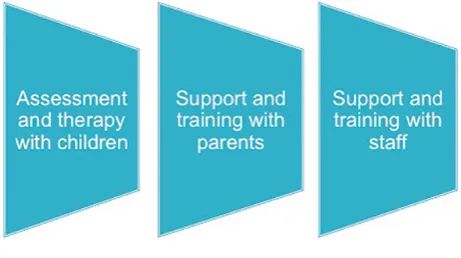
What is CDI’s Chit Chat?
approach involves providing training and support to staff – both in the early years’ and school settings (see Figure 1). The logic model, research and approach underpinning Chit Chat is described later in this Guide.
Figure 1: Elements of CDI’s Chit Chat
Introduction to Implementation:
Implementation refers to the process of carrying out a plan and focuses on the ‘how’ rather than the ‘what’ of the programme or service in question (Burke et al, 2012). In this case, it relates to all aspects of getting Chit Chat into practice.
An Implementation Guide sets out the ‘how to’ of getting programme delivery underway. It supports the set up phases and guides the user through a step by step process to bring the programme to the ‘business as usual’ phase. Implementation is seen as crucial in the delivery of a programme as it can have a huge impact on whether or not the programme reaches its’ intended outcomes. This Implementation Guide draws on work undertaken by the Centre for Effective Services (CES) with the phases described in the following sections adapted from An
Introductory Guide to Implementation: Terms, Concepts
and Frameworks (Burke et al, 2012).
This Guide is presented in four phases, focusing on (1) start-up of service (exploring and preparing); (2) planning and resourcing; (3) implementing and operationalising; and (4) sustaining the programme (‘business as usual’). These phases operate in a parallel rather than linear fashion, and so the community or organisation may move back and forth between them (see Figure 2). Each of these phases is described in detail in the following sections of the Guide as they relate to Chit Chat,
Figure 2: Phases of Implementation of CDI’s Chit Chat
How to use this Implementation
Guide:
The information contained in this Guide is based on CDI’s experience of establishing Chit Chat within a community with an identified need. Working with various stakeholders to make the programme a success, CDI drew on international research and best practice in relation to the delivery of evidence-based programmes. The Guide outlines the processes needed to establish relationships, identify key stakeholders and get people involved. It also describes the training and quality assurance methods used to ensure that the best possible service is developed and delivered to children and their families.
Each phase of the implementation process concludes with a checklist to track progress, as well as acting as a way of identifying any areas in need of further support. While the work of implementing Chit Chat is described in discrete phases, elements of each phase will cross over and some aspects will be ongoing throughout. It is therefore recommended to read the entire Guide prior to establishing service delivery and to refer back to the relevant sections for detailed consideration as implementation progresses.
Introduction to Logic Modelling:
Logic modelling is a relatively new term for child and family services, and is a central element of developing and implementing evidence-based programmes. Many organisations, having experienced the benefits that come with the clarity and focus of a logic model, have now integrated logic modelling into their management processes. Some organisations have been using similar methods, such as developing a theory of change or even a business plan, and processes that include identifying specific objectives, activities to achieve them and the rationale for the activities. All of these are very similar to the logic model approach.
A logic model is defined as a framework or tool that may be used for programme planning, implementation and evaluation (Alter and Egan, 1997; Julian, 1997; McLaughlin and Jordan, 1999). It links the evidence (i.e. what research and best practice tells us about a programme or approach – issues/anticipated outcomes), inputs (i.e. the resources available to and required by the programme) and activities (i.e. what you deliver) to the anticipated outputs and outcomes (Hernandez, 2000; McLaughlin and Jordan, 1999). In other words, the logic model process provides the rationale for delivering specific programme activities (i.e. that X will lead to Z if Y is implemented).
CDI and many others have used the logic model framework to agree objectives, to maximise the potential to improve outcomes for children, manage programmes and shape their associated evaluations, and to ensure accountability of resources and outcomes. Figure 3 gives an outline of the various elements to be considered when completing a logic model, which can be used at a strategic organisational level or for a specific piece of work. CDI’s Quality Services,
Better Outcomes (Murphy et al, 2011), which acts as a
Figure 3: Steps in a Logic Model Source: Murphy et al (2011)
Source: Murphy et al (2011)
The clear description of a programme’s goals, tasks or activities, and anticipated outcomes provides an opportunity to involve programme managers, staff and other key stakeholders in the identification of the necessary resources (i.e. What do we need?), the assignment of responsibilities (i.e. Who is responsible for what?) and the clarification of relationships between specific activities and expected outcomes (i.e. Will implementing these activities produce the desired results?) (Millar et al, 2001). However, it is important to note that an examination of existing practice in terms of, for example, how resources are allocated, the way in which activities are implemented or whether anticipated outcomes are achieved may encounter resistance at an organisational or individual level (Kaplan et
al, 2004) and so we need to be prepared for this.
The current situation i.e. the situation
that requires changing
Research evidence i.e. what the
research or best practice
tells us
Inputs i.e. the resources necessary to
bring about the change
Activities i.e. the activities expected to occur or be delivered
Outputs i.e. what is expected to occur or be produced
Outcomes i.e. changes in
attitudes, behaviour, knowledge
PHASE ONE:
EXPLORING AND PREPARING
1.1 Introduction:
‘Exploring and preparing’ refers to the phase in which local needs are identified and an appropriate programme or service that addresses them is agreed. Reading all of this Implementation Guide is recommended at this stage, as the information contained will assist you in exploring what Chit Chat can offer individuals, organisations and communities in terms of improved outcomes. When considering the development of a new service, or the realignment of an existing one, the initial steps will include checking for organisational readiness.
By the end of Phase 1, you will have:
• Developed a logic model through which Chit Chat is identified as an appropriate response to locally identified need;
• Completed your Organisational Readiness analysis;
• Developed an understanding of Chit Chat;
• Recognised the benefits of delivering Chit Chat and the evidence for it as a model of best practice;
• Identified the key stakeholders and potential programme leaders specific to your community, organisation or service;
• Consulted with the key stakeholders and established their necessary buy-in to the programme.
1.2 Identifying need and agreeing
response:
Objectives Inputs Key Activities and Outputs
Short-term
Outcomes (by 2016)
Longer-term Outcomes
To identify at an early opportunity children with a speech and language need;
To offer appropriate assessment and/or in-tervention at the earliest point;
To develop the capac-ity of teachers and EY providers to identify and respond to need;
To support parents to positively engage in developing their child’s speech and language.
Funding;
Speech and language therapists;
Accredited training for EY practitioners and teachers;
Commitment of schools and EY to support the service;
Buy-in from HSE Primary Care to support the service and clarity of roles e.g. Memorandum of Understanding (MoU); Terms of reference (ToR), etc.
Delivery of accredited training to all Early Years staff;
Engage key teachers in accredited S&L training;
Awareness raising and capacity building activ-ities take place for all parents;
Tailored supports provid-ed to parents of children receiving an intervention;
Ongoing engagement with HSE, including review of dual policy and transfer of children; Ongoing data collection to monitor individual and service outcomes.
EY staff and teachers have enhanced knowl-edge, skills and under-standing in children’s speech and language development and how to support it;
Reduction in inappropri-ate referrals to SLT;
Increase in early identifi-cation of SLT needs;
Parents feel greater confi-dence in supporting their child’s S&L development;
Parents of children receiv-ing an intervention are well informed and feel competent in supporting this intervention;
Reduced stigma than with clinic-based services, due to on-site provision;
Improved attendance at assessment and interven-tions;
Model is replicated in other communities.
EY and teaching staff are skilled in identifying chil-dren with an S&L need, and in supporting these developments;
Parents in TW have ca-pacity and motivation to support children’s S&L;
Early intervention, onsite delivery of SLT and other specialist services be-comes a regular feature of primary care.
Early Intervention Speech and Language Therapy
Evidence: Evaluation of CDI’s SLT Model.
(Hayes et al, 2012 and Hayes et al, 2016)
Monitoring and evaluation: Individual child assessments; training evaluations; parent questionnaires; teacher questionnaires; HSE meetings; management meetings.
Vision/Overall Aim of Tallaght West Consortium: Early Intervention Speech and Language Therapy maximising children’s development.
1.3 Organisational readiness and
capacity-building:
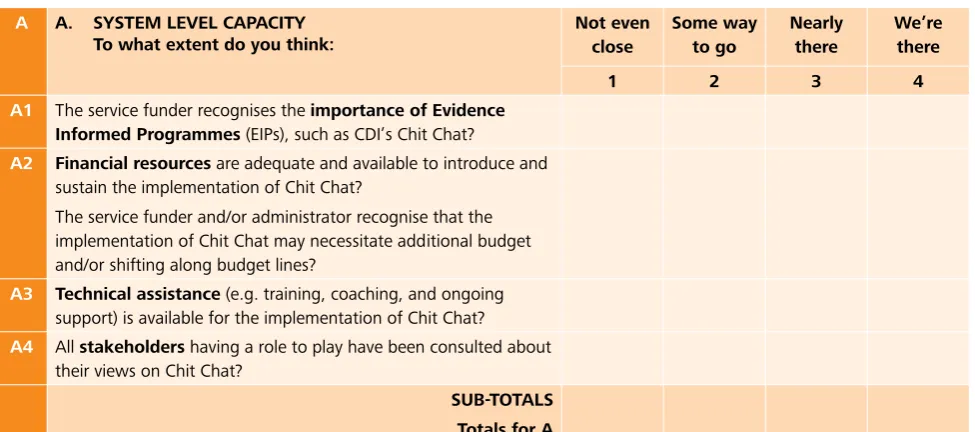
[image:14.595.56.544.321.537.2]Organisational readiness to implement an evidence informed programme is crucial. This includes having an implementation plan, strong leadership, adequately trained and supervised staff and effective ways of giving and receiving feedback. Research literature has identified several factors that are important for effective implementation of Evidence Informed Practices (EIP). The organisational readiness assessment tools developed by Austin and Claassen, (2008) and Barwick, (2011) have been adapted to fit the Irish context (see Table 2 below). This model has eight key factors, which are system level capacity; organisational capacity; organisational culture/ climate; senior leadership; staff capacity; operational considerations; training and having an implementation plan.
Table 2: Organisational Readiness Checklist
A A. SYSTEM LEVEL CAPACITY To what extent do you think:
Not even close
Some way to go
Nearly there
We’re there
1 2 3 4
A1 The service funder recognises the importance of Evidence Informed Programmes (EIPs), such as CDI’s Chit Chat?
A2 Financial resources are adequate and available to introduce and sustain the implementation of Chit Chat?
The service funder and/or administrator recognise that the implementation of Chit Chat may necessitate additional budget and/or shifting along budget lines?
A3 Technical assistance (e.g. training, coaching, and ongoing support) is available for the implementation of Chit Chat?
A4 All stakeholders having a role to play have been consulted about their views on Chit Chat?
B B. ORGANISATIONAL CAPACITY To what extent do you think:
Not even close Some way to go Nearly there We’re there
1 2 3 4
B1 Change at this time is appropriate and feasible in the life of the organisation? Consider competing priorities and their timelines.
SUB-TOTALS Totals for B
C C. ORGANISATIONAL CULTURE/CLIMATE To what extent do you think:
Not even close Some way to go Nearly there We’re there
1 2 3 4
C1 There is leadership support from top management in the form of a designated person responsible for implementation?
C2 This organisation’s mission reflects a commitment to being a
learning organisation and is supportive of implementing Chit Chat? C3 Generally speaking, staff understand the mission and goals of
this organisation and how they relate to evidence-informed practice?
C4 Generally speaking, staff in this organisation understand what
evidence-based practices are and hold positive attitudes toward their use?
C5 Staff in this organisation are given high levels of autonomy in their work and encouraged to ask questions?
C6 There are open lines of communication in place in this organisation?
C7 Innovation is rewarded?
SUB-TOTALS Totals for C
D D. SENIOR LEADERSHIP
To what extent do you think senior leadership considers: Not even close Some way to go Nearly there We’re there
1 2 3 4
D1 The evidence-based practice selected for implementation addresses an important problem/issue/gap in service delivery?
D2 Implementing Chit Chat is aligned with organisational, regional or system goals?
D4 Senior leaders are willing and able to lead and shape implementation?
SUB-TOTALS Totals for D
E E. STAFF CAPACITY
To what extent do you think:
Not even close
Some way to go
Nearly there
We’re there
1 2 3 4
E1 Professional growth and development are desired by staff in this organisation?
E2 Staff preferences for learning and practice change were taken into consideration when selecting this service and in developing the implementation plan?
E3 Staff demonstrate readiness for practice change and a commitment to use this service?
E4 The appropriate staff with the necessary qualifications and experience have been selected to implement this service? E5 Staff demonstrate evidence-based practice skills (e.g. client
engagement, critical thinking, use of positive reinforcements, analytical thinking and reflective practice)?
E6 Human resources are adequate and available to introduce and sustain the delivery of Chit Chat. This means:
(a) Management intend to select staff that have the required competency levels to implement the service;
(b) Management are prepared to deal with changes to job requirements and staffing where necessary;
(c) Management are prepared to provide the appropriate management and supervision of staff involved in the service.
SUB-TOTALS Totals for E
F F. OPERATIONAL CONSIDERATIONS To what extent do you think:
Not even close
Some way to go
Nearly there
We’re there
1 2 3 4
F1 Management will ensure that the service is delivered in full
as outlined in the Implementation Guide?
F3 There is a Quality Assurance Plan in place that will enable the
monitoring of service delivery?
F4 There is intent to use outcome data to inform service planning and delivery?
F5 The organisation will consider whether policies or service/vendor
contracts require revision for the implementation of evidence-based practices?
SUB-TOTALS Totals for F
G G. TRAINING
To what extent do you think:
Not even close
Some way to go
Nearly there
We’re there
1 2 3 4
G1 Staff require training in the theory of evidence-based practice?
G2 Staff need training and support in delivering Chit Chat?
G3 Line managers need training and support to supervise staff effectively and support delivery of the service?
G4 Staff need training to integrate reflective practice?
G5 Adequate time will be allocated for training, reflection, practice and assimilation of new skills?
SUB-TOTALS Totals for G
H H. IMPLEMENTATION PLAN To what extent do you think:
Not even close
Some way to go
Nearly there
We’re there
1 2 3 4
H1 There is a comprehensive implementationteam in place (i.e. an identified group of staff with a range of skills who will support the delivery of the service)?
H2 There is an implementation framework selected to guide the implementation process through the different phases?
H3 There is a communications plan to share progress of the implementation plan with multiple stakeholders, regardless of their direct involvement (e.g. consider communication to your funder, board of directors, clients, community partners)?
H4 There is agreement on how to monitor service outcomes? SUB-TOTALS
Analysis of this checklist will assist you in identifying areas for development. A plan of activities may be required in order to address the areas which need to improve in order to enable and maximise implementation.
1.4 What does CDI’s Chit Chat
involve?
The model utilises a three pronged approach, involving:
• Assessment and therapy with children;
• Support and training with parents;
• Support and training with staff.
Chit Chat involves on site delivery of a speech and language therapy service, whereby therapists attend EY services and primary schools, carrying out assessments and therapy to children referred to the service. Referrals are accepted from the EY practitioners teachers in junior infants and parents. Training is provided to all EY services and primary schools receiving Chit Chat on typical development and how to identify a child with a communication delay.
Chit Chat is designed to give parents a key role in their child’s language development, and so parents whose children are receiving one to one support from the therapist will also be involved in these sessions, as well as participating in information sessions which include those whose children are not receiving direct therapy. At the start of each academic year, coffee mornings are held with parents to introduce the service and therapist to support trust building and normalise the intervention. In this way, parents are aided in their ability to identify their children’s S&L needs, to refer children to Chit Chat and to support their child’s development. As Chit Chat is an early intervention service, children in the preschool year are eligible. If other cases emerge in younger children, they are
transferred to the local HSE Primary Care Clinic for further management. If a preschool child is receiving a service from Chit Chat and transitions into a primary school where this service is not available, they are transferred to the local HSE Primary Care Clinic for further management.
The third element to the three-pronged approach involves providing training and support to staff – both in the early years’ and school settings. Staff in the EY services receive both certified and accredited training, in Hanen1
and Elklan2 respectively. This enables them to apply key
strategies to provide a rich and stimulating language learning environment for young children; encourage language development; build early literacy skills; and provide a physical and social environment that encourages peer interaction. Similar accredited training is also offered to primary school teachers. Informal training is delivered to EY staff and teachers by the SLTs as necessary, for example, supporting children with English as a second language, and supporting language development in the classroom, to name but a few.
A senior Speech and Language Therapist (SLT) is employed to deliver the CDI S&L service in three early years’ services and three primary schools and a second staff grade therapist is employed to deliver the service to six early years’ services. CDI’s Quality Specialist provides support in the design, delivery and management of implementation issues of the CDI S&L service. The senior SLT receives role support from the HSE community Principal SLT and in turn provides role support to the staff grade SLT. Both SLTs work closely with the HSE speech and language therapy
1 Hanen training provides practitioners with practical, interactive
strategies for promoting children’s language development which also helps lay the foundations of literacy.
2 Elklan training helps practitioners promote the communication skills
team and attend team meetings, which is important for both professional development and support, and enabling strong links across the services. In addition, the CDI SLTs submit quarterly reports CDI on referrals, assessment/ therapy, children’s progress and training delivered.
Interagency collaboration is a central aspect of CDI’s work with the S&L service. At the very outset, discussions with the local Health Service Executive’s (HSE) Principal Speech and Language Therapist (PSLT) were held to design and establish the model of service delivery. In terms of employment, it is worth bearing in mind that there are options available;such as secondment from the HSE; direct employment through a community organisation or funder with clinical supervision being provided by either the HSE, a specialist service or on a consultancy basis etc. Therefore, it is worth reviewing the best option for you.
1.5 Why choose this Model?
Much has been written about the impact speech and language difficulties have on educational attainment and its prevalence in disadvantaged areas, whereby up to 50% of children in such communities have been identified as having a Speech and Language (S&L) need (Conti-Ramsden
et al., 2001; Locke et al., 2002; Leitao & Fletcher, 2004).
Additionally, Bishop and Adams (1990) contest that if a child’s speech and language difficulties are not resolved by the time they enter primary school, their problem could become more entrenched and so affect their learning and literacy development.
Chit Chat seeks to promote children’s speech and language development and provide intervention where necessary. It also aims to equip staff and parents with skills and tips to promote speech and language therapy within early years, schools and home settings. It is underpinned by a
recognition that an ability to communicate is central to the achievement of many milestones and the potential for children to fully participate in their education.
1.5.1 What the research found about
this model of delivery:
Chit Chat was independently evaluated from 2009-2012 by the Centre for Social and Educational Research (CSER), at the Dublin Institute of Technology, and a further study was completed in 2015. The first evaluation was a retrospective impact study which reported key characteristics and data on the children who attended the CDI S&L service. (For more details on the evaluation please see the full report, Hayes, et al 2012) http://www.twcdi.ie/images/uploads/ general/CDI-SLT-Report-09.11-web.pdf
Please see Appendix 1 for a summary of the main findings.
Children were referred to the CDI service aged on average two years nine months and were seen within two to four weeks, while some children whose difficulty was not fully apparent were reviewed after six months. Receiving therapy at such a young age meant that some children did not need long-term interventions, and 18% were discharged as “within normal limits” after six weeks. The evaluation showed 83% of children attended 75 to 100 per cent of appointments. Parents were encouraged to attend therapy sessions and if they could not make the appointment the therapy still went ahead, ensuring that the child did not miss out.
attendance with minimal disturbance to the child’s day. Parents often spoke about feeling stigmatised when they had to bring their child to a clinic or the hospital, but felt much less so with the onsite delivery model. A positive knock-on effect of the service was reported by parents who felt that their child, having better language outcomes, would be less likely to be bullied: “I think we realised his
talking was different … [we were] so afraid … that he’d be bullied,” (Hayes et al, 2012: 42).
The evaluation found that environments were more visibly literacy rich, with staff labeling areas and games, using pictures and symbols to promote phonetics and that staff training resulted in staff feeling more confident in identifying speech and language concerns, and having an increased ability to support parents in making a referral to the service. This resulted in a reduction in inappropriate referrals.
A follow up study was undertaken in 2015 in an attempt to carry out a deeper comparable analysis (Hayes and Irwin, 2016). The findings were similar to the 2012 evaluation, which found shorter waiting times for the CDI model with ‘under’ referral of children who were not previously identified as having an SLT need remaining high. (For more details on the evaluation, please see full report: www. twcdi.ie)
1.6 Identifying Key Stakeholders:
In order for this model to be delivered effectively there are a number of elements that need to be considered. The first stage in getting started involves creating awareness of the approach and making sure that the message you deliver about the model, its benefits and what it has to offer the various stakeholders is clear. When starting a new initiative, it is important to ensure that all of the relevantstakeholders are consulted from the outset. This will lead to increased buy-in and investment from all parties in ensuring the delivery of the service. It is advisable to identify ‘champions’ – those that will support and ‘sell’ the model, at this stage, in order to gather momentum for the proposal. The key stakeholders include:
• Funder: this model could be funded in a range of ways. For example, it could be embedded within mainstream services which would involve the HSE S&L service incorporating onsite delivery as well as capacity building amongst early years’ staff and primary school teachers. Alternatively an organisation which is well established within the community could seek funding to deliver this model, the main cost of this model being salaries and a small programme budget. Whichever model is decided upon, it is also worth considering and costing the time given by the HSE, EY’s, Primary Schools and other stakeholders to support the design, implementation and building this into communities;
• HSE Principal Speech and Language Therapist (HSE - PSLT): it is vital to have the PSLT on board at the very outset, as they can give support around recruitment, policies and provision of clinical supervision to the SLTs. In addition, all structures listed below will require their input and support;
• Area Manager, HSE: the local PSLT may wish to consult with their Area Manager before agreeing to support the design and implementation of the model;
well as making a commitment that staff will attend training. Practical issues such as access to
stationary, photocopying, secretarial support may also need to be agreed at the outset.
As well as involving the ‘essential’ stakeholders relevant to designing the model, you need to consider your engagement with the target audience. These include:
• Children aged 2-6 years: It is important to consider the number of EY services and schools involved; the potential number of children to be referred and their geographical location. As the service requires the therapist to be mobile, close geographical locations will considerably support efficiencies. For example, on average, one therapist can manage a caseload of approximately 30-65 children, but this will depend on the locations. It is best to have this discussion with the local HSE Principal Speech and Language
Therapist and City/ County Childcare Committee. In CDI’s experience, ring fencing the ages of children to be included in assessment and therapy from 2-6 years, is vital. This fits well with the principles of early intervention, in addition to avoiding the therapist being stretched too thinly, so maximising the potential for positive outcomes;
• Parents: Both of children receiving therapy and generally attending EY providers/school. Having parental involvement is crucial to supporting their children’s speech and language development. It is helpful to identify the best times and
locations to engage with parents, and asking colleagues already working with parents to facilitate this for you. This will provide an opportunity for the therapist to gain an
understanding of parents’ concerns and what their capacities are;
• EY practitioners and teachers: Having their involvement will promote the effective delivery of the service, through attendance at training; identifying children for assessment; engaging parents in educational opportunities;
understanding referral pathways; and supporting to children and families to take up appointments;
• HSE SLT’s: Whether the funding mechanism is the HSE or not, SLTs should be aware of the service model as they will play an important part in accepting referrals from and making referrals to this service. It is important that the SLTs from both service models form a good working relationship in order to ensure a cohesive approach to service delivery. It is strongly recommended that where possible the therapists employed to deliver Chit Chat are part of the HSE team to avail of Continuous Professional Development (CPD) opportunities, as well as keep up to date with changes in structures, for collegial support, etc.;
• Other health services: Such as audiology, psychology, assessment of need, etc., need to be aware of the early intervention S&L service to facilitate good communication, in the event of onward referrals by the SLT, or if a child is attending one of these services;
• Specialist services, such as intellectual disabilities: It is advisable to have clear communication channels to ensure effective delivery of the service, avoidance of duplication and ensuring no child ‘slips through’ services. Sharing policies,
procedures and referral criteria/forms will assist in this;
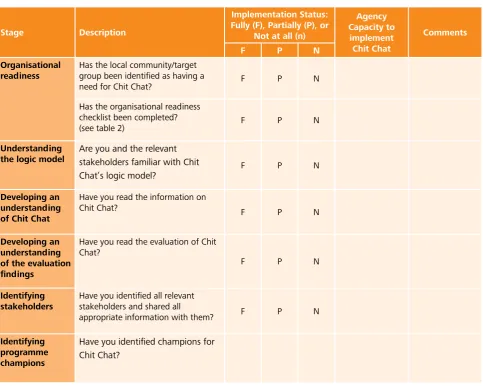
Table 3: Phase 1 - Exploring and Preparing Checklist
Stage Description
Implementation Status: Fully (F), Partially (P), or
Not at all (n)
Agency Capacity to implement Chit Chat
Comments
F P N
Organisational readiness
Has the local community/target group been identified as having a
need for Chit Chat? F P N
Has the organisational readiness checklist been completed?
(see table 2) F P N
Understanding
the logic model Are you and the relevant stakeholders familiar with Chit
Chat’s logic model? F P N
Developing an understanding of Chit Chat
Have you read the information on
Chit Chat? F P N
Developing an understanding of the evaluation findings
Have you read the evaluation of Chit Chat?
F P N
Identifying stakeholders
Have you identified all relevant stakeholders and shared all
appropriate information with them? F P N
Identifying programme champions
Have you identified champions for Chit Chat?
Now you can move on to Phase Two – Planning and Resourcing your Chit Chat service.
1.7 Checklist and next Steps:
PHASE TWO:
PLANNING AND
RESOURCING
The second phase focuses on gathering the resources, preparing documents and ensuring that the elements needed for delivery are in place. This phase will also involve ensuring the structures, processes, resources and practices to support delivery are established which will include confirming the budget and securing funding and establishing a Memorandum of Understanding (MoU) with relevant stakeholders; identifying appropriate staff and completing the recruitment process; and identifying and arranging the necessary resources (Burke, et al, 2012).
At the end of Phase 2, you will: • Have agreed budgets;
• Developed and agreed mechanisms to support communication with all relevant stakeholders;
• Recruited the Speech and Language Therapists and agreed quality assurance mechanisms;
• Identified an appropriate space for the therapist to work in the early years’ services and primary schools;
• Compiled all relevant policies and procedures, including referral processes.
2.1 Agreeing budgets:
The main cost for this service relates to salaries for SLTs and materials:
• Salaries: This should include employer’s PRSI. In order to maintain a level of fairness and equity, it is strongly recommended that the salary scales are in line with the HSE and these can be downloaded
from the website: http://www.hse.ie/eng/staff/ Benefits_Services/pay/salary_scales_new_ entrant2011.pdf
Please note that these salary scales are subject to change, so ensure the most current scale is applied. In addition, it is advisable to be clear if increments, employer pension contributions and non-statutory redundancy form part of the employee contract as this could add further to the overall costs.
• Materials: These are both at initial set up and ongoing costs. Initial materials include laptops; colour printer; mobile phone; internet access; toys used during assessment/therapy; assessment tools, of which there are a variety. It is advisable that the assessment tools used are in line with those used by the HSE. Ongoing costs include: office rent; travel and subsistence; and stationery, which can be quite significant so ensure a sufficient budget is in place;
• Continuous Professional Development: Being able to support the SLTs in their continuous professional development is an important responsibility, particularly when delivering innovative, evidenced- based services. Examples of training which may be required include: Training of Trainers in a range of accredited programmes, including but not exclusively: Hanen; Elklan; Derbyshire; LAMH; PECS (See Glossary of Terms). It is advisable to agree at the outset the CPD budget for each therapist annually. Given the clinical and specific nature of training, all CPD requests should be approved by someone who is appropriately qualified;
may include materials, venue and in some cases relief/cover staff in order to free staff up to attend training.
The items noted above require an allocated budget. However as is so often the case with inter-agency initiatives, a great deal of the resources come from the time and commitment which personnel provide from within their already busy responsibilities. This may not require funding, but should be acknowledged and sustained.
2.2 Mechanisms to support
communication:
[image:24.595.57.280.312.548.2]Being clear about expectations, roles and responsibilities is vital. Figure 4 lists some of the mechanisms to promote and support clarity:
Figure 4: Mechanisms to Promote and Support Clarity:
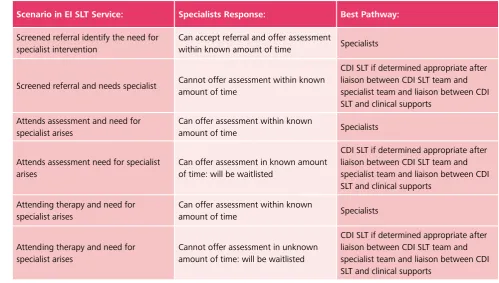
• Memorandum of Understanding (MoU): This will clearly outline all roles and responsibilities, including those of the funder; employer; HSE and SLTs. (See sample in sample in Appendix 2). Having a clear MoU, which is signed off by all parties will help establish communication channels, ensure clarity for all concerned as to everyone’s roles and responsibilities, help to reduce risks arising and name mechanisms to support the management of any challenges. It is advised that the MoU is devised and agreed at the very outset, so that when the service commences delivery, everyone knows where to go to/who to talk to and involve, in the event of issues arising;
• Service Level Agreement (SLA):
This is different to the above mentioned MoU, as it is a working agreement between the therapist and the ‘host’ of the service (i.e. preschool and /or primary school). In the absence of a contract, the SLA outlines each person’s responsibilities and expectations, for example; provision of office and clinical space within services/schools; participation of teachers and EY staff in training aimed at enhancing Chit Chat’s impact; secretarial support for appointments and access to
photocopying. EY’s managers and school Principals will need to commit to ensuring that staff take up the training as stipulated in the Service Level Agreement (See sample in Appendix 3). It is important that EY providers and schools are clear about what is expected of them and what is being provided to them. As with the MoU, the SLA should be signed off by all parties involved;
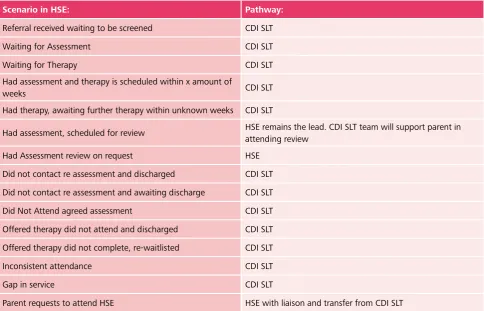
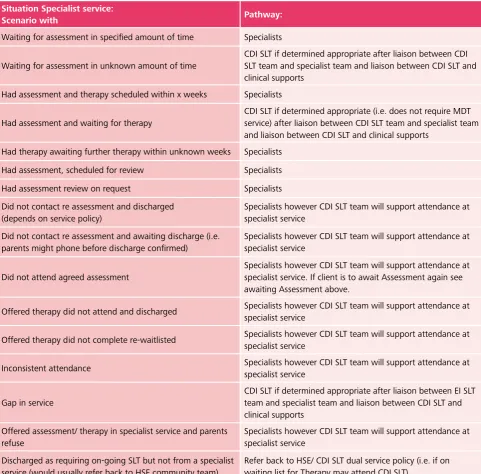
• Dual Policy:
and transferring cases between agencies – specifically, the HSE, the early intervention SLT service and specialist agencies such as audiology or Assessment of Need. (See sample in Appendix 4). If a child transitions from an EY service to Junior Infants or from Junior Infants into Senior Infants and still requires SLT, they will be referred to the Community HSE. In order to ensure continuity of service, the date of referral to the Chit Chat service will be used as the basis of entry to the HSE service. Having a clear pathway for therapy will ensure there is no duplication of service delivery and that no child ‘slips’ through the service; nor should a child be penalised for engaging in any particular service. It is recommended that this policy is developed through a collaborative approach which includes all relevant stakeholders.
2.3 Recruitment and quality
assurance mechanisms:
Given the nature of this model of service delivery, it is advisable to employ a Senior SLT who can provide support and clinical supervision to a Staff grade post. In terms of recruitment, there are a few options that can be explored, the SLT’s can be employed directly, or seconded from the HSE. It is strongly recommended that the recruitment process is carried out in consultation with the HSE Principal SLT and follows best practice in relation to recruitment processes. See Appendix 5 for the job description used for the Chit Chat service. Ideally the Senior SLT should hold other professional training skills, such as Hanen, Elklan and should have completed training in clinical supervision etc. Also experience of training other professionals working with parents; and interagency collaboration.
• Support and supervision:
Clinical supervision must be set up for the therapists, and this will require some consideration. What are the appropriate methods for providing this? For example how will this link to mainstream policies? Is there a need to indemnify anyone, and if so who and how? What local stakeholders might be able to provide this? Identify the risks and benefits for each alternative. One option could be the Principal HSE SLT providing clinical support and supervision to the Senior SLT who then supervises the staff grade SLT. Support and supervision around programme delivery/performance is also important to ensure the therapist has an opportunity to discuss programme implementation issues and review programme budget, etc. This part of the support and supervision could be undertaken by the purveyor or commissioner of the early intervention service and requires an understanding of the logic model, fidelity and monitoring approaches. Having all these systems in place at the outset will support clarity and appropriate governance of the service delivery;
• File management:
• Induction:
A robust and effective induction process needs to be undertaken with the therapists employed. It should include an understanding of the aims of the model; staff handbook; introduction to relevant stakeholders; relevant polices and procedures; reporting structures; contact details, etc. The induction is the responsibility of the employer and ideally also involves an induction by the HSE in terms of clinical practice and local structures.
2.4 Identifying an appropriate
space for the therapist to
work:
Given the onsite nature of the service, a therapy room needs to be allocated for the therapists to work from. This needs to be agreed with the early year’s services and primary schools. Ideally a separate room is preferable, with some informal furnishings like chairs, tables and it should be child friendly with books, posters, etc. It also needs to be relatively quiet, in order to facilitate therapeutic interventions and enable an appropriate environment. A dedicated space is a rare luxury so a parents room library or other space may need to be agreed. Agreeing working arrangements should also include practical considerations such as access to photocopying or phones, administrative support such as managing appointments, and storage space.
2.5 Policies and Procedures:
As well as the above communication mechanisms, it is important to consider other policies that need to be developed. Early Years (EY) services and schools need to be familiar with the referral process, so therapists
need to draw up clear guidelines for and staff should be agreed including eligibility criteria; referral mechanisms; schedule for services indicating when therapy will be delivered in each location; how slots for assessment/ therapy are allocated; how to postpone appointments; what to do if you can’t make an appointment etc. While the therapists will adhere to their employer’s child protection policy, they will also need to be familiar with the EY service/schools’ policy on child protection.
Agreement on the storage and ownership of individual case files is critical, particularly given that the therapist travels to various locations. Being clear on having safe and secure procedures for files is important.
2.6 Checklist and Next Steps:
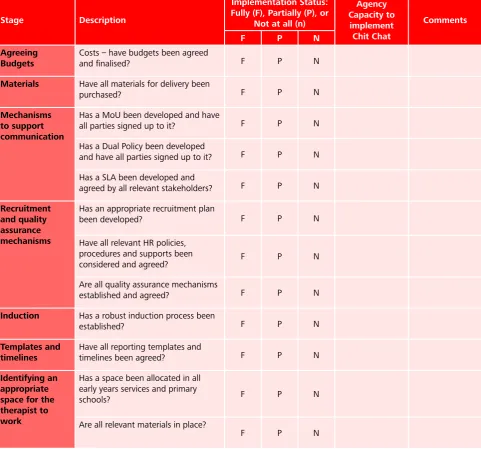
Table 4: Phase 2: Planning and Resourcing Checklist:
Stage Description
Implementation Status: Fully (F), Partially (P), or
Not at all (n)
Agency Capacity to implement Chit Chat
Comments
F P N
Agreeing Budgets
Costs – have budgets been agreed
and finalised? F P N
Materials Have all materials for delivery been
purchased? F P N
Mechanisms to support communication
Has a MoU been developed and have
all parties signed up to it? F P N
Has a Dual Policy been developed
and have all parties signed up to it? F P N
Has a SLA been developed and
agreed by all relevant stakeholders? F P N
Recruitment and quality assurance mechanisms
Has an appropriate recruitment plan
been developed? F P N
Have all relevant HR policies, procedures and supports been
considered and agreed? F P N
Are all quality assurance mechanisms
established and agreed? F P N
Induction Has a robust induction process been
established? F P N
Templates and timelines
Have all reporting templates and
timelines been agreed? F P N
Identifying an appropriate space for the therapist to work
Has a space been allocated in all early years services and primary
schools? F P N
Are all relevant materials in place?
Stage Description
Implementation Status: Fully (F), Partially (P), or
Not at all (n)
Agency Capacity to implement Chit Chat
Comments
F P N
Policies and procedures, including referral processes
Have all relevant policies and
procedures been developed? F P N
Have referral pathways been developed and understood by all relevant staff?
F P N
PHASE THREE
IMPLEMENTING AND
OPERATIONALISING
When you have reached this third phase, Chit Chat should be ready to begin day-to-day delivery. This means that all the equipment, staff and resources necessary are in place. Burke et al (2012) have identified the following key activities for this phase:
• Providing on-going coaching and assistance to staff;
• Monitoring on-going implementation;
• Changing systems/culture as necessary;
• Creating feedback mechanisms to inform future actions.
By the end of Phase 3, you will:
• Have begun delivering the Chit Chat Model;
• Have begun accepting referrals to the service;
• Scheduled dates for parent sessions;
• Have identified training needs and scheduled staff training sessions;
• Be aware of and adhering to reporting templates and timelines.
3.1 Fidelity and Monitoring:
Maintaining fidelity (i.e. the degree to which the programme or service is delivered as was originally intended) is necessary in order that all elements of the model are delivered in full, and so maximising the potential for positive child outcomes. In order to promote quality and maintain fidelity, you should consider some of the following structures:
• Clinical and non clinical supervision for the SLTs:
Depending on your funding and employment arrangements, it is worth considering whether both clinical and non clinical supervision can be done by the same person. Clinical supervision requires specialist input from a practicing therapist. Both supervision structures provides the
opportunity for the HSE, funder and the SLT to discuss service delivery and trouble shoot
difficulties in referrals; case loads; dual policy; CPD; budgets; annual/study leave and programme related logistics, etc.;
• Monitoring of service delivery:
This can be done through regular service review meetings between the SLTs and the funder and/ or HSE where consideration and discussion is given to the number of referrals, assessments, interventions, parental engagement; staff training needs, etc. Monitoring also needs to include workplan/ targets etc; consideration of individual child assessments; feedback at and after training; focus groups with parents to assess progess etc. Additionally, opportunities to present at conferences, submit journal articles, offer outreach services and other non-routine tasks, can also be discussed at these meetings. The logic model should be reviewed on a regular basis;
• Regular scheduled file audits:
3.2 Quality and Communication:
Essential to any service delivery is maintenance and monitoring of quality and this can be achieved through many processes:
• Training:
This is important for both staff and parents. As discussed earlier, it is advisable that the SLTs are skilled in delivering both accredited and non- accredited training, which should feature strongly in the SLTs plan of work. Staff capacity, foundation qualifications and training can vary considerably within EY services, therefore, it is recommended to commence by undertaking an audit of existing skills and competencies and identifying priority needs. Training may include delivering generic language and communication development, through to accredited training. Training and support to parents will probably be less formal, but should be underpinned by a needs assessment. In order to enhance capacity building amongst teachers and EY staff, it is recommended that the SLT’s work alongside teachers in the classroom, providing modelling and coaching to staff on a regular basis;
• Effective and efficient referral processes: In order to minimise the amount of inappropriate referrals, it is recommended that clear referral criteria are set out. SLTs should explain this carefully to all staff in the EY services and schools and have supporting documentation to leave with them (See Appendix 7). Generally speaking the only criteria for referral to the service is that there is a primary concern about the child’s speech and language development. As Chit Chat is specifically for speech and language issues, it is not recommended for children with multi- disciplinary needs;
• Communication between SLTs and EY practitioners/teachers:
It will be more efficient for the SLT to have one lead person to liaise with, therefore each EY service and school should identify a SLT liaison person who is responsible for the referrals and supporting attendance (EY manager, support worker, Home School Community Liaison, etc.);
• Parental engagement:
Consideration should be given to effective engagement and communication mechanisms. Holding coffee mornings and informal events possibly with a particular theme or input, can be an effective way to identify needs and concerns amongst parents, as well as building a connection and trust between them and the SLT. Where possible, this will be all the more effective if it is facilitated by someone already working with the parents, such as EY manager/Parent Support Worker/Home School Liaison, etc. Schools and EY services will be supported by Chit Chat to promote the importance of communication and literacy development to parents. Reading weeks are an example of this, where schools promote ‘reading with your child’ every night for a week and a certificate is awarded to participating children and parents at the end of the week. Schools have also been encouraged to invite parents into the classroom to read with their child. It is important to get regular feedback from parents about the service, which is not only best practice and good governance, but it also promotes an ownership of the service. Again, this can be done informally by checking in with parents as the opportunity arises, or more formally as part of a service review or evaluation process;
• Tracking:
the effectiveness of the service. Consideration should be given to capturing the outcomes of the service and data should be collected accordingly. E.g., child outcomes, parent outcomes, attendance rates, training feedback etc. The number of referrals; training sessions; attendance at training; coffee mornings; attendance at coffee mornings and so on, should be captured in the SLTs reports (See Appendix 7), and considered on a quarterly or termly basis.
3.3 Checklist and Next Steps:
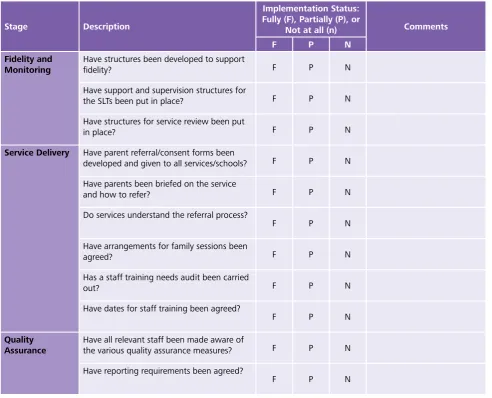
Table 5: Phase 3: Implementation and Operationalising Checklist:
Stage Description
Implementation Status: Fully (F), Partially (P), or
Not at all (n) Comments
F P N
Fidelity and Monitoring
Have structures been developed to support
fidelity? F P N
Have support and supervision structures for
the SLTs been put in place? F P N
Have structures for service review been put
in place? F P N
Service Delivery Have parent referral/consent forms been
developed and given to all services/schools? F P N
Have parents been briefed on the service
and how to refer? F P N
Do services understand the referral process?
F P N
Have arrangements for family sessions been
agreed? F P N
Has a staff training needs audit been carried
out? F P N
Have dates for staff training been agreed?
F P N
Quality Assurance
Have all relevant staff been made aware of
the various quality assurance measures? F P N
Have reporting requirements been agreed?
F P N
PHASE FOUR:
BUSINESS AS USUAL
Phase Four is the final phase of implementation and will mean that Chit Chat is fully operational. It relates to consolidating the model and maximising the potential for sustainability. By the end of Phase Four you will be ready to reflect on the implementation process and how the model is meeting the needs of your target group. The main focus of this process will involve engaging with the key stakeholders who may be instrumental in supporting continuation of the service. The following section suggests mechanisms to enable continued engagement with the key stakeholders and ways to further develop their commitment to the service. This will allow each group to establish local links that may be a key mechanism in securing the sustainability of the service.
By the end of Phase Four, you will:
• Have reflected on the implementation process and how Chit Chat is meeting the needs of your target group;
• Have considered identifying actions to integrate the service into ongoing structures and delivery.
4.1 Engaging with your
stakeholders:
Maintaining close working links with your key stakeholders while establishing this service will support sustainability plans. These stakeholders can also act as champions for the service and will include anyone who has an interest in or involvement with the service and could include the following:
• HSE Primary Care;
• Tusla;
• County Childcare Committees;
• Local Partnerships;
• Early Year’s Managers;
• Early Year’s Staff;
• School principals;
• Teachers;
• Parents;
• Children;
• Library services;
• Specialist Services.
No doubt there will be other organisations in your area which will be relevant to involve.
4.2 Maintaining Stakeholder
Support:
Suggested below are some ways of maintaining the support of your key stakeholders:
• Regular meetings to discuss design, implementation and ongoing monitoring;
• Memorandum of Understanding/Dual Policies;
• Clarity in relation to roles and expectations and scheduled review of same;
• Clear lines for communication and information sharing;
• Opportunities for involvement that are relevant to the individual group;
• Celebration of achievements and opportunities to hear testimonies from participants;
• Robust record keeping and data collection;
• Dissemination on outcomes, service data and case studies, and;
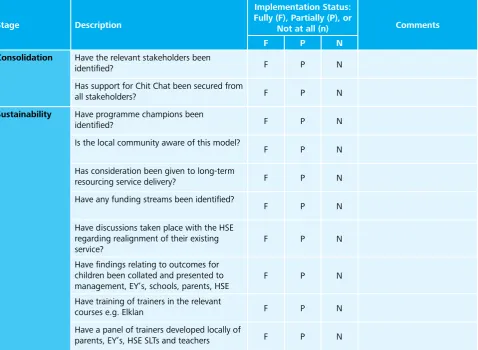
4.3 Sustainability:
CDI has a commitment and requirement to support the integration of its proven programmes into existing services so that these models become ‘business as usual’. In the anticipated absence of ongoing, additional funding to support this integration, this will require creativity, reflection, and possibly some hard choices. Chit Chat can be supported in a number of ways including:
• Champions:
The sustainability of the Speech and Language Service is closely linked to how it has become embedded within the community it is being delivered in. Champions are key to this, as is sharing the successes of the children and parents who have participated in the service. Identifying these supporters will help the process of
advocating the continuation of the service and it is advisable to ensure that there are champions identified in a range of areas, from state agencies to parents, schools and community groups. Different “voices” will resonate for different people. Developing networks which could include a committee of key managers from the relevant sectors may help to support and sustain delivery;
• Capacity Building:
Another important step in sustainability is ensuring that capacity is increased with staff working in EY services and schools, through the provision of accredited and nonaccredited training as well as role modelling and mentoring. Embedding the training and learning will support staff to understand speech and language development; to appropriately identify and refer children with S&L needs; to support children with S&L needs and to support parents to refer children and contribute to their achievement of milestones. Over time, these improvements will impact
on speech and language supports and classroom dynamics, so creating strong arguments for the service;
• Creating awareness:
Ensuring that the local community is aware of Chit Chat and the benefits that participation in the service brings for the families involved is important in making sure that the service continues. This can be achieved through regular updates in the form of newsletters and through the use of social media. Identifying on-going opportunities to promote the work done within the groups can also support this process, and this can link with the effective use of your identified champions;
• Influencing:
The IASLT, SLT training colleges, the Department of Health and HSE are key stakeholders in shaping policy and practice. Promoting the value of this model may gain support to realign funding and/ or resources to utilise different approaches, i.e.