Proceedings of the Thirteenth Workshop on Innovative Use of NLP for Building Educational Applications, pages 322–327
Complex Word Identification:
Convolutional Neural Network vs. Feature Engineering
Segun Taofeek AroyehunCIC, Instituto Polit´ecnico Nacional Mexico City, Mexico
Jason Angel
CIC, Instituto Polit´ecnico Nacional Mexico City, Mexico
Daniel Alejandro P´erez Alvarez CIC, Instituto Polit´ecnico Nacional
Mexico City, Mexico
Alexander Gelbukh
CIC, Instituto Polit´ecnico Nacional Mexico City, Mexico
www.gelbukh.com
Abstract
We describe the systems of NLP-CIC team that participated in the Complex Word Iden-tification (CWI) 2018 shared task. The shared task aimed to benchmark approaches for iden-tifying complex words in English and other languages from the perspective of non-native speakers. Our goal is to compare two ap-proaches: feature engineering and a deep neu-ral network. Both approaches achieved com-parable performance on the English test set. We demonstrated the flexibility of the deep-learning approach by using the same deep neu-ral network setup in the Spanish track. Our systems achieved competitive results: all our systems were within 0.01 of the system with the best macro-F1 score on the test sets except on Wikipedia test set, on which our best sys-tem is 0.04 below the best macro-F1 score.
1 Introduction
Complex Word Identification (CWI) is an impor-tant step in text simplification. The ability to accu-rately identify word(s) as complex or not in a given context for a given target population significantly impacts subsequent processing steps such as lexi-cal substitution in the simplification pipeline.
The organizers of the 2018 CWI shared task (Yimam et al., 2018) provided participants with multilingual human-annotated datasets (Yimam et al., 2017a,b) for the identification of complex words. Training and development data were pro-vided for three languages: English, Spanish, and German. In the case of English, three genres were covered: news, Wikinews, and Wikipedia.
Some of the participants of the previous CWI shared task used neural network-based ap-proaches. For instance, Bingel et al.(2016) used
a simple feed-forward neural network, while Nat (2016) used an ensemble of recurrent neural works (RNN). The performance of the neural net-work approaches was not impressive. The RNN achieved the best result among all the submissions that used neural networks (Paetzold and Specia, 2016b).
In this paper, we report further experiments with the efficacy of deep neural networks for CWI, us-ing another deep neural network architecture— Convolutional Neural Network (CNN). Namely, we compare two approaches for the task of CWI: one based on an extensive feature engineering and the tree ensembles classifier, and another one based on deep neural network using the word em-bedding representation. The latter approach is, to the best of our knowledge, the first attempt to apply CNNs to the task of CWI. Apart from comparing the performance of the two approaches on the classification subtask of CWI on English, we demonstrate the flexibility of the CNN-based approach by applying it to another language— Spanish in our case.
The remainder of the paper is organized as fol-lows. Section2outlines relevant work. Sections3 and4present our two approaches. Section5gives some details on the datasets used. Results of our experiments are in Section 6. Section7 presents error analysis. Finally, Section8concludes the pa-per and outlines future work directions.
2 Related Work
The majority of works on CWI are related to fea-ture engineering at various linguistic levels. Sec-tion 2.1 below discusses existing approaches to feature engineering for machine-learning models used for CWI. On the other hand, Section2.2
tions some relevant applications of CNNs to natu-ral language processing (NLP).
2.1 Feature Engineering for he CWI Task Participants of the first edition of CWI shared task have experimented with various linguistic fea-tures. These linguistic features span various lin-guistic levels: morphological, syntactic, semantic, and psycholinguistic.Paetzold and Specia(2016c) used morphological, lexical, and semantic fea-tures to train frequency-based, lexicon-based, and machine-learning models for CWI.Konkol(2016) used only frequency of occurrence of a word in Wikipedia as the only feature to train a Max en-tropy classifier. Davoodi and Kosseim(2016) ex-perimented with the degree of abstractness of a word as a psycholinguistic feature for CWI.
In this work, we used some of these features and experimented with some new features, such as contextual and entity information and additional psycholinguistic scores.
2.2 CNNs in NLP
Convolutional neural networks have shown no-table results in the fields of computer vision, speech recognition and recently in NLP.
CNN models achieve state-of-the-art results in NLP tasks such as clause coherence (Yin and Sch¨utze, 2015b), paraphrase identification (Yin and Sch¨utze,2015b,a) and Twitter sentiment analysis (Severyn and Moschitti,2015).
Kim(2014) presents a CNN fed with word2vec word embedding vectors (Mikolov et al., 2013) used for detection of positive and negative re-views, as well as sentence classification. Their results suggest that pre-trained vectors encode generic semantic features, which can benefit var-ious NLP classification tasks. In our work, we used a similar model with slight additions to the architecture of the network and a different prepro-cessing step.
3 Feature-Engineering Approach
In this section, we present the set of features used to build one of our CWI systems.
Morphological Features Most of the morpho-logical features we used consist of frequency count of target text on large corpora such as Wikipedia and Simple Wikipedia. We computed term frequency, inverse term frequency, document frequency and term document entropy. Also, the
tf-idf values were calculated. In addition, we used characteristics of each target text such as number of characters, vowels, and syllables.
Syntactic and Lexical Features We used OpenNLP1 part-of-speech (POS) tagger to
deter-mine the target word’s POS in the context. We used the POS as a parameter to filter the possible meanings of the target word. With this, we ob-tained the number of senses, lemmas, hyponyms, and hypernyms given by WordNet.2
Psycholinguistic and Entity Features We in-cluded some psycholinguistic scores provided by the improved MRC psycholinguistics database (Paetzold and Specia, 2016a) as features. The database provides familiarity, age of acquisition, concreteness, and imagery scores for each word. We hypothesized that these scores would be use-ful to identify complex word. Unfortunately, many target words were absent in this database. We used OpenNLP and Stanford CoreNLP3 to tag target
words as organization, person, location, date, and time. The resulting tag was used as anentity fea-ture.
Word Embedding Distances as Features Be-yond these classic linguistic features, we used word embeddings. Namely, we downloaded the pre-trained Word2vec (Mikolov et al.,2013) vec-tors of 300 dimensions to measure the distance be-tween the sentence and the target word. The dis-tance was computed using cosine similarity and Euclidean similarity over the average of the vec-tor representation of the words in the sentence and the target text.
Classical Machine Learning Models We no-ticed that for this task (with our features), the tree learner offered better performance than other models. Thus, we tried several settings for the tree learner model provided by KNIME (Berthold et al., 2009), as well as more complex variations such as random forest, gradient boosted, and tree ensembles. The best obtained result was given by the tree ensembles with 600 models.
4 Deep-Learning Approach
In this section, we present our deep-learning ap-proach. It is based on 2D convolution and
word-1http://opennlp.apache.org/ 2https://wordnet.princeton.edu/
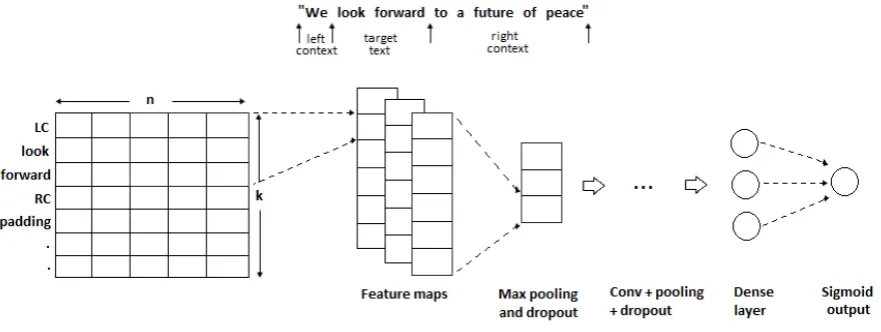
Figure 1: The architecture of our network
embedding representation of the target text frag-ment and its context.
Since text is one-dimensional, we applied a preprocessing step described in Section 4.1 prior to the application of convolution layer. Sec-tion 4.2 describes our network architecture, and Section4.3presents the training procedure.
4.1 Preprocessing
As a first step, we removed punctuation marks, digits, and special characters. Each word was then replaced by its vector representation using the pre-trained word vectors from the Word2vec model (Mikolov et al., 2013) for English and fastText model (Grave et al., 2018) for Spanish. A min-max normalization was applied to every vector to convert the values from the range[−1,1]to[0,1]. We assigned a zero vector to the words missing in the pre-trained embeddings.
We defined the left context (LC) and the right context (RC) as those words that appear to the left and the right of the target text, respectively. As a compact representation of the left or right context, we used one 300-dimensional vector calculated as the average of the vectors of all the words in the LC and RC, respectively (if the target text was lo-cated at the beginning or the end of the sentence, we used a zero vector as the respective context rep-resentation). Next, we generated a matrix where the first row corresponds to the LC vector, the next
krows are given by the embedding vectors of the
words contained in the target text, wherekis the
number of words in the target text, and the last row corresponds to the RC vector. In order to have a regular representation, we padded the matrix with
p=m−kzero vectors, wheremis the maximum
value ofkin the training set.
Figure1illustrates the preprocessing step on the sentence of an example in the English training set. The output of the preprocessing step is the input of the network.
We believe that the averaging operation on the words in the contexts allowed differentiating be-tween cases where the same sentence has distinct target texts. Those words included or excluded in the context will slightly modify the representation of the context, which will help the model to learn some relationships between the target text and the rest of the sentence. We could have compressed the representation matrix by combining the vec-tor representation of the words in the target text instead of stacking them. However, this could dra-matically reduce the valuable information pertain-ing to the target text.
4.2 Architecture of our Network
In our architecture, we used an input, convolution, pooling, and fully-connected layers; see Figure1. Below we describe each of these layers except the input layer, which was described in Section4.1.
net-Source Training Set Test Set
Avg. Length Avg. Sentence Examples Positive Avg. Length Avg. Sentence Examples
Target Text Length Target Text Length
Wikinews 8 168 7746 42% 8 166 1287
News 8 174 14002 40% 8 153 2095
Wikipedia 8 175 5551 45% 9 194 870
[image:4.595.72.527.61.151.2]Spanish 9 193 13750 40% 9 190 2233
Table 1: English and Spanish datasets
work included four convolutional layers.
Pooling Max pooling was applied to the output of the convolution layer to downsample the feature maps. The feature maps of the last pooling layer were flattened.
Fully-Connected Layer We used three fully-connected layers (FC). The first FC took as in-put the flattened outin-put of the last pooling layer. The first two FCs used a linear activation func-tion and the third applied the sigmoid activafunc-tion function. The last FC gave a number in the range [0,1], which was the final output of the network. By a threshold (we found 0.5 to be optimal), we determined whether the output on a given exam-ple implied a label of 0 (simexam-ple) or 1 (comexam-plex).
4.3 Training
We used the binary cross-entropy as our objec-tive function for training the network. We ex-perimented with various types of optimizers. We chose optimizers with static learning rate and those with adaptive learning rate schedules. Based on the performance of the model on the validation set, we found RMSprop to be the best on updating the network parameters and minimizing the loss function while using 100 epochs.
The dataset is imbalanced: it contains unequal proportion of examples by class labels, roughly 60% negative examples and 40% positive exam-ples. So, we introduced class weights in our train-ing procedure, which resulted in performance im-provement. We computed class weights using scikit-learn (Pedregosa et al.,2011).
To mitigate overfitting, we tried several regu-larization alternatives (Goodfellow et al., 2016) including kernel and weight regularization, batch normalization, dropout, and early stopping. We found dropout and early stopping useful. Our final model included dropout (Srivastava et al., 2014) after every layer with dropout probability of 0.25.
5 Datasets
Table 1 shows some statistics on the corpora we used: the average length of the target text and sen-tences and the number of examples in the train-ing and test sets, with the percentage of positive examples (target texts labeled as complex) in the training set. The table shows that the datasets are skewed towards negative examples: the percent-age of positive examples on the datasets did not exceed 45%. The Wikipedia dataset has the small-est number of training examples, 5551. The aver-age length of target text in the training examples and test examples are comparable. One can see some variations in the average length of sentences in the training and test sets. These variations are remarkable for the Wikipedia and News datasets.
6 Results
This section presents the performance of both models on the English test set and that of the CNN model on the Spanish test set.
Table 2 shows the macro-F1 and accuracy scores as well as the respective ranks of both CNN and TreeE models on the English test set. The performance measures are given per genre in the English test set. Out of 11 teams, our best model places fifth on News; second on Wikinews, and seventh on Wikipedia. All our systems were within 0.01 of the system with the best macro-F1 score on the test sets except on Wikipedia test set. On the Wikipedia test set, our best system was 0.04 below the best macro-F1 score.
News Wikinews Wikipedia
Models Macro-F1 Accuracy Rank Macro-F1 Accuracy Rank Macro-F1 Accuracy Rank
NLP-CIC-TreeE 0.851 0.859 9 0.831 0.837 3 0.772 0.774 11
[image:5.595.76.526.61.112.2]NLP-CIC-CNN 0.855 0.863 8 0.824 0.828 7 0.772 0.772 12
Table 2: Accuracy and macro-F1 scores by genres on the English test set
Model Macro-Recall Macro-Precision Macro-F1 Accuracy Rank
NLP-CIC-CNN 0.765 0.772 0.767 0.772 3
Table 3: CNN performance scores on the Spanish test set
Source NLP-CIC-TreeE Model NLP-CIC-CNN Model
Correct Wrong Correct Wrong
Wikinews 0.94±0.53 1.10±0.65 0.94±0.51 1.12±0.72 News 0.97±0.55 1.21±0.75 0.97±0.55 1.17±0.75 Wikipedia 1.05±0.65 1.04±0.68 1.04±0.66 1.08±0.65
Table 4: Target text Normalized character count BY model performance on English test set
7 Discussion
We observed a relationship between the length of the target text—character count—and the perfor-mance of our models.
On the News genre dataset of the English test set, our CNN model tends to show better perfor-mance on target texts with fewer words compared to Tree Ensembles. When the target text contains more than three words, Tree ensembles perform better than CNN. Similarly, both models tend to make mistakes when the average character count in the target text is higher. Table4shows the nor-malized mean character count of the target text in the English test set when each of our models made correct and wrong predictions.
We believe that this behavior is a reflection of the training examples: there are fewer examples with longer target texts.
8 Conclusion and Future Work
We have described two approaches for the classi-fication subtask of the CWI 2018 shared task: one using feature engineering with Tree Ensembles and one using CNN. We compared them on the test set provided for the CWI 2018 shared task. On the English test set, the two approaches showed com-parable performance: the difference between the performance scores was within 0.01. On the En-glish test set, our best model placed fifth on News, second on Wikinews, and seventh on Wikipedia. On the Spanish test set, the CNN model ranked third. This result demonstrates the flexibility of
applying CNN to CWI on any language for which pre-trained embeddings are available.
Our models behaved differently depending on the length of the target text: they tend to make mistakes on longer target texts. We attribute this behavior to the skewness of the training set.
In the future, it would be interesting to evalu-ate the impact of domain-specific features, as well as of different vector operations used to generate context vectors, on the performance of our models.
Acknowledgements
Thanks to the CWI 2018 task organizers. We ap-preciate the anonymous reviewers for their useful comments on this paper. The last author acknowl-edges the support of the Mexican government via CONACYT (SNI) and the Instituto Polit´ecnico Nacional grant SIP-20181792.
References
Michael R Berthold, Nicolas Cebron, Fabian Dill, Thomas R Gabriel, Tobias K¨otter, Thorsten Meinl, Peter Ohl, Kilian Thiel, and Bernd Wiswedel. 2009.
KNIME-the Konstanz information miner: version
2.0 and beyond. ACM SIGKDD explorations
Newsletter, 11(1):26–31.
Joachim Bingel, Natalie Schluter, and H´ector Mart´ınez Alonso. 2016. CoastalCPH at SemEval-2016 Task 11: The importance of designing your
Neural Networks right. In Proceedings of the
Elnaz Davoodi and Leila Kosseim. 2016. CLaC at SemEval-2016 Task 11: Exploring linguistic and psycho-linguistic Features for Complex Word Iden-tification. InProceedings of the 10th International Workshop on Semantic Evaluation (SemEval-2016), pages 982–985, San Diego, California. Association for Computational Linguistics.
Ian Goodfellow, Yoshua Bengio, and Aaron Courville. 2016. Deep Learning. MIT Press, Cambridge, Massachusetts. http:
//www.deeplearningbook.org.
Edouard Grave, Piotr Bojanowski, Prakhar Gupta, Ar-mand Joulin, and Tomas Mikolov. 2018. Learn-ing word vectors for 157 languages. In Proceed-ings of the International Conference on Language Resources and Evaluation (LREC 2018), Miyazaki, Japan.
Yoon Kim. 2014. Convolutional neural networks for sentence classification. In Proceedings of the 2014 Conference on Empirical Methods in Natural Language Processing (EMNLP), pages 1746–1751, Doha, Qatar.
Michal Konkol. 2016. UWB at SemEval-2016 Task 11: Exploring Features for Complex Word Identi-fication. In Proceedings of the 10th International Workshop on Semantic Evaluation (SemEval-2016), pages 1038–1041, San Diego, California. Associa-tion for ComputaAssocia-tional Linguistics.
Tomas Mikolov, Kai Chen, Greg Corrado, and Jef-frey Dean. 2013. Efficient estimation of word
representations in vector space. arXiv preprint
arXiv:1301.3781.
Gillin Nat. 2016. Sensible at SemEval-2016 Task 11:
Neural Nonsense Mangled in Ensemble Mess. In
Proceedings of the 10th International Workshop on Semantic Evaluation (SemEval-2016), pages 963– 968, San Diego, California. Association for Com-putational Linguistics.
Gustavo Paetzold and Lucia Specia. 2016a. Inferring
psycholinguistic properties of words. In
Proceed-ings of the 2016 Conference of the North Ameri-can Chapter of the Association for Computational Linguistics: Human Language Technologies, pages 435–440, San Diego, California. Association for Computational Linguistics.
Gustavo Paetzold and Lucia Specia. 2016b. SemEval
2016 Task 11: Complex Word Identification. In
Proceedings of the 10th International Workshop on Semantic Evaluation (SemEval-2016), pages 560– 569, San Diego, California. Association for Com-putational Linguistics.
Gustavo Paetzold and Lucia Specia. 2016c. SV000gg at SemEval-2016 Task 11: Heavy Gauge Complex
Word Identification with System Voting. In
Pro-ceedings of the 10th International Workshop on Se-mantic Evaluation (SemEval-2016), pages 969–974,
San Diego, California. Association for Computa-tional Linguistics.
Fabian Pedregosa, Ga¨el Varoquaux, Alexandre Gram-fort, Vincent Michel, Bertrand Thirion, Olivier Grisel, Mathieu Blondel, Peter Prettenhofer, Ron Weiss, Vincent Dubourg, et al. 2011. Scikit-learn:
Machine learning in python. Journal of machine
learning research, 12(Oct):2825–2830.
Aliaksei Severyn and Alessandro Moschitti. 2015.
Twitter sentiment analysis with deep convolutional neural networks. InProceedings of the 38th Inter-national ACM SIGIR Conference on Research and Development in Information Retrieval, pages 959– 962, Santiago, Chile. ACM.
Nitish Srivastava, Geoffrey Hinton, Alex Krizhevsky, Ilya Sutskever, and Ruslan Salakhutdinov. 2014.
Dropout: A simple way to prevent neural networks
from overfitting. The Journal of Machine Learning
Research, 15(1):1929–1958.
Seid Muhie Yimam, Chris Biemann, Shervin Mal-masi, Gustavo Paetzold, Lucia Specia, Sanja ˇStajner, Ana¨ıs Tack, and Marcos Zampieri. 2018. A Report on the Complex Word Identification Shared Task 2018. InProceedings of the 13th Workshop on In-novative Use of NLP for Building Educational Ap-plications, New Orleans, United States. Association for Computational Linguistics.
Seid Muhie Yimam, Sanja ˇStajner, Martin Riedl, and Chris Biemann. 2017a. CWIG3G2-Complex Word Identification Task across Three Text Genres and
Two User Groups. InProceedings of the Eighth
In-ternational Joint Conference on Natural Language Processing (Volume 2: Short Papers), volume 2, pages 401–407, Taipei, Taiwan. Asian Federation of Natural Language Processing.
Seid Muhie Yimam, Sanja ˇStajner, Martin Riedl, and Chris Biemann. 2017b. Multilingual and
cross-lingual complex word identification. In
Proceed-ings of RANLP, pages 813–822, Varna, Bulgaria. IN-COMA Ltd.
Wenpeng Yin and Hinrich Sch¨utze. 2015a. Convolu-tional neural network for paraphrase identification. InProceedings of the 2015 Conference of the North American Chapter of the Association for Computa-tional Linguistics: Human Language Technologies, pages 901–911, Denver, Colorado. Association for Computational Linguistics.