Experimental Realization of the Coupling Function
Secure Communications Protocol
and Analysis of its Noise Robustness
Gorjan Nadzinski,
Graduate Student Member, IEEE,
Matej Dobrevski, Christopher Anderson, Peter V. E.
McClintock, Aneta Stefanovska, Mile Stankovski,
Senior Member, IEEE
and Tomislav Stankovski
Abstract—There is an increasing need for everyday communi-cations to be both secure and resistent to external perturbations. We have therefore created an experimental implementation of the coupling-function-based secure communication protocol, in order to assess its robustness to channel noise. The transmitter and receiver are implemented on single-board computers, thereby facilitating communication of the analog electronic signals. The information signals are encrypted at the transmitter as the time-variability of nonlinear coupling functions between dynamical systems. This results in a complicated nonlinear mixing and scrambling of the information. To replicate the channel noise, analog white noise is added to the encrypted signals. After digiti-zation at the receiver, the decryption is performed with dynamical Bayesian inference to take account of time-varying dynamics in the presence of noise. The dynamical Bayesian approach effectively separates the deterministic information signals from the perturbations of dynamical channel noise. The experimental realization has demonstrated the feasibility, and established the performance, of the protocol for secure, reliable, communication even with high levels of channel noise.
Index Terms—Dynamical Systems, Coupled systems, Coupling function, Bayesian inference, Communication, Noise, Secure.
I. INTRODUCTION
T
HE increasing use of communications serves to em-phasise the continuing need of methods for the secure and reliable exchange of information [1], [2]. A transmission must be able to withstand, not only man-made attacks, but also interruptions arising from the technical infrastructure and the realization of the communication links themselves. The technical perturbations often result in increased noise and interference, which tend to alter and reduce the quality of communications and information content, which in turn can affect the information forensic procedures [3]–[7]. Many dif-ferent types of communications protocol have been designed,T. Stankovski is with Faculty of Medicine, Ss Cyril and Methodius University, Skopje, 1000, Republic of Macedonia, and with Department of Physics, Lancaster University, Lancaster, LA1 4YB, United Kingdom, e-mail: [email protected]
G. Nadzinski and M. Stankovski are with the Faculty of Electrical Engi-neering and Information Technologies, Ss Cyril and Methodius University, Skopje, 1000, Republic of Macedonia
M. Dobrevski is with the Faculty of Electrical Engineering and Information Technologies, Ss Cyril and Methodius University, Skopje, 1000, Republic of Macedonia, and with Faculty of Computer and Information Science, University of Ljubljana, Ljubljana, 1000, Slovenia
Christopher Anderson is with DefineX, Greater Manchester, United King-dom
Aneta Stefanovska and Peter V. E. McClintock are with Department of Physics, Lancaster University, Lancaster, LA1 4YB, United Kingdom
Manuscript received March 30, 2018;
including the use of logical and mathematical procedures, signal processing manipulations, dynamical chaotic systems, and quantum information approaches [8]–[20]. The focus in the present paper is on a secure communications protocol based on the coupling functionsbetween dynamical systems. The protocol itself is introduced in [21]; here, we present a new experimental realization designed to test its robustness to noise, as discussed below in Secs. III and IV.
By definition, a coupling function describes in great detail the physical rule of how the interaction between the systems occurs and manifests itself [22]. It is described in terms of the strength and form of the coupling. The functional form provides a new dimension, prescribing the functional mechanism(s) of the interaction. The latter specifies the rule and process through which the input values are translated into output values. So it prescribes how the input influence from one of the coupled systems is translated into the output from the other system. In this way the coupling function can deter-mine the possibility of qualitative transitions between states of the systems e.g. routes into and out of synchronization (where synchronization is defined as adjustment of rhythms due to weak coupling [23]). Decomposition of a coupling function can also facilitate a description of the functional contributions from each separate subsystem within the coupling relationship. Different methods for coupling function reconstruction from data have been designed, based on e.g. least squares and kernel smoothing fits [24], [25], maximum likelihood (multiple-shooting) methods [26], dynamical Bayesian inference [27], [28], stochastic modeling [29] and phase resetting [30]. These methods have been applied widely in chemistry [26], [31]– [33], in neuroscience [34]–[36], in cardiorespiratory physi-ology [25], [28], [37], in mechanical interactions [38], and in social sciences [39], as well as in secure communications [21], [40]. The study of coupling functions is of universal significance to interacting dynamical systems and is becoming a very active and expanding field of research [22].
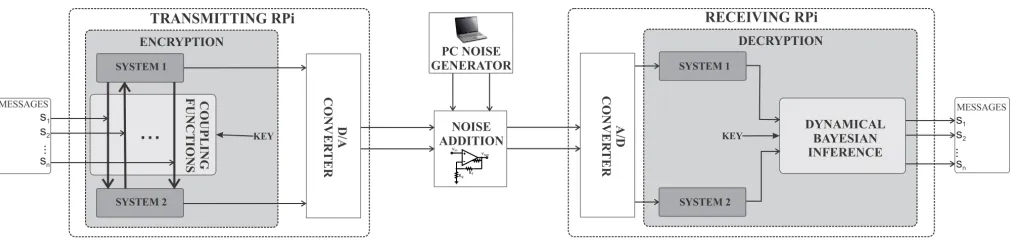
Fig. 1. Schematic of the realization of the coupling function communications protocol.
multiplexing and simultaneously yielding very noise robust
communications.
The starting point of the enterprise was the time-varying, decomposable, coupling functions of the human cardiorespi-ratory interaction [28], [37]. Establishment of the nature of these biological coupling functions triggered the development of the communication protocol, which uses the same analysis methods developed for, and initially used on, the biological signals. The security of the protocol [21] is assured by use of multiple, time-varying, coupling functions between two or more dynamical systems, and the protocol inherently allows for the multiplexing of information. Of greatest interest in the present context is that the communication scheme is also highly noise-robust. The latter property results from the use of dynamical Bayesian inference for stochastic processes within the protocol, allowing effective separation between the deterministic information signals and the dynamical (channel) noise perturbations.
The previous theoretical and numerical foundations of the coupling function protocol are complemented here by the de-velopment of an experimental realization and the performance of robustness tests involving real analog noise. In the analog electronic experiments the states of the dynamical systems are truly continuous; measurement noise and other imperfections of the electronic components are unavoidable; and so the con-ditions are close to those of many real applications [41]–[45]. Another aim of the experiment was to demonstrate the use of low-cost devices of the kind commonly available in general use (e.g. comparable to smart-phones and sensor network devices) [19], [20]. So we developed the transmitter and receiver on two Raspberry PI 2 single-board computers. Incorporating the analog signals and the appropriate electronic circuits, we then added analog electronic noise in order to simulate the reality of communications conditions. The robustness was then evaluated for different levels of perturbing noise. The purpose of our new experiment was thus to test the capabilities and the limitations of the protocol when being applied under conditions similar to those that may be used in practice.
The paper is organized as follows. First we describe the main concepts in section II. These include a conceptual description of the implementation of the coupling function protocol, the specific dynamical systems in use and the method of dynamical Bayesian inference employed on the receiver side. Then in section III we give a detailed description and
ex-planation of the analog electronic scheme and its components, followed by section IV presenting the signal analysis, taking account of the signals’ frequency content and establishing the effect of noise on the information transfer. Concluding remarks are given in section V. Finally, in the Appendix we demonstrate the effect of a low-frequency non-Gaussian noise on the communication protocol.
II. IMPLEMENTATION OFCOUPLINGFUNCTIONSECURE COMMUNICATION
This section describes the underlying principles of the method for secure communication, and their implementation. The protocol involves encryption of multiple information streams by using thm to scale the nonlinear coupling functions between dynamical systems; decryption involves dynamical Bayesian inference of the time-evolving parameters [21].
A. The Coupling Functions Protocol
The experimental communications system is illustrated in Fig. 1. A number of information carrying signalssi, coming
from different devices or channels, are to be transmitted simultaneously. Each signal serves as a scale parameter in the nonlinear coupling functions between two self-sustained systems in the transmitter. One signal from each of these is then transmitted through the public channel and, on the receiv-ing side, is used for enslavreceiv-ing and completely synchronizreceiv-ing two similar coupled systems. Dynamical Bayesian inference is then applied, so that the model parameters can be inferred, allowing the information signalssi to be decrypted.
The advantage of this encryption scheme is that, although the number of coupling functions is always finite (depending on the number of information channels needed), the choice of forms for the linearly independent coupling functions offers an unbounded number of possible combinations. The scheme facilitates multiplexing, and it is also very noise-robust because the Bayesian framework is by nature stochastic inference.
B. The Dynamical Systems Used
The basis of the encryption and decryption, and the model that is to be inferred, consists of two noisy M-dimensional interacting systems that can be described by the stochastic differential equation:
˙
xi=f(xi,xj|c) + √
Dξi =g(xi|c1) +q(xi,xj|c2) +
√
Dξi.
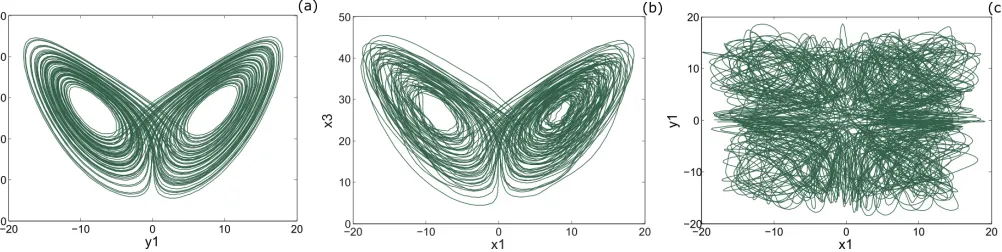
Fig. 2. The trajectories of the Lorenz systems used on the transmitting side: (a) The trajectories ofy1 andy3from the second autonomous Lorenz system
(Eq. (3)). The plot is as expected, with the trajectories attracted to stable points. (b) The trajectories ofx1andx3 from the first Lorenz system (Eq. (2)).
The graph is similar to the previous case, with a notable difference in the roughness of the trajectories. This is expected, and is a result of the fact thatx1
contains the coupling elements. (c) The trajectories ofx1andy1from both Lorenz systems during data transmission. The coupling Lissajous curve is chaotic
and it is evident that the solution is not contracted to a bounded and predictable trajectory space, but is instead well hidden in the chaotic and convoluted coupled trajectories and nonlinear dependences between the systems.
Here, c is the parameter vector, f(xi,xj|c) are the base
functions which describe the autonomous dynamicsg(xi)and
the coupling functions q(xi,xj), ξi is white Gaussian noise
with autocorrelation < ξ(t)ξ(t0) >= Dδ(t −t0), and D
is the noise diffusion matrix for white Gaussian noise, and i 6= j = 1,2. For an analysis of the noise robustness of the protocol in the face of colored non-Gaussian noise, see the Appendix where the effect of a low-frequency Ornstein-Uhlenbeck process is considered. The dynamical systems used should be self-sustained, but in general need not be chaotic. However, chaotic systems offer an additional level of complexity (and hence security) for data encryption because they appear as random-like and unpredictable, even though their underlying nature is deterministic [46]. Furthermore, as discussed bellow, the attractors of chaotic coupled dynamical systems typically span a relatively large area in the state space, which is favourable for the Bayesian inference framework used for the decryption of the signals.
Ever since Lorenz came to appreciate the unusual charac-teristics of chaos [47] – in that the systems are deterministic in nature, but provide a random-like appearance – chaotic dynamical systems have been used widely in engineering, and in particular for secure communications [10], [11], [48]. The Lorenz chaotic system has been utilized extensively, partly due to the nature of its attractor which spans a wide area in the state space (Fig. 2 (a)), and partly because it is quite stable and can withstand relatively high perturbations. In our experiment, a system of two coupled chaotic Lorenz systems was used, and two binary signals s1(t) and s2(t) therefore need to be
transmitted. The first Lorenz system is given by
˙
x1= 10x2−10x1+s1(t) cos(y1)x2+s2(t)x1y2/y3 ˙
x2= 28x1−x1x3−x2 ˙
x3=x1x2−2.67x3;
(2)
and the second one by
˙
y1= 10y2−10y1 ˙
y2= 28y1−y1y3−y2 ˙
y3=y1y2−2.67y3.
(3)
In x1 of the first oscillator, two coupling functions are
com-prised of variables from both the first and more importantly the second system. These two nonlinear coupling functions are just examples, and other choices of linearly independent functions can be used instead. The behavior of the systems can be seen in Fig. 2. The Lissajous curves show the relationships between two of the states in each system – Fig. 2 (a-b). The effect of the coupling on the first system shows up as relatively minor disturbances of its attractor Fig. 2 (b). The relationship between the mutually coupled states of the two systems during data transmission is shown in Fig. 2 (c). It demonstrates their complicated and convoluted inter-trajectories, which is the main property used for scrambling the information signals.
Only the signalsx1andy2are then transmitted and noise is
added to them in the process of transmission. On the receiving side the two chaotic systems are completely synchronized [48]: the systemu, throughx1, becomes effectively identical to the
systemx:
u1=x1 ˙
u2= 28x1−x1u3−u2 ˙
u3=x1u2−2.67u3,
(4)
and the system w, through y2, becomes effectively identical
to system y:
˙
w1= 10y2−10w1
w2=y2 ˙
w3=w1y2−2.67w3.
(5)
The time-series of the signals from the reconstructed dynam-ical systems u and w then act as the six inputs for the dynamical Bayesian inference.
C. Dynamical Bayesian Inference
Dynamical Bayesian inference for decryption of the signals si from the two reconstructed coupled systemsuandw[21],
[28] is performed in state space. The model that is to be inferred is given by Eq. (1). Note that the chosen coupling functionsq(xi,xj)represent the encryption key. Bearing this
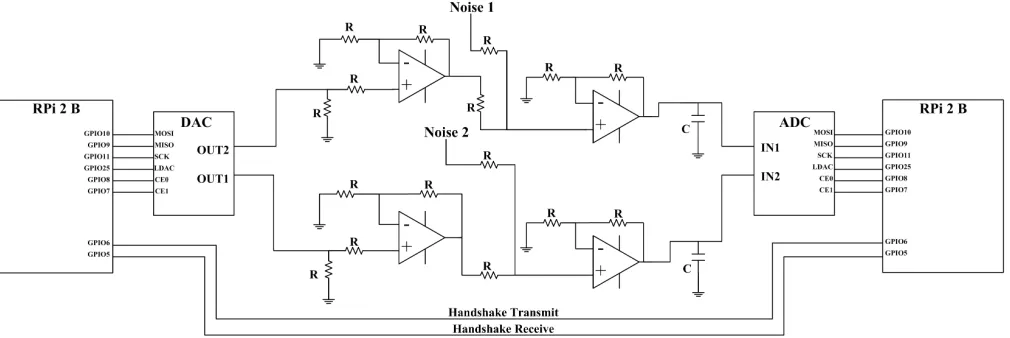
Fig. 3. Detailed scheme of the electronic implementation.
(tn=nh) as input, the main task for the Bayesian dynamical
inference is to reveal the unknown model parameters and the noise diffusion matrixM={c,D}, which eventually comes down to maximization of the posterior conditional probability pX(M|X) of observing the parameters M when given the
data X [49]. The relationship of this posterior conditional probability to the prior densitypprior(M)(which encompasses observation based prior knowledge of the unknown param-eters), and to the likelihood function `(X |M) (that is the conditional probability density to observeX given choiceM), is given by Bayes’ theorem:
pX(M|X) =
`(X |M)pprior(M) R
`(X |M)pprior(M)dM
. (6)
Using dense enough sampling h, the problem can be solved using the Euler midpoint x∗n = (xn+1+xn)/2 discretisation
of Eq. (1):
xi,n+1=xi,n+hf(x∗i,n,x ∗
j,n|c) +h √
Dzn. (7)
Herezn is the stochastic integral of the noise term over time:
zn ≡
Rtn+1
tn z(t)dt. The noise zn is statistically independent
and the likelihood is given by a product over n of the probability at each moment of time of observing xn+1. The
joint probability density of zn is thus used to find the joint
probability density of the process in respect of xn+1−xn.
The negative log-likelihood functionS=−ln`(X |M)is then expressed as:
S=N
2 ln|D|+
h
2 N−1
X
n=0
ck
∂fk(x·,n)
∂x +
+ [ ˙xn−ckfk(x∗·,n)]
T(D−1)[ ˙x
n−ckfk(x∗·,n)]
,
(8)
where x˙n = (xn+1−xn)/h, with implicit summation over
the repeated index k.
Given a multivariate normal distribution for the prior prob-ability of the parameters c, with mean c, covariance matrix
Σprior, and concentration matrix Ξprior ≡ Σ−1prior, the
posterior multivariate probability NX(c|c,¯Ξ) (and thus the
probability density of each parameter set of the model (1))
can be evaluated by applying the following four equations to each sequential block of data X:
D= h
N x˙n−ckfk(x
∗ ·,n)
T
˙
xn−ckfk(x∗·,n)
,
ck = (Ξ−1)kwrw,
rw= (Ξprior)kwcw+hfk(x∗·,n) (D−1) ˙xn+
−h
2
∂fk(x·,n)
∂x ,
Ξkw = (Ξprior)kw+hfk(x∗·,n) (D −1)f
w(x∗·,n).
(9)
Here, summation over n = 1, . . . , N is assumed, the initial prior is set to be the non-informative flat normal distribution given by Ξprior = 0 and ¯cprior = 0, and summation over repeated indiceskandwis implicit. The stopping rule is that further iteration of the algorithm would not modify c or Ξ
beyond some predefined very small constant valueε.
The main concept of this approach is based on the fact that the inference has to follow the time evolution of c
and, at the same time, to separate its dynamical effects from the unavoidable accompanying noise. For that purpose, the operations in Eqs. (9) are performed within a single window of data, where the time-series are separated into sequential blocks; the evaluation of each next block of data uses the evaluation results of the previous block, and the process of information propagation between the n posterior distribution and then+1prior distribution has to allow the time-variability of the parameters to be followed. A squared symmetric positive definite matrixΣdiffis created to show how much each param-eter diffuses normally. Therefore, the next prior probability of the parameters is the convolution of two current normal multivariate distributions,ΣpostandΣdiff:Σnprior+1= Σ
n
post+Σndiff. The diffusion matrix is defined as(Σdiff)i,j=ρijσiσj, where
σiis the standard deviation of the diffusion ofciin the current
time window, andρij is the correlation between the changes
in the parametersci andcj.
Dynamical Bayesian inference is applied on the receiver side to the six time series (u1, u2, u3, w1, w2, w3) from the two
the model within the Bayesian framework are taken as the functions on the right-hand sides of Eqs. (2) and (3).
Further details of the development, software implementation and application of the dynamic Bayesian inference approach can be found in [21], [27], [28], [49], and references therein.
III. ANALOGELECTRONICREALIZATION
Having summarised the basis of the theory, we now provide a detailed explanation of the practical experimental realization of this algorithm.
The transmitter and receiver were implemented on two Raspberry PI 2 Model B single-board computers. This was done in order to test the feasibility and efficiency of the cou-pling function encryption approach in relation to commercially available and widely used hardware. The Raspberry Pi is felt to be a good option because it has similar performance to that of other common low-cost devices such as smart phones. Fig. 3 shows a schematic circuit diagram, with the two Raspberry PIs on the far left and right sides. The numerical simulations to generate the signals in the transmitter and to reconstruct them in the receiver were performed using a fourth order Runge-Kutta scheme with a sampling of h= 0.01.
The two random binary signalss1(t)ands2(t)generated in
the transmitter were used as scale parameters in the nonlinear coupling functions between the systems given by Eqs. (2) and (3). Signals x1 and y2 were converted into analog signals
with a digital-to-analog convertor, amplified, and transmitted through wires to the receiver. While both signals were in their analog form, independent white noises were added to them. These noise signals were generated in Matlab and sent to the two independent analog outputs of a computer audio card with a 100 KHz sampling frequency. Both noise signals were of the same amplitude, and analysis of their mean, autocorrelation, and frequency spectra showed that they indeed possessed the characteristics of experimental white noise. Finally, on the receiving side, both analog signals were converted back to digital by an analog-to-digital convertor and then used to synchronize the chaotic systems in the receiver, as shown in Eqs. (4) and (5). Both converters were implemented with ‘ADC-DAC Pi’ cards. These cards are based on the Microchip MCP3202 ADC converter containing 2 analog inputs with 12 bit resolution and a Microchip MCP4822 dual channel 12-bit DAC with an internal voltage reference. General purpose quad operational amplifiers TL084N were used, along with standard resistors and capacitors, as shown in Fig. 3.
The logic of the transmission included a handshake with direct digital input/output connections between the two Rasp-berry PIs (indicated by the two lines on the bottom of Fig. 3). This involved the transmitter sending a digital binary indication that it is ready to transmit, and then the receiver returning a bit to indicate that it is ready to receive. As speed of the communication was not the focus in this investigation, the time window in which the Bayesian inference was applied was 250 s, i.e. each bit {0 or 1} was transmitted within this window length.
Fig. 4 shows samples of the three signal time-series captured by an oscilloscope at an arbitrary time. The bottom signal is
the transmitted analog signal y2(t); the middle signal is the
added analog white noise; while the top signal isy2(t)after
[image:5.612.335.537.125.286.2]the noise addition. This top trace demonstrates the effect of the white noise on the generated audio signal(s) i.e. on the transmitted information.
Fig. 4. Real-time oscilloscope capture of the transmitted signal y2(t)
(bottom), the white noise (middle), and the same signaly2(t)but with added
noise that arrives at the receiver (top).
IV. ANALYSIS
A. Time and Frequency Signal Analysis
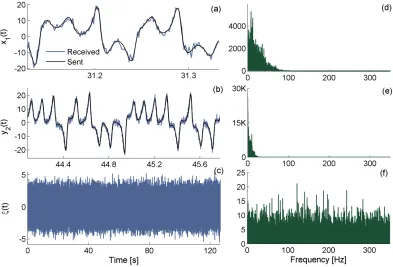
During the processes of signal generation, encryption, com-munication, and decryption, all signals were recorded for offline analysis. We were thus able to analyze in detail the effects of noise on the time-series of the transmitted signals: Figs. 5(a) and (b) show x1(t) and y2(t) respectively, before
and after the noise was added, with the noisy version of the signal superimposed on top of the original time-series. Digitized time-series of the analog white noise is shown in (c).
On the right hand side of the figure the corresponding fast Fourier transforms (FFTs) of the signals are shown in panels (d) and (e) and of the noise in (f). It can be seen that the spectra of the chaotic signals x1(t) andy2(t) are broadened
but without clear harmonics. In contrast, the noise spectrum contained all frequencies, spread across the entire observed domain, as expected for a white noise process.
B. Influence of Noise on Information Transfer
The main goal of the experiment was to test the effec-tiveness and robustness of coupling function encryption for communication in the presence of noise, and thus to examine its practical applicability. The second part of the investigation therefore consisted of systematically increasing the strength of the noise while, at the same time, following its effect on the signal-to-noise ratio (SNR). Randomly generated bits {0,1}
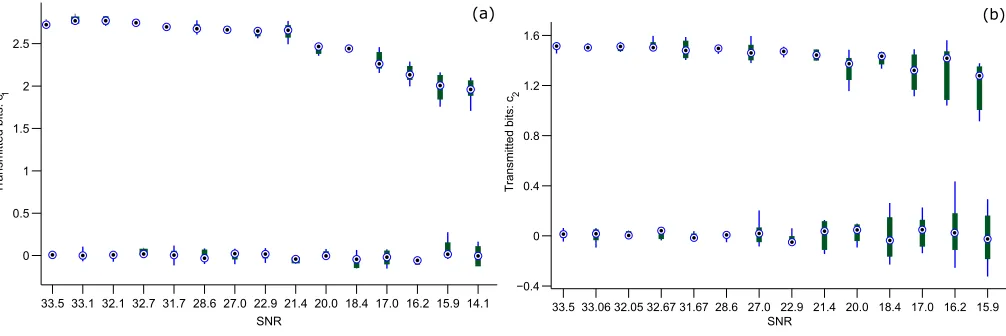
were transmitted while gradually increasing the noise level (decreasing the SNR) in each trial. Fig. 6 shows the deviations of the binary 1 and binary 0 decrypted signal s1(t) (i.e.
the inferred parameter c1), and signals2(t) (i.e. the inferred
Fig. 5. Time-series analysis of the transmitted, the received and the noise signals and their corresponding FFT spectra: (a) Time-series of the received, reconstructed, signal x1(t) superimposed on its original transmitted version. (b) Time-series of the received signal y2(t) superimposed on its original
transmitted version. (c) The discretized analog white noise time-series. (d) The FFT frequency spectrum ofx1(t). (e) The FFT frequency spectrum ofy2(t).
(f) The FFT frequency spectrum of the noise signal.
point examined there was one trial of transmission and the parameters c1 and c2 are plotted as two boxplots (showing
the mean and the distribution) of all the “one” and “zero” values within that set of secure communication. Hence, for very small noise (high SNR), the boxplot distributions are quite compressed around the values corresponding to binary one and binary zero while, for higher noise levels (low SNR), the boxplot distributions become much wider. If the two distributions for each SNR trial start to overlap, than the observer cannot separate binary one from binary zero, and the bit-error-rate (BER) will then become nonzero. As can be seen from Fig. 6, in all of the cases investigated the distributions are non-overlapping and the BER is zero.
The encryption/decryption was performed down to around SNR=15 dB for the two simultaneous parameters c1 andc2,
after which the experiment became impossible (most probably due to experimental limitations and the 12-bit resolution of the DAC and ADC). The experimental setup increased the SNR threshold at which a finite BER appeared, cf. the SNR=4 dB obtained in theory and through numerical simulations [21]. With the encryption/decryption of only the first parameterc1,
effective communication was performed for SNR=14.1 dB. Thus for this SNR, which is below 15 dB, there was no BER and reliable communication was possible. This is a relatively high level of noise (i.e. low SNR) for communications in practice, where the SNR threshold for finite BER is around 15 dB for wireless transmission and around 40 dB for wireline communication [50].
In order to establish the effectiveness of the coupling
func-tion protocol, it was compared with a known protocol based on complete synchronization of chaotic dynamical systems called thesignal masking protocol[10]. The latter is one of the most used protocols in the class of secure communications with (chaotic) dynamical systems, so that this test is representative and relevant to all protocols in this class. Because the protocol presented in this paper also uses complete synchronization to transmit the signals, this investigation also tests how coupling function communication behaves in a noisy communications environment without dynamical Bayesian inference. In com-parison, the signal masking protocol, which relies only on complete synchronization, is less complex than the coupling function protocol which uses complete synchronization plus dynamical Bayesian inference for decryption and noise reduc-tion. This complexity implies a need for higher computational power and associated lower speed in the case of coupling function communications. In order to achieve a meaningful comparison, the same number of random bits were transmitted within same window length, using the same hardware setup, systematically applying the same noise levels i.e. SNR. It was found that a finite BER appeared at around SNR=20 dB, which is a significantly higher threshold (thus indicating lower robustness) than the values of SNR=14.1 dB and SNR=15 dB obtained with the coupling function protocol.
V. CONCLUSION
[image:6.612.103.496.64.331.2]33.5 33.1 32.1 32.7 31.7 28.6 27.0 22.9 21.4 20.0 18.4 17.0 16.2 15.9 14.1 0
0.5 1 1.5 2 2.5
SNR
Transmitted bits: c
1
(a)
33.5 33.06 32.05 32.67 31.67 28.6 27.0 22.9 21.4 20.0 18.4 17.0 16.2 15.9 −0.4
0 0.4 0.8 1.2 1.6
SNR
Transmitted bits: c
2
[image:7.612.52.555.55.223.2](b)
Fig. 6. Deviations of the decrypted signal from the initial binary states due to noise, presented as compact box plots (in terms of descriptive statistics: median, quartiles, max, and min) as a function of signal-to-noise ratio (SNR). (a) for the first information signals1(t)i.e. inferred parameterc1 where the binary
value for{1}is represented byc1= 2.7, and (b) for the signals2(t)i.e. inferred parameterc2 with the binary{1}represented byc2= 1.5.
presented a simple experimental proof of concept, testing the noise robustness of the protocol under realistic conditions. Thus, the work has developed the engineering aspects of the previous theoretical concepts.
The experimental setup was rather simple, as the goal was to test the coupling function protocol on a device with similar performance to that of widely-used, low-cost devices such as those embedded in e.g. smart-phones. Inevitably, and as expected, there were certain limitations that could be overcome by use of higher-performance hardware. For example, instead of the Raspberry PI one could have used different single-board computers that allow faster and higher-performance processing (as GPU or FPGA for example), which in turn would allow for higher bit conversion-rates than the 12-bit resolution used here. The use of complete synchronization is not easy to maintain in practice where the transmitter and receiver are sufficiently widely separated, in which case one should apply one of the known methods for maintaining data synchronization in communication networks [51], [52]. In theory, the noise acted as dynamic perturbation of the dynamical states, but in the experiments here we also encountered a small amount of measurement noise, making the inference less precise. Future calculations of the inference should employ one of the known procedures for decomposing the measurement noise as well.
The coupling function protocol was shown experimentally to remain effective even with relatively high noise. All of the results were consistent with the earlier theoretical findings and demonstrated that the protocol could with advantage be em-ployed in current communications applications, in particular when noise levels are high. Dynamical Bayesian inference for stochastic processes was shown to be useful in decomposing the noise from the deterministic information. In the present case, this was valuable in relation to the coupling function protocol, but it also promises future applications to noise reduction in communications using other protocols.
APPENDIX
ANALYSIS OF THEINFLUENCE OFLOW-FREQUENCY NON-GAUSSIANNOISE ON THEINFORMATIONTRANSFER
The interference that arises in communications networks is often modeled as a Gaussian random process to which the central limit theorem is applicable. This can be appropriate when the noise is caused by different mutually independent and uncorrelated signals, none of which dominates their total accumulation. A notable example is the thermal noise in electronics, which can be modeled as additive white Gaus-sian noise. However, there are many real-world situations where dominant sources of interference occur, often as the result of distance-dependent path-loss attenuation [53]. In such cases, the central limit theorem cannot give a satisfactory approximation, because the probability density function of the interference features a heavier tail than that predicted by the Gaussian model. Models that have been proposed for such interference include the Ornstein-Uhlenbeck process [54], [55], 1/f noise [56], the spatial Poisson process [57], and Gaussian mixture models.
To examine the robustness of the coupling function commu-nication protocol to the noises more commonly found in real systems, an analysis (based on the numerical simulations [21]) was performed where, instead of white noise, low-frequency Ornstein-Uhlenbeck noise η(t)was added to the sent signals
x1andy2from the coupled systems given in (2) and (3). Thus,
during the simulated transmission we have x1 =x1+η1(t)
and y2 = y2+η2(t), where η1(t) and η2(t) are
Ornstein-Uhlenbeck noise signals that influence the respective channels. In general, Ornstein-Uhlenbeck noise can be defined as:
˙
η(t) =ξ(t)− 1
γη(t), (10)
with autocorrelationhη(t)η(t0)i=σ2exp [−(t−t0)/γ].
Fig. 7. Time-series analyses of the transmitted and received signals, and of the noise signals and their corresponding FFT spectra. (a) Time-series of the received signal x1(t)superimposed on its original transmitted version with Ornstein-Uhlenbeck noise η1(t)of strength D1 = 20and correlation time
γ1 = 30(red trace, and right-hand ordinate axis) is applied. (b) Time-series of the received signaly2(t)superimposed on its original transmitted version
with Ornstein-Uhlenbeck noiseη2(t)of strengthD2= 20and correlation timeγ2= 0.09(red trace and right-hand ordinate axis) is applied. (c) The FFT
frequency spectrum ofη1(t). (d) The FFT frequency spectrum ofη2(t). Note thatη2(t)has a short correlation time and is thus looks more like white noise
thanη1(t), which can seen in both the time evolutions and the frequency spectra.
has a nonzero correlation time that cannot be neglected. The Ornstein-Uhlenbeck process is one such natural generalization of Gaussian white noise, and it can be used to represent the noise that occurs in real-world communication systems [58]. It is a mean-reverting process, which means that it does tend to drift towards a long-term mean over time; however, during the relatively brief time windows in which communication occurs (both in reality and in the simulation), and for long enough values of the correlation time, this tendency can be neglected and the noise can be treated as being distinctively different from standard Gaussian white noise.
By definition the Ornstein-Uhlenbeck process is Gaussian in the stationary limit. However, before the stationary limit is reached, for example for short time periods comparable with the communication bit time-length, the Ornstein-Uhlenbeck process can be regarded as being non-Gaussian. The noise signals generated with (10) were therefore subjected to both the Kolmogorov-Smirnov and the Anderson-Darling tests in order to examine the similarity of their distributions to the standard normal distribution. Both tests showed that, for the time windows used here, and for the correlation times γ≥0.09, the generated noises do not come from a Gaussian distribution.
Numerical simulations with Ornstein-Uhlenbeck noise ap-plied to the communication channel were run for times of 20,000 seconds, during which 400 data bits were sent and decrypted over 400 Bayesian windows of 50 seconds each, while the sampling time was 0.01 seconds. Fig. 7 shows the time-series of the transmitted and the received signals for
both x1(t) and y2(t). It also gives the time-series and the
corresponding FFT power spectra for the noise. The noise signal η1(t) applied to x1(t) had a strength of D1 = 20
and a correlation time of γ1 = 30. As can be seen in Figs.
7(a) and (c) respectively, the longer correlation time meant a more visible drift of the noise within the time domain and a power spectrum restricted to much lower frequencies, confirming the nature of the Ornstein-Uhlenbeck process as a model of a low-pass-filtered white noise. On the other hand, the noise signal η2(t) applied to y2(t) had the same
strength of D2 = 20, but a much shorter correlation time
of γ2 = 0.09, at the limit previously determined by the
Kolmogorov-Smirnov and Anderson-Darling tests. As shown in Fig. 7(b) and (d) respectively, this signal is now much more reminiscent of standard white Gaussian noise, both in the time domain and in the power spectrum, which now contains more frequencies. The Ornstein-Uhlenbeck process was used because it presented a good noise model where a simple change of the correlation time can effectively transform the generated noise from a white Gaussian one into a low-frequency one.
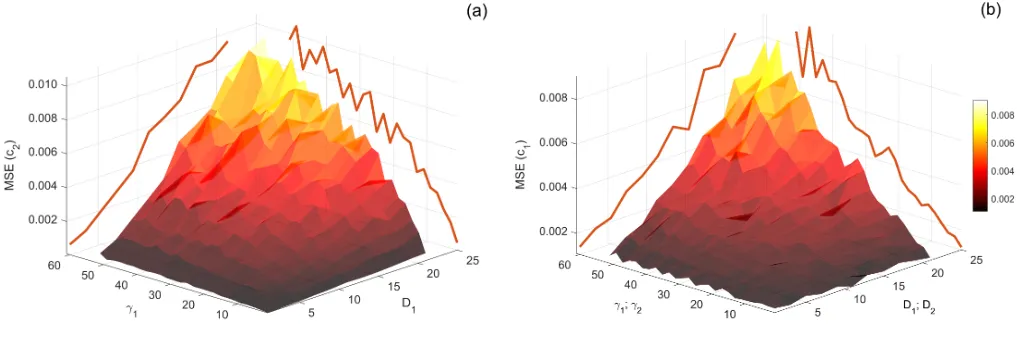
Fig. 8 shows how successful the dynamical Bayesian infer-ence was in dealing with noise of this nature, using the mean-square error between the sent and the received values of the de-crypted bitsc1(t)andc2(t):M SE(c) = 1nP
n
i=1(cdecrypted−
csent)2. First, simulations were run where the parameters of
η2(t) were kept at constant values of D2 = γ2 = 1, while
[image:8.612.97.503.62.296.2]Fig. 8. The dependance of the mean-square error (MSE) of the transmitted bits on the strengthDand correlation timeγof the Ornstein-Uhlenbeck noise applied to the communication channels. (a) The mean-square error ofc2(t)as a function ofD1andγ1of the noise signalη1(t)applied tox1(t), while the
parameters of the noise applied toy2remain constant. The mean-square error increases with the strength and correlation time of the noise. (b) The mean-square
error ofc1(t)as a function ofD1 andγ1, and ofD2andγ2, of the noise signalsη1(t)applied tox1(t)andη2(t)applied toy2(t), respectively. Again,
the mean-square error increases with the strengths and the correlation times of the noise signals.
of the decrypted bitc2(t)was then calculated for each of the
simulation scenarios and plotted as a function of D1 andγ1.
In Fig. 8(a), it can be seen that this error increases as either the noise strength or the correlation time increases. Furthermore, the projections of the three-dimensional surface on the side plains show that the error rises more steadily and linearly with the increase ofD1, than it does with the increase of γ1.
Similar plots were obtained for the dependance of the mean-square error of the bit c1(t)on the change of the parameters
of η1(t), and for the dependance of the mean-square errors of
bothc1(t)andc2(t)on the change of the parameters ofη2(t).
These plots have been omitted in view of space considerations. Another situation that was simulated was the simultaneous increase in the strength and correlation time of both noise signals η1(t) and η2(t). As can be seen in Fig. 8(b), the
mean-square error of the decrypted bit c1(t) also rises with
the increase of these parameters. Again, the change of the noise strengths contributes towards a steadier and more linear-like increase than the change of the correlation times. Similar results were obtained for the dependence of the mean-square error ofc2(t)on the change of the noise parameters.
In summary, the framework for dynamical Bayesian infer-ence (itself stochastic by nature) is, by construction, better capable of dealing with noise in the communication channel that resembles Gaussian noise (i.e. has a shorter correlation time), but we find that it also exhibits satisfactory performance when more realistic forms of noise, such as low-frequency Ornstein-Uhlenbeck noise, are applied.
ACKNOWLEDGMENT
We are grateful to Robert J. Young for helpful discussions. The work was funded by the EPSRC (UK) through grant EP/I00999X/1 and Lancaster Universitys EPSRC Impact Ac-celeration Account, and by the Faculty of Electrical Engi-neering and Information Technologies in Skopje, Republic of Macedonia, through the ERESCOP Project.
REFERENCES
[1] C. E. Shannon, “Communication theory of secrecy systems,”Bell Syst.
Tech. J., vol. 28, no. 4, pp. 656–715, 1949.
[2] ——, “Communication in the presence of noise,”Proc. IRE, vol. 37, no. 1, pp. 10–21, 1949.
[3] P. C. Pinto, J. Barros, and M. Z. Win, “Secure communication in stochastic wireless networkspart I: Connectivity,”IEEE Trans. Inform.
Forens. Secur., vol. 7, no. 1, pp. 125–138, 2012.
[4] M. Ozmen and M. C. Gursoy, “Secure transmission of delay-sensitive data over wireless fading channels,”IEEE Trans. Inform. Forens. Secur, vol. 12, pp. 2036–2051, 2017.
[5] H. Gou, A. Swaminathan, and M. Wu, “Intrinsic sensor noise features for forensic analysis on scanners and scanned images,” IEEE Trans.
Inform. Forens. Secur., vol. 4, no. 3, pp. 476–491, 2009.
[6] J. Lukas, J. Fridrich, and M. Goljan, “Digital camera identification from sensor pattern noise,”IEEE Trans. Inform. Forens. Secur., vol. 1, no. 2, pp. 205–214, 2006.
[7] H. Zhao and Y.-Q. Shi, “Detecting covert channels in computer networks based on chaos theory,”IEEE Trans. Inform. Forens. Secur., vol. 8, no. 2, pp. 273–282, 2013.
[8] C. E. Shannon, “A mathematical theory of communication,”Bell Syst.
Tech. J., vol. 27, no. 3, pp. 379–423, 1948.
[9] L. B. Kish, “Totally secure classical communication utilizing Johnson (-like) noise and Kirchoff’s law,” Phys. Lett. A, vol. 352, no. 3, pp. 178–182, 2006.
[10] K. M. Cuomo and A. V. Oppenheim, “Circuit implementation of synchronized chaos with applications to communications,” Phys. Rev.
Lett., vol. 71, pp. 65–68, 1993.
[11] L. Kocarev and U. Parlitz, “General approach for chaotic synchroniza-tion with applicasynchroniza-tions to communicasynchroniza-tion,” Phys. Rev. Lett., vol. 74, no. 25, pp. 5028–5031, 1995.
[12] G. Kaddoum, “Wireless chaos-based communication systems: A com-prehensive survey,”IEEE Access, vol. 4, pp. 2621–2648, 2016. [13] G. Kaddoum, E. Soujeri, and Y. Nijsure, “Design of a short
refer-ence noncoherent chaos-based communication systems,” IEEE Trans.
Comms., vol. 64, no. 2, pp. 680–689, 2016.
[14] N. Li, J.-F. Mart´ınez-Ortega, V. H. D´ıaz, and J. M. M. Chaus, “A new high-efficiency multilevel frequency-modulation different chaos shift keying communication system,” IEEE Syst. J. DOI: 10.1109/JSYST.2017.2715661, 2017.
[15] Y.-Z. Liu, Y.-Y. Xie, Y.-C. Ye, J.-P. Zhang, S.-J. Wang, Y. Liu, G.-F. Pan, and J.-L. Zhang, “Exploiting optical chaos with time-delay signature suppression for long-distance secure communication,”IEEE Photonics J., vol. 9, no. 1, pp. 1–12, 2017.
Forens. Secur., vol. 9, no. 7, pp. 1133–1140, 2014.
[21] T. Stankovski, P. V. E. McClintock, and A. Stefanovska, “Coupling functions enable secure communications,” Phys. Rev. X, vol. 4, p. 011026, 2014.
[22] T. Stankovski, T. Pereira, P. V. E. McClintock, and A. Stefanovska, “Coupling functions: Universal insights into dynamical interaction mechanisms,”Rev. Mod. Phys., vol. 89, no. 33, p. 045001, 2017. [23] A. Pikovsky, M. Rosenblum, and J. Kurths,Synchronization – A
Univer-sal Concept in Nonlinear Sciences. Cambridge: Cambridge University
Press, 2001.
[24] M. G. Rosenblum and A. S. Pikovsky, “Detecting direction of coupling in interacting oscillators,”Phys. Rev. E., vol. 64, no. 4, p. 045202, 2001. [25] B. Kralemann, M. Fr¨uhwirth, A. Pikovsky, M. Rosenblum, T. Kenner, J. Schaefer, and M. Moser, “In vivo cardiac phase response curve elucidates human respiratory heart rate variability,” Nat. Commun., vol. 4, p. 2418, 2013.
[26] I. T. Tokuda, S. Jain, I. Z. Kiss, and J. L. Hudson, “Inferring phase equations from multivariate time series,”Phys. Rev. Lett., vol. 99, p. 064101, Aug 2007.
[27] V. N. Smelyanskiy, D. G. Luchinsky, A. Stefanovska, and P. V. E. McClintock, “Inference of a nonlinear stochastic model of the cardiores-piratory interaction,”Phys. Rev. Lett., vol. 94, no. 9, p. 098101, 2005. [28] T. Stankovski, A. Duggento, P. V. E. McClintock, and A. Stefanovska,
“Inference of time-evolving coupled dynamical systems in the presence of noise,”Phys. Rev. Lett., vol. 109, p. 024101, 2012.
[29] J. T. Schwabedal and A. Pikovsky, “Effective phase dynamics of noise-induced oscillations in excitable systems,”Phys. Rev. E, vol. 81, no. 4, p. 046218, 2010.
[30] Z. Levnaji´c and A. Pikovsky, “Network reconstruction from random phase resetting,”Phys. Rev. Lett., vol. 107, p. 034101, Jul 2011. [31] I. Z. Kiss, C. G. Rusin, H. Kori, and J. L. Hudson, “Engineering
com-plex dynamical structures: Sequential patterns and desynchronization,”
Science, vol. 316, no. 5833, pp. 1886–1889, 2007.
[32] J. Miyazaki and S. Kinoshita, “Determination of a coupling function in multicoupled oscillators,”Phys. Rev. Lett., vol. 96, p. 194101, May 2006.
[33] I. Z. Kiss, Y. Zhai, and J. L. Hudson, “Predicting mutual entrainment of oscillators with experiment-based phase models,”Phys. Rev. Lett., vol. 94, p. 248301, Jun 2005.
[34] T. Stankovski, V. Ticcinelli, P. V. E. McClintock, and A. Stefanovska, “Coupling functions in networks of oscillators,”New J. Phys., vol. 17, no. 3, p. 035002, 2015.
[35] T. Stankovski, S. Petkoski, J. Raeder, A. F. Smith, P. V. E. McClintock, and A. Stefanovska, “Alterations in the coupling functions between cor-tical and cardio-respiratory oscillations due to anaesthesia with propofol and sevoflurane.”Phil. Trans. R. Soc. A, vol. 374, no. 2067, p. 20150186, 2016.
[36] T. Stankovski, V. Ticcinelli, P. V. E. McClintock, and A. Stefanovska, “Neural cross-frequency coupling functions,” Front. Syst. Neurosci., vol. 11, no. 33, p. 10.3389/fnsys.2017.00033, 2017.
[37] D. Iatsenko, A. Bernjak, T. Stankovski, Y. Shiogai, P. J. Owen-Lynch, P. B. M. Clarkson, P. V. E. McClintock, and A. Stefanovska, “Evolution of cardio-respiratory interactions with age,”Phil. Trans. R. Soc. Lond. A, vol. 371, no. 1997, p. 20110622, 2013.
[38] B. Kralemann, L. Cimponeriu, M. Rosenblum, A. Pikovsky, and R. Mrowka, “Phase dynamics of coupled oscillators reconstructed from data,”Phys. Rev. E, vol. 77, no. 6, Part 2, p. 066205, 2008.
[39] S. Ranganathan, V. Spaiser, R. P. Mann, and D. J. T. Sumpter, “Bayesian dynamical systems modelling in the social sciences,”PLoS ONE, vol. 9, no. 1, p. e86468, 2014.
[40] T. Stankovski, A. Stefanovska, R. J. Young, and P. V. E. McClintock, “Encoding data using dynamic system coupling,” Jun. 23 2016, US Patent App. 14/910,547.
of Lorenz-based chaotic circuits with applications to communications,”
IEEE Trans. Circuits Syst. II, vol. 40, no. 10, pp. 626–633, 1993.
[46] J. P. Crutchfield, “Between order and chaos,”Nat. Phys., vol. 8, no. 1, pp. 17–24, 2012.
[47] E. N. Lorenz, “Deterministic non-periodic flow,”J. Atmos. Sci., vol. 20, no. 2, pp. 130–141, 1963.
[48] L. M. Pecora and T. L. Carroll, “Synchronization in chaotic systems,”
Phys. Rev. Lett., vol. 64, no. 8, pp. 821–824, Feb 1990.
[49] T. Stankovski, A. Duggento, P. V. E. McClintock, and A. Stefanovska, “A tutorial on time-evolving dynamical Bayesian inference,”Eur. Phys.
J. Special Topics, vol. 223, no. 13, pp. 2685–2703, 2014.
[50] G. Alvarez and S. Li, “Some basic cryptographic requirements for chaos-based cryptosystems,”Intern. J. Bifurc. Chaos, vol. 16, no. 8, pp. 2129– 2151, 2006.
[51] D. J. Worsley and B. C. Edem, “Method of maintaining frame syn-chronization in a communication network,” Sep. 16 1997, US Patent 5,668,811.
[52] C. Halim and J. W. Stossel, “Remote data access and synchronization,” Oct. 16 2001, US Patent 6,304,881.
[53] H. ElSawy, A. Sultan-Salem, M. S. Alouini, and M. Z. Win, “Modeling and analysis of cellular networks using stochastic geometry: A tutorial,”
IEEE Comms. Surv. Tut., vol. 19, no. 1, pp. 167–203, Firstquarter 2017.
[54] P. Hanggi, T. J. Mroczkowski, F. Moss, and P. V. E. McClintock, “Bistability driven by colored noise: Theory and experiment,”Phys. Rev. A, vol. 32, pp. 695–698, Jul 1985.
[55] C. W. Gardiner,Handbook of Stochastic Methods. New York: Springer, 2004.
[56] P. Bak, C. Tang, and K. Wiesenfeld, “Self-organized criticality: an explanation of 1/f noise,”Phys. Rev. Lett., vol. 59, pp. 381–384, 1987. [57] M. Z. Win, P. C. Pinto, and L. A. Shepp, “A mathematical theory of network interference and its applications,” Proceedings of the IEEE, vol. 97, no. 2, pp. 205–230, Feb 2009.
[58] B. Lehle and J. Peinke, “Analyzing a stochastic process driven by Ornstein-Uhlenbeck noise,”arXiv [physics.data-an], p. 1702.00032, Dec 2017.
Gorjan Nadzinski received the M.Sc. degree in 2013 from the Faculty of Electrical Engineering and Information Technologies, Ss Cyril and Methodius University, Republic of Macedonia, working on the subject of robust control of networked control sys-tems. At present he is pursuing his Ph.D. degree and working as a Teaching and Research Assistant at the Ss Cyril and Methodius University.
He has worked on several scientific projects in industrial automation, specifically on design and implementation of SCADA systems in large civil engineering projects, and has been a member of international collaborative projects (SCOPES and MECA) for the introduction and development of study programs for micro and nano electromechanical systems in Macedonian universities.
Matej Dobrevski received the M.Sc. degree in 2014 from the Faculty of Electrical Engineering and Information Technologies, Ss Cyril and Methodius University, Republic of Macedonia, where he also worked as a teaching and research assistant. He is currently pursuing his Ph.D. degree at the Faculty of Computer and Information Science, Ljubljana, Slovenia.
His research interests include reinforcement learn-ing and active vision.
Christopher Andersonwas born in Greater Manch-ester, 1967. He received the BSC(Hons) degree in Applied Physics with Electronics from The Univer-sity of Salford in 1990 and the Ph.D. degree in High Energy Physics from the University of Liverpool in 1999 (Application of Gigabit Links for use in High Energy Physics Trigger Processing for the Atlas project on the LHC at CERN).
Since 1990 he has held several industrial positions that combine interests in Physics and Electronics, including: design and development of hardware, software and complex electronic hardware (FPGAs) for physics research, defence, aerospace, nuclear and comms. Chris has held several senior po-sitions, including Chief Software Engineer and Design Authority for defence, aerospace and naval projects, Lead Engineer for safety related aerospace projects, Principal EC&I Engineer for nuclear fusion and fission projects and Reactor Lead for the Generic Design Assessment of C&I for a candidate reactor for nuclear new build, reporting to the Office for Nuclear Regulation. He currently runs his own business, working as a Functional Safety Consultant based in Greater Manchester.
He is also an Honorary Research Associate at the University of Lancaster, Physics and Engineering Departments. Dr Anderson holds memberships and charterships as follows: CPhys, CEng, MInstP, MIET
Peter V. E. McClintockwas born in Omagh, Co. Tyrone, N. Ireland on October 17, 1940. He received the BSc degree in physics from Queens University, Belfast, N. Ireland, in 1962 and the DPhil degree in physics from the University of Oxford, Oxford, UK, in 1966. He received the DSc degree in physics from Queens University in 1983.
From 1966 to 1968 he was Research Associate in physics at Duke University, Durham, NC, USA. In 1968 he came to Lancaster University, Lancaster, UK as Research Associate in physics. Following promotion to Lecturer (1970), Senior Lecturer (1979) and Reader (1983), he was appointed Professor of Physics in 1991. He is currently Research Professor Emeritus in physics. His research is concerned with superfluidity, quantum turbulence, fluctuation theory, chaos and nonlinear dynamics, includ-ing phenomena and applications in livinclud-ing systems.
Professor McClintock is a Chartered Physicist and Fellow of the Institute of Physics, UK.
Aneta Stefanovska received the Ph.D. degree in 1992 from the University of Ljubljana, Slovenia, working in part at the University of Stuttgart, Ger-many.
She is currently Professor of Biomedical Physics and Head of the Nonlinear and Biomedical Physics Group in the Physics Department at Lancaster Uni-versity, U.K.
She has extensive experience in studying the physics of living systems combining measurements, time-series analyses, and modeling based on the phase dynamics approach. She has pioneered several new approaches to the analysis and modeling of time-varying oscillatory dynamical systems with applications to oscillatory cardiovascular, brain, and cell dynamics. Her particular interest is in non-autonomous dynamics of living systems.
Mile Stankovskireceived the Ph.D. degree in 1997 from the Ss Cyril and Methodius University in Skopje, Republic of Macedonia, working in part at the University of Woolverhampton, UK.
He is currently Professor of Automation, System Engineering and Robotics and Head of the Insti-tute of Automation and System Engineering in the Faculty of Electrical Engineering and Information Technology, UKIM, Republic of Macedonia.
He has almost twenty years industrial experience and has been employed in number of applicative and scientific projects. He has extensive experience in industrial process control, networked control, robotics and also in water and waste water system control.
Tomislav Stankovskireceived the B.S. degree from the Faculty of Electrical Engineering and Informa-tion Technologies, Ss Cyril and Methodius Univer-sity, Macedonia in 2008, and the Ph.D. degree in 2012 from the Physics Department at Lancaster Uni-versity, U.K., where he was also Research Associate until 2014.
He is currently Assistant Professor of Medical Physics and Head of the Medical Physics Division in the Faculty of Medicine, Ss Cyril and Methodius University, Macedonia. He is also a Visiting Re-searcher in the Physics Department at Lancaster University, U.K.