Protective Immunity of
wboA
Mutants from Genetically Different
Parent
Brucella
spp.
Zhen Wang, Jianrui Niu, Shuangshan Wang, Yanli Lv, Qingmin Wu
Key Laboratory of Animal Epidemiology and Zoonosis of Ministry of Agriculture, College of Veterinary Medicine, China Agricultural University, Beijing, China
To explore the effects of the genetic background on the characteristics of
wboA
gene deletion rough mutants generated from
dif-ferent parent
Brucella
sp. strains, we constructed the rough-mutant strains
Brucella melitensis
16 M-MB6,
B. abortus
2308-SB6,
B. abortus
S19-RB6, and
B. melitensis
NI-NB6 and evaluated their survival, pathogenicity, and induced protective immunity in
mice and sheep. In mice, the survival times of the four mutants were very different in the virulence assay, from less than 6 weeks
for
B. abortus
S19-RB6 to 11 weeks for
B. abortus
2308-SB6 and
B. melitensis
NI-NB6. However,
B. abortus
S19-RB6 and
B.
melitensis
16 M-MB6, with a shorter survival time in mice, offered better protection against challenges with
B. abortus
2308 in
protection tests than
B. abortus
2308-SB6 and
B. melitensis
NI-NB6. It seems that the induced protective immunity of each
mu-tant might not be associated with its survival time
in vivo
. In the cross-protection assay, both
B. melitensis
16 M-MB6 and
B.
abortus
S19-RB6 induced greater protection against homologous challenges than heterologous challenges. When pregnant sheep
were inoculated with
B. abortus
S19-RB6 and
B. melitensis
16 M-MB6,
B. abortus
S19-RB6 did not induce abortion, whereas
B.
melitensis
16 M-MB6 did. These results demonstrated the differences in virulence, pathogenicity, and protective immunity
in
vivo
in the
wboA
deletion mutants from genetically different parent
Brucella
spp. and also indicated that future rough vaccine
strain development could be promising if suitable parent
Brucella
strains and/or genes were selected.
B
rucella
spp. are Gram-negative, facultative, intracellular
bac-teria that cause brucellosis (
1
), which results in abortion and
decreased milk production in animals and often induces fatigue
and disabling sequelae in humans (
2
).
Successful control and eradication of brucellosis depends on
animal vaccinations, serological examinations, and the slaughter
of infected animals, followed by destruction of the carcasses (
3
).
Live
Brucella
vaccines (
B. abortus
S19 for cattle and
B. melitensis
Rev.1 and
B. suis
S2 for cattle, sheep, and goats) induce effective
immune protection against brucellosis for 4 years or more (
4
–
6
),
but vaccination with the three vaccines may cause abortion in
pregnant animals (
7
–
9
). Meanwhile, all three vaccines carry a
bac-terial surface antigen with an immunodominant region
(O-poly-saccharide [OPS]), which persistently induces antibodies that
in-terfere with the diagnosis of brucellosis. Thus, a novel, safe vaccine
without the immunodominant OPS antigens is urgently needed
for brucellosis eradication campaigns.
Many scientists have endeavored to improve current vaccine
strains or to design novel vaccines that are devoid of OPS (rough
lipopolysaccharide [LPS]) and with satisfactory immunogenic
properties (
3
). One of the best-known rough vaccine strains is
B.
abortus
RB51, a highly attenuated rough strain evaluated in mice,
cattle, and bison that does not interfere with diagnosis and retains
the capacity to induce protection (
10
–
12
). Another attenuated
rough strain,
B. melitensis
B115, also confers significant protective
immunity in mice against the challenge of
B. melitensis
16 M,
B.
ovis
, and
B. abortus
2308, equivalent to what is provided by
B.
melitensis
Rev.1 (
13
,
14
). A different attenuated live rough vaccine
strain,
B. abortus
45/20, confers protection in cattle, but the
vac-cine strain easily reverts to smooth pathogenic forms
in vivo
(
12
,
15
). However, it was reported that the protective immunity
in-duced by rough
Brucella
mutants was inferior to that induced by
the smooth vaccine strains in sheep and goats, and several
re-searchers started to question the feasibility of developing rough
Brucella
vaccine strains (
16
,
17
). Consequently, the suitability of
rough mutants for live-vaccine development remains a topic of
debate.
Previous studies on the virulence and induced protective
im-munity of the
wboA
gene deletion rough mutants was performed
using
Brucella
spp. with various genetic backgrounds and under
different experimental conditions, which made it difficult to
com-pare the results. In this study, we selected the
wboA
gene, a model
gene that encodes a glycosyltransferase responsible for OPS
po-lymerization. We then evaluated the virulence, pathogenicity, and
induced protective immunity of four rough mutants derived from
different parent strains under the same experimental conditions.
These results will be useful to evaluate the effects of genetic
back-grounds on the characteristics of
wboA
gene deletion rough
mu-tants generated from the different parent
Brucella
spp.
MATERIALS AND METHODS
Bacterial strains and media.The virulentB. abortus2308,B. melitensis16 M, andB. canisRM6/66 and the vaccine strainB. abortusS19 were all kindly donated by Qianni He (Institute of Veterinary Research, Xinjiang Academy of Animal Sciences, China). The strains mentioned above were originally collected and preserved in the Chinese Veterinary Culture Col-lection Center (CVCC). The epidemic strainB. melitensisNI was isolated
Received27 September 2012Returned for modification15 October 2012
Accepted27 November 2012
Published ahead of print12 December 2012
Address correspondence to Qingmin Wu, [email protected], or Yanli Lv, [email protected].
Copyright © 2013, American Society for Microbiology. All Rights Reserved.
doi:10.1128/CVI.00573-12
on August 17, 2020 by guest
http://cvi.asm.org/
from an aborted bovine fetus from Inner Mongolia by our laboratory. This strain, also referred to as the smooth virulentB. melitensisstrain biovar 3, induced abortion in pregnant cattle, sheep, and goats. The com-plete NI genomes were sequenced. AllBrucellastrains, including the par-ent strains and the derived mutants, were routinely grown in tryptic soy broth (TSB) or tryptic soy agar (TSA) at 37°C.Escherichia colistains were grown on Luria-Bertani (LB) plates overnight at 37°C, with or without supplemental ampicillin (100 mg/liter) and chloromycetin (30 mg/liter) (Table 1). All work with live virulentBrucellastrains was performed in biosafety level 3 facilities at China Agricultural University.
Animals.Four- to 6-week-old female BALB/c mice were purchased from Weitong Lihua Laboratory Animal Services Centre (Beijing, China), bred in individually ventilated cage rack systems, and subsequently trans-ferred to the biosafety level 3 facilities of China Agricultural University at the beginning of the experiments. Pregnant female sheep at 100 to 120 days of gestation were obtained from brucellosis-free regions and deter-mined to be seronegative with the brucellosis Rose-Bengal plate aggluti-nation test (RBT) (9) and a standard tube agglutination test (SAT). The animals were housed in restricted-access large-animal isolation facilities. At the end of the experiments, all of the animals were euthanized with an animal-culling device and disposed of according to relevant national reg-ulations. All experiments involving animals followed the regulations en-acted by the Beijing Administration Office of Laboratory Animals.
Construction ofwboAdeletion mutants and their complementary strains.To construct the recombinant plasmid for deleting thewboAgene (the accession numbers of thewboAgenes in the genomes ofB. abortus
2308, B. melitensis 16 M, B. melitensis NI, and B. abortus S19 are BAB1_0999, BMEI0998, BMNI_I0963, and BabS19_I09300, respec-tively), the 5=and 3=fragments flanking the gene of interest were amplified with the primers shown inTable 2. According to the methods and proce-dures of Kahl-McDonagh (20), the recombinant plasmid
pEX18Ap-⌬wboAwas created by a two-round PCR amplification, restricted
diges-tion, and ligation and then introduced intoB. abortus2308 and S19 andB. melitensis16 M and NI by electroporation.Brucellacolonies sensitive to ampicillin (Amps) were selected on a sucrose-containing medium (Sucr). ThewboAdeletion mutants were then verified by PCR and sequencing analysis and are referred to asB. abortus2308-SB6,B. abortusS19-RB6,B. melitensis16 M-MB6, andB. melitensisNI-NB6. To construct comple-mentation strains, primers were designed to amplify the wholewboAgene. The resulting PCR products were digested with BamHI and HindIII and then ligated into a pBBR1MCS plasmid (18) digested with the same en-zymes. The resultant recombinant vector, pBBRwboA, was then electro-porated intoB. abortus2308-SB6,B. abortusS19-RB6,B. melitensis16 M-MB6, andB. melitensisNI-NB6. The complementation strains loaded with pBBRwboAwere selected on TSA plates containing chloromycetin. Lastly, the selected complementation strains were verified by PCR and designated CB. abortus2308-SB6, CB. abortusS19-RB6, CB. melitensis16 M-MB6, and CB. melitensisNI-NB6.
Phenotypic characterization of the mutants.The phenotypes of the mutants and their complementation strains were characterized by coag-glutination of the killed bacterial suspensions with the acriflavine solution and the antisera against smooth and roughBrucellastrains and by colony staining with crystal violet solution (21).B. abortus2308 (smooth) andB. canisRM6/66 (rough) were used as phenotype controls.
Virulence in BALB/c mice.Twenty-five mice were intraperitoneally inoculated with a dose of 106CFU in 0.1 ml phosphate-buffered saline (PBS) for each strain (including the rough mutants, the complementation strains, and the parent strains). Another 25 mice received 0.1 ml PBS per mouse as a control. Five infected mice from each infected group or from the control group were randomly selected and euthanized via carbon di-oxide asphyxiation at 1, 3, 6, 9, and 11 weeks postinoculation. At each time point, spleens were collected aseptically, homogenized in 1 ml of PBS, and then serially diluted (1/10, 1/100, and 1/1,000). A 200-l aliquot of each dilution and undiluted spleen homogenates were plated on TSA plates,
TABLE 1Bacterial strains and plasmids
Strain or plasmid Characteristic(s) Source or reference
Bacterial strains
B. abortus2308 Wild type, smooth, virulent Qianni He laboratory
B. melitensis16 M Wild type, smooth, virulent Qianni He laboratory
B. melitensisNI Epidemic strain, smooth, virulent This laboratory
B. abortusS19 Vaccine strain, smooth Qianni He laboratory
B. canisRM6/66 Wild type, rough, virulent Qianni He laboratory
B. abortusS19-RB6 wboAdeletion mutant of S19 This work
B. abortus2308-SB6 wboAdeletion mutant of 2308 This work
B. melitensis16 M-MB6 wboAdeletion mutant of 16 M This work
B. melitensisNI-NB6 wboAdeletion mutant of NI This work
Escherichia coliDH10B F⫺mcrA⌬(mrr-hsdRMS-mcrBC)80dlacZ⌬M15⌬lacX74 endA1 recA1 deoR⌬(ara-leu)7697 araD139 galU galK nupG rpsL(Strr)nupG
Invitrogen
Plasmids
pEX18AP sacB blaAmpr 19
pBBR1MCS Broad-host-range plasmid; Cmr 18
pEX18Ap-⌬wboA pWUO359-pWUO360/pWUO361-pWUO362 cloned into pEX18Ap forwboAgene deletion This study
pBBRwboA pWUO359c-pWUO362c cloned into pBBR1MCS for complementation assay This study
TABLE 2Primers used in this study
Primer name Genetic sequence site (restriction enzyme used) Fragment
pWUO359 5=GGAATTCATCGACGGCGGAACTGG 3=(EcoRI) wboAupstream
pWUO360 5=AAGCTTCGCCTCGGTACTTAACTGG 3=(HindIII) wboAupstream
pWUO361 5=CCGAGGCGAAGCTTGGGCAGCGGCATGAATA 3=(HindIII) wboAdownstream
pWUO362 5=CGGGATCCAGCCGACGAGCAAATAGAA 3=(BamHI) wboAdownstream
pWUO359c 5=CGGGATCCTCCAACTTCATAACTCTAG 3=(BamHI) wboAoperon
pWUO362c 5=AAGCTTTCATGCCGCTGCCCTCACG 3=(HindIII) wboAoperon
on August 17, 2020 by guest
http://cvi.asm.org/
incubated for 3 to 5 days at 37°C with 5% (vol/vol) CO2, and checked daily for growth. The bacteria recovered from the spleens were enumerated to evaluate the survival of each strain in mice (20,22). The results are pre-sented as the mean number of CFU per spleen⫾standard deviation (SD) in each group. If no bacteria grew in the undiluted homogenized sample, the spleen was assumed to contain less than 5 bacteria, below the limit of detection of 5 CFU/spleen.
Protection test in mice.Experiments were performed according to the procedure in theManual of Diagnostic Tests and Vaccines for Terrestrial Animals(9). Five mice were intraperitoneally inoculated at a dose of 106 CFU/mouse for each rough mutant or the vaccine strainB. abortusS19, respectively. Another five mice were intraperitoneally inoculated with 0.1 ml PBS as a control. Each mouse was challenged with 2⫻105CFU of the wild-type strainB. abortus2308 at 14 weeks after vaccination. Two weeks later, the challenged mice were euthanized as described above. Spleens were collected and homogenized in 1 ml of PBS, serially diluted, and plated onto TSA. The challenged bacterial burden of the spleen was used to measure the protective immunity index.
Cross-protection test in mice.The mutants that conferred a high level of protection in the protection test were selected for a cross-protection assay. Fifteen mice were intraperitoneally vaccinated at a dose of 106CFU/ mouse forB. abortusS19-RB6 orB. melitensis16 M-MB6. Another 15 mice were intraperitoneally inoculated with 0.1 ml of PBS as a control. At 12 weeks postinoculation, five vaccinated mice from each group were randomly challenged at a dose of 2⫻105CFU/mouse withB. abortus 2308,B. melitensis16 M, orB. melitensisNI. Two weeks later, the chal-lenged mice were euthanized as described above. The spleens were col-lected, homogenized in 1 ml of PBS, serially diluted, and plated on TSA. The challenged bacterial burden of the spleen was used to measure the protective immunity index.
Pathogenicity study in sheep.To compare the pathogenicities ofB. abortusS19-RB6 andB. melitensis16 M-MB6 with that ofB. melitensis16 M, the three strains were subcutaneously inoculated into five pregnant female sheep (100 to 120 days of gestation on average) at a dose of 109 CFU, which is considered the standard dose ofB. melitensisRev.1 vaccine for the immunization of sheep and goats (9). The inoculated sheep were observed daily until abortion or delivery, and the lambs were euthanized immediately after birth. Throughout the period of observation, samples of afterbirths, including lungs, livers, spleens, and abomasal fluid, were aseptically collected from the aborted fetuses and lambs for bacteriologi-cal examination. Approximately 30 days after delivery, the sheep were euthanized and necropsied. Samples of the liver, spleen, mammary gland, supramammary lymph nodes, and parotid lymph nodes were collected for bacteriological examination. Afterward, the samples were aseptically re-moved from storage bags, submerged in 70% ethanol, and placed on a sterile petri plate. Approximately 0.5 g of tissue was aseptically extracted
from each sample. Each section was then homogenized in a 50-ml sterile tube containing 1 ml of PBS, and 200l of the homogenates was plated on TSA. The plates were incubated for 3 to 5 days at 37°C with 5% (vol/vol) CO2and checked daily for growth. Animals were considered infected based upon the presence ofⱖ1 CFU ofBrucellain any tissue (23).
Serological tests.To evaluate the antibody response induced byB. abortusS19-RB6 andB. melitensis16 M-MB6, a sample of approximately 5 ml of blood was collected from the jugular vein of each vaccinated sheep at 7, 15, 30, 45, and 60 days postinoculation. The presence of OPS-specific antibodies in the sera was determined by the smoothBrucellaantigen (from the China Institute of Veterinary Drug Control) according to the SAT procedure (21,24). To detect antibodies against rough LPS antigens, SAT was performed with the roughBrucellaantigen (from the Chinese Centers for Disease Control Prevention) based on the same procedure.
Statistical analysis.A Student’sttest was performed to analyze the data from the mouse virulence and protection experiments, and aPvalue of⬍0.05 was considered significant.
Nucleotide sequence accession numbers.The GenBank accession numbers of the complete NI genome sequence are CP002931 and CP002932.
RESULTS
Construction of rough
Brucella wboA
deletion mutants.
Bru-cella wboA
gene deletion mutants were constructed via a
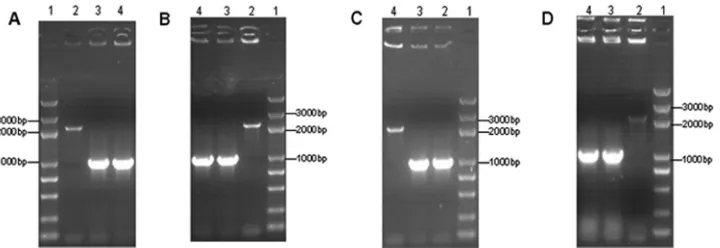
double-recombination event and confirmed by PCR with the primers in
Table 2
(
Fig. 1
) and by sequencing analysis (data not shown).
Genetic complementation strains corresponding to each mutant
were constructed by electroporating pBBR
wboA
into
B. abortus
2308-SB6,
B. abortus
S19-RB6,
B. melitensis
16 M-MB6, and
B.
melitensis
NI-NB6. The four mutants were determined to be
rough phenotypes based on the results of the coagglutination
as-say, crystal violet colony staining, and the acriflavine agglutination
assay, whereas the genetic complementation strains C
B. abortus
2308-SB6, C
B. abortus
S19-RB6, C
B. melitensis
16 M-MB6, and
C
B. melitensis
NI-NB6 regained their smooth phenotype. This
confirmed that the four
wboA
deletion mutants and their
corre-sponding genetic complementation strains were successfully
con-structed.
Virulence differences in
wboA
deletion mutants derived
from different genetic backgrounds.
We further determined the
in vivo
survival times and bacterial loads in mice harboring the
four
wboA
deletion mutants. The numbers of viable bacteria
re-covered from the spleens of
B. abortus
2308-SB6-,
B. melitensis
NI-NB6-,
B. melitensis
16 M-MB6, and
B. abortus
S19-RB6-inoc-FIG 1PCR identification ofB. abortus2308-SB6 (A),B. abortusS19-RB6 (B),B. melitensis16 M-MB6 (C), andB. melitensisNI-NB6 (D). (A) Lane 1, DNA marker; lane 2, PCR products ofB. abortus2308; lane 3, PCR products of pEX18Ap-⌬wboA; lane 4, PCR products ofB. abortus2308-SB6. (B) Lane 1, DNA marker; lane 2, PCR products ofB. abortusS19; lane 3, PCR products of pEX18Ap-⌬wboA; lane 4, PCR products ofB. abortusS19-RB6. (C) Lane 1, DNA marker; lane 2, PCR products of pEX18Ap-⌬wboA; lane 3, PCR products ofB. melitensis16 M-MB6; lane 4, PCR products ofB. melitensis16 M. (D) Lane 1, DNA marker; lane 2, PCR products ofB. melitensisNI; lane 3, PCR products of pEX18Ap-⌬wboA; lane 4, PCR products ofB. melitensisNI-NB6.
on August 17, 2020 by guest
http://cvi.asm.org/
ulated mice were found to be much lower than those from mice
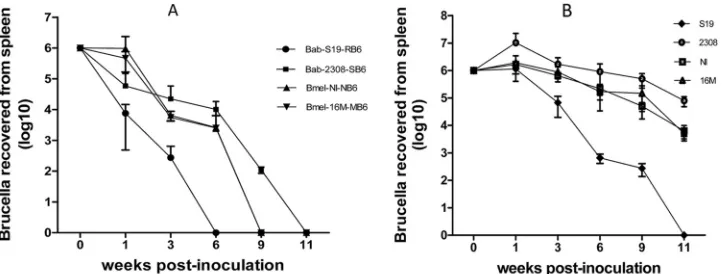
infected with the respective parent strains. As shown in
Fig. 2A
, the
mutant
B. abortus
S19-RB6 was not detected from the inoculated
mice at 6 weeks postinoculation, whereas the
B. abortus
S19 parent
strain persisted for 11 weeks (
Fig. 2B
).
B. melitensis
NI-NB6 and
B.
melitensis
16 M-MB6 were completely cleared at 9 weeks
postin-oculation, whereas
B. abortus
2308-SB6 had the longest survival
time of all the mutants and persisted for 11 weeks in mice (
Fig. 2
).
At the end of the test,
B. melitensis
16 M,
B. abortus
2308, and
B.
melitensis
NI were recovered at 10
4CFU, 10
5CFU, and 10
4CFU,
respectively, from the spleens of the inoculated mice. The
viru-lence levels of the corresponding complementation strains were
similar to that of the parent strains (data not shown). These results
indicated that the four
Brucella wboA
deletion mutants were
at-tenuated in mice and that the virulence levels were significantly
different in the
wboA
deletion mutants derived from different
ge-netic backgrounds.
Differences in protective efficacy of
wboA
deletion mutants
with different genetic backgrounds.
To evaluate the potential
protective immunity induced by the mutants against the
virulent-strain challenge, the numbers of challenge virulent-strains recovered from
the spleens of all the vaccinated mice were compared to the
num-bers recovered from the control mice. The challenge strain
B.
abortus
2308 was expected to be recovered in all of the control
mice. Protective immunity was expressed as log
10units of
protec-tion (
25
). As shown in
Table 3
,
B. abortus
S19-RB6 and
B.
meliten-sis
16 M-MB6 (1.53 and 1.42 protection units, respectively)
con-ferred greater protection than
B. melitensis
NI-NB6 and
B. abortus
2308-SB6 (0.82 and 0.90 protection units, respectively) (
P
⬍
0.05). Meanwhile, the challenge strain
B. abortus
2308 was
recov-ered in all of the challenge control mice, and there was a
statisti-cally significant difference (
P
⬍
0.05) between the mutant groups
and the challenge control groups in protective immunity.
Cross-protection of
B. melitensis
16 M-MB6 and
B. abortus
S19-RB6 mutants against challenge with different
Brucella
spp.
To explore the cross-protective immunity induced by the rough
mutants,
B. melitensis
16 M-MB6- and
B. abortus
S19-RB-vacci-nated mice were challenged with the virulent
B. abortus
2308,
B.
melitensis
16 M, and
B. melitensis
NI. The virulent strains were
recovered from the spleens of the challenged mice, and the results
are presented in
Table 4
.
B. melitensis
16 M-MB6 induced better
protection against the homologous
B. melitensis
16 M and
B.
melitensis
NI challenges than against the heterologous
B. abortus
2308 challenge. The numbers of protection units against the
ho-mologous
B. melitensis
16 M and
B. melitensis
NI challenges were
2.17 and 2.06, respectively, which were significantly higher than
those against the heterologous
B. abortus
2308 challenge (1.08
protection units;
P
⬍
0.001). In contrast,
B. abortus
S19-RB6
in-duced greater protection against the homologous
B. abortus
2308
challenge (1.94 protection units) than against the heterogeneous
B. melitensis
16 M and
B. melitensis
NI challenges (1.03 and 0.63
protection units, respectively;
P
⬍
0.05).
Pathogenicity of
B. melitensis
16 M-MB6 and
B. abortus
S19-RB6 mutants in pregnant sheep.
The pathogenicity of
Brucella
strains in pregnant ruminants includes persistent infection,
still-birth, and abortion (
26
). In this study, two groups of pregnant
sheep were inoculated with
B. melitensis
16 M-MB6 and
B. abortus
S19-RB6. During nearly 3 months of observation, only one sheep
(S3) aborted at 28 days after infection in the
B. melitensis
16
M-MB6-inoculated group, whereas all four of the other sheep in
this group and all of the
B. abortus
S19-RB6-inoculated sheep
produced normal lambs 40 to 60 days postinoculation. Abortion
was defined as the premature expulsion of a nonviable fetus,
whereas premature live lambs, who were hypoactive and had
dif-ficulty sucking colostrum, were regarded as weak lambs (
27
).
To determine the survival
in vivo
of
B. melitensis
16 M-MB6
and
B. abortus
S19-RB6, bacteria from the maternal sheep, fetus,
and lambs were recovered, and the animals with one or more
isolated
Brucella
colonies in any tissue were considered
bacterio-logically positive. Our results showed that only the afterbirth and
fetus from the aborted sheep in the
B. melitensis
16
M-MB6-inoc-ulated group was positive, and no mutant was recovered from the
lambs and afterbirths of the normal delivered sheep at the time of
euthanasia (
Table 5
). These results indicated that
B. abortus
S19-RB6 was a safe strain for pregnant sheep, whereas
B. melitensis
16
M-MB6 remained somewhat pathogenic in the pregnant sheep.
Antibody responses in
B. melitensis
16 M-MB6- and
B.
abor-tus
S19-RB6-inoculated sheep.
The antibody responses in the
B.
melitensis
16 M-MB6- and
B. abortus
S19-RB6-inoculated sheep
are presented in
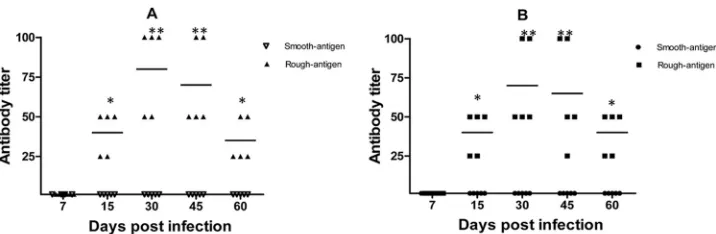
Fig. 3
. In sheep inoculated with either
B. melitensis
TABLE 3Protection against challenge withB. abortus2308
Treatment group (n⫽5) Log10CFU in spleen (⫾SD)a UPb
B. melitensis16 M-MB6 3.52⫾0.33c 1.42 B. abortus2308-SB6 4.12⫾0.11c 0.82 B. melitensisNI-NB6 4.04⫾0.05c 0.90
B. abortusS19-RB6 3.41⫾0.36c 1.53
S19 3.29⫾0.32c 1.65
PBS control 4.94⫾0.07
aMean and SD of the log
10CFU per spleen.
b
UP, units of protection. Average of log10CFU in the spleens of PBS-inoculated mice
minus average of log10CFU in the spleens of vaccinated mice.
c
P⬍0.05 (significant) compared with the value for the PBS control group.
TABLE 4Cross-protection ofB. melitensis16 M-MB6 andB. abortus
S19-RB6 against challenge with homologous and heterologous strains in mice
Treatment group (n⫽5) Log10CFU in spleen (⫾SD)
a UPb
16 M challenge
B. melitensis16 M-MB6 3.44⫾0.27c,d 2.17 B. abortusS19-RB6 4.58⫾0.57c,e 1.03
PBS control 5.61⫾0.41
NI challenge
B. melitensis16 M-MB6 3.14⫾0.57c,d 2.06 B. abortusS19-RB6 4.57⫾0.60c,e 0.63
PBS control 5.20⫾0.07
2308 challenge
B. melitensis16 M-MB6 4.79⫾0.11c 1.08 B. abortusS19-RB6 3.93⫾0.12c 1.94
PBS control 5.87⫾0.22
a
Mean and SD of the log10CFU per spleen.
bUP, units of protection. Average of log
10CFU in the spleens of PBS-inoculated mice
minus average of log10CFU in the spleens of vaccinated mice.
cP⬍0.05 (significant) compared with the value for the PBS control in each challenge group.
dP⬍0.001 (significant) compared to the 2308 challenge group in theB. melitensis16 M-MB6-inoculated group.
eP⬍0.05 (significant) compared to the 2308 challenge group in theB. abortus S19-RB6-inoculated group.
on August 17, 2020 by guest
http://cvi.asm.org/
16 M-MB6 or
B. abortus
S19-RB6, no antibodies against OPS were
detected by the smooth-antigen-based SAT at different time
points postinoculation. However, antibodies against rough
Bru-cella
were detected in the sera of the
B. abortus
S19-RB6- and
B.
melitensis
16 M-MB6-inoculated sheep with 1:25 to 1:50 titers at
15 days postinoculation. The antibody titers peaked at 30 days
postinoculation, with titers ranging from 1:50 to 1:100. At 60
days postinfection, the serum samples from all of the
inocu-lated sheep agglutinated with the rough
Brucella
antigens at
1:25 to 1:50 dilution.
DISCUSSION
In recent decades, numerous rough mutants have been generated
by disrupting LPS synthesis genes, including
wboA
,
wboB
,
wbkA
,
gmd
,
per
,
wzm
,
pgm
,
wa**
, and
manB
core. However, none of these
artificially constructed rough mutants induced protective
immu-nity equivalent to that of
B. melitensis
Rev.1 in animal models (
28
).
One rough vaccine candidate,
B. melitensis
BmH38R
wbkF
,
in-duced 54% protection, whereas
B. melitensis
Rev.1 afforded 100%
protection in sheep (
16
). The
wboA
-disrupted rough derivative of
B. melitensis
16 M also induced only partial protection against
both infection and abortion following challenges in goats (
17
).
However, the rough vaccine strains RB51 and 45/20 have been
reported to confer long-term protection against brucellosis in
an-imals. Shumilov et al. also reported that an inactivated adjuvant
vaccine prepared from rough
B. abortus
KB 17/100 had superior
immunogenic properties, allowing all vaccinated heifers to resist
experimental infection by a virulent
Brucella
sp. (
3
). As mentioned
above, there are disputes in the
Brucella
vaccine research field over
the feasibility of inducing protective immunity by rough
Brucella
mutants. We hypothesized that the rough vaccine strains should
be acceptable for use in brucellosis eradication campaigns if they
yield good protective immunity for over 6 months.
According to a report by González et al., the genetic
back-ground (i.e.,
B. melitensis
16 M and
B. melitensis
H38) affects the
properties of rough mutants, as
B. melitensis
H38 rough mutants
were more effective vaccine candidates than their
B. melitensis
16
M counterparts in mice (
28
). Thus, when the effective rough
vac-cine candidates were screened, the impact of the genetic
back-grounds of different parent strains on the rough
Brucella
mutants
should be considered. Although the
wboA
mutants have been
eval-uated in the backgrounds of
B. melitensis
,
B. abortus
, and
B. suis
,
different experimental conditions were used. For example, the
inoculation doses were 10
5CFU/mouse for Nikolich et al. (
29
)
and 1
⫻
10
8to 2
⫻
10
8CFU/mouse for McQuiston et al. and
Monreal et al. (
30
,
31
), whereas the challenge doses were 5
⫻
10
4CFU/mouse for Monreal et al. (
31
) and 1
⫻
10
4CFU/mouse for
González et al. (
28
). There were also variations in the vaccination
time before challenge, e.g., 8 weeks for Winter et al. (
32
) and 4
weeks for Monreal et al. (
31
). Therefore, these variations in
exper-imental conditions pose difficulties in comparing the virulence
and protective immunity conferred by these mutants, leaving
questions about the novel rough vaccines unresolved.
In this study,
B. melitensis
16 M,
B. abortus
2308,
B. abortus
vaccine strain S19, and
B. melitensis
NI were used as the parent
strains for the generation of
wboA
deletion rough mutants. In the
mouse survival assays, the survival times were compared among
the four mutants
B. melitensis
16 M-MB6,
B. abortus
2308-SB6,
B.
abortus
S19-RB6, and
B. melitensis
NI-NB6 (
Fig. 2
).
T-cell-medi-ated immunity has been reported to be the primary mode of
im-mune protection against
Brucella
(
33
–
35
), and thus, the rough
FIG 2Kinetics ofB. abortusS19-RB6,B. abortus2308-SB6,B. melitensisNI-NB6, andB. melitensis16 M-MB6 (A) and the parent strainsB. abortusS19 and 2308 andB. melitensisNI and 16 M (B) in mice. Twenty-five mice were inoculated with each strain at a dose of 106CFU/mouse. Five mice per group were euthanized at 1, 3, 6, 9, and 11 weeks postinoculation, and the virulence of each strain was determined based on the number of CFU recovered from the spleen, which is expressed as the mean⫾SD (n⫽5) of individual log10CFU/spleen.
TABLE 5Pathogenicity of the rough mutants in pregnant sheep
Pregnant sheep no.
Sheep culture resultsa Fetus or lamb status
Delivery time (days p.i.)b
Afterbirths Tissues
Birth no.
and status Tissuesa
B. melitensis16 M-MB6-inoculated group
S1 ⫺ ⫺ 2 healthy ⫺ 49
S3 ⫹ ⫺ 1 aborted ⫹ 28
S5 ⫺ ⫺ 2 healthy ⫺ 45
S7 ⫺ ⫺ 1 healthy ⫺ 54
S9 ⫺ ⫺ 3 healthy ⫺ 52
B. abortusS19-RB6-inoculated group
S2 ⫺ ⫺ 2 healthy ⫺ 43
S4 ⫺ ⫺ 1 healthy ⫺ 50
S6 ⫺ ⫺ 1 healthy ⫺ 55
S8 ⫺ ⫺ 2 healthy ⫺ 48
S10 ⫺ ⫺ 2 healthy ⫺ 45
aIsolation ofⱖ1 CFUBrucellafrom any tissue indicated that the animal was positive (⫹). Samples designated negative (⫺) indicate that the organism was not cultured from the tissue.
b
p.i., postinoculation.
on August 17, 2020 by guest
http://cvi.asm.org/
mutants that persisted for the longest time in the vaccinated
ani-mals were expected to be the best vaccine candidates. However,
B.
abortus
2308-SB6, with the longest survival time of all the mutants,
conferred the worst protection against
B. abortus
2308 challenge
in mice. In contrast,
B. abortus
S19-RB6 was cleared from mice in
less than 6 weeks but yielded relatively good protection. These
results suggest that the protective efficacy of rough
wboA
deletion
mutants is less closely associated with their survival time in mice
but more closely associated with the genetic background of the
parent strain. Moreover,
B. melitensis
16 M-MB6 and
B. abortus
S19-RB6 yielded better protection against challenge with
B.
abor-tus
2308 than
B. abortus
2308-SB6 and
B. melitensis
NI-NB6,
sug-gesting that not all
B. abortus
-derived rough mutants could
in-duce similar protective immunity against homologous
challenge to
B. abortus
2308. Therefore, it will be necessary to
screen the parent strains for novel rough
Brucella
vaccine
de-velopment in the future.
In the cross-protection assay,
B. melitensis
16 M-MB6 and
B.
abortus
S19-RB6 were selected for use in both homologous and
heterologous challenges, because they yielded better protection
than the other two mutants in the protective-efficacy assay.
How-ever, both
B. melitensis
16 M-MB6 and
B. abortus
S19-RB6 yielded
only somewhat greater protection against homologous challenges
than against heterologous challenges. A similar phenomenon was
also observed by Winter in the evaluation of the protective efficacy
of
B. melitensis
VTRM1 and
B. suis
VTRS1 (both
wboA
-disrupted
mutants) in mice (
32
). Moreover,
B. abortus
RB51 has been
re-ported to induce good protective immunity against
B. abortus
in
cattle (
36
), but it is not effective against
B. suis
infection in cattle
(
37
) and ovine brucellosis caused by either
B. melitensis
or
B. ovis
(
38
,
39
). Similar to the smooth vaccine strains, such as
B. abortus
S19 (which failed to protect heifers against experimental infection
with
B. suis
biovar 1 [
40
]), the rough
Brucella
mutants had
differ-ences in cross-protective immunity.
The results of pathogenicity examination indicated that not all
of the
Brucella
spp. could be used as parent strains for generating
safe vaccines. For instance,
B. abortus
S19-RB6, which was derived
from the vaccine strain
B. abortus
S19, exhibited a high level of
safety in pregnant sheep. However, the inoculation of pregnant
sheep with
B. melitensis
16 M-MB6 induced abortion in one of the
five animals in this study, suggesting that this rough mutant was
still somewhat pathogenic to pregnant animals. Since the
glyco-syltransferase encoded by
wboA
is responsible for OPS
polymer-ization, we hypothesized that there are components other than
OPS associated with the pathogenicity of
Brucella
in pregnant
an-imals. In support of this hypothesis, available
Brucella
vaccines,
such as
B. abortus
S19 and
B. melitensis
Rev.1, are attenuated
in
vivo
but induce abortion when they are subcutaneously inoculated
into pregnant animals, and a naturally occurring rough virulent
strain,
Brucella ovis
, can induce abortion in ewes (
41
). As the
transplacental transmission mechanism of
Brucella
is not clearly
understood, it is necessary to identify factors affecting the
preva-lence of abortion for the development of safer
Brucella
vaccines.
Therefore, in specific regions and countries, the generation of a
good rough vaccine may depend on the genetic backgrounds of
the parent strains and/or the epidemic
Brucella
strains, as each
vaccine provides effective protection against a specific
Brucella
species in the preferred host (
14
).
In conclusion, there were noticeable differences in virulence,
pathogenicity, and induced immunity protection among the four
wboA
deletion mutants generated from different parent strains
with diverse genetic backgrounds. Although the
wboA
mutants
were not ideal vaccine candidates in this study, our results
sug-gested that it is necessary to consider the parent strains (the
refer-ence strains or the epidemic
Brucella
strains in the different animal
herds), as well as the desired target genes, when developing novel
rough
Brucella
vaccines.
ACKNOWLEDGMENTS
We thank Qianni He from the Institute of Veterinary Research, Xinjiang Academy of Animal Sciences, China, for kindly providing us withBrucella
strains.
This work was supported by the National Basic Research Program of China (973 Program; 2010CB530202), the Special Fund for Agro-Scien-tific Research in the Public Interest (200903027), and the Beijing Science Foundation of China (project no. 6101002).
REFERENCES
1.Corbel MJ.1997. Brucellosis: an overview. Emerg. Infect. Dis.3:213–221. 2.Rice TB.1946. Brucellosis in human beings. Mon. Bull. Indiana State
Board Health49:125.
3.Shumilov KV, Sklyarov O, Klimanov A.2010. Designing vaccines against cattle brucellosis. Vaccine28(Suppl. 5):F31–F34.
4.Alton GG.1968. Further studies on the duration of the immunity pro-duced in goats by the Rev. 1 Brucella melitensis vaccine. J. Comp. Pathol.
78:173–178.
5.Alton GG.1990. Brucella melitensis, p 384 – 410.InNielsen K, Duncan JR (ed), Animal brucellosis. CRC Press, Boca Raton, FL.
6.Nicoletti P.1990. Vaccination, p 284 –299.InNielsen K, Duncan JR (ed), Animal brucellosis. CRC Press, Boca Raton, FL.
FIG 3Antibody responses in sheep subcutaneously infected with 109CFUB. abortusS19-RB6 (A) andB. melitensis16 M-MB6 (B). The titers of specific anti-smooth and -rough antigens were determined by SAT as described in Materials and Methods. The horizontal bars represent the average titer value for each group. *,P⬍0.05, and **,P⬍0.001; the rough-antigen-based SAT results were compared with the smooth-antigen-based SAT results for each mutant group.
on August 17, 2020 by guest
http://cvi.asm.org/
7.Alton GG, Elberg SS.1967. Rev. 1 Brucella melitensis vaccine: a review of ten years of study. Vet. Bull.371:793– 800.
8.Blasco JM.1997. A review of the use of Brucella melitensis Rev. 1 vaccine in adult sheep and goats. Prev. Vet. Med.31:275–283.
9.Office International des Epizoonties.2004. Manual of diagnostic tests and vaccines for terrestrial animals, 5th ed. Office International des Epizooties, Paris, France.
10. Cheville NF.2000. Development, testing and commercialization of a new brucellosis vaccine for cattle. Ann. N. Y. Acad. Sci.916:147–153. 11. Schurig GG, Roop RM, II, Bagchi T, Boyle S, Buhrman D,
Sriranga-nathan N.1991. Biological properties of RB51; a stable rough strain of Brucella abortus. Vet. Microbiol.28:171–188.
12. Schurig GG, Sriranganathan N, Corbel MJ.2002. Brucellosis vaccines: past, present and future. Vet. Microbiol.90:479 – 496.
13. Adone R, Francia M, Ciuchini F.2008. Evaluation of Brucella melitensis B115 as rough-phenotype vaccine against B. melitensis and B. ovis infec-tions. Vaccine26:4913– 4917.
14. Adone R, Francia M, Pistoia C, Pesciaroli M, Pasquali P. 2011. B. melitensis rough strain B115 is protective against heterologous Brucella spp. infections. Vaccine29:2523–2529.
15. Moriyón I, Grilló MJ, Monreal D, González D, Marín C, López-Goñi I, Mainar-Jaime RC, Moreno E, Blasco JM.2004. Rough vaccines in animal brucellosis: structural and genetic basis and present status. Vet. Res.35:1–38.
16. Barrio MB, Grilló MJ, Muñoz PM, Jacques I, González D, de Miguel MJ, Marín CM, Barberán M, Letesson JJ, Gorvel JP, Moriyón I, Blasco JM, Zygmunt MS.2009. Rough mutants defective in core and O-polysac-charide synthesis and export induce antibodies reacting in an indirect ELISA with smooth lipopolysaccharide and are less effective than a Rev. 1 vaccine against Brucella melitensis infection of sheep. Vaccine27:1741– 1749.
17. Elzer PH, Enright FM, McQuiston JR, Boyle SM, Schurig GG.1998. Evaluation of a rough mutant ofBrucella melitensisin pregnant goats. Res. Vet. Sci.64:259 –260.
18. Kovach ME, Phillips RW, Elzer PH, Roop RM, II, Peterson KM.1994. pBBR1MCS: a broad-host-range cloning vector. Biotechniques16:800 – 802.
19. Murphy KC, Campellone KG, Poteete AR.2000. PCR-mediated gene replacement in Escherichia coli. Gene246:321–330.
20. Kahl-McDonagh MM, Ficht TA.2006. Evaluation of protection afforded by Brucella abortus and Brucella melitensis unmarked deletion mutants exhibiting different rates of clearance in BALB/c mice. Infect. Immun.
74:4048 – 4057.
21. Alton GG, Jones LM, Pietz DE.1975. Laboratory techniques in brucel-losis. Monogr. Ser World Health Organ.1975:1–163.
22. Briones G, IÑón de Iannino N, Roset M, Vigliocco A, Paulo PS, Ugalde RA.2001. Brucella abortus cyclic beta-1,2-glucan mutants have reduced virulence in mice and are defective in intracellular replication in HeLa cells. Infect. Immun.69:4528 – 4535.
23. Kahl-McDonagh MM, Elzer PH, Hagius SD, Walker JV, Perry QL, Seabury CM, den Hartigh AB, Tsolis RM, Adams LG, Davis DS, Ficht TA.2006. Evaluation of novel Brucella melitensis unmarked deletion mu-tants for safety and efficacy in the goat model of brucellosis. Vaccine24: 5169 –5177.
24. Elfaki MG, Al-Hokail AA, Nakeeb SM, Al-Rabiah FA.2005. Evaluation of culture, tube agglutination, and PCR methods for the diagnosis of bru-cellosis in humans. Med. Sci. Monit.11:MT69 –MT74.
25. Ugalde JE, Comerci DJ, Leguizamón MS, Ugalde RA.2003. Evaluation of Brucella abortus phosphoglucomutase (pgm) mutant as a new live rough-phenotype vaccine. Infect. Immun.71:6264 – 6269.
26. Carvalho Neta AV, Mol JP, Xavier MN, Paixão TA, Lage AP, Santos RL.
2010. Pathogenesis of bovine brucellosis. Vet. J.184:146 –155.
27. Xavier MN, Paixão TA, Poester FP, Lage AP, Santos RL.2009. Patho-logical, immunohistochemical and bacteriological study of tissues and milk of cows and fetuses experimentally infection. J. Comp. Pathol.140: 149 –157.
28. González D, Grilló MJ, De Miguel MJ, Ali T, Arce-Gorvel V, Delrue RM, Conde-Alvarez R, Muñoz P, López-Goñi I, Iriarte M, Marín CM, Weintraub A, Widmalm G, Zygmunt M, Letesson JJ, Gorvel JP, Blasco JM, Moriyón I. 2008. Brucellosis vaccines: assessment of Brucella melitensis lipopolysaccharide rough mutants defective in core and O-po-lysaccharide synthesis and export. PLoS One3:e2760. doi:10.1371/journal .pone.0002760.
29. Nikolich MP, Warren RL, Lindler LE, Izadjoo MJ, Hoover DL.2010. Attenuation of defined Brucella melitensis wboA mutants. Vaccine
28(Suppl. 5):F12–F16.
30. McQuiston JR, Vemulapalli R, Inzana TJ, Schurig GG, Sriranganathan N, Fritzinger D, Hadfield TL, Warren RA, Lindler LE, Snellings N, Hoover D, Halling SM, Boyle SM.1999. Genetic characterization of a Tn5-disrupted glycosyltransferase gene homolog inBrucellaabortus and its effect on lipopolysaccharide composition and virulence. Infect. Im-mun.67:3830 –3835.
31. Monreal D, Grilló MJ, González D, Marín CM, De Miguel MJ, López-Goñi I, Blasco JM, Cloeckaert A, Moriyón I.2003. Characterization of
Brucellaabortus O-polysaccharide and core lipopolysaccharide mutants and demonstration that a complete core is required for rough vaccines to be efficient againstBrucellaabortus andBrucellaovis in the mouse model. Infect. Immun.71:3261–3271.
32. Winter AJ, Schurig GG, Boyle SM, Sriranganathan N, Bevins JS, En-right FM, Elzer PH, Kopec JD.1996. Protection of BALB/c mice against homologous and heterologous species ofBrucellaby rough strain vaccines derived fromBrucellamelitensis andBrucella suisbiovar 4. Am. J. Vet. Res.
57:677– 683.
33. Collins FM.1974. Vaccines and cell-mediated immunity. Bacteriol. Rev.
38:371– 402.
34. Jiang X, Baldwin CL.1993. Effects of cytokine on intracellular growth of Brucella abortus. Infect. Immun.61:124 –134.
35. Ko J, Splitter GA.2003. Molecular host-pathogen interaction in brucel-losis: current understanding and future approaches to vaccine develop-ment for mice and humans. Clin. Microbiol. Rev.16:65–78.
36. Olsen SC, Bricker B, Palmer MV, Jensen AE, Cheville NF. 1999. Responses of cattle to two dosages of Brucella abortus strain RB51: serol-ogy, clearance and efficacy. Res. Vet. Sci.66:101–105.
37. Olsen SC, Hennager SG.2010. Immune response and protection against experimental Brucella suis biovar 1 challenge in non-vaccinated or RB51-vaccinated cattle. Clin. Vaccine Immunol. doi:10.1128/CVI.00326-10. 38. El Idrissi AH, Benkirane A, El Maadoudi M, Bouslikhane M, Berrada J.,
Zerouali A.2001. Comparison of the efficacy ofBrucella abortusstrain RB51 andBrucella melitensisRev. 1 live vaccines against experimental infection withBrucella melitensisin pregnant ewes. Rev. Sci. Tech.20:741– 747.
39. Jiménez de Bagüés MP, Barberán M, Marín CM, Blasco JM.1995. The
Brucella abortusRB51 vaccine does not confer protection against Brucella ovis in rams. Vaccine13:301–304.
40. National Veterinary Services Laboratory.2010. Standard operating pro-cedures. SOP-Sero-1022, -1024, -1025, -1026, -1027, and -1051. National Veterinary Services Laboratory, Ames, IA.
41. Libal MC, Kirkbride CA.1983. Brucella ovis-induced abortion in ewes. J. Am. Vet. Med. Assoc.183:553–554.