ABSTRACT
DOUROS II, JONATHAN DAVID. The Function and Regulation of Leptin in Teleost Fish (Under the direction of Dr. Russell J. Borski).
Leptin is classically described as an adipostat in mammals, where the hormone circulates in proportion to adiposity to prevent excess fat accumulation by inhibiting appetite and stimulating lipolysis, metabolic rate, and overall energy expenditure. However, the a sifunction of leptin in controlling energy homeostasis is poorly understood in ectotherms whose metabolism may differ substantially from homeotherms. This research focuses on characterizing the function and regulation of leptin in a euryhaline teleost fish, the
Mozambique tilapia (Oreochromis mossambicus), a representative erciforme fish, the largest extant vertebrate order.
Studies focused on production of homologous leptin and the development of a specific ELISA needed to reliably study the hormone. Tilapia leptin A (LepA) is the major form of leptin produced primarily in the liver where it is expressed at 280-fold higher levels than the minor paralog, lepb. Recombinant tilapia LepA was produced in bacterium, purified, and verified for bioactivity. It stimulated hyperglycemia, glycogenolysis and growth hormone receptor (ghr) expression with equal efficacy as human leptin, while suppressing hepatic lipase expression in a manner distinct from the human form, confirming the value of homologous hormone. An ELISA assay was developed for detection of LepA. The assay displays a detection range of 0.25-1000 nM with intra- and interassay variations of 9 and 14% respectively.
reduced hepatic lepa mRNA in vitro. Leptin A increased pituitary PRL mRNA. These results demonstrate LepA enhances prolactin synthesis, while PRL in turn inhibits hepatic leptin secretion and synthesis.
Further studies evaluated LepA regulation under different metabolic states, and examined how LepA might interact with the pituitary growth hormone (GH)/ hepatic insulin-like growth factor (IGF) axis central to growth and metabolic regulation. Circulating LepA, and hepatic lepa and lepr expression increased with fasting and was restored following refeeding, consistent with the hormones function in promoting energy expenditure during catabolic stress and confirming the hormone is not an adipostat as seen for mammals. Leptin A treatment stimulated hepatic igf-1, igf-2, ghr1 and ghr2 expression in vitro, and hepatic igf-1 in vivo. In vivo experiments using an Hx tilapia model show that GH inhibits lepa
synthesis, while in vitro GH treatment exerted a biphasic effect on hepatic lepa and lepr mRNA. The responses were accompanied by increases in igf-1 expression. These data indicate GH is an important negative regulator of LepA synthesis and sensitivity and that LepA stimulates the GH/IGF axis to potentially spare catabolic declines in these factors during long-term stress.
The Function and Regulation of Leptin in Teleost Fish
by
Jonathan David Douros II
A dissertation submitted to the Graduate Faculty of North Carolina State University
in partial fulfillment of the requirements for the degree of
Doctor of Philosophy
Zoology
Raleigh, North Carolina 2015
APPROVED BY:
_______________________________ _______________________________
Dr. Russell J. Borski Dr. John Godwin
Committee Chair
_______________________________ _______________________________
ii DEDICATION
iii BIOGRAPHY
Jonathan David Douros II was born in Atlanta, GA in 1987 to Jonathan Sr. and Kendra Douros. He grew up in Fuquay-Varina, N.C., graduating from the Wake Christian Academy despite attending to everything but his studies. He attended Shaw University in Raleigh, N.C., where he learned, to his eternal gratitude, that his future lay in academia and not
athletics. He graduated with a Bachelor of Science in Biology in 2010. In 2011, motivated by equal parts pride and naiveté, he joined Dr. Russell Borski’s laboratory at N.C. State
iv ACKNOWLEDGMENTS
First, I wish to thank Dr. Russell Borski for enduring the harrowing task of teaching me to design experiments thoroughly, work rigorously, and think scientifically.
I also wish to thank my committee members for assisting in this work, and for their mentorship.
I wish to thank past and current members of the Borski lab for their advice and friendship: Dr. Miller Johnstone III, Dr. Eugene Won, Dr. David Baltzegar, Jamie Mankiewicz, Brad Ring, John Davis, Everett Wilson, Alexandar Yllanes, Jordan Taylor, and Meredith Meyer.
v TABLE OF CONTENTS
LIST OF TABLES ... vi
LIST OF FIGURES ... vii
Chapter I: Production of bioactive recombinant tilapia (Oreochromis mossambicus) leptin A and development of homologous enzyme-linked immunosorbent assay ... 1
Abstract ... 1
Introduction ... 3
Materials and Methods ... 4
Results ... 4
Discussion ... 9
References ... 14
Chapter II: Prolactin is a major inhibitor of hepatic Leptin A synthesis and secretion 24 Abstract ... 24
Introduction ... 26
Materials and Methods ... 27
Results ... 31
Discussion ... 32
References ... 36
Chapter III: Metabolic stress stimulates leptin A (LepA) in the tilapia (Oreochromis mossambicus): Implications for the regulatory interactions between LepA and the growth hormone (GH)/ insulin-like growth factor (IGF) axis ... 44
Abstract ... 44
Introduction ... 46
Materials and Methods ... 48
Results ... 54
Discussion ... 56
References ... 62
Chapter IV: Leptin directly stimulates glycolysis through a STAT3 dependent mechanism ... 77
Abstract ... 77
Introduction ... 78
Results ... 80
Discussion ... 83
Materials and Methods ... 86
vi LIST OF TABLES
Chapter I.
Table 1. List of PCR primer pairs used for qPCR analysis in Mozambique tilapia. .. 16 Chapter II.
Table 2. List of PCR primer pairs used for qPCR analysis in Mozambique tilapia. .. 39 Chapter III.
Table 3. List of PCR primer pairs used for qPCR analysis in Mozambique tilapia. .. 70 Chapter IV.
vii LIST OF FIGURES
Chapter I.
Figure 1: Flow chart outlining for rtLepA production and purification ... 17 Figure 2: PCR screen for positive (pET151-lepa transformed) E. coli clones using lepa
specific primers.. ... 18 Figure 3: Purity comparisons of recombinant tilapia leptin A (rtLepA) relative to
commercial recombinant human leptin. ... 19 Figure 4: Growth hormone receptor 1 (ghr1) mRNA expression in cultured hybrid striped
bass hepatocytes following 24h incubation with recombinant tilapia leptin A
(rtLepA). ... 20 Figure 5: Tertiary structures of (A) tilapia leptin and (B) tilapia leptin gene and peptide
sequence………30 Figure 6: Validation of a homologous leptin A ELISA in the tilapia.. ... 22 Figure 7: Tissue mRNA expression profile of leptin A (lepa) and leptin B (lepb) in the
tilapia.. ... 23 Chapter II.
Figure 8: The effects of hypophysectomy (Hx) and ovine prolactin (oPRL; 5 µg g/g) replacement on leptin. ... 40 Figure 9: Dose-response curve of leptin A (lepa) mRNA expression in cultured tilapia
hepatocytes following 18h incubation with ovine prolactin (oPRL). ... 41 Figure 10: Effects of recombinant tilapia leptin A (rtLepA) and human leptin (rhLep) on
pituitary prolactin mRNA expression.. ... 42 Figure 11: Proposed negative feedback regulatory model of leptin A (LepA) and prolactin (PRL) hormone interactions in the tilapia. ... 43
Chapter III
Figure 12: (A) Body weight (B) Hepatosomatic index (C) circulating leptin (D) hepatic lepa mRNA abundance and (E) hepatic lepr mRNA abundance of control tilapia fed to satiation daily and treatment fish subjected to 3 weeks fasting (red bar) followed by 1.5 weeks of refeeding daily to satiation. ... 71 Figure 13: Effect of hypophysectomy and oGH treatment on hepatic gene expression of
(A) lepa (B) lepr. ... 72 Figure 14: In vivo response of hepatic (A) igf-1 and (B) igf-2 (C) ghr1 (D) ghr2 gene
expression to recombinant leptin injections of 0.5 and 5 ug/g BW. ... 73 Figure 15: (A) Dose effect and (B) Time-course effects of leptin (10 nM) on GH from
mRNA abundance in somatotrophs in isolated PPDs. ... 74 Figure 16: In vitro regulation of (A) igf-1 (B) igf-2 (C) ghr1 and (D) ghr2 gene
expression in hepatocytes by rtLepA in doses of 0.1, 1, 10, 100 and 500 nM. ... 75 Figure 17: In vitro regulation of lepa, lepb, lepr and igf-1 gene expression in primary
viii Figure 18: Reduction of data dimensionality, MMC heat map and Cytoscape diagrams of
RPD transcriptome in response to leptin ... 98 Figure 19: Effect of leptin on lactate secretion, PFK mRNA, and GAPDH mRNA in
response to rtLepA treatment ... 99 Figure 20: Lactate secretion and PFK activity in response to rtLepA treatment ... 100 Figure 21: Hepatic lactate secretion, PFK, and GAPDH mRNA abundance in response to
1 Abstract
0
High sequence divergence amongst leptin orthologs in vertebrates necessitates the 1
development of species-specific molecular tools, including homologous recombinant 2
peptides and immunoassays, to investigate the hormone’s biology. This work presents the 3
development of both a recombinant tilapia leptin A (rtLepA) and homologous tLepA enzyme 4
linked immunosorbent assay (ELISA). To produce rtLepA, the tilapia leptin a gene (lepa) 5
was cloned into a plasmid vector, inserted into competent Escherichia coli, and expressed in 6
high quantity. The recombinant protein was then isolated and purified using a system of 7
nickel-affinity and size filtration chromatography. The purity of the rtLepA was determined 8
to be 96% relative to a commercial recombinant human leptin (rhLep), while the peptide’s 9
bioactivity was confirmed by assessment of its effect on hepatic ghr1 gene expression in 10
vitro. The ELISA was developed using a polyclonal antibody specific to a 16 amino acid 11
segment of the tLepA peptide. The antibody shows strong reactivity with rtLepA, and a 12
corresponding 16 kDa circulating protein in both tilapia and hybrid striped bass, another 13
Perciforme. The primary antibody does not cross react with rhLep. The ELISA displays a 14
Research in this chapter has been published in the following journals:
1Douros, J. D., Baltzegar, D. A., Breves, J. P., Lerner, D. T., Seale, A. P., Gordon Grau, E., & Borski, R. J. (2014). Prolactin is a major inhibitor of hepatic Leptin A synthesis and secretion: Studies utilizing a homologous Leptin A ELISA in the tilapia. Gen Comp Endocrinol. 207, p. 86-93
2Baltzegar, D. A., Reading, B. J., Douros, J. D., & Borski, R. J. (2014). Role for leptin in promoting glucose mobilization during acute hyperosmotic stress in teleost fishes. Journal of Endocrinology, 220 (1), p. 61-72
Chapter I
2
linear detection range of 0.25–1000 nM, with intra- and interassay variability of 9% and 15
16%, respectively. Additionally, this work presents a quantitative tissue expression profile of 16
teleost leptin paralog, lepa and lepb. The liver is shown to be the primary site of lepa and 17
lepb expression in teleosts, with lepa proving to be the dominant paralog, showing >280-fold 18
higher expression relative to lepb. 19
20
3
Introduction 22
While there is conclusive evidence of leptin expression in teleost fish like the tilapia 23
(Oreochromis mossambicus), the action and regulation of the hormone in these animals 24
remains largely uncharacterized (Won et al., 2012; Zhang et al., 2013). The comparative 25
study of leptin biology is frequently hindered by the unavailability of necessary tools for its 26
measurement. For example, multiple forms of the hormone exist in both diploid (lepa and 27
lepb) and tetraploid (lepa1, lepa2) fish species due to gene or genome-wide duplication 28
events, (Figueroa et al., 2005; Huising et al., 2006). It is currently unknown which leptin 29
paralog (lepa, lepb) is dominantly expressed in the tilapia, or which tissue is primarily 30
responsible for producing the hormone. Additionally, the function of each leptin paralog is 31
unknown as they may have subfunctionalized or neofunctionalized throughout their 32
evolutionary history. This makes the use of commercially available mammalian leptin 33
orthologs inappropriate as they may exert altogether different actions than native leptins. 34
Therefore, characterizing tissue distribution of leptin gene expression and developing a 35
bioactive, homologous recombinant tilapia leptin are necessary hurdles to clear in any 36
investigation of leptin(s) function in the tilapia. 37
Investigations assessing teleost leptin biology are further hindered by the lack of 38
species-specific antisera and validated assays for measuring circulating leptin. Teleost leptin 39
homologs exhibit a considerable degree of sequence divergence, both within fish taxa 40
(zebrafish to Fugu, 20% identity), as well as to other vertebrates (tilapia to mouse or human, 41
14–17%). This high level of sequence divergence makes the use of heterologous assays 42
undesirable for functional studies, however, only a single homologous leptin 43
4
which is a considerably more ancient group among extant teleosts (Protacanthopterygii) 45
(Kling et al., 2009). The high degree of evolutionary distance of leptin(s) among teleosts, and 46
other vertebrate groups, requires the development of specific assays for the reliable detection 47
of protein abundance necessary for studying leptin biology. Thus, this work also aims to 48
develop and validate an enzyme linked immunosorbant assay (ELISA) specific to LepA in 49
the tilapia. 50
This work will provide the requisite biotechnology tools to properly assess the 51
biology of leptin in the tilapia, a Perciforme fish, which constitute the largest extant order of 52
vertebrates (Helfman et al., 2009). 53
54
Materials and Methods 55
Animals 56
The NCSU Institutional Animal Care and Use Committee (IACUC) approved all 57
protocols. Fish used for the development of the recombinant tilapia leptin A (rtLepA), the 58
tilapia leptin A enzyme linked immunosorbent assay (tLepA ELISA), and lepa tissue 59
distribution were housed in freshwater (FW) recirculating tank systems (salinity 0–0.5 ppt, 60
hardness 74–84 mg/L, alkalinity 126–178 mg/L, pH 8.0) kept at 24–26 °C with a photoperiod 61
of 12:12 h of light and dark. 62
Recombinant Tilapia Leptin Production, Purification and Bioactivity 63
Cloning lepa: Total RNA from Mozambique tilapia (Oreochromis mossambicus) hepatic 64
tissue was isolated using standard TRIReagent ® protocol (Baltzegar, 2013; Douros et al., 65
2014). The lepa cDNA sequence (GenBank: KC354702) was PCR amplified using lepa 66
5
topoisomerase cloning method (manufacturers protocol; Life Technologies). 68
Bacterial Transformation and Protein Induction: The pET151 TOPO plasmid containing the 69
tilapia lepa sequence was transformed into competent Escherichia coli (BL21; Life 70
Technologies), which were grown on LB/Ampicillin plates and PCR screened for positive 71
clones. One positive colony was grown in culture (LB/Ampicillin/20% glucose broth) to an 72
OD600 ~ 0.2 at 37ºC (24-26 hours). The production of rtLepA protein was induced by IPTG 73
(0.5 mM) and incubated overnight at 37ºC. Bacteria were harvested by centrifugation and 74
total cell protein extracted via sonication for 30 seconds and lysozyme digestion for 2 h. 75
(Thermo Pierce; Walthman, MA). 76
Protein Purification: The propagated cells were induced and lysed with a native isolation 77
buffer (Life Technologies, Grand Island, NY) for selective purification of rtLepA from free 78
cytosolic proteins. The rtLepA was then purified by two rounds of double nickel-affinity 79
chromatography (Life Technologies). The preparation was further purified by filter 80
centrifugation (5000 g for 15 min) through Amicon Ultra protein purification columns with 81
30 and 10 kDa molecular weight cutoffs respectively (EMD Millipore, Billerica, MA, USA) 82
in order to eliminate any potential rtLepA dimers. The retained protein fraction was then 83
dialyzed in 2 changes of NaCO3 at 4ºC for 2h each and lyophilized overnight. 84
Purity determination: The relative purity of rtLepA was determined with quantitative SDS– 85
PAGE blot imaging (Odyssey Infrared Imager, LI-COR Biosciences, Lincoln, NE, USA) 86
using Coomassie Fluor Orange Reagent (Invitrogen) and found to be 96.1% relative to that of 87
the commercially prepared rhLep (> 90% absolute purity) (Baltzegar et al., 2014). 88
Validation of bioactivity: The bioactivity of the leptin(s) was evaluated in vitro using 89
6
previous studies, cells incubated with 50nM human leptin showed significant increases in 91
growth hormone receptor 1 (ghr1) mRNA expression after 24 h (Won, 2013). 92
Tilapia LepA ELISA development and validation 93
Development of Anti-tLepA polyclonal antibody: Using the mRNA coding sequence of tilapia 94
lepa, an 11-amino acid polypeptide (GS-177060) was synthesized by Gen- Script Inc. 95
(Piscataway, NJ, USA), after initial epitope site-selection to confer high antigenicity (Figure 96
5). Additional cysteine residue addition to the N-terminus of the peptide and KLH 97
conjugation was performed to enhance immunization efficiency. The antibody was raised in 98
rabbit against the GS-177060 antigen, and subsequently purified by affinity chromatography. 99
Western blotting: The specificity of the antibody was assessed by Western blot using rtLepA, 100
rhLep, tilapia plasma, and plasma from another perciform teleost, the hybrid striped bass 101
(HSB, M. chrysops x M. saxatilis). The plasma samples were diluted 1:20 (v/v) in PBS (137 102
mM NaCl, 2.7 mM KCl, 10 mM Na2HPO4, 1.8 mM KH2PO4, pH 7.4). Ten microliters of 103
either molecular weight marker or experimental samples were mixed in NuPAGE LDS 104
sample buffer (4:1 v/v dilution; Life Technologies, Grand Island, NY), and heated to 70 °C 105
for 10 min prior to loading on a Nu-PAGE 4–12% Bis-Tris gradient gel. Samples were 106
electrophoresed for 50 min at 200 V (XCell electrophoresis system and blot module, Life 107
Technologies, Grand Island, NY). Proteins were transferred to a nitrocellulose membrane by 108
soaking the gel for 5 min in transfer buffer (2.4 g Tris HCl, 8.06 g NaCl, 1 L dH2O, pH 7.6), 109
followed by 1 h electroblotting at 30 V. For immunodetection of leptin, the membrane was 110
first blocked overnight at 4°C using Odyssey Blocking buffer (LI-COR, Lincoln, NE), and 111
then incubated for 1 h with anti-tLepA (1:30,000 in PBS). Membranes were subsequently 112
7
incubated for 1 h with a secondary antibody (goat anti-rabbit IgG) conjugated to Alexa IR- 114
Dye 680 (LI-COR; 1:15,000 in PBS) at room temperature. After a final wash (PBS/ 0.1% 115
Tween-20), the membrane was imaged using an Odyssey CLx infrared imager (LI-COR). 116
ELISA procedure and validation: The following protocol outlines an indirect ELISA 117
procedure for measuring plasma leptin in tilapia. All steps were performed at room 118
temperature (Hornbeck et al., 2001). Costar 3590 EIA 96-well polystyrene plates (Corning 119
Life Scienes, Tewksbury, MA) were coated with 200 µL of tilapia LepA standard (GS- 120
177060) or diluted plasma (1:1 v/v) for 4 h. Coated wells were washed (4x in 400 µL PBS), 121
blocked with 400 µL of 5% non-fat milk in PBS for 2 h, washed 1 time in 400 µL PBS, and 122
then incubated for 2 h with 200 µL of the anti-tLepA primary antibody diluted 1:3000 in 123
PBS. The wells were then washed (PBS) and incubated for 1 h with 200 µL of HRP- 124
conjugated goat anti-rabbit IgG antibody (Santa Cruz Biotechnology Inc., Dallas, TX) diluted 125
1:5000 in PBS. Following incubation, wells were washed 4x in PBS before addition of 200 126
µL of o-Phenylenediamine (OPD; Thermo Scientific; Rockford, IL) solution (2 µL H2O2, 4 127
mg OPD per mL PBS). The color development was measured at 490nM using an ELx800 128
microplate reader (BioTek Instruments, Winooski, VT). 129
A series of initial assays were performed to optimize the ELISA procedure for 130
primary antibody dilution, effective assay range, and specificity. Primary antibody dilutions, 131
ranging 1:100 to 1:100,000, were tested for maximal binding with a 1:3000 dilution found to 132
elicit optimal signal with non-specific binding of <10%. The effective (linear) range of the 133
assay was calculated from a 10-fold serial dilution of GS-177060 antigen ranging from 0.01 134
to 1000 nM. Specificity for native LepA was determined by comparing the standard curve to 135
8
diluted from 1:1 to 1:4 (v/v in PBS) to a final volume of 200 µL. Cross reactivity of 137
mammalian leptin was also evaluated in the tilapia LepA ELISA using serially diluted 138
preparations of rhLep (1–1000 nM). The ELISA detection limits were calculated from the 139
mean + 2 SD of the lowest point on the linear range for 12 replicated standard curves, using 140
segmental linear regression analysis in GraphPad Prism (v6; San Diego, CA). The intra-assay 141
variation was calculated as the mean percentage variation (Vintra = [Variance/Mean] * 100) 142
for 8 replicate-pooled samples on a single ELISA plate; the inter-assay variation (Vinter) was 143
calculated as the mean percentage variation across 8 plates (Vinter = [Variance/ Mean] * 144
100). Specificity was calculated by the degree of parallelism for serially diluted plasma or 145
recombinant hormone relative to the standard curve, which was calculated as 146
(mplasma/mstandard) * 100. Non-specific binding was calculated as the fractional 147
percentage of background absorbance to that of the lowest detection limit in the assay. 148
Tissue distribution of lepa and lepb 149
Tilapia lepa and lepb mRNA expression profiles were evaluated by SYBR Green 150
quantitative real-time PCR (qPCR) in the pituitary, whole brain, hypothalamus, heart, gill, 151
kidney, pancreas, liver, muscle, fat, intestine, and testes. Fish were anesthetized in buffered 152
tricaine methanesulfonate (MS-222; 100 mg/L) and then decapitated prior to tissue 153
collection. Tissues were rapidly dissected and placed in RNAlater (Life Technologies) 154
overnight at 4°C and then frozen at -80°C prior to processing for RNA isolation. 155
Total RNA was isolated from samples using TRI reagent (Molecular Research 156
Center, Cincinnati, OH), coupled with on-column affinity purification and DNAse treatment 157
(Directzol minipreps, Zymo Research Corporation, Irvine, CA). RNA concentration and 158
9
spectrophotometer (Thermo Scientific, Wilmington, DE). RNA integrity was confirmed by 160
agrarose gel electrophoresis. Total RNA (0.8–1µg) was reversed transcribed to cDNA using 161
random priming hexamers (High Capacity cDNA Synthesis Kit, Life Technologies) and the 162
cDNA tested for viability using 18S rRNA amplification as a positive control. Following 163
qPCR, cycle threshold (Ct) values were compared to copy number standard curves for tilapia 164
lepa and lepb (serial dilutions of plasmid DNA containing the gene coding sequence). Copy 165
number values were then normalized to total RNA used in the cDNA synthesis reactions. The 166
qPCR primers are provided in Table 1. 167
Results 168
Production and Purification of rtLepA 169
Cloning and Bacterial Transformation: The lepa gene sequence was cloned from tilapia 170
hepatic cDNA resulting in a single band at ~420 bp. The clone was ligated into pET151 171
plasmid (Figure 1A), and transformation of competent E. coli was verified by a subsequent 172
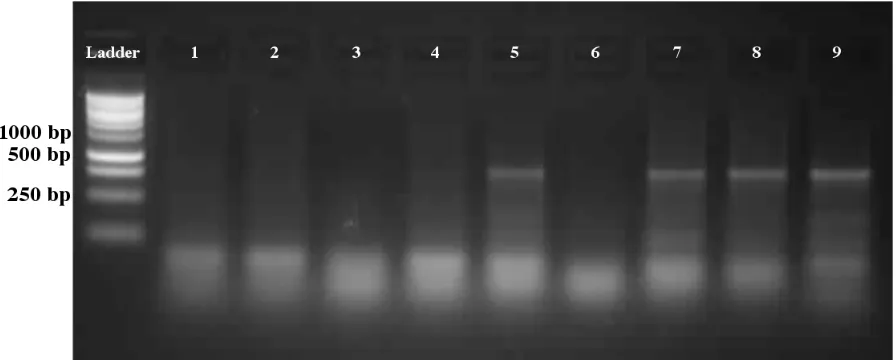
PCR screen (Figure 2). 173
Protein Purification: One positive colony (#5; Figure 2) was be grown in 10 mL LB/AMP 174
broth at 37ºC overnight and subsequently transferred to a nutrient rich media (5L) for another 175
period of overnight growth at 37ºC. IPTG (5mM) was be added to induce rtLepA 176
expression, and culture was incubated at 37ºC for 8 hours. 177
After protein expression induction, cell lysates were purified via nickel resin affinity 178
chromatography (Invitrogen protocol) and double filtration (Figure 2B). The retained protein 179
fraction was dialyzed in 10mM NaCO3, then lyophilized overnight resulting in ~43 mg of 180
powdered protein. This protein is ~16 kDa (Figure 3A, lanes 6-8) and reactive with tLepA 181
10
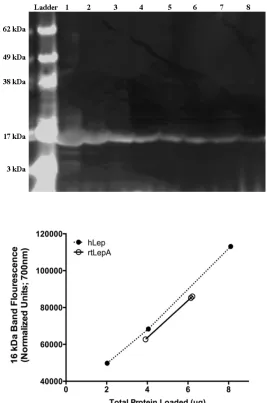
Purity determination of rtLepA: SDS-PAGE blots (Figure 3A) of recombinant tilapia leptin 183
A (rtLepA) and rhLep (97±2 % purity; National Hormone and Peptide Program) both display 184
a single, 16 kDa band on when stained with Coomassie Fluor Orange reagent (Invitrogen). 185
The blot contains a molecular marker (62 to 3 kDa range; Lane 1), serial dilution of rhLep 186
(17.3-2.5 µg loaded; Lanes 2-5); and triplicate preparations of rtLepA (4.1- 6.6 µg loaded; 187
Lanes 6-8). The relative purity estimate for rtLepA (96.1%) was determined as a percentage 188
of the observed and expected (linear regression of recombinant hLep curve; Figure 3B) 189
fluorescence values of the 16 kDa band. 190
Validation of rtLepA bioactivity: Growth hormone receptor 1 (ghr1) mRNA expression in 191
cultured hybrid striped bass hepatocytes was upregulated ~ 10 fold following 24 h incubation 192
with 50 nM rtLepA (p < 0.01; Figure 4). A lower dose of rtLepA (5 nM) was ineffective in 193
regulating ghr1 mRNA expression. 194
Tilapia LepA ELISA development and validation 195
Western blotting against anti-tLepA polyclonal antibody: Western blotting using the anti- 196
tLepA antibody identified a single band of ~16 kDa in plasma samples from both tilapia and 197
HSB, and in recombinant tilapia leptin A (rtLepa) preparations (Figure 6A). The tLepA 198
antibody was ineffective in detecting recombinant human Lep (Figure 6A). 199
ELISA validation: For the ELISA, the detectable range of the tilapia LepA peptide antigen 200
(GS-177060) standard curve was 0.25–1000 nM (Figure 6B), with inter- and intra assay 201
variation calculated as 16% and 9%, respectively. Non-specific binding was <9%. Serially 202
diluted tilapia and HSB plasma pooled from 8 adult fish for each species, displayed 203
parallelism of >98% relative to the antigen standard (Figure 1C). Recombinant human Lep, 204
11
from 0.1 to 1000 nM. Physiological levels of human leptin (0.2–20 nM) were undetectable 206
and fell below background levels in the ELISA (OD490 ± 2SD < 0.27; Figure 6B and C). 207
Tissue distribution of lepa and lepb mRNA 208
Tissue copy number expression of lepa and lepb was assessed by qPCR. Tilapia lepa 209
mRNA expression was nearly 10-fold higher in the liver than in any other tissue source 210
examined, however, nominal levels of lepa were detected in the pituitary, hypothalamus, 211
kidney, muscle, fat, pancreas and the posterior intestine (Figure 7). Relative to tilapia lepa 212
expression, the lepb paralog showed lower levels in tissues where they are coexpressed, but 213
was also most abundant in the liver (Figure 7). The liver abundance of tilapia lepa was 280- 214
fold greater than lepb. Low levels of lepb were detected in the pancreas, gill, muscle and 215
testes, while little detection was found in the pituitary, brain, hypothalamus, kidney, fat, or 216
intestine. 217
Discussion 218
The aims of the present studies were to produce a bioactive rtLepA, develop a 219
homologous LepA ELISA needed for characterizing the function and regulation of the 220
hormone, and to characterize tissue specific distribution and expression levels of lepa and 221
lepb. 222
The rtLepA produced was highly pure peptide (96.1% relative to rhLep), free of 223
dimerization, and effective in stimulating the expression of ghr1 mRNA in cultured 224
hepatocytes. The effects of rtLepA to stimulate glycogenolysis and suppress prl1 and prl2 225
gene expression in vivo have been reported elsewhere (Baltzegar et al., 2014; Douros et al., 226
2014). Interestingly, while rhLep and rtLepA exert similar effects in stimulating 227
12
(hormone sensitive lipase and lipoprotein lipase) gene expression (Baltzegar et al., 2014). 229
These data suggest that the use of heterologous (non-native) peptides may be undesirable. 230
Thus, this highly purified, bioactive compound represents an important tool in furthering 231
comparative studies regarding the function of leptin in teleost fish like the tilapia. 232
The rtLepA ELISA specifically and reliably measures plasma LepA, which we found 233
to be the dominant paralog produced in tissues of the tilapia. The existence of multiple leptin 234
paralogs, coupled with high sequence divergence, underscores the need for developing 235
specific proteins and assays to assess hormone action and measure protein levels of this 236
important hormone in fishes. Western blotting with the homologous tilapia LepA antibody 237
identified a single, 16 kDa protein in plasma taken from both tilapia and the hybrid striped 238
bass, a band of similar size to that identified in preparations of recombinant tilapia LepA 239
(rtLepA; Figure 6A). No protein was detected by Western blot with preparations of rhLep, 240
suggesting little or no cross reactivity of the tilapia LepA polyclonal antibody to mammalian 241
leptins (Figure 6A). This specificity was consistent with results from the tilapia LepA 242
ELISA, as serial dilutions of tilapia and HSB plasma showed high parallelism with the 243
standard curve (Figure 6B–C). In contrast, detection of serially diluted rhLep within a 244
physiologically relevant range was negligible. Detection of rhLep above background was 245
achieved only at micromolar concentrations of hormone. Currently, recombinant tilapia 246
leptin B (LepB) is unavailable for cross-reactivity testing with the LepA antibody. However, 247
the LepA peptide sequence from which the antibody was generated (GS-177060) shares only 248
28.5% identity to both human leptin and tilapia LepB. As human leptin shows no significant 249
cross reactivity by Western blot or in the tilapia LepA ELISA, it is unlikely that tLepB will 250
13
ranged between 0.8 and 3.9 nM, while hybrid striped bass plasma had slightly higher mean 252
LepA levels (5.18 nM). Kling and colleagues (2009), using a radioimmunoassay developed 253
for salmonid leptin, reported circulating levels of 0.3–5.0 nM in rainbow trout and Atlantic 254
salmon. Similarly in humans, circulating leptin levels typically range from 0.5 to 5 nM 255
(Shek, 1998). Collectively, these results indicate that the ELISA developed here reliably 256
detects tilapia LepA within a concentration range found in other vertebrates. 257
Tissue mRNA expression profiles identify LepA as the dominant leptin produced in 258
the tilapia. Tilapia lepa mRNA was 10- to 50-fold higher than lepb in all tissues examined 259
(Figure 7), which is similar to patterns observed in grouper (Epinephelus coioides) (Zhang et 260
al., 2013). The liver was the primary expression site for both paralogs, with lepa showing 261
>280-fold higher expression relative to lepb (Figure 7). These results confirm the liver is the 262
major source of leptin production in teleosts (Gorissen et al., 2009; Kurokawa et al., 2005; 263
Won et al., 2012), in contrast with adipose tissue in mammals. The dramatically higher 264
expression of lepa in the liver suggests this paralog is the predominant form found in 265
circulation, while extensive tissue expression profiles of both lepa and lepb suggest the 266
hormones may also act in an autocrine and paracrine fashion to elicit pleiotropic effects. 267
In summary, the present investigation establishes the production and purification of 268
rtLepA, presents the validation of a homologous ELISA for reliable measures of LepA in this 269
species, as well as other perciforms, and demonstrates that LepA is the dominant leptin 270
paralog produced in tilapia, mainly from the liver. 271
14
References 273
Baltzegar, D.A., 2013. Investigation of Novel Paracellular and Endocrine Mechanisms 274
Governing Osmotic Balance in Teleost Fishes (Actinopterygii: Teleostei), 275
Department of Biology. North Carolina State University. 276
Baltzegar, D.A., Reading, B.J., Douros, J.D., Borski, R.J., 2014. Role for leptin in promoting 277
glucose mobilization during acute hyperosmotic stress in teleost fishes. Journal of 278
Endocrinology 220, 61-72. 279
Douros, J.D., Baltzegar, D.A., Breves, J.P., Lerner, D.T., Seale, A.P., Gordon Grau, E., 280
Borski, R.J., 2014. Prolactin is a major inhibitor of hepatic Leptin A synthesis and 281
secretion: Studies utilizing a homologous Leptin A ELISA in the tilapia. General and 282
comparative endocrinology. 283
Figueroa, J., Martin, R.S., Flores, C., Grothusen, H., Kausel, G., 2005. Seasonal modulation 284
of growth hormone mRNA and protein levels in carp pituitary: evidence for two 285
expressed genes. Journal of comparative physiology. B, Biochemical, systemic, and 286
environmental physiology 175, 185-192. 287
Gorissen, M., Bernier, N.J., Nabuurs, S.B., Flik, G., Huising, M.O., 2009. Two divergent 288
leptin paralogues in zebrafish (Danio rerio) that originate early in teleostean 289
evolution. The Journal of endocrinology 201, 329-339. 290
Helfman, G., Collette, B.B., Facey, D.E., Bowen, B.W., 2009. The Diversity of Fishes: 291
Biology, Evolution, and Ecology. Wiley. 292
Hornbeck, P., Winston, S.E., Fuller, S.A., 2001. Enzyme-Linked Immunosorbent Assays 293
(ELISA), Current Protocols in Molecular Biology. John Wiley & Sons, Inc. 294
Huising, M.O., Geven, E.J., Kruiswijk, C.P., Nabuurs, S.B., Stolte, E.H., Spanings, F.A., 295
Verburg-van Kemenade, B.M., Flik, G., 2006. Increased leptin expression in common 296
Carp (Cyprinus carpio) after food intake but not after fasting or feeding to satiation. 297
Endocrinology 147, 5786-5797. 298
Kling, P., Ronnestad, I., Stefansson, S.O., Murashita, K., Kurokawa, T., Bjornsson, B.T., 299
2009. A homologous salmonid leptin radioimmunoassay indicates elevated plasma 300
leptin levels during fasting of rainbow trout. General and comparative endocrinology 301
162, 307-312. 302
Kurokawa, T., Uji, S., Suzuki, T., 2005. Identification of cDNA coding for a homologue to 303
mammalian leptin from pufferfish, Takifugu rubripes. Peptides 26, 745-750. 304
Shek, E., Brands, M., Hall, J., 1998. Chronic leptin infulsion increases arterial pressure. 305
Hypertension 31, 409-414. 306
15
mediating appetite and growth. 308
Won, E.T., Baltzegar, D.A., Picha, M.E., Borski, R.J., 2012. Cloning and characterization of 309
leptin in a Perciform fish, the striped bass (Morone saxatilis): control of feeding and 310
regulation by nutritional state. General and comparative endocrinology 178, 98-107. 311
Zhang, H., Chen, H., Zhang, Y., Li, S., Lu, D., Zhang, H., Meng, Z., Liu, X., Lin, H., 2013. 312
Molecular cloning, characterization and expression profiles of multiple leptin genes 313
and a leptin receptor gene in orange-spotted grouper (Epinephelus coioides). General 314
and comparative endocrinology 181, 295-305. 315
16
Table 1. List of PCR primer pairs used for qPCR analysis in Mozambique tilapia. 317
318
Gene Accession Number Forward (5’ – 3’) Reverse (5’ – 3’) % Efficiency leptin a
(lepa)
KC354702 GGG TCT CCC AGA
TCA AGT ACG A
TGC CGC CAC AGA TGA ATG
105
leptin b (lepb)
XM_005451607 GTG CGC TCC TTC GCC TTA
CTG TAC TGC TGG TTT GGG CTT A
109
ribosomal 18S (18S)
U67340 CGG ACA CGG AAA
GGA TTG AC
CAA CTA AGA ACG GCC ATG CA
102
17
321
Figure 1: Flow chart outlining for rtLepA production and purification. (A) the pET151 322
TOPO plasmid sequence and attributes including T7 promoter, IPTG inducible lacO operon, 323
ribosomal binding site, 6-histadine tag, and toposisomerase insertion point for the gene of 324
interest (B) size exclusion chromatography purification process for rtLepA. 325
18
327
Figure 2: PCR screen for positive (pET151-lepa transformed) E. coli clones using lepa 328
specific primers. The presence of a 420bp amplicon indicates the presence of the full coding 329
tilpia lepa sequence. 330
19
Figure 3: Purity comparisons of recombinant tilapia leptin A (rtLepA) relative to 333
commercial recombinant human leptin. (A) Leptin protein blot (SDS-PAGE) stained with 334
Coomassie Fluor Orange reagent (Invitrogen): Lane 1, molecular marker (62-3 kDa); Lanes 335
2-5, serial dilution of rhLep (17.3-2.5 µg loaded); Lanes 6-8, triplicate preparations of 336
rtLepA (4.1- 6.6 µg loaded). (B) Purity analysis of rtLepA relative to rhLep, using 337
quantitative fluorescence imaging (LI-COR Odyssey; 700 nm). The relative purity estimate 338
for rtLepA (96.1%) was determined by the observed and expected fluorescence values of the 339
16 kDa band calibrated to a BSA standard curve. 340
20
342 343 344
Figure 4: Growth hormone receptor 1 (ghr1) mRNA expression in cultured hybrid striped 345
bass hepatocytes following 24h incubation with recombinant tilapia leptin A (rtLepA). 346
Asterisks represent dose-dependent effects relative to control fish (** p < 0.01); letters 347
identify significant effects across treatment (dosage) groups (P < 0.05). The GHR1 mRNA 348
expression data was normalized to beta actin RNA expression and expressed as relative fold 349
change to the control treatment (0 nM rtLepA). Values represent means ± SEM (n = 4). 350
351
0
5
50
21
352 353
Figure 5: Tertiary structures of (A) tilapia leptin and (B) tilapia leptin gene and peptide 354
sequence. The signal peptide (gray), Helices A-D (underlined), and peptide sequence against 355
which the tLepA antibody was raised (yellow) are highlighted. 356
22
Figure 6: Validation of a homologous leptin A ELISA in the tilapia. (A) Western blot testing 359
cross-reactivity of the tilapia leptin A antibody (diluted 1:3000) to recombinant tilapia leptin 360
A (rtLepA), recombinant human leptin (rhLep), tilapia plasma, and hybrid striped bass 361
(HSB) plasma. (B) Enzyme-linked immunosorbent assay for tilapia leptin A, measuring the 362
antigen peptide (standard curve, 0.01– 1000 nM), serially diluted tilapia plasma, HSB 363
plasma, and rhLep (in PBS). (C) Linear range (of B) of the leptin A ELISA (0.25–1000 nM). 364
Lines depict sigmoidal (B) and linear (C) regressions for the antigen standard curve. 365
23
367
Figure 7: Tissue mRNA expression profile of leptin A (lepa) and leptin B (lepb) in the 368
tilapia. Expression was determined by qPCR amplication of lepa and lepb in the pituitary, 369
brain, hypothalamus, heart, gill, kidney (whole), pancreas, liver, white muscle, fat, posterior 370
intestine, and testes. Cycle threshold values were compared to a copy number standard curve 371
for each leptin (R2 = 0.98), and normalized to nanograms of total RNA used in the cDNA 372
reaction. Values depict mean ± SEM (n = 8). 373
24
Abstract 375
Prolactin (PRL) is the most complex among all pituitary hormones both in its number of 376
actions and in the diversity of factors that control its synthesis and secretion. Leptin is also a 377
pleiotropic hormone best known for its functions in regulating metabolism and reproduction, 378
among other physiological processes. The present study evaluates the regulatory interactions 379
between PRL and leptin for which little is known in vertebrates. In the tilapia (Oreochromis 380
mossambicus) removal of the pituitary (hypophysectomy; Hx) increased circulating LepA 381
and lepa mRNA levels in the liver, the dominant source of hormone production. 382
Administration of ovine PRL (oPRL, 5 µg /g BW) to Hx fish restored circulating LepA and 383
hepatic lepa mRNA levels to those of control fish. Additionally, oPRL reduced lepa mRNA 384
levels in a dose-dependent fashion in cultured hepatocytes following 18 h incubation. 385
Previous work in our lab demonstrates that recombinant human leptin stimulates PRL release 386
in vitro from tilapia pituitaries. Here, both recominant tilapia LepA (rtLepA) and 387
recombinant human leptin (rhlep; 0.5 µg g/g BW) increased mRNA expression of both 388
tilapia prolactins (prl1, prl2) in vivo. These results along with our previous work demonstrate 389
that LepA enhances pituitary prolactin synthesis and release, while PRL may, in turn, inhibit 390
hepatic leptin secretion and synthesis in teleosts. We postulate this regulatory interaction may 391
3 Research in this chapter has been published in General and Comparative Endocrinology: Douros, J. D., Baltzegar, D. A., Breves, J. P., Lerner, D. T., Seale, A. P., Gordon Grau, E., & Borski, R. J. (2014). Prolactin is a major inhibitor of hepatic Leptin A synthesis and secretion: Studies utilizing a homologous Leptin A ELISA in the tilapia. Gen Comp Endocrinol. 207, p. 86-93
Chapter II.
25
be necessary for mobilizing energy reserves during acute hyperosmotic adaptation. 392
26
Introduction 394
Leptin is a 16 kDa cytokine hormone regulating metabolism and energy expenditure 395
in vertebrates (Zhang et al., 1994). Primarily secreted from adipocytes in mammals, leptin 396
acts as a potent lipolytic and anorexigenic factor that is secreted in proportion to fat reserves 397
(i.e., an adipostat) (Ahima, 2008). In fishes and other poikilotherms, the function and 398
regulation of leptin is largely unknown. Despite conservation in suppressing appetite the 399
action(s) of leptin in fishes appear to differ considerably from those demonstrated in 400
mammals (Trombley et al., 2012; Won et al., 2012). This includes the liver, rather than 401
adipose, as a primary secretory tissue for the hormone (Gorissen et al., 2009; Huising et al., 402
2006; Kurokawa and Murashita, 2009; Kurokawa et al., 2005), potent hyperglycemic actions 403
during acute salinity stress in the tilapia (Baltzegar et al., 2014), elevated synthesis and 404
secretion of leptin during periods of fasting, and declines with feeding (Trombley et al., 405
2012). Currently, very little is known of the endocrine control or actions of leptin in basal 406
vertebrates. 407
Both leptin and prolactin (PRL) govern numerous physiological processes in 408
vertebrates, including metabolism and growth, reproduction, and hydromineral balance 409
(Ahima and Flier, 2000; Bernichtein et al., 2010; Copeland et al., 2011; Manzon, 2002). 410
However, the regulatory interactions between these two hormones remain unclear, as studies 411
have produced equivocal findings. Leptin stimulates both central (pituitary) and peripheral 412
(endometrial cells) PRL secretion in rat (Gonzalez, 1998; Tennekoon et al., 2007; Yu, 199u), 413
and cow, but not from porcine pituitary cells (Accorsi et al., 2007; Nonaka et al., 2006). In 414
the tilapia (Oreochromis mossambicus), recombinant human leptin potently increases the 415
27
ERK 1/2-dependent pathway (Tipsmark et al., 2008), but it is unclear whether the hormone 417
similarly alters PRL synthesis. In contrast to leptin regulation of PRL release, studies to date 418
suggest PRL may exert sex-specific regulatory actions on leptin. Prolactin stimulates adipose 419
leptin secretion in female rats, yet inhibits leptin secretion, lipolysis, and anorexigenic 420
actions in male rats (Brandebourg, 2007; Naef and Woodside, 2007). In prolactin receptor- 421
deficient male mice, no changes were observed in circulating leptin titer, relative to that of 422
normal genotypes, yet female mice exhibit significant decreases in leptin abundance 423
(Freemark, 2001). It is currently unclear if PRL may modulate leptin synthesis and secretion 424
in teleost fishes or other non-mammalian vertebrates. 425
The aims of the present studies were to assess the role of pituitary PRL in modulating 426
in vivo leptin synthesis and secretion, as well as in vitro lepa gene expression. To further 427
assess the operation of a PRL-LepA regulatory interaction, we also assessed the in vivo 428
effects of recombinant tilapia LepA on pituitary gene expression of the two tilapia prolactins 429
(prl1, prl2). 430
431
Materials and Methods 432
Animals 433
All studies except the hypophysectomy experiments were conducted at North 434
Carolina State University (NCSU). The NCSU Institutional Animal Care and Use Committee 435
(IACUC) approved all protocols. For injection studies utilizing recombinant leptin(s), adult 436
male tilapia (95 ± 19 g mean Body Weight) were acclimated for 3 weeks in brackish water 437
recirculating tank systems (11–13 ppt, hardness 209–263 mg/L, alkalinity 127–152, pH 8.0) 438
28
(1–2% BW/day). 440
Hypophysectomy and hormone replacement 441
Hypopysectomy (Hx) studies were performed at the Hawaii Institute of Marine 442
Biology (Kaneohe, HI) with surgical and experimental procedures approved by the 443
University of Hawaii IACUC. Adult male tilapia (O. mossambicus; 57–95 g) were reared in 444
outdoor tanks (700 L) with a continuous flow of FW under natural photoperiod. Water 445
temperature was maintained at 24–26°C, and the animals were fed at 2–3% BW/day with a 446
commercial feed (Skretting, Tooele, UT). Hypophysectomy was performed by the 447
transorbital technique (Borski et al., 1994; Breves, 2010). Briefly, fish were anesthetized in a 448
combination of buffered MS- 222 (100 mg/L, Argent Chemical, Redmond, WA) and 2- 449
phenoxy-ethanol (0.3 ml/L, Sigma, St. Louis, MO), and a small hole was made through the 450
neurocranium following removal of the right eye and underlying tissue. The pituitary was 451
aspirated with a modified Pasteur pipette, and its complete removal was later confirmed by 452
post-mortem inspection at sampling. The right orbit was packed with microfibrillar collagen 453
hemostat (Ethicon, Somerville, NJ). Sham operations were carried out in the same manner, 454
but without aspiration of the pituitary. The fish were allowed to recover for 4 days in 1/3 455
seawater (SW; 12 ppt) before receiving intraperitoneal (IP) injections of ovine PRL (5.0 µg 456
/g BW in 0.9% NaCl, Sigma) or vehicle (0.9% NaCl). Two consecutive injections were 457
administered 24 h apart, with sham fish receiving only the saline vehicle. At 48 h after the 458
second injection, fish were anesthetized in buffered MS-222 and blood was collected from 459
the caudal vein with heparinized syringes. Plasma was separated by centrifugation at 4°C and 460
stored at -20°C. Animals were subsequently decapitated and liver samples were placed in 461
29
isolation as outlined above. The sample sizes for all groups were 3–4. 463
Intraperitoneal injection of recombinant leptins 464
Fish held in brackish water (11–13 ppt) at North Carolina State University received a 465
single IP injection of either recombinant human leptin (rhLep) or recombinant tilapia leptin 466
A (rtLepA). Fish were anesthetized in buffered MS-222 (Aquatic Eco-Systems, Apopka, FL), 467
weighed, and then administered one of the following injections: 0.5 or 5.0 µg /g BW of 468
rhLep dissolved in PBS (45 mM NaCl, 3 mM Na2HPO4, 0.6 mM NaH2PO4, pH 8.0, 325 469
mOsmolal); 0.5 or 5.0 µg /g BW of rtLepA in PBS; or a PBS vehicle (n = 8 fish/group). 470
Twenty-four hours post-injection, the fish were anesthetized, decapitated and their pituitaries 471
removed and stored in RNAlater prior to assessment of prolactin gene expression. The leptin 472
doses were chosen following preliminary range-finding experiments for the effects of leptin 473
on plasma glucose (Baltzegar et al., 2014). 474
Commercially prepared rhLep was obtained from Dr. A.F. Parlow (National 475
Hormone & Peptide Program). The production, purity, and bioactivity of rtLepA was 476
previously described by our laboratory (Baltzegar et al., 2014; Douros et al., 2014). 477
In vitro examination of lepa response to oPRL treatment 478
In vitro experiments on tilapia hepatocytes were conducted to test effects of oPRL 479
treatment on lepa mRNA expression. Hepatocytes were harvested from the livers of six 480
tilapia as previously described (Pierce et al., 2004). This entailed lethal anesthesia (MS-222) 481
followed by removal of the liver, which was finely excised with a razor blade in a calcium- 482
free Hank’s buffered salt solution (HBSS) containing 0.3 mg/mL type IV collagenase 483
(Sigma, St. Louis, MO). Tissues were incubated in the HBSS-collagenase solution for 30–45 484
30
through a 260 µm mesh filter to remove structural tissue, and then allowed to drip through a 486
second 60 µm mesh. Filtered hepatocytes were collected in an ice-cold beaker. The cells 487
were washed in HBSS containing 3 mM CaCl2 and 1x MEM solution, with essential and 488
nonessential amino acids (Gibco, Carlsbad, CA), and allowed to recover on ice for 1 h. After 489
centrifugation cells were resuspended in RPMI 1640 growth media containing L-glutamine 490
(Gibco, Carlsbad, CA; 1% streptomycin/penicillin mixture added). The hepatocytes were 491
then plated on 24-well Falcon primaria plates at a density of 3.5 x 10⁵
cells/mL. Cell viability 492
was determined to be >90% using a Trypan Blue exclusion test. After plating, cells were 493
allowed to acclimate for 4 h at 24 °C in an air atmosphere. After acclimation, the growth 494
media were removed and replaced by experimental media (oPRL or control). The PRL 495
incubations were terminated after 18 h when media was removed and replaced with TRI 496
Reagent. The cell suspension was aspirated with a pipette and held at 4 °C overnight prior to 497
RNA isolation. The functionality and viability of the hepatocytes was confirmed by assessing 498
the stimulation of insulin-like growth factor-1 (igf-1) gene expression by bovine growth 499
hormone. 500
Quantitative polymerase chain reaction (qPCR) 501
Total RNA extraction and cDNA synthesis were carried out as described above. 502
Leptin A (lepa), leptin receptor (lepr), prolactin 1 and 2 (prl1, prl2) and 18s ribosomal RNA 503
were measured using primers designed by ABI Primer Express software (v3.0; Table 2). 504
Gene expression was measured using Brilliant II SYBR Green Quantitative Real-Time PCR 505
reagents (Agilent, Santa Clara, CA) with 12–25 ng of cDNA template and 75 nM primer 506
concentrations. Duplicate runs for all samples, standards, and negative controls were 507
31
cycle-95 °C for 10 min; 40 cycles-95°C for 30s, 60°C for 60s, and 72°C for a 60s extension. 509
Pooled cDNA samples were used for across-plate normalizations with negative controls run 510
on each plate. Cycle threshold (Ct) values were analyzed by absolute quantification using 511
standard curves derived from serially diluted cDNA for each tissue (R2
= 0.98). Data were 512
then normalized to the expression of 18S ribosomal RNA, whose levels were found to be 513
similar across treatment groups, and expressed as relative-fold change to the mean 514
(calibrator) of the control groups in the hypophysectomy, leptin injection, and in vitro 515
hepatocyte culture studies. 516
Statistics 517
Statistical analysis was performed using JMP software (v9, SAS Institute, Cary, NC). 518
A one-way ANOVA procedure was employed to test for model significance, with significant 519
differences among groups evaluated using Tukey’s HSD post hoc test. Where necessary, data 520
were log-transformed to pass homogeneity of variance tests. The nominal level of 521
significance for all tests was P < 0.05. 522
523
Results 524
Effect of hypophysectomy and oPRL treatment on leptin gene expression and secretion 525
Plasma levels of leptin A (LepA) were significantly elevated following Hx relative to 526
sham control fish (P < 0.01; Figure 8A). Following treatment with oPRL, Hx tilapia showed 527
a decline in circulating LepA, to levels similar to those of sham-control fish (Figure 8A). 528
Similar to that observed with circulating hormone, hepatic lepa mRNA levels increased in 529
Hx fish (P < 0.01; Figure 8B). Replacement with oPRL caused a significant decline in 530
32
8C); these levels were slightly higher than sham-surgery fish (P < 0.05). Hepatic mRNA 532
expression of lepr was not significantly altered by hypophysectomy or oPRL injection 533
(Figure 8C). 534
In vitro effect of PRL on hepatocyte lepa expression 535
During 18 h hepatocyte incubations, oPRL reduced lepa expression in a dose- 536
dependent fashion (Figure 9; P < 0.01). The lowest effective dose of oPRL that inhibited lepa 537
was 1 nM (P < 0.05) with maximum inhibition occurring with 10 nM and higher 538
concentrations (P < 0.01). 539
Effects of leptin injection on pituitary prolactin expression 540
Our previous research showed that rhLep stimulates in vitro release of PRL1 (177 541
amino acids) and PRL2 (188 amino acids) from the tilapia pituitary in a dose-dependent 542
fashion (Tipsmark et al., 2008). Here we assessed if rhLep and homologous tilapia LepA 543
might be effective in regulating expression of the PRL genes (prl1, prl2) in vivo. The low 544
dose (0.5 µg/g) of both rtLepA and rhLep significantly increased pituitary prl1 and prl2 545
mRNA expression 24 h following i.p. injection (P < 0.001; Figure 10). At the high dosage of 546
rtLepA (5 µg/g), mRNA expression of prl1 and prl2 was significantly reduced relative to that 547
in control fish (P < 0.01; Figure 10). The high dosage of rhLep elicited a similar, yet less 548
robust response relative to rtLepA (P < 0.05; Figure 10) in reducing prl1 and prl2 expression. 549
550
Discussion 551
The aim of the present studies was to identify regulatory interactions between LepA 552
and PRL. We identify an important regulatory interaction between LepA and PRL, whereby 553
33
on prl1 and prl2 in vivo, with lower dosages increasing mRNA levels of these genes. We 555
found that hypophysectomy increased both hepatic lepa mRNA expression and circulating 556
hormone levels. Subsequent replacement of PRL was sufficient to restore plasma LepA 557
levels and reduce lepa mRNA by 5-fold in the liver. Similarly, we found physiological 558
concentrations (1 nM) (Auperin, 1997; Seale et al., 2012) of PRL were effective in inhibiting 559
lepa mRNA levels in tilapia hepatocytes in vitro. Collectively, these data suggest PRL is a 560
negative regulator of LepA synthesis and secretion (Fig. 6) and that its actions are likely to 561
occur, in part, through direct regulation at the level of the hepatocyte. In mammals, the 562
limited studies to date suggest PRL regulates leptin secretion in a sexually dimorphic 563
manner, inhibiting leptin secretion from white adipocytes of male rats, but stimulating 564
synthesis and/or secretion from female adipocytes and endometrial cells (Brandebourg, 2007; 565
Gualillo, 1999; Tennekoon et al., 2007). Whether a similar differential response with sex 566
occurs in tilapia remains unclear, as only males were evaluated in the present study. 567
Nonetheless, the actions of PRL reported here appear specific, insofar as the hormone was 568
ineffective in altering he expression of other genes in the liver, including lepr mRNA (Figure 569
8C) or 18S ribosomal RNA (data not shown). 570
In contrast with PRL’s inhibitory actions on LepA synthesis and secretion, leptin also 571
appears to modulate PRL cell function. Previous studies have identified a stimulatory role for 572
leptin on pituitary PRL secretion in both fish and mammals. In rat, treatment with leptin (1– 573
1000 ng/mL) significantly enhanced PRL secretion from the pituitary in vitro and in vivo and 574
endometrial stromal cells in vitro (Gonzalez, 1998; Tennekoon et al., 2007; Yu, 1997). In 575
tilapia, Tipsmark and colleagues (2008) found that rhLep concentrations ranging from 1 to 10 576
34
by as much as 350–600% after 1 h incubation. In the present study, pituitary mRNA 578
expression of both prolactin paralogs (prl1, prl2) was stimulated 4-fold, 24 h following a 579
single, low-dose injection (0.5 µg g/g) of either rhLep or rtLepA (Figure 10). Interestingly, 580
the high (5.0 µg g/g) dose of both leptins administered in our study seemed to exert little 581
effect or inhibited both prl1 and prl2 (Figure 10). While we are uncertain of the nature of this 582
biphasic response, it would appear that fluctuations in leptin levels might exert disparate 583
responses on accumulation of prl mRNA in the tilapia pituitary. Regardless, this and our 584
previous work (Tipsmark et al., 2008) clearly demonstrate that low concentrations of leptin 585
enhance prl gene expression and secretion in the tilapia. The temporal differences observed 586
between rapid PRL release observed in vitro (1–4 h) (Tipsmark et al., 2008), and the 587
increases in pituitary prl1 and prl2 mRNAs reported here suggests that the pituitary responds 588
to peripheral leptin signals with acute PRL secretion followed by enhanced transcription and 589
presumably the synthesis of protein needed to replenish levels of the stored hormone. Future 590
studies are required to address the time course over which tilapia LepA might alter prl gene 591
expression, synthesis and secretion. Overall, it would appear leptin not only stimulates PRL 592
secretion, but also enhances transcription of the prl genes in tilapia, and perhaps other 593
vertebrates. 594
The functional significance of the regulatory interactions identified in the present 595
study between teleost LepA and PRL is unclear, but we postulate that it may underlie 596
important mechanisms for regulating hydromineral balance and energy homeostasis in fishes 597
and perhaps other vertebrates. It is well established that PRL is an important freshwater 598
(FW)-adapting hormone in teleosts and that the PRL cell responds accordingly, with PRL 599
35
exposure in tilapia (Seale et al., 2012). We show during acute SW adaptation (24 h), when 601
energy requirements are high, that hepatic lepa mRNA expression rapidly increases (up to 602
25-fold) and that the hormone exerts hyperglycemic effects through induction of hepatic 603
glycogenolysis in tilapia (Baltzegar et al., 2014). Considering circulating PRL titer (PRL1, 604
PRL2) and pituitary mRNA expression (prl1, prl2) rapidly decline (Seale et al., 2012) during 605
SW adaptation, we postulate that the alleviation of a tonic inhibition of LepA by PRL may 606
contribute to the rise in LepA during acute SW challenge. It is also possible that LepA and 607
PRL may antagonize each other in regulating energy homeostasis and appetite independent 608
of salinity. In mammals, PRL is known to abolish the anorexigenic effects of leptin (Naef & 609
Woodside, 2007) and directly inhibit leptin secretion in white adipocytes (Brandebourg, 610
2007). The anorexigenic actions of leptin in mammals appear to be conserved in teleosts 611
(Volkoff, Joy Eykelbosh, & Ector Peter, 2003; Won et al., 2012), and future studies should 612
evaluate whether PRL antagonizes leptin’s effects on appetite as well as other metabolic 613
processes, much of which remain to be identified. 614
In summary, the present investigation identifies key regulatory interactions between 615
LepA and PRL, whereby LepA upregulates mRNA abundance of prl1 and prl2 in vivo in 616
conjunction with its known stimulatory action on PRL secretion (Tipsmark et al., 2008). 617
Evidence also indicates that PRL may serve as a key pituitary hormone involved in 618
suppressing both the synthesis and secretion of LepA in teleosts. 619
36
References 621
Accorsi, P.A., Munno, A., Gamberoni, M., Viggiani, R., De Ambrogi, M., Tamanini, C., 622
Seren, E., 2007. Role of leptin on growth hormone and prolactin secretion by bovine 623
pituitary explants. Journal of dairy science 90, 1683-1691. 624
Ahima, R.S., 2008. Revisiting leptin's role in obesity and weight loss. The Journal of clinical 625
investigation 118, 2380-2383. 626
Ahima, R.S., Flier, J.S., 2000. Leptin. Annual review of physiology 62, 413-437. 627
Auperin, B., Baroiller, J.F., Ricordel, M.J., Fostier, A., Prunet, P., 1997. Effect of 628
confinement stress on circulating levels of growth hormone and two prolactins in 629
freshwater-adapted tilapia (Oreochromis niloticus). General and comparative 630
endocrinology 108, 35-44. 631
Baltzegar, D.A., Reading, B.J., Douros, J.D., Borski, R.J., 2014. Role for leptin in promoting 632
glucose mobilization during acute hyperosmotic stress in teleost fishes. Journal of 633
Endocrinology 220, 61-72. 634
Bernichtein, S., Touraine, P., Goffin, V., 2010. New concepts in prolactin biology. The 635
Journal of endocrinology 206, 1-11. 636
Borski, R., Yoshikawa, M., Madsen, S., Nishioka, R., Zabetian, C., Bern, H., Grau, E., 1994. 637
Effects of environmental salinity on pituitary growth hormone conent and cell activity 638
in the euryhaline tilapia, Oreochromis mossambicus. General and comparative 639
endocrinology 95, 483-494. 640
Brandebourg, T., Bown, J., Ben-Jonathan, N. , 2007. Prolactin upregulates its receptors and 641
inhibits lipolysis and leptin realease in male rat adipose tissue. Biochemical and 642
Biophysical Research Commuication 357. 643
Breves, J., Watanabe, S., Kaneko, T., Hirano, T., Grau, G., 2010. Prolactin restores branchial 644
mitochondrion-rich cells expressing Na/Cl cotransporter in hyphysectomized 645
Mozambique tilapia. Am. J. Physiol. Regul. Integr Comp. Physiol 299, 702-710. 646
Copeland, D.L., Duff, R.J., Liu, Q., Prokop, J., Londraville, R.L., 2011. Leptin in teleost 647
fishes: an argument for comparative study. Frontiers in physiology 2, 26. 648
Douros, J.D., Baltzegar, D.A., Breves, J.P., Lerner, D.T., Seale, A.P., Gordon Grau, E., 649
Borski, R.J., 2014. Prolactin is a major inhibitor of hepatic Leptin A synthesis and 650
secretion: Studies utilizing a homologous Leptin A ELISA in the tilapia. General and 651
comparative endocrinology. 652
Freemark, M., Fleenor, D., Driscoll, P., Binart, N., Kelly, P.A., 2001. Body Weight and Fat 653
37
Gonzalez, L.C., Pinilla, L., Tena-Sempere, M., Aguilar, E., 1998. Leptin 116-130 stimulates 655
prolactin and lutenizing hormone secretion in fasted adult male rats. 656
Neuroendocrinology 70, 213-220. 657
Gorissen, M., Bernier, N.J., Nabuurs, S.B., Flik, G., Huising, M.O., 2009. Two divergent 658
leptin paralogues in zebrafish (Danio rerio) that originate early in teleostean 659
evolution. The Journal of endocrinology 201, 329-339. 660
Gualillo, O., Lago, F., García, M., Menéndez, C., Señarís, R., Casanueva, F., Dieguez, C., 661
1999. Prolactin stimulates leptin secretion by rat white adipose tissue. Endocrinology 662
140, 5149-5153. 663
Huising, M.O., Kruiswijk, C.P., Flik, G., 2006. Phylogeny and evolution of class-I helical 664
cytokines. The Journal of endocrinology 189, 1-25. 665
Kurokawa, T., Murashita, K., 2009. Genomic characterization of multiple leptin genes and a 666
leptin receptor gene in the Japanese medaka, Oryzias latipes. General and 667
comparative endocrinology 161, 229-237. 668
Kurokawa, T., Uji, S., Suzuki, T., 2005. Identification of cDNA coding for a homologue to 669
mammalian leptin from pufferfish, Takifugu rubripes. Peptides 26, 745-750. 670
Manzon, L.A., 2002. The role of prolactin in fish osmoregulation: a review. General and 671
comparative endocrinology 125, 291-310. 672
Naef, L., Woodside, B., 2007. Prolactin/Leptin interactions in the control of food intake in 673
rats. Endocrinology 148, 5977-5983. 674
Nonaka, S., Hashizume, T., Yamashita, T., 2006. Effects of leptin and leptin peptide amide 675
on the release of luteinizing hormone, growth hormone and prolactin from cultured 676
porcine anterior pituitary cells. Animal Science Journal 77, 47-52. 677
Pierce, A.L., Dickey, J.T., Larsen, D.A., Fukada, H., Swanson, P., Dickhoff, W.W., 2004. A 678
quantitative real-time RT-PCR assay for salmon IGF-I mRNA, and its application in 679
the study of GH regulation of IGF-I gene expression in primary culture of salmon 680
hepatocytes. General and comparative endocrinology 135, 401-411. 681
Seale, A.P., Moorman, B.P., Stagg, J.J., Breves, J.P., Lerner, D.T., Grau, E.G., 2012. 682
Prolactin177, prolactin188 and prolactin receptor 2 in the pituitary of the euryhaline 683
tilapia, Oreochromis mossambicus, are differentially osmosensitive. The Journal of 684
endocrinology 213, 89-98. 685
Tennekoon, K.H., Eswaramohan, T., Karunanayake, E.H., 2007. Effect of leptin on prolactin 686
and insulin-like growth factor-I secretion by cultured rat endometrial stromal cells. 687
Fertility and sterility 88, 193-199. 688
38
prolactin release through an extracellular signal-regulated kinase-dependent pathway. 690
The Journal of endocrinology 196, 275-281. 691
Trombley, S., Maugars, G., Kling, P., Bjornsson, B.T., Schmitz, M., 2012. Effects of long- 692
term restricted feeding on plasma leptin, hepatic leptin expression and leptin receptor 693
expression in juvenile Atlantic salmon (Salmo salar L.). General and comparative 694
endocrinology 175, 92-99. 695
Volkoff, H., Joy Eykelbosh, A., Ector Peter, R., 2003. Role of leptin in the control of feeding 696
of goldfish Carassius auratus: interactions with cholecystokinin, neuropeptide Y and 697
orexin A, and modulation by fasting. Brain Research 972, 90-109. 698
Won, E.T., Baltzegar, D.A., Picha, M.E., Borski, R.J., 2012. Cloning and characterization of 699
leptin in a Perciform fish, the striped bass (Morone saxatilis): control of feeding and 700
regulation by nutritional state. General and comparative endocrinology 178, 98-107. 701
Yu, W.H., Kimura, M., Walczewska A., Karanth, S., McCann, S.M., 199u. Role of leptin in 702
hypothalamic pituitary function. Proc. Natl. Acad. Sci. 94, 1023-1028. 703
Zhang, Y., Proenca, R., Maffei, M., Barone, M., Leopold, L., Friedman, J.M., 1994. 704
Positional cloning of the mouse obese gene and its human homologue. Nature 372, 705
425-432. 706
707