Social Development 2(3) p.222-242
L
EARNING ANDI
NTERACTION ING
ROUPS WITHC
OMPUTERS:
W
HEND
OA
BILITY ANDG
ENDERM
ATTER?
STEFANO POZZI, LULU HEALY & CELIA HOYLES INSTITUTE OF EDUCATION, UNIVERSITY OF LONDON
In the research reported in this paper, we attempt to identify the background and process factors influencing the effectiveness of groupwork with computers in terms of mathematics learning. The research used a multi-site case study design in six schools and involved eight groups of six mixed-sex, mixed-ability pupils (aged 9-12) undertaking three research tasks – two using Logo and one a database. Our findings suggest that, contrary to other recent research, the pupil characteristics of gender and ability have no direct influence on progress in group tasks with computers. However, status effects – pupils' perceptions of gender and ability – do have an effect on the functioning of the group, which in turn can impede progress for all pupils concerned.
Keywords: groupwork, computers, mathematics, ability, gender.
Introduction
A great deal of interest has developed in recent years, not least within education, over the possibilities provided through learning from one's peers in group situations. In this paper, we wish to explore a particular dimension in this research, namely any influences of ability and gender on group processes and learning in computer environments. These two individual characteristics have often been identified as important, and ability in particular – in terms of cognitive level – has been examined in the light of developmental theories of peer facilitation. Within education research, there is also the aim of characterising these factors and their effects on learning in order to allow groupwork to be optimised in the classroom. The theories underlying the benefits of group interaction on learning have been translated to a wide range of classroom learning schemes that involve peer-peer interaction (e.g. Salvin, 1983). However, these approaches have been slow in bubbling up to radical changes in practice in a typical UK classroom. Even within primary schools, where educational innovation has perhaps been most evident, peer-peer interaction is more often than not in the context of unstructured co-acting pupils working on individual tasks rather than towards common goals (Dunne and Bennett 1991).
However, now we can point to a range of catalysts for groupwork in schools from diverse sources. First, collaborative activity has become statutory for some subjects in the National Curriculum in the UK. Second, groupwork is already taking place out of necessity in contexts where resources are scarce – most notably where computers are involved. If these situations are to be exploited then understanding the aims of groupwork and how these can be achieved is critical. The integration of the computer brings a new dimension to groupwork – indeed, we argue that it becomes qualitatively different from groupwork with no computers. Nonetheless the broad base of research in this area – both educational and psychological – shows that group learning in these new contexts is at least as effective as individual working, if not more so (see Light and Blaye 1990 for a review).
With these concerns in mind, we embarked on the Groupwork with Computers Project1 (see Eraut
and Hoyles 1988). Our aims included identifying both background and process factors which influence the effectiveness of groupwork with computers – in terms of both group productivity and individual learning. We wanted to explore a number of issues, many of which had only been raised within experimental studies, and to examine them in the context of groupwork in more naturalistic settings. The effects of gender and ability became part of our design and analysis, though they were
1 Research project in conjunction with the University of Sussex funded by the InTER programme of
Background
A review of the research seeking to identify relationships between ability, gender and peer interaction gives rise to a complex picture and a range of explanations for potential peer facilitation effects, not least because the individual characteristics of ability and gender are far from clearcut and have social as well as individual dimensions. Gender has long been seen as much an issue of socialisation as of potential cognitive differences across sex, while arriving at an unambiguous definition of ability is far from easy.
Turning first to the inter-relationship of ability, peer interaction and learning, it is evident that this issue has been addressed from a variety of perspectives using different ability criteria. One common method is to examine ability in terms of pre-test knowledge. For example, Webb (see Webb 1989) conducted a number of studies investigating learning in small group settings. Her studies, which involved tasks related to both mathematics and computer programming, point to a relationship between helping behaviour and learning. She found that individual domination of certain interaction processes –in this case helping – can lead to positive learning gains, at least for the helper. In the mathematics tasks, pre-test measures could be used to predict individual levels of helping behaviour, with high ability pupils most likely to give appropriate elaborated help to the other group members. However, this pattern disappears in a computer context, supporting the notion that introducing the computer into group settings changes aspects of the interaction.
Other experimental work attempts to characterise the forms of interaction that optimise peer facilitation effects. Within developmental psychology, the most well-developed theory is that of socio-cognitive conflict (Mugny and Doise 1978, Perret-Clermont 1990) where ability is seen in terms of Piagetian levels of development. Put simply, cognitive conflict arising from differences in subjects' approaches to, or perspectives on, a task is seen as the key to development. Thus, a child's own level of development vis-a-vis his or her partner's plays a crucial role in whether progress occurs2. Though not directly implying any superiority of mixed-ability over like-ability pairing,
central to the theory is the proposition that grouping pupils with different task approaches will engender learning since conflicting strategies are likely to be put into operation. This framework has since been extended beyond concrete operational thinking and into different knowledge domains. Laborde (1993), reflecting on her studies of social interaction in the context of mathematics learning, specified further constraints on optimal group composition. While agreeing that pupils should have different ways of viewing the task – thus suggesting a degree of cognitive distance – she argues that this distance should not be „too large‟ or pupils will not be able to understand each other. She goes on to suggest that socio-cognitive conflict represents only one of a number of mechanisms underlying individual learning gains in task situations more complex than those used in the original studies.
This view is also taken by researchers who applied a framework of socio-cognitive conflict to computer-based tasks (e.g. Blaye 1988, Light, Foot, Colbourn and MacClelland 1987). Despite little evidence of conflicts in centrations and in fact very little verbal interaction at all, Blaye (1988) found evidence of peer facilitation effects when young children worked on computer-based tasks which required joint decision-making. Similarly, Glachan (Glachan and Light 1982) indicated that pairs who mutually developed their own strategies on a problem solving task were more effective than those who had been shown optimal solutions by an adult or who had solved the problem by themselves – provided the children involved exhibited some kind of strategy in their approach to the task and steps were taken to prevent either partner from wholly dominating the interaction.
2 One study (cited by Mugny et al 1981) showed that conflict, and hence progress, could be induced
These results point more towards the Vygotskian idea of co-construction, rather than conflict, as a mechanism for cognitive change (Vygotsky 1962). Within this framework, individual structures are actually formed by social interaction, with development reflecting a move from the inter-psychological to the intra-inter-psychological. Central to this theory is the zone of proximal development – the distance between what an individual can do alone and what can be done with assistance or in collaboration with others. While Vygotsky focused on „more capable‟ others, namely adults, Forman and Cazden (Forman and Cazden 1985) extended this notion to interaction between peers; where peers negotiated and guided each other through a task, they would be able to develop a shared understanding in the process of clarifying and establishing the nature of the problem. In terms of group composition, a Vygotskian approach also supports the notion of an optimal size for the „cognitive distance‟ between pupils, as it points to the importance of establishing some initial mutual understanding as well as maintaining and developing this understanding during communication. A similarly complex picture is found when looking at gender, peer interaction and learning in computer environments. Studying different gender compositions of pairs on a Logo maze task, Hughes, Brackenridge, Bibby and Greenhough (1988) found the performance of girls in girl-girl pairs to be significantly below that of boy-girl and boy-boy pairs – in terms of task performance and subsequent individual performance. However, Underwood, McCaffrey and Underwood (1990), looking at pairs on a computer-based language task, found pupils from boy-girl pairs performed significantly worse during the task than pupils from single-sex pairs. Using a computer-based treasure hunt task, Barbieri and Light (1992) found that verbal interaction measures associated with productive pair interaction were not associated with gender or pair type but nonetheless reported greater success for boys and an association of gender and pair type with interactional style and task success.
The gender influences in the above research studies could not be explained by pre-test differences between sexes. Even if there were initial differences, this would not explain how the performance of a pupil appears to have been as much influenced by the sex of their partner as by their own sex. Hughes et al. (1988) point to the processes at work within pairs, particularly focusing on interaction associated with „mistakes‟ made during the task. Explanation of the different findings of Underwood et al. (1990) tend towards the turn-taking style of mixed-sex pairs as opposed to the more beneficial mutual decision making in single-sex pairs. Both explanations point to the effects of gender composition on the interactive style of the pairs, and their consequent effect on learning. However, the gender effects found in the Barbieri and Light (1992) study were attenuated with a more gender-neutral treasure hunt task (see Littleton, Light, Joiner, Messer and Barnes 1992). Implicit gender bias in the task may therefore elicit attitudinal differences between the sexes, resulting in different motivation and feelings of confidence. Given the complexity of the picture, we set out in this study with the aim to collect data on ability and gender from a variety of sources – we also varied tasks and software recognising that these factors could influence group functioning.
The Study
Eight pupil groups were selected for study3, each drawn from a class of individuals who shared a
common culture – both in terms of the school and the classroom context. The composition of six of the groups was maintained throughout the study, while the remaining two (made up of pupils from the same class) were recomposed for each task. These groups each undertook three research tasks: Letters, Spokes and Homes, the first two involving Logo programming (see Fig 1a) and the third a database (see Fig 1b). Within both these software environments, pupils can build formal mathematical constructs using a variety of strategies. In each class, the teacher introduced Logo and databases to all their pupils and decided, in conjunction with the researchers, when the pupil group were sufficiently familiar with the software to work on the research tasks. In all, data were collected from 24 group settings – different combinations of pupil group, task and software – allowing exploration of the influence of groups, tasks and software on both group processes and individual learning.
3 Five of the groups were selected from five schools. In the sixth schools, two classes were involved
The tasks themselves were based around different mathematical ideas; namely modular programming, rotational symmetry and data classification. The content of the tasks was chosen and developed in consultation with the teachers to be both relevant to the curriculum and stimulating and enjoyable for the pupils. The tasks were all similarly structured in that each involved a set of activities – local targets – which could be shared out into subgroups and constructed with the computer and a network of mathematical components – global targets – to be considered by the group as a whole. This task design was used to facilitate peer interaction in two ways; on the local targets, through products being constructed with the software at different levels of sophistication, and on the global targets through the exchange of ideas and comparison of alternative perspectives. We carefully described our tasks to each group after which we made no further interventions.
The pupils themselves were responsible for all aspects of task management; how they organised themselves, the task and the resources. Allowing the group to control the execution of the task enabled us to assess how far the pupils could take responsibility for themselves and their own learning. Furthermore, it mirrors common practice in many classrooms where teachers tend not to intervene when pupils work with computers – though frequently for management rather than educational reasons. One intended consequence of this strategy of non-intervention was that given the initial composition of our groups, subgroups following very different gender and ability lines could be formed. Thus, we could investigate the emergent subgroupings and the consequences these might have on group processes and learning.
We wanted to take a broad approach in our examination of ability as, unlike gender, ability does not have any universally accepted definition. Initially we adopted two main measures: the first was the teacher's designation of high, middle and low ability4, which provided the basis for the mixed-ability
composition of the groups at the beginning of the school year. The second measure was pre-test attainment, which related specifically to the mathematics knowledge domain of each task. Using two measures of ability allowed us to explore any effects in parallel, as well as highlight potential differences in the way each was associated with other variables.
“Imagine you are in a team who have been entered into a general knowledge quiz for your school. Write down eight people from your class you would like to be in your team”.
“Imagine you are in a group going to Thorpe Amusement Park. Write down eight people from your class you would want to be in your group”
Name: ... Class: ... School: ...
Figure 2: The Status Questionaire
4 Initially, the criterion given to teachers was simply “high, middle and low ability”. When some
third measure of ability was employed and a status questionnaire to assess pupils‟ perceptions of relative ability (as well as popularity) was designed (see Fig 2).
Method
Process data were collected by two researchers through video recordings and field notes; one systematically recording task-based interactions about the local and global targets and the other taking ethnographic notes of more general issues, including, for example, the management strategies used, and the motivation and involvement of the pupils. The field notes and video recordings were used to systematically classify all on-task interactions in each setting into a number of individual episodes - distinct interchanges around management decisions, local targets and global targets. For each episode, who were involved and how each pupil interacted with their peers and the computer was also classified: whether they were actively engaged – discussing with their peers and/or encoding with the computer – or, while not visibly active, attentive to the discussion and computer interaction of others. The ethnographic fieldnotes were used to construct more narrative and detailed descriptions of each setting which contextualised and „brought to life‟ the episode analysis.
After each task, all the pupils were interviewed together to probe their perceptions of the task and its aims, how they thought the group had functioned and what they believed they had learnt. We talked at length with each teacher to find out as much as possible about the group members, both individually and collectively, the basis of their ability designation and whether there were any friendships or antagonisms within the case study group. We also asked about the class as a whole and the culture of the school with respect to computer use and groupwork. Finally, all the pupils in the research classes completed the status questionnaires to assess how the pupils saw each other in terms of „cleverness‟ (ability) and popularity. These data were used to rank order the list of pupils in each class in terms of these forms of status, and as mentioned above provided the basis of our measure of ability status.
Individual progress in relation to each task was measured through pre-, post- and delayed post-tests administered to the case-study pupils; a week before, immediately after and four weeks after each task. Although the remaining pupils were not engaged in any equivalent instruction, they were also tested at the same times to provide a comparison; to mask out effects due to learning from any on-going teaching in each classroom as well as from the tests themselves. While the case-study pupils undertook the group tasks, the other class members followed their usual curriculum. The paper and pencil tests for each task were made up of a number of items each assessing a pupil's understanding of the mathematical and/or programming ideas around which the research task had been constructed. We used these written tests as a basis for two measures of learning for each task: the raw score improvement on the whole test, and the improvement on a key concept in each task, using a subset of items from each test (Fig 3 gives examples of items from the test for each research task). With respect to the second measure, pupils were categorised as knowers, learners or non-learners, depending on whether they completed these test items successfully at pre-test, at delayed post-test only, or never.
Analysis and Results
Two quantitative techniques were used to analyse learning. Firstly, multi-level regression was applied to the raw score test data in order to model progress in general and to examine the influence of key background variables5. Multi-level regression was chosen because, unlike comparable
statistical methods, it takes into account the inbuilt hierarchy and clustering of the data in order to estimate the regression parameters. The hierarchy in our study involves pupils within classes: pupils from each class, whether case study pupils or not, share common class experiences which though not easily measured often result in correlation of their scores. This method takes into account, therefore, variance between classes as well as between pupils. Secondly, the learning of the case study pupils only were examined by means of the second measure of progress which classified pupils as knowers, learners or non-learners for each task. These data were used to investigate the effect of the process variables on progress – process variables that had emerged from the qualitative analysis. It was decided not to use multi-level regression on these data on the grounds of the size of the case study sample.
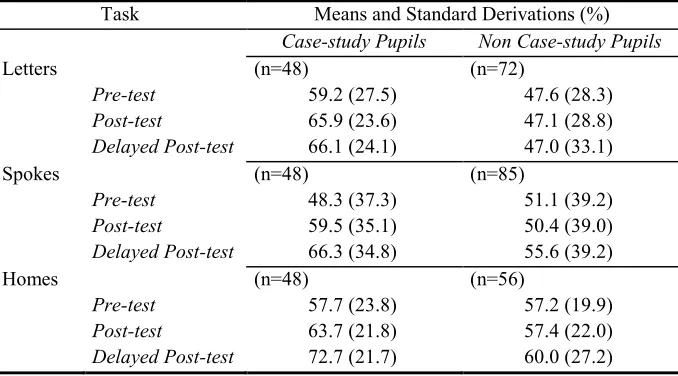
First, we checked to see if there were any differences between the pre-test scores of the case study and non-case study pupils (see Table 1). Significant differences were only found in the Letters pre-tests (t = 2.13, p<0.05). Given the Logo programming content of this test, this implies a tendency for teachers to choose case-study pupils with slightly more Logo programming experience than the rest of class. However, the absence of differences amongst pupils in the other tests suggests that the case study pupils were representative of the rest of the class in terms of the mathematical knowledge of the tasks. Second, it was apparent from these data that there were discernable differences in progress between the case study and non case study pupils which needed to be examined statistically.
Task Means and Standard Derivations (%)
Case-study Pupils Non Case-study Pupils
Letters (n=48) (n=72)
Pre-test 59.2 (27.5) 47.6 (28.3)
Post-test 65.9 (23.6) 47.1 (28.8)
Delayed Post-test 66.1 (24.1) 47.0 (33.1)
Spokes (n=48) (n=85)
Pre-test 48.3 (37.3) 51.1 (39.2)
Post-test 59.5 (35.1) 50.4 (39.0)
Delayed Post-test 66.3 (34.8) 55.6 (39.2)
Homes (n=48) (n=56)
Pre-test 57.7 (23.8) 57.2 (19.9)
Post-test 63.7 (21.8) 57.4 (22.0)
Delayed Post-test 72.7 (21.7) 60.0 (27.2)
Table 1: Means and Standard Deviations of Test Scores
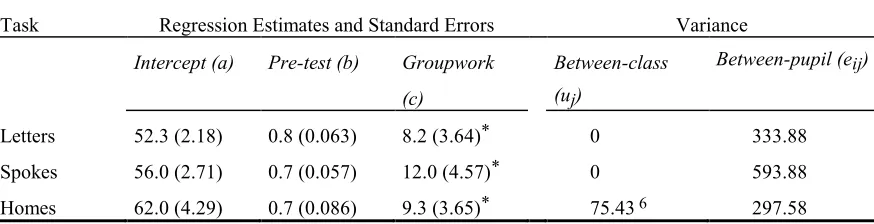
For each task, it was assumed that the delayed post-test scores could be modelled as a linear function of pre-test scores and involvement in the groupwork. Thus, the basic regression model adopted was;
Yij = a + bXij + cTij + uj + eij
where Yij was delayed post-test score of the ith pupil in the jth class, Xij was the pre-test score of the ith pupil in the jth class, Tij = 1 or 0 depending on whether or not the ith pupil in the jth class was involved in the groupwork. The residuals were modelled by two deviation variables; uj was the deviation of the jth class and eij was the deviation of the ith pupil in the jth class. This allowed between-class and between-pupil variation to be shown separately.
5 The statistical package used was ML3, developed as part of the Multilevel Modelling Project at the
The model was elaborated for each task to explore the influence of gender, pre-test attainment and teacher-designated ability on the extent of progress of each pupil. The first of these involved adding a term for gender (Gij) to examine overall gender differences and the interaction variable of gender and groupwork involvement (GijTij) to examine any particular gender differences of the case-study pupils. Differences due to pre-test attainment were examined by simply adding an interaction variable of pre-test score with groupwork involvement (XijTij) to the basic model to assess whether benefit due to groupwork varied significantly across the pre-test attainment range. Finally, analysis of teacher-designated ability involved adding terms for high, middle and low designation (Hij, Mij and Lij) to the basic model to assess whether any of these lead to any significant differences in delayed post-test score.
Applying the basic regression model, our findings suggested that pupils within the case study groups improved significantly more than the rest of the class across all three tasks – both in post- and delayed post-tests. Table 2 shows the estimated parameters of improvement at delayed post-test. Mean benefits due to involvement in each task were: Letters (8.2%), Spokes (12%) and Homes (9.3%). The considerable improvement of the case study pupils in comparison with the non case study pupils is an interesting finding for two reasons – even though the rest of the class were not engaged in any comparative instruction, individualised or otherwise. First, the tests were not simply individualised versions of the group tasks but placed the mathematics in different contexts, both in terms of being exclusively paper-and-pencil based and in the representation of the mathematics. For example, the Homes tests involved soting and classifying abstract designs on cards whereas the task was ostensibly about the characteristics of homes. Second, the improvement was sustained and in some cases even increased at delayed post-test – in contrast to the more common drop in progress at delayed post-test. Both these features suggest that, from the perspective of mathematics education, the gains were the result of conceptual learning.
Task Regression Estimates and Standard Errors Variance
Intercept (a) Pre-test (b) Groupwork
(c)
Between-class (uj)
Between-pupil (eij)
Letters 52.3 (2.18) 0.8 (0.063) 8.2 (3.64)* 0 333.88 Spokes 56.0 (2.71) 0.7 (0.057) 12.0 (4.57)* 0 593.88 Homes 62.0 (4.29) 0.7 (0.086) 9.3 (3.65)* 75.436 297.58 * p < 0.05 Table 2: Regression estimates for basic model
We then applied the gender regression model to examine whether there were any associations between gender and progress for each task. These all proved non-significant. First, for all the pupils tested, there were no discernible gender differences in either pre-test attainment or progress to post and delayed post-test, indicating no gender differences in the classes from which the case study pupils were picked. More importantly, there were no discernible gender differences in progress amongst the case study pupils themselves as a result of involvement in the group settings.
Turning to ability, we first examined whether benefit due to groupwork varied significantly across the pre-test attainment range. This was not found to be the case. Similarly, we examined whether teacher-designated high, middle and low ability pupils benefitted differently from the groupwork.
6 It should be noted that there is a substantial between-class variation for the Homes tests. This may
Again we found no evidence of significant differences. Thus, we have no evidence to suggest improvements were related to ability levels from either of these measures.
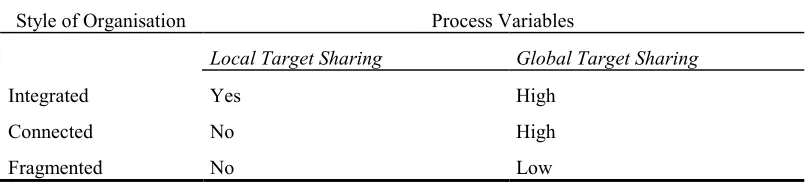
Having found no significant differences in progress between gender or ability, we turned our attention to the process factors involved in the different settings. In order to draw out descriptors of the process data, the qualitative analysis involved a number of phases in which case studies of the 24 group settings were systematically developed and compared. We started with the systematic episode analysis and narrative descriptions of each setting and abstracted preliminary descriptors of the group interaction over the local and global targets of the tasks. Cross-setting comparisons were made to develop these process descriptors further and to draw out those dimensions which were stable across different tasks and software environments and those that varied. The process variables were sorted into clusters to provide superordinate classifications of group functioning. Two clusters in particular emerged. The first, style of organisation, took into account the executive strategies used in the settings, and the second, pattern of interaction, the form of interaction between the group members as they addressed the local and global targets (see Hoyles, Healy and Pozzi 1993 for more details). We identified three styles of organisation – the ways in which the groups organised themselves in relation to the tasks and the resources – termed integrated, fragmented and connected. These were based on two descriptors of the executive strategies of the group; local target sharing and global target sharing (see Table 3). Local target sharing describes whether or not the local targets were explicitly distributed amongst subgroups. High global target sharing indicated that more than half of the global targets addressed within a setting were communicated across four or more pupils. Otherwise, global target sharing was classified as low.
Style of Organisation Process Variables
Local Target Sharing Global Target Sharing
Integrated Yes High
Connected No High
Fragmented No Low
Table 3: Styles of Organisation
In an integrated style, local targets were shared out and global targets considered by the group as a whole, working either across or away from the computers. This style in fact resembled the way the task had been planned. It was the most common (16 of 24 settings), but only emerged if one or two pupils took on the role of co-ordinator dominating the task and group-management decisions. The other two organisational styles characterised settings where the group split into subgroups who attempted both the local and global targets of the task separately. In a fragmented style, rival and competing sub-groups, invariably single-sex, shared neither local nor global targets and concentrated on constructing computer products (6 of 24 settings). In a connected style, though subgroups worked towards separate goals, they maintained channels of communication through which help was given and the task demands discussed (2 of 24 settings). In contrast to integrated styles, co-ordination activity of any kind was rare within these latter styles of organisation.
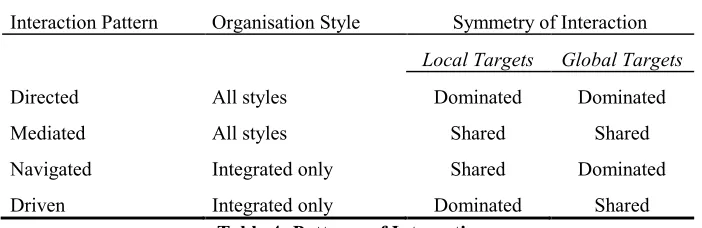
We further identified four patterns of interaction, based on whether interaction over local and global targets of the task was dominated by particular pupils or more shared between all group members (see Table 4). The measure of dominance is based on the episode analysis, and is defined by whether a minority7 of pupils in the group or subgroup were more than twice as active as the other pupils over
the local or global target episodes. Two patterns – directed and mediated – occurred within all three organisational styles. Directed interactions were characterised by dominant patterns of influence with
7 This would involve one pupil in pairs and trios, and either one or two pupils in larger group
one or two pupils – directors – dominating both local and global targets. In contrast, in mediated interactions, pupils had a more equal influence over all targets. These two patterns represent opposite ends of a continuum in that, in the former, all targets are dominated and in the latter all shared. In an integrated style only, two further patterns of interaction were identified – navigated and driven. In navigated interactions, one or two pupils – navigators – took control of the global mathematical issues while influence on the local targets remained evenly distributed. In contrast, in driven interactions, global target discussion was symmetric in terms of individual pupil input, but the construction of the local targets, at one computer at least, was dominated by one pupil – a driver.
Interaction Pattern Organisation Style Symmetry of Interaction
Local Targets Global Targets
Directed All styles Dominated Dominated
Mediated All styles Shared Shared
Navigated Integrated only Shared Dominated Driven Integrated only Dominated Shared
Table 4: Patterns of Interaction
Interaction Pattern Organisation Style
Integrated Connected Fragmented
Directed 6 6 24
Mediated 53 6 12
Navigated 24 n/a n/a
Driven 13 n/a n/a
Table 5: Distribution of case-study pupils across organisational style and pattern of interaction (n = 144)
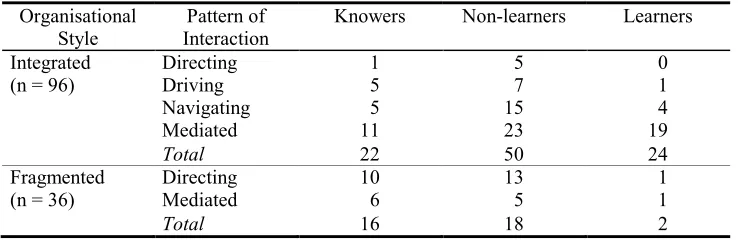
Table 6 shows the distribution of pupil progress within organisation style and pattern of interaction across all three tasks8. Pupils within groups adopting a fragmented style of organisation did not
progress to the same extent as those within groups adopting an integrated style (2 = 3.96, p < 0.05). Within this style, we found differential progress across the different patterns of interaction (2 = 8.12, p < 0.05). The data suggest that pupils who were involved in mediated interactions progressed furthest. Of the pupils involved in interactions which involved some domination, there is a slight indication that navigated pupils progressed further than pupils within the remaining two patterns of interaction. Moving to the fragmented style, there is no evidence of differential progress across patterns of interaction (2 = 0.2, ns).
Organisational
Style Interaction Pattern of Knowers Non-learners Learners
Integrated Directing 1 5 0
(n = 96) Driving 5 7 1
Navigating 5 15 4
Mediated 11 23 19
Total 22 50 24
Fragmented Directing 10 13 1
(n = 36) Mediated 6 5 1
Total 16 18 2
Table 6: Distribution of progress within
organisational style and pattern of interaction (n = 132)
These findings suggest that the relationship between dominance and learning is not straightforward. Without the emergence of dominance over management issues, the more successful integrated style of working did not emerge. On the other hand, dominance could be detrimental to learning where it involved the monopolisation of the task, especially the computer-based local targets. Given these influential process factors, the question clearly arises as to whether gender and ability have any effect on the genesis and nature of these group processes.
Turning to gender first, contrary to recent research findings, we were not able to predict the pattern of interaction from the gender of the pupils in any of the tasks – girls were as likely to dominate interactions as boys and take on roles as directors, navigators or drivers. Girls and boys were also equally likely to adopt co-ordinating positions (see Table 7).
8 Connected settings are left out as there were too few to be a reliable indicator and for the rest of the
Dominant Positions Girls Boys Total
Co-ordinator 13 14 27
Director 6 8 14
Navigator 4 4 8
Driver 2 4 6
Table 7: Distribution of Dominant Pupils by Gender (n = 44)
Turning to group organisation however, subgroups in a fragmented style of working were all single sex, which clearly pointed to a gender-related effect. From our interviews with the teachers, we found that in all the settings in which this style was adopted, there was pre-existing hostility between some of the group members. Although antagonism between pupils was not always based on gender per se, it did invariably cross gender lines. For example, in one group, antagonism revolved around an isolate boy, resulting in a gender split of three girls, two boys and the isolate; in another group there was a strong girl-girl friendship pair who had difficulty communicating with boys and chose not to work with them.
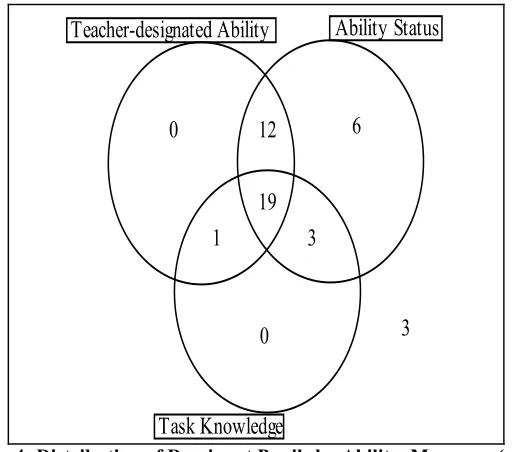
19 0
0 3
1 12
3 6
Teacher-designated Ability Ability Status
Task Knowledge
Figure 4: Distribution of Dominant Pupils by Ability Measures (n = 44)
More consistent with the findings of other research was the high association found between pupils who dominated – in patterns of interaction or as co-ordinators – and pupils of high ability – either in terms of teacher-designated high ability or in terms of a high pre-test score. Fig. 4 shows that 35 out of the 44 dominant pupils displayed at least one of these characteristics. However, there were cases of pupils with low pre-test scores or teacher-designated low ability who dominated interaction and were allowed to do so by the other members of the group, as well as cases of pupils who clearly demonstrated understanding of the task problem yet were ignored by their peers. To try to find a more general characteristic of dominating pupils, we used the sociometric data to examine status effects. We found that, more than any other characteristic, dominating pupils had high ability status among their peers in the class (see Fig. 4).
Discussion
brought about goal structures that were less to do with understanding the solution process than with competing to finish the computer aspects of the tasks as quickly as possible. The visibility of the computer screens accentuated this competition by allowing subgroups to compare each other's progress. One could therefore offer a social psychological account of the demotivating effect of seeing other subgroups „doing better‟, leading to less on-task behaviour (see Johnson and Johnson 1975). Some subgroups within fragmented styles clearly did become demotivated in this competitive scenario, and at times off-task and disruptive. This does not however explain the fact that even the subgroups who were quite productive and seemingly highly motivated did not improve as much as pupils within integrated styles
We offer two complementary explanations. First, in fragmented styles competing subgroups ignored or paid cursory attention to the global aspects of the task. This meant that they concentrated only on the possibly incorrect strategies developed at their own computers and were less likely to be confronted with differing mathematical strategies constructed by other subgroups. Within integrated styles, on the other hand, it is more likely that this conflict of strategy will be taken on board and indeed exploited within the context of whole-group interaction. This explanation would go along with a socio-cognitive conflict account, whereby pupils are confronted with the different task perspectives of their peers. A second account is based on the finding that learning was influenced by the pattern of interaction – with mediated interaction seemingly most effective. This points towards an explanation couched in terms of the benefits of co-construction between peers. However, the indication that pupils progressed further in navigated than directed or driven interactions suggests that individual pupils can learn even if whole group global target discussion is dominated by others. Mutual decision making over actions at the computer may have more influence on learning than mutual whole group discussion – provided there is the opportunity to at least be party to this discussion.
Taken together, these explanations lead us to suggest that a scenario optimal for learning is one in which pupils first engage in mutual discussion with peers in the context of construction with the computer (mediated or navigated interaction), then come across the perspectives of other pupils in whole group discussion (an integrated style). Without the former, pupils may not have developed any kind of strategy or understanding of the problem, so cannot make sense of any possibly conflicting strategies from their peers. Without the latter, pupils may remain centrated on their own way of understanding the problem, so are less likely to learn. Our view is that the software plays a crucial role here. It allows pupils to construct the mathematics for themselves, at their own level of sophistication, but in a way which requires them to formalise their mathematics. The nature of the formal language of the software provides the pupils with the means to do this and a common language with which to talk about and reflect upon the mathematics. In the light of this, they are more able to make sense of the possibly more sophisticated ideas and perspectives of others in the whole group activity.
The software and structure of the tasks could also contribute to our finding that pupils of different ability benefitted similarly. We designed the computer-based local targets of the task so as to allow a variety of „in-roads‟ in constructing the mathematics, so every pupil could make a contribution and no pupil was likely to be excluded from the task on the grounds of difficulty. We would suggest that computer work thus reduced the cognitive distance between the pupils, allowing greater possibility for all pupils concerned to take a new perspective on the problem, or to co-ordinate different perspectives.
differences did exist – and our group interviews suggest that in some groups they did – this had little bearing on group processes. Girls were as likely to dominate as boys – both positively as co-ordinators and more negatively in asymmetric patterns of interaction. Another focus for interpreting gender differences has been to look at the influence of the task. As previously mentioned Littleton et al. (1992) found that a task may contain implicit gender biases which can elicit attitudinal differences. It could be argued that our tasks had no such gender bias and this may be the reason why no differences between girls and boys were found.
It should be stressed, however, that while the pupil characteristics of ability and gender had no direct effect on learning, interpersonal perceptions arising from these two factors were associated with different forms of group processes. Fragmented styles of working in our study were connected with cross-gender antagonism – although this may be as much a finding about antagonism as gender. In our sample, there was a variety of negative interpersonal perceptions. As was indicated earlier, two examples include isolate pupils with whom others would not work and inseparable single-sex pairs who did not want to work with others. The fact that these and other problems resulted in cross-gender splits in the group may partly be a function of age. We would speculate that a wide variety of antagonisms in different age groups are likely to result in the splitting of a group along different lines, with similar detrimental results. The social system of the group, in terms of mutual perceptions amongst the group members, would therefore seem to have an influential effect on how any group organises and hence on the nature and extent of learning.
The link between high ability status and domination also points towards the effect of the social system. However, this measure of ability, as well as the teacher‟s measure, stemmed not from the group but from the class as a whole. Thus, it is an aspect of a class culture rather than the inter-personal perceptions of particular group members which enables certain pupils to emerge in dominating positions during a task. The origins of this status marking may come in part from a pupil‟s personality – for example, how extrovert or confident the pupil is. The teacher‟s view of a pupil‟s ability and how this is displayed in the classroom may also have an influence on how peers perceive the pupil concerned – a phenomenon particularly evident in the 'computer skilled'.
At one level, these factors indicate that there may be certain difficulties in attempting to optimise structured groupwork in the classroom. Implicit social marking in the classroom and the characteristics of peer relationships in and out of the classroom may constantly undermine the conditions for successful groupwork. However, at a deeper level, they may indicate that the experimental research which attempts to disentangle the cognitive processes involved should also look more closely at social processes. As Saloman and Globerson (1989) point out, the fact that pupils know each other, have likes and dislikes of each other and have expectations of each other and themselves is rarely considered in the research. But why is it that such broader effects are rarely centre-stage?
Perhaps the artificial nature of many experimental settings suppresses the social marking in spontaneous exchanges between peers. Another possibility is that the tasks used in some studies are fairly routine and interaction constrained or highly scripted. This may go some way to circumvent social processes from affecting interaction. It points to the influence of the task setting but also raises another important issue. Within mathematics education, the use of simple tasks is not appropriate for developing conceptual as opposed to procedural knowledge and more complex activities are necessary. Such activities tend not to be well suited to tight, prescribed scripting and attempts to constrain the interaction may end up suppressing pupils‟ active engagement in the construction of mathematical knowledge.
interaction has in part has been recognised and acted upon in considering adult-child interactions. As Perret-Clermont points out:
"One observes then that the different systems of roles, social status and expectations gear the tripolar interaction between adult, child and subject of discourse. They affect both cognitively and socially the activity via the way in which the subject interpret the nature of the task and the situation" (Perret-Clermont 1990)
REFERENCES
Barbieri, S., and Light, P. (1992), Interaction, Gender and Performance on a Computer-based Problem-solving task., In: Mandel, H., De Corte, E., Bennett, S.N. and Friedrich, H. F. (Eds), Learning and Instruction: European Research in International Contexts.
Blaye, A., (1988), Confrontation socio-cognitive et résolution de problème, Unpublished doctoral thesis, University of Provence.
Dunne, E. and Bennett, N., (1991), Talking and Learning in Groups, Routledge: London.
Eraut, M., and Hoyles, C.,(1988) Groupwork with Computers. Journal of Computer Assisted Learning 5(1), 12 – 24
Forman, E., and Cazden C. (1985) Exploring Vygotskian Perspectives in Education: the Cognitive Value of Peer Interaction, In Wertsch, J. (ed), Culture, Communication and Cognition: Vygotskian Perspectives, CUP: Cambridge.
Glachan, M. and Light P., (1982), Peer Interaction and Learning: can two wrongs make a right? In: Butterworth, G. and Light, P. (Eds), Social Cognition, Harvester: Brighton.
Goldstein, H., (1987), Multilevel Models in Educational and Social Research, Griffin: London. Hoyles, C., Healy, L. and Pozzi, S., (1993), Telling a story about mathematics, groups and
computers., Paper presented at the ESRC InTER seminar on Peer Collaboration, Oxford.
Hughes, M., Brackenridge, A., Bibby, A., and Greenhough, P. (1988) Girls, Boys and Turtles: gender effects in young children learning with Logo, In Hoyles, C. (ed), Girls and Computers, Bedford Way Paper 34, Institute of Education University of London.
Johnson, D., and Johnson, R.,(1975), Joining Together: Group Theory and Group Skills. Prentice Hall, New Jersey
Laborde, C., (1993), Interaction between social and mathematical aspects in the learning of mathematics, Paper presented at the ESRC InTER seminar on Peer Collaboration, Oxford. Light, P. (1983), Social Interaction and Cognitive Development: a review of post-Piagetian research,
In: Meadows, S. (Ed), Developing Thinking: Approaches to Children’s Cognitive Development.. Light, P., Foot, T., Colbourn, C. and MacClelland, I. (1987), Collaborative interaction at the
microcomputer keyboard, Educational Psychology 7, 13 – 21.
Light, P.H. and Blaye, A. (1990) Computer-based Learning the Social Dimensions, In Foot, H.C., Morgan, M.J., and Shute, R.H. Children Helping Children, Wiley and Sons Ltd.
Littleton, K., Light, P., Joiner, R., Messer, D. and Barnes, P. (1992), Pairing and gender effects in children‟s computer-based learning, In: European Journal of Psychology of Education 7(4), 311 – 324.
Mugny, G. and Doise, W. (1978), Socio-cognitive conflict and structuration of individual and collective performances, European Journal of Social Psychology, 8, 181 – 192
Mugny, G., Perret-Clermont, A-N. and Doise, W., (1981), Interpersonal co-ordinations and sociological differences in the construction of the intellect, In: Stevenson, G. N. and G. B. Davis, G. B. (Eds), Applied Social Psychology, vol 1, Chichester: John Wiley.
Perret-Clermont, A-N., Schubauer-Leoni, M.L. and Grossen, M. (1990), Interactions sociales dans le dévelopement cognitif: nouvelles directions de recherche, paper presented for Prof. V. Rubtsov, Moscow.
Perret-Clermont, A.N. (1980) Social Interaction and Cognitive Development in Children, Academic Press: London.
Salomon, G and Globerson, T. (1989) When teams do not function the way they ought to, International Journal of Educational Research 13(6), 89 – 99
Slavin, R. (1983) Co-operative Learning, Longman: New York.
Underwood, G. , McCaffrey, M. and Underwood, J. (1990), Gender Differences in a Co-operative Computer-based Language Task, Educational Research. 32(1), 44 – 49.
Vygotsky, L., (1962), Thought and Language, MIT Press: Cambridge, Ma.
Webb, N.M. (1982) Peer Interaction and Learning in Co-operative Small Groups, Journal of Educational Psychology, 74, 642 – 655.