ABSTRACT
LONG, JR., JOSEPH BUXTON. Parental Perceptions and Expectations of the North
Carolina State 4-H Summer Camping Program Regarding the Development of Targeted Life Skills. (Under the direction of Dr. Mark Kistler and Dr. Barry Croom.)
Camping has been established as one of the primary delivery modes for 4-H and is
recognized as a strong way to promote youth development and build life skills needed for
youth to be positively contributing members as adults to society. However, there is a
question as to whether parents and guardians of 4-H youth perceive the real value of
camping. The purpose of this study was to determine how the parents perceive the value of
the North Carolina State 4-H Camps in building targeted life skills of the participants and
parents’ expectations of the experience for their children while there.
This study used descriptive survey research to accomplish this purpose utilizing a
census from the target population of parents of youth that attended 4-H camp during the
summer of 2013. The design for the questions in the instrument was based on Dr. Patricia
Hendricks’ (1996) Targeting Life Skills Model, which included 35 life skills. After the
questionnaire was designed, data were collected using the Internet survey process outlined by
Dillman (2000). This data was analyzed using the Statistical Package for the Social Sciences
(SPSS) program 21 and utilized descriptive statistics to compute the results.
Findings from this study revealed that positive life skill development can be achieved
from the camping experience and that parents recognize and expect this. Using the Targeting
Life Skills (TLS) Model, growth was shown in all four of the basic categories, Head, Heart,
© Copyright 2014 Joseph Buxton Long, Jr.
Parental Perceptions and Expectations of the North Carolina State 4-H Summer Camping Program Regarding
the Development of Targeted Life Skills
by
Joseph Buxton Long, Jr.
A dissertation submitted to the Graduate Faculty of North Carolina State University
in partial fulfillment of the requirements for the degree of
Doctor of Education
Agricultural and Extension Education
Raleigh, North Carolina
2014
APPROVED BY:
_______________________________ ______________________________
Dr. Mark Kistler Dr. Barry Croom
DEDICATION
This study and the complete process is dedicated to my wife and children who have
supported these efforts for so many years. It is also dedicated to all the young people who
have come through the summer camp program and whose lives have been affected in so
many positive ways. It is for them that this process is so important and hopefully some good
will come from what has been learned that will continue to enhance the process of positive
youth development for many years to come. And lastly, this process would never have been
possible without the support of my parents and most especially my Mother who has always
BIOGRAPHY EDUCATION
M.Ed. Education Agricultural Education
December 2010 North Carolina State University; Raleigh, North Carolina
B.A. Liberal Arts Industrial Relations
May 1986 University of North Carolina; Chapel Hill, North Carolina HIGHLIGHTED PROFESSIONAL EXPERIENCE
Apr 1995-Present Director of 4-H Rural Life Center and 4-H Extension Associate
Cooperative Extension, Halifax, North Carolina
Directs year round programming for youth at the 4-H Center to help them grow into productive and responsible adults and work with 4-H after school programming throughout the county.
Sept 1991-Apr 1995 Owner/Operator
Long Farm Service, Seaboard, North Carolina
Started a business doing custom wok for farmers such as harvesting and spraying crops while continuing to sell insurance as an independent insurance agent.
Dec 1989-Sept 1991 Insurance Agent
Farm Bureau Insurance, Halifax, North Carolina
Sold a full line of insurance, which included auto, home, life, and health.
May 1987-Oct 1989 Zone Sales Manager
R-Anell Custom Homes, Inc., Denver, North Carolina
Sold manufactured and modular homes to existing dealers and developers and developed new accounts.
Sept 1986-May 1987 Zone Sales Manager
Sterling Manufactured Homes, Inc., Albemarle, North Carolina
ACKNOWLEDGMENTS
I would really like to thank my graduate committee, Dr. Kistler, Dr. Croom, Dr.
Jayaratne, and Dr. Kirby, and the faculty and staff in the Department of Agricultural and
Extension Education at North Carolina State University. Without all of their support and
guidance, there would be no way to successfully complete this process. I want to also thank
Dr. Moore and Dr. Bruce, both of which gave me guidance whenever I needed it and were
always very willing to help.
I would also like to thank my co-workers within Halifax County Cooperative
Extension. They were always there to listen when I needed someone. We have a small but
tight knit group that are more than willing to lend a hand or just give moral support in
positive ways when most needed.
Lastly, I want to give another special thank you to my wife, whom has been in school
working on her own degree at the same time and has still found time to be a wonderful
Mother and to my own Mother whom without her support and encouragement, this process
TABLE OF CONTENTS
LIST OF TABLES ...vii
LIST OF FIGURES ...viii
Chapter 1: Introduction ...1
Conceptual Framework ...1
Purpose of Study ...5
Research Objectives ...6
Definition of Terms ...6
Assumptions ...8
Limitations of the Study...8
Summary ...8
Chapter 2: Theoretical Framework and Review of Related Research ...10
Theoretical Rationale ...10
Literature Review ...14
History of 4-H ...14
Developing Life Skills ...17
Camping Programs ...22
Parental Perceptions of Youth Programs ...26
Summary ...27
Chapter 3: Methodology ...29
Purpose of Study ...29
Research Objectives ...29
Type of Research ...29
Population ...30
Instrumentation ...30
Data Collection ...32
Data Analysis ...33
Summary ...34
Chapter 4: Findings ...35
Research Objectives ...38
Objective One ...38
Objective Two ...40
Objective Three ...44
Objective Four ...45
Chapter 5: Summary, Conclusions, and Recommendations ...49
Summary of Procedures ...49
Summary of Findings ...51
Conclusions ...51
Objective One ...51
Objective Two ...52
Objective Three ...53
Objective Four ...53
Recommendations for Practice ...54
Recommendations for Future Research ...56
REFERENCES ...58
APPENDICES ...63
Appendix A: Research Instrument ...64
Appendix B: IRB Approval Letter ...73
Appendix C: Preliminary Contact with Participants ...74
Appendix D: Initial Survey Link Sent to Participants ...75
Appendix E: First Follow-up E-Mail Sent to Participants ...76
Appendix F: Second Follow-up E-Mail Sent to Participants ...77
Appendix G: Third Follow-up Email Sent to Participants ...78
LIST OF TABLES
Table 1 Participant’s Gender ...35
Table 2 Participant’s Race ...36
Table 3 Participant’s Age ...37
Table 4 Respondent’s Relationship to the Child who Participated in the Summer Camp ...37
Table 5 Aggregated Values for the Four Basic Categories of the TLS Model ...39
Table 6 Overall Values for the Four Basic Categories of the TLS Model ...40
Table 7 Participant Sharing their Experience with Respondent Response Rate ...40
Table 8 Rating of Overall Camp Experience ...41
Table 9 Response to Sending Child to Camp again Next Year ...41
Table 10 Response to Recommending Camp to Others ...42
Table 11 Value Respondents put on the Impact Camp had on Building Life Skills ....42
Table 12 Respondent’s Response to Observed Changes in Campers ...43
Table 13 Response to How Would You Describe the Influence of Camp on Your Child ...44
Table 14 Response to Why was the Child Sent to Camp ...45
LIST OF FIGURES
Figure 1 Targeting Life Skills Model ...12
Figure 2 Experiential Learning Model ...13
Chapter 1: Introduction
North Carolina has a strong tradition of providing camping opportunities for youth
through the Cooperative Extension’s Youth Development program, 4-H. North Carolina
opened its first 4-H Camp, Swannanoa, in 1929. As a result of tremendous growth and
interest in the 4-H camping program, North Carolina has opened several other facilities. At
present, three summer camps are operating within the state 4-H program, which are geared
towards building life skills, such as leadership, communication, and self-esteem, necessary
for positive youth development. These three camps and the ones that will be the focus of this
study are Betsy-Jeff Penn, Millstone, and the Eastern Center. 4-H has recognized the value
of the camping experience in developing youth capable of making positive contributions to
society by building the life skills necessary for them to be successful. This is consistent with
the culture of parenting in the United States. In order to see if the parents share this view,
assuming they want to see their children live successful and productive lives, an assessment
of the value of the 4-H camping program as perceived by the parents is necessary. This
matters when designing summer camp programs trying to maximize efforts in positive youth
development.
Conceptual Framework
There are two general types of camping, recreational camping and organized
camping. Recreational camping
generally implies a way of life more simple than that to which the camper will
return…This concept of camping occurs in small or large groups, often unsponsored
by groups of friends or relatives, with the leaders designated from within the group
(Eells, 1986, p.3).
The American Camp Association defines organized camping as
a sustained experience, which provides a creative, recreational, and educational
opportunity in group living in the outdoors. It utilizes trained leadership and the
resources of the natural surroundings to contribute to each camper’s mental, physical,
social, and spiritual growth (American Camp Association, 2012, p. 285).
Why is this important to 4-H and why is it important to parents?
4-H leaders and volunteers have understood why camping is important and how youth
build life skills and gain from this experience, but do parents see it the same way? To begin
this quest, we need to learn something about the history of the 4-H program. 4-H is one of
the largest youth development organizations in the country. According to the North Carolina
4-H Youth Development website
the North Carolina 4-H Program focuses on utilization of experiential, non-formal,
community based youth development practices which recognize the worth and dignity
of every individual, and the belief that the development of life skills enables young
people to become caring, coping, competent, and contributing citizen leaders who
will build strong foundations for our future (North Carolina 4-H, n.d.).
How was this mission developed? It all began around 1898 when the United States
Department of Agriculture (USDA) hired Seaman Knapp, now known as the Father of
Cooperative Extension, who promoted better farming practices using the demonstration
community to adopt newer production methods developed by the Land Grant Universities
and the Experimental Research Stations. Then in 1902 A.B. Graham of Ohio formed the
Tomato Club for girls and the Corn Growing Club for boys using this demonstration method
and hands-on approach to programming. These early 4-H pioneers quickly recognized the
importance of youth in bringing about change due to these young people’s open-mindedness
and willingness to try new things (National 4-H, n.d.). It was the demonstration method and
the idea of experiential learning by doing that formed the foundation for 4-H and youth
development, which has lasted and been successful for over a century. Camping, along with
4-H Clubs, Special Interest, and School Enrichment, are the four primary delivery modes that
4-H uses to foster positive youth development. Camping is the only delivery mode focused
on in this study. As noted earlier, there is a difference in recreational camping and organized
camping as defined by the American Camp Association.
Why is camping important to youth development and how did this become the case?
Many leading educationalists of the early twentieth century, including John Dewey, stressed
creative learning and process and encouraged the experiential hands-on learning
opportunities found in summer camps (Dewey, 1934; Elwell, 1925; Mason, 1930; Ward,
1935). In 1910, Alan Williams founded the Camp Directors Association of America
(CDAA), which authorized “a model and standardizing influence for the organized camp
experience for the young” (American Camp Association Anniversary Timeline, 2010, p. 10).
In 1924, the CDAA and the National Association of Directors of Girls’ Camps merged and
the name was changed to the Camp Director Association (CDA). The name was changed
made to alleviate any confusion with recreational camping to the American Camp
Association (ACA). The history of camping goes back much further than 1910. Frederick
Gunn has been credited as the father of organized camping. He was the headmaster of the
Gunnery School for boys in Connecticut and in 1861, in the midst of the United States Civil
War, he took a group of boys on a two-week trip to Welch’s Point on Long Island Sound.
Most of the boys hiked the 40 miles, but there were a couple of mules for those unable to
make the complete trip on foot. A market wagon carried the supplies and tents and Mr.
Gunn’s wife went along in a carriage. They did their own cooking and enjoyed swimming,
songs, games, and campfires. Although Gunn is credited with the first camp, others had
similar experiences around the same time period, however what is most important is the
impact of this new experiential learning approach. (Eells, 1986) The only organization that
accredits all types of camps is the ACA.
The main purpose of the ACA accreditation program is to educate camp owners and
directors in the administration of key aspects of camp operation, particularly those
related to program quality and the health and safety of campers and staff. The
standards establish guidelines for implementing policies, procedures, and practices.
The camp, then, is responsible for implementing and ensuring policies are followed.
Another purpose of the ACA accreditation is to assist the public in selecting camps
that meet industry-accepted and government recognized standards (American Camp
Association, 2012, p. 12).
Over 11,000,000 youth attend the more than 12,000 camps each summer across the United
Camp Association, n.d.) From a parental standpoint, accreditation is something that should
be of value and importance because it means that a camp has made a commitment to the
safety and welfare of the youth they serve. Various reasons could exist as to why more
camps are not accredited. Some could include, the time it takes to go through the more than
three hundred standards required to be accredited, or the total cost of such an endeavor. It is
also possible for camps not to meet enough of the standards required for accreditation and to
fail to become accredited. Regardless of the reason, all camps benefit from the existence of
the American Camp Association (ACA) if for no other reason than their lobbying efforts in
Congress helping to make sure that positive youth development is at the forefront of
legislation whenever possible. (American Camp Association, n.d.) All three of the 4-H
camps in this study are accredited through ACA. Having such a long history of promoting
positive youth development has established the American Camp Association (ACA) as an
important asset to the camping movement. The camping movement has an even longer
history of promoting positive youth development through the experiential learning approach
in developing life skills necessary to be successful and contributing adults.
Purpose of the Study
Camping has been established as one of the primary delivery modes for 4-H and is
recognized as a strong way to promote youth development and build life skills needed for
youth to be positively contributing members as adults to society. However, there is a
question as to whether parents and guardians of 4-H youth perceive the real value of
camping. The purpose of this study was to determine how the parents perceive the value of
parents’ expectations of the experience for their children while there. The Targeting Life
Skills Model (Hendricks, 1996) was the model chosen where 16 of her 35 life skills were
evaluated to determine the effectiveness of the 4-H camping program. Hendricks (1996)
chose the 35 life skills in her model by reviewing numerous other models and choosing those
that consistently emerged as the ones that were necessary for a person to attain success in
life. This study examined 16 of the 35 life skills that the North Carolina State 4-H camping
leadership deemed appropriate in a summer camp and should be recognized by parents as
measurable.
Research Objectives
The objectives of this study were:
1. To determine the effect of the camp experience in the life skills development of
the campers as perceived by the parents.
2. To determine if parents value the impact the 4-H camps had on building life skills
of their children.
3. To ascertain why parents send their children to 4-H camps.
4. To determine needed improvements for camps to meet the expectations of
parents.
Definition of Terms
4-H: Cooperative Extension’s youth development program (North Carolina 4-H, n.d.).
Accreditation: The act of granting credit or recognition, especially with respect to an
Day Camp: Camp sessions are operated and staffed by the camp. The camper goes home to
parent or guardian each night, except for an occasional overnight (American Camp
Association, 2012, p. 23).
Life Skill: The way one applies learned skills to real life situations (Oklahoma 4-H, n.d.).
Organized Camping: A sustained experience, which provides a creative, recreational, and
educational opportunity in group living in the outdoors. It utilizes trained leadership and the
resources of the natural surroundings to contribute to each camper’s mental, physical, social,
and spiritual growth (American Camp Association, 2012, p. 285).
Recreational Camping: Generally implies a way of life more simple than that to which the
camper will return…This concept of camping occurs in small or large groups, often
unsponsored by any organization; it is usually carried out for pure leisure or recreational
purpose by groups of friends or relatives, with the leaders designated from within the group”
(Eells, 1986, p.3).
Resident Camp: Camp sessions are generally at least five days and may be multiple weeks in
length. Program is operated and staffed by the camp and supervision of individual campers
is a camp responsibility (American Camp Association, 2012, p. 25).
Skill: A learned ability to do something well (Oklahoma 4-H, n.d.).
Youth Development: Helping youth become competent in the life skills that will prepare
Assumptions
1. Parents will answer the questions honestly and truthfully.
2. The perceptions of the parents will be good indicators of the objectives being
measured.
3. Parents responding are capable of giving accurate responses.
Limitations of the Study
1. Only parents of children from the North Carolina State 4-H Camps were included
in this study, therefore, the results can only be applied to this population and not
all camps.
2. With the survey instrument used in this study, the responses of the parents are
self-reporting; therefore, there is no way to verify the accuracy and truthfulness of
the responses.
3. Only the perceptions of parents are being used, no formal evaluation is being
conducted.
4. Camp staff at each of the three North Carolina State 4-H camps provided email
addresses. These email addresses were derived from the online registration
process done by the parents as they registered their youth for camp.
5. As the parents provided only one email address during the registration process,
only one parent’s perspective was gathered.
Summary
North Carolina has a strong tradition of providing camping opportunities for youth
and North Carolina State governments along with some local county governments have
recognized the value of the camping experience in positive youth development through the
building of life skills necessary for success as adults. 4-H and organized camping both have
long traditions of building life skills in youth necessary to be competent and contributing
members of society. 4-H recognizes camping as one of its four primary delivery modes for
youth development. The camping industry has positioned itself as a worthy opportunity to
build positive life skills in youth and has a body in the American Camp Association (ACA)
capable of ensuring the needs of the youth are met in a safe and competent manner. With the
pairing of 4-H and camping, youth have an opportunity to experience many things that are
not learned in the traditional classroom setting but are just as necessary for positive growth.
With all of these things noted and realizing that the North Carolina State 4-H Camps are
taxpayer funded, it is necessary to see how the parents, taxpayers, perceive the value of the
North Carolina State 4-H Camps regarding building targeted life skills and their expectations
Chapter 2: Theoretical Framework and Review of Related Research
There are many models utilized in the pursuit of positive youth development,
however the one that seems to be very appropriate for many 4-H programs and certainly for
the North Carolina State 4-H Camps is Dr. Patricia Hendricks’ (1996) Targeting Life Skills
(TLS) Model. Dr. Hendricks developed this program through her work with Iowa State
University Extension.
Theoretical Rationale
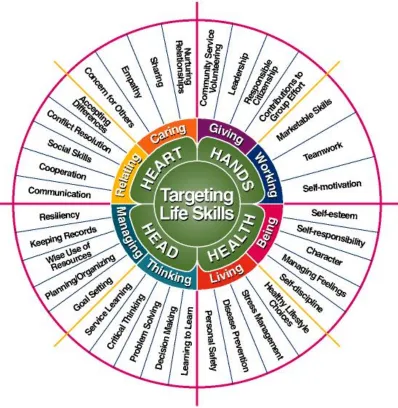
The Targeting Life Skills (TLS) Model cleverly divides life skills into the four
categories of the 4-H program, Head, Heart, Hands, and Health, and then divides them again
into eight subcategories. Each subcategory then lists out specific life skills that help build
that particular competency. Oklahoma State Extension defines a skill “as a learned ability to
do something well” and a life skill as “the way one applies learned skills to real life
situations” (Oklahoma 4-H, n.d.). Dr. Hendricks (1996) says life skills are “those skills that
help an individual to be successful in living a productive and satisfying life.” The North
Carolina State 4-H Camps, through experiential learning, strive to build life skills in the
youth attending as they develop their curriculum. As discussed earlier, experiential learning
has a long history of success in camping and through the use of the Targeting Life Skills
Model sets up a great framework for the North Carolina State 4-H Camps as they strive to
meet their goals and objectives in youth development.
Paralleling the mission of 4-H, the goal of the North Carolina State 4-H Camps is to
help youth develop essential life skills necessary for success as both youth and adults through
youth development. According to Pittman (1991) positive youth development programs
focus on five basic competency areas:
1. Health and Physical Competence – Good current health status plus evidence of
knowledge, attitudes, and behaviors that will ensure future good health.
2. Personal and Social Competence – Skills for understanding self and having
self-discipline; working with others, communicating, cooperating, negotiating, and
building relationships; coping, adapting, and being responsible; and finally,
making good judgments, evaluating, making decisions, and problem-solving.
3. Cognitive and Creative Competence – Useful knowledge and abilities to
appreciate and participate in areas of creative expression for thinking, seeing,
feeling, tasting, and hearing.
4. Vocational Competence – Understanding and awareness of life planning and
career choices, leisure and work options, and steps to act on those choices.
5. Citizenship Competence – Understanding of personal values, moral and ethical
decision-making, and participation in public efforts of citizenship that contribute
to the community and the nation.
Hendricks (1996) combines two of Pittman’s competencies to form the four categories of her
Targeting Life Skills (TLS) Model and subsequent eight subcategories as follows:
1. Head: Cognitive and Creative Competency becomes Thinking and Managing.
2. Heart: Personal and Social Competency becomes Relating and Caring.
3. Hands: Vocational and Citizenship Competency becomes Giving and Working.
The following graphic shows the specific skills that lead to mastery in each of these areas
according to the Targeting Life Skills Model and that help form the framework for youth
development at the North Carolina State 4-H Camps.
(Reprinted with permission. Hendricks, Iowa State University Cooperative Extension, 1996)
In order to grasp the complete picture, a discussion of experiential learning is
necessary and how it ties into life skill development. John Dewey (1938), said learning
experientially occurs when a person is part of an activity, looks back and evaluates it, decides
what was useful or important to remember and uses this information to perform another task.
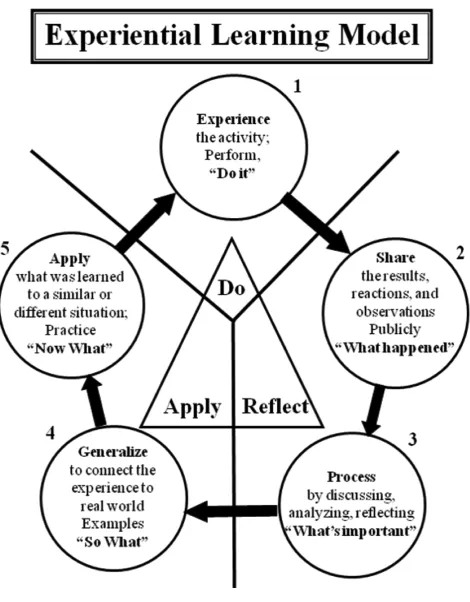
4-H promotes the five steps of the experiential learning theory, which are: 1.) Experience
2.) Share 3.) Process 4.) Generalize 5.) Apply. The following graphic shows how 4-H
teaches the experiential learning theory.
(Reprinted with permission. Pfeiffer, John Wiley & Sons, Inc., 1983)
According to the 4-H program, the first step involves the experience which encourages the
learner to learn by doing without being shown or told how by the instructor. This focuses the
attention on the learner and not the instructor. The next step, share, encourages the learner to
reflect on what they did and gets them talking, leading to the third step, process. During this
step, thought-provoking questioning is used to generate discussion on the most important
aspects of the project skill and the life skill. The next step, generalize, gets deeper and more
personal by asking questions about what the activity means to the youth themselves. The last
step is apply, where youth can tell about what they learned and how they can apply this to
other situations they will face in life. Each of these steps combined help to build subject
matter competency as well as developing essential life skills necessary for positive youth
development (National 4-H, n.d.). When teaching life skill development experientially using
the framework set forth by the Targeting Life Skills (TLS) Model in a camp setting, positive
youth development has potential to occur creating youth who are contributing members of
our society.
Literature Review
History of 4-H. According to Borden, Perkins, and Hawkey (2014) the 4-H program within the Cooperative Extension Service is more than 100 years old. It was created in the
late 1890’s and early 1900’s because of a need for better agricultural education. With a
far-reaching impact, it boasts of more than 60 million alumni serving rural/urban/suburban areas
throughout America (National 4-H, n.d.). Throughout the years it has adapted to necessary
changes to meet the challenges of a changing diversity in a different environment, but still
The 4-H motto, “To Make the Best Better,” emphasizes the approach of hands-on
experiences, always evolving and changing to meet the needs of the youth being served. One
of the first key ideas was to transfer learning from young participants to adults. Thus began
what was referred to originally as Corn Clubs and evolving today in different projects to
meet the needs of youth and families living in the 21st Century (Borden et al., 2014).
Over the years there have been many changes to the 4-H program. Horn, Flanagan,
and Thomson (1998) said studying the past can help provide important insights that can be
used in developing future programs. In the early 1900’s, Corn Clubs were formed to offer
new corn planting techniques, discovering that youth were more likely to adopt new ideas
than their parents. With parental involvement in club work, it was easier to convince the
parents to try new practices. Therefore, club work became the foundation of the 4-H
program with school programs as a fundamental model to provide many opportunities and
activities for 4-H’ers to apply newly acquired skills.
The 4-H mission and purpose became more clearly defined with the 4-H emblem,
pledge, and motto focused then as today on individual growth and development of skills
acquired through 4-H participation in project clubs. Through the offer of various projects,
club members can develop life skills to prepare them as adults (National 4-H, n.d.).
Many of the early clubs were co-ed unless separated by the club member’s selection
of projects. For example, Corn Clubs were more popular with boys and Tomato Canning
projects with girls. The practice of having volunteers lead 4-H clubs continues today with
Horn et al. (1998) go on to say that since the beginning, camping has also been an
integral part of the 4-H program. As early as 1907, records indicate a camp for boys in
Missouri with other states soon holding camp also.
Funds to support the 4-H program have come from both government and private
sources. Although a part of the Cooperative Extension system from its inception, a 1928 law
formally recognized the 4-H program enhancing it’s funding. Funding support is
continuously explored to provide for scholarships and awards programs.
One of the most dramatic changes to 4-H came in its response to world wars to meet
the challenge of social and historical events. Club work was partially abandoned to permit its
members to devote their time to raising food as part of the war effort in both World Wars.
More county agents were hired with a rapid increase in the number of H clubs. Younger
4-H members assumed additional responsibilities, assisting in increasing agricultural
production. Proudly, 4-H members claimed the production of enough food to feed a million
men serving in the armed forces. The past history of the 4-H show it is an important resource
especially during times of great need. Still true to its original mission, it shows the ability to
make necessary changes to meet new challenges that arise (Horn et al., 1998).
In the second of their two-part series on the history of 4-H, Horn, Flanagan, and
Thomson (1999) said today there are probably few 4-H Corn Clubs with the many changes
experienced in the past by the 4-H program. The challenge for the future is to adapt to the
changing needs of youth while maintaining the 4-H mission and tradition.
4-H membership peaked in 1974 with 7.5 million. At that time almost two-thirds of
million with about one-half of its members from farm or rural areas. This occurred during a
period when the number of family farms declined, changing the prime potential of traditional
membership (National 4-H, n.d.).
Horn et al. (1999) go on to say the shift to an urban population needs to be reflected
in the activities offered for urban youth whose roots are not in agriculture or rural areas. This
provides a major challenge to ways to adapt to a changing population with different
experiences and expectations. Another change is the integration of clubs. Creative ways to
be inclusive and encouraging to all youth, even those with physical and learning disabilities,
needs to be a priority in the 4-H program.
Developing Life Skills. In their study of the Texas 4-H program, Boyd, Herring, and Briers (1992) found that today’s teenagers are at high-risk of participation in many
unfavorable activities such as drug use and delinquency that might make them a burden to
society instead of contributors. With almost one-third failing to graduate from high school,
they lack the necessary skills to lead productive lives. Therefore, it is imperative that
programs such as 4-H provide youth programming to develop skills for making more
responsible decisions. It has been shown that skills and attitudes developed during youth
affect adulthood positively. This study of the 4-H programming in Texas shows that the goal
of youth preparation for adulthood is possible. Parent-child interactions offer great
opportunities to achieve goals set by 4-H participation and guidance (Boyd et al., 1992).
Programs such as 4-H continue to focus on the effectiveness of leadership life skill
training. It is generally viewed that the participation in a variety of activities in youth
Dormody (1995) in the three states of Arizona, Colorado, and New Mexico sought to
determine the extent to which the senior 4-H members participate in the leadership life skill
training involving the planning, implementation, and evaluation of leadership activities.
Results indicate the greatest involvement was in implementation, followed by evaluation
activities. A smaller percentage were involved in the actual planning leadership activities.
The study suggests that 4-H members are “doers” rather than planners or evaluators of the
leadership activities and that adult leaders of 4-H programs are perhaps not providing youth
with enough opportunities in the total leadership process. Shared authority needs to be a
future step to insure more effectiveness of the leadership training (Seevers and Dormody,
1995).
Traditional 4-H programs in Idaho include development of animal industry
knowledge as a means of recognition of beneficial life skills toward job preparedness. Nash
and Sant (2005) found in their study of Idaho 4-H alumni that their 4-H judging experiences
positively affected their personal success by having development of life skills in areas such
as communication, decision-making, problem solving, self-discipline, self-motivation,
teamwork, and organization. Having to orally defend their decisions strengthened their
thought processes and critical thinking skills and reinforced public speaking skills. Alumni
reported the program helped them to be successful in life and that big dreams lead to big
achievement. The 4-H program showed it contains important factors for the alumni in career
preparation.
Studies indicate that developing life skills is essential to positive youth development
be achieved through experiential learning in a camping program. The National 4-H Camping
Research Consortium (2011) is a collaborative of researchers, specialists, and Extension
educators from many states across the country whose purpose is to study and disseminate the
impact of the 4-H camping experience by developing and implementing evaluation and
program planning strategies. The Consortium has developed a tool kit to assist in planning
and evaluating the 4-H camping program and provide a resource for Extension faculty, camp
directors, and volunteers. One of its components includes a questionnaire that measures
youth life skills outcomes of 4-H participation. They have suggested three logic models,
which provide a common approach for integrating planning, implementation, evaluation, and
reporting so that assessments of current programs can lead to desired outcomes resulting
from the camping experience. The three logic models are independent of each other,
allowing focus on what corresponds to one’s program. The common long-term outcome
between all three models is that parents recognize camp as an environment for positive youth
development.
Duerden and Witt (2011) noted that there is a need for more standardized measures of
youth development programs. Studies of life skills in particular are lacking. Life skills and
related sub-domains such as leadership or communication are loosely defined making it
difficult to compare findings across studies. With such a large area of domains that could be
included under the category of life skills, studies are needed to prioritize life skills domains.
An online survey was sent to Program Directors of Children, Youth and Families At-Risk
(CYFAR) to identify their program’s targeted outcomes and the instruments used to measure
skills were trimmed to ten life skills. These were the ones which respondents would like to
see more valid and reliable measurements developed. Among the top life skills for which
measurement was desired were leadership, communication, self-esteem, and responsible
citizenship. Results did not mean that the respondents believed these are the most important
life skills, but that these life skills needed more measurement refinement. Duerden et al.
(2011) decided future research is needed before making this conclusion.
From the Developing Responsible Youth Program Guide (2010) in North Carolina
4-H we learn that developing lasting life skills becomes more important because changing
patterns of parental involvement have weakened the availability of former supports
previously available to children. There is more family mobility, social networking, larger
heterogeneous schools, changing neighborhoods, and media themes focused on violence and
promiscuity. 4-H life skills can help youth reach their full potential as the world changes
with globalization and the persistent inequality between the rich and the poor. The ability to
survive in this new world requires learning and adaptation to recent sophisticated
technologies. It is imperative for parents to be aware of these changes and to seek ways from
schools and other routes, such as 4-H, to assist in the mastery of the necessary skills.
In a 4-H beef project in Texas, parents were asked to assess the perceived life skill
development of their children ages 8 – 19 and who were in grades 3 – 12. Some of the life
skills addressed were: decision making, ability to relate to others, develop and maintain
records, accepting responsibility, build positive self-esteem, self-motivation, develop
organizational skills, problem solve, develop oral communication skills, setting goals,
that there is a positive relationship between years of participation and life skill development.
The results indicated that the following life skills were being enhanced: accepting
responsibility, setting goals, develop discipline, motivation, build positive
self-esteem, and decision-making (Boleman, Cummings, & Briers, 2004).
Garton, Miltenberger, and Pruett (2007) said the Targeting Life Skills Model has
provided an important guide to assist in planning, implementing, and evaluating 4-H youth
development programs. However, few have studied the leadership and life skills taught
through 4-H camps. Using this model, West Virginia Extension educators conducted an
extensive study of the West Virginia 4-H camp program, testing whether 4-H youth gained
positive life skills and leadership skills from their camp experiences. Their surveys measured
four areas involving the camp learning environment including overall camp experience,
targeted life skills, retrospective pre-testing of leadership skills, and camper demographics.
The questions were organized around nine life skills categories. The conclusion was that 4-H
camp activities appear to affect the life skills of campers positively. Two of the main results
showed that campers developed more social skills to help them make friends and they
became more independent with greater leadership qualities. Some of the implications for
Extension are that there is a need for camp curriculums focused on specific life skills and that
in a comprehensive 4-H program, camp supports the development of life skills in a positive
way. Understanding what life skills are being developed could lead to stronger programs and
better utilization of Extension resources.
According to Fox, Schroeder, and Lodl (2003) studies indicate that activities young
personalities and life skills, thus providing many opportunities for a positive impact on
attitudes that lead into adulthood. Such a foundation often helps create a successful,
productive life, if they have developed skills of leadership and interaction with others. Fox et
al. (2003) go on to say that to evaluate the benefits of these activities is a primary aim of
funders of 4-H programs who want to ensure that programs have a positive impact on
development. Therefore, it is important to be able to measure and document the activities
and the results on development. Their study of 4-H alumni was designed to evaluate the
value or degree of perceived life skills gained through 4-H club participation. Over 58% of
the participants stated that the development of responsibility was a primary influence of 4-H
club involvement. In addition, the study reported 4-H club involvement was a primary
influence on technical life skill development useful in future occupations. The study
reinforced the need for a positive impact of 4-H participation and the outcome documented
with the results reported to decision-makers, parents, funders, and future 4-H members.
Camping Programs. According to Baughman, Garst, and Fuhrman (2009) a camp program evaluation is essential to the accomplishment of desired outcomes and improvement
of the quality of camp experiences. The involvement of parents is a critical component of the
evaluation process. Some primary research questions include whether campers gain life
skills across multiple camps/years and whether parents attribute the youth life skill behavior
changes to their 4-H camping experiences. Studies from parent surveys of Virginia 4-H
education centers in 2001, 2004, and 2007 were done to determine if life skills learned at
camp affected behavior changes following their child’s camp experience over a period of
attainment overall with the greatest life skills growth in shares work responsibilities and
takes care of his/her own things.
Camping experiences have long been recognized as promoting many forms of growth
and developing multiple life skills. Bruce and Garst (2003) studied the Virginia 4-H
camping program where they conducted a standardized camping outcome evaluation in 1995
and 1998 using perceptions of parents/guardians to identify life skills benefits as a result of
4-H camp participation. Parents/guardians were asked to rate their child both before and
after camp. The results show Virginia 4-H camping participation positively affects the
development of immediate and short-term life skill behavior with the greatest benefits in
accepting personal responsibility, sharing work responsibility, and taking initiative on their
own.
From a parent/guardian’s perspective, Hedrick, Homan, and Dick (2009) said the
results of their research project of Ohio 4-H camps showed youth gained multiple benefits
from 4-H camp experiences, specifically in areas of leadership, character development,
self-esteem, decision-making skills, independent living skills, and citizenship. The study also
reflected the degree to which improvements were determined on a camper’s gender, years of
camp experience, and age. While campers indicated their involvement helped with life skills
in making new friends, parents/guardians identified greater gains in their children in the areas
of assuming responsibility for actions, work responsibility, and greater initiative as a
self-starter (Bruce & Garst, 2003). According to Hedrick et al. (2009), of the results, almost all,
88%, of the surveys, were completed by the child’s mother. Also, 64% of the respondents
parents/guardians of female campers reported their children developed higher levels of
independent living skills through 4-H camping than did parents/guardians of male campers.
70% indicated their children increased self-esteem in a high to very high degree, with female
campers developing higher levels than male campers. According to the perceptions of
parents/guardians, the 4-H camping experience also contributed more to social skills
development in female campers than in male campers, with 75 % of parents/guardians
indicating social skills development to a high or very high degree. These parents/guardians
also said girls had higher levels of positive character development, with 65% of them
reporting their children improved to a high or very high degree (Hedrick et al., 2009).
Studies were presented at the 2005 Camp Research Symposium held at the American
Camp Association National Conference to assess factors that motivate parents to allow their
children’s participation in summer camp programs. They focused on the reason why a
campsite was selected as well as the camper benefits that were the most important to parents.
With increased competition for the camp industry, camp administrators need to ascertain
what factors motivate parents into sending their children to summer camp as well as what are
the benefits and future priorities of summer camp. Such studies attempt to create a shared
vision to camp administrators, parents, and campers, shape marketing and recruitment
efforts, and increase a positive parental perception of the effectiveness of the 4-H program in
teaching life skills (Powell, 2006).
In a study of Missouri 4-H camps, Klem and Nicholson (2008) found that both
parents and youth agreed strongly that 4-H experiences played a major role in the
improved area whereas the campers reported the area of teamwork skills most improved.
Parents also agreed that self-confidence was a strongly improved area. Approximately 94%
of parents agreed they were glad their child had attended the 4-H camp. This study again
reinforces the opinion of parents that the 4-H camp experience increases life skills and that
camp is more than just fun and games around campfires.
A survey of 3395 families whose child participated in summer camp for at least a
week indicated significant positive gains, which maintained or showed more growth six
months later (Thurber, Scanlin, Scheuler, & Henderson, 2007). This study confirms the need
for future research into evidence that confirms the potential power of camp experiences that
enhance positive youth development. It also adds credibility to the need for national
discussions on the value of camp experiences that increase positive youth development.
Parent reports rated overall positive growth in behavior changes including a better
development of social skills, independence, and a willingness to try new things. Some 70%
of parents reported that after camp their child was more confident and showed greater
self-esteem. The results of this study indicate that camps can foster a range of positive outcomes.
This study also reinforces the strengths of camp as an educational experience that leads to
greater personal development (Thurber, Scanlin, Scheuler, & Henderson, 2007).
Offering supports and opportunities for camp participants is an effective way to target
positive youth development according to Garst, Browne, and Bialeschki (2011). Supports
involve the people and programs that create an inclusive atmosphere while giving the youth
experiences that test new knowledge and skills. Results of questionnaires indicate that the
and adult staff. Group living with peers and caring adults creates a sense of belonging and
connectedness and appears to have a positive impact on transition into adulthood.
Parental Perceptions of Youth Programs. Maass, Wilken, Jordan, Culen, and Place (2006) said that long-term effects of 4-H participation can be seen by 4-H alumni who
later become adults/parents and who attribute 4-H life skill achievement as having a positive
impact on their own lives. Self-responsibility, self-discipline, teamwork, and cooperation
were among the highest ranked life skills with public speaking ranking as the number one
most desirable life skill developed. According to Pennington and Edwards (2006) life skills
acquired from 4-H participation enable youth to prepare for later adult roles needed in
leadership and decision-making. Participation and involvement as youth have long term
impact on communities and the nation resulting in more community service and volunteering
as adults.
The focus of a study by Ferrari, Hogue, and Scheer (2004) was to determine parents’
perceptions of 4-H involvement in the development of their child’s life skills. The areas of
social skills, learning to learn, and personal development were viewed by parents as
particularly important. Primary questions were how successful are 4-H programs in
developing these life skills. Identifying parents’ definition and perception of life skills was
the first objective. Surprisingly, only half had any concept of life skills or understood the
role life skills played in a child’s development. After discussion, parents addressed the
particular benefits they saw with a need for enhancing life skills of independence and
interaction with others as especially important in their child’s development. Parents
of some activities such as craft projects, while favoring projects in direction and
self-care.
A study by Ramey and Krasnor (2012) focusing on the relationship between
structured youth activities and positive youth development pointed out the need of youth to
be internally motivated and to feel ownership of their lives and activities. Adults can support
the youth’s potential by giving the youth opportunities to develop real-world goals and
projects to learn skills that will sustain their energy and attention. Structured activities that
involve supportive relationships lead to expansive development of talents and a sense of
purpose in life. Opportunities for planning and leadership, more parental support, and
positive peer and adult role models appear to foster greater positive youth development.
However, occasionally organized activity participation leads to stress and parental pressure.
It is important to note that even negative experiences can sometimes have positive
developmental effects by strengthening the youth’s internal motivation and helping prepare
for future challenges.
Summary
Studies show that developing life skills are important to positive youth development
and a successful future. Research has also shown that positive life skill development can be
achieved through experiential learning in a camping program such as the North Carolina
State 4-H Camps. Having a goal in camp programs is important. The goal of the North
Carolina State 4-H Camps is to help youth develop essential life skills necessary for success
Life Skills Model in a camp setting, positive youth development has potential to occur
Chapter 3: Methodology Purpose of the Study
Camping has been established as one of the primary delivery modes for 4-H and is
recognized as a strong way to promote youth development and build life skills needed for
youth to be positively contributing members as adults to society. However, there is a
question as to whether parents and guardians of 4-H youth perceive the real value of
camping. The purpose of this study was to determine how the parents perceive the value of
the North Carolina State 4-H Camps in building targeted life skills of the participants and
parents’ expectations of the experience for their children while there.
Research Objectives
The objectives of this study were:
1. To determine the effect of the camp experience in the life skills development of
the campers as perceived by the parents.
2. To determine if parents value the impact the 4-H camps had on building life skills
of their children.
3. To ascertain why parents send their children to 4-H camps.
4. To determine needed improvements for camps to meet the expectations of
parents.
Type of Research
This was a descriptive survey research study. According to Fraenkel and Wallen
(2009) descriptive research can be defined as research used “to describe existing conditions
“an attempt to obtain data from members of a population to determine the current status of
that population with respect to one or more variables” (p. G-8). This study used descriptive
statistics for summarizing data, which enables the ability to report many types of
measurements in simple and understandable formats. Descriptive statistics are “statistics
such as averages and measures of spread, used to suppress the detail in data files and to
condense and summarize the data to make facts more visible” (Alreck & Settle, 2004, p.
440).
Population
This was a census study conducted with the target population of parents of youth that
attended North Carolina State 4-H camps during the summer of 2013. Some of the campers
may have attended more than one camp during this summer. However, duplications have
been avoided and each parent received only one survey for each child attending regardless of
how many times the child attended 4-H camps in 2013. The study population included a
total of 675 parents of the children camping in the summer of 2013.
Instrumentation
The instrument for this study was designed by the researcher using some of the
instruments developed by the American Camp Association (2013) as well as from
Baughman, Garst, and Fuhrman (2009). The instrument contained some dichotomous
questions, some open-ended questions, and some Likert-scaled questions. The design for the
questions in the instrument was based on Hendricks (1996) Targeting Life Skills Model,
which included 35 life skills. A meeting was held with the North Carolina State leadership
was determined that there were 16 of the 35 life skills that should be learned at camp that
could be used to determine the overall effectiveness of the 4-H Camping program using the
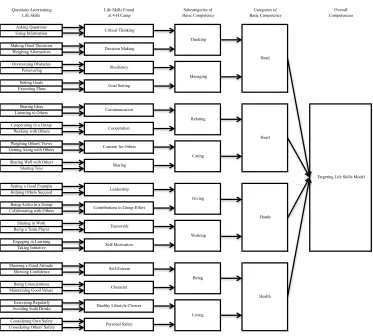
Targeting Life Skills Model. The following diagram shows the thirty-two constructs used to
determine the basic competency in each of the four major categories of the Targeting Life
Skills (TLS) Model, Head, Heart, Hands, and Health. Eight questions were used for each
category.
Figure 3: Summary of Questions 12 and 13
Questions Ascertaining Life Skills Found Subcategories of Categories of Overall Life Skills at 4-H Camp Basic Competency Basic Competency Competencies Asking Questions
Using Information
Making Good Decisions Weighing Alternatives Overcoming Obstacles Persevering Setting Goals Executing Plans Sharing Ideas Listening to Others
Cooperating in a Group Working with Others
Weighing Others' Views Getting Along with Others
Sharing Well with Others Sharing Toys
Setting a Good Example Helping Others Succeed Being Active in a Group Collaborating with Others
Sharing in Work Being a Team Player
Engaging in Learning Taking Initiative
Showing a Good Attitude Showing Confidence Being Conscientious Maintaining Good Values
Exercising Regularly Avoiding Soda Drinks
Considering Own Safety Considering Others' Safety
Targeting Life Skills Model Leadership
Contributions to Group Effort
Teamwork Self-Motivation Critical Thinking Decision Making Resiliency Goal Setting Communication Cooperation
Healthy Lifestyle Choices
Personal Safety Thinking Managing Relating Caring Giving Working Concern for Others
Content validity is to what degree an instrument logically seems to measure an
intended variable. (Fraenkel & Walden, 2009) The researcher used a panel of experts
consisting of faculty at North Carolina State University along with camping experts from the
American Camp Association to review the instrument.
Reliability is the degree of consistency with which an instrument measures whatever
the instrument measures over time. (Fraenkel & Walden, 2009) To establish reliability, the
instrument was pilot tested with 40 parents of campers from 2012 that attended the 4-H &
Youth Day Camp in Halifax, NC. These were chosen so as not to duplicate any parents in
the actual survey. 40 questionnaires were sent out with 25 being completed for a 62%
response rate.
A Cronbach’s alpha coefficient was calculated to test for internal consistency of the
instrument. This statistic is an indication of the extent to which respondents to the instrument
who answer a question one way will respond to another related question the same way.
(Fraenkel & Walden, 2009) The overall scale for assessing the youth’s life skill development
was determined to be reliable with a Cronbach’s alpha coefficient for this instrument of .97.
Data Collection
Data were collected using the Internet survey process outlined by Dillman (2000).
An email was sent to the parents prior to the actual questionnaire giving them notice that it
would be coming. Next, the survey web link was emailed to the participants with a cover
letter explaining the study. This study used the Survey Monkey online survey service for
collecting data. In addition to explaining the importance of the study, the cover letter also
being conducted, and closed with an appreciation for participation. The email addresses for
each participant was tracked so that follow-ups could be made with non-respondents.
Non-respondents were contacted by email two weeks after the original email encouraging
participation in the study. Another copy of the questionnaire link was emailed to these
non-respondents. Three more follow-up emails with links to the study were sent after this to any
remaining non-respondents.
Out of the 675 parents who received the online survey through Survey Monkey, 385
responded to the survey for a 57% response rate. According to Linder, Murphy, Briers
(2001) when less than an 85% response rate is attained, it is recommended that procedures
for handling non-response error be utilized. In this study, early and late respondents were
compared to control for non-response error and no difference was found between the two
groups. Early respondents were those who responded prior to the last two reminders, which
were sent out to non-respondents. Late respondents were all those who responded after the
last two reminders were sent. Since there was not any significant difference between the
early and late respondents, the findings of this research can be generalizable to the entire
population of this study.
Data Analysis
Data were entered into the Statistical Package for the Social Sciences (SPSS) program
21. Descriptive statistics were used to analyze the data. Even though this study was
conducted with the target population, this study received only a 57% response rate.
t-test was used to determine if there was a significant difference between the mean values of
parental perceptions of camping children’s life skills before and after camp.
Summary
The purpose of this study was to determine how the parents perceive the value of the
North Carolina State 4-H Camps in building targeted life skills of the participants and
parents’ expectations of the experience for their children while there. This was a descriptive
survey research study conducted with the target population of parents of youth that attended
4-H camp during the summer of 2013. After the questionnaire was designed, data were
collected using the Internet survey process outlined by Dillman (2000). These data were
analyzed using the Statistical Package for the Social Sciences (SPSS) program 21 and
Chapter 4: Findings
The instrument used in this study contained some dichotomous questions, some
open-ended questions, and some Likert-scaled questions. Participants were also asked a series of
Likert-scaled questions used to determine the camper’s behavior before and after camp. This
section of the survey included thirty-two constructs with two different constructs each
pertaining to sixteen of the thirty-five different life skills that could be learned at camp using
the Targeting Life Skills (TLS) Model. This meant that two life skills were studied for each
of the eight different subcategories of the Targeting Life Skills (TLS) Model and four life
skills were studied for each of the four basic competency areas Hendricks (1996) used in this
model equating to eight questions for each of the four basic categories of the Targeting Life
Skills Model, Head, Heart, Hands, and Health. Participants’ responses to each of these eight
questions were aggregated to get the value for the considering basic category of the Targeting
Life Skills Model. The aggregated value on this scale ranged from 8 being very low life
skills to 40 being very high life skills as it related to the measuring basic categories, Head,
Heart, Hands, and Health. Open-ended questions were also analyzed to look for any
emerging themes, most especially any related to life skills. The demographic information
provided by the respondents is shown in the following tables.
Table 1
Distribution of Participants’ Children by Gender
Gender % n
Male 50.2 160
From Table 1, it is shown that the campers were about evenly split between male and
female with 50.20% male campers and 49.80% female campers.
Table 2 shows that most of the camper population was white with a frequency of 225
yielding 70.50% of the camper population. The next highest frequency was 60 with 18.80%
of the population being black. American Indian had a frequency of 10 campers making up
3.10% of the camper population. Asian and Hispanic both had 5 campers making up 1.60%
each in the camper population.
Table 2
Distribution of Participants’ Children by Race
Race % n
White 70.5 225
Black 18.8 60
American Indian 3.1 10
Asian 1.6 5
Hispanic 1.6 5
Other 4.4 14
With a mean of 11.3 and a standard deviation of 1.85, Table 3 shows the ages of the
campers. Ages 8 – 14 are the most common ages for campers to attend 4-H Camp. Age 11
has the highest frequency with 69 campers making up 17.90% of the total population. Age
12 is the second highest frequency with 62 campers making up 16.10% of the population.
And age 10 had another significant number with a frequency of 51 campers making up
Table 3
Participants’ Children’s Age
Age % n
5 .3 1
6 .3 1
8 4.7 18
9 8.5 33
10 13.2 51
11 17.9 69
12 16.1 62
13 11.1 43
14 4.4 17
15 1.8 7
16 1.3 5
17 .3 1
Table 4
Distribution of Respondents by their Relationship to the Child who Participated in the Summer Camp
Relationship % n
Mother 86.8 277
Father 8.5 27
Grandmother 2.2 7
Legal Guardian .6 2
Aunt .3 1
Other 1.6 5
Table 4 shows the relationship of the respondent to the campers that attended the
North Carolina State 4-H summer camps. Of the total respondents, Mothers made up the
majority of the population of respondents with a frequency of 277 totaling 86.80%. Fathers
Research Objectives
The objectives of this study were:
1. To determine the effect of the camp experience in the life skills development of
the campers as perceived by the parents.
2. To determine if parents value the impact the 4-H camps had on building life skills
of their children.
3. To ascertain why parents send their children to 4-H camps.
4. To determine needed improvements for camps to meet the expectations of
parents.
The rest of this chapter presents all the other findings from this study. The findings
are organized according to the objectives of this study listed above.
Objective 1: To determine the effect of the camp experience in the life skills development of the campers as perceived by the parents.
Figure 3 in Chapter 3 is an illustration of the layout of the 32 items used to make this
determination. Participants were asked to rate 32 behaviors they observed in their child
before attending camp and then asked to rate those same behaviors after their child
completed the camp. Eight items with a 5-point Likert-scale were used to determine
perceived life skills for each of the four basic categories of the Targeting Life Skills (TLS)
Model, Head, Heart, Hands, and Health. Responses to each of the eight items were
aggregated to calculate the perceived life skills as it related to the measuring four basic
categories, Head, Heart, Hands, and Health. The aggregated value on this scale ranged from
Table 5 compares the respondent’s perceived life skills of participating campers
before and after completing the camp program.
Table 5
Comparison of the Four Basic Categories of the TLS Model Before and After Camp
Variable n
M
t p
Before After
Head 325 28.24 31.40 17.22 .001
Heart 325 30.47 32.70 13.57 .001
Hands 325 29.38 32.13 15.19 .001
Health 325 29.98 32.36 14.96 .001
Note. Scale ranges from 8= very low level of skills to 40=very high level of skills.
From Table 5, one can see the mean values of children’s life skills related to the four
basic categories of the Targeting Life Skills Model, Head, Heart, Hands, and Health, are
significantly improved after their participation in the camp program as perceived by their
parents. The greatest improvement was in the Head category followed by Hands and then
Health. The lowest improvement was observed in the Heart category.
Table 6 depicts the overall results for all four categories combined again using the
paired samples t-test comparing the overall results before attending camp and after attending
Table 6
Overall Values for the Four Basic Categories of the TLS Model
Variable n
M
t p
Before After
Overall 325 118.03 128.59 17.33 .001
Note. Scale ranges from 32= very low level of skills to 160=very high level of skills.
Table 6 shows responses to 32 items on the 5-point Likert scale were aggregated to
calculate the score for the overall life skill development. The value on the aggregated scale
can range from 32=very low life skills to 160=very high life skills. Findings confirm that the
children’s overall life skills significantly improved after participating in the camp program as
perceived by their parents.
Objective 2: To determine if parents value the impact the 4-H camps had on building life skills of their children.
Table 7 shows that 99% of the respondents indicated that the child they sent to camp
did share his/her experiences with them when their child returned home. Only 1% of the
campers failed to do this.
Table 7
Distribution of Campers Sharing their Experience with Parents
Response % n
Yes 99.0 381