Electronic Theses and Dissertations Theses, Dissertations, and Major Papers
2013
Rats' (Rattus norvegicus) Encoding and Retrieval of Spatial and
Rats' (Rattus norvegicus) Encoding and Retrieval of Spatial and
Non-Spatial Environmental Features in a Foraging Task
Non-Spatial Environmental Features in a Foraging Task
Corrine Nicole Keshen University of Windsor
Follow this and additional works at: https://scholar.uwindsor.ca/etd
Recommended Citation Recommended Citation
Keshen, Corrine Nicole, "Rats' (Rattus norvegicus) Encoding and Retrieval of Spatial and Non-Spatial Environmental Features in a Foraging Task" (2013). Electronic Theses and Dissertations. 4884.
https://scholar.uwindsor.ca/etd/4884
This online database contains the full-text of PhD dissertations and Masters’ theses of University of Windsor students from 1954 forward. These documents are made available for personal study and research purposes only, in accordance with the Canadian Copyright Act and the Creative Commons license—CC BY-NC-ND (Attribution, Non-Commercial, No Derivative Works). Under this license, works must always be attributed to the copyright holder (original author), cannot be used for any commercial purposes, and may not be altered. Any other use would require the permission of the copyright holder. Students may inquire about withdrawing their dissertation and/or thesis from this database. For additional inquiries, please contact the repository administrator via email
RATS’ (RATTUS NORVEGICUS) ENCODING AND RETRIEVAL OF SPATIAL AND NON-SPATIAL ENVIRONMENTAL CUES IN A FORAGING TASK
By
Corrine Nicole Keshen
A Thesis
Submitted to the Faculty of Graduate Studies through Biological Sciences
in Partial Fulfillment of the Requirements for the Degree of Master of Science
at the University of Windsor
Windsor, Ontario, Canada
2013
NON-SPATIAL ENVIRONMENTAL CUES IN A FORAGING TASK
by
Corrine Nicole Keshen
APPROVED BY:
______________________________________________ Dr. Carlin Miller
Psychology
______________________________________________ Dr. Lynda Corkum
Biology
______________________________________________ Dr. Jerome Cohen, Advisor
Psychology
DECLARATION OF ORIGINALITY
I hereby certify that I am the sole author of this thesis and that no part of this thesis has been published or submitted for publication.
I certify that, to the best of my knowledge, my thesis does not infringe upon anyone’s copyright nor violate any proprietary rights and that any ideas, techniques, quotations, or any other material from the work of other people included in my thesis, published or otherwise, are fully acknowledged in accordance with the standard referencing practices. Furthermore, to the extent that I have included copyrighted material that surpasses the bounds of fair dealing within the meaning of the Canada Copyright Act, I certify that I have obtained a written permission from the copyright owner(s) to include such material(s) in my thesis and have included copies of such copyright clearances to my appendix.
I declare that this is a true copy of my thesis, including any final revisions, as approved by my thesis committee and the Graduate Studies office, and that this thesis has not been submitted for a higher degree to any other University or Institution.
ABSTRACT
Animals use various spatial and non-spatial cues when navigating the
environment. They can use spatial cues such as a landmark’s local position, global
position and orientation, or they can use a landmark’s non-spatial featural
information. The objectives of this thesis were: 1) to determine the conditions
under which rats process information separately or simultaneously; 2) to determine
how rats process stimuli when previously fixed information becomes more
variable; 3) to determine whether animals can use spatial information when a
previously encoded non-spatial cue is occasionally eliminated. The results
obtained from this research suggest that rats use two different types of processing
as a function of variability of redundant information. Moreover, changes within
trials were only disruptive for animals that encountered information that had not
varied between trials. However, with continued exposure to within-trial changes,
these animals’ accuracy increased to levels comparable to animals presented with
DEDICATION
This thesis is dedicated to my wonderful family who has provided me with endless support and love throughout these past two years.
ACKNOWLEDGEMENTS
I would like to thank my supervisor Dr. Jerome Cohen for all of his
support, guidance and encouragement. I would also like to thank Dr. Lynda
Corkum and Dr. Carlin Miller for their feedback and for serving on my committee.
I acknowledge funding from an NSERC grant that has been used towards my
Master’s research. I would also like to thank all of my lab mates from the Cohen
lab who helped make this research possible: Daniel Lopatin, Meighan Mineau,
Ema Sisic, Matteo Bernabo, Dillon Freeman, Jordynne Ropat, Michael Tavolieri,
Kaitlyn Iannicello, Chelsey Damphousse, and Janice Burgers. Lastly, I would like
to thank my family and friends for their love and support and for always believing
TABLE OF CONTENTS
DECLARATION OF ORIGINALITY…….………...iii
ABSTRACT……….………...iv
DEDICATION………...….v
ACKNOWLEDGEMENTS……….………...…...vi
LIST OF FIGURES……….………..……...ix
CHAPTER 1: GENERAL INTRODUCTION……….1
Memory……….1
Working Memory……….…1
Reference Memory……….……….…….2
The Physiology of Visuo-spatial Working Memory………3
Hoarding Behaviour……….……..…...4
Scatter hoarders and Larder hoarders ………..………5
Processing Visuo-spatial Stimuli………..……….6
Cognitive Map Theory………..………6
Parallel Map Theory……….…………7
Processing Environmental Stimuli: Separate vs. Simultaneous………...8
Summary and Objectives………...…....8
References……….11
CHAPTER 2: UNDER WHICH CONDITIONS DO RATS PROCESS ENVIRONMENTAL INFORMATION SEPARATELY OR SIMULTANEOUSLY....16
Introduction………...16
Method………22
Results……….30
Discussion………...31
References………36
CHAPTER 3: DOES DIFFERENTIAL PROCESSING OCCUR WHEN
ENVIRONMENTAL CONDITIONS ARE RENDERED MORE VARIED BETWEEN
TRIALS………...…45
Introduction……….…….45
Method……….……49
Results……….53
Discussion………56
References………63
Figures………..65
CHAPTER 4: GENERAL DISCUSSION………..….71
References……….74
LIST OF FIGURES
Chapter 2:
Figure 1: The foraging arena………...38
Figure 2: An empty hole in the foraging arena…..……….37
Figure 3: Foraging feeders………..38
Figure 4: The feeder on the left is open and contains no perforated plate……..…38
Figure 5: The objects used in this experiment……….39
Figure 6: A closed foraging feeder with an object atop of it………...39
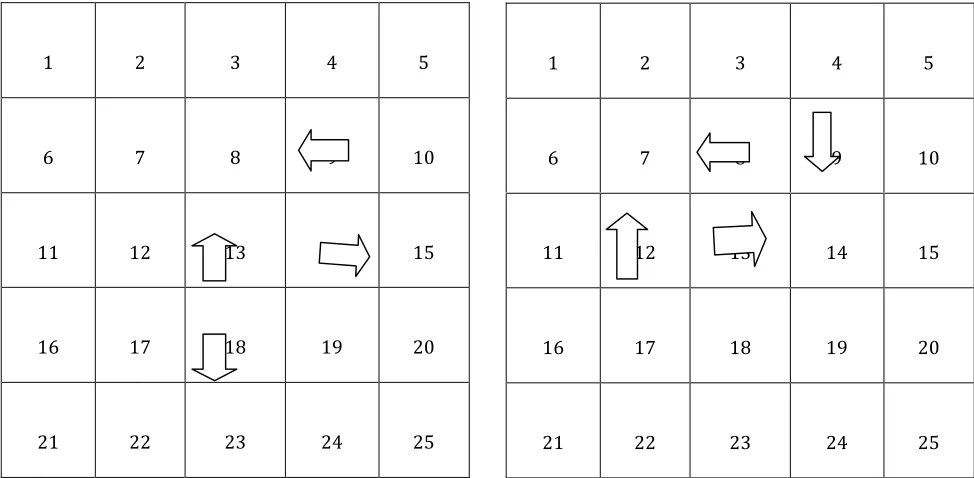
Figure 7: The layout of the four configurations………..40
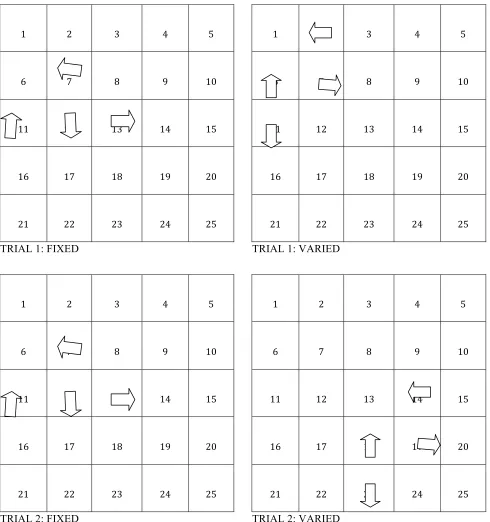
Figure 8: The layout of configurations, as they would appear from the study
segment of one trial to the next trial ……….…………..41
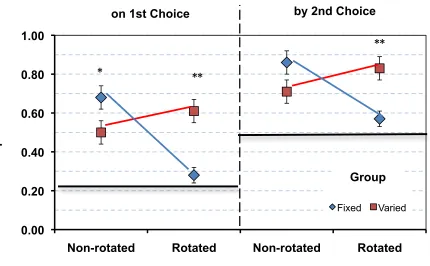
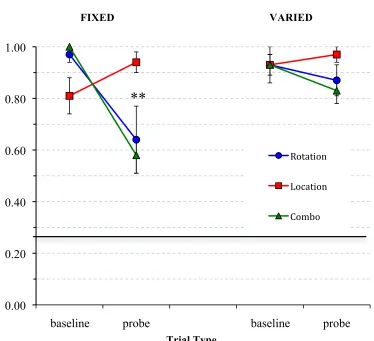
Figure 9: Proportion of trials rats found the correct feeder on their first and second choice in the test segment of baseline (non-rotated) and probe (rotated) trials..…42
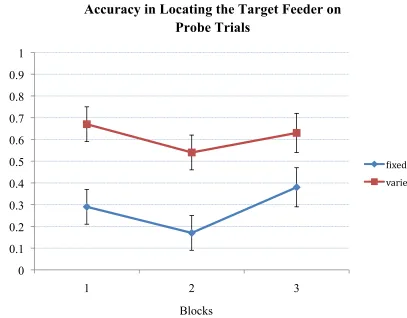
Figure 10: Rats’ accuracy in finding the target feeder on probe trials during blocks of four trials……….43
Chapter 3:
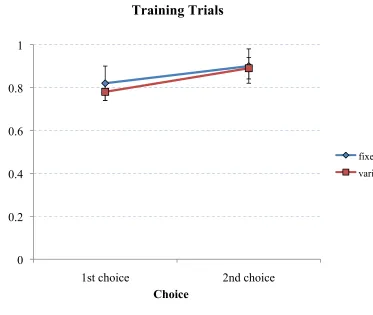
Figure 11: Acquisition data for Experiment 2. ………..……….64
Figure 12: The proportion of trials the target feeder was selected by the 1st or 2nd choice on acquisition training trials for each group. ...……....………...65
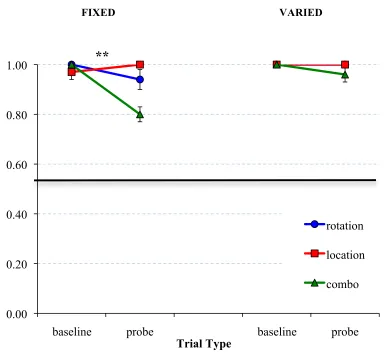
Figure 13: Rats’ accuracy in finding the target feeder on different-object probe trials………66
Figure 14: Rats’ accuracy in finding the target feeder by the second choice on different-object probe trials……….67
Figure 15: Rats’ accuracy in finding the target feeder on different-object probe trials………..………..……….68
CHAPTER 1
GENERAL INTRODUCTION
Memory
In order to survive, and to ultimately increase the likelihood of survival of its
offspring, an individual must remember certain types of information about a given
environment. These include aspects of its safety; that is, information about predators, and
the quality of food, and what areas (sites) the forager has or has yet to visit. To ensure
that these important events are remembered, an animal must actively use various memory
systems. Memory has been traditionally categorized based upon different variables, such
as duration (short-term or long-term), subject matter (episodic or procedural) or
application (working memory or reference memory) (Adams-Hunt & Jacobs, 2007).
Animal cognition researchers who study memory, in particular memory for spatial
navigation, are concerned with how animals encode, store, and retrieve information from
working memory or reference memory (Shettleworth, 2010).
Working Memory
Working memory involves the storage and retrieval of information in a particular
situation, and was originally referred to as short-term memory because it is limited in
capacity (Baddeley, 2012). One of the reasons that working memory is a more
appropriate term than short-term memory is because the organism both manipulates and
can store information until it needs to retrieve it (Baddeley, 1992), rather than simply
holding information for some fixed period of time as the original term implies. Thus
short-term memory. Baddeley and Hitch’s (1974) three-component working memory model
system consists of the central executive, the phonological loop, and the visuo-spatial
sketchpad. The central executive is akin to the nucleus of the system, as it is responsible
for deciding what information will be encoded and retrieved, how it will be encoded and
retrieved, and also for ultimately integrating the phonological loop and visuo-spatial
sketchpad (Baddeley & Hitch, 1974; Baddeley, 2012). The phonological loop is
concerned with language, and stores verbal information for a fixed period of time
(Baddeley & Hitch, 1974). The role of the visuo-spatial sketchpad in working memory is
to provide the animal with mental imagery about the visual and spatial properties of a
given environment (Baddeley & Hitch, 1974). Animals can use this mentally represented
information for a limited period of time, until they have completed the task that requires
this information. Traditionally, researchers studying working memory in animals have
been confined to solely studying visuo-spatial working memory, as language is
considered to be a uniquely human capacity (Deacon, 1997).
Reference Memory
Reference memory involves remembering information that remains constant
overtime (Olton, 1986), and is often used when learning general rules (Frick et al., 1994).
Moreover, reference memory is trial independent, as it concerns information that does not
change from situation-to-situation (Frick et al., 1994). Reference memory is comparable
to long-term memory as it is considered to be unlimited in terms of storage capacity,
unlike working memory capacity (Baddeley & Hitch, 1974; Baddeley, 1994; Baddeley,
2012). Moreover, information is constantly exchanged bi-directionally between working
constant communication, they are fundamentally different in terms of how they process
and store information (Garavan, 1998; Logan & Stadler, 1991). Unlike working memory,
reference memory requires multiple repeated trials for learning to occur (Roberts, 1998).
Moreover, the information acquired by the individual over these repeated trials persists
for an unlimited period of time, unlike information acquired in working memory
(Roberts, 1998). Both working memory and reference memory are widely used terms
that are employed in various disciplines to describe different aspects of memory (Allen et
al., 2012; Arain, Parameswaran & Cohen, 2012; Brissart et al., 2012; David, 2012).
The Physiology of Visuo-spatial Working Memory
Various brain regions have been implicated in visuo-spatial working memory. It
has been proposed that both the prefrontal and parietal cortex play a large role in specific
working memory processes, such as central executive control (van Asselen et al., 2005).
The prefrontal and parietal cortex as a central role in working memory has been proposed
and observed by researchers studying both human and non-human animals. For example,
Friedman and Goldman-Rakic (1994) found prefrontal and parietal cortex activation in
monkeys completing a spatial working memory task. Similar findings have also been
observed in studies examining human visuo-spatial working memory (Constanindis &
Wang, 2004; Jonides et al., 1993; Owen et al., 1998). Although brain regions, such as the
prefrontal cortex and the parietal cortex have been found to be involved in visuo-spatial
working memory, the most implicated brain structure is the hippocampus (Abrahams et
al., 1997; Nelson et al., 2000; O’Keefe & Nadel, 1978; van Asselen et al., 2005). The
hippocampus, which is a structure found in the limbic system, is considered to be
memory, and ultimately facilitating navigation (van Asselen et al., 2005). Moreover,
several studies have hippocampal volume to be directly related spatial working memory
accuracy. For example, Maguire et al (1999) found that London taxi drivers, who must
remember detailed environmental maps, had higher hippocampal volumes than controls
subjects. Lee et al. (1998) report that scatter-hoarding birds that must rely heavily on
spatial working memory had also higher hippocampal volumes than non-hoarding
controls. The rat has been the most widely used study species when studying the role of
the hippocampus in memory because of the substantial similarities between the human
and rat hippocampus (Anderson et al., 2007). In reviewing this extensive body of
research on rats, Anderson et al. (2007) note that damaging the hippocampi does not
eradicate prior (pre-morbid) spatial reference memory (e.g. which arms of a radial maze
are never baited and which are always baited) but does reduce working memory function
(e.g., which arms in the baited set have been or need to be visited in a trial). Such
reduction in working memory of course also makes it difficult for the animal to acquire
new (post-morbid) reference memory information.
Hoarding Behaviour
When foraging, an animal must process various environmental cues to
successfully locate a goal. To find a goal in an environment, an animal must process and
remember specific landmarks that it might need to use as beacons. Here, we use the term
“beacon” to denote a landmark that is in close proximity to a goal (Spetch & Kelly,
2006). It has been proposed that the way in which mammals and birds cognitively
process spatial environmental information when foraging is dependent on their hoarding
Animals that scatter hoard may possess different memory capabilities and capacities than
animals that either larder hard or do not cache food. Several studies that examined a
variety of species have found that hoarding animals use different processing methods
than non-storing species (Brodbeck, 1994; Clayton & Krebs, 1994; Jacobs & Shifflett,
1999, Macdonald, 1997; Watanabe, 2005).
Scatter hoarders and Larder hoarders
Scatter-hoarding animals disperse small amounts of food in many widely
scattered caches (Daly et al., 1991), whereas larder-hoarding animals collect and hoard a
large amount of food in one or a few caches (Daly et al., 1991; De Bruin, 1988).
Although both types of hoarding behaviour are strategies used to salvage food from
competitors, each provide different benefits and costs: Scatter hoarding requires greater
time, as the animal must disperse many small amounts of food widely throughout the
environment that puts greater demand on the animal’s visuo-spatial working memory
(Jacobs, 1992), while reducing risk of pilferage by other foragers. Larder hoarding
requires less time to cache food and less demand on the forager’s memory to retrieve the
stored information, however it increases the risk that a cache will be uncovered and all
food will be taken by a competitor or lost through some other environmental catastrophe.
An animal’s food-hoarding behaviour can be a valid predictor of how it will
encode and retrieve environmental information. Moreover, because different cognitive
processes are involved in hoarding behaviour, there may be physiological differences
between hoarding animals and non-hoarding animals (Macphail & Bolhuis, 2001). That
the brain structure implicated in spatial memory, than in non-hoarding animals (Krebs et
al., 1989; Sherry et al., 1989). This ecological view, suggesting that cognitive behaviour
is species-specific, opposes a general-process view that all animal cognitive activities are
governed by the same types of associative learning processes (Bitterman, 2000). Many
studies have supported the general process view, by showing that depending upon certain
contextual conditions, differences in working memory between hoarding and
non-hoarding animals may either be eliminated or changed (Arain & Cohen, in press;
Hodgson & Healy, 2005; Herborn et al., 2011; Hurly et al., 2010; LaDage et al., 2009).
Processing Visuo-spatial Stimuli
Cognitive Map Theory
Of interest to researchers who study visuo-spatial working memory, is how
environmental information is processed and later retrieved by an animal. It has been
proposed that foraging animals encode spatial and non-spatial information as a mental
representation that is akin to a cartographic map. This map-like mental representation
has been historically referred to as a cognitive map (Cartwright & Collett, 1983; Foo et
al., 2005; Gallistel, 1990; Gould, 1986; Kitchin, 1994; Jacobs & Schenk, 2003; O’Keefe
& Nadal, 1978; Thinus-Blanc, 1988; Tolman, 1948). Tolman (1948) first introduced the
notion of a cognitive map to describe “insightful” and “inventive” behaviour observed in
rats in search of food by use of routes in foraging tasks. From various experiments
assessing food-finding behaviour in the rat, he further postulated that the cognitive map is
used by both rats and humans in spatial navigation. Tolman’s (1948) cognitive map
organisms, such as humans, rodents, birds and arthropods (Foo et al., 2005;
Sheynikhovich et al., 2009; Bingman & Able, 2002; Gould, 1986).
Toman’s (1948) original notion of a cognitive map has been extended and
modified (Cartwright & Collett, 1983; Gallistel, 1990; Jacobs & Schenk, 2003; O’Keefe
& Nadal, 1978; Thinus-Blanc, 1988). For example, Cartwright and Collett (1983)
proposed that a cognitive map is composed of various “snapshots” of an animal’s
environment. Moreover, an animal matches its current environmental experience with a
snapshot derived from a greater mental ‘library’ containing 3-dimensional snapshots of
the environment (Bennett, 1996). Traditional unitary cognitive map theories may be
able describe how an animal processes information in a somewhat more static
environment however; they may have difficulty in describing how the animal processes
information in a more highly variable environment (Jacobs & Schenk, 2003).
Parallel Map Theory
Jacobs and Schenk (2003) recognized that there are various environmental cues
that influence how an animal will process and utilize environment information when
navigating. Rather than having a single unitary map, they proposed the Parallel Map
Theory: the idea that an animal’s cognitive map is comprised of three parallel maps: the
bearing map, the sketch map, and the combination of these two maps (Jacobs & Schenk,
2003). The bearing map is constructed by directional cues from the environment and
movement cues from the individual. The sketch map involves the processing of specific
other definitions of the cognitive map, the parallel map theory better accounts for the
spatial navigation behaviour of various vertebrate taxa and sex differences within them.
Processing Environmental Stimuli: Separate vs. Simultaneous
Cognitive map theory has been traditionally used to describe how animals encode
and retrieve environmental information when foraging (Cartwright & Collett, 1983; Foo
et al., 2005; Gallistel, 1990; Gould, 1986; Kitchin, 1994; Jacobs & Schenk, 2003;
O’Keefe & Nadal, 1978; Thinus-Blanc, 1988; Tolman, 1948). This theory appears to be
valid when describing how an animal would process stable environmental cues; however,
in nature, stability is not always the rule. Rather, environments and landmarks within
environments are subject to frequent change, and this can potentially influence which
resources are available to an animal, as well as how an animal must use available
environmental cues. Given these circumstances, it may be more ecologically relevant for
an animal to separately rather than simultaneously process environmental cues. This
notion further suggests that different types of processing occur under different contextual
conditions.
Summary and Objectives
Animals must remember various spatial and non-spatial aspects of an
environment when foraging for food. It has been proposed that an animal’s hoarding
behaviour is a valid predictor of how environmental information will be processed and
utilized. It has also been proposed that animals simultaneously process different
environmental information and that animal separately process this information
1978; Thinus-Blanc, 1988; Tolman, 1948). Before one can hypothesize whether the
animal’s hoarding behaviour will predict how it will process environmental information,
or whether animal will process environmental simultaneously or separately, it is
important to consider the task at hand, as well as the context of the situation.
There are three objectives of the present study: 1) To determine under which
conditions Long-evans rats (Rattus norvegicus) process environmental information
separately and under which conditions is this information processed simultaneously; 2)
To determine how rats process previously fixed information that becomes more variable;
3) To determine whether animals can use spatial information when a previously encoded
non-spatial cue is occasionally eliminated.
In a first study, we presented two groups of rats with a segmented-trial foraging
preparation. In the ‘study’ or encoding segment of the trial, the animal obtained
sunflower seeds from three object-cued feeders and in the ‘test’ or memory retrieval
segment of the trial, the animal obtained a sunflower seed from the fourth now cued
feeder. One group received fixed environmental information between trials and the other
group received variable environmental information between trials. We then presented
animals with probe trials, where information in the test segment was slightly different
than information presented in the study segment. In a second experiment, we presented
two groups of rats with the same task, however we gave rats in the fixed group less fixed
information, and rats in the varied group more varied information. We then presented
rats with three different types of probe trials, which involved presenting rats with
different types of information in the test segment of the trial. We also presented rats with
segment. Our experiment provides evidence of a paradigm wherein animals process
environmental information differentially, depending on the cues available and the
References
Abrahams, S., Pickering, A., Polkey, C. E., Morris, R. G. (1997). Spatial memory deficits in patients with unilateral damage to the right hippocampal formation.
Neuropsychologia, 35: 11-24.
Adams-Hunt, M. M., Jacobs, L. F. (2007). Cognition for foraging. In D. W. Stephens, J.S. Brown, Ydenberg, R. C. (Eds.), Foraging Behavior and Ecology, pp. 105-138. Chicago: The University of Chicago Press.
Allen, R. J., Hitch, G. J., Mate, J., Baddeley, A. D. (2012). Feature binding and attention in working memory: a resolution of previous contradictory findings. Quarterly Journal of Experimental Psychology, 65(12): 2369-2383.
Anderson, P., Morris, R., Amaral, D., Bliss, T., O’Keefe, J. (2007). The Hippocampus Book, New York: Oxford University Press.
Arain, M., Cohen, J. (in press). Rats’ (Rattus norvegicus) retrieval of information from their non-spatial and spatial working memory in object recognition tasks.
Behavioural Processes.
Arain, M., Parameswaran, V., Cohen, J. (2012). Changing within-trial array location and target object position enhances rats’ (Rattus norvegicus) missing object
recognition accuracy. Animal Cognition, 15: 771-782.
Baddeley, A. (2012). Working memory: theories, models, and controversies. Annual Review of Psychology, 63: 1-29.
Baddeley, A. (1992). Working memory. Science, 255(5004): 556-559.
Baddeley, A.D., Hitch, G. (1974) Working memory. In G.H. Bower (Ed.), The Psychology of Learning and Motivation, 8: 47-86.
Bennett, A.T.D. (1996). Do animals have cognitive maps? The Journal of Experimental Biology, 199: 219-224.
Bingman, V. P., Able, K. P. (2002). Maps in birds: representational mechanisms and neural bases. Current Opinion in Neurobiology, 12: 745-750.
Bitterman, M.E. (2000). Cognitive evolution: a psychological perspective. In C.M. Heyes, L. Huber (Eds.), The Evolution of Cognition, pp. 61-79. Cambridge MA: MIT Press.
Brodbeck, D.R. (1994). Memory for spatial and local cues: a comparison of a storing and a nonstoring species. Animal Learning & Behavior, 22: 119-133.
Cartwright, B.A., Collett, T.S. 1983. Landmark learning in bees: experiments and models. Journal of Comparative Physiology 155:521-543.
Clayton, N.S., Krebs, J.R. (1994). Memory for spatial and object-specific cues in food-storing and non-food-storing birds. Journal of Comparative Physiology. 174: 371-379.
Constantinidis, C., Wang, X. J. (2004). A neural circuit basis for spatial working memory. Neuroscientist, 10: 553-656.
Daly, M., Jacobs, L.F., Wilson, M.I., Behrands, P.R. (1991). Scatter hoarding by kangaroo rats (Dipodomys merriami) and pilferage from their caches.
Behavioural Ecology, 3: 102-111.
David, C. V. (2012). Working memory deficits in math learning difficulties: a meta-analysis. International Journal of Developmental Disabilities, 58: 67-84.
De Bruin, J.P.C. (1988). Sex differences in food hoarding behavior of long evans rats.
Behavioural Process, 17: 191-198.
Deacon, T. (1997). The Symbolic Species: The Co-evolution of Language in the Brain.
New York: W.W. Norton & Company.
Foo, P., Warren, W.H., Duchon, A., Tarr, M.J. 2005. Do humans integrate routes into a cognitive map? map- versus landmark-based navigation of novel shortcuts.
Journal of Experimental Psychology, 31:195-215.
Frick, K. M., Baxter, M. G., Markowska, A. L., Olton, D. S., Price, D. L. (1994). Age-related spatial reference and working memory deficits assessed in the water maze.
Neurobiology of Aging, 16: 149-160.
Friedman, H. R., Goldman-Rakic, P. S. (1994). Coactivation of prefrontal cortex and inferior parietal cortex in working memory tasks revealed by 2DG functional mapping in the rhesus monkey. Journal of Neuroscience, 14: 2775-2788.
Gallistel, C. R. (1990). Animal cognition, the representation of space, time and number.
Psychological Review, 40: 155-189.
Garavan, H. (1998). Serial attention within working memory. Memory & Cognition, 26: 263-276.
Gould, J. L. (1986). The locale map of honey bees: do insects have cognitive maps?
Hampton, R.R., Healy, S.D., Shettleworth, S.J., Kamil, A.C. (2002) “Neoroecologists” are not made of straw. Trends in Cognitive Science, 6: 6-7
Herborn, K., Alexander, L., Arnold, K.E. (2011). Colour cues or spatial cues? Context-dependent preferences in the European greenfinch (Carduelis chloris). Animal Cognition, 14: 269-277.
Hodgson, Z.G., Healy, S.D. (2005). Preference for spatial cues in a non-storing songbird species. Animal Cognition, 8: 211-214.
Hurly, T.A., Franz, S., Healy, S.D. (2010). Do rufous hummingbirds (Selasphorus rufus) use visual beacons? Animal Cognition, 13: 377-383.
Jacobs, L.F. (1992). Memory for cache locations in merriam kangaroo rats. Animal Behaviour. 43: 585-593.
Jacobs, L.F. (2002) The evolution of the cognitive map. Brain, Behavior and Evolution, 62: 128-139.
Jacobs, L.F., Schenk, F. (2003). Unpacking the cognitive map: the parallel map theory of hippocampal function. Psychological Review, 110: 285-315.
Jacobs, L.F., Shiflett, M.W. (1999). Spatial orientation on a vertical maze in free-ranging fox squirrels (Sciurus niger). Journal of Comparative Psychology. 113: 116-127.
Jonides, J., Smith, E. E., Koeppe, R. A., Awh, E., Minohsima, S., Mitun, M. A. (1993). Spatial working memory in humans as revealed by PET. Nature, 363: 623-625.
Kitchin, R. M. (1994). Cognitive maps: what are they and why study them? Journal of Environmental Psychology, 14: 1-19.
Krebs, J.R., Sherry, D.F., Healy S.D., Perry, V.H., Vaccarino, A.L. (1989). Hippocampal specialization of food-storing birds. Proceedings of the National Academy of Sciences of the United States of America, 86: 1388-1392.
LaDage, L.D., Roth, T.C., Fox, R.A., Pravosudov, V.V. (2009). Flexible cue use in food-caching birds. Animal Cognition, 12: 419-426.
Lee, D. W., Miyasato, L. E., Clayton, N. S. (1998). Neurological bases of spatial learning in the natural environment: neurogenesis and growth in the avian and mammalian hippocampus. Neuroreport, 9: 15-27.
Macdonald, I. M. V. (1997). Field experiments on duration and precision of grey and red squirrel spatial memory. Animal Behaviour, 54: 879-891.
Macphail, E.M., Bolhuis, J.J. (2001). The evolution of intelligence: adaptive specializations versus general process. Biological Review, 76: 341-364.
Maguire, E. A., Gadian, G. D., Johnsrude, I. S., Good, C. D., Ashburner, J., Frackowiak, . S. J., Frith, C. D. (1999). Navigation-related structural change in the hippocampi of taxi drivers. Proceedings of the National Academy of Sciences, 97: 4398-4403.
Nelson, C. A., Monk, C. S., Lin, J., Carver, L. J., Thomas, K. M., Truwit, C. L. (2000). Functional neuroanatomy of spatial working memory in children. Developmental Psychology, 36: 109-116.
O’Keefe, J., Nadal, L. (1978). The Hippocampus as a Cognitive Map, Oxford: Oxford University Press.
Olton, D. S. (1986). Hippocampal function and memory for temporal context. In R.L. Isaacson and K. H. Pribram (Eds.) The Hippocampus, New York: Plenum.
Owen, A. M., Stern, C. E., Look, R. B., Tracey, I., Rosen, B. R., Petrides, M. (1998). Functional organization of spatial and nonspatial working memory processing within the human lateral frontal cortex. Proceedings of the National Academic of Science of the United States of America, 95: 7721-7726.
Roberts, W.A. (1998). Principles of Animal Cognition, The McGraw-Hill Companies.
Shettleworth, S.J. (2003). Memory and hippocampal specialization in food-storing birds: challenges for research on comparative cognition. Brain, Behavior and Evolution, 62: 108-116.
Shettleworth, S.J. (2010). Cognition, Evolution, and Behavior, New York: Oxford University Press.
Sherry, D.F., Vaccarino, A.L., Buckenham, K., Herz, R.S. (1989). The hippocampal complex of food-storing birds. Brain, Behavior and Evolution, 34: 308-317.
Spetch, M. L., Kelly, D. M. (2006). Comparative spatial cognition: processes in
landmark- and surface-based place finding. In E. A. Wasserman & T. R. Zentall (Eds.) Comparative Cognition: Experimental Explorations of Animal Intelligence
(pp. 210-228). Oxford: Oxford University Press.
Thinus-Blanc, C. (1988). Animal spatial cognition. In L. Weiskrantz (Ed.), Thought without Language, pp. 371-395. Oxford: Oxford University Press.
Tolman, E. C. (1948). Cognitive maps in rats and men. The Psychological Review, 55: 189-208.
Van Asselen, M., Kessels, R. P. C., Neggers, S. F. W., Kappelle, L. J., Frijns, C. J. M., Postma, A. (2006). Brain areas involved in spatial working memory.
Neuropsychologia, 44: 1185-1194.
Watanabe, S. (2005). Strategies of spatial learning for food storing in scrub jays. Journal of Ethology, 23:181-187.
CHAPTER 2
UNDER WHICH CONDITIONS DO RATS PROCESS ENVIRONMENTAL INFORMATION SEPARATELY OR SIMULTANEOUSLY?
Introduction
Spatial navigation is essential for the survival of foraging species (Foo et al.,
2005). To successfully locate food and other necessities in an environment, animals must
learn about the environment’s spatial and non-spatial properties. Spatial features include
the local position of proximal beacons or landmarks (their locations in relation to each
other), their global positions (their locations in relation to the distal landmarks at the
perimeter of the environment), and the orientations (their directions from each other)
(Arain et al., 2012). Non-spatial features include the distinct features of these landmarks
or beacons within the environment, such as their colour, shapes, sizes, textures and odors.
Of interest is how these different sources of information about these landmarks or
beacons are remembered and utilized by an organism during foraging expeditions.
Previous research suggests that animals utilize both spatial and non-spatial
information when exploring a given environment. However they use these cues
differentially, and preferentially use certain cues over others (Arain & Cohen, in press;
Brodbeck, 1994). Several factors may determine an animal’s preferential cue usage, such
as its species, and possibly it’s ecologically derived foraging behaviour. For instance,
certain species, such as the rufous hummingbird (Selasphorus rufus), the whiptail lizard
(Cnemidophorus inornatus), and the laboratory rat (Rattus norvegicus) have been found
to use spatial cues over non-spatial cues (Hurly et al., 2010; Day et al., 2003; Batty et al.,
goldfish (Carassius auratus), and the chimpanzee (Pan troglodytes) have been found to
preferentially use featural non-spatial information more than spatial information when
these cues are segregated (Vallortigara, Zanforlin & Pasti, 1990; Vargas et al., 2004;
Kanngiesser & Call, 2010).
An animal’s foraging behaviour also may determine its preferential cue usage.
Shettleworth (2010) maintains that caching (scatter-hoarding) avian species preferentially
use spatial and featural environmental information differently than non-caching avian
species. Evidence for such a broad difference was uncovered by two early studies that
compared a food-caching avian species to a non-caching avian species (Brodbeck, 1994;
Clayton and Krebs, 1994). In those studies, birds were first trained to find one of four
feeders that contained inaccessible or partially accessible food during an inspection
(study) segment before being allowed to relocate that feeder and remove its food in the
test segment after a short retention interval. In post-acquisition non-rewarded probe tests,
the arrays of feeders were transformed to dissociate the correct feeder’s non-spatial color
pattern cues from its correct local (within array) or global (within the larger wall area)
position cues over various feeders. These studies found that caching species,
black-capped chickadees (Parus atricapillus), marsh tits (Parus palustris), and jays (Garulus
gandarius), and non- caching species, dark-eyed juncos (Junco hyemalis), blue tits
(Parus caeruleus), and jackdaws (Carvus monedula), were equally accurate in finding the
target feeder during regular baseline trials. During non-rewarded probe trials, however,
caching birds looked into feeders at correct spatial global and local positions before
looking into a feeder with the correct non-spatial cues while the non-storing species
(Watanabe, 2005) with only a scatter-hoarding species, western scrub jays (Aphelocoma
californica), these birds were required to find a baited feeder from a larger array of
unbaited feeders. When spatial and non-spatial cues were dissociated, the scrub jays
strongly preferred spatial (global and local cues) than featural cues.
Such an ecologically determined predictor of differences in spatial memory has
also been found in studies with rodents. For example, Macdonald (1997) presented a
scatter-hoarding rodent species, the grey squirrel (Sciurus carolinensis), and the native
red squirrel (Sciurus vulgaris), a species that does not scatter hoard, with a task wherein
the animals were required to find artificial food caches. The scatter-hoarding grey
squirrel significantly retrieved more caches than the native red squirrel, suggesting that
the former possessed better spatial memory than the latter.
Using an animal’s ecologically determined foraging behaviour as a predictor of
how it processes visuo-spatial working memory information can be problematic, as
mixed findings have been reported. For example, Hodgson and Healy (2005) presented
great tits (Parus major), a non-storing species, with a one-trial associative food-finding
task and found that they preferred to use featural cues over spatial cues, and therefore
were engaging in hierarchical search. In another study, mountain chickadees (Poecile
gambeli), a food-caching species, used non-spatial featural information significantly
more than spatial information in finding a target object contrary to predictions based on
the hoarding model (LaDage et al., 2009). These results are counter to the findings from
the earlier previously cited avian research (Brodbeck, 1994; Clayton and Krebs, 1994), as
they suggest that food-storing species and non-storing species can both engage in
Given the variability of the results reported, researchers have been prompted to
determine whether cue preference is situation-dependent. Herborn et al., (2011)
presented European greenfinches (Carduelis chloris) with a foraging task wherein the
animals were required to locate a hidden food tray. After having been exposed to the first
round of trials, the animals preferred using colour cues over spatial cues, however after
repeated exposure to the task, the animals switched to preferring spatial cues. These
results suggest that cue preference is context-dependent rather than strictly determined by
the birds hoarding predispositions.
In a study conducted by Arain and Cohen (in press), rats (Rattus norvegicus) were
given a task, which was modified from Brodbeck’s (1994) original study. The animals
were required to find a target feeder from a configuration of four feeders using spatial
and non-spatial information. After animals had first been trained with simultaneously
redundant spatial and non-spatial information within each segmented trial but not over
trials, they were exposed to probe trials wherein the target object’s correct local position;
its orientation, its the global position, its non-spatial feature were dissociated over the
four cued feeders of a trial’s test array. Arain and Cohen (in press) found that rats
engaged in hierarchical search for the ‘correct’ target object by initially selecting one
based on its correct non-spatial features and then its correct local position, followed by its
correct orientation, and lastly its correct global position. These results are different than
the results obtained by Batty et al. (2009), which report that an albino strain of this
species (Sprague-Dawley) use spatial information over non-spatial information while
foraging. Despite these opposite hierarchical preferences, both studies suggest that they
task-related differences rather than due to any possible differences in their food storing
behaviour. Both strains are moderate larder hoarders, but albino Sprague-Dawley rats
have considerably poorer visual acuity than hooded rats (Prusky et al., 2002).
Cue usage in foraging is complex, as many variables are important to consider
when determining which cue will preferentially be used, when it will be used, and by
which species. To determine how a particular individual will utilize environmental cues,
it is important to consider how these cues are being encoded by the individual. When
foraging, an animal is required to precisely remember which sites it has visited, and
which sites it must visit. When an object remains static in an environment, it’s local,
global, directional and non-spatial properties become part of a consistently redundant
representation; however, when an object’s location varies over different events, these
types of cues will only become a temporarily redundant representation (Arain et al.,
2012). To examine how rats encode temporarily redundant spatial features within
working memory, Arain et al., (2012) trained rats to retrieve sunflower seeds from three
out of four objects in the study segment of a trial, and to find the fourth object, the target
object, in the test segment of a segmented-trial. The location of the array was moved
between trials, therefore giving the animal separate types of information to encode;
however, during this training, the location of the configuration remained fixed within
each trial. After successful completion of this phase, rats were then presented with probe
trials wherein the location of the array was the same within the trial, as in the previous
phase; and probe trials wherein the array was moved to different locations in the test
segment. On some trials, identical objects occupied all positions within the three-object
test arrays to different locations initially slightly disrupted rats’ accuracy for finding the
target object, but later enhanced it, suggesting that the rats had learned when global
spatial information became irrelevant and need not be retrieved.
In a second experiment using the same animals, Arain et al. (2012) examined
whether rotating the configuration, containing a previously missing object’s position in
the test segment of a trial produced an enhancement effect, as seen in the first
experiment. By rotating the configuration, both types of spatial information (local and
global) were sometimes made irrelevant. Rotating the configuration within a trial also
initially slightly disrupted the rats’ accuracy for finding the target object, but then
enhanced it over trials, suggesting that rats were separately encoding and retrieving
spatial and non-spatial environmental information (Arain et al., 2012). We note that
Arain et al. (2012) never determined whether rats would have simultaneously processed
objects’ different spatial and non-spatial features had they been fixed over trials, as in
that laboratory’s earlier research on an enclosed radial maze with proximally-cued arms
(Cohen & Bussey, 2005; Tremblay & Cohen, 2007). In those studies, probe tests
completely disrupted rats’ accuracy for finding a previously blocked arm during a
segmented trial, suggesting that rats had simultaneously rather than separately processed
these different cues. The question left unanswered by Arain et al. (2012) was whether a
similar fixed configuration of non-spatial and spatial cues of an array of beacon objects in
the foraging chamber would also have been similarly processed by rats so that
within-trial probe test variations would also disrupt their accuracy for finding the target object.
Given that the environmental context of a radial maze is vastly different from that of a
determined. Therefore we designed the present study to answer it as follows: Instead of
using only a within-subjects design, we added a between-subjects factor by presenting
two different groups of rats, a varied and a fixed configuration group, a segmented-trial,
consisting of a three-object study segment and a four-object test segment. The varied
configuration group received similar training as the rats in the Arain et al. (2012) study.
The fixed configuration group received the same configuration in the same location
between trials. In the study segment, the animal had to open the three object-cued
feeders to obtain a sunflower seed under each object, and in the test segment, the animal
had to open the correct fourth feeder to obtain a seed under the previously missing object.
Following this training, rats received occasional probe trials with a rotated array. We
hypothesized that rats in the fixed group would process environmental cues
simultaneously, and that rats in the varied group would process this each type of spatial
and non-spatial information about objects in the study arrays separately. We predicted
that rats in the fixed group should complete the training phase earlier than the rats in the
varied group, as they have static information to encode. This prediction is based on
traditional association theories proposed by Rescorla and Wagner (1972) and Pearce
(1987). We also predicted that rats in the varied group would find the target object more
accurately on probe trials than rats in the fixed group.
Method
Subjects:
Twelve male hooded-rats (Rattus norvegicus) of the Long-Evans strain were used
Constant, Quebec, weighed an average of 350 g upon arrival, and began the experiment
at four months of age. The rats were placed on an ad lib. food and water schedule for
several days after their arrival, after which they were put on a food deprivation schedule,
which involved reducing their weights to approximately 90% of their free-feeding
weights. The rats were fed 20-25 g of ProlabRMH 3000 rat chow and 300 ml of water
for 2 hours in standard stainless steel individual holding cages after each experimental
session. Following feeding, the rats were returned to their group cages, each which
housed four rats, in the colony room. Rats received water ad lib in the group cages and
individual holding cages. The colony room was maintained on a 12/12h dark light cycle,
where room illumination was slowly changed over a 30 sec. period at the start of each
light or dark cycle. An experimental session always began within 2 h of the beginning of
the dark cycle. Although rats have been found to spend 76.8% of a 24-hour period in
sleep, they are most active at night (Clancy et al., 1978). During this study, two batches
of six rats were run in succession.
Apparatus and Materials:
We used the same foraging arena from Arain et al. (2012) in the present study
(see Figure 1). The arena consisted of a 1.2 m square-shaped aluminum foraging
platform that stood 56 cm above the floor of the experimental room. The arena was
enclosed by 46 cm high wooden walls, which were painted grey. A black curtain
suspended from the ceiling surrounded the walls. A small guillotine door that was
positioned in the center of each wall but only that on the south wall led to a standard
stainless steel individual holding chamber. Only that door could be opened or closed by
could observe and record the rat’s behaviour inside of the arena on a PC laptop monitor
connected to a web camera located 1 m above the south wall. This configuration allowed
the experimenter to remain out of sight from the rat in the apparatus while obtaining a
birds-eye view of its foraging activity.
The floor of the arena contained 25 holes arranged in a 5 by 5 grid with 20.3 cm
between each hole. Each hole could be filled with a foraging feeder or with a metal
cylinder cover to block the hole (Figure 2). The foraging feeders were made from a
rectangular block of aluminum, which measured 16.5 cm by 7.6 cm by 2.5 cm. The
feeder contained a small horizontally sliding metal plate with a semi-circular concave end
that the rat could push with its nose to slide the cover off a shallow indented food well to
retrieve a reward of an unsalted roaster sunflower seed (Figure 3). Each food well also
contained a perforated metal floor under which was packed inaccessible seeds (Figure 4).
Thus any unbaited food wells contained the same sunflower-seed odor as did the baited
ones. A small magnet was embedded into the center of the sliding metal plate to allow
the experimenter to easily attach and remove objects that had a metal flat-head screw in
their base. A total of five different junk objects, each with a height of approximately 6.3
cm, were used in this experiment (Figure 5): a green Lego cube, a hollow metal circle, a
plastic spool, a seashell, and a metallic spring. Four replicates of each object were used
as will be described in the procedure section (Figure 6).
Procedure:
Each rat was initially trained to open the foraging feeders and received two trials,
each lasting a maximum of 10 minutes, for a total of two months. Eight foraging feeders
were randomly dispersed throughout the arena. Four of the feeders, each with a different
orientation, had an object atop of it. The other four feeders, each with a different
orientation, did not have an object. All of the feeders were fully opened, exposing the
circular food cup. Each of the four object-cued feeders was baited with six sunflower
seeds on its food well’s perforated floor, but feeders without objects had no seeds on their
food well floors even though both sets of feeders contained seeds beneath their respective
food well floors. The objects were randomly selected on each trial.
Each animal was initially placed inside the arena and was permitted to explore
and eat the sunflower seeds for a maximum time of 10 minutes. Following the 10
minutes, the animal was removed from the apparatus and was placed inside an individual
cage outside the experimental room where it received ad lib. water. The location of the
foraging feeders varied from trial to trial, as did the objects.
A basic shaping paradigm was used to teach the rats to open the foraging feeders:
The rats were initially presented with fully open feeders containing accessible seeds.
From trial to trial, the feeder became slightly more closed in small increments, until the
animal was presented with a completely closed feeder that they would have to push open
in order to obtain a seed. The number of seeds present in the feeder was also gradually
decreased until each feeder with an object contained solely one seed. Criterion was
reached when a rat opened four fully closed object-cued feeders within five minutes of
being in the foraging arena. The four feeders without objects were left completely open
criterion, it was placed in the start box at the beginning of each trial and was removed
from the start box at the end of each trial. The shaping technique that was used is
analogous to shaping techniques developed by Skinner (1953) where animals learn to
gradually approach and press a lever for food pellets.
The twelve rats were run in two successive batches of six rats each. Only after
the first batch had completely finished this experiment was the second batch run. In other
words, after the first six animals had completed the experiment, we replicated it with the
remaining six rats with the following change in pretraining procedures. Each rat in the
first batch underwent one pretraining trial per day for approximately two months but each
rat in the second batch underwent two pretraining trials per day for approximately two
months. This difference in procedure was carried out to promote acquisition of actual
segmented trial (missing object recognition task) in the second batch of rats as will be
discussed later in this chapter.
Training:
Each rat was assigned a specific configuration and four objects. Rats were
presented with the same configuration and the same objects for the entire experiment. A
configuration was composed of four feeders in a specific formation, with each feeder
placed in a different orientation (see Figure 7). The rats were also randomly assigned to
one of two groups: the fixed group or the varied group.
After a rat had reached criterion for the pretraining phase, it was then moved onto
the training phase. The training phase consisted of presenting each animal with a
segment of a trial, the rat was presented with its assigned configuration in the foraging
arena. Three of the four feeders would contain an object and the fourth remaining feeder
had no object. After the rat had opened the three feeders with objects, the rat was
removed from the arena and was placed in a plastic holding cage underneath the foraging
apparatus for a 2-minute inter-segment interval (ISI). During the ISI, the arena and the
foraging feeders were cleaned with an antibacterial cleaning solution, and the feeders
were repositioned for the test segment of the trial. Following the 2-minute ISI, the rat
was placed back into the foraging arena through the start box and was presented with the
test segment of the trial. The test segment consisted of four feeders, in the same
configuration and in the same location as the study segment, however the fourth missing
object from the study segment was now present, and was placed atop the fourth feeder.
The fourth feeder previously not cued by an object was now the only feeder that
contained an accessible seed. Once the animal opened the correct feeder, it was removed
from the apparatus and placed inside it’s individual cage and was given water. If the rat
did not complete the task within 3 minutes, it was removed from the apparatus, and the
trial was not used for analysis. During this phase, each rat received two distrusted
training segmented trials per day. Only after all rats had completed their first training
trials could they be run on their second trial. Over days the sequence that rats ran on
these trials also varied so that no rat ever ran its trials at the same times consistently
during this and on the following phases. These procedures kept inter-trial intervals
To control for odor cues, the arena and the feeders were cleaned with an
antibacterial disinfectant during the ISI and after each trial. Replicates of each object
were also used and feeders were also switched.
For rats in the fixed group, the location of the configuration in the arena remained
constant from trial to trial, as did the relative position of the feeder objects. For rats in
the varied group, the location of the study and test arrays and the positions of objects
within these arrays varied over trials but not between any trial’s study and test segment
(see Figure 8). Criterion for moving on to the probe trial section of the experiment was
when a rat had opened the correct feeder in the test segment on 9 out of 12 training trials.
The six rats in the first part experiment required a considerable number of trials to
criterion, between 51 and 62 training trials. We note that rats in two earlier studies
(Arain et al., 2012; Arain et al., in press) had reached this criterion in far fewer trials. A
main difference between this and the earlier experiment is that rats in the former received
two pretraining trials rather than one pretraining trial per session. Therefore we gave the
second batch of six rats two pretraining trials per session to possibly promote faster
acquisition during this training phase. We note that this batch only needed between
14-and 20 training trials to reach criterion before they could receive probe trials.
Probe Trials:
The term “probe trial” was first introduced by Guttman and Kalish (1956) to
denote a specific occasional trial interspaced among regular (baseline) trials that tests
what the animal has learned on baseline trials. This technique was originally applied in
trial is now a commonly used term in any kind of discrimination task in experimental
psychology. Following completion of the training segment of the experiment, rats were
given probe trials interspersed among regular training trials. One out of every three trials
was a probe trial. The trial selected to be a probe trial was randomly determined with the
restriction that no back-to-back probe trials would occur over sessions. Each probe trial
was composed of two segments, as in the training trial. The study segment of the probe
trial was identical to that of a training trial: The rat was placed into the apparatus and was
required to open the three feeders with objects. The configuration was the same, as in the
training trials. Following completion of the study segment, rats were removed from the
arena for 2 minutes. During the ISI, the arena and feeders were cleaned with antibacterial
solvent, and the feeders were rearranged. Following the 2-minute ISI, the rat was placed
back into the arena and was presented with the test segment: The configuration remained
the same and was in the same location, however the configuration was rotated either 90°,
180° or 270°, therefore sometimes making the global position and the orientation of the
correct feeder irrelevant. Rats were given a total of 12 probe trials with each probe trial
consisting of a different rotation.
Statistical Analyses:
Two 2 between-subjects (fixed group vs. varied group) x 2 within-subjects
(baseline trial vs. probe trial) repeated-measures ANOVAs were conducted to determine
whether groups differed in locating the target feeder. The repeated-measures feature of
this design permitted the use of a small number of rats (n=6) in each group without
sacrificing statistical power for uncovering ‘true’ differences. We note that the power
first ANOVA was conducted to examine whether the two groups of rats differed in terms
of their first choice accuracy on baseline and probe trials. The second ANOVA was
conducted to examine these differences for second choice accuracy. Moreover, post-hoc
independent samples t-tests were conducted to further examine the nature of these group
differences.
Results
Probe Trials:
Figure 9 shows fixed and varied group performance for finding the target feeder
on the first choice and by the second choice on probe trials. As seen in this figure,
rotating the configuration decreased the fixed group’s performance to near chance;
however it increased the accuracy of the varied group. These differences produced a
significant interaction under both conditions for both measures of accuracy, F1,10 = 49.37,
p < 0.01, F1,10 = 45.12, p < 0.01. Separate ANOVAs for trial-type within each group
revealed that the decline in performance for animals in the fixed group was significant
under either measure, F1,5 = 100.84, p < 0.01, F1,5 = 39.33, p < 0.001. The observed
increase in accuracy for the varied group on the first choice failed to reach significance,
F1,5= 3.42, p = 0.12, but was significant by the second choice, F1,5 = 13.21, p = 0.02. We
note that rotating the array improved first choice accuracy for four rats and decreased it it
for the other two rats in the varied group but increased every rat’s accuracy for finding
the missing object by the second choice in this group. Further analyses carried out with
independent-samples t-tests revealed that on the first choice, the fixed group’s
(non-rotated), but was significantly poorer than varied group performance on rotated probe
trials, , t10 = 2.20, p = 0.05, t10 = 5.40, p < 0.01. By the second choice, the difference
between groups on the non-rotated baseline trials was not significant, however rotating
the array produced significantly poorer performance for the fixed group, t10 = 3.32, p <
0.01. Figure 10 shows the fixed and varied group’s accuracy in locating the target feeder
throughout three blocks of four trials. As seen in the figure, there was no difference in
each group’s performance throughout each block of trials, however, the varied group’s
performance was significantly more accurate than the fixed group’s performance F1,10 =
28.00, p < 0.001.
Discussion:
We examined the accuracy of two groups of rats in finding a target object using
relevant environmental cues. The fixed group received the same configuration, in the
same location, and objects with the same relative position between trials, whereas the
varied group received the same configuration, in a different location, and objects with a
different relative position between trials. We predicted that rats in the fixed group would
acquire the initial task faster than rats in the varied group, as they were presented with
static information between trials. This prediction is based on traditional association
learning theories (e.g., Rescorla and Wagner, 1972; Pearce, 1987; 1994). Rescorla and
Wagner proposed a mathematical formulation to account for how distinctly different cues
could be combined as a compound cue, and that its association would be greater than
either of its separate components. Pearce (1987, 1994) maintained that such cues
presented simultaneously result in a unitary representation and that an organism will
how many training trials rats in the first part of the experiment received in comparison to
rats in the replication of the experiment, we could not conduct proper statistical analyses
to test this hypothesis. Although we are uncertain as to whether rats in the fixed group
acquired the training task significantly faster than rats in the varied group, we did find
that in both parts of the experiment, rats in the fixed group graduated from training earlier
than rats in the varied group. The second group of six animals that were used in this
experiment completed the training phase in fewer trials than the first group of six
animals. We gave the second group more overall pretraining trials. Perhaps the extra
pretraining these animals received aided them in acquiring the segmented trial task during
the training phase. We also decided to give the rats in the second part of the experiment a
maximum of 20 trials before presenting them with probe trials, as we felt that there
accuracy at finding the target object was much higher than the first group of rats at that
stage.
Our prediction that rats in the varied group would be more accurate than the fixed
group in finding a target object when the configuration was rotated either 90°, 180° or
270° was supported by our results. These results suggest that different types of
processing occur, depending on how the environmental stimuli are presented to an
animal. Moreover, when presented with the same task, the way in which information is
processed will greatly influence the animal’s accuracy. We found that rats in the fixed
group were simultaneously processing environmental cues, as their performance
significantly decreased when they were presented with a slightly different environment.
We also found that rats in the varied group were individually processing environmental
wherein environmental information changed. These results support our hypothesis that
environmental conditions influence whether a rat will process stimuli simultaneously or
individually.
The foraging feeders that were used in this study were modified from those in the
Arain and Cohen (in press) study so that both baited and unbaited feeders could be
opened. In the earlier study, rats may have been able, in some way, to distinguish a
locked from an unlocked feeder that could have considerably helped them master the
task. Instead of using two types of feeders, we baited one type of feeder with sunflower
seeds, however all feeders had inaccessible seeds under their perforated metal plates.
The animals in our experiment took approximately two months to complete the
pretraining phase, whereas the animals in the Arain and Cohen study only needed two
weeks of pretraining. Perhaps our animals had more difficulty sliding the food well
covers off the food wells in our modified feeders given the shallowness of the wells with
the floor caps.
When we rotated the configuration during the test segment of the probe trials,
certain types of spatial information were made irrelevant, therefore the animal could only
use non-spatial featural information, the local position of the correct feeder, and at times
the global position. The global position was either irrelevant or relevant, depending on
the type of rotation. One could argue that the animal was not given a strong enough
sense of direction, as the walls of the apparatus were identical, and each wall contained
The results obtained from the present study support the notion that the rats in the
Arain and Cohen (2012) study were separately processing spatial and non-spatial
environmental cues, however they extend their findings, by suggesting that how an
animal processes information is dependent on the task at hand. Our experiment
demonstrates that there are two context-specific ways for processing multiple sources of
information in our foraging arena object recognition task, as there seemed to be in the
radial maze from the Tremblay and Cohen (2005) study. By adding a fixed group that
was presented with environmental information that remained static, it is apparent that a
different type of stimuli processing occurred, as the animals had a significantly more
difficult time accurately finding the target object on probe trials. These findings support
the context-dependent hypothesis proposed by Herborn, Alexander and Arnold (2011),
and provide a good example of differential processing. Our results suggest that when the
landmarks within an environment are rendered fixed, an animal processes this
information simultaneously to ultimately forage efficiently. We see a different type of
processing when the features of an environment are constantly varying: When landmarks
in an environment are not stable, an animal processes each type of information
separately, and this helps the animal adapt to these changes, ultimately foraging more
effectively.
The results obtained from this experiment are useful for conducting comparative
studies across different species. Our results extend the idea of how working memory
functions differently under different contexts and this can be applied to the study of
comparative cognition. Future research should examine sex-based differences. The
females process information differently, and use this information differently when
foraging (Barkley & Jacobs, 2007). Future research should also take into account how
static environmental cues must be in order for simultaneous processing to occur. We