Remote Controlled Home Automation Using
Android Application via WiFi Connectivity
Arya G Nair1, Ebin Alias2, Kurian John3, Merin P Mathew4,
Rini Varghese P5, Jerin Susan Joy6
UG Students, Dept. of EEE, Mar Baselios Institute of Science and Technology, Nellimattom, Kerala, India1234
Assistant Professors, Dept. of EEE, Mar Baselios Institute of Science and Technology, Nellimattom, Kerala, India56
ABSTRACT: With the increase in consumption of energy and population, there is a grave need to conserve energy in
every way possible. The inability to access and control the appliances from remote locations is one of the major reasons for energy loss. A web or an android application is used by the users to give instructions to these systems. This system can make use of a host of communication methods such as Wi-Fi, GSM, Bluetooth, ZigBee. Different controlling devices and configurations can be found in existing systems. Such systems have been found already in many places for a wide variety of applications. This paper presents control of various devices using android applications.
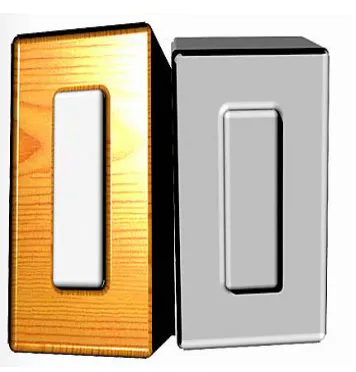
TIK is a simple, stylish and smart home automation gadget, which converts any switch into a smart one without any rewiring. Place “Tik” on top of any light switch and control it from anywhere without compromise in the normal switch operation.
I. INTRODUCTION
In recent years, there has been a growing interest among consumers in the smart home concept. Smart homes contain multiple, connected devices such as home entertainment consoles, security systems, lighting, access control systems and surveillance. Intelligent home automation system is incorporated into smart homes to provide comfort, convenience, and security to home owners. Home automation system represents and reports the status of the connected devices in an intuitive, user-friendly interface allowing the user to interact and control various devices with the touch of a few buttons. Some of the major communication technologies used by today’s home automation system include Bluetooth, WiMAX and Wireless LAN (Wi-Fi), Zigbee, and Global System for Mobile Communication[6]
Smart home technology generally refers to any suite of devices, appliances, or systems that connect into a common network that can be independently and remotely controlled. When your home technology works together in one system, it can also be referred more loosely as a “connected home”. For example, your home's thermostat, lights, audio speakers, TVs, security cameras, locks, appliances, and more are all connected into a common system, which can be controlled from your smart phone or through a mobile touch screen device.Smart home automation allows you to tap into high-tech functionality and luxury that wasn’t possible in the past. As technology development continues to expand, so will the possibilities for consumer home automation to make life easier and more enjoyable.[9]
II. SYSTEM ARCHITECTURE
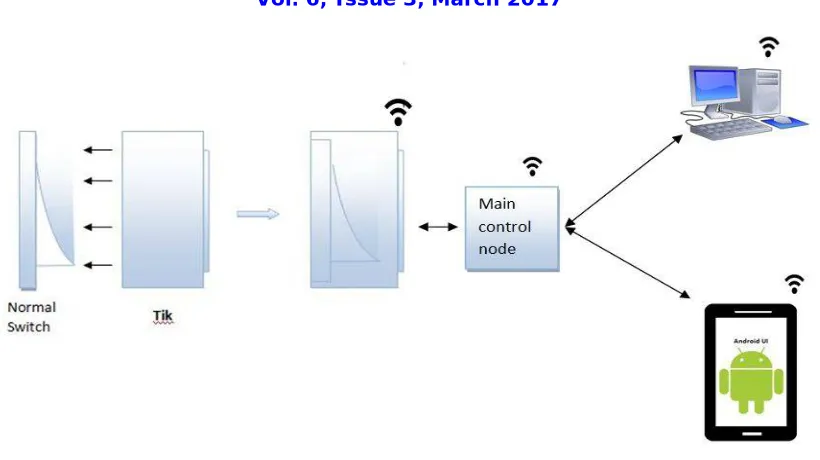
Fig .1. Schematic representation of home automation
Fig. 1 shows the main architecture of the proposed smart home system. The home local network is organized by the central router by which the WLAN can access the internet. Smart units (such as smart switch, smart light, smart sensors etc.) equipped with special Wi-Fi module can be configured to join the given home wireless network. Traditional home appliances are easy to be equipped with the Wi-Fi module which makes them having the wireless connection ability. There are no complex hardwired arrangements to build this system. The system supports to dynamically add or remove the smart units by user control platform. All the smart units are connected together in the home local network working cooperatively. A home proxy is used in the local wireless network to manage the connected smart units. The home proxy is an embedded control board with custom operating system. It can search the online smart units and communicate with them.
BLOCK DIAGRAM
Fig. 2 illustrates the block diagram of the system that has been designed. The system consists of an Atmega 328 unit, Servomotor, Ethernet shield, RF transceiver, a cellular phone embedded into the system structure. To control the various electrical appliances from anywhere using a cellular phone an active internet connection is required.
According to user needs the android application or internet send the data to the web server. Web server receives the data and send to the master MCU. The master MCU receives the data and send to the RF transceiver. The RF transceiver transmit the data to every switch. And then the address of switch and the address of the data is compared. If the address get matches then the switch get operated according to the information. And also the data have information about the rotation of motor in clockwise or anticlockwise. After the operation performed the Rf transceiver sends the result to the MCU. Then it will be displayed in our smart phone.
III. PROPOSED SYSTEM DESIGN
Tik is an economic and user-friendly design. Number of switches can be integrated to it .Tik is external gadget and can be connected to any standard light switches. No re-wiring required. It can be controlled through PC or mobile also can check the status of the switch in which it is installed (ie. either on or off). Tik can function in different modes such as Timer mode, smart switch mode and manual switch mode. In timer mode, it can mimic the lighting pattern of your house when you are not home thereby misleading burglar to think as if you are home. Tik is able to generate a graph corresponding to the time in which the switch was active. This can be used for power monitoring. If it fails to operate under any circumstances, you can remove it from the switch and use the switch as normal.
Servomotor is used to control the switch. It can make existing switch ON or OFF. When the servomotor rotates in clockwise direction the switch will be turned OFF. . When the servomotor rotates in anti clockwise direction the switch will be turned ON. It can be worked as manual operation also.By the use of servomotor we can locate the current position of the switch.The proposed system is based on wifi with the help of atmega 328 as it is compatable. For receiving and transmitting we are using ESP8266 wifi module and
IV. GRAPHICAL USER INTERFACE AND ALGORITHM
FLOW CHART
V. TEST RESULTS
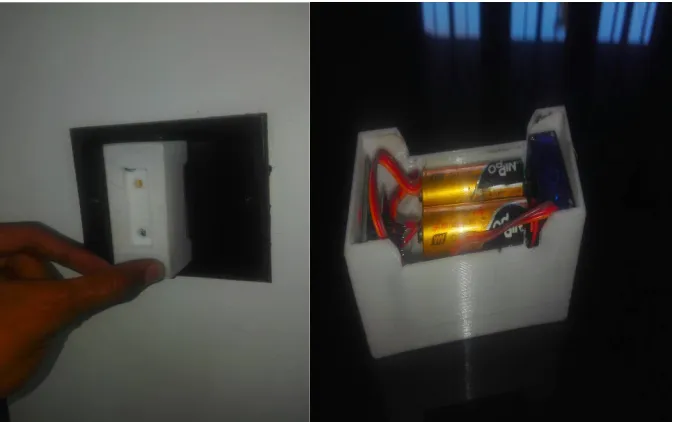
Through various tests and techniques conducted, many characteristics or functioning of this project were improved. Basic features of the Tik were tested so to ensure that every component is functional and required modifications and adjustments were made to the main circuits so they functioned according to the design keeping practical considerations in checked.The components are assembled and the hardware is shown in fig.4. RF transceiver transfer distance can reach 1000 meters and normally can reach 800 meters. Emission distance is ranges from 70 to 100 meters.
Fig .4 Hardware of proposed system
VI. CONCLUSION
It is evident from this project that an individual control home automation system can be cheaply madefrom low cost locally available components and can be used to control multifarious home appliances ranging from the security lamps, the television to the air conditioning system and even the entire house lighting system. And better still, the components required are so small and few that they can be packaged into a small conspicuous container.The smart switch will be a simple and user friendly gadget which could be mounted on any house hold switches (regular or power switch) which will make it smart. It is economical as the power consumption for the device is less than 5 volt and .5 milli-amperes. If device fails, it can be removed and switch can be controlled as normal.Device can be mounted on any switch according to user needs. “Over all the device will be a user friendly yet cost effective solution for the home automation problems that we are facing nowadays.
REFERENCES
1) Li, M.; Lin, Hung-Ju, “Design and Implementation of Smart Home Control Systems Based on Wireless Sensor Networks and Power Line Communications,”IEEE Transactions on Industrial Electronics, vol.PP, no.99, pp.1,1, Dec.2014
2) Haidong Wang; Saboune, J.; El Saddik, A., “Control your smart home with an autonomously mobile smartphone,” IEEE International Conference on Multimedia and Expo Workshops (ICMEW), vol., no., pp.1,6, 15-19 July 2013
3) DhirenTejani, Ali Mohammed A. H. Al-Kuwari, “ Energy Conservation in Smart Home, 5th IEEE International Conference on Digital Ecosystems and Technologies,” Daejeon, Korea, May 2011.
4) Piyare, R.; Tazil, M., “Bluetooth based home automation system using cell phone, 2011 IEEE 15th International Symposium on Consumer Electronics (ISCE),” vol., no., pp.192,195, 14-17 June 2011
5) M. S. Khandare and A. Mahajan, “Mobile Monitoring System for Smart Home,” in Proc. 2010 3rd International Conference on Emerging Trends in Engineering and Technology (ICETET),” Goa, pp.848 – 852.
6) Gill, K.; Shuang-Hua Yang; Fang Yao; Xin Lu, “A zigbee based home automation system, IEEE Transactions on Consumer Electronics,” vol.55, no.2, pp.422,430, May 2009
7) RifatShahriyar, EnamulHoque, S.M. Sohan, Iftekhar Naim; “Remote Controlling of Home Appliances using Mobile Telephony”, International Journal of Smart Home,” Vol. 2, No. 3, July, 2008.
8) Amit Chauhan ReechaRanjan Singh Sangeeta Agrawal Saurabh Kapoor and S. Sharma,”SMS based Remote Control System International Journal of Computer Science and Management Studies,” Vol. 11 pp 19-24 Issue 02 Aug 2008
9) S. S. Intill, “Designing a home of the future " IEEE Pervasive Computing,” vol. 1 no. 2 pp. 76-82 2002.
10) Yuksekkaya, B.; Kayalar, A.A.; Tosun, M.B.; Ozcan, M.K.; Alkar, A.Z.; , “A GSM, internet and speech controlled wireless interactive home automation system,” Consumer Electronics, IEEE Transactions on , vol.52,no.3,pp.837- 843,Aug.2006