Development, Optimization of MEA Microbial Compounds
Hassan Hadi Mehdi AL Rubaiy1, Ammar Altemimi1, Ali Khudair Jaber Al Rikabi1,Uttpal Anand2 , Naoufal lakhssassi4
1 Department of Food science, College of Agriculture, University of Basrah, Iraq 2 Department of Molecular and Cellular Engineering (MCE), Jacob Institute of Biotechnology and Bioengineering Sam Higginbottom University of Agriculture, Technology and Sciences, Prayagraj (Allahabad) – 211007, Uttar Pradesh, India.
Food Science and Nutrition, Ethiopian Institute of Agricultural Research 1
Department of Plant Soil and Agricultural Systems, Agriculture College, Southern Illinois 4
University, Carbondale, USA.
[email protected] (H.H.M.A) ; [email protected] (A.A); [email protected] (A.K.J) ; [email protected] (U.A); [email protected]
* Correspondence:
Abstract
The current study aims to fermentation parameter for producing microbial products. Microwave parameters consist on 245 MHz, and 600-watt for 60 seconds. Ethyl acetate was the best solvent used for extraction purposes. Antioxidant properties were differentiated by blocking the oxidation of the linoleic acid with an inhibition rate of 73.13% at a concentration of 200 mg/mL, in addition to increasing its effectiveness for free radical extraction and reduction strength by increasing concentrations gradually. The bond ability to irons was lower compared to the EDTA-2Na, in addition to the obtained total content corresponding to phenolic compounds in the ethyl acetate extract of fermented rice (Koji) by A. flavus was 232.11 mg, on the basis of galic acid/mg. The stability of the antioxidant
compounds of the ethyl acetate extract of fermented rice (Koji) by A. flavus was also studied; showing stability under neutral conditions, as well as at high temperatures (185 °C during two hours). However, no stability was obtained under acidic and alkaline conditions.
Keywords: Compounds, microbiology, Extract
1-Introduction
temperatures (60, 80, 100 and 120 °C). The present study aims to (1) study the susceptibility of some fungal fungi isolated from different local sources to produce antioxidants using the technique of fermentation of solid forms of fermented rice (Koji); (2) the possibility of using microwave technology to increase the extraction of antioxidants by A. flavus.; and (3) to study the appropriate conditions for the production of antioxidant compounds for the fermented rice extraction (koji) by A. flavus and to study its effectiveness and stability. 2-Materials and Methods
2.1 Fermentation Media (Rice Koji)
Whole and polished rice was used as solid culture by infestation with fungal fungus (fungal isolates were obtained from the Food Science Department / Agriculture College / Basrah University, Iraq). The isolated fungi were diagnosed at the Laboratory of Life Sciences- Department of Marine Biology / Center of Marine Sciences / University of Basrah. After five days of incubation on the malt extract agar (MEA) media, the isolated fungal was examined to study the shape of the colonies and for microscopy test by introducing glass slides using lactophenol solution containing blue cotton. The spores suspension was prepared by activating the molds that were applied to the slant MEA media and incubated at 30 °C for 5 days. The surface of the media was immersed with sterilized distilled water, and then 5 mL of suspension was taken in order to calculate the number of spores using Hemocytometer. The final concentration was adjusted using distilled water to reach 1 × 10⁷ spore/ml (Yen et al., 2003). Rice Koji was prepared according to the Hoppe method (13). Rice (50 g) was soaked in distilled water for an hour in a conical flask (250 ml), then sterilized at 121 °C under 15lb/kg2 pressure for 15 minutes. The media was then cooled and sprayed with a concentration of 1×10⁷ spore/ml and incubated at 30 °C for 15 days.
2.2 Microwave assisted extraction
was involved to release bioactive compounds by mixing the fermented rice (koji) into the electric blender several times; then collecting the organic layer after repeating the filtration process three times using whattman filter paper (Yen et al., 2003). The oufnace method (26) was used as an extraction method including the use of 90 °C for extraction using Teflon tubes (3cm-diameter, 20 cm long,and 5mm thickness) tube cover (3 cm, 4 cm long and 8 mm thickness). Ten ml of filtrate were taken and put in dark glass bottles before adding 40 ml solvents; distilled water, hexane, ethanol, chloroform and methanol. Each of the samples were mixed with the solvent above using the magnetic plates for 30 minutes and then transferred to the Teflon tubes and sealed tightly and placed in the microwave device (capacity 2 liters) using a frequency of 2450 MHz and a 500-watt card for 20, 30 and 40 seconds. Next, the centrifugation was performed in tubes at 2000 cycles/minute during 15 minutes, nominated as extracts. Using Whatman type filter paper, the filtrate was concentrated using the rotary vacuum evaporator at 40 °C to dispose of the solvent to a final volume of 10 ml. The extracts were kept at 18 °C for further use.
2.3 Properties of Microbial Antioxidants 2.3.1 Antioxidant Activity
Thiocyanate by Bersuder et al. (1998) method was used to measure the anti-oxidant effect of linoleic acid in the prepared extracts. The efficacy of anti-linoleic acid oxidation was calculated according to the equation (1):
Antioxidant efficacy %
= [1 − ( Reading the absorption of model
Reading the absorption of the control sample)] × 100 … … . (1)
2.3.2 Determination of Phenolic Compounds
The method described by Quettier-Deleu et al. (2000) was used to estimate the phenolic compounds in ethyl acetate extract in fermented rice (Koji) by Aspergillus flavus.
2.3.3 Free Radical Scavenging
The method described by Shimada et al. (1992) was followed to estimate the scavenging of free radicals, which included mixing 1 ml of sample with 4 mL methanol and 1 ml of Dimethyl sulfoxide (DMSO) solution instead of -1.1 diphenyl-2-picrylhydrazel (DPPH) according to the equation (2):
Scavenging of free radicalsefficacy %
= [1 − ( Reading the absorption of the model
Reading the absorption of the control sample )] × 100 … . . … (𝟐)
2.3.4 Ferrous Ion Chelating
Connectivity: %
= [1 − ( Reading the absorption of the model
Reading the absorption of the control sample )] × 100 … … . . (3)
2.3.5 Reducing power capacity
The reduction power of samples was estimated according to the Oyaizu method (1986), which measured the absorption of the product at a wavelength of 700 nanometers in the spectrophotometer.
2.4 Stability of anti-oxidant compounds
The method described by Yen and Lee (1997) was used, in order to measure the efficiency of antioxidant compounds regarding the pH and temperature.
2.4.1 Effect of pH
Different pH numbers were used for organic solutions including the solution of the regulated citrate (at pH 3 and 5) with a concentration of 0.2 molar, and the phosphate solution (regulated at pH 7 and 9) with a concentration of 0.2 molar to show the effect of pH on the stability of the antioxidant activity of A. flavus, It compared with the control sample on the same pH and without adding the sample. Antioxidant efficacy was estimated by the method of thiocyanate mentioned by Bersuder et al. (1998).
2.4.2 Effect of exposure time
A sample of A. flavus was used with a weight of 3 mg and put in a 10 ml flask at 185 °C for 0, 10, 30, 50, 70, 90, and 120 minutes respectively, and then cooled at room temperature before adding 0.3 ml acetatethyl. The efficacy was measured according to the thiocyanate method described by Bersuder et al. (1998).
2.5 Statistical analysis
The statistical program Statistical Package for the Social Sciences (SPSS) (1998) was used in the data analysis and a comparison was made between the averages using the least significant difference L.S.D at the probability level 0.05 .
3- Results and Discussion
3.1 Production of effective antioxidant compounds
fermentation process, which is in agreement with Miyake (24), showing that the molds have the ability to produce antioxidants on solid culture during the fermentation process. The grain contains phenolic compounds such as frolic acid and isoflavones released during the fermentation process by enzymes released by the molds that help to increase the effectiveness of antioxidants in the media of fermentation (Lin et al., 2006a).
3.2 Extraction of antioxidant compounds
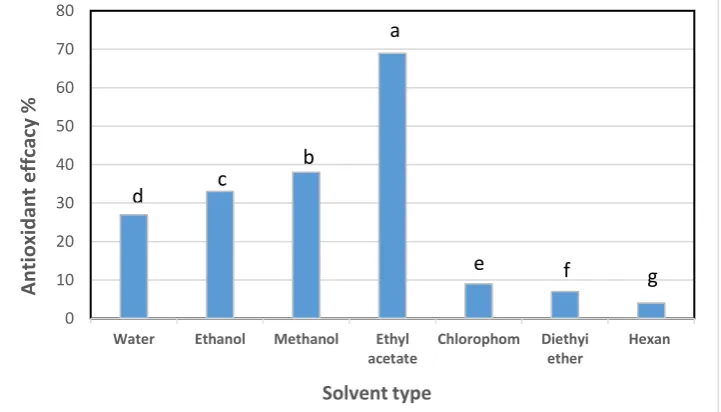
Figure (1) shows the effect of using the different solvents to extract antioxidant compounds of fermented rice by Aspergillus flavus during 15 days of growth at 30 °C. The results showed a significant increase of the antioxidant efficacy (p < 0.05) when the extraction was mediated using the ethyl acetate solvent and an inhibitory rate was 69.41%. The effectiveness of the antioxidant compounds was reduced significantly when the extraction was carried out using the hexane solvent, with an inhibition rate of 4.71%. These results are in agreement with Esaki et al. (1996) who demonstrated that ethyl acetate solvent is highly efficient in extracting antioxidant compounds of A. flavus when compared to the other solvents. The results showed differences in the effectiveness of antioxidant compounds by the different solvents used to extract antioxidants due to the chemical nature of the active compounds in the different extracts, and the difference in the degree of polarity of the solvents, which depends on the solubility of the phenolic compounds in the solvent (Jimenez et al., 2006). The ethyl acetate to extract antioxidant compounds from fermented rice using A. flavus was used and the results were in agreement with Hirota et al. (1997) who used ethyl acetate to extract antioxidant compounds from Moretierlla sp. and extract. In addition, bioactive compounds such as 3.3-dihydroxyterphenyllin, 3-hydroxyterphenyllin, and candidus in B were isolated from A. candidus using acetylene solvent (Yen et al., 2001).
Figure 1. Effect of using different solvents on the effectiveness of antioxidant compounds of fermented rice(koji) by A. flavus for a 15-day incubation at 30 °C.
0 10 20 30 40 50 60 70 80
Water Ethanol Methanol Ethyl acetate
Chlorophom Diethyi ether
Hexan
Anti
o
xida
n
t
e
ffc
ac
y
%
Solvent type
d
b c
f e
3.3 Affecting factors in fermentation process
3.3.1 Effect of the pH on the antioxidant production
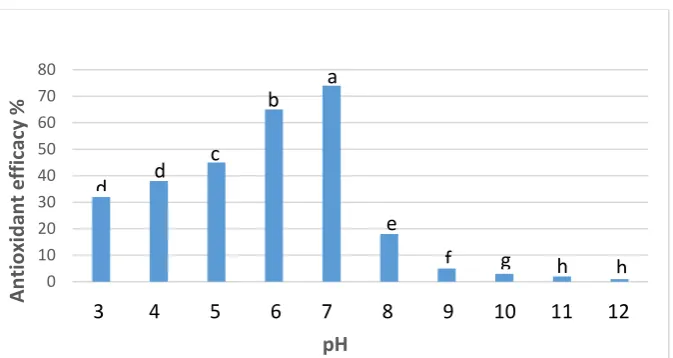
Figure (2) shows the effect of the use of different pH for the production of antioxidant compounds of ethyl acetate extract for fermented rice (koji) with Aspergillus flavus for a period of 15 days at 30 °C. The results showed significant differences (p <0.05) in the isolation ability to produce antioxidant compounds in all pH. The results showed that the highest rate of effectiveness at pH 7, and the inhibition was 74.11% and lowest in pH 12, with an inhibitory rate of 1.11% due to inadequate base pH, which resulted in a lack of growth of the fungus and thus reduced antioxidant efficiency in acetate extract Ethyl.
Figure 2. Effect of using different pH on the effectiveness of antioxidant compounds of fermented rice(koji) by A. flavus for a 15-day incubation at 30 ° C.
* The different letters indicate significant differences at the probability level p < 0.05. 3.3.2 Temperature:
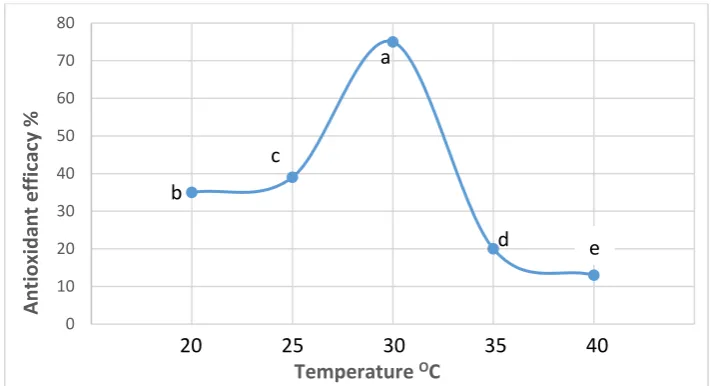
Figure (3) shows the effect of using different temperatures for production of antioxidant compounds of ethyl acetate extract for fermented rice (koji) with Aspergillus flavus for a period of 15 days at 30 °C. The results showed significant differences (p <0.05) in the isolation ability to produce antioxidant compounds at different temperatures, which affected the susceptibility of microorganisms to grow. The results showed that the effectiveness of antioxidants A. flavus in the system of oxidation of linoleic acid was low at the incubation temperature of 20 °C and the inhibition rate was 35.18%, while significantly increased antioxidant activity at the incubation temperature 30 °C was 75.11%. The isolation showed a significant decrease in the effectiveness of the antioxidant compounds at a temperature of 40 °C, with an inhibitory rate of 13.15% which is in agreement with (Lin et
0 10 20 30 40 50 60 70 80
Anti
o
xida
n
t
effic
ac
y
%
pH
d d
c
b a
e
f g h h
al., 2006b). Lin et al.(2006b) reported that the molds had the ability to produce antioxidant compounds at 30 °C while the antioxidant activity decreased at 25 °C and 35 °C.
Figure 3. Effect of using different temperatures on the effectiveness of antioxidant compounds of fermented rice(koji) by A. flavus for a 15-day incubation at 30 °C. * The different letters indicate significant differences at the probability level p < 0.05. 3.3.3 fermentation media
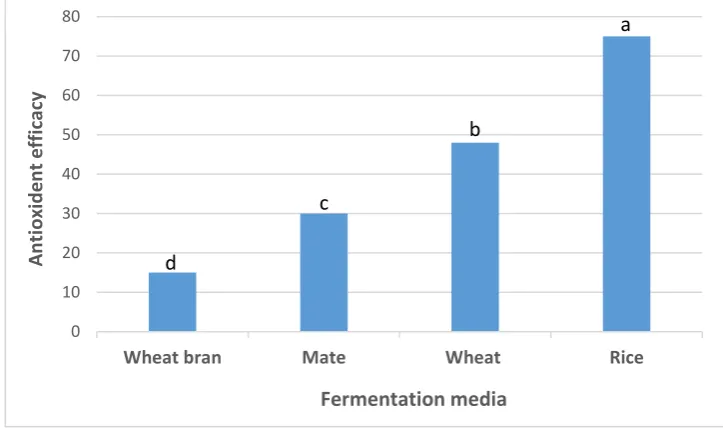
Figure (4) shows the effect of using different media such as rice, malt, wheat, and fermented wheat bran by Aspergillus flavus for a period of 15 days at 30°C. The results showed significant differences at the level of probability of p <0.05 in the effectiveness of antioxidant compounds of different media. The results showed that antioxidant activity significantly increased when A. flavus grow on rice media with an inhibitory rate of 74.89%. This was in agreement with Miyake et al. (2007) who used rice media to produce antioxidant compounds by molds, while the isolation showed a significant decrease in the effectiveness of antioxidant compounds on the media of wheat bran with an inhibitory rate of 15.18%. These data show an improved additive effect between these plant compounds and the antioxidant compounds from fermented rice extract (koji) by A. flavus (Yen et al., 2003).
0 10 20 30 40 50 60 70 80
Anti
o
xida
n
t
effic
ac
y
%
Temperature OC
20 25 30 35 40 d
a
c b
Figure 4. Effect of using different fermentation media on the effectiveness of antioxidant compounds of fermented rice (koji) by A. flavus for a 15-day incubation at 30 °C. * The different letters indicate significant differences at the probability level p < 0.05.
3.4 The properties of effective antioxidants produced from A. flavus
3.4.1 Antioxidant efficacy
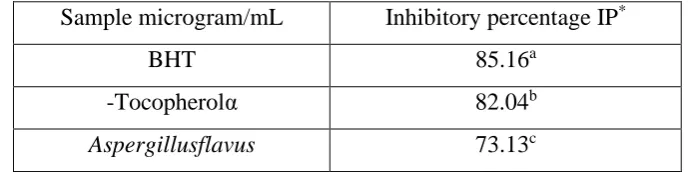
Table (1) shows the antioxidant activity of the ethyl acetate extract of fermented rice (koji) using A. flavus compared to synthetic antioxidant BHT and Natural oxidation α-tocopherol at concentration of 200 microgram / mL. The results showed that the effectiveness of the industrial antioxidant BHT increased significantly with an inhibitory rate of 85.16%, while the effectiveness of the antioxidants A. flavus decreased, with the inhibitory rate of 73.13%. This percentage was significantly lower than the inhibitory rate of the natural antioxidant α-tocopherol at 82.04. The obtained results showed a significant difference (at p <0.05) in the antioxidant effectiveness of the three antioxidants. Shimada et al. (1992) reported earlier that the antioxidant efficacy is related to the number of hydrogen atoms. The effectiveness of antioxidants to inhibit the oxidation of linoleic acid is due to different mechanisms, including the disruption of the chain of the initiation reaction, bonding of iron ions, destruction of peroxides, prevention of hydrogen removal, reducibility, and free radicals (Yaldirim et al., 2001). The effectiveness of antioxidants increases as the extract contains large quantities of antioxidant compounds (Miyake et al., 2007). Thus, the effectiveness of antioxidant compounds was increased by plant isoflavones, which were released during the fermentation process (Robbins, 1980).
0 10 20 30 40 50 60 70 80
Wheat bran Mate Wheat Rice
A
nti
o
xi
de
nt
e
ff
icacy
Fermentation media d
c
b
Table 1. Antioxidant activity of the ethyl acetate extract of fermented rice (koji) using A. flavus.
* The different letters indicate significant differences at the probability level p < 0.05 3.4.2 Total phenolic content
The total content of phenols in the ethyl acetate extract of fermented rice (koji) by Aspergillus flavus was 232.11 μg on the basis of galic acid / mg. There is a relationship between total phenol content in the extract and increasing antioxidant efficacy of compounds in ethyl acetate extract for fermented rice (koji) with A. flavus. The total content of phenols in the extract increased after the fermentation process and the larger quantities of phenolic compounds are produced after the fermentation process (Randhir et al., 2004). The effectiveness of antioxidant compounds increased by synergistic antioxidant that are released during the fermentation process, which increase the total content of phenols in the fermentation media (Lopes et al., 1999). These compounds are secondary metabolites that are present in plants and are linked through hydroxyl groups with glucose in the form of glucosides (Robbins, 1980). The concentration of phenols in extracts was dependent on the type of solvent used (Romero et al., 2004).
3.4.3 Free radicals scavenging activity
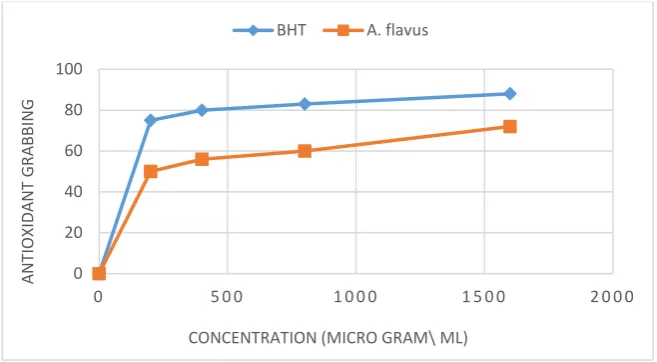
Figure (5) shows the effect of the use of antioxidant compounds on fermented rice (koji) extract by Aspergillus flavus with different concentrations of DMSO free radicals compared to BHT. The statistical analyses revealed that there were significant differences (p<0.05) between fermented rice (koji) extract using Aspergillus flavus among all concentrations regarding free radicals scavenging activity. It was also observed that the susceptibility of the antioxidant compounds A. flavus increased significantly with increased concentration, which is in agreement with previous studies (Chung et al., 2002). The results showed that the bioactive compounds of the ethyl acetate extract of fermented rice (koji) contained hydroxyl groups that were capable of interacting with free radicals and converted
them into more stable products. These results were in agreement with Farhoosh et al. (2006) and Wu et al.(2003) who confirmed that antioxidants compounds of fermented rice (koji)
* percentage IP Inhibitory
Sample microgram/mL
a 85.16 BHT
b 82.04 -Tocopherolα
using A. falvus can have the ability to donate an hydrogen atom and thereby prohibiting free radicals.
Figure 5. Effectiveness of antioxidant compounds of fermented rice (koji) by A. flavus for
free radical scavenger DMSO compared to BHT with different concentrations. 3.4.4 Connect the iron ion Fe + 2:
Figure (6) shows the susceptibility of the antioxidant compounds of fermented rice (koji) by Aspergillus flavus to bind iron ions compared to EDTA-2Na in different concentrations. The results showed significant differences at the probability level of p <0.05 in the efficiency of the iron-ions binding between EDTA-2Na and the antioxidants compounds of A. flavus. The results showed a significant increase in EDTA-2Na susceptibility For the binding of iron ion, It was also observed that the antioxidant susceptibility of the fermented rice extract (koji) was determined by A. flavus to bind the iron ions that increased significantly with increased concentration. This was in agreement with Chou et al. (2002) and Lin et al. (2006) who found that the compounds of microbial antioxidant increased proportionally with the concentration.
Figure 6. Effectiveness of antioxidant compounds of fermented rice (koji) by A. flavus for
binding iron ion compared to EDTA-2Nawith different concentrations.
0 20 40 60 80 100
0 5 0 0 1 0 0 0 1 5 0 0 2 0 0 0
A
N
TIO
XIDA
N
T G
R
A
BB
IN
G
CONCENTRATION (MICRO GRAM\ ML) BHT A. flavus
0 20 40 60 80 100
0 200 400 600 800 1000 1200 1400 1600 1800
PI
N
DIN
G
PO
W
ER
%
3.4.5 Reducing power capacity:
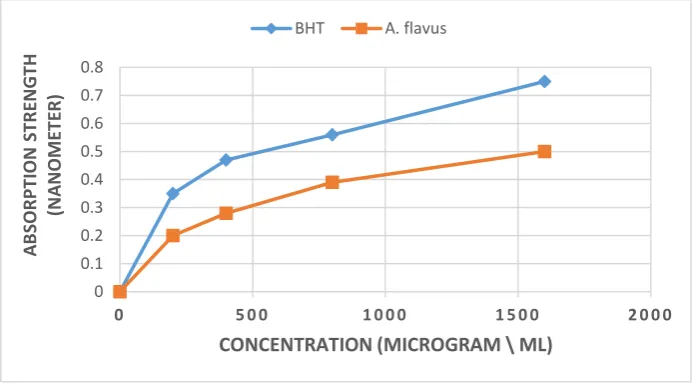
Figure (7) shows the ability of antioxidant compounds of fermented rice (koji) to reduce Fe+3 iron ions to Fe+2 using different concentrations. The results showed that the synthetic antioxidant BHT exhibited high absorption, while the strength of the reduction of the antioxidant compounds of A. flavus was observed to be less than the strength of the reduction of BHT. The results also found that the strength of reduction of antioxidant compounds of the extract of rice fermented by A. flavus Increased significantly with increased concentration. The results showed that there were significant differences at the probability level of p <0.05 in the reduction power while increasing concentration, which is consistent with Yang et al. (2000). The observed reduction strength of the extract could be explained by the presence of compounds called reducing agent formed during the fermentation process, which can interact with free radicals to convert them into more stable products and then terminate the free radical reaction chain (Yang et al., 2002), while the reductase compounds interact with the peroxides and inhibit their formation (Jayaprakasha et al., 2003).
Figure 7. Strength of reduction of antioxidant compounds of fermented rice (koji) by A. flavus compared to BHT with different concentrations.
3.5 Stability of antioxidant compounds
3.5.1 pH
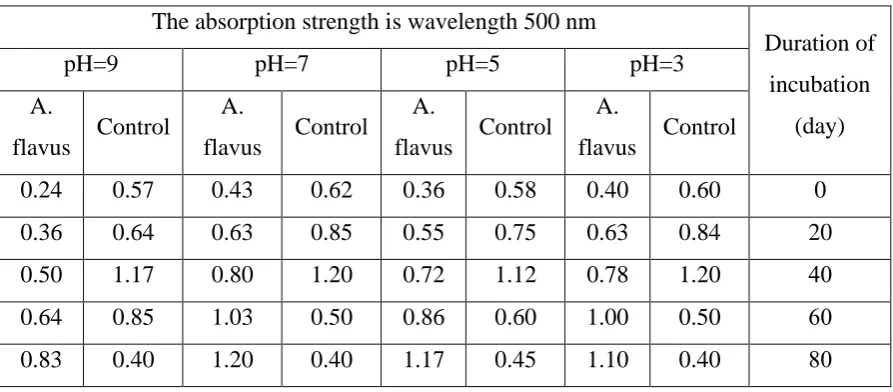
Table (2) shows the effect of the use of different hydrogen numbers on the effectiveness of antioxidant compounds of fermented rice (koji) by A. flavus to inhibit the oxidation of linoleic acid at incubation at 40 °C for 95 hours. The results showed that there were significant differences at the level of p <0.05 in the effectiveness of antioxidant compounds of fermented extract by A. flavus for all pH tested. The obtained results showed
0 0.1 0.2 0.3 0.4 0.5 0.6 0.7 0.8
0 5 0 0 1 0 0 0 1 5 0 0 2 0 0 0
A
B
SORPTIO
N
S
TRE
N
GTH
(N
A
N
OM
ETE
R
)
CONCENTRATION (MICROGRAM \ ML)
the effect of acid pH on the effectiveness of antioxidant compounds of fermented rice (koji) by A. flavus, in addition to a significant decrease in the effectiveness of A. flavus compounds and gradually increased incubation time at acidic pH when it reached a maximum time (after 95 hours). The results also showed the effect of pH on the anti-oxidant compounds A. flavus, (P> 0.05). A slight reduction in antioxidant activity was observed, which was consistent with Yen et al. (1997), this is due to the antioxidant potential of the compounds to be reduced to the pH. The rate of antioxidant activity was significantly reduced in basal pH. It was also observed that there was a significant variation in absorption of the control sample as it began to decline rapidly after a period of 45 hours, which could be explained by the breakdown of peroxides formed during the process of oxidation of linoleic acid.
Table 2. Effect of pH on the Effectiveness of antioxidant compounds of fermented rice (koji) by A. flavus for different incubation periods at 40 °C.
The absorption strength is wavelength 500 nm
Duration of incubation
(day)
pH=9 pH=7 pH=5 pH=3
A.
flavus Control
A.
flavus Control
A.
flavus Control
A.
flavus Control
0.24 0.57 0.43 0.62 0.36 0.58 0.40 0.60 0
0.36 0.64 0.63 0.85 0.55 0.75 0.63 0.84 20
0.50 1.17 0.80 1.20 0.72 1.12 0.78 1.20 40
0.64 0.85 1.03 0.50 0.86 0.60 1.00 0.50 60
0.83 0.40 1.20 0.40 1.17 0.45 1.10 0.40 80
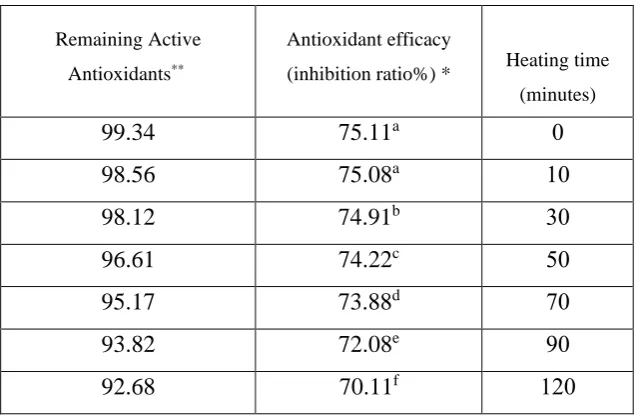
3.5.2 Effect of exposure time
temperatures for long time, thereby causing degradation for bioactive compounds. (32). This result was in agreement with Hamama and Nawar (1991) who showed that industrial antioxidants BHA, BHT, PG and TBHQ lose their effectiveness at 185 °C heating for an hour, with a damping rate of 42.8, 20.4, 37.1 and 47.7%, respectively.
Table 3. Effect of exposure time to 185 ° C in the effectiveness of antioxidant compounds of fermented rice (koji) by A. flavus.
Heating time
(minutes) Antioxidant efficacy
(inhibition ratio%) * Remaining Active
** Antioxidants
0 a
75.11 99.34
10 a
75.08 98.56
30 b
74.91 98.12
50 c
74.22 96.61
70 d
73.88 95.17
90 e
72.08 93.82
120 f
70.11 92.68
* The different letters indicate significant differences at the probability level p < 0.05
**
Remaining Active Antioxidants =
The percentage of inhibition ( sample after the heat treatment at 185 ° C)%
The percentage of inhibition ( sample after the heat treatment at 185 ° C)%
× 100 … . (4)
4- Conclusions
The antioxidant efficacy was significantly increased when A. flavus was grown on the rice media and the inhibitory rate was 74.89%. The antioxidant strength of A. flavus was less than that of the antioxidant BHT. The results of the current study indicate the stability of the antioxidant compounds of the extract of fermented rice (Koji) by A. flavus under neutral conditions but not under acidic and alkaline conditions, thus reducing the anti-oxidant effectiveness of the compounds formed. The low antioxidant effect of fermented rice (koji) by A. flavus may be due to the disintegration of the antioxidant compounds by increasing the exposure time to high temperatures.
Funding
The present study received no any extramural funding support from any organization.
The authors would like to thank Food science department, Agriculture College, University of Basrah for providing facilities and equipment.
Conflicts
of Interest
The authors declare no conflict of interest.
References
1. Packer, L. "Oxidative stress, antioxidants, aging and disease." Oxidative stress and aging. Birkhäuser Basel, 1995, 1-14.
2. Simonian, N. A., and J. T. Coyle. "Oxidative stress in neurodegenerative diseases." Annual review of pharmacology and toxicology 36.1. 1996, 83-106.
3. Aruoma, Okezie I. "Free radicals, oxidative stress, and antioxidants in human health and disease." Journal of the American oil chemists' society 75.2. 1998, 199-212. 4. Droge, W Free radicals in the physiological control of cell function. Physiol. Rev.
2002, 82:47-95.
5. Altemimi, A., Lakhssassi, N., Baharlouei, A., Watson, D., & Lightfoot, D. Phytochemicals: Extraction, isolation, and identification of bioactive compounds
from plant extracts. Plants, 2017, 6(4), 42.
6. Tan, Bee Ling, Mohd Esa Norhaizan, and Heshu Sulaiman Winnie-Pui-Pui Liew. "Antioxidant and oxidative stress: A mutual interplay in age-related diseases." Frontiers in pharmacology 9 2018.
7. Matschke, Veronika, Carsten Theiss, and Johann Matschke. "Oxidative stress: the lowest common denominator of multiple diseases." Neural regeneration research 14.2 2019, 238.
8. Liguori, Ilaria, et al. "Oxidative stress, aging, and diseases." Clinical interventions in aging 13 2018, 757.
9. Jayaprakasha, G.K.; Tamil Selvi and Sakariah, K.K. Antibacterial and antioxidant activities of grape (Vitis vinifera) seed extract. Food Research International. 2003, 36:117-122.
10.Yen, G.C. and Lee, C.A. Antioxidative properties of extracts from Aspergillus candidus broth filtrate. J. Sci. Food Agric. 1997, 75:326-332.
11.Ishikawa, Y. Development of new types of antioxidants from microbial origin. J. Jpn. Oil Chem. Soc. 1992, 41: 762 -767.
12.Yen, G.C.; Chang, Y.C.; Sheu, F. and Chiang, H.C. Isolation and characterization of antioxidant compounds from Aspergillus candidus broth filtrate. J. Agric. Food Chem. 2001, 49:1426-1431.
Fermentation, isolation, structure elucidation and biological properties. J. Antibiot. 1993, 46: 1485- 1493.
14.Nihei, Y.; Yamaoto, H.; Hasegawa, M.; Hanada, M.; Fukagawa, Y. and oki, T. Epocarbazolins A and B, novel 5-lipoxygenase inhibitors. Taxonomy, fermentation, isolation, structures and biological activities. J. Antibiot 1993, 46: 25- 33.
15.Kunze, B.; Trowitzsch-Kienast, W.; Hofle, G. and Reichenbach, H. Nannochelins A, B and C, new iron-chelating compounds from Nannocystisexedens (myxobacteria). Production, isolation, physicochemical and biological properties. J. Antibiot. 1992 45:147-150.19.
16.Thostenson, E. T. and Chou, T. W. Microwave processing fundamentals and applications compos part A. Appls, 1999, 30 (9): 1055 – 1071.
17.Oufnac, D. S. Determination of antioxidant capacity in corn germ, wheat germ and wheat bran using solvent and microwave assisted solvent extraction. Thesis in Louisiana state Unv. and Agricultural and mechanical college. 2006, Pp: 68.
18.Yen, G.C.; Chang, Y.C. and Su, S.W. Antioxidant activity and active compounds of rice Koji fermented with Aspergillus candidus. Food Chem. 2003, 83: 49-55
19. Chemat, F.; Abert-vian, M. and Zillehuma, Y. J. Microwave assisted extraction separation: green chemistry in action. In: Pearlman J. T. (ed). Green chemistry res. Trends-Nova Sci. publisher, New York, 2009, Pp.: 33 – 62.
20.Routray, W. and Orsat, V. Microwave assisted extraction of flavonoids: A review. Food Bioprocess Technol., 2011, 5 (2): 1 –160.
21.Hoppe, M.B.; Jha.H.C. and Egge, H. Structure of an antioxidant from fermented soybeans (Tempeh). J. Am. Oil Chem. Soci. 1997, 74:477-479.
22. Bersuder, P.; Hole, M. and Smith, G. Antioxidants from a heated histidine-glucose of the antioxidant role of histidine and isolation of antioxidants by High performance Liquid Chromotography. J. Am. Oil. Chem. 1998, 75: 181-187.
23.Quettier-Deleu, C.; Gressier, B.; Vasseur, J.; Dine, T.; Brunet, C.; Luyckx, M.; Cazin, M.; Cazin, J.C.; Bailleul, F. and Trotin, F. Phenolic compounds and antioxidant activities of buckwheat (Fagopyrum esculentum) hulls and flour. J. Ethnopharmacol. 2000, 72:35-42.
24.Shimada, K.; Fujikawa, K.; Yahara, K. and Nukamura, T. Antioxidative properties of xanthan on the autoxidation of soybean oil in cyclodextrin emulsion. J. Agric. Food Chem. 1992, 40:945-948.
26.Oyaizu, M. Antioxidative activities of browning reaction prepared from glucosamin. Jpn. J. Nutr. 1986, 44: 307-315.
27.Lin, C.H.; Wei, Y.T. and Chou, C. Enhanced antioxidative activity of soybean Koji prepared with various filamentous fungi. Food Microbiol. 2006, 23: 628 - 633. 28.Esaki, H.; Onozaki, H.; Kawakishi, S. and Osawa, T. New antioxidants isolated from
tempeh. J. Agric. Food Chem. 1996, 44: 696-700.
29.Jimenez, M.S.; Velarte, R. and Castillo, R. Direct determination of phenolic compounds and phospholipids in virgin olive oil by micellar liquid chromatography. Food Chemistry. 2006, 100:8-14.
30.Hirota, A.; Morimitsu, Y. and Hojo, H. New antioxidative indophenol- reducing phenol compounds isolated from the Moretierella sp. fungus. Biosci. Biotechnol. Biochem. 1997, 61: 647- 650.
31.Lin, C.H.; Wei, Y.T.; Yu, R.C. and Chou, C.C. Cultivation temperature and length affect the antioxidant activity and total phenolic content of soybean koji prepared with Aspergillus awamori. J. Food and Drug Analysis. 2006, 14(1):74-79.
32.Yaldirim, A.; Mavi, A. and Kara, A.A. Determination of antoxidant and antimicrobial activities of Rumax scrispus L. extracts. J. Agric. Food Chem. 2001, 49:4083-4089.
33.Miyake, Y.; Ito, C.; Itoigawa, M. and Osawa, T. Isolation of the antioxidant pyranonigrin – A form rice mold starters used in the manufacturing process of fermented food. Biosci. Biotechnol. Biochem. 2007, 71:1-7
34.Romero, A.M.; Doval, M.M.; Sturla, M.A. and Judis, M.A. Antioxidant properties of polyphenolic –containing extract from soybean fermented with Saccharomyces cerevisiae. Eur. J. Lipid Sci. Technol. 2004, 106:424-431.
35.Randhir, R.; Vattem, D.; and Shetty, K. Solid- state bioconversion of favabean by Rhizopus oilgosporus for enrichment of phenolic antioxidants and L- DOPA. Innovative food Sci. Emerg. Technol. 2004, 5:235-244.
36.Lopes, G.K.; Schulman, H.M. and Hermes-Lima, M. Polyphenol tannic acid inhibits hydroxyl radical formation from Fenton reaction by complexing ferrous ions. Biochim. Biophys. Acta. 1999, 1472:142-152.
38.Chung, Y.C.; Chang, C.T.; Chao, W.W.; Lin, C.F. and Chou, S.T. Antioxidative activity and safety of the 50% ethanolic extract from red bean fermented by Bacillus subtilis IMR-NK1. J. Agric. Food Chem. 2002, 50: 2454-2458.
39.Farhoosh, R.; Gholam, A.; Mohammad, G. and Khodaparast, H. Antioxidant activity of various extracts of old tea leaves and black tea wastes. Food Chem. 2006, 100: 231-236.
40.Wu, H.C.; Cheng, H.M. and Schiau, C.Y. Free amino acids and peptides as related to antioxidant properties in protein hydrolysates of mackerel (Scomber austriasicus). Food Res. Int. 2003, 36:949-957.
41.Chou, S.T.; Chang, C.T.; Chao, W.W. and Chung, Y.C. Evaluation of antioxidative and mutagenic properties of 50% ethanolic extract from red bean fermented by Aspergillus oryzae. J. Food Prot. 2002, 65: 1463-1469.
42.Yang, J.H.; Mau, J.L.; Ko, P.T. and Huang, L.C. Antioxidant properties of fermented soybean broth. Food Chem. 2000, 71:249-254.
43.Yang, J.H.; Lin, H.C. and Mau, J.L. Antioxidant properties of several commercial mushrooms. Food Chem. 2002, 77:229-235.