Volume 2008, Article ID 329727,7pages doi:10.1155/2008/329727
Research Article
Average Throughput with Linear Network Coding over
Finite Fields: The Combination Network Case
Ali Al-Bashabsheh and Abbas Yongacoglu
School of Information Technology and Engineering, University of Ottawa, Ottawa, Canada K1N 6N5
Correspondence should be addressed to Ali Al-Bashabsheh,[email protected]
Received 4 November 2007; Revised 17 March 2008; Accepted 27 March 2008
Recommended by Andrej Stefanov
We characterize the average linear network coding throughput,Tcavg, for the combination network with min-cut 2 over an arbitrary
finite field. We also provide a network code, completely specified by the field size, achievingTcavgfor the combination network.
Copyright © 2008 A. Al-Bashabsheh and A. Yongacoglu. This is an open access article distributed under the Creative Commons Attribution License, which permits unrestricted use, distribution, and reproduction in any medium, provided the original work is properly cited.
1. INTRODUCTION
For a set of sinks in a directed multicast network, it was shown in [1] that if the network can achieve a certain throughput to each sink individually, then it can achieve the same throughput to all sinks simultaneously by allowing coding at intermediate nodes. Such argument is possible since information is an abstract entity rather than a physical one. Thus, in addition to repetition and forwarding, nodes can manipulate the symbols available from their in-edges and apply functions of such symbols to their out-edges. The collection of edge functions can be referred to as thenetwork code. The work in [1] shows that a natural bound on the achievable coding rate is the least of the min-cuts between the source and each of the sinks. We refer to a code achieving the min-cut rate as asolution.
It is known that every multicast network has a linear
solution over a sufficiently large finite field [2]. Sanders et al. [3] showed for linear network coding that an alphabet of size O(|T|) is sufficient to achieve the min-cut rate, where|T| is the number of sinks in the network. Rasala-Lehman and Lehman [4] indicated that such bound is tight by advising a solvable multicast network requiring an alphabet of size Ω(|T|) to achieve the min-cut rate. This shows that some multicast networks might require alphabets of huge sizes to achieve their min-cut throughputs. Coding over large alphabet sizes is not always desirable since it introduces some complexity and latency concerns. Hence, this motivates working below min-cut rates (i.e., relaxing the constraint of
operating at network capacity) but with significantly smaller alphabet sizes (if possible) [5].
Chekuri et al. [6] introduced the measure average routing throughput by relaxing the constraint that all sinks must receive the same rate. By decoupling the problem of maximizing the average rate from the problem of balancing rates toward sinks, they showed that average routing rates can significantly exceed the maximum achievable common routing rates in the network. They also argued that the majority rather than the minority of multicast applications experience different rates at the receivers. In [7], the concept
In the literature, two different variations of the problem of nonuniform coding throughputs at the terminals were considered. The general connection model [5, 8] considers the problem where each sink specifies its set of demanded messages. On the other hand, the nonuniform demand
problem refers to the problem where each sink specifies only the size of its demand (i.e., the number of messages) and such demanded size might vary from sink to another [9]. In this work, a sink does not specify neither the identities nor the number of demanded messages. The objective is to maximize the average throughput achievable with linear network coding under the additional constraint where messages and network coding are restricted to the finite field Fq (where
Fq might not be sufficiently large to achieve the min-cut throughput).
2. DEFINITIONS AND PROBLEM FORMULATION
In general, assume anhunit rate information source consists of h unit rate messages x1,x2,. . .,xh, where messages are
symbols from a finite fieldFq. Also assume symbols carried by edges belong to the same field Fq. For the comparison between average throughputs and common throughputs to be fair and meaningful, it is important that the number of messageshat the source does not exceed the min-cut. In the more general case where the min-cuts from the source to the sinks are not equal,hcan be set such that it does not exceed the smallest of such min-cuts.
A directed networkN onV nodes andE links can be modeled as a directed graphG(V,E). In multicast networks, a node s ∈ V broadcasts a set of messages x1,. . .,xh to
a set of sinks T = {t1,. . .,tn} ⊆ V \s where h is the
smallest min-cut betweensandt, for allt∈T. For any edge
e∈E, we denote byδin(e) the set of edges entering the node from whichedeparts. At some parts of this work, we find it more convenient to deal with thevaluation(defined below) induced by the network code rather than the network code itself.
Definition 1. Given a network code,C, defined by a collec-tion of funccollec-tions fe, for alle∈Esuch that
fe:F|qδin(e)|−→Fq. (1)
The codevaluationinduced byCis a collection of functions:
fe:Fhq−→Fq, (2)
where feis the value of feas a function ofx1,. . .,xh.
For a multicast network N with a set of messages at the source whose size does not exceed the smallest of the min-cuts between the source and each sink. Linear network coding over sufficiently large field allows every sink t ∈ T to recover the entire set of messages. In this work, we somehow reverse the story, that is, we restrict the field size and allow sinks to recover subsets of the set of messages. Since sinks do not experience the same throughput any more, average throughput per sink becomes a natural measure to evaluate the performance of a given network code. Hence, the objective is to decide on a linear network code over the
specified alphabet which maximizes the average throughput-or equivalently the sum of throughputs experienced by all sinks. More formally, we define the maximum average linear coding throughput overFqas
Tcavg= 1
|T|maxQ∈Q
t∈T
Tct(Q)
, (3)
where the maximization is over Q, the set of all possible linear coding schemes overFq, andTt
c(Q) is the throughput
at sink tunder linear coding schemeQ ∈ Q. In contrast, maximum average routing throughput was defined in [6] and is repeated here for convenience:
Tiavg=
1 |T|maxP∈P
t∈T
Tt
i(P)
, (4)
where in this formulation, the maximization is over all possible integer routing schemes,P, andTt
i(P) is the integer
routing throughput at sinktunder routing schemeP∈P. In what follows, we restrict our attention to the family of combination networks withNintermediate nodes and min-cut 2. Such networks are sufficient to develop the ideas we need to present in this work.
3. COMPLEXITY VERSUS ALPHABET SIZE
Consider a multicast network that requires a fieldFqof size
qto achieve the min-cut throughput. Thus, all operations to compute edge functions must be done over the fieldFq. In other words, each node in the network must have a memory of Θ(log2(q)) bits to store and manipulate the received symbols. In practice, each edge can deliver a fixed number of bits per unit time. Hence, the assumption that edges can deliver one symbol fromFqper network use implies a latency ofΘ(log2(q)).
4. AVERAGE THROUGHPUT OF COMBINATION NETWORK WITH MIN-CUT 2
Consider a combination network N with min-cut 2 and messagesx1,x2 ∈ Fqat the source. A combination network with min-cut 2 consists of three layers of nodes: the source
s, a set ofNintermediate nodes, and a set of (N
2) sinks. The source has an out-edge to each intermediate node. Finally, each distinct pair of intermediate nodes is connected to a unique sink via a pair of edges directed into the sink. In this section, we derive an expression for the maximum average throughput ofN over an arbitrary finite fieldFq. It is known that the network,N, is solvable whenN ≤ q+ 1, whereq
is the field size. Hence, average throughput is equivalent to the min-cut throughput in this case. On the other hand, for
Definition 2. LetF be a collection of functions such that
f :Fq×Fq−→Fq, (5) for each f ∈F. Then, an average throughput,Tcavg, is said to
be achievable overF if there exists a network code valuation
C = {fe(x1,x2) : fe(x1,x2) ∈ F for alle ∈ E}achieving
Tcavg.
LetG= {αx1+βx2 :α,β ∈Fq}be the set of all linear functions (combinations) ofx1andx2overFq. Also letF = {x2} ∪ {x1+βx2:β∈Fq}.
Lemma 1. Let f(x1,x2)=αx1+βx2,f(x1,x2)=αx1+βx2
be two functions inGwithα,β,α,β ∈ Fq \ {0}thenx1is
recoverable from f and fif and only ifx2is recoverable from
f and f(i.e., either both messages are recoverable or non of them).
Proof. See the appendix.
Corollary 1. Letf(x1,x2)=x1+βx2,f(x1,x2)=x1+βx2be
two functions inF withβ,β∈Fq\ {0}thenx1is recoverable
fromf and fif and only ifx2is recoverable from f and f.
Proof. The corollary follows fromLemma 1and the fact that F ⊂G.
Lemma 2. An average throughput,Tcavg, is achievable overF
if and only if it is achievable overG. Proof. See the appendix.
Remarks
(i)Lemma 2suggests that it is sufficient to consider the set of functionsF and there is no gain in consideringG. (ii) With a slight modifications in the proofs, it is easy to
show that Lemmas1and2are still valid even ifGwas the set of all affine functions ofx1andx2overFq. From the definition ofF, we see that|F| =q+ 1, and with the aid ofCorollary 1, it is straight forward to show that any sink receiving two distinct functions fromF will be able to recover both messages. Thus, forN ≤q+ 1 the network is solvable [10], and the average throughput is equal to the min-cut throughput. ForN > q+ 1, a simple pigeon hole argument shows that some source edges will be carrying the same combination of messages. Thus, a receiver with two in-edges carrying the same function of messages will be able to recover one or non of the messages.
The next proposition determines how functions
f(x1,x2)∈F must be distributed among source out-edges in order to maximize average throughput (i.e., minimize loss in throughput). Letmibe the number of source edges
carrying fi(x1,x2)= x1+βix2, for all 1 ≤i ≤ q−1,βi ∈ Fq \ {0}, βi=/βj, for alli /=j. With such assignment of
functions to source out edges, we still have N −qi=1−1mi
unused source out-edges and two functions inF namely,
f(x1,x2) = x1 and f(x1,x2) = x2. Let m0 andm0 be the number of source edges carrying x1 and x2, respectively.
Since there is no preference in recovering one message over the other (both messages are equally important to each destination), a maximum average throughput achieving assignment must haveN−qi=1−1miequally divided
between m0 andm0, that is,m0 = (N− q−1
i=1mi)/2 and
m0 = (N − q−1
i=1mi+ 1)/2. Now, if a sink has both its
in-edges carrying x1 then it can not recover x2, and thus there are (m0
2 ) sinks which cannot recoverx2. Similarly, there are (m0
2 ) destinations which cannot recover x1. Finally, a destination receiving fi(x1,x2) = x1+βix2, βi=/0 on both
of its in-edges will not recover any of the messages, and so there is a loss of 2(mi
2). Hence, the total loss in throughput is given by
Lm1,. . .,mk
= ⎛ ⎜ ⎝
N−k
i=1mi
2
2
⎞ ⎟ ⎠+
⎛ ⎜ ⎝
N−k
i=1mi+ 1
2
2
⎞ ⎟ ⎠+ 2
k
i=1
⎛ ⎝mi
2 ⎞ ⎠,
(6)
wherek=q−1 and the average throughput, as function of
m1,. . .,mk, is given by
Tcavgm1,. . .,mk
= 1
(N2)
2
N
2
−Lm1,. . .,mk
. (7)
Before we present the proposition, we need the following lemma.
Lemma 3. Let
A=
⎛ ⎜ ⎜ ⎜ ⎜ ⎜ ⎜ ⎜ ⎝
a 1 · · · 1 1 a · · · 1
..
. · · · . .. 1 1 · · · 1 a
⎞ ⎟ ⎟ ⎟ ⎟ ⎟ ⎟ ⎟ ⎠
(8)
be ak×kmatrix witha∈R,a /=1or−(k−1), then
A−1= 1
(a−1)(a+k−1)
× ⎛ ⎜ ⎜ ⎜ ⎜ ⎜ ⎜ ⎜ ⎝
a+ (k−2) −1 · · · −1 −1 a+ (k−2) · · · −1
..
. · · · . .. ...
−1 · · · −1 a+ (k−2)
⎞ ⎟ ⎟ ⎟ ⎟ ⎟ ⎟ ⎟ ⎠
.
(9)
Proof. See the appendix.
Proposition 1. Average linear network coding throughput of
networkN is maximized whenm1=m2= · · · =mk:=m∗int,
Proof. From (6), we can write size
Lm1,. . .,mk
=1 2
N−k
i=1mi−δ
2
N−k
i=1mi−δ
2 −1
+
N−k
i=1mi+δ
2
N−k
i=1mi+δ
2 −1
+ 4
k
i=1
mi
mi−1
2
,
(10)
where δ = 0 and 1 for N − k
i=1mi is even and odd,
respectively. This reduces to
Lm1,. . .,mk
=1 4
N−
k
i=1
mi 2
−2
N−
k
i=1
mi
+ 4
k
i=1
mi
mi−1
+δ
.
(11)
For the moment, we relax the constraintthat m1,. . .,mk
must be integer valued. We also relax the constraint that (N−k
i=1mi)/2 and (N− k
i=1mi+ 1)/2 must be integers
(note that with such relaxationδdisappears from (11)). Now, we compute the partial derivative of (11) with respect to
mj, for all 1≤j≤kand equate to zero. Thus, we obtain
5mj+
i /=j
mi=N+ 1. (12)
This can equivalently be written as
m1m2· · ·mk
A=(N+ 1)(1 1· · ·1), (13) whereA=4I+1,Iis thek×kidentity matrix, and1is the all onesk×kmatrix. Thus,
m1m2· · ·mk
=(N+ 1)(1 1· · ·1)A−1 (14) and fromLemma 3(usinga=5), we obtain
m1m2 · · · mk
= N+ 1
k+ 4(1 1· · ·1), (15) that is,m1 = m2 = · · · = mk = (N+ 1)/(k+ 4). Noting
thatL(m1,. . .,mk) is a convex function ofm1,. . .,mk then
we know that the integer value m∗int of m1,. . .,mk which
minimizesL(m1,. . .,mk) is bounded as
N+ 1
k+ 4
≤m∗int≤
N+ 1
k+ 4
+ 1 (16)
as required.
SinceTcavg=maxm1,...,mkT
avg
c (m1,. . .,mk) andTcavg(m1,. . .,
mk) is maximized by the choice of m1,. . .,mk as in
Proposition 1, then Tcavg is totally specified by m∗int. The
following proposition establishes a simple relation between
m∗intand the field sizeq.
Proposition 2. In a combination network with N
interme-diate nodes, m∗int that maximizes the average linear network
coding throughput overFqis given by
m∗int=
N+ 2 +q/2
q+ 3
, (17)
where2< q < N−1.
Proof. From (7) and (11), and by substitutingm1 = m2 = · · · =mk:=m, we obtain
Tcavg(m)= 1
2N(N−1)
4N(N−1)−(N−km)2
+ 2(N−km)−4km(m−1)−δ, (18)
whereδ =0 forN−kmis even, andδ = 1 forN−kmis odd. Sinceδplays a roll in the next derivations, we will write
δ(N,m) to emphasize its dependence on N andm. From (18), we can write
Tcavg(m)= 1
2N(N−1)h(m), (19) where
h(m)= −k2+ 4km2−2(N+ 1)km
+N(3N−2)−δ(N,m). (20)
Letma= (N+ 1)/(k+ 4)andmb=ma+ 1= (N+ 1)/(k+
4)+ 1, then fromProposition 1we know thatm∗intis either
maormb. Thus, we can write
m∗int=arg max
m∈{ma,mb}
Tcavg(m)=arg max
m∈{ma,mb}
h(m). (21)
In what follows, we assumek >1 (the case whenk =1 was solved in [7])
Now consider the following two possibilities.
Possibility A (kis odd)
Note in this case the field size,q, is even sincek=q−1. Thus,
q=2nfor some integern >1, that is,Fqis an extension field
with characteristic 2. Depending on the parities ofNandma
(or equivalentlymb), the following four cases arise.
Case 1. BothN andma are even. Noting that for this case
δ(N,ma)=0 andδ(N,mb)=1, then from (20) and the fact
thatmb=ma+ 1 we obtain
hmb
=hma
−k(k+ 4)2ma+ 1
+ 2(N+ 1)k−1.
(22)
Sincema= (N+ 1)/(k+ 4) =(N+ 1−)/(k+ 4) for some
∈ {0, 1,. . .,k+ 3}, then we obtain
hmb
=hma
+k2−(k+ 4)−1. (23) From this and (21), we see thatm∗int = ma if k(2−(k+
k(2−(k+ 4))−1 >0 if and only if >(k+ 4)/2 + 1/2k. From this and (24), we get
m∗int=
Case 2. BothNandmaare odd. An identical result to (25)
can be obtained.
Combining the previous four cases, we can write for any oddk >1:
Possibility B(kis even)
Note that in this case the field size,q, is odd. Thus,q = pn
for some primep /=2 and integern≥1. As inpossibility A.
the following four cases arise.
Case 1. Both N and ma are even. In this case, we have
thatmust be odd. Combining this with (30), (21) and the fact thatk(2−(k+ 4))<0 if and only if <(k+ 4)/2 we
Case 2. BothNandmaare odd. Following the same steps as
before and noting thatis even for this case, we obtain (for
k/2 is even) in this case is given by identical relations to (31) and (32).
Case 4. Nis odd, andmais even. This case can be shown to
be similar to Case2, that is,m∗intis given by (33) and (34). Combining the previous four cases, we can write for any evenk >1:
This can also be written as
m∗int=
From the work in [7] forq=2 and the results presented in this work, we obtain the following corollary which char-acterizesTcavgover any finite field.
Corollary 2. For a combination network withNintermediate
nodes and min-cut 2, the maximum achievable average linear network coding throughput overFqis given as
Tcavg= ⎧ ⎪ ⎪ ⎪ ⎪ ⎨ ⎪ ⎪ ⎪ ⎪ ⎩
2, q≥N−1,
1 (N
2)
2 ⎛ ⎝N
2 ⎞
⎠−Lm∗
q
, 2≤q < N−1, (38)
where
Lm∗q
= ⎛ ⎜ ⎝
N−km∗
q
2
2 ⎞ ⎟ ⎠+
⎛ ⎜ ⎝
N−km∗
q + 1
2
2
⎞ ⎟ ⎠+2k
⎛ ⎝m∗q
2 ⎞ ⎠,
m∗q = ⎧ ⎪ ⎪ ⎪ ⎪ ⎨ ⎪ ⎪ ⎪ ⎪ ⎩
N+ 2 +q/2
q+ 3
, 2< q < N−1,
N+ 2 5
, q=2.
(39)
Proof. For q ≥ N −1, the result is immediate since the network is solvable. For 2 < q < N−1, the claim follows from (6) and (7), where from Proposition 1we know that average throughput is maximized whenm1,. . .,mkare equal.
Hence, we substitutem∗q form1,. . .,mkin (6), wherem∗q is
the integer value which maximizes the average throughput and was obtained in Proposition 2 (it was denoted m∗int). Finally, forq=2 the result was proven in [7].
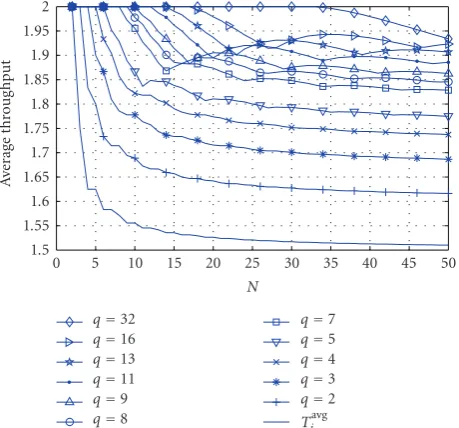
Figure 1showsTcavgas a function ofNand the number
of intermediate nodes, for different field sizes. It also shows the average integer routing throughputTiavg.
APPENDIX
PROOFS
Proof ofLemma 1.Assumex1is recoverable from f and f, thenx2=β−1(f−αx1) whereβ−1exists sinceβ /=0, andFq\ {0}is a group under multiplication. Thus,x2is recoverable. The proof of the other direction is similar.
Proof ofLemma 2.The forward implication is obvious since F ⊂ G. To prove the reverse implication, assume that there exists a code valuationC = {ge(x1,x2) : ge(x1,x2) ∈
G, for alle ∈ E} achieving average throughput Tcavg.
Consider an indexing setI= {1, 2,. . .,N}on the source out-edges (and equivalently on intermediate nodes). Since each intermediate node inN has only one in-edge then interme-diate nodes merely forward what they receive on their in-edges to their out-in-edges. Thus, C is uniquely specified by the functions carried by the source out-edges. Hence, we may considerC = {gi(x1,x2) :gi(x1,x2)∈G, for alli∈I}. For
anyi ∈I, ifgi(x1,x2)=αix1+βix2 ∈Cwithαi =βi =0,
50 45 40 35 30 25 20 15 10 5 0
N 1.5
1.55 1.6 1.65 1.7 1.75 1.8 1.85 1.9 1.95 2
A
ver
age
thr
oug
h
put
q=32 q=16 q=13 q=11 q=9 q=8
q=7 q=5 q=4 q=3 q=2 Tavgi
Figure1: Average linear network coding throughput.
thengican be replaced with any function without reducing
the average throughput. Thus, we can assume thatαi and
βi are not both zero. Now, letAbe the subset of Iwhose
elements are the indices of source edges carrying functions
gi(x1,x2) = αix1, that is, βi = 0, for alli ∈ A. Similarly,
letBbe the subset ofIsuch thatgi = βix2, for alli ∈ B.
Obviously,AandBare disjoint sinceαiandβiare not both
zero for anyi ∈ I. Finally, letC be the subset ofIwhose elements are the indices of all source edges carrying functions of the formgi =αix1+βix2withαi=/ 0 andβi=/0. Clearly,
A,B, andCpartitionI.
Now, design a code over F such that fi(x1,x2) = x1,
for alli ∈ A, fi(x1,x2) = x2, for alli ∈ B, and fi(x1,
x2)=x1+α−1i βix2, for alli ∈C. The existence of fiin the
given form fori ∈C is guaranteed sinceαi=/0,βi=/0, and Fq\ {0}is a group under multiplication.
Now for alli,j∈I, consider sinkti j∈T with incoming
edges originating from intermediate nodesi,j∈I.
(i) Ifi,j∈A, thenti jwill be able to recover onlyx1from
g1andg2which is still the case ifgiandgjare replaced by fi
andfj. The same argument holds ifi,j∈Bwithx2replacing
x1.
(ii) Ifi∈Aandj∈B, thenfiand fjwill makex1andx2 available toti jso both messages are recoverable and there is
no loss in throughput due to replacinggiandgjwith fiand
fj.
(iii) Ifi∈Aand j∈C, then fimakesx1available toti j
which can be used with fjto recoverx2. Thus, both messages
are recoverable, and there is no loss in consideringF instead ofG. A similar argument holds fori∈Bandj∈C.
(iv) If i,j ∈ C, then from gi and gj we can write
x2are not recoverable if and only ifγ=0. Also from fiand
fj,we can writeγx2= fj−fiwhereγ=α−1j βj−α−1i βi,and the same argument forγholds forγ. Thus, we need to show
γ=0 if and only ifγ=0. To this end, note that
γ=0⇐⇒αiβj=αjβi⇐⇒βj=α−1i αjβi
⇐⇒βj=αjα−1i βi⇐⇒α−1j βj=α−1i βi⇐⇒γ=0.
(A.1)
Hence, there is no loss in consideringF instead ofGin any of the previous cases. The lemma follows by noting that the previous cases represent all possibilities of receiving a pair of functions by any sink.
Remarks
(i) With a slight modification in the last step of the proof, the lemma can be shown to be still true even if the alphabet was a finite division ring (a skew field) instead of a field.
(ii) It is possible to show that the lemma is true for any multicast networkN with min-cut 2. The proof in this case can be of the same nature as the proof presented in [11] for the sufficiency of homogeneous functions.
Proof ofLemma 3.Note thatAcan be written asA = (a− 1)I+1whereIis thek×kidentity matrix, and1is the all onesk×kmatrix (1i j = 1, for all 1 ≤i, j ≤ k). LetBbe
anotherk×kmatrix such thatAB=I. Assume thatBcan be written asB=(bI−1)c, wherebandcare scalars. Thus,
AB=(a−1)I+1(bI−1)c
=(a−1)bI+b1−(a−1)1−k1c. (A.2)
For the multiplicationABto equalI, we needb1−(a−1)1−
k1=0, where0is the all zero matrix. This can be satisfied by choosing
b=a+k−1. (A.3) We also need
c(a−1)b=c(a−1)(a+k−1)=1. (A.4) Sincea /=1, −(k−1), we obtainc=1/(a−1)(a+k−1). Thus,
B= 1
(a−1)(a+k−1)
(a+k−1)I−1. (A.5)
It is easy to check thatBA=I, thusA−1=B.
REFERENCES
[1] R. Ahlswede, N. Cai, S.-Y. R. Li, and R. W. Yeung, “Network information flow,”IEEE Transactions on Information Theory, vol. 46, no. 4, pp. 1204–1216, 2000.
[2] S.-Y. R. Li, R. W. Yeung, and N. Cai, “Linear network coding,”
IEEE Transactions on Information Theory, vol. 49, no. 2, pp. 371–381, 2003.
[3] P. Sanders, S. Egner, and L. Tolhuizen, “Polynomial time algorithms for network information flow,” inProceedings of the 15th Annual ACM Symposium on Parallelism in Algorithms and Architectures (SPAA ’03), pp. 286–294, San Diego, Calif, USA, June 2003.
[4] A. Rasala-Lehman and E. Lehman, “Complexity classification of network information flow problems,” inProceedings of the 15th Annual ACM-SIAM Symposium on Discrete Algorithms (SODA ’04), pp. 142–150, New Orleans, La, USA, January 2004.
[5] A. Rasala-Lehman, “Network coding,” Ph.D. dissertation, Department of Electrical Engineering and Computer Science, MIT, Cambridge, Mass, USA, 2005.
[6] C. Chekuri, C. Fragouli, and E. Soljanin, “On average through-put and alphabet size in network coding,”IEEE Transactions on Information Theory, vol. 52, no. 6, pp. 2410–2424, 2006. [7] A. Al-Bashabsheh and A. Yongacoglu, “Average throughput
with linear network coding over the binary field,” in Proceed-ings of the IEEE Information Theory Workshop (ITW ’07), pp. 90–95, Tahoe City, Calif, USA, September 2007.
[8] R. Dougherty, C. Freiling, and K. Zeger, “Insufficiency of linear coding in network information flow,”IEEE Transactions on Information Theory, vol. 51, no. 8, pp. 2745–2759, 2005. [9] Y. Cassuto and J. Bruck, “Network coding for non-uniform
demands,” inProceedings of the International Symposium on Information Theory (ISIT ’05), pp. 1720–1724, Adelaide, SA, Australia, September 2005.
[10] C. Fragouli and E. Soljanin, “Information flow decomposition for network coding,”IEEE Transactions on Information Theory, vol. 52, no. 3, pp. 829–848, 2006.