Developing global indicators for quality of maternal and newborn care:
a feasibility assessment
Barbara Madaj,
aHelen Smith,
aMatthews Mathai,
aNathalie Roos
b& Nynke van den Broek
aIntroduction
Improving the quality of care for maternal and newborn health is important if health outcomes for mothers and babies are to continue to improve. This will require a renewed global focus.1 According to 2015 estimates, annually 303 000 women die during pregnancy, childbirth or in the postnatal period, 2.6 million babies are stillborn and 2.7 million babies die within 1 month of birth.2–4 The majority of these deaths occur in low- and middle-income settings and are preventable. Ensuring quality care is provided to every mother and newborn during this period is critical for maternal and newborn survival.
Monitoring of progress towards the achievement of millennium development goals 4 and 5 – i.e. reduce child mortality and improve maternal health, respectively – focused initially on measurement of coverage of evidence-based cost-effective interventions such as antenatal care and skilled birth attendance rates.5 Although intervention coverage rates (i.e. the number of people receiving an intervention or service from among those who need it) have been increasing rapidly,6,7 it is widely acknowledged that the quality of care provided for mothers and babies is rarely evidence-based and women-centred. Uptake (and coverage) of care and quality of care are also linked; numerous examples exist in the literature describ-ing where and how poor quality of care has deterred women from accessing services even where these were available, close by and affordable.8–11
The United Nations (UN) Commission on Information and Accountability for Women and Children’s Health was established in 2011 to enhance local, national and global ac-countability for women and children’s health. The commission identified 10 recommendations to be adopted by countries.12
The first set of recommendations focused on better informa-tion for results, calling for countries to strengthen vital regis-tration and health information systems, to focus on a core set of harmonized maternal newborn and child health indicators, and to invest in information, communication and technology to strengthen their national health information systems at all levels. More recently, Countdown to 2015 reports acknowl-edged the need to monitor quality of care as well as coverage of interventions, and the corresponding need for better data to do this.13 These developments are also identified in the sustain-able development goals, with recognition that reaching such targets as reducing the maternal mortality ratio to under 70 per 100 000 live births by 2030, will require continued efforts to improve quality of care, underpinned by the availability of robust evidence.14–18
In response to the need for more and better data, the World Health Organization (WHO) was asked to propose trace indicators for quality of maternal and newborn health care provided at health-care facility level that could be used for global comparisons. After consultation with a wide range of international stakeholders and experts in quality of care, a core set of 15 indicators was proposed (Box 1).19 The indicators were thought to be good markers of lifesaving interventions and were obtained via consensus, but have not been formally assessed to determine whether they complement or link to data already routinely collected for maternal and newborn health. This paper describes a study of the feasibility of applying the proposed indicators in low- and middle-income settings. We assessed the availability of data in existing facility records and the clarity of indicator definitions, and identified addi-tional information and processes needed to collect the data in real-life settings.
Objective To assess the feasibility of applying the World Health Organization’s proposed 15 indicators of quality of care for maternal and newborn health at health-facility level in low- and middle-income settings.
Methods Six of the indicators are about maternal health, five are for newborn health and four are general cross-cutting indicators. We used data collected routinely in facility registers and obtained as part of facility assessments from 963 health-care facilities specializing in maternity services in 10 countries in Africa and Asia. We made a feasibility assessment of the availability of data and the clarity of indicator definitions and identified additional information and data collection processes needed to apply the proposed indicators in real-life settings. Findings Of the indicators evaluated, 10 were clearly defined, of which four could be applied directly in the field and six would require revisions to operationalize them. The other five indicators require further development, with one of them being ready for implementation by using information readily available in registers and four requiring further information before deployment. For indicators that measure coverage of care or availability of services or products, there is a need to further strengthen measurement. Information on emergency obstetric complications was not recorded in a standard manner, thus limiting the reliability of the information.
Conclusion While some of the proposed indicators can already be applied, other indicators need to be refined or will need additional sources and methods of data collection to be applied in real-world settings.
a Centre for Maternal and Newborn Health, Liverpool School of Tropical Medicine, Pembroke Place, Liverpool, L3 5QA, England.
b Department of Maternal, Newborn, Child and Adolescent Health, World Health Organization, Geneva, Switzerland.
Correspondence to Barbara Madaj (email: [email protected]).
Bull World Health Organ 2017;95:445–452I
|
doi: http://dx.doi.org/10.2471/BLT.16.179531 446Quality of maternal and newborn care Barbara Madaj et al.
Methods
Data sources
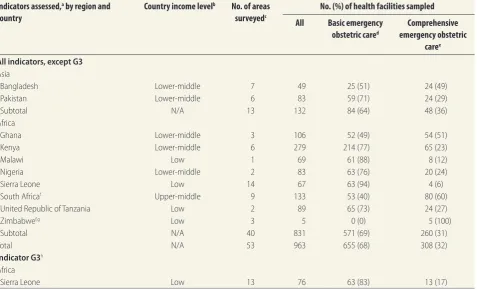
For all indicators except one (G3), the information used in this evaluation was based on the results of a baseline facil-ity assessment conducted by the Centre for Maternal and Newborn Heath at the Liverpool School of Tropical Medicine. This was part of a capacity-building programme implemented between Janu-ary 2012 and December 2015 aiming to improve the availability and quality of emergency obstetric and newborn care (Making it Happen programme).20,21 A total of 963 health-care facilities in Bangladesh, Ghana, Kenya, Malawi, Nigeria, Pakistan, Sierra Leone, South
Africa, the United Republic of Tanzania and Zimbabwe were surveyed (Table 1). All data collected for each facility referred to the quarter (3 months) im-mediately preceding the assessment. For the indicator on the proportion of health facilities with soap and running water or alcohol-based rub (G3) we used data from a facility survey in Sierra Leone, conducted as part of a study assessing the effect of the Ebola virus disease outbreak on availability, uptake and demand for essential maternal and newborn health services. Conducted in the month of February 2015, the survey included 76 facilities countrywide.
The facilities surveyed were selected by the respective ministries of health
and included public health facilities designated to provide maternity services in purposively selected geographical and administrative areas (n = 53). With the exception of Zimbabwe, where only central-level referral hospitals were surveyed (n = 5), the sample included facilities offering either basic or compre-hensive emergency obstetric care. This classification indicates the complexity of care provided (with comprehensive emergency obstetric care facilities being required to offer caesarean section and blood transfusion services in addition to basic package of care) and broadly serves as an indication of the facility size.23
The primary data, which were subsequently used in the feasibility as-sessment, were collected prospectively according to the respective programme protocol using a standardized tool in-corporating elements from the WHO and Averting Maternal Death and Disability health facility assessment tools.24 Information was collected dur-ing health-facility visits by trained data collectors who interviewed health-care providers. Data were verified using routine facility data sources, e.g. labour ward and operating theatre registers, newborn care unit registers and patient discharge registers.
Permission to conduct the facility assessments was granted by the respec-tive ministries of health. Our audit covered existing data that were already available in standard, anonymized records. No information which would compromise the confidentiality or pri-vacy of patients or staff was recorded or included in the analysis.
Data extraction and analysis
For this assessment we first identified and extracted the data required to mea-sure each indicator. This enabled us to assess the availability of the information in routinely collected facility records and, where possible, the completeness of the records across countries. From discussions among the research team, who were experienced in conduct-ing facility assessments, we examined the clarity of the indicator definitions against the information currently avail-able in facility records. For indicators where no data were readily available, and based on the team’s clinical and research expertise, we assessed the feasibility of obtaining the necessary information. We also assessed the approach and methods Box 1. Indicators for assessing quality of maternal and newborn health services
proposed by the World Health Organization and stakeholdersa,b Maternal health
M1: Proportion of antenatal care visits at which blood pressure was measured
M2: Proportion of women with severe pre-eclampsia or eclampsia treated with magnesium sulfate injection
M3: Proportion of women receiving oxytocin within 1 min of birth of infant M4: Proportion of women with prolonged labour
M5: Intrapartum stillbirth rate
M6: Proportion of women with severe systemic infection or sepsis in postnatal period, including readmissions
Newborn health
N1: Proportion of health facilities with functional bags and masks (two neonatal mask sizes) in the delivery areas of maternity services
N2: Proportion of newborns who received all four elements of essential care: • immediate and thorough drying
• immediate skin-to-skin contact • delayed cord clamping
• initiation of breastfeeding in the first hour
N3: Proportion of health facilities in which kangaroo mother care is operational, by level of facility N4: Facility neonatal mortality rate disaggregated by birth weight: > 4000 g, 2500–3999 g,
2000–2499 g, 1500–1999 g, < 1500 g
N5: Proportion of health facilities offering maternity services certified by the Baby-friendly Hospital Initiative and recertification no later than 2 years afterwards
General indicators
G1: Proportion of health facilities that have stock-outs of essential lifesaving medicines for mothers and newborns in a specified period
G2: Proportion of maternal and perinatal and childc deaths occurring in a facility that were
reviewed
G3: Proportion of health facilities with soap and running water or alcohol-based rub available in labour, childbirth, neonatal and paediatric wards
G4: Proportion of health facilities with safe, uninterrupted oxygen supply in childbirth, neonatal and paediatric wards
a The abbreviations (M1, M2, etc.) are used to facilitate referencing in this paper and were not in the
original report.
b This table excludes four child indicators proposed in the consultation19 because these were not part of
this assessment.
c This analysis excludes the child death reviews.
needed to measure the indicator at the health-facility level, using alternative measures at facility level. Finally, in cases where the proposed indicator could not be assessed in full, we developed proxy measures for which routine data and data collection systems are readily available.
We present the assessment findings for each indicator by summarizing the descriptive information and by analys-ing the availability of the required data using descriptive statistics.
Results
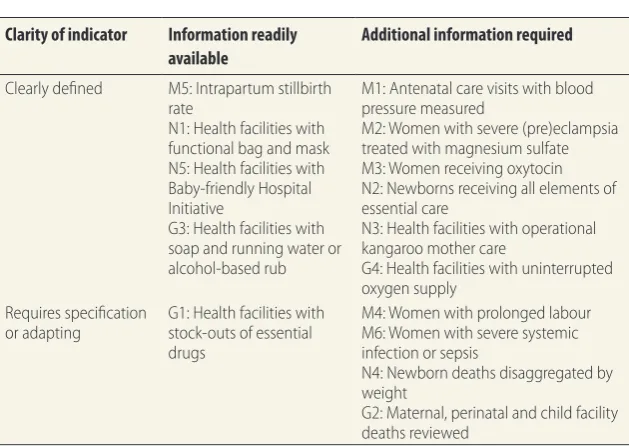
Table 2 provides a summary of all pro-posed indicators based on the clarity of definitions and the availability of routine
information to assess each indicator. Overall, 10 of the 15 indicators were considered to be clearly defined in their current format. However, using available facility registers, data would in principle be immediately accessible only for four indicators (M5, N1, N5 and G3), while the other six (M1, M2, M3, N2, N3 and G4) would require additional sources of information to operationalize them. Among the five indicators which require some further development, one (G1) could be implemented with currently available information, while the remain-ing four (M4, M6, N4 and G2) would need supplementary information.
We further analysed each proposed indicator with regard to its potential for application in real-world settings.
The key findings regarding the avail-ability of data for each indicator and discussion of alternative indicators or additional methods of assessing the indicator are summarized in Table 3 (available at: http://www.who.int/bul-letin/volumes/95/6/16-179531). Table 4 (available at: http://www.who.int/bul-letin/volumes/95/6/16-179531) shows the availability of data across countries. Country-specific differences were noted with regard to individual indicators. However, across all countries, emer-gency obstetric complications posed a challenge because existing registers lack dedicated space for recording cases and consequently information on com-plications is not recorded in a standard manner, thus limiting the reliability of Table 1. Characteristics of the facilities and countries used in the feasibility analysis of proposed indicators for quality of maternal and
newborn health services
Indicators assessed,a by region and
country
Country income levelb No. of areas
surveyedc
No. (%) of health facilities sampled
All Basic emergency
obstetric cared
Comprehensive emergency obstetric
caree
All indicators, except G3
Asia
Bangladesh Lower-middle 7 49 25 (51) 24 (49)
Pakistan Lower-middle 6 83 59 (71) 24 (29)
Subtotal N/A 13 132 84 (64) 48 (36)
Africa
Ghana Lower-middle 3 106 52 (49) 54 (51)
Kenya Lower-middle 6 279 214 (77) 65 (23)
Malawi Low 1 69 61 (88) 8 (12)
Nigeria Lower-middle 2 83 63 (76) 20 (24)
Sierra Leone Low 14 67 63 (94) 4 (6)
South Africaf Upper-middle 9 133 53 (40) 80 (60)
United Republic of Tanzania Low 2 89 65 (73) 24 (27)
Zimbabwef,g Low 3 5 0 (0) 5 (100)
Subtotal N/A 40 831 571 (69) 260 (31)
Total N/A 53 963 655 (68) 308 (32)
Indicator G3h
Africa
Sierra Leone Low 13 76 63 (83) 13 (17)
N/A: not applicable.
a The indicators and their definitions were developed by the World Health Organization, 2014 (Box 1).19
b Based on the World Bank country classification for 2015.22
c For all countries, the areas and facilities for the surveys were selected by the respective ministries and represented geographical and administrative areas which were
identified as needing capacity-building around emergency obstetric care. For indicator G3, the data came from a facility survey in Sierra Leone, conducted as part of a study assessing the effect of the Ebola virus disease outbreak on availability, uptake and demand for essential maternal and newborn health services.
d Basic emergency obstetric care facilities are required to offer the following services: administer parenteral antibiotics, administer uterotonic drugs (i.e. parenteral
oxytocin), administer parenteral anticonvulsants for pre-eclampsia and eclampsia (i.e. magnesium sulfate), manually remove the placenta, remove retained products (e.g. manual vacuum extraction, dilation and curettage), perform assisted vaginal delivery (e.g. vacuum extraction, forceps delivery) and perform basic neonatal
resuscitation (e.g. with bag and mask).23
e In addition to the seven services at basic level, comprehensive emergency obstetric care facilities are expected to provide blood transfusion services and perform
surgery (e.g. caesarean section).23
f South Africa data were not available for M1, M4, M6, N4 and G2; Zimbabwe data were not available for N4.
g G3 is the proportion of health facilities with soap and running water or alcohol-based rub available in childbirth, neonatal and paediatric wards.
Bull World Health Organ 2017;95:445–452I
|
doi: http://dx.doi.org/10.2471/BLT.16.179531 448Quality of maternal and newborn care Barbara Madaj et al.
the information. Additionally, on a more practical level, anecdotal evidence from fieldworker notes suggests assessments in larger facilities required consult-ing records and registers from various wards and sources and therefore took more time and effort to consolidate the findings. Data on the number of women giving birth and the number of babies born were available at all facilities.
Our surveys did not collect infor-mation for indicators M1, M4, M6, N4 and G2 in South Africa and indicator N4 in Zimbabwe, thus affecting the denominators used in calculations in the assessment.
Maternal health indicators
M1: Proportion of antenatal visits at which blood pressure was measured. Data available for the assessment of the indicator did not include information from antenatal clinics. Instead, a proxy measure was derived using the avail-ability of blood pressure monitors of any type in maternity services. Generally, data on the availability of these monitors were accessible at facilities and only 3% of facilities overall (29/830) could not provide the information (Table 3).
M2: Proportion of women with se-vere pre-eclampsia or eclampsia treated with magnesium sulfate injection. Data on women treated with magnesium sulfate were not routinely available. In-stead, data on number of (pre)eclampsia
cases and availability of magnesium sulfate were used as proxies. Overall, 9% of facilities (86/963) did not hold records on numbers of patients with (pre)eclampsia, with missing data most pronounced at country level in Bangla-desh, Ghana and Nigeria (Table 4). Data on magnesium sulfate availability show that 3% of facilities (27/963) were not able to provide the information.
M3: Proportion of women receiving oxytocin within 1 min of birth of infant. Data on availability of oxytocin were widely available and missing in only 3% of facilities (28/963). However, the use of oxytocin as part of Active Man-agement of the Third Stage of Labour (AMTSL) and/or whether AMTSL was practised was not routinely recorded in birth registers.
M4: Proportion of women with prolonged labour. Routine use of the partograph and number of cases of ruptured uterus were used as proxy mea-sures for this indicator. All except 1% of facilities (10/830) were unable to provide data on partograph use. Recorded cases of ruptured uterus were missing in 9% of facilities (78/830), although there was variability between countries, with facilities in Bangladesh, Ghana and Nigeria facing challenges in reporting data (Table 4).
M5: Intrapartum stillbirth rate. Fresh stillbirth may be used as a surro-gate measure for intrapartum stillbirths,
although information on fetus weight at admission or whether fetal heart rate was heard was not generally available in facility registers. Data on stillbirths were widely available (2%, 16/963 facili-ties overall had missing data), but data with stillbirths disaggregated into fresh and macerated were missing for over a quarter of reported stillbirths (27%, 1580/5930). Except in South Africa, which does not report these data, dis-aggregation of stillbirths forms part of routine record-keeping; however, data were more commonly missing in Ban-gladesh, Nigeria and Pakistan (Table 4). M6: Proportion of women with severe systemic infection or sepsis in postnatal period, including readmis-sions. Data on the number of postnatal sepsis cases were missing in 9% of facili-ties (73/830), but data on readmissions were not available in any health-facility registers.
Newborn health indicators
N1: Proportion of health facilities with functional bags and masks (two neo-natal mask sizes) in the delivery areas of maternity services. Data on bag and mask availability were largely accessible, with missing data at very few facilities (< 1%, 4/963) (Table 3). However, data on specific sizes of bag and masks were not available.
N2: Proportion of newborns receiv-ing all four elements of essential care. This was not documented as part of any routine register in the surveyed health facilities.
N3: Proportion of health facilities in which kangaroo mother care is opera-tional. Although, in principle, informa-tion on whether kangaroo mother care was provided was anecdotally available in facilities, this indicator was not as-sessed routinely or recorded in any existing register at facility level.
N4: Facility neonatal death rate disaggregated by birthweight. Based on the assessment, health facilities mostly lacked neonatal discharge and death registers. Moreover, no data on deaths by birth weight categories were available. Neonatal death rates could be estimated in 540/825 (66%) of all facilities sur-veyed, based on the difference between the numbers of babies discharged alive and number of live births in the facility. However, babies discharged alive com-prised both babies born in the facility and those referred from outside, thus Table 2. Classification of proposed indicators for quality of maternal and newborn
health services according to clarity of definitions and availability of information at health-care facility level
Clarity of indicator Information readily
available
Additional information required
Clearly defined M5: Intrapartum stillbirth rate
N1: Health facilities with functional bag and mask N5: Health facilities with Baby-friendly Hospital Initiative
G3: Health facilities with soap and running water or alcohol-based rub
M1: Antenatal care visits with blood pressure measured
M2: Women with severe (pre)eclampsia treated with magnesium sulfate M3: Women receiving oxytocin N2: Newborns receiving all elements of essential care
N3: Health facilities with operational kangaroo mother care
G4: Health facilities with uninterrupted oxygen supply
Requires specification
or adapting G1: Health facilities with stock-outs of essential drugs
M4: Women with prolonged labour M6: Women with severe systemic infection or sepsis
N4: Newborn deaths disaggregated by weight
G2: Maternal, perinatal and child facility deaths reviewed
potentially limiting the usability of the data. It was, nevertheless, the only proxy measure available.
N5: Proportion of health facilities offering maternity services that are certified as baby-friendly under the Baby-Friendly Hospital Initiative.25 In many countries this information was only available at health facilities which had been part of a programme to specifi-cally introduce this accreditation, and the information was not available from facility records.
General indicators
G1: Proportion of facilities which had stock-outs of essential lifesaving medicines for mothers, newborns and children in a specified period. Medicines assessed in the health facility surveys covered only part of the WHO essential drugs list. Nevertheless, information was readily accessible on the availability (i.e. whether a particular drug was available at all times, with stock-outs or not at all in the 3 months covered by the survey) of selected antibiotics (penicillin, met-ronidazole, gentamicin, cephalosporin), oxytocics (oxytocin, misoprostol) and an anticonvulsant and antihypertensive drug (magnesium sulfate, nifedipine). Among the groups of drugs, the highest percentage of missing data for avail-ability of individual medicines among antibiotics was at 4% (37/963), 3% (28/963) for oxytocics and 4% (31/830) for anticonvulsants (Table 3).
G2: Proportion of maternal, peri-natal and child deaths occurring in a facility that were reviewed. Data on the proportion of deaths reviewed were not collected as part of the health-facility assessments. However, for maternal and perinatal deaths, availability of review committees and whether or not action was taken could be used as proxy indica-tors. Data on these quality improvement activities were largely available. The existence of a quality improvement com-mittee was reported by all except 3% of facilities (22/830), while information on the existence of maternal death reviews and perinatal/stillbirth review was miss-ing in 2% (16/830) and 1% (12/830) of facilities respectively. However, data on actions taken were not necessarily informative and lacked detail of what the action entailed, and no standardized system for reporting the information was identified.
G3: Proportion of health facili-ties with soap and running water or alcohol-based rub. The feasibility of this indicator was assessed only in Sierra Leone. Data on water availability were generally accessible, with data missing for 3% of facilities (2/76), both offering basic emergency obstetric care services (Table 4). Information on availability of hand-washing facilities was missing at just 1% of facilities (1/76), with details of products for hand-hygiene widely available.
G4: Proportion of health facilities with safe, uninterrupted oxygen supply in childbirth, neonatal and paediatric wards. Data necessary to inform the indicator were not routinely collected at facility level.
Discussion
Our assessment used existing facility data from a large and broad selection of health-care facilities specializing in maternity services in 10 countries in Africa and Asia to assess the avail-ability of data for each indicator (and the variability in data availability). Our work demonstrated that, while some of the proposed indicators can already be applied, other indicators need to be refined or will need additional sources and methods of data collection.
WHO indicators for quality of maternal health care (M1–M6), are related to clinical process, and require observation or special recording, and are unlikely to be captured in full as part of a standard facility survey. Sampling of case records and registers could be used to make the indicators more appropri-ate for measurement of the quality of the services provided. The indicators of quality of newborn care (N1‒N5) include composite indicators (e.g. essen-tial care at birth) which are in practice challenging to define and capture. The denominators for some of the indicators vary, and encompass mothers and babies as well as facilities, which allows for capturing a wide range of information. In practice, however, a variety of de-nominators may complicate any attempt to collect data in a standardized manner that allow for comparison across health-care facilities or geographical settings.13 Indicators that measure coverage of care and policy or guideline adher-ence require additional information to
be useful for monitoring of quality of care. For example, whether women with pre-eclampsia and eclampsia are treated with magnesium sulfate (indicator M2) is not routinely recorded in registers, and may require analysis of case notes. Likewise, information on time oxytocin was administered (indicator M3) is not routinely recorded, and the 1-minute timeframe may not be realistic. For the indicators on essential newborn care (N2) and kangaroo care (N3), no stan-dardized data are currently collected in registers or case notes, and so monitor-ing of these indicators would require new or modified data collection tools.
In terms of further specifications required, some indicators need further work to operationalize them. For exam-ple, standards are needed to clarify the meaning of terms such as operational (for indicator N3), prolonged labour (for indicator M4) and severe systemic infec-tion (for indicator M6) and to agree clear definitions and criteria for terminology to ensure that they can be effectively utilized for comparison across countries. Other indicators require specifying so that it is clear what needs to be captured in a way that would be measurable. For example, if both early and late neonatal mortality are to be included in health facilities’ recording of the neonatal mortality rate by birth weight (indica-tor N4), then there is a need to collect community data or for functioning vital registration systems to be in place.27,28
Barbara Madaj et al. Quality of maternal and newborn care
450 Bull World Health Organ 2017;95:445–452I
|
doi: http://dx.doi.org/10.2471/BLT.16.179531 Better data are needed with regardto both the availability of maternal and newborn care and the equality of that care. For the proposed indicators to provide an assessment of quality, not just coverage, of care they will need to reflect all components of care provision including input, process and outcome measures.30 Moreover, quality of care can mean different things to the pro-vider and the consumer of care.31,32 The current set of proposed indicators does include input, process and outcome measures and is therefore a useful basis for assessing care. Nevertheless, the list will need further refinement and possibly expansion to ensure that the indicators used are representative of all aspects of quality.
This study had some limitations. First, the data used in the analysis were not collected for the purpose of this project and therefore some aspects of the assessment could not be performed. Second, the findings may not be general-izable as the results may not necessarily reflect the situation nationally in the countries from which the data originat-ed or may not be immoriginat-ediately applicable to other settings. On the other hand, the data covered 10 countries in Africa and Asia and the national data record-ing systems within these countries are uniform. We argue that facility records can be a source of robust evidence when indicators are clearly defined and speci-fied in existing registers.
Overall, the WHO proposed global core indicators focus on important
elements of quality of care around the time of birth, and of care of the small or sick newborn, and include a balance of intervention coverage, process of care and impact indicators. However, several of the proposed indicators require some revision to be applied in real-world set-tings for measuring care in health facili-ties. In addition, for the indicators that measure coverage of care or availability of services or products, there is a need to further strengthen measurement of care quality. Collecting additional informa-tion which is not captured routinely at facilities is challenging in large-scale surveys. ■
Funding: WHO funded the assessment.
Competing interests: None declared.
صخلم
ىودلجا مييقتل ةسارد :ةدلاولا يثيدح لافطلأاو تاهملأل ةمدقلما ةياعرلا ةدوج سايقل ةيلماع تاشرؤم عضو
ةحصلا ةمظنلم ا ًحترقم اًشرؤم 15 قيبطت ىودج مييقت
ضرغلا
ةدلاولا يثيدحو تاهملأل ةيحصلا ةياعرلا ةدوج سايقل ةيلماعلا
ضفخنلما لخدلا تاذ عقاولماو ةيحصلا قفارلما ىوتسم لىع
.طسوتلماو
ةسخم قلعتت مايف ،ةموملأا ةحصب تاشرؤم ةتس قلعتت
ةقيرطلا
ةعبرأ نع ًلاضف ،ةدلاوــلا يثيدح لافطلأا ةحصب تاشرؤــم
ةروصب ةعمجلما تانايبلا انمدختسا دقو .ةلماشو ةماع تاشرؤم
اهيلع لوصلحا مت يتلاو ةيحصلا قفارلما تلاجس في ةينيتور
ةيحصلا ةياعرلل اًقفرم 963 نم ةذوخألما قفارلما تماييقت نم ءزجك
انمقو .ايسآو ايقيرفأ في لود 10 في ةموملأا تامدخ في ةصصختم
تافيرعت حوضوو تانايبلا ةحاتإ ىدلم ىودج مييقت ءارجإب
تامولعلماو تانايبلا عملج ةيفاضإ تايلمع ديدحتب انمقو ،شرؤلما
.عقاولا ضرأ لىع ةحترقلما تاشرؤلما قيبطتل ةمزلا نوكتيس
10 اهنم ناك ،مييقتلل تعضخ يتلا تاشرؤلما ينب نم
جئاتنلا
ةعبرأ قيبطت نكملما نم ناكو ،ةقيقد تافيرعت لمتح تاشرؤم
لىإ اهنم ةتس جاتتح مايف ،عقاولا ضرأ لىع ًةشرابم اهنم تاشرؤم
تاشرؤلما بلطتتو .ليمعلا ذيفنتلا ةلحرم لىإ اهلقن لبق ةعجارلما
تاشرؤلما دحأ دوجو عم ،ريوطتلا نم ديزلما ىرخلأا ةسملخا
في ةلوهسب ةرفوتلما تامولعلما مادختساب قيبطتلل ةزهاج ةلاح في
لبق تامولعلما نم ديزلما لىإ ةجاحب تاشرؤم ةعبرأو ،تلاجسلا
رفاوت ىدم وأ ةياعرلا ةيطغت سيقت يتلا تاشرؤملل ةبسنلاب .ذيفنتلا
.بركأ لكشب سايقلا زيزعت لىإ ةجاح كانه ،تاجتنلما وأ تامدلخا
تلاالحا في ةدلاولا تافعاضمب ةقلعتلما تامولعلما ليجست متي لم
.تامولعلما ةيدماتعا ىدم نم دح امم ،سيايق ٍلكشب ةئراطلا
ةحترقلما تاشرؤلما ضعب قيبطت ةيناكمإ نم مغرلاب
جاتنتسلاا
تانيسحتلا لاخدإ لىإ ةجاحب ىرخلأا تاشرؤلما نإف ،لعفلاب
ىنستيل تانايبلا عملج ةيفاضإ قرطو رداصم لىإ جاتتح دق وأ اهيلع
.عقاولا في اهقيبطت
摘要
制定全球孕产妇和新生儿护理质量指标 : 可行性评估
目的 旨在评估在中低收入国家卫生机构实施世界卫生
组织提出的 15 个孕产妇和新生儿健康质量指标的可
行性。
方法 其中六个指标与孕产妇健康相关,五个与新生儿
健康相关,四个是一般性综合指标。 我们使用定期
从医疗机构登记处收集的数据,以及从 10 个亚非国
家 963 个专门提供孕产服务的医疗机构中获取的数据
作为机构评估的一部分。 我们对数据的可用性以及指 标定义的清晰度进行了可行性评估,同时明确了将所 提议指标应用于现实环境所需的其他信息和数据收集 流程。
结果 在评估的指标中,10 个定义明确,其中,4 个可
直接应用到实际中,6 个需要修订以便于实施。 其他
五个指标需要进一步制定,其中一个可通过使用登记 处的现有信息投入实施,另外四个在部署之前,需要 增添一些补充信息。 对于测量护理覆盖率或者服务或 产品可用性的指标,有必要进一步加强测量。 有关紧 急产科并发症的信息未采用标准形式记录,因此影响 了信息的可靠性。
结论 虽然提出的有些指标已能够实施,但是其他指标
Résumé
Développement d’indicateurs globaux de la qualité des soins de santé maternelle et néonatale: étude de faisabilité
Objectif Évaluer s’il est faisable d’appliquer les 15 indicateurs proposés par l’Organisation mondiale de la Santé relatifs à la qualité des soins de santé maternelle et néonatale dans des centres de santé de régions à revenu faible et intermédiaire.
Méthodes Six indicateurs portent sur la santé maternelle, cinq sur la santé néonatale et quatre sur des facteurs transversaux d’ordre général. Nous avons utilisé les données consignées habituellement dans les registres des centres de santé et obtenues dans le cadre d’évaluations de ces centres; des données couvrant au total 963 centres de santé, spécialisés dans les services de maternité, dans 10 pays d’Afrique et d’Asie. Nous avons réalisé une étude de faisabilité portant sur la disponibilité des données et la clarté des définitions des indicateurs, et nous avons identifié les processus de collecte des données et informations complémentaires nécessaires pour pouvoir appliquer ces indicateurs en conditions réelles.
Résultats Parmi tous les indicateurs évalués, 10 sont clairement définis, parmi lesquels quatre pourraient être directement appliqués sur le
terrain, tandis que les six autres nécessiteraient des ajustements avant de pouvoir être mis en œuvre. Les cinq indicateurs restants nécessitent d’autres développements; même si l’un d’eux pourrait être exploité en utilisant les informations consignées dans les registres déjà disponibles, pour les quatre autres indicateurs, des informations complémentaires sont nécessaires. Pour les indicateurs relatifs à la couverture des soins ou à la disponibilité des services ou des produits, des évaluations plus détaillées seraient nécessaires. Les informations sur les complications obstétricales d’urgence n’ont pas été enregistrées de façon standardisée, ce qui limite la fiabilité de ces informations.
Conclusion Alors que certains des indicateurs proposés sont d’ores et déjà applicables, d’autres indicateurs doivent être affinés ou nécessitent des sources d’information supplémentaires et des méthodes complémentaires de collecte de données avant de pouvoir être appliqués en conditions réelles.
Резюме
Разработка глобальных показателей для определения качества ухода за матерью и новорожденным
ребенком: оценка практической возможности
Цель Дать оценку практической возможности применения
15 предложенных Всемирной организацией здравоохранения показателей качества ухода за матерью и новорожденным ребенком в медицинских учреждениях в условиях с низким и средним уровнем доходов.
Методы Шесть показателей из них относятся к охране здоровья матери, пять — к охране здоровья новорожденного ребенка, и четыре являются показателями общего характера. Авторы статьи использовали данные, собранные в рабочем порядке в реестрах медицинских учреждений и полученные в ходе оценок работы медицинских учреждений, из 963 медико-санитарных учреждений, специализирующихся на оказании услуг по уходу за матерями, в 10 странах Африки и Азии. Была дана оценка практической возможности получения данных и точности формулировок определений показателей. Были определены дополнительные процессы сбора информации и данных, необходимые для применения предложенных показателей на практике.
Результаты Из всех показателей, подвергнутых оценке, определения десяти были сформулированы точно, и четыре из них могли быть применены непосредственно на практике, а шесть показателей необходимо скорректировать, прежде чем их можно будет практически реализовать. Остальные пять показателей требуют доработки, причем один из них может быть применен с использованием имеющейся в реестрах информации, а для остальных четырех необходима дополнительная информация, прежде чем их можно будет реализовать. Для показателей, используемых для измерения охвата медицинской помощью или доступности услуг или продуктов, требуется дополнительно усовершенствовать процесс измерения. Информация о неотложной акушерской помощи при осложнениях не была зафиксирована в установленном порядке, и это сказалось на ее надежности.
Вывод Хотя некоторые из предложенных показателей уже могут быть применены, для других показателей требуется доработка или дополнительные источники данных и методы их сбора, чтобы показатели можно было применить на практике.
Resumen
Desarrollo de indicadores globales para la calidad de la atención materna y obstétrica: evaluación de viabilidad
Objetivo Evaluar la viabilidad de aplicar los 15 indicadores de calidad de atención sanitaria materna y obstétrica propuestos por la Organización Mundial de la Salud en centros sanitarios de entornos con ingresos bajos y medios.
Métodos Seis de los indicadores tratan sobre salud materna, cinco sobre salud obstétrica y cuatro son indicadores transversales generales. Se utilizaron datos recopilados de forma rutinaria en los registros de los centros y se obtuvieron como parte de las evaluaciones de las instalaciones de 963 centros sanitarios especializados en servicios de maternidad de 10 países de África y Asia. Se realizó una evaluación
de viabilidad sobre la disponibilidad de datos y la claridad de las definiciones de los indicadores, y se identificó información adicional y los procesos de recopilación de datos necesarios para implementar los indicadores propuestos en centros reales.
Bull World Health Organ 2017;95:445–452I
|
doi: http://dx.doi.org/10.2471/BLT.16.179531 452Quality of maternal and newborn care Barbara Madaj et al.
información antes de su puesta en práctica. Para los indicadores que miden la cobertura de la atención o la disponibilidad de productos o servicios, se necesita fortalecer más la medición. No se ha registrado información sobre complicaciones obstétricas de emergencia de forma estándar, por lo que la fiabilidad de la información es limitada.
Conclusión Mientras que algunos de los indicadores propuestos ya pueden aplicarse, otros necesitan perfeccionarse o requerirán fuentes y métodos de recopilación de datos adicionales para poderse aplicar en entornos reales.
References
1. van den Broek NR, Graham WJ. Quality of care for maternal and newborn health: the neglected agenda. BJOG. 2009 Oct;116(7) Suppl 1:18–21. doi: http://dx.doi.org/10.1111/j.1471-0528.2009.02333.x PMID: 19740165 2. World Health Organization, UNICEF, UNFPA, the World Bank, the United
Nations Population Division. Trends in maternal mortality 1990 to 2015: Estimates by the WHO, UNICEF, UNFPA, World Bank Group and the United Nations Population Division. Geneva: World Health Organization; 2015. Available from: http://www.who.int/reproductivehealth/publications/ monitoring/maternal-mortality-2015/en/ [cited 2016 May 28]. 3. Samarasekera U, Horton R. The world we want for every newborn child.
Lancet. 2014 Jul 12;384(9938):107–9. doi: http://dx.doi.org/10.1016/S0140-6736(14)60837-0 PMID: 24853598
4. You D, Hug L, Ejdemyr S, Beise J. Levels and trends in child mortality. Report 2015. Estimates developed by the UN Inter-agency Group for Child Mortality Estimation. New York: United Nations; 2015.
5. Victora CG, Requejo JH, Barros AJD, Berman P, Bhutta Z, Boerma T, et al. Countdown to 2015: a decade of tracking progress for maternal, newborn, and child survival. Lancet. 2016 May 14;387(10032):2049–59. doi: http:// dx.doi.org/10.1016/S0140-6736(15)00519-X PMID: 26477328 6. World health statistics 2014. Geneva: World Health Organization; 2014.
Available from: http://www.who.int/gho/publications/world_health_ statistics/2014/en/ [cited 2016 May 28].
7. Boerma T, AbouZahr C, Evans D, Evans T. Monitoring intervention coverage in the context of universal health coverage. PLoS Med. 2014 09 22;11(9):e1001728. doi: http://dx.doi.org/10.1371/journal.pmed.1001728 PMID: 25243586
8. Bishai DM, Cohen R, Alfonso YN, Adam T, Kuruvilla S, Schweitzer J. Factors contributing to maternal and child mortality reductions in 146 low- and middle-income countries between 1990 and 2010. PLoS One. 2016 01 19;11(1):e0144908. doi: http://dx.doi.org/10.1371/journal.pone.0144908 PMID: 26783759
9. Bohren MA, Hunter EC, Munthe-Kaas HM, Souza JP, Vogel JP, Gülmezoglu AM. Facilitators and barriers to facility-based delivery in low- and middle-income countries: a qualitative evidence synthesis. Reprod Health. 2014 09 19;11(1):71. doi: http://dx.doi.org/10.1186/1742-4755-11-71 PMID: 25238684
10. McConville F, Lavender DT. Quality of care and midwifery services to meet the needs of women and newborns. BJOG. 2014 Sep;121 Suppl 4:8–10. doi: http://dx.doi.org/10.1111/1471-0528.12799 PMID: 25236626
11. van den Broek N, Lewis G, Mathai M. Guest editors’ choice. BJOG. 2014 Sep;121 Suppl 4:2–3. doi: http://dx.doi.org/10.1111/1471-0528.13011 PMID: 25236624
12. Accountability for women’s and children’s health: the Commission’s recommendations. Geneva: World Health Organization; 2011. Available from: http://www.who.int/woman_child_accountability/about/ recommendations/en/ [cited 2016 Dec 2].
13. Countdown to 2015. A decade of tracking progress for maternal, neonatal and child survival: the 2015 report. Geneva: United Nations Children’s Fund and World Health Organization; 2015.
14. Koblinsky M, Moyer CA, Calvert C, Campbell J, Campbell OMR, Feigl AB, et al. Quality maternity care for every woman, everywhere: a call to action. Lancet. 2016 Nov 5;388(10057):2307–20. doi: http://dx.doi.org/10.1016/ S0140-6736(16)31333-2 PMID: 27642018
15. Silver KL, Singer PA. SDGs: start with maternal, newborn, and child health cluster. Lancet. 2014 Sep 20;384(9948):1093–4. doi: http://dx.doi. org/10.1016/S0140-6736(14)61667-6 PMID: 25241712
16. van den Broek NR, Graham WJ. Quality of care for maternal and newborn health: the neglected agenda. BJOG. 2009 Oct;116 Suppl 1:18–21. doi: http://dx.doi.org/10.1111/j.1471-0528.2009.02333.x PMID: 19740165
17. Dickson KE, Kinney MV, Moxon SG, Ashton J, Zaka N, Simen-Kapeu A, et al. Scaling up quality care for mothers and newborns around the time of birth: an overview of methods and analyses of intervention-specific bottlenecks and solutions. BMC Pregnancy Childbirth. 2015;15(S2) Suppl 2:S1. doi: http://dx.doi.org/10.1186/1471-2393-15-S2-S1 PMID: 26390820
18. Tunçalp Ӧ, Were WM, MacLennan C, Oladapo OT, Gülmezoglu AM, Bahl
R, et al. Quality of care for pregnant women and newborns - the WHO vision. BJOG. 2015 Jul;122(8):1045–9. doi: http://dx.doi.org/10.1111/1471-0528.13451 PMID: 25929823
19. Consultation on improving measurement of the quality of maternal, newborn and child care in health facilities. Geneva: World Health Organization; 2014. Available from: http://apps.who.int/iris/
bitstream/10665/128206/1/9789241507417_eng.pdf [cited 2016 May 28]. 20. Making it Happen results [Internet]. Liverpool: Centre for Maternal and
Newborn Health, Liverpool School of Tropical Medicine; 2016. Available from: http://cmnh.lstmed.ac.uk/our-work/current-programmes/making-it-happen-results [cited 2016 May 28].
21. Ameh CA, van den Broek N. Making It Happen: Training health-care providers in emergency obstetric and newborn care. Best Pract Res Clin Obstet Gynaecol. 2015 Nov;29(8):1077–91. doi: http://dx.doi.org/10.1016/j. bpobgyn.2015.03.019 PMID: 25911056
22. New country classifications. Washington DC: The World Bank; 2015. Available from: http://data.worldbank.org/news/new-country-classifications-2015 [cited 2016 May 28].
23. Monitoring emergency obstetric care: a handbook. Geneva: World Health Organization; 2009. Available from: http://apps.who.int/iris/ bitstream/10665/44121/1/9789241547734_eng.pdf [cited 2016 May 28]. 24. Ameh C, Msuya S, Hofman J, Raven J, Mathai M, van den Broek N. Status
of emergency obstetric care in six developing countries five years before the MDG targets for maternal and newborn health. PLoS One. 2012;7(12):e49938. doi: http://dx.doi.org/10.1371/journal.pone.0049938 PMID: 23236357
25. Baby-friendly hospital initiative. Geneva: World Health Organization; 2009. Available from: http://www.who.int/nutrition/topics/bfhi/en [cited 2017 Feb 28].
26. Water, sanitation and hygiene in health care facilities: status in low- and middle-income countries and way forward. Geneva: World Health Organization; 2015. Available from: http://www.who.int/water_sanitation_ health/publications/wash-health-care-facilities/en/ [cited 2017 Feb 28]. 27. Every newborn: an action plan to end preventable deaths. Geneva:
World Health Organization; 2014. Available from: http://apps.who.int/iris/ bitstream/10665/127938/1/9789241507448_eng.pdf?ua=1 [cited 2016 May 28].
28. Strategies toward ending preventable maternal mortality (EPMM). Geneva: World Health Organization; 2015. Available from: http://apps.who.int/iris/ bitstream/10665/153544/1/9789241508483_eng.pdf?ua=1 [cited 2016 May 28].
29. Service availability and readiness assessment (SARA): an annual monitoring system for service delivery. Reference manual. Geneva: World Health Organization; 2015. Available from: http://www.who.int/healthinfo/ systems/SARA_Reference_Manual_Full.pdf [cited 2016 May 28]. 30. Donabedian A. Explorations in quality assessment and monitoring. Ann
Arbor: Health Administration Press; 1980.
31. Hulton LA, Matthews Z, Stones RW. A framework for the evaluation of quality of care in maternity services. Southampton: University of Southampton; 2000. Available from: http://eprints.soton. ac.uk/40965/1/12757_Matthews.pdf [cited 2016 May 28].
Table 3.
Assessment of the f
easibility of applying the pr
oposed
or quality of ma
ternal and ne
, applying and r
efining indic
which blood pressur
e w
omen with blood
pr
0–10% of facilities acr
oss c
not assessed in the sur
ve
ys but da
ta on
number of w
omen ha
ving their blood
test
tor should include: obser
va
ding number of pa
tien
ts with blood pr
essur
e visit); and analysis of a sample of
pa
tien
t not
es (t
o assess the per
cen
tage of pr
evious visits with blood
pr
ould be useful t
o calcula
te the sample siz
e r
equir
ed
for full t
esting of the indica
tor
ing (first) visit v
ersus f
ould be added t
o
or eclampsia trea
ted with
ded in 100% of facilities
Number of (pr
in 0–31% facilities acr
oss c
ould be useful t
o calcula
te the sample siz
e r
equir
ed f
or
full t
esting of the indica
tor
A r
evie
w of facilit
y polic
y and guidelines as an additional pr
ox
ded in 100% of facilities
Av
ould not be obtainable without
additional r
ing the time aspec
t
Feasibilit
y of the indica
tor c
ould be bett
er assessed using
obser
tions; the existing pr
ot
d stage of labour ar
e not pr
-limit specified in the indica
Barbara Madaj et al. Quality of maternal and newborn care
452B Bull World Health Organ 2017;95:445–452I
|
doi: http://dx.doi.org/10.2471/BLT.16.179531Indic
, applying and r
efining indic
y: number of ruptur
ed
ta missing in 0–4% of facilities acr
oss
coun
tries
Number of cases of ruptur
ed ut
in 0–27% of facilities acr
oss c
angladesh and Ghana w
er
ted labour cases in
facilities w
as not included in this assessmen
t
Clear
er definition of pr
olonged labour is needed f
or the assessmen
t
of pr
opor
tion of cases t
o be calcula
ed definition is needed
Assessing the qualit
raphs), not only fr
equenc
In facilities without par
tog
o assess the diag
nosis c
ation should be g
iv
en t
o measur
ing the number of cases
of ruptur
ta on number of bir
ths w
er
e a
vailable
in 100% of facilities Infor
ma
tion on the number of stillbir
ths
0–5% of facilities acr
oss c
y be advisable t
o r
for babies who w
Indic
, applying and r
efining indic
or sepsis in postna
tal
omen with sepsis
in postna
ded in 100% facilities
Number of postna
tal sepsis cases w
as
ta missing in 1–27% of facilities
acr
ailable and no syst
em f
tified in facilities (
other than thr
o specify the popula
tion of w
ing in a facilit
y or also those admitt
ed
ting the number of w
omen with sepsis post
-deliv
er
y as a
pr
opor
tion of all deliv
er
ies a
t facilit
y le
vel w
ould be a useful measur
e
of health facilities with func
tional
of facilities with func
tional bag and
mask (t
o assess the pr
oc
y of the indica
tor
A r
evie
w of r
eg
ional or local polic
y guidelines w
tion on the standar
Barbara Madaj et al. Quality of maternal and newborn care
452D Bull World Health Organ 2017;95:445–452I
|
doi: http://dx.doi.org/10.2471/BLT.16.179531Indic
, applying and r
efining indic
of health facilities in which kangar
oo
of facilities with oper
ational k
er definition of wha
t c
tor based on whether a facilit
y is able t
y (including phone
assessmen
onfuse it with
sk
y does not assess wha
t is
happening and ho
w man
y babies who need k
angar
y: number of liv
e bir
ths
and number of babies dischar
ged aliv
ths in the facilit
y; da
ta missing
in 2–93% of facilities acr
oss c
er definition of neona
te is needed; if it is defined as up t
o 28
da
ys the indica
tor will only captur
e inf
or
ma
tion on babies still a
t
the facilit
y, and ex
clude those who die post
-dischar
o be included in the calcula
tions
t time of dischar
ge
ths and the disagg
rega
t enable easier classifica
tion t
ould be linked with indica
Indic
, applying and r
efining indic
of health facilities offer
ing
t health facilities which
had been par
of facilities tha
t had
mothers and newbor
ns in
a specified per
iod
for mothers and newbor
ns a
y of medicines w
as gener
er definition of st
ock
the number of da
ys ac
ceptable bef
or
e being classified as st
ock
-out
List of essen
tial drugs needs t
o be specified
ional or local guidelines and pr
ac
t least one of which needs t
o be a
iod should be specified in the definition (
e.g
. per quar
ter), in
line with UN facilit
Barbara Madaj et al. Quality of maternal and newborn care
452F Bull World Health Organ 2017;95:445–452I
|
doi: http://dx.doi.org/10.2471/BLT.16.179531Indic
, applying and r
efining indic
, especially those
with qualit
as used in this assessmen
t
e based on maximum
number of facilities with missing da
ta
within each of thr
ee ca
eliable and not
captur
ed in a standar
diz
t did not include child
dea
tion, as child (i.e
. under
tion on individual dea
ths and c
vailable in most c
oun
tries
. Un
til a higher le
vel syst
of facilities with soap and running w
at
er
or alc
ohol
based rub available in childbir
th,
based rub Denomina
tor
: number
of facilities with labour
, neona
facilities Types of
hand-cleaning
ta missing in 3% of facilities (2/76, all
off
er
ing only basic emer
genc
efinition of running w
at
ASH questions (some of which ar
e
alr
eady included in facilit
y assessmen
supply of clean w
at
w of policies or guidelines a
Indic
, applying and r
efining indic
of health facilities with saf
e,
of facilities with saf
e
of facilities with labour
, neona
ould be included as par
t of standar
t and supplies a
vailabilit
tors and their definitions w
er
tries and number of facilities included in the f
easibilit
y assessmen
t w
er
e: B
angladesh, 49; Ghana, 106; Ken
ya, 279; M
y of 76 facilities in Sier
ra L
ths), with options t
Barbara Madaj et al. Quality of maternal and newborn care
452H Bull World Health Organ 2017;95:445–452I
|
doi: http://dx.doi.org/10.2471/BLT.16.179531Table 4.
or quality of ma
ternal and ne
. (%) of facilities with missing da
ta, b
eclampsia or eclampsia tr
ea
e)eclampsia cases (per quar
ter)
Number of cases of ruptur
ed ut
tion or sepsis in postna
tal per
iod
, including
readmissions
Number of postna
tal sepsis cases (per quar
ter)
tion of health facilities with
func
tional bags and masks (t
w
tion of health facilities in which
kangar
ths and number of babies
dischar
tion of facilities tha
t had st
or mothers and
ne
wbor
ns in a specified per
iod
ring in a facilit
Indic
. (%) of facilities with missing da
ta, b
tion of facilities with soap and
running w
at
er or alc
ohol based rub a
vailable in
tion of health facilities with saf
e,
gen supply in childbir
th,
tion based on pr
opor
tion of all stillbir
ths r
ec
or
ded acr
oss all health facilities f
or which disagg
ths), with options t
o selec
ws the maximum number of facilities with missing da
ta on an
y of the medicines within the
gr
e based on maximum number of facilities with missing da
ta within each ca