ISSN(Online): 2320-9801 ISSN (Print) : 2320-9798
I
nternational
J
ournal of
I
nnovative
R
esearch in
C
omputer
and
C
ommunication
E
ngineering
(An ISO 3297: 2007 Certified Organization)
Vol. 4, Issue 2, February 2016
Minimum Prediction CTU Unit Based HEVC
Compression for Low Resolution Videos
Vanshika Arora1, Hardeep Saini2
M.Tech Student, Dept. of Electronics and Communication Engineering, Chandigarh Group of Colleges, Landran, India1 Asst. Professor, Dept. of Electronics and Communication Engineering, Chandigarh Group of Colleges, Landran, India2
ABSTRACT- Video coding standards are rapidly evolving with the advance of the video compression techniques. As the state of the art video coding standard, H.264/AVC exhibits superior coding performance improvement over its predecessors. To meet the industry requirement of standardizing existing video techniques, the proposed system under modified H265 achieves gains in compression efficiency up to 50% to its predecessor H264/AVC. In the proposed system enhancement of the prediction coding for low resolution videos is applied using the HEVC coding/compression on the basis of intra and inter predictability of the data to be coded. This approach has reduced complex quantization block and thus renders the video data with close precision to the blocks encoded and reduces coding error while maintaining high perceptual quality measured by PSNR values under various experimental setups.
KEYWORDS- HEVC, MPEG, HVS, JVT, Video Coding Experts Group (VCEG), High Definition (HD), UHD I. INTRODUCTION
New applications in the field of communication, multimedia, and digital television broadcasting require highly efficient, robust and flexible digital video compression and encoding techniques. Multimedia applications range for example from desktop videoconferencing and computer-supported cooperative work to interactive entertainment networks where video-on-demand, video games, and teleshopping are provided. The combination of motion video as an indispensable part of multimedia environments is innovatively a standout amongst the most requesting undertakings, because of the high information rates and continuous limitation. Although video compression and streaming have experienced phenomenal growth since the introduction of first video compression methods and commercial streaming products, there still remain many challenges to be addressed to achieve resilient and efficient video delivery over unreliably varying environments like the Internet and wireless channels. The difficulty comes from the fact that both channel characteristics and video content vary in time which requires adaptation of encoding and streaming techniques to network and video content. With the increasing presence of high and ultra high definition video contents resultant from the continuous advances in video capturing and display technologies, the H.264/AVC standard, does not seem to provide the required compression ratios needed for their transmission and storage in the currently available facilities [2]. This fact has led to the need of new video coding tools that can provide further compression efficiency regarding the H.264/AVC state-of-the-art. As an answer to these needs, the ITU-T VCEG and ISO/IEC MPEG standardization bodies have started a new video coding standardization project called High Efficiency Video Coding (HEVC) targeting the reduction of the coding rates in 50% for the same quality [3].
ISSN(Online): 2320-9801 ISSN (Print) : 2320-9798
I
nternational
J
ournal of
I
nnovative
R
esearch in
C
omputer
and
C
ommunication
E
ngineering
(An ISO 3297: 2007 Certified Organization)
Vol. 4, Issue 2, February 2016
II. DIGITAL VIDEO
Digital video is defined as video data presented in digital format. Computerized representation has various preferences over "customary" simple video and TV. All data can be spoken to in advanced structure thus the same methods and frameworks can be utilized to store, handle and transmit an extensive variety of various sorts of information (different media or "mixed media"). The fast development in computerized handling power implies that mind boggling preparing and coding operations can be done on advanced video information continuously and that video can be coordinated into PC operations and frameworks. Thus makes it conceivable to make intelligent operations, where the client is no more a "latent" spectator however having a chance to cooperate with that of the video data.
Progresses in information organizing innovation has coordinated innovations in figuring as well as in handling abilities. In a smaller span, the quantity of PCs and frameworks joined by networks, for example, the Internet has exponentially increased. And in addition turning out to be more far reaching, systems can deal with large information and higher transmission rates. The present systems administration framework is inexactly characterized and "heterogeneous" (comprising of a scope of interconnected systems with various advancements and abilities). Computerized feature has an innately high data transfer capacity, i.e. a digitized video signal needs large information rate for transmission, which implies that keeping in mind the end goal to save and send this data adequately it is important for creating methods to pack the feature information (such as encoding into a small count of bits). Universal conventions for encoding feature information has empowered an extensive variety of uses which makes utilization of the advanced feature transmission as well as capacity. For the utilization of this methods, this has gotten to be viable to save, send as well as control computerized picture and feature data utilizing right now accessible capacity frameworks and information systems.
III. VIDEO CODING
The video signal is an essential unit of media which has a colossal significance in the vast majority of the operations including the idea of the interactive media [7]. Video Coding is an essential capacity of Recording Video and TV signals onto a Computer Hard Drive. Since crude Video footage needs bunches of memory, without Video Coding, Video documents would rapidly gobble up gigabytes of hard drive space, which would bring about just short measures of Video or TV recorded onto the Computer's Hard Drive. With Video Coding, littler Video records can be put away on your PCs Hard Drive, bringing about considerably more space for Video documents. There are a few sorts of video and sound coding groups, otherwise called codecs. The video sign is a fundamental piece of sight and sound which has a huge significance in the majority of the applications including the idea of the interactive media i.e. video-on-interest, telecast computerized video, and top quality TV (HDTV), and so on [3]. Basically video compression in the domain of redundancy exists in a video sequence in two forms: spatial and temporal. Some popular video coding techniques in spatial domain like vector quantization, Block Transform, Discrete Cosine Transform and temporal domain like Frame Differencing, Motion Compensation, Block Matching.
ISSN(Online): 2320-9801 ISSN (Print) : 2320-9798
I
nternational
J
ournal of
I
nnovative
R
esearch in
C
omputer
and
C
ommunication
E
ngineering
(An ISO 3297: 2007 Certified Organization)
Vol. 4, Issue 2, February 2016
IV. SURVEY OF PREVIOUS WORK
Major milestones in the evolution of video coding standards are the well-known H.262/MPEG-2 Video [8] and H.264/MPEG-4 Advanced Video Coding (AVC) [9] standards, the development of which was coordinated by the ITU-T Video Coding Experts Group (VCEG) and the ISO/IEC Moving Pictures Expert Group (MPEG). The first version of the H.264/MPEG-AVC standard (and its reference software JM [10]) was developed in the period between 1999 and 2003 to satisfy the growing need for higher coding efficiency, especially with regard to standard-definition TV and video transmission over low data rate channels.
As a result, the H.264/MPEG-AVC standard successfully achieved an increase of about 50% in coding efficiency compared to its predecessor H.262/MPEG-2 Video. H.264/MPEG-AVC was designed for both low- and high bit-rate video coding in order to accommodate the increasing diversification of transport layers and storage media. In turn, this gave rise to a wide variety of H.264/MPEGAVC- based products and services [9], [11]. Throughout subsequent stages of development, additional efforts were made (mainly from 2003 to 2009) for further improving the coding efficiency as well as for integrating additional functionalities and features into the design of H.264/MPEGAVC by means of the so-called Fidelity Range Extensions (FRExt) with its prominent High profile, the Scalable Video Coding (SVC) extension and finally, the Multiview Video Coding (MVC) extension.
As already noted above, H.264/MPEG-AVC provided significant bit-rate savings compared to H.262/MPEG-2 Video. However, both video coding standards, at least their first editions, were not initially designed for High Definition (HD) and Ultra High-Definition (UHD) video content, the demand for which is expected to dramatically increase in the near future (Note that the term UHD often refers to both 3840x2160 (4K) or 7680x4320 (8K) resolutions in terms of luma samples).
As a consequence, ITU-T VCEG and ISO/IEC MPEG established a Joint Collaborative Team on Video Coding (JCT-VC) and issued a joint call for proposals (CfP) on video coding technology in 2010. In response to this CfP, a lot of proposals were submitted both from representatives of industry and academia, which in turn led to an intensive development of the so-called High-Efficiency Video Coding (HEVC) standard during the next two and the half years. The first edition of HEVC was officially finalized in January 2013, and after that, the final aligned specification was approved by ITU-T as Recommendation H.265 and by ISO/IEC as MPEG-H, Part 2 [12]. The H.265/MPEG-HEVC standard was designed to be applicable for almost all existing H.264/MPEG-AVC applications, while putting emphasis on high-resolution video coding. Since the development process of H.265/MPEGHEVC was also driven by the most recent scientific and technological achievements in the field of video coding, dramatic bit-rate savings were achieved for substantially the same visual quality, when compared to its predecessor like H.264/MPEG-AVC [13],[14]. Future extensions of HEVC, which are already being explored and prepared by the JCT-VC’s parent bodies, are likely to include extended-range formats with increased bit depth and enhanced color component sampling, scalable coding, and 3-D/stereo/multi-view video coding (the latter including the encoding of depth maps for use with advanced 3-D displays).
V. PROBLEM OBJECTIVE
Problem with previous approach was the compression and coding on the high bandwidth data and high level coding for HD content. These codec involve HR data to be coded and decoded, as the loss is high. The current issue is to reduce the loss due to compressive coding of the data by reducing the minimum prediction for compression between H264 and HEVC codes. The problem of prediction coding for the video data to be compressed is proposed to be solved by adaptive strategy, which is based on the compression of LR video data.
VI. PROPOSED SCHEME
ISSN(Online): 2320-9801 ISSN (Print) : 2320-9798
I
nternational
J
ournal of
I
nnovative
R
esearch in
C
omputer
and
C
ommunication
E
ngineering
(An ISO 3297: 2007 Certified Organization)
Vol. 4, Issue 2, February 2016
VII. BLOCK DIAGRAM
Video to be coded is compressed and the information is preprocessed by converting the video from compressed to uncompressed form and dividing it into frames.Calculate the intra frame prediction for the first frame using frequency band analysis under FFT transform by sampling the image frame data into low mid and high frequency and Quantisation of the sampled frequencies is done using quantisation transform and motion compensation.The quantisation of frame gives an average output of the current frame to be processed using inter prediction which calculates the space between two consecutive or temporal frames on the basis of motion detection and pre quantised image data then after applying deblocking the compressed image data is scaled down or up to the preferred or original resolution. The scaling also removes any distortion or DC component present in the compressed image block. All the converted and compressed video frames are reproduced by joining the RGB layers into a single coloured frame. The reformed frames are then combined to form the video and the properties like frame rate and other non changing values are then reconciled to form the video in compressed form.
VIII. RESULTS
ISSN(Online): 2320-9801 ISSN (Print) : 2320-9798
I
nternational
J
ournal of
I
nnovative
R
esearch in
C
omputer
and
C
ommunication
E
ngineering
(An ISO 3297: 2007 Certified Organization)
Vol. 4, Issue 2, February 2016
Figure1 shows the blindly encoded LR video frames data
The above figure depicts the visual results of the H265 compression with video resolution of 240x320 and RGB 24 format. The compression resulted in the low data loss as the prediction units are dynamic between 3-15 and the low resolution data is temporally compressed reducing the interframe disturbances.
0 5 10 15 20
27 28 29 30 31 32 33 34 35
Number of Frames
P
S
N
R
V
a
lu
e
i
n
D
b
s
PSNR of Compressed
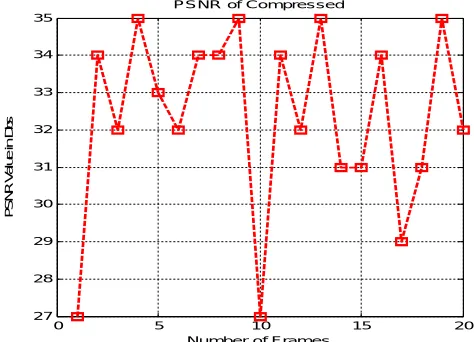
Figure 2 shows the PSNR values of rendered 200x200 video under HEVC
frame 1 2 3 4 5
psnr 27.559 34.816 32.918 35.077 33.317
Table 1 shows the PSNR values of rendered 200x200 video under HEVC
ISSN(Online): 2320-9801 ISSN (Print) : 2320-9798
I
nternational
J
ournal of
I
nnovative
R
esearch in
C
omputer
and
C
ommunication
E
ngineering
(An ISO 3297: 2007 Certified Organization)
Vol. 4, Issue 2, February 2016
0 5 10 15 20
50 52 54 56 58 60 62 64 66 68
Number of Frames
C
o
m
p
re
s
s
io
n
r
a
ti
o
Compression Ratio of De-cmpressed
Figure 3 shows the Compression ratio values of rendered 200x200 video under HEVC
frame 1 2 3 4 5
CR 50 52 52 52 52
Table 2 shows the Compression ratio values of rendered 200x200 video under HEVC
Compression ratio is the valuable analytic measure which is needed in any kind of data reduction system evaluation, this is important in order to reach the actual performance core and find the progress made by the technique irrespective of the mathematical complications involved in the system. Figure 3 shows the critical analysis of compression ratio for the HEVC modified.
IX. CONCLUSION AND FUTURE WORK
As from the above system analysis it is concluded that the efficiency of the system is high as the PSNR rate of the rendered is quite high which is well correlated with the 45 db perceptual mark and applied code rendering has no significant effect on the bit rate error according to compression ratio values which are well above 50 bits/frame mark. However this technique is not fully accurate and is modified to increase the prediction blocks for the CTU units in order to increase the coding capacity by measuring compression ratio and bit encoding. The overall result is the outcome of the new reduced prediction coding introduced in the HEVC system. These predictions encoding have been modified to be applied on low resolution videos which have low data rates so the proposed system only extract up to 4 level of coding for each frame but all the nine levels of predictions are still existent and can be called according to the algorithm need. The modified HEVC technique has been stretched to give more precise prediction by disintegrating the frame into more number of prediction blocks with uneven or more linear dimensions. This type of prediction provide a more exact and precise change in motion vector of the frame to frame data. The higher order prediction makes compression possible even at low data rate when the changes are minute.This technique can also be used in android applications through VLSI implementation for teleconferencing through mobile phones in order to achieve low packet data consumption. The algorithm has scope of improvement by delimiting the CTU units used in inter and intra coding of video frame blocks by merging it with neural based block selection system.
ISSN(Online): 2320-9801 ISSN (Print) : 2320-9798
I
nternational
J
ournal of
I
nnovative
R
esearch in
C
omputer
and
C
ommunication
E
ngineering
(An ISO 3297: 2007 Certified Organization)
Vol. 4, Issue 2, February 2016
2. M. Horowitz, F. Kossentini, N. Mahdi, S. Xu, H. Guermazi, H. Tmar, B. Li, G. J. Sullivan, J. Xu, “Informal subjective quality comparison of video compression performance of the HEVC and H.264/MPEG-4 AVC standards for low-delay applications,” Proc. SPIE 8499, Applications of Digital Image Processing, 84990W, Oct. 15, 2012.
3. . Ohm, G.J. Sullivan, H. Schwarz, T.K. Tan, and T. Wiegand, "Comparison of the coding efficiency of video coding standards—including High Efficiency Video Coding (HEVC)," Circuits and Systems for Video Technology, IEEE Transactions on , vol. 22, no.12, pp.1669-1684, Dec. 2012. 4. B. Li, G. J. Sullivan, and J. Xu, “Comparison of compression performance of HEVC Draft 9 with AVC high profile and performance of HM9.0 with temporal scalability characteristics,” JCTVC-L0322, 12th JCT-VC meeting, Geneva, Switzerland, Jan. 2013.
5. T. Wiegand, G.J. Sullivan, G. Bjontegaard, and A. Luthra, "Overview of the H.264/AVC video coding standard," Circuits and Systems for Video Technology, IEEE Transactions on vol.13, no.7, pp.560-576, Jul. 2003.
6. B. Bross, “An overview of the next generation High Efficiency Video Coding (HEVC),” in “Next Generation Mobile Broadcasting”, (ed. David Gómez-Barquero), CRC Press, 2013.
7. Generic Coding of Moving Pictures and Associated Audio Information - Part 2: Video,1994 :ITU-T and ISO/IEC JTC 1
8. M. Horowitz, A. Joch, F. Kossentini, and A. Hallapuro, “H.264/AVC baseline profile decoder complexity analysis,” IEEE Tran. Circ. Sys. Video Tech., vol. 13, no 7, pp. 715–727, 2003.
9. T. Stockhammer, M.M. Hannuksela, and T. Wiegand, “H.264/AVC in wireless environments,” IEEE Transactions on Circuits and Systems, vol. 13, no. 7, pp. 657–673, July 2003
10. E G Richardson and M J Riley, “ATM Cell Loss Effects on a Progressive JPEG Video Codec”, Proc. 3rd International Conference on Broadband Islands, pp155-165, ISBN 0-444-81905-3, Hamburg, June 1994.
11. T. Wiegand, G.J. Sullivan, G. Bjontegaard, and A. Luthra, "Overview of the H.264/AVC video coding standard," Circuits and Systems for Video Technology, IEEE Transactions on vol.13, no.7, pp.560-576, Jul. 2003.
12. J. Ribas-Corbera, P.A. Chou, and S. Regunathan, “A generalized hypothetical reference decoder for H.264/AVC,” IEEE Transactions on Circuits and Systems, vol. 13, no. 7, pp. 674–687, July 2003.
13. M. Atheeshwari, K. Mahesh, “Video Compression Techniques – A Comprehensive Survey”, International Journal of Advanced Research in Computer Science and Software Engineering, ISSN: 2277 128X ,Volume 4, Issue 1, January 2014.