University of Windsor University of Windsor
Scholarship at UWindsor
Scholarship at UWindsor
Electronic Theses and Dissertations Theses, Dissertations, and Major Papers
2009
Experimental determination of the yield locus of anisotropic metal
Experimental determination of the yield locus of anisotropic metal
sheets using digital image correlation
sheets using digital image correlation
Neil D. Turton University of Windsor
Follow this and additional works at: https://scholar.uwindsor.ca/etd
Recommended Citation Recommended Citation
Turton, Neil D., "Experimental determination of the yield locus of anisotropic metal sheets using digital image correlation" (2009). Electronic Theses and Dissertations. 7930.
https://scholar.uwindsor.ca/etd/7930
This online database contains the full-text of PhD dissertations and Masters’ theses of University of Windsor students from 1954 forward. These documents are made available for personal study and research purposes only, in accordance with the Canadian Copyright Act and the Creative Commons license—CC BY-NC-ND (Attribution, Non-Commercial, No Derivative Works). Under this license, works must always be attributed to the copyright holder (original author), cannot be used for any commercial purposes, and may not be altered. Any other use would require the permission of the copyright holder. Students may inquire about withdrawing their dissertation and/or thesis from this database. For additional inquiries, please contact the repository administrator via email
NOTE TO USERS
This reproduction is the best copy available.
EXPERIMENTAL DETERMINATION OF THE YIELD
LOCUS OF ANISOTROPIC METAL SHEETS USING
DIGITAL IMAGE CORRELATION
By
Neil D. Turton
A Thesis
Submitted to the Faculty of Graduate Studies through Mechanical, Automotive, & Materials Engineering
in Partial Fulfillment of the Requirements for the Degree of Master of Applied Science at the
University of Windsor
Windsor, Ontario, Canada
2009
1*1
Library and Archives CanadaPublished Heritage Branch
395 Wellington Street OttawaONK1A0N4 Canada
Bibliotheque et Archives Canada
Direction du
Patrimoine de I'edition
395, rue Wellington Ottawa ON K1A 0N4 Canada
Your file Votre reference ISBN: 978-0-494-57613-7 Our file Notre reference ISBN: 978-0-494-57613-7
NOTICE: AVIS:
The author has granted a
non-exclusive license allowing Library and Archives Canada to reproduce, publish, archive, preserve, conserve, communicate to the public by
telecommunication or on the Internet, loan, distribute and sell theses
worldwide, for commercial or non-commercial purposes, in microform, paper, electronic and/or any other formats.
L'auteur a accorde une licence non exclusive permettant a la Bibliotheque et Archives Canada de reproduire, publier, archiver, sauvegarder, conserver, transmettre au public par telecommunication ou par Plnternet, preter, distribuer et vendre des theses partout dans le monde, a des fins commerciales ou autres, sur support microforme, papier, electronique et/ou autres formats.
The author retains copyright ownership and moral rights in this thesis. Neither the thesis nor substantial extracts from it may be printed or otherwise reproduced without the author's permission.
L'auteur conserve la propriete du droit d'auteur et des droits moraux qui protege cette these. Ni la these ni des extra its substantiels de celle-ci ne doivent etre imprimes ou autrement
reproduits sans son autorisation.
In compliance with the Canadian Privacy Act some supporting forms may have been removed from this thesis.
Conformement a la lot canadienne sur la protection de la vie privee, quelques
formulaires secondaires ont ete enleves de cette these.
While these forms may be included in the document page count, their removal does not represent any loss of content from the thesis.
Bien que ces formulaires aient inclus dans la pagination, il n'y aura aucun contenu manquant.
Author's Declaration of Originality
I hereby certify that I am the sole author of this thesis and that no part of this thesis has been
published or submitted for publication.
I certify that, to the best of my knowledge, my thesis does not infringe upon anyone's copyright
nor violate any proprietary rights and that any ideas, techniques, quotations, or any other
material from the work of other people included in my thesis, published or otherwise, are fully
acknowledged in accordance with the standard referencing practices. Furthermore, to the
extent that I have included copyrighted material that surpasses the bounds of fair dealing within
the meaning of the Canada Copyright Act, I certify that I have obtained a written permission
from the copyright owner(s) to include such material(s) in my thesis and have included copies of
such copyright clearances to my appendix.
I declare that this is a true copy of my thesis, including any final revisions, as approved by my
thesis committee and the Graduate Studies office, and that this thesis has not been submitted
Abstract
The focus of this research was to determine the yielding and work hardening behaviour of two
anisotropic steel sheets (DP600 and HSLA). Uniaxial tension and compression tests were
performed in the rolling and transverse directions and at 45 degrees to the rolling direction for
each sheet. Plane-strain tension tests were carried out along the rolling and transverse
directions. Digital image correlation was used to determine the strain distribution throughout
the gauge region.
The stress-strain response of the plane-strain tension specimen was estimated through a
comparison of the experimental and numerically predicted load-strain response.
Yield stresses in uniaxial tension were obtained for various yield offsets, and R-values were
obtained, allowing for the anisotropy of each steel sheet to be determined. Yield data was also
obtained in plane-strain and equibiaxial tension, pure shear, and uniaxial compression for
corresponding values of plastic work per unit volume from the stress-strain response.
Hill's 1948 R-based and stress-based yield criteria, Hill's 1979 planar-isotropic yield criterion and
Barlat's Yld2000-2d yield function were evaluated at each value of plastic work per unit volume,
and compared against the experimental yield data obtained.
A low degree of anisotropy was noted for both materials. While all yield functions provided
similar results for DP600, it was noted that Hill's 1948 R-based, criterion and Hill's 1979 yield
criterion were unable to accurately predict material behaviour for all yield offsets for HSLA. It
was found that Barlat's Yld2000-2d provided the most accurate representation of the
Acknowledgements
I would like to express my sincere appreciation and gratitude to Dr. D. E. Green for his guidance
and support over the course of this study. His assistance over the course of my research has
been invaluable.
I would also like to thank my committee members for their support, especially Dr. W. Altenhof
for his assistance with the development of the numerical model.
The assistance of the laboratory technicians, Mr. A. Jenner, Mr. L. Pop, Mr. M. St Louis, and
Mr. P. Seguin is greatly appreciated. The assistance of Mr. A. Jenner in specimen preparation is
especially appreciated.
Finally, I would like to thank my fellow researchers, including Mr. A. Taherizadeh, Mr. A. Ghaei,
Table of Contents
AUTHOR'S DECLARATION OF ORIGINALITY lii
ABSTRACT iv
DEDICATION v
ACKNOWLEDGEMENTS vi
LIST OF TABLES. x
LIST OF FIGURES xii
LIST OF SYMBOLS xvii
1 . INTRODUCTION.... 1
2 . LITERATURE REVIEW 5
2.1 PLASTIC ANISOTROPIC COEFFICIENT 5
2.2 ANISOTROPIC YIELD FUNCTIONS 6
2.2.1 Hill's 1948 criterion 7
2.2.2 Hill's 1979 criterion 8
2.2.3 YLD2000-2d .... 9
2.3 EXPERIMENTAL DETERMINATION OF THE YIELD LOCUS 11
2.3.1 Plane-strain tension 12
2.3.2 Equibiaxial tension 13
2.3.3 Uniaxial compression 15
2.3.4 Pure shear 17
2.4 DIGITAL IMAGE CORRELATION 19
3 . EXPERIMENTAL PROCEDURES 21
3.1 TEST SPECIMENS 21
3.1.2 Specimen geometries 22
3.1.3 Specimen preparation 25
3.2 TESTING PROCEDURES 27
3.2.1 Testing equipment 27
3.2.2 System calibration 28
3.2.3 Strain measurement accuracy 30
3.2.4 Testing procedure 31
3.2.5 Numerical analysis of plane-strain tension tests 34
3.3 OUTSOURCED TESTS , ...36
3.4 ANALYSIS OF DATA 37
4 . RESULTS AND DISCUSSION 39
4.1 UNIAXIAL TENSION RESULTS 39
4.1.1 DP600 39
4.1.2 HSLA 43
4.2 NUMERICAL PREDICTION OF PLANE-STRAIN TENSION BEHAVIOUR 47
4.2.1 DP600 48
4.2.2 HSLA 54
4.3 EXPERIMENTAL PLANE-STRAIN TENSION RESULTS 61
4.3.1 DP600 61
4.3.2 HSLA 65
4.4 UNIAXIAL COMPRESSION RESULTS 70
4.5 OUTSOURCED TEST RESULTS 72
4.6 YIELD FUNCTIONS 76
4.6.1 DP600 88
5 . CONCLUSION 99
APPENDIX A. ARAMIS SPECIFICATIONS 101
APPENDIX B. PLANE-STRAIN ANALYSIS 104
APPENDIX C. OUTSOURCED STRESS-STRAIN RESULTS 113
REFERENCES.... 120
List of Tables
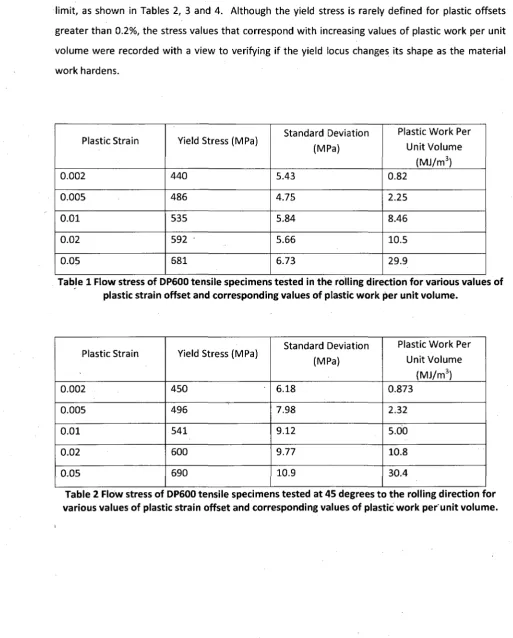
Table 1 Flow stress of DP600 tensile specimens tested in the rolling direction for various values
of plastic strain offset and corresponding values of plastic work per unit volume 42
Table 2 Flow stress of DP600 tensile specimens tested at 45 degrees to the rolling direction for
various values of plastic strain offset and corresponding values of plastic work per unit volume 42
Table 3 Flow stress of DP600 tensile specimens tested at 90 degrees to the rolling direction for
various values of plastic strain offset and corresponding values of plastic work per unit volume 43
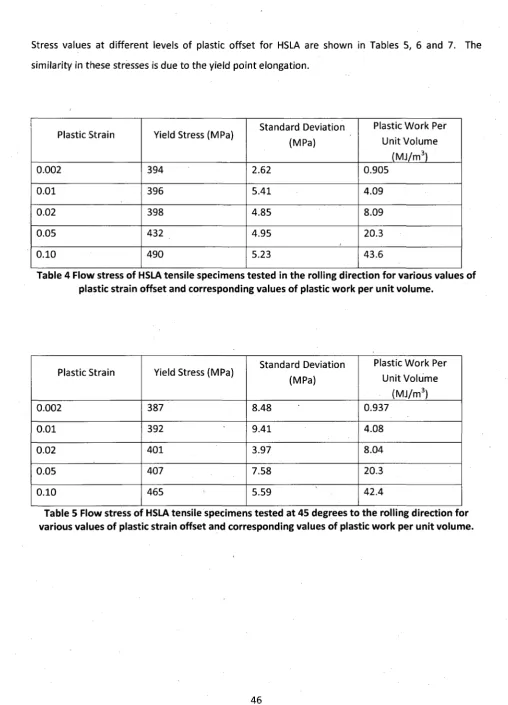
Table 4 Flow stress of HSLA tensile specimens tested in the rolling direction for various values of
plastic strain offset and corresponding values of plastic work per unit volume 46
Table 5 Flow stress of HSLA tensile specimens tested at 45 degrees to the rolling direction for
various values of plastic strain offset and corresponding values of plastic work per unit volume 46
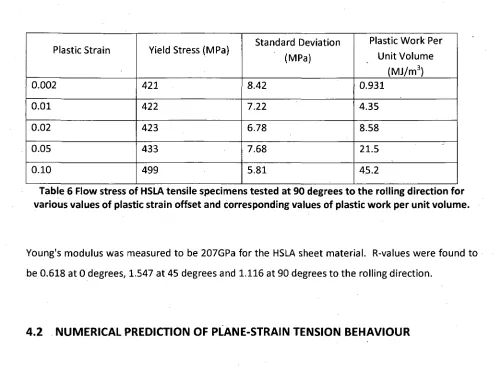
Table 6 Flow stress of HSLA tensile specimens tested at 90 degrees to the rolling direction for
various values of plastic strain offset and corresponding values of plastic work per unit volume 47
Table 7 Flow stress in DP600 plane-strain specimens loaded in the sheet rolling direction 64
Table 8 Flow stress in DP600 plane-strain specimens loaded in the sheet transverse direction 65
Table 9 Flow stress in HSLA plane-strain specimens loaded in the sheet rolling direction 69
Table 10 Flow stress in HSLA plane-strain specimens loaded in the sheet transverse direction 70
Table 11 Flow stress in DP600 uniaxial compression specimens loaded in the sheet rolling
direction •. 71
Table 12 Flow stress in DP600 uniaxial compression specimens loaded at 45 degrees to the sheet
rolling direction 72
Table 13 Flow stress in DP600 uniaxial compression specimens loaded at 90 degrees to the sheet
rolling direction '. '. 72
Table 14 Flow stress in DP600 uniaxial compression specimens loaded in the sheet rolling
direction 73
Table 15 Flow stress in DP600 uniaxial compression specimens loaded at 90 degrees to the sheet
rolling direction 73
Table 16 Flow stress in HSLA uniaxial compression specimens loaded in the sheet rolling
Table 17 Flow stress in HSLA uniaxial compression specimens loaded at 90 degrees to the sheet
rolling direction 74
Table 18 Equibiaxial tension stress coefficients 74
Table 19 Flow stress in DP600 equibiaxial tension specimens 75
Table 20 Flow stress in HSLA equibiaxial tension specimens 75
Table 21 DP600-Simple shear yield values 76
Table 22 HSLA - Simple shear yield values ...76
Table 23 Anisotropy coefficients for Hill's 1948 stress-based yield function 88
Table 24 Anisotropy coefficients for Barlat's Yld2000-2d .89
Table 25 Anisotropy coefficients for Hill's 1948 stress-based yield function ...94
Table 26 Anisotropy coefficients for Barlat's Yld2000-2d 94
List of Figures
Figure 1.1 Schematic of advanced high strength steels, high strength steels, and mild steels 2
Figure 2.1 Schematic of cold rolling process showing rolling (X) and transverse (Y) directions 5
Figure 2.2 Effect of m coefficient on yield function 9
Figure 2.3 Yield locus representing key points for measurement 11
Figure 2.4 Strain distribution of major and minor strain in plane-strain test 12
Figure 2.5 a) Wagoner's 'H' design for strain specimen b) Wagoner's 'B' design for
plane-strain specimen 13
Figure 2.6 Cruciform specimen 14
Figure 2.7 Methods for compression testing 17
Figure 2.8 Geometry of pure shear specimen 18
Figure 2.9 Simple shear device developed at the Universite de Bretagne-Sud 18
Figure 3.1 Uniaxial tension specimen corresponding to ASTM Standard E8M 23
Figure 3.2 Uniaxial compression specimen 24
Figure 3.3 Plane-strain specimen 25
Figure 3.4 Plane-strain specimen prepared for analysis using ARAMIS system 26
Figure 3.5 Plane-strain tension clamps ....28
Figure 3.6 Calibration panel.. 29
Figure 3.7 (A) Location of ARAMIS strain measurements on specimen (B) Stress-strain profiles
from ARAMIS and extensometer 31
Figure 3.8 Experimental set-up for uniaxial tension test with ARAMIS cameras 32
Figure 3.9 Experimental set-up for plane-strain tension tests ...33
Figure 3.10 Experimental set-up for uniaxial compression tests 34
Figure 3.11 Numerical model of plane strain specimen ..35
Figure 4.1 Engineering stress-strain behaviour of DP600 in uniaxial tension 40
Figure 4.3 Distribution of the true major strains in the gauge area of DP600 uniaxial tension
specimens 41
Figure 4.4 Engineering stress-strain behaviour of HSLA in uniaxial tension 44
Figure 4.5 True stress-true strain behaviour of HSLA in uniaxial tension 44
Figure 4.6 Distribution of the true major strains in the gauge area of HSLA uniaxial tension
specimens 45
Figure 4.7 Load-Stress behaviour of DP600 specimens in plane-strain tension obtained from
numerical analysis 48
Figure 4.8 Numerical prediction of stress-strain behaviour for DP600 specimen subjected to
plane-strain tension in the rolling direction before and after scaling 49
Figure 4.9 Estimated stress-strain behaviour of DP600 in plane-strain tension 50
Figure 4.10 Comparison of the plane-strain behaviour of DP600 in the rolling direction as predicted by the Wagoner analysis method and by scaling the curves obtained from finite
element simulation 51
Figure 4.11 Comparison of the plane-strain behaviour of DP600 at 90 degrees to the rolling direction as predicted by the Wagoner analysis method and by scaling the curves obtained from
finite element simulation 52
Figure 4.12 (A) Major and (a) minor strain distribution in DP600 plane-strain specimen predicted
with LS-Dyna 53
Figure 4.13 Distribution of major and minor true strains computed across the width of the gauge
for numerical model of plane-strain DP600 specimen loaded in the rolling direction. 54
Figure 4.14 Load-stress behaviour of HSLA specimens in plane-strain tension obtained from
numerical analysis 55
Figure 4.15 Numerical results for HSLA specimen in rolling direction before and after scaling in
rolling direction 56
Figure 4.16 Estimated true stress-true strain behaviour of HSLA in plane-strain tension 57
Figure 4.17 Comparison of the plane-strain behaviour of HSLA in the rolling direction as predicted by the Wagoner analysis method and by scaling the curves obtained from finite
element simulation 58
Figure 4.18 Comparison of the plane-strain behaviour of HSLA at 90 degrees to the rolling direction as predicted by the Wagoner analysis method and by scaling the curves obtained from
Figure 4.19 (A) Major and (a) minor strain distribution in DP600 plane-strain specimen predicted
with LS-Dyna ...: 59
Figure 4.20 Distribution of axial major and minor true strains computed across the width of the
gauge for numerical model of plane-strain HSLA specimen loaded in the rolling direction 60
Figure 4.21 Distribution of axial major and minor engineering strains measured across the width
of the gauge for plane-strain DP600 specimens loaded in the rolling direction 61
Figure 4.22 Distribution of axial major and minor engineering strains measured across the width
of the gauge for plane-strain DP600 specimens loaded at 90 degrees to the rolling direction 62
Figure 4.23 Distribution of (A-D) axial and (a-d) transverse true strains measured in the gauge
area of DP600 plane-strain specimens 64
Figure 4.24 Distribution of axial major and minor engineering strains measured across the width
of the gauge for plane-strain HSLA specimens loaded in the rolling direction 66
Figure 4.25 Distribution of axial major and minor engineering strains measured across the width
of the gauge for plane-strain HSLA specimens loaded at 90 degrees to the rolling direction 67
Figure 4.26 Distribution of axial (A-D) and transverse (a-d) true strains measured in the gauge
area of HSLA plane-strain specimens 69
Figure 4.27 Engineering stress-strain response of DP600 specimens loaded in uniaxial
compression 71
Figure 4.28 DP600 yield loci for plastic work value of 0.870 MJ/m3 (0.2% plastic strain offset in
uniaxial tension) 78
Figure 4.29 DP600 yield loci for plastic work value of 2.30 MJ/m3 (0.5% plastic strain offset in
uniaxial tension) '. 79
Figure 4.30 DP600 yield loci for plastic work value of 4.95 MJ/m3 (1.0% plastic strain offset in
uniaxial tension) 80
Figure 4.31 DP600 yield loci for plastic work value of 10.7 MJ/m3 (2.0% plastic strain offset in
uniaxial tension) -..' 81
Figure 4.32 DP600 yield loci for plastic work value of 30.4 MJ/m3 (5.0% plastic strain offset in
uniaxial tension) 82
Figure 4.33 HSLA yield loci for plastic work value of 0.918 MJ/m3 (0.2% plastic strain offset in
uniaxial tension) : 83
Figure 4.34 HSLA yield loci for plastic work value of 4.22 MJ/m3 (1.0% plastic strain offset in
Figure 4.35 HSLA yield loci for plastic work value of 8.34 MJ/m3 (2.0% plastic strain offset in
uniaxial tension) 85
Figure 4.36 HSLA yield loci for plastic work value of 20.9 MJ/m3 (5.0% plastic strain offset in
uniaxial tension) 86
Figure 4.37 HSLA yield loci for plastic work value of 44.4 MJ/m3 (10.0% plastic strain offset in
uniaxial tension) 87
Figure 4.38 Yield loci in ol,a2 quadrant with error bars 91
Figure 4.39 Comparison of experimental flow stresses to stresses predicted using yield functions
for plane-strain specimen in transverse direction 92
Figure 4.40 Comparison of experimental flow stresses to stresses predicted using yield functions
for simple shear 93
Figure 4.41 Comparison of Yld2000-2d plane strain prediction to experimental results 96
Figure 4.42 Comparison of experimental flow stresses to stresses predicted using yield functions
for plane-strain specimen in transverse direction... 97
Figure 4.43 Comparison of experimental flow stresses to stresses predicted using yield functions
for simple shear 98
Figure A . l Calibration set-up 102
Figure A.2 True stress-true strain behaviour of DP600 in uniaxial compression (provided by Dr
Wagoner, Ohio State University) 114
Figure A.3 True stress-true strain behaviour of HSLA in uniaxial compression (provided by Dr
Wagoner, Ohio State University) 114
Figure A.4 Experimental true stress-true strain behaviour of DP600 in equibiaxial tension
(provided by Dr Yoon, Alcoa Technical Centre) 115
Figure A.5 Equibiaxial work hardening behaviour of DP600 described by Hollomon's law and
fitted to experimental data 116
Figure A.6 Equibiaxial work hardening behaviour of DP600 described by Voce's law and fitted to
experimental data 116
Figure A.7 Experimental true stress-true strain behaviour of HSLA in equibiaxial tension
(provided by Dr Yoon, Alcoa Technical Centre) 117
Figure A.8 Equibiaxial work hardening behaviour of HSLA described by Hollomon's law and fitted
Figure A.9 Equibiaxial work hardening behaviour of HSLA described by Voce's law and fitted to
experimental data 118
Figure A.10 True stress-true strain behaviour of DP600 in pure shear (provided by Dr. Thuillier,
Universite de Bretagne-Sud) 119
Figure A . l l True stress-true strain behaviour of HSLA in pure shear (provided by Dr. Thuillier,
List of Symbols
Latin Symbols
a material parameter f o r Barlat's Yld2000-2d b specimen thickness
C'ij, C"ij anisotropy coefficients of Barlat's Yld2000-2d (i=l-6, j = l - 6 ) e engineering strain
E Young's modulus Fcr critical buckling force
F, G, H, N anisotropy coefficients of Hill's 1948 stress-based yield criterion f, g, h anisotropy coefficients of Hill's 1979 yield criterion
h specimen height (in mass moment of inertia) H height of calibrated volume
/ second mass m o m e n t of inertia L length of calibrated volume I gauge length
l0 initial gauge length
m material characteristic in Hill's 1979 yield criterion
Ri plastic anisotropic coefficient, where / represents the angle w i t h respect t o rolling direction
Rb e plastic anisotropic coefficient in equibiaxial tension
R normalized anisotropic coefficient
Sy deviatoric stress components (i=x,y, j=x,y) t specimen thickness
t0 initial specimen thickness
W width of calibrated volume w specimen width
w0 initial specimen width
Greek Symbols
Otj
e
E l
£2
£L
£T
°eff ^
Oo
°1
°2
°Eng
OL
aT
0True
Ox
°"v
ozOxy; Ox z, OyZ
anisotropy coefficients in Barlat's Yld2000-2d (i=l-8)
true strain
major strain
minor strain
strain in the rolling direction
strain in the transverse direction
effective stress
yield stress in uniaxial tension in the rolling direction
major principal stress
minor principal stress
engineering stress
stress in the rolling direction
stress in the transverse direction
true stress
stress in rolling direction
stress in transverse direction
stress through specimen thickness
1. INTRODUCTION
During the 1970's, oil shortages in the United States prompted the National Highway Traffic
Administration to establish Corporate Average Fuel Economy (CAFE) regulations in order to improve
the fuel economy of passenger cars and light trucks. One method that contributed towards this was
the reduction of vehicle mass.
In the 1990's, many factors, including increased safety and environmental regulations, and increased
comfort and performance requirements from customers resulted in mass increases compared to
previous generation vehicles. Systems such as reinforced body structures and driver assistance
systems result in additional components and increased mass. An increase in automobile mass has
many undesirable effects including increased fuel consumption and vehicle emissions.
In 1998, the UltraLight Steel Auto Body (ULSAB) report [1, 2] was released, detailing the results of
work to reduce automobile mass, while increasing safety performance. Mass reductions result in
increased fuel efficiency, and a reduction in toxic emissions. The ULSAB Consortium achieved this
through the introduction of a new generation of steel grades and advanced manufacturing
processes.
One contribution to the reduction of vehicle mass was the introduction of advanced high strength
steels (AHSS) into the body and structure. Due to their increased strength, AHSS allow for a
reduction in thickness of sheet metal components without compromising impact resistance: this
down-gauging leads to a decrease in the mass of vehicle body-in-white compared to vehicles
manufactured from conventional mild steel grades. Figure 1.1 indicates the relative strength and
formability of advanced high strength steels (in colour), high strength steels (in light gray), and mild
Tensile Strength (MPa)
Figure 1.1: Schematic of advanced high strength steels, high strength steels, and mild steels [3]
Other technologies for achieving mass savings include the use of advanced manufacturing
processes, such as hydroforming and tailor-welded blanking. Tailored blanking is a process in which
steels of different strengths or thicknesses are laser welded to create an engineered blank that can
then be stamped or drawn into shape. This allows for larger quantities of steel in desired areas ,
while allowing for reduced steel quantities in areas where mass can safely be removed.
Hydroforming is a process in which hydraulic pressure is applied to a tube or sheet specimen in
order to obtain a desired shape. Tubular hydroforming allows for the creation of variable
cross-sections in a single tube allowing for a reduction in the number of required parts. Sheet
hydroforming achieves improved surface quality through the use of hydraulic pressure, by
eliminating metal-on-metal contact that exists in conventional stamping.
Through the implementation of advanced high strength steels and advanced manufacturing
increased safety and maintaining manufacturing costs. Furthermore, the ULSAB design achieved an
80% increase in torsional stiffness, and a 50% increase in bending stiffness over benchmark vehicles.
One disadvantage with the implementation of advanced high strength steels is their increased
springback after the forming process. Springback results from residual stresses which develop in a
sheet metal during the stamping process, and causes a recovery of some of the elastic deformation
that occurs during the forming process. In order to determine the desired final geometry,
springback is predicted using finite element simulation. The geometry of the stamping dies is
subsequently modified to compensate for the springback. This entire die design process is carried
out virtually, as this reduces the time and costs associated with product development.
Another method for reducing costs associated with producing new vehicle models, is the creation of
virtual models to predict the crash response of the automobile. Numerical modelling of automobile
crash response allows analysis and improvement of component and system behaviour before
physical prototypes are created. This results in a decrease in the number of prototype models
required before a vehicle is commercially released. In order to accurately simulate the crash
response of an automobile, many factors are considered. These include, but are not limited to,
contact response, load application, and material behaviour.
The numerical simulations required to predict springback in individual components and those
carried out to predict the vehicle response under dynamic impact loads are generally based on
phenomenological models of material behaviour. Research conducted over the last few decades has
contributed towards improving the accuracy of material models and thus enhancing the reliability of
predictive simulations. Two of the most important elements of material models that are used to
simulate the plastic behaviour of sheet metal are the yield function that describes the states of
stress that lead to plastic deformation and a stress-strain relationship that describes the work
hardening of the sheet material under consideration. It is essential to accurately model both these
The purpose of this research was to experimentally determine the yield locus of a dual-phase
(DP600) steel sheet material and a more conventional high-strength low-alloy (HSLA) sheet steel.
Both these sheet materials were used in Numisheet 2005 Benchmark #3 [4], and therefore a
considerable body of experimental data already exists. However, in order to take advantage of this
benchmark data to validate advanced material models more extensive material characterization is
needed for these materials. These experimental yield loci will therefore expand the existing data set
and enhance the value of this benchmark.
Chapter 2 provides an overview of anisotropy, including yield functions used to describe the yield
behaviour of anisotropic materials, and experimental methods used to define key points on the
anisotropic yield locus. An introduction to digital image correlation is also presented. Chapter 3
provides details of the experimental procedure used for defining the yield loci. The stress-strain
response was obtained for uniaxial tension and uniaxial compression in the rolling and transverse
directions, as well as at 45 degrees to the rolling direction. Moreover the stress-strain behaviour was
also determined for plane strain tension in the rolling and transverse directions. Yield data were
obtained from the stress-strain curves for all tests. The experimental yield data were then compared
to theoretical anisotropic yield functions, and the most appropriate yield function was selected for
each of these two sheet materials. Experimental results are presented and discussed in chapter 4,
2. LITERATURE REVIEW
This chapter provides an overview of the literature relevant to this study. Section 2.1 provides an
overview of anisotropy, and discusses the plastic anisotropy coefficient. Section 2.2 discusses
various yield functions used to describe the yield behaviour of anisotropic materials, including Hill's
1948 and 1978 yield functions and Barlat's Yld2000-2d. Section 2.3 provides an overview of
experimental tests used for obtaining points on the yield locus of anisotropic materials. An overview
of digital image correlation (DIC) is provided in Section 2.4.
2.1 PLASTIC ANISOTROPIC COEFFICIENT
Anisotropy is a characteristic of materials whose mechanical properties vary with orientation.
Anisotropy typically results from the cold rolling of sheet metal, during which crystallographic
texture develops to strengthen the sheet metal in certain directions. Figure 2.1 provides a schematic
of the cold rolling process, showing the rolling and transverse directions.
The degree of anisotropy can be described by the R-value, also known as Lankford's coefficient. The
R-value is the width-to-thickness true strain ratio, typically obtained after 10 to 15% strain in
uniaxial tension, and is defined in Equation 2.1.
R =
In
w/
w,
ojIn '/
(2.1)
Typical R-values range from 0.4 to 5 [5]. Since the thickness strain is difficult to measure, the
R-value can also be obtained through Equation 2.2. [6]
R =
1
In I
lnl
w° /
- 1
(2.2)This equation can be deduced from the assumption that the volume of material remains constant.
This assumption only holds true when the elastic strains are negligible in comparison to the plastic
strains. In order to obtain a mean R-value for a sheet material with normal anisotropy, the R-value
is measured in the rolling direction, the transverse direction, and at 45 degrees to the rolling
direction, and averaged using Equation 2.3.
ft _ R0 + 2^45 + ^90 (2.3)
2.2 ANISOTROPIC YIELD FUNCTIONS
The yield point of a material is theoretically defined by its elastic limit. Yield offsets can also be
defined based upon other characteristics, including set values of plastic work or strain. A 0.2% offset
is typically used in engineering applications, especially when an elastic limit cannot be clearly
Von Mises1 yield function provides an accurate prediction for stress states at which yielding will
occur for many ductile materials. However, von Mises' yield criterion is only applicable for isotropic
materials, and is unable to accurately predict yielding for anisotropic materials. Multiple yield
functions have been proposed to define the plastic anisotropy of sheet metals.
2.2.1 Hill's 1948 criterion
In 1948, Hill proposed one of the first anisotropic yield functions [7], as an extension of von Mises'
yield criterion. Hill's 1948 criterion makes use of the yield stresses in different orientations of a
sheet metal to determine the yield locus, as indicated by Equation 2.4.
a
eff=F(cr
y - < TZ)2+G(cr
z-a
xf +H(<7
X-a
yf + 2Lcr
2yz+2Mcr
2 z x2Ncr
2 x y= 1 (
2-
4)
Where aeff represents the effective stress, typically chosen as the uniaxial flow stress in the rolling
direction. For thin sheet metals, out-of-plane stress components can generally be neglected.
° z = ° z x = ° z y = 0 (2.5)
and the anisotropic parameters in equation 2.4 are determined using Equations 2.6 - 2.9
2F = ^-^
T-^-^
T+ ^ -
w(2.6)
""WWR
{2J)
1 1 1
w
+
w w
(2-8)
2N=
VJ~V4
(2
-
9)
where a x, a y, and a\ are the yield stress in the rolling direction, the transverse direction and in
Hill's 1948 yield criterion can also be written in terms of R-values, as shown in equation 2.10.
R^y + R ^ x + RQR90
While no direct relationship exists between Hill's 1948 R-based and stress-based yield functions,
similar yield loci are typically obtained regardless of which expression is used.
Due to the simplicity of Hill's 1948 criterion, it is often used to model the behaviour of low-carbon
sheet steels.
2.2.2 Hill's 1979 criterion
It has been shown that Hill's 1948 criterion fails to provide an accurate analysis for materials with
R-values less than 1 [8]. In order to overcome this limitation, Hill's 1979 yield criterion was
proposed [9,10] which incorporates a material characteristic (m) as shown in Equation 2.11. The m
value causes distortion of the yield ellipse along the equibiaxial direction. When the value of m is
less than 2, the yield surface is elongated, as shown in Figure 2.2.
^ / / =/(<ry - ° J +8(fz -o-x)" +K*X -<Ty)" =1 (2-H)
When m is equal to 2, Hills 1979 criterion reduces to Hill's 1948 criterion. Coefficients F, G, and / / i n
Hill's 1948 yield criterion are equal to the values of //&& > S/^eff < a n d M^lg > respectively.
In the case of in-plane isotropy (normal anisotropy), for plane-stress deformation, Hill's 1979 yield
criterion can be written as shown in Equation 2.12.
m=1.5
Figure 2.2 Effect of coefficient m in Hill's 1979 yield function on the shape of the yield locus [9]
2.2.3 YLD2000-2d
In 2003, Barlat et al. [11, 12] proposed another plane-stress anisotropic yield function. This yield
function uses linear transformations of the Cauchy stress tensor to define the yield locus of a
material.
ia
aeff= \x[ - x'
2\
a+ \2x\ + xtf + \2x;+x;\"
(2.13)where X\ and X'x are principal values of the stress deviation tensors, as defined by equations 2.14
and 2.15 and a is a material-dependant parameter - typically a = 6 for body-centred-cubic (bcc)
x[ = ±{x'
a+ x ; +
yj(x'
xx-x'J
+4X'
x:K = ±(*; + x; - Vfc-n)
2 + 4
<)
(2.14a)
(2.14b)
(2.15a)
(2.15b)
X'ij and X"ijare defined by:
%xx
X'yy _XXy_
XXX
X^
X-xy = = H ic
H i_ 0
"C"
H i0
c
r'
H 2
0
C"
0
0 "
0
c
6 6 .
0 "
0
c
66 _ 5 5 5s
s
s
xy (2.16) yy xywhere CV] and Cy represent the anisotropy coefficients. In order to obtain these coefficients, a
system of equations is developed based on the yield stresses and R-values from uniaxial tension
tests at 0°, 45° and 90° to the rolling direction, and the equibiaxial stress state. Barlat's yld2000-2d is
often defined by anisotropy coefficients a.%- a8, which are related to the CVj and C"Vj coefficients
through equation 2.17.
a , =
a
2=
« 3 =
2a
42a
5« 6 =
a
1=
<*» =
C
H i
•C H>2
2C
214
= 2C"
= 2C[\
2c;
2+
• C
H56
C"
H J 6C"
H i
+
C"
+ c
T H i
C"
H>2
(2.17)
While this function was developed for aluminum alloys, it can be applied to describe the anisotropic
behaviour of sheet steels under plane-stress conditions. YLD2000-2d provides an accurate yield
locus, matching experimental results, and is considered a valid yield function for linear strain paths.
2.3 EXPERIMENTAL DETERMINATION OF THE YIELD LOCUS
In order to obtain the experimental yield locus, several yield stresses were determined in principal
stress space. These stress states, represented in Figure 2.3, provide a basis upon which the yield
locus can be estimated. Once the yield stress is determined in uniaxial tension (1), plane-strain
tension (2), uniaxial compression (3), equibiaxial tension (4), and pure-shear (5) points, a curve is
fitted through these points. Due to the nature of anisotropic materials, these points must be
measured in both the rolling and transverse directions, for both tension and compression (note: the
equibiaxial point involves testing in both the rolling and transverse direction). Materials are assumed
to be orthotropic, with the anisotropic characteristics being symmetric about the rolling and
transverse axes.
aY
2
2
- — ox
2.3.1 Plane-strain tension
Plane-strain conditions exist in specimens that are very wide, and where the strain across the width
is zero. Plane-strain tension tests generate the maximum positive values of the yield stress for the
rolling and transverse directions.
When a force is applied to a wide plane-strain specimen, stresses occur in the direction of the
applied force as well as in the direction perpendicular to the applied force. Figure 2.4 shows the
strain vs. position graph for a plane-strain specimen, with a well-defined section of plane-strain
(ey/ex > 5) [13] from approximately 7 - 72 mm along the width.
20 40 60 80
width position- (mm)
100
Figure 2.4 Strain distribution of major and minor strain in plane-strain test
(LC-steel. W=81mm) [14]
As no ASTM standard exists for plane-strain tension tests, specimens used in plane-strain testing
contain only basic similarities. Work was performed by Wagoner [5, 13, 15] to create a specimen
with a large plane-strain region. This specimen, Wagoner's 'H' design, is shown in Figure 2.5, as well
as Wagoner's 'B' design. Tests by Vegter et al. [14] concluded that plane-strain conditions were not
0
0
I
0
0
0
0
0
0
(
0
0
(a)
(b)
Figure 2.5 a) Wagoner's 'H' design for strain specimen b) Wagoner's 'B' design for
plane-strain specimen [5]
In order to obtain approximations of the stresses in a plane-strain specimen, Wagoner used uniaxial
tension results to obtain an estimate of the load supported in the edge region, defined by the region
where |ey/ £x |< 5. These loads were then removed from the total load applied to the specimen in
order to obtain an estimate of the load applied to the plane-strain region. The effective stress was
obtained using Hill's 1948 yield criterion, and the effective strain was obtained by averaging the
strains measured over the plane-strain region.
2.3.2 Equibiaxial tension
Equibiaxial tension occurs when equal tensile loads are applied to a specimen along perpendicular
axes. This provides the stress state where the stress in the rolling direction is equal to the stress in
the transverse direction. While there are methods for obtaining this point on the yield locus, they
often require the use of expensive equipment.
One method, the hydrostatic bulge test, involves clamping a circular blank and applying water
pressure to one side of the specimen [16]. The hydrostatic pressure causes the specimen to bulge
out in such a way that the stresses in the specimen are equal in all directions expanding radially
Another popular method for determining the equibiaxial tensile yield stress involves the use of
cruciform specimens. Multiple designs of cruciform specimens exist [17-25], one of which is shown
in Figure 2.6. By applying equal forces to all arms of the cruciform, the central section of the
specimen undergoes equibiaxial tension.
plastic zone | fla lge |
Figure 2.6 Cruciform specimen [24]
The hydrostatic bulge testing provides stress and strain data up to large strains, however as the
onset of bulging can occur suddenly, it is often difficult to obtain accurate results at low strains. By
changing the specimen shape from a circular blank to an elliptical blank, the bulge test can also be
used to obtain other biaxial stress ratios on the yield locus, however as indicated earlier, the
hydrostatic bulge test requires testing equipment that is not always readily available.
The cruciform specimen can also be used to obtain multiple points on the yield locus- by modifying
the ratio of the applied forces, every stress state in the positive quadrant of the yield locus can be
obtained - however the equipment required to perform testing on a cruciform specimen is, as with
the hydrostatic bulge, not often available. Furthermore, the stress concentrations in the corners of
Various methods exist for calculating the R-value during an equibiaxial tension test [26]. The first
method, as shown in Equation 2.18, relates the transverse (eT) and longitudinal (eL) strains.
R h e = — (2-18)
According to the associated flow rule of plasticity, the R-value of a material is related to the tangent
of the yield locus, as shown in Equation 2.19.
doT l + r6 da, rgo
~T~ = L;trr=0;—-± = -&-;oL=Q (2.19)
daL r0 . dar l + r90
If this is assumed, the R-value for the equibiaxial tension test can be obtained through
Equation 2.20.
Rbe=-^- (2-20)
-K90
2.3.3 Uniaxial compression
Unlike the uniaxial and plane-strain tension tests, compression testing provides many difficulties for
sheet metal specimens. Due to the reduced thickness of sheet metal specimens, elastic buckling can
occur very easily. Buckling is a failure mode that occurs in compression, often before the ultimate
compressive stress of the material, and occasionally before the yield stress, due to elastic instability
of the specimen. As a result, the specimen must be designed so that yielding will occur before
buckling.
There are two potential methods to increase the critical buckling force for buckling, as defined by
the Euler equation (Equation 2.21). The first method involves reducing the length of the specimen.
As shown in Euler's equation, the critical force is inversely proportional to the length squared, and a
decrease in specimen length results in an increase in the critical force. The second method involves
increasing the thickness of the specimen. As indicated by the second moment of the cross-sectional
area (Equation 2.22), an increase in specimen width results in a direct increase of the critical force,
• Fcr
where
/
Multiple testing procedures exist for uniaxial compression tests. One method is the use of small,
narrow specimens [27]. Other methods exist for obtaining the uniaxial compression yield point,
involving other methods of support for the specimen [28-32], examples of which are shown in
Figure 2.7. Measurements are obtained by strain gauges located either along the edge of the
•specimen, or through slots located on the surface of the support fixture. ASTM standard E9 [33]
provides specimen geometries for various support fixtures, however no standard exists for a single
thickness specimen. One method for obtaining a thicker specimen involves bonding multiple
specimens together [34]. Due to the cubic relation, by gluing two specimens together, the force
required for buckling increases eight times. While using laminated specimens results in a significant
increase in the buckling force, the adhesive involved in laminating the specimens will affect the
characteristics of the specimen. This must be accounted for in order to obtain accurate stress data.
Specimen support can produce other difficulties that must be overcome. Use of a support structure
introduces the potential for friction between the specimen and the support fixture. This friction will
affect the yield point, and must be accounted for in order to obtain accurate results. Another
problem involves obtaining in process data. As the support structure is meant to enclose the
specimen, it is often difficult to obtain strain measurements until the test is complete. In order to
obtain the strains at the yield point, the support structure must be designed to allow for in-process
strain measurements. The use of a support system causes frictional and biaxial loads which can be
overcome with the use of lubricants [34] or accounted for in the calculation of stresses [35].
K2EI
(Klf
bh
312
(2.21)
• ^ ^
» '
(A) (B)
Specimen
Specimen IS holder to prevent bucklihg
8
-Clip-on extensometer
W — I
o
"S
(C) (D)
Figure 2.7 Methods for compression testing. A [36] B [37] C [34] D[35]
2.3.4 Pure shear
A final test can be performed to determine a yield point in quadrants II and IV where the stress in
the rolling direction is equal to the negative value of the stress in the transverse direction. While
the pure shear test is often considered unnecessary due to minimal curvature in quadrants II and IV,
shows the shear specimen proposed by Miyauchi [39], which causes simple shear in the shaded
region through the application of opposing loads as indicated.
T
e l
1-i z
n '
T
Undefoimed Deformed
Figure 2.8 Geometry of pure shear specimen [14]
Another method for obtaining shear stresses was presented by Thuillier and Manach [40] and
Carbonniere et al. [41] and involves the use of a rectangular specimen, and the testing apparatus
shown in Figure 2.9. This procedure involves the use of a single fixed clamp, and a moveable clamp
which is used to apply shear loads.
4
ZZZZZZZZZ3
M
?
ZZZZZZZZZl - &m\\\>M^^
rzzzzzzzzz
tx
-B--&u
Q
1. Specimen 2. Moveable Grip 3. Fixed Grip 4. Load Cell
5. Hydraulic Actuator 6. Actuator Displacement Sensor
7. Computer
2.4 DIGITAL IMAGE CORRELATION
The accurate measurement of strain is important to properly define material response. Strain
gauges are often used to experimentally measure strains. Strain gauges provide an average
one-dimensional strain over the length of the gauge. Unfortunately, in order to obtain an accurate
representation of strains across a large surface with varying strains, multiple strain gauges in
multiple orientations are required.
Another method for obtaining surface strains on a deformed sheet specimen is the circle grid
technique. This process involves the application of a circular grid pattern of a known radius. Once
surface deformation has occurred, strains are obtained through the measurement of circle
deformation, allowing for multi-directional surface strains to be obtained. This is often a lengthy
and tedious process, as the deformation of many circles must be measured in order to obtain a
complete surface strain distribution. The accuracy of the circle grid technique is dependent on the
size of the grid, and a reduction in grid size causes an increase in the time required to obtain strain
measurements.
A faster and more efficient way of measuring multi-directional surface strains is to use DIC
measurement techniques. DIC is a process in which displacements and strains are measured from
digital images. DIC works through the tracking of a pattern on the surface of a specimen. The use of
images in calculating strains is not new; Wagoner [5,13, 15] used a circle-grid pattern on his
plane-strain specimens, and took a series of images throughout the test. Strain values were then
calculated at each image through measurement of the deformation of the individual circles.
Rao [42, 43] applied a grid pattern to tensile specimens, and strains were obtained through the
deformation of the grid. Development of computer technology and digital camera resolutions allow
Macro-image facets are created through the image using a series of pixels (typically 5-20 pixels per
side) across the image, allowing for sub-pixel accuracy [44]. The number of facets within an image
depends on the resolution of the cameras used, and the defined size and overlay of the facets,
however it is possible to get thousands of facets over an image (a 13 x 13 pixel facet with a 2 pixel
overlap allows for the formation of over 10,000 facets on an image with a resolution of 1280 x
1024). The centre location of each facet provides surface coordinates, and the locations of these
facets are tracked through the series of images. In order to obtain strain values, the centre location
of the facet is measured with respect to the surrounding facets.
At each stage, the strain, displacement and rotation values are obtained with respect to a reference
stage. Typically, the initial image provides the reference frame from which measurements are taken,
and further images are taken either during or after the deformation of a specimen. However strains
can also be obtained with respect to a reference stage other than the initial stage.
A single camera DIC system is able to measure in-plane deformation, while a multi-camera system is
able to obtain 3-dimensional measurements of strains and displacements. DIC provides a
non-contact measurement technique which is able to analyse strain fields over an entire surface, and is
not restricted to a single axis, as with most extensometer measurements.
High sensitivity can be obtained using DIC, with a displacement sensitivity on the order of 1/30,000
the field of view [44], and with a strain sensitivity of 50-100 micro-strain.
The accuracy of results obtained using DIC techniques is dependent on many factors [45], including
the resolution and configuration of the cameras used, the quality of the light source/the accuracy of
calibration, and.the quality of the surface pattern. Using DIC equipment, it is possible to measure
3. EXPERIMENTAL PROCEDURES
The objective of this study is to experimentally determine the yield locus for HSLA and DP600 sheet
steels, with a view to more accurately modelling the behaviour of automotive steel sheets used in
complex forming processes. This chapter provides an overview of the procedure used to obtain
yield loci. The experimental testing performed in this research included uniaxial tension,
plane-strain tension, and uniaxial compression of HSLA and DP600 specimens under quasi-static loading to
determine the yield locus of both materials. Both uniaxial tension and uniaxial compression tests
were performed in the rolling and transverse direction, as well as at 45 degrees to the rolling
direction. Plane-strain tests were performed in the rolling and transverse direction. Strain
measurements were obtained using DIC techniques.
Section 3.1 discusses the specimens used in the study, including the specimen geometries and
specimen preparation procedure. Section 3.2 discusses the experimental and analysis procedure,
including an overview of the testing equipment and the validation of the digital image correlation
equipment. Section 3.3 discusses the procedure for obtaining plane-strain results. All tests were
performed in the Engineering Mechanics Lab at the University of Windsor. Section 3.4 discusses
shear tests and equibiaxial tension tests carried out by third-parties and which were used to obtain
yield points.
3.1 TEST SPECIMENS
3.1.1 Material grades
Experimental testing was performed on DP600 and HSLA steels used for the Numisheet 2005
DP600 is a dual-phase steel, which consists of ferrite and martensite phases. Dual phase steels
exhibit excellent ductility, as well as high work-hardening characteristics. These properties result in
increased ultimate tensile strengths of dual-phase steels compared to other steels with similar yield
strength.
HSLA is a ferrite steel which is strengthened by the presence of micro-alloying elements including
manganese, chromium, and copper. These alloys contribute to fine carbide precipitation and
grain-size refinement.
3.1.2 Specimen geometries
Three types of tests were carried out in this research - uniaxial tension, uniaxial compression, and
plane-strain tension tests. The geometry of the specimens used for each test is presented below.
The DP600 specimens were 1.0mm in thickness, and the HSLA specimens were 0.8mm.
3.1.2.1 Uniaxial tension
The most common method for determining sheet mechanical properties is the uniaxial tension test.
This involves applying a tensile load to a 'dog bone' shaped specimen. Due to the constant
cross-section, the strain distribution in the gauge area is uniform, allowing for high measurement
accuracy. Unlike other testing methods, the geometry of specimens for the uniaxial tension test is
Uniaxial tension tests were performed to obtain yield stress, as well as the plastic anisotropy values
of the materials, in the rolling and transverse directions. Specimens were taken in the rolling and
transverse directions, as well as at 45 degrees to the rolling direction, in accordance to ASTM
standard E8M as shown in Figure 3.1. Five specimens were prepared in each direction to ensure
acceptable repeatability in the results.
R
12.5
Figure 3.1 Uniaxial tension specimen corresponding to ASTM Standard E8M (dimensions in mm)
3.1.2.2 Uniaxial compression
Uniaxial compression tests were carried out to obtain stress-strain curves and yield stresses for each
material. As with uniaxial tension, specimens were prepared in the rolling and transverse directions,
as well as at a 45 degree angle to the rolling direction. In order to obtain strain data using DIC, a
buckling-prevention support fixture could not be used, since the support fixture would prevent the
acquisition of images. Therefore, an unsupported specimen was used. Experimentation showed
that buckling occurred at loads far lower than those predicted by the Euler formula due to
eccentricity in the loading system. In order to increase the buckling load, the length of the specimen
was drastically reduced compared to the uniaxial tension specimen, with a final geometry as shown
in Figure 3.2. Tests were also performed with two specimens bonded using Loctite H8600 galvanize
tests were performed with a single specimen, and three tests were performed each with two
specimens adhesively bonded together.
1
E
10
50
25
1
Figure 3.2 Uniaxial compression specimen (dimensions in mm)
3.1.2.3 Plane-strain tension
Plane-strain tension tests were also performed to obtain the plane-strain yield stress values in both
the rolling and transverse directions. Unlike uniaxial tests, plane-strain tests were not performed at
45 degrees to the rolling direction. For the plane-strain specimen, a scaled down version of
Wagoner's 'B-specimen' was selected (Figure 2.5b). This specimen was chosen over the
'H-specimen' as the presence of a gauge region with uniform strains was necessary in order to take
advantage of DIC technology. The dimensions of the 'B-specimen' were reduced by 60%, as shown
in Figure 3.3, in order to fit within a calibrated area of 135x108 mm2 of the DIC system. This
calibration panel was selected because it was the largest panel available which could be used with
152.4
76.2
R11.4
Figure 3.3 Plane-strain specimen (dimensions in mm)
3.1.3 Specimen preparation
All uniaxial and plane-strain test specimens were approximately cut to size using a metal shear, and
final specimen geometries were obtained through wire electrical discharge machining (EDM). Use of
a wire EDM provides an advantage over other methods, as no residual stresses are incurred on the
specimen, whereas other machining methods incur stresses within the specimen that can affect the
mechanical response of the specimen.
In order to prepare specimens for use with the ARAM IS DIC system, surfaces were cleaned with a
fine synthetic scouring pad and washed in acetone. A flat white paint was applied to the surface in
paint in order to obtain a contrast with the white surface coating, and provide surface points from
which strain or displacement measurements can be taken using the ARAMIS system. Speckle points
were approximately 3 to 5 pixels (less than 0.05mm) in diameter. The same preparation method
was performed for all specimens. Figure 3.4 shows a plane-strain specimen prepared for
measurement with the ARAMIS system
'ft? i>
3.2 TESTI1MG PROCEDURES
3.2.1 Testing equipment
All tests were performed on a hydraulic Tinius-Olsen testing machine with a load capacity of 300 kN.
DIC was used to obtain strain profiles of the specimens throughout the testing. The DIC system used
for this testing was the ARAMIS system, manufactured by GOM mbH. The ARAMIS system uses two
cameras to record images of the specimen during testing. Measurements were obtained from a
random pattern, either naturally occurring on the specimen surface, or applied through methods
such as spray painting as was done in this work. The distortion of this pattern allows for ARAMIS to
calculate strain measurements over the specimen surface at each recorded image. Strains were
measured with respect to an initial state, as defined by the first recorded image of the un-deformed
specimen. Load values were measured by the Tinius-Olsen load cell and recorded to the ARAMIS
data acquisition system using a BNC connector cable.
The clamps typically used to perform tension tests on the Tinius-Olsen machine were not large
enough to hold a plane-strain specimen; therefore a new set of clamps was built for plane-strain
specimens. Figure 3.5 shows the design of the clamps created for the plane-strain specimen, which
were fabricated using 4140 annealed steel. The same clamps were also used for uniaxial
100mm
/ . . - / .
Figure 3.5 Plane-strain tension clamps
3.2.2 System calibration
In order to ensure accurate results were obtained with the ARAMIS system, a calibrated space was
prepared within which measurements could be accurately obtained. The calibration volume was set
up using calibration panels provided by GOM, with the distance between the cameras, and the
distance from the cameras to the calibration volume as specified by the supplier. The calibration
procedure was provided by GOM, and involved taking a series of images at the center, and front and
back boundaries of the calibrated volume using both cameras, and each camera individually. This
process determines the location of the calibrated volume with respect to the cameras, and allows
the system to relate the results from each camera. This calibration procedure ensures that the
system will compute accurate 3-dimensional surface-strain measurements.' Figure 3.6 shows the
Upon completion of the calibration process, a calibration deviation value is determined by the
ARAMIS system, representing the average deviation between each camera through the calibration
process. A maximum value of 0.040 pixels was used throughout testing as the limit for acceptable
calibration.
f" -'
Figure 3.6 Calibration panel
In order to further validate the calibration process, and ensure the quality of the speckle pattern
applied to the surface of the specimen, a series of images was taken before testing started. Since no
loads were applied, negligible strain values were expected. In the case where strain values greater
than 0.05% were obtained, or the ARAMIS system was unable to obtain strains over the entire
surface of the specimen, the paint was removed from the specimen, and a new speckle pattern was
3.2.3 Strain measurement accuracy
The use of DIC allows for the measurement of surface strains with a large degree of accuracy.
Displacements can be measured with an accuracy of approximately lu,m [48], and strains can be
calculated with an accuracy of up to 0.02% [46].
In order to validate results obtained using the ARAMIS system, tension tests were performed
following ASTM standard E8M on AA6061-T6 specimens using an INSTRON 8562 tensile testing
machine with load capacity of lOOkN [49]. The tensile specimens were prepared according to the
process described previously for use with the ARAMIS system, and an extensometer with a 25.4 mm
gauge length was attached. Extensometer readings were recorded at a rate of 40 Hz and images
were obtained using the ARAMIS system at a rate of 0.5 Hz. Strain values were located at five points
on the tensile specimen, and compared to values obtained through the extensometer as shown in
Figure 3.7. Deviation can be observed at the end of the test, however this is as a result of localized
necking, and the location of the measured points with respect to the neck. Before necking occurs
(at approximately 280 seconds), deviations no greater than 7% were observed between the
0.121
(A)
120 ISO
Time (s)
(B)
Figure 3.7 (A) Location of ARAMIS strain measurements on specimen (B) Stress-strain profiles from
ARAMIS and extensometer [49]
3.2.4 Testing procedure
Tension tests were performed on a hydraulic Tinius-Olsen testing machine. Uniaxial tension
specimens were clamped using clamps supplied with the Tinius-Olsen. Both uniaxial compression
and plane-strain tension specimens were secured using clamps designed for this testing, as
discussed in section 3.2.1.
Uniaxial compression and plane-strain specimens were held in place using 12.7 mm shoulder bolts
of #3a grade torqued to 80 N-m. For plane-strain tension, both clamps were secured to the
Tinius-Olsen using a 19.05 mm grade C1010 threaded rod with a tensile strength of 345 to 415 MPa. For
uniaxial compression tests, the weight of the lower clamp (6.40 kg) was sufficient to ensure the
clamp remained in place during testing. In order to ensure no movement occurred, magnets were
Specimens were carefully mounted in the clamps in such a way that the specimen centre-line was
parallel to the loading direction. In order to prevent settling of the hydraulic Tinius-Olsen testing
machine, the application of load occurred immediately after the fastening of the second clamp. A
delay between securing the specimen and the application of the load allows for the potential of a
decrease in hydraulic pressure within the Tinius-Olsen, causing the application of an undesired load.
In order to account for any strains that may occur after the second clamp was secured, an image
was taken using the digital image correlation software with only one clamp secured. This image was
used as the reference stage from which strains were measured. As such, all loads were accounted
for.
All specimens were tested using the same procedure. Tests were performed at strain rates from
0.001-0.0018 s"1. It is important to note that steel is a strain-rate sensitive material, and
experimental results can only be considered valid within this strain range. ARAMIS images were
obtained at a frequency of 2.0 Hz. Figure 3.8 shows the experimental set-up for the uniaxial tension
tests, including the cameras used for the ARAMIS system. Figure 3.9 and Figure 3.10 show the
experimental set-up for plane-strain tension and uniaxial compression tests, respectively.
J
* * # *
*--.jfet. > »•
±1L
I
Figure 3.10 Experimental set-up for uniaxial compression tests
3.2.5 Numerical analysis of plane-strain tension tests
Due to an edge effect in plane-strain specimens, the normal axial stress distribution across the
gauge area is not uniform. Furthermore, the analysis of the plane-strain specimen must account for
the presence of a stress component in the direction transverse to the applied load. In order to
obtainan approximation of these principal stresses, an explicit finite element model of the
plane-strain specimen was created. Simulations of the plane-plane-strain test were carried out for both
materials, in both the rolling and transverse directions. The plane-strain specimen was modeled
using 5625 Belytschko-Tsay shell elements, with an element size of 1.32 x 1.22 mm2 across the
gauge region and a maximum aspect ratio of 2.35. A minimum interior angle of 45 degrees occurred
on elements along the edge of the transition region, with elements within the gauge region


![Figure 2.2 Effect of coefficient m in Hill's 1979 yield function on the shape of the yield locus [9]](https://thumb-us.123doks.com/thumbv2/123dok_us/1464478.1179417/30.598.51.559.30.672/figure-effect-coefficient-hill-yield-function-shape-yield.webp)