SAE INDIA Velammal Collegiate Club, Velammal Engineering College, Chennai, India on 20 March 2015
Surface Coating on Engine Valve
V.Gowrishankar
1, A.Gurusamy
2,
D.Samuelraj3, G.Gowtham4 Rane Engine Valve Ltd., Chennai, India1,2Vel Tech Rangarajan Dr. Sagunthala R&D Institute of Science & Technology, Chennai, India 3,4
ABSTRACT:Surface coating on the mating zone of engine valve will be discussed in this paper. Coatingof Diamond
Like Coating (DLC) on the stem and tappet end part of the engine valve will reduce coefficient of friction and also wear rate in this area. The DLC is done by physical vapor deposition method in a controlled atmosphere by exposing the parts to be coated with the deposit. The cost effective way of the surface coating is to be identified for implementing in production. The DLC have a property of self lubricating by transferring some of the coat to the mating part this will reduce the coefficient of friction. The same DLC can be applied to other mating parts such as crankshaft and connecting rod piston skirt and oil rings of the engine with operating temperature less than 180°C. This will reduce the frictional horse power and improve the SFC of the engine.
KEYWORDS: DLC, Surface coating, Reduce coefficient of friction, Frictional horse power.
1. INTRODUCTION
In a rapidly - evolving demanding on the engine performance and stringent emission norms the engines are down sized and the power to weight ratio is increased on the engine. The demanding environment put lot of pressure on the engine components such as piston, valve train, etc. Here the application of surface coating on the mating parts of the engine components is studied especially on the engine inlet valve. The DLC coating is applied by physical vapor deposition method on the stem part and tappet end of the valve where high wear is observed. When the coating is applied the surface finish of the sample does not change and the same finish is maintained as the base material. The DLC coated sample has self lubricating property by transferring some of coat to the mating part which leads to betterment in frictional property and improvement in wear property.
The application of the same coating on the engine valve and other mating parts of the engine components which operates below 180°C will improve the performance of the engine as a whole. The reduction of co-efficient of friction will ultimately reduce the frictional horse power and improve the power, torque and SFC by theory. This has to be validated for long run with a suitable engine manufacturer validation setup.
II. APPLICATION OF DLC AND VALIDATION SETUP
SAE INDIA Velammal Collegiate Club, Velammal Engineering College, Chennai, India on 20 March 2015
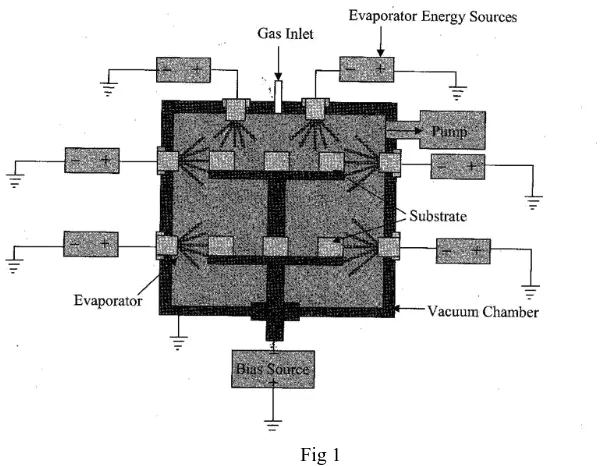
Fig 1
The coating of DLC on the engine valve system was done with the help of Oerlikon Balzers who are leading global supplier of the physical vapor deposit coating. The coating presently done on the cutting tools but on the engine components is to be tried for the first time in industry.
SAE INDIA Velammal Collegiate Club, Velammal Engineering College, Chennai, India on 20 March 2015
III. VALIDATION RESULT
The coated sample was tested for co-efficient of friction reduction and wear measurement. This is compared with the existing forged and cast part with repeating the same test procedure and plotted the graph with coefficient of friction, weight loss and frictional force. Refer the graph no. 1. The co-efficient of friction with DLC was 0.26 and wear rate was 35% which was less compared to other uncoated sample. In the forged material COF was 0.71 and cast material was 0.64 which is double the value of the DLC coated sample.
Graph no. 1
SAE INDIA Velammal Collegiate Club, Velammal Engineering College, Chennai, India on 20 March 2015 Power curve 160 140 120 P o we r, k W 100 80 60 40 20
1000 1200 1400 1600 1800 2000 2200 2400 2600
Regular Speed, rpm DLC Graph 2 Torque curve 820 720 620 Nm 520 420 To rq u e, 320 220 120 20
1000 1200 1400 1600 1800 2000 2200 2400 2600
Speed, rpm
SAE INDIA Velammal Collegiate Club, Velammal Engineering College, Chennai, India on 20 March 2015
In the power and torque curve we observe that there is slight improvement by 0.7 to 1.0 % with just coating the surface of the moving parts by DLC. This is significant which has to be tested for long run for durability test. We also observe in the below SFC curve improvement of SFC by 2.0 to 3.0 % which reduce the fuel consumption on the vehicle.
SFC curve
270
220
g
/kW.h
r.
170
SF
C, 120
70
20
1000 1200 1400 1600 1800 2000 2200 2400 2600
Speed, rpm
Regula
r DLC
Graph 4
IV. CONCLUSION
The DLC coating on the material improves the co-efficient of friction to 0.26 which is 2.5 times lesser than the original COF of the base material. This also ensures the surface finish of the material remains same as the base material. The DLC used in engine moving components reduces the frictional horse power and SFC of the engine. This will significantly improve the life of the engine and also fuel consumption reduction will attract the customers.
REFERENCES
1. John B.Heywood, “Internal Combustion Engine Fundamentals”McGraw-hill Education, 1988
2. Kolchin Demidov, “Design of automotive engines”MIR Publishers Mascow, 1984
3. Venugopal Reddy. A, “Proceedings of National Conference on Failure Analysis (NCFA2006)” Exel India Publishers
4. Yushu Wang, “Introduction to engine valvetrains” SAE International, 2007
5. Kovach.J, Tsakiris.E and Wong.L, “Engine Friction Reduction for Improved FuelEconomy” SAE Paper No. 820085, Society of Automotive