University of Windsor University of Windsor
Scholarship at UWindsor
Scholarship at UWindsor
Electronic Theses and Dissertations Theses, Dissertations, and Major Papers
2016
Optimization of a Hybrid Energy Storage System for Electric
Optimization of a Hybrid Energy Storage System for Electric
Vehicles Using Machine Learning Methods
Vehicles Using Machine Learning Methods
Eric Lesiuta
University of Windsor
Follow this and additional works at: https://scholar.uwindsor.ca/etd
Recommended Citation Recommended Citation
Lesiuta, Eric, "Optimization of a Hybrid Energy Storage System for Electric Vehicles Using Machine Learning Methods" (2016). Electronic Theses and Dissertations. 5837.
https://scholar.uwindsor.ca/etd/5837
This online database contains the full-text of PhD dissertations and Masters’ theses of University of Windsor students from 1954 forward. These documents are made available for personal study and research purposes only, in accordance with the Canadian Copyright Act and the Creative Commons license—CC BY-NC-ND (Attribution, Non-Commercial, No Derivative Works). Under this license, works must always be attributed to the copyright holder (original author), cannot be used for any commercial purposes, and may not be altered. Any other use would require the permission of the copyright holder. Students may inquire about withdrawing their dissertation and/or thesis from this database. For additional inquiries, please contact the repository administrator via email
Optimization of a Hybrid Energy Storage System for Electric Vehicles Using Machine Learning Methods
By
Eric J. Lesiuta
A Thesis
Submitted to the Faculty of Graduate Studies
through the Department of Electrical and Computer Engineering
in Partial Fulfillment of the Requirements for
the Degree of Master of Applied Science
at the University of Windsor
Windsor, Ontario, Canada
2016
Optimization of a Hybrid Energy Storage System for Electric Vehicles Using Machine Learning Methods
by
Eric J. Lesiuta
APPROVED BY:
______________________________________________
B. Minaker
Department of Mechanical, Automotive and Materials Engineering
______________________________________________
K. Tepe
Department of Electrical and Computer Engineering
______________________________________________
N. Kar, Advisor
Department of Electrical and Computer Engineering
iii
Declaration of Originality
I hereby certify that I am the sole author of this thesis and that no part of
this thesis has been published or submitted for publication.
I certify that, to the best of my knowledge, my thesis does not infringe upon
anyone’s copyright nor violate any proprietary rights and that any ideas,
techniques, quotations, or any other material from the work of other people
included in my thesis, published or otherwise, are fully acknowledged in
accordance with the standard referencing practices. Furthermore, to the
extent that I have included copyrighted material that surpasses the bounds
of fair dealing within the meaning of the Canada Copyright Act, I certify that
I have obtained a written permission from the copyright owner(s) to include
such material(s) in my thesis and have included copies of such copyright
clearances to my appendix.
I declare that this is a true copy of my thesis, including any final revisions,
as approved by my thesis committee and the Graduate Studies office, and
that this thesis has not been submitted for a higher degree to any other
iv
Abstract
In electric vehicles, batteries are unable to entirely store the large amount
of power from regenerative braking which is generated over a short time
period. Batteries also have a lower efficiency when required to supply
peaking power. Alternatively supercapacitors can handle peaking power at
the expense of lower energy storage capacities. This is why hybrid energy
storage systems using a battery and a supercapacitor are being
researched. There exist multiple configurations and control strategies for
these systems and recently some are beginning to take drive cycle data
into consideration.
The objective of this research is to design an intelligent algorithm for
controlling the balancing of energy between a supercapacitor and a battery.
By using machine learning methods, it’s able to learn from offline data
where the optimal balancing can be calculated. The algorithm can then
operate online, predicting how to balance the system which should improve
v
Dedication
To my parents, Steve and Sylvia.
vi
Acknowledgements
First I would like to thank Dr. Narayan Kar for providing me with the
resources and support conducive to an exceptional learning environment.
He permitted me the freedom to find my own path allowing me to further
develop my skills as a researcher and an Engineer. I was very fortunate to
have him as a supervisor.
I would also like to thank Dr. Bruce Minaker for providing me with the
research opportunity to study regenerative braking and his assistance. His
great personality made it a pleasure working with him.
Lastly I would like to thank all my colleagues in CHARGE Labs; they were
always willing to share their knowledge and helped make the last two years
vii
Table of Contents
Declaration of Originality ... iii
Abstract ... iv
Dedication ... v
Acknowledgements ... vi
List of Tables ... x
List of Figures ... xi
List of Abbreviations/Symbols... xv
1 Introduction ... 1
1.1 Background ... 1
1.2 Literature Review ... 2
1.3 Research Outline ... 4
1.4 Thesis Structure ... 5
2 Regenerative Braking ... 7
2.1 Introduction to Regenerative Braking ... 7
2.2 Safety Considerations of Regenerative Braking ... 8
2.3 Balancing Load between Regenerative and Traditional Brakes ... 10
3 Energy Management Systems ... 13
3.1 Introduction to Energy Management Systems ... 13
viii
3.2.1 Passive Parallel Configuration ... 14
3.2.2 Partially Decoupled Supercapacitor/Battery Configuration ... 15
3.2.3 Partially Decoupled Battery/Supercapacitor Configuration ... 16
3.2.4 Fully Decoupled Cascaded Configuration ... 17
3.2.5 Fully Decoupled Multiple Converter Configuration ... 18
4 Vehicle Dynamics and Simulation ... 20
4.1 Introduction to the Vehicle Model ... 20
4.2 External Physical Model of the Vehicle ... 21
4.3 Model of Vehicle’s Electrical Components ... 23
4.4 Complete Model Overview ... 25
5 Machine Learning ... 27
5.1 Neural Network Principles ... 27
5.2 Elements of Neural Networks ... 28
5.3 Neural Networks Applied to Energy Management Systems ... 30
5.3.1 Setting up the Network ... 30
5.3.2 Data Normalization ... 31
5.3.3 Training the Neural Network ... 35
5.3.4 Design of Algorithm ... 39
5.3.5 Comparison of Energy Management Policies ... 42
6 Results ... 46
6.1 Simulation Setup ... 46
6.2 Analysis of Drive Cycle and Power Transfers ... 47
ix
6.3.1 Offline Optimization Policy ... 55
6.3.2 Rule Based Policy ... 60
6.4 Summary ... 63
7 Conclusions and Recommendations ... 71
1.1 Thesis Summary ... 71
7.2 Recommendations and Future Work ... 72
References/Bibliography ... 74
x
List of Tables
xi
List of Figures
Figure 1.1: Flowchart of a Simple Rule Based Balancing Algorithm ... 3
Figure 3.1: Passive Parallel Hybrid Energy Storage System ... 14
Figure 3.2: Partially Decoupled Supercapacitor/Battery Configuration ... 15
Figure 3.3: Partially Decoupled Battery/Supercapacitor Configuration ... 16
Figure 3.4: Fully Decoupled Cascaded Battery/Capacitor Configuration ... 17
Figure 3.5: Fully Decoupled Cascaded Capacitor/Battery Configuration ... 17
Figure 3.6: Fully Decoupled Multiple Converter Configuration ... 19
Figure 4.1: Free Body Diagram of Vehicle ... 21
Figure 4.2: Overview of Power Transfers ... 25
Figure 5.1: A Single Node in a Neural Network ... 28
Figure 5.2: Node Connections in a Simple Neural Network ... 29
Figure 5.3: Adjusted Speed Data Sample 1 ... 32
Figure 5.4: Adjusted Speed Data Sample 2 ... 32
Figure 5.5: Power Trickle Coefficient Sample 1 ... 34
Figure 5.6: Power Trickle Coefficient Sample 2 ... 34
Figure 5.7: Neural Network Score for a Learning Rate of 0.001 ... 35
Figure 5.8: Neural Network Score for a Learning Rate of 0.005 ... 36
Figure 5.9: Histogram of Parameter Biases for Layer 0 ... 36
xii
Figure 5.11: Histogram of Parameter Biases for Layer 1 ... 37
Figure 5.12: Histogram of Parameter Weights for Layer 1 ... 38
Figure 5.13: Histogram of Gradient Weights ... 39
Figure 5.14: Flowchart of the Machine Learning Policy for a Hybrid Energy Storage System ... 41
Figure 5.15: Rule Based Policy Step 0 ... 43
Figure 5.16: Rule Based Policy Step 1 ... 43
Figure 5.17: Rule Based Policy Step n ... 43
Figure 5.18: Offline Policy Step 0 ... 44
Figure 5.19: Offline Policy Step 1 ... 44
Figure 5.20: Offline Policy Step n ... 44
Figure 5.21: Machine Learning Policy Step 0 ... 45
Figure 5.22: Machine Learning Policy Step 1 ... 45
Figure 5.23: Machine Learning Policy Step n ... 45
Figure 6.1: Speed vs Time for Trip 9 ... 47
Figure 6.2: Acceleration vs Time for Trip 9 ... 48
Figure 6.3: Power Demand vs Time for Trip 9 ... 49
Figure 6.4: Battery Energy Usage over Time ... 50
Figure 6.5: Energy Stored in the Capacitor over Time ... 50
Figure 6.6: Battery to Motor Power Transfer vs Time ... 51
Figure 6.7: Capacitor to Motor Power Transfer vs Time ... 52
Figure 6.8: Battery to Capacitor Power Transfer vs Time ... 53
xiii
Figure 6.10: Capacitor Delta Power vs Time ... 55
Figure 6.11: Offline Policy - Battery to Motor Power Transfer vs Time ... 56
Figure 6.12: Offline Policy - Capacitor to Motor Power Transfer vs Time .. 57
Figure 6.13: Offline Policy - Battery to Capacitor Power Transfer vs Time 57 Figure 6.14: Offline Policy - Total Battery Power Output vs Time ... 58
Figure 6.15: Offline Policy - Capacitor Delta Power vs Time ... 58
Figure 6.16: Battery to Capacitor Power vs Time for a Re-trained Machine Learning Policy ... 59
Figure 6.17: Rule Based Policy - Battery to Motor Power Transfer vs Time ... 60
Figure 6.18: Rule Based Policy - Capacitor to Motor Power Transfer vs Time ... 61
Figure 6.19: Rule Based Policy - Battery to Capacitor Power Transfer vs Time ... 61
Figure 6.20: Rule Based Policy - Total Battery Power Output vs Time ... 62
Figure 6.21: Rule Based Policy - Capacitor Delta Power vs Time ... 62
Figure 6.22: Trip 9 - Battery Energy Usage vs Time ... 64
Figure 6.23: Trip 10 - Battery Energy Usage vs Time ... 64
Figure 6.24: Trip 11 - Battery Energy Usage vs Time ... 65
Figure 6.25: Trip 12 - Battery Energy Usage vs Time ... 65
Figure 6.26: Trip 13 - Battery Energy Usage vs Time ... 66
Figure 6.27: Trip 14 - Battery Energy Usage vs Time ... 66
xiv
Figure 6.29: Trip 16 - Battery Energy Usage vs Time ... 67
xv
List of Abbreviations/Symbols
Label Description
𝑎 Acceleration of vehicle
𝐴𝑓 Frontal area
𝐵𝐶 Power transfer from battery to capacitor
𝐵𝑀 Power transfer from battery to motor
𝐶 Rated capacity of battery
𝑐𝑑 Coefficient of drag
𝐶𝑀 Power transfer from capacitor to motor
𝐶𝑝 Capacity at one-ampere discharge rate
𝐹𝑎𝑖𝑟 Force of air resistance
𝐹𝐵 Total braking force on vehicle
𝐹𝑏 Total desired braking force
𝐹𝑓 Front axle braking force
𝐹𝑔 Force due to gravity
𝐹𝐻𝑓 Front axle hydraulic braking force
xvi
𝐹𝑚 Braking force of the motor
𝐹𝑚 𝑚𝑎𝑥 Maximum braking force of the motor
𝐹𝑚𝑜𝑡𝑜𝑟 Force provided by motor on vehicle
𝐹𝑛𝑒𝑡 Net force on vehicle
𝐹𝑟𝑟 Force of rolling resistance
𝑔 Acceleration due to gravity
𝐻 Rated discharge time
𝐼 Actual discharge rate of battery
𝑘 Peukert constant
𝑘𝑏 Braking force coefficient
𝐾𝑐 An arbitrary constant
𝑘𝑧 Braking strength coefficient
𝑚 Vehicle mass
𝑃 Power
𝑃𝑖 Point object
𝑆 Brake pedal travel
𝑇𝑖 Power transfer object
𝑣 Vehicle velocity
𝑉𝑏𝑎𝑡𝑡 Voltage across the battery
𝑉𝑐𝑎𝑝 Voltage across the supercapacitor
𝑉𝐷𝐶 Voltage across the DC bus
xvii
𝛽 Original braking distribution coefficient
𝜂 Efficiency
𝜃 Angle above the horizontal
𝜇𝑟 Coefficient of rolling resistance
1
Chapter 1
1 Introduction
1.1 Background
In order for electric vehicles to be as efficient as possible, they need to take full
advantage of all the energy that is available to them. Regenerative braking is an
excellent piece of technology that assists with this by capturing otherwise wasted
energy and storing it in the battery. However, there is still more potential to
improve this system since batteries are unable to store all the regenerative power
in such a short amount of time. In addition, batteries have a lower efficiency
when required to handle peaking power demands, and therefore waste energy.
Supercapacitors have the opposite characteristics of batteries, in that they can
handle peaking power demands and store large amounts of power over a short
time at the expense of a smaller capacity [1]. This makes them an ideal
candidate to combine with batteries in a hybrid energy storage system. Hybrid
energy storage systems are actively being researched due to their potential for
reducing power loss compared to systems that use only a battery [2]–[6].
In order for a hybrid energy storage system to realize its full potential, it requires
an effective control scheme for balancing energy between both energy sources.
2
increasing computational power onboard vehicles and the huge advancements
with machine learning, there is great potential for improving the control schemes
even further.
1.2 Literature Review
Since electric vehicle require a high storage capacity such as that of a battery,
and the ability to efficiently handle peaking power such as that of a capacitor,
hybrid energy storage systems are being researched to meet both
requirements[6], [7]. These systems offer a lot of freedom in how they are
controlled, which can significantly affect their efficiency. Rule based control
methods are based on human knowledge of the system to create a set of rules
that dictate exactly what will happen under different conditions. This approach is
limited in the fact that every possibility has to be thought of ahead of time along
with how the system should behave should something unexpected happen. An
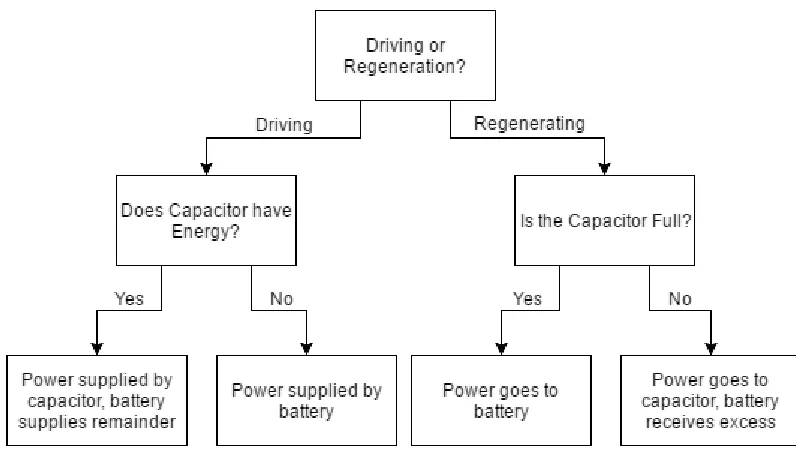
example of a very simple rule based is shown below in Fig. 1.1. This flowchart
presents the decisions a simple rule based algorithm would take in balancing
3
Figure 1.1: Flowchart of a Simple Rule Based Balancing Algorithm
Although the above figure may work, it is very general and the results are not
optimal. This is what is classified as a thermostat type of rule based strategy.
This is because all the decisions are either yes or no, thus turning the options on
or off. An alternative to this is the fuzzy rule based method where parameters can
take on a range of values, which is better suited for real time data [6], [10], [11].
Rule based control strategies can be improved significantly by adding many
different cases [12]. The cases can have varying degrees of specificity, where
one can have a large number of different cases to find optimal outputs for each
one. However this can be a daunting task and produce a codebase that is difficult
to maintain. These cases could include any type of driving or sensor data,
4
The approach to optimizing hybrid energy storage systems can either be
analytical or numerical, where the goal is to minimize a cost function. The cost
function could be something along the lines of how much power was used over
the duration of the trip, and could include other factors such as wear and tear on
certain components, such as the brakes or battery cells [15]. There are two main
categories of optimization methods. The first is offline optimization, which has full
knowledge (past, present and future) of all power demands through the entire
drive cycle at every point in the simulation. The other category is online
optimization, which is given the data in a piecewise fashion so it only has
knowledge of past and present power demands [16]–[18].
In the following chapters of this thesis an online control strategy utilizing neural
networks to learn from a given optimal offline control algorithm will be discussed.
Both strategies will then be tested and compared against a new set of data to
determine how competitive the online algorithm is.
1.3 Research Outline
The goal of this research is to develop and test an intelligent balancing algorithm
for a hybrid energy storage system that can be used to run in real time. The first
step is to examine how these systems currently work and where they have the
5
deciding on which technique would be best suited for the task. In the case of
using machine learning techniques, not only are there many methods to choose
from, there is nearly an infinite number of ways they could be trained. How a
machine learning algorithm learns has an immense impact on its results. Once a
suitable method is chosen, it must be properly implemented and trained to
become useful for improving the balancing of a hybrid energy storage system
such that it saves power.
In order to validate the algorithm, a detailed simulation is required. The simulator
would need to be able to work with real world Global Positioning System (GPS)
data and accurately model the power requirements of the vehicle at each given
point in the GPS trip data. It would then need to be capable of running an
arbitrary balancing algorithm for a hybrid energy storage system and testing it
against a model of a supercapacitor and a battery to determine the energy
losses. Running multiple different types of balancing algorithms will allow for a
comparison between their performance and for drawing a conclusion of the
results.
1.4 Thesis Structure
This thesis consists of seven chapters. In Chapter 1, the research topic and
motivation, along with an outline are introduced. Chapter 2 provides a literature
6
hybrid energy storage systems is provided. Different hybrid energy storage
system configurations are discussed along with their various benefits and
shortcomings. In Chapter 4, the vehicle model used to simulate different hybrid
energy storage systems and validate this research is discussed. Model equations
and a step-by-step description of how the simulation works are given. Chapter 5
provides an in depth look at neural networks and how they are used to design an
intelligent control scheme for a hybrid energy storage system. A flow chart of the
balancing algorithm is given. In Chapter 6 the results of the simulation are
provided and discussed. Finally Chapter 7 discusses the implications of this
7
Chapter 2
2 Regenerative Braking
2.1 Introduction to Regenerative Braking
Regenerative braking is a method of braking where the vehicle’s kinetic energy is
converted back into a form where it can be stored and used again. This is
contrary to traditional braking which relies on using friction to slow the vehicle
and the energy is wasted by being dispelled as heat [19]. These systems
increase the complexity of already existing braking system designs and their
implementation must not interfere with the vehicle’s ability to stop quickly and
reliably [20].
Regenerative braking is unable to capture all the vehicle’s energy and slow the
vehicle at the same rate as traditional brakes, so they are typically used side by
side, with a fraction of the force going to each [1], [21]. Since some of the braking
torque is now provided by the motor, this also increases the lifespan of the
traditional brakes, allowing them to last about twice as long by reducing the wear
on the brake pads [22]. One of the limiting factors in regenerative braking’s ability
to capture energy is the rate at which it can be stored in a battery. This is why
some systems have been proposed with dual energy sources. Typically in these
8
a battery has a high energy density, allowing it to store larger amounts of energy,
the rate at which it can receive the energy, or power, is lower than the rate
regenerative braking can generate it. A supercapacitor on the other hand can
receive and transmit power at much high rates, so it can be used as a sort of
buffer to take in the excess power generated by the regenerative braking above
which the battery can handle [23]. It can then be used to assist in powering the
motor. Using a supercapacitor in conjunction with a battery provides other
benefits as well such as prolonging the life of the battery since the capacitor can
now be trickle charged by the battery to help handle peaks in acceleration [3], [6].
2.2 Safety Considerations of Regenerative Braking
Since the braking performance is a crucial factor to the overall safety of the
vehicle, the system must be capable of sufficiently reducing the vehicle’s speed
while maintaining directional control via the steering wheel [24]. To meet this
requirement, the braking torque applied must both be great enough and be
distributed properly amongst the wheels. Usually the required braking torque is
greater than the torque an electric motor can produce on its own so another
method of mechanical braking must be included along with regenerative so as to
9
One method of including traditional braking with regenerative braking is a parallel
hybrid braking system. This is where all the conventional mechanical
components are included, so the system will still contain brake calipers and discs
along with ABS. Only the regenerative braking force is electronically controlled,
however the mechanical braking force is still controlled by the driver through the
brake pedal or ABS when the wheels are about to lock if it’s included. The largest
challenge of this design is being able to recover as much energy as possible [1].
In addition to traditional brakes where there is a mechanical link between the
brake actuators and the pedal, different methods of electronic braking systems
are being researched. In these systems there are multiple methods of applying a
mechanical braking torque to the wheel to dissipate the energy as heat, but the
braking actuator is electrically linked to the pedal and controlled by software
instead of a mechanical link. This is done with the aim to improve regenerative
braking by improving the braking control over individual wheels. These systems
are still in the early stages of development [24]–[26]. In these systems, it is
possible to control the braking force through each wheel individually. This is
10
2.3 Balancing Load between Regenerative and
Traditional Brakes
The electric motor needs to be controlled in order to provide the desired amount
of braking force requested by the driver while maximising regeneration.
Regenerative braking is typically only effective when used on the driven axle
which for the majority vehicles is the front axle [1]. There exist many control
schemes for balancing the braking force between regeneration and traditional
brakes [27], [28].
A typical weighting algorithm for regenerative braking would use only traditional
brakes at low speeds below a certain threshold such as 15 km/hr or when ABS is
engaged. The reason for this is at low speeds or when the wheels are close to
locking, it is difficult to produce torque from the electric motor due to the low
electromotive force being generated. At speeds above the given threshold and
when the braking force requested is low, all the braking force can be provided by
the regenerative brakes [1].
An example of a simple weighting algorithm is described by the following
equations given by [27]. Where 𝐹𝐵 and 𝐹𝑏 are the total braking force on the
vehicle and the desired braking force respectively. 𝐹𝐻𝑓 and𝐹𝐻𝑟 are the front and
rear axle hydraulic braking forces. 𝐹𝑚and 𝐹𝑚 𝑚𝑎𝑥 are the actual and maximum
braking force of the motor. 𝐹𝑓 is the total front axle braking force. 𝛽 is the original
11
and 𝑘𝑏 are the braking strength, braking strength coefficient, and braking force
coefficients respectively. Finally, S is the brake pedal travel.
𝐹𝐵 = 𝑚𝑧𝑔 (2.1)
𝑧 = 𝑘𝑧𝑆 (2.2)
𝐹𝐵 = 𝑘𝑏𝑆 (2.3)
𝑘𝑏 = 𝑚𝑔𝑘𝑧 (2.4)
Equations 2.5-2.7 are for 𝑧 ≤ 0.15.
𝐹𝑚 = { 𝐹𝑏 (𝐹𝑏 ≤ 𝐹𝑀 𝑀𝑎𝑥) 𝐹𝑀 𝑀𝑎𝑥 (𝐹𝑏 > 𝐹𝑀 𝑀𝑎𝑥)
(2.5)
𝐹𝐻𝑓 = { 0 (𝐹𝑏≤ 𝐹𝑀 𝑀𝑎𝑥) (𝐹𝑏− 𝐹𝑀 𝑀𝑎𝑥)β (𝐹𝑏> 𝐹𝑀 𝑀𝑎𝑥)
(2.6)
𝐹𝐻𝑟 = {
0 (𝐹𝑏 ≤ 𝐹𝑀 𝑀𝑎𝑥)
(𝐹𝑏− 𝐹𝑀 𝑀𝑎𝑥)(1 − β) (𝐹𝑏 > 𝐹𝑀 𝑀𝑎𝑥)
(2.7)
Equations 2.8-2.11 are for 0.15 < 𝑧 ≤ 0.3.
𝐹𝑓 = 0.8 𝐹𝑏 (2.8)
𝐹𝑚 = { 𝐹𝑓 (𝐹𝑓 ≤ 𝐹𝑀 𝑀𝑎𝑥) 𝐹𝑀 𝑀𝑎𝑥 (𝐹𝑓 > 𝐹𝑀 𝑀𝑎𝑥)
(2.9)
𝐹𝐻𝑓 = { 0 (𝐹𝑓 ≤ 𝐹𝑀 𝑀𝑎𝑥) (𝐹𝑓− 𝐹𝑀 𝑀𝑎𝑥)β (𝐹𝑓> 𝐹𝑀 𝑀𝑎𝑥)
(2.10)
𝐹𝐻𝑟 = {
0.2𝐹𝑏 (𝐹𝑓 ≤ 𝐹𝑀 𝑀𝑎𝑥)
(𝐹𝑓− 𝐹𝑀 𝑀𝑎𝑥)(1 − β) + 0.2Fb (𝐹𝑓 > 𝐹𝑀 𝑀𝑎𝑥)
(2.11)
Equations 2.12-2.15 are for 0.3 < 𝑧 ≤ 0.6.
𝐹𝑓 = 𝐹𝑏𝛽 (2.12)
𝐹𝑚 = { 𝐹𝑓 (𝐹𝑓 ≤ 𝐹𝑀 𝑀𝑎𝑥) 𝐹𝑀 𝑀𝑎𝑥 (𝐹𝑓 > 𝐹𝑀 𝑀𝑎𝑥)
12
𝐹𝐻𝑓 = {
0 (𝐹𝑓≤ 𝐹𝑀 𝑀𝑎𝑥)
𝐹𝑓− 𝐹𝑀 𝑀𝑎𝑥 (𝐹𝑓 > 𝐹𝑀 𝑀𝑎𝑥)
(2.14)
𝐹𝐻𝑟 = (1 − 𝛽)𝐹𝑏 (2.15)
Equations 2.16-2.18 are for 𝑧 > 0.6.
𝐹𝑚 = 0 (2.16)
𝐹𝐻𝑓 = 𝐹𝑏𝛽 (2.17)
𝐹𝐻𝑟 = (1 − 𝛽)𝐹𝑏 (2.18)
This is a relatively simple weighting algorithm which incorporates regenerative
braking with traditional braking on both the front and rear axles. In these
balancing equations, there does not appear to be a smooth transition between
regenerative braking and mechanical braking when the driver requests different
braking strengths (𝑧) across the four different ranges. There are many other
weighting algorithms; all of which seek to maximise energy regeneration without
sacrificing the safety and control of the vehicle’s braking performance [1], [27],
13
Chapter 3
3 Energy Management Systems
3.1 Introduction to Energy Management Systems
Energy management systems in electric vehicles are responsible for controlling
the flow of power between the vehicle’s energy storage, motor, and various
electronics. They do so through the use of power electronics such as DC-DC
converters and inverters. As power electronics improve, adding additional
components to electrical vehicles, such as those required for a hybrid energy
storage system, becomes more practical. Currently the battery is one of the most
expensive components of an electric vehicle, so it is imperative to have an
effective energy management system that allows it to be used as efficiently as
possible [6], [7], [30], [31].
This chapter will begin with a review of some of the different topographies for
hybrid energy storage systems. The next part of this chapter will introduce
14
3.2 Basic Topographies
3.2.1 Passive Parallel Configuration
Figure 3.1: Passive Parallel Hybrid Energy Storage System
The basic passive parallel topography shown in Fig. 3.1 is the simplest
configuration [4] . The supercapacitor is essentially just a low pass filter for the
battery. In this configuration the voltage of each component is simply represented
by Equation 3.1.
𝑉𝐵𝑎𝑡𝑡 = 𝑉𝐶𝑎𝑝 = 𝑉𝐷𝐶 (3.1)
The voltage changes experienced by the DC bus are very slow and miniscule as
the bus is directly clamped to the terminals of the battery unit. This is desirable
for the input voltage of the DC-AC converter. Since there are no active
components between the battery and the supercapacitor, not much can be done
15
3.2.2 Partially Decoupled Supercapacitor/Battery Configuration
Figure 3.2: Partially Decoupled Supercapacitor/Battery Configuration
The supercapacitor/battery configuration shown in Fig. 3.2 uses a bidirectional
DC-DC converter to interface to the supercapacitor. This allows the voltage of
supercapacitor to be used over a wide range, which is beneficial, while the
battery voltage has to remain constant [3], [6]. However, since the bidirectional
DC-DC converter has to be rated in accordance with the supercapacitor’s power
rating, it has to be rated higher since the supercapacitor takes on quick and large
power demand variations. This leads to a larger size and cost of the DC-DC
converter compared to the next configuration [4]. Also, since the battery unit is
connected directly to the DC bus, it is not protected from high current
16
3.2.3 Partially Decoupled Battery/Supercapacitor Configuration
Figure 3.3: Partially Decoupled Battery/Supercapacitor Configuration
Decoupling the battery from the DC bus (DC Link) shown in Fig. 3.3 protects it
from the highly fluctuating currents and allows control of the power transfer to
and from the battery [5]. The supercapacitor handles these highly fluctuating
currents which increases the efficiency of the system. The drawback however is
the DC bus may now be exposed to large voltage fluctuations instead which
would considerably decrease the efficiency of converter. This can be mitigated
effectively with a proper control strategy for the DC-DC converter, which allows
17
3.2.4 Fully Decoupled Cascaded Configuration
Figure 3.4: Fully Decoupled Cascaded Battery/Capacitor Configuration
Figure 3.5: Fully Decoupled Cascaded Capacitor/Battery Configuration
Fully decoupled configurations use two converters to decouple the battery
and the supercapacitor from the DC bus. Two different combinations of the
cascaded configuration are shown in Fig. 3.4 and Fig. 3.5.
In the configuration on the top (Fig. 3.4), the battery unit is connected behind
the supercapacitor at lower voltage terminals and the supercapacitor is
connected to DC-DC converter behind the inverter and is at an intermediate
voltage level. The benefits to this topology include it being easier to balance
battery cells at lower voltages than that at higher voltages [3]. Another benefit
18
be rated at approximately the same power rating as the battery unit, reducing
the cost. A drawback to this configuration is there are more losses at the
DC-DC converter connecting the supercapacitor to the DC-DC bus (DC-DC link) since the
voltage of the supercapacitor will fluctuate [3], [32].
Another option is to swap the positions of the battery unit and supercapacitor
as shown in Fig. 3.5. Some of the trade-offs include attaining a more stable
voltage at the higher rated DC-DC converter connected to the DC bus at the
cost of increasing the difficulty of balancing the battery unit. This is because
this DC-DC converter is connected at the intermediate voltage level therefore
the battery must also be kept at a higher voltage [6].
3.2.5 Fully Decoupled Multiple Converter Configuration
Another fully decoupled topography that provides an alternative to the cascaded
connection is the multiple converter configuration shown in Fig. 3.6. This
configuration places the supercapacitor and battery units with their own DC-DC
converters in parallel [3], [6]. Both DC-DC converters will be connected at the
same voltage level but the voltages of both the supercapacitor and battery can
be maintained independently. This increases stability of the system and allows
19
20
Chapter 4
4 Vehicle Dynamics and Simulation
4.1 Introduction to the Vehicle Model
The vehicle model provides a means for calculating the power requirements of
the energy storage system at each time step. Since the input is given as a list of
GPS coordinates (longitude, latitude, and elevation) with respect to time, the
vehicle's speed and acceleration can be calculated at each point. From there,
approximate forces on the vehicle can be used to calculate the torque
requirement from the motor giving an estimate of the power demand [1], [33].
Once the power demand is calculated at every point, the vehicle model can
simulate different energy management system policies, calculating the power
transfers between each component and how they should be balanced. This is
then simulated with the battery model to predict efficiency losses. The end result
is a calculation of the total energy required for each trip, and a comparison of
each hybrid energy storage system management policy against the baseline,
which does not use a capacitor. Although it is calculating an overall energy
savings, this number is more useful in comparing different energy management
strategies and how much better they are than others in relative terms rather than
21
4.2 External Physical Model of the Vehicle
The vehicle model is used to calculate approximately how much force the motor
is required to provide, and using a simple efficiency map, the amount of power
required as well. This allows for calculation of the approximate power
requirements at each time step in the GPS data.
Figure 4.1: Free Body Diagram of Vehicle
In Fig. 4.1 above, a free body diagram of the vehicle is shown [1], [22], [33]–[35].
The forces to the left are acting against the vehicle, with the exception of gravity
which can be for (negative) or against (positive). The force of air resistance is
shown in Equation 4.1.
𝐹𝑎𝑖𝑟 = 1
2𝜌𝐴𝑓𝑐𝑑𝑣|𝑣|
(4.1)
where 𝜌 is air density. The density is dependent on elevation and changes during
the trip. Area is the frontal area of the vehicle. The coefficient of drag for the
vehicle is given by 𝑐𝑑 and finally 𝑣 is velocity [1], [34].
22
𝐹𝑟𝑟= 𝜇𝑟𝑚𝑔 (4.2)
where 𝜇𝑟 is the coefficient of rolling resistance, 𝑚 is the total mass of vehicle and
occupants, and 𝑔 is the acceleration due to gravity. The final equation on the left
is for weight where
𝐹𝑔 = 𝑚𝑔𝑠𝑖𝑛(𝜃) (4.3)
where a positive 𝜃 indicates an angle above the horizontal and therefore a
positive force acting against the vehicle when going uphill.
On the right of Fig 4.1, there is the force of the motor driving the vehicle forward
which can be expressed by Equation 4.4.
𝐹𝑚𝑜𝑡𝑜𝑟 =𝑃𝜂 𝑣
(4.4)
where power is the amount required by the motor in watts. Efficiency is that of
the motor and assumed to be constant. When the power is negative it is
assumed to be regenerative. The magnitude of the efficiency constant used in
Equation 4.4 is decreased if the power is regenerative. This is to take into
account greater motor losses and traditional brakes applying a portion of the
braking torque. In the equation, speed is that of the vehicle. In order to solve for
power, the force required by the motor must first be calculated by finding the net
force on the vehicle [33].
23
𝐹𝑛𝑒𝑡 = 𝑚𝑎 = 𝐹𝑚𝑜𝑡𝑜𝑟 − 𝐹𝑎𝑖𝑟− 𝐹𝑟𝑟− 𝐹𝑔 (4.5)
where 𝑎 is the acceleration of the vehicle. Since speed, acceleration and air
density can all be calculated from the longitude, latitude, elevation and time
stamp provided by each data point in the GPS data, and all other variables are
given as constants, an estimation of the power required at each point can be
calculated [33], [36]. Although the model is relatively simple, it provides a good
enough simulation to test different energy management strategies and draw
comparisons between them.
4.3 Model of Vehicle’s Electrical Components
The model assumes a constant discharge for all the vehicle’s electronics except
for the motor power, which is calculated using model just discussed. The
supercapacitor is assumed to have a constant efficiency over its limited capacity.
The model of the battery utilizes Peukert's law [22], [33], [37]. This is given by
Equation 4.6.
𝐶𝑝 = 𝐼𝑘𝑡 (4.6)
where 𝐶𝑝 is the capacity at a one-ampere discharge rate in amp-hours, 𝐼 is the
actual discharge rate in amps, and 𝑘 is the Peukert constant which is
dimensionless and depends on the battery. The 𝑡 is the actual time to discharge
24
𝑡 = 𝐻 (𝐶 𝐼𝐻)
𝑘 (4.7)
where 𝐶 is the rated capacity and 𝐻 is the rated discharge time in hours.
Rearranging this equation can give you Equation 4.8.
𝐼𝑡 = 𝐶 (𝐶 𝐼𝐻)
𝑘−1 (4.8)
The effective capacity at a discharge rate of 𝐼 is given by 𝐼𝑡. From here the
efficiency can be calculated by taking the effective capacity and dividing by the
rated capacity resulting in Equation 4.9.
𝜂 = (𝐶 𝐼𝐻) 𝑘−1 (4.9) (𝐶 𝐻) 𝑘−1
= 𝐾𝑐 (4.10)
𝜂 = 𝐾𝑐 × 1 𝐼𝑘−1
(4.11)
Equation 4.9 can be further simplified by separating the constant 𝐾𝑐 as shown in
25
4.4 Complete Model Overview
The purpose of the described model is to allow simulation of different transfer
schemes between the components shown in Fig. 4.2.
Figure 4.2: Overview of Power Transfers
Power is able to transfer in either direction between these three components; the
direction of the arrow indicates a positive power flow.
Now that all the components of the model have been discussed, the simulation is
executed as following [33], [38]–[40]:
1. Begin Simulation.
2. Load GPS data from directory and parse files.
3. For each point of GPS data, calculate speed, acceleration and run through
the vehicle model calculations for power demand, saving all this data as
an array of point objects.
4. Create a battery and capacitor object with the initial conditions to keep
26
5. Instantiate the class for the energy management policy to be tested.
6. Call the energy management policy to calculate the power flows. The input
is the next point object in the array and the current state of the battery and
capacitor. The output is the power flows BC, BM, and CM shown in Fig.
4.2.
7. Test to make sure neither the capacitor or battery is overdrawn, and that
power supplied is equal to power demand; any issue will return an error.
8. Using the power flows given from the policy, and the model of the battery
and supercapacitor, update their current state.
9. If there are still more points in the array of point objects, go back to step 6.
10. Save results and end program.
There is also an alternative method of running the simulation for calculating
optimal values using an offline optimization algorithm (one that cannot run in real
time) [41]. In this version all points in the array of point objects will be available to
27
Chapter 5
5 Machine Learning
5.1 Neural Network Principles
Neural networks are a type of machine learning algorithm modeled after neurons
in the human brain. Like a real neuron, which has multiple connections
(synapses), nodes are objects in a neural network that have multiple inputs and
outputs. By connecting many of these neurons into layers forming a network,
many different types of behaviour can be modeled. The inputs and outputs can
either be a series of binary values, useful for classification or continuous
numbers when using regression.
Also like a human brain, these algorithms need to learn from training, which can
either be supervised or unsupervised. Supervised learning is when the training
data requires associated labels, typical of a classification problem such as facial
recognition. Unsupervised learning is when the input data can come with an
associated cost function to minimize. Once trained, a neural network is great at
recognizing patterns in real world data whether it is in the form of images, video,
sound, text or time series data. As long as the inputs have some correlation with
the output, they can be trained to predict or model the behaviour, and continue to
28
5.2 Elements of Neural Networks
As stated, a neural network is composed of nodes, where each individual node
behaves almost like a neuron in the brain. The nodes are organized into layers.
Every node in the first layer receives every input, with each input multiplied by its
own weight unique to that node. The sum is then taken of all the inputs multiplied
by their weights in each node and passed through an activation function that
determines whether this neuron should “fire” and what its output is [44]. A
diagram of a single node with four inputs is given in Fig. 5.1 below.
Figure 5.1: A Single Node in a Neural Network
In each of the following layers, this process is repeated, where every node
receives every input from the previous layer, multiplied by a weight, summed
together and passed through an activation function. Each layer’s output becomes
the input for the next layer [42], [45]. Fig. 5.2 shows what a three layer neural
29
hidden layer, and 2 nodes in the output layer. In a neural network it is possible to
have any number of nodes in any number of layers.
Figure 5.2: Node Connections in a Simple Neural Network
One of the common activation functions used in neural networks is the hyperbolic
tan function. This is because hyperbolic tan was found to work very well with real
world data in many cases. There are also many other functions to choose from,
for this purpose hyperbolic tan was chosen for the input layer and hidden layer;
however the output layer uses the identity function which is simply f(x) = x. This is
because the output needs to be a continuous value, not a high or low which is
better suited for classification of data where the output is binary. Only one layer
of a neural network can use the identity function otherwise the network can be
simplified into one layer meaning it no longer provides the same level of
30
can be classified as a deep learning network; however, there is no universally
agreed upon threshold for this definition.
In order for the neural network to learn, it needs a method of calculating the error
and back propagating the results to adjust all the weights at every node. One
such method is the gradient descent. This method looks at the relationship of
error and weight by calculating how a slight change in weight creates a change in
error using the chain rule of calculus to go back through the networks layers. The
process of slightly adjusting a model’s weights in response to the error is simply
repeated until the error can no longer be reduced.
5.3 Neural Networks Applied to Energy Management
Systems
5.3.1 Setting up the Network
Although neural networks have a wide array of applications, they can’t simply be
plugged into any system as a black box and expected to work. Knowledge of the
system is required in order to properly set up the network and present it with data
in a way that is useful. In this algorithm, the neural network uses the driver’s
speed history as the input. It takes an array of the speeds at the current and
31
hidden layers of 50 nodes each, followed by a single output node. The hidden
layers utilize hyperbolic tan as their activation function and the output node uses
the identity function. The output of the neural network indicates how much power
should trickle from the battery to the supercapacitor. The optimization method for
the neural network’s training is the gradient descent.
5.3.2 Data Normalization
To normalize speed data such that it works well with the neural network, the
speed in metres/second was reduced by 10, and then the result was divided by
20. This produced a distribution where most of the data falls between -1 and 1,
with the centre around 0. A normal distribution is ideal, but extremely difficult to
produce consistently with this type of real world data. Fig. 5.3 and Fig 5.4 show
examples of this distribution from two different drive cycles. Even though they are
far from normal, both distributions were still able to produce good results with the
32
Figure 5.3: Adjusted Speed Data Sample 1
33
Since a neural network performs better when the output is either in binary for
classification problems, or a range from 0-1 for regression, the neural network did
not perform well when trying to predict the transfer power from the battery to the
supercapacitor directly. To work around this, a simple rule based algorithm was
first used to calculate the base values. The neural network would then predict the
coefficient to multiply with the base value. A histogram of the predicted
coefficients from two different drive cycles is shown in Figs. 5.5 and 5.6. Fig. 5.5
corresponds to the same drive cycle shown in Fig. 5.3, and Fig. 5.6 with Fig. 5.4.
Since the power supplied by the energy storage system has to equal the power
demanded, there is not much room for improvement here. The only power
transfer that is predicted by the neural network is the trickle from the battery to
the supercapacitor. This allows the supercapacitor to help handle peaks in power
demand. The reason why power does not trickle from the supercapacitor to the
battery is because this is equivalent to the supercapacitor simply providing power
34
Figure 5.5: Power Trickle Coefficient Sample 1
35
5.3.3 Training the Neural Network
After the neural network is configured, there are still some parameters that
require tuning, and it is important to verify that the network is learning correctly.
Fig. 5.7 shows the score vs iteration of the neural network as it is learning. The
score is the error in prediction and should decrease over time if everything is
configured correctly, as it is in this case. If the score is increasing that means the
learning rate is likely set too high and is unstable. If the score is flat or decreases
too slowly, the learning rate is too low. This could also indicate problems with the
optimization algorithm chosen.
Figure 5.7: Neural Network Score for a Learning Rate of 0.001
Fig 5.8 shows what a learning rate of 0.005 looks like for this algorithm, it’s not as
36
Figure 5.8: Neural Network Score for a Learning Rate of 0.005
The other parameters to check are the biases and weights of all the nodes. Over
time they should approximate a Gaussian distribution. Fig. 5.9 and Fig. 5.10
show the biases and weights for the first layer respectively. Fig. 5.11 and Fig.
5.12 show the biases and weights for the second layer respectively. Again values
that are diverging or very large indicate that the learning rate is set too high, or if
the distribution of data being classified is very imbalanced.
37
Figure 5.10: Histogram of Parameter Weights for Layer 0
38
Figure 5.12: Histogram of Parameter Weights for Layer 1
The last thing to check is the gradients of the nodes. Again these should form a
Gaussian distribution over time. Exploding gradients are problematic for the
parameters of the neural network. This would be an indicator of an error with
weight initialization, learning rate, or an issue with the normalization of the input
39
Figure 5.13: Histogram of Gradient Weights
5.3.4 Design of Algorithm
The flowchart in Fig. 5.14 shows how the algorithm operates under the
simulation. The only difference between this and a real implementation is that the
data points would be received from the vehicle instead of the model and the
output would be fed back to the vehicle. When the algorithm is in training mode, it
also receives the power transfers calculated from the offline policy along with the
point data from the simulation. It will still produce its prediction of the best power
transfer coefficient, but now this will also be compared to the one calculated from
using the offline policy and the error can be back propagated through the
40
The type of network used is a feed forward network and utilizes deep learning
(multiple non-linear layers). Feed forward neural networks themselves have no
memory, in contrast to other types of neural networks that also use previous
outputs as part of the next input. However, the algorithm in this case does have
memory and remembers the previous driving speeds, using the previous 100 as
an input the neural network. The number of previous speeds to remember was
chosen simply because a number around 100 produced the best results and
41
42
5.3.5 Comparison of Energy Management Policies
The purpose of using the neural network is to predict the results of an optimal
offline policy such that it can be used online in a real system.
The following 9 figures depict how 3 different energy management policies go
about calculating the power transfer between components in the hybrid energy
storage system. Each input Pi is a single point, containing the longitude, latitude,
elevation, timestamp and all the variables can be calculated from them using the
model, including speed, acceleration and power demand. Each output Ti is the
power transfer between the battery and capacitor, battery and motor, and
43
The first 3 (Fig. 5.15 - 5.17) of the next 9 figures (Fig. 5.15 - Fig. 5.23) depict how
a simple rule based policy is run by the simulation at points i = 0, 1, and n.
Figure 5.15: Rule Based Policy Step 0
Figure 5.16: Rule Based Policy Step 1
44
The following 3 figures (Fig. 5.18 - Fig. 5.20) depict an offline optimization policy.
Figure 5.18: Offline Policy Step 0
Figure 5.19: Offline Policy Step 1
45
The final 3 figures (Fig. 5.21 - Fig. 5.23) depict the machine learning policy using
neural networks. It works by using only the past and present values and so can
be run online.
Figure 5.21: Machine Learning Policy Step 0
Figure 5.22: Machine Learning Policy Step 1
46
Chapter 6
6 Results
This chapter will provide an in depth look and analysis of the results generated
from the simulation of the neural network energy balancing strategy.
6.1 Simulation Setup
In order to obtain these results, the neural network needs to be trained. The GPS
data was acquired from a free public source online. Sixteen trips from a single
driver were used totalling around 400 km. The sixteen trips were randomly split
into two sets of 8 trips, each set approximately 200 km. Trips 1 through 8 were
used for the training data; 9 through 16 were used for testing. To test both the
progress training makes and the overall results, the algorithm was trained by the
trips one at a time, while retaining all previous learning. After each step in
training, the simulation was run against the entire testing set. The execution time
of the machine learning policy is fairly quick, where learning from each trip
happens in a matter of minutes and testing in a matter of seconds. It is expected
that the machine learning algorithm will learn to predict how to operate from the
offline policy and after each successive training session, approach the
47
6.2 Analysis of Drive Cycle and Power Transfers
The first trip of the testing data (trip 9) consisted of 3566 data points over a
distance of approximately 36.2km for approximately 60 minutes. This trip will be
analyzed in the most detail since it provides a good sample of city driving with
traffic and a short section along the highway. The analysis will consist of the
results from the machine learning policy after it has been trained on all 8 training
trips.
Figure 6.1: Speed vs Time for Trip 9
Fig. 6.1 shows a plot of the vehicle speed vs time over the drive cycle. Unless
otherwise indicated, in all the following plots of this chapter, the raw data is
48
thicker, solid red line. A Savitzky-Golay filter was used to smooth the data.
Although the raw data contains lots of noise, due to it being recorded with a
regular consumer device, the data is still useful for relative comparisons between
the energy management policies. The raw GPS data was also plotted and
compared with alternative programs to analyze and check for any irregularities or
errors in basic calculations such as speed.
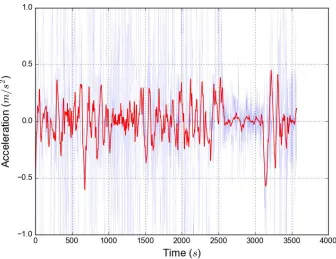
Figure 6.2: Acceleration vs Time for Trip 9
Fig. 6.2 shows an acceleration vs time plot, there is much less acceleration from
about 2500 to 3000 seconds which would be the period spent going 100 km/hr
49
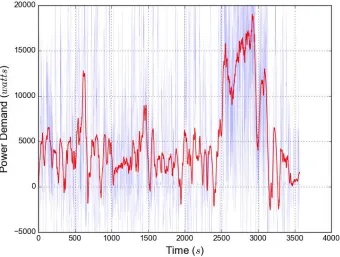
Figure 6.3: Power Demand vs Time for Trip 9
The power demanded shown in Fig. 6.3 roughly corresponds to the speed plot in
Fig. 6.1. The power demand peaks while driving on the highway at a fairly
constant speed of 100km/hr. To meet these power demands, power can come
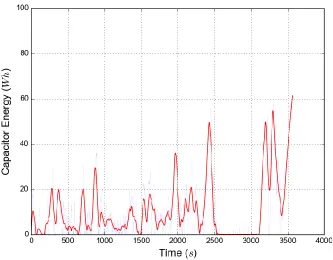
directly from either the battery, capacitor, or both. Fig. 6.4 shows a plot of the
energy stored in the battery over time as it is depleted, and Fig. 6.5 shows the
50
Figure 6.4: Battery Energy Usage over Time
51
As can be seen in Fig. 6.5, the capacitor is quite active during the stop and go
portion of the drive cycle; however, once the energy has been drained during
highway driving it no longer receives any charge until the vehicle has slowed
down. The lack of energy stored in the capacitor over this time period aligns with
the greatest power demand shown Fig. 6.3.
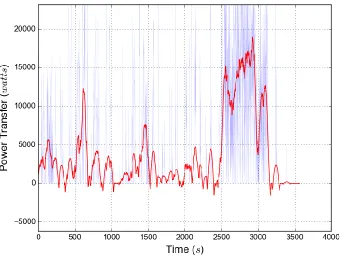
Figure 6.6: Battery to Motor Power Transfer vs Time
As shown in Fig. 6.6, the power supplied comes mainly from the battery so it
matches pretty closely with the power demand in Fig. 6.3. The smoothed data
may appear to dip below 0 at some points but that is just an artifact of smoothing
it since the raw data is completely above 0. This would indicate that the majority
of regenerative power is going to the capacitor when using the machine learning
52
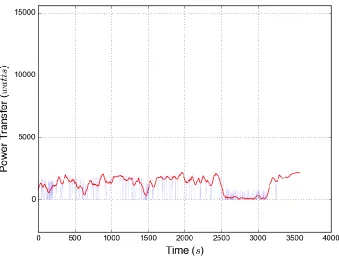
Figure 6.7: Capacitor to Motor Power Transfer vs Time
Next is the power transfer from the battery to the capacitor as can be seen in Fig.
6.8. This plays an important role in minimizing power losses and is one of the
primary differentiators between other policies. This is because it would typically
be expected that the capacitor is first in line to receive power when regenerating.
However, when the capacitor should feed the power back to the motor or receive
trickle charging from the battery is a more challenging problem. The capacitor
would not trickle charge the battery since it is more efficient to simply have the
capacitor power the vehicle and give the battery a reduced load. Ideally the
battery would transfer power to the capacitor when it can output the extra power
without adversely affecting its efficiency and it expects that it will need assistance
53
Figure 6.8: Battery to Capacitor Power Transfer vs Time
The next two figures, Fig. 6.9 and Fig. 6.10, show the overall power transfers of
both the battery and capacitor respectively. Fig. 6.9 is the addition of the battery
to motor power (Fig. 6.6) and the battery to capacitor power (Fig. 6.8). Fig. 6.10
is the difference between capacitor to motor power (Fig. 6.7) and battery to
54
Figure 6.9: Total Battery Power Output vs Time
As can be seen again by the capacitor delta power plot (Fig. 6.10), the capacitor
transfers all of its power in the first couple minutes on the highway when the
power demand peaked. It then isn’t doing much since there isn’t any braking and
55
Figure 6.10: Capacitor Delta Power vs Time
6.3 Analysis of Alternate Balancing Policies
6.3.1 Offline Optimization Policy
The following figures (Fig. 6.11 - 6.16) are now an analysis of the offline
optimization policy to see what characteristics it has. The method it used for
calculating how much power is supplied by the motor and capacitor is similar to
that of the machine learning policy and the rule based policy, where it differs
again is the battery to capacitor power transfer. The results it obtained was
56
possible battery to capacitor power trickles and selecting the one with the lowest
cost. Since it only tests from a set of levels, that is why Fig. 6.13 is already
relatively smooth with low noise. This is also one of the reasons why its results
aren’t always the best possible, as will be shown in the few cases where the
Machine Learning Policy was able to perform better.
Figure 6.11: Offline Policy - Battery to Motor Power Transfer vs Time
57
Figure 6.12: Offline Policy - Capacitor to Motor Power Transfer vs Time
58
Figure 6.14: Offline Policy - Total Battery Power Output vs Time
59
The basic trends of the offline optimization policy are similar to the machine
learning policy however when closely comparing their shapes, they’re quite
different. One significant difference between the offline policy and the machine
learning policy is in during the highway potion. The offline policy trickles power
from the battery to the capacitor which is not recommended since it is at a lower
efficiency when transferring too much power. It is curious why the machine
learning policy did not pick up this habit, since it learned from the offline policy.
To investigate this, a plot of the battery to capacitor transfer power over time is
made from the case where the neural network only trains on trip 9, and is then
tested against only trip 9.
Figure 6.16: Battery to Capacitor Power vs Time for a Re-trained Machine Learning Policy
As is shown in Fig. 6.16, the machine learning policy’s battery to capacitor power
transfer now more closely resembles the one for the offline policy, including the
60
for this is the offline algorithm may stumble upon a local maximum in the way it
checks for possible lowest cost values. This mistake in the offline optimization
policy could also be why the machine learning policy performed better in the last
few test runs as it received additional training. As long as mistakes such as these
are few, the machine learning algorithm has some tolerance, which would
theoretically improve with the more good data it is given.
6.3.2 Rule Based Policy
Fig. 6.17 - 6.21 show the power transfers for the rule based policy.
61
Figure 6.18: Rule Based Policy - Capacitor to Motor Power Transfer vs Time
62
Figure 6.20: Rule Based Policy - Total Battery Power Output vs Time
63
Again the overall trends of the rule based policy are similar to the other two
policies; however, the shape of the plotted data varies quite a bit. This would be
because the basic idea of using the capacitor to handle peaks in power is
common, but how they go about it on a finer level in closer detail is different.
When simply looking at the plots of power transfers between different
components on their own, it is difficult to immediately recognize which one would
belong to each policy or which one would perform better.
6.4 Summary
In order to compare the performance of the policies on a per trip basis, plots of
the battery energy drainage for each policy are shown in the following figures
64
Figure 6.22: Trip 9 - Battery Energy Usage vs Time
65
Figure 6.24: Trip 11 - Battery Energy Usage vs Time
66
Figure 6.26: Trip 13 - Battery Energy Usage vs Time
67
Figure 6.28: Trip 15 - Battery Energy Usage vs Time
68
As one can see, the machine learning policy performs closely to the offline policy
from which it learned. The small discrepancies between them are likely due to
random chance since real world data can never be perfectly predicted. Since the
machine learning policy was based off the same rules as the rule based policy
but with a modifier coefficient that the neural network learns from training with the
offline policy, this demonstrates that neural network was able to make an
improvement based on the simulation results.
Policy Energy Usage Mileage Energy Savings
Baseline (no capacitor) 31.94 kWh 6.360 km/kWh 0%
Rule Based 31.73 kWh 6.404 km/kWh 0.684%
Offline Optimization 31.23 kWh 6.505 km/kWh 2.274%
Machine Learning Trip 1 31.59 kWh 6.431 km/kWh 1.118%
Machine Learning Trip 2 31.52 kWh 6.444 km/kWh 1.330%
Machine Learning Trip 3 31.39 kWh 6.473 km/kWh 1.776%
Machine Learning Trip 4 31.46 kWh 6.457 km/kWh 1.530%
Machine Learning Trip 5 31.47 kWh 6.457 km/kWh 1.513%
Machine Learning Trip 6 31.24 kWh 6.502 km/kWh 2.237%
Machine Learning Trip 7 31.22 kWh 6.508 km/kWh 2.327%
Machine Learning Trip 8 31.21 kWh 6.510 km/kWh 2.345%
69
Figure 6.30: Results Summary
As shown in table 6.1 and the resulting scatter plot (Fig. 6.30) of the training data
learning over the 8 trips, the machine learning algorithm usually performed better
after each successive training session until it peaked around 2.3%. Machine
learning trip 1 through 8 indicate how many of the training trips the policy has
learned from, and is tested against trips 9 through 16 each time. With a properly
implemented and trained neural network, the overall trend expected is that the
more it is trained, the better it performs. Slight dips are typical as long as the
overall trend is an improvement. It was not expected that it would perform better
than the offline optimization policy in the last three runs. Since the neural network
used this policy to learn from, at best it should approach but not reach the same
performance. The fact that it did is likely due to random chance for this test data,