Efficiency of Jpeg Image Compression Using
Quantization Noise Analysis
Visalaxi.G, R.Madhan Mohan
Assistant Professor, Dept. of CSE, Apollo Engineering College, Chennai, Tamil Nadu, India
Assistant Professor, Dept. of IT., Haramaya University, East Africa
ABSTRACT: The basic idea behind this paper is the efficient JPEG image compression using quantization noise
analysis. Based on the analysis of noises in multiple-cycle JPEG compression, we define a quantity called forward quantization noise. We analytically derive that a decompressed JPEG image has a lower variance of forward quantization noise than its uncompressed counterpart.Image compression is minimizing the size in bytes of a graphics file without degrading the quality of the image to an unacceptable level. The reduction in file size allows more images to be stored in a given amount of disk or memory space. It also reduces the time required for images to be sent over the Internet or downloaded from Web pages. On the analysis of noise in JPEG compression, our proposed method is based on forward quantization noise by quantizing the DCT- blocks coefficients with step by one. Decompressed JPEG image has a lower noise variance than the uncompressed. The main aim is to identify a compression of JPEG image with high quality. The main purpose of image compression is to reduce the redundancy and irrelevancy present in the image, so that it can be stored and transferred efficiently. The compressed image is represented by less number of bits compared to original. Hence, the required storage size will be reduced, consequently maximum images can be stored and it can transferred in faster way to save the time.
KEYWORDS: DCT (discrete cosine transform), MSE (mean square error), PSNR (peak signal to noise ratio)
I. INTRODUCTION
Image compression is very important for efficient transmission and storage of images. Image compression is the application of data compression on digital images. The basic objective of image compression is to find an image representation in which pixels are less correlated. The two fundamental principles used in image compression are redundancy and irrelevancy. The objective of image compression is to reduce redundancy of image and store the data in an efficient form. Our goal is to reduce storage quantity of an image and decode it to the similar of the original image. we need to identify high-quality compressed images when they are decompressed and re-saved in an uncompressed form. JPEG is the best choice for digital photographs. The Joint Photographic Expert Group (JPEG) system, based on the Discrete Cosine Transform (DCT), has been the most widely used compression method. JPEG and JPEG 2000 are two important techniques used for image compression. Discrete Cosine Transform (DCT) is an example of transform coding.
Image compression standards bring about many benefits, such as: (1) easier exchange of image files between different devices and applications; (2) reuse of existing hardware and software for a wider array of products; (3) existence of benchmarks and reference data sets for new and alternative developments. Traces of JPEG compression may be found directly in the spatial domain (image intensity domain). Quantizing the high-frequency DCT (discrete cosine transform) coefficients with a quantization table containing large quantization steps produces ringing effects when a JPEG image is decompressed.
Principles behind compression: Number of bits required to represent the information in an image can be minimized
central issue in digital image compression .If n1 and n2 denote the number of information carrying units in original and compressed image respectively ,then the compression ratio CR can be defined as CR=n1/n2; And relative data redundancy RD of the original image can be defined as RD=1-1/CR;
Three possibilities arise here:
(1) If n1=n2,then CR=1 and hence RD=0 which implies that original image do not contain any redundancy between the pixels.
(2) If n1>>n1,then CR→∞ and hence RD>1 which implies considerable amount of redundancy in the original
image.
(3) If n1<<n2,then CR>0 and hence RD→-∞ which indicates that the compressed image contains more data than
original image.
Types of compression: Lossless versus Lossy compression: In lossless compression schemes, the reconstructed
image, after compression, is numerically identical to the original image. However lossless compression can only a achieve a modest amount of compression. Lossless compression is preferred for archival purposes and often medical imaging, technical drawings, clip art or comics. This is because lossy compression methods, especially when used at low bit rates, introduce compression artifacts. An image reconstructed following lossy compression contains degradation relative to the original. Often this is because the compression scheme completely discards redundant information. However, lossy schemes are capable of achieving much higher compression. Lossy methods are especially suitable for natural images such as photos in applications where minor (sometimes imperceptible) loss of fidelity is acceptable to achieve a substantial reduction in bit rate.
Image compression model shown here consists of a Transformer, quantizer and encoder.
Original
com compressed image image
Fig(1.1) IMAGE COMPRESSION MODEL
Reconstructed
Compressed
image image
Fig(1.2) IMAGE DECOMPRESSION MODEL
Transformer: It transforms the input data into a format to reduce inter pixel redundancies in the input image.
Transform coding techniques use a reversible, linear mathematical transform to map the pixel values onto a set of coefficients, which are then quantized and encoded. The key factor behind the success of transform-based coding schemes is that many of the resulting coefficients for most natural images have small magnitudes and can be quantized without causing significant distortion in the decoded image. For compression purpose, the higher the capability. of compressing information in fewer coefficients, the better the transform; for that reason, the Discrete Cosine Transform
(DCT) have become the most widely used transform coding techniques. Transform coding usually start by partitioning
the original image into sub images (blocks) of small size (usually 8 × 8). For each block the transform coefficients are calculated, effectively converting the original 8 × 8 array of pixel values into an array of coefficients within which the coefficients closer to the top-left corner usually contain most of the information needed to quantize and encode (and eventually perform the reverse process at the decoder’s side) the image with little perceptual distortion. The resulting coefficients are then quantized and the output of the quantizer is used by symbol encoding techniques to produce the
Inverse
Transform DeQuantisation Lossless Decoding Transformer Quantizer Lossless
output bit stream representing the encoded image. In image decompression model at the decoder’s side, the reverse process takes place, with the obvious difference that the dequantization stage will only generate an approximated version of the original coefficient values e.g., whatever loss was introduced by the quantizer in the encoder stage is not reversible.
Quantizer: It reduces the accuracy of the transformer’s output in accordance with some pre-established fidelity
criterion. Reduces the psycho visual redundancies of the input image. This operation is not reversible and must be omitted if lossless compression is desired. The quantization stage is at the core of any lossy image encoding algorithm. Quantization at the encoder side, means partitioning of the input data range into a smaller set of values. There are two main types of quantizes: scalar quantizes and vector quantizes. A scalar quantizer partitions the domain of input values into a smaller number of intervals. If the output intervals are equally spaced, which is the simplest way to do it, the process is called uniform scalar quantization; otherwise, for reasons usually related to minimization of total distortion, it is called non uniform scalar quantization. Vector quantization (VQ) techniques extend the basic principles of scalar quantization to multiple dimensions.
(Entropy) encoder: It creates a fixed or variable-length code to represent the quantizer’soutput and maps the output in
accordance with the code. In most cases, a variable-length code is used. An entropy encoder compresses the compressed values obtained by the quantizer to provide more efficient compression. Most important types of entropy encoders used in lossy image compression techniques are run-length encoder.
II. RELATED WORK
A.M.Raid, W.M.Khedr, M. A. El-dosuky and Wesam Ahmed (2014 ) [1] Due to the increasing requirements for transmission of images in computer, mobile environments, the research in the field of image compression has increased significantly Image compression plays a crucial role in digital image processing , it is also very Important for efficient transmission and storage of images. When we compute the number of bits per image resulting from typical sampling rates and quantization methods, we find that Image compression is needed. Therefore development of efficient techniques for image compression has become necessary .This paper is a survey for lossy image compression using Discrete Cosine Transform, it covers JPEG compression algorithm which is used for full-colour still image applications and describes all the components of it .
Ken cabeen & Peter Gent [2]- Fortunately there are several methods available in image compression .They fall into two lossless & lossy compression. The JPEG is widely used for lossy image compression that centres around the discrete cosine transform. The DCT works by separating images into parts of differing frequencies. During a step called quantization where part of compression actually occurs the less important frequencies are discarded, hence the use of lossy. Then only the frequencies that remain are used to retrieve image in the decompression process.
Giridhar Mandyam, Nasir Ahmed, and Neeraj Magotra [3] –In this paper, a new method to achieve lossless compression of two-dimensional images based on the discrete cosine transform (DCT) is proposed. It quantizes the high-energy DCT coefficients in each block
Finds an inverse DCT from only these quantized coefficients and form an residual sequence to be coded. The number of coefficients used in this scheme is determined by using a performance metric for compression. A simple differencing scheme is performed on the coefficients that exploit correlation between high energy DCT coefficients in neighbouring blocks of an image. The resulting sequence is compressed by using entropy coder, and shows the results to be comparable to the different modes of lossless JPEG standard.
G. Mandyam, N. Ahmed, and N. Magotra, “A DCT-based scheme for lossless image
Compression” [5]- In this paper, a new method to achieve lossless compression of 2D images based on the discrete cosine transform (DCT) is proposed. This method quantizes the high energy DCT coefficients in each block, finds an inverse DCT from only these quantized coefficients, and forms an error residual sequence to be coded. Furthermore, a simple delta modulation scheme is performed on the coefficients that exploit correlation between high energy DCT coefficients in neighbouring blocks of an image. The resulting sequence is compressed by using an entropy coder, and simulations show the results to be promising and more effective than just simply performing entropy coding on original raw image data.
III. PROPOSED METHOD
1. Image Compression using Discrete Cosine Transform:Traces of JPEG compression may be found directly in the
spatial domain (image intensity domain). Quantizing the high-frequency DCT (discrete cosine transform) coefficients with a quantization table. large quantization steps produces ringing effects when a JPEG image is decompressed.DCT separates images into parts of different frequencies where less important frequencies are discarded through quantization and important frequencies are used to retrieve the image during decompression. Compared to other input dependent transforms, DCT has many advantages: (1) It has been implemented in single integrated circuit; (2) It has the ability to pack most information in fewest coefficients; (3) It minimizes the block like appearance called blocking artifact that results when boundaries between sub-images become visible.
2.JPEG Quantization Noise Analysis: Throughout the paper, the image pixels or DCT coefficients are always in
upper case symbols, and the noises introduced during JPEG compression are using lower case symbols. The block-DCT coefficients in 8 × 8 grid are numbered from 1 to 64. The first coefficient (u = 1) is the mean of all pixel values in an 8×8 block and is called a DC coefficient. The other coefficients are high-pass in nature and are called AC coefficients. The corresponding noises in DCT domain are also using the index u to indicate their locations. Similarly the pixel in spatial domain and the corresponding noise in the same location can also be indexed from 1 to 64, and we use m to denote the index. we drop the index u.
a) Quantization Noise: The information loss due to the JPEG quantization process can be referred to as
quantization noise.
b) General Quantization Noise Distribution: fy and fY is respectively the distribution for y and Y, and q is
the quantization step. Since integer rounding is a quantization operation with q = 1, (2) also applies to rounding noise.
3.Specific Quantization Noise Distribution: In [9], we found that the quantization noise of the first-round compression (given in Property 1) is different from that of the second round (given in Property 2). Property 1: The quantization noise of the first compression cycle has the following distributions.
4.Identification Of Decompressed Jpeg Images Based On Quantization Noise Analysis: From above, we
know that the quantization noise distributions are different in two JPEG compression cycles. In the following, we first define a quantity, call forward quantization noise, and show its relation to quantization noise. Then, we give the upper bound of its variance, which depends on whether the image has been compressed before. Finally, we develop a simple algorithm to differentiate decompressed JPEG images from uncompressed images.
IV.PSEUDO CODE
Choose a tolerance level e c.
Set RI= I2 and mark it uncovered.
While there are uncovered ranges Ri do {
Out of the possible domains D. Find the Domain Di and the corresponding wi that best cover Ri If drms (f ( Ri ×I), wi (f)) < ec
Mark Ri as covered , and write out the transformation wi;
Else
Partition Ri into smaller ranges that are marked as uncovered, and remove Ri from the list of uncovered
ranges.
V. RESULTS
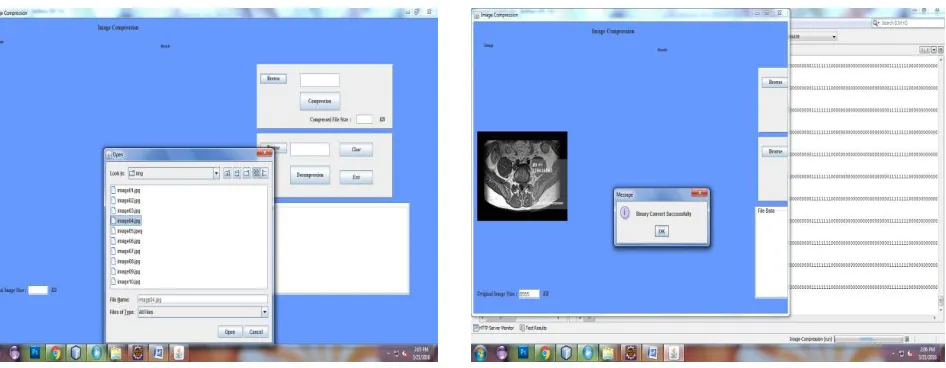
Fig 4.1 High resolution JPEG compressed image- Images loaded from the specific location for
compression.
Fig 4.2 –Binary conversion-
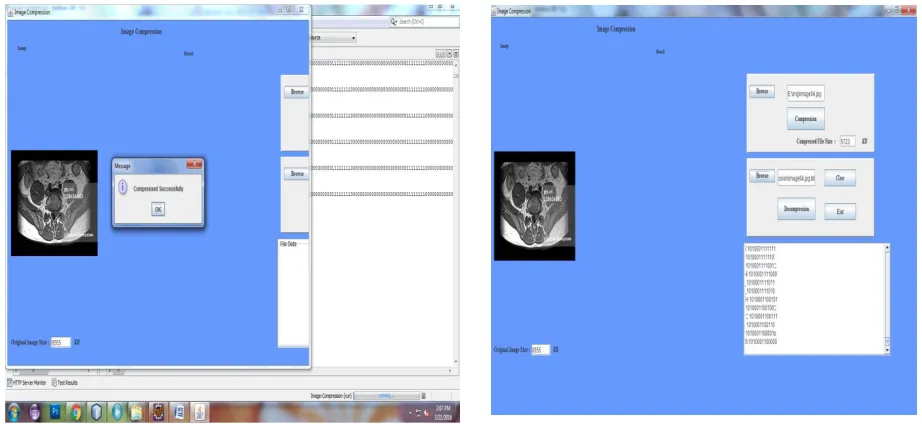
Fig 4.3 Decimal conversion In this decimal conversion is made.
Fig 4.4 Decompression
In this image is converted into text. Thus produced from text to image.
VI.CONCLUSION AND FUTURE WORK
This proposed method to reveal the traces of JPEG compression. The proposed method is based on analyzing the forward quantization noise, which is obtained by quantizing the block-DCT coefficients with a step of one. A decompressed JPEG image has a lower noise variance than its uncompressed counterpart. Such an observation can be derived analytically. The main contribution of this work is to address the challenges posed by high-quality compression in JPEG compression identification. Specifically, our method is able to detect the images previously compressed with IJG QF=99 or 100, and Photoshop QF from 90 to 100. Experiments show that high-quality compressed images are common on the Internet, and our method is effective to identify them. Our future studies will be on trying to extend the noise analysis to other forensics tasks, i.e., identifying the resized decompressed JPEG images such as the images presented in IEEE IFS (Information Forensics and Security) Image Forensic Challenge
.
REFERENCES
[1] A.M.Raid, W.M. Khedr, M.A El-dosuky & Wesam Ahmed,”Jpeg Image Compression using discrete cosine transform International Journal of Computer Science & Engineering Survey (IJCSES) Vol.5, No.2, April 2014.
[2] ken cabeen and Peter Gent," Image Compression and the Discrete Cosine Transform “Math 45, College of the Redwoods. [3] Giridhar Mandyam, Nasir Ahmed, Neeraj Magatra “Lossless Image compression uses DCT.
[4] R.C. Gonzalez and R. E. Woods, “Digital Image Processing”, Second edition, pp. 411-514, 2004.
[5] G. Mandyam, N. Ahmed, and N. Magotra, A DCT-based scheme for lossless image compression, IS&T/SPIE Electronic Imaging Conference, San Jose, CA, February, 1995.
[6] N. Ahmed, T. Natarajan, and K. R. Rao, Discrete Cosine Transform, IEEE Trans. Comput.C23, January 1974, 90–93.
[7] K. R. Rao and P. Yip, Discrete Cosine Transform: Algorithms, Advantages, & Applications. Academic Press, San Diego, 1990. [8] A. K. Jain, Fundamentals of Digital Image Processing, Prentice–Hall, Englewood Cliffs, NJ, 1989.
[9] F. Huang, J. Huang, and Y. Q. Shi, “Detecting double JPEG compression with the same quantization matrix,” IEEE Trans. Inf. Forensics Security, vol. 5, no. 4, pp. 848–856, Dec. 2010.
BIOGRAPHY
Mrs.G.Visalaxi is an Assistant professor in the computer science and Engineering Department in Apollo Engineering College, Affiliated to Anna University Chennai. She received Masters Degree of Computer science Application (MCA) degree in 2006 from Bharathidasan University, And M,E Computer Science at Jerusalem Engineering college Chennai. Her Research Interest are Medical Image Processing, Data Mining, cloud computing.