DOI: 10.4018/IJGBL.2017100103
Copyright©2017,IGIGlobal.CopyingordistributinginprintorelectronicformswithoutwrittenpermissionofIGIGlobalisprohibited.
Wise Humanising Creativity:
Changing How We Create in a
Virtual Learning Environment
Kerry Chappell, University of Exeter, Graduate School of Education, Exeter, United Kingdom Chris Walsh, James Cook University, Townsville, Australia
Heather Wren, University of Exeter, Graduate School of Education, Exeter, United Kingdom Karen Kenny, University of Exeter, Graduate School of Education, Exeter, United Kingdom Alexander Schmoelz, University of Vienna, Vienna, Austria
Elias Stouraitis, Ellinogermaniki Agogi, R&D Department, Greece
ABSTRACT
Thisarticleinterrogateshowaparticularconceptionofcreativity:‘wisehumanisingcreativity’(WHC) ismanifestwithinavirtuallearningenvironment(VLE)withchildrenandyoungpeople.Itreports ontheoutcomesofC2Learn,athree-yearEuropeanCommissionfundedprojectwhichintroduced innovativedigitalgamingactivitiestofosterco-creativityintheVLEbetweenplayers.Theoretically thepaperbuildsonpreviouswork,whichhasconceptualisedthepotentialforWHCwithinVLEs, aswellasothereducationalcontexts.WithinC2Learn,argumentshavebeenmadeforWHCasan antidotetooverly-marketised,competitivenotionsofcreativity,aswellasforWHCsupportinga viewofchildhoodandyouthasempowered—ratherthan‘atrisk’—withindigitalenvironments. Inparticular,thispaperfocusesonoutcomesoftheproject’sfinalpilotinginEngland,Greeceand Austriaacrosstheprimaryandsecondaryageranges.Thisresearchemployedabespokeco-creativity assessmentmethodologydevelopedfortheproject.InordertodocumentWHC,thismethodology optedtoevidencedevelopmentsinlivedexperienceviaqualitativemethodsincludingteacherand studentinterviews,fieldnotes,videocapture,observationandstudentself-assessmenttools.The paperarticulateshowWHCmanifestsinC2Learn’suniqueVLEorC2Space,anditspotentialto developmorenuancedunderstandingsofcreativityacrossdigitalenvironments.Itthengoesonto considerWHCasausefulconceptforchanginghowwecreatewithinVLEs,andtheimplicationsfor educationalfuturesdebatesandwiderunderstandingofcreativityineducationasalessmarketised andmoreethicallydrivenconcept.
KEyWoRdS
(WHC), C2Learn, Co-creativity, Digital Gaming, Gameful Design, Social Networking, Wise Humanising Creativity
INTRodUCTIoN
constantuncertainty(Chappell&CraftwithRolfe&Jobbins,2011;Craft,2011;Robinson,2015). Simultaneously,muchhasbeenwritten,especiallyintheUnitedKingdom,regardingthemultiple rhetoricsofcreativitywhichplacedifferingemphasesoncreativity’ssocial,cultural,democratic andpersonaldimensionsandtheirinfluencesoncreativityinlearningandteaching(Banaji,Burn& Buckingham,2010;Sefton-Green,Thomson,Jones&Bresler,2011).Developingwithinthisshifting conceptuallandscapeareacollectionofideasthathaveemphasisedtheimportanceofco-creativity withineducation,theroleofgenerativepossibilities,thequestionoftheethicalimpactofcreativity,and therelatedpedagogicaldynamics.TheseideasareWiseHumanisingCreativity(WHC)(e.g.Chappell &Craft,withRolfe&Jobbins,2011;Chappell&Craft,2011;Chappell&Swinford,inpress;Craft 2013),PossibilityThinking(PT)(e.g.Burnard,Craft&Grainger,2006;Craft2002;Craft,2014), andthe‘4Ps’ofcreativeengagement(Craft,2011).Theyspotlightandchallengethedominanceof Western-centric,marketisedcreativity,positingamorehumanisingethicallyawarealternativewhich viewschildrenandyoungpeopleasempoweredcreativecontributorsalongsideadults.
Togetherandseparately,thesetheorieshavebeenelaboratedfromempiricalresearchinavariety ofeducationalsettings(e.g.Chappell&Jobbins,2015;Chappell,Slade,Greenwood,Black&Craft, underreview;Craft&Chappell,2014;Cremin,Burnard&Craft,2006;Cremin,Chappell&Craft, 2012).Together,theyputforwardastrongtheoreticalargumentforbettergraspingthemeaningof creativityasdistributedbetweenpeople,objectsandideas(e.g.ChappellwithCraft,Rolfe&Jobbins, 2012;Craft,McConnon&Matthews,2012)andfortheneedtoengagewiththeconsequencesof creativeactivityasethicallyladen(e.g.Chappell,2008;Craft,2013).Primarily,theseideashave beenappliedinformaleducationwithinamultitudeofsettingsincludingwithingeneric(e.g.Craft etal.,2012),arts-based(Chappelletal.,2011)andscience-basedlearningcontexts(Craftetal., 2014;Cremin,Glauert,Craftetal.,2015).Mostrecently,triggeredbyCraft(2011),thiscollection ofideashasbeenappliedwithinexplicitlydigitallydriveneducationalcontexts(Chappell,Craft &Walsh;2014;Walsh,Chappell&Craft,2017;Walsh,Craft,Chappell&Kouloris,2014;Walsh &Whitehouse,2017).Thishasbeenwiththeaimofchallengingmorecompetitively,individually derivedconceptionsofcreativitywithindigitallearning(e.g.Edwards-Groves,2011;Tapscott,1996; Walsh,2007)andofplacingastrongeremphasisoncollaborationandethics.
astotheconsequencesofplayers’digitalcreativeactions,theethicsofwhichinformthejourneysof becoming;hencetheuseoriginallyoftheterm‘humanising’(Chappell,2006;2008).
TheC2LearnVLEwasinfluencedbyagamefullearningdesign(Walshetal.,2014)sothatthese journeysofbecomingwereinformedbyplayersexperiencingthecorePossibilityThinking(PT) activitiesof‘whatif’and‘asif’thinking(Craft,2002;Craft,Chappell&Walsh,2013).Theseboth requiregameplayerstounderstandthesystemofthegame—orsystems-basedliteracypractices—in termsofhowthegameandgameplayerworktogetherinacyberneticrelationship,effectingvarious actionsofthedigitalgamebysuccessfullyunderstandingandnavigatingthosestructuresthat underlietheirparticipation(Walsh,2010).Thisnavigationwasdesignedtobeinformedbythe4Ps ofplayfulness,possibility,participationandpluralities(Craft,2011).
Asadesign-basedresearchinitiative,itwasvitalthattheC2Learnprojectincorporatedformative andsummativeevaluativefeedbackembeddedwithinpilotingactivities(Scaltsas,Stenning& Alexopoulos,2014).Withinabroaderresearchmethodologyanddesign,appliedacrossGreece, EnglandandAustria,thisaimedtoallowresearcherstoevidencewhetherWHC,PTandthe4Pswere developedthroughparticipationinC2learn’sVLE(seemethodologybelowandWalshetal.,2017). Thiswasachievedthroughthemainprojectresearchquestion,whichwasappliedacrossarangeofpilot contexts:Howdoparticipantsmanifestco-creativitythroughC2Learngameplay?TheC2Learndigital toolsandenvironment’sgamefullearningdesignwasthereforeacomplexintegrationofcollaborative andethicallydrivencreativitytheoryandpractice,understandingsofdigitalengagement,andformative andsummativeevaluationprocedures(Chappelletal.,2014;Craftetal.,2013;Walshetal.,2017).
Thisarticlereportsontheoutcomesofthefinalstagesoftheformativeandsummativeevaluation andresearchpilotingoftheC2LearnenvironmentorC2Spaceandhowchildrenandyoungpeople engagedwithitinordertomanifestco-creativity.Inordertoframetheanalysisanddiscussionof theseoutcomesthenextthreesectionsexplaintheproject’sVLEorC2Space,thedetailoftheC2Learn conceptualframeworkwithitsrelatedliteratureandthentheC2LearnLearningDesign.
C2Learn’s VLE or C2Space
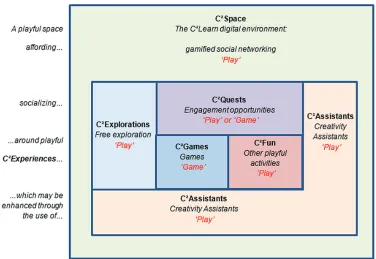
InC2Learn’sVLEorC2Space(Figure1),studentsandteachersindividuallyandcollaborativelyexplore newideas,faceandovercomechallenges,playgamestoassisttheminreachingtheirgoalsandconnect withothersthroughengaginginfun,contextuallyrelevantandmeaningfulplayful‘C2Experiences’.The C2Spaceencouragesexplorations,gamesandqueststhatprovidestudentsandteacherswithmultiple opportunitiestoputforthnewideas—meaningfultothemandtheircommunities—thatrequirethem toimaginemorenewideasorsolveproblemsviaplayfulC2Experiences.Inthisjourney,theyare assistedbyeachotherandAIorCo-CreativityAssistants(C2Assistants)thatinteractwiththemand theirteacherstochallengetheirestablishedthinkingpatternsandenablethemtousemechanismsof creativethinkingandtheirimagination.
C2Learn Conceptual Framework
C2Learn’saimistofosterco-creativitywhichisdefinedasnoveltywhichemergesthroughshared ideasandactionsandinvolvesparticipantstakingintoaccounttheimpactofthatnovelty.Withinthis framework,PT(Craft,2010),theprocessofmovingfromwhatistowhatmightbewasaguiding principleforC2Learnco-creativity,andwascloselyconnectedtothe4P’sofcreativeengagement (Craft,2011).Theseare
• Pluralities(opportunitiesforlearnerstoexperimentwithmultiplepluralitiesofplaces,activities, personalidentities,andpeople);
• Participation(opportunitiesforlearnerstotakeaction,makethemselvesvisibleontheirown terms,andactasagentsofchange);and
• Playfulness(opportunitiesforuserstolearn,createandself-createasactiveandconnectedusers intheiremotionallyrich,virtualandactualplay-worlds).
Craft’stheorisingsitswithinthefluxofviewingchildrenandyoungpeople‘atrisk’asinneed ofprotection(Frechette,2006),andviewingthemasempoweredandmovingbeyondadult‘control’ (Newburn,1996).ApplyingPTandthe4PswithintheC2Learndesignwasaboutacknowledging childrenandyoungpeople’scapacityforgenerativepossibilityinVLEs,whilstensuringthatthey arenotplacedinunnecessarilyriskysituations.
FramedinthiswaybyPTandthe4Ps,Scaltsasetal.(2014),andChappell,CraftandWalsh (2014)arguedthatthiskindofco-creativitycouldbecatalysedviathetoolsandstrategiesofCreative EmotionalReasoning(CER)contributingtogeneratingWHCbetweenC2Learnparticipants.CER drawsoncognitivescienceresearchandreferstoaprincipled,unifyingtheoryofnon-linearthinking techniquesthatfosterco-creativity.Premisedonanotionofcreativityasaninterventionresultingin reframing,CER’ssetofcorecreativelearningtoolsaimedtosupportthemanifestationofWHCby providingmethodsforthedisruptionofestablishedthinkingroutinesandpatterns.WHCandCER werethereforecoupledtogethertoprovidethefivekeycategories,whichcharacterisedC2 Learnco-creativity.Scaltsasetal.(2014)andChappelletal.(2014)arguedthatwhenengagedinco-creativity, C2Learnparticipantswould:
• Generate,exploreandenactnewideaswithavaluableimpactonthecommunity,discarding otherideasthatlacksuchpotential(ethicsandimpact)
• Posequestions,debatebetweennewideas,findwaystonegotiateconflictortogoinadifferent directiontoothersifconflictisnotresolved(dialogue)
• Takechargeofdifferentpartsofthecreativeprocess,understandingtherulesofthesystem andhowdecisionshaveconsequences,makingdecisionsaroundnewideasandtakingaction(s) throughvariousscenariosand/orquests(control)
• BeimmersedintheC2Learnenvironment,andpossiblyaddictedtogameplay,exploration,quests and/ortheinteractivedramaplayedoutwithinit,aswellasinreal-worldspaces.Suchimmersion willsometimesleadtotakingrisksandgeneratingsurprisingindividualorcollaborativeideas (engagedaction)
• Havetheirthinkingandactiondisruptedbytheenvironment’scomputationaltoolsembedded withinwhichareCERnon-linearthinkingtechniques.Thiswillthemmovethemawayfrom establishedroutinesandpatterns(interventionresultinginreframing)
Chappelletal.(2014)arguedthatco-creativitywouldthereforeoccurinC2Learnasanactive processofchangeguidedbycompassionorthecloseandactiveawarenessoftheneedsandhopes ofothers(Chappell,Craft,Rolfe&Jobbins,2012)andreferencetosharedvaluesderivedfromVLE users’collaborativethinking,sharedaction,gameplayandsocialinteraction.Theywentontoargue thatovertime,smallincrementalpersonalchangesorjourneysofbecomingwouldresultfromtheir WHC.ThisisbecausethereisacorereciprocalrelationshipwithinWHCbetweencreativityand identityinwhichascreatorsmake,theyarealsobeingmade.Thereisthenthepotentialforthese smallerchangestoaccumulateincrementallytogethertofuellargerscalecommunalchange.Chappell etal.(2011)refertothisas‘quietrevolutions’whichgrowfromthebottomup,andalignpersonal withwidervalues.WithinC2Learn,bothanalogueanddigitalactivityhasthecapacitytogenerate thesequietrevolutionsasplayerscreateindividually,collaborativelyandcommunally.TheC2Space wasthereforecarefullydesignedtofacilitatethis;theprojectLearningDesignisdescribednext. C2Learn’s Gameful Learning design
C2Learn’sLearningDesignanditsgroundinginthedigitaldesignliteraturehasbeendetailedatlength elsewhere(Chappelletal.,2014;Walshetal.,2014;Walshetal.,2017),butbrieflyforcontexthere, attheheartoftheC2LearnLearningDesignisthe‘playful’digitalgamingandsocialnetworking environmentor“Co-creativityspace”(C2Space).Figure2showsascreenshotoftheC2Spaceinaction.
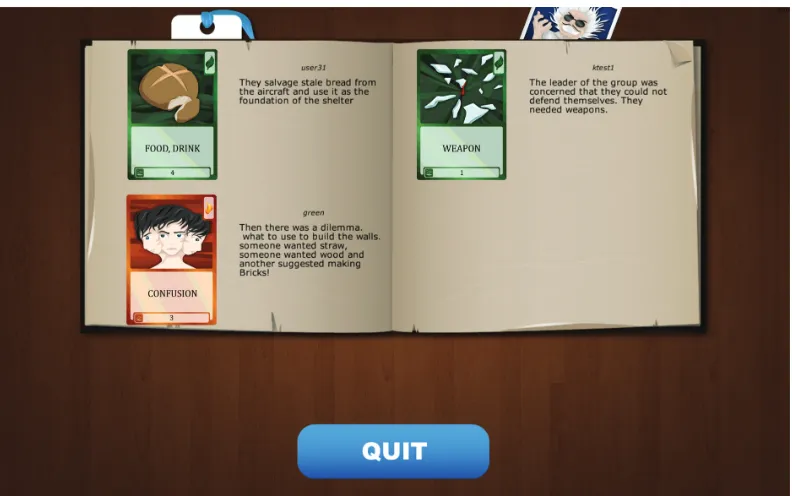
TheC2Spaceallowsstudentstodrawontheirgamingliteracytointeractcreativelyand collaborativelywitheachother(Apperley&Walsh,2012;Beavis,Bradford,O’Mara,andWalsh, 2009).Figure2showsaC2Spacepageofferingethically-drivenquestsinthemiddlewhichwhen selectedofferthechoiceofgamestobeplayedwithinthequests;4scribes(Eladhari,Lopes& Yannakakis,2014),Iconoscope(Liapis,Yannakakis,Alexopoulos&Lopes,2016)andCreative Stories(Koukourikos,Karampiperis&Karkaletsis,2016)beingthe3mainC2Learngamesavailable intheC2SpaceorVLE.Designedinthisway,theC2Spaceaimstoleveragegames’deeplysatisfying propertiesthrough‘playfulexperiences’,orC2Experiences.Withinthese,playerscanautonomously andcollaboratively:explore;faceandovercomechallenges;playgamestoassisttheminreachingtheir goals;connectwithothersbyengaginginfunandmeaningfulactivities;andevidencecompassionand sharedvaluesorputforthnewideasthatrequireotherstudentstoimaginenewideas.Thisprovides aco-collaborativecontextforthemtoshiftfrom‘whatis’tonewpossibilitiesof‘whatmightbe’. Figure3,then,showsoneoftheC2Learngames,4Scribes,inthemiddleofplaywhereplayersare co-generatinganethicallydrivenstory.
agency,emotion,andrelevantchallenges,overgamifiedelementssuchaspoints,levels,andrewards. Figure2,above,showsdifferentcolourediconsfortheC2Learnfeedbacksystemontheright-hand side.ThesearebettersuitedforC2Learnbecausetheyhavethepotentialtoincreasestudents’intrinsic motivation(Amabile,1998)andcapacityforactivelearninginawaywhichismoresympatheticto thewidergoalofWHC(Deterding,2012,2013).ThistakesplacethroughplayfulC2Experiences,as opposedtogame-orientedstrategies.This‘gamefuldesign’stanceaddressesthewidely-theorised critiqueofgamificationwithingamestudieswhicharguessuchgameorientedstrategiesprovide primarilyextrinsicrewardmotivators(Nicholson,2012).TheintentionoftheC2LearnLearning Design’sgamefuldesignistoharnessstudents’motivationandengagementthroughenjoyable learningandagoal-orientedapproachthatfostersco-creativity(incorporatingbothWHCandCER).
Classroom-basededucationalscenariosusedwithintheC2Spaceprovideaframeworkinwhich digitalgamesareusedtohelpdeepenstudents’relationshipswithreal-lifecontextsthroughaction andplay,tofacilitateco-creativity(Dimaraki&Koulouris,2013).Thecorescenariosweredeveloped inaniterativeco-designedprocesswithteachersandincollaborationwithschoolcommunities (Dimaraki,Schmoelz,Koulouris,2013).Theyareappropriateforarangeofcontextsandlearners,and addressspecificlearningobjectives.Theyalsoprovideacontentframeworkinwhichtheinnovative technologiesandpracticesoftheprojectaredeployed.Examplesofthekindsofscenariosdeveloped canbeseeninFigure2wherethequestscontainelementsofthescenariosofferedtothestudents (CreativityFuturesintheclassroom).Duringpiloting,studentsplayedwithC2Learngamesdescribed above.Themethodologydescribedbelowwasdesignedtodocumentthemanifestationoftheirlived experienceofco-creativity,includingWHC.
METHodoLoGy
ThecollaborativeC2Learnprojectaimedtorespondtothemainresearchquestion:Howdoparticipants manifestco-creativitythroughC2Learngameplay?ThemethodologydrewonStenningandMichell’s (1985)evaluationincognitivescienceaswellasoneducational/artsinformedevaluation(Craft, Chappell&Best,2007;Chappell&Greenwood,2013).Amixedmethodsapproachtodatacollection wasused,seekingtodocumentbothchangeandthelivedexperience(VanManen,1990)ofchildren, youngpeopleandtheirteachers’engagementintheC2Space(Walshetal.,2017).Repeatresearch visitsgaveresearcherstheopportunitytotrackchangeovertime.
Piloting
IntheSpringandSummerof2015theC2Learngames,withintheC2Spacewerepilotedinschools inEngland,GreeceandAustria.DetailsareshowninTable1.Inthetable,thetermprimarycovers the10-12agerangeandthetermsecondaryisusedforthe15–19agerange,withoneEnglish andtheAustriansiteasecondaryschool,andoneEnglishsiteasettingofFurtherEducation.In theEnglishprimary1and2,siteactivitywasfocusedaroundthe4Scribesgame,usingthemes promoting‘sustainability’and‘animalwelfare’todelivercreativewritingsessionswithintheEnglish curriculum.IntheGreekprimaryactivitywasfocusedonthe4ScribesgameleveragingtheGreek historicalperiodundertheOttomanruleengagingstudentsinsocietalissuesatthattimeandaseries ofethicaldilemmasbasedonunprecedentedgeographicalsituations.IntheEnglishsecondary1site activitywasfocusedaroundthe4ScribesgameusinganethicaldilemmatakenfromtheSociology curriculum.InEnglishsecondary2,siteactivitycentredonusingin-gamechallengesfromCreative StoriesandExploreandExpand.IntheAustriansecondary,siteactivitycentredonpersonaland societalchallenges,whichwereidentifiedbythestudents.Theeducationalactivitywasfacilitated withmixedplayfulpedagogies(Schmoelz,2016;Schmoelz,inpress)involvinggame-basedlearning, gamificationandgame-baseddialogues.
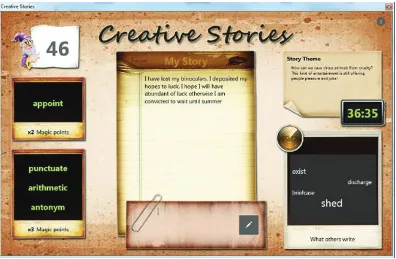
CreativeStories(seeFigure4),IconoscopeandExploreandExpand(seeFigure5)applications.Where thetableshowsuseofpaperprototypesthiswasbecauseofissueswiththetechnology’sstability, bothintermsofthesoftwareandaccesstoitviaschoolfirewalls.Progressinrectifyingtheseissues acrossthelifeofprojectpilotingwasextremelyslow,andsothisfinalpilotphasedidnotusedigital toolsasadvancedasoriginallyintendedandtheplannedtimeperiodswerealsosomewhatcurtailed.
Table 1. Piloting across three countries
Location of
Pilots ParticipantsAges of ParticipantsNumber of SessionsNo. of Research No. of visits
Tools used for
pilot App used for pilot interview Teacher conducted
Video/ audio used for data collection English
primary 1 10 24 3 2 Paper 4scribes yes audioandvideo
English
primary 2 10 16 5 2 Digital 4scribes yes video
Greek primary 10-11 24 2 2 Digitaland
paper 4scribes yes audioandvideo
English
secondary 1 17-19 4&9 2 2 Paper 4scribes yes audioandvideo
English
secondary 2 15-16 5 2 2 Digital Creativestoriesexploreand expand
no audio
Austrian
secondary 17-19 12 30 5 Digitalandpaper Iconoscope4scribes creativestories
yes Audioand video
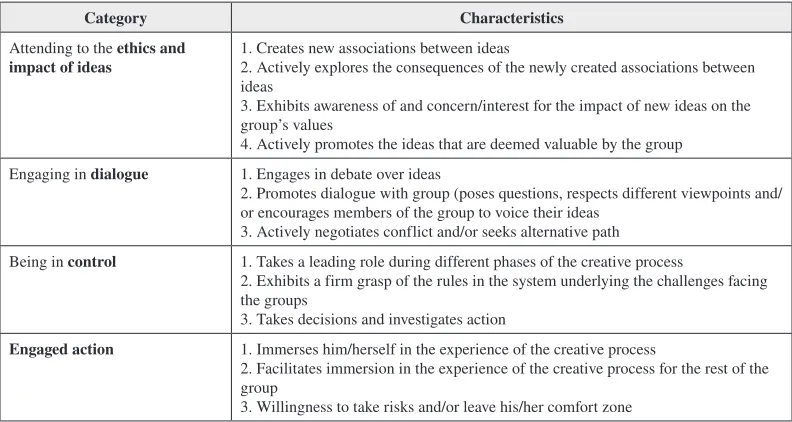
ThecategoriesandcharacteristicsshowninTable2,developedfromtheconceptualframework detailedabove,wereusedthroughoutthepilots,toenableresearcherstofocusonthecoregoalsof theco-creativityframeworkforWHC.
Figure 5. Explore and Expand
Table 2. WHC Elements of Co-creativity Categorisation scheme
Category Characteristics
Attendingtotheethics and
impact of ideas 1.Createsnewassociationsbetweenideas2.Activelyexplorestheconsequencesofthenewlycreatedassociationsbetween ideas
3.Exhibitsawarenessofandconcern/interestfortheimpactofnewideasonthe group’svalues
4.Activelypromotestheideasthataredeemedvaluablebythegroup Engagingindialogue 1.Engagesindebateoverideas
2.Promotesdialoguewithgroup(posesquestions,respectsdifferentviewpointsand/ orencouragesmembersofthegrouptovoicetheirideas
3.Activelynegotiatesconflictand/orseeksalternativepath Beingincontrol 1.Takesaleadingroleduringdifferentphasesofthecreativeprocess
2.Exhibitsafirmgraspoftherulesinthesystemunderlyingthechallengesfacing thegroups
3.Takesdecisionsandinvestigatesaction
Engaged action 1.Immerseshim/herselfintheexperienceofthecreativeprocess
2.Facilitatesimmersionintheexperienceofthecreativeprocessfortherestofthe group
data Collection
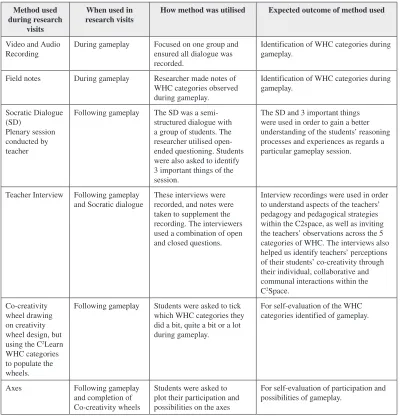
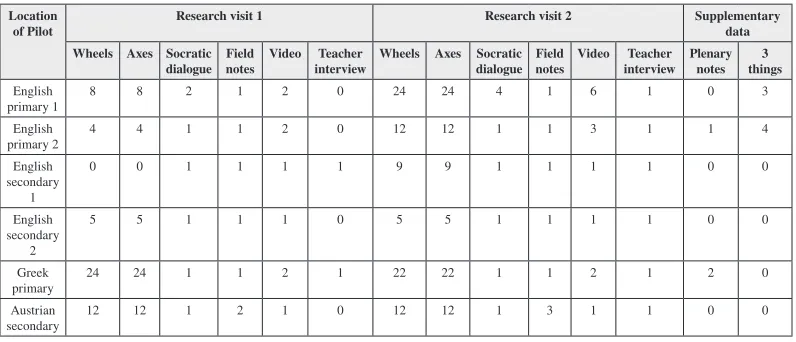
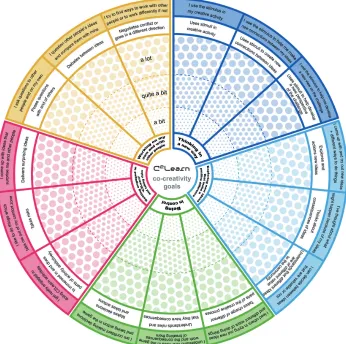
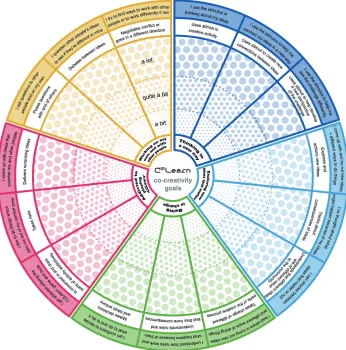
Qualitativedatacollectionmethodsdeterminedtheextenttowhichstudents’andteachers’participation intheC2SpacehadthepotentialtofosterWHC.Clearprotocols(Scaltsasetal.,2014;Walshetal., 2017)weredevelopedbyarepresentativeteamfromthe3pilotcountriesinordertoensurethattools wereusedasconsistentlyaspossible.ThereweresixmaintoolsforcollectingdataintheC2Learn pilots;thesearedetailedinTable3andTable4.Gameplayaudioandvideocapture(Foster,2006) allowedobservationofphysicalandlinguisticbehaviour,whilstself-assessmenttools,suchascreativity wheels(seeFigure6andFigure7intheAppendix)(drawingonEdmond,2005;Spencer,Lucas andClaxton;2012);andparticipationaxes(ChappellandCraft,2011)wereusedtounderstandhow studentsexperiencedC2Learn.Thesemethodswereaugmentedbyteacherobservations,gathered duringinterviews(Kvale,1996),whichfollowedasemi-structuredschedule,andresearcherfieldnotes.
IntheEnglishpilotsitestheclassteacherrequesteda‘gatekeeper’role,wherebytheyselected participatingchildren,identifiedtimesforplayandforresearchvisits,anddesignatedthelocationof play.Thiscontrolprecludedthefulluseoftheprotocols.InAustriaandGreeceteachersandassistants co-designedlearningactivitiesandthewayinwhichC2Learntoolswereimplementedinregardto learningoutcomes.Thiscollaborationfacilitatedthefulluseofthedatacollectionprotocols,andis anapproachrecommendedwherepossibleforfuturepilotingofthiskind.
data Analysis
Forthisarticle’sfindings,richinstancestakenfromtheaudioandvideowereusedtoidentifywhether theWHCcharacteristicslistedinTable2wereinherentinthedigitalcontextswithinC2Space. Analysiscommencedwithcodingtothepre-specifiedcategories,whereinstanceswereclassifiedas strong,mediumorweak.Stronginstanceswerethentranscribed.Thisanalyticstagewasextremely thoroughwithidentificationcriteriahonedbetweenresearchersfromthethreecountries.Thisaimedfor agreementonwhatvisuallydefinedarichinstanceieevidenceofthekeysub-categoriesinorderthat researcherswerenotsimplyover-assumingthepresenceofWHCbecausetheVLEhadbeendesigned tofacilitateit.Triangulationofthestronginstanceanalysiswasconductedbyatleastonememberof theresearchteamfromeachlocation,usingaprocessofblindanalysisfollowedbycomparison,again towardagainstassumption.Thetriangulatedanalysisandstrongrichinstanceswerethenanalysedin conjunctionwithanalysisoftheteacherinterview,fieldnotesandself-assessmenttoolsinlightofthe researchquestions,inordertoproducethesecondstageanalysis.Itwasimportantthatdetailedfilm analysiswasthefirstlevelanalyticprioritywithteacherinterviewsandstudentself-reportusedfor analyticverificationratherthanleadinganalyticoutcomes.Itmustbetakenintoaccountthough,that WHCcategoriescouldbesaidtobeapparenttoparticipantsthroughthecreativitywheelandteacher interviewquestionstructure,aswellasthroughteachers’interestandinvolvementintheC2Learn projectintentions.Thiswasafurtherreasonforprioritisingfilmrichinstanceanalysisoverthese datasources.Followingthissecondstageanalysis,thedatawasthenanalysedbothgeographically andwithinageranges,resultinginoverallprimaryfindingsandoverallsecondaryfindings.Aswe havewrittenuptheanalysisofthefindingsbelowwehaveacknowledged,whereappropriate,how thedifferentactivitiesundertakenindifferentcountriesarelikelytohaveimpactedonthewayin whichfindingsvary.
Quality and Trustworthiness
Ethics Theassessmentmethodologywasunderpinnedbyaclearsetofethicalprinciples.Ethicalprocedures wereinformedbytheguidelinesoftheBritishEducationalResearchAssociation(BERA)(2011)as wellastheDataProtectionAct(DPA)(1998)andDirective95/46/EC.Digitaldatawascollectedand storedfollowingthisstrictethicalprotocol;Owncloudfilehostingallowedsecurestorageaccessible toallresearchteams. FINdINGS Thefindingsreportedinthispaperarestructuredusingtheco-creativitycategorizationframeworkand drawonthecross-siteanalysisrespondingtothequestion:Howdoparticipantsmanifestco-creativity
Table 3. Methods used with descriptions
Method used during research
visits
When used in
research visits How method was utilised Expected outcome of method used
VideoandAudio
Recording Duringgameplay Focusedononegroupandensuredalldialoguewas recorded.
IdentificationofWHCcategoriesduring gameplay.
Fieldnotes Duringgameplay Researchermadenotesof WHCcategoriesobserved duringgameplay. IdentificationofWHCcategoriesduring gameplay. SocraticDialogue (SD) Plenarysession conductedby teacher Followinggameplay TheSDwasasemi-structureddialoguewith agroupofstudents.The researcherutilisedopen-endedquestioning.Students werealsoaskedtoidentify 3importantthingsofthe session. TheSDand3importantthings wereusedinordertogainabetter understandingofthestudents’reasoning processesandexperiencesasregardsa particulargameplaysession. TeacherInterview Followinggameplay
andSocraticdialogue Theseinterviewswererecorded,andnoteswere takentosupplementthe recording.Theinterviewers usedacombinationofopen andclosedquestions. Interviewrecordingswereusedinorder tounderstandaspectsoftheteachers’ pedagogyandpedagogicalstrategies withintheC2space,aswellasinviting theteachers’observationsacrossthe5 categoriesofWHC.Theinterviewsalso helpedusidentifyteachers’perceptions oftheirstudents’co-creativitythrough theirindividual,collaborativeand communalinteractionswithinthe C2Space.
throughC2Learngameplay?Theanalysiswascarriedoutfortwoseparateagegroups,10–12yearolds (primaryfindings)and15–19yearolds(secondaryfindings)whicharepresentedseparatelybelow. 10 – 12 year olds
Eachofthefivesub-categoriesofco-creativityisevidencedinturnforthisagegroup.Intermsofthe ethicsandimpactsub-category,therewasasmallamountofdata(e.g.atleastthreerichinstancesin Englishprimary1)acrossthethreesiteswhichsuggestedsomestudentswereexhibitingawareness andconcernfornewideasaboutthegroup’svalues,exploringandactioningnewideasthatmakea difference(wheeldatashowedstudentsmostlyratedthemselves‘quitealot’here)andcreatingnew associationsbetweenideas.Insupportofthis,theEnglishprimary2teacherobserved:“theydidthink aboutethicalissuesmorethroughthissystem”andtheGreekteachercommentedtothiseffecttoo. AlsoinGreece,withinthegeographyscenario,Sakis,astudentpointedoutthatgameplay“putsme inthoughtprocess”and“it(gameplay)dependsonpeoples’imagination”,highlightingthatstudents wereexploringnewideas.AnEnglishprimary2studentwasalsoseensteeringtheethicaltrajectory ofthestory:“MeandMetalMarioaregoingtoshareit,we’regoingtostealitfromyou–I’mgoing tobelikeRobinHood,stealitfromthewealthygiveittothepoor”.
Acrossallthreesites,dialoguewasmostlyusedfordebatingideas.InEnglishprimary1, theteachernoticedthatstudentsweredebatingtheirco-constructedstory:“ithadengagedthem enoughforthemtokeepgoing,discussing,andgoingoverwhatthingshadhappenedandwhatthey mightchange”.InEnglishprimary1,richinstancesofdataanalysisindicatedthatdialoguewas moreevidentinthesecondpilotandwasusedforquestioningstorylineandcollaboration.When interviewedtheteacherreported,“Ithinktherewasanelementof‘astorycan’tbecompetitive,’it canbecollaborative”.Thiswasevidencedinself-assessmentdatawheremoststudentsthoughtthat theyworkedwithotherpeoplequitealot.IntheGreekPrimarySchool,theteacherconfirmedthat bythesecondpilot,dialoguewasoccurring.TherewasastrongrichinstanceinEnglishprimary2, whenJaboscussaid“I’mthewomanofwater.Wehadthisargumentlasttime.Tobe‘of’something meanstobemadeofit.”Hewasposingquestions,andalsoattemptedtodrawtheresearcherintothe conversation,wideningthedialogue.
Acrossallthreesettingsanalysissuggestedthatcontrolwasevidencedthroughtakingchargeof thestory,individuallyorinteams,inordertogetthestudent’sending.InEnglishprimary1,fieldnotes indicatedthat:“Usingthesymbolthatwasinthemagicunicornhoofshebroughteveryoneback
Table 4. Actual number of methods used in pilots
Location
of Pilot Research visit 1 Research visit 2 Supplementary data Wheels Axes Socratic
dialogue Field notes Video Teacher interview Wheels Axes Socratic dialogue Field notes Video Teacher interview Plenary notes things3
English
primary1 8 8 2 1 2 0 24 24 4 1 6 1 0 3
English
primary2 4 4 1 1 2 0 12 12 1 1 3 1 1 4
English secondary
1
0 0 1 1 1 1 9 9 1 1 1 1 0 0
English secondary
2
5 5 1 1 1 0 5 5 1 1 1 1 0 0
Greek
primary 24 24 1 1 2 1 22 22 1 1 2 1 2 0
Austrian
actioningtochangethestoryperspective.Englishprimary2providedthelargestevidencecount, wherethechildrenwereenabledtobedecisive,regardlessofability,andthemethodstheyemployed seemtoevidencealevelofconfidencewhichtranscendedgameplayability.Forexample,theteacher notedthemcontrolling“continuity”and“re-engineeringtherulestomeettheirownends”.TheGreek datashowsthissub-categoryas‘indevelopment’withtheteacherreporting,“Ithinkiftheyplayed more,theywouldhavestartedtoseethoselinksalittlebitmoreclearly.Theirabilitytomanipulate theeventstotheirownconclusion,Ithinkthatwouldhavegotbetterwithexperience”.Thisisan exampleofwheretheamountofactivitycarriedoutindifferentcountriesinfluencedtheanalysis outcomewithincountriesdifferently.
Acrossallthreepilotsites,engagedactionwasmainlyevidencedviaimmersionwhereitwas observedasstudentsbeingengagedthroughoutensuringtheirstoriesflowedfromonetoanother. TheEnglishprimary2teachernoted:“C2Learn-theyhavebeenengaged.They’vewantedtodoit”. Thiswasalsodemonstratedinarichinstanceregardingengagementleadingtosurprisingideas,when ChiChiinventedacard,sayingthatshehadforgottenheroriginalcards.Hercardwasparticularly usefultoherinachievinghersecretending.Overallmostofthestudents,usingtheself-assessment toolsacrossthe3sites,ratedthemselvesonengagementandtakingrisksasquitealot.TheGreek teacherhighlightedhowstudentstookriskswhenimmersedintheVLE:“theytriedtopresent somethingneweveniftherehadsomedifficulties”.Although,therewassomenegativeevidencein thissub-category,wherestudentsacrosssitesshoweddisengagementin-betweenturns.
Regardinginterventionandre-framing,evidencesuggeststhatEnglishstudentswerecreating connectionsbetweenideas,developingnewperspectivesandsometimesgoingbeyondthematerial provided;moresoinEnglishprimary2than1.Forexample,inEnglishprimary1,Bobbysaid: “CanIsaywhothepersontalkingis?”ashewantedtochangethenarrativeperspectiveandBrian asked:“Shouldn’tTheElderWomanofWaterbeagainsttheGirlofFire?”inordertotrytochange thecollaborativestoryintoaconflictingone.InEnglishprimary2usingstimuliincreativeactivity wasevidencedwhenachildsawthecharacteronthecardinamorepersonalisedway,asthe‘wind grandma’ratherthantheoldwomanofwind’.Theauthoringoftheco-creativestoryitselfalsoappeared tostimulateimaginativethoughtprocesses.Theteacherbelievedthat“assistingwithcardsdoeshelp themwhentheygetstuck…itstartsyourimaginationworking.”IntheGreekPrimarySchool,there waslimitedevidenceofinterventionandreframing,buttheself-assessmenttoolsshowedthatstudents didbelievetheywereusingthestimulusalotorquitealottothinkinnewways.
Forthe10–12-year-oldsacrossallthreecountries,allfivesub-categorieswereevidenced, althoughtodifferentdegrees.Thissuggeststhatforthisagegroupco-creativity,andthereforeWHC, wasmanifestingduringinteractionwithinandaroundtheproject’sVLEthroughgameplay,despite theshortenedpilotingperiodsandtechnologicalissues.Thispointisstrengthenedbythefactthat evidenceistriangulatedaboveforeachcategorynotonlyacrosscountrybutalsoacrossthevariety ofdatasources,includingstudents’self-assessment.Havingsaidthis,thereweresomesub-categories withinwhichGreekstudentsdidnotshowasmuchdataasEnglish,namelyinterventionandre-framing,withdialogue,andbeingincontrolincreasingacrosstimeintheGreeksite.Perhapstobe anticipated,therewaslittleevidenceofjourneysofbecomingorquietrevolutionsintheprimarydata becauseofthecurtailedlengthofthepilotsandcontinuoustechnicalchallengesoftheC2Spaceon thetablets.Thiswillbeconsideredfurtherinthediscussionandconclusion.
15 – 19 year olds
Acrossallthreecountries’pilotseachofthefivesub-categoriesofco-creativityisevidencedforthis agegroup.
secondary2,asmallamountofevidenceintherichaudioinstancesanalysisshowedstudentstoned downtheirsuggestionwhichwasoriginallymockinganotherstudent.Alsointhissite’sstudentself-assessmentco-creativitywheels,thestudentsratedthemselvesasquitealotoralotforexploring newideasandmakingapositivedifference.Austrianstudentswroteabouthowhumankindtreats theenvironmentwhichisindicativeoftheuniqueactivitieswithinwhichtheirC2Learnexperience tookplace,andwhichinfluencedtheirtrajectory.Itwasextremelyimportantforthemtogeneratea storylineaboutdestructionbutalsoaboutinjusticeandprejudicesagainstpeoplewhofightthesystem. Demonstratingthis,Andrewsaid:“Maybeweshouldwritethatpoliticsandhumansbecomemore radical,excludeeveryoneandtheartistswanttodosomethingagainstit.”Theendofthestudents’ storytookafirmstandagainstthewaymankindtreatstheenvironment,withonestudentsaying:“I reallybelievethatanintenseendingcanhavemoreimpact.”
TherewassomeEnglishdataandnumerousAustrianexamplesofstudentsengagingindialogue viadebating,negotiatingconflictandposingquestions.Teacherinterviewanalysisevidencedstudents beingrespectfulandreflective,ratherthanopenlyconflicting:“theywererespectingeachother’s ideasandopinions,theyseemedtobethinkingmore,reflectingmore”.InEnglishsecondary2,there wasevidencefromrichinstancesofdialogueinallpilotssupportedbyfieldnoteswhichstated:“… discussiontookplacebetweenafewofthestudents”and“allstudentstookpartinthediscussionof thestory”,andwhichalsorecognisedconflictor“banter”asadriver.InEnglishsecondary2self-assessmentwheels,thestudentsratedthemselvesasworkingontheirownandwithothersquitealot oralot.Austriansecondarydataexamplesalsoevidencedthisinthefollowingdiscussion:
• Andrew:“Okay.Wehavetocomeupwithanend.Maybetheforestisbeingdestroyedbya tornado.”
• Annette:“Theforestwascutdown.” • Francine:“No,that’stooapocalyptic.” • Andrew:“Yes,that’strue.”
Studentsdebateddifferentideasanddialoguedtoconsiderconsequences,andcometoa collaborativeend,where,asFrancineputit:“Theideaswerecomingfromeveryone”.Thehead teacherconfirmedthatstudentssometimeshadstrongdebates,butalsopointedoutthattheylistened andrespectedopinions.
Therewasasmallamountofdatatosuggestthatstudentsweretakingcontrol.Englishsecondary 1showedaverysmallamountofevidence(basedaroundonefilmrichinstance)ofstudentstaking chargeofthecreativeprocess,withfieldnotesidentifyingonestudentusingcontroltoputastopto thedirectionofthestorywhereonestudentwantedtoeliminatethedilemmabykillingoffallinvolved apartfromtheinnocentbaby.Englishsecondary2dataalsosawstudentstakingcontrolviatyping andwhosestorylinestheychosetoincludewhereoneplayertookcontroltotype,whileanotherother tookcontrolofthewordswhichwerebeingadded.However,fieldnotesalsoshowsthisstudentgiving thecontroltoothers:“Thisstudentalsostartedtoincludeothersmorebyaskingthemtocontribute individually,thuslettinggoofthecontrolofthedirectionofthegame”.InEnglishsecondary2,on theco-creativityself-assessmentwheels,moststudentsratedthemselvesasbeingincontrolquitea lot.Austriandatashowedgirlsandboyssuccessfullyleadingatdifferenttimes.Theirheadteacher notedthat“theclassleaders,thegroupleaders…setthetone.”Andthefieldnotesbackedthisup where“Thereisanobviousleaderinthegroupwiththeboys.”
wheretheywereengagedinstoryconstructionmostofthetimebutalsousedthestoryintheirbanter inbetweenturns.Englishsecondary2self-assessmentwheelsillustratedstudentsthoughttheywere engagedandtakingrisksquitealot.Austriandataalsoshowedimmersionfromanumberofsources whereitresultedinsurprisingideas,suchasatreebeingthenarratorofthestoryinsteadofusing ahuman’sperspective.TheHeadteachercommented:“Theyengagedveryheavilyinit…theywere verymuchpartofthewholeprocessandveryinvolved.”AlthoughAustriandataalsoshowedsome issueswithimmersion–bothstudentsnotengagingwithtabletsbecauseoftechnicalities,andnot wantingtoengageoutoftheircomfortzone,forexampleindance.Thisisanotherexamplewherethe activityinfocusinfluencedtheAustriandata,perhapsintermsoflevelsofimmersionbecauseofthe disciplinebeingtaught.Regardingsustainedimmersion,thestudentsthemselvessaidthatbeingpart ofagroupmadeiteasiertoconcentrate.However,bothteachersandresearchersreporteddifferent findingssayingthat:“Theydistractedeachother.”
Inthethreesites,therewasasmallamountofdatathatsuggestsstudentswereusingintervention andreframing,andwereawareofhowitfunctioned.Evidenceshowedstudentswereintervening andreframinginordertodevelopanewperspectiveonthechallenge,whichledtothecreationof surprisingideasthatweresometimesethicallydriven.IntheEnglishsecondaryschools,richfilm instancesshowedastudentreframingaperspectiveonrapeinasurprisingandethicallychallenging way,consideringtheconsequencesofa“rapist…return[ing]tolookafterthebaby”.Therewasa verysmallamountofre-framingevidenceinfieldnoteswhereitwasnotedstudentsreframedwords tofitinwiththeirowndirectionofthestoryandaddedtheirownwordsinunusualways.Thiswas alsoreinforcedinrichinstanceswhereastudentreframedtheaccumulationofhisownideasto generateamorecreativeentry.TheEnglishco-creativityself-assessmentwheeldatashowedmixed evidenceofreframingfromalottoalittlebit.Austriansecondarydataevidencedinterventionand reframingthroughtheSocraticDialogues.Forexample,studentsmentionedonestoryturningpoint andstatedthattheendingwasthemostimportantaspect.Oneparticipantwantedthe‘wholeuniverse todecay’whilstothersthoughtthiswas“toodramatic”sayingthat:“theearthdyingdoesn’tmean thateverythingelseisdyingaswell”.Theyallagreedonthatmomentbeingthemostcrucialpartof thestoryandwereveryreflectiveabouttheirpersonalopinions.
Aswiththe10–12yearolds,forthe15-19yearoldsacrossthethreesitesallfivesub-categorieswereevidenced,althoughagaintodifferentdegrees.Fortheseolderstudentsco-creativity, andthereforeWHCtoo,wasmanifestingusingtheC2LearnVLEandindialogues,gameplayand discussionsoutsidetheVLE.Thispointisstrengthenedbecausetheevidenceistriangulatedforeach categoryacrossthevarietyofdatasources,includingstudentself-assessment.Andevenmoresothan theprimarydata,thesecondarydatafrombothcountriesisstronglytriangulated.Thisisperhaps becauseoftheintensityoftheAustrianpilotstructureallowingforanindepthC2Learnexperience whichmanifestedalltheco-creativitycategories.However,aswiththeprimarydata,overallthereis almostnoevidenceofjourneysofbecoming,andinturnnoquietrevolutions.
dISCUSSIoN
Acrossallthreecountries,thesepilotswereundertakenusingbothpaper-basedanddigitalprototypes. Thegoalwasforallfinalphasepilotstobewhollydigitalandlonger,butasexplainedearlierthis wasnotpossible.And,yet,thecollecteddataprovidesanunderstandingofhowparticipantsmanifest co-creativityincludingfledglingWHCthroughC2Learn’s4Scribes,CreativeStories,Exploreand ExpandandIconoscopegames.
childrentheywereattendingtoethicsandimpact,engagingindialogue,feelingliketheywerein control,andengaginginaction.Ifweseereframingasastagewhichmightresultfromthesecombined processes,thisperhapsexplainswhythiswasleastevidenced.Childrendidnotreachthispoint,nor didtheyachievejourneysofbecoming.The15–19yearoldsmoreconsistentlymanifestedallfive sub-categories.ThisisperhapsbecausetheyareolderandmorequicklyabletoengagewithC2Learn’s complexities,aswellastheAustrianstudentsexperiencingaweek-longintenseproject;anexample ofdifferenttimelinesinfluencingdatamanifestationindifferentcountries.Evensotheyalsodidnot achievejourneysofbecoming.
So,althoughWHCwasnotfullyevidencedthroughtojourneysofbecomingandcombined quietrevolutions,wewouldarguethatthegamefuldesignoftheVLEdidfosterco-creativity,which includesthecoreelementsofWHC.OtherstudiesshowedthatspecificelementsoftheVLE,such as4scribesenableddimensionsofco-creativity,suchasco-determinedactions(Schmoelz,inpress). Intime,withfurtherdevelopmentandtestingoverlongerperiods,theC2LearnVLEistherefore highlylikelytohavethecapacitytofosterfully-developedco-creativityandWHC.Itisintended thatthroughtheC2Space’sstructureofchallenges(e.g.4Scribes),buildingintoachievingcreative missionswithinwiderquests,thereistheframeworktobuildindividual’sjourneysofbecomingvia collaborativeandcommunalactivitiesandachievementstodevelopVLE-basedquietrevolutions.
Thefindingsthen,contributenewunderstandingsofcreativitywithinVLE’s.Howcanthey contributetounderstandingWHCitself?Thisisthefirsttimetheconcepthasbeenconsideredwithin digitalenvironments,whichisparticularlyinterestingasWHCwasfirstconceptualisedinadance educationcontext(Chappelletal.,2011).WHCiscertainlymanifesteddifferentlyinC2Learncompared toartscontexts.InC2Learntheemphasisoncontrolviaforexample4-Scribesturn-takingviaa sharedtablet,isstrongerthaninartscontextswhereitislessaboutcontrolandmoreaboutdistributed leadership(e.g.Chappell&Swinford,inpress).Butunderstandingthecreativepowerdynamicsis stilltheimportantcommonalitybetweenthetwocontexts–reinforcingthisasakeycomponentof WHCwhateverkindofcontextitisbeingconsideredwithin.InC2Learnthedialogueispresentbut onlypartiallyembodied,incontrasttoChappelletal.(2012)andCraft(2013)’soriginaldiscussions ofWHCwhichemphasisetheimportanceofembodimentperse.Andyetinterestinglybecauseof themixedanalogue/digitaldesignofC2Learn,embodimenthasstillbeenapartofthedialogues evidencedintherichinstancesabove.Theyhavenotremainedwhollyverbalordigitallywritten. ThisisperhapsanimportantnewpointbothforunderstandingcreativityinVLEs,andunderstanding whatitmeanstonurturecreativitygroundedinthebodyinadigitalenvironment.Whatisclearis thatembodiedengagementperseispossibleinmixeddigital/analoguecreativeprocesses.Thisis animportantlessonfortheongoingdesignofco-creativitynurturingwithandthroughco-creative participationinVLEs,aswellasunderstandingthatWHC,withembodimentatitscore,neednotbe limitedtodisciplinesormodesoflearningwhicharetraditionallymorefocusedonthebody.
educationalVLEscanbedrivenbyethicalcreativitywhichinturnengagespositivelywithchildren andyoungpeople’sidentityformation.
Thereisnodoubtthatthisstudyacrossthreecountrieshasitslimitations.Thisisinpartdueto thefactthatsomeofthefindingsemergefromheproject’spaper-basedprototypeswhenthedigital gamesthemselvescouldnotbeaccessesinsomeschoolcontextsduetofactorsoutsidetheproject’s control.Furthermore,thenumberofstudentswhoparticipatedinthestudyusingC2Learn’sgames, acrossthethreeagespansislimited,makingitdifficulttomakesubstantialclaimsaboutthesuitability ofactivitieswithVLEstofostertoWHC.Thatiswhywehavecalled,whathasbeenevidenceda ‘fledgling’WHC.InthissenseC2Learn’sVLEorC2Spacedoesevidenceseemstobepromising becausethefindingsdoillustratestudentshavedevelopedmorenuancedunderstandingsofcreativity throughparticipationwithinadigitalenvironment.Thisinturnsillustrates,thattheconceptofWHC hasthepotentialtochangehowstudentscreatewithVLEs.
CoNCLUSIoN
ThisarticlehasprovideddatafrompilotstudiesinAustria,EnglandandGreece,inbothprimary andsecondarysettingsthatinvolvestodate,thelargeststudentpopulationengagingwithaVLE environmentgamefullydesignedtofosterco-creativity.Despitetechnologicalproblems,thedata demonstratesco-creativityincludingfledglingWHCacrossallsiteswithinvariededucational activities,withtheindicatedpotentialthattheVLEscouldnurturejourneysofbecomingandquiet revolutionsintime.Itthereforemakesanewcontributionbothintermsofarticulatingandevidencing co-creativitywithinVLEs,andevidencingWHCinanewcontextandhoningitscoreelementswhich manifestacrosscontexts.
Steppingbacktogainawiderviewofcreativityineducation,thesefindingsalsodemonstrate youngpeoplecreatingtogetherinVLEsresponsiblyandcapably;anddifferentlytothatwhichwould normallybeanticipatedinmorecompetitivelystructuredVLEs.AsCraft(2013)argueditshouldbe possibleinternationallytodecouplecreativityfromamarketisedagendathatseesyoungpeopleas atriskandvulnerablewhendigitallyengaged.C2Spacecreatesadigitalenvironmentwhichcanbe integratedwithanaloguepedagogywithinwhichyoungpeoplecanpotentiallymakeandco-create theirowncollectivechangeinresponsetochallenges.ThisisCraft’s(2013)argumentinaction.One ofthemostrecentC2Learnquestsfocusesonthequestion‘Whatisthefutureofcreativityinschools?’ (seeFigure2).ThepresenceofthisdemonstratesthatC2Spacemightbeusedevenmoreexplicitly tocontributetoalteringthepathofoureducationalfutures.Itmightnotonlyactasacurriculum teachingtoolfornurturingco-creativity,butmightalsohelpstudentsandteacherstoquestionthe verystructures(digitalandanalogue)withinwhichtheyareworking.Althoughonlyinitsinfancy thisapproachtoWHC-fuelledVLEsthereforehaspotentialbothasacreativeteachingandlearning tool,andasapowerfulimplementforeducationalchange.
ACKNoWLEdGMENT
theirvaluablefeedback.Finally,thispaperisdedicatedtoouresteemedandmuchlovedcolleague, ProfessorAnnaCraft,whoverysadlydiedduringthisproject.Whilewemissworkingwithher,we aregladtobeabletocontinueourcollaborativeworkthroughpublicationssuchasthis.
REFERENCES
Amabile, T. M. (1998). How to Kill Creativity.Harvard Business Review, September/October, 76–87. PMID:10185433
Apperley,T.,&Walsh,C.S.(2012).Whatdigitalgamesandliteracyhaveincommon:Aheuristicfor understandingpupilsgamingliteracy.Literacy,46(3),115–122.doi:10.1111/j.1741-4369.2012.00668.x Banaji,S.,Burn,A.,&Buckingham,D.(2010).The rhetorics of creativity: A review of the literature(2nded.). London:ArtsCouncilEngland.
Beavis,C.,Bradford,C.,O’Mara,J.,&Walsh,C.S.(2009).Researchingliteracyinthedigitalage:Learningfrom computergames.English in Education.43,162-175.DOI:ISSN:0425-049410.1111/j.1754-8845.2009.01035.x Burnard,P.,Craft,A.,&Grainger,T.(2006).Documentingpossibilitythinking:Ajourneyofcollaborative enquiry.International Journal of Early Years Education,143(3),243–262.doi:10.1080/09669760600880001 Chappell,K.(2006).Creativity within late primary age dance education: Unlocking expert specialist dance teacher’s conceptions and approaches.Ph.D.Thesis;Laban,London.Retrievedfromhttp://kn.open.ac.uk/ public/document.cfm?documentid=8627
Chappell,K.(2008).Towardshumanisingcreativity.UNESCO Observatory E-Journal,1(3).Retrievedfrom: http://education.unimelb.edu.au/__data/assets/pdf_file/0010/1105786/chappell.pdf
Chappell,K.(2011).Journeysofbecoming:humanisingcreativity.InK.Chappell,L.Rolfe,A.Craft,&V. Jobbins(Eds.),Close Encounters: Dance Partners for Creativity(pp.89–100).StokeonTrent:Trentham. Chappell,K.,Craft,A.,Rolfe,L.,&Jobbins,V.(2012).Humanisingcreativity:Valuingourjourneysofbecoming.
International Journal of Education & the Arts,13(8),1–35.
Chappell,K.,&Craft,A.withRolfe,L.&Jobbins,V.(2011).Notjustsurvivingbutthriving.InK.Chappell, L.Rolfe,A.Craftetal.(Eds.),CloseEncounters:DancePartnersforCreativity(pp.143-160).StokeonTrent: Trentham.
Chappell,K.,&Craft,A.(2011).Creativelearningconversations:Producinglivingdialogicspaces.Educational Research,53(3),363–385.doi:10.1080/00131881.2011.598663
Chappell,K.,Craft,A.,&Walsh,C.(2014).C2Learn Learning Design for CER: Deliverable 2.2.2.Retrieved fromhttp://project.c2learn.eu/sites/default/files/C2Learn_D2_2_2_Learning_Design_for_CER.pdf
Chappell,K.,&Greenwood,M.(2013).“This is You”, Evaluation of Includance: English Strand (Interreg funded).Plymouth:AttikDance.
Chappell,K.&Jobbins,V.(2015).Empoweringcreativepartnerships:expandingteachingpossibilities.InDance Education around the World: Perspectives on Dance, Young People and Change(pp.149-160).
Chappell,K.,Slade,C.,Greenwood,M.,&Craft,A.,withBlack,A.(Manuscriptsubmittedforpublication). CREAT-IT:Anewpedagogicalframeworkforpartneringtheartsandscienceinscienceeducation.Research in Science Education.
Chappell,K.,Slade,C.,&Phillips,A.(2015,July).NextChoreography:transformativepotentialforyoung peopleininterdisciplinarychoreographicpractice.Presented at thedance and the Child international conference. Chappell,K.,&Swinford,E.(inpress).Artfulhumanisingplay?ImprovisationinEarlyYearsdance.InV. Midgelow(Ed.),Oxford University Press Handbook of Improvisation in Dance.
Craft,A.(2011).Creativity and Education Futures. Learning in a Digital Age.Stoke-on-Trent:TrenthamBooks Limited.
Craft,A.(2012).Childhoodinadigitalage:Creativechallengesforeducationalfutures.London Review of Education,10(2),173–190.doi:10.1080/14748460.2012.691282
Craft,A.(2013).Childhood,possibilitythinkingandwise,humanisingeducationalfutures.International Journal of Educational Research,61,126–134.doi:10.1016/j.ijer.2013.02.005
Craft,A.(2014).PossibilityThinking:Fromwhatistowhatmightbe.InS.Robson(Ed.),Flannery Quinn, S. The Routledge International Handbook of Young Children’s Thinking and Understanding.London:Routledge. Craft,A.,Chappell,K.,&Best,P.(2007).AnalysisofthecreativityActionResearchAwardsTwoProgramme. Leeds:CapeUK.
Craft,A.,Chappell,K.,&Walsh,C.(2013).C2Learn Learning Design: Deliverable 2.2.2.Retrievedfromhttp://
project.c2learn.eu/sites/default/files/C2Learn_D2_2_2_Learning_Design_for_CER.pdf
Craft,A.,McConnon,L.,&Matthews,A.(2012).Creativityandchild-initiatedplay.Thinking Skills and Creativity,71,48–61.doi:10.1016/j.tsc.2011.11.005
Cremin,T.,Burnard,P.,&Craft,A.(2006).Pedagogyandpossibilitythinkingintheearlyyears.Thinking Skills and Creativity,12(2),108–119.doi:10.1016/j.tsc.2006.07.001
Cremin,T.,Chappell,K.,&Craft,A.(2013).Reciprocitybetweennarrative,questioningandimaginationinthe earlyandprimaryyears:Examiningtheroleofnarrativeinpossibilitythinking.Thinking Skills and Creativity,
9,126–134.doi:10.1016/j.tsc.2012.11.003
Cremin,T.,Glauert,E.,Craft,A.,Compton,A.,&Stylianidou,F.(2015).CreativeLittleScientists:Exploring pedagogicalsynergiesbetweeninquiry-basedandcreativeapproachesinEarlyYearsscience.International Journal of Primary,Elementary and Early Years Education,43(4),404–419.
Deterding,S.(2012).Paidia as Paideia: From Game-Based Learning to a Life Well-Played.Keynote.GLS8.0. Deterding,S.(2013).Skill atoms as design lens for user-centred gameful design. CHI’13 EA.ACMPress. Deterding,S.,Björk,S.,Nacke,L.E.,Dixon,D.,&Lawley,E.Designing(2013).Gamification:Creatinggameful andplayfulexperiences.InProceedingsofCHI’13.ACMPress.
Dimaraki,E.,&Koulouris,P.(Eds.).(2013).C2Learn scenarios, use cases and user requirements: Deliverable 5.1.3.Retrievedfromhttp://project.c2learn.eu/sites/default/files/C2Learn_D5.1.3_C2Learn_Scenarios_Use_ Cases_User_Requirements.pdf
Dimaraki,E.,Schmoelz,A.,&Koulouris,P.(2013).ScenariosasPedagogicalDevices:DesigningActivitiesfor Game-BasedLearning.InL.G.Chova,A.L.Martínez&I.C.Torres(Eds.),ICERI 2013. Conference proceedings (pp.3203-3209).Seville:IATED.
Edmond,C.(2005).The creativity wheel: assessing creative development teacher resource. Creative Partnerships. ArtsCouncil.
Edwards-Groves,C.(2012).InteractiveCreativeTechnologies:Changinglearningpracticesandpedagogiesin thewritingclassroom.Australian Journal of Language.
Eladhari,M.P.,Lopes,P.L.,&Yannakakis,G.N.(2014).Interweavingstorycoherenceandplayercreativity throughstory-makinggames.InProceedings of theInternational Conference on Interactive Digital Storytelling (pp.73-80).Springer.doi:10.1007/978-3-319-12337-0_7
Foster,P.(2006).Observational Research. InR.Sapsford&V.Jupp(Eds.),Data Collection and analysis(2nd ed.,pp.58–93).London,England:SAGEPublicationsLtd.doi:10.4135/9781849208802.n3
Frechette,J.(2006).‘Cyber-censorshiporcyber-literacy?Envisioningcyber-learningthroughmediaeducation. InD.Buckingham&R.Willett(Eds.),Digital Generations: Children, Young People and New Media(pp. 149–171).Mahwah,NJ:LawrenceErlbaum.