1
Ketoprofen as an Add-on Treatment to Sertraline for Drug-Naïve Major Depressed Patients:
Normalization of Plasma Levels of Indoleamine-2,3-Dioxygenase in Association with
Pro-Inflammatory and Immune Regulatory Cytokines
Prof. Dr. Hussein Kadhem Al-Hakeim (1)
Dr. Ahmed Jasim Twayej (2)
Assist. Prof. Dr. Arafat Hussein Al-Dujaili (3)
Prof. Dr. Michael Maes, M.D., Ph.D. (4-6)
(1) Department of Chemistry, College of Science, Kufa University-Iraq. E-mail: [email protected].
(2)Pathological Analysis Department, College of Health and Medical, Al-Kafeel University, Najaf, Iraq. E-mail: [email protected].
(3)Senior Clinical Psychiatrist, Faculty of Medicine, Kufa University. E-mail: [email protected].
(4)Department of Psychiatry, Faculty of Medicine, Chulalongkorn University, Bangkok 10330, Thailand.
(5)Department of Psychiatry, Medical University Plovdiv, Plovdiv, Bulgaria.
(6) IMPACT Research Center, Deakin University, Geelong, Australia.
Abstract
Major Depression Disorder (MDD) is accompanied by animmune response characterized
by increased levels of pro-inflammatory and immune-regulatory cytokines and cytokine-induced
stimulation of indoleamine-2,3-dioxygenase (IDO). There is also some evidence that
anti-inflammatory drugs may have a clinical efficacy in MDD.
The aim of this study is to examine the clinical effects of an eight-week combinatorial
treatment of ketoprofen (a nonsteroidal anti-inflammatory drug) combined or not with sertraline,
2
on serum levels of IDO, interferon (IFN)-γ, interleukin (IL)-4 and transforming growth factor
(TGF)-β1 in association with changes in the Beck-Depression Inventory-II (BDI-II). The study
included 140 MDD patients and 40 normal controls.
The pre-treatment serum levels of IDO, IFN-γ, TGF-β1 and IL-4 were significantly
higher in MDD patients compared with the control group. Treatment with sertraline with or
without ketoprofen significantly reduced the increased baseline production of all 4 biomarkers to
levels which were similar as those of normal controls. Ketoprofen add-on had a significantly
greater effect on IDO and BDI-II as compared with placebo. The reductions in IDO, IL-4 and
TGF-β1 during treatment were significantly associated with those in the BDI-II.
In conclusion, the clinical efficacy of both sertraline + ketoprofen may be ascribed at
least in part to attenuated IDO levels and immune-inflammatory responses in MDD. Moreover,
add-on treatment with ketoprofen may augment the efficacy of sertraline by attenuating IDO.
However, these treatments may also significantly reduce the more beneficial properties of T
helper-2 and T regulatory (Treg) immune subsets. Future research should develop immune
treatments that target the immune-inflammatory response in MDD, while enhancing the
compensatory immune-regulatory system (CIRS).
3 Introduction
There is now evidence that Major Depressive Disorder (MDD) is an
immune-inflammatory disorder accompanied by higher levels of pro-immune-inflammatory cytokines, acute phase
proteins and complement factors (Maes, 1993; Al-Hakeim, 2008; Maes, 2011a; Köhler et al.,
2017). A recent review shows that MDD is accompanied by activation of M1 macrophages (with
increased production of interleukin (IL)-1β and IL-6, T helper (Th)1 cells (with increased
production of interferon (IFN)-γ), Th2 activation (with increased production of IL-4), and a T
regulatory (Treg) response (with increased production of IL-10) (Maes and Carvalho, 2018).
This is important as IL-4 and IL-10 have immune regulatory effects attenuating the activation of
Th1 and macrophagic M1 cells. This shows that MDD is accompanied by increased production
and secretion of mediators that have immune regulatory or anti-inflammatory effects and that
serve an adaptive purpose down-regulating the primary immune-inflammatory response. This
new concept was called the “compensatory immune regulatory system” (CIRS) (Maes and
Carvalho, 2018).
Elevated production of IFN-γ and M1 macrophagic cytokines may lead to activation of
peripheral and brain levels of indoleamine-2,3-dioxygenase (IDO) (Maes et al., 1994; 2011b).
Cytokine-induced activation of this enzyme leads to increased degradation of L-tryptophan
(TRP) resulting in decreased serotonin synthesis and concomitant increases in TRP catabolites
(TRYCATs) (Maes et al., 1994; 2011b). Therefore, activation of IDO may play a role in
depression by taking TRP away from serotonin synthesis and increasing the production of
neurotoxic and excitotoxic TRYCATS (Maes et al., 2002; Chaves Filho et al., 2011; Maes et al.,
4
Studies indicate that in a considerable part of patients with MDD (30-40%), symptoms
may be resistant to pharmacological treatment with antidepressants (Hernandez et al., 2013).
Most antidepressant drugs are still designed to increase monoamine transmission either by
inhibiting neuronal reuptake, e.g., by using TCAs, selective serotonin reuptake inhibitors
(SSRIs), and serotonin noradrenaline reuptake inhibitors, or by inhibiting monoamine
degradation, e.g., using monoamine oxidase inhibitors (David & Gardier 2016). There is now
also evidence that antidepressants have anti-inflammatory as well as immune-regulatory effects
by attenuating the production of pro-inflammatory cytokines (IFN-γ and M1 macrophagic) and
increasing that of negative immune-regulatory cytokines such as IL-10 and transforming growth
factor (TGF)-β1, another Treg cytokine (Xia et al., 1996; Maes et al., 1999; Lee et al., 2006;
Blatteau et al., 2015). SSRIs including sertraline may change the proinflammatory /
anti-inflammatory cytokine balance via increasing production of IL-10 and TGF-β1, which have
multiple suppressive actions on T cells, macrophages, and other cells (Maes et al., 1999; Lee et
al. 2006). Nevertheless, other studies showed that sertraline not only suppresses inflammatory
cytokines, including IL-2, IL-6, IL-17 and IFN-γ, but also immune regulatory cytokines,
including IL-4 and IL-10 (Brunoni et al., 2014). Sertraline may also inhibit microglial activation
through inhibition of IFN-γ-induced elevation of intracellular calcium ions (Horikawa et al.,
2010).
Depression is not only accompanied by increased levels of pro-inflammatory cytokines,
but also by increased cyclooxygenase-2 (COX-2) expression and prostaglandin production (Song
et al., 1998; Galecki et al., 2012; Maes et al., 2012a). Consequently, COX-2 inhibitors are also of
interest as adjunctive treatments in depression (Faridhosseini et al., 2014). Similarly, agents with
5
polyunsatutrated fatty acids, infliximab, curcumin, aspirin, statins and N-acetylcysteine (Maes et
al., 2012b; Fernandes et al., 2016). Several clinical trials showed that adding non-steroidal
anti-inflammatory drugs (NSAIDs) such as COX inhibitors to SSRIs may help to reduce the severity
of depression (Müller et al., 2013). However, another large-scale study evaluating the efficacy of
NSAIDs as mono-therapy for late-life depression in ~2500 elderly adults showed no significant
effect in reducing depressive symptoms compared with placebo (Fields et al., 2012). A recent
meta-analysis pooling results from all available randomized trials testing NSAIDs and cytokine
inhibitors as antidepressants showed that anti-inflammatory treatments reduced depressive
symptoms compared with placebo (Köhler et al., 2014). Nevertheless, there are no data whether
treatments with sertraline with or without ketoprofen (a non-specific COX inhibitor that has
anti-inflammatory properties by inhibiting COX-2 thereby decreasing the production of
proinflammatory prostaglandin precursors) significantly decreases IDO and the IFN-γ / IL-4 +
TGF-β1 ratio in association with clinical recovery.
Hence, the aim of the present work was to study whether the efficacy of the
anti-inflammatory drug ketoprofen as an adjuvant therapy to traditional antidepressants (sertraline) is
associated with reductions in IDO, IFN-γ levels and an increased IFN-γ / IL-4 + TGF-β1 ratio in
MDD patients.
Materals and Methods
Participants
A total of one hundred and forty MDD patients and 40 normal controls participated in the
present study. Patients were recruited at the Psychiatry Unit, Al-Hakeem General Hospital in
6
psychiatric medicine during the period from November 2016-August 2017. The patients were
diagnosed by psychiatrists according to a semi-structured psychiatric interview schedule for the
diagnosis of MDD based on the ICD-10 (10th revision of the International Statistical
Classification of Diseases and Related Health Problems). Forty apparently healthy subjects were
selected as control group. Their sex and age were comparable to that of patients. These subjects
were free from psychiatric (axis-1) and somatic diseases. Patients and controls were evaluated
through a complete medical history to exclude any systemic diseases that may affect the
biomarkers, including diabetes mellitus, liver and kidney diseases, (auto)immune disorders and
neurological disorders, including multiple sclerosis, stroke and Parkinson’s disorder. Exclusion
criteria for participants were any systemic or inflammatory disease. C-reactive protein (CRP)
was not higher than 6 mg/L, excluding subjects with overt inflammation.
The present study is part of a prospective, 2-months, randomized double-blind study of
parallel groups of patients with MDD with or without ketoprofen administration in addition to
sertraline. In this study, we included 44 of the 140 MDD patients, namely those who had their
blood sampled for biomarker assays at baseline and after the treatment. All biomarker assays
were complete in these 44 subjects and there were no missing values in the BDI-II scores.
Among the follow up group, sixteen patients received traditional treatment (sertraline, orally 50
mg once daily) and twenty eight patients were treated with anti-inflammatory drug (ketoprofen,
100 mg orally once daily) as adjuvant to sertraline for treatment of MDD. Patients were
instructed to take one capsule daily after breakfast. The coloured empty capsules (Caps & Chemicals, India) were filled either with sertraline (Actavis, Italy) alone, for the placebo group or filled with sertraline + ketoprofen (Menarini Int., Italy) for drug adjuvant group. The laboratory
7
University of Kufa (#221, June 2016). The patients or their close first-degree relatives provided
informed consent in accordance with the procedures outlined by the current IRB. The study is
recorded in the NIH US Library of Medicine, ClinicalTrials.gov Identifier: NCT03514810.
Measurements
The total score on the Beck-Depression Inventory (BDI-II) (Beck et al., 1996) was used
to rate severity of illness. The BDI-II score was obtained in all MDD patients at baseline and was
also rated two months after starting treatment in the 44 patients who were included in the
biomarker treatment study. Five milliliters of venous blood samples was drawn by utilizing
disposable needles and plastic syringes. The samples were transferred into clean plain tubes.
Haemolyzed samples were discarded. The blood was left at room temperature for 10 minutes for
clotting, centrifuged 3000 rpm for 5 minutes, and then serum was separated and transported into
three new Eppindroff® tubes until assay. Serum IDO, IL-4, INFγ, and TGF-β1were measured by
using ELISA kits supplied by MYBioSource® Inc., USA. All kits were based on a sandwich
technique and showed an inter-assay CV less than 12%. Briefly, serum containing analyte was
added to the wells pre-coated with monoclonal antibody of the analyte. After incubation, a
biotin-conjugated anti-human analyte antibody was added to bind the human analyte. After
washing, streptavidin-HRP was added to bind to the biotin-conjugated anti-human analyte
antibody and after incubation, the substrate solution was added followed by color development
proportionally to the amount of human analyte. The reaction was terminated by addition of
acidic stop solution and absorbance was measured at 450 nm and transformed into concentration
8
Statistical Analysis
We used analysis of contingency tables (χ2 test) to check associations between categorical
variables and analysis of variance (ANOVAs) to check differences in continuous variables
between groups. Protected pairwise post-hoc analyses were employed to examine the differences
between group means. Multivariate general linear model (GLM) analysis was used to examine
the effects of diagnosis (MDD versus controls) on the different biomarkers, which were entered
as dependent variables. The primary outcome analysis is a linear mixed model (LMM) repeated
measures analysis to assess responsivity of biomarkers to treatment with sertraline with or
without ketoprofen from baseline to endpoint. The pre-specified LMM analyses included fixed
categorical effects of ketoprofen treatment, time and time-by-treatment interactions; while sex
and age were entered as random effects. Baseline data (demographic and clinical data) were
assessed for balance between the ketoprofen and placebo treatment groups using analyses of
contingency tables (χ2 test) and ANOVAs. Power analysis to detect the add-on effects of
ketoprofen on BDI-II scores, using a 2-tailed test at α=0.05 and assuming an effect size of 0.13
with power of 0.80, shows that the required sample size is around 142 participants. However,
only 44 patients were included in the current biomarker study because the grant support was
limited and, consequently, the present biomarker study shows a post-hoc achieved power of
0.658. Tests were 2-tailed and a p-value of 0.05 was used for statistical significance. All
statistical analyses were performed using IBM SPSS windows version 25. Statistical analyses
were conducted in accordance with the International Conference on Harmonisation E9 statistical
principles (November 2005). We computed two z unit weighted composite scores (Maes and
9
transformation of Ln IL-4 (z Ln IL-4) + z Ln TGF-β1. The second composite score reflected the
Th1 / Th2 + Treg ratio and was computed as z Ln IFN-γ – z(z Ln IL-4 + z Ln TGF-β1).
Results
Socio-demographic data
Table 1 shows the socio-demographic, clinical and biomarker data of the participants in this study. In this table we examine differences in these variables between major depressed
patients at baseline and healthy controls and between depressed patients at endpoint and controls.
The data were not adjusted for p-correction because the results of this Table (and the
intercorrelation matrix between the variables) were used to determine the variables to be used as
background (extraneous) variables in the ultimate multivariate analyses with the biomarkers as
dependent variables. Nevertheless, this table shows that there were no significant differences in
age, sex, employment status, rural/urban ratio, and BMI between the study groups. There were
more smoking and not-married (single) subjects in the depressed group as compared with
controls. The levels of IDO, IFN-γ, IL-4, TGF-β and the index Th2 + Treg were significantly
different between major depressed patients at baseline and normal controls. There were no
significant differences in the Th1 / Th2+Treg ratio between major depressed patients at baseline
and healthy controls. There were no significant differences in levels of IDO, IFN-γ, IL-4, TGF-β
and the Th2 + Treg and Th1 / Th2 + Treg indices between MDD post-treatment and control
values.
After p-correction there were significant associations between IDO and levels of IL-4
(r=0.190, p=0.028) and the Th2 + Treg index (r=0.222, p=0.015), but not IFN-γ (r=0.130,
10
controls and depressed patients at baseline). After p-correction, we found that IFN-γ was
significantly associated with IL-4 (r=0.455, p<0.001), TGF-β1 (r=309, p<0.001) and Th2 + Treg
index (r=0.488, p<0.001) (all n=180). There were also significant association between IL-4 and
TGF-β1 (r=0.282, p<0.01). In patients there were no significant associations between the
baseline immune biomarkers and pre-treatment BDI-II scores.
Differences in the biomarkers between major depressed patients at baseline and controls
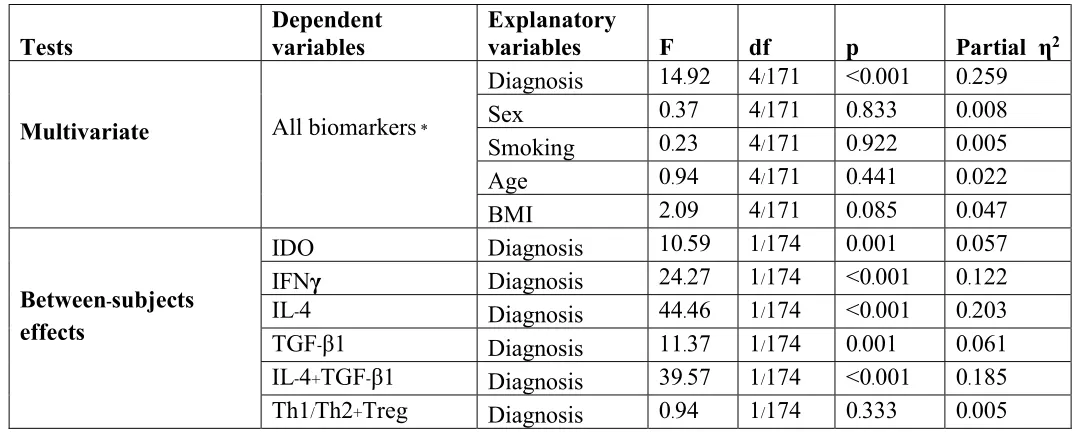
Table 2 shows the outcome of a multivariate GLM analysis with the 6 biomarker values as dependent variables and diagnosis as primary outcome variable, while adjusting for sex, TUD,
age and BMI. We found a highly significant association between the biomarkers (at baseline)
and diagnosis. Tests for between-subjects effects showed that IDO, the three cytokines /
chemokines and the Th2 + Treg score, but not the Th1 /Th2 + Treg score, were significantly
associated with diagnosis with a particularly strong effect on IL-4 (partial η2=0.203), the Th2 +
Treg index (partial η2=0.185) and IFN-γ (partial η2=0.122). There were no significant
associations between diagnosis and the Th1 / Th2 + Treg score.
Table 2 also shows that there were no significant effects of age, sex, TUD and BMI on
the 6 immune biomarkers. In addition, multivariate GLM analysis showed that there were no
significant effects of employment status (F=0.07, df=4/213, p=0.990), the rural / urban ratio
(F=0.21, df=4/213, p=0.932) and marital status (F=2.21, df=4/213, p=0.069).
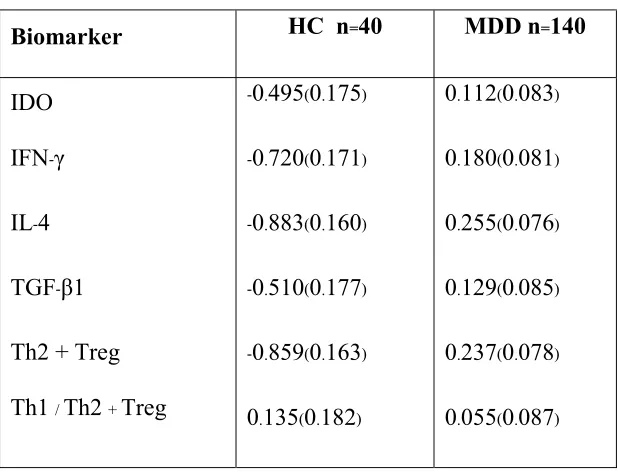
Table 3 shows the model-generated estimated marginal mean (in z transformations) values of the 6 biomarkers obtained by the GLM analysis shown in Table 2. The levels of IDO,
IFN-γ, IL-4, TGF-β and the Th2 + Treg index were all significantly greater in MDD than in
11
Effects of treatments on the BDI-II score and immune biomarkers.
Table 4 shows the baseline characteristics of both treatment groups. We found no significant differences in any of the demographic (age, sex, marital and employment status,
urban/rural ratio) and clinical (baseline BDI, BMI and TUD) data between both treatment
groups. In addition, there were no significant differences in any of the baseline biomarker levels
between both treatment groups. There were also no significant differences in age, sex ratio,
smokers, BDI-II score, IDO, IFN-γ, IL-10 and TGF-β1 between the 44 MDD patients who had
biomarker assays after treatment and the remaining 96 MDD patients.
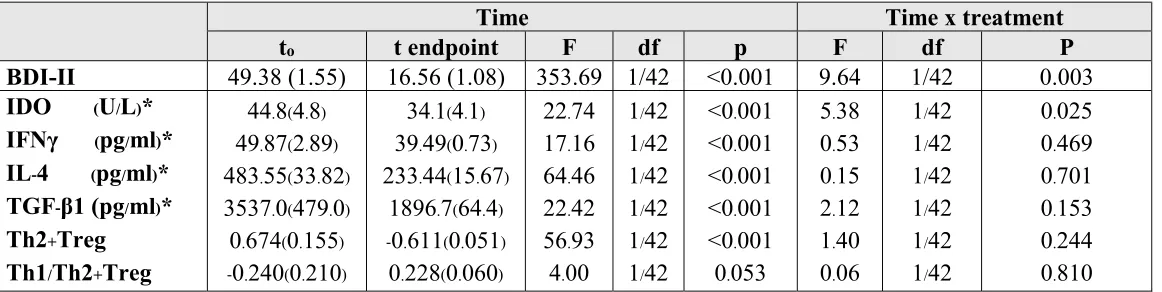
Table 5 shows the results of LMM analysis, namely the effects of treatment on the BDI and the 6 immune biomarkers. Shown are the effects of time and treatment X time, as well as the
pre- and post-treatment mean (SE) values. We found that treatment (time) significantly reduced
the BDI-II score. There was also a significant time X treatment effect showing that the effects of sertraline + ketoprofen (pre-treatment and post-treatment means (SE): 48.8 ±1.9 and 13.4 ±1.3,
respectively) was significantly greater than those of sertraline + placebo (49.9 ±2.5 and 19.7
±1.7, respectively). There were no significant effects of any on the background variables on
these effects (sex, age, MBI, TUD, marital and employment status, and rural/urban ratio). There
were significant effects of treatment (time) on IDO, all 4 cytokines and the Th2 +Treg index, but
not the Th1 / Th2 + Treg index. We also found a significant treatment X time interaction on IDO
with a significantly greater effect of sertraline + ketoprofen (pre-treatment and post-treatment
means (SE): 48.7 ±5.2 U/L and 33.0 ±4.3 U/L, respectively) as compared with sertraline +
12
Using LMM analysis we also examined the associations between changes in the BDI-II
and biomarker levels. LMM analysis (adjusted for treatment and all extraneous variables shown
in table 1) showed significant positive associations between BDI-II and IDO (F=18.14, df=1/55,
p<0.001), IFN-γ (F=12.54, df=1/71, p=0.001), IL-4 (F=48.09, df=1/82, p<0.001), TGF-β
(F=22.24, df=1/60, p<0.001), and the Th2 + Treg index (F=55.62, df=1/69, p<0.001), but not the
Th1 / Th2 + Treg index (F=3.87, df=1/67, p=0.053). Entering all biomarkers as explanatory
variables in a LMM analysis (repeated measurements) with BDI-II as dependent variable showed
that the BDI-II score from baseline to endpoint was significantly associated with IDO (F=20.38,
df=1/75, p<0.001), IL-4 (F=13.01, df=1/74, p=0.001) and TGF-β (F=6.97, df=1/56, p=0.011).
There were no significant associations (even without p-correction) between any of the baseline
biomarker data and the post-treatment BDI-II values or the residualized post-treatment BDI
values (after regression on the baseline BDI-II values). LMM analysis (adjusted for treatment
and all extraneous variables shown in table 1) showed significant positive associations between
IDO and IL-4 (F=9.50, df=1/66, p=0.003), but not any of the other cytokines.
Discussion
1-Comparison of the baseline biomarkers between MDD patients and controls
The first major finding of this study is that IDO and the three cytokines measured here
were significantly higher in MDD patients than in normal controls. A significant increase in IDO
levels in MDD patients was previously reported in some papers (Zoga et al., 2014; Kopschina
Feltes et al., 2017). Not all authors, however, could find increased IDO activity as estimated by
the kynurenine / TRP ratio in MDD (Maes et al., 2011c). Higher levels of serum IDO and
13
baseline in MDD patients as compared with healthy controls (Zoga et al., 2014). Increased
activity of IDO may result in depletion of serotonin and an increase in neurotoxic and excitotoxic
TRYCATs, including kynurenine and quinolinic acid (Kim et al., 2012; Quak et al., 2014,
Badawy et al 2017). Increased levels of quinolinic acid, for example, may impair the reuptake of
glutamate into synaptic vesicles, which leads to the production of reactive oxygen and nitrogen
species and up-regulates proinflammatory chemokines and cytokines in astrocytes (Bay-Richter
et al., 2015, Mechawar & Savitz 2016). The significant increases in serum IFN-γ, IDO, IL-4,
TGF-β as well as the Th2 + Treg index, indicate activation of immune pathways coupled with
CIRS activation. The latter should be viewed as an adaptive process which attempts to
compensate for the activated immune-inflammatory pathways (Maes and Carvalho, 2018).
Increased levels of IL-4 and TGF-β1 in MDD patients may occur secondarily to the primary
immune-response comprising Th1 and M1 macrophagic activation (Maes and Carvalho, 2018).
There are now many meta-analysis studies showing that depression is accompanied by an
inflammatory response with increased levels of pro-inflammatory and
immune-regulatory CIRS cytokines (Strawbridge et al., 2015; Köhler et al., 2017). Increased IFN-γ levels
in MDD patients have been reported previously (Maes et al., 1994; Dahl et al., 2014; Al-Hakeim
et al., 2018b). Previous research reported increased IL-4 levels in MDD patients as compared
with controls (Pavón et al., 2006), while others were unable to find such differences (Köhler et
al., 2017). Although increased IL-4 may initially constitute a protective response (by regulating
M1 and Th1 activation), this Th2 cytokine also exhibits more detrimental effects. For example,
in vitro studies show that IL-4 may diminish IDO expression in dendritic cells (Tu et al., 2017)
(thereby decreasing the protective CIRS effects of the TRYCAT pathway), reduce dendritic cell
14
(Yao et al., 2005; Tu et al., 2017). This may explain that IL-4 is involved in certain types of
inflammatory diseases by orchestrating the functional phenotype of dendritic cells (Tu et al.,
2017).
Finally, while the current study reports increased TGF-β1 levels in MDD, a previous
meta-analysis did not find any changes in this cytokine (Köhler et al., 2017). Earlier research
suggested that TGF-β1 may play a role in the pathophysiology of depression in patients who
have an imbalance in Th1 and Th2 cytokines (Myint et al., 2005). Interestingly, we found that
the ratio of Th1 / Th2 + Treg (computed as a z unit weighted composite score) was not
significantly increased in MDD as compared with controls, while all three cytokines were
increased in the acute phase of depression. This shows that the acute phase of depression is
accompanied by an immune response with an interrelated activation of Th1, Th2 and Treg
phenotypes and that there is no predominance of one of these phenotypes. This contrasts for
example the findings in first episode psychosis, which is characterized by a significant
predominance of M1 and Th1 versus Th2 and Treg phenotypes (Nunes Noto et al., 2018).
Unfortunately, there are no other results on the M1 + Th1 / Th2 + Treg ratio in MDD patients.
2-Association between baseline IDO and cytokine levels
IFN-γ is the most important stimulus of IDO1 activity and thus increased IFN-γ levels in
MDD may in theory explain IDO activation (Maes et al., 1994; Bonnacorso et al., 2002; Connor
et al., 2008). This may have dire consequences because overproduction of pro-inflammatory
cytokines, such as IFN-γ, can indirectly stimulate glutamatergic signaling by increasing IDO
activity (Lichtblau et al., 2013; Mechawar & Savitz 2016). Nevertheless, in contrast to our a
15
the Th1 / Th2 + Treg ratio, while there was an unexpected positive association between baseline
IDO and IL-4 levels. These findings may be explained by the use of ELISA methods which are
less sensitive to measure IFN-γ in the lower secretion range. Phrased differently, IL-4 is probably
a better, more sensitive indicant of the immune response than IFN-γ. Moreover, IDO is not only
activated by IFN-γ, but also IL-1β, IL-6, and TNF-α may increase IDO expression in both central
and peripheral immune-competent cells (Connor et al., 2008; Maes et al., 2011c). As such,
activated peripheral immune cells and microglia produce M1 and Th1 cytokines that may
contribute to neuroprogression by activating IDO enzyme activity (Leonard and Maes, 2012;
Kopschina Feltes et al., 2017).
3- Effects of antidepressive treatments on the biomarkers.
The second major finding of this study is that antidepressants significantly reduced IDO,
IFN-γ, TGF-β1 and IL-4 concentrations to levels which were in the range of the values observed
in our normal controls. According to Beck’s criteria (Beck 1996), most patients in our study
showed at baseline a severe depression (score between 29 and 63), while after treatment the
BDI-II scores were significantly reduced to values reflecting minimal depression (46.15%), mild
depression (30.77%) and moderate depression (23.08%). There is now evidence that
antidepressant treatments reduce the BDI-II score, which is therefore an adequate outcome
measurement in clinical trials (Kolouri et al., 2016; Zamanian et al., 2017).
Our results that treatment with antidepressants significantly reduces IDO levels extent
those of previous authors. Myint et al. (2007) reported a reduction in IDO levels during
16
antidepressant treatment. Effective treatment with antidepressants decreased IDO levels and
these effects were positively associated with clinical improvement (Zoga et al., 2014).
Already in the 1990ties it was shown that antidepressants have in vitro immune
regulatory effects by lowering the production of pro-inflammatory M1 and Th1 cytokines (Xia et
al., 1996; Maes et al., 1999). A 12-week treatment with antidepressants decreased IFN-γ levels to
concentrations measured in healthy subjects (Dahl et al., 2014). In contrast to our findings, Lee
et al. (2006) found that plasma TGF-β1 levels were significantly increased after 8-week
treatment with sertraline. Treatment with antidepressants and mood stabilizers also attenuates the
acute phase response in MDD, indicating that these drugs have immune regulatory effects in
vivo (Maes et al., 1997). A recent meta-analysis showed that treatment with antidepressants
decreases IL-6 and TNF-α indicating anti-inflammatory effects of antidepressants (Kӧhler et al.,
2018). Sutcigil & Taler (2007) reported that patients with MDD have an imbalance between pro-
and anti-inflammatory cytokines that can be normalized following antidepressant treatment.
Importantly, we found that the normalization of the four immune biomarkers was
associated with clinical improvement as established by significantly reduced BDI-II levels after
treatment. Thus, the current study shows a significant association between decrements in IDO
and Th1, Th2 and Treg responses and clinical efficacy to antidepressants with or without
ketoprofen. In contrast, the meta-analysis study by Kӧhler et al. (2018) could not find a
significant association between antidepressant-induced reductions in cytokine levels and the
clinical efficacy to antidepressants.
Therefore, it could be suggested that the normalization of the more detrimental
components of the immune response may, in theory, be associated with the clinical efficacy of
17
lowered synthesis of neurotoxic and excitotoxic TRYCATs and thus play a role in clinical
improvement or remission. For example, the drug 1-methyltryptophan can inhibit IDO and has
been successful in reducing depressive behaviors following inflammatory challenges in animal
models (O’Connor et al., 2009). Clinical trials using 1-methyltryptophan as a putative anticancer
agent have commenced in humans, although there is some debate as to whether this compound
inhibits human IDO in vivo (Lob et al., 2008). However, IDO production may have
immunosuppressive actions (Maes et al., 2007; Lob et al., 2008) because many TRYCATs have
immune regulatory effects (Maes and Carvalho, 2018). In fact, the TRYCAT pathways is part of
the CIRS and, therefore, suppression of IDO could deteriorate the primary immune response.
Secondly, the reductions in IL-4 following our treatments may attenuate the above-mentioned
more detrimental effects of IL-4, but is of course also accompanied by lowered immune
regulation. Moreover, TGF-β1 has strong negative regulatory effects (Maes and Carvalho, 2018)
although it also has some pro-inflammatory effects including effects on Th17 and Th1 cytokines
(Han et al., 2012). Therefore, it remains unknown whether the significant correlations between
clinical and immune responses as found in the current study indicate causal associations, and if
so, which molecules may explain this association (IDO, IFN-γ, IL-4 and TGF-β1, alone or
together). The most parsimonious explanation at this stage is that during antidepressant treatment
the primary immune response is suppressed and that this is accompanied by a clinical improvent.
4-Add-on effects of ketoprofen
The third major finding of this study is that ketoprofen was significantly more efficacious
in reducing IDO and the BDI-II score than placebo, although ketoprofen had no additional
18
disappeared after p-correction for multiple testing, while neither sertraline nor add-on treatment
with ketoprofen altered the Th1 / Th2 + Treg ratio. Moreover, it should be underscored that the
clinical effect of ketoprofen is not highly relevant; thus, sertraline alone reduced the BDI-II score
from 49.9 at baseline to 19.7 post-treatment, whereas add-treatment with ketoprofen + sertraline
reduced the BDI-II score from 48.8 to 13.4. A double blind, randomized clinical trial reported an
advantage of reboxetine and the COX-2 inhibitor celecoxib over reboxetine and placebo (Müller
et al., 2006). As reviewed in the introduction, there is now some evidence that celecoxib, a
COX-2 inhibitor and different anti-inflammatory and anti-oxidative compounds may augment the
clinical efficacy of antidepressants (Faridhosseini et al., 2014, Maes et al., 2012). Taking all
those results and explanations into consideration, ketoprofen did not fulfill the requirements of a
good antidepressant drug that should specifically target M1 and Th1, while increasing Th2 and
especially Treg functions (Maes et al., 2012a). Moreover, COX-2 inhibitors, and especially their
longer term use, may induce many side effects which in fact could aggravate the
pathophysiology of depression (Maes et al., 2012b). These include increased Th1 activation,
neuroinflammation, oxidative stress, gut permeability and damage to mitochondria and lowered
levels of key antioxidants. Some previous studies reported increased benefit of anti-inflammatory
drugs as adjuvant drugs in MDD patients especially those with increased baseline
proinflammatory activity (Kohler et al., 2014; Krause et al., 2017). Nevertheless, the latter
studies measured only responses of pro-inflammatory mediators to treatment and not Treg
functions (Krause et al., 2017; Al-Hakeim et al 2018).
19
It would have been more interesting if we had included different M1 macrophagic
cytokines, Th1 cytokines including IL-12 and IL-2, Th2 cytokines including IL-5 and especially
the Treg cytokine IL-10. This would allow us to compute more comprehensive immune
activation / CIRS ratios. Moreover, the size of the study sample did not achieve adequate power
(0.658) to detect effects of add-on treatment with ketoprofen, although the effects of treatment on
the measurements were well powered in a post-hoc power analysis (around 0.95).
Conclusions
The acute phase of depression is characterized by an interrelated response in Th1, Th2
and Treg phenotypes and increased IDO levels, while antidepressant treatment with sertraline
normalized all these different phenotypes as well as IDO in association with clinical
improvement. Treatment with sertraline with or without ketoprofen significantly reduced the
BDI-II score, while ketoprofen add-on had a significantly greater effect on the BDI-II score than
placebo. The clinical efficacy of sertraline and sertraline + ketoprofen may be ascribed to a
reduction of the immune response in MDD. However, this treatment may also significantly
reduce the more beneficial properties of Th2 and Treg immune subsets.
Acknowledgements
We would like to thank the staff of the Asia Clinical Laboratory in Najaf city for their help in the
ELISA measurements. We greatly appreciate the continuous cooperation of the staff of the
Psychiatry Unit at Al-Hakeem General Hospital.
20
There was no specific funding for this specific study.
Conflict of interest
The authors have no conflict of interest with any commercial or other association in connection
with the submitted article.
Author’s contributions
All the contributing authors have participated in preparation of the manuscript.
References:
Al-Hakeim HK, Al-Kufi SN, Al-Dujaili AH, Maes M. Serum interleukin levels and insulin
resistance in major depressive disorder. CNS Neurol Disord Drug Targets.
2018b;17(8):618-625.
Al-Hakeim HK, Twayej AJ, Al-Dujaili AH. Reduction in serum IL-1β, IL-6, and IL-18
levels and Beck Depression Inventory-II score by combined sertraline and ketoprofen
administration in major depressive disorder: A clinical trial. Neurol Psychiatry Brain Res
2018;30:148-153.
Al-Hakeim HK. Serum cortisol, immunoglobulins and some complements among depressed
patients. Indian J Clin Biochem 2008;23(1):76-80.
Badawy AAB. Kynurenine Pathway of Tryptophan Metabolism: Regulatory and Functional
Aspects. Int J Tryptophan Res. 2017; 10: 1178646917691938.
Bay-Richter C, Linderholm KR, Lim CK, Samuelsson M, Träskman-Bendz L, Guillemin GJ,
N-21
methyl-D-aspartate receptor in depression and suicidality. Brain Behav Immun.
2015;43:110-7.
Beck AT, Steer RA, Brown GK. 1996. Manual for the Beck depression Inventory-II. San
Antonio, TX: Psychological Corporation.
Blatteau JE, de Maistre S, Lambrechts K, Abraini J, Risso JJ, Vallée N. Fluoxetine stimulates
anti-inflammatory IL-10 cytokine production and attenuates sensory deficits in a rat model of
decompression sickness. J Appl Physiol (1985). 2015 Dec 15;119(12):1393-9.
Bonaccorso S, Marino V, Puzella A, Pasquini M, Biondi M, Artini M, Almerighi C, Verkerk
R, Meltzer H, Maes M. Increased depressive ratings in patients with hepatitis C receiving
interferon-alphabased immunotherapy are related to interferon-alpha-induced changes in the
serotonergic system. J Clin Psychopharmacol 2002;22(1):86-90.
Brunoni AR, Machado-Vieira R, Zarate CA, Valiengo L, Vieira EL, Benseñor IM, Lotufo
PA, Gattaz WF, Teixeira AL. Cytokines plasma levels during antidepressant treatment with
sertraline and transcranial direct current stimulation (tDCS): results from a factorial,
randomized, controlled trial. Psychopharmacology (Berl) 2014; 231: 1315-1323
Chaves Filho AJM, Lima CNC, Vasconcelos SMM, de Lucena DF, Maes M, Macedo D. IDO
chronic immune activation and tryptophan metabolic pathway: A potential
pathophysiological link between depression and obesity. Prog Neuropsychopharmacol Biol
Psychiatry 2018;80(Pt C):234-249.
Connor TJ, Starr N, O'Sullivan JB, Harkin A. Induction of indolamine 2,3-dioxygenase and
kynurenine 3-monooxygenase in rat brain following a systemic inflammatory challenge: a
22
Dahl J, Ormstad H, Aass HC, Malt UF, Bendz LT, Sandvik L, Brundin L, Andreassen OA.
The plasma levels of various cytokines are increased during ongoing depression and are
reduced to normal levels after recovery. Psychoneuroendocrinology 2014;45, 77-86.
David DJ, Gardier AM. [The pharmacological basis of the serotonin system: Application to
antidepressant response]. Encephale 2016;42(3):255-263.
Faridhosseini F, Sadeghi R, Farid L, Pourgholami M. Celecoxib: a new augmentation strategy
for depressive mood episodes. A systematic review and meta-analysis of randomized
placebo-controlled trials. Hum Psychopharmacol. 2014;29(3):216-23.
Fernandes BS, Dean OM, Dodd S, Malhi GS, Berk M. N-Acetylcysteine in depressive
symptoms and functionality: A systematic review and meta-analysis. J Clin Psychiat
2016;77: e457-e466.
Fields C, Drye L, Vaidya V, Lyketsos C, ADAPT Research Group. Celecoxib or Naproxen
treatment does not benefit depressive symptoms in persons age 70 and older: findings from a
randomized controlled trial. Am J Geriatr Psychiatry. 2012;20(6):505-13.
Gałecki P, Gałecka E, Maes M, Chamielec M, Orzechowska A, Bobińska K, Lewiński A,
Szemraj J. The expression of genes encoding for COX-2, MPO, iNOS, and sPLA2-IIA in
patients with recurrent depressive disorder. J Affect Disord. 2012;138(3):360-6.
Han G, Li F, Singh TP, Wolf P, Wang XJ. The pro-inflammatory role of TGFβ1: a paradox?
Int J Biol Sci. 2012;8(2):228-35.
Hernandez ME, Mendieta D, Pérez-Tapia M, Bojalil R, Estrada-Garcia I, Estrada-Parra S, et
al., 2013. Effect of selective serotonin reuptake inhibitors and immunomodulator on cytokines
levels: an alternative therapy for patients with major depressive disorder. Clin Dev Immunol
23
Horikawa H, Kato TA, Mizoguchi Y, Monji A, Seki Y, Ohkuri T, Gotoh L, Yonaha M, Ueda
T, Hashioka S, Kanba S. Inhibitory effects of SSRIs on IFN-γ induced microglial activation
through the regulation of intracellular calcium. Prog Neuropsychopharmacol Biol Psychiatry.
2010;34(7):1306-1316.
Kim H, Chen L, Lim G, Sung B, Wang S, McCabe MF, Rusanescu G, Yang L, Tian Y, Mao
J. Brain indoleamine 2,3-dioxygenase contributes to the comorbidity of pain and depression. J
Clin Invest 2012;122(8):2940-54.
Köhler CA, Freitas TH, Maes M, de Andrade NQ, Liu CS, Fernandes BS, Stubbs B, Solmi
M, Veronese N, Herrmann N, Raison CL, Miller BJ, Lanctôt KL, Carvalho AF. Peripheral
cytokine and chemokine alterations in depression: A meta-analysis of 82 studies. Acta
Psychiatr Scand 2017; 135(5):373-387.
Köhler CA, Freitas TH, Stubbs B, Maes M, Solmi M, Veronese N, de Andrade NQ, Morris G,
Fernandes BS, Brunoni AR, Herrmann N, Raison CL, Miller BJ, Lanctôt KL, Carvalho AF
Peripheral alterations in cytokine and chemokine levels after antidepressant drug treatment for
major depressive disorder: Systematic review and meta-analysis. Mol Neurobiol
2018;55(5):4195-4206.
Köhler O, Benros ME, Nordentoft M, Farkouh ME, Iyengar RL, Mors O, Krogh J. Effect of
anti-inflammatory treatment on depression, depressive symptoms, and adverse effects: a
systematic review and meta-analysis of randomized clinical trials. JAMA Psychiatry.
2014;71(12):1381-91.
Kolouri S, Firoozabadi A, Salehi A, Zarshenas MM, Dastgheib SA, Heydari M, Rezaeizadeh
24
the treatment of major depression: A double blind randomized controlled trial. Complement
Ther Med. 2016;26:164-70.
Kopschina Feltes P, Doorduin J, Klein HC, Juárez-Orozco LE, Dierckx RA,Moriguchi-Jeckel
CM, de Vries EF. Anti-inflammatory Treatment for major depressive disorder: implications
for patients with an elevated immune profile and non-responders to standard antidepressant
therapy. J Psychopharmacol 2017;31(9):1149-1165.
Krause D, Myint A-M, Schuett C, Musil R, Dehning S, Cerovecki A, Riedel M, Arolt V,
Schwarz MJ, and Müuller N. High kynurenine (a tryptophan metabolite) predicts remission in
patients with major depression to add-on treatment with celecoxib. Front Psychiatry
2017;8:16. doi: 10.3389/fpsyt.2017.00016.
Lee KM, Kim YK. The role of IL-12 and TGF-beta1 in the pathophysiology of major
depressive disorder. Int Immunopharmacol. 2006;6(8):1298-304.
Leonard B, Maes M. Mechanistic explanations how cell-mediated immune activation,
inflammation and oxidative and nitrosative stress pathways and their sequels and
concomitants play a role in the pathophysiology of unipolar depression. Neurosci Biobehav
Rev. 2012;36(2):764-85.
Lichtblau N, Schmidt FM, Schumann R, Kirkby KC, Himmerich H. Cytokines as biomarkers
in depressive disorder: current standing and prospects. Int Rev Psychiatry.
2013;25(5):592-603.
Lob S, Konigsrainer A, Schafer R, Rammensee HG, Opelz G, Terness P. Levo- but not
dextro-1-methyl tryptophan abrogates the IDO activity of human dendritic cells. Blood.
25
Maes M, Carvalho AF. The compensatory immune-regulatory reflex system (CIRS) in
depression and bipolar disorder. Mol Neurobiol 2018; 55(12):8885-8903.
Maes M, Delange J, Ranjan R, Meltzer HY, Desnyder R, Cooremans W, Scharpé S. Acute
phase proteins in schizophrenia, mania and major depression: modulation by psychotropic
drugs. Psychiatr Res 1997a: 66:1-11.
Maes M, Fišar Z, Medina M, Scapagnini G, Nowak G, Berk M. New drug targets in
depression: inflammatory, cell-mediated immune, oxidative and nitrosative stress,
mitochondrial, antioxidant, and neuroprogressive pathways. And new drug candidates--Nrf2
activators and GSK-3 inhibitors. Inflammopharmacology 2012b;20(3):127-50.
Maes M, Galecki P, Verkerk R, Rief W. Somatization, but not depression, is characterized by
disorders in the tryptophan catabolite (TRYCAT) pathway, indicating increased indoleamine
2,3-dioxygenase and lowered kynurenine aminotransferase activity. Neuro Endocrinol Lett
2011c;32(3):264-73.
Maes M, Mihaylova I, Ruyter MD, Kubera M, Bosmans E. The immune effects of TRYCATs
(tryptophan catabolites along the IDO pathway): relevance for depression - and other
conditions characterized by tryptophan depletion induced by inflammation. Neuro Endocrinol
Lett. 2007;28(6):826-31.
Maes M, Scharpé S, Meltzer HY, Okayli G, Bosmans E, D'Hondt P, Vanden Bossche BV,
Cosyns P. Increased neopterin and interferon-gamma secretion and lower availability of
L-tryptophan in major depression: further evidence for an immune response. Psychiatry Res.
26
Maes M, Song C, Lin AH, Bonaccorso S, Kenis G, De Jongh R, Bosmans E, Scharpé S.
Negative immunoregulatory effects of antidepressants: inhibition of interferon-gamma and
stimulation of interleukin-10 secretion. Neuropsychopharmacology 1999;20(4):370-9.
Maes M, Verkerk R, Bonaccorso S, Ombelet W, Bosmans E, Scharpé S. Depressive and
anxiety symptoms in the early puerperium are related to increased degradation of tryptophan
into kynurenine, a phenomenon which is related to immune activation. Life Sci.
2002;71(16):1837-48.
Maes M. Targeting cyclooxygenase-2 in depression is not a viable therapeutic approach and
may even aggravate the pathophysiology underpinning depression. Metab Brain Dis.
2012a;27(4):405-13.
Maes M, Leonard BE, Myint AM, Kubera M, Verkerk R. The new '5-HT' hypothesis of
depression: cell-mediated immune activation induces indoleamine 2,3-dioxygenase, which
leads to lower plasma tryptophan and an increased synthesis of detrimental tryptophan
catabolites (TRYCATs), both of which contribute to the onset of depression. Prog
Neuropsychopharmacol Biol Psychiatry. 2011b;35(3):702-721.
Maes M. A review on the acute phase response in major depression. Rev Neurosci.
1993;4(4):407-16.
Maes M. Depression is an inflammatory disease, but cell-mediated immune activation is the
key component of depression. Prog Neuropsychopharmacol Biol Psychiatry
2011a;35(3):664-75.
Mechawar N, Savitz J. Neuropathology of mood disorders: do we see the stigmata of
27
Müller N, Schwarz MJ, Dehning S, Douhe A, Cerovecki A, Goldstein-Müuller B, Spellmann
I, Hetzel G, Maino K, Kleindienst N, Mӧller H-J, Arolt V, Riedel M. The cyclooxygenase-2
inhibitor celecoxib has therapeutic effects in major depression: results of a double-blind,
randomized, placebo controlled, add-on pilot study to reboxetine. Molecular Psychiatry 2006;
11, 680-684.
Müller N. The role of anti-inflammatory treatment in psychiatric disorders. Psyhicatria
Danubina. 2013;25(3):292-8.
Myint AM, Kim YK, Verkerk R, Scharpe S, Steinbusch H, Leonard B. The role of the
kynurenine metabolism in major depression: evidence of impaired neuroprotection. J Affect
Disord. 2007;98:143-51.
Myint AM, Leonard BE, Steinbusch HW, Kim YK. Th1, Th2, and Th3 cytokine alterations in
major depression. J Affect Disord 2005;88(2):167-73.
Nunes Noto M, Maes M, Odebrecht Vargas Nunes S, Kiyomi Ota V, Rossaneis AC, Verri
WA, Cordeiro Q, Belangero SI, Gadelha A, Affonseca Bressan R, Noto C. Activation of the
Immune-Inflammatory Response System and the Compensatory Immune-Regulatory Reflex
System in Antipsychotic Naive First Episode Psychosis. Preprints 2018, 2018090314 (doi:
10.20944/preprints201809.0314.v1).
O’Connor JC, Andre C, Wang Y, et al. Interferon-gamma and tumor necrosis factor-alpha
mediate the upregulation of indoleamine 2,3- dioxygenase and the induction of
depressive-like behavior in mice in response to bacillus Calmette-Guerin. J Neurosci.
28
Pavón L, Sandoval-López G, Eugenia Hernández M, Loría F, Estrada I, Pérez M, Moreno J,
Avila U, Leff P, Antón B, Heinze G. Th2 cytokine response in Major Depressive Disorder
patients before treatment. J Neuroimmunol 2006;172(1-2):156-65.
Quak J, Doornbos B, Roest AM, Duivis HE, Vogelzangs N, Nolen WA, Penninx BW, Kema
IP, de Jonge P. Does tryptophan degradation along the kynurenine pathway mediate the
association between pro-inflammatory immune activity and depressive symptoms?
Psychoneuroendocrinology. 2014;45:202-10.
Song C, Lin A, Bonaccorso S, Heide C, Verkerk R, Kenis G, Bosmans E, Scharpe S, Whelan
A, Cosyns P, de Jongh R, Maes M. The inflammatory response system and the availability of
plasma tryptophan in patients with primary sleep disorders and major depression. J Affect
Disord. 1998;49(3):211-9.
Strawbridge R, Arnone D, Danese A, Papadopoulos A, Herane Vives A, Cleare AJ.
Inflammation and clinical response to treatment in depression: A meta-analysis. Eur
Neuropsychopharmacol. 2015 Oct;25(10):1532-43. doi: 10.1016/j.euro
Sutcigil L, Oktenli C, Musabak U, Bozkurt A, Cansever A, Uzun O, Sanisoglu SY,Yesilova
Z, Ozmenler N, Ozsahin A, Sengul A. Pro- and anti-inflammatory cytokine balance in
major depression: effect of sertraline therapy. Clin Dev Immunol 2007;2007:76396.
Tu L, Chen J, Zhang H, Duan L. Interleukin-4 Inhibits Regulatory T Cell Differentiation
through Regulating CD103+ Dendritic Cells. Front Immunol 2017;8:214.
Xia Z, DePierre JW, Nässberger L. Tricyclic antidepressants inhibit IL-6, IL-1 beta and
TNF-alpha release in human blood monocytes and IL-2 and interferon-gamma in T cells.
29
Yao Y, Li W, Kaplan MH, Chang CH. Interleukin (IL)-4 inhibits IL-10 to promote IL-12
production by dendritic cells. J Exp Med. 2005;201(12):1899-903.
Zamanian A, Jolfaei AG, Mehran G, Azizian Z. Efficacy of Botox versus Placebo for
Treatment of Patients with Major Depression. Iran J Public Health 2017; 46(7):982-984.
Zoga M, Oulis P, Chatzipanagiotou S, Masdrakis VG, Pliatsika P, Boufidou F, Foteli S,
Soldatos CR, Nikolaou C, Papageorgiou C. Indoleamine 2,3-dioxygenase and immune
changes under antidepressive treatment in major depression in females. In Vivo.
30
Table 1: Socio-demographic, clinical and biomarker datain healthy controls (HC) and major depressed (MDD) patients both
before (baseline) and after (post-) treatment.
Variables
HCᴬ
n=40
MDDᴮ Baseline
n=140
MDDC
Post-treatment
n=44
F/χ²
df p
Age (years) Sex (F/M) Smoking (Y/N)
Employment (Y/N)
Rural / Urban
Married / Single
BMI (kg/m²) IDO (U/L)* IFNγ (pg/ml)* IL-4 (pg/ml)* TGF-β1 (pg/ml)* zIL-4 + zTGF-β1 zIFNγ-zIL-4+zTGF-β1
40.3(7.9) 18/22
40/0 18/22 29/11 22/18 27.7(4.2) 31.35(11.27)ᴮ
32.34(9.33)ᴮ 198.29(51.49)ᴮ 2102.4(589.9)ᴮ
-0.68(0.55) +0.03(0.88)
39.0(10.6) 62/78 82/58 81/59 67/73 51/89 27.6(16.8) 41.11(18.28)ᴬ 46.18(17.68)ᴬ 392.85(184.62)ᴬ
2875(1892.5)ᴀ +0.42(0.99) -0.15(1.12)
39.1(10.6) 16/28 31/13 24/20 16/28 7/37 26.4(4.7) 30.64(6.77) 35.94(4.99) 219.39(59.36) 1848.8(352.4) -0.71(0.44) +0.44(0.37)
0.27 0.95 24.78
2.08 6.00 14.03
0.13 9.59 17.35 42.56 19.12 46.23 6.14
2/221 1 2 2 2 2 2/221 2/221 2/221 2/221 2/221 2/221 2/221
0.764 0.622 <0.001
0.353 0.050 0.001 0.877 <0.001 <0.001 <0.001 <0.001 <0.001 0.003
(*): Processed in Ln transformation
BMI: body mass index; IDO: indeoleamine-2,3-dioxygenase: IFN: interferon; TGF: transforming growth factor-β1
31
Table 2: Results of multivariate GLM analysis with the biomarkers as dependent variables and diagnosis as explanatory
variable while adjusting for extraneous variables.
Tests
Dependent variables
Explanatory
variables F df p Partial η2
Multivariate
All biomarkers *
Diagnosis 14.92 4/171 <0.001 0.259
Sex 0.37 4/171 0.833 0.008
Smoking 0.23 4/171 0.922 0.005
Age 0.94 4/171 0.441 0.022
BMI 2.09 4/171 0.085 0.047
Between-subjects
effects
IDO Diagnosis 10.59 1/174 0.001 0.057
IFNγ Diagnosis 24.27 1/174 <0.001 0.122
IL-4 Diagnosis 44.46 1/174 <0.001 0.203
TGF-β1 Diagnosis 11.37 1/174 0.001 0.061
IL-4+TGF-β1 Diagnosis 39.57 1/174 <0.001 0.185
Th1/Th2+Treg Diagnosis 0.94 1/174 0.333 0.005
Diagnosis: entered as major depression (baseline values only) versus healthy controls.
BMI: body mass index;
32
Table 3: Model-derived estimated marginal means of the biomarkers data (in z-values/estimated after multivariate GLM
analysis Table 2).
Biomarker HC n=40 MDD n=140
IDO
IFN-γ
IL-4
TGF-β1
Th2 + Treg
Th1 / Th2 + Treg
-0.495(0.175)
-0.720(0.171)
-0.883(0.160)
-0.510(0.177)
-0.859(0.163)
0.135(0.182)
0.112(0.083)
0.180(0.081)
0.255(0.076)
0.129(0.085)
0.237(0.078)
0.055(0.087)
33
Table 4: Socio-demographic, clinical, and biomarkers data of major depressed patientsallocated to the ketoprofen+sertraline
and placebo+sertralinetreatment groups.
Variables Sertraline n=16 Sertraline+ketoprofen
n=28 F / X² df p
Age (years) BMI (kg/m)² Sex (F/M)
Married / Single
Rural / Urban
Employee (Y/N) Smoking (Y/N) BDI (Baseline) IDO (U/L)* IFNγ (pg/ml)* IL-4 (pg/ml)* TGF-β1 (pg/ml)*
38.5(11.8) 25.6(5.4)
6/10 3/13 4/12 7/9 10/6 49.9(8.3) 37.73(13.83) 49.91(17.19) 511.68(199.70) 3547.3(3410.9)
39.4(10.1) 26.9(4.3)
10/18 4/24 12/16 17/11 21/7 48.8(10.7) 45.51(18.87) 49.82(19.08) 441.82(197.53) 3513.7(2803.9)
0.07 0.75 0.01 .. 1.40 1.18 0.76 0.13 2.88 0.01 1.25 0.55
1/42 1/42 1 - 1 1 1/42 1/42 1/42 1/42 1/42 1/42
0.801 0.392 0.906 .. 0.236 0.277 0.382 0.720 0.097 0.907 0.271 0.465
(*): Processed in ln transformation
34
Table 5: Results of linear mixed model analyses (repeated measurements) performed on the biomarkers
Time Time x treatment
to t endpoint F df p F df P
BDI-II 49.38 (1.55) 16.56 (1.08) 353.69 1/42 <0.001 9.64 1/42 0.003
IDO (U/L)* IFNγ (pg/ml)* IL-4 (pg/ml)* TGF-β1 (pg/ml)*
Th2+Treg
Th1/Th2+Treg
44.8(4.8) 49.87(2.89) 483.55(33.82) 3537.0(479.0) 0.674(0.155) -0.240(0.210)
34.1(4.1) 39.49(0.73) 233.44(15.67)
1896.7(64.4) -0.611(0.051) 0.228(0.060)
22.74 17.16 64.46 22.42 56.93 4.00
1/42 1/42 1/42 1/42 1/42 1/42
<0.001 <0.001 <0.001 <0.001 <0.001 0.053
5.38 0.53 0.15 2.12 1.40 0.06
1/42 1/42 1/42 1/42 1/42 1/42
0.025 0.469 0.701 0.153 0.244 0.810
* All data were processed in Ln tarnsformation