GLOBALIZATION AND FAMILY VALUES: ERODING TRENDS
K. M. Atikur Rahman1
Dunfu Zhang2+
1Research Fellow Ph.D. Program School of Sociology and Political Science
Shanghai University, Shanghai, China
2Professor of Sociology School of Sociology and Political Science Shanghai
University 99, Shangda Road, Shanghai, China
(+ Corresponding author)
ABSTRACT
Article History Received: 17 July 2017 Revised: 22 August 2017 Accepted: 5 September 2017 Published: 11 September 2017
Keyword
s
Family structure Behavioral values Virtual media Individualism Aesthetic pleasure Elderly members.
The paper focuses on globalization process and its impact on family structure and values. Globalization refers to an expedited process of uniformities, universalization and hybridization of materials and culture. It blends all types of socio-economic and cultural activities into a unique form. No society including a cultural structure can go forward without the touches of others in the interconnected and interdependent world. So, cultural conflict generates among all societal structures along with the diversity of global socio-cultural values. The study found some significant outcomes such as traditional extended families are breaking down into nuclear ones especially in the developing countries at recent times that were continued in the western societies for a long time. In addition, relations and value levels in the family environment are being worst leaving the marginal people (children and elderly persons) darkened. The paper aims to find out the bad impacts of globalization on family relations and behavioral values. Qualitative approach has been used herein to make the report fruitfully through the data collection process of content analysis that includes books, journal articles and media reports. Enjoyable material culture can also be taken forward along with bearing the family relations and values, wherein our roots and emotion generate to trigger us to sustainable living and that may be a social movement.
Contribution/ Originality:
The study is one of very few studies which have investigated family structure is rapidly changing through globalization –nuclear family gets popularity across the world breaking down the joint families- to some extents, family system is going to extinct. The paper‟s primary contribution is finding out the decays of family values and behavior in which children and elderly members get vulnerability most as digital media plays a vital role towards family disharmony, break-up, divorce, abortion, and homosexuality.1. INTRODUCTION
Globalization has been the buzzword across the world since 1990s though it started its journey just after World War –II following Bretton Woods Conference, 1944. All aspects of human life transformed by it all nations in the world are touched and influenced – non-human creatures have been changed their characteristics steadily. Globalization shapes a new era before the human civilization having new challenges, new anxieties and new opportunities. It was once a myth; but in course of time it has been turned into an inevitable realty from personal
International Journal of Social and Administrative Sciences
ISSN(e): 2521-0556
DOI: 10.18488/journal.136.2017.22.63.74 Vol. 2, No. 2, 63-74
life to social phenomena. Anyone can taste its bitter experience he can reject. Taking it as a multi-dimensional process, Streeten (2001) states, 'globalization is transforming trade, finance, employment, migration, technology, communications, the environment, social systems, ways of living, cultures, and patterns of governance‟.
Walby (2003) defines globalization as 'a process of increased density and frequency of international or global social interactions relative to local or national ones'. It by no means as globalization spreads its impacting shadow from sleeping bed to walking road to all types of sites, events and biological organs. Here there are some triggering agents of globalism such as communication digital technology, electronic media and English language. At the very beginning stage it commenced its functioning travel only with the purpose of economic and political services; but over the decades it has been extended to socio-cultural matters, environment, family relations and even all the sphere of human being. Globalization makes economic and trade growth sharply – prosperity, fashion, life style, communication system, get significance in all societies – anxiety and complexity of life increase multifold. Even family structure and bondage erode day by day – traditional large family turns into nuclear forms – elderly family members and children lives receive vulnerability. Interior design, home appliances, modern prompt furniture has been characterized as regular and normal aspects of all walks of people but disharmony and misbehavior take place in community life.
Globalization seemed to be a myth once; but presently it does mean just a reality even it is a discourse. World order actually is evolving by the influenced by it-economic phenomena and socio-political aspects are getting new shape –all the things are going to a uniformed track. The society that is beneficial it advocates the process. But the other nations or societies do not receive it positive as different types of dilemma gets momentum. The developing nations are mostly affected by globalism-perhaps their economies absorbs some opportunities-but their social conditions become more vulnerable especially family and behavioral approaches go beyond its positive traditionalism. Many sociologists may said that it is one kind of modernity – this will increase our living conditions – but they cannot say about the vulnerability of values, emotional and behavioral necessity that make a nexus between the generations within family members or others. Globalization gives us instant pleasure, thrilling, radical dreams and exciting something that cannot be avoided by the young generation. So from society to society it is being scattered overnight by digital media. All these things happened actually in absent mind of all the stakeholders.
1.1. Literature Review
Literature review is an important part of a research report. It is significant because it shows the rationale and scope of the study. Through the review we can know which fields have already been researched and which area we can study from. I reviewed a good number of literatures related to the fields critically and these are stated bellow:
In the workshop paper “Documenting Family Patterns in South Africa: Are Census Data of any Value?” Ziehl (2001) shows that more recently; the notion of family diversity has emerged very strongly as a theme of family sociology. And once again this has been couched in terms of change: the most popular position being that there is an increasing trend away from the (conventional) nuclear family and towards „family diversity‟ (divergence thesis). The question of whether or not and how family patterns have changed historically has therefore been a central concern of family sociology
Grishma (2009) in the article "The impact of economic globalization on work and family collectivism in India", examined that in an increasingly globalizing India, young Indians will strive to preserve traditional values of collectivity when it comes to family, but will loosen their reins on work-place collectivism.
This article canvasses the two leading trajectories in the historiography of Canadian families: the demographic and the social and state regulatory. It also critically assesses the dominant historiographical view of the liberal order and the family which sees the latter largely as a sphere of economic relations. I also advance new theoretical departures and advocate the use of previously untapped sources such as familial correspondence, personal diaries, and legal records which will allow historians to explore the cultural directions of family life (Christie, 2012).
From above stated literature review I can view that there is a plenty of scope to study with family values. Because, the literatures reviewed shows in the context of globalization and Asian societies researches with family values had not yet been conducted. Relations, values, behavioral conditions, and effects on the children and elderly people in family spheres could not been studied yet; so the topic selected claims to be researched.
1.2. Theoretical Perspective: Theory of Global Culture
The study on „Globalization and Family Values‟ actually gets applicability with the „Theory of Global Culture‟. The background, nature, rationale, and contents of the theory resemble the family globalization and its consequences. Here, I will state all the matters of family values in the age of globalization in the supportive point of view of global culture. Globalization influences different cultures of the world to bring a uniformed track and already it reached the goal. From North to South and West to east, all forms of social or other culture get uniformed and universalized. It is observed that Westernization of culture is being established globally that actually promotes the materialism, individualism, feminism, and Aesthetism. These cultures erode the family structure and values turning into nuclear forms and behavioral and moral activities get westernized. Break-up, abortion, homosexuality, violence etc. are getting established in the East. Through media oriental people while watch the aesthetic and consumer culture of the West, they become encouraged to adopt the things as they are make pleasure for the sensual organs instantly. So, family changes are ultimately the results of global culture. In this connection I have some observations that the changes are not happier to all; actually they mostly conflictive and negative. This study, in fact, discloses the negative aspects in the report.
Globalization refers to-"The compression of the world and the intensification of consciousness of the world as a whole" (Robertson, 1992)
In thought and action, it makes the world a single place. What it means to live in this place, and how it must be ordered, become universal questions. These questions receive different answers from individuals and societies that define their position in relation to both a system of societies and the shared properties of humankind from very different perspectives. The confrontation of their world views means that globalization involves- "Comparative interaction of different forms of life" (Robertson: 27).
According to Robertson we can see that world is turning into a single place and in this way family values and relations are going aggregated into a unique place following the global norms and styles. The families of elsewhere in the world cannot run themselves on their own value-paths. So we would be able to find out the changing realities as well as the changing conflicts. And changing conflicts may contrast the theory and try to give suggestion where the theory can be in corrective necessity.
1.3. Research Questions
There have been set up several research questions to specify study area and that would be definite and right works to get proper answers. These are as follows:
How does globalization affect the family values?
What are the bad impacts of globalization on women, children and elderly people?
2. METHODS AND MATERIALS
This is an explanatory type of research work which will be conducted in inductive method. As statistical data is not its main inputs, it is a study of qualitative approach that has used secondary source of data materials through content analysis. We have collected data from academic books, journal articles, different official records, and media reports. Moreover, we have a strong empirical observation in the research works. I live in an extended family atmosphere and it is a source of collective pleasure, united efforts to do a vital assignment and that generates interactive emotions. But I observe for a long time that out of 784 families (in a Bangladesh district city, Narayangonj) only 23 families are extended and rest of the families are completely nuclear typed. It is observed that husband and wife are leading their lives through an ever conflict conditions. In these families children are in vulnerable situations as elder class members do not live with them. Mother goes to office living her children to housemaid that is another trouble for misbehaviors to the children.
3. DISCUSS
3.1. Changes in Family Structure
More recently, the changing trends of family structure and diversity appeared very strongly from one society to another. There is an increasing notion that the conventional joint family transform into nuclear family and family diversification. The vital question is that how family pattern have been changed historically and that is central concern of family sociology. Once there was a question of why family sociology have not engaged directly with globalization debate; that has been a changed as a part of time discourse as globalism influences the family and community structure and values sharply. The social ideologies of globalization (migration, immigrant marriage, individualism, consumerist tendency, market economy, media domination) play the striking role in family transformation and diversity. In Asian nations, conventional family culture erodes following the Western cultural patterns through electronic media.
Western society exposes nuclear family as a unique source and mode of economic development – dependency on other family members are regarded as a regretting issue – individual development seems to be an integral part of small family that can be an easier to avert the life complexity. Globalization triggers the economic and trade growth which stimulates the family relations in sense of inclusive prosperity. Migration for jobs at the distant places encourages the young men and women to form an atomic family leaving the other family members in village or elsewhere. These may also be both internal and external migration that is viewed as a strong part of globalization. The quote below aptly illustrates what has become the orthodoxy in family studies.
Many Sociologists believe that we cannot speak about „the family‟, as if there is one model of family life that is more or less universal. The dominance of the nuclear family was steadily eroded over the second half of the twentieth century.… Less than a quarter of households in Britain conform to the model of the traditional family. There are also pronounced differences in family patterns across ethnic minority groups.… For example, Asian households often contain more than one family with children, while black communities are characterized by a large number of lone-parent families. For these reasons it seems more appropriate to speak of „families‟. Referring to families emphasizes the diversity of family forms. While as a shorthand term we may often speak of „the family‟, it is vital to remember what a variety it covers
(Giddens, 2001).
Table-1. Distribution of family and household types in Britain: 1961-1998
Household Type 1961 1971 1981 1991 1998
One Person Household Couples(no children)
Couple with dependent Children Couple with no-dependent children (Nuclear Family Pattern)
Lone Parents (Dependent children) Lone parents
(Non-dependent children)
Multi-family children
11 18
26 27
38 35
10 8
85% 88%
2 3
4 4
3 1
22 26 31 8 87% 5 4 1
27 28
28 28
25 23
8 7
88% 86%
6 7
4 3
1 1
Two or more unrelated adults 5 4 5 3 3
Source:Guardian, 27 March 2000, in2001 Focusing on the nuclear family household alone is not in itself evidence of the decline in the nuclear family over time. Even the claim that the nuclear family household represents a minority of all households is not evidence that it does not „predominate‟ (if that is meant in the statistical sense). As one can notice from the table above, even in the 1960‟s only a minority of households were nuclear family households (38 per cent if one only includes those with dependent children and 48 per cent if non-dependent children are included as well). What one needs to focus on, in determining any change in the (statistical) predominance of the nuclear family pattern,are the various other household structures that make up the „normal‟ nuclear family domestic life cycle. These are couple households (before the birth of children and after they have left home) and the single person household (when one spouse has died and sometimes before marriage). When one adds together these three phases of the nuclear family domestic life cycle, one notice that 85 per cent of households were in one of those phases in 1960 compared with 86 per cent in 1998. This means that the proportion of households, which fall into one of the phases of the „normal‟ nuclear family domestic life cycle, has either remained stable or indeed increased. Looked at from this perspective then, there is hardly any evidence of a massive decline in the popularity of the conventional nuclear family model. This is not to say that there has been no change over the roughly 40 year period depicted in the table. If one focuses on single parent families with dependent children one notices that they have increased from 2 per cent of households in 1961 to 7 per cent of households in 1998 Ziehl (2001). One can, of course, present these statistics more dramatically by saying that single parent families are three times more common today than was the case in 1961 or have experienced a 300 per cent increase etc. However, they still represent a small proportion of all households despite the dramatic rise in the divorce rate. Table-2.Countries with above average levels of extended family households Type of household EU Spain Portugal Ireland Greece Italy Luxem. Single Person 12 5 5 7 8 9 10
Couple Household 24 16 16 14 21 18 20
Nuclear Family 36 34 39 43 38 37 43
Single parent house 4 2 2 4 2 2 4
Extended family 11 21 20 18 13 13 12 Source: European Commission (2001)
In Table 2 only those countries with below average proportions of their population living in single person households are included. They have further been arranged from lowest to highest (proportions of the population living alone). The countries included in Table 2 are also those with above average levels of extended family living.
European Union as a whole. Finally, in all these countries, the proportion of the population living in extended family households is well above the average for Europe. Indeed, in Spain, Portugal and Ireland they are almost twice as common as is the case in Europe as a whole. These differences are even starker if we compare these (mainly) southern countries with that further north.
3.2. Family Relations
There is a profound worries that globalization has a strong impact on people‟s mental and spiritual life. Human lives have become the inevitable part of market process – that may lead to individualism over the society; greed in place of sharing; materialism rather than positive relationships. Conjugal lives are on the cracking down condition. Wives stay all the day time outside (office, courts, etc.) as like their husbands- physical absence make them robotic life squeezing the emotional bondage. They turn into the materialistic kingdom and their personal life become open and free that relax the family relationship causing their children worthless in socio-cultural values. Young members of the families get more and more pleasure on digital devices (computer, internet, Smartphone, face book etc.) rather than mixing and developing interaction with mother, father and other family members. Social media has been become another type of addiction- meaningless love, friendship, sexuality, time passing activities make them detached from blood-connected people or community members – thus moral and behavioral development lack the right path to positive social nexus. Divorce, polygamy, drug addiction, lesbianism, homosexuality are on the regular and common features in all sorts of societies.
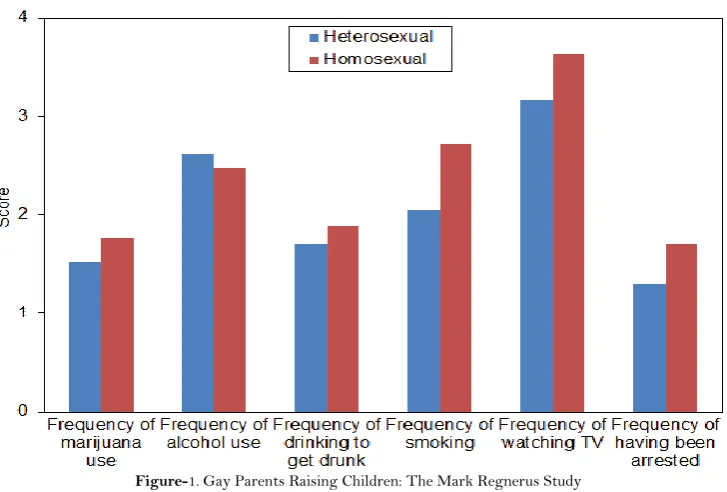
Figure-1. Gay Parents Raising Children: The Mark Regnerus Study Source: www.godandscience.org
Figure 1 shows the behavioral status of the children of heterosexual and homosexual families in USA. Here actually the deviant behaviors of the children exposed and the children of homosexual group are in bad conditions. In regards of marijuana use, drinks to get drunk and smoking homosexual family children are worse than those of the heterosexual group. Globalization provides the individualism in western societies and the children cannot get proper environment to get proper mental development. Homosexuality is one kind of personal rights and there is no complaint against it; but it goes beyond the naturalism and disharmonious pleasure prevails in those families that generate an obscure atmosphere for child behavioral development. Family structures take the bondless social organization – individual life has been becoming merely an instrument of economic activities avoiding the biological and emotional sharing that increase the suicidal cases and unrest situation everywhere. Globalization encourages the consumerist lifestyle resulting in the vulnerability of poor, backward families and their members.
3.3. Bangladesh Case
can lose their money – becoming ever poorer (International Anglican Family Network-IAFN, 2008a). Others, in an attempt to go abroad, are trafficked and many women and children end up trapped in this way.
4. BEHAVIORAL TRANSFORMATION
4.1. Values and Lifestyle
Over the last five years, there have been tremendous changes in the values and lifestyle of the young people. The measure of success has been equated with the five Cs which stand for cash, credit card, car, condominium and career; and not so much on the quality of life and relationships. In pursuing this dream of five Cs, people are motivated to learn and upgrade their knowledge and skills so as to be more marketable. This can be at the expense of time with their families and some companies are shortening the number of working days or allowing employees to work from home. Globalization has not only brought about economic growth but also consumerism and young people has become the target of most commercial advertisements. They are big spenders – unlike the older generation which values thrift and saving.
4.2. Marriage and Children
There is a growing trend for graduates getting married at a later age or choosing to remain single. And the stress from the high cost of living, coupled with stress at work are factors which explain why many married couples have no children or delay having them. The very low birth rate is a serious issue, as Singapore‟s population is ageing fast. By the year 2030, one in every four people will be aged 60 or over (IAFN, 2008b). With the last economic downturn, Singaporeans no longer experience job security; jobs are often on a year‟s contract and renewal is subject to performance. As married couples are caught up in the rat race, they have less time to nurture their relationship. In 2006, the ratio of divorces to marriages showed that one in every three marriages ended in divorce. This has serious consequences for the children and more effort will be needed to prepare people for marriage and parenthood to ensure that the home is a secure base where individuals can experience warmth and love.
4.3. Virtual Addiction
Around 90 per cent of Singaporean has internet connected computers; these are the replace of televisions. Computer is a vital part of life with gaming, passing leisure, and education. Online shopping, e-payment, official tasks are being done by internet based computer. Globalization is mostly successful here to make the lives easier and recreational. Through globalization, information technology brought different countries closer and economic growth with life convenience. But quality life and good relations have been defeated to globalism. There are alternative five core values: contentment, character, commitment, community and compassion. These will help to develop a resilient and cohesive society comprising healthy families. They are the base camp to give security and meaning for our young to venture forth to activate them.
4.4. Pale Humanity
are nuclear form they have no grand fathers or mothers along with. So the children grew in unsocial conditions which once trigger them into a „human darks‟. Nuclear family culture causes the situation marginalized heavily. Traditional family nature erodes influenced by globalization across the world which brings the small members of the family into a company less island.
In many cases, children are grown up in day care centers or child homes as their parents are very busy with their jobs or they are presently separate each other. Globalization begets high volume of trade and economic growth; but on the other hand it breeds the disharmony, inequality, injustice, anti-humanistic norms and changes of social institutions. Global statistics show the high rate of divorce, child abuse, child murder, boom of child and elderly people homes across the globe, malnutrition and adolescent tranquility.
Figure-2. Number of children whose parents are divorced
Source: US National Center for Health Statistics
The graph shows the number of children whose parents are divorced in USA. Here is the statistics for the timeframe between 1950 and1990. The numbers of children of divorced parents rise sharply.
4.5. Women Migrations: Child Vulnerability
In 2001, women accounted for some 47% of all migrants in Asia. For many years, most female migrants have come from the Philippines, Indonesia and Sri Lanka where women make up between 60% and 80% of all migrants. Women are still predominantly entering (or being entered into) the services and welfare sectors. Some skilled migration patterns have been observed but only if admission policies are specifically developed, for example recruitment of nurses and caregivers for the US and Canada. They are preferred as domestic servants, entertainers, workers in sweatshops, hotel workers, and shop attendants. The large numbers of women working as domestic servants and “entertainers” are the most vulnerable to abuse and human rights violations, including mental and physical maltreatment, rape and murder. The demand for female migrants in the Middle East has increased, particularly in the service industries, through the creation of low and unskilled jobs that migrant women are willing to take while the local population is reluctant to do so. They are paid lower than the minimum wage and work longer hours. These jobs are filled by women from the developing countries of Asia, principally Sri Lanka, the Philippines, Indonesia, Thailand, Bangladesh, Pakistan and India. The majority tend to work in private households as domestic workers, but also in the hotel and entertainment industries, the latter sometimes being euphemism for commercial sex.
Hong Kong opened up its market to foreign domestic workers in the late 1970s. For the Hong Kong populace this meant encouraging more and more women to be part of the lab our force – especially as foreign domestic helpers. But in 1987 New Conditions of Stay restricted the rights of such immigrants to negotiate their contracts or to stay more than two weeks in Hong Kong when their contract was terminated. This ensured a faster turnover of the easily available and vast pool of cheap women migrant labor, putting more pressure on them in favors of the employers. It often forces the migrant women to accept inhuman treatment and sub-standard living conditions, so that local employers and the national economy can directly benefit from their under-recognized.
4.6. Emerging Family Clouds
Couple life is considered a nest of rest, exchanging unit of emotions, and fatigue removing forum. It is a natural and ancient social institution emerged on the demand of natural and biological satisfaction that mate the people refreshed and recharged to further jobs. But this unit is gradually declining all over in the wave of globalization. Instead of the social platform, secondary socio-business organizations get popularity to give refreshment and recreation like family activity. For example, club, bar, disco center, massage center, hotel, motel, spa, and restaurants are being flooded all over the world. These organizations provides a lot of entertaining events and product items such as wine, beer, cigar, coffee, dancing, gossiping,
Gambling, and having sex. Young and middle aged people gather here and these activities are increasing in all type of societies. These arrange different tastes of refreshing events but my question is they the replacement of family entertainment. No, these are not so. They are doing business in name of the taste of family relations though these are the source of instant pleasure that can get rid of mental stress involved. Such type of socio-business culture gets significant due to the disharmonious conditions in family arena.
For the children and youth who are left by their parent/s in the home country, the social impact is unprecedented. Many grow up with their guardians, not really knowing their parents, and their sense of belonging to a family is tarnished. The only sense of identification with their migrant parent/s is monetary – they are the ones who send them greeting cards on their birthdays and money for special occasions. It is not surprising, therefore, that separation from their parents often breeds low grades in school and social vices such as drug addiction.
4.7. Break-up
against women was in a terrible condition in the whole world. But break-up does not always bring the positive message for the other family members as well as the husband –wife is not in a stable manner. Emotional volatility damages the children and the old-aged family members. Global values, culture and feminism place the women society onto an empowered position, make an individualistic righteous condition; but natural and normal family relations and emotions cannot be smoothly continued. Gradually, divorce activities increase in all types of society
According to a BBC (2012) “The UK has one of the highest rates of family breakdown in the Western world, with just 68.9% of children living with both parents, research suggests. The UK comes fourth in the Organization for Economic Co-operation and Development (OECD)'s table, behind Belgium, Latvia and Estonia. The figures compared the living arrangements of children aged 0-14 in 30 OECD member countries in 2007. Finland had the most children living with both parents, at 95.2%.The lowest percentage of all was in Latvia at 64.9%; Germany stood at 82%, Italy at 92.1%, Spain at 91.5% and the US on 70.7%. The average was 84%.”
5. CONCLUSIONS
Finally it is found that globalization is a reality based inevitable discourse. All of the world people are touched or influenced by it. Every society has to go sustained or ahead through such type of complicated process. Communication and entertaining media are playing the principal role to expedite from one corner to another in the globe. Globalization started its journey with the major policy of rapid increase of economic and trade growth globally and it has been done accordingly and enormously. But some questions have been arisen before the human being. Inequality, injustice, disharmony, cultural hybridization, environmental degradation, family disharmony, violence, and political unrest have been establishing as „darkened desert‟ before mankind. As an ancient and unique platform of society, family system is going into a dark hole. Family structure, values, behavior, relations get erosions dramatically that make the children, women and old-aged people vulnerable more and more. We think if humanity continues no longer, economic and trade dividend does not need to be longer. International Governance must come forward to involve the socio-cultural and environmental affairs with the whole globalization process to make the world balanced. Everybody has to keep in consideration about the outcomes of globalization process so that its bad effects can be minimized. We think family system has to be protected and the children and elderly family members should be cared for sustaining natural and normal living conditions. Through such type of activities, we can extract the fruits of globalization easily.
Funding: This study received no specific financial support.
Competing Interests: The authors declare that they have no competing interests.
Contributors/Acknowledgement: Both authors contributed equally to the conception and design of the
study.
REFERENCES
BBC, 2012. UK High on OECD's Family Breakdown Table. Retrieved from http://www.bbc.com/news/uk-20863917 [Accessed 29 December, 2014].
Christie, N., 2012. From interdependence to „modern‟ individualism: Families and the emergence of liberal society in Canada. History Compass, 10(1): 81–104. View at Google Scholar | View at Publisher
European Commission, 2001. White paper: A new impetus for European youth. Brussels: Commission of the European Community.
Giddens, A., 2001. The global third way debate. Cambridge: Polity.
Grishma, S., 2009. The impact of economic globalization on work and family collectivism in India. Journal of Indian Business Research, 1(2): 95 – 118.View at Google Scholar | View at Publisher
International Anglican Family Network-IAFN, 2008a. The impact of globalization on families and communities. London: IAFN. Kelly, J.B., 1998. Marital conflict, divorce, and children's adjustment. Child Adolescent Psychiatric Clinic of North America, 7(2):
259-271.View at Google Scholar
Robertson, R., 1992. Globalization: Social theory and global culture. London: Sage.
Streeten, P., 2001. Globalization-threat or opportunity. Copenhagen: Copenhagen Business School Press.
Walby, S., 2003. The Myth of the Nation-state: Theorizing Society and Polities in a Global Era. Sociology, 37(3): 529-546.View at
Google Scholar | View at Publisher
Ziehl, S.C., 2001. Documenting family patterns in South Africa: Are census data of any value? Paper Delivered at the Workshop on Global Processes, Cape Town, November 29–December 2, 2001.