School of Information Systems
Faculty of Business and Law
Victoria University
An E-commerce Framework for Small Tourism Enterprises in
Developing Countries
Submitted by: Stan Stergios Karanasios
This thesis is presented to fulfil the requirements for the award of Doctor of
Philosophy, Victoria University
Statement of Originality
I, Stan Stergios Karanasios, declare that the PhD thesis entitled An E-commerce Framework for Small Tourism Enterprises in Developing Countries is no more than 100,000 words in length including quotes and exclusive of tables, figures, appendices, bibliography, references and footnotes. This thesis contains no material that has been submitted previously, in whole or in part, for the award of any other academic degree or diploma. Except where otherwise indicated, this thesis is my own work.
Abstract
For sometime there has been a push for developing countries to adopt information and communication technologies (ICTs) as a pathway to economic development. However, to date, the widespread adoption and use of ICTs in these countries has been sluggish. This is especially true amongst small enterprises, which play a major economic role in developing countries.
In the context of developed countries a number of benefits have been linked with the use of the ICTs amongst large, medium, and small tourism enterprises (STEs). This suggests that STEs in developing nations can also derive some benefit from the use of ICTs. However, entrepreneurs in developing countries are hindered by the underlying environmental limitations that characterise these countries (such as the inadequate and unreliable infrastructure, high cost of ICTs, and unstable political environment). This suggests that a tool for STEs that allows them to assess their business environment by reflecting inwards and outwards of the business to make informed decisions on e-commerce would be of use.
The purpose of this thesis was to develop an e-readiness framework for STEs in developing countries. The threshold of twenty employees was used to classify businesses as ‘small’. In developing the framework, the intention was to take into account the specific characteristics of small businesses in developing countries. The study was carried out across two major phases. Phase One involved an online focus group with a panel of experts. The purpose of this phase was to take the framework that was developed based on a literature review and present it to a group of experts and use their comments to refine it. After making changes to the framework the researcher set out to refine it further using an investigation of actual STEs in two developing countries. In total twenty-six tourism operators participated in the study. In addition to discussions with the tourism operators this phase also involved examining their online activities, observations, and an investigation of the country e-commerce environment.
Acknowledgements
I wish to thank the supervisor of my thesis, Dr Stephen Burgess, from the School of Information Systems at Victoria University. Stephen provided the initial inspiration that allowed me to select a topic that linked my past, present and current areas of interest. As a supervisor, mentor and coach he was invaluable throughout the entire process, from proposal to completion. He has also provided support and contributed to the development of the confident researcher that I have become and for that I am forever grateful.
I wish to thank Con Nikakis of the School of Information Systems at Victoria University, for the support given to me in relation to the use of the school’s resources to complete the data collection and participate in the opportunities that have been presented during the course of my thesis.
Table of contents
1 INTRODUCTION... 12
1.1 THE PROBLEM AND ITS CONTEXT... 12
1.2 THE LITERATURE REVIEW... 12
1.3 THE STUDY... 13
1.4 WHAT IS NOT COVERED... 13
1.5 IMPORTANCE OF THE STUDY... 14
2 LITERATURE REVIEW: CONTEMPORARY ISSUES ... 16
2.1 DEVELOPING COUNTRIES AND ICTS... 16
2.2 SMALL ENTERPRISES... 24
2.3 E-COMMERCE AND SMALL ENTERPRISES... 31
2.4 TOURISM, SMALL ENTERPRISES AND E-COMMERCE... 41
2.5 SUMMARY OF THE LITERATURE REVIEW... 49
3 LITERATURE REVIEW: THEORETICAL FOUNDATIONS... 52
3.1 E-READINESS... 52
3.2 TECHNOLOGY ADOPTION... 57
3.3 PREVIOUS STUDIES, MODELS AND FRAMEWORKS... 61
3.4 OPPORTUNITIES CREATED BY THE INTERNET... 75
3.5 STRATEGIES AND GUIDES FOR SMALL ENTERPRISES IN DEVELOPING COUNTRIES... 82
3.6 IMPLEMENTATION ISSUES... 86
3.7 THE INITIAL CONCEPTUAL FRAMEWORK... 97
3.8 SUMMARY OF THE THEORETICAL FOUNDATIONS... 104
4 METHODOLOGY... 107
4.1 THE PROBLEM AND ITS CONTEXT... 107
4.2 THE RESEARCH APPROACH AND PERSPECTIVE... 108
4.3 RESEARCH METHODS... 110
4.4 DATA COLLECTION TECHNIQUES... 113
4.5 ANALYSING THE DATA... 122
4.7 VALIDITY AND GENERALISABILITY... 126
4.8 CROSS NATIONAL/CULTURAL RESEARCH & RESEARCH IN DEVELOPING COUNTRIES... 128
5 PHASE ONE: THE EXPERT PANEL ... 136
5.1 SECTION ONE: DEVELOPMENT OF THE EXPERT PANEL... 136
5.2 SECTION TWO: THE EXPERT PANEL... 141
5.3 THE EXPERT PANEL DISCOURSE... 144
6 PHASE TWO: FIELD RESEARCH ... 163
6.2 SELECTION OF THE TWO COUNTRIES... 163
6.3 THE SELECTION OF STES... 174
7 PHASE TWO: DISCUSSION AND ANALYSIS OF THE FIELD RESEARCH ... 187
7.1 DESCRIPTION OF THE FIELD INTERVIEWS IN MALAYSIA AND ECUADOR... 187
7.2 THE DATA ANALYSIS... 200
7.3 REFLECTIONS ON E-READINESS... 241
7.4 THE INFORMATION, COMMUNICATION & TRANSACTIONS SPACES... 245
7.5 SUMMARY OF THE THREE SPACES... 259
7.6 DISCUSSION OF THE SPACES AND E-READINESS... 260
7.7 THE REVISED FRAMEWORK... 266
7.8 SUMMARY OF THE FIELD RESEARCH... 268
8 SUMMARY AND CONCLUSION ... 270
8.1 SUMMARY AND CONCLUSION... 270
REFERENCES ... 281
APPENDIX A: RELATED PUBLICATIONS & PROJECTS... 308
APPENDIX B: PHASE ONE EXPERT PANEL WEBSITE... 310
APPENDIX C: PHASE TWO INTERVIEW SCHEDULE... 315
List of figures
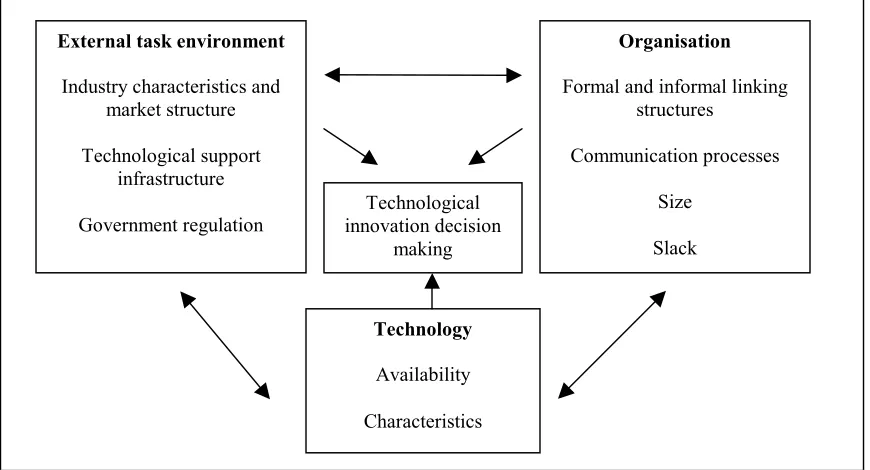
Figure 1: The context of technological innovation ... 58
Figure 2: Environmental analysis framework (EAF) ... 63
Figure 3: E-commerce, technology-organisation-environment framework ... 67
Figure 4: Business investigation phase of B2C website adoption model for small businesses ... 68
Figure 5: Internet readiness framework ... 71
Figure 6: Perceived e-commerce readiness model (PERM)... 72
Figure 7: User focused e-readiness framework ... 74
Figure 8: The ICDT model... 77
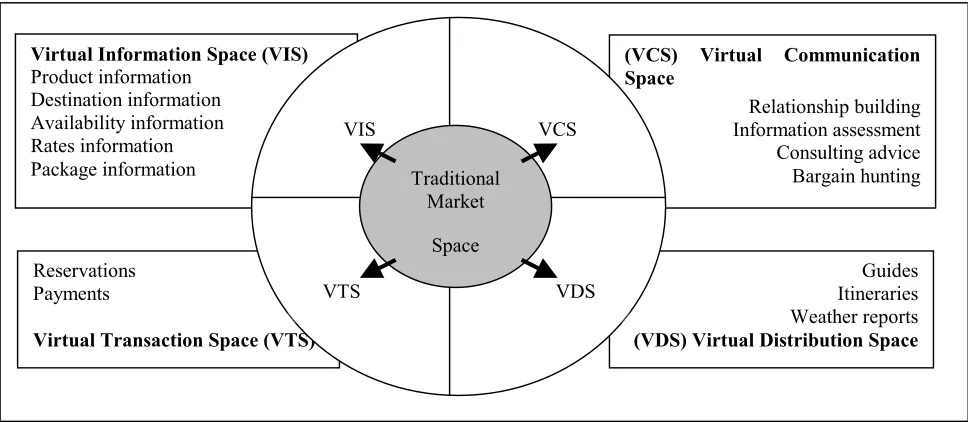
Figure 9: Tourism and the ICDT model... 78
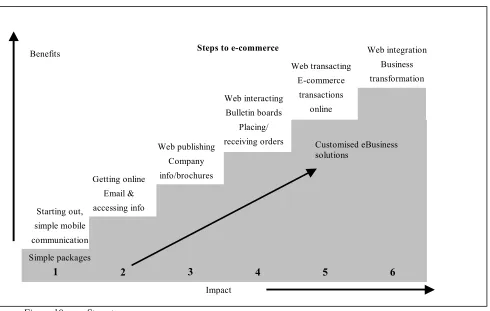
Figure 10: Steps to e-commerce... 79
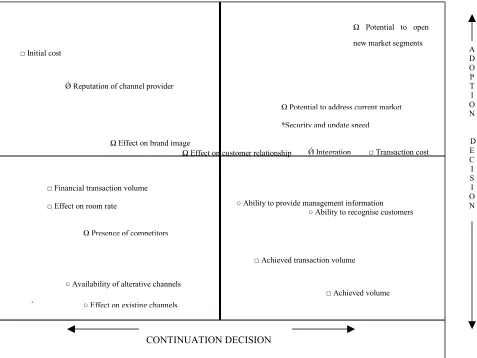
Figure 11: Distribution decision matrix ... 96
Figure 12: The initial framework ... 99
Figure 13: The initial framework – e-commerce readiness investigation ... 101
Figure 14: Spaces created by the Internet ... 103
Figure 15: The research methodology... 126
Figure 16: Welcoming screen for the expert panel discussion ... 139
Figure 17: The initial framework ... 142
Figure 18: Structure of comments... 143
Figure 19: Factors influencing e-readiness ... 146
Figure 20: The changes made to the e-readiness assessment ... 152
Figure 21: Spaces that can be exploited by the Internet ... 153
Figure 22: The refined framework ... 160
Figure 23: Data collection locations... 165
Figure 24: Map of East Malaysia ... 177
Figure 25: Map of Ecuador ... 181
Figure 27: Proportion of Ecuadorian STEs that used various types of Internet connection (refers to
primary Internet connection). ... 211
Figure 28: Sources of website development... 213
Figure 29: Primary source of Internet access ... 213
Figure 30: Malaysian monthly cost of Internet connection. Includes broadband and dial-up (does not include dial-up call charges)... 217
Figure 31: Ecuadorian monthly cost of Internet connection. Includes broadband and dial-up (does not include dial-up call charges)... 219
Figure 32: Proportion of enterprises that use portal/intermediaries ... 238
Figure 33: The refined e-readiness assessment ... 244
Figure 34: How STEs exploited the Information Space... 251
Figure 35: Languages offered on website ... 252
Figure 36: How enterprises were exploiting the Information Space ... 254
Figure 37: The ICDT model applied to this study... 260
List of tables
Table 1: Hosts per 10,000 people by region, 2000 – 2002 ... 19
Table 2: Internet users per 10,000 people by region, 2000 – 2002... 19
Table 3: Barriers faced by small businesses... 30
Table 4: Macro level impediments ... 36
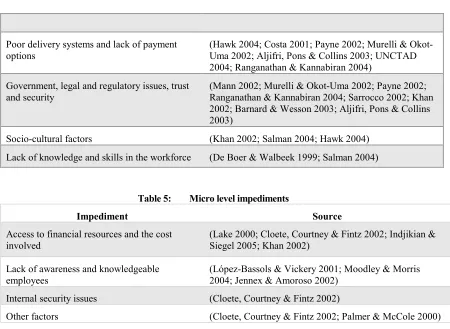
Table 5: Micro level impediments... 37
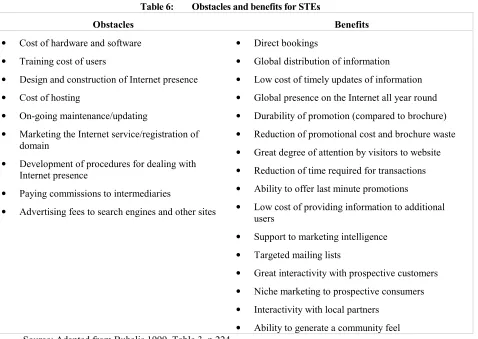
Table 6: Obstacles and benefits for STEs... 46
Table 7: Threats, barriers and opportunities associated with Internet appropriation... 48
Table 8: E-readiness tools ... 54
Table 9: E-readiness ranking for Malaysia, Ecuador and selected countries... 55
Table 10: E-readiness and business size ... 56
Table 11: E-commerce frameworks and models... 62
Table 12: Areas covered by models and frameworks discussed ... 74
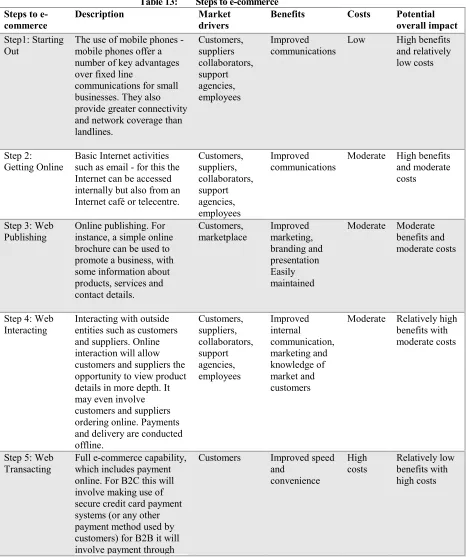
Table 13: Steps to e-commerce... 80
Table 14: A guide to how the Internet may be used ... 85
Table 15: Performance worksheet ... 91
Table 16: Description of each e-readiness factor... 101
Table 17: Field interviews in research ... 117
Table 18: Expert area of expertise ... 137
Table 19: Number of expert posts... 143
Table 20: Malaysia and Ecuador readiness rankings ... 165
Table 21: Malaysia and Ecuador at a glance... 166
Table 22: Development statistics ... 167
Table 23: ICT statistics ... 167
Table 24: Enabling factors, network access, network policy ranking... 167
Table 25: Network society and networked economy ranking... 168
Table 26: Malaysia tourism arrivals (million) ... 170
Table 27: Ecuador tourism arrivals... 173
Table 29: Profile of Malaysian STEs... 177
Table 30: Ecuadorian response rate ... 178
Table 31: Profile of Ecuadorian STEs ... 181
Table 32: Malaysian percentage of online customers ... 231
Table 33: Ecuadorian percentage of online customers ... 232
Table 34: The e-readiness factors (final) ... 244
Table 35: Languages offered on website by Ecuadorian STEs... 249
Chapter One
1
Introduction
The purpose of this thesis is to develop an e-readiness framework for STEs in developing countries. The framework aims to provide a planning tool that STEs can adopt to systematically audit their business environment and make decisions about electronic commerce (e-commerce). The study was carried out across two data collection phases. This introduction briefly describes the contents of this thesis.
1.1 The problem and its context
There is growing impetus in the world for developing countries to adopt information and communication technologies (ICTs) as a pathway to economic development. However, to date, the widespread adoption and use of ICTs in these countries has been slow, although there is some evidence that ICT diffusion and e-commerce can result in widespread benefits (refer section 2.1). This is especially true amongst small enterprises, which play a major economic role in developing countries.
In the context of developed countries a number of benefits have been linked with Internet use amongst large, medium, and small tourism enterprises. This suggests that small tourism operators in developing nations can also derive some benefits from the use of ICTs. However, entrepreneurs in developing countries are hindered by the underlying environmental limitations that characterise these countries (such as the inadequate and unreliable infrastructure, high cost of ICTs, and unstable political environment). This suggests that a tool for STEs that allows them to assess their business environment by reflecting inwards and outwards of the business to make informed decisions on e-commerce would be of use.
The framework has two purposes. The first is to identify the most relevant determinants of Internet or e-readiness, and to act as an information gathering or planning mechanism that can be used by STEs to assess their e-readiness. The second purpose is to suggest ways that STEs can exploit the Internet based on their level of e-readiness.
1.2 The literature review
developing countries,small (tourism) enterprises and developing countries, small (tourism) enterprises and e-commerce, and finally developing countries and small enterprise e-commerce.
The second part of the literature review discusses the theoretical foundations that lie behind the development of the initial version of the framework. It begins by reviewing e-readiness tools. The purpose of this discussion is to describe the different types of readiness tools available and establish the need to focus on small business. Next the discussion moves onto exploring the theoretical foundations behind the e-readiness component of the study and draws on a number of examples from literature to develop the first conceptual framework. This section also discusses how the Internet may be exploited based on the different levels of e-readiness. The final section of this chapter examines the implementation issues that STEs need to consider before actually adopting e-commerce. Again, many examples are drawn from the literature. Finally, the initial conceptual framework is proposed and discussed.
1.3 The study
Two phases were used to develop the framework. Each phase is discussed briefly here.
1.3.1
Phase One: Expert panel
Phase One involved refining the initial framework using an expert panel. This entailed taking the framework that was developed from the literature and presenting it to a panel of experts. Small businesses themselves were not considered, as they were included in the second data collection phase of the study. An Internet based discussion was used as the vehicle for conducting the panel discussion. A refined framework was produced as a result of this phase of the study.
1.3.2
Phase Two: Field research
The aim of this phase was to further refine the framework from Phase One. Field research was conducted in Malaysia and Ecuador. In total, twenty-six in-depth field interviews were conducted with STEs. Based on the data gathered from the field interviews a final version of the framework was developed.
1.4 What is not covered
This study does not cover:
• Matters related to security and legal issues, such as laws of copyright, contract, and so forth. Except where they apply specifically to the areas covered in this thesis.
1.5 Importance of the study
Many observers agree that small businesses represent an important part of the economy and play a major role in development (Samitas & Kenourgios 2005; Bannock 2005; Hausman 2005; Mead & Liedholm 1998). STEs in particular have been recognised as the (numerically) dominant form of tourism business at the destination level and the backbone of the many tourism destinations (Purcell, Toland & Huff 2004; Gartner 2004; Gammack et al. 2004).
Previous research has shown that small enterprises in developing countries face many challenges concerning e-commerce adoption and readiness (Murelli & Okot-Uma 2002; Salman 2004; Jennex, Amoroso & Adelakun 2004). At the same time there are a number of benefits associated with e-commerce adoption for even tiny tourism businesses. Some of the benefits include the potential to market to a global audience, reduced communications and advertising costs, and the ability to create alternative distribution channels (Buhalis 1999; Purcell, Toland & Huff 2004; Gammack et al. 2004). Nevertheless, as will be described in this thesis, many small enterprises struggle with even basic Internet adoption, and the use of the e-commerce amongst small enterprises is the exception rather than the norm.
Chapter Two
2
Literature review: contemporary issues
By examining STEs (small tourism enterprises) and e-commerce in the context of developing countries, this study draws on theories and concepts from a wide variety of fields. This thesis begins with an exploration of the major areas of interest and builds on the relationships between them. These areas are small enterprises (in particular STEs), ICTs (in particular the Internet and e-commerce), tourism, and developing nations. Therefore, the review of the literature explores these subjects in relation to one another. This chapter is organised into four sections. Each section discusses various contemporary issues concerning the topic of this study. Section one begins by defining and discussing developing countries. It then discusses ICTs in developing countries and the digital divide. There are many schools of thought on the use and impact of ICTs in developing countries. This section attempts to cover some of these views and to place them in context of the study. The overarching aim is to describe to the reader the ICT climate in developing countries. Section two brings small enterprises into the picture. It discusses their role in developing economies. A discussion is presented on the definition of a small business. Some of their inherent characteristics and their relevance in this study are also discussed. Section three builds on the previous two sections by discussing e-commerce as a subset of ICTs. E-commerce is discussed generally and then in the context of small businesses in developing countries. The fourth section introduces the connection between e-commerce and tourism, and discusses the relationship between these in the context of STEs in developing countries.
2.1 Developing countries and ICTs
This section will discuss developing countries and ICTs, in particular the Internet. It aims to set the scene for the investigation described in this thesis by introducing one of the overarching themes: developing countries and ICTs.
2.1.1
What is a developing country?
A country that has not yet reached the stages of economic development characterized by the growth of industrialization, nor a level of national income sufficient to yield the domestic savings required to finance the investment necessary for further growth. (Bannock, Baxter & Davis 1992 p.113)
At the end of the Cold War, the terms First World and Third World1 were used to distinguish between industrialised and unindustrialised countries. More recently, the term North and South have been used to categorise countries. This refers to the fact that all countries above the 13th parallel are the most advanced countries while those below are typically poorer countries (except for Australia and New Zealand) (Murelli & Okot-Uma 2002). Nevertheless, the most commonly used term is that of ‘developed’ and ‘developing’ countries. A simple way to make the distinction between developing and developed countries is to consider the member states of the Organisation for Economic Cooperation and Development (OECD) as developed countries, and the remaining nations of the world as developing. The World Bank (www.worldbank.org) defines developing countries as low- and middle-income countries in which most people have a lower standard of living with access to fewer goods and services than do most people in high-income countries. Using this approach economies are divided using four income groups, they are: low-income, US$ 825 or less; lower-middle income, US$ 826 - US$ 3,255; upper middle-income, US$ 3,256 - US$ 10,065; and high-income, US$ 10,066 or more. Low-income and middle-income economies are typically considered developing economies. According to the World Bank there are about 125 developing countries with populations over one million, and their total population is nearly five billion. Although, this classification is broad, it does provide a convenient way of categorising countries and is the most widely used comparative measurement of economic development. This definition does not contend that all economies in these groups are experiencing similar stages development or that other economies have reached a preferred or final stage of development. Moreover, classification by income does not necessarily reflect the status of development.
Although this thesis will often refer to developing countries as a similar group of countries, it is important to remember that these countries are heterogeneous (Karake-Shalhoub & Al Qasimi 2006; Austin 1990; Sadowsky 1993; MacLean et al. 2002). Like any definition used to classify countries, the use of the term ‘developing countries’ (whether the World Bank or non-OECD definition), encompasses a broad range of nations and cannot capture the numerous distinctions between regions, governments, economic circumstances, and range of other factors. Even within a country and between different groups of people there often exists a range of differences in economic circumstances, access to services and ICTs. Therefore, any general comment made about a developing country can perhaps be contradicted by a specific example (Sadowsky 1993). Nevertheless, concerning this thesis most countries face some common challenges when adopting ICTs (Salman 2004).
2.1.2
ICTs as a panacea?
Over the last ten years there has been growing impetus amongst development experts and aid organisations concerning the role of ICTs and the Internet in particular in development. In fact, issues relating to the
1
diffusion of ICTs and the digital divide continue to attract attention in developing (Fuchs & Horak 2006; Hinson & Sorensen 2006) as well as some of the most affluent countries (Roe 2006).
On one side, observers advocate that ICTs may act as an engine of growth, permitting developing countries to leapfrog stages of development and enter the information economy (Indjikian & Siegel 2005). Raisinghani et al. (2002 p.718) went so far as to suggest “the expansion of electronic commerce to developing countries will automatically enable their overall economy” and that it is vital that these countries undertake ICT development to be included in a constantly growing global market. Although there is little evidence to suggest that e-commerce or ICTs for that matter can automatically enable an economy, there is some indication that effective ICT strategies can lead to economic growth (Indjikian & Siegel 2005). For instance, in countries such as China and Malaysia policy makers considered ICT development as a critical ingredient of economic progress (Quan, Hu & Wang 2005; Clark 2000). In China’s case, recent economic growth has suggested this approach has paid dividends (Quan, Hu & Wang 2005). While Malaysia’s ICT plan has been described as one of the most aggressive in the world (Ratnathicam 2002), and is an essential part of its strategy of becoming a knowledge-based economy and achieving developed country status by 2020 (Ramasamy, Chakrabarty & Cheah 2004).
However, some observers disagree, arguing that while ICTs can facilitate development it can also create a divide between those who have access to ICTs and those that do not (Mbambo & Cronje 2002; Sharma & Gupta 2003). In India, for example, despite the massive growth in ICTs, a concern is it has done little to diminish poverty in what has been described as the highest concentration of poverty in the world (Abhilash 2002; Cullen 2001). In fact, despite India’s reputation in the IT industry, there are many underlying telecommunication infrastructure problems and Internet penetration remains low (Salman 2004).
Daly (2000) points out some of the potential drawbacks of ICTs. These include the threat of the ‘brain drain’ (where skilled workers -such as programmers and engineers- depart to work for higher wages abroad), exploitation by more powerful countries, undesired transfer of cultures, and capital flight (where consumer spending is consumed on imported products). On the other hand, Daly (2000) continues to say the impact of non-adoption may be even more significant.
Ultimately most observers agree that while ICTs are not necessarily a panacea for the problems of developing countries, they present an invaluable opportunity for developing countries to invigorate and sustain economic growth (Mujahid 2002; UNCTAD 2003; Kamel & Hussein 2002; Daly 2000; Mehta & Kalra 2006). In other words, developing countries have more to gain than to lose by utilising ICTs. The benefits that can be experienced range from reducing poverty, market growth, helping enterprises cut costs and reach wider markets, and improved access to health, governmental, financial and educational services (Clark 2000; Bedi 1999; UNCTAD 2003; Cecchini & Scott 2003; Daly 2000; Vinaja 2003).
The phrase the ‘digital divide’ refers to the unequal access of ICTs between countries, regions, and even social groups within countries (Tigre & O’Connor 2002). It is not a situation that is limited to developing countries, as many wealthy nations also suffer from some form of the digital divide (Roe 2006). The digital divide is a complex, multidimensional concept. While some countries are attempting to narrow the digital divide, other countries are placing barriers in the way of ICT adoption, resulting in its deepening (Tanburn & Singh 2001). There are many social, political, and economic issues that contribute to the gap in the use of ICTs in developing as well as developed countries. These issues are not black and white, and are often intertwined. Even within countries there exists a divide, as there often is a rural and urban divide and a divide between high and low-income earners (Mehta & Kalra 2006; Purcell, Toland & Huff 2004).
Before discussing some of the obstacles faced by developing nations in bridging the digital divide, a brief discussion into the number of Internet users in developed compared with developing countries is provided.
Table 1 and Table 2 illustrate the number of Internet users and hosts (a computer connected to the network) in developed and developing countries. Whilst the measurement of Internet users and hosts is not recognised as the most accurate measurement, it is used here to simply illustrate the disparity between the two groups of countries. For the present, developing countries will continue to lag behind developed countries in ICT adoption and use (Dutta 2002). However, it is expected that by 2010, Internet users in developing countries may comprise 50 percent of the world’s total. Table 1 and Table 2 illustrate precisely this phenomenon. The tables indicate that between 2000 and 2002 the developing world showed the largest percentage increase in Internet users and hosts. This is largely because of their demographic patterns (younger populations and faster overall population growth) (UNCTAD 2003).
Table 1: Hosts per 10,000 people by region, 2000 – 2002
2002 2001 2000 % Change
2001-2002
% Change 2000-2001
Developing countries 15 15 25 -0.15 -40.96
Developed countries 1124 1067 855 5.42 24.77
Source: Adapted from UNCTAD 2003, Table 1.6, p.9
Table 2: Internet users per 10,000 people by region, 2000 – 2002
2002 2001 2000 % Change
2001-2002
% Change 2000-2001
Developing countries 391 280 195 39.67 43.59
Developed countries 3262 2914 2416 11.94 20.61
2.1.4
Reasons for the divide
As the theme of the study is STE e-readiness in developing countries it is useful to discuss some of the reasons for the digital divide. There are many factors connected to the slow diffusion of ICTs and these cannot all be discussed in this section. The major factors are discussed in the following paragraphs.
Low wealth of developing countries
This refers to the low of wealth of governments, low investment in the ICT infrastructure, and the low wealth of citizens in these countries to utilise the infrastructure. Many resource poor governments have not considered ICTs as a priority (because of more immediate concerns such as health, education, and infrastructure). However, this is slowly changing. For instance, recently Bangladeshi policy makers announced thatICT would receive 21 percent higher allocation in national budget (Bytes for All. 2007). On the user side, technology cost is comparatively higher in developing countries, often unreachable for the common person. Take the example of Internet costs in rural India. At the start of the millennium the cost per connection ranged from Rs 40,000 (approx US$ 1, 045) to over Rs 130,000 (approx US$ 3,484) in remote villages with rocky terrain (The Financial Express 2000). Likewise on the continent of Africa, in Mozambique and Ethiopia, monthly Internet costs equalled up to 70 percent of GDP per capita. In more developed countries like Mexico and Brazil it equalled only about five percent. However, because of the income disparity the Internet is not a disposable item for the majority of the population (Tigre & O’Connor 2002).
Lack and availability of ICTs infrastructure
The effective operation of the Internet is totally dependant on the existence of suitable telecommunications infrastructure. However, many resource poor countries have limited telecommunications networks (Murelli & Okot-Uma 2002), making Internet connectivity difficult. Even where the infrastructure is in place, there is also the problem of defective and poor quality telephone lines, resulting in lines that cannot handle data transmission (De Boer & Walbeek 1999). Some authors claim that the lack of an effective telecommunications infrastructure can be seen as an advantage because it allows developing regions to bypass current technologies and use alternative technology tailored specifically for the conditions of these countries. A few examples include Wireless Loop Technology (Gunasekaran & Harmantzis 2007; James 2002), wireless networks (Tully & Riekstins 1999; Galperin 2005), and Very Small Aperture Terminals (VSATs) (ITU 2000; Lake 2000; Sarrocco 2002). VSATs in particular have been successfully implemented in a very remote region of Sarawak in Malaysia inaccessible by road (Harris et al. 2001; Bala, Harris & Songan 2004)
Level of education, computer illiteracy, language and culture
In many developing countries the low level of education, low literacy rate (especially among females) (Payne 2002; UNCTAD 2003), and low level of computer literacy (De Boer & Walbeek 1999) contribute to the digital divide. With the Internet, literacy takes on greater importance, as the Internet is mostly text based (Tigre & O’Connor 2002), and typically in English. This means that language and content related barriers become an issue (De Boer & Walbeek 1999; Palmer 2000). Salman (2004) argues that these content related barriers need to be seriously addressed. For instance, China and Russia only experienced significant growth in Internet users once content was made available in Chinese and Cyrillic (Cullen 2001). More broadly, in some cases people are not even aware of the Internet. For instance, in Maracaibo City, Venezuela, Guasch and Ugas (2007) found that the main reasons why people do not use Internet is not only because of lack of access to ICTs but also because people do not even know what the Internet is.
There are also many examples of social-cultural factors that limit the diffusion of ICTs in developing countries (Pradhan 2002). In regards to Internet shopping in India for instance (where it is a social activity and personal face-to-face contact with sellers is an important part of the shopping experience) online shopping is unattractive (Hawk 2004). Van Dijk (2006) suggests that the digital divide cannot be understood without addressing socio-cultural issues such as attitudes toward technology (for instance, technophobia and computer anxiety). Along these lines, there is often a negative stigma surrounding ICTs. For instance, in Kerala, India there was the belief that IT would result in the loss of jobs (Aljifri, Pons & Collins 2003). These perceptions can lead to negative repercussions for the successful diffusion of ICTs.
Government forces and regulatory factors
Government involvement, enthusiasm and support are essential for introducing and exploiting the potential of ICTs (Sadowsky 1993). However, in the developing world the view and behaviour towards the Internet is often completely different from the developed world, limiting the level of involvement of policy makers. Some governments maintain strict control of the Internet. For instance, in China, Laos, Malaysia, Singapore, and Vietnam, censorship of the Internet exists (Murelli & Okot-Uma 2002; Singh 2000). This can affect growth (Tanburn & Singh 2001). In some Middle Eastern countries Internet activity only increased after the easing of tight state controls over telecommunications and the realisation of the linkage between telecommunications and economic growth (Palmer, 2000). While in Egypt, because of the underdeveloped telecommunications infrastructure it only became legal in 1998 for a person to own a second telephone line (Tanburn & Singh 2001). Also some governments are concerned that the rapid diffusion of ICTs has the potential to shift political power from political elites to technical specialists (Pradhan 2002). Some countries however, like Malaysia and Samoa are aggressively promoting ICT development (Purcell, Toland & Huff 2004; Ramasamy, Chakrabarty & Cheah 2004).
(Jussawalla 1999). As a result the Malaysian telecommunications sector has become one of the most competitive in the world (Mesher & Zajac 1997), resulting in affordable access and resulting high Internet penetration (42 percent) (ITU 2005), one of the highest penetration levels in South East Asia.
Unstable political environments also effect the diffusion of ICTs. For instance, in countries like Nepal, Sri Lanka, and Zambia conflicts and unstable political environments impact ICT development (oneworld.net 2003).
2.1.5
Bridging the digital divide
During the United Nations (UN) Millennium Summit in 2000, 147 heads of state gathered and adopted the Millennium Development Goals (MDGs) to address extreme poverty. This included addressing income poverty, hunger, disease, lack of adequate shelter and exclusion. While promoting education, gender equality, and environmental sustainability with quantitative targets set for the year 2015. One endeavour of the MDGs was to address the digital divide. For instance, MDG number eight asserts ‘In cooperation with the private sector, make available the benefits of new technologies— especially information and communications technologies’ (United Nations. 2005). However, even though the MDGs focus on the bridging the digital divide, no concrete plan was set in place. In other words, the MDGs are simply the outcome of political negotiations that lack any road map to implementation. In fact, as of 2005 when the MDGs were revisited to measure the progress of achieving the goals by 2015 it was found that progress was not only sluggish but in some cases no progress had been achieved (Sachs & McArthur 2005). This suggests that there is still some work to be done to address the digital divide2.
Fuchs and Horak (2006) discuss six potential strategies for tackling the digital divide. They are discussed briefly here.
Strategy 1: Wait and see. Allow the market to take its course and technological development will cheapen access.
Strategy 2: By entering into markets and competition, developing countries will be able leapfrog directly into information societies.
Strategy 3: Attracting foreign direct investment and capital will increase wealth for all and access in developing countries.
Strategy 4: Design technologies specifically for developing countries.
Strategy 5: Do nothing because developing countries do not need technology.
Strategy 6: A combined approach including the global redistribution of wealth, introducing educational and health programs, digital literacy programs, public and free access to computers and technologies, open source technologies and computers for developing nations.
After providing some discourse on the pros and cons of each of these strategies, Fuchs and Horak (2006) identify Strategy 6 as the most feasible option. They posit that the other five strategies are embodied in reductionism and are one-dimensional. Strategies 1 to 5 fail to comprehend the interconnectedness of technology access, social factors, uneven development, human rights, and global capitalism. The authors assert that the examples of Ghana and South Africa have demonstrated that neo liberal policies of liberalisation, deregulation, and privatisation of the telecommunication sector (as suggested by the Washington Consensus, structural adjustment programs of institutions like the World Bank and the International Monetary Fund3) have not succeeded in bridging the digital divide in Africa, as well as the global digital divide. They further posit that:
In order to tackle the global digital divide a fundamental redistribution of resources is needed as a pre-condition. Modern society is so rich and productive that it could easily afford a modest income, social security, literacy, and free access to computers and the Internet for all humans. If this is a real possibility, then the best and most desirable option is to realize it. But this requires a redesign of global society because the digital divide is not first of all a technological problem, but an economic, social, and political issue. The digital divide is not only a divide in the access to and benefits from technology, but it also an expression of a more general divide in wealth and power. (Fuchs & Horak 2006 p.17)
2.1.6
Reflections on the digital divide
As observed, there are many factors contributing to the digital divide. These are more prevalent in some countries than others. Despite the digital divide there are many positive examples of ICT adoption in developing countries, and these will be discussed in specific regards to small enterprises in later sections of this thesis. The purpose of the discussion so far has been to put into context the environments in which businesses operate in developing countries. Although infrastructure issues are one of the most widely cited reasons for the digital divide, it is important to consider, that in many countries this is an area of constant change (as technology moves forward and countries invest more in infrastructure). In China for example, Efendioglu and Yip (2004) believe that in a relatively short time infrastructure will cease to be the main impediment to e-commerce development (although in 2007 this does not appear to be the case).
3
Importantly for this study, this discussion highlighted the difficulties surrounding ICT adoption in developing countries. What does this mean for owners of small enterprises in these countries? Austin (1990 p.29) posits that:
A manager must analyze systematically these environmental forces, decipher their managerial implications, and translate them into strategic decisions’…’the key to effective management in developing countries is the capacity to analyze, understand, and manage the external forces enveloping the firm’…’The manager confronts two basic questions: what to analyze in the environment and how to assess its relevance to the firms strategy.
But how can a manager of a small business in these countries analyse the environment in a systematic manner to make decisions about e-commerce? This question will be addressed in this thesis - by developing a framework that can be used by STEs to systematically analyse the external and internal environment to make sense of the situation, and make informed decisions about e-commerce.
2.1.7
Summary of ICTs in developing countries
This section discussed the diffusion of ICTs specifically the Internet in the context of developing countries. There are a number of factors that inhibit the diffusion of ICTs in the developing world. These were summarised broadly as:
• The low wealth of developing countries.
• Inadequate and unreliable telecommunications infrastructure.
• The level of education, computer literacy, language, and culture of these countries. • Government and regulatory factors.
Nevertheless, developing countries are showing the greatest growth in terms of the number of Internet users and hosts. The next section will discuss small business in a general sense as well as in the context of developing countries. More specifically, the following section will introduce STEs and discuss their place in developing countries.
2.2 Small enterprises
small businesses in developing countries and e-commerce this section will highlight that their inherent imply that any move to adopt e-commerce will be faced with many challenges (this is an area that will be explored in a later section).
2.2.1
The significance and heterogeneity of small businesses
In most economies, small businesses represent an important part of the economy and play a major role in development (Bannock 2005; Mead & Liedholm 1998; Hausman 2005; Poon & Swatman 1999). This is because small and medium sized enterprises (SMEs) play a broad role in developing economies, generating employment and income. It is acknowledged that a thriving SME sector is critical in terms of the goods and services that they provide to large businesses (Dutta 1988; Kuwayama 2001). Kuwayama (2001) goes so far as to say that the SME sector may comprise over 90 percent of all enterprises and cover more than 50 percent of the employment in individual economies. In Malaysia for example, SMEs comprise of more than 90 percent of the total establishments and are seen as playing an important role as the country moves towards achieving a developed country status by 2020 (SMIDEC 2006). While in Ecuador, up to 99 percent of all private companies have no more than 50 employees (World Bank. 2000).
2.2.2
What is small?
Small is a relative, and not an absolute concept and where the line is drawn in the continuum of business from ‘momma and poppa’ shops to General Motors is inevitably arbitrary. (Bannock 2005 p.1)
There is no single global definition of ‘small business’. In fact, defining ‘small business’ is often a source of debate. Definitions vary based on a number of measurements, such as investment capital, total of assets, sales volume, and production capability. The most popular measurement being the number of employees (Bannock 2005; Harvie & Lee 2002; Gammack et al. 2004). For instance, the European Union (EU) classifies businesses with 10-19 employees as small, while Japan classifies such businesses as ‘micro’ (Costa 2001). In Vietnam a small enterprise is classified as having fewer than 30 employees and less then one billion Dong capital (US$ 62,460). Chilean small businesses are defined as having annual sales between US$ 74,550 and US$ 776,566 (and less than US$ 74,550 for micro business) (ACTETSME 2005). In Malaysia, small enterprises (within the services, primary agriculture, and ICT sectors) are those with sales turnover between RM 200,000 (US$ 54,500) and less than RM one million (US$ 272,700) or between five to 19 full-time employees, while micro enterprises have sales turnover of less than RM 200,000 (US$ 54,500) or less than five full-time employees (SMIDEC 2006). Therefore, within this thesis any reference to small business (by other authors) may range in its definition - in fact, it is even common for authors to use the term ‘SME’ even when specifically discussing small businesses.
approach, this study adopts the definition of small enterprises as any with fewer than 20 employees, which includes micro-enterprises (Burgess 2002; Collins & Karush 2004). The threshold of 20 employees has also been used by many Asia Pacific Economic Co-operation (APEC) studies and is generally applicable across all economies (Gammack et al. 2004). However, using the number of employees as the principle measurement has its issues, because it may not be reflective of the industry and there are problems surrounding the use of part-time and casual labour (Hunter, Burgess & Wenn 2005).
2.2.3
Characteristics of small businesses
The small business sector is heterogeneous therefore any attempt to categorise small businesses can be challenging. However, most small businesses share some common characteristics.
The argument that the small firm sector is heterogeneous does not mean that it lacks distinctive characteristics’…‘The one area in which we may look for some homogeneity in small firms is their management, especially in independent owner-managed companies. (Scott 1986 p.86)
There are a number of differences between small and large businesses. One main difference is that the role of the owner/manager has a strong influence on the direction of a business, far more than in a larger business (Poon & Huang 2004). Small businesses are typically informal and have a simple organisational structure, where decisions are made by one or two people, usually the owner or manager (Poon & Swatman 1999). This simple structure means that small businesses are more flexible and opportunistic than larger businesses and are able to offer products and services that larger ones lack the flexibility to offer (Fuller 2000; Walczuch, Van Braven & Lundgren 2000). This flexibility also means that small businesses are able to adopt and transform in an ever-changing business environment (Samitas & Kenourgios 2005) by offering a small range of products and services (Poon 2000; Poon & Swatman 1999). In general small businesses are not as well informed as larger businesses (Kuan & Chau 2001). Also, they tend to suffer from resource scarcity and face financial limitations (Hausman 2005; Jutla, Bodorik & Dhaliwal 2002; Poon & Swatman 1999; Poon 2000), as well as difficulties adopting new technology (Drew 2003). As a result very few grow to be large (UNCTAD 2001a).
Bolton (1971) and Kuwayama (2001) identify some of the distinguishing characteristics of small businesses:
• They operate with a small market share or in a niche market.
Sharing many characteristics with their counterparts in developed countries, small businesses in developing countries tend to be resource poor (Oyelaran-Oyeyinka & Lal 2006), have basic technology needs, are informally run (Turner 2003), are family owned and rely on family labour (Bannock 2005; Mead & Liedholm 1998; Turner 2003). They operate in niche markets and not in direct competition with larger enterprises (Bannock 2005), suffer from information scarcity and rely on informal networks for information (Duncombe & Heeks 2002; Moyi 2003). Also managerial and financial factors are linked to a high failure rate (Al-Shaikh 1998). What is different is that there are many organisational and environmental limitations, and often-turbulent political and macroeconomic circumstances. Successful business operation depends on the business culture, level of education, skills, capital availability and so forth. However, many developing countries lack these ingredients, therefore few businesses survive (Agbeibor 2006). For micro enterprises and ones located in rural areas, these problems are even more acute (Moyi 2003). Concerning globalisation, small businesses in many developing countries are unprepared and are struggling to adapt to the complex demands of the information economy as they lack the resources to take full advantage of opportunities (Chacko & Harris 2006). Montealegre (1998) reported that governments often control markets, setting prices, and controlling access to resources. He continued to say that businesses with close ties to government (typically larger enterprises) have greater power than their rivals and are able to gain control of markets. Finally, small businesses in developing countries are susceptible to economic fluctuations. For instance, many small businesses throughout South East Asia faced financial difficulties as a result of the Asian economic crisis of the 1990’s (Turner 2003).
Some other characteristics of small enterprises in developing countries are: • They often avoid any type of formal registration (Turner 2003). • They suffer from limited markets (Matambalya & Wolf 2001).
• They face difficulties penetrating international markets (McIntyre 2003).
• They are often are susceptible to harassment from criminal gangs and corrupt institutions (McIntyre 2003; Turner 2003).
• They encounter difficulties obtaining and processing the information necessary to define their objectives and strategies (Kuwayama 2001).
• They face difficulties gaining access to qualified human resources, and use antiquated management methods making it difficult for them to adapt to a new competitive environment (Kuwayama 2001). • The inaccessibility of small-scale entrepreneurs to market networks often drives them towards informal
networks (Moyi 2003).
Small business and access to capital
Micro financing and micro credit schemes in particular have received plenty of attention. A well-cited example is the case of Grameen Bank (Wood 2004; Tanburn & Singh 2001; Colle 2005; Andam 2003; Gammack et al. 2004; Goldstein & O’Connor 2000) in Bangladesh (an initiative that won Muhammad Yunus and the Grameen Bank the 2006 Noble Peace Prize). This initiative offers micro loans to women in poor communities for entrepreneurial activity. However, there is little evidence to suggest that these types of initiatives can stimulate entrepreneurial activity at the small business level. Glinkina (2003) describes the role of bank loans as insignificant for micro and small businesses. She argues that the main sources of funding for small business in all countries are savings, loans from relatives or friends, and income from selling their products. Bannock (2005) argues that business do not want to borrow from banks anyway because the formal sector interest rates are high (usually ten percent or more). Even when they do, monopolistic banking systems with few branches outside large towns make it very difficult. Nor do people want to save, when funds can be invested in trading activities (or animals, which are reproducible assets).
Small business policy in developing countries
Small businesses have great potential to foster economic growth and authors agree that small businesses need institutional support for their survival, particularly in the era of globalisation (Oyelaran-Oyeyinka & Lal 2006; Chyau 2005). In a United Nations Asia Pacific Development Program report Chyau (2005 p.1) wrote:
Most governments have policies to encourage the growth of local small- and medium-enterprises (SMEs) because they can help alleviate poverty by increasing income levels and creating jobs. As the global economy becomes increasingly reliant on ICTs to receive, process, and send out information, SMEs in developing countries should not be left behind. Otherwise, they will lose out on opportunities to integrate into the global supply chain, bid for outsourcing businesses, and increase productivity.
Chyau (2005) asserts that the best response for governments is to support SMEs by removing constraints and creating an enabling environment. Some policies to encourage the growth of SMEs include (Chyau 2005):
• Simplify registration and other legal processes. • Create incubators and science parks.
• Develop business skills education.
• Provide businesses with consulting services. • Provide SME financing.
2.2.4
Small tourism enterprises
The vast majority of tourism enterprises around the globe can be classified as small and medium-sized (SMTEs) (Buhalis 1998; Liu 2000; Gammack et al. 2004). These enterprises are the essence of what creates a destination and a visitor’s experience (Gammack et al. 2004). Most SMTEs can be classified as micro enterprises, as they generally have a small number of employees (less than five). (Hall & Rusher 2004; Gammack et al. 2004)
Tourism is an industry that is relatively easy to break into and does not require specific previous experience or a high level of education (Getz & Carlsen 2005; Morrison & King 2003; Lerner & Haber 2001). In fact, many entrepreneurs, particularly sole proprietors and families are drawn to tourism for lifestyle reasons. However, in truth the perceived lifestyle of the tourism industry rarely becomes reality with many businesses suffering from financial and resource poverty (Morrison & King 2003). As already observed, this is common amongst small businesses.
In developing countries small businesses represent the dominant form of tourism business and are usually the backbone of the tourism destination (Gartner 2004; Purcell, Toland & Huff 2004). However, STEs in developing nations have a great deal working against them (Gartner 2004). In addition to the factors discussed in the previous section, STEs may suffer from other factors that they have no control over. For instance, those without a strong domestic tourism market are susceptible to downturns in tourist numbers, from factors such as disease (such as, Severe Acute Respiratory Syndrome [SARs] or Avian Flu), the repercussions of terrorism (Gartner 2004), and more recently natural disasters. They also suffer from cultural obligations, such as hiring family and friends, which may lead to hiring low skilled employees (Gartner 2004).
Despite the predominance of small businesses in tourism (in terms of numbers), Kirsten and Rogerson (2002) assert that the power of larger tourism enterprises severely strains the growth of STEs. This suggests that despite the numerical superiority of STEs they face many market challenges. In support of this, Harrison (1994 p.242) cited in Kirsten & Rogerson (2002) state that small locally owned tourism enterprises are essentially ‘left to scratch around for any crumbs’ that might fall from the table.
In a recent study focusing on the development needs of SMTEs in the APEC region, Gammack (2004) identified a number of general development needs. These suggest that SMTEs often operate in problematic environments and many small tourism operators will have difficulties incorporating new technologies. The development needs identified by Gammack (2004) are essentially barriers that need to be addressed. They are:
• A lack of a trained and professional workforce. • Entrepreneurship development.
• Inconsistent and bureaucratic local authorities. • Lack of government recognition of tourism value.
• SMTEs failure to recognise importance of industry clusters and cooperation. • Industry fragmentation and proliferation of membership organisations. • Lack of technology and e-commerce skills.
• E-readiness and e-commerce uptake.
• Research information is scattered and irrelevant for SMTEs’ planning.
2.2.5
Summary of small businesses
As observed at the beginning of this section small businesses are a heterogeneous group of enterprises. Nevertheless, they face many common challenges concerning the adoption of new technologies, such as the Internet. The next section continues this discussion at length.
This section of the literature also discussed small businesses both in general terms and in relation to developing countries. In this thesis any business with 1-20 employees is classified as a small business. Some important characteristics of small businesses in developing countries are:
• They tend to be resource poor. • They have basic technology needs. • They are informally run.
• They rely on family labour.
• Enterprise start-up/capital is strongly related to family sources or the owner. • Managerial competence and capacity building are often lacking.
The key barriers faced by small businesses in developing countries are displayed in Table 3. These characteristics suggest that small enterprises face many challenges to adopting new technology.
Table 3: Barriers faced by small businesses
Organisational and resources Market Environmental Managerial
Suffer from information scarcity They are affected by external forces, which they have no
Are susceptible to harassment from criminal gangs
from family members obstacles to penetrating export markets
not conducive to small businesses
processing the information necessary to define their objectives and strategies Face restrictions on qualified
human resources
Operate in informal sectors and avoid any form of formal registration Political environment often favors larger businesses Use antiquated management methods making it difficult for them to adapt to a new
competitive environment Have basic technology needs, are
informal and often employ family members
Inaccessibility of small-scale entrepreneurs to market networks often drive them towards informal networks
Fragile business environment
Controlled by
owner/managers (often the same person). Who contribute most to all the operating capital
This section also introduced STEs. It highlighted that most tourism enterprises are small and play a major role in tourism destinations. Some discussion was given on the characteristics of STEs. Some characteristics of STEs that differ from small enterprises generally are that owners enter tourism for lifestyle reasons; STEs suffer from factors they have no control over (such as, disease and terrorism) and experience cultural obligations, such as hiring family, and friends. The following section of the literature review narrows the discussion to small business e-commerce.
2.3 E-commerce and small enterprises
It is difficult, and yes, it is possible. (Costa 2001 p.129)
(Eduardo da Costa commenting in his book Global E-commerce Strategies for Small Businesses on the potential for SMEs in developing countries to adopt e-commerce).
The purpose of this section is to discuss the literature relating to small business e-commerce in developing countries. In essence, this section builds on the relationship between small enterprises, STEs and e-commerce. This section begins by defining the actual scope of e-e-commerce. It then continues to discuss small business e-commerce, drawing on examples from both the developed and developing world. Finally, it discusses STEs and e-commerce in developing countries.
2.3.1
Definition of e-commerce
and more inclusive, which includes the use of the Internet in any way that improves a business’ relationship with its customers or suppliers (this is also commonly referred to as e-business).
Definition 1: narrow
The sale or purchase of goods or services, whether between business, households, individuals, governments, and other public or private organisations, conducted over computer mediated networks. The goods and services are ordered over those networks, but the payment and the ultimate delivery of the good or service may be conducted on or off-line. (OECD 2002 p.89)
Definition 2: inclusive
…ecommerce, including the use of ICT in any way that improves a SMEs relationships with customers or suppliers. This includes actually transacting business electronically – orders, invoices, shipment documents – as well as using ICT for marketing, market research, customer service, finding potential customers and suppliers, offering entirely new products and services and more. (Payne 2002 p.2)
Following the lead of Payne (2002) this study adopts the latter description of e-commerce. In the context of developing countries this is more relevant as small businesses can gain significant benefits from the Internet even when orders or transactions are not performed online (Payne 2002). In fact, some authors go so far to suggest that small businesses in developing countries should not focus on online transactions (Humphrey 2002; Payne 2002). Along these lines, Akkeren and Cavaye (1999 p.1) suggest that there is a strong argument for researchers to focus studies on entry level activities: ‘once a small business has adopted Internet technologies at the entry level, they can get familiar and comfortable with the Internet and, in time, move on to adoption of more sophisticated e-commerce technologies’.
Therefore, the definition of e-commerce adopted in this thesis is:
The use of the Internet in any way that allows a business to communicate, publish or gain access to information. This includes activities such as email and the publishing of information on websites or portals, as well as research and information gathering, reservations and even payments online.
2.3.2
E-commerce and small enterprises: developed countries
E-commerce adoption is different from that of traditional information systems (Poon & Swatman 1999), and requires some change in how a business operates. E-commerce adoption in small businesses occurs differently to adoption in large enterprises (Al-Qirim 2004). Most small businesses do not have a strategic plan for information system adoption (Hunter, Burgess & Wenn 2005) and the same can be said for e-commerce. A review of the literature on small enterprise e-commerce in the context of developed nations provides a number of lessons. Despite the inherent characteristic of being opportunistic, and flexible, small businesses lag behind their larger counterparts in their adoption of e-commerce (Drew 2003; Walczuch, Van Braven & Lundgren 2000). Often adoption is based on the owners perception of its value (Peng, Trappey & Liu 2005). There is also a link between the product, its suitability to the web and customer expectations (Golden, Hughes & Ruane 2004; Tiessen, Wright & Turner 2001). Small businesses often build on their use of e-commerce through a staged approach, building upon the level of sophistication (Burgess 2002) and only seek external assistance when a task (such as building a website) is perceived to be to difficult to tackle (Paraskevas & Buhalis 2002; Burgess 1998).
Reasons for the slow uptake of e-commerce amongst small enterprises
There are many reasons for the inertia surrounding e-commerce adoption amongst small businesses. These reasons can be linked to the characteristics of small enterprises discussed earlier. Previous studies show that the main obstacles to adoption are skill deficiencies, the cost involved, and time constraints (Karanasios et al. 2006; Tabor 2005; Burgess & Wenn 2005; Hunter, Burgess & Wenn 2005). Businesses with previous experience in technology are likely to have a positive experience concerning the success of e-commerce adoption (Golden, Hughes & Ruane 2004). Other reasons for the inertia are that often small businesses are concerned that e-commerce simply will not reduce costs and lead to benefits (Walczuch, Van Braven & Lundgren 2000). In fact, some authors claim that benefits are only fictional and may not materialise in some cases (Sadowski, Maitland & van Dongen 2002; Al-Qirim 2004). Also, e-commerce activities consume a large amount of resources and by doing so can interfere with the daily operation of the business (Poon & Swatman 1999).
Benefits associated with e-commerce
Nevertheless, there are many successful examples of e-commerce adoption. In many industries such as tourism the adoption of e-commerce is becoming more common. Many studies have identified that the major benefit of e-commerce for small businesses is the use of the Internet as a communication tool (Poon & Swatman 1999; Walczuch, Van Braven & Lundgren 2000). That is, the asynchronous nature of email, the ability to communicate over long distance, and the costs savings of email compared to traditional means of communication (Poon & Swatman 1999; Walczuch, Van Braven & Lundgren 2000). Chyau (2005) identified more comprehensive ways the Internet can benefit small business and provide practical examples of how it is possible. These are relevant because it suggests that e-commerce offers the opportunity for businesses to improve almost all aspects of operations. This goes beyond suggesting that the main benefits of e-commerce are its use as a communication medium.
o By improving inventory management systems while decreasing waste.
o Allowing businesses to share and learn new business practices and assist capacity building
through e-learning platforms.
• Increase efficiency of internal business operations.
o By simplifying government services such as business registration, filing taxes, and
introducing new methods of payment through e-commerce.
o By improving accounting and budgeting systems. o By improving inter business communication.
• Connect SMEs more easily and cheaply to external contacts, whether locally or globally.
o By reducing communication costs and bridging geographical barriers amongst customers and
suppliers.
o By allowing SMEs to build on the market base through online marketing.
o By linking SMEs to local and global supply chains and outsourcing opportunities.
A note on online transactions
Amongst small businesses there is little use of more sophisticated e-commerce activities such as online payments (Poon & Swatman 1999; Walczuch, Van Braven & Lundgren 2000). This can often be attributed to the nature of the product. Intangible products such as software and tourism related services sell better over the Internet (Golden, Hughes & Ruane 2004). At the same time, research focusing on advanced activities such as selling and buying goods and collecting payments directly over the Internet suggest that these activities are unlikely to yield useful results (Golden, Hughes & Ruane 2004). Some other reasons small businesses are not offering online transactions include (Poon & Swatman 1999):
• Lack of widely accepted transaction standard. • Security issues.
• Reluctance to move away from traditional payment methods. • Financial institutions are not ready.
2.3.3
Summary of e-commerce and small enterprises in developed
countries
The purpose of this section was to discuss e-commerce and small enterprises in the developed country context, before entering into a discussion of the case in developing countries. The key points from this section that are relevant to small businesses generally are:
• Very few businesses have a strategic plan regarding the adoption of the Internet. • Adoption is based on the owner’s perception of its benefit and value.
• Small enterprises generally have been slow to adopt e-commerce.
• The primary use of e-commerce is the use of the Internet as a communication medium. • The main inhibitors to e-commerce adoption are lack of skills, resources, time, and capital.
If one is to use these as benchmarks, and to take into consideration the characteristics of small enterprises in developing countries and the environments in which they operate it is obvious that they will face many challenges and that e-commerce penetration amongst small enterprises is likely be low. The next section discusses e-commerce adoption amongst small businesses in developing countries.
2.3.4
E-commerce and small enterprises: developing countries
It is without a doubt that information and communication technology (ICT) has enabled the small, medium, and micro enterprises’ (SMME)networks to become more integrated and more effective across longer distances, operating with more efficiency and conducting transactions in greater volume. However, it must be noted that in reality, the small businesses that constitute the bulk of developing economies have yet to reap these benefits evenly, as obtaining such opportunities rest largely upon the ability of its SMMEs to engage in the regional and global economic business networks which, in turn, demands provision of a prerequisite level of access to and use of ICT. (Chacko & Harris 2006 p.175)