
Victoria University
27
0
0
Full text
(2) TITLE The Effect of Osteopathic Treatment on Lung Function in Children with Asthma: A Case Study. Masters of Health Science (Osteopathy) Melissa Esnouf B.Sc(Clinical Science). ( or c) ia 20 U 04 ni ve rs i. SUPERVISORS. ty. Student number: 3552604. Cameron Gosling (corresponding author). Lecturer, School of Health Science, Victoria University, Melbourne. B.App.Sc(HM); M.App.Sci. Telephone: + 61 3 9919 1290. Dr Denise Cornall. Vi. ct. E-mail address: [email protected]. Lecturer, School of Health Science, Victoria University, Melbourne. B.App.Sc.(Physio); D.O.; Grad.Cert.Tert.Ed.. School of Health Science, City Campus Victoria Universtiy, P.O. Box 14428 MCMC, Melbourne 8001, Australia.. 2.
(3) KEYWORDS Asthma, Children, Lung function, Spirometry, Osteopathy. ABSTRACT. Background: Asthma is a prevalent disease amongst Australian children, and can be a physical, social and financial burden on the individual, their family and society. Objective: The aim of this case study was to investigate if an osteopathic treatment. ( or c) ia 20 U 04 ni ve rs i. when compared to a sham control treatment.. ty. approach would improve lung function and functional capacity in children with asthma. Method: Two male participants aged 8 and 11 years with diagnosed asthma were included in this study. One participant received osteopathic treatment, whilst the other received sham laser point therapy. Each participant received their intervention twice with a week in between each session.. Lung function changes were determined using. ct. spirometry output performed pre-intervention and then at 0, 10 and 20 minutes post-. Vi. intervention, as well as one week following the final treatment session. An asthma control questionnaire was completed prior to the initial treatment and after follow-up spirometry testing to determine any change in functional capacity. Outcomes: Lung function improved in the treatment participant with spirometry values (FVC, FEV1, FEV1/FVC, PEF and F25-75) improving overall, compared to minimal improvements in the control participant for FVC and FEV1. All other values for the control participant showed either no change or a decline in lung function. The participant in the treatment group had an improvement of 58.85% in FEV1 at the end of the second. 3.
(4) treatment session compared to a 10.06% improvement in the control participant. FEV1/FVC improved by 22.19% on average for the treatment participant compared to a decline of 8.80% in the control participant. A marked improvement was found in functional capacity as determined by the asthma control questionnaire, with medication usage decreasing by half in the participant who received osteopathic treatment. Conclusion: This case study suggests that osteopathic treatment may improve lung. Vi. ct. ( or c) ia 20 U 04 ni ve rs i. ty. function in the children with asthma when compared to a sham control treatment.. 4.
(5) INTRODUCTION. Asthma is a common childhood disease in Australia with approximately 14-16% of children currently diagnosed and there is evidence that suggests that both the severity and prevalence of childhood asthma continues to increase.1-4 From 1998-99 to 2001-02, 3% of general practice consultations were asthma related, and asthma still remains the most common presenting disease for hospitalization in Australian children.1,2. ty. The mortality rate for asthma has decreased from 825 in 1994 to 454 people in the year. ( or c) ia 20 U 04 ni ve rs i. 2000 in Australia.2 This decrease in the mortality rate for asthma may possibly explain the escalation in asthma related costs with more asthma sufferers now surviving due to improvements in medical intervention, in turn leading to increases in costs to the community.2,5 Asthma also places a large financial burden on the Australian community due to medical costs, and expenditure due to loss of productivity.5,6 The preceding data. ct. highlights asthma is a highly prevalent disease amongst Australian children, causing not. Vi. only physical impairment and emotional distress to the individual, but also financial pressure on their family and wider community.. Asthma is a chronic inflammatory disease of the bronchi in which bronchospasm causes airway obstruction resulting in recurrent episodes of wheezing, coughing, shortness of breath and chest tightness.1,2,7,8 Episodes are usually short and symptoms are completely reversible however, in severe cases ventilatory failure and death may result.7,8 In 2001, in a group of asthma sufferers aged 5-14 years, it was found that approximately 45% of the. 5.
(6) group with current asthma were taking short-acting beta agonists (salbutamol and terbutaline) and 27% of the group were using inhaled corticosteroids (beclomethasone, dipropionate, budesonide, flucticasone propionate). Short acting anticholinergics, long acting beta agonists and cromones were also being used but by a smaller percentage of the group.1 There are however risks involved with current treatments. Regular use of bronchodilators is a factor in the increasing morbidity and mortality due to asthma.6,9 It is also suggested that ventilatory function declines annually in those using bronchodilator medication and that those medications are associated with a greater risk of death,. ( or c) ia 20 U 04 ni ve rs i. declining lung function.10,11. ty. therefore other treatments need to be investigated to address this current trend of. Osteopathy, as well as other complementary medical care, is in high demand as people become more dissatisfied with conventional medicine and turn to other methods of care which are more holistic and without as many adverse reactions as conventional asthma The effect of complementary medicine including osteopathy in the. ct. treatment.12-15. Vi. treatment of asthma is not fully understood. Medical doctors are concerned that patients with asthma may ignore conventional asthma treatment and instead solely use a form of complementary therapy, rather than integrating the two together.2 If patients disregard conventional treatment and cease to take prescribed medication as directed, they may potentially cause exacerbations of their asthmatic condition which may consequently lead to inadequate control of their asthma.2. 6.
(7) The exact mechanism by which osteopathy influences lung function in children with asthma is unclear. However, when treating a patient with asthma, the aim of treatment is to prevent complications occurring, reduce the frequency and severity of asthma attacks and reduce the dosage of medication required.16. According to Campbell17 this is. achieved by improving and maintaining muscular strength and range of motion of the thoracic spine, ribs and associated musculature, improving thoracic posture and mobility, enhancing breathing patterns, relaxation, patient education, and by improving exercise. ty. capacity.. ( or c) ia 20 U 04 ni ve rs i. Any benefits of osteopathic treatment identified in this case study may be integrated in the management of asthma in children along with conventional asthma treatment. This may lead to better management of asthma and reduced medication usage, in particular bronchodilators, which could result in minimizing the cost of asthma to the individual and their family. Asthma which is optimally managed will also reduce the cost to the. ct. community and the government due to a decline in medication consumption, and fewer. Vi. asthma related hospital admissions.. This case study aimed to determine if osteopathic treatment had a short-term or mediumterm effect on lung function in children with asthma versus a placebo. This case study may be used as a pilot for a larger scale study which would aim to provide an evidence based adjunct to conventional asthma treatment.. 7.
(8) MATERIALS AND METHODS. Participants. Participants were invited to respond to advertisements through the National Asthma Council, Victoria University via staff email and posters displayed at the Victoria University Osteopathic Medicine Clinic, and by advertisements in school newsletters of local primary and secondary schools in the St Albans region. All participants had to meet. ty. the inclusion criteria of being aged 8-18 years inclusive, been previously diagnosed with. ( or c) ia 20 U 04 ni ve rs i. asthma, and currently use either a reliever or preventative asthma medication at least once per week.. This study was initially proposed as a pilot study, however failure to recruit an adequate number of participants due to poor response from advertisements, led to it becoming a. Vi. met all inclusion criteria:. ct. case study. The following two people volunteered to be participants in this case study and. Participant 1 – An eight year old male primary school student. He is prone to upper respiratory tract infections and bronchitis in addition to his asthma for which he has been prescribed serotide which he takes daily and ventolin taken as required.. A screening process was conducted as outlined by Magee18. The following. findings were noted: Elevated upper ribs on standing posture, increased tone in. 8.
(9) gluteal muscles and erector spinae through the thoracic and lumbar regions and increased tone in the cervical musculature.. Motion testing demonstrated no. asymmetry or restriction. Participant 2 – A twelve year old male secondary school student. There was an unremarkable past medical history apart from his asthma for which he takes ventolin as required (at least once per week).. During the screening process, the following findings were noted: Standing posture. ty. showed an increased thoracic kyphosis which extended into the lumbar spine,. ( or c) ia 20 U 04 ni ve rs i. extension was limited in the lower thoracic spine and the upper chest was limited in inspiration. All other testing was considered normal.. The Victoria University Human Research Ethics Committee approved all procedures involved with this study, and written consent from the participant’s parent/guardian was. ct. obtained before inclusion into the study. Both participants were informed that they were. Vi. free to withdraw from the study at any stage.. Procedure. Participants took part in a familiarisation trial where they were shown the spirometry equipment and given a demonstration and an opportunity to practice. Parents/guardians were present during this phase of research, so that both the participant and the parent/guardian felt comfortable with the procedure. An experienced registered female. 9.
(10) osteopath performed a thoracic screen on each participant as outlined by Magee, and subsequently provided all treatments in the study including the sham laser point intervention.18. Participants and their parents/guardians completed a questionnaire. ‘Asthma Control Questionnaire’ (see appendix 1) to indicate the severity of their asthma.. Participants returned one week following the familiarization trial for the initial testing period. Each participant was tested for lung function changes using a wedge-bellows spirometer to gain pre-intervention values.. One participant was randomly assigned to. ty. the osteopathic treatment group, and the other to the sham laser point therapy group.. ( or c) ia 20 U 04 ni ve rs i. Osteopathic treatment included but was not limited to any of the following techniques: high-velocity low-amplitude (HVLA) manipulation, counterstrain, myofascial techniques, muscle energy techniques (MET), articulation, balance and hold techniques (BLT) and osteopathy in the cranial field (OCF).19-24 On the first treatment session, the osteopath applied the following techniques: OCF to correct an intra-osseous strain of the right. ct. occipital condyle, OCF to the spheno-basilar symphysis (SBS), the 4th thoracic vertebra,. Vi. thoraco-lumbar junction and the sacrum. Myofascial stretching was applied to the right side of the thoraco-lumbar spine with a diaphragm release. BLT was applied to the occipito-atlantal joint.22,24 The laser point therapy acted as a sham intervention, however the participant was blinded as to the treatment they were receiving. The laser was applied as if it was a legitimate treatment, however the apparatus remained switched off. It was applied to the rib heads of thoracic vertebrae 1-7 in a prone position, as these are similar landmarks to those used. 10.
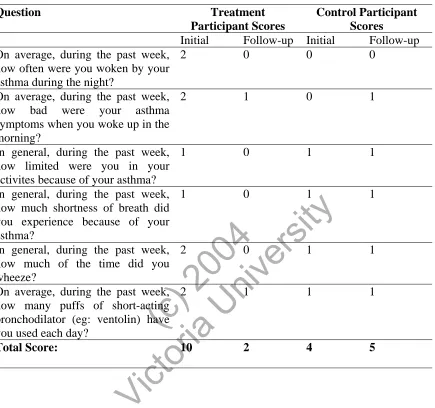
(11) in a rib-raising technique. Parents/guardians were present during all testing and treatment interventions.. Following the intervention, participants repeated the spirometry testing immediately after the intervention as well as 10 and 20 minutes post-intervention.. Between each. spirometry test, the participants sat quietly with their parent/guardian.. The participants then returned one week following their initial treatment, and again had a. ty. pre-test spirometry test conducted. They then received the same treatment intervention. ( or c) ia 20 U 04 ni ve rs i. they were assigned to previously, and repeated the spirometry testing post-treatment. On the second treatment, the participant in the treatment group received BLT to the thoracolumbar region and OCF to the temporal bones, sacrum and SBS.22 The sham treatment was applied the same way it was on the first treatment.. ct. The participants returned seven days following the second application of the intervention. Vi. they were assigned to, and repeated lung function testing using the spirometer to determine if there was any medium-term effect on lung function. They also filled out another ‘Asthma Control Questionnaire’, so that it could be compared with the original questionnaire they filled out before treatment and testing begun.. Measures Spirometry using a wedge-bellows spirometer (Vitalograph Compact II 66.000) was used to determine lung function. The lung function parameters measured included Forced. 11.
(12) Expiratory Volume in 1 second (FEV1), Forced Vital Capacity (FVC), FEV1/FVC, Peak Expiratory Flow (PEF) and expired flow over middle half of FVC (F25-75). FEV1/FVC is used as a diagnostic tool to assess lung obstruction. A value under 75% indicates some form of lung obstruction, whilst a value over 75% indicates no obstruction is present.25 Testing procedures followed the guidelines prescribed by the American Thoracic Society.26 A minimum of three and a maximum of eight measurements were taken at each measure, with the two maximum values needing to be within 0.2L of each other.2 The researcher taking spirometry measurements was blinded to what intervention the. ( or c) ia 20 U 04 ni ve rs i. ty. participant had received.. Functional capacity of the participants was determined using an ‘Asthma Control Questionnaire’. The scores from the initial questionnaire completed pre-intervention were compared to those scores on the final questionnaire after all testing was finished, to. Vi. Statistical Analysis. ct. determine if any change had occurred.. Results were analysed using mean values for spirometry output data, and percentage change for each testing period was calculated. Comparisons between the two ‘Asthma Control Questionnaires’ the participants filled out were analysed in terms of numeric score obtained, to determine if the intervention they received impacted upon their quality of life or activities of daily living.. 12.
(13) RESULTS. Change scores are highlighted in table 1 which demonstrates an improvement in FEV1 in the treatment individual. The participant recorded a 58.85% improvement in FEV1 by the end of the second treatment session, compared to only a slight improvement of 10.06% in the control participant (see table 1).. On the second treatment session, the treatment participant had an average percentage. ty. change of 22.19% in the recorded value of FEV1/FVC, compared to a drop of 8.80% in. ( or c) ia 20 U 04 ni ve rs i. the control participant. This indicates that FEV1/FVC declined in the control participant, whilst it improved by 22.19% in the treatment participant.. The values recorded for FEV1/FVC in the treatment participant improved on the second treatment. On the first treatment, all values recorded were 72 or less and for the control On the second treatment session, the values for. ct. participant they were 71 or less.. Vi. FEV1/FVC for the treatment participant increased to above 85, whilst the control participant still recorded results of 66 or less. Exact values at each treatment interval are demonstrated in table 1.. The mean change of FVC, FEV1, FEV1/FVC, PEF and F25-75 improved in the participant in the treatment group. However the control participant only demonstrated improvements in FVC and FEV1, whilst FEV1/FVC, PEF and F25-75 all declined.. 13.
(14) In this case study, there was marked improvement in functional capacity as determined by the Asthma Control Questionnaire (see table 2). The control participant recorded a score of 4 on the initial questionnaire compared to a score of 5 in the final questionnaire, thus a decline was noted as their asthma symptoms and their impact on activities of daily living scored a higher rating. The treatment participant initially had an original score of 10 compared to a score of 2 on the final questionnaire, therefore showing an 80% improvement in functional capacity. The participant showed improvement in the number of times they were woken by their asthma, severity of symptoms on waking, limitation of. Vi. ct. ( or c) ia 20 U 04 ni ve rs i. which was reduced by half over the testing period.. ty. activities, shortness of breath, frequency of wheezing and amount of medication used,. 14.
(15) 15. ty. ( or c) ia 20 U 04 ni ve rs i. ct. Vi.
(16) TABLE 2: Asthma Control Questionnaire Results (min score=0, max=6 for each question) Treatment Participant Scores Initial Follow-up 0 On average, during the past week, 2 how often were you woken by your asthma during the night? 1 On average, during the past week, 2 how bad were your asthma symptoms when you woke up in the morning? 0 In general, during the past week, 1 how limited were you in your activites because of your asthma? 0 In general, during the past week, 1 how much shortness of breath did you experience because of your asthma? 0 In general, during the past week, 2 how much of the time did you wheeze? 1 On average, during the past week, 2 how many puffs of short-acting bronchodilator (eg: ventolin) have you used each day? Total Score: 10 2. Control Participant Scores Initial Follow-up 0 0. 0. 1. 1. 1. 1. 1. ( or c) ia 20 U 04 ni ve rs i. ty. Question. 1. 1. 1. 4. 5. Vi. ct. 1. 16.
(17) DISCUSSION. Osteopathic techniques have been used to improve respiratory function in people with asthma, however significant research is limited, especially in relation to children with asthma.5. This case study demonstrated an improvement in functional capacity and. quality of life as a direct result of the osteopathic treatment and was linked to an improvement in the participant’s asthma symptoms.. ty. The improvement in FEV1/FVC in the treatment individual was an important finding.. ( or c) ia 20 U 04 ni ve rs i. FEV1/FVC is used as a diagnostic criterion to diagnose asthma. A value less than 75 indicates airway obstruction, whilst a value over 75 suggests no asthma or other respiratory condition is present.25 The treatment participant initially recorded values of less than 75, therefore classifying them as having some form of airway obstruction, however at every testing period on the second treatment, they recorded values over 75,. ct. indicating that their lung function had improved to that of a non-asthmatic individual.. Vi. This can be compared to the results obtained from the control participant. The control individual’s FEV1/FVC value did not exceed 75 throughout the study, and therefore their lung function remained poor enough for them to be classified as having an airway obstruction.25 This is an important finding as it demonstrates that osteopathic treatment may improve lung function in terms of FEV1/FVC in children with asthma when compared to a placebo.. 17.
(18) In 2001, 58% of children aged 2-12 years reported a limitation of normal activity within the previous year as a consequence of their asthma, maybe due to fatigue or frustration.1,27 One in three children did not take part in organized sport and one in five did not play at school or play with animals or ride a bike due to their asthma.27 These limitations can have a huge impact on the child’s lifestyle as they may be left behind socially by their peers.27 The current study demonstrated that following osteopathic treatment, limitation of activities improved from being very slightly limited to not limited at all compared to the control participant who reported no change from their initial. ty. reporting of a very slight limitation in their activities on their follow-up questionnaire.. treatment participant.. ( or c) ia 20 U 04 ni ve rs i. This indicated a functional improvement in the treatment participant versus the sham. In a similar study, Balon et al28 found that there were no measurable changes in airway function following chiropractic treatment which involved the application of manipulation. ct. and gentle soft tissue therapy. However they concluded that treatment contributed to a. Vi. substantial improvement in quality of life and symptoms experienced which may in fact be of greater significance to a child, as it allows them to keep up with their peers. An improvement in quality of life was found in this case study as the participant in the treatment group had an improvement of 80% in functional capacity as demonstrated by the Asthma Control Questionnaire results. Balon et al28 also found reduced usage of beta-agonist medication. In this case study, the participant in the control group reported using their short-acting bronchodilator (ie: ventolin) the same amount in the initial and. 18.
(19) final questionnaires. However the participant in the treatment group reported a 50% decrease in the amount of times they used their medication.. Reduction in medication use is an important finding as Lines6 found that prophylactic and regular use of inhaled beta-agonist bronchodilators may be an essential aspect in the morbidity and mortality of asthma increasing.. Van Schayck et al10 reports that. ventilatory function (FEV1) declined annually in those using bronchodilator medication, regardless of whether they used it ‘on demand’ or continuously. Van Schayck et al10. ty. found that participants who continually used bronchodilators had a decline in lung. ( or c) ia 20 U 04 ni ve rs i. function 3-4 times greater than those using the medication on demand. Sears et al9 proposed that the regular use of betasympathomimetic drugs may be a causative factor in the continual increase in morbidity worldwide due to asthma, as regular use of this medication was found to accelerate the deterioration of the control of asthma in the majority of participants.6,9. The use of beta-agonist bronchodilators has also been. ct. associated with a greater risk of death.6,11 Both Lines6 and Van Schayck et al10 concluded. Vi. that if bronchodilators are required, they should only be used when required rather than regular use.6,10 Therefore osteopathic treatment may be helpful in decreasing the need for bronchodilators as the current study indicated the treatment participant reduced their medication usage by half following treatment compared to the sham control participant. A reduction in medication will lead to better control of asthma, fewer drug-related side effects and a decrease in financial costs associated with this condition.. Further. investigation into this area is required before conclusive data is presented and implemented in practice.. 19.
(20) The reduction in medication usage noted in the treatment participant was most likely due to a decline in asthma symptoms experienced, as ventolin acts as a symptom reliever and is taken as required by the individual.. The treated participant had a decreased frequency. of being woken with asthma symptoms, a reduction in severity of symptoms on waking, and a decreased frequency of shortness of breath and wheezing, whereas the control participant experienced the same amount of shortness of breath and wheezing, and frequency of being woken with asthma symptoms, whilst the severity of symptoms when. ty. waking worsened. The treatment participant scored a much higher number on the initial. ( or c) ia 20 U 04 ni ve rs i. questionnaire compared to the control participant, so they potentially had more capacity for improvement. The decrease in symptoms encountered in the treatment participant could be linked to the observed improvement in lung function as demonstrated by the spirometry output, however the exact mechanism for how this improvement occurs in unclear. DiGiovanna et al21 stated that improved lung function may be due to a change in. ct. a viscero-somatic reflex. It is suggested that viscerosomatic reflexes from the lung to the. Vi. thoracic soma are abnormal in most asthmatic patients.21 A viscerosomatic reflex is an accepted osteopathic concept with little scientific evidence to support it, however anecdotal evidence suggests that this concept of symptoms of a disease presenting at a distant site from the dysfunction exists.29 It involves an afferent nerve stimuli originating from the visceral disturbance/anomaly. This influences the relevant soma, in particular the skeletal musculature, skin and vertebral joints at the corresponding level of the spinal cord which innervates the organ involve, in the case of asthma the lungs and pleura.30 This most commonly occurs at T2-T7 in people with asthma with accompanying deep. 20.
(21) musculature splinting and resistance to springing techniques throughout this region. DiGiovanna et al21 suggested that treating the entire respiratory system between acute asthma attacks can prevent abnormal autonomic feedback from the soma to the lungs. This can be done by addressing rib motion, the thoracic vertebrae, the diaphragm and accessory muscles of respiration. It is also suggested that the occipito-atlantal region is addressed to influence the vagus nerve which provides parasympathetic nervous supply to the lungs and pleura.21,30,31. ty. Improvement in lung function may also be due to an improvement in mechanical function. ( or c) ia 20 U 04 ni ve rs i. of the thorax and ribs. When suffering an acute asthma attack, the patient’s normal breathing patterns are disturbed as the effort of breathing causes early fatigue. This causes abnormal recruitment of the upper chest, accessory muscles, diaphragm and abdominal musculature which may in turn cause dysfunction in the thoracic spine as proposed by Wheatley et al.5,30 This abnormal recruitment was found in the treatment. ct. participant as at the screening process they presented with elevated upper ribs and. Vi. increased tone in the gluteal and erector spinae muscles in the thoracic and lumbar spine regions and increased tone in the cervical musculature. The control group participant also had altered biomechanics with a long kyphosis, limited extension in the lower thoracic spine, and inspiration was limited in the upper chest. By making sure these structures are in optimal working condition, it is proposed that the patient is better able to cope with acute attacks.30. 21.
(22) Whether the improvement noted in this study was due to a viscerosomatic reflex or an improvement in mechanical function of the thorax requires further investigation. However regardless of which mechanism is involved, the participant in the treatment group showed considerable improvement in both lung function and functional capacity when compared to the participant in the control group.. It is possible that as the. participants became familiar with using the spirometry equipment over time, their lung function improved as a direct result of becoming familiar with the spirometry testing procedure, therefore a learning effect may be the reason for improvement in lung. ty. function. However, both participants used the same equipment with the same instructions. ( or c) ia 20 U 04 ni ve rs i. and whilst the treatment participant showed improvement, the control participant’s improvement was minimal, making a learning effect unlikely in this study. A longer study with more participants is required to determine whether a learning effect has any impact on results obtained.. ct. This study was also limited in that both participants were not of the same age, with one. Vi. being 8 years old and the other being 12 years old. Also, the two participant’s asthma was not of the same baseline severity, so there was potentially more capacity for the treatment participant to improve. If more participants were recruited, they would have been matched for age and asthma severity before being allocated to which intervention they would receive.. 22.
(23) CONCLUSION. This case study demonstrated that the use of osteopathic treatment improved lung function when compared to a sham control. Lung function improved considerably more in the treatment participant than the control participant. Improvement in the FEV1/FVC ratio on the second treatment exceeded the threshold of 75 in the treatment individual, classifying them as not having an airway obstruction. Functional capacity also improved in the treatment participant as demonstrated by the Asthma Control Questionnaire, with. ty. an important finding being that the treatment participant’s use of bronchodilators. ( or c) ia 20 U 04 ni ve rs i. decreased by half following osteopathic treatment. The exact mechanism by which these improvements occured is unknown.. A viscerosomatic reflex or altered mechanical. function are both plausible explanations however more research needs to be undertaken to determine the exact mechanism. This case study was limited as only two participants were involved, and therefore results obtained may be due to individual differences rather. ct. than a direct result of the intervention they received. This study could be used as a. Vi. template for a larger scale study to determine if osteopathic treatment has a scientific basis in the treatment of asthma so that osteopathy can be integrated with conventional asthma treatments in order to achieve the best possible outcome for the patient.. 23.
(24) REFERENCES. Australian Centre for Asthma Monitoring 2003. Asthma in Australia 2003 AIHW Asthma Series 1.AIHW Cat.no.ACM1.Canberra:AIHW. 2. National Asthma Council, Asthma Management Handbook 2002. National Asthma Council Australia Ltd, South Melbourne, 2002. 3. Ng Man Kwong G, Proctor A, Billings C, Duggan R, Das C, Whyte MKB, et al. Increasing prevalence of asthma diagnosis and symptoms in children is confined to mild symptoms. Thorax 2001;56(4):312. 4. Robertson CF, Dalton MF, Peat JK, Haby MM, Bauman A, Declan-Kennedy J, et al. Asthma & other atopic diseases in Australian children. Medical Journal of Australia 1998;168:434-8. 5. Wheatley AL, Gosling CM, Gibbons PF. Investigation of the effects of using a rib raising technique on FEV1 and FVC outcomes in people with asthma: A clinical investigation. Journal of Osteopathic Medicine, 2000;3(2):60-4. 6. Lines D. A wholistic approach to the treatment of bronchial asthma in a chiropractic practice. Chiropractic Journal of Australia 1993;23(1):4-8. 7. Dorland’s Illustrated Medical Dictionary. 29th edition. Philadelphia: W.B. Saunders Company; 2000. 8. Chandrasoma P, Taylor CR. Concise Pathology. 3rd edition. U.S.A: McGraw-Hill; 1998. 9. Sears MR, Taylor DR, Print CG, Lake DC, LiQ-Q, Flannery ER, et al. Regular inhaled beta-agonist treatment in bronchial asthma. Lancet 1990; 336:1391-6. 10. Van Schayck CP, Dompeling E, van Herwaarden CLA, Folgering H, Verbeek ALM, van der Hoogen HJM, et al. Bronchodilator treatment in moderate asthma or chronic bronchitis: continuous or on demand? A randomized control study. British Medical Journal 1991;303:1426-31. 11. Spitzer WO, Suissa S, Ernst P, Horwitz RI, Habbick B, Cockcroft D, et al. The use of beta-agonists and the risk of death and near death from asthma. New England Journal of Medicine 1992;326:501-6. 12. Kemper, Kathi., Cassileth, Barrie., Ferris, Timothy. Holistic Pediatrics: A Resesarch Agenda. Pediatrics 1999;103(4). Vi. ct. ( or c) ia 20 U 04 ni ve rs i. ty. 1. 24.
(25) Davis MP, Darden PM. Use of Complementary and Alternative Medicine by Children in the United States. Archives of Pediatrics & Adolescent Medicine 2003;157(4):393. 14. Spigelblatt L, Laine-Ammara G. The use of Alternative Medicine by Children. Pediatrics 1994;94(6):811. 15. Donnelly WJ, Spykerboer JE, Thong YH. Are patients who use alternative medicine dissatisfied with orthodox medicine? Medical Journal of Australia 1985;142(10):539-41. 16. Kuchera WA, Kuchera ML. Osteopathic considerations in systemic dysfunction. Ohio: Greyden Press; 1994. 17. Campbell SK. Physical Therapy for Children. Philadelphia: W.B Saunders Company; 1995. 18. Magee DJ. Orthopedic Physical Assessment. 3rd edition. U.S.A: W.B. Saunders Company; 1997. 19. Gibbons P, Tehan P. Manipulation of the spine, thorax and pelvis : an osteopathic approach. Edinburgh: Churchill Livingstone; 2000. 20. Friedman HD, Gilliar WG, Glassman JH. Counterstrain Approaches in Osteopathic Manipulative Medicine. San Francisco: San Francisco International Manual Medicine Society Press; 2000. 21. DiGiovanna EL, Schiowitz, S. An Osteopathic Approach to Diagnosis and Treatment. Philadelphia: Lippincott Williams & Wilkins; 1991. 22. Greenman PE. Principles of Manual Medicine. 2nd edition. Pennsylvania: Lippincott Williams & Wilkins; 1996. 23. Ward RC. Foundations for Osteopathic Medicine. Baltimore: Williams & Wilkins; 1997. 24. Magoun HI. Osteopathy in the Cranial Field. U.S.A: Sutherland Cranial Teaching Foundation; 1976. 25. Murtagh J. General Practice. 2nd edition. Sydney: McGraw-Hill Company; 1998. 26. American Thoracic Society. Standardization of Spirometry: 1994 update. American Review of Respiratory Disease 1995;152:1107-36. Vi. ct. ( or c) ia 20 U 04 ni ve rs i. ty. 13. 25.
(26) Woolcock AJ, Bastiampillai SA, Marks GB, Keena VA. The burden of asthma in Australia. Medical Journal of Australia 2001;175:141-5. 28. Balon J, Aker PD, Crowther ER, Danielson C, et al. A comparison of active and simulated chiropractic manipulation as adjunctive treatment for childhood asthma. The New England Journal of Medicine 1998;339(15):1013. 29. Beal MC. Viscerosomatic Reflexes: A Review. Journal of the American Osteopathic Association. 1985;85:12. 30. Chaitow L, Bradley D, Gilbert C. Multidisciplinary approaches to breathing pattern disorders. Edinburgh: Churchill Livingstone; 2002. 31. Moore KL. Clinically Oriented Anatomy. Baltimore: Williams & Wilkins; 199. Vi. ct. ( or c) ia 20 U 04 ni ve rs i. ty. 27. 26.
(27) ty. ( or c) ia 20 U 04 ni ve rs i. ct. Vi. APPENDIX 1. 27.
(28)
Figure
Related documents
Assessing the Impact of Biodiversity Conservation in the Management of Maize Stalk Borer (Busseola f
Field experiments were conducted at Ebonyi State University Research Farm during 2009 and 2010 farming seasons to evaluate the effect of intercropping maize with
In comparison with the primary EIQ categorizing, factor analysis identified a new dimension which was called fertility, combined the physical, psychological and social items into
the Siberian stonechats, whereas the growth rate towards adult wing length is higher in the European stonechats (note, however, that in the European birds the wing
The high sinuosity of the channel combined with the new urbanized hydrology has led to an unstable channel; the proposed planform designs aims to stabilize this section of
This thesis examines local residents’ responses and reappraisal of a proposed and now operational biosolid (sewage sludge) processing facility, the Southgate Organic Material
Não registamos nenhuma diferença significante entre os indicadores que compuseram a avaliação do consumo de vegetais, fruta, leite, doces, refrigerantes e bebidas
For example, participants gave responses such as “academic success is when a student is comfortable [and] confident in their learning abilities”, and “when a student
These early results opens up two major directions of re- search: (1) as to identify the taxonomy features of unknown snakes using feature auto- matic feature analysis and (2) to
