S T U D Y P R O T O C O L
Open Access
The Cedar Project WelTel mHealth
intervention for HIV prevention in young
Indigenous people who use illicit drugs:
study protocol for a randomized controlled
trial
Kate Jongbloed
1, Anton J. Friedman
2, Margo E. Pearce
2, Mia L. Van Der Kop
3,4, Vicky Thomas
2, Lou Demerais
5,
Sherri Pooyak
6, Martin T. Schechter
1, Richard T. Lester
7, Patricia M. Spittal
1*and The Cedar Project Partnership
Abstract
Background:Despite successes in preventing and treating HIV, Indigenous people in Canada continue to face disproportionately high rates of HIV infection. Programs that support healing from lifetime trauma, support connection to culture, and reduce drug-related harms are critical to preventing HIV among young Indigenous people who use drugs. The Cedar Project WelTel mHealth intervention proposed here is a structured mobile-phone initiative to connect young Indigenous people who use drugs with Cedar Case Managers in a community-based setting. The intervention consists of a package of supports, including a mobile phone and cellular plan, weekly two-way text messaging, and support from Cedar Case Managers.
Methods:The Cedar Project WelTel mHealth study is a multi-site Zelen pre-randomized trial to measure the effect of a two-way supportive text-message intervention to reduce HIV vulnerability among young Indigenous people who use illicit drugs in two Canadian cities. The trial is nested within the Cedar Project, an ongoing cohort study addressing HIV and hepatitis C vulnerability among young Indigenous people who use drugs in Vancouver and Prince George, British Columbia. The Cedar Project Partnership, an independent body of Indigenous Elders, leaders, and health/social service experts, governs all aspects of the study. Two hundred participants will be followed over a 16-month period, with HIV propensity score at 6 months as the primary outcome. Secondary outcomes include HIV propensity at 1 year, HIV risk, resilience, psychological distress, access to drug-related services, and connection to culture measured at 6 months and 1 year. Primary analysis is by intention to treat.
Discussion:Culturally safe interventions that address barriers to HIV prevention while supporting the strength of young Indigenous people who use drugs are urgently needed. Despite presenting a tremendous opportunity to connect young, highly transient Indigenous people who use drugs to prevention services, supportive two-way mHealth programs have yet to be tested for HIV prevention in a community-based setting with this population. Trial registration:ClinicalTrials.gov NCT02437123 https://clinicaltrials.gov/show/NCT02437123 (registered 4 May 2015). Protocol version: 24 July 2015.
Keywords:mHealth, Indigenous, HIV prevention, Substance use
* Correspondence:[email protected]
1School of Population and Public Health, Faculty of Medicine, University of
British Columbia, 2206 East Mall, Vancouver, BC V6T 1Z3, Canada Full list of author information is available at the end of the article
Background
Indigenous scholars suggest that understanding substance use and HIV vulnerability among young Indigenous people must begin with consideration of the ongoing im-pact of colonization and intergenerational trauma while also acknowledging strength and survival in the face of in-credible hardships [1–5]. Indigenous scholars have de-scribed intergenerational trauma as a collective emotional and psychological “soul wound” that continues to affect the youngest generations of Indigenous people [6, 7]. In Canada, well over 150,000 Indigenous children were for-cibly removed from their homes and placed in residential schools between 1883 and 1996 [8]. The persistent devalu-ation of Indigenous cultural identity and widespread physical, sexual, and emotional abuse that occurred at residential schools has had far-reaching consequences for the health of Indigenous people [9]. Many Indigenous scholars and advocates argue that cultural oppression through the removal of children from their families and communities has continued through the child welfare sys-tem [10]. In fact, estimates indicate that three times as many Indigenous children are currently in care of the state compared with during the peak of the residential school system in the 1940s [10]. In a study of young Indigenous people who use drugs in British Columbia (BC), 65 % had been removed from their biological parents and placed into care [11]. Those who had been in care were 2.1 times more likely to have a parent who attended residential school and 2.6 times more likely to have been sexually abused. The residential school and child welfare systems in Canada disrupted ways of life that had sustained Indi-genous families and communities over generations, and introduced cycles of multi-generational grief, trauma, and displacement [10]. Acknowledging the profound effect of intergenerational and lifetime trauma, and subsequent re-liance on the powerful numbing effect of drugs, is critical to understanding HIV vulnerability among young Indigen-ous people who use drugs [4, 7, 12–15].
Indigenous leaders in Canada are justifiably concerned about alarming rates of HIV infection among their young people who continue to be vastly over-represented in the HIV epidemic [16]. Although Indigenous people comprise just 3.8 % of Canada’s total population, Indigenous people in 2013 represented 16 % of positive HIV tests in the country [17]. Injection drug use remains the primary ex-posure among Indigenous people, accounting for 64 % of HIV infections, compared with 11 % among non-Indigenous people [16]. In addition, one third of new in-fections were among young Indigenous people under 30 years of age, compared with only 20 % among young non-Indigenous people [16]. There is a continuing crisis of HIV infection among young Indigenous people who use injection and non-injection drugs in BC; HIV preva-lence reached 9 % overall and 17 % among those who
inject drugs [12]. In addition, HIV incidence among young Indigenous people who use injection drugs in BC is esti-mated to be three times higher than among non-indigenous young people [18].
Significant and multi-layered barriers to HIV prevention services, including health care, harm reduction, addiction treatment, and safer sex work environments, have been identified among young Indigenous people who use drugs [2, 3, 12, 13]. Young Indigenous people who use drugs have described frequent encounters with systemic and interpersonal racism, stigma and judgement within harm reduction and health services [1, 19–23]. Furthermore, despite compelling evidence that harm reduction pro-grams, including supervised drug consumption facilities [24] and opioid substitution therapy [25], are effective at preventing HIV infection, studies indicate that young Indi-genous people are failing to engage with these services [12, 18, 26, 27]. Finally, safety in sex work, as well as sup-ports to leave sex work if desired, remains elusive in a country where young Indigenous women in sex work rou-tinely face extreme violence and death in the course of their work [28, 29].
Addressing barriers to HIV prevention among young Indigenous people who use drugs—while also acknow-ledging resilience despite adversity—is urgently required. In New Zealand, Maori nurses have emphasized the need for health care that is“culturally safe” in order to overcome power imbalances that shape interactions be-tween health-care providers and Indigenous clients [30]. Culturally safe care simultaneously privileges Indigenous worldviews and acknowledges the impact of structural violence experienced by colonized peoples in health-care settings [31]. Indigenous experts also recognize the importance of“culture as intervention”to support resili-ence and resistance to HIV infection as well as trauma-informed counseling as a response to the harmful effects of historical and lifetime trauma [1]. Others have noted the critical role of interconnectedness with family and community to support health and healing among Indi-genous individuals [32]. Further research has highlighted the importance of non-medical, supplementary support for young Indigenous people in order to break through layers of marginalization experienced in their everyday lives [33].
much of the existing evidence on mHealth interventions for HIV prevention has focused on improving HIV knowledge by delivering HIV prevention messages to di-verse at-risk groups [39]. To our knowledge, no studies have investigated the potential for a two-way supportive text-message program to reach out to young drug-using Indigenous people to reduce vulnerability to HIV infection.
This protocol outlines a multi-site Zelen pre-randomized trial to measure the effect of a culturally safe, two-way sup-portive text-message intervention to reduce HIV vulnerabil-ity among young Indigenous people who use illicit drugs. This work will build on findings from recent studies imple-menting mHealth interventions in HIV clinics in Nairobi, Kenya and Vancouver, Canada [34, 40]. Outcomes include HIV propensity score, HIV risk, resilience, psychological distress, access to drug-related services, and connec-tion to culture. We hypothesize that the Cedar Project WelTel mHealth intervention will result in improved up-take and access to HIV prevention services, including health-care, harm reduction and addictions services, cul-tural supports, housing, and counseling. We believe that, together with the supportive element that “someone cares” enough to check in each week, improved access to services will help strengthen participants’ resilience and reduce vulnerability to HIV infection.
Methods and design Study design
The Cedar Project WelTel mHealth study is a two-site, two-arm, parallel group, open, stratified Zelen pre-randomized controlled trial to measure the effect of a cul-turally safe, two-way supportive text-message intervention to reduce HIV vulnerability among young Indigenous people who use illicit drugs in a community-based setting (ClinicalTrials.gov identifier NCT02437123). Participants will be pre-randomized to two groups—either the mHealth intervention or standard care—at a 1:1 allocation ratio.
Study setting
This trial is a sub-study nested within the Cedar Project, a cohort study of young Indigenous people who use in-jection and non-inin-jection drugs and reside in Vancouver and Prince George, BC, Canada. Initial recruitment into the Cedar Project occurred between 2003 and 2007 and was re-opened in 2011. To date, 738 participants have enrolled in the main Cedar Project cohort in Vancouver and Prince George. Eligibility criteria included being be-tween the ages of 14 to 30 at enrollment, provision of in-formed consent, self identification as having Indigenous ancestry, and smoking or injecting drugs—including crystal methamphetamine, opiates, crack or cocaine—at enrollment. Cedar Project participants complete an en-rollment visit as well as follow-up visits every 6 months.
At each study visit, participants complete detailed ques-tionnaires eliciting demographic, behavioural and health information, administered by trained Indigenous inter-viewers. Participants also provide a venous blood sample for HIV and hepatitis C virus antibody testing. In grati-tude for participants’ time, honoraria are provided at each follow-up visit. The Cedar Project has been ap-proved by the University of British Columbia Providence Health Care Research Ethics Board (H02-50304).
The Cedar Project study storefront research offices are located in Vancouver’s downtown eastside and in the downtown core of Prince George. Vancouver is a large city in southern BC and is located on the traditional territory of the Coast Salish peoples. Prince George is a forestry and mining town in the province’s northern interior, lo-cated on the traditional territory of the Lheidli T’enneh people. Cedar Project participants represent many of the diverse First Nations, Inuit and Métis communities across Canada and are often living far away from their home communities. Participants are highly transient, moving frequently between cities and reserves, making continuity of care a tremendous challenge [41]. Indigenous inter-viewers and nurses support both sites and are encouraged to provide referrals to cultural supports, health care, sub-stance use services, food programs, housing, and counsel-ing for participants who seek them.
The Cedar Project Partnership model
Since its inception, the Cedar Project has been
community-driven, interdisciplinary research that re-sponds to the continuing crisis of HIV infection and con-tributes to the health and healing of young Indigenous people who use drugs. The Cedar Project Partnership, an independent body of Indigenous Elders, health and social service experts, researchers, and elected leaders, governs the entire research process. The Cedar Project Partnership recognizes that conducting culturally safe research with young, vulnerable Indigenous people requires creating safe spaces where their identities, voices and stories are heard and respected [30]. A critical component of the Cedar Project is to ensure that our site offices are safe, welcom-ing settwelcom-ings without judgement of drug use, where police are not allowed, and cultural identity is honoured. Part of building cultural safety into the Cedar Project includes supporting access to traditional foods and ceremonies, such as through annual feasts, memorials, and a recent Learning Potlatch to honour our partners and participants held in Prince George. Overall, our paradigm is to ac-knowledge grief and historical trauma while building on young Indigenous peoples’strengths.
Participants
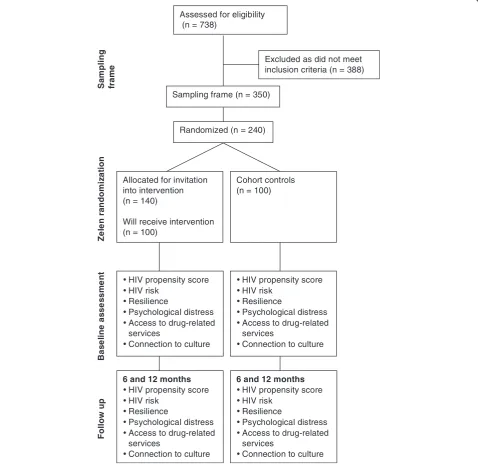
Cedar Project WelTel mHealth study (Fig. 1). A sam-pling frame of eligible Cedar Project participants will be created on the basis of the following eligibility criteria:
(1) Currently enrolled in the Cedar Project (2) Completed main Cedar Project baseline
questionnaire and attended at least one follow-up visit since 2009
(3) Had not tested positive for HIV
(4) Joined study in Vancouver or Prince George
(5) Alive at initiation of the Cedar Project WelTel mHealth study.
Participants who do not meet the eligibility criteria or who decline to participate will be excluded. Stratified randomization in a 1:1 ratio will be used to ensure a bal-ance of key factors, including study site (Prince George and Vancouver) and reporting injection drug use at the last visit (yes versus no). Sampled participants will be randomly assigned to receive the intervention or be
Assessed for eligibility (n = 738)
Excluded as did not meet inclusion criteria (n = 388)
Randomized (n = 240)
Allocated for invitation into intervention (n = 140)
Will receive intervention (n = 100)
Ze
le
n ra
ndom
iz
a
tion
S
a
m
pling
fr
a
me
Cohort controls (n = 100)
B
a
se
li
n
e
a
ss
e
ss
me
n
t
HIV propensity score HIV risk
Resilience
Psychological distress Access to drug-related services
Connection to culture
Follow
up
Sampling frame (n = 350)
HIV propensity score HIV risk
Resilience
Psychological distress Access to drug-related services
Connection to culture
6 and 12 months HIV propensity score HIV risk
Resilience
Psychological distress Access to drug-related services
Connection to culture 6 and 12 months
HIV propensity score HIV risk
Resilience
Psychological distress Access to drug-related services
Connection to culture
[image:4.595.59.538.250.716.2]included in the comparison group through computer-generated codes developed by a statistician at the Centre for Evaluation and Outcome Sciences at St. Paul’s Hospital. A list of participants to be invited into the intervention arm will be distributed to each study site. Informed consent will be sought from each participant invited to receive the inter-vention who agreed to participate. Those assigned to the comparison group will continue in the usual Cedar Project cohort study under its existing informed consent with no change whatsoever to their participation in the overall study. Target enrollment is set at 200 participants.
Intervention group
To ensure that we reach our target sample, initial randomization will be slightly unbalanced to accommo-date refusals to participate or difficulty locating partici-pants. A total of 140 participants (70 from each site) will be randomly allocated to receive the invitation to partici-pate in the intervention arm of the mHealth study. This will allow for an estimated 20 participants per site who cannot be reached or who decline to participate. Cedar staff will invite and enroll participants from this list to join the study until enrollment reaches 50 at each study site. Three attempts will be made to invite participants in the intervention arm into the study, including during regular visits to the research offices, phone, email, word of mouth, and street outreach.
Comparison group
One hundred Cedar Project participants who meet the eligibility criteria will be allocated to serve as the cohort comparison group, stratified on the same variables used to select the intervention group. Participants randomly assigned to the control group will continue as Cedar Project participants under usual circumstances. This group of cohort controls will not be required to provide any additional data to the study beyond that which they provide in semi-annual follow-up interviews as partici-pants in the main Cedar Project study.
The intervention
The Cedar Project WelTel mHealth intervention being evaluated is a structured mobile-phone initiative to connect young Indigenous people who use drugs with Cedar Case Managers in a community-based setting. The intervention consists of a package of supports, including a mobile phone and cellular plan, weekly two-way text messaging, and sup-port from Cedar Case Managers. The intervention will be implemented over a 16-month period, and all participants will receive the intervention for a minimum of 6 months.
Cedar Case Managers include Indigenous and non-Indigenous nurses and Cedar Project staff members who have extensive frontline outreach experience with young Indigenous people who use drugs in Prince George and
Vancouver. Cedar Case Managers follow a “culturally
safe” approach that acknowledges both trauma and
strengths and includes an explicit focus on the critical roles of cultural assets and safe relationships with care providers in HIV risk reduction [31].
Participants allocated to receive the intervention will be provided with a cellular phone at the start of the study. Each phone is pre-programmed with several phone numbers for emergency and health-related ser-vices relevant to the study site. During the study period, participants will receive a monthly cellular plan that in-cludes unlimited calling and texting within Canada, but no data. We made an explicit decision to include long-distance calling and texting to provide the opportunity for participants to connect with family and loved ones living in home communities and elsewhere in Canada. If phones are lost or stolen, participants will be eligible to receive one replacement. If two phones are lost, the par-ticipant may bring their own sim card-enabled cellular handset to use with the study monthly cellular plan.
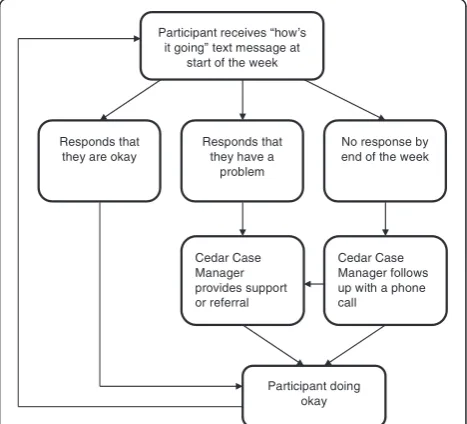
The supportive text-message component of the study is based on the intervention tested in the WelTel Kenya1 trial (Fig. 2) [34]. Each Monday at noon, a text message saying,“How’s it going?”is automatically sent to interven-tion arm participants through the WelTel mHealth soft-ware platform. Cedar Case Managers will login within 24 to 48 hours to triage the incoming text messages. They will respond to all participants and follow up with partici-pants who replied with a specific problem or need. On Wednesday, participants who have not replied will receive an additional text saying, “Haven’t heard from you, are you OK?” On Thursday or Friday, staff will attempt to call all remaining participants who have not
text message at start of the week
Responds that they are okay
Responds that they have a
problem
No response by end of the week
Participant doing okay
Cedar Case Manager follows up with a phone call
Cedar Case Manager provides support or referral
[image:5.595.305.539.499.711.2]responded by text message. Throughout, study staff will keep a log of all responses and actions taken through the WelTel platform.
Blinding
We recognize that blinding in a trial such as ours is challenging. Care providers (Cedar Case Managers) and intervention arm participants cannot be blinded, as the mHealth intervention requires overt participation and an“invite list”is provided upfront. However, participants in both the intervention and control groups will be blinded to specific study hypotheses. Primary and sec-ondary outcomes will be drawn from routine data collec-tion that occurs as part of participacollec-tion in the overall cohort; it is unlikely that participants will identify the specific questions used to generate outcomes from our extensive questionnaires. The data analyst will also be blinded to group allocation.
Objectives
The study’s primary objective is to test whether the Cedar Project mHealth intervention reduces vulnerabil-ity to HIV among young Indigenous people who use drugs, measured by using an HIV propensity score de-scribed below. Our secondary objectives are to test the specific ways the mHealth intervention may reduce vul-nerability to HIV by exploring HIV risk behaviours, re-silience, psychological distress, access to drug-related services, and connection to culture among participants over the course of the study.
We hypothesize that participants receiving the inter-vention will seek help from Cedar Case Managers to navigate barriers to drug-related services, housing, cul-tural supports, and health care. Also, we hypothesize that participants will use the phones as tools to connect with other supports and sources of strength in their lives, including family, work, culture, and services. Thus, we hypothesize that the intervention will help young people to work towards goals related to their own health and well-being, supporting them to reduce HIV risk.
Outcome measures Primary outcomes
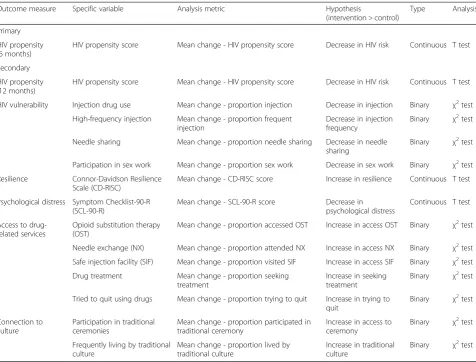
The primary outcome (Table 1) is HIV risk, measured by an HIV propensity score assessed at the 6-month time point. Previous analyses of Cedar Project data with respect to HIV infection have identified several factors as associated with HIV infection, including recent injec-tion drug use, high-frequency drug use, needle sharing, and participation in sex work [12]. Logistic regression of risk factors for prevalent HIV infection at study recruit-ment will provide coefficients to combine these four risk variables into a single primary outcome measuring pro-pensity for HIV infection. Mean change in HIV propro-pensity
score from baseline to 6 months will be used to determine the impact of the intervention on HIV vulnerability.
Secondary outcomes
The potential benefits of the supportive mHealth inter-vention are broad. As a result, multiple secondary out-comes are of interest. These were selected through consultation with academic and community partners and are part of routine Cedar Project data collection. They fall under five categories: HIV risk, resilience, psy-chological distress, access to drug-related services, and connection to culture. For all secondary outcomes, the effect of the mHealth intervention will be measured as change in the outcome from baseline to 6 months. Par-ticipants with sufficient follow-up time will contribute to analyses of all outcomes at the 1-year time point to de-termine longer-term effects of the intervention.
HIV propensity (12 months) Participants who received the intervention for a sufficient length of time will con-tribute to a secondary analysis of change in HIV propen-sity at 1 year to determine longer-term effects of the Cedar Project WelTel mHealth intervention. The HIV propensity variable will be generated by using the same approach used for the primary outcome.
HIV vulnerability Although the effect of the intervention on HIV risk will be assessed in the primary analysis, we will also analyze the effect of the intervention on specific behaviours. Several self-reported binary measures will be used to determine the effect of the intervention on HIV vulnerability in the previous 6-month period, including in-jection drug use in the past 6 months, high-frequency (daily or more) drug use, needle sharing, and participation in sex work. These measures will be ascertained from Cedar Project questionnaires collected every 6 months as part of the main Cedar Project cohort. HIV vulnerability will be assessed at baseline, 6 months, and 1 year.
Resilience Resilience, or the ability to cope with adver-sity, will be characterized by using the Connor-Davidson Resilience Scale (CD-RISC). The creators of the scale broadly define resilience as “personal qualities that en-able one to thrive in the face of adversity”[42]. The CD-RISC scale measures resilience via 25 items on a five-point scale with scores ranging between 0 and 100, with higher scores indicating greater resilience. Resilience will be assessed at baseline, 6 months, and 1 year.
SCL-90-R scores will be transformed into an average Global Severity Index, providing a single average measure that profiles overall degree of psychological distress [43]. Psychological distress will be assessed at baseline, 6 months, and 1 year.
Access to drug-related services Self-reported access to drug-related services, including opioid substitution ther-apy, needle exchange, safe injection facility, and drug treatment, in the previous 6-month period, will be ascer-tained from the main Cedar Project questionnaire. Pro-portions of participants reporting access to these services will be compared in the intervention and con-trol groups. We will also determine whether there are differences among treated and control groups in terms of proportion of people who tried to quit in the previous 6-month period. Access to drug-related services will be assessed at baseline, 6 months, and 1 year.
Connection to culture Connection to Indigenous cul-ture has been hypothesized as a key protective factor for
young Indigenous people who use drugs. It will be assessed by using two dichotomous variables that meas-ure cultural activity in the prior 6-month period: (1) self-reported participation in traditional ceremonies (in-cluding potlatch, feast, fast, burning ceremony, washing ceremony, naming ceremony, big/smoke house, rites of passage, smudge, dances, or any other traditional Indi-genous ceremony) and (2) frequency living by traditional culture (never/rarely versus often/always). These vari-ables were defined by Earl Henderson (Cree, Métis) and Violet Bozoki (Lheidli T’enneh) who are Indigenous Elders, traditional knowledge keepers, and members of the Cedar Project Partnership.
Sample size
[image:7.595.60.537.97.459.2]Considering current follow-up rates, we are likely able to reach and recruit at least 200 participants for participation in both arms of the Cedar Project WelTel mHealth study. As mentioned previously, the primary objective is HIV risk, measured by using an HIV propensity score evalu-ated at 6 months. On the basis of a 1:1 allocation ratio, a
Table 1Outcome measures
Outcome measure Specific variable Analysis metric Hypothesis
(intervention > control)
Type Analysis
Primary
HIV propensity (6 months)
HIV propensity score Mean change - HIV propensity score Decrease in HIV risk Continuous T test
Secondary
HIV propensity (12 months)
HIV propensity score Mean change - HIV propensity score Decrease in HIV risk Continuous T test
HIV vulnerability Injection drug use Mean change - proportion injection Decrease in injection Binary χ2test
High-frequency injection Mean change - proportion frequent injection
Decrease in injection frequency
Binary χ2test
Needle sharing Mean change - proportion needle sharing Decrease in needle sharing
Binary χ2test
Participation in sex work Mean change - proportion sex work Decrease in sex work Binary χ2test
Resilience Connor-Davidson Resilience Scale (CD-RISC)
Mean change - CD-RISC score Increase in resilience Continuous T test
Psychological distress Symptom Checklist-90-R (SCL-90-R)
Mean change - SCL-90-R score Decrease in psychological distress
Continuous T test
Access to drug-related services
Opioid substitution therapy (OST)
Mean change - proportion accessed OST Increase in access OST Binary χ2test
Needle exchange (NX) Mean change - proportion attended NX Increase in access NX Binary χ2test
Safe injection facility (SIF) Mean change - proportion visited SIF Increase in access SIF Binary χ2test
Drug treatment Mean change - proportion seeking treatment
Increase in seeking treatment
Binary χ2test
Tried to quit using drugs Mean change - proportion trying to quit Increase in trying to quit
Binary χ2test
Connection to culture
Participation in traditional ceremonies
Mean change - proportion participated in traditional ceremony
Increase in access to ceremony
Binary χ2test
Frequently living by traditional culture
Mean change - proportion lived by traditional culture
Increase in traditional culture
Binary χ2test
significance level of 0.05 (one-sided) and 80 % power, it is estimated that we require 78 participants in each study arm. This computation assumes a standardized mean ef-fect size (using Cohen’s d) of 0.40. Assuming attrition rates of approximately 20 %, we intend to over-enroll, resulting in a target of 200 participants overall (100 in each arm). Sample size was calculated by using the pwr package in R, software version 3.2.1.
Statistical analysis
The analysis and reporting of the results will follow the CONSORT (Consolidated Standards of Reporting Trials) guidelines [44]. Descriptive statistics of socio-demographic, historical/lifetime trauma, sex- and drug-related HIV vul-nerabilities, and health-related variables will be presented to assess comparability of the intervention and control groups. Mean (standard deviation) or median (quartiles) will be used for continuous variables and count (percent-age) for categorical variables. Our primary analysis to evalu-ate the effect of the mHealth intervention on HIV prevention will be by intention to treat (ITT) for primary and secondary outcomes among all randomly assigned par-ticipants according to the study group to which they were originally allocated. Student’st tests and chi-squared tests will be used to determine differences in the mean change in proportions or scores from baseline at 6 months or 1 year between the two study arms. If baseline characteristics are found to be substantially different between the two study arms, we will adjust for these factors by using regression models. In addition, we will conduct a secondary analysis by using a modified ITT approach including only partici-pants who agreed to participate in the intervention making up the intervention group (excluding over-sampled partici-pants who did not receive the intervention). To minimize the risk of bias introduced in our modified ITT analysis, we propose to use complier average causal effect (CACE) ana-lysis [45]. This approach will allow us to retain the initial random assignment by taking into account two subgroups within the group pre-randomized to receive the interven-tion (those who did and did not actually receive the inter-vention) and then helping us to identify a similar subgroup of control participants who could have been expected to re-ceive the intervention had it been offered [45]. By compar-ing expected and observed outcomes in these subgroups, we will obtain a less biased estimate of effect of the inter-vention [45]. Missing data will be approached by using mul-tiple imputation. An up-to-date version of R statistical software will be used to conduct all analyses [46]. All tests will be two-sided;Pvalues of less than 0.10 will be consid-ered significant. We plan to conduct four predetermined exploratory subgroup analyses that may help to tailor the intervention for specific high-need populations, including comparisons by gender, city, injection drug use, and urban versus rural. Statistical methods similar to those described
above for whole-group analyses will be conducted for pri-mary and secondary outcomes. All subgroup results will be reported, regardless of significance. Inferences will be hypothesis-generating, given concerns related to multiple comparisons and lower power to detect an effect in subgroups.
Nested studies Study implementation
As this study is the first of its kind in a community-based setting among young Indigenous people who use drugs, it is critical that the implementation of the inter-vention be described in detail. Daily mHealth memos prepared by each study site, combined with procedural documents, will inform a description of how a support-ive two-way text-message program looks and functions in practice. Descriptive statistics generated from the mHealth baseline questionnaire will provide additional insight into the feasibility of applying this program in similar settings. The survey asks about ownership and use of mobile phones, how often participants text mes-sage, and perceived helpfulness or concerns about re-ceiving text messages related to health.
Types of support requested
Examining the types of support requested by Cedar Pro-ject WelTel mHealth participants via text will help to identify current challenges accessing prevention services and support among young Indigenous people who use drugs. A comparative content analysis of text-message interactions captured on the WelTel platform over the study period will be used for this purpose. This descrip-tive analysis will help inform scale-up of this program, including the human resource requirements for future implementation in similar settings.
Participant perceptions
Participant perceptions of the mHealth intervention will be evaluated via the mHealth follow-up questionnaire. All intervention arm participants will be invited to complete an administered questionnaire to assess satis-faction with the care and support they received via the intervention. Evaluation of patient perceptions will in-clude thematic analysis of narrative responses and basic descriptive statistics.
Ethics
Project Partnership, Indigenous collaborators will continue to be involved in the conception, design and interpretation of the results of the Cedar Project WelTel mHealth study. The Cedar Project Partnership will serve as the data and safety monitoring board for this study. They have also ap-proved this manuscript for publication. The Cedar Project WelTel mHealth study has been approved by the University of British Columbia Providence Health Care Research Ethics Board (H13-02718), and we will be accountable to them for approval and monitoring.
All participants have provided informed consent as part of the main Cedar Project cohort study. Participants randomly assigned to receive an invitation to participate in the Cedar Project WelTel mHealth intervention will undergo an additional consent process. After the study participant is invited to participate in the Cedar Project WelTel mHealth study, a trained Cedar Project staff member will describe the study. If the person would like to enroll, the research staff will review the consent form and answer any questions. Participants who give consent are provided with a copy of the study introduction letter and consent form.
Harms
Adverse events will be documented in writing and re-ported to investigators. Study staff at both sites have been trained in recognizing and reporting of adverse events, in-cluding those directly attributable to the intervention (e.g., accidental disclosure of illicit drug use) and those resulting from trial participation. Because the study takes place in a community-based (not clinical) setting, staff will make re-ferrals to care where appropriate. Potential harms will be outlined to participants during the informed consent process. All unanticipated risks to human participants or others will be reported to the Cedar Project Partnership and the University of British Columbia/Providence Health Care Research Ethics Board where appropriate.
Dissemination
Knowledge translation is a hallmark of the Cedar Project and will be a key component of the Cedar Project WelTel mHealth study. Integrated knowledge translation is planned throughout the study, and updates will be pro-vided to the Cedar Project Partnership at quarterly meet-ings. Findings will be shared through ceremony with Indigenous partners; peer-reviewed publications and pre-sentations; and consultations with policy makers and ser-vice delivery organizations to support uptake of results.
Discussion
Innovative, culturally safe interventions that address the barriers to HIV prevention while supporting the strength of young Indigenous people who use drugs are urgently needed. This study, due to report its findings in 2017,
tests the effectiveness of a two-way supportive text-message program delivered in a community-based setting to support HIV prevention among young Indigenous people who use drugs. Despite presenting a tremendous opportunity to connect young, highly transient Indigenous people who use drugs to prevention services and support, supportive two-way mHealth programs have yet to be tested for HIV prevention in a community-based setting with young Indigenous people who use drugs [34, 49–51].
Other researchers have used two-way supportive messa-ging interventions to engage people living with HIV in care and to improve adherence [34, 36, 40, 52, 53]. Recent randomized controlled trials in Kenya indicated that intro-ducing mobile-phone technology into HIV case manage-ment improved HIV treatmanage-ment adherence and HIV-related clinical outcomes, despite high levels of poverty, remote and rural living, transience, stigma, and discrimin-ation [34, 50, 54]. These studies have demonstrated the importance of text-message programs that are both sup-portive and interactive [35, 55–57], as passive mHealth programs that seek to monitor, remind or educate have had limited success [58–60]. It is important to note that we have deliberately chosen an open-ended weekly text message to allow participants to set their own priorities around their health and well-being, as well as to avoid possible disclosure of drug use and other sensitive issues.
group in an ITT analysis may dilute the treatment effect, whereas excluding them could lead to a biased comparison. In our case, we believe that the intervention is likely to be highly valued among invitees and there will be few who re-fuse. Nevertheless, this will be monitored closely, and as noted earlier, we will also use a modified ITT approach.
A key component of the Cedar Project WelTel mHealth study is relational accountability [64]. We honour our rela-tionships with study participants who have continued to share their stories with us since joining the Cedar Project. Testing this intervention is a way for us to respond to the clear message from Cedar Project participants about the importance of having support to navigate barriers to care and services that they face in their daily lives. An additional component of our relational accountability is through the governing leadership of the Cedar Project Partnership, who work to ensure that this research is relevant to the commu-nities they represent and is conducted in a good way.
Limitations
Our decision to over-sample in the intervention arm to adjust for refusals to participate or difficulty locating participants may result in a dilution of the effect of the intervention in ITT analysis. As a result, we have pro-posed a parallel, modified ITT analysis, which may be af-fected by selection bias. Diversity of HIV risk among participants (non-homogeneity) may also dilute the de-tected effect of the intervention. Representativeness of the sample is dependent on representativeness of the Cedar Project cohort study sample overall; however, we have made a considerable attempt to ensure that the sample represents the population under study [12]. As this study involves a package of support that includes mobile phones, two-way text messaging, and support, it is difficult to determine the relative contribution of com-ponents of the package to any effect the intervention may have. The qualitative nested studies will help in this regard. Furthermore, we cannot rule out that simultan-eous co-interventions could impact our results. As BC’s HIV incidence has been stable for several years and many public health initiatives (including needle exchanges and safe injection sites) are already in place, we feel it is un-likely that new transformative co-interventions will take effect over the study period. However, we will monitor po-tential co-interventions that could impact study outcomes through our main cohort questionnaires, as well as track major policy and programmatic changes in the Province. Blinding in this study is not possible as assessors have strong relationships with participants. In addition, loss to follow-up may be higher in the comparison group than the intervention group. Cedar Project participants are highly transient and often difficult to track down [41]. Having a mobile phone and consistent airtime will likely make it easier to reach participants receiving the
intervention for follow-up visits. Active follow-up with all participants through phone, email, and outreach will help ensure retention and interview appointment attendance. In addition, our measures may not adequately capture complex concepts such as connection to culture and re-silience. Finally, the intervention under study is complex and multifaceted. It may be that our proposed outcomes do not adequately capture the impact of the intervention on the lives of participants involved.
Trial status
Enrollment in the trial has begun but has not yet reached full enrollment.
Abbreviations
BC:British Columbia; CD-RISC: Connor-Davidson resilience scale; ITT: Intention to treat; mHealth: Health care delivered via mobile phone; NX: Needle exchange; OST: Opioid substitution therapy; SIF: Safe injection facility; SCL-90-R: Symptom checklist 90-R.
Competing interests
RTL is the co-founder and executive director of the WelTel International mHealth Society and has an interest in WelTel, the company that provides the SMS software platform. The other authors declare that they have no competing interests.
Authors’contributions
KJ helped to conceive of the study, develop the study design, secure the funding, develop study procedures, initiate study implementation, write the study protocol and is a grant holder. LD helped to conceive of the study, develop the study design and provide input on Indigenous research methods and cultural safety in study protocols and procedures. RTL helped to conceive of the study and develop the study design. PMS helped to conceive of the study, develop the study design, secure the funding, develop study procedures, initiate study implementation and is a grant holder. MTS helped to conceive of the study, develop the study design, secure the funding and is a grant holder. MEP helped to secure the funding and write the study protocol. AJF helped to secure the funding, develop study procedures, initiate study implementation, and write the study protocol. VT helped to develop study procedures, initiate study implementation and provide input on Indigenous research methods and cultural safety in study protocols and procedures. MLVDK helped to write the study protocol and gave input on study design, measures and statistical analyses. SP provided input on Indigenous research methods and cultural safety in study protocols and procedures. The Cedar Project Partnership helped to conceive of the study, develop the study design, secure the funding and provided governance and leadership. All authors contributed critical intellectual input to refinement of the study protocol and approved the final manuscript.
Acknowledgements
Funding
The Cedar Project WelTel mHealth study is supported by a Canadian Institutes for Health Research (CIHR) operating grant (RN 156 278–272441) with additional funding from the St. Paul’s Hospital Foundation Enhanced Patient Care Fund. The funding sources had no role in the design of the study and will not have any role in its execution, analyses, interpretation, or decision to submit results. KJ is supported by a CIHR Doctoral Award (May 2013).
Author details
1School of Population and Public Health, Faculty of Medicine, University of
British Columbia, 2206 East Mall, Vancouver, BC V6T 1Z3, Canada.2The Cedar Project, Centre for Health Evaluation and Outcome Sciences, St. Paul’s Hospital, 588-1081 Burrard Street, Vancouver, BC V6Z 1Y6, Canada. 3Department of Public Health Sciences, Karolinska Institutet,
Tomtebodavägen 18a, Campus Solna, Stockholm 171 77, Sweden.4Division of Infectious Diseases, Faculty of Medicine, University of British Columbia, 566-828 West 10th Avenue, Vancouver, BC V5Z 1L8, Canada.5Vancouver Native Health Society, 455 Hastings Street E, Vancouver, BC V6A 1P5, Canada. 6Canadian Aboriginal AIDS Network, 6520 Salish Drive, Vancouver, BC V6N
2C7, Canada.7Neglected Global Diseases Initiative, Faculty of Medicine, University of British Columbia, 564-828 West 10th Avenue, Vancouver, BC V5Z 1L8, Canada.
Received: 29 July 2015 Accepted: 23 February 2016
References
1. Simoni JM, Sehgal S, Walters KL. Triangle of risk: urban American Indian women’s sexual trauma, injection drug use, and HIV sexual risk behaviors. AIDS Behav. 2004;8:33–45.
2. Duncan KC, Reading C, Borwein AM, Murray MC, Palmer A, Michelow W, et al. HIV incidence and prevalence among Aboriginal peoples in Canada. AIDS Behav. 2011;15:214–27.
3. Negin J, Aspin C, Gadsden T, Reading C. HIV Among Indigenous peoples: a review of the literature on HIV-related behaviour since the beginning of the epidemic. AIDS Behav. 2015;19:1720–34.
4. Christian WM, Spittal PM. The Cedar Project: acknowledging the pain of our children. Lancet. 2008;372:1132–3.
5. Chansonneuve D. Addictive behaviours among Aboriginal people in Canada. Ottawa: Aboriginal Healing Foundation; 2007.
6. Duran E, Duran B, Brave Heart MY, Yellow H-DS. Healing the American Soul Wound. In: Danieli Y, editor. International Handbook of Multigenerational Legacies of Trauma. New York: Plenum Press; 1998. p. 341–54. 7. Brave Heart MY. The historical trauma response among natives and its
relationship with substance abuse: a Lakota illustration. J Psychoactive Drugs. 2003;35:7–13.
8. Truth & Reconcilliation Commission of Canada. Honouring the Truth, Reconciling for the Future: Summary of the Final Report of the Truth and Reconciliation Commission of Canada. Winnipeg: TRC; 2015.
9. Chansonneuve D. Reclaiming connections: understanding residential school trauma among Aboriginal people. Ottawa: Aboriginal Healing Foundation; 2005. 10. Blackstock C. First Nations child and family services: restoring peace and
harmony in First Nations communities. In: Kufeldt K, McKenzie B, editors. Child welfare: connecting research policy and practice. Waterloo: Wilfred Laurier University Press; 2003. p. 331–43.
11. Clarkson AF, Christian WM, Pearce ME, Jongbloed KA, Caron NR, Teegee MP, et al. The Cedar Project: negative health outcomes associated with involvement in the child welfare system among young Indigenous people who use injection and non-injection drugs in two Canadian cities. Can J Public Health. 2015;106:e265–70.
12. Spittal PM, Craib KJ, Teegee M, Baylis C, Christian WM, Moniruzzaman A, et al. The Cedar project: prevalence and correlates of HIV infection among young Aboriginal people who use drugs in two Canadian cities. Int J Circumpolar Health. 2007;66:226–40.
13. Pearce ME, Christian WM, Patterson K, Norris K, Moniruzzaman A, Craib KJP, et al. The Cedar Project: historical trauma, sexual abuse and HIV risk among young Aboriginal people who use injection and non-injection drugs in two Canadian cities. Soc Sci Med. 2008;66:2185–94.
14. Barlow JK. Examining HIV/AIDS among the Aboriginal population in Canada in the post-residential school era. Ottawa: Aboriginal Healing Foundation; 2003.
15. Pearce ME, Jongbloed K, Richardson C, Henderson E, Pooyak S, Oviedo-Joekes E, et al. The Cedar Project: resilience in the face of HIV vulnerability within a cohort study involving young Indigenous people who use drugs in three Canadian cities. BMC Public Health. 2015;15: 1095–106.
16. Public Health Agency of Canada. Population-Specific HIV/AIDS Status Report: Aboriginal Peoples. Ottawa: PHAC; 2010.
17. Public Health Agency of Canada. HIV and AIDS in Canada: Surveillance Report to December 31, 2013. Ottawa: PHAC; 2014.
18. Miller CL, Strathdee SA, Spittal PM, Kerr T, Li K, Schechter MT, et al. Elevated rates of HIV infection among young Aboriginal injection drug users in a Canadian setting. Harm Reduct J. 2006;3:9.
19. Dell CA, Lyons T. Harm reduction policies and programs for persons of Aboriginal descent. Ottawa: Canadian Centre on Substance Abuse; 2007. 20. Canadian Aboriginal AIDS Network. Joining the Circle: An Aboriginal Harm
Reduction Model. Vancouver, BC: Canadian Aboriginal AIDS Network; no date. 21. Mill J, Edwards N, Jackson R, Austin W, MacLean L, Reintjes F. Accessing
health services while living with HIV: intersections of stigma. Can J Nurs Res. 2009;41:168–85.
22. Browne AJ, Fiske J-A. First Nations women’s encounters with mainstream health care services. West J Nurs Res. 2001;23:126–47.
23. Allan B, Smylie J. First Peoples, second class treatment: The role of racism in the health and well-being of Indigenous peoples in Canada. Toronto: The Wellesley Institute; 2015.
24. Pinkerton SD. How many HIV infections are prevented by Vancouver Canada’s supervised injection facility? Int J Drug Policy. 2011;22:179–83. 25. Gowing L, Farrell MF, Bornemann R, Sullivan LE, Ali R. Oral substitution
treatment of injecting opioid users for prevention of HIV infection. Cochrane Database Syst Rev. 2011;8:1–116.
26. Yang J, Oviedo-Joekes E, Christian KWM, Li K, Louie M, Schechter M, et al. The Cedar Project: Methadone maintenance treatment among young Aboriginal people who use opioids in two Canadian cities. Drug Alcohol Rev. 2011;30:645–51.
27. Kerr T, Marsh D, Li K, Montaner J, Wood E. Factors associated with methadone maintenance therapy use among a cohort of polysubstance using injection drug users in Vancouver. Drug Alcohol Depend. 2005;80:329–35. 28. Oppal WT. Forsaken: The Report of the Missing Women Commission of
Inquiry. Vancouver: Missing Women Commission of Inquiry; 2012. 29. Pearce ME, Blair AH, Teegee M, Pan SW, Thomas V, Zhang H, et al. The
Cedar Project: historical trauma and vulnerability to sexual assault among young Aboriginal women who use illicit drugs in two Canadian cities. Violence Against Women. 2015;21:313–29.
30. Papps E, Ramsden I. Cultural safety in nursing: The New Zealand experience. International J Qual Health Care. 1996;8:491–7.
31. Smye V, Browne A.‘Cultural safety’and the analysis of health policy affecting aboriginal people. Nurse Res. 2002;9:42.
32. McCormick RM. Healing through interdependence: the role of connecting in First Nations healing practices. Can J Couns. 1997;31:172–84.
33. Prentice T, Mill J, Archibald CP, Sommerfeldt S, Worthington C, Jackson R, et al. Aboriginal youth experiences of accessing HIV care and treatment. J HIV AIDS Soc Ser. 2011;10:395–413.
34. Lester RT, Ritvo P, Mills EJ, Kariri A, Karanja S, Chung MH, et al. Effects of a mobile phone short message service on antiretroviral treatment adherence in Kenya (WelTel Kenya1): a randomised trial. Lancet. 2010;376:1838–45. 35. Mbuagbaw L, van der Kop ML, Lester RT, Thirumurthy H, Pop-Eleches C, Ye C,
et al. Mobile phone text messages for improving adherence to antiretroviral therapy (ART): an individual patient data meta-analysis of randomised trials. BMJ Open. 2013;3, e003950.
36. Ingersoll K, Dillingham R, Reynolds G, Hettema J, Freeman J, Hosseinbor S, et al. Development of a personalized bidirectional text messaging tool for HIV adherence assessment and intervention among substance abusers. J Subst Abuse Treat. 2014;46:66–73.
37. Reback C. Using text messaging to reduce methamphetamine use and sexual risk behaviors and increase ART adherence among men who have sex with men. J Mob Technol Med. 2014;3:8.
38. Montoya JL, Georges S, Poquette A, Depp CA, Atkinson JH, Moore DJ. Refining a personalized mHealth intervention to promote medication adherence among HIV+ methamphetamine users. AIDS Care. 2014;26:1477–81. 39. Catalani C, Philbrick W, Fraser H, Mechael P, Israelski DM. mHealth for HIV
40. Smillie K, Van Borek N, Abaki J, Pick N, Maan EJ, Friesen K, et al. A qualitative study investigating the use of a mobile phone short message service designed to improve HIV adherence and retention in care in Canada (WelTel BC1). J Assoc Nurses AIDS Care. 2014;25:614–25.
41. Jongbloed K, Thomas V, Pearce ME, Christian KW, Zhang H, Oviedo-Joekes E, et al. The Cedar Project: Residential transience and HIV vulnerability among young Aboriginal people who use drugs. Health Place. 2015;33:125–31. 42. Connor KM, Davidson JR. Development of a new resilience scale: The
Connor-Davidson resilience scale (CD-RISC). Depress Anxiety. 2003;18:76–82. 43. Derogatis LR. SCL-90-R: Symptom Checklist-90-R: administration, scoring,
and procedures manual. Minneapolis: NCS Pearson; 1996. 44. Moher D, Schulz KF, Altman DG. The CONSORT statement: revised
recommendations for improving the quality of reports of parallel group randomized trials. BMC Med Res Methodol. 2001;1:2.
45. Hewitt CE, Torgerson DJ, Miles JN. Is there another way to take account of noncompliance in randomized controlled trials? Can Med Assoc J. 2006;175:347-348.
46. R Core Development Team. R: A language and environment for statistical computing. Vienna: R Foundation for Statistical Computing; 2012. 47. Canadian Institutes of Health Research, Natural Sciences and Engineering
Research Council of Canada Social Sciences and Humanities Research Council of Canada. Chapter 9: Research Involving the First Nations, Inuit and Metis Peoples of Canada. In: Tri-Council Policy Statement on Ethical Conduct for Research Involving Humans; 2010.
48. Schnarch B. Ownership, control, access, and possession (OCAP) or self-determination applied to research. J Aborig Health. 2004;1:80–95. 49. Lester R, Karanja S. Mobile phones: exceptional tools for HIV/AIDS, health,
and crisis management. Lancet Infect Dis. 2008;8:738–9. 50. Lester RT, Gelmon L, Plummer FA. Cell phones: tightening the
communication gap in resource-limited antiretroviral programmes? AIDS. 2006;20:2242–4.
51. Jongbloed K, Parmar S, van der Kop M, Spittal PM, Lester R. Recent Evidence for Emerging Digital Technologies to Support Global HIV Engagement in Care. Curr HIV/AIDS Rep. 2015;12:451–61.
52. Mahal D, van der Kop M, Murray M, Jongbloed K, Patel A, Momin Kazi M, et al. Mobile health: An update on BC projects that use WelTel to enhance patient care. BC Med J. 2014;56:90.
53. Smillie K, Borek NV, van der Kop ML, Lukhwaro A, Li N, Karanja S, et al. Mobile health for early retention in HIV care: a qualitative study in Kenya (WelTel Retain). Afr J AIDS Res. 2014;13:331–8.
54. Pop-Eleches C, Thirumurthy H, Habyarimana JP, Zivin JG, Goldstein MP, de Walque D, et al. Mobile phone technologies improve adherence to antiretroviral treatment in a resource-limited setting: a randomized controlled trial of text message reminders. AIDS. 2011;25:825.
55. Mills EJ, Lester R, Ford N. Adherence to antiretroviral therapy: supervision or support? Lancet Infect Dis. 2012;12:97–8.
56. van der Kop ML, Karanja S, Thabane L, Marra C, Chung MH, Gelmon L, et al. In-depth analysis of patient-clinician cell phone communication during the WelTel Kenya1 Antiretroviral Adherence Trial. PLoS One. 2012;7, e46033. 57. Lester RT. Ask, don’t tell—mobile phones to improve HIV care. N Engl J
Med. 2013;369:1867–8.
58. Chib A, Wilkin H, Ling LX, Hoefman B, Van Biejma H. You have an important message! Evaluating the effectiveness of a text message HIV/AIDS campaign in Northwest Uganda. J Health Commun. 2012;17:146–57.
59. Jamison J, Karlan D, Raffler P. Mixed method evaluation of a passive mHealth sexual information texting service in Uganda. National Bureau of Economic Research Working Paper No. 19107; 2013.
60. Mbuagbaw L, Thabane L, Ongolo-Zogo P, Lester RT, Mills EJ, Smieja M, et al. The Cameroon Mobile Phone SMS (CAMPS) trial: a randomized trial of text messaging versus usual care for adherence to antiretroviral therapy. PLoS One. 2012;7, e46909.
61. Torgerson DJ, Roland M. What is Zelen’s design? BMJ. 1998;316:606. 62. Hatcher S, Coupe N, Durie M, Elder H, Tapsell R, Wikiriwhi K, et al. Te Ira
Tangata: A Zelen randomised controlled trial of a treatment package including problem solving therapy compared to treatment as usual in Maori who present to hospital after self harm. Trials. 2011;12:117. 63. Relton C, Torgerson D, O’Cathain A, Nicholl J. Rethinking pragmatic
randomised controlled trials: introducing the“cohort multiple randomised controlled trial”design. BMJ. 2010;340:963–7.
64. Wilson S. Research is ceremony: Indigenous research methods. Winnipeg: Fernwood Publishing; 2008.
• We accept pre-submission inquiries
• Our selector tool helps you to find the most relevant journal
• We provide round the clock customer support
• Convenient online submission
• Thorough peer review
• Inclusion in PubMed and all major indexing services • Maximum visibility for your research
Submit your manuscript at www.biomedcentral.com/submit