EFFICIENCY OF KENYA LIBRARIES INFORMATION SERVICES CONSORTIUM
IN PROVISION OF E-RESOURCES IN ACADEMIC LIBRARIES: CASE OF
LAIKIPIA UNIVERSITY LIBRARY
NJUGUNA ANDREW KIMANGA
E65/OL/NKU/24159/2014
A Research Project Submitted in Partial Fulfillment of the Requirements for the Degree
of Masters in Library and Information Science in the Department of Library and
Information Science, School of Education, Kenyatta University
i
DECLARATION
I confirm that this research project is my original work and has not been presented in any other university/institution for certification. The project has been complemented by referenced works duly acknowledged. Where text, data, graphics, pictures or tables have been borrowed from other works- including the internet, the sources are specifically accredited through referencing in accordance with anti-plagiarism regulations.
Signature:...……… Date:………..
Name: Njuguna Andrew Kimanga
Registration number: E65/OL/NKU/24159/2014
Department: Department of Library & Information Sciences
Supervisors’ declaration: I confirm that the work reported in this project was carried out by the candidate under my supervision as University supervisor.
Signature:...……… Date:………..
Name: Dr. Peter G. Mwathi
ii
DEDICATION
iii
ACKNOWLEDGEMENT
This work could not have been achieved without the assistance of many people. Special regards go out to my supervisor Dr. Peter G. Mwathi. His immense guidance was very instrumental in writing this research project. Dr. Wamae (Internal Reader) and Dr. Norbet Ogeta (External Reader) were very instrumental during proposal development which eventually led to this research project. Special thanks go to Internal Examiners Dr. Harriet Kamau for their recommendations and Dr Ben Namande and to all my lecturers at Kenyatta University for the knowledge and skills they imparted in me. I wish to acknowledge the assistance given to me during data collection by the University Librarian Ms Carol Odiyo, library staff and the post-graduate students at Laikipia University. God bless all of them.
iv
TABLE OF CONTENTS
DECLARATION ... I DEDICATION ... II ACKNOWLEDGEMENT ... III LIST OF TABLES ... VIII LIST OF FIGURES ... IX ABBREVIATIONS AND ACRONYMS ... X ABSTRACT ... XII
CHAPTER ONE ... 1
INTRODUCTIONANDBACKGROUNDTOTHESTUDY ... 1
1.1 INTRODUCTION ... 1
1.2 BACKGROUND TO THE STUDY ... 1
1.2.1 Examples of Consortia ... 5
1.2.2 Kenya Libraries Information Services Consortium (KLISC) ... 5
1.2.3 Laikipia University ... 6
1.3 STATEMENT OF THE PROBLEM ... 7
1.4 PURPOSE OF THE STUDY ... 8
1.5 OBJECTIVES OF THE STUDY ... 8
1.6 RESEARCH QUESTIONS ... 9
1.7 SIGNIFICANCE OF THE STUDY ... 9
1.8 LIMITATIONS AND DELIMITATIONS ... 10
1.8.1 Limitations ... 10
1.8.2 Delimitations ... 10
1.9 ASSUMPTIONS OF THE STUDY ... 11
1.10 THEORETICAL FRAMEWORK... 11
1.11 CONCEPTUAL FRAMEWORK ... 14
1.12 OPERATIONAL DEFINITION OF TERMS... 15
CHAPTER TWO ... 17
2.0 LITERATUREREVIEW ... 17
2.1 INTRODUCTION ... 17
2.2 HISTORICAL BACKGROUND OF LIBRARY COOPERATION ... 17
2.2.1 International Coalition of Library Consortia (ICOLC) ... 18
v
2.3 KLISC PARTNERS ... 20
2.3 KLISC PARTNERS ... 20
2.3.1 International Networks for the Availability of Scientific Publications (INASP) ... 20
2.3.2 Electronic Information for Libraries (EIFL) ... 21
2.3.3 International Federation of Library Associations and Institutions (IFLA) ... 21
2.3.4 Kenya Library Association ... 22
2.3.5 Kenya Education Network, (KENET) ... 22
2.4 ACADEMIC LIBRARIES AND THE NEED FOR LIBRARY COOPERATION ... 23
2.5 BENEFIT OF LIBRARY CONSORTIUM ... 25
2.5.1 Financial ... 25
2.5.2 Collection Development (CD) ... 25
2.5.3 Enhancing Inter Library Loan (ILL) ... 26
2.5.4 Remote access to library resources ... 26
2.5.5 Source of up to date information ... 27
2.6. KENYA LIBRARIES AND INFORMATION CONSORTIUM (KLISC)ACTIVITIES ... 27
2.6.1 Training and user support ... 27
2.6.2 E-resources marketing... 28
2.7 SUMMARY OF THE CHAPTER AND GAPS IDENTIFICATION ... 29
2.8 CHALLENGES OF CONSORTIUM BUILDING ... 30
CHAPTER THREE ... 32
3.0 RESEARCHMETHODOLOGY... 32
3.1 INTRODUCTION ... 32
3.2 RESEARCH DESIGN ... 32
3.3 VARIABLES ... 33
3.4 LOCATION OF THE STUDY ... 33
3.5 TARGET POPULATION ... 33
3.6 SAMPLING TECHNIQUES AND SAMPLE SIZE ... 34
3.6.1 Sampling Techniques ... 34
3.6.2 Sample Size ... 35
3.7 RESEARCH INSTRUMENTS ... 36
3.7.1 Questionnaire ... 36
3.7.2 Interview schedule ... 36
3.8 PILOTING STUDY ... 37
3.9 RESEARCH VALIDITY ... 37
3.10 RELIABILITY ... 38
vi
3.11.1 Data analysis ... 39
3.11.1 Data analysis ... 39
3.12 LOGISTICAL AND ETHICAL CONSIDERATIONS... 39
3.12.1 Logistical Considerations ... 39
3.12.2 Ethical Considerations ... 39
CHAPTER FOUR ... 41
PRESENTATIONOFFINDINGS,INTERPRETATIONANDDISCUSSION ... 41
4.1 INTRODUCTION ... 41
4.2 GENERAL AND DEMOGRAPHIC INFORMATION ... 41
4.2.1 Response rate ... 41
4.2.2 Demographic Data ... 41
4.2.3 ICT Skills Levels ... 42
4.3 PROMOTION AND MARKETING OF E-RESOURCES BY KLISC ... 44
4.3.1 Devices Used in Access and Use of E-resources ... 48
4.3.2 Off Campus Access to E-resources ... 49
4.4 ADEQUACY OF TRAINING AND USER SUPPORT ... 49
4.5 EASE OF USE OF E-RESOURCES ... 52
4.6 CHALLENGES OF USING E-RESOURCES PROVIDED BY KLISC ... 53
4.6.1 Suggestions to Enhance Provision of E-resources Subscribed to by KLISC ... 56
4.7 RELEVANCE OF E-RESOURCES PROVIDED BY KLISC ... 57
CHAPTER FIVE ... 59
SUMMARY,CONCLUSIONSANDRECOMMENDATIONS ... 59
5.1 INTRODUCTION ... 59
5.2 SUMMARY AND DISCUSSIONS OF THE MAIN FINDINGS ... 59
5.2.1 Lack of sufficient skills ... 59
5.2.3 Promotion and Marketing of E-resources by KLISC ... 60
5.2.4 Adequacy of Training and User Support ... 60
5.2.5 Ease of Use of E-resources ... 60
5.3 CONCLUSIONS ... 61
5.4 RECOMMENDATIONS... 62
5.4.1 Recommendations for Further Research ... 63
REFERENCES ... 64
APPENDIX I: QUESTIONNAIRE - POST GRADUATE STUDENTS ... 69
vii
APPENDIX III: TIME TABLE ... 74
APPENDIX IV: BUDGET ... 75
APPENDIX V: KENYATTA UNIVERSITY RESEARCH APPROVAL ... 76
APPENDIX V: NACOSTI PERMIT ... 77
viii
LIST OF TABLES
Table 3.1: Sample size of the study group ... 36
Table 4.1: Library Staff by Gender ... 42
Table 4.2: Post-graduate students by gender... 42
Table 4.3: Library staff marketing strategies of e-resources provided by KLISC (Multiple Responses) ... 46
Table 4.4: Means of knowledge of e-resources from KLISC by post-graduate students (Multiple Responses ... 47
Table 4.5: Frequency of E-resources usage ... 48
Table 4.6: Library staff involved in e-resources training ... 50
Table 4.7: Mode of e-resources training (Multiple Responses ... 52
ix
LIST OF FIGURES
Figure 4.1: ICT skills for library staff ... 43
Figure 4.2: ICT skills for post-graduate students ... 44
Figure 4.3: Post-Graduate Students knowledge of e-resources provided by KLISC ... 45
Figure 4.4: Devices used in accessing E-resources ... 48
Figure 4.5: Staff trained on E-resources ... 49
Figure 4.6: Post-graduate training on access and use of e-resources ... 51
Figure 4.7: Hindrances on ease of use e-resources provided by KLISC ... 53
Figure 4.8: Respondents facing challenges in accessing and using e-resources provided by KLISC ... 54
x
ABBREVIATIONS AND ACRONYMS
AHITI Animal Husbandry and Industry
BOAI: Budapest Open Access Initiative Training Institute ()
CARL: Colorado‘s Alliance of Research Libraries
CERT: Computer Emergency Response Team
CALICO: Cape Libraries Cooperatives
COC: Consortium of Consortia
COTUL Consortium for Tanzanian University and Research Libraries
CUUL Consortium of Ugandan University Libraries
EALA East African Library Association
EIFL: Electronic Information for Libraries
GALILEO: Georgia Library Learning Online
ICOLC: International Coalition of Library Consortia ICT: Information Communication Technology
IFLA: International Federation of Library Associations and Institutions
IL Information Literacy
ILL: Inter-Library Lending
INASP: International Networks for the Availability of Scientific Publications
IR: Institutional Repositories
KENET: Kenya Education Network
KLA: Kenya Library Association
KLISC: Kenya Libraries Information Services Consortium
LC: Library of Congress
LSFTC Large–scale Farmers training college
xi
NRSN: National Resource Sharing Network
OA Open Access
OPAC: Online Public Access Catalogue
OSF Open Society Foundations
OSI: Open Society Institute
SABINET: South African Bibliographic and Information Network
SPSS: Statistical Package for Social Sciences
WC: World Cat
xii ABSTRACT
1
CHAPTER ONE
INTRODUCTION AND BACKGROUND TO THE STUDY
1.1 Introduction
This chapter introduces the study and covers the background to the study, statement of the problem, purpose, objectives, research questions, significance, limitations and delimitations of the study. It also entails assumptions of the study, theoretical framework by Bibhuti Bhusan Sahoo on National Resource Sharing Network in India, conceptual framework acronyms and abbreviations as well as operational definitions of terms as used by the researcher.
1.2 Background to the Study
The advancement of Information Communication Technology (ICT) has made a remarkable development in almost all walks of life. It has created enormous paradigm shift on the overall library operations. The aspect of cooperation amongst libraries is the most distinctive attribute of the information age. More than ever before, ICT has significantly enhanced consortia building in libraries and information centers particularly in the areas of communication and networking globally. In this study, resource sharing was adapted for consistency in articulating issues related to library cooperation.
2
activities in libraries and information centers. In this study, resource sharing has been adopted to represent the aforementioned terms.
In a study, Jerome, Esse, and Adewole-Odeshi,(2015) noted that a library consortium is a group of two or more libraries that have agreed to cooperate with each other in order to accomplish certain similar needs and normally resource sharing. They argued that the principle of library consortia is that no library can claim of acquiring all literature globally for the benefit of their users. Formation of any consortium is informed by factors which underpin their goals and objectives. These factors motivate libraries to relate closely to the activities they intend to engage in and the benefits they seek to achieve through acting as a consortium.
Resource sharing in libraries has been realized through establishment of library consortia. As pointed out by Fresnido, & Yap (2013), a library consortium fulfills certain needs that may be difficult to achieve when undertaken individually. Similarly, it brings about issues and challenges that libraries seldom experience as an independent entity. Online resources are normally accessed unlike print resources which are housed in a controlled environment. The aforementioned characteristic associated with electronic information resources entails development of ways and means of evaluating and monitoring their use while at the same time ensuring their overall accessibility to the library users.
3
Libraries participating in consortia building will overcome hindrances brought about by this kind of modern publishing.
Libraries are positioned to benefit greatly in a consortium environment. There are a number of opportunities for libraries which come together in a consortium. Libraries are able to conduct interlibrary loaning, share union catalogues, comparative acquisition and cataloguing. Library services are set to be greatly enhanced once libraries adapt consortium building concept amongst themselves.
Globally, consortia building is faced by myriad of challenges ranging from funding, licensing of online contents, embargo imposed to online resources by publishers, copyright related issues and so on. Forro (2014) noted that understanding copyright issues is a challenge for one’s own institution but becomes even more of a demand when considering multinational implications. Laws and their interpretation vary from country to country, even though they are related or interrelated. It goes without saying that copyright and intellectual property rights also falls within this realm and can become a real challenge in a consortium building effort,
4
Electronic version of e-resources may only be available to them after a certain a period of time. This form of embargo imposed by publishers for electronic journals and e-books is another challenge that consortia faces globally. Publishers withdraw online resources once agreement period elapse leaving library patrons without resources to read and refer to thereafter.
According to Alemna and Antwi (2002), three main hindrances to library consortia building in Africa are financial, management and accessibility to materials. Libraries are least funded institutions because they are largely seen as non profit entities and therefore are not regarded as income generating units in their institutions.
Despite acquisition of e-resources, lack of functional regional networks and cost of implementation hinder accessibility of these resources to a large extent. There is also a political aspect in consortia building in Africa. Governments of the day need to be involved through relevant ministries for support in building and enhancement of information infrastructures in their respective countries.
5 1.2.1 Examples of Consortia
A library consortium is implemented at international, regional or on a national level. According to Jerome, Esse, and Adewole-Odeshi, (2015), academic library consortia in the United States have been in existence for decades, having gained momentum in the 1970s. The development of shared catalogs and later shared purchases of electronic resources in the 1990s has increased the need for libraries to come together in consortia. Colorado‘s Alliance of Research Libraries (CARL) and Georgia Library Learning Online (GALILEO) are good examples in the United States.
Alemna and Antwi (2002), submitted that the most vibrant and successful development of library consortia has occurred in South Africa. South African Bibliographic and Information Network (SABINET) and Cape Libraries Cooperatives (CALICO) are some of successful examples of functioning consortia in Africa.
Kenya Libraries Information Services Consortium (KLISC), Consortium of Ugandan University Libraries (CUUL) of Uganda and Consortium for Tanzanian University and Research Libraries (COTUL) of Tanzania form examples of national consortia.
1.2.2 Kenya Libraries Information Services Consortium (KLISC)
6
This consortium is mandated to bring libraries in the country together for the mutual benefit of resource sharing. Their main objective is to spearhead collective subscription of electronic resources to handle the growing cost of procuring information resources to libraries in the country. It enables libraries to access e-resources through a subsidized price in a cost-sharing module.
Consortium building in Kenya faces many challenges ranging from financial, human resource in areas of ICT, under developed ICT infrastructure in the country to mention but a few.
1.2.3 Laikipia University
7
Currently, the university comprises of 10,345 undergraduate students, 584 postgraduate students. The university offers various academic programmes ranging from Certificates, Diplomas, Bachelors, Masters and Doctorate degree programmes. Laikipia University Library caters for all the faculties academic as well as research needs. It is a registered member of The Kenya Library and Information Services Consortium (KLISC) and subscribes to both e-books and e-journals from the consortium.
1.3 Statement of the Problem
8
marketing of their products and resources to member libraries. Underutilization of these resources leads to wastage of finances and it becomes necessary therefore to establish the efficiency of KLISC in provision of e-resources in academic libraries and understand the factors that have continued to contribute to their low uptake in a bid to correct the situation particularly in Laikipia University.
1.4 Purpose of the Study
The purpose of this study was to review the efficiency of the Kenya Libraries Information Services Consortium (KLISC) in provision of e-resources in academic libraries in Kenya with a view of enhancing its products and services to member libraries and in particular Laikipia University.
1.5 Objectives of the Study
The objectives of the study were;
1. To ascertain adequacy of training offered by KLISC towards utilization of e-resources by library users in Laikipia University;
2. To establish marketing approaches employed by the consortium in promotion of e-resources;
3. To find out views on relevancy of KLISC products and services in meeting users needs in Laikipia University.
9
1.6 Research Questions
The following were research questions that guided the study;
1. What kind of training and user support is offered by KLISC to library users in Laikipia University?
2. How does KLISC market its products and services to libraries in Kenya?
3. What are the users’ views about the relevancy of KLISC products and services in Laikipia University?
4. What are the challenges faced in utilization of e-resources provided by KLISC to its members?
1.7 Significance of the Study
The success of this study would go along way in encouraging libraries in Kenya and in particular academic libraries to come together in library cooperation and reap the benefits presented to them by prospects of being in the consortium. By joining the consortia, libraries would be guaranteed of high quality information resources and steady library clientele while at the same time ensuring proper utilization of subscribed to e-resources and therefore ensuring return on investment.
The findings of the study gives direction of best practices in information sharing environment and act as a knowledge base for decision making for both KLISC in formulating marketing and training programs and to libraries intending to come together in a consortia. The study forms a basis for ensuring libraries services are improved.
10
contributes immensely to the knowledge base on library consortium building in Africa in a digital environment.
1.8 Limitations and Delimitations
1.8.1 Limitations
The study was limited to publisher’s databases provided by KLISC. Therefore the research findings were not as representation for other library services such as library websites, Online Public Access Catalogues (OPACS) and the Institutional Repositories (IRs).
The study may also experience limited and inadequate literature on library consortia building, cooperation and resource sharing in Kenya. This is because consortium building in libraries has not been fully embraced in Africa in general and specifically in Kenya and there may be limited research undertaken on the same.
1.8.2 Delimitations
The study was delimited to KLISC strategies in training and marketing activities of its services and products. Issues such as licensing and copy right of e-resources were not studied because matters of negotiation with publishers are dealt with by the consortium management and therefore do not directly involve interventions of sample population under study.
11
in their curriculum and therefore were not frequently utilizing the databases provided by KLISC and especially the e-journals and e-books.
1.9 Assumptions of the Study
This study assumed that:
i) Library staff identified as respondents have been trained by KLISC directly or indirectly on access and use of e-resources;
ii) All post graduate students in the university chosen for the study have basic ICT skills in enabling them access the subscribed to e-resources;
iii) The selected sample of the respondents would give appropriate information in the questionnaires and would represent the population;
iv) That there would be no internet downtime during the entire research period.
1.10 Theoretical Framework
According to Kombo and Tromp (2006), a theoretical framework is a collection of interrelated ideas based on theories which accounts for or explains phenomena. A theory is an interrelated set of constructs or ideas constructed to explain, predict or make clear a phenomenon by way of relationship, behavior or events. It follows then that theoretical framework is the structure that can support or hold a theory of a study or a research. Therefore it is a group of related ideas that provides guidance to a research project undertaking.
12
Resource sharing Network by the Indian Government. According to Sahoo (2002) the model was mandated to achieve the following objectives to:
i. Develop a resource sharing strategy for India at both national and regional level; ii. Develop a database of Information resources available in India with the help of
existing information networks;
iii. Proper use of Information Technology (IT) in providing information services in all disciplines;
iv. Achieve economy in the use of resources, money, man and materials (3Ms); v. Establish cooperation among different types of Information networks,
information centers, libraries including National Library of India; vi. Support the formation of existing resource sharing networks in all States; vii. Encourage and Promote adoption of standards in library networks and
operations;
viii. Foster discussion in the library and information communities on all aspects of resource sharing, including:
• Cooperative cataloguing,
• Coordinated collection development,
• Interlibrary loan and document delivery, and
13
Figure 1.1: National Resource Sharing Network model
Source: Sahoo (2002)
The National Resource Sharing Network (NRSN) acts as the main server and is central to the cooperating libraries. Libraries in this model automate their collection and their bibliographical databases are kept accessible through the network. Every library in the network connects to its immediate nodal network. For instance a state public library and equivalent of a national library in Kenya is connected to all its branches in the country where they draw resources. Standard protocol (Z39.50) is implemented to allow sharing of resources in each entity of these smaller networks. The state public library node is connected to the national library and all of them, including the regional and sectoral networks are connected to the National Resource Sharing Network for the purpose of resource sharing. State Public Library Network s Metropoli tan Area Network National Resource Sharing Network Sectoral Library Network s Other Library Networ-ks National Library
14
KLISC acts as the coordinating body of all the member libraries in the consortium. Just as NRSN is not responsible for ICT infrastructure in the participating libraries so is KLISC. In addition, the KLISC foundation objectives are in tandem with listed NRSN model objectives. This theory was relevant to this study in two ways:
i. Acquisition and selection of Information resources is facilitated by a central organization committee;
ii. Promotion and training on access and utilization of information resources to members are conducted centrally thereby ensuring uniformity of training in usage of products and services provided to cooperating libraries.
Finally, NRSN is a model containing all possible quantitative and qualitative variables related to the research objectives and therefore it would be sufficient for the study.
1.11 Conceptual Framework
15
Figure 1.2: Relationship between different aspects of e-resources and the expected outcomes Source: The researcher
1.12 Operational Definition of Terms
In this study, the following terms were operationally be defined as follows:
E-journals: In this study, an e-journal (electronic journal) refers to a periodical or a serial publication which is available online provided by KLISC.
Library Consortium: in this case, it is national cooperative association of libraries that brings together librarians and libraries to achieve a mutual purpose such as sharing of resources in order to improve services to their clientele.
Library Cooperation: In this study, it refers to a mutual beneficial sharing of resources by two or more libraries.
Marketing: In this study, marketing is used to refer to the ongoing process promotion of services and products and aids library staff and users in making decisions to
(KLISC ACTIVITY 1)
1. Training
Independent Variables
(KLISC ACTIVITY 2)
2. Marketing
1.Ease of Use of E-resources 2. Increased User
Statistics Dependent
Variables
1. Independent User
2. Effective use of E-resources 3. More Libraries Joining KLISC Expected Outcome Intervening Variables
1. Internet Connectivity 2. Access Points
16
use, refer, and download information resources of choice from promoting body like KLISC
Remote Access: Remote access in this study is being able to get access to library information resources away from the institution or library building.
Resource Sharing: this term implies transactions aimed at availing information resources not available in a particular library and are needed by the library clientele.
17
CHAPTER TWO
REVIEW OF RELATED LITERATURE
2.1 Introduction
This chapter reviews the literature in topics related to the need of library cooperation in academic libraries, objectives of library cooperation and the establishment of library consortia globaly and Kenya in particular. It entails evaluation of pertinent information in line with study objectives of ascertaining adequacy of training on e-resources as well as marketing the same. Findings presented in previous studies on benefits and challenges of library cooperation aids in answering research questions and thus gaining an in depth knowledge and understanding of the research area. The chapter also gives a summary of the research gaps identified in the literature reviewed.
2.2 Historical Background of Library Cooperation
18
Millard (2010), in a study said that the growth and expansion of communication network in the late 19th and early 20th centuries in terms of railway, postal and telephone services in the United States of America gave birth to a reliable interlibrary loaning service amongst libraries. This aspect saw the first successful library cooperative activities being established towards benefiting users particularly and libraries in general on a large scale basis.
A new phenomenon in library cooperation is in the area of internship programs to improve the professional skills of librarians and information professionals. Increased use of computers in library processes and services such as cataloguing and information retrieval were some of major library milestones that were realized during this period.
2.2.1 International Coalition of Library Consortia (ICOLC)
According to Feather C. (2015), the International Coalition of Library Consortia (ICOLC) is an informal group of library consortia globally that exists for strategic planning and for discussion of issues of interest to members. It has been in existence from 1996 and serves all kinds of Libraries world over. Globally, there exist about 170 consortia which are profiled on the ICOLC website. ICOLC first met in 1997as the Consortium of Consortia (COC).
19
located anywhere in the world that are in common agreement with the ICOLC and are welcome to participate in the activities of ICOLC. The absence of the membership fee for the willing consortia to join ICOLC is its strength. There are a number of benefits which comes from being members of the ICOLC and ranges from:
• Cost reduction through group purchasing;
• Greater ability to advocate for library needs;
• Encouraging resource sharing (content, technology, expertise, and funding);
• Creating opportunities for joint advocacy, marketing, and fundraising for libraries; and
• Undertaking special initiatives for the group, such as digitization, technology implementation, information sharing, or creation of a union catalog.
• Improving expertise through professional development programs for library staff;
2.2.2 Kenya Libraries Information Services Consortium (KLISC)
According to Kenya Library and Information Services Consortium (2015), KLISC purposes at bringing libraries and information services plus their stakeholders together for a common goal of acquiring the benefit presented to them by the emerging Information Communication Technologies. Its vision is to provide knowledge and information for learning, teaching and research aimed at national development. KLISC underlying functions include sharing of resources, licensing of e-resources and training. Kenya Libraries and Information Services Consortium aim to:
20
iii) Work towards the creation and promotion of virtual libraries
iv) Negotiate and subscribe to electronic databases for consortium members v) Encourage and support the professional development of librarians
vi) Forge cooperation and collaborate with national and international library consortia and other relevant organizations and institutions
vii) Provide a forum for sharing information and experiences viii) Develop cooperative acquisition schemes among members ix) Advocate for recognition and appreciation of library service. x) Promote intellectual property rights
2.3 KLISC partners
Kenya Libraries Information Services Consortium (KLISC) collaborates and partners with various organizations in realization of its vision and mission.
2.3.1 International Networks for the Availability of Scientific Publications (INASP)
21
2.3.2 Electronic Information for Libraries (EIFL)
EIFL is a private grant-making foundation. It is an initiative of the Open Society Institute (OSI) and currently known as Open Society Foundations (OSF). It provides sustenance and at the same time offers funding to the developing nations to enable them access electronic resources.
According to Electronic Information for Libraries (2017) EIFL was the initial signatory for the Budapest Open Access Initiative (BOAI) which first created the term Open Access (OA). EIFL agenda is to remove barriers to information and knowledge sharing by promoting the adoption of Open Access (OA) procedures, mandates and policies. Through capacity building it is behind sustenance of OA repositories and journals by member libraries all over the world.
EIFL principal emphasis is on negotiation of reasonably priced subscriptions to e-journals and e-books for educational and research based libraries. Equally it extends support to newly formed library consortia in member countries through funding and consultancy services. KLISC benefit from EIFL immensely in areas such as networking, OA publishing and in dealing with intellectual property rights issues concerning information resources.
2.3.3 International Federation of Library Associations and Institutions (IFLA)
22
Netherlands in 1971 and the Royal Library of the Netherlands in The Hague provided the facilities in establishing IFLA headquarters.
2.3.4 Kenya Library Association
Kenya Library Association (KLA) is a national professional association for librarian and information professionals whose origin dates as far back as 1956. This was when the East African Library Association (EALA) was founded in Nairobi, Kenya, during the British colonial period. KLA was officially registered in Kenya in 1973 after the dissolution of the EALA.
2.3.5 Kenya Education Network, (KENET)
Kenya Education Network, (KENET), is the National Research and Education Network (NREN) of Kenya. It is licensed by the Communications Authority of Kenya as a not-for-profit operator serving the education and research institutions in the country. At the moment it serves about 56 institutions in the country ranging from public and private universities, tertiary colleges, government, research and affiliate institutions.
23
Additional services comprises provision of shared services such as co-hosting of servers, dedicated virtual servers for e-learning systems, video and web conferencing facilities and capacity building for technical staff in educational and research sectors in the country. KENET acts as the Computer Emergency Response Team (CERT) for the academic community in Kenya.
2.4 Academic Libraries and the Need for Library Cooperation
Academic Libraries form vital components in the establishment of any institution of higher learning. They ensure delivery of institutions’ mission and vision to which they were established. Consequently they support the academic as well as research programmes in these institutions; providing tools required by faculties, students, academic staff, administrative staff and the community to which they serve.
Besides, library users’ quest for information is ever-changing from print based information resources to online resources and e-resources due to its ease of use in terms of searching, retrieval and manipulative capabilities. Moreover, librarians are acknowledging the increasing importance of, and reliance on, digital resources according to Casserly M. (2002). Furthermore, libraries are now reinventing their old age information services and products due to changes currently being experienced in this era of information explosion.
24
Koppel (2015) in a study observed that libraries have, for decades weighed the advantages and disadvantages of consortium membership, and have overwhelmingly decided that they have much to gain from being in a consortium. Ali, Owoeye and Anasi (2010), in a study said that one visible tendency in the information environment is that more resources are moving towards the electronic formats, and in a number of cases being made accessible only in electronic format and will never be published in any other form. De-la-Fuente et al. (2012) noted that academic libraries have been transformed dramatically today due to the provision of open educational resources and increased access to electronic resources.
The new technology has brought about a new set of library users who rarely have the time to visit the library. Library cooperation on the other hand presents good opportunities for this type of users to fully utilize the library. It is therefore important for libraries and information centers to accept this certainty of technological transformation while examining appropriateness of their current products and services. Liu (2006) reported in a study that about half of all graduate students initially referred to e-resources sources offered by the library and not the Internet. This aspect indicates the need for libraries to adapt to the new formats of information representation. Koppel (2015) says that libraries have, for decades, weighed the advantages and disadvantages of consortium membership, and have overwhelmingly decided that they have much to gain from being in a consortium.
25
2.5 Benefits of Library Consortium
2.5.1 Financial
The dwindling budgetary allocations to libraries from mother institutions have left many libraries and in particular academic libraries struggling to offer intended services to its clients. Moreover, electronic information resources especially e-journals are very expensive. Libraries on a mutual agreement in forming a consortium save their budgets in collaborative negotiation efforts and shared subscriptions on e-resources. Consequently, Moghaddam and Talawar (2009) in a study on benefits of library consortia noted that the consortia empower libraries to benefit from wider access to e-resources at a reasonable price. Libraries that have joined a consortium get significantly discounted rates on subscriptions of e-resources from a number of publishers in the world.
2.5.2 Collection Development (CD)
Collection development has been greatly influenced by modern technology owing to various digital formats of information resources available in the market currently. It has been observed by Jalal and Mohan (2009), as the backbone to any library and information center. It is the lifeline of libraries’ smooth operation where planned acquisitions of information materials in various formats are acquired to match the academic, research and other needs of library users. Collection development is a fundamental activity in the library that integrates ongoing acquisition of current and retrospective information resources now and in the future.
26 2.5.3 Enhancing Inter Library Loan (ILL)
Resource sharing is one of the greatest benefit of any consortium establishment in the world for libraries. Today, the capability for a library user to access resources is often more significant than collection building itself. In a study, Pandian, Jambhekar and Karisiddappa (2002), found that consortia guarantees low prices for resources, efficient and brings equality in information accessibility and use to libraries. Equally, libraries participating in a consortium will be able to access other libraries’ resources other than their holding alone. This characteristic will easily bridge the gap between information resources poor libraries and information rich libraries. This consortium feature greatly enhances and increases collective strength of resources for the participating library. ILL can further be enhanced when libraries participating in a consortium develop common resource database such as a union catalogue and make it available through the Internet.
2.5.4 Remote Access to Library Resources
27
In a study Burley, Gnam, Newman, Straker, and Babies (2012) observed that academic institutions must respond to a shifting and challenging setting of education in a progressively globalized world and learn to effectively apply different methods of delivering their products and services to their diverse clients. The consortium in this regard has become an instrument for delivery of academic and research resources to students in off campus programmes. It acts as channel for collaboration amongst instructors and students nationally and internationally.
2.5.5 Source of Up to Date Information
Library consortia form a basis for the latest information for researchers and scholars. Publishers have taken advantage of the Information Communication Technology (ICT) and are publishing online more than ever before. E-publishing has taken the industry by storm due to the benefits it offers to publishing houses. Equally it has made libraries and information centers avail latest scholarly and research information to its clients in a quick and efficient way.
2.6. Kenya Libraries and Information Consortium (KLISC) Activities
2.6.1 Training and User Support
28
111 member libraries. The availability of these resources does not necessarily mean actual use and much of this information may end up not being utilized or not being used at all. To ensure usage, both staff and patrons will require continuous training on e-resources provided by KLISC.
2.6.2 E-Resources Marketing
Kotler, (2008) defines marketing as; the analysis, planning, putting into practice and control of formulated programs intended for voluntary exchanges of values with target markets aimed at achieving set objectives of the organization. The emergence of new technologies and communications has seen institutions gain interest in marketing their services. Through marketing strategies, KLISC can improve its visibility and image, thus attracting indecisive libraries or those who are unaware of the consortium capabilities brought about by the aspect of resource sharing.
KLISC will only surpass the expectations of member libraries if its management embraces marketing and promotion of its products and services. Kaur (2009) found that, libraries are learning that by applying marketing practices and principals, they can easily enrich their user’s requirements, justify funding by mother institutions. Moreover they can ensure communication is more effective with a diversity of external clients thereby achieving efficiency in delivering products in terms or information resources and services to both the identified and unidentified of users.
29
the publishers and database vendors will similarly benefit from this endeavour since their efforts for marketing, providing services and technical support will greatly be improved.
2.7 Summary of the Chapter and Gaps Identification
The literature review has clearly shown that libraries in general and academic libraries in particular are embracing cooperation opportunities brought about by the emerging technologies towards meeting their ever increasing needs of their clientele. Further, it has emerged that publishers are now publishing in electronic format immensely bringing forth legal issues pertaining to contracts, usage of material and issues related to backup and archiving of these resources within the consortia.
E-journals on the other hand are very expensive for a single library to acquire individually and hence the need for a consortium. The study therefore seeks to find out the provision of these resources by the consortium towards realization of libraries mission and vision to which they were established.
A study by Bedi and Sharma (2006) indicated that electronic publishing has brought a revolution in journals publication, subscription as well as access to the scholarly literature and that the library consortium is an emerging toolkit for libraries to continue surviving if they have to provide required services to their users. This study therefore seeks to find out the extent to which information resources provided by KLISC is being utilized by member libraries.
30
contributes knowledge towards consortium building in the developing countries in a big way.
2.8 Challenges of Consortium Building
Data in Laikipia University library indicate that very few postgraduate students access and utilize publisher’s databases provided by KLISC despite their high cost of subscription. According to Brophy, Craven, and Markland (2008), libraries have had extensive knowledge in building print-based collections and digital resources continue to pose many challenges. Laikipia University Library is not an exception to this scenario.
KLISC provide digital resources to its members in form of e-books and e-journals which are not fully utilized. In addition Moghaddam and Talawar (2009) said in a study that some hurdles such as poor communication infrastructure, insufficient funds, and approaches to consortia are notable limitations to consortia activities in developing countries. The following are challenges synonymous with consortium building of which Laikipia University Library is not an exception:
i) Despite wide access to e-journals and e-books compared to print resources, these resources are exposed to annual subscriptions imposed by publishers. This aspect implies therefore that their use is pegged on the duration of the subscription. If that period expires access to these resources will not be possible.
ii) Archiving of e-resources need to be undertaken for posterity and to ensure continued utilization once the contractual agreement period has elapsed. However this is not the case.
31
down time and inexperienced users among others. Therefore monitoring and evaluation of these online resources is a task that needs to be undertaken.
32
CHAPTER THREE
RESEARCH DESIGN AND METHODOLOGY
3.1 Introduction
This chapter discusses the research design for the study, variables of the study, location, target population, sampling procedure and sample size. Research instruments, validity, reliability, data collection procedures and data analysis.
3.2Research Design
According to Kumar (2011), research design is a procedural plan that is adopted by the researcher to answer research questions validly, accurately, objectively, and economically. The research design in this research was a case study. David and Sutton (2011), defines a case as an individual unit being studied and could be a person, an institution, a household, and organization and so on. It is an intensive analysis of an individual unit stressing developmental factors in relation to environment. Further, Kumar (2011) argues that, the case study design is founded upon the assumption that the case in question is typical of cases of a certain type and consequently a single case can provide insight and understanding into the events and situation prevalent in a group from where the case has been drawn.
33
information centers experiencing similar problems. This design was chosen because of its flexibility, dynamics and addressed research questions.
3.3 Variables
Kumar (2011) defines the term variable as a perception, concept, or an image that is capable of measurement. In other words it is a rational unit of measurement that can assume any one of a number of chosen sets of values. This study uses training and marketing of e - resources to library patrons as independent variables on one hand. Ease of use of e-resources and increased consortium members are dependent variables on the other hand. Reliable Internet connectivity, up to date subscription of e-resources and number of computer access points were identified as intervening variables because they linked independent and dependent variables and assumed effect on both of them.
3.4 Location of the Study
This study was conducted in Laikipia University which is a public university located in Laikipia County, Kenya. This study location was purposively chosen by the researcher because it fell under the category of an academic institution and a registered member of The Kenya Libraries Information Services Consortium (KLISC) and subscribes to the consortiums’ services as well as the products.
3.5 Target Population
34
databases, monitoring and evaluation of these resources and are involved in promotion of KLISC products and services to the Laikipia University Community. A total of twenty three (23) library staff were selected out of the twenty four (24) who were based in the main campus.
The second target population of this study comprised of selected postgraduate students. This category of library patrons utilizes e-resources from KLISC on their day to day academic and research activities. A sample of two hundred and thirty seven (237) library patrons were selected from a total population of five hundred and eighty (584) postgraduate students in various disciplines offered at the Laikipia University. A requirement that they conduct research before they graduate ensures that they interact with a number of e-books and e-journals at various stages during their research writing period. The two groups chosen were found to be suitable for the study because they possessed information useful to answer the research questions.
3.6 Sampling Techniques and Sample Size
3.6.1 Sampling Techniques
35 n = sample size
N = Population size e = Allowable error (0.05)
Purposive sampling method was used to select respondents for this study. According to Mugenda and Mugenda (2003), this technique allows a researcher to use cases that have the necessary and required information in respect of the objectives ones study.
Kumar (2011) noted that the major consideration in purposive sampling technique is the researcher’s judgement as to who can give the best information to realize the objective of the study. He noted that, inferences drawn identified samples can be generalized to the total sampling population.
The researcher purposively included Laikipia University library staff mostly at the service points of library users and postgraduate students present in the library and especially those utilizing library e-resources provided by KLISC.
3.6.2 Sample Size
A sample is a subgroup chosen from the entire population for the purpose of data collection in a study. The sample selected should be a representative of the whole population. The sample in this research was calculated using (Yamane, 1973) formula with 95% confidence level. The following formula was used to calculate the sample size in this study:
n =. N . (i) Library Staff = 24 = 23 (ii) Students = 584 =237
36 Table 3.1: Sample size of the study group
No. Subgroup population n Sample Size
1. Library staff 24 22.641 23
2. Postgraduate Students 584 237.398 237
Total 608 260.039 260
3.7 Research Instruments
The research instruments that were used in the study comprised questionnaires and
interview schedules. Both were formulated guided by the study objectives and the research questions of the study.
3.7.1 Questionnaire
The questionnaires were distributed by the researcher and the research assistant and the responses were collected within the stipulated period of time. The questionnaire used in the study was constructed and categorized in four sections;
i) Section A: Respondent’s details ii) Section B:Promotion of e-resources
iii) Section C:Adequacy of training and user support iv) Section D: Challenges of using e-resources
3.7.2 Interview Schedule
37
respondents. During the interview sessions, data was recorded in hand written notes which were later transcribed in the computer for analysis.
3.8 Piloting the Study
According to David and Sutton (2011), piloting involves pre-testing of the research instruments with a small sub sample of the target population in a bid to identify weaknesses within data collection instruments. After the research instruments had been constructed a pilot study was conducted on a sample of ten (10) post graduate students of Egerton University and four (4) Egerton University Library staff. Piloting the study aimed at establishing whether the questions asked were appropriate to the study and whether the responses received were clear or not. The data obtained was used for quality control while at the same time modifying the instruments before they were administered to the target population of the study. According to Mugenda and Mugenda (2003), the procedures in piloting the study should be identical to those which are to be used in real data collection. This was ensured when the researcher was in the field.
3.9 Validity
According to Mugenda and Mugenda (2003), research validity refers to the appropriateness, usefulness and meaningfulness of the instrument and includes adequate representation in the questions or items therein. The content validity of the research instruments was established to reflect the research content. David and Sutton (2011) say that, in its simplest form, validity is related to measurement procedures.
38
data and were professionally constructed to eliminate errors. To standardize data collection, the researcher held training sessions with research assistants on the same. In addition, the researcher used triangulation by comparing related data from the two categories of respondents in this study, that is, the library staff and selected postgraduate students.
3.10 Reliability
Kumar (2011) defines reliability as the capability of a research instrument to yield similar results when used repeatedly under similar environment. It indicates constancy, accuracy and predictably of the research instrument. Reliability aids in the establishment of internal consistency, interpretation of data and predicting of the value scores.
To ensure research reliability in this study, the researcher ensured the following precautions were adhered to. To begin with, respondents were purposively selected to participate in the study thus ensuring that best information is provided to achieve the objectives of the study. Secondly pilot study was conducted at Egerton University for quality control while at the same time pre-testing the research instruments to ascertain whether they produced the expected results and modifying them where necessary. Thirdly formulation of the questionnaires and the interview schedule questions were done in tandem with the objectives in order to keep within the focus of the study.
3.11 Data Collection Technique
39
given to the respondents of the questionnaires and three days coupled with ample time for all the interviewees.
3.11.1 Data Analysis
The analysis of quantitative data from the study, Statistical Package for Social Sciences (SPSS) version 22 for Windows was used. Descriptive statistics such as frequency distributions and percentages were used in examining and analyzing the collected data while interpretation of the data was presented in form of tables, charts, and graphs.
According to Mugenda and Mugenda (2003), data analysis in qualitative research is sometimes ambiguous and time consuming. Various categories of qualitative data were established and their relationships. Themes and categories were generated and relevant codes generated manually. Qualitative data from the open questions on both instruments were analyzed qualitatively by categories, themes and patterns.
3.12 Logistical and Ethical Considerations
3.12.1 Logistical Considerations
The researcher sought for permission and clearance from all relevant authorities to conduct research. Specifically, the researcher sought for permission from the National Council for Science, Technology and Innovation (NACOSTI). An introductory letter from Kenyatta University was equally sought before proceeding to the field to collect data.
3.12.2 Ethical Considerations
40
41
CHAPTER FOUR
PRESENTATION OF FINDINGS, INTERPRETATION AND DISCUSSION
4.1 Introduction
This chapter presents the findings, interpretations and discussion in line with the objectives of the study. The respondents comprised library staff and pos-graduate students of Laikipia University. The data obtained was presented in form of tables and graphs. The researcher then drew inferences from the findings so presented.
4.2 General and Demographic Information
4.2.1 Response Rate
The sample was comprised of 23 library staff and 260 post-graduate students. Interview schedule was used to gather information from the library staff while post-graduate students were issued with structured questionnaires to fill. The first category comprised of 23 library staff out of which 18 were available for interview during data collection period forming 74%. On the second category 185 questionnaires were properly filled and returned thereby forming 71%.response rate. According to Mugenda & Mugenda (2003), 50% response rate can be used to establish the research objectives and answer the research questions. In this case the response rate in this study is very appropriate.
4.2.2 Demographic Data
42
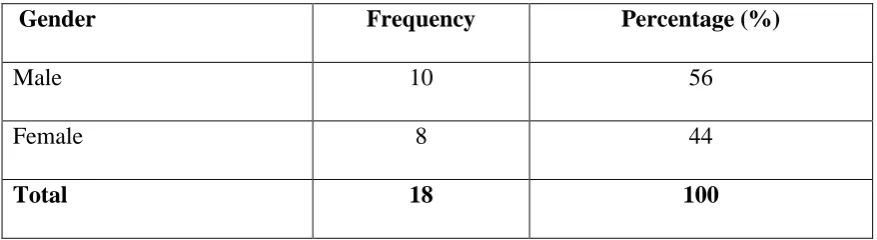
Table 4.1 below indicates category one of respondents by gender from Laikipia University Library. Male respondents formed the majority at 56% while female respondents were at 44% respectively. This was considered important because the gender bias in this category is eliminated.
Table 4.1: Library Staff by Gender
Gender Frequency Percentage (%)
Male 10 56
Female 8 44
Total 18 100
The second category of respondents comprised of post-graduate students of Laikipia University. Table 4.2 indicates frequency of respondents in this study. Majority of them were female respondents at 54% while male respondents were at 46%. This was considered vital because it would help the researcher arrive at conclusions which are not skewed based on gender of respondents.
Table 4.2: Post-graduate students by gender
Gender Frequency Percentage (%)
Male 86 46
Female 99 54
Total 17 100
4.2.3 ICT Skills Levels
43
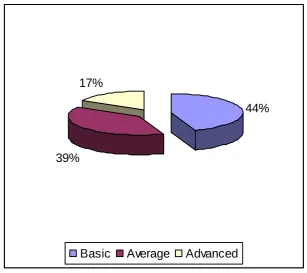
resources can only be realized when one has knowledge on computer use. It was therefore important for the researcher to establish computer skills of the respondents because it has an impact on how respondents interact with e-resources in this institution. The findings in figure 4.1 indicated that majority of library staff had basic training in ICT at 44%, respondents with average level of ICT training was at 39% and only 17% of the respondents had advanced training in ICT. The researcher considered this important because it could have an impact on training of e-resources to post-graduate students.
44%
39% 17%
Basic Average Advanced
Figure 4.1: ICT skills for library staff
Source: Field Data (2017)
44
55% 30%
15%
Basic Average Advanced
Figure 4.2: ICT skills for post-graduate students
Source: Field Data (2017)
4.3 Promotion and Marketing of E-resources by KLISC
45
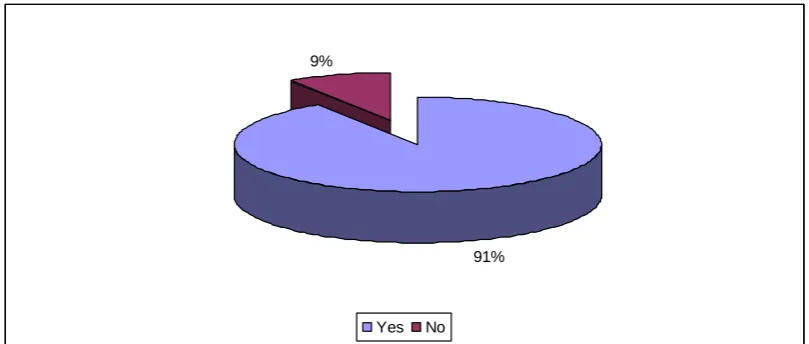
91% 9%
Yes No
Figure 4.3: Post-Graduate Students knowledge of e-resources provided by KLISC
Source: Field Data (2017)
46
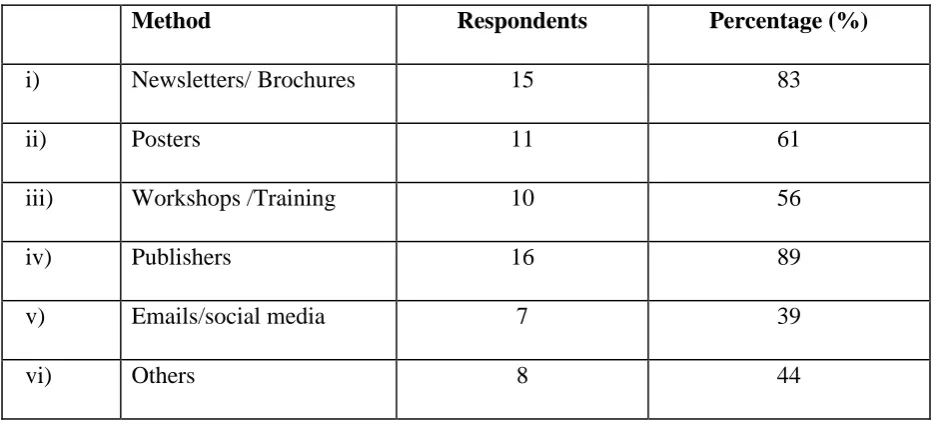
Table 4.3: Library staff marketing strategies of e-resources provided by KLISC (Multiple Responses)
Method Respondents Percentage (%)
i) Newsletters/ Brochures 15 83
ii) Posters 11 61
iii) Workshops /Training 10 56
iv) Publishers 16 89
v) Emails/social media 7 39
vi) Others 8 44
Having established that the majority of post-graduate students were knowledgeable of e-resources provided by KLISC at 91% as indicated in Figure 4.3 the researcher sought to find out the methods in which this awareness was created.
47
Table 4.4: Means of knowledge of e-resources from KLISC by post-graduate students (Multiple Responses
Means Respondents Percentage (%)
i) Library orientation 155 84
ii) Lecturers 80 43
iii) Friends and Colleagues 42 23
iv) Library training sessions 141 76 v) Seminars/
workshops/conferences
63 35
vi) Through Training manuals 136 74
vii) Posters 96 52
viii)Notice boards 122 66
ix) Others (Social media, websites, telephone etc)
69 37
48 Table 4.5: Frequency of E-resources usage
Usage Respondents Percentage (%)
Daily 56 30
Weekly 111 60
Monthly 135 73
Rarely 24 13
Never 3 2
4.3.1 Devices Used in Access and Use of E-resources
Figure 4.4 indicates post-graduate students at Laikipia University choice of devices in accessing resources. 44% of respondents indicated that they use laptops in utilizing e-resources. 24% of them prefer library computers while 18% uses smart phones. 14% indicated choice of Ipads, tablets and so on in accessing e-resources.
24%
44% 18%
14%
Library computers
Laptops
Smart phones
Any other
49 4.3.2 Off Campus Access to E-resources
E-resources provided by KLISC are Internet Protocol authenticated. All respondents indicated that they were unable to access e-resources away from campus. This aspect was brought about by lack of softwares necessary to allow this kind of operation.
4.4 Adequacy of Training and User Support
To establish whether library staff possessed adequate skills in effective utilization of e-resources the researcher sought to establish whether they had ever been trained on ICT and in particular e-resources. The findings are indicated in Figure 4.5. Majority were trained at 72% and 28% had not been trained. This data was important because librarians are ideally supposed to train post-graduate students and other library users on access and use of e-resources and training is of paramount importance.
72% 28%
yes No
Figure 4.5: Staff trained on E-resources Source: Field Data (2017)
50
from contracted companies and so on. This information was necessary to the researcher because it would explain why not every library staff was involved in the training of post-graduate students in Laikipia University as indicated in table 4.6 below.
Table 4.6: Library staff involved in e-resources training
Training No. Percentage (%)
Yes 7 41
No 10 59
Total 17 100
Less than half of the respondents at 41% indicated that they were involved in e-resources training despite their skills not being adequate. The reasons below were pointed to as the contributing factors to the inadequacy;
a) Publishers changes user interfaces frequently b) Technology is dynamic and keeps on changing c) Connectivity to the internet is not always guaranteed d) Lack of enough computers in the library
e) Lack of expertise in relevant ICT areas such as web design, advance internet user and so on.
Over half of the respondents at 59% indicated that they never participated in e-resources training to the post-graduate students in the institution. The following reasons were indicated as contributing factors;
a) Very few had ever been trained by KLISC
b) Those trained rarely imparted the same knowledge to fellow colleagues
51
All respondents indicated that KLISC does not provide technical support. This information was necessary because it would have an impact on the overall efficiency on the part of the consortium.
Okello-Obura (2010) found that, for students to utilize the growing range of electronic resources they must acquire and practice the skills necessary to exploit them. The study established that more than half at 59% had had training on access and use of e-resources and less than half at 41% as represented in Figure 4.6 shows that they had not been trained at all. This information is important because it will indicate the reasons why e-resources are not maximally used by post graduate students in this institution.
59% 41%
Yes No
Figure 4.6: Post-graduate training on access and use of e-resources Source: Field Data (2017)
52
of e-resources. 12% learnt the skills through social media. A small number of respondents at 9% indicated self initiative as a mode of training.
Table 4.7: Mode of e-resources training (Multiple Responses
Mode Respondents Percentage
(%)
i) Library orientation 108 58
ii) Library training sessions 124 67
iii) Seminars/ workshops/conferences 66 36
iv) Social media (Twitter, Whatsapp, Face book etc)
23 12
v) Online (Webinar, Webconferece) 12 6
vi) Brochures, Newsletters ,Manuals 56 30
vii) Lecturers 20 11
viii) Friends and colleagues 27 15
ix) Any other 16 9
4.5 Ease of Use of E-resources
53
documents was at 73% while saving of the downloaded documents was found to be an obstacle at 61% respectively.
0 20 40 60 80 100
Scale (Easy to Complex)
P e rc e n ta g e ( % )
User interface Navigation Saving
Downloading Full Text
User interface Navigation 6 45 32 78 24
Saving 35 56 63 20 11
Downloading Full Text 4 13 34 61 73
1 2 3 4 5
Figure 4.7: Hindrances on ease of use e-resources provided by KLISC Source: Field Data (2017
4.6 Challenges of Using E-resources Provided by KLISC