The Discursive Construction of Nostalgic Thai
Identity through Thai Television Programmes
SUWANNAMAS LEKNGAM
Thesis submitted towards the degree of
Doctor of Philosophy in Media, Culture, Heritage
in the School of Arts and Cultures, Newcastle University
Abstract
Global pop culture and media consumption have influenced contemporary Thai society and its traditionally perceived national culture and heritage. Such cultural impacts are not only from the global trends of Western cultures, but also from the more local influential Asian cultures, such as South Korean and Japanese. In response to this, within a general strategy, Thai television has been utilised as a principal source for promoting a projected contemporary Thai cultural identity. This study examines the discursive construction of nostalgic Thai identity in popular television variety shows whereby a form of integrative cultural identity for the country is envisaged. The research covers processes of production and consumption of certain television texts to provide an understanding of the ways in which this Thai identity is constructed, represented and perceived. It intends: a. to analyse the textual features of the shows (including visuals, language, design, narrative etc.); b. to examine the perspectives of the key figures in the television industry; and c. to analyse and compare the viewership’s perceptions of Thai identity representations in the shows in relations to their own lifeworlds. The study adopts qualitative research methods: multimodal discourse analysis, in-depth interviews with key figures in the television industry, as well as focus groups with various viewerships. The study finds that the construction of nostalgia around the perception of Thainess has been at the centre of these particular identity discourses which promote the country’s perceived traditional culture and heritage as core identity markers. In this way, the Thai
representation in the shows is constructed in line with the reflective nostalgia which focuses on reflecting the nation’s past and culture, rather than a restorative nostalgia which relates to total restoration of national past/symbols i.e. an uncompromising return to “origin”. In addition to the cultural concerns of the text producers, the television shows have actively been substantiating this notion of Thai identity in line with the government’s cultural policy, which envisages contemporary Thai identity as a form of inclusive collective identity incorporating modernism as well as
traditionalism, rather than a form of openly nationalistic and exclusionary identity. This representation of Thai identity both arises from and is compatible with the country’s socio-cultural and historical circumstances as a way to underpin the
maintenance of the traditionality/distinctiveness of Thai culture, while simultaneously integrating a form of multiculturalism. The inclusive vision of Thai identity
ii
construction/representation can also be supportive of the international policies of cooperation and relationships between Thailand and other (neighbouring) countries.
Acknowledgements
This thesis would not have been done without great support from my supervisors, examiners, friends and family.
First, my deepest gratitude goes to my principal supervisor, Dr Majid KhosraviNik who always gives his academic and moral support to me during my study at
Newcastle University. His wisdom, support, and guidance encourage me to develop knowledge and build up my research skills. I would also like to thank my second supervisor Dr Florian Zollmann for his support. I would also like to thank my
examiners, Professor Rachel Harrison and Dr Gareth Longstaff for their support and suggestions.
Thanks also go to my dear family and also my boyfriend for their belief in me, support, understanding and encouragement. This thesis is dedicated to my parents who give me their unconditional love and endless support to me.
I am grateful to have all my friends and colleagues to be my company. My PhD life has become wonderful because of them.
I would also like to thank the Workpoint Entertainment Public CompanyLimited, the Polyplus Entertainment Company Limited, and all interviewees. Without their help, I could not have gathered such rich data.
Lastly, I wish to express my sincere gratitude to Bangkok University for supporting me and offering the scholarship to me to study further.
iv
Notes on Transliteration and Referencing
This thesis has adopted the Royal Thai General System of Transcription promulgated by the Royal Institute of Thailand to transliterate Thai words to be read with the
Roman alphabet. However, to render the Thai authors’ names in English, this thesis has followed the authors’ preferred spelling of their names in English when known. Besides, this thesis has applied the Thai norm for referring to the Thai authors by their first names instead of surnames. The citation of Thai authors, both in-text and in the references, is therefore shown and alphabetised by the authors’ first name.
Contents
Abstract ... i
Acknowledgements ... iii
Notes on Transliteration and Referencing ... iv
Contents ... v
List of Figures ... ix
Chapter 1. Introduction and Socio-cultural Context of Thai Society ... 1
1.1 Introduction ... 1
1.1.1 Background of the study ... 1
1.1.2 The current project ... 5
1.1.3 Research questions and objectives ... 7
1.2 The Socio-cultural Context of Thai Society ... 8
1.2.1 Construction of national identity: Inventing Thai tradition, nostalgia, cultural borrowing, and (in)authenticity ... 9
1.2.2 Nation, religion and monarch: The national institutions that have shaped Thainess and national ideologies ... 14
1.2.3 Thai identity formation and transformation: Selective cultural hybridisation ... 19
1.2.4 Contemporary Thailand and cultural heritageas a national symbol ... 37
1.2.5 The political/socio-cultural conflicts: Barrier to a unification of Thais ... 40
1.3 Outline of the Thesis ... 42
Chapter 2. Television and Nostalgia ... 45
Introduction ... 45
2.1 Television, Social changes and Developments ... 45
2.1.1 Television and society ... 45
2.1.2 Television genres ... 49
vi
2.1.4 Television development and dynamic in Southeast Asia ... 58
2.1.5 Television in the Thai context ... 62
2.2 The Construction of Nostalgia ... 68
2.2.1 The definition of nostalgia ... 68
2.2.2 Nostalgia and identity ... 76
2.2.3 Nostalgia and media ... 79
Conclusion ... 87
Chapter 3. Methods and Approaches to Analysis ... 89
Introduction ... 89
3.1 Philosophical Position of the Study ... 89
3.1.1 Ontological position ... 91
3.1.2 Epistemological position ... 92
3.2 Methodological Position ... 93
3.3 Research Methods and Data Collection... 94
3.3.1 Textual analysis of Thai television programmes ... 97
3.3.2 In-depth interviews with key figures in the Thai television industry... 102
3.3.3 Focus group interviews with Thai viewers ... 107
3.4 Semiotic and CDA approaches ... 114
3.4.1 The social construction of reality ... 114
3.4.2 Semiotics and media construction of meaning ... 118
3.4.3 Textual Analysis (TA), Discourse Analysis (DA), and Critical Discourse Analysis (CDA) ... 126
3.5 Research Ethics ... 139
3.6 Self-Reflexivity ... 140
3.7 Summary of Methods and Conclusion ... 143
Chapter 4. Discourses of Thai Identity: Textual Analysis ... 145
Introduction ... 145
4.1 The Textual Features of Khunphrachuai ... 146
4.2 The Textual Ingredients of Khunphrachuai ... 149
4.2.1 The semiotics of Thai representations ... 151
4.2.3 The linguistics of Thai representations ... 174
4.3 Other Television Shows with Similar Cultural Effect ... 189
Conclusion ... 192
Chapter 5. Thai Identity: Perspectives from the Text Producers ... 194
Introduction ... 194
5.1 Popular Television Shows as a Link to Imagined Communities ... 195
5.2 Thai Television Shows and Government Cultural Policy ... 202
5.2.1 Television shows and government involvement ... 203
5.2.2 Television shows and the Ministry of Culture policy ... 205
5.3 The Cultural Values of the Shows ... 210
5.3.1 The role as exemplary television shows in the Thai television Industry... 211
5.3.2 The Khunphrachuai show as cultural brand ... 212
5.3.3 The cultural impact of the shows ... 213
Conclusion ... 217
Chapter 6. Viewership and Thai Representations in the Television Shows 219 Introduction ... 219
6.1 Viewership and Thai Core Values as Key Cultural Markers ... 220
6.2 Stock of Knowledge and Interpretation of Thai Identity ... 228
6.2.1 Audiences and cultural knowledge ... 228
6.2.2 Interpretation of Thai identity representations in the show ... 232
6.3 Viewership and Nostalgia ... 238
6.4 Audiences and Cultural Impacts of the Show ... 245
Conclusion ... 247
Chapter 7. Conclusion and Discussion ... 249
Introduction ... 249
7.1 Nostalgia Television and the Promotion of National Identity ... 249
7.2 The Government and the Discursive Construction of Thai Identity ... 256
viii
7.4 TVVariety Shows: A Source of Edutainment and Promotion of National Identity
... 264
7.5 Contributions and Limitations of this Research ... 272
7.6 The Suggestions for Future Research ... 274
Appendices ... 276
Appendix 1: The Questions List for the in-depth Interviews with the Key Figures in the production of Thai television programmes ... 276
Appendix 2: Questions List for the Focus Group Interviews with Thai Viewers ... 279
Appendix 3: Research Participant Consent Form for In-Depth Interview ... 281
Appendix 4: Research Participant Consent Form for Focus Group Interview ... 282
List of Figures
Figure 1.1: The Thai national flag, the Tri-Rong flag ... 18
Figure 1.2: The Portuguese influenced Thai dessert named Foi Thong ... 25
Figure 1.3: The Chakri Maha Prasat Throne Hall, built in the reign of King Chulalongkorn (Rama V) ... 29
Figure 1.4: Queen Saowapha dressed in hybrid Siamese-Victorian fashion ... 30
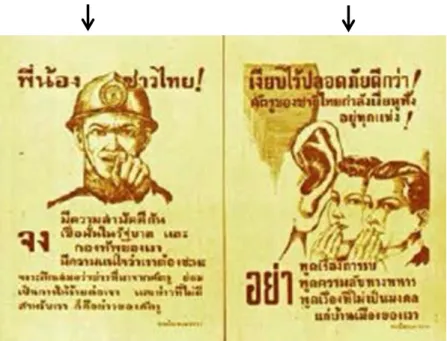
Figure 1.5: The example of Phibunsongkhram’s ideological construction of Thai nationalism ... 34
Figure 1.6: An example of the Ratthaniyom (Cultural Mandates) edicts ... 35
Figure 1.7: The representation of Phat Thai in the promotional spot, Discover Amazing Stories: PADTHAI ... 36
Figure 1.8: The Stone Inscription of King Ram Khamhaeng, created in the Sukhothai era ... 38
Figure 1.9: The representation of the Wai, Thai smile and Thai costume as national symbols in the promotional spot of the Thai Airways ... 39
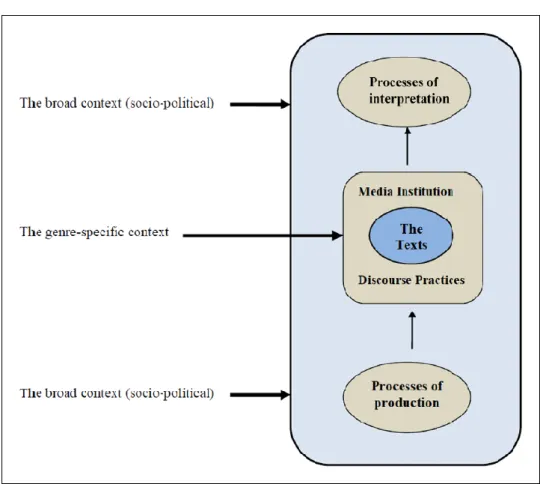
Figure 3.1: Dynamics of discourse, genre and socio-political analysis in critical discourse studies ... 95
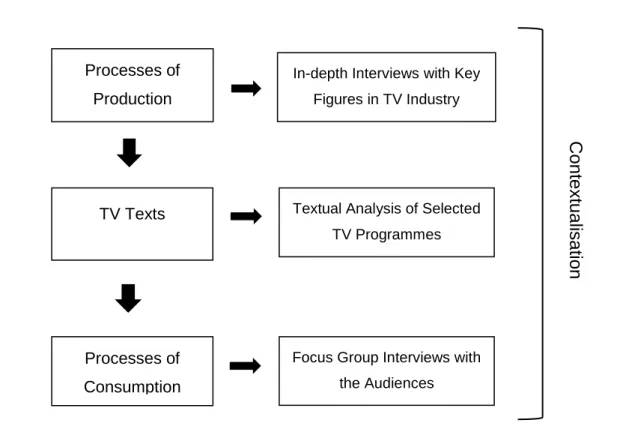
Figure 3.2: The visual representation of the rationale of data and overall design of the research ... 97
Figure 3.3: The key informants in the in-depth interviews ... 106
Figure 3.4: The participants of the focus group interviews ... 110
Figure 3.5: Saussure’s proposal of the elements of meaning ... 120
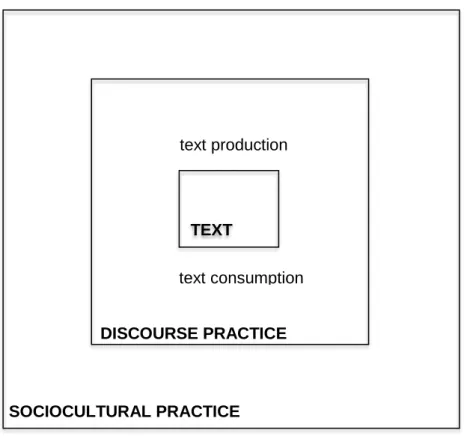
Figure 3.6: Fairclough’s framework for CDA of a communicative event ... 136
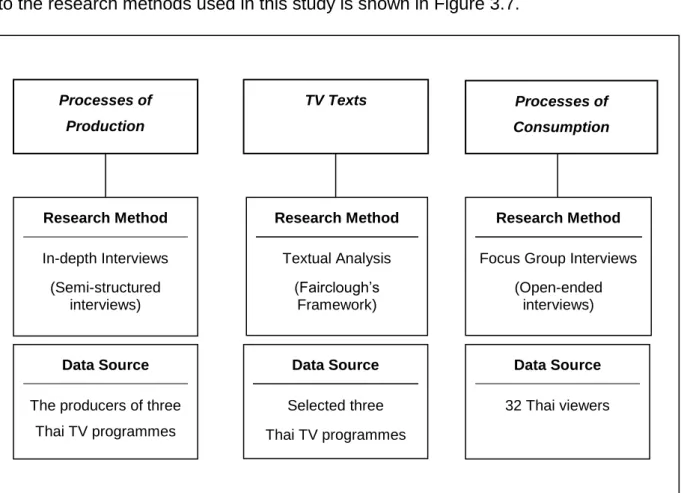
Figure 3.7: The visual representation of research methods and data sources of this study ... 144
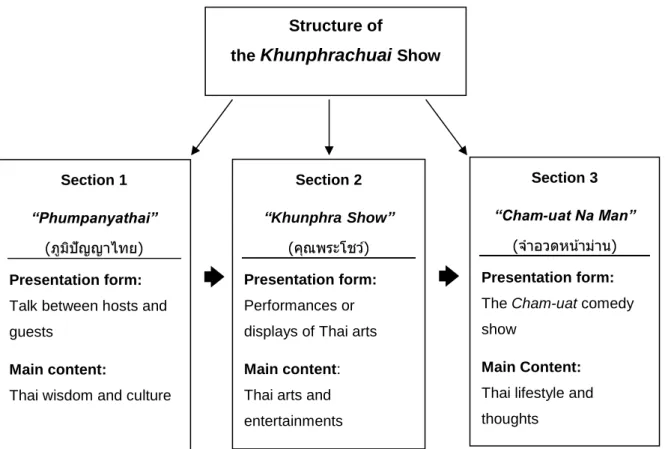
Figure 4.1: Three main sections of the Khunphrachuai show ... 147
Figure 4.2: The talk between hosts and guest in the Phumpanyathai section ... 148
Figure 4.3: The traditional Thai performance in the KhunphraShow section ... 148
Figure 4.4: The comedy show in the Cham-uat Na Man section ... 149
Figure 4.5: The typical set and the hosts of the Khunphrachuai show ... 152
Figure 4.6: The decoration of the set in Khunphrachuai ... 154
Figure 4.7: The decoration of the set in Khunphrachuai ... 155
x
Figure 4.9: The old film footage of traditional Thai dance in year 1917 represented in Khunphrachuai ... 160 Figure 4.10: The logo of Khunphrachuai and graphic pictures in the title and
interludes ... 160 Figure 4.11: Images and graphics represented in Khunphrachuai ... 161 Figure 4.12: The “Khunphra Orchestra” band (วงคุณพระออร์เคสตรา) as a fusion of Thai and Western music, playing a song called “Rak Thai” (Thai roots) ... 163 Figure 4.13: The “Khunphra Orchestra” band as a fusion of Thai and Western music showing the song called “Rak Thai” (Thai roots) ... 163 Figure 4.14: The show of the song “Maekhong Blues (แม่โขงบลูส์)” as a mixture of Northeastern Thai and American Blues music ... 164 Figure 4.15: The show of the hybridised version of the traditional Thai song named “Khangkhao Kin Kluai” (ค ้างคาวกินกล ้วย)as a fusion of traditional Thai pipe with rock music ... 164 Figure 4.16: The visual representation of semiotics of Thai representations in
Khunphrachuai ... 166 Figure 4.17: The visual representation of the main topics of Thai culture and their frequency of representation ... 168 Figure 4.18: The visual representation of each main topic of Thai culture and their sub-topics ... 169 Figure 4.19: Four main channels of discourses on Thai representations in
Khunphrachuai ... 175 Figure 4.20: The discourse topics of the hosts’ speeches ... 176 Figure 4.21: The discourse topics of the interaction between the hosts and guests 180 Figure 4.22: A discussion about the Rot Nam Damhua ceremony ... 182 Figure 4.23: The discourse topics of the lyrics ... 184 Figure 4.24: The discourse topics in the voice-over ... 186 Figure 4.25: The construction and representation of Thai identity in Khunphrachuai ... 188 Figure 4.26: The representation of Thai country music performance in
Chingchasawan ... 190 Figure 4.27: The representation of Thai country music performance in
Chingchasawan ... 190 Figure 4.28: The representation of Thai food culture in Talatsot Sanam Pao ... 191
Figure 4.29: The representation of a Thai-style fresh-food market in Talatsot Sanam Pao ... 192 Figure 5.1: The relationship between Thai television shows and government
involvement ... 205 Figure 5.2: The four main strategic issues and the service goals of the Ministry of Culture of Thailand ... 206 Figure 6.1: The three degrees of nostalgic sentiment emerged in the viewers’ mind as per results of focus group analyses of the study ... 241 Figure 7.1: A talk about ASEAN Community (AC) in a special section of the
Khunphrachuai called “ASEAN Minute” ... 258 Figure 7.2: A talk about ASEAN in the special section of the Khunphrachuai called
“มองโลกแลไทยก ้าวไกลสู่อาเซียน”. ... 259 Figure 7.3: The multidimensional power over the discursive construction of Thai identity as inclusive identity ... 270
Chapter 1. Introduction and Socio-cultural Context of Thai Society
1.1 Introduction
1.1.1 Background of the study
Debates about the role of television in constructing national identities are familiar ones in Media and Cultural Studies. In Thailand, the significant aspect that needs to be addressed is the issue of how television has been used as a main cultural agent in the construction and representation of national cultural identity. Thai society has developed in line with multiculturalism. Farrelly (2016) claims that globalisation has delivered significant improvements to living standards and introduced new
technologies to Thai society. Also, Thailand has allowed large parts of its cultural orientation to accept foreign influences. This has resulted in changes to the lifestyles of Thai people across the entire nation in not only urban but also rural areas.
The cultural influences of foreign cultures on Thai society are also reflected by media culturalism. With globalising media, there has been an increasing trend of popularity of foreign pop cultures among Thais. Such pop cultures include not only the trend of Western cultures which have been already globally popular, but also the influential Asian pop cultures (particularly South Korean pop culture such as television dramas and K-pop music), which have become very popular in Thailand and have had a great influence on Thai (especially the youth) lifestyle and social values (Chutima, 2007; Dissanayake, 2012; Kim and Wang, 2012; Papanggon et al., 2013). Since the widespread popularity of South Korean media products, Thai society has been impacted and embraced these cultural trends. The trend of admiring foreign pop cultures is reflected in not only the media consumption among Thais but also the increasing trend in foreign cultures influencing Thai lifestyle. For instance, Thai fashion trends, language use and social attitudes towards beauty have been impacted by South Korean attributes (see Chapter 2).
Pattana (2010, p. 60) claims that the Westernisation of Thailand “has often incited uncertainty and anxiety among the Thai about the legitimacy and authenticity of their modernizing project.” The cultural problem (greatly induced by such media
culturalism) to be addressed here is that whereas there has been a popular trend of embracing foreign cultural forms, there are concerns in some quarters that there has been a concomitant neglect of national culture and heritage among Thais. While the Minister of Culture has tried hard to arrange various cultural projects to encourage the national cultural identity, the fact that Thai youths prefer to focus on adopting modern and foreign cultural forms rather than pay attention to their role in preserving national culture has been a barrier. For this study, this neglect might lead to the collective “forgetting” (Holdsworth, 2011, p. 4) about distinctive national culture and national history among Thais.
According to Thitinan (2007), cultural imperialism in the age of globalisation has played a role in creating a sense of national belonging, which has led to the
strengthening of Thai traditional identity. This is in line with Robertson (1992), who notes that a globalisation that facilitates “the universalization of national (and other) particularisms” (Robertson, 1992, p. 155) can play a significant role in the rise of nostalgic inventions of traditions.The fear that “globalization will homogenize and standardize Thai culture into a single, Western-defined mould” (Thongchai, 2010, p. 150) and the fear of cultural problems caused by excessive multiculturalism in Thai society has led to the government, together with media institutions (as one of the main platforms of production and consumption of identity construction), feeling it needs to articulate and propose a form of national identity revivalism. Smith (2010, p. 30) explains the essence of rediscovering and restoring the unique/distinctive cultural attributes of the nation. He suggests that “where such a distinct culture has been ‘lost’, ‘forgotten’ or ‘submerged’, it can be and must be found, remembered and brought to light”. Coping with the “fear of forgetting” (Holdsworth, 2011, p. 4), the nostalgic form of Thai representation has been used to highlight the “existing” Thai identity and also to revive the “nostalgic” (or “vanished”) ones. Nostalgia - viewed as a way to facilitate a continuity of identity (Davis, 1979; Robertson, 1992; Tannock, 1995; Wilson, 1999; Bergin, 2012; Niemeyer, 2014; Wilson, 2014) - has been an essential element for promoting and reviving national identity and also evoking the collective memories of the nation. In the construction of national identity, the “invention of tradition” (Hobsbawm, 1983, p. 2), in which the establishment of a connection between the past and the present is the key, is used. Indeed, in the
a way to maintain continuity with a desired and suitable historic past, together with the cultural borrowings to develop and (re)construct such identity (this will be discussed in detail in section 1.2).
Focusing on nostalgia media, a process of discursive construction of Thai identity through media has broadly been at work to facilitate the continuity of Thai identity. As Lewis (2002, p. 85) points out, media has been a powerful source of organising the “cycle of remembering and forgetting” in public communication. The crucial role of nostalgia media discourse in constructing national identity and unity is reflected in several nostalgia media products. They not only display the good values of the past life and traditional Thai culture but also represent the national past and history to generate such a discourse of Thai identity. The nostalgic film Nang Nak mirrors the vivid vision of past Thai life in the 1870s to represent history, cultural identity and Thai beliefs (Natthapon, 2003; Harrison, 2005). Historical films such as Bang Rajan, Suriyothai, and Thawiphop - underlining therole of national heroes and solidarity among Thais to defend the nation from enemies - are“framed with the express intention of generating a sense of national unity” (Harrison, 2010b, p. 117). The state-funded film The Legend of King Naresuan, which represents the story of one of “the greatest Thai warriors” (Veluree, 2015, p. 103), also serves this cultural function.
Despite the attempt to construct the discourses of national identity through the
nostalgic films referred to above, their short-term period of distribution in the cinemas seems to be a barrier. This might be a reason why television, the most popular
medium in Thailand (Itsariya, 2013), has also been used as a principal source for promotion of national culture and history. Holdsworth (2011, p. 4) asserts that
nostalgia television has the ability to produce “an abundance of memory in response to the fear of forgetting” and that television memory canons are “particularly
significant for certain understandings of national identity - the dynamics of remembering and forgetting are endemic in the stories each nation tells of itself” (Holdsworth, 2011, p. 88). Indeed, the government has used television to support Thai tradition and values (Thitinan, 2007), and many television programme producers have attempted to present a nostalgic identity in order to inspire people to appreciate and encourage Thai culture.
The televisual construction and representation of Thai identity has been
substantiated in many forms of television shows, for example period/historical based television dramas, television documentaries, and variety show programmes. The findings of research examining popular television and the construction of
contemporary Thai cultural identity (Thitinan, 2007) indicate that Thai television has played a significant role in the construction of a unified and distinctive Thai cultural identity. Thitinan argues that, despite the influence of Western forms of television programmes in format and style of Thai television (for example, the programmes exemplified in The Weakest Link, Who Wants to be a Millionaire, Big Brother, and Pop Idol), Thai television programmes, as an “imported cultural form” (Thitinan, 2007, p. 83), have taken on Thai features by creating their own styles as a hybrid of
Western genre and Thai specificity. The popular gameshow The Weakest Link
Thailand is a good example of this. This game show presents the traditional features of Thainess by representing the Thai characteristic of compromising (Krengchai), which is a mannerly characteristic among Thais indicating consideration of others’ feelings and compels people to refrain from criticising one another. This shows the way in which television discourse is constructed to safeguard a Thai identity which in recent years has been challenged by the influence of western media and the patterns of behaviour they broadcast. “Western” cultures, in the sense of this study, following Stuart Hall’s conception (Hall, 1996b), stand for not only European and American cultures but also influential Asian cultures (see Section 1.2).
The interesting point is that Thai television programmes present not merely existing Thai identity, but also the vanished elements and aspects and the perceived positive values and traditions of the past (hence, “nostalgic”). Many television programmes have this focus in their productions. The meanings of such an identity are
represented through linguistic and semiotic aspects of the programmes’ contents. The Khunphrachuai (Oh my god) programme, broadcast on Modernine TV, is one of the well-known variety programmes that portray the traditional national culture, past Thai life, and distinctiveness of Thai identity (Chanthana, 2005; Kanittha, 2007). In brief, the contents of this programme focus on encouraging Thainess, including belief in Buddhism, loyalty to the monarch, the Thai language and literature, arts and
music, local games, traditions, characteristics, values, appliances, and costumes (Chanthana, 2005). In addition to its contents, other components of representation also represent Thai identity, such as, hosts who are familiar with traditional culture and guests who are cultural specialists. The scenery, costume, light, sound, and the overall screened pictures also reflect past Thai life and tradition. Another television variety programme called Talatsot Sanam Pao(The fresh-food market at Sanam Pao), broadcast on the Royal Thai Army Radio and Television Channel 5,has a similar focus. This programme represents the value of culture through Thai
approaches towards food and style of traditional markets, which are hard to find in contemporary Thai society, especially in the urban areas where people tend to be more modernised (Kanitta, 2010). Also, the variety programme named
Chingchasawan (The Ferris wheel), broadcast on Modernine TV, portrays Thai
identity towards country music (Lukthung songs), which tends to be neglected among the youths and likely soon to be lost if it not preserved by the new generation of Thais. In the face of the popularity of music influenced by foreign cultures, especially Western and Korean pop music, Chingchasawan plays a role in encouraging and preserving Thai country music through song and dance contests for young people who appreciate national culture and are keen to preserve it. As outstanding television programmes in the sense of being media products which encourage and conserve the cultural identity of the nation, these three shows have been selected for analysis by this research project.
1.1.2 The current project
Academic studies have examined different aspects of nostalgia through a variety of disciplinary lenses, including studies of nostalgia as feeling or emotion, a kind of (private or collective) memory, and attitudes toward the past and so forth (Sprengler, 2009). Situated within the field of media and cultural studies, this research project is an attempt to gain an understanding of nostalgia television discourse and its role in the construction and representation of Thai cultural identity. A gap between studies of the construction of discourses of Thai identity through nostalgia television and its cultural impacts on audiences prompted this research project. Despite the fact that various forms of Thai nostalgia media have been used to represent a national past and a national culture, scant literature has concerned itself with this phenomenon. Although there have been studies on nostalgia media in the Thai context - on
nostalgic films (Pensiri, 1998; Supa, 2002; Natthapon, 2003), music (Nilobol, 1992), on magazines (Karanik, 2005), on television (Chanthana, 2005; Suwannamas, 2009; Kanitta, 2010; Suwannamas and Sutee, 2010; Suwannamas, 2011a), and a
discussion on communication and nostalgia phenomenon (Suwannamas, 2011b) - only a small amount of these studies have focused on the issue of nostalgia media and their role in constructing national cultural identity. Of those that have been done, most of them emphasise the media representation of the past in general.
Focusing on television which has been the most popular medium in Thailand (Itsariya, 2013), whereas several nostalgia television shows have functioned as a source of representing/promoting Thai culture and heritage, a small number of studies are concerned with nostalgia television’s role in constructing Thai identity, together with its connection to viewers’ cultural attitudes and behaviours. On the contrary, the studies on nostalgia television focus mainly on examining television texts and the way they represent the past in general. Additionally, these studies seem to lack an understanding of “why”, which can help to understand the
connections between television, culture and society as the main focus of media and cultural studies. The obvious examples are a number of my previous studies
(Suwannamas, 2009; Suwannamas and Sutee, 2010; Suwannamas, 2011a), which examined the representation of the past in a particular television show in a very general sense and in a superficial way. That is, they merely provide an answer to “what” and “how” (for instance, what kinds of the past are represented in the text and how they are represented).
As noted, this interdisciplinary research project therefore seeks to fill this gap in research on Thai media and cultural studies by bridging critical analysis of nostalgia television discourse, analysis of the discursive construction of Thai cultural identity, and audience studies. This research project will achieve an in-depth understanding of the construction of discourse of national identity through popular nostalgia television shows and its cultural impact on Thai people as not only an audience but also as members of a nation. Adopting an interpretive paradigm, this study is developed in light of the constructivism assuming a relativist ontology and a subjectivist
critical analysis of media discourse. By employing the framework of critical analysis of media discourse suggested by Fairclough (1995b) as the main approach, the
research covers processes of production and consumption of certain television texts to provide an understanding of the ways in which Thai identity is constructed,
represented and perceived. In this way, the study adopts qualitative research
methods including multimodal discourse analysis, in-depth interviews with key figures in the television industry, and focus groups with audiences. As the contextualisation of the data is crucial to achieving a critical understanding of why things are the way they are (Khosravinik, 2010b), the study draws on the socio-cultural context of Thailand (including the government cultural policy) to explain the way in which such discourses of Thai identity are constructed, shaped, and justified, and how they become influential.
This research project will shed light on the important area of television, culture, and identity studies, specifically aspects in relations between Thai television and the formation of contemporary Thai identity. It draws together media and cultural studies and the study of television in contemporary Thailand. The research attempts to make a contribution to both academic and media professional practices. The results of the research might be utilised by media intermediaries to promote national culture. This can be applied to the design of nostalgia television (and also other kinds of
multimodal media texts), which is viewed as a positive contribution to the cultural and national heritage of the country; and to inspire Thai people, especially the new
generation, to appreciate their (traditional) Thai identity. Theoretically and
epistemologically, the study will examine and incorporate theories and concepts such as the critical analysis of media discourse, media semiotics, the social construction of reality theory, and the concept of nostalgia in the analysis of Thai television
programmes. This research will make an academic contribution to the field both in terms of its overall analytical approach to the issue as well as providing a country-specific case study.
1.1.3 Research questions and objectives
This research project is an attempt to achieve an understanding of the discursive construction of Thai identity in contemporary Thailand within its current status of
surrounded multiculturalism. Through the lens of television and cultural studies, this research investigates the way in which television discourse functions as a cultural intermediary to construct and represent the meanings of Thai identity. Additionally, it examines the way television is used to ideologically (re)construct the national
discourse of identity in the socio-cultural circumstances of modern Thailand.
The study specifically aims to answer three main research questions:
1. How do the textual features of the shows and talks on Thai television programmes represent Thai identity?
2. What are the perspectives of the key figures in the Thai television industry towards the cultural functions, impact and popularity of Thai identity
representation in television programmes?
3. What are the audiences’ perceptions with regard to the importance,
relevance and value of Thai identity as represented in television programmes?
The research project is conducted with three main research objectives:
1. To analyse the textual features of the shows and talks constructing and representing Thai identity in the television shows;
2. To examine the perspectives of the key figures in the Thai television industry towards the cultural functions, impact and popularity of Thai identity representation in television programmes;
3. To analyse and compare the audiences’ perceptions with regard to the importance, relevance and value of Thai identity as represented in television programmes.
1.2 The Socio-cultural Context of Thai Society
This research project focuses not only on an analysis of TV texts, the perspectives of the text producers and the audiences’ interpretations, but also the contextualisation of research findings which is central to Critical Discourse Analysis (CDA) in its argument for interconnecting textual practice and social practice (KhosraviNik,
2015a). This section will therefore provide an explanation of the socio-cultural context of Thailand in terms of the history, culture, changes and developments of Thai
society to help critically establish such a link.
1.2.1 Construction of national identity: Inventing Thai tradition, nostalgia, cultural borrowing, and (in)authenticity
This section establishes the idea that Thai cultural identity is significantly constructed through a process of cultural borrowing and of “nostalgizing” (Niemeyer, 2014, p. 10) the social past. In this manner of identity construction, various forms of Thai cultural identity, despite being articulated in comparatively modern times (especially in the twentieth century), are a product of what Hobsbawm (1983, p. 2) calls the “invention of tradition”. The invention of tradition seeks to establish and perpetuate social cohesion based on a collective identity and shared understandings of a continuous history (Hobsbawm, 1983). It has been used as a way of forming a distinctive identity of a particular community or nation, an “imagined community” (Anderson, 2006), in which the establishment of continuity with the past is central. As a product of the invention of Thainess, numerous forms of Thai cultural identity (which will be
discussed throughout this thesis) can be seen as an “invented tradition” (Hobsbawm, 1983, p. 1). As Hobsbawm states:
“Invented tradition is taken to mean a set of practices, normally governed by overtly or tacitly accepted rules and of a ritual or symbolic nature, which seek to inculcate certain values and norms of behaviour by repetition, which
automatically implies continuity with the past. In fact, where possible, they normally attempt to establish continuity with a suitable historic past. A striking example is the deliberate choice of a Gothic style for the nineteenth-century rebuilding of the British parliament, and the equally deliberate decision after World War II to rebuild the parliamentary chamber on exactly the same basic plan as before.” (Hobsbawm, 1983, p. 1)
Interestingly, several traditions as markers of national identities (including those of Thailand) that are claimed to be old/ancient are actually modern, in the sense that they are recent in origin. Hobsbawm (1983, p. 1) argues that, “Traditions which appear or claim to be old are often quite recent in origin and sometimes invented.” This is evidenced by the modern form of pageantry/rituals of the British monarchy, implying an ancient history but actually “the product of the late nineteenth and
twentieth centuries” (Hobsbawm, 1983, p. 1). Likewise, the invention of new traditions is reflected in the invention of the Scottishness and highland myth - the “artificial creation of new Highland traditions, presented as ancient, original and distinctive” (Trevor-Roper, 1983, p. 16). The Scottish Highland tradition of wearing a kilt woven in differentiated clan tartans, and the tradition of the bagpipes are, in contrast to widespread perception, actually quite modern. As Trevor-Roper (1983, p. 15) states, “This apparatus, to which they ascribe great antiquity, is in fact largely modern. It was developed after, sometimes long after, the Union with England against which it is, in a sense, a protest.” This is a Highland mythology about the antiquity of such traditions. Additionally, according to Morrison (2003), the four styles of Scottish traditional dance - including Scottish Country Dance, Highland Dance, Scottish Stepdance, and Cheilidh Dance - are traditions which emerged in the
twentieth century, invented as a manifestation of Scottishness. Symbolising Scotland, these genres of dance have become “markers of Scottish culture and identity”
(Morrison, 2003, p. 12).
The essence of invented tradition is its link with a suitable past (Hobsbawm, 1983). This can be made through the utilisation of ancient materials/traditional practices adapted to form a new tradition, particularly invented to serve a new purpose. As Hobsbawm explains:
“…the use of ancient materials to construct invented traditions of a novel type for quite novel purposes. A large store of such materials is accumulated in the past of any society… Sometimes new traditions could be readily grafted on old ones, sometimes they could be devised by borrowing from the well-supplied warehouses of official ritual, symbolism and moral exhortation - religion and princely pomp, folklore”. (Hobsbawm, 1983, p. 6)
Modifying the old cultural material, the inventors of the Scottish dances as mentioned above adapted certain elements of prior dances and incorporated new ones to
represent Scottish identity. As Morrison (2003, p. 3) clarifies, “Prior to this, dance in Scotland was neither labeled ‘Scottish’ nor ‘traditional’. Communities simply adapted dances and movements, incorporating new ones…, to express their respective cultures”.
Focusing on the Thai context of inventing traditions, many forms of Thai
culture/tradition as sources of national identity are also modern/recent in origin. Despite being claimed/perceived as long-standing Thai traditions, they are actually recently invented ones which contain references to a selected and desired historic past. The practice of tree ordination, which was especially “invented to save local forests from logging” (Morrow, 2011, p. 53), is one such tradition. According to
Morrow (2011), tree ordination was firstly witnessed in 1988, invented by the ecology monk Phrakhru Manas Natheepitak, of Wat Bodharma in Phayao Province, Northern Thailand. It is a tradition in which traditional practices and ideas which had long-standing roots in Thai culture are blended to create new meanings of ordination for new purposes. In this way, the practice of tree ordination employs Buddhist symbols to establish a connection between the idea of forest preservation and Thai beliefs in spirit trees as a response to the need for forest preservation at the time. Despite employing Buddhist symbols, including Buddha images, chanting of scripture, and monastic robes to ordain trees (thing) as monks (human) (Morrow, 2011), it has been claimed that the tradition of tree ordination is not an original Buddhist practice.
Rather, it is an invented tradition that has a close connection to prior Thai traditions and beliefs. As Morrow (2011, p. 53) claims, “Tree ordination is not meant to be an original eco-Buddhist invention, but an invented tradition that asserts itself as continuous with Thainess (khwampenthai)”. This illustrates the function of invented tradition as “responses to novel situations which take the form of reference to old situations” (Hobsbawm, 1983, p. 2).
Moreover, the aspect of authenticity plays an essential role in the creation of cultural identities and the formation of invented traditions (Morrison, 2003). Morrison (2003) suggests that investigating how authenticity functions can indicate the way different national identities are constructed. It has been claimed that authenticity means “the original or unaltered” (Bendix, 1997 cited in Morrison, 2003, p. 5) and that
authenticity relates to “traditionalism, originality, or reality” (Park et al., 2018, p. 5). Searching for “the authentic cultural experience” is therefore a “search for the unspoiled, pristine, genuine, untouched and traditional” (McIntosh and Prentice, 1999, p. 589). Despite the fact that the “traditional” is defined as one of the features
of authenticity, as noted above, in this thesis it is too ill-fitting to consider traditional Thai culture as authentic. Although many forms of traditional culture of Thailand were formed many centuries ago and have been handed down from generation to
generation, the formation of Thai culture has included a form of cultural borrowing since the very beginning (see sections 1.2.2-1.2.4). Hence, this study sees the construction of authenticity as a formation of the original, unaltered, pristine and unspoilt culture(s) rather than of the traditional.
Turning to nostalgia, there is a close connection between this term and authenticity. To construct an authenticity of community/national identity, maintaining the original traditions of a community is the key. Park et al. (2018, p. 6)’s investigation of a link between nostalgia and authenticity in relation to tourists’ visiting Jidong mural alley in South Korea, where the preservation of the old atmosphere of the alley was made through the creation of a mural project, reveals an interesting causal relationship between nostalgia and authenticity. Park et al. (2018, p. 6) claim that “the community constitutes its own authenticity” by combining its original cultural features with the murals, which are considered a recent tradition (this invented tradition was initiated in 2011). Despite a variety of themes on the murals, their most characteristic attributes are connected with a nostalgic depiction of collective memories - “the memories Korean can share” such as the theme of traditional fairy tales (Park et al., 2018, p. 2). Also, the quality of being surrounded by an “old-life atmosphere” (Park et al., 2018, p. 2), in which a traditional market and historic buildings are maintained and highlighted, contributes to the community’s distinctiveness from other communities. As a tourist destination where “old community traditions” exist and the nostalgic representation of such a community identity is set, the mural alley has therefore become a place for visitors to recall the past and have a nostalgic feeling (Park et al., 2018, p. 6). This shows the way in which nostalgia is closely connected with the maintenance of a community’s original culture/tradition. Indeed, through this process of preserving the original, authenticity is thus already constructed.
In the process of inventing traditions to express a national identity, either authenticity or inauthenticity can be formed. If the authenticity is a key, innovation and change are limited. A study by Morrison (2003) reveals that different invented traditions allow
a different degree of authenticity and innovation. This is reflected in the fact that each of the four Scottish dances allows a different degree of innovation, depending on how identity in communities is preferably established. On the one hand, if the construction of identity in communities focuses on maintaining authenticity/traditionalism, the innovation and change (which can be made through cultural borrowing and adaptation) are limited. As Morrison (2003, p. 19) states, “In those communities where identity is defined by their traditions,…, there are few opportunities for
innovation. Change is controlled, and the constructed identity maintained through the language of authenticity” (this seems to be in line with restorative nostalgia, which focuses on a total restoration of the past and getting back to the origins - see Chapter 2). On the other hand, in communities where the maintenance of the original and unaltered is not a key, change and innovation are boundless. This is reflected in the idea that whereas the Scottish Country Dance and Highland Dance adhere more to authenticity in terms of following specific codes of dress, movement and behaviour, the innovations in the invention of Scottish Stepdance and Cheilidh Dance are unlimited (Morrison, 2003).
Regarding the construction of Thai identity, it is crucial to consider if it is an attempt to create a sense of authenticity. Following the conception of authenticity as outlined above, it can be argued that the way Thai cultural identity has been constructed is not in line with a total maintenance of authenticity. Despite being perceived as
traditional, Thai cultural identity does not always mean authentic. If authenticity refers to the original, genuine, or unaltered, as noted above, and closely relates to the notion that innovation and change are limited/resisted (Morrison, 2003), the
construction of Thai identity, in which the cultural hybridisation and borrowing foreign cultural elements are significant, is arguably the opposite. The cultural borrowing that has taken place is an important indicator of this.
In addition to the modification of traditional practices/ancient materials to form a new tradition, cultural borrowing also plays a vital role in the process of constructing community identity. The formation of Islam, which drew upon the Judeo-Hellenic tradition and “borrowed creatively from Christianity” (Said, 1978, p. 74), is one example of this. This way of identity formation indicates the “working together of
cultures that overlap, borrow from each other, and live together” (Said, 1978, p. xxii). In the Thai context, it is evident that national identity is a product of cultural borrowing and cultural hybridisation. The development of the (re)construction of Thai identity explained in this chapter (see sections 1.2.1 - 1.2.3) clearly shows that Thai identity is a product of cultural borrowing, and has been since earliest times. This includes not only its age-old form but also modern form. Understanding Thai identity as hybrid, transformable, changeable, and adaptable, this thesis thus sees it as dynamic rather than static or unaltered. Thai identity is hence not claimed to be original/authentic.
Identity construction/reconstruction as such is shaped by various power relations. Power, evidently, is influential in building national identities. As Foucault (1995, p. 27) contends, “power produces knowledge”. Whereas the way Occident sees and
explains Oriental cultural entities is claimed to be artificial or man-made (Said, 1978, p. 5), the way Thais see themselves following from the constructed and circulated discourses of national identity can also be claimed to be similar way. Said (1978, p. 5) notes that “men make their own history, that what they can know is what they have made” and that “ideas, cultures, and histories cannot seriously be understood or studied without their force, or more precisely their configurations of power”. National identity is therefore a man-made discourse constructed and reconstructed through a web of power relations in a particular society at particular stages in time. The way Thai identity has been constructed is through a process of shaping/governing through various power relations across time. Forms of tradition have been invented, elements of other cultures have been borrowed and adapted, elements of the past or ancient practices have been selected and hybridised with new ones, and so forth, through the choices made by those who possess power in society. This will be explained in the following sections.
1.2.2 Nation, religion and monarch: The national institutions that have shaped Thainess and national ideologies
It is important to account for Thailand as a nation-state, “a hyphenated form, a hybrid creature in which two very different entities reside on either side of the hyphen: the nation and the state”, rather than as a “nation” or “state” separately (Reynolds, 2005,
p. 23). Whereas the state is considered as physical, i.e. it “has structure and
hierarchy” and “is concrete”, the nation “is more amorphous”, “has little structure or hierarchy”, and relates to the “emotional and nostalgic” (Reynolds, 2005, p. 23). As Anderson (2006, p. 6) argues, the nation is, “an imagined political community” - a community which is not an actual community but a communion of thought and ideology among its members who do not know one another. Reynolds (2005, p. 23) metaphorically states that “the nation is soul, while the state is the body, the
container of the nation that provides the armour for its protection”, because the nation is connected with the shared feelings and ideologies among the members of the nation that help to facilitate the generation of national harmony.
Thailand, a nation-state officially called the Kingdom of Thailand (Knutson, 2004), is a country located in Southeast Asia sharing land borders with four countries: Burma, Laos, Cambodia and Malaysia (Worldatlas, 2015). Thailand was historically known as สยาม(Siam) (Fine Arts Department, 2016, p. 10). The term “Siam” had been used from olden times by other nations, for example “Champa, China, Cambodia, and Vietnam to designate the kingdom dominated by the Thai-speaking peoples of the Chaophraya River valley” (Reynolds, 2006, p. 248). According to the Office of the Royal Society (2011), the termสยามis defined as the official name of the nation in the reign of King Mongkut (Rama IV) (r. 1851-1868), who drove Siam into
modernisation (Hoare, 2004). In 1939, the name of the country was changed by the cabinet of the government under Prime Minister Field Marshal Plaek
Phibunsongkhram from “Siam” to “Thailand” (Hoare, 2004; Reynolds, 2006; Fine Arts Department, 2016), which means “land of the free” (Hoare, 2004, p. 19; Farrelly, 2016, p. 331). As Farrelly (2016, p. 331) suggests, the assertion that “Thailand is the land of the free” emerged from “the country’s earlier efforts to remain uncolonized by European powers”.
Thailand has a long history1. The origin of the Thai people has long been a
controversial issue. On the one hand, it has been claimed that Thai people are
1 See the list of the key events in Thailand’s history, from 4000 BCE to 2001, on pages 205-208 in
“descendants of the T’ai people” who originated in the area which is now part of southern China, but then migrated to the area which is now Thailand to settle in the Chaophraya basin in the 13th century (Lewis, 2002, p. 78; Hoare, 2004) (see the
extensive debates Lewis, 2002; Hoare, 2004; London, 2008; Pranee, 2014). On the other hand, it is argued thatthe archaeological findings of Ban Chiang history support the claim that the migration as such was merely a return of the indigenous people of “Thai land” (Hoare, 2004, p. 26). In 1238-1350, the Sukhothai Kingdom was
established, bearing the claim of being “the first truly independent Siamese kingdom” (Hoare, 2004, p. 26). The reign of this kingdom was followed by the Ayutthaya
Kingdom(1350-1767), the Thonburi Kingdom (1767- 1782), and then the founding of Rattanakosin Kingdom - the current Kingdom of Thailand since 1782 (Hoare, 2004; Fine Arts Department, 2015).
Despite the diversity among the members of the nation in several respects, such as different ethnic and linguistic (dialect) backgrounds from different parts of the country with their local cultures, social beliefs, lifestyle and political views, Thai people have generally been unified by a shared national culture around the national institutionsof Nation, Religion and Monarch (“Chat, Satsana, Phramahakasat” in Thai), to which there is a strong allegiance among Thais (Lewis, 2002; Peleggi, 2007). Peleggi (2007, p. 118) points out that “the national community invoked by chat transcended ethnic as well as social differences for it was unified by the Buddhist religion and loyalty to the monarch acting according to the dharma (Thai: tham), or moral law”. One of the most outstanding events showing the power of this unity is the way it facilitated resistance to colonialism. Lewis (2002) claims that:
“The Thai people’s unity made them distinctive. This unity - secured by allegiance to ‘Nation, Religion and the King’ (Chat, Satsana, Phramahakasat, in the formula developed in King Vajiravudh’s reign (1910 - 1925) - helped them resist the Western colonialism that overtook all other Southeast Asian states by the end of the nineteenth century.” (Lewis, 2002, p. 78)
These national institutions have also been the fundamental basis of the construction and practice of Thainess (Suwilai, 2014). As Pinkaew (2003, p. 157) claims with regard to Thainess: “To be Thai is to be loyal to [these three principles/pillars]”. For instance, Theravada Buddhism, as a national religion, has played a major role as a
“spiritual power that links to Thainess” (Veluree, 2015, p. 150). Thailand has a long tradition of Theravada Buddhism - one of the two main schools in Buddhism, spread into Sri Lanka, Burma, Thailand, Cambodia and Lao (Erricker, 2015, p. 88) - with a 94.6 percent Buddhist population, 4.6 percent Muslim (primarily in the south and Bangkok) and less than 1 percent Christian (Phillips, 2007). Pinkaew (2003, p. 157) argues that Thainess is a collective identity that is “constituted by shared
commonality” of language (speaking Thai is an indication of membership of the nation), religion and monarchy”. Likewise, Suwilai (2014, p. 19) maintains that the practice of Thainess normally refers to “the (central)Thai language which is the official/national language used to unify all people into one nation, with Buddhism as the religion of the majority, under the universal patronage of the monarchy”.
Thai national flag2, called the Tri-RongFlag (tricolour flag) (shown in Figure 1.1),
symbolises Thainess and the three national institutions (Peeranat and Kettawa, 2015)3. In addition to its function in representing Thailand as a nation state, the three
colours of the flag refer to the three highly respected national institutions (Peeranat and Kettawa, 2015). Designated by KingVajiravudh(Rama VI), it was officially interpreted that “the red refers to the nation; the white refers to the religion; and the blue refers to the monarch” (Fine Arts Department, 2016, p. 11). In the article “The Signs of the Tri-Rong Flag”, written by KingVajiravudh in 1921 (cited in The
Government Public Relations Department, 2013; Peeranat and Kettawa, 2015, p. 44), the meanings behind the tricolours are explained as follows:
“the red refers to the blood that Thais can sacrifice to save the country; the white refers to the purity of Buddhism and the Dharma (the teaching of Buddhism); and the blue refers to the monarch
.
”
2The Tri-RongFlag wasdeveloped by King Vajiravudh in 1917, after the use of previous forms of
Thai national flags since the first national flag in the Ayutthaya Era Fine Arts Department (2016) มรดก
วัฒนธรรมไทย [Thai cultural heritage]. Bangkok: รุ่งศิลป์การพิมพ์ 1977 [Rungsilp Printing 1977].
3 See further discussion on the meanings of the colours of the Thai national flag in relation to different
Figure 1.1: The Thai national flag, the Tri-Rong flag (Association of Southeast Asian Nations, 2017)
There has been a strong top down promotion and ideological construction of national unity, evidenced by the government's promotion of the ideals of nation, religion and monarchy. This has been promoted among Thais in several ways. One obvious practice is the governmental promotion of the Twelve Core Values for Thais, in which the idea of upholding the three main pillars ofthe country - Nation, Religion, and Monarch (Royal Thai Government, 2014) is promoted. This has also been promoted by the education system (Meyer, 2014a), evidenced by a government’seducational development scheme that focuses on the enhancement of teaching the national history and civics at every level of education, consciousness-raising about virtue and morality, and the application of the Twelve Core Values for Thais to practice (Ministry of Education, 2017). Moreover, such core values have been nurtured in Thai schools through not only classroom teaching but also encouraging students to undertake a particular practice to help to inculcate a sense of Thainess. This is reflected by reciting the core values each morning, singing the national anthem while the national flag is raised, and offering Buddhist prayers in most parts of Thailand (Farrelly, 2016).
These core values are not new. They are ideas that have existed for a long time, together with King Bhumibol’s (Rama IX) ideas of Thai living (National Science Technology and Innovation Policy Office, 2014), especially the King Bhumibol’s idea of sufficiency economy which has been promoted as a guideline for Thais to handle the effects of economic crisis and social change (Pranee, 2014). Theset of twelve values has been propagated and promoted by the current military government through not only the educational schemes mentioned above but also through media
for mass appeal. This is reflected in the fact that these values have been upheld by television and radio programmes and also the free set of Twelve Core Valuesfor Thais Line stickers (Farrelly, 2016), launched in 2014 by the government. As Prime Minister General Prayut Chan-o-cha states, the government’s aim is to “define clear core values of Thai people so that we can build a strong nation” (cited in Farrelly, 2016, p. 333). The full list of these twelve values is (Farrelly, 2016, p. 333):
1. Upholding the three main pillars of the country: the nation, the religion and the monarchy;
2. Showing honesty, sacrifice and patience, with a positive attitude for the interest of the public;
3. Practicing filial piety towards parents, guardians and teachers; 4. Seeking both direct and indirect knowledge and education; 5. Preserving Thai traditions and cultures;
6. Practicing morality, integrity, considerateness, generosity and sharing; 7. Understanding and learning true democratic ideals with His Majesty the King
as Head of State;
8. Maintaining discipline and respectfulness for laws and the elderly; 9. Being conscious and mindful of one’s actions in line with His Majesty the
King’s royal statements;
10. Applying His Majesty the King’s sufficiency economy ideas to save money for times of need, being moderate with surpluses for sharing or expansion of business, while at the same time having immunity to hardships along the way; 11. Keeping physically and mentally strong, unyielding to evil powers or desires
and having a sense of shame over guilt and sins in accordance with religious principles;
12. Putting the public and national interest before one’s own interest.
1.2.3 Thai identity formation and transformation: Selective cultural hybridisation
Poole (2005, p. 61) suggests “our national identity is the primary form of identity available to us… it underlies and informs all our other identities”. Similarly, Thai culture is an essence of the construction of national identity as it has been part of the
collective national memory and has collectively been shared by the members of the nation. Thai culture has hence played a significant role in the construction of a sense of “We are Thai”. As Hall (1996a, p. 613) argues:
“National cultures construct identities by producing meanings about the nation with which we can identify; these are contained in the stories which are told about it, memories which connect its present with its past, and images which are constructed of it.” (Hall, 1996a, p. 613)
Thai people are proud of “their long history of independence; the country has never been colonised by a European power” (London, 2008, p. 151)
.
This has beenconsidered as the distinctiveness of Thailand. As Benedict Anderson states, “Siam, … , not being ex-colonial, was taken as ipso facto unique” (Anderson, 2014, p. 19). Based on the historical background of Thailand, despite the colonising efforts of the European powers in Southeast Asia at the end of 19th century (Lewis, 2002),
Thailand is the only nation in Southeast Asia that remained independent from formal colonisation (Lewis, 2002; Phillips, 2007; London, 2008; Käng, 2014) while other countries became European colonies4. For example, Indochina (including Laos,
Vietnam, and Cambodia) was a French colony, while Malaysia, Burma (Myanmar), and Singapore were controlled by the British (Phillips, 2007). However, in considering its cultural forms, Thai identity has nevertheless been influenced by the cultures of “the West”. The West, in this sense, does not refer to merely the nations located in the western part of the world. Following Hall’s conception of “the West”, the West is no longer about geography, but it is “an idea, a concept”. It therefore refers to both the European countries/the United States as well as certain Asian countries
(although they are geographically in the East), such as Japan, which for some decades now has been a highly developed country (Hall, 1996b, p. 185).
Thailand has a pattern of cultural borrowing and fusion (Jackson, 2008, p. 148). The fact that Thai culture has formed and transformed through a multicultural pattern
4 In a wider context, since the late 15th century, the countries in other parts of Asia, such as India,
Taiwan, Japan and China were also controlled by European colonialism. See more detail in Widodo, J. (2009) 'Morphogenesis and hybridity of Southeast Asian coastal cities', in Ismail. R., S.B.J.a.L., O. G.
(ed.) Southeast Asian culture and heritage in a globalising world: diverging identities in a dynamic
probably leads to difficulty in identifying what is purely/authentically Thai.The way in which Thai cultural identity has been formed/transformed is in accordance with what Hall (1996a, p. 598) suggests:
“identity becomes a moveable feast: formed and transformed continuously in relation to the ways we are represented and addressed in the cultural systems which surround us
.
”(Hall, 1996a, p. 598)Despite the fact that Thai identity is selectively culturally hybrid, the way that the identity has been formed, transformed, and invented has contributed to its
distinctiveness. Its historical background indicates that Thai identity has shared some cultural roots with neighbouring countries and has borrowed some features of foreign cultures to be integrated/adapted to Thainess through which its own distinctiveness was built. Therefore, arguably, this way of formation and transformation of Thai identity has contributed to what Farrelly (2016, p. 339) calls “unique Thai attributes”. The formation and development of Thai identity have been influenced, from the past to the present, by many foreign cultures. These are not only the cultural influences of the neighbouring countries in former times but also “the West”, including the powerful Western and Asian cultures, especially the Korean and Japanese pop cultures which have become very popular among Thais in recent years as a result of media
culturalism (this will be explained in detail in the Chapter 2).Thai historian Sujit Wongthes (Sujit, 2012b; Sujit, 2012a) explains that there have been many shared cultures among Southeast Asian countries in the period both before and after the advent/adoption of Indian cultural influences in the region. As Sujit points out, in the period before adopting Indian civilisation, before and in B.E. 1000, the people in Southeast Asia collectively shared many cultures and beliefs. These include eating rice as a main staple, living in high pillar housing, believing in supernatural powers and sacrificing sacred animals, and sharing similar gestures in traditional dancing and so forth. Afterwards, Southeast Asian people adopted Indian culture and beliefs and combined these with their traditional cultures. As a result of adopting
Brahmanism-Hinduism and Buddhism5 in the period after B.E.1000, Southeast Asian
5 According to Pattana (2012, p.15), “religious hybridization has deep historical roots in Thailand and
other countries in the region”. Thai religious beliefs and practices have been based on the interplay between Theravada Buddhism and various aspects of beliefs, especially Brahmanism-Hinduism and Supernaturalism (Pattana, 2012; Sophana, 2014). See for extensive debates in Pattana Kitiarsa
people created their own distinct cultures as influenced by Indian culture,
Brahmanism, and Buddhism. These include the creation of local alphabets influenced by the South Indian alphabet, the prostrating and paying respect influenced by Indian culture, Brahmanism and Buddhism, the adoption of Indian painting to local paintings (e.g. Lai Kra Nok in Thailand), and Indian-influenced foods such as curries cooked with coconut milk (Sujit, 2012b).Moreover, the adoption of the ancient Indian epics Mahabharata and Ramayana had a great influence on Thai literature (Phillips, 2007; Sujit, 2012b) such as Ramakien, the classic Thai story which is “a version of India’s Hindu epic Ramayana” (Phillips, 2007, p. 45). Phillips (2007, p. 45) suggests that “much of the country’s early literature was influenced by Indian traditions, ... Religion tended to dominate early Thai literature until the nineteenth century, because earlier writings were written primarily by and for the aristocracy.”Another obvious tradition shared among Southeast Asian countries is the festival of sprinkling water - the Song Kran festival - the outstanding traditional festival claimed as a shared culture of the nations in not only Southeast Asia (Sujit, 2012b; Phiphat, 2016) but also some communities in Southern China (Songsak, 1996 and Pranee, 2005 cited in Phiphat, 2016).
Furthermore, the construction of Thainess has been influenced by many
neighbouring countries’ traditions not only in terms of culture but also other aspects of Thai society. Pranee (2014, p. xiii) argues that “Thai culture, politics, and social systems have been influenced by many neighbouring countries such as Malaysia, Indonesia, Cambodia, Laos, and Burma”. One of the instances is the construction of Thai hierarchical society influenced by both Cambodian civilisation and the Thai way of thought, especially in the Ayutthaya era when the “kings adopted Khmer
(Cambodian) cultural influences from the very beginning” (Tourism Authority of Thailand, 2017). Another example is social practices which have strongly been influenced and shaped by Theravada Buddhism, which was transferred to Thailand through the Burmese people (Phillips, 2007; Pranee, 2014). In addition to
Brahmanism-Hinduism and Buddhism, Thai society also welcomed Islam, which was initially spread through Southeast Asia in the period after B.E.1800 in the region such
Silkworm Books and University of Washington Press. Also, in Sophana Srichampa (2014) 'Thai amulets: symbol of the practice of multi-faiths and cultures', in Pranee Liamputtong (ed.)
as Malaysia (Sujit, 2012b) and also Thailand. This resulted in a diversity of religious beliefs in Thailand. Although Theravada Buddhism is the national religion and the majority of Thais are Buddhist, Thai people are free to follow any religion (Pranee, 2014).
These shared cultures between Thailand and other nations in Southeast Asia indicate that there has been a collective cultural identity among them, despite their own creation of the distinct and unique national cultural identity. This cultural facet might be one of the elements that contributes to the unification of the Southeast Asian countries through the promotion of the ASEAN Community, which is comprised of three pillars: the ASEAN Socio-Cultural Community, theASEAN Political-Security Community, and theASEAN Economic Community. Focusing on the socio-cultural dimension, the ASEAN Socio-Cultural Community is established toachieve the goal of formation of solidarity and unity among ASEAN peoples/nations. To facilitate this, some shared socio-cultural attributes have been forged. As the Association of Southeast Asian Nations states:
“The ASEAN Socio-Cultural Community aims to contribute to realising an ASEAN Community that is people-oriented and socially responsible with a view to achieving enduring solidarity and unity among the peoples and Member States of ASEAN. It seeks to forge a common identity and build a caring and sharing society which is inclusive and where the well-being, livelihood, and welfare of the peoples are enhanced”. (Association of Southeast Asian Nations, 2016a)
The relation between Thailand and other countries, reflected by their participation in the ASEAN Community, for example, alludes to the cultural vision and direction of Thailand, which have been in line with multiculturalism. However, together with this goal of development in the international phase, the encouragement of national cultural identity and Thai unity have also been underscored. This domestic level of development is reflected by not merely only the promotion of the Twelve Core Values aforementioned. It is also evidenced by government cultural policy, which
emphasises the encouragement of distinctive Thai qualities and solidarity/unity among the members of the nation and the participation in the ASEAN Community at the same time (this will be discussed in detail in Chapter 5).