INSTRUCTIONAL REVIEW
Does virtual reality simulation have a role in
training trauma and orthopaedic surgeons?
J. D. Bartlett, J. E. Lawrence, M. E. Stewart, N. Nakano, V. Khanduja From Addenbrooke’s Hospital, Cambridge University Hospitals NHS Foundation Trust, Cambridge, United Kingdom J. D.Bartlett, BA (Hons), Medical Student,
Cambridge University School of Clinical Medicine, Addenbrooke’s Hospital, Cambridge, UK.
J. E. Lawrence, MA, MB, BChir, MRCS, NIHR Academic Clinical Fellow in Trauma and Orthopaedic Surgery
V.Khanduja, MA, MSc, FRCS, FRCS(Orth), Consultant Orthopaedic Surgeon and Associate Lecturer, Department of Trauma and Orthopaedics, Addenbrooke’s Hospital, Cambridge University Hospitals NHS Foundation Trust, Cambridge, UK.
M. E. Stewart, BA (Hons), Medical Student
Cambridge University School of Clinical Medicine, Addenbrooke’s Hospital
N. Nakano, MD, PhD, Research Fellow in Trauma and Orthopaedic Surgery, Department of Trauma and Orthopaedics, Addenbrooke’s Hospital, Cambridge University Hospitals NHS Foundation Trust, Cambridge, UK. Correspondence should be sent to V. Khanduja; email: [email protected] ©2018 The British Editorial Society of Bone & Joint Surgery doi:10.1302/0301-620X.100B5. BJJ-2017-1439 $2.00 Bone Joint J 2018;100-B:559–65. Aims
The aim of this study was to assess the current evidence relating to the benefits of virtual reality (VR) simulation in orthopaedic surgical training, and to identify areas of future research.
Materials and Methods
A literature search using the MEDLINE, Embase, and Google Scholar databases was performed. The results’ titles, abstracts, and references were examined for relevance. Results
A total of 31 articles published between 2004 and 2016 and relating to the objective validity and efficacy of specific virtual reality orthopaedic surgical simulators were identified. We found 18 studies demonstrating the construct validity of 16 different orthopaedic virtual reality simulators by comparing expert and novice performance. Eight studies have demonstrated skill acquisition on a simulator by showing improvements in performance with repeated use. A further five studies have demonstrated measurable improvements in operating theatre performance following a period of virtual reality simulator training. Conclusion
The demonstration of ‘real-world’ benefits from the use of VR simulation in knee and shoulder arthroscopy is promising. However, evidence supporting its utility in other forms of orthopaedic surgery is lacking. Further studies of validity and utility should be combined with robust analyses of the cost efficiency of validated simulators to justify the financial investment required for their use in orthopaedic training.
Cite this article: Bone Joint J 2018;100-B:559–65.
While the model of apprenticeship training in surgery remains relevant, the emergence of technically demanding disciplines such as arthroscopy, combined with a reduction in operating opportunities for trainees, has resulted in steep learning curves in orthopaedic surgery.1-8 The increases in time constraints and difficulty have led to a search for alternative means of surgical education.9-11Multiple studies have investigated the length of time taken to achieve competency in orthopaedic procedures and have highlighted that outcomes are significantly worse when an inexperienced surgeon is operating.12-15 Although it is not possible for every case to be performed by an expert, these poor outcomes mandate the formation of a strategy for overcoming this initial learning curve.
Over the last decade, there has been increasing investigation of the potential role of virtual reality (VR) simulation in solving this problem. This
technology involves the computer-generated simulation of three-dimensional images or environments with which the learner can interact in a seemingly real or physical way. Advances in this field have prompted a rapid expansion in the number of commercially marketed surgical simulators, with more than 400 models currently available.16 As surgical procedures can be deconstructed into a series of steps in which a learner can be trained and assessed, many simulators focus on the particular surgical skills involved in one of these steps, enabling deliberate practice of important and common aspects of procedures. These skills can be practiced efficiently until competency is acquired without exposing patients to undue risk.
The technology lends itself to those procedures that can be replicated on a two-dimensional display and so there is a particular interest in its use for training in arthroscopic surgery. As
arthroscopic procedures represent an expensive proportion of the workload of the modern orthopaedic surgeon, additional increases in efficiency and patient safety are very attractive.17
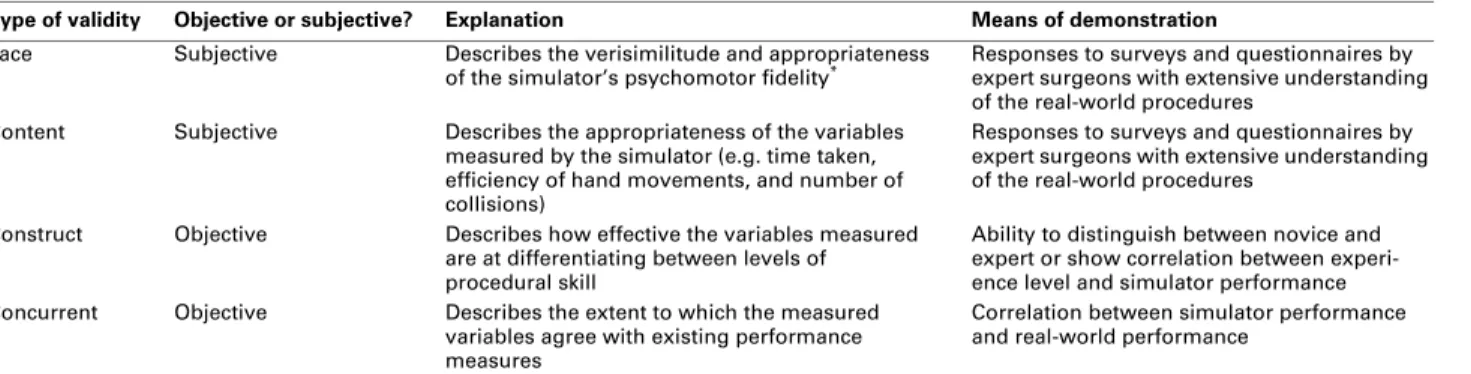
However, before introducing VR simulators in orthopaedic surgical training, it is important to demonstrate measurable and cost-effective benefits. These may be considered in terms of validity of the simulator, whether objective or subjective (Table I), and by an individual’s progression along a learning curve. It must further be demonstrated that these improved skills in the simulated environment can be transferred to operative practice, termed concurrent validity. This review aims to evaluate whether sufficient evidence exists to support the use of VR simulation in training orthopaedic surgeons.
Materials and Methods
A literature search using the MEDLINE, Embase, and Google Scholar databases was performed in July 2017. No date restrictions were specified. The search was performed with the terms “virtual reality” and “surgery”, yielding 1643 articles published between 1993 and 2017. These results were then refined to those with “orthopaedic”, “orthopedic”, “fracture”, “spine”, “hip”, “knee”, “shoulder” or “arthroscopy” in the title, yielding 149 papers published between 1994 and 2017. Each abstract was then examined for relevance, and the article’s references examined. Articles discussing low-fidelity simulators were excluded from this study, unless used for comparison with VR simulators. Furthermore, studies solely assessing subjective measures such as face and content validity were excluded.
Results
A total of 31 articles addressing the objective validity and efficacy of specific virtual reality orthopaedic surgical simulators, published between 2004 and 2017 were identified. Of these, 18 assessed the construct validity of simulators designed for training surgeons in various procedures or their component parts, including knee arthroscopy, shoulder arthroscopy, hip arthroscopy, fracture fixation, orthopaedic drilling, and generic arthroscopic skills. Eight studies investigated skill progression on a simulator: four in knee
arthroscopy, one in hip arthroscopy, one shoulder arthroscopy, and two assessing fracture fixation. Five studies (four of knee arthroscopy, one of shoulder arthroscopy) were found that reported the concurrent validity of VR simulators.
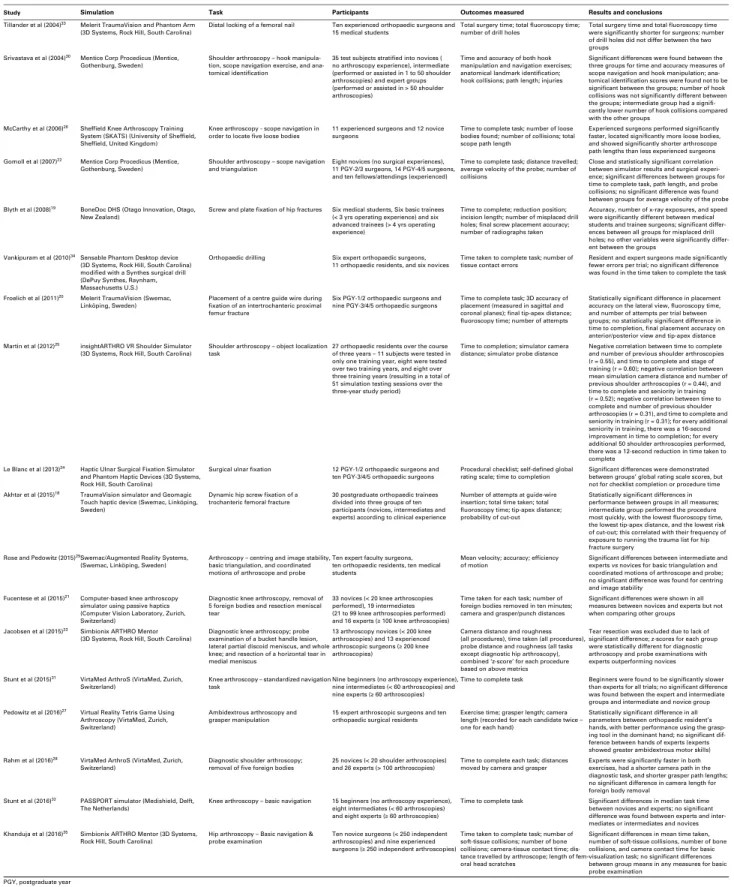
Studies assessing construct validity. Multiple studies have demonstrated the construct validity of simulators by showing a correlation between a surgeon’s experience and their performance on a simulator.18-35 The procedures where this has been reported include diagnostic and therapeutic knee, hip and shoulder arthroscopy, hip fracture fixation, the fixation of complex intra-articular fractures and basic orthopaedic skills, including drilling (Table II).
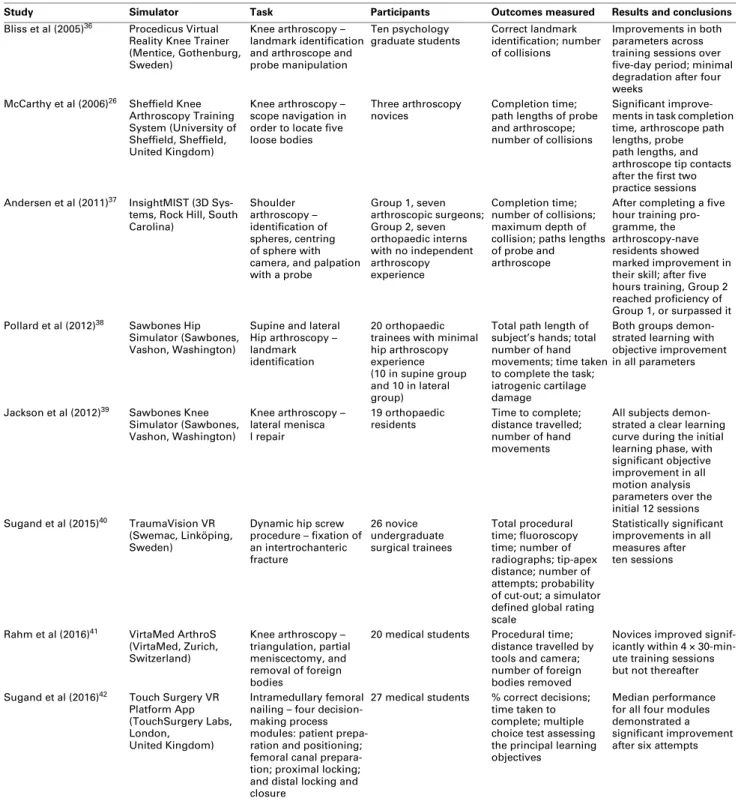
Studies assessing learning curves. A number of studies have investigated the improvement in trainee performance on a VR simulator over the course of a training session, or sessions, demonstrating progression along a learning curve (Table III).26,36–42 Pollard et al38 demonstrated this learning curve for simulated hip arthroscopy with the patient in both lateral and supine positions, measuring time taken, the total path-length of the hands and the number of hand movements, for 20 orthopaedic trainees with minimal hip arthroscopy experience. A similar learning curve was demonstrated using the Sheffield Knee Arthroscopy Training System (University of Sheffield, Sheffield, UK) in both experienced and inexperienced individuals, and a passive haptic knee arthroscopy simulator in medical students.26 A particularly steep learning curve was noted in a similar study by Rahm et al41 when using a passive haptic knee arthroscopy simulator.
The insightMIST (3D Systems, Rock Hill, South Carolina) shoulder VR simulator has also been shown to provide learner progression, supporting VR simulation in shoulder surgical training.37 Two studies conducted by Sugand et al40,42 have explored the training effect of both the TouchSurgery application (TouchSurgery Labs, London, United Kingdom) and the TraumaVision Dynamic Hip Screw VR (Swemac, Linköping, Sweden) simulator (3D Systems, Rock Hill, South Carolina), showing progression by medical students and surgical trainees respectively.
The retention of the skills acquired during simulation have also been investigated. One study evaluating manipulation of Table I. Types of validity and their means of demonstration
Type of validity Objective or subjective? Explanation Means of demonstration
Face Subjective Describes the verisimilitude and appropriateness
of the simulator’s psychomotor fidelity* Responses to surveys and questionnaires by expert surgeons with extensive understanding
of the real-world procedures Content Subjective Describes the appropriateness of the variables
measured by the simulator (e.g. time taken, efficiency of hand movements, and number of collisions)
Responses to surveys and questionnaires by expert surgeons with extensive understanding of the real-world procedures
Construct Objective Describes how effective the variables measured are at differentiating between levels of procedural skill
Ability to distinguish between novice and expert or show correlation between experi-ence level and simulator performance Concurrent Objective Describes the extent to which the measured
variables agree with existing performance measures
Correlation between simulator performance and real-world performance
*Psychomotor fidelity describes the degree to which a simulation produces the sensory and cognitive processes within the trainee as they might occur in the operating theatre; it is not restricted to the physical fidelity of the simulation (ie how visually realistic it is)
the arthroscope demonstrated limited degradation of skills at four weeks post-training, and another study of simulated arthroscopic meniscal repair showed improved simulator performance as long as six months after an initial training session.36,39
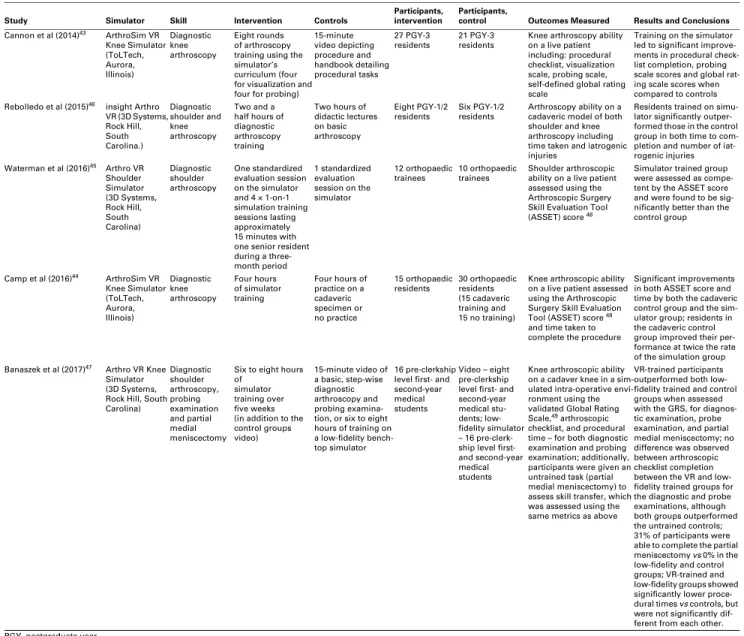
Studies assessing concurrent validity. A small number of studies have attempted to assess the concurrent validity of several VR simulators, with positive results (Table IV).43–47 Cannon et al43 showed orthopaedic residents who had undergone VR simulator training outperformed their control Table II. Studies assessing construct validity of virtual reality (VR) simulators
Study Simulation Task Participants Outcomes measured Results and conclusions
Tillander et al (2004)33 Melerit TraumaVision and Phantom Arm (3D Systems, Rock Hill, South Carolina)
Distal locking of a femoral nail Ten experienced orthopaedic surgeons and 15 medical students
Total surgery time; total fluoroscopy time; number of drill holes
Total surgery time and total fluoroscopy time were significantly shorter for surgeons; number of drill holes did not differ between the two groups
Srivastava et al (2004)30 Mentice Corp Procedicus (Mentice, Gothenburg, Sweden)
Shoulder arthroscopy – hook manipula-tion, scope navigation exercise, and ana-tomical identification
35 test subjects stratified into novices ( no arthroscopy experience), intermediate (performed or assisted in 1 to 50 shoulder arthroscopies) and expert groups (performed or assisted in > 50 shoulder arthroscopies)
Time and accuracy of both hook manipulation and navigation exercises; anatomical landmark identification; hook collisions; path length; injuries
Significant differences were found between the three groups for time and accuracy measures of scope navigation and hook manipulation; ana-tomical identification scores were found not to be significant between the groups; number of hook collisions was not significantly different between the groups; intermediate group had a signifi-cantly lower number of hook collisions compared with the other groups
McCarthy et al (2006)26 Sheffield Knee Arthroscopy Training
System (SKATS) (University of Sheffield, Sheffield, United Kingdom)
Knee arthroscopy - scope navigation in
order to locate five loose bodies 11 experienced surgeons and 12 novice surgeons Time to complete task; number of loosebodies found; number of collisions; total scope path length
Experienced surgeons performed significantly faster, located significantly more loose bodies, and showed significantly shorter arthroscope path lengths than less experienced surgeons Gomoll et al (2007)22 Mentice Corp Procedicus (Mentice,
Gothenburg, Sweden) Shoulder arthroscopy – scope navigation and triangulation Eight novices (no surgical experiences), 11 PGY-2/3 surgeons, 14 PGY-4/5 surgeons, and ten fellows/attendings (experienced)
Time to complete task; distance travelled; average velocity of the probe; number of collisions
Close and statistically significant correlation between simulator results and surgical experi-ence; significant differences between groups for time to complete task, path length, and probe collisions; no significant difference was found between groups for average velocity of the probe Blyth et al (2008)19 BoneDoc DHS (Otago Innovation, Otago,
New Zealand) Screw and plate fixation of hip fractures Six medical students, Six basic trainees (< 3 yrs operating experience) and six advanced trainees (> 4 yrs operating experience)
Time to complete; reduction position; incision length; number of misplaced drill holes; final screw placement accuracy; number of radiographs taken
Accuracy, number of x-ray exposures, and speed were significantly different between medical students and trainee surgeons; significant differ-ences between all groups for misplaced drill holes; no other variables were significantly differ-ent between the groups
Vankipuram et al (2010)34Sensable Phantom Desktop device
(3D Systems, Rock Hill, South Carolina) modified with a Synthes surgical drill (DePuy Synthes, Raynham, Massachusetts U.S.)
Orthopaedic drilling Six expert orthopaedic surgeons,
11 orthopaedic residents, and six novices Time taken to complete task; number oftissue contact errors Resident and expert surgeons made significantly fewer errors per trial; no significant difference was found in the time taken to complete the task
Froelich et al (2011)20 Melerit TraumaVision (Swemac, Linköping, Sweden)
Placement of a centre guide wire during fixation of an intertrochanteric proximal femur fracture
Six PGY-1/2 orthopaedic surgeons and nine PGY-3/4/5 orthopaedic surgeons
Time to complete task; 3D accuracy of placement (measured in sagittal and coronal planes); final tip-apex distance; fluoroscopy time; number of attempts
Statistically significant difference in placement accuracy on the lateral view, fluoroscopy time, and number of attempts per trial between groups; no statistically significant difference in time to completion, final placement accuracy on anterior/posterior view and tip-apex distance Martin et al (2012)25 insightARTHRO VR Shoulder Simulator
(3D Systems, Rock Hill, South Carolina)
Shoulder arthroscopy – object localization task
27 orthopaedic residents over the course of three years – 11 subjects were tested in only one training year, eight were tested over two training years, and eight over three training years (resulting in a total of 51 simulation testing sessions over the three-year study period)
Time to completion; simulator camera distance; simulator probe distance
Negative correlation between time to complete and number of previous shoulder arthroscopies (r = 0.55), and time to complete and stage of training (r = 0.60); negative correlation between mean simulation camera distance and number of previous shoulder arthroscopies (r = 0.44), and time to complete and seniority in training (r = 0.52); negative correlation between time to complete and number of previous shoulder arthroscopies (r = 0.31), and time to complete and seniority in training (r = 0.31); for every additional seniority in training, there was a 16-second improvement in time to completion; for every additional 50 shoulder arthroscopies performed, there was a 12-second reduction in time taken to complete
Le Blanc et al (2013)24 Haptic Ulnar Surgical Fixation Simulator and Phantom Haptic Devices (3D Systems, Rock Hill, South Carolina)
Surgical ulnar fixation 12 PGY-1/2 orthopaedic surgeons and
ten PGY-3/4/5 orthopaedic surgeons
Procedural checklist; self-defined global rating scale; time to completion
Significant differences were demonstrated between groups’ global rating scale scores, but not for checklist completion or procedure time Akhtar et al (2015)18 TraumaVision simulator and Geomagic
Touch haptic device (Swemac, Linköping, Sweden)
Dynamic hip screw fixation of a
trochanteric femoral fracture 30 postgraduate orthopaedic traineesdivided into three groups of ten participants (novices, intermediates and experts) according to clinical experience
Number of attempts at guide-wire insertion; total time taken; total fluoroscopy time; tip-apex distance; probability of cut-out
Statistically significant differences in performance between groups in all measures; intermediate group performed the procedure most quickly, with the lowest fluoroscopy time, the lowest tip-apex distance, and the lowest risk of cut-out; this correlated with their frequency of exposure to running the trauma list for hip fracture surgery
Rose and Pedowitz (2015)29Swemac/Augmented Reality Systems,
(Swemac, Linköping, Sweden) Arthroscopy – centring and image stability, basic triangulation, and coordinated motions of arthroscope and probe
Ten expert faculty surgeons, ten orthopaedic residents, ten medical students
Mean velocity; accuracy; efficiency
of motion Significant differences between intermediate and experts vs novices for basic triangulation and coordinated motions of arthroscope and probe; no significant difference was found for centring and image stability
Fucentese et al (2015)21 Computer-based knee arthroscopy simulator using passive haptics (Computer Vision Laboratory, Zurich, Switzerland)
Diagnostic knee arthroscopy, removal of 5 foreign bodies and resection meniscal tear
33 novices (< 20 knee arthroscopies performed), 19 intermediates (21 to 99 knee arthroscopies performed) and 16 experts (≥100 knee arthroscopies)
Time taken for each task; number of foreign bodies removed in ten minutes; camera and grasper/punch distances
Significant differences were shown in all measures between novices and experts but not when comparing other groups Jacobsen et al (2015)23 Simbionix ARTHRO Mentor
(3D Systems, Rock Hill, South Carolina)
Diagnostic knee arthroscopy; probe examination of a bucket handle lesion, lateral partial discoid meniscus, and whole knee; and resection of a horizontal tear in medial meniscus
13 arthroscopy novices (< 200 knee arthroscopies) and 13 experienced arthroscopic surgeons (≥200 knee arthroscopies)
Camera distance and roughness (all procedures), time taken (all procedures), probe distance and roughness (all tasks except diagnostic hip arthroscopy), combined ‘z-score’ for each procedure based on above metrics
Tear resection was excluded due to lack of significant difference; z-scores for each group were statistically different for diagnostic arthroscopy and probe examinations with experts outperforming novices Stunt et al (2015)31 VirtaMed ArthroS (VirtaMed, Zurich,
Switzerland)
Knee arthroscopy – standardized navigation task
Nine beginners (no arthroscopy experience), nine intermediates (< 60 arthroscopies) and nine experts (≥60 arthroscopies)
Time to complete task Beginners were found to be significantly slower than experts for all trials; no significant difference was found between the expert and intermediate groups and intermediate and novice group Pedowitz et al (2016)27 Virtual Reality Tetris Game Using
Arthroscopy (VirtaMed, Zurich, Switzerland)
Ambidextrous arthroscopy and grasper manipulation
15 expert arthroscopic surgeons and ten orthopaedic surgical residents
Exercise time; grasper length; camera length (recorded for each candidate twice – one for each hand)
Statistically significant difference in all parameters between orthopaedic resident’s hands, with better performance using the grasp-ing tool in the dominant hand; no significant dif-ference between hands of experts (experts showed greater ambidextrous motor skills) Rahm et al (2016)28 VirtaMed ArthroS (VirtaMed, Zurich,
Switzerland)
Diagnostic shoulder arthroscopy; removal of five foreign bodies
25 novices (< 20 shoulder arthroscopies) and 26 experts (> 100 arthroscopies)
Time to complete each task; distances moved by camera and grasper
Experts were significantly faster in both exercises, had a shorter camera path in the diagnostic task, and shorter grasper path lengths; no significant difference in camera length for foreign body removal
Stunt et al (2016)32 PASSPORT simulator (Medishield, Delft,
The Netherlands) Knee arthroscopy – basic navigation 15 beginners (no arthroscopy experience), eight intermediates (< 60 arthroscopies) and eight experts (≥60 arthroscopies)
Time to complete task Significant differences in median task time between novices and experts; no significant difference was found between experts and inter-mediates or interinter-mediates and novices Khanduja et al (2016)35 Simbionix ARTHRO Mentor (3D Systems,
Rock Hill, South Carolina) Hip arthroscopy – Basic navigation &probe examination Ten novice surgeons (< 250 independent arthroscopies) and nine experienced surgeons (≥250 independent arthroscopies)
Time taken to complete task; number of soft-tissue collisions; number of bone collisions; camera-tissue contact time; dis-tance travelled by arthroscope; length of fem-oral head scratches
Significant differences in mean time taken, number of soft-tissue collisions, number of bone collisions, and camera contact time for basic visualization task; no significant differences between group means in any measures for basic probe examination
group counterparts at probing scale scores and self-defined global rating scale scores during diagnostic knee arthroscopy in vivo. However, procedural checklist scores were not shown to be significantly different, which has been attributed to the influence of an extreme outlier. These benefits in knee arthroscopy were also assessed by Camp et al,45 who compared the improvements in performance to those seen in another group
trained on cadaveric specimens. Contrary to these promising results, Rebolledo et al46 reported no significant benefit derived from two and a half hours of knee arthroscopy simulation training in orthopaedic residents whose performance was subsequently assessed on cadaveric models. This study did, however, show significant improvements in shoulder arthroscopy performance. Concurrent validity of VR simulation Table III. Studies assessing the learning curves of virtual reality (VR) simulators
Study Simulator Task Participants Outcomes measured Results and conclusions
Bliss et al (2005)36 Procedicus Virtual
Reality Knee Trainer (Mentice, Gothenburg, Sweden)
Knee arthroscopy – landmark identification and arthroscope and probe manipulation
Ten psychology
graduate students Correct landmark identification; number of collisions
Improvements in both parameters across training sessions over five-day period; minimal degradation after four weeks
McCarthy et al (2006)26 Sheffield Knee
Arthroscopy Training System (University of Sheffield, Sheffield, United Kingdom) Knee arthroscopy – scope navigation in order to locate five loose bodies
Three arthroscopy
novices Completion time;path lengths of probe and arthroscope; number of collisions
Significant improve-ments in task completion time, arthroscope path lengths, probe path lengths, and arthroscope tip contacts after the first two practice sessions Andersen et al (2011)37 InsightMIST (3D
Sys-tems, Rock Hill, South Carolina) Shoulder arthroscopy – identification of spheres, centring of sphere with camera, and palpation with a probe Group 1, seven arthroscopic surgeons; Group 2, seven orthopaedic interns with no independent arthroscopy experience Completion time; number of collisions; maximum depth of collision; paths lengths of probe and
arthroscope
After completing a five hour training pro-gramme, the arthroscopy-nave residents showed marked improvement in their skill; after five hours training, Group 2 reached proficiency of Group 1, or surpassed it Pollard et al (2012)38 Sawbones Hip
Simulator (Sawbones, Vashon, Washington)
Supine and lateral Hip arthroscopy – landmark identification
20 orthopaedic trainees with minimal hip arthroscopy experience (10 in supine group and 10 in lateral group)
Total path length of subject’s hands; total number of hand movements; time taken to complete the task; iatrogenic cartilage damage
Both groups demon-strated learning with objective improvement in all parameters
Jackson et al (2012)39 Sawbones Knee
Simulator (Sawbones, Vashon, Washington) Knee arthroscopy – lateral menisca l repair 19 orthopaedic
residents Time to complete; distance travelled; number of hand movements
All subjects demon-strated a clear learning curve during the initial learning phase, with significant objective improvement in all motion analysis parameters over the initial 12 sessions Sugand et al (2015)40 TraumaVision VR
(Swemac, Linköping, Sweden)
Dynamic hip screw procedure – fixation of an intertrochanteric fracture 26 novice undergraduate surgical trainees Total procedural time; fluoroscopy time; number of radiographs; tip-apex distance; number of attempts; probability of cut-out; a simulator defined global rating scale
Statistically significant improvements in all measures after ten sessions
Rahm et al (2016)41 VirtaMed ArthroS
(VirtaMed, Zurich, Switzerland) Knee arthroscopy – triangulation, partial meniscectomy, and removal of foreign bodies
20 medical students Procedural time; distance travelled by tools and camera; number of foreign bodies removed
Novices improved signif-icantly within 4 × 30-min-ute training sessions but not thereafter Sugand et al (2016)42 Touch Surgery VR
Platform App (TouchSurgery Labs, London,
United Kingdom)
Intramedullary femoral nailing – four decision-making process modules: patient prepa-ration and positioning; femoral canal prepara-tion; proximal locking; and distal locking and closure
27 medical students % correct decisions; time taken to complete; multiple choice test assessing the principal learning objectives
Median performance for all four modules demonstrated a significant improvement after six attempts
of shoulder arthroscopy has also been demonstrated in a single-blinded study using 22 orthopaedic surgeons – 12 of whom received a total of one hour of VR training over three months, and 10 who received none. The VR trained group showed improved time, probe distance travelled and safety when compared with controls.44
Banasezek et al47 assessed improvements in arthroscopic performance for 16 medical students trained for six to eight hours on either a VR knee arthroscopy simulator or a low-fidelity bench-top simulator, when compared with untrained controls. They reported higher validated Global Rating Scales scores in those who had undergone high-fidelity VR training than in the low-fidelity and untrained control groups when performing diagnostic and probe examinations on cadaveric knees. The study also assessed participants’ ability to transfer
arthroscopic skills with an “untrained surprise task” in the form of a partial medial meniscectomy, which 31% of the VR-trained group were able to complete, by comparison with 0% of the low-fidelity and untrained groups.
Discussion
Although the evidence of construct validity and progression with many simulators is promising, this neither confirms nor quantifies any benefit to trainees. To date, while those studies that have examined the effect of simulator training on performance in the operating theatre support the use of simulation, they are few in number.43–46 It is in this area of transferability that supportive evidence is lacking when compared to other surgical specialties. Multiple studies have demonstrated a ‘real-world’ benefit from the use of Table IV. Studies assessing concurrent validity of virtual reality (VR) simulators
Study Simulator Skill Intervention Controls Participants, intervention Participants, control Outcomes Measured Results and Conclusions
Cannon et al (2014)43 ArthroSim VR Knee Simulator (ToLTech, Aurora, Illinois) Diagnostic knee arthroscopy Eight rounds of arthroscopy training using the simulator’s curriculum (four for visualization and four for probing)
15-minute video depicting procedure and handbook detailing procedural tasks 27 PGY-3
residents 21 PGY-3residents Knee arthroscopy ability on a live patient including: procedural checklist, visualization scale, probing scale, self-defined global rating scale
Training on the simulator led to significant improve-ments in procedural check-list completion, probing scale scores and global rat-ing scale scores when compared to controls Rebolledo et al (2015)46 insight Arthro
VR (3D Systems, Rock Hill, South Carolina.) Diagnostic shoulder and knee arthroscopy Two and a half hours of diagnostic arthroscopy training Two hours of didactic lectures on basic arthroscopy Eight PGY-1/2
residents Six PGY-1/2 residents Arthroscopy ability on a cadaveric model of both shoulder and knee arthroscopy including time taken and iatrogenic injuries
Residents trained on simu-lator significantly outper-formed those in the control group in both time to com-pletion and number of iat-rogenic injuries Waterman et al (2016)45 Arthro VR Shoulder Simulator (3D Systems, Rock Hill, South Carolina) Diagnostic shoulder arthroscopy One standardized evaluation session on the simulator and 4 × 1-on-1 simulation training sessions lasting approximately 15 minutes with one senior resident during a three-month period 1 standardized evaluation session on the simulator 12 orthopaedic
trainees 10 orthopaedic trainees Shoulder arthroscopic ability on a live patient assessed using the Arthroscopic Surgery Skill Evaluation Tool (ASSET) score 48
Simulator trained group were assessed as compe-tent by the ASSET score and were found to be sig-nificantly better than the control group Camp et al (2016)44 ArthroSim VR Knee Simulator (ToLTech, Aurora, Illinois) Diagnostic knee arthroscopy Four hours of simulator training Four hours of practice on a cadaveric specimen or no practice 15 orthopaedic
residents 30 orthopaedic residents (15 cadaveric training and 15 no training)
Knee arthroscopic ability on a live patient assessed using the Arthroscopic Surgery Skill Evaluation Tool (ASSET) score 48
and time taken to complete the procedure
Significant improvements in both ASSET score and time by both the cadaveric control group and the sim-ulator group; residents in the cadaveric control group improved their per-formance at twice the rate of the simulation group Banaszek et al (2017)47 Arthro VR Knee
Simulator (3D Systems, Rock Hill, South Carolina) Diagnostic shoulder arthroscopy, probing examination and partial medial meniscectomy
Six to eight hours of
simulator training over five weeks (in addition to the control groups video) 15-minute video of a basic, step-wise diagnostic arthroscopy and probing examina-tion, or six to eight hours of training on a low-fidelity bench-top simulator
16 pre-clerkship level first- and second-year medical students
Video – eight pre-clerkship level first- and second-year medical stu-dents; low-fidelity simulator – 16 pre-clerk-ship level first- and second-year medical students
Knee arthroscopic ability on a cadaver knee in a sim-ulated intra-operative envi-ronment using the validated Global Rating Scale,49 arthroscopic
checklist, and procedural time – for both diagnostic examination and probing examination; additionally, participants were given an untrained task (partial medial meniscectomy) to assess skill transfer, which was assessed using the same metrics as above
VR-trained participants outperformed both low-fidelity trained and control groups when assessed with the GRS, for diagnos-tic examination, probe examination, and partial medial meniscectomy; no difference was observed between arthroscopic checklist completion between the VR and low-fidelity trained groups for the diagnostic and probe examinations, although both groups outperformed the untrained controls; 31% of participants were able to complete the partial meniscectomy vs 0% in the low-fidelity and control groups; VR-trained and low-fidelity groups showed significantly lower proce-dural times vs controls, but were not significantly dif-ferent from each other. PGY, postgraduate year
laparoscopic simulators, resulting in their widespread use in the training of general surgeons.50-53 Banasezek et al’s47 inclusion of a “surprise” task could, however, be argued to provide evidence of general benefits of VR in orthopaedic training. More investigation of costs and benefits of simulators of other orthopaedic procedures is required before their implementation into training curricula can be justified.
VR simulation may prove to be less cost-effective than other means of surgical education, such as the use of cadavers or low-fidelity simulators. Camp et al44 found that a VR-trained group improved at half the rate of a cadaveric-trained group and suggested that the simulator would be cost-effective if used for a minimum of 300 hours per year. This supports the concept of centralized or shared VR training facilities. As technology advances and the price of simulators decreases, the cost efficiency is likely to increase. Furthermore, it should be noted that one of the tested simulators, TouchSurgery is a free application and so any benefits are inherently cost-efficient. It is, however, a non-haptic decision-making simulator, lacking the psychomotor fidelity of more sophisticated simulators, and is yet to be shown to have concurrent validity.
Despite limited evidence supporting orthopaedic VR simulators, cost efficiency of simulator systems in other specialities has already been demonstrated. Kunkler54 argued that the cost of setting up a simulation centre was offset by the savings associated with reduced procedure time and reduced expenditure on instructors and equipment for traditional training. It was estimated that one simulator system saved in excess of $160 000 in six months, and another returned its investment within 131 days.
In order to evaluate VR simulation further in orthopaedic training, researchers should draw from the aviation industry’s use of the ‘Transfer Effectiveness Ratio’ (TER), the only validated measure of cost effectiveness.55,56 This is used to quantify the difference between virtual reality and real life in terms of the time required to achieve fully competent performance, with a ratio of 0.50 indicating that one hour of simulator training saves approximately 30 minutes of operative time. To allow direct comparison with other training techniques, TERs would have to be calculated for other training methods and analyzed in conjunction with the costs associated with each method.
Despite the fact that many of the simulators used in the cited studies were able to distinguish between ‘experts’ and ‘novices’, many found limited ability to differentiate between ‘intermediates’ and ‘experts’, suggesting limited verisimilitude to the real-world procedure. This may be because many studies used the cumulative number of procedures performed over a career (or several years) to differentiate ‘experts’ and ‘intermediates’, whereas ‘intermediates’ may have performed more arthroscopies in a more recent, shorter timeframe and therefore perform disproportionately well. There was also inconsistency in the objective measures used by the various simulators, with only a handful displaying discriminatory capacity (Table II). This highlights the importance of selecting appropriate measures of performance for assessment.
Although arthroscopic simulators have contributed to the majority of the studies discussed here, simulations of fracture fixation and orthopaedic drilling are also available. Studies of such simulators have also demonstrated construct validity and learning curve progression but evidence of concurrent validity is still lacking, but remains vital to demonstrate any postulated benefits.18-20,24,34,40
In conclusion, the demonstration of ‘real-world’ benefits to orthopaedic surgical training of two previously validated simulators for knee and shoulder arthroscopy is highly promising. More investigation of other simulators and of the cost efficiency of the two validated simulators is needed before their implementation into training curricula can be robustly championed. Future research should draw from the aviation industry’s TER, allowing direct comparison of the cost efficiency of VR orthopaedic simulators and that of other means of surgical education.
Take home message:
- Increasingly complex procedures and reduced time in thea-tre makes for steep learning curves in modern surgery - There is a growing body of evidence showing the benefits to the trainee of VR simulation
- Expanding the evidence base demonstrating improved operating thea-tre performance with VR simulation is mandated before its use can become widespread
Follow V. Khanduja @vikaskhanduja References
1. Barnes RW. Surgical handicraft: teaching and learning surgical skills. Am J Surg
1987;153:422–427.
2. Connors RC, Doty JR, Bull DA, et al. Effect of work-hour restriction on operative experience in cardiothoracic surgical residency training. J Thorac Cardiovasc Surg
2009;137:710–713.
3. Elbadrawy M, Majoko F, Gasson J. Impact of Calman system and recent reforms on surgical training in gynaecology. J Obstet Gynaecol. 2008;28:474–477.
4. Halsted W. The Training of Surgeon. JAMA 1904;21:1553–1554.
5. Hoppe DJ, de Sa D, Simunovic N, et al. The learning curve for hip arthroscopy: a systematic review. Arthroscopy. 2014;30:389–397.
6. Hunter JG, Sackier JM, Berci G. Training in laparoscopic cholecystectomy. Quantifying the learning curve. Surg Endosc. 1994;8:28–31.
7. Konan S, Rhee S-J, Haddad FS. Hip arthroscopy: analysis of a single surgeon’s learning experience. J Bone Joint Surg Am 2011;93(suppl 2):52–56.
8. Lee Y-K, Ha Y-C, Hwang D-S, Koo K-H. Learning curve of basic hip arthroscopy technique: CUSUM analysis. Knee Surg Sports Traumatol Arthrosc 2013;21:1940– 1944.
9. Akhtar KSN, Chen A, Standfield NJ, Gupte CM. The role of simulation in developing surgical skills. Curr Rev Musculoskelet Med 2014;7:155–160.
10. Mabrey JD, Reinig KD, Cannon WD. Virtual reality in orthopaedics: is it a reality?
Clin Orthop Relat Res 2010;468:2586–2591.
11. Thomas GW, Johns BD, Marsh JL, Anderson DD. A review of the role of simulation in developing and assessing orthopaedic surgical skills. Iowa Orthop J
2014;34:181–189.
12. Bjorgul K, Novicoff WM, Saleh KJ. Learning curves in hip fracture surgery. Int Orthop 2011;35:113–119.
13. Farnworth LR, Lemay DE, Wooldridge T, et al. A comparison of operative times in arthroscopic ACL reconstruction between orthopaedic faculty and residents: the financial impact of orthopaedic surgical training in the operating room. Iowa Orthop J 2001;21:31–35.
14. Luft HS, Bunker JP, Enthoven AC. Should operations be regionalized? The empirical relation between surgical volume and mortality. 1979. Clin Orthop Relat Res 2007;457:3–9.
15. Taylor HD, Dennis DA, Crane HS. Relationship between mortality rates and hospital patient volume for Medicare patients undergoing major orthopaedic surgery of the hip, knee, spine, and femur. J Arthroplasty 1997;12:235–242.
16. Stunt J, Wulms P, Kerkhoffs G, et al. How valid are commercially available medical simulators? Adv Med Educ Pract 2014;5:385–395.
17. Treuting R. Minimally invasive orthopedic surgery: arthroscopy. Ochsner J
2000;2:158–163.
18. Akhtar K, Sugand K, Sperrin M, et al. Training safer orthopedic surgeons. Construct validation of a virtual-reality simulator for hip fracture surgery. Acta Orthop
2015;86:616–621.
19. Blyth P, Stott NS, Anderson IA. Virtual reality assessment of technical skill using the Bonedoc DHS simulator. Injury 2008;39:1127–1133.
20. Froelich JM, Milbrandt JC, Novicoff WM, Saleh KJ, Allan DG. Surgical simulators and hip fractures: a role in residency training? J Surg Educ 2011;68:298– 302.
21. Fucentese SF, Rahm S, Wieser K, et al. Evaluation of a virtual-reality-based simulator using passive haptic feedback for knee arthroscopy. Knee Surg Sports Traumatol Arthrosc 2015;23:1077–1085.
22. Gomoll AH, O’Toole RV, Czarnecki J, Warner JJP. Surgical experience correlates with performance on a virtual reality simulator for shoulder arthroscopy.
Am J Sports Med 2007;35:883–888.
23. Jacobsen ME, Andersen MJ, Hansen CO, Konge L. Testing basic competency in knee arthroscopy using a virtual reality simulator: exploring validity and reliability.
J Bone Joint Surg [Am] 2015;97-A:775–781.
24. LeBlanc J, Hutchison C, Hu Y, Donnon T. A comparison of orthopaedic resident performance on surgical fixation of an ulnar fracture using virtual reality and synthetic models. J Bone Joint Surg [Am]2013;95:e60, S1-5.
25. Martin KD, Cameron K, Belmont PJ Jr, Schoenfeld A, Owens BD. Shoulder arthroscopy simulator performance correlates with resident and shoulder arthroscopy experience. J Bone Joint Surg [Am] 2012;94:160.
26. McCarthy AD, Moody L, Waterworth AR, Bickerstaff DR. Passive haptics in a knee arthroscopy simulator: is it valid for core skills training? Clin Orthop Relat Res
2006;442:13–20.
27. Pedowitz R, Nicandri G, Tuchschmid S. Asymmetry in Dominant / Non-Dominant Hand Performance Differentiates Novices from Experts on an Arthroscopy Virtual Reality Serious Game. Stud Health Technol Inform 2016;220:289–294.
28. Rahm S, Germann M, Hingsammer A, Wieser K, Gerber C. Validation of a virtual reality-based simulator for shoulder arthroscopy. Knee Surg Sports Traumatol Arthrosc 2016;24:1730–1737.
29. Rose K, Pedowitz R. Fundamental arthroscopic skill differentiation with virtual reality simulation. Arthroscopy 2015;31:299–305.
30. Srivastava S, Youngblood PL, Rawn C, et al. Initial evaluation of a shoulder arthroscopy simulator: establishing construct validity. J Shoulder Elbow Surg
2004;13:196–205.
31. Stunt JJ, Kerkhoffs GMMJ, van Dijk CN, Tuijthof GJM. Validation of the ArthroS virtual reality simulator for arthroscopic skills. Knee Surg Sports Traumatol Arthrosc
2015;23:3436–3442.
32. Stunt JJ, Kerkhoffs GMMJ, Horeman T, van Dijk CN, Tuijthof GJM. Validation of the PASSPORT V2 training environment for arthroscopic skills. Knee Surg Sports Traumatol Arthrosc 2016;24:2038–2045.
33. Tillander B, Ledin T, Nordqvist P, Skarman E, Wahlström O. A virtual reality trauma simulator. Med Teach 2004;26:189–191.
34. Vankipuram M, Kahol K, McLaren A, Panchanathan S. A virtual reality simulator for orthopedic basic skills: a design and validation study. J Biomed Inform
2010;43:661–668.
35. Khanduja V, Lawrence JE, Audenaert E. Testing the Construct Validity of a Virtual Reality Hip Arthroscopy Simulator. Arthroscopy 2017;33:566–571.
36. Bliss JP, Hanner-Bailey HS, Scerbo MW. Determining the efficacy of an immersive trainer for arthroscopy skills. Stud Health Technol Inform 2005;111:54–56.
37. Andersen C, Winding TN, Vesterby MS. Development of simulated arthroscopic skills. Acta Orthop 2011;82:90–95.
38. Pollard TCB, Khan T, Price AJ, et al. Simulated hip arthroscopy skills: learning curves with the lateral and supine patient positions: a randomized trial. J Bone Joint Surg [Am] 2012;94-A:e68, 1-10.:.
39. Jackson WFM, Khan T, Alvand A, et al. Learning and retaining simulated arthroscopic meniscal repair skills. J Bone Joint Surg [Am] 2012;94-A:e132, 1–8.
40. Sugand K, Akhtar K, Khatri C, Cobb J, Gupte C. Training effect of a virtual reality haptics-enabled dynamic hip screw simulator. Acta Orthop 2015;86:695–701.
41. Rahm S, Wieser K, Wicki I, et al. Performance of medical students on a virtual reality simulator for knee arthroscopy: an analysis of learning curves and predictors of performance. BMC Surg 2016;16:14.
42. Sugand K, Mawkin M, Gupte C. Training effect of using Touch Surgery for intramedullary femoral nailing. Injury 2016;47:448–452.
43. Cannon WD, Garrett WE Jr, Hunter RE, et al. Improving residency training in arthroscopic knee surgery with use of a virtual-reality simulator. A randomized blinded study. J Bone Joint Surg [Am] 2014;96-A:1798–1806.
44. Camp CL, Krych AJ, Stuart MJ, et al. Improving Resident Performance in Knee Arthroscopy: A Prospective Value Assessment of Simulators and Cadaveric Skills Laboratories. J Bone Joint Surg [Am] 2016;98-A:220–225.
45. Waterman BR, Martin KD, Cameron KL, Owens BD, Belmont PJ Jr. Simulation Training Improves Surgical Proficiency and Safety During Diagnostic Shoulder Arthroscopy Performed by Residents. Orthopedics 2016;39:479–485.
46. Rebolledo BJ, Hammann-Scala J, Leali A, Ranawat AS. Arthroscopy skills development with a surgical simulator: a comparative study in orthopaedic surgery residents. Am J Sports Med 2015;43:1526–1529.
47. Banaszek D, You D, Chang J, et al. Virtual Reality Compared with Bench-Top Simulation in the Acquisition of Arthroscopic Skill: A Randomized Controlled Trial.
J Bone Joint Surg [Am]. 2017;99-A:34.
48. Koehler RJ, Amsdell S, Arendt EA, et al. The Arthroscopic Surgical Skill Evaluation Tool (ASSET). Am J Sports Med 2013;41:1229–1237.
49. hang J, Banaszek DC, Gambrel J, Bardana D. Global Rating Scales and Motion Analysis Are Valid Proficiency Metrics in Virtual and Benchtop Knee Arthroscopy Simulators. Clin Orthop Relat Res 2016;474:956–964.
50. Gallagher AG, Seymour NE, Jordan-Black J- A, et al. Prospective, randomized assessment of transfer of training (ToT) and transfer effectiveness ratio (TER) of virtual reality simulation training for laparoscopic skill acquisition. Ann Surg. 2013;257:1025–1031.
51. Palter VN, Grantcharov T, Harvey A, Macrae HM. Ex vivo technical skills training transfers to the operating room and enhances cognitive learning: a randomized controlled trial. Ann Surg 2011;253:886–889.
52. Seymour NE, Gallagher AG, Roman SA, et al. Virtual reality training improves operating room performance: results of a randomized, double-blinded study. Ann Surg. 2002;236:458–463.
53. Stefanidis D, Scerbo MW, Montero PN, et al. Simulator training to automaticity leads to improved skill transfer compared with traditional proficiency-based training: a randomized controlled trial. Ann Surg 2012;255:30–37.
54. Kunkler K. The role of medical simulation: an overview. Int J Med Robot
2006;2:203–210.
55. Moglia A, Ferrari V, Morelli L, et al. A Systematic Review of Virtual Reality Simulators for Robot-assisted Surgery. Eur Urol 2016;69:1065–1080.
56. Roscoe SN. Incremental Transfer Effectiveness. Hum Factors J Hum Factors Ergon Soc 1971;13:561–567.
Author contributions:
J. D. Bartlett: Expanded initial literature search, formulated first version of manuscript with MES & JEL, wrote the final manuscript
J. E. Lawrence: Conception and initial literature search, formulated first ver-sion of manuscript with MES & JDB, edited final manuscript
V. Khanduja: Supervised the project, edited and approved final version of the manuscript, Conception, Leading research into simulation and virtual reality for hip arthroscopy
M. E. Stewart: Formulated first version of manuscript with JEL & JDB, edited final manuscript
N. Nakano: Edited final manuscript
Funding statements:
No benefits in any form have been received or will be received from a com-mercial party related directly or indirectly to the subject of this article.. Each author certifies that he or she, or a member of his or her immediate family, has no funding or commercial associations (eg, consultancies, stock ownership, equity interest, patent/licensing arrangements, etc) that might pose a conflict of interest in connection with the submitted article Each author certifies that his or her institution approved the human protocol for this investigation, that all investigations were conducted in conformity with ethical principles of research, and that informed consent for participation in the study was obtained.