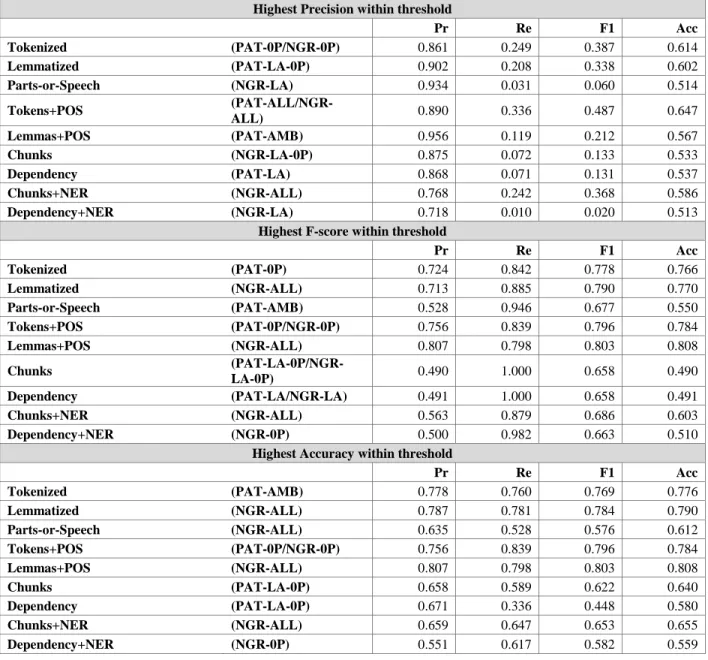
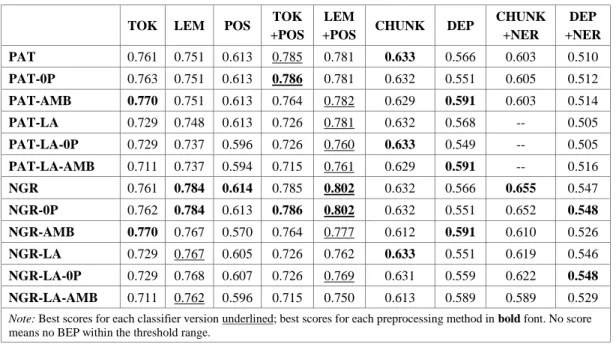
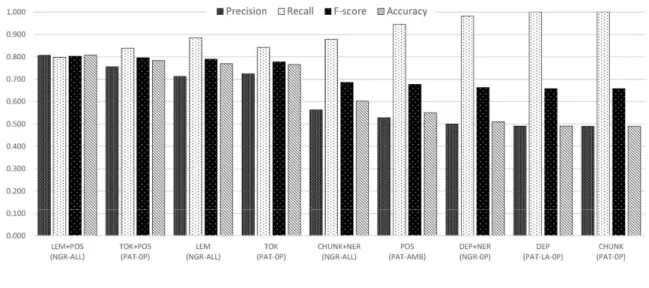
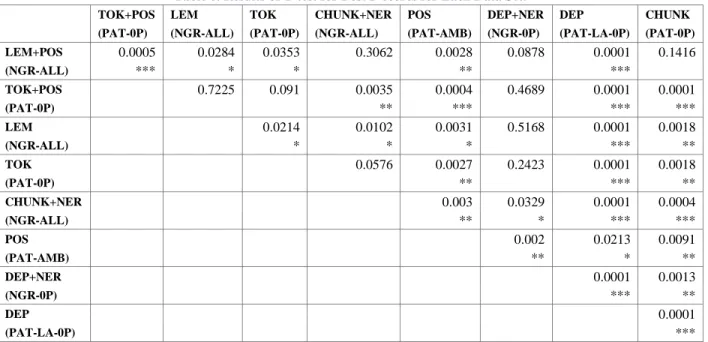
ISSN 1536-9323
Journal of the Association for Information Systems (2019) 20(8), 1075-1128 doi: 10.17705/1jais.00562
RESEARCH PAPER
Brute-Force Sentence Pattern Extortion from
Harmful Messages for Cyberbullying Detection
Michal Ptaszynski1, Pawel Lempa2, Fumito Masui3, Yasutomo Kimura4, Rafal Rzepka5, Kenji Araki6, Michal Wroczynski7, Gniewosz Leliwa8
1Corresponding author, Kitami Institute of Technology, Japan, [email protected] 2Cracow University of Technology, Poland, [email protected]
3Kitami Institute of Technology, Japan, [email protected] 4Otaru University of Commerce, Japan, [email protected]
5Hokkaido University, Japan, [email protected] 6Hokkaido University, Japan, [email protected] 7Samurai Labs, Poland, [email protected]
7Samurai Labs, Poland, [email protected] Abstract
Cyberbullying, or humiliating people using the Internet, has existed almost since the beginning of Internet communication. The relatively recent introduction of smartphones and tablet computers has caused cyberbullying to evolve into a serious social problem. In Japan, members of a parent-teacher association (PTA) attempted to address the problem by scanning the Internet for cyberbullying entries. To help these PTA members and other interested parties confront this difficult task we propose a novel method for automatic detection of malicious Internet content. This method is based on a combinatorial approach resembling brute-force search algorithms, but applied in language classification. The method extracts sophisticated patterns from sentences and uses them in classification. The experiments performed on actual cyberbullying data reveal an advantage of our method vis-à-vis previous methods. Next, we implemented the method into an application for Android smartphones to automatically detect possible harmful content in messages. The method performed well in the Android environment, but still needs to be optimized for time efficiency in order to be used in practice.
Keywords: Automatic Cyberbullying Detection, Natural Language Processing, Language Combinatorics.
Choon-Ling Sia was the accepting senior editor. This research article was submitted on April 8, 2016 and went through four rounds of revisions.
1
Introduction
Information technology contributions to the preservation, support, and development of public health are numerous. Recent ones along these lines include analysis and prediction of the spread of epidemics (Aramaki, Maskawa, & Morita, 2011), analysis of health data (Buntin, Burke, Hoaglin, &
Blumenthal, 2011; Kitajima, Rzepka, & Araki, 2014) and construction of biomedical ontologies (Smith et al. 2005). However, while most of these contributions address the physical sphere of public health, the mental or psychological aspect, although equally important, has been mostly disregarded.
In recent years the problem of unethical behavior in the cyber-environment has been revealed. This has greatly
impaired public mental health in adults and especially in children. Specifically, this problem has been termed cyberbullying, which is defined as the exploitation of open online means of communication, such as Internet forum boards, or social network services (SNS), in order to convey harmful and disturbing information about private individuals, often children and young adults.
Although attempting to humiliate and slander individuals by means of the Internet has existed almost as long as the Internet itself, with the popularity of devices such as smartphones and tablet computers, cyberbullying can now take place anytime and anywhere. Different access points and the ease of Internet anonymity have further exacerbated this problem.
Messages classifiable as cyberbullying include, for example, ridiculing someone’s personality, body, or appearance as well as slandering or spreading rumors. Some cases of cyberbullying have led to victims self-harming or even attempting suicide, or have led to attacks on the offenders. In the US, this issue attracted a great deal of attention beginning in 2006 after a 13-year-old girl from Missouri committed suicide after receiving bullying messages on Myspace.1 Similar cases have been observed in other countries, including Japan, which is the context of this research. The growing number of cyberbullying cases around the world has stimulated public debate about whether early detection could prevent such tragedies and on the freedom of speech on the Internet, in general (Leets 2001).
In Japan, the problem has become serious enough to garner attention from the Ministry of Education (MEXT 2008). In 2007 Japanese school employees and members of parent-teacher associations (PTA)2 have started monitoring activities under the general name Internet Patrol (“net-patrol,” for short) to detect websites containing such inappropriate content. However, net-patrol is performed manually by volunteers. The vast amount of Internet data make this an uphill battle.
Concern for the victims of cyberbullying motivated us to begin a long-term project that we hope will contribute to detecting, preventing, and ultimately solving the problem of cyberbullying. In the present research we, first, aim to develop a systematic approach to automatically detect and classify cyberbullying entries, which would help and ease the burden of net-patrol members. One of the goals of the project is to create a net-patrol solution by automatically detecting cyberbullying entries on the web and reporting them to the appropriate authorities.
1 https://myspace.com/
Second, we hope to contribute to the prevention of the problem by transferring the cyberbullying detection mechanism onto a mobile device. We developed a test application for Android devices, to test whether it is possible to apply detecting algorithms (typically used on much more powerful machines) on mobile devices such as smartphones. The first results of our study and its possible implications are described in this paper. The method proposed in this paper is original in the following regards. As previous research has pointed out (Ptaszynski et al. 2010), the language used in cyberbullying messages is often deceptive and messy, and it is difficult to craft a simple set of features to detect it. Therefore, to create a flexible cyberbullying model, we applied a novel automatic feature extraction procedure. In research on machine learning—in particular, research on machine learning used to solve real-world problems—one can use one of two approaches for feature extraction: automatic feature extraction (i.e., bottom-up approach) or the selection of custom predefined features (i.e., top-down approach) including, for example, creating a lexicon, etc.). The latter approach, although sometimes providing satisfying results, requires deep knowledge of the problem, meaning that the researchers must identify the valid features themselves, which is often inefficient.
In the vast majority of relevant research that applies the bottom-up approach, the features automatically extracted are typically based on separate words (e.g., bag-of-words approaches) (Ptaszynski et al., 2010). Though this strategy employs simple words that could be used to classify text such as parts of speech or concepts (Sahlgren and Cöster 2004), the sophistication of the extracted pattern never exceeds one token. A smaller number of studies applies n-grams (usually unin-grams to tetran-grams of words or letters) (Damashek 1995, Ponte and Croft 1998, Siu and Ostendorf 2000).
Recently researchers have started to apply skipgrams, which are slightly more generalized versions of n-grams (D. Guthrie, Allison, Liu, L. Guthrie, & Wilks, 2006) that allow one controlled “skip,” or a gap. This, however, still falls short of the definition of a pattern for the purpose of our research, in that it allows any number of “skips” with a flexible dynamic distance, which in mathematical terms refers to “ordered combinations without repetitions.” Up to this point, this kind of pattern extraction has not been widely applied due to the computational cost it requires. The method proposed here takes advantage of recent computing technologies that offer multiple cores and large amounts of memory to overcome this problem and efficiently compute such patterns. We believe this method of feature extraction will identify features with 2 An organization composed of parents and school personnel.
a level of sophistication previously unseen in cyberbullying detection research.
In terms of methodology, this paper follows general principles of design science research in information systems (Gregor & Hevner, 2013, Hevner, March, Park, & Ram, 2004) in that it aims to develop a novel artifact (in particular a mechanism for cyberbullying detection in the form of a smartphone application) to address a real-world problem (cyberbullying). The paper also follows the publication schema for a design science research study (Gregor & Hevner, 2013) as outlined below.
First, we define the problem of cyberbullying and present some of the previous related research. We also describe other available cyberbullying detection solutions and explain how our software is different from other cyberbullying detection software available on the market. Next, we describe our method and the data set used in this research. We explain the evaluation settings and thoroughly analyze and discuss the results. Then, we describe the smartphone application we use to implement the mechanism we developed. We describe the functions, elements, and interface of the application. Finally, we describe the preliminary testing intended to verify the performance of the developed application and discuss the test results.
2
Background
2.1
Cyberbullying: A Social Problem
The problem of harmful and offensive messages on the Internet has existed for many years. One reason for such activities is that the anonymity of Internet communication gives users the feeling that malicious behavior will go unpunished. Recently the problem has been officially defined and labeled as cyberbullying. The US National Crime Prevention Council states that cyberbullying happens “when the Internet, cell phones or other devices are used to send or post text or images intended to hurt or embarrass another person” (http://www.ncpc.org/cyberbullying).Some of the early robust research on cyberbullying was done by Hinduja and Patchin, who performed numerous surveys about the subject in the US (Patchin & Hinduja, 2006, Hinduja & Patchin, 2009). They found that harmful information may include threats, sexual remarks, pejorative labels, and/or false statements aimed at humiliating others. When posted on a social network such as Facebook, Twitter, or an
Internet forum, it may disclose humiliating personal data associated with a victim, personally defaming and ridiculing.
From around 2009 to 2011, a number of large-scale questionnaire studies and social campaigns were conducted to measure the occurrence of cyberbullying and to investigate methods of mitigating the problem. For example, Cross et al. (2009) in Australia (Cross et al., 2009) found that cyberbullying affected around 5%-8% of children in Australian schools, depending on the grade. Comparable results have been found in the United States (Kowalski & Limber, 2007), Finland (Sourander et al., 2010), and across Europe (Hasebrink, 2011). Hasebrink et al. (2009), in particular, present even larger estimates, stating that up to one in five young people (not limited to the school environment) have likely experienced bullying or harassment through the Internet or on mobile devices. These estimates have also been confirmed by Li (2007), Pyżalski (2012), and more recently by Kann et al. (2014).
Cyberbullying has also been thoroughly studied and analyzed by Dooley, Pyżalski, and Cross (2009), Dooley et al. (2009), who performed an in-depth comparative analysis of traditional face-to-face bullying and cyberbullying, and by Lazuras, Pyżalski, Barkoukis, and Tsorbazoudis (2012), who discussed the implications of cyberbullying for teachers in school environments. Dooley, Pyżalski, and Cross, in particular, point out some of the similarities between cyberbullying and traditional face-to-face bullying, but also mention some of the differences that make cyberbullying a more difficult problem to contain. The similarities, which contribute to classifying the problem as a type of bullying. For example, both types of bullying involve peer groups—e.g., classmates in face-to-face bullying or “friend groups on social networking sites. Also, all bullying involves repetitive attacks, though cyberbully attacks are often more frequent than face-to-face attacks. Finally, bullying involves an imbalance of power. Typically, one person, or a small group of people, are bullied by a much larger number of bullies. This feature also distinguishes bullying from other types of cyberaggression.
However, the environment and the tools used can also make cyberbullying an even more humiliating experience than its face-to-face counterpart. For example, with the use of Internet, cyberbullying can occur on much larger scale, potentially transforming it into a completely overwhelming experience.
Figure 1. Internet Patrol Process Also, with the popularity of social network services,
humiliating a person publicly—for instance, on their official Facebook homepage—may make the attack visible to general public, rather than to a limited number of viewers. In worst-case scenarios, attacks could even appear in search engine results, significantly magnifying its visibility. Additionally, the indirect nature of online relationships is associated with a sense of emotional detachment, making it less likely that Internet bystanders will respond to protect the victim and potentially increasing a bully’s sense of impunity. In Japan, after several cyberbullying victims committed suicide to escape online humiliation, the Japanese Ministry of Education, Culture, Sports, Science and Technology (MEXT) considered the problem serious enough to begin a movement against it. In a manual devoted to handling cyberbullying cases (MEXT, 2008), the ministry places great importance on the early detection of suspicious entries, especially on social networking services and informal school websites. MEXT distinguishes the following several types of cyberbullying detected in Japan.
1. Cyberbullying appearing on BBS forums, blogs and on private profile websites:
a. Entries containing libelous, slanderous, or abusive contents;
b. Disclosing personal data of natural persons without their authorization;
c. Entries and humiliating online activities performed in the name of another person. 2. Cyberbullying appearing in electronic mail:
a. E-mails directed to a certain person/child, containing libelous, slanderous or abusive contents;
b. E-mails in the form of chain letters containing libelous, slanderous or abusive contents;
3 http://www.moj.go.jp/ENGLISH/m_hisho06_00034.html
c. E-mails sent in the name of another person, containing humiliating contents.
For this research we focus mostly on cases of cyberbullying that appear on informal websites associated with Japanese secondary schools. These are websites where pupils exchange information about coursework, tests, etc. However, such pages witnessed a rapid increase in cyberbullying toward pupils and even teachers (Watanabe & Sunayama, 2006), making other users potentially hesitant to use the sites and causing other undesirable consequences.
The Internet Patrol movement was founded to deal with this specific problem. Its participants are typically teachers and PTA members. Based on the MEXT definition of cyberbullying, they read through all Internet contents, and if they find a harmful entry they send a deletion request to the web page administrator and report the event to appropriate authorities, such as the Police or Legal Affairs Bureau.3 The typical Internet Patrol process is presented in Figure 1. Unfortunately, net-patrol is presently performed manually as voluntary work. This process includes reading countless Internet entries, determining whether any are potentially harmful, printing out or taking photos of the relevant pages, and sending deletion requests and reports to appropriate organs. With the number of entries growing every day, surveilling the entire web is an uphill battle for the small number of net-patrol members. Moreover, the task potentially places a great mental health burden on the net-patrol members. Our research aims to create a tool allowing for the automatic detection of cyberbullying on the Internet in order to ease the burden carried by net-patrol volunteers and, potentially, other groups with similar goals.
2.2
Previous Research in Automatic
Cyberbullying Detection
Although the problem of cyberbullying has been studied in the social sciences and the field of child psychology for over ten years, there have been only few attempts to detect and study the problem using methods from the field of artificial intelligence (AI) or natural language processing (NLP). Below we present the most relevant research to date and also summarize the publications in Table 1. We mostly focused on journal publications, since they represent the most mature state of research.
The first journal publication written on the topic of automatic cyberbullying detection, cyberbullying analysis, and mitigation using methods from the fields of artificial intelligence, machine learning, and natural language processing was by Ptaszynski et al. (2010). They performed affect analysis of a small data set of cyberbullying entries to find out that a distinctive feature of cyberbullying was the use of profane language . They applied a lexicon of such words to train an SVM classifier. With a number of optimizations, the system was able to detect cyberbullying with 88.2% of the F-score. However, increasing the data diminished their results, resulting in them abandoning SVMs as not ideal for dealing with the frequent language ambiguities that are typical for cyberbullying events.
Later, Ishisaka and Yamamoto (2010) developed a dictionary of abusive expressions based on a large Japanese BBS (electronic bulletin board system, a type of electronic forum) called 2channel. In their research they labeled words and paragraphs that the speaker explicitly used to insult other people—for example, words and phrases like baka (“stupid”) or masugomi no kuzu (“trash of mass media”). Based on which words appeared most often as abusive vocabulary, they extracted abusive expressions from the surrounding context. Unfortunately, their method, based on a 4-gram model did not extract a sufficient number of abusive words, with both Precision and Recall scoring at around 30% or less.
Ikeda, Yanagihara, Matsumoto, and Takishima (2010) manually collected a set of separate harmful and nonharmful sentences. Based on word occurrence within the corpus, they created a list of keywords to classify harmful content. Their method, based on keyword matching in input documents, selected documents as harmful if the number of harmful words found within them was higher than a preset threshold. To deal with the small Recall associated with the method they applied a semantic generalization of documents and based their matching on generalized dependency chunks within input sentences. The highest Precision produced by this method was around 60%, with approximately 35% Recall. Unfortunately, they mostly struggled with variations of the same
expressions that differed in only one or two characters—for example, bakuha (“blow up”) and baku–ha (“blooow up”). All variations of the same expression needed to be collected manually, which was a weakness of the method.
Fujii, Ando, and Ito (2010) proposed a system for detecting documents containing excessive sexual language using the concept of distance between two words in a sentence. They defined “black words” as harmful—i.e., words proximal to words that appear only in a harmful context, rather than those that appear in both harmful and nonharmful contexts (i.e., “gray words”).
Hashimoto, Kinoshita, and Harada (2010) proposed a method for detecting the harmful meaning of separate words used in jargon. In their method they assumed that the nonstandard meaning of a word is determined by the words surrounding the word in question. They detected the harmful meaning based on calculating the co-occurrence of a word with surrounding words. In another study, Matsuba, Masui, Kawai, and Isu. (2011) proposed a method to automatically detect harmful entries online that involved extending the SO-PMI-IR score (Turney, 2002) to calculate the relevance of a document with harmful contents. Using a small number of seed words, they were able to apply their method to a large number of documents, predicting which documents were harmful with an accuracy of 83% (based on test data).
Later, Nitta et al. (2013) proposed an improvement to Matsuba et al.’s (2011) method. They grouped the seed words into three categories (abusive, violent, and obscene) to calculate the SO-PMI-IR score and maximized the relevance of the different categories. Their method scored much higher than the original method proposed by Matsuba et al. Nitta et al. based their information retrieval procedure on the Yahoo! search engine API. However, Ptaszynski et al.’s (2016) reevaluation of the method, performed two years after the original paper, showed a major drop in Precision (about 30 percentage points) over two years. Below, in a comparison of our method with previous methods, we discuss possible reasons for such changes, hypothesizing that these changes could have been caused by changes in information available on the Internet (e.g., web page re-rankings, changes in user policies, etc.). In any case, Ptaszynski et al. (2016) achieved considerable success in trying to further improve the method by automatically acquiring and filtering harmful new seed words. Due to similarities in applied data sets and experimental settings, we used all three of the above methods (Matsuba et al. 2011, Nitta et al. 2013, Ptaszynski et al. 2016) as comparisons with the method proposed in this paper.
All the above research was done for Japanese-language applications. For English-language applications,
research in the topics related to cyberbullying detection begun around 2012 with Sood, Churchill, and Antin’s (2012) research. However, Sood et al. did not yet recognize the full negative weight of harmful online content. The major problem they focused on was personal insults—they assumed that the negative influence of this could, at most, cause the Internet community to stop growing or fall into recession. This would suggest that in 2012, the problem of cyberbullying and its consequences had not yet been fully recognized by the US scientific community. Nevertheless, Sood et al. (2012) focused on the detection of personal insults on the Internet as an aspect of standard community management procedures. Their research used single words and bigrams as features, weighting them using either presence (feature present in input or not 1/0), frequency, or tf-idf, and used them to train an SVM classifier. As a data set they used a corpus of 6,000 entries they had collected from various online forums. As the gold standard for their experiments, they used a crowd-sourcing approach with untrained layperson annotators hired for a classification task through Mechanical Turk.
Later, Dinakar, Jones, Havasi, Lieberman, and Picard (2012) proposed their approach for the detection and mitigation of cyberbullying. An improvement of their study, in comparison to previous research, was its wider perspective. Dinakar et al. (2012) not only focused on the detection of cyberbullying, they also proposed some methods for mitigation. A disadvantage of this research, compared to previous work, was the experimental settings. Dinakar et al. assumed a focus on cyberbullying; however, they did not define the concept strictly enough and, in effect, focused not on the detection of cyberbullying, but rather on detecting entries containing sexual or racial harassment. While these often overlap with cyberbullying, they do not reflect the whole problem. To prepare the data set for experiments, like Sood et al. (2012), Dinker et al. applied Mechanical Turk to entries and comments from YouTube and Formspring, thus formulating the problem as a task for layperson annotators, even though the sophistication of the problem required expert annotators. Despite the lacks concerning overall research settings, the classifiers they used scored up to 58-77% of the F-score depending on the kind of harassment content they detected. Their best proposed classifier was based on support vector machines, which confirmed for English the research done previously by Ptaszynski et al. for Japanese in 2010.
At the same time that Nitta et al. (2013) proposed their extended SO-PMI-IR method for cyberbullying detection, Cano, He, Liu, and Zhao (2013) proposed their violence detection model, a weakly supervised Bayesian model. They did not, however, focus strictly on cyberbullying, but widened their scope to more
generally understood “violence.” This approach to problem formulation made it understandable, thus making it feasible for annotation by laypersons, allowing them to study the problem without needing to consult experts for help annotating their data sets. The training data sets were extracted from violence-related topics on Twitter and DBPedia and the model was tested on Twitter.
Marathe & Shirsat (2015) applied a Naive Bayes classifier to detect cyberbullying comments on YouTube. They first searched for videos promoting cyberbullying (the search was done subjectively). Next, they extracted features related to those videos, such as video metadata (time stamp, duration, popularity), bag-of-words extracted from video title, description, comments, and profiles of users who uploaded the videos. Then, they built a character n-gram model based on such features and trained the Naive Bayes classifier to detect whether a new input video (or its metadata) relates to cyberbullying. Although neither their data collection approach nor their results could be considered state of the art, the idea to include a context wider than a simple bag-of-words approach is noteworthy.
Sarna & Bhatia (2017) proposed categorization of cyberbullying messages into direct and indirect bullying. They based their method on a set of features like “bad words,” as well as words indicating positive or negative sentiment and other common features like pronouns and proper nouns to estimate user credibility. They used a top-down approach for feature extraction and assumed some features correlated with cyberbullying (e.g., “bad words” or emotion words). They applied those features to classify messages into direct bullying, indirect bullying, and nonbullying with the use of four standard classifiers (Naive Bayes, kNN, decision trees, SVM). The results of the classification were further used in the user behavior analysis model, which provided the output for analysis of user credibility. An interesting part of their research was that they immediately recognized that cyberbullying can be performed directly in the form of insults as well as indirectly, in other linguistic forms like irony, jokes, or rumors. Unfortunately, in practice, Sarna & Bhatia (2017) only focused on messages that contained “bad words” (which they also failed to specify in the paper), thus undermining their primary assumption. The problem with their research was that they did not provide any detailed information about the data set they used (except that it was from Twitter), nor did they explain how they performed the annotation of the data set (by expert or layperson annotators). Therefore, a direct comparison to their method, as well as its objective evaluation, remains problematic.
Table 1. Summary of Previous Research in Cyberbullying Detection.
References Processing
language Feature extraction method Classification method
Ptaszynski et al., 2010 Japanese Unigrams (BoW) SVM
Ishisaka & Yamamoto,
2010 Japanese 4-grams n-gram language model matching
Ikeda et al., 2010 Japanese Unigrams (harmful single words) keyword matching Fujii et al., 2010 Japanese Unigrams co-occurring with sexting “black” and “gray” words keyword matching
Hashimoto et al., 2010 Japanese Separate words surrounding word co-occurrence with harmful words
Matsuba et al., 2011 Japanese 9-seed words SO-PMI-IR averaged for all seed words
Sood et al., 2012 English Unigrams, bigrams, stems SVM, various weighting (presence, freq, tf-idf)
Dinakar et al., 2012 English
Unigrams, handcrafted word lists (Ortony lexicon of negative words, profane words, frequently occurring stereotypical words), POS
SVM, JRip, Naive Bayes, J48
Nitta et al., 2013 Japanese seed words grouped into three
categories SO-PMI-IR maximized for category
Cano et al., 2013 English
Violence-related words (derived from violence-related topics from Twitter and DBPedia)
violence detection model (weakly supervised Bayesian model) Marathe & Shirsat, 2015 English BoW, video metadata (time stamp,
popularity), character n-grams Naive Bayes Ptaszynski et al., 2016 Japanese Seed words grouped into three
categories
SO-PMI-IR maximized for category with seed word optimization Sarna & Bhatia, 2017 English (?)
“Bad words,” positive- and negative- sentiment words, pronouns, proper nouns, links
Naive Bayes, kNN, decision trees, SVM
2.2.1
Research Gaps
Based on the above literary review, we recognized the following research gaps, or areas for improvement, in cyberbullying detection research:
(1) Data set preparation. Most of the
abovementioned methods suffer from unprofessional or subjective data preparation. In some research, such as that by Cano et al. (2013) or Dinakar et al. (2012), the data sets were indeed collected with sufficient scrutiny (e.g., using Mechanical Turk or applying an already existing available data set), although they did not define the problem ideally. The problem of cyberbullying is a complex social phenomenon and data representing its samples need to be handled by expert annotators. Some researchers, like Ishisaka & Yamamoto (2010), Sood et al. (2012) or Cano et al. (2013) recognize this difficulty in defining the problem, and formulate it in other terms, so the use of experts is not needed, and thus focus on, for example, detecting generally perceived violence or aggression. Some researchers use the term cyberbullying, although what they actually focus on—for example, sexual or racial harassment—overlaps with but is not equivalent to cyberbullying. On the other hand, other research,
such as Sarna & Bhatia (2017) or Marathe & Shirsat (2015), collects the data sets ad hoc and with no specific standardization. Of all the relevant research, the studies by Ptaszynski et al. (2010), Matsuba et al. (2011), Nitta et al. (2013) and Ptaszynski et al. (2016) were the only ones that defined the cyberbullying problem with proper depth and made the effort to collect data sets using sufficient scrutiny and standardization. They obtained their data sets from an official source—namely, from a Japanese branch of the Human Rights Center, which collected the data fully labeled by Internet Patrol members actively involved in searching for cyberbullying cases on the Internet, based on an official governmental definition of cyberbullying (MEXT 2008).
(2) Feature extraction. Almost all of the reviewed research included only words (tokens, unigrams), or n-grams as features, at best. Some research (Matsuba et al.2011, Nitta et al. 2013) applied only a small number of features, while others (Dinakar et al. 2012, Marathe & Shirsat 2015) built up more complex models, which, however, still did not exceed a simple bag-of-words model. Moreover, research, such as Matsuba et al. (2011), Ishisaka & Yamamoto (2010), Nitta et al. (2013), Sarna & Bhatia (2017) used only top-down
selected features. While, to some extent, it is reasonable to apply top-down features in automatic cyberbullying detection—for example, in the case of violent or obscene words—top-down feature selection requires time and extensive effort and background knowledge about the data set, and thus tends to be inefficient with limited practicality. Moreover, some research disregarded significant findings of other previous research. For example, Ptaszynski et al. (2010) recognized with sufficient certainty that emotion-related words are not effective in cyberbullying detection, but Sarna & Bhatia (2017) still put great weight on using positive and negative sentiment words in their classification. To allow full comparison to previous research, our research also allows for simple bag-of-words and n-gram models. However, in contrast to all previous research, we also apply a novel and sophisticated idea of combinatorial patterns extracted automatically from training sentences.
(3) Classification methods. Previous research tested many different classifiers, such as SVMs, Naive Bayes, or decision trees. However, in most cases, SVMs attained the highest scores. Interestingly, despite Ptaszynski et al. (2010) concluding that SVMs, especially those trained on BoW, are not ideal for grasping the sophistication of language used in cyberbullying, in most of later research, when comparing various classifiers, the researchers obtained their highest scores precisely for SVMs. Therefore, this research also used SVMs for comparison with our proposed method. Furthermore, one major disadvantage of traditional machine learning is the fact that although one can set groups of specific features that influence the results, it is not possible to specify which feature in which case scenario influenced the acquired result. The method proposed in this paper is capable of providing such information, which could be useful in further filtering and optimizing the features for other specific cyberbullying data sets.
(4) Human effort reduction. In our research we aimed at minimizing human effort. Most of the previous studies assumed that using vulgar words as seeds would help detect cyberbullying, even though they all recognized that vulgar words are only one kind of distinctive vocabulary and do not cover all cases. We assumed that this kind of vocabulary could be extracted automatically. Moreover, we did not restrict the scope to words (unigrams, tokens), or even phrases (n-grams). We extended the search to sophisticated patterns with disjointed elements. To achieve this, we developed a pattern extraction method based on the idea of a brute-force search algorithm, which, although being computationally heavy in the training phase,
4 https://sourceforge.net/projects/fearnot/ 5 http://www.bullyguardpro.com
removes most of the workload from the researchers and provides a method capable of replacing the efforts of Internet Patrol members seeking Internet cyberbullying entries.
2.3
Related Work in the Development of
Practical Applications
With the popularization of mobile devices, the problem of cyberbullying has become increasingly apparent. Apart from the research in automatic cyberbullying detection described above, a number of research teams around the world have attempted to develop practical solutions for the detection and mitigation of this problem (Ptaszynski et al., 2010; Dinakar et al., 2012; Nitta et al., 2013; Kontostathis, Reynolds, Garron, and Edwards, 2013). However, most of the research is still in a developmental phase and is yet to be fully applied in practice. On the other hand, market software solutions for the detection and mitigation of online bullying have been developed and have the potential capacity to deal with the problem to some extent. Unfortunately, such solutions are usually based on simple methods, thus narrowing the scope of their applicability. Below we summarize some of these: FearNot! One example of a software using a novel approach is FearNot!4 The authors describe it as “an interactive drama/video game that teaches children strategies to prevent bullying and social exclusion.” The development of this software, which uses a psychology-inspired AI character, was supported by the EU-funded research projects Victec and eCircus. The approach taken by the developers—namely, to not detect and stigmatize cyberbullying behavior but, rather, to educate children on how not to become bullies, does indicate deep insight into the problem. Unfortunately, the development of the software stopped in early 2013.
BullyGuardPro. BullyGuardPro5 is an example of a potentially effective software solution that is aimed at detecting cyberbullying activity around a user by allowing the user to “effectively respond, diffuse and halt cyberbullying and cyberpredation attacks.” The software was developed by Lynne Edwards and April Kontostathis, who lead one of the first teams to research cyberbullying detection (Kontostathis et al., 2013). Unfortunately, at the time of writing, no details on the technology used in the software or its release date were available.
Samaritans Radar. On October 29, 2014,
“Samaritans,”6 an organization focused on suicide prevention, launched an application called Samaritans Radar. It was a free Internet application for Twitter, which helped users monitor their friends’ tweets. The
main function of the application was to alert users if it detected anyone in a user’s online surroundings, who might be a bullying victim, depressed, or who was sending disturbing suicidal signals. Unfortunately, due to serious data protection and privacy issues, recognized by users soon after the launch, the application closed permanently on March 2015. Uonevu. An interesting approach to the detection of cyberbullying in messages has been developed by researchers from Trinity College, Dublin and the National Anti-Bullying Research and Support Centre, under the codename Uonevu (meaning “bullying” in Swahili). The software is meant to detect particularly nonliteral forms of bullying and negative stereotyping. The software works by applying a semantic knowledge base in order to associate concepts with each other. An example is associating the concept of “fat/obese people” with the word “pizza,” which in a sentence such as “Hey, Jane, are you going to eat a whole pizza tonight?” would indicate cyberbullying. The major problem here becomes creating a large enough knowledge base of stereotypes. Unfortunately, at the time of writing, the database contained only 57 stereotypes, and is thus not sufficient for the effective functioning of the software. However, the project is still in its developmental phase and could be an interesting solution once finished.
Twitter New Policy. On February 26, 2015, Twitter independently released its new policy regarding safety and misbehavior among its users.7 Twitter allowed users to report particular tweets as harassment incidents. This provided users who became victims of online bullying with a tool to personally respond to bullying attacks. The account of a confirmed bully is locked and can be reopened only under the condition that the bully deletes any harmful tweets. This way of dealing with cyberbullying is not yet a software per se, but Twitter aims to detect bullying messages automatically in the future. For the time being, however, they are increasing the number of support staff devoted to handling abuse reports.
ReThink. An example of a recent popular solution that would still work today is ReThink,8 an application for smartphones that shows a pop-up warning message when user tries to send a message containing harmful content. The idea of informing a user about the possible harmfulness of a message has been recognized in the research as an effective means of making a user reevaluate his or her message before making it publicly available (Masui et al., 2013; Patent Application No. 2013-245813). Unfortunately,
7https://blog.twitter.com/2015/update-on-user-safety-features 8 http://www.rethinkwords.com/
although ReThink is a good example of a quick and ad hoc response to the cyberbullying problem—its algorithm for the detection of harmful contents is based on simple keystroke logging and detecting vulgar and harmful words within a string of characters. This makes it incapable of detecting more sophisticated contents that do not include vulgar expressions. It also fails when user makes a mistake during writing and, for example, uses a backspace, since the “backspace” character is also recorded and hinders the detection of harmful words.
PocketGuardian. PocketGuardian is a newer (released September 2015) example of software for parental monitoring, which “detects cyberbullying, sexting, and explicit images on children’s mobile devices.”9 By using machine learning techniques, the software provides a statistical probability that the content (sentence, tweet, e-mail, or image) is inappropriate. An advantage of this software is that it focuses not only on textual content but also includes in its monitoring range the ability to detect explicit images. A disadvantage could be its price ($12.99 per month). The exact technology behind the software (e.g., applied machine learning algorithms, size of the training lexicon or corpus) is yet unknown. Moreover, as the software is aimed at parents trying to monitor their children’s mobile devices, the developers will need to address questions regarding ethics of using such software and its influence on the parent-child trust relationship.
In comparison with the software described above, the application presented later in this paper distinguishes itself in the following ways. Similarly to ReThink, it provides a tool for the user to reflect on their own written messages. However, in contrast to ReThink, it shows the user which exact words or sentence patterns were considered inappropriate. Moreover, it uses not only simple keystroke logs, but also various artificial intelligence methods (at present, two) to spot any undesirable contents. Our application focuses only on textual contents—however, in contrast to PocketGuardian, we do not intend to make a profit off the application. Moreover, since the application is intended to be employed by the user directly, all ethical issues and any influence on parent-child trust relations—as well as any privacy issues, like those confronted in the Samaritans Radar application—are unlikely to arise. The method we propose has been under development for over six years—thus, the problem of insufficient data, plaguing, for example, the Uonevu project, is also resolved.
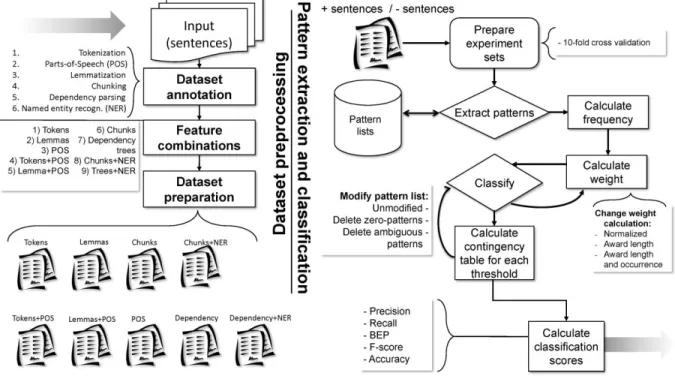
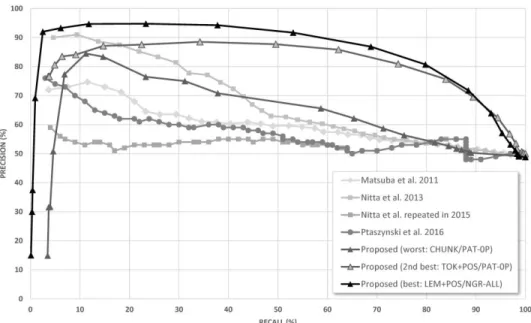
Figure 2. A Graphical Summary of the Whole Method.
3
Sentence Pattern Extortion
Method Description
In this section we explain all parts of the proposed method, step by step. At first, we describe general types of features we apply in this research and explain our feature extraction method. Next, we describe all methods of weight calculation for the applied features. Then, we present the applied classifiers. Finally, we describe the threshold optimization as a method to optimize the classifier performance. A graphical summary of the whole method is presented in Figure 2.
3.1
Sophistication of Language Model
Features applied in building a language model for classification can, in general, be viewed from two different points of view. First, the general sophistication of all features must be addressed. This applies to whether the applied features represent single words/tokens, or n-grams (sequences of tokens), or some other more sophisticated kinds of patterns. Second, a specific kind of information encoded in features needs to be recognized. For example, features can consist of words, but also of lemmas (undeclined dictionary form of words), parts of speech (POS), etc. Combinations of those types of information are also allowed. For example, it is possible to use combined features of words with POS, or lemmas with POS.Using lemmas with POS, being more related to the data set rather than to the method itself, will be explained further in Section 3.2 below. We first turn our attention to using combined features of words with POS, as this constitutes the core of the method.
The computationally simplest language model is called bag-of-words (BoW) (Harris, 1954). It considers a piece of text or document as an unordered collection of words, thus disregarding grammar and word order. Although recently a generalization of the BoW model has been proposed using semantic concepts instead of words (bag-of-concepts) (Cambria & Hussain 2012, Raymond et al. 2012) or an aspect-query model (Song, Huang, Bruza, & Lau, 2012), the general rule remains the same—namely, that the order of elements within the input, as well as longer strings of elements (e.g., phrases), are disregarded.
One important approach retaining the significance of word order is broadly called the n-gram approach. In terms of probabilistic theory, its basis was first formulated by Markov (1971). The n-gram approach perceives a given input (e.g., a sentence) as a set of n-long ordered subsequences of words. This allows matching the words while retaining the sentence word order. However, the n-gram approach, when applied to language, still allows only for simple sequence matching, disregarding more sophisticated sentence structure.
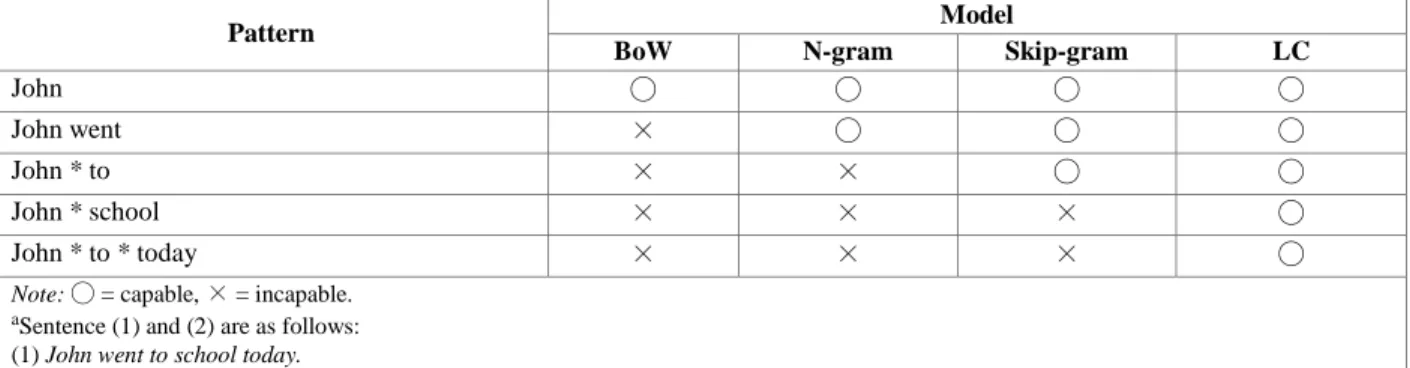
Table 2. Comparison of Capabilities of Different Language Models oo Capture Certain Patterns from a Hypothetical Corpus Consisting of Two Sentences, (1) and (2)a
Pattern Model
BoW N-gram Skip-gram LC
John ◯ ◯ ◯ ◯
John went × ◯ ◯ ◯
John * to × × ◯ ◯
John * school × × × ◯
John * to * today × × × ◯
Note: ◯ = capable, × = incapable. aSentence (1) and (2) are as follows: (1) John went to school today.
(2) John went to this awful place many people tend to generously call school today.
An example of such a sophisticated pattern can be explained as follows. The following sentence (in Japanese) Kyō wa nante kimochi ii hi nanda ! (What a pleasant day it is today!) contains a common and widely studied language pattern nante * nanda !10 Similar cases can be easily found in other languages; for instance, in English, the exclamative sentence “Oh, she is so pretty, isn’t she?” contains a pattern “Oh * is so * isn’t *?,” which is a typical example of a wh -exclamative sentence pattern (Beijer, 2002, Potts & Schwarz, 2008). The existence of such patterns in language is common and well recognized. However, it is not possible to discover them using an n-gram approach.
An example of a language model that aims to go beyond BoW and n-grams is the skip-gram model (sometimes also called skipped gram or distanced n-gram). It assumes that some words within an n-gram might not be adjacent, that they are skipped over. In theory, this should allow extraction of most of frequent language patterns from a corpus. However, there are some major drawbacks in research studying skip-gram modeling. These include, for example, assuming that a skip can appear only in one place (Huang, Alleva, Hon, Hwang, & Rosenfeld, 1992). The above-mentioned English sentence example clearly indicates that frequent and easily recognizable language patterns can consist of elements appearing variously at the beginning of a sentence, in the middle of a sentence, or at the end of the sentence, depending on the situation. Multiple gaps between them are also common, and these are not covered by the skip-gram language model.
10 Equivalent to wh-exclamatives in English (Sasai 2006, Beijer 2002); asterisk “*” used as a marker of disjointed elements.
11 In this research “frequent pattern” means a combination occurring in a corpus at least twice. This differs from the traditional approach to building BoW language models, where all extracted words are generally used, even if their occurrence is equal to 1 because single words usually do not have high occurrence rates and most of such cases are rare. Therefore,
Moreover, the number of skipped elements is recorded for each gap. For example, a 2-skip-3-gram can only allow 2 skips (omitting two words) between the elements, which means that the model considers as different patterns two cases in which the first gap has 2 skips and the second has 5 skips. Since the model assumes full control of the skip-length, the 2-skip-3-gram and 5-skip-3-2-skip-3-gram consisting of the same elements (words) are represented as different entities and can never refer to the same pattern in a corpus. This assumption is unrealistic, since one can easily imagine that the same pattern, appearing in two sentences of different lengths, will be separated by gaps of different sizes. To illustrate this problem, in Table 2 we compare which of the above-mentioned language models are capable of discovering particular patterns present in the two sentences below. The last column on the right represents the capability of the language model based on the idea of language combinatorics (LC), applied in this research.
(1) John went to school today.
(2) John went to this awful place many people tend to generously call school today. The language modeling method discussed in this paper is capable of dealing with any of the sophisticated patterns. This is due to the fact that we define sentence pattern as any ordered nonrepeated frequently occurring combination of sentence elements. This definition allows extraction of all possible frequent11 meaningful linguistic patterns from unrestricted text.
not using all words, or using only those with occurrence = 2 or higher, could significantly decrease the Recall rate in the classification process (not many features would be found). With sophisticated patterns, however, words are extracted in large numbers and using all of them would make the classification process inefficient. By using the above cut-off rate, we conform to the general definition of “a pattern” (as something that appears “at least twice”), eliminate the least useful patterns, and retain those which appear most often.
3.2
Feature Extraction with Language
Combinatorics
To extract the patterns of cyberbullying messages we first applied the idea of language combinatorics (Ptaszynski et al. 2011). This idea assumes that linguistic entities such as sentences can be perceived as bundles of ordered nonrepeated combinations of elements (words, punctuation marks, etc.). Furthermore, the most frequent combinations appearing in many different sentences can be defined as sentence patterns.
We assumed that for the task of cyberbullying detection, where actual harmful meaning is often hidden and indirect, applying sophisticated patterns with disjointed elements should provide better results than the usual bag-of-words or n-gram approach. As long as patterns are defined as ordered combinations of sentence elements, they could be automatically extracted by generating all ordered combinations of sentence elements, verifying their occurrences within a corpus, and filtering out those combinations which appear only once.
Algorithms using such combinatorial approaches initially generate a massive number of combinations / potential answers to a given problem. This is the reason they are sometimes called brute-force search algorithms. The brute-force approach often faces the problem of exponential and rapid growth of function values during combinatorial manipulations. This phenomenon is known as combinatorial explosion (Krippendorff, 1986). Since this phenomenon often results in very long processing time, combinatorial approaches have been often disregarded. We assumed however, that combinatorial explosion can be dealt with on modern hardware to the extent needed in our research. Moreover, optimizing the combinatorial approach algorithm specifically to the problem requirements should shorten the processing time making it advantageous in the task of processing harmful language.
From the fact that the method first extracts all possible patterns from a sentence with a brute-force-inspired algorithm, we call the method pattern extortion, to distinguish it from typical pattern extraction methods based on n-grams or single tokens.
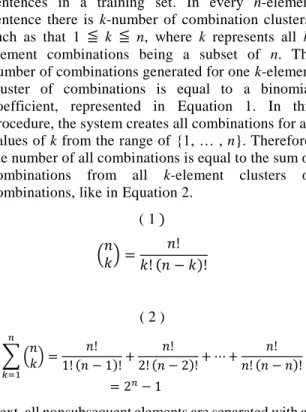
In particular, this method, first, orders nonrepeated combinations generated from all elements of all input sentences in a training set. In every n-element sentence there is k-number of combination clusters, such as that 1 ≦ k ≦ n, where k represents all k -element combinations being a subset of n. The number of combinations generated for one k-element cluster of combinations is equal to a binomial coefficient, represented in Equation 1. In this procedure, the system creates all combinations for all values of k from the range of {1, … , n}. Therefore, the number of all combinations is equal to the sum of combinations from all k-element clusters of combinations, like in Equation 2.
( 1 ) (𝑛𝑘) = 𝑛! 𝑘! (𝑛 − 𝑘)! ( 2 ) ∑ (𝑛𝑘) 𝑛 𝑘=1 = 𝑛! 1! (𝑛 − 1)!+ 𝑛! 2! (𝑛 − 2)!+ ⋯ + 𝑛! 𝑛! (𝑛 − 𝑛)! = 2𝑛− 1
Next, all nonsubsequent elements are separated with an asterisk (“*”). All patterns generated this way are used to extract frequent patterns appearing in a given corpus. Exact examples of patterns created from one sentence are represented in Figure 3.
For comparison, we also applied more traditional n-gram and BoW-based language models. In a classification experiment we used BoW for traditional classifiers applied in previous research, and n-grams and sophisticated patterns for the proposed classifier. It was not possible to apply sophisticated patterns in traditional classifiers such as SVMs because of an incomparably large number of patterns generated by the proposed methods, as compared to only single words in BoW model. Consequently, great amounts of computational power would be required, making the method unpractical and inefficient, especially since the exact patterns influencing the results would still not be accessible with SVMs and other classifiers.
Example: What a nice day !
5-el. pattern: 4-el. pattern: 3-el. pattern: 2-el. pattern: 1-el. pattern:
What a nice day ! What a nice * ! a nice * ! What a What
What a nice day * What a nice What * ! a
What a * day ! What a * ! nice * ! nice
… … … …
no. of patterns: (1) (5) (10) (10) (5)
3.3
Weight Calculation
After combinatorial patterns are extracted, their occurrences O are calculated separately for the positive side (positive, meaning “harmful”) Opos and the negative side (negative, meaning “nonharmful”) side Oneg. The occurrences of each pattern j are further used to calculate normalized pattern weight wj according to Equation 3, which is a simplified sigmoid function normalizing the weight score between 1 (completely harmful) and -1 (completely nonharmful).
( 3 )
𝑤𝑗= (
𝑂𝑝𝑜𝑠 𝑂𝑝𝑜𝑠+ 𝑂𝑛𝑒𝑔
− 0.5) ∗ 2
The weight can be calculated in several ways. Two features are important in weight calculation. A pattern is more representative for a corpus when it is, first, longer (length k) and, second, appears frequently in the corpus (occurrence O). Thus, the weight can be modified by
• awarding length (LA) by multiplying normalized weight wj by pattern length kj , which provides a weight with awarded length wLA, like in Equation 4, or
• awarding length and occurrence (LOA) by multiplying normalized weight wj by pattern length kj and overall pattern occurrence (Opos +Oneg), which provides a weight with awarded length and occurrence wLOA, like in Equation 5.
( 4 ) 𝑤𝐿𝐴= 𝑤𝑗∗ 𝑘𝑗
( 5 )
𝑤𝐿𝑂𝐴= 𝑤𝑗∗ 𝑘𝑗∗ (𝑂𝑝𝑜𝑠+ 𝑂𝑛𝑒𝑔)
The list of frequent patterns generated in the process of pattern generation and extraction can be also further modified. When two collections of sentences of opposite features (such as “positive vs. negative” or “harmful vs. nonharmful”) are compared, a generated list of patterns will contain patterns that appear uniquely on only one side (e.g., uniquely positive 12 By ambiguous patterns we mean those patterns that appear on both the harmful side and the nonharmful side. If a pattern appears on both sides it is ambiguous (more ambiguous, or less ambiguous depending on the score) whether it is harmful or nonharmful and its normalized weight is in the range of 0.99(9) to -0.99(9). Moreover, if an ambiguous pattern appears on both sides in the same occurrence, then its weight is equal 0, and is thus called a zero-pattern.
13 We also performed the classification with the use of skip-grams. Unfortunately, skip-grams failed completely. Due to
patterns and uniquely negative patterns) or on both sides (i.e., ambiguous patterns). Therefore, the pattern list can be further modified by
• erasing all ambiguous patterns12 (AMB), or • erasing only ambiguous patterns which appear
in the same number on both sides (“zero- patterns,” or 0P).
Moreover, a list of patterns will contain both the sophisticated patterns (with disjointed elements) as well as more common n-grams. Therefore, the experiments on the proposed method were performed with both
• patterns (PAT), and • n-grams (NGR) only.13
For the model based on BoW, we also applied a traditional weight calculation scheme—namely, term frequency divided by document frequency (tf*idf). Term frequency tf(t,d) refers here to the traditional raw frequency, meaning the number of times a term t (word, token) occurs in a document d. Inverse document frequency idf(t,D) is the logarithm of the total number of documents |D| in the corpus divided by the number of documents containing the term nt , as in Equation 6.
( 6 )
𝑖𝑑𝑓(𝑡, 𝐷) = 𝑙𝑜𝑔|𝐷|
𝑛𝑡
Finally, tf*idf refers to term frequency divided by document frequency or, in other words, multiplied by inverse document frequency.
3.4
Classification
The proposed classifier is a function defined as a sum of weights of patterns found in the sentence, like in Equation 7.
( 7 )
score = ∑ 𝑤𝑗, (1 ≥ 𝑤𝑗≥ −1)
It produces a harmfulness score for each analyzed sentence. The score alone does not yet specify whether a sentence can be considered harmful or not; however,
their construction, according to which even almost identical patterns are considered as completely different if the number of skips is different, or the length is different, skip-grams need a very large data set to collect enough even somewhat frequent features (actual skip-gram instances). With our assumption that a pattern is “something that appears at least twice in a corpus,” there were no skip-grams available to be used in classification.
a good guess is that the more above zero the score, the more harmful patterns it contains or, to put it more clearly, the more it resembles a style of writing usually found in cyberbullying. On the other hand, the more below zero the score, the more it resembles a nonharmful way of writing. However, this instinctive rule of thumb, with zero as a universal threshold, does not apply to pattern-based methods, since even a one-word difference in a sentence can produce a much larger number of patterns on one of the sides (harmful or nonharmful), thus causing an imbalance in the data. Therefore, we also performed a threshold optimization to specify which threshold should be used for the applied data.
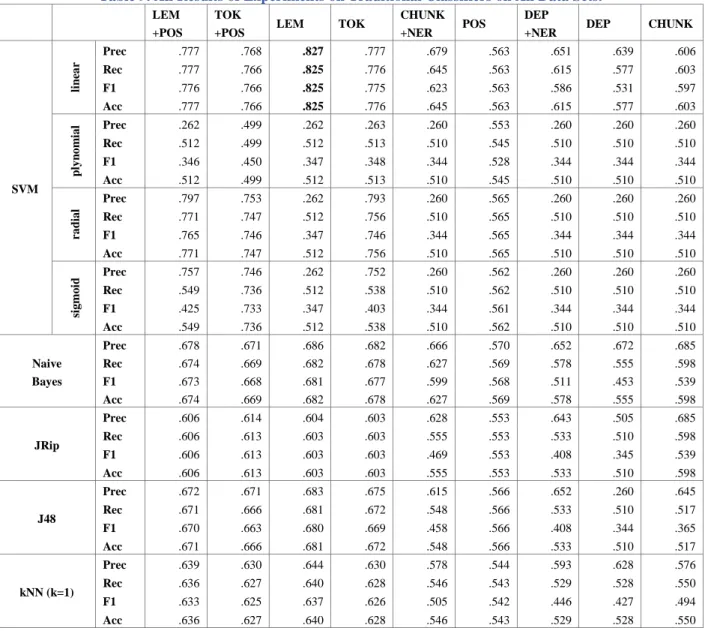
Apart from the above, for the classification we also used other methods based on various classifiers for comparison, such as SVM, Naive Bayes, JRip, J48, or kNN, applied previously in other research (Ptaszynski et al., 2010; Sood et al., 2012; Dinakar et al., 2012; Sarna & Bhatia, 2017; Marathe & Shirsat, 2015), and SO-PMI-IR, which has also frequently been applied in previous research (Matsuba et al., 2011; Nitta et al., 2013; Ptaszynski et al., 2016).
3.5
Threshold Optimization and Heuristic
Rules
If the initial collection of sentences is biased toward one of the sides (e.g., more sentences of one kind, or the sentences were longer, etc.), there will be significantly more patterns of a certain kind. Thus, to avoid bias in the results, instead of applying a static rule of thumb, the threshold was optimized automatically.
All the above settings were automatically verified in the process of evaluation, based on 10-fold cross- validation, in order to choose the best model. The training in 10-fold cross-validation was done separately for each fold. Namely, the training was performed ten times, each time on different data parts and with test data completely unrelated to the training data. The metrics used in evaluation were standard: Precision (P), Recall (R), balanced F-score (F), and Accuracy (A). These scores were calculated for every threshold and compared to choose the optimal model. Finally, to deal with the combinatorial explosion mentioned at the beginning of this section we applied two heuristic rules. In the preliminary experiments we found that the most valuable (frequently appearing) patterns in language are up to six elements long. Thus, we limited the scope of pattern extraction to
k
≤
6. As
such, the procedure of pattern generation (1) generates up to six element-patterns, or (2) terminates at the point where no frequent patterns were found.14 http://www.pref.mie.lg.jp/jinkenc/hp/
4
Evaluation Experiment
4.1
Data Set
We first needed to prepare a data set. We used the data set created originally by Matsuba, Masui, Kawai, Isu (2010) and developed further by Matsuba et al. (2011). The data set was also used by Ptaszynski et al. (2010), Nitta et al. (2013), and recently by Ptaszynski et al. (2016). It contains 1,490 harmful and 1,508 nonharmful entries. The original data were provided by the Human Rights Research Institute Against All Forms for Discrimination and Racism in Mie Prefecture, Japan14 and contains data from unofficial school websites and forums. The harmful and nonharmful sentences were manually labeled by Internet Patrol members according to official instructions included in the MEXT manual for dealing with cyberbullying (MEXT 2008). Some of these instructions are briefly summarized below.
The MEXT definition assumes that cyberbullying happens when a person is personally offended online. This may include disclosing the person’s name, personal information, and other details related to privacy concerns. Therefore, as the first feature distinguishable for cyberbullying, MEXT defines private names. This includes information such as:
• Private names and surnames (e.g. “Michal Ptaszynski”),
◦ When a person’s name can be clearly distinguished
• Initials and nicknames (e.g. “Mr. P.”, “Mi*al Ptasz*ski”)
◦ When a person’s identity can be clearly distinguished
◦ When a person’s identity cannot be clearly distinguished
• Names of institutions and affiliations (e.g. “That foreigner professor from Kitami Institute of Technology”)
◦ When a person’s identity can be clearly distinguished
◦ When a person’s identity cannot be clearly distinguished
As the second feature distinguishable for cyberbullying, MEXT defines any other type of personal information. This includes:
• Address, phone numbers, etc. (e.g. “165 Koen-cho, Kitami, 090-8507, Japan”, or “+81-157-26-9327”)
◦ When the information refers to a private person
◦ When the information is public or refers to a public entity
• Questions about private persons
(e.g. “Who is that tall foreigner wandering around in the Computer Science Dept. hallways?”)
◦ Always considered undesirable and harmful, even if the object is described in a positive way, because such questions can lead to rumors. • Entries revealing personal information
(e.g. “I heard that guy is responsible for the new project.”).
◦ When a person’s identity can be clearly distinguished
◦ When a person’s identity cannot be clearly distinguished
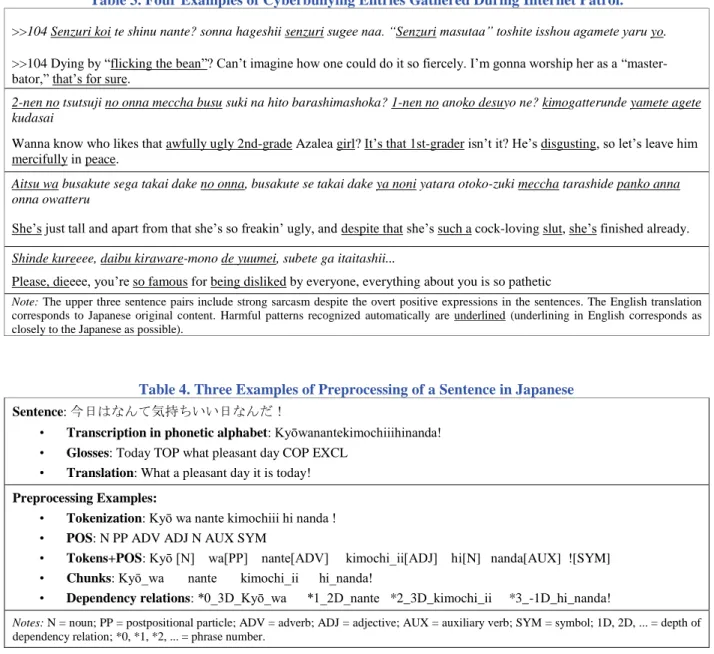
Furthermore, literature on cyberbullying indicates vulgarities as one of the most distinctive features of cyberbullying (Patchin & Hinduja 2006, Hinduja & Patchin 2009, Ptaszynski et al. 2010). Also, according to MEXT, vulgar language is often used in the context of cyberbullying due to its ability to convey offenses against particular individuals. Examples of such words in English are shit, fuck, and bitch. Examples in Japanese are uzai (freaking annoying) and kimoi (freaking ugly). In the prepared data set all entries containing any of the above information was classified as harmful. Some examples from the data set are represented in Table 3.
4.2
Data Set Preprocessing: Feature
Selection
The proposed method uses sentences separated into elements (words, tokens, etc.) as an input. In the transcription of Japanese (the applied data set language) spaces (e.g., between words) are not used as they would be in English, for example. Therefore, we needed to preprocess the data set and make the sentences separable into elements. We did this in several ways to determine how the preprocessing would influence the results. We used MeCab,15 a morphological analyzer for Japanese and CaboCha,16 a Japanese dependency structure analyzer, to preprocess the sentences from the data set in the following ways. • Tokenization: All words, punctuation marks,
etc. are separated by spaces (TOK).
15 http://taku910.github.io/mecab/
• Lemmatization: As above, but words are represented in their generic (dictionary) forms, or “lemmas” (LEM).
• Parts of speech: Words are replaced with their representative parts of speech (POS).
• Tokens with POS: Both words and POS information are included in one element (TOK+POS).
• Lemmas with POS: As above but with lemmas instead of words (LEM+POS).
• Chunks: Larger subparts of sentences divided by grammatical cluster—e.g., noun phrase, verb phrase, predicate, etc.—but without dependency relations (CHUNK).
• Dependency structure: As above, but with information regarding how a chunk relates to the previous chunk, the following chunk, and to other chunks (DEP).
• Chunks with named entities: Chunks with added information on what named entities (private name of a person, organization, numbers, etc.) appear in the sentence. The information is provided by the dependency structure analyzer (CHUNK+NER).
• Dependency structure with named entities: Both dependency relations and named entities are provided (DEP+NER).
Feature extraction from sentences is performed automatically, according to procedures explained in Section 3.2. Next, the language model is generated automatically using the extracted features. In this context, the data set preprocessing methods represented above can be understood as a feature selection preset for the experiment.
Five examples of preprocessing are represented in Table 4. Theoretically, the more generalized a sentence is, the less unique patterns it will produce, but the produced patterns will be more frequent. This can be explained by comparing a tokenized sentence with its POS representation. For example, in the sentence from Table 4 we can see that a simple phrase kimochi_ii hi (“pleasant day”) is represented by a POS pattern as ADJ N. We can easily assume that there will be more ADJ N patterns than kimochi_ii hi, because many word combinations can be represented by this POS pattern. On the other hand, there are more words in the dictionary than POS labels. Therefore, POS patterns will be less varied but will occur more frequently. By comparing the results of the classification using different preprocessing methods, we can find out whether it is better to represent sentences as more generalized or as more specific.