Exploring Stakeholder Coherence in an Effective Talent
Identification and Development
Environment.
by
Anne Pankhurst
A thesis submitted in partial fulfilment for the requirements for the degree of Doctor of Philosophy at the University of Central Lancashire
i
University of Central Lancashire
STUDENT DECLARATION FORM
Concurrent registration for two or more academic awardsI declare that while registered as a candidate for the research degree, I have not been a registered candidate or enrolled student for another award of the University or other academic or professional institution
Material submitted for another award
I declare that no material contained in the thesis has been used in any other submission for an academic award and is solely my own work
Signature of Candidate
Type of Award Doctor of Philosophy at the University of Central Lancashire
ii ABSTRACT
The research in Talent Identification and Development (TID) in sport comprises a wide literature that is categorised into five key constructs in the second study of this thesis. The fifth construct concerns the role that the stakeholders (the sport organisation, coaches and parents) have in athlete development. However, this construct has attracted less research attention, despite its obvious and important contribution to athlete success. The second study indicated low degrees of stakeholder understanding of all five constructs of TID and poor levels of coherence between them, (as described by their perception of each other’s views of the research constructs). Further investigation endorsed this lack of coherence, and suggested specific areas of knowledge that would be helpful for coaches and parents in particular. There were very apparent perceptual differences between what parents wanted to know and what coaches thought they should know. Subsequently, testing the impact of parent workshops gave a clear indication that such an intervention could increase understanding of the key issues of athlete development and lead to improvement in coach-parent relationships. The different studies were based primarily in the UK and in one sport, but cultural differences suggest that the findings of this thesis may not pertain to other sports and nations. To this end, the final study compared TID systems and coach-parent coherence in three different cultures. Very few significant differences existed either in each nation’s TID process or in coach-parent coherence, suggesting a substantial influence of sporting over national culture. The conclusion is that the many and consistent outcomes of TID research are largely ignored by sport systems. Where TID processes are put in place for junior athletes by sport systems, they appear to contribute to low levels of coherence between the stakeholders and to the lack of success, as adults, of selected junior athletes.
iii TABLE OF CONTENTS Page Title Page Student Declaration i Abstract ii Table of Contents iii Tables and Figures viii Appendices x Acknowledgements xi
Abbreviations xii
Chapter 1 Introduction 1
Chapter 2 Talent Identification and Development: the Need for Coherence between Research, System and Process 5
2.1. Construct 1 Sport Specialisation and Selection 6
2.1.1. Sport Specialisation 6
2.1.2. Selection 8
2.2. Construct 2 Practice 11 2.3. Construct 3 Athlete Development 14 2.4. Construct 4 Junior and Adult Success 17 2.5. Construct 5 The Role of the Stakeholders 20 2.6. Moving Forward 24
Chapter 3 Talent Identification and Development: linking the Stakeholders to the Process 27
3.1. Method 29
3.1.1. Participants 29
3.1.2. Instrumentation 30
iv
3.1.4. Data Analysis 34
3.2. Results 34
3.2.1. The Extent to Which Stakeholder Perceptions Relate to Research 34
3.2.2. The Coherence of Stakeholders’ Perceptions 35
3.2.3. The Extent to Which Stakeholders accurately Understand What Others Think 36
3.2.4. Coach Perceptions of the TID Supported View 37
3.2.5. Parent Perceptions of the TID Supported View 38
3.2.6. NGB Perceptions of the TID Supported View 39
3.3. Discussion 41 3.4. Moving Forward 45
Chapter 4 “Why they think what they think”: Tracking the Origin and Impact of Stakeholder Perceptions in Junior Performance Tennis 47
4.1. Method 49 4.1.1. Participants 49 4.1.2. Interview Guide 49 4.1.3. Procedure 50 4.1.4. Data Analysis 50 4.1.5. Establishing Trustworthiness 51 4.2. Results 52 4.2.1. Category (Objective) 1: The sources that inform and affect stakeholder practice and understanding of TID 52
4.2.2. Category (Objective) 2: The consequences that different
perceptions of TID have on the behaviour of the stakeholders 58 4.2.3. Category (Objective 3): The specific information needed
v
to improve the coherence of stakeholder perception and
understanding of TID 63
4.3. Discussion 67
4.4. Moving Forward 72
Chapter 5 Talent Identification and Development in Junior Performance Tennis: a Strategy to Support the Parent Role 75
5.1. Method 78
5.1.1. Participants 78
5.1.2. Instrumentation 79
5.1.2.1. Objective 1: Assessing coach perceptions in non- workshop HPC’S of issues raised by parents in relation to
their child’s tennis 79
5.1.3. Procedure 79
5.1.3.1. Objective 2: Assessing post workshop outcomes for
parents 80
5.1.3.2. Objective 3: Assessing coach perceptions post workshop 80
5.2. Results 81
5.2.1. Objective 1: Assessing coach perceptions in non- workshop HPC’S of issues raised by parents in relation to
their child’s tennis 81
5.2.2. Objective 2: Assessing post workshop outcomes for
parents 82
5.2.3. Objective 3: Assessing coach perceptions post workshop 84
5.3. Discussion 87
5.3.1. Objective 1: Assessing coach perceptions in non-workshop HPC’S of issues raised by parents in relation to their child’s
vi
tennis 87
5.3.2. Objective 2: Assessing post workshop outcomes for parents 88 5.3.3. Objective 3: Assessing coach perceptions post workshop 90 5.4. Moving Forward 92
Chapter 6 A Comparison of Talent Systems and Coach Perceptions in the UK, USA and China 94 6.1. National Systems 95 6.2. Method 99 6.2.1. Participants 99 6.2.2. Procedure 100 6.2.3. Data Analysis 101 6.3. Results 101 6.4. Discussion 104 6.5. Moving Forward 107
Chapter 7 Delivering Best Practice in Talent Identification and Development 109
7.1. The Key Issues from the Thesis 109
7.2. Best Practice in TID 112
7.2.1. Best Practice for TID Researchers 114
7.2.2. Best Practice for the Stakeholders 116
7.2.2.1. Construct 1: Sport Specialisation and Selection 117
7.2.2.2. Construct 2: Practice 117
7.2.2.3. Construct 3: Athlete Development 120
7.2.2.4. Construct 4: Junior and Adult Success 120
7.2.2.5. Construct 5: The Role of the Stakeholders 123
7.3. The Impact of Change 123
vii
References 130
Appendix A Figure 3.2. Talent Identification and Development in Tennis Questionnaire 146
Appendix B Form 4.1. Interview Guide 156
Appendix C Form 5.1. Issues raised by Parents of Performance Players inRelation to Their Child’s Tennis 159
Appendix D Form 5.2. Post Parent Workshop Questionnaire 164
Appendix E Peer Reviewed Publications 165
viii
TABLES AND FIGURES
Page
Figure 3.1. Constructs and Questionnaire Examples 33
Table 3.1. Descriptive Data and Results of Analysis for Differences in Perceptions Within Groups 35
Table 3.2. Descriptive Data and Results of Analysis for Differences in Perceptions Between Groups 37
Table 3.3. Interpretation of Results 40
Table 4.1. Results of Content Analysis 52
Table 4.2. Statements from the Five TID Constructs Questionnaire 59
Table 4.3. Three Statements from the TID Constructs Questionnaire 64
Table 5.1. Mean and (Standard Deviations) of Coach Ratings of Issues raised by Parents within Different Constructs under the Three Benchmarks 81
Table 5.2. How much of the Information in the Workshop was New to You? 82
Table 5.3. How much of the Information will be Useful to You? 82
Table 5.4: What were the Most Useful Topics to You and Why? 83
Table 5.5. What are the Sources of Information You Currently use to Help You Understand and Support your Child’s Tennis? 83
Table 5.6. Is There any Topic You Think Should Have Been Included, but was Missing? 84
Table 5.7. When would You Find this Workshop to be Most Useful? 84
Table 5.8. How much of the Information in the Workshop do You Think was New to the Parents? 84
Table 5.9. How much of the Information do You Think was Useful to the Parents? 85
ix
Table 5.10. What do You Think were the Most Useful Topics for the Parents
and Why? 85
Table 5.11. What do You Think are the Current Sources of Information that Parents use to help them Understand and Support their Child’s Tennis? 85
Table 5.12. When in Their Child’s Tennis Career do You Think Parents Thought this Workshop would be Useful? 85
Table 6.1. Means (and Standard Deviations) for Benchmark Ratings for each Nation 101
Table 6.2. Means and Standard Deviations for Benchmark Ratings Collapsed Across Nations 102
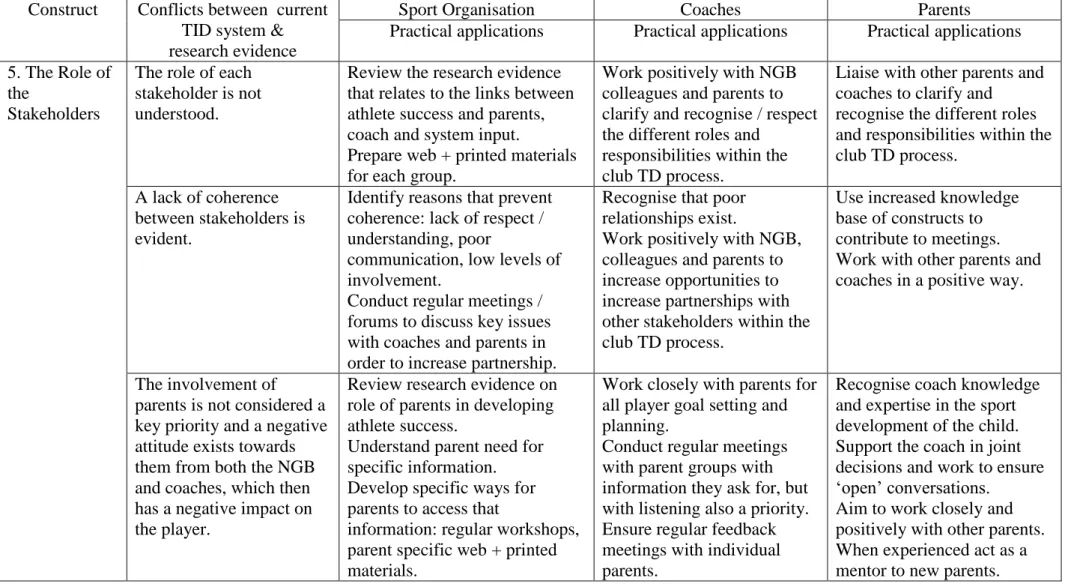
Table 7.1. Best Practice in TID: Construct 1The Role of the Stakeholders 118
Table 7.2. Best Practice in TID: Construct 2 Practice 119
Table 7.3. Best Practice in TID: Construct 3 Athlete Development 121
Table 7.4. Best Practice in TID: Construct 4 Junior and Adult Success 122
x
APPENDICES
Page
Appendix A
Figure 3.2. Talent Identification and Development in TennisQuestionnaire 145 Appendix B
Form 4.1. Interview Guide 154
Appendix C
Form 5.1. Issues raised by Parents of Performance Players inRelation to
Their Child’s Tennis 158
Appendix D
Form 5.2. Post Parent Workshop Questionnaire 163 Appendix E
Peer Reviewed Publications 164
Appendix F
xi
ACKNOWLEDGEMENTS
I would like to thank Professor Dave Collins for the endless support, advice, encouragement and apparent belief he has given me in the preparation of this thesis. It has been a very stimulating, educational and enjoyable process and experience thanks to
him.
Dr. Áine MacNamarahas been unfailing in her role as my supervisor and I am very grateful to her for all her help and support.
Dr. Andrew Cruickshank was kind enough to give advice on the (almost) final manuscript and for that I thank him.
My thanks are also due to the many coaches in different parts of the world and parents in the UK who voluntarily and willingly gave up so much of their time to answer questionnaires, attend interviews and workshops and give me their opinions: they contributed so much to the thesis and taught me a great deal at the same time. I am very
grateful to every one of them.
The whole project would have been impossible to manage and see through without the three most important men in my life: my husband Roy and our two sons, James (with Louise and Evie) and Jonathan. Their love, support, patience and encouragement was
xii
ABBREVIATIONS
ANOVA Analysis of variance
CTA China Tennis Association
DP Deliberate practice
GB Great Britain
HPC High Performance Centre
ITF International Tennis Federation
LTA Lawn Tennis Association
MANOVA Multivariate analysis of variance
NASPE National Association for Sport and Physical Education
NGB National Governing Body
PPDM Progressive Player Development Model
PTR Professional Tennis Registry
RAE Relative Age Effect
RFL Rugby Football League
RFU Rugby Football Union
TI Talent Identification
TD Talent Development
TID Talent Identification and Development
TOYA Training of Young Athletes
UK United Kingdom
USA United States of America
USOC United States Olympic Committee
USTA PD United States Tennis Association Player Development
1
Chapter 1 INTRODUCTION
Talent Identification and Development (TID) in sport is a subject of considerable interest for researchers, practitioners, popular authors and the public. In the United Kingdom (UK), media attention for the 2012 London Olympics and Paralympics raised public perception of talent and its outcomes. Popular texts have entered the “best seller” lists (for example, Coyle, 2009; Syed, 2010), while large financial sums (for example, approximately 10% of each sport’s World Class budget), together with 15% of UK Sport’s central funding, is allocated to athlete development (UK Sport, 2012). Highly publicised programmes, such as the "Pitch to Podium" and "Sporting Giants" initiatives (De Bosscher & van Battenburg, 2013; UK Sport, 2008), have focussed on talent transfer and/or recruitment. Although all of these responses are specific to the UK, they also, significantly, reflect a worldwide trend (cf. Vaeyens, Lenoir, Williams, & Philippaerts, 2008).
Many different sport organisations, including National Governing Bodies of Sport (NGB’s) whose role is primarily to manage and grow a sport, are concerned with aspects of TID. Further, there are clear indications that some of them (for example, soccer academies in the UK, Spain, and South America; British Swimming; British Cycling; Major League Baseball clubs recruiting in Central America and tennis federations in the UK, United States, China and Canada) begin their search for talent by selecting children as young as six for sport-specific development programmes. Twelve year old tennis players in different countries have contracts with sports management companies, while the international signing of a seven year old by Real Madrid Football Club set a new benchmark in early identification and selection of talent (Plaschke, 2011).
2
application of TID systems to young athletes, with the objective of recommending best practice for the future. Accordingly, it will examine the extent to which the actions of different sport organisations in the TID context represent a reaction to previous experience or opportunity, or are a constructed and logically grounded process that benefits both the sport and the athlete. It will consider how evidence-based and consistent current systems and processes are in TID, by investigating the extent to which there is consistency and coherence between research, current systems, and practice.
The thesis begins with a review of the research, before considering how current systems "fit" into the evidence base presented by this literature. It then examines how the actions, perceptions, relationships, and knowledge bases of those involved in practice in an exemplar sport (tennis) equate to the research evidence, before making recommendations for future practice.
Chapter 2 is therefore both a review of the TID research literature and a consideration of its scope. The review suggests a recurrence of five main constructs, each of which has a number of sub themes. The fifth construct (The Role of the Stakeholders) defines the role of key personnel involved in TID practice with young athletes. These are the system itself (defined as the NGB or sport organisation), the coaches, and the parents. This construct appears to have attracted a lower level of research, despite the necessity for knowledge by the stakeholders in the TID process. Further, this knowledge would seem to be an important requirement for best practice.
As a consequence, Chapter 3 is a quantitative study that investigates the degree to which parents, coaches, and NGB staff understand and have knowledge of the five constructs. To help determine this, the chapter includes an investigation of the perceptions that each stakeholder has about the other stakeholders’ understanding of the constructs. Personal experience led me to conduct the study in the sport of tennis
3
and, in particular, in junior performance tennis. The chapter notes different levels of understanding of the key issues in the five constructs by each of the stakeholders in tennis. Perhaps more significantly, in terms of the stakeholders’ role in future athlete success, the data also indicate a lack of coherence between the stakeholders’ perceptions of each other’s understanding and knowledge.
These different perceptions of the constructs of TID, and especially the differences between coaches and parents, required more information to understand the reasons underpinning them before procedures that could bring parents and coaches closer together could be developed. Chapter 4 is therefore a qualitative study, intended to generate the specific coach and parent concerns; first about their understanding of the five constructs underpinning TID, and secondly about their own role in the TID process. The outcomes of this chapter demonstrate that neither party considers that they have the knowledge and information they need about TID or about working with each other.
As a consequence, the process of enabling parents to acquire more knowledge about TID, while simultaneously conducting a procedure (a parent workshop that only included what parents had indicated they wanted to know) to develop the quality of the parent–coach relationship, is described in Chapter 5. The benefit of the process was tested by working with coaches, some of whom worked in the same venues as the workshops.
The context of the studies undertaken to this point had only considered the TID process in one nation and in one sport. My interest was then to learn whether my conclusions about the stakeholder roles (as defined by the parent-coach relationships in the TID context), could be attributed to the national perspective of the UK or were part of a wider phenomenon. Accordingly, I accepted an opportunity to investigate the international perspective of TID and its impact on coach-parent understanding of
4
the process. Chapter 6 therefore describes the TID processes in three different nations, each of which has a different cultural and sport system base in an attempt to understand the impact this has on coach-parent coherence. It takes as its base point the issues identified by the UK parents as being those that every parent would need to know. The justification for this was that young athletes’ development in any nation (irrespective of culture or sport system) is an independent variable: every child progresses through the same growth and maturation processes, but not necessarily at the same age (Baxter-Jones & Sherar, 2007; Beunen & Malina, 2008; Malina, Bouchard & Bar-Or, 2004).
In concluding this thesis, the outcomes for each part of the study are reviewed first, followed by recommendations for future best practice in TID by all the stakeholders, with the objective of developing greater coherence between them and so increasing the potential for adult success by young athletes. The necessity for any changes in existing practice all link to the fact that current TID systems for young athletes are ineffective, are known to be so and impact on the quality of the relationships and coherence between the stakeholders. The possible outcomes of the recommending changes to current practice are discussed and suggestions made for future study.
5
Chapter 2
TALENT IDENTIFICATION AND DEVELOPMENT: THE NEED FOR COHERENCE BETWEEN RESEARCH, SYSTEM, AND PROCESS
In the Introduction it was noted that both public interest and the research literature in TID appears to be increasing. Therefore, to preface the work in this thesis, it seemed pertinent to first review the commonalities in the literature base in an attempt to identify and categorise recurring themes. Further, such a review enabled the extent of consistencies between research, current systems, and practice to be investigated. Accordingly, this chapter presents a synthesis of the research evidence from a broad spectrum, and highlights where current sport systems and practices suggest a mismatch with that evidence.
In attempting such a synthesis, I noted that talent (e.g., Durand-Bush & Salmela, 2001; Simonton, 1999) and the processes of TID (e.g., Abbott & Collins, 2004; Abbott, Collins & Martindale, 2002; Baker, Cobley & Schorer, 2012; Cote & Lidor, 2013) had been extensively researched in sport in western nations. However, commonalities in the research recurred regularly, leading me to suggest that five broad constructs (each with a number of sub themes) continued to engage researchers. These constructs were: Sport Specialisation and Selection, Practice, Athlete Development, Junior and Adult Success, and The Role of the Stakeholders (defined as the sport organisations themselves, coaches, and parents). Given their clear theoretical and applied relevance, I would contend that analysis of these constructs can provide a clearer picture of the degree to which consistency exists between TID research and practice, while offering both potential explanations and consequent actions for athlete success or failure. Further, areas for action can be highlighted to the sports and practitioners involved, while at the same time potentially reinforcing, or questioning, the stances taken in the literature.
6
2.1. CONSTRUCT 1: SPORT SPECIALISATION AND SELECTION 2.1.1. Sport Specialisation
Sport specialisation has received the attention of a number of researchers in TID. It links the age at which an athlete specialises in a single sport (for whatever reason) to the reality of early specialisation. The American Academy of Pediatrics (2000) defined early specialisation as young children training and competing at an advanced level in one sport throughout the year. The National Association for Sport and Physical Education (NASPE, 2010) agreed, describing (early) sport specialisation as the outcome of young athletes’ concentrating all practice and competitive time on a single sport, all year round.
The critical issue, however, is that while individual sports commonly pursue such practice, research overwhelmingly indicates it to be detrimental to the long term health and wellbeing of young athletes, citing drop out, injury, and burn out as key consequences (Fraser-Thomas, Côté, & Deakin, 2008; Gould, Tuffey, Udrey, & Loehr, 1996; Moore, 2013; Wall & Côté, 2007; Wiersma, 2000). Taking the competitive perspective, Bompa and Haff (2009) suggested that early specialisation results in early success which is not replicated at adult level. In short, early success is somewhat illusionary as an indicator, or even facilitator, of adult performance. As practical evidence, contrasting names in lists of junior and adult athletes in many sports evidences the lack of transition from junior to adult success (Moesch, Elbe, Hauge, & Wikman, 2011).
Clearly, early specialisation is an outcome of TID systems that require young athletes to concentrate on one sport from a very early age. The concept of early and late performance sports can also be linked to early or late specialisation. For example, while gymnastics is considered an early performance sport because best performances, especially for girls, often occur in the mid-teens (Warriner & Lavallee, 2010), distance
7
running is considered a late performance sport because quality performances occur in the mid to late twenties (cf. Côté, Baker, & Abernethy, 2007). Unfortunately, specialisation before puberty "blurs the edges" of the concept of early and late performance sports because young athletes often specialise early in the very sports that are considered to be late performance (Baker & Côté, 2006; Gulbin, Oldenziel, Weissensteiner, & Gagne, 2010).
The contradiction between policy/rhetoric and actual systems is particularly clear in this construct and can be illustrated with the example of progressive athlete development programmes in many sports (Bompa, 2000; Football Canada, 2009, USA Football, 2011; United States Tennis Association (USTA), 2006). These expound the value of young athletes taking part in a number of sports, at least until puberty. Yet even sports using such programmes often require young athletes to specialise.
For example, tennis organisations and football academies in the USA and the UK expound the value of fun, the playing of other sports, and general development until the age of 12, but then select players for sport-specific training on the basis of their ability to play and compete successfully by the ages of eight or nine. In contrast, Moesch et al. (2011) supported Bompa and Haff (2009) by indicating that, in many sports, it is later rather than earlier specialisation that leads to adult success. For example, in a major survey of almost 3,000 elite senior athletes in Germany, across a variety of sports, Gullich (2011) demonstrated that early specialisation was positively correlated with early success, but negatively with achievement at the adult level.
As a consequence, the use of early success (e.g., representation and medals at youth level) as a marker of the efficacy of TID programmes would seem flawed, especially when such programmes are specifically focused on senior elite achievement (UK Sport, 2012). Thus, in many respects it appears that the sport specialisation research outcomes and actual practice are diametrically opposed, in no small part
8
because the sports and associated organisations themselves display such dissonance by saying one thing and requiring another.
In this regard, Collins, et al. (2011) and Côté, Lidor, and Hackfort (2009) suggest that alternatives such as high quality participation programmes and sport sampling respectively have been ignored. Current TID processes and early sport specialisation appear to be the default factors!
2.1.2. Selection
As suggested above, sport specialisation is also concerned with the selection process that usually takes place in TI. Since selection presumes "talent" to exist, it would seem pertinent that an understanding of talent itself is required. In turn, this understanding links to research on the capacities (or abilities) needed in different sports. The concept that sports have both specific (Hodges, Starkes, & MacMahon, 2006; Simonton, 1999) and general capacities (Dweck, 2008; Gould & Dieffenbach, 2002) is well supported and i s obvious in practice. It appears, however, that when an individual exhibits a number of the required capacities (abilities) of a sport, he/she is considered talented. However, further research suggests that, unless the nature of talent itself is understood (Durand-Bush & Salmela, 2001), then actually identifying it is problematic. This is because talent itself may not be what is identified: maturity or even a higher level of skill from previous practice in similar tests may be.
Worryingly, evidence points to sports organisations identifying and selecting talent through "one-off" testing procedures for different capacities (for example, the Lawn Tennis Association (LTA), 2011). Furthermore, although many deployed tests a r e b a s e d on t h e capacities of successful adult performance (e.g., speed, endurance and agility), they are undertaken by pre-pubertal children. It would make more sense to determine how the capacities that actually exist in young athletes could themselves contribute to long term development. In support of this point, Bloom (1985) indicated
9
that the vast majority of adult competitive skills and abilities are not evident in young children: in fact, of the adult capacities, only mental characteristics appear to hold the potential for early (and eventual performance-positive) identification. Even here though, caution is needed; Jonker, Efferink-Gemser, and Visscher (2010) showed that while successful junior athletes can have the self-regulation and reflection skills of adults, these abilities are not easily identifiable.
A further point to note is that the requirements of a sport change over time, due to changes, for example, in rules (e.g., volleyball and hockey), equipment (e.g., tennis), athlete training methods, and improved physical abilities of sportsmen and women. However, it appears that TI can only select on the existing requirements of a sport. Moving forward, the concept of talent profiling that links an individual’s skills to the sport’s requirements suggests a development that could impact on the processes of TID at least for older athletes (UK Sport World Class Performance Programme, 2012).
Building on this complexity of issues, the literature cites further concerns about T I i t s el f . For example, Poppleton and Salmoni (1991) suggested that TI testing was essentially a screening device used to find the successful athletes of the future. Additionally, recent popular books on talent (Coyle, 2009; Gladwell, 2008; Syed, 2010), i n d i c at e (I suggest simplistically) that talent "comes" when the athlete practices hard and long enough, and/or is in the right place at the right time. Worryingly, such books are recommended to sports coaches as primary references on TID (Football Canada, 2009; LTA, 2011). As referenced earlier, the use of TI procedures by many sports organisations to recruit "talented" athletes aged ten or younger indicates that testing and selection thrives in the face of research to the contrary (Lidor & Ziv, 2013). Of further concern, Bloom (1985) recognised that, even with 11 and 12 year olds, experts (let alone tests) were less than 10% successful in predicting adult success. To compound the issue further, even in the selection of young adults,
10
reliance on "expert" opinion has been found wanting (Lewis, 2011). This leads to a different debate, outside the scope of this chapter, concerning the relative value of selection processes, expert opinion, or random chance as the best means of finding talent! On first sight at least, it would seem that the vast majority of sports and organisations tend towards selection rather than chance, as shown by the large budgets they invest in TI. The process of TI itself is complicated by exactly which tests/criteria are applied and how these are derived. This complication is made worse by the fact that selection is typically based on tests and/or early competitive success. Much research criticises the u s e o f o n e - o f f anthropometric (e.g., Abbott et al., 2002), technical and competitive testing (e.g., Martindale, Collins, & Daubney, 2005) to select those with talent. Such research also indicates that the key psycho-social capacities of adult successful performance are largely ignored in TI (Durand-Bush & Salmela, 2001; Van Yperen, 2009). Even worse, the role which these capacities play in the excellence pathway is also largely unacknowledged and certainly neither tested nor exploited (cf. MacNamara, Button, & Collins, 2010a; 2010b).
The consistency of test results is also crucial given the intention to select young athletes. In this context, Vaeyens et al. (2008) re-iterated an earlier discussion regarding the assessment of junior athletes against adult capacities and then assuming current ability will indicate future ability. In an additional twist, Abbott and Collins (2004) noted that, when tests are repeated, the same rank order of results is not replicated, indicating that such tests appear to lack the levels of validity and reliability which should surely be expected given their purpose.
S i g n i f i c a n t l y, t h e o u t c o m e s o f s e l e c t i o n h a v e o t h e r r a m i f i c a t i o n s . T h e s election of one young athlete is, by definition, deselection of another suggesting that TI is also counter-productive to policies of increasing, or even continuing participation (Collins et al., 2011; Baker, Cobley & Schorer, 2012). These
11
authors’ concern is that children will often leave a sport that de-selects them and maybe even quit sport altogether.
Research has also examined other sub-themes of this construct: notably, the role in athlete selection of previous experience, chronological age, and factors best described as luck and opportunity. In this regard, Malina et al. (2004, p. 626), observed that, “(previous) skill and physical characteristics may give a child an initial advantage in some sports”. They also pointed out that the performance of pre-pubertal and pubertal athletes of the same chronological age varies over even short periods of time, further explaining the lack of validity in comparing test results of different young athletes. These factors highlight major flaws in any selection process that ostensibly tests for talent in young, immature athletes.
TD frequently depends on athletes selected through TI, and the research concerns here are both as evident and just as complex as they are for TI. In classic studies within the TID domain, Bloom (1985) and Rowley (1992) both cited availability and accessibility of facilities, equipment, and financial resources as real issues for TD. Horton (2012) and Reid (2009) indicated that place of birth/residence impacts on the development of young athletes by presenting data that indicated advantages for young athletes who reside in smaller towns/cities and more rural communities. Further, Bloom (1985), Côté (1999), and Van Yperen (2009) all commented on the importance of the family environment, including parental support and sibling relationships. Unfortunately, there is little evidence that any of these factors are taken into account during TI, although research indicates they will impact heavily on TD and future success.
2.2. CONSTRUCT 2: PRACTICE
Of course, neither specialisation in a sport (early or late) nor talent can guarantee success. In an oft cited (but perhaps also oft misquoted and misapplied) study,
12
Ericsson, Krampe and Tesch-Romer (1993) indicated volume and intensity of practice to be essential to future success. The concept of deliberate practice (hereafter DP) as a highly structured, effortful, cognitively challenging, repetitive, and non-rewarding activity has pervaded both the popular science books and coaching itself. Only latterly has the thesis begun to come under criticism (Hambrick et al., 2013). However, in the context of developing young athletes, DP is, I suggest, at best aspirational and at worst, illogical. In addition, Ericsson et al.’s much re-iterated theory that 10 years or 10,000 hours of DP is essential for someone to reach high levels of expertise seems increasingly flawed. Consider, for example, the 18 month pathway from novice to world podium reported by Australian Bob Skeleton’s athletes (Bullock et al., 2009) or the development pathway of Thomas, the 2007 World high jump champion (Epstein, 2013). Bullock et al. also cited athletes who have achieved success without 10,000 hours or 10 years of practice and some who have achieved expert performance with as little as 3 years of training.
Another consideration is that, while many athletes actually complete or even exceed the requisite hours and years of DP, they do not achieve success! Furthermore, the uncritical, blanket application of the DP approach would seem particularly flawed with young children (Bompa, 2000); most specifically in terms of the age and stage at which DP becomes the main practice mode. Certainly, Moesch et al. (2011) indicated that, while DP is important close to adulthood, it has negative results in terms of longevity in a sport and eventual adult success when applied to younger athletes.
In this manner, DP is neither the whole answer to becoming a successful adult athlete, nor is it the form of practice suitable for young athletes. Common sense and research both suggest there should be other characteristics of practice with young athletes and with different sports. Balyi and Williams (2010), Bloom (1985), and Bompa and Haff (2009) all suggested that, at different ages, stages of maturation, and
13
ability to cope with practice schedules, young athletes need different types, volumes, and intensity of practice. Other researchers (e.g., Ford, Yates & Williams, 2010; Vickers, 2011) all cite the importance of different types of practice in different sports: for example, open skill sports and those that require decision making. Further to this point, Webb and Pearson (2008) noted the value of game based practice in sports where tactical understanding and decision making is important.
In similar fashion, but in a different context, Baker and Côté (2006) and Côté and Lidor (2013) indicated that deliberate play, unstructured play, and game- based practice in short time frames are likely to harmonise with young athletes’ psycho-social needs. The advantages of adding variety to the practice experience is also well documented and again questions the universality of the DP construct. Reflecting these concerns, Bompa and Haff (2009) designed practice schedules (volume and intensity) to fit the needs of specific (but chronological) ages. They also suggested changes in the ratio of practice to competition as athletes mature. In summary, research shows a plethora of factors should influence practice, not just an uncritical and total subscription to DP.
The purpose of practice at different ages is also important. Young athletes increasing in maturity require time to develop different skills. Bompa (2000) and Ward, Hodges, Starkes, and Williams (2007) considered it important to design practice to specifically improve performance and skills for young athletes, rather than simply add volume. Indeed, the breadth and depth of the skill-base to be acquired by young athletes is extensive: another reason why DP should be used sparingly.
Making practice effective at different stages of skill learning with young athletes is also important (Martindale and Mortimer, 2011). Classic research by Fitts and Posner (1967) and Schmidt (1975) into the stages and methods in which skills are learned is still pertinent in this context and is supported by Gentile (2000); all of which adds to the
14
complexity of the picture and mitigates against sole application of DP.
In summary, the research on practice in sport is clear: age and stage of athlete development are important considerations in determining the type, length, methods, and purpose of practice for young athletes. In reality while practical experience indicates that DP is the reality for all athletes at some stage, other forms of practice are more appropriate and necessary for young, maturing athletes.
2.3. CONSTRUCT 3: ATHLETE DEVELOPMENT
A t h l e t e d e v e l o p m e n t ( a n d i t s s u b - t h e m e s ) is primarily concerned with the impact on performance of the processes and outcomes of physical-mechanical a n d p s y c h o - s o c i a l growth, maturation, a n d d e v e l o p m e n t in young athletes. It links to research on age-appropriate coaching (Côté, Bruner, Erickson, Strachan, & Fraser-Thomas, 2010; Côté & Lidor, 2013) and appropriate coaching environments for young athletes (Martindale & Mortimer, 2011).
The impact of physical growth, maturation, and development in TID can be illustrated by further reference to TI testing. Abbott and C o l l i n s (2004) suggested that TI tests do not take differing rates of development in children into account; rather, they build on the "uneven playing field" between children and base long term decisions on short term "snapshot" tests. In yet another oversimplified application of basic research, while better scores often simply indicate a particular child to be more advanced and/or mature in that capacity at that time, such scores are, in reality, taken to mean that the child is more talented. To this point, Malina et al. (2004) showed that early maturing athletes should be expected to have better scores in tests of speed and strength. Further, the research on relative age effect (hereafter RAE) (e.g., Musch & Hay, 1999; also see later in Construct 4), indicates that children born at the beginning of a year are inevitably more mature than those born at the end. It also follows that the younger the children of the same chronological age, the greater the propensity for
15
differences between them and those who are relatively older.
Baxter-Jones and Sherar (2007), Beunen and Malina (2008), and Malina et al. (2004) have researched the outcomes of growth and maturation on young athletes: their information is neither new nor limited to athlete development. To further compound this issue, recent research on the age of maturation indicates a lowering of the age at which boys mature in different ethnic groups, African Americans mature earlier than white Caucasians, who correspondingly mature earlier than the Hispanic populations. This recent research adds to the previous and similar research on girls by the same medical research team, (Herman-Giddens et al., 2012). However, current practice indicates that such research is (again) at best misunderstood by sport organisations, parents, and coaches and, at worst, ignored.
The athlete development research therefore indicates that biological age is more important than the chronological age of a young athlete. Bloom (1985) and Bompa (2000) suggested coaches should always take account of biological age in order to develop an athlete’s physical and technical skills appropriately and successfully. Further, Balyi and Williams (2010) indicated that knowing the athlete’s biological age would enable coaches to deliver developmentally-appropriate training and competition. However, reality again shows that only the birth certificate (i.e., chronological) age is considered for tests and/or competition (LTA, 2011). The impact that coach education could have in addressing this issue is discussed later in this chapter.
Physical growth and maturation has its greatest impact on the physio-mechanical capacities of young athletes. Technical development is inevitably limited by physical development. As an example, pre-pubertal tennis players cannot fully employ the kinetic chain or rotational forces of stroke production (Lubbers & Pankhurst, 2006), yet coaches persist in trying to develop adult levels of such bio-mechanical abilities in young players.
16
Psycho-social d e v e l op m e nt follows a similar pattern to physical development (Wylleman & Lavallee, 2004). Research (e.g., MacNamara et al., 2010b) indicates that several psychological skills can be developed at different ages in immature young athletes. Perceived competence, commitment, confidence, self-reliance, and coping under pressure are essential for adult performance (MacNamara et al., 2010b; Weiss, Bhalla, & Price, 2008), and the development of these skills can begin in young athletes. Pertinently, however, Weiss et al. (2008) showed that sources and understanding of perceived competence change with, and are related to, age. Dweck’s (2008) "growth mindset" emphasised the necessity of developing determination and commitment if potential is to be realised. Similarly, Gould and Dieffenbach (2002) cited confidence, the ability to handle pressure, and courage as examples of capacities that contribute to performance; noting the need to develop these skills in line with age. Thus, catering for and augmenting the developmental process should be a central pillar of athlete development, indeed arguably of any educational system.
The role of the coach in this regard has attracted researchers’ attention. Côté et al. (2010) noted that coaches need different skills to meet the needs of young athletes at different stages of the performance pathway. Specifically, Weiss et al. (2008) showed coaches to be instrumental in enabling athletes to develop self-esteem and self-efficacy; in particular, by giving positive and specific feedback that does not focus on correcting errors. In yet another contrast with research outcomes, my experience indicates many coaches are primarily, and some even totally concerned with error detection and correction, but it is the coach education system that trains them to be so. Research by Martindale and Mortimer (2011) supported the notion that the environment created by coaches for young athletes is key, while Weiss et al. (2008) suggested that coaches must create optimal, attainable challenges for self-improvement if young athletes are to develop the perceived competence and motivation associated with success. This
17
research also highlights the importance of appropriate goal setting (defined as the age-appropriate number and type of goals and time frames) that meets the developmental needs of each athlete.
Unsurprisingly, these considerations also apply to the coach. For instance, Cassidy, Jones, and Potrac (2004) suggested that coaches who are able to continually question their own competence are more likely to deliver positive messages to young athletes and so create the positive environment that contributes to success.
The environment also includes other athletes and parents. On this point, research indicates the role and influence of the peer group on young athletes to be more or less important at different stages of development (Bruner, Eys & Turnnidge, 2013; Fraser-Thomas et al., 2008). Finally parents are the facilitators and creators of the wider environment that surrounds the developing athlete. Bloom (1985), Côté (1999), and Gould and Dieffenbach (2002) all indicated the significant role parents play in the development of successful athletes and, as such, they are a key stakeholder in the TID process. Research on their role is discussed at greater length in Construct 5 in this chapter.
2.4. CONSTRUCT 4: JUNIOR AND ADULT SUCCESS
Since the purpose of TID, at least as far as sports organisations are concerned, is to deliver world class and successful adult competitors, research on competitive success is also important in considering the TID process. It is important to note that, typically, adult and junior competitive systems and success have different characteristics. Most junior athletes compete within national junior competitive systems that are chronologically-based, normally with a two year age banding: a feature uncommon in adult competition. Junior competitive outcomes are, therefore, inevitably greatly influenced by the maturational and developmental stage of each athlete. Further, the literature on RAE highlights differences in success associated with the month of birth. The junior
18
competitive framework therefore takes no account of the skeletal or biological age of young athletes (Bompa, 2000)! However, despite this clear and systematic bias, competitive results are often part of the selection process (and thus early specialisation) for TID. Only a few sports (e.g., the Football Foundation: Lansley, 2011) seem able and willing to counteract the effects of relative age in their junior competitive systems.
The growth and maturation research illustrates how competitive success or failure is impacted by differences in maturation. Baxter-Jones (1995) concluded that juniors’ competitive success is a poor indicator of both talent and future performance. Indeed, the realities of junior competition are twofold: the majority of young athletes often perform inconsistently in competition as they progress through puberty, while early maturers have physical advantages over their peers that translate into (often temporary) success. So, basing selection on junior success is neither logical nor in any way consistent with research. Further, when the playing field levels out post-puberty, late maturers (if they are still in the sport) often catch up and overtake their peers, many times leading those with junior-level success to drop out! Little of this is new to researchers: Boaz (1912), citing Crampton and Rotch, recognised the problems of using chronological age to assess young people, yet it is still the basis of competition for young athletes in most sports.
The RAE research, while extensive and important in the junior competitive context (Cobley, Wattie, Baker, & McKenna, 2009; Edgar & O’Donoghue, 2005; Morris & Nevill, 2006; Musch & Grondin, 2001), also appears to be ignored. This is despite the fact that education systems have understood the outcomes for many years. Actual results are clear: athletes born in the first half of the sport year are far more likely to achieve competitive success than those born later. RAE thus adds further concern to the use of age group competitive results in TI and as a measure of success in evaluating TD. As noted, however, few organisations/systems (even the most innovative) seem
19
willing to address the downsides of this consistent and well-recognised factor. As such, while age group competition remains in junior sport, the impact of relative age will be an "elephant in the room".
National sports organisations are those best placed and able to ensure that competitive systems support the physical and psychological needs of different ages, stages, and abilities of athletes, but practical experience suggests they rarely do so. The default system for many is chronological age, although some recent change can be noted. In tennis, for example, 10 and under coaching takes account of the physio-mechanical abilities of the players with the use of smaller playing areas, modified equipment, and scoring systems. However, the psycho-social needs of 10 and under players during competition are not similarly considered (such a situation, but with a clearly orthogonal answer, also exists for pre-puberty and puberty athletes). This is a particular concern as, irrespective of age, young athletes have the same competitive stresses as senior athletes, but fewer coping skills against a much more powerful and censorious audience (i.e., adults!). Eklund and Gould (2008) highlighted that stress levels in young athletes in competition are raised by the expectations of NGBs, coaches, and parents. Further, NGBs with an over-concern for early competitive success also exhibit a gross misunderstanding of the psycho-social and coping skills of initially successful athletes who lose or whose performance appears to fall as they move through puberty, by dropping them from the system.
Of course, competition need not in itself create stress for young athletes, but the expectations and reward structures put in place by TID systems can do so. Financial rewards, either through sponsorship or scholarship, become important to young athletes and their parents. As an example, tennis in the UK has rewarded successful athletes from a young age by funding them and placing them in select groups, thereby also elevating them above their peers. These are yet more negative outcomes of the "Law of
20
Unintended Consequences" that bedevils TID. The contracts given by sports management companies referenced earlier also give financial rewards to young athletes of 12 or 13 years of age on the off-chance that one will be the future world class athlete. The outcome of failure for the young athlete is not considered; neither is the life changing implications of first being promoted to, and then being dropped from such an artificially inflated status. In this vein, Dweck (2008) has warned of the counterproductive outcomes when young athletes are termed "successful", suggesting they can believe the hype, cease to work as hard, and start to compete selectively. Her solution is for the stakeholders to change their focus and value towards continued effort more than results.
Reference has already been made to research concerning the volume and purpose of practice and competition in TID, with the suggestion that the ratio of hours allocated to practice and competition at different ages should change. The purpose of competition (like practice) should be well defined and related to young athletes being given time and opportunity to develop sustainable competitive skills. Statistics on s u c c e s s f u l junior athletes who do not become successful adult competitors are well documented (Moesch et al., 2011). Specifically, in tennis, Babolat the racket manufacturer, reported that approximately only 7% of the world’s best juniors reached the world’s top 100 and only 1% progressed to enter the world top 10 of men’s and women’s players (Crouse, 2010). The literature reflects that an overabundance of junior competition can lead to overconfidence and under-preparation for the future.
2.5. CONSTRUCT 5: THE ROLE OF THE STAKEHOLDERS
Well developed (and even unsuccessful) TID spawns processes and structures within a sport that are often dominated by the sport organisation itself. TI is primarily concerned with identification and selection of (often pre-pubertal) athletes and TD is concerned with their development as they progress through puberty to adulthood.
21
During this period, the sport organisation links with coaches and (because of the athlete’s age) parents. These three are therefore the stakeholders in any TID system for young athletes. It would seem logical to assume that success for the athlete is more likely when each of these stakeholders deploys their specific skills and has a commonality of knowledge of athlete development and an understanding of the TID process itself. In addition, the quality of relationships between the stakeholders and with the athletes themselves should be high (Martindale et al., 2005).
The "system controller" in the TID process is the sport organisation, because it holds responsibility for all policies and thus systems in the sport. A major policy of most NGBs is to achieve success in world class competition with the result that systems then need to be developed to meet that policy. In discussion of the sport specialisation construct it was noted that sports are often characterised as early or late performance sports and this will impact on the need for early or late specialisation. As an example, tennis is a late performance sport because the physio-mechanical and psycho-social skills necessary for world class performance are unattainable by players until their late teens or early twenties (Bompa, 2000; Sanchez, 2010). However, the apparent need for success by several tennis federations has developed a TID system that requires early specialisation; seemingly underpinned by a belief t hat learning (inappropriate) skills is a useful preparation rather than a significant barrier to future success. In contrast, research suggests early specialisation to be unnecessary and indeed, an active impediment to future success (e.g., Côté, 2011; Moesch et al., 2011). My conclusion is that a NGB’s policy for success makes early specialisation necessary and the creation of a DP-focused TID system an inevitable and perhaps unintended necessity, despite research evidence to the contrary!
The extent to which the key stakeholders (i.e., sport organisation, coach, and parent) are consistent and informed about successful athlete development is another
22
important issue. As an example, NGBs normally assume responsibility for the policies and systems of coach education within the sport. My experience, supported by Bloom (1985) and Côté et al. (2010), indicates that to develop successful athletes, appropriate age-based coach education is essential. Therefore, coaches who have been given the knowledge and appropriate training needed to coach young athletes on the TID pathway are a significant stakeholder in the TID process. However, although many NGBs have developed and mandated coach education and even coach licensing systems, there is little evidence that specific training and information for coaches on developmentally appropriate physio-mechanical and psycho-social skills for young athletes is being integrated into those systems. Conversely, sports organisations appear to quantify the measure of good coaching to be (immediate) athlete success, with the result that coaches understandably perceive their role in TID to be delivering outcomes rather than having concern for the process (NASPE, 2008). In contrast, both Martindale and Mortimer (2011) and Weiss et al. (2008) have noted the i m port anc e o f a (positive) coaching environment that enables athletes to acquire the necessary and age-appropriate physio-mechanical and psycho-social skills for successful performance over a period of time. In addit ion, research on how coaches act ual l y acquire the skills to create appropriate environments with young athletes appears lacking in both specificity and substance. As an example, it appears that despite the changes to coach education systems in the UK, the accent is still on the what of coaching (e.g., techniques and tactics) when, in terms of TID in particular, the when and how is more important (cf. Abraham & Collins, 2012; Abraham, Collins, & Martindale, 2006). The question thus remains: how do coaches acquire the when andhow skills?
Adding to these concerns is the general disenchantment with formal coach education processes apparent in much of the literature and with the coaches who took part in the studies for this thesis. My research (cf. Chapter 4, and supported by Cushion,
23
2006; Reade, Rodgers, & Spriggs, 2009; Stewart & Sweet, 1992; Stoszkowski & Collins, 2012) suggests that, rather than learn through what they consider to be poorly structured courses and materials, coaches prefer self-directed learning, making decisions based on their own experience, and seeking interactions and mentoring with other coaches and experts. Given the current orthodoxy of a coach’s status being gained through winning, rather than developing athletes for the long term, it seems that substantial change is also needed in the social milieu of coaching if changes in TID processes are to be made.
Importantly, Bloom (1985) and Horton (2012) both noted the role of parents in choosing coaches for at least the first two stages of the developing athlete’s career. Several questions then arise against the backdrop discussed earlier: for example, are parents educated and aware of the skills needed by coaches at different stages of the athlete development pathway? Is the detail of the constructs an appropriately important (and informed) feature of their decision making? Are they willing to make choices on a more subtle (but relevant) basis than just the coach’s win-loss record? The responsibility for addressing these issues for parents surely lies mainly with the NGB as the system controller.
Research also highlights the positive role of parents as a key requirement in the TID environment (Gould, Lauer, Rolo, Jannes, & Sie-Pennisi, 2004). Bloom (1985) noted that successful adult athletes come from child-oriented homes where parents positively and consciously teach and transfer the key traits of successful performance to their children (for example, a strong work ethic, commitment, and time spent constructively). This transfer mechanism illustrates and supports the notion that parents, as stakeholders, have specific skills that are essential to a successful TID system. Bloom further suggested that parents can be positive monitors of (appropriate) practice as young athletes improve. Further, while both Rowley (1992) and Bloom noted that parents actually start children in sport, Weiss et al. (2008) noted the importance of
24
realistic parent expectations to help young athletes feel positive and so remain in sport. Feedback that is contingent on actual performance is another parent contribution. Extending this notion of parent skill sets, Côté (1999) recognised that the role of parents and the quality of their relationship with their children as they develop is important. In similar fashion, Bloom researched the different, but important and specific roles that parents take at different stages of the child’s career.
The bulk of research on parents points to their importance as a stakeholder in TID and suggests that the management and optimum use of parents should be a key priority for TID systems (Gould et al., 2004). To exclude them or to compromise their role negates and misunderstands the role parents have, both in TID and with other stakeholders. Current practice in many sports however, together with anecdotal evidence, indicates a predominantly negative attitude by the other stakeholders (NGB’s and coaches) to parent involvement in the development of their own children, other than as the providers of transport and finance! In this regard, the commonly adopted policy of offering web-based, "we know best" parent education is limited, unhelpful, and unreal. A perspective from sports organisations and coaches that recognises the positive outcomes of integrating parent skills in the development of their own children would seem far more productive, relevant, and beneficial. Indeed, this is another factor significantly supported by research but neglected by practice.
2.6. MOVING FORWARD
The purpose of TID is to develop successful adult athletes systematically. It is the antithesis of waiting for talent to arrive by chance! Whether one method is more effective than the other awaits explicit examination. However research, together with junior and adult ranking lists in many sports, indicates that high success rates of junior athletes often correspond with low success rates when these same athletes become adults. On this simple outcome basis at least, the evidence is that current methods of
25
TI and TD do not develop world class performers.
In contrast, the five constructs referred to in this chapter point to an extensive, developing, and wide ranging research base in TID. However, there is little evidence that it is read or taken into account by the system/NGB, while populist authors have gained credence on the basis of their sensationalist and oversimplified versions of the complex issues. Of further concern is that these same authors are also now seen as authorities in the TID field and presented as such to high profile conferences and the media, further cementing their status.
This chapter has also indicated where research (or a lack of it) could explain why TID processes take place in many sports and suggested why it fails to deliver successful athletes in many sports (e.g., Abbott, Collins, & Martindale, 2002; Abbott, Button, Pepping, & Collins, 2005; Gullich, 2013; van Yperen, 2009). The analysis of the research suggests that reasons do exist for the apparent inability of systems to support athletes in realising their potential and that these lie within current practice rather than research. In fact, as this chapter demonstrates, it appears that there is mismatch and/or a mis/non-application of theory to practice that underpins much of the systems’ inabilities. The fact that divisions have been identified between research and practice leads me to suggest that these could be responsible for the lack of success in TID programmes. Of course, the reasons for the divisions may be comparatively simple and straightforward. There could be a time lag between the generation of cutting-edge research evidence and its application in TID. Alternatively, systems/NGBs’ consistent neglect of research could be the fault of the researchers who may obfuscate or even fail to consider the practical implications of their investigations (cf. Collins, 2008a, 2008b). However, NGBs cannot ignore their own low success rates for athletes whom they have selected, without at least trying to identify whether the reasons lie within their own policies and systems. The call for evidence-based practice in this area is therefore surely
26
justified (cf. Collins & Bailey, 2012).
The analysis of the research in all five constructs also highlights areas where research in aspects of TID is lacking. The final construct especially, concerning the stakeholders, would suggest that their relationships, knowledge, and specific skills and abilities, both as groups and as individuals, are areas for further research. Certainly, there is an apparent lack of research on the importance (or otherwise) of these stakeholders’ (i.e., NGB, parents, coaches) perceptions of their own skills and knowledge bases and also of the value of the relationships between them. Further, there is no research on the impact which a greater coherence between these stakeholders could have on athlete success, irrespective of the development process. Accordingly, the following chapter begins the process of researching the knowledge base of the stakeholders and how it might pertain to the perceptions and coherence between them.
Finally, there must be recognition that, as with so many other human constructs, TID is a bio-psychosocial issue. Accordingly, the potential for the uncritical acceptance and copying of apparently effective procedures from one culture to another is limited (Collins et al., 2011; Collins & Bailey, 2012). As such, a n d r e c o gn i s i n g t h a t the examples in this chapter have been focused on western cultures, The penultimate chapter of this thesis will consider other national and sporting cultures to which the same constructs and TID processes are applied.